US Business

First private mission launches for International Space Station

The first fully private mission to the International Space Station blasted off from Florida Friday with a four-member crew from startup company Axiom Space.

NASA has hailed the three-way partnership with Axiom and SpaceX as a key step towards commercializing the region of space known as “Low Earth Orbit,” leaving the agency to focus on more ambitious voyages deeper into the cosmos.

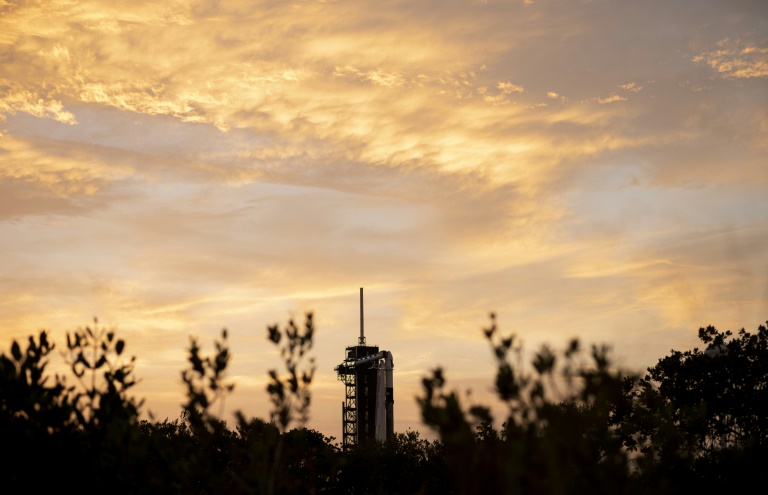
A SpaceX Falcon 9 rocket with the Crew Dragon capsule Endeavor launched at 11:17 am (1517 GMT) from the Kennedy Space Center, and the spaceship should dock Saturday morning around 7:45 am.

“We’re taking commercial business off the face of the Earth and putting it up in space,” NASA chief Bill Nelson said ahead of lift-off.

Commanding the Axiom Mission 1 (Ax-1) is former NASA astronaut Michael Lopez-Alegria, a dual citizen of the United States and Spain, who flew to space four times over his 20-year-career, and last visited the ISS in 2007.

He is joined by three paying crewmates: American real estate investor Larry Connor, Canadian investor and philanthropist Mark Pathy, and Israeli former fighter pilot, investor and philanthropist Eytan Stibbe.

The widely reported price for tickets — which includes eight days on the outpost — is $55 million. 

While private citizens have visited the ISS before, Ax-1 is the first mission featuring an all-private crew flying a private spacecraft to the outpost — with the launch facilities rented out by NASA.

– Research projects –

But unlike the recent, attention-grabbing suborbital flights carried out by Blue Origin and Virgin Galactic, Axiom says its mission shouldn’t be considered tourism. 

On board the ISS, which orbits 250 miles (400 kilometers) above sea level, the quartet will carry out research projects, including an MIT technology demonstration of smart tiles that form a robotic swarm and self-assemble into space architecture.

Another experiment involves using cancer stem cells to grow mini tumors, then leveraging the accelerated aging environment of microgravity to identify early changes in those tumors, in order to improve early detection of cancers on Earth.

“The distinction is that our guys aren’t going up there and floating around for eight days taking pictures and looking out of the cupola,” Derek Hassmann, operations director of Axiom Space, told reporters at a pre-launch briefing. 

“I mean, we have a very intensive and research-oriented timeline plan for them.”

In addition, crewmember Stibbe plans to pay tribute to his late friend Ilan Ramon, Israel’s first astronaut, who died in the 2003 Space Shuttle Columbia disaster when the spaceship disintegrated upon reentry.

Surviving pages from Ramon’s space diary, as well as mementos from his children, will be brought to the station by Stibbe.

The Axiom crew will live and work alongside the station’s regular crew: currently three Americans and a German on the US side, and three Russians on the Russian side.

The company has partnered for a total of four missions with SpaceX, and NASA has already approved in principle the second, Ax-2.

Houston-based Axiom, founded in 2016, sees the voyages as the first steps of a grander goal: to build its own private space station. The first module is due to launch in September 2024, president and CEO Michael Suffredini said. 

The plan is for it to initially be attached to the ISS, before eventually flying autonomously when the latter retires and is deorbited sometime after 2030.

Strong dollar juices European stocks

A strong dollar helped boost European equities Friday, while the euro hit a one-month dollar low before France’s presidential election.

US stocks were mostly higher, after ending Thursday with solid gains.

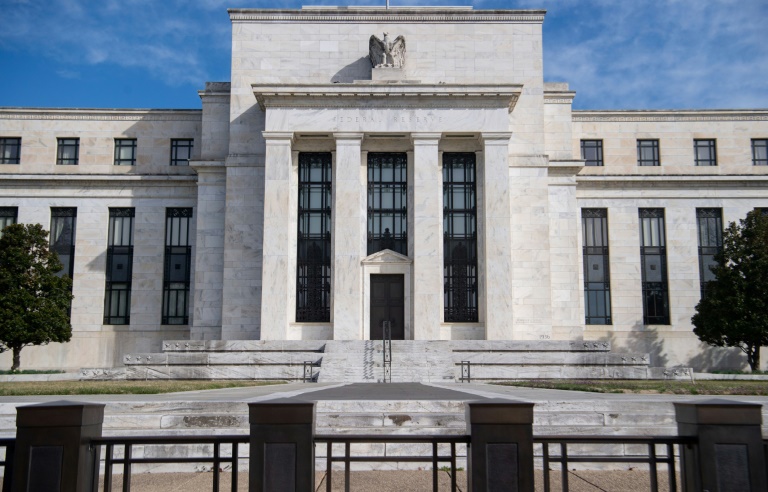
The trading caps a tough week dominated by the US Federal Reserve’s hawkish tone in minutes from its March monetary policy gathering, which sent the dollar climbing against its main rivals.

The euro sank to $1.0837 before Sunday’s first round French presidential vote, with the unit dented also by European officials’ reticence to move as aggressively as the Fed on tackling soaring inflation.

Oil prices rose despite the recent release of nations’ strategic reserves to combat recent Ukraine war-driven turmoil over Russian crude supplies. 

– Risk appetite returns –

“Today’s positive session for European markets appears to have more to do with the fact that the strength of the US dollar has pushed both the pound and the euro lower, with the pound falling to its lowest levels since November 2020, below the 1.3000 level,” said CMC Markets analyst Michael Hewson.

Shares in commodities firms have had a boost as commodity prices have risen in recent weeks because Ukraine and Russia are key producers of raw materials.

Financial firms were given a shot in the arm on Friday as investors became more willing to take risks. 

“The fortunes of financial stocks have been closely aligned with risk appetite over the last couple of months and we’re continuing to see that now,” said OANDA analyst Craig Erlam.

“If the economy can weather the storm, they could be in a strong position given how higher interest rates are generally beneficial for them.”

The Fed has made clear it intends to act more decisively to rein in 40-year-high inflation by ramping up borrowing costs and offloading bond holdings.

Markets have come under huge pressure this year as the end of ultra-cheap central bank cash, a Covid-fuelled slowdown in China’s economic activity, the war in Ukraine and soaring inflation come together in a perfect storm.

However, so far this year the London FTSE 100 index has won more than three percent in value, boosted by heavyweight commodity and oil companies whose share prices have benefited from soaring prices of raw materials.

In contrast, Frankfurt’s DAX has shed in excess of 10 percent and the Paris CAC 40 has lost eight percent, hit also by energy security concerns as a result of EU nations’ reliance on gas supplies from sanctions-hit Russia.

– Key figures around 1530 GMT –

New York – Dow: UP 0.7 percent at 34,811.40 points

EURO STOXX 50: UP 1.4 percent at 3,855.55

London – FTSE 100: UP 1.6 percent at 7,669.56 (close)

Frankfurt – DAX: UP 1.5 percent at 14,283.67 (close)

Paris – CAC 40: UP 1.3 percent at 6,548.22 (close)

Tokyo – Nikkei 225: UP 0.4 percent at 26,985.80 (close)

Hong Kong – Hang Seng Index: UP 0.3 percent at 21,872.01 (close)

Shanghai – Composite: UP 0.5 percent at 3,251.85 (close)

Euro/dollar: DOWN at $1.0877 from $1.0879 late Thursday

Pound/dollar: DOWN at $1.3020 from $1.3075

Euro/pound: UP at 83.53 pence from 83.20 pence

Dollar/yen: UP at 124.32 yen from 123.95 yen

Brent North Sea crude: UP 1.0 at $101.61 per barrel

West Texas Intermediate: UP 1.3 percent at $97.32 per barrel

burs-rl/har

Frostier welcome for Russians in French billionaires' playground

The secretive and idyllic Cap Ferrat peninsula on France’s Mediterranean Cote d’Azur has been marked by an influx of wealthy Russians since the 2000s but local businesses are now expecting to feel the pinch from sanctions following Moscow’s invasion of Ukraine.

“This will definitely have effects, lots of things depend on Russian clients,” said Jean-Francois Dieterich, mayor of the seaside Saint-Jean municipality — home to just 1,500 people in winter and with a 60-percent share of holiday homes.

“There’s widespread uncertainty, we don’t know how the conflict will turn out and the situation is unfavourable,” he added, while insisting that the local economy is not fully dependent on Russian cash.

Tucked between historic resort city Nice and the tiny principality of Monaco, Cap Ferrat saw an influx of Russians from around 2006, drawn by its wooded slopes and hidden coves.

Most of them were “demanding and in a hurry,” said Barbara Benassaya of Pisani Real Estate.

Paying up to 50 million euros ($54 million at current exchange rates) for a home, “they artificially inflated the market, they were prepared to over-pay for properties,” said Benjamin Mondou of Century 21 Lafage Transactions, another real estate firm.

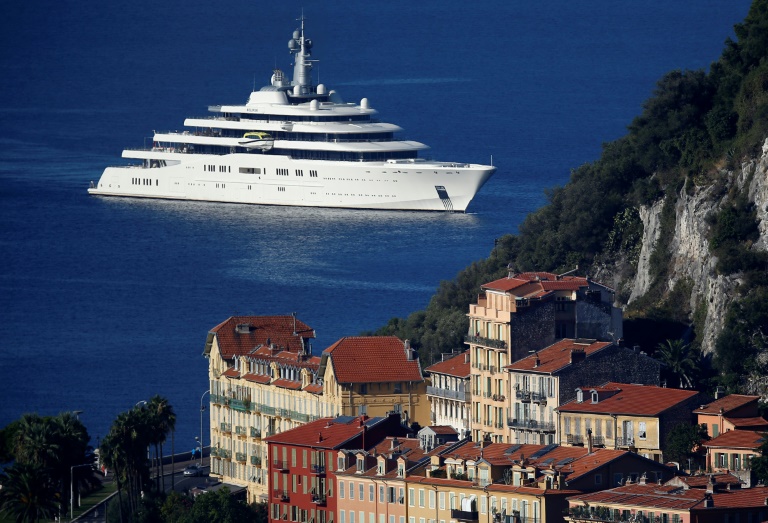
Although Russia’s ultra-rich have bought up homes in other idyllic French summer spots — oligarch Roman Abramovich prefers Antibes, further west — there are more of them in Cap Ferrat than anywhere else on the Mediterranean shore.

Russian-owned properties include the former zoo, transformed into a modernist villa, or the Santo Sospir villa decorated by artist Jean Cocteau.

There are only a few visible signs of the Russians’ presence when walking around the port.

One wine bar bears a Russian name, while a vast palace is being built by a faceless Monaco-based property holding company called Kozak and one of the construction firms’ trucks bears a Cyrillic inscription.

Many Cap Ferrat property owners hide their connection to the town behind shell companies based in the Bahamas or Guernsey, making a habit of secrecy.

– Rolling Stones, flourishing flowers –

Documents of property holding firm La Chabanne Project bear the name of Alexander Ponomarenko, who stepped down as boss of Russia’s largest airport after being sanctioned by the European Union for close ties to Russian President Vladimir Putin’s entourage.

The company is building three homes on a four-acre site that it bought for 83.5 million euros in 2008.

With more than a year of work still to go “Mr Ponomarenko’s accounts have been frozen, the workmen will go ahead with what’s already been paid for and then the site will have to halt”, one contractor told AFP of condition of anonymity.

The situation would create a “significant shortfall” for his business, the contractor added.

The economy ministry in Paris declined to comment on whether the Chabanne Project site was one of the 30 Russian-owned properties it says have already been frozen.

French authorities have become cagier about their work tracking oligarchs’ cash since the March seizure of a yacht linked to Igor Sechin, boss of oil firm Rosneft.

People living and working on the Cote d’Azur fear that the Russians will now be unable to pay employees or cover bills, while frozen assets cannot be sold or rented — further limiting economic activity.

The Rotenberg family, oligarchs with ties to Putin who own the Villa Shoshana on Cap Ferrat, are already under American sanctions.

And the Nellcote villa — where the Rolling Stones recorded their 1972 album “Exile on Main Street” — now belongs to a holding company whose documents name Magnitogorsk steel boss Viktor Rashnikov, sanctioned by the EU as an “influential oligarch”, and his daughter.

It is unclear whether the villa is also frozen.

Although its shutters were closed and there was no answer at the security post, the automatic watering system was still working in a garden whose window boxes overflowed with flowers.

– ‘Lost its soul’ –

It’s too soon for the sanctions to affect guard firm SPG Securite, whose signs are visible on many of the gates bristling with cameras, as it says it takes payment quarterly or annually.

But they are “dramatic for everyone” said one construction specialist on condition of anonymity.

“My village has lost its soul, there used to be a butcher and a hairdresser around here and now there’s only estate agents.”

Nevertheless, “we shouldn’t criticise, it’s thanks to them that we can eat”, he added.

Estate agent Benassaya says that “on purchases between two and three million (euros) we get a lot of Russians who have nothing to do with all this, who even say sorry for the conflict” in Ukraine.

“They have trouble getting money out. Some have accounts in Monaco which makes things a bit easier”.

She has seen a string of cancellations, mostly on rental contracts for “large villas at 200,000 euros per month”.

Some of the Russians who live in Cap Ferrat year-round have begun covering up their country’s flag on car numberplates, local people said.

“All the cliches there might be about a Russian who made a fortune in the 2000s… tars a lot of businessmen with the same brush as oligarchs close to power,” said Edouard Deschepper, who is managing the reconstruction of Cap Ferrat’s Voile D’Or hotel for Russian developer Kirill Pissarev.

“As soon as people see ‘Russian’ in a request for a loan or to open a bank account, they’ll say ‘no’ nicely and without explanation,” he added, taking pains to note that Pissarev lives in London and has moved his wealth outside Russia.

On the other side of the conflict, Cap Ferrat also attracts many Ukrainians, including the country’s wealthiest man and Shakhtar Donetsk football club owner Rinat Akhmetov, who bought the Les Cedres villa for 200 million euros in 2019.

From his small boat, Arnaud Allary told AFP that his family had been “fishermen here for five generations”.

“Fifty years ago it was worth nothing, today I don’t have the money to buy a home and I pay 1,500 euros rent. I saw a little three-room flat sold above the port for 1.3 milion!”

When the Russians arrive in summer, “sometimes there are 80 yachts here and I have to fish further and further out”, he added.

Without them, though, he’s likely to see fewer orders for lobster.

Crisis-hit Sri Lanka hikes rates as protests spiral

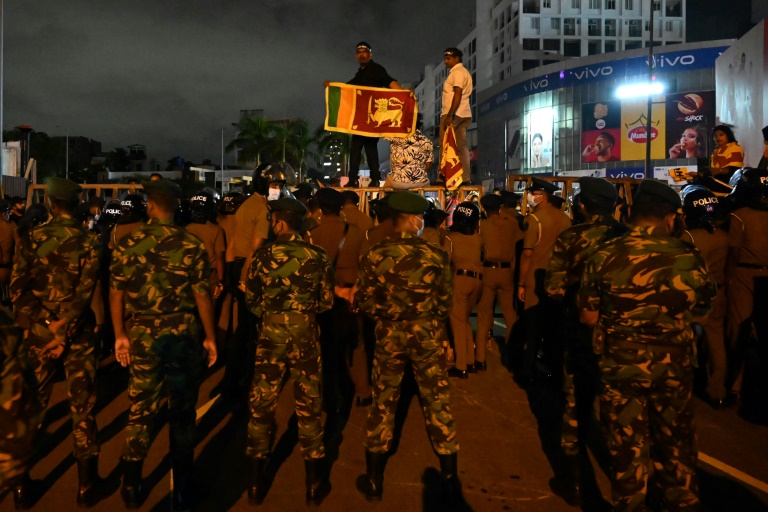
Cash-strapped Sri Lanka’s central bank hiked interest rates by a record 700 basis points Friday as police fired tear gas at hundreds of students protesting over the economic crisis.

Severe shortages of food and fuel, alongside lengthy electricity blackouts, have led to weeks of widespread anti-government demonstrations — with calls for President Gotabaya Rajapaksa to resign.

The latest protests saw students try to march to the national parliament on Friday.

Monks, who had largely rallied the Sinhala-Buddhist majority to elect Rajapaksa at the November 2019 polls, were also seen joining demonstrations in the capital Colombo.

Demonstrators nationwide carried placards saying “Gota go home”, demanding Rajapaksa and his administration step down over the country’s worst economic crisis since independence in 1948.

– Damage control –

The Central Bank of Sri Lanka said its benchmark lending rate had been raised to 14.5 percent to “stabilise the exchange rate” after the rupee tumbled over 35 percent in a month.

The rate for deposits was also increased by seven percentage points to 13.5 percent as reports said Sri Lanka’s rupee was the worst-performing currency in the world, edging out the Russian ruble.

The bank’s newly appointed governor, Nandalal Weerasinghe, said attempts to control foreign exchange markets and keep interest rates artificially low in the past year had contributed to the unprecedented economic chaos.

“We are now in damage control mode,” Weerasinghe said at his first press conference since replacing Ajith Cabraal, who was virtually forced out Monday as the country was on the brink of bankruptcy.

“We would not have had to make such a sharp increase if rates had been raised incrementally over a period of time,” Weerasinghe said, vowing to relax exchange controls introduced by his predecessor.

The bank said the shock-treatment rate hike was due to its belief that the embattled island’s inflation, which is already at record levels, could get worse.

The Colombo Consumer Price Index rose 18.7 percent in March while food inflation stood at more than 25 percent, but private analysts placed inflation at over 50 percent in the month.

International rating agencies have downgraded Sri Lanka as fears grow that it could default on its $51 billion external debt after foreign reserves fell below $2 billion at the end of March.

This week, Rajapaksa appointed a panel of experts to organise a restructuring of foreign debt.

His government is preparing for bailout negotiations with the International Monetary Fund, and finance ministry officials told AFP the panel will prepare a programme for sovereign bond-holders and other creditors to take a haircut.

“What Sri Lanka is keen to do is avoid a hard default,” a source from the ministry who requested anonymity told AFP. 

“It will be a negotiated restructuring of the debt with the help of the IMF.”

Meetings with the IMF are set to begin by next week but finance minister Basil Rajapaksa — the president’s brother — resigned on Sunday night, along with nearly the entire cabinet. 

The country is still without a replacement, with his successor Ali Sabry quitting after just one day in office.

On Friday, Sabry told parliament that he was still in the job because no one was willing to accept the finance portfolio.

– European push –

Colombo-based diplomats from European Union member states, which form a key export market for Sri Lanka, on Friday asked the government to immediately embark on reforms to revive the economy.

“We stress the extreme urgency of the situation, which requires the authorities to start in-depth discussions with the International Monetary Fund,” the diplomats said in a joint statement.

Public anger is at fever pitch, and on Saturday thousands of people are expected to take part in what likely will be the biggest protest since the crisis began.

In an apparent bid to head off more protests, the government on Thursday declared extra public holidays for next week to coincide with the traditional Sinhalese and Tamil New Year.

Opposition parties have rejected an overture from the president to form a unity administration and instead joined calls for him to step down.

The shortages of essentials have been caused by a wide-ranging import ban as Sri Lanka seeks to conserve its meagre foreign currency reserves to pay its debts.

In recent years the vital tourism sector has also been hit hard by Islamist bomb attacks in 2019 and the coronavirus pandemic, which dried up remittances from Sri Lankans abroad.

Economists say the crisis has been exacerbated by government mismanagement, years of accumulated borrowing and ill-advised tax cuts.

Twitter employees to meet with new board member Musk

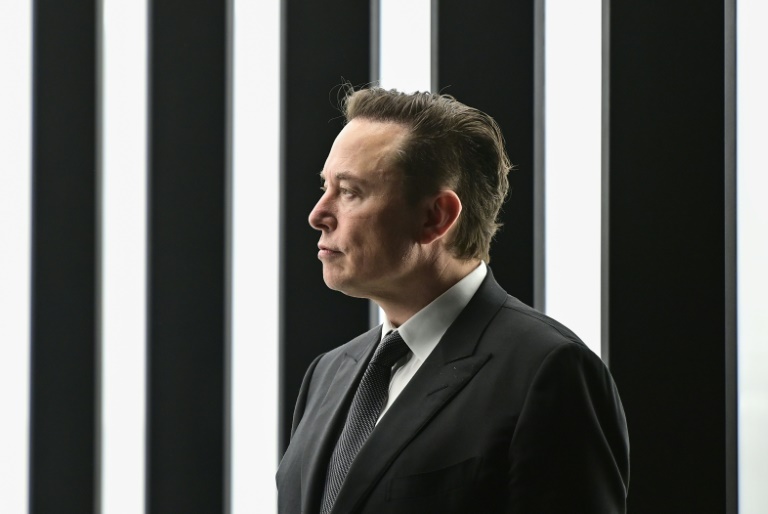
Twitter plans to hold a meeting for employees concerned about Tesla Chief Executive Elon Musk’s influence on the company’s board, a Twitter spokesperson said Friday.

The Twitter official did not disclose the timeframe or format for the meeting.

The social media company named Musk to the board on Tuesday after the outspoken and polarizing executive disclosed he had acquired a more than nine percent stake in the company, making him Twitter’s largest shareholder.

In announcing the appointment, Twitter Chief Executive Parag Agrawal said he was “excited” to name Musk, calling him “a passionate believer and intense critic of the service which is exactly what we need.”

Musk said he looked forward to soon making “significant improvements to Twitter.” 

The Tesla chief began polling his followers on whether to add an “edit” button the service, a long-discussed tweak.

But Musk is a break-the-mold figure in American business. On Thursday, he tweeted a photo of himself smoking marijuana on a Joe Rogan podcast in 2018, with the caption, “Twitter’s next board meeting is gonna be lit.”

His antics often raise eyebrows and occasionally draw condemnation, as when Jewish groups blasted his tweet comparing Canadian leader Justin Trudeau to Adolf Hitler over Covid-19 vaccine mandates. Musk later deleted the tweet without apologizing.

The appointment has sparked misgivings among some employees, according to a Washington Post report.

Workers at the California-based social media company cited worries about Musk’s statements on transgender issues and his reputation as a difficult and driven leader, according to statements on Slack reviewed by the Post.

His arrival has cheered some Wall Street analysts, who have been frustrated by Twitter’s difficulty in meaningfully monetizing its business.

But skeptics have pointed out that Musk has bullied critics in the investment community and fired or penalized workers who have spoken out or tried to unionize. 

A California agency has sued Tesla, alleging discrimination and harassment against Black workers. The electric carmaker has rejected the charges, saying it opposes discrimination.

Asia, Europe stocks climb, Wall Street pauses

Asian and European equities rallied Friday on clarity over rising US interest rates, while the euro hit a one-month dollar low before France’s presidential election.

Meanwhile US stocks opened narrowly mixed after ending Thursday higher.

The trading caps a tough week dominated by the US Federal Reserve’s hawkish tone in minutes from its March monetary policy gathering, which sent the dollar climbing against its main rivals.

The euro sank to $1.0839 before of Sunday’s first round French presidential vote, with the unit dented also by European officials’ reticence to move as aggressively as the Fed on tackling soaring inflation.

Oil prices steadied as traders mulled the recent release of nations’ strategic reserves to combat recent Ukraine war-driven turmoil over Russian crude supplies. 

– Strong US finish –

Equity investors took their cue “from a strong finish to a turbulent trading session on Wall Street overnight”, said AJ Bell investment director Russ Mould.

“Commodities firms and financial stocks, the latter boosted by expectations of faster rate hikes, helped lead the charge higher.”

Commodity prices have been boosted in recent weeks because Ukraine and Russia are key producers of raw materials.

Financial firms were given a shot in the arm on Friday as investors became more willing to take risks. 

“The fortunes of financial stocks have been closely aligned with risk appetite over the last couple of months and we’re continuing to see that now,” said OANDA analyst Craig Erlam.

“If the economy can weather the storm, they could be in a strong position given how higher interest rates are generally beneficial for them.”

The Fed has made clear it intends to act more decisively to rein in 40-year-high inflation by ramping up borrowing costs and offloading bond holdings.

Markets have come under huge pressure this year as the end of ultra-cheap central bank cash, a Covid-fuelled slowdown in China’s economic activity, the war in Ukraine and soaring inflation come together in a perfect storm.

However, so far this year the London FTSE 100 index has won more than three percent in value, boosted by heavyweight commodity and oil companies whose share prices have benefitted from soaring prices of raw materials.

In contrast, Frankfurt’s DAX has shed in excess of 10 percent and the Paris CAC 40 has lost eight percent, hit also by energy security concerns as a result of EU nations’ reliance on gas supplies from sanctions-hit Russia.

– Key figures around 1330 GMT –

London – FTSE 100: UP 1.0 percent at 7,625.68 points

Frankfurt – DAX: UP 0.8 percent at 14,195.51

Paris – CAC 40: UP 0.6 percent at 6,500.87

EURO STOXX 50: UP 0.8 percent at 3,833.52

New York – Dow: UP less than 0.1 percent at 34,613.39

Tokyo – Nikkei 225: UP 0.4 percent at 26,985.80 (close)

Hong Kong – Hang Seng Index: UP 0.3 percent at 21,872.01 (close)

Shanghai – Composite: UP 0.5 percent at 3,251.85 (close)

Euro/dollar: DOWN at $1.0840 from $1.0879 late Thursday

Pound/dollar: DOWN at $1.3006 from $1.3075

Euro/pound: UP at 83.37 pence from 83.20 pence

Dollar/yen: UP at 124.62 yen from 123.95 yen

Brent North Sea crude: UNCHANGED at $100.58 per barrel

West Texas Intermediate: UP 0.2 percent at $96.26 per barrel

burs-rl/lth

Crisis-hit Sri Lanka hikes rates as protests spiral

Cash-strapped Sri Lanka’s central bank hiked interest rates by a record 700 basis points Friday as police fired tear gas at hundreds of students protesting about the economic crisis.

Severe shortages of food, fuel and electricity have led to widespread anti-government demonstrations with calls for President Gotabaya Rajapaksa to resign.

The latest protests saw students try to march to the national parliament on Friday.

Elsewhere demonstrators nationwide carried placards demanding Rajapaksa step down over the country’s worst economic crisis since independence in 1948.

Buddhists monks, who had largely led Rajapaksa’s election bid in November 2019, were also seen joining demonstrations in the capital Colombo.

The Central Bank of Sri Lanka said its benchmark lending rate had been raised to 14.5 percent to “stabilise the exchange rate” after the rupee tumbled over 35 percent in a month.

The rate for deposits was also increased by seven percentage points to 13.5 percent as reports said Sri Lanka’s rupee was the worst performing currency in the world, edging out the Russian ruble.

The bank said the shock-treatment rate hike was due to its belief that the embattled island’s inflation, which is already at record levels, could get worse.

The Colombo Consumer Price Index rose 18.7 percent in March while food inflation stood at more than 25 percent, but private analysts placed inflation at over 50 percent in the month.

International rating agencies have downgraded Sri Lanka as fears grow that it could default on its $51 billion external debt after foreign reserves fell below $2 billion at the end of March.

This week Rajapaksa appointed a panel of experts to organise a restructuring of foreign debt.

His government is preparing for bailout negotiations with the International Monetary Fund, and finance ministry officials told AFP the panel will prepare a programme for sovereign bond holders and other creditors to take a haircut.

“What Sri Lanka is keen to do is avoid a hard default,” a source from the ministry who requested anonymity told AFP. 

“It will be a negotiated restructuring of the debt with the help of the IMF.”

Meetings with the IMF are set to begin by next week but finance minister Basil Rajapaksa — the president’s brother — resigned on Sunday night along with nearly the entire cabinet. 

The country is still without a replacement, with his successor quitting after just one day in office.

Public anger is at fever pitch, and thousands of people were expected to take part on Saturday in what likely will be the biggest protest since the crisis began.

Recent days have seen civil servants and schoolchildren join in demonstrations largely organised through social media.

In an apparent bid to head off more protests, the government on Thursday declared extra public holidays for next week to coincide with the traditional Sinhalese and Tamil New Year.

Opposition parties have rejected an overture from the president to form a unity administration and instead joined calls for him to step down.

The shortages of essentials have been caused by a wide-ranging import ban as Sri Lanka seeks to conserve its meagre foreign currency reserves to pay its debts.

In recent years the vital tourism sector has also been hit hard by Islamist bomb attacks in 2019 and the coronavirus pandemic, which dried up remittances from Sri Lankans abroad.

Economists say the crisis has been exacerbated by government mismanagement, years of accumulated borrowing and ill-advised tax cuts.

From coal to ports, Western sanctions target Russian economy

From a coal embargo to new restrictions on investments and European ports closed to Russian ships, the list of Western sanctions imposed on Russia’s economy since it invaded Ukraine keeps getting longer.

Here is an overview: 

– Energy –

The European Union decided Thursday to forgo from August purchases of Russian coal, which accounts for about 45 percent of its total imports.

EU nations have already announced their intention to cut their imports of Russian gas by two thirds by the end of the year, as well as ban European companies from making new investments in the sector critical for the Russian economy.

In another highly symbolic decision, Germany has suspended the entry into service of the Nord Stream 2 pipeline which was due to have allowed a significant increase in imports.

But the bloc has been reluctant to impose a ban on Russian gas and oil so far, as member states such as Germany are heavily dependent on Moscow’s fossil fuel exports.

The United States and Canada have imposed their own embargoes of Russian oil and gas.

Britain plans to end imports of Russian coal by the end of the year, as it has already pledged to do for Russian crude oil and petroleum products.

– Transportation – 

The EU announced Thursday it is closing its ports to Russian ships. Russian truckers are also banned from operating in the bloc.

EU and NATO members have blocked their airspace to Russian aircraft and many Western airlines have halted flights to Russia.

The wider aerospace industry is concerned as the export of aircraft, parts and equipment has been banned, as has maintenance work on Russian-registered Airbus and Boeing aircraft. Western insurers cannot provide coverage.

– Trade –

The fifth EU sanctions package adopted Thursday includes a 10-billion-euro ($10.9 billion) ban on exports to Russia, including high-tech goods.

The list of Russian products banned from the EU is also being extended to include certain “critical raw materials and equipment” worth an estimated 5.5 billion euros a year to stop the financing of Moscow’s war effort in Ukraine.

Shortly before the EU adopted its latest sanctions package, US lawmakers voted to revoke most favoured nation status for Russia and its ally Belarus, which will result on goods from them facing high US import tariffs. Imports of Russian seafood, vodka and diamonds have been banned outright. 

The United States on Wednesday also banned any new investment in Russia, and Britain has as well.

– Financial sector –

The US Treasury has blocked Russia from using dollars held in US banks to make payments on its foreign debt, forcing Moscow to settle in rubles which sets up a likely default.

The White House also declared “full blocking” sanctions on Russia’s largest public and private financial institutions, Sberbank and Alfa Bank.

The United States, EU and Britain have frozen foreign currency held by the Russian central bank and banned all transactions with the institution.

Most Russian banks were earlier cut from the SWIFT messaging system, which allows banks to communicate rapidly and securely about transactions.

US credit card giants Visa, Mastercard and American Express have blocked Russian banks from their payment networks.

– Key individuals –

Hundreds of Russian individuals have been hit by US and EU sanctions, including the adult daughters of Russian President Vladimir Putin.

The EU added 18 Russian entities and 200 people to its black list on Thursday alone.

Putin and his Belarusian counterpart Alexander Lukashenko have been sanctioned, as has Igor Sechin, the head of Russian oil firm Rosneft.

Britain has sanctioned 82 Russian oligarchs with 172 billion pounds (200 billion euros, $220 billion) in assets, and 18 banks with 940 billion pounds in assets.

India under fresh scrutiny as UN panel calls for shunning coal

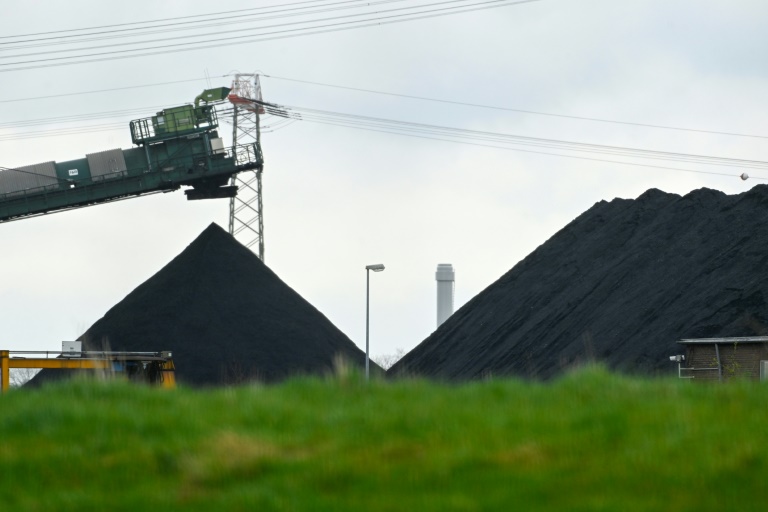
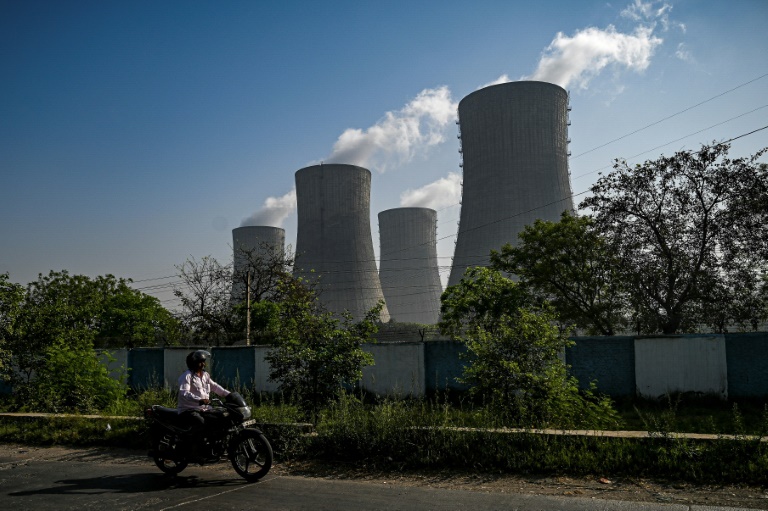
The mounds of jet-black coal shimmering under the afternoon sun at the Dadri power plant are a raw illustration of India’s coal dependence — a habit that despite increasing pressure, the country is finding hard to kick.

Coal is vital for providing electricity to India’s 1.4 billion citizens, making up 70 percent of the country’s energy needs. 

That reliance is in the spotlight after a warning by UN experts this week that to ensure a “liveable future”, countries must move to greener energy sources much faster to reduce emissions. 

Coal-based plants like the sprawling Dadri facility are attempting to make themselves cleaner, but their efforts are mostly in their infancy, and pale in comparison to their overall emission rate. 

Prime Minister Narendra Modi has set ambitious goals for renewable energy development, aiming to increase non-fossil energy capacity to over double the current coal capacity by 2030.

But Harjeet Singh of the Fossil Fuel Non-proliferation Treaty Initiative said that while the cost of renewable energy has come down by up to 90 percent in the last decade, India still requires hundreds of billions of dollars upfront to make the transition.

“That kind of international support in terms of investments or concessional loans or grants is not coming through,” he said. 

Experts say coal will remain the dominant fuel in India for a long time to come, with its energy needs over the next 20 years set to rise faster than any other country in the world. 

– Crossroads –

The UN report, released Monday, said current policies are leading the planet towards catastrophic temperature rises and that the world was at a “crossroads”. 

If the world’s current oil, gas and coal infrastructure operate for their designed lifetime — without technology to capture and store carbon — capping global warming at the target of 1.5 degrees Celsius will be impossible, it said. 

India, which with China reportedly led opposition to a commitment to “phase out” coal at the COP26 summit last year, currently has about 211 gigawatts of operational coal capacity, according to the Central Electricity Authority, with another 55GW under various phases of construction.

None of India’s power stations yet has the technology the UN report mentions as a mitigation option.

“Carbon-trapping technology is being used on an experimental basis at one of our plants,” said B. Srinivasa Rao, chief general manager of the Dadri plant. “If it is successful it will be done at all the plants.”

With six coal-fired units supplying megacity Delhi and elsewhere, the plant — run by India’s biggest power producer, the National Thermal Power Corporation (NTPC) — is spread across some 3,000 acres (1,200 hectares) in the northern state of Uttar Pradesh. 

It has taken some steps to reduce emissions, including burning pellets made from agricultural waste along with coal.

Like several other NTPC units, it has installed a solar thermal power plant with and output of 5 megawatts — though the plant as a whole generates 2500 MW.

Rao said the plant has also achieved 100 percent recycling of fly ash, a main byproduct of burning coal, and implemented a zero liquid discharge system.

But locals living in the vicinity complained about coal dust spilling from trucks and affecting their health.

“It burns our eyes and hurts our lungs,” said Rinku Rana, who runs a confectionery shop close by.

“But if the plant closes down we will be robbed of our livelihoods. So in a way it’s a necessary evil that we have to live with,” 29-year-old Rana said, wiping off a thick layer of ash-grey dust that had settled on biscuit and sweet packets at his shop.

– Climate equity –

Singh, the environmental campaigner, said India cannot continue to rely on fossil fuels, especially in view of severe air pollution.

At the same time, it needs cheap fuel to power its economy and help millions out of poverty.

Levies on coal are an important source of employment and government revenue, especially for states like Jharkhand and Odisha, among the poorest in the country.

Modi has said India will cut its emissions to net-zero only by 2070 — missing a key goal of the COP26 summit for countries to commit to doing so by 2050.

The government argues that although the country is the world’s third-largest emitter in total, its per capita emissions are far lower than the American average.

Singh said New Delhi was “well within its right” to talk about equity and climate justice.

“The current climate crisis is not because of India’s industrialisation. It’s because of the Western industrialisation that has happened over the last 150 years,” he told AFP. 

“Rich countries need to reduce their emissions far more earlier than what they have planned right now… and at the same time provide support to developing countries to move away from fossil fuels.”

Japan ends Russian coal imports, expels diplomats

Japan said Friday it will end imports of Russian coal and announced the expulsion of eight of Moscow’s diplomats over “war crimes” in Ukraine.

The move comes as Ukraine’s allies step up pressure on Moscow after allegations that Russian troops killed civilians in areas around Kyiv.

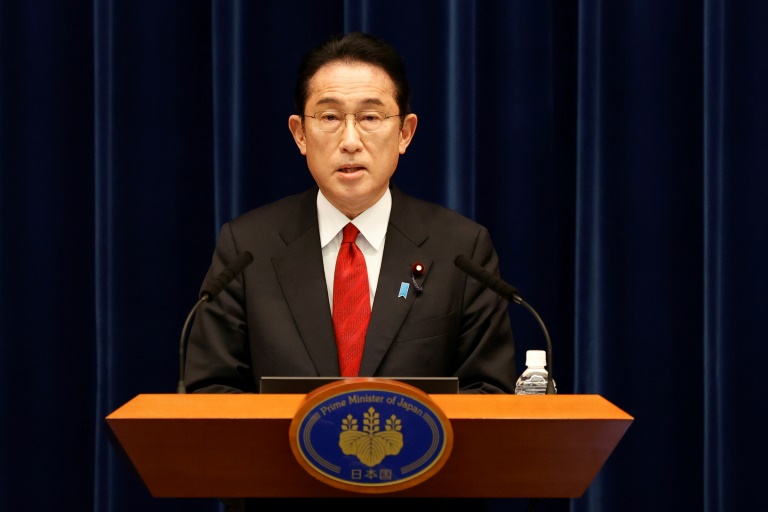
“Russian troops have killed civilians and have attacked nuclear facilities, gravely violating international humanitarian law. These are war crimes that can never be forgiven,” Japanese Prime Minister Fumio Kishida told reporters.

“We will ban imports of Russian coal,” he added, pledging to find alternatives and asking Japanese citizens for their “understanding and cooperation.”

Japan imports around 11 percent of its coal from Russia, and the fuel remains a key plank of the country’s power generation.

Kishida said Japan would, in line with other Group of Seven developed nations, work to decrease its reliance on other energy imports from Russia, which include oil and gas, but he gave no specific timeframe.

He also outlined fresh sanctions, including new asset freezes and a ban on imports from Russia, including machinery and vodka, and said Tokyo would back efforts to investigate Moscow’s actions at the International Criminal Court.

Earlier, Japan’s foreign ministry announced the expulsion of eight Russian diplomats from the embassy and trade office.

The decision does not affect Russia’s ambassador Mikhail Yurievich Galuzin.

Japan has marched in lockstep with Western allies on sanctions against Russia, and has even welcomed several hundred Ukrainians fleeing the conflict despite generally accepting very few refugees.

Tokyo had complex relations with Moscow before the Ukrainian invasion and the two sides have yet to sign a post-World War II peace treaty.

Attempts to do so have been hampered by a long-running dispute over islands controlled by Russia, which calls them the Kurils.

Japan calls the islands the Northern Territories and has long sought to have them under Tokyo’s control.

Close Bitnami banner