US Business

World Cup run temporarily masks Argentina's inflation misery

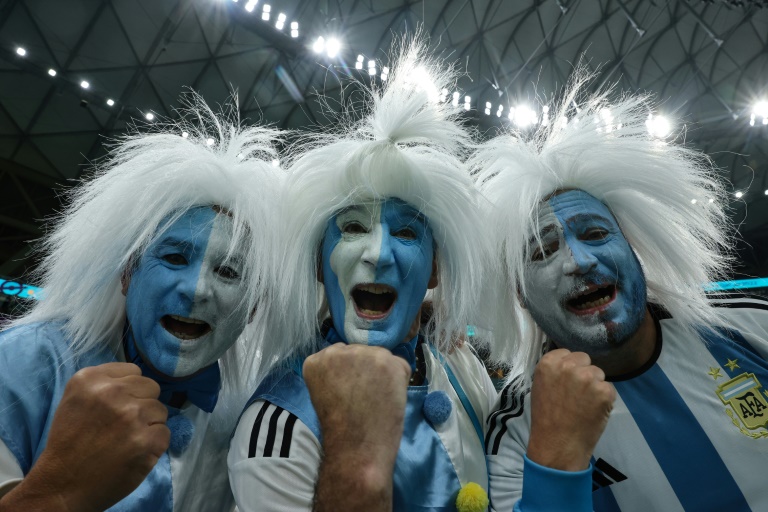
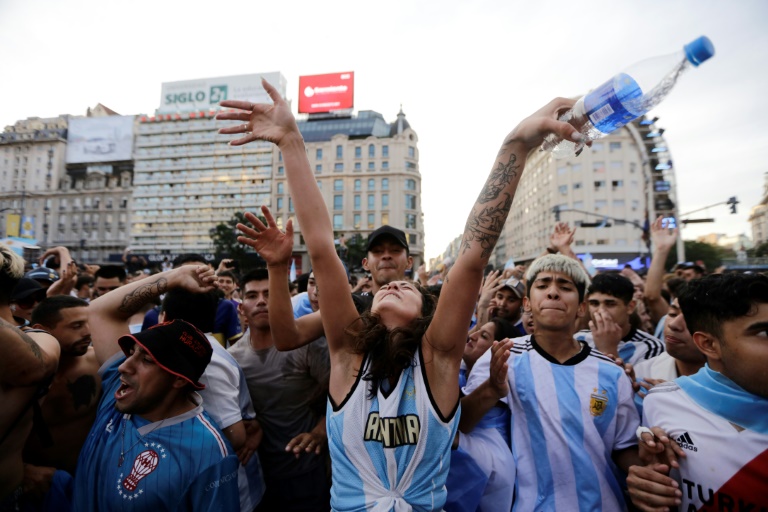
Argentina’s economy may be sinking but the entire country is buoyant, basking in the elation of its football team led by iconic captain Lionel Messi reaching the World Cup final.

The dream of landing Argentina’s third world title, 36 years after the last one, seems — at least for now — to have let Argentines forget their woes.

That number three seems significant today, and not just because Messi and his teammates seek to put a third championship star on the team’s blue and white jersey.

Sporting glory arrives at a time when many people believe the inflation that has wreaked havoc on the South American nation’s economy will reach a barely believable triple digits for 2022.

Last Thursday, the INDEC statistics institute published the price index for November, around six percent, suggesting inflation, which already stood at 88 percent over the last 12 months, is not decelerating.

Argentina has had double-figure inflation for decades.

But there is a genuine feeling that soccer success — and that Messi magic — can alleviate the pain of millions in a country where the poverty level is over 40 percent.

Before the tournament in Qatar began, Argentina’s Labor Minister Kelly Olmos was even asked whether lowering inflation was more important than winning the World Cup.

“We must constantly work against inflation, but one month won’t make a huge difference,” she said.

“On the other hand, from a morale point of view, given what it means for all Argentines, we want Argentina to be champions,” Olmos added. “The Argentine people really deserve some joy.”

Predictably, that provoked a barrage of criticism.

– ‘A relief’ –

And yet Argentines crowd around television screens in droves to watch the team’s matches, whether in bars, homes, even a Buenos Aires ‘fan zone.’

Most of these fans could never dream of affording a ticket to Qatar in a country where the average wage is a meagre 66,500 pesos ($390).

“People are well aware of the problems” but football and the economic situation “are on parallel paths, they don’t meet,” Lucrecia Presdiger, a 38-year-old hospital worker, told AFP after Argentina’s quarter-final victory over the Netherlands.

“Many people really need this joy and are making the most of it. But they don’t take it literally, they know it’s only football, they are perfectly aware of the problems,” Presdiger said, adding: “You shouldn’t take them for fools.”

For designer Tony Molfese, an Argentina triumph would be “a relief, a breath of fresh air, a joy, even momentary — and we deserve it.”

Olmos drew parallels with Argentina’s first World Cup success in 1978, when the country was run by a military dictatorship.

“We were under dictatorship, persecuted, we didn’t know what tomorrow held, but Argentina became champions and we went out to celebrate in the streets,” she recalled.

“And then we went back to the reality, which was unrelenting.”

– ‘Transient and eternal’ –

Despite the great passions football inspires, it remains just a game, according to writer Ariel Scher.

“Football bestows individual and collective joy, but that joy is transient, it doesn’t eliminate the other problems of existence,” Scher, a university lecturer and football specialist, told AFP.

“It’s like when our child passes an exam: we’re delighted but that doesn’t pay the bills.”

The power of football is that “it gives us the possibility of a happiness that is both transient and eternal,” added Scher.

“No problems will be resolved or eliminated but at the same time, even briefly, it dazzles us with something that leaves a lasting memory.”

In a November poll, more than three quarters of Argentines said the country’s fortunes at the World Cup would have an effect on people’s morale.

Some 32 percent even said they thought the result would affect the next presidential election in 10 months time.

Political scientist Raul Aragon scoffed at such an idea.

Regardless of what happens in Sunday’s final “the social mood will return to what it was before. And no political force could capitalise on any eventual victory.”
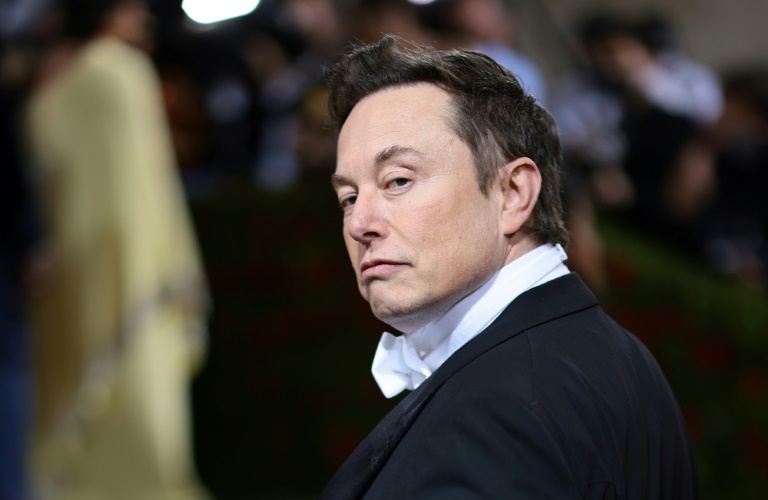
Twitter suspends account tracking Elon Musk's plane

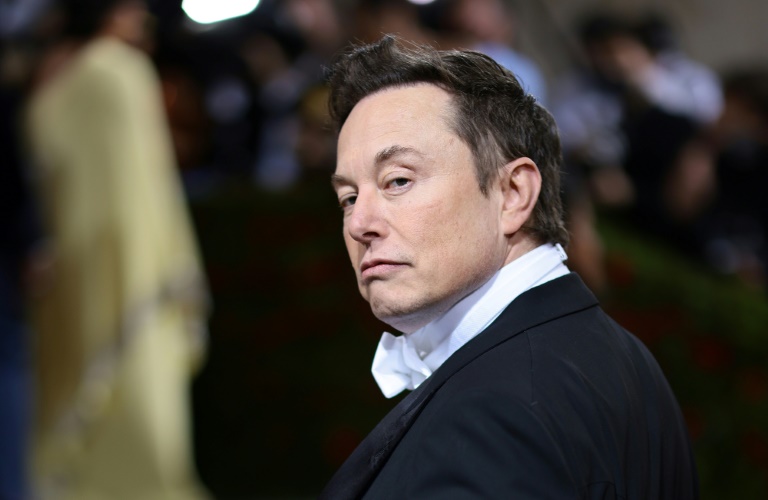
A Twitter account that tracked flights of Elon Musk’s private jet was grounded on Wednesday despite the billionaire’s talk of free speech.

“Well it appears @ElonJet is suspended,” creator Jack Sweeney tweeted from his personal @JxckSweeney account.

The account was in action briefly later in the day, after Twitter sent out word that it updated its policy to prohibit tweets, in most cases, from giving away someone’s location in real time.

“Yes I am back!” read a tweet fired off  by @ElonJet, which added a link to versions of the flight tracking account at other social networks such as Instagram, Facebook and Mastodon “just in case.”

A short time later attempts to reach @ElonJet, as well as Sweeney’s personal Twitter account, were met with messages that both were suspended.

Musk’s jet “flew from LA to Austin last night after my account was suspended on Twitter,” he said in an Instagram post.

“Any account doxxing real-time location info of anyone will be suspended, as it is a physical safety violation,” Musk said in a tweet.

“This includes posting links to sites with real-time location info.”

Doxxing refers to revealing identifying information such as home address or phone number online, typically to target someone for abuse.

Tweets sharing a person’s location that are “not same-day” are allowed under the tweaked policy, as are posts about being at a public event such as a concert, Twitter said.

Sweeney attracted attention with his Twitter account that tracks the movements of the billionaire’s plane and even rejected Musk’s offer of $5,000 to shut down @ElonJet, which had hundreds of thousands of followers.

Musk had gone public saying he would not touch the account after buying Twitter in a $44 billion deal as part of his commitment to free speech at the platform.

Flight-following websites and several Twitter accounts offer real-time views of air traffic, but that exposure draws pushback ranging from complaints to equipment seizures.

US rules require planes in designated areas be equipped with ADS-B technology that broadcasts aircraft positions using signals that relatively simple devices can pick up.

Figuring out or confirming to whom a plane actually belongs can require some sleuthing, said Sweeney, who filed a public records request with the US government in order to confirm Musk’s ownership of his plane.

Suspension of the account came a day after Twitter co-founder and former chief Jack Dorsey published an online post defending the tech firm’s workers, who Musk has criticized for decisions regarding content moderation.

“I’m a strong believer that any content produced by someone for the internet should be permanent until the original author chooses to delete it,” Dorsey wrote.

“It should be always available and addressable. Content takedowns and suspensions should not be possible.”

Twitter suspends account tracking Elon Musk's plane

A Twitter account that tracked flights of Elon Musk’s private jet was grounded on Wednesday despite the billionaire’s talk of free speech.

“Well it appears @ElonJet is suspended,” creator Jack Sweeney tweeted from his personal @JxckSweeney account.

The account was in action briefly later in the day, after Twitter sent out word that it updated its policy to prohibit tweets, in most cases, from giving away someone’s location in real time.

“Yes I am back!” read a tweet fired off  by @ElonJet, which added a link to versions of the flight tracking account at other social networks such as Instagram, Facebook and Mastodon “just in case.”

A short time later attempts to reach @ElonJet, as well as Sweeney’s personal Twitter account, were met with messages that both were suspended.

Musk’s jet “flew from LA to Austin last night after my account was suspended on Twitter,” he said in an Instagram post.

“Any account doxxing real-time location info of anyone will be suspended, as it is a physical safety violation,” Musk said in a tweet.

“This includes posting links to sites with real-time location info.”

Doxxing refers to revealing identifying information such as home address or phone number online, typically to target someone for abuse.

Tweets sharing a person’s location that are “not same-day” are allowed under the tweaked policy, as are posts about being at a public event such as a concert, Twitter said.

Sweeney attracted attention with his Twitter account that tracks the movements of the billionaire’s plane and even rejected Musk’s offer of $5,000 to shut down @ElonJet, which had hundreds of thousands of followers.

Musk had gone public saying he would not touch the account after buying Twitter in a $44 billion deal as part of his commitment to free speech at the platform.

Flight-following websites and several Twitter accounts offer real-time views of air traffic, but that exposure draws pushback ranging from complaints to equipment seizures.

US rules require planes in designated areas be equipped with ADS-B technology that broadcasts aircraft positions using signals that relatively simple devices can pick up.

Figuring out or confirming to whom a plane actually belongs can require some sleuthing, said Sweeney, who filed a public records request with the US government in order to confirm Musk’s ownership of his plane.

Suspension of the account came a day after Twitter co-founder and former chief Jack Dorsey published an online post defending the tech firm’s workers, who Musk has criticized for decisions regarding content moderation.

“I’m a strong believer that any content produced by someone for the internet should be permanent until the original author chooses to delete it,” Dorsey wrote.

“It should be always available and addressable. Content takedowns and suspensions should not be possible.”

Brazil sees area burned by fire nearly double in November

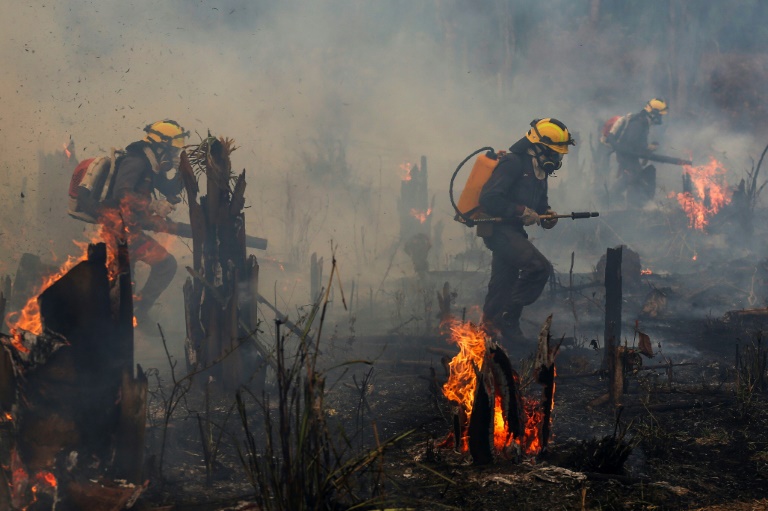
Fires scorched almost two million acres of territory in Brazil in November, according to data released by an NGO group Wednesday, nearly 90 percent more than in the same month last year.

That is an area about three-quarters of the size of the Brazilian Amazon city of Manaus.

More than 80 percent of the burned land is located in the Amazon rainforest, according to MapBiomas, the NGO consortium made up of nonprofits, Brazilian universities and startups that use satellite imagery to track the destruction of natural lands. 

“The data confirms the escalation of environmental destruction in the final months of the Bolsonaro government,” the organization said in a statement. 

Fires and deforestation have increased since right-wing Brazilian President Jair Bolsonaro, a proponent of expanding mining and farming in the Amazon, took office in 2019.

In October, Bolsonaro lost re-election to leftist Luiz Inacio Lula da Silva, who will take office in January and has promised to “fight for zero deforestation.”

For MapBiomas, the spike in November’s fire numbers was a surprise as the month usually coincides with the rainy season.

“Clearly this is a reaction to the expectation of more effective anti-deforestation and anti-fire policies from the new government,” said Ane Alencar, MapBiomas Fire coordinator and director of science at the Institute of Amazonian Environmental Investigation.

Together with November’s numbers, the area burned in the first 11 months of 2022 totaled about 40 million acres, or just under the size of Uruguay, according to MapBiomas, a 13 percent increase over the same period in 2021. 

Nearly half of that land is within the Amazon, the group said. 

It's no joke: Across globe, satire morphs into misinformation

Is a US state considering a tax on breathing? Is celebrating goals forbidden during the Qatar World Cup because that is “too gay?” Did insect repellent manufacturers recruit a Ugandan man for his mosquito-killing farts?

Satire, parody and jokes packed with absurdity typically draw laughter, but around the world they are too often mistaken as real, prompting fact-checkers to debunk what they call a leading source of misinformation despite pushback from their publishers.

Several satirical outlets mimic legitimate media websites, often sowing confusion among readers with what appear to be typical news articles but are in fact fabricated stories.

Sometimes even with disclaimers clearly marking their articles as satire, many readers take them at face value.

“Satire can mislead more than you’d think,” Shannon Poulsen, who researches the link between humor and misinformation at Ohio State University, told AFP.

“Given that I find new examples of people falling for it every day, I’d say it is a notable and consequential form of misinformation.”

The humorous fiction often makes the internet erupt with laughter, but researchers are not laughing about its potential to fool the public, which sometimes includes media organizations.

– Debunking humor –

In September, during a live broadcast on France’s CNews television channel, presenter Pascal Praud attributed to the country’s energy minister remarks that were invented by a parody Twitter account.

A version of the article about the man with the “deadly farts”, which AFP traced to a parody website, was published by the British tabloid The Sun and drew thousands of interactions on Facebook.

The one about the Qatar World Cup, published last month by the satirical section of Germany’s Die Welt newspaper, was widely shared as authentic news on Facebook, Telegram and Twitter.

In the United States, stories by the popular satirical website The Onion are so often mistaken as real that online forums have sprung up to ridicule those who fall for them.

But despite such errors, satirists have lashed out at fact-checking websites for debunking their content.

In September, the Indian satirical website Fauxy served a legal notice to the Mumbai-based fact-checker Boom Live, accusing it of damaging its reputation after it labelled one of its articles fake.

Boom’s editor Jency Jacob contends the action was necessary as many gullible readers were sharing it on social media as legitimate news.

“We usually avoid debunking satire as we believe it is a valid form of expression,” Jacob told AFP.

“But we have done it when we felt it was created without adequate disclaimers and if the satire was widely believed to be true.”

– ‘Key frustration’ –

Platforms such as Facebook and Instagram say they reduce the circulation, visibility — and potential for profit — of links that are labelled misinformation. But some websites peddling misinformation skirt the barrier by labelling their content satire, researchers say.

Still, the restriction has faced pushback from American satirical websites such as Babylon Bee, which last year accused Facebook of suppressing its content with a drastic decline in reach and engagement.

That followed a 2018 tussle over a Babylon Bee article flagged as false on Facebook, which researchers said highlighted the thin line between satire and misinformation.

“Satire should not be treated as misinformation — that appears to be a key part in the frustration from satirical sites,” Poulsen said.

“We should communicate the satiric intention of a message because it reduces the chances people misinterpret satire as real. But many satirists do not want satire to be labeled as they worry it’ll make their content less funny.”

– ‘Evil twin’ –

Last year, Facebook announced that it will add labels such as “satire page” to posts that appear in the news feeds of users to clearly differentiate them from real information.

Third-party fact-checkers working with Facebook, which includes AFP, can append their own fact-checks to the bottom of satirical posts for the same reason.

But the problem persists.

Last month, authentic-looking imposter or parody accounts proliferated on Twitter, pretending to be celebrities or companies, after it first rolled out a paid subscription service.

The platform suspended the service, known as Twitter Blue, but it was relaunched this week with what the company said was a stronger review process.

“Imposter content is the evil twin to satire or parody content,” Philip Mai, co-director of the Toronto-based Social Media Lab, told AFP.

“Bad actors will often put some effort into creating look-alike content that mimics their real-life counterparts so that they can prey on users’ inattention… We need to encourage the public to pause before they share.”

burs-ac/md

US political world seeks distance from disgraced donor Bankman-Fried

After years of benefitting from the enormous contributions of FTX founder Sam Bankman-Fried — accused of massive financial fraud — America’s political elite are now skittering away, eager to put distance between themselves and the disgraced cryptocurrency darling.

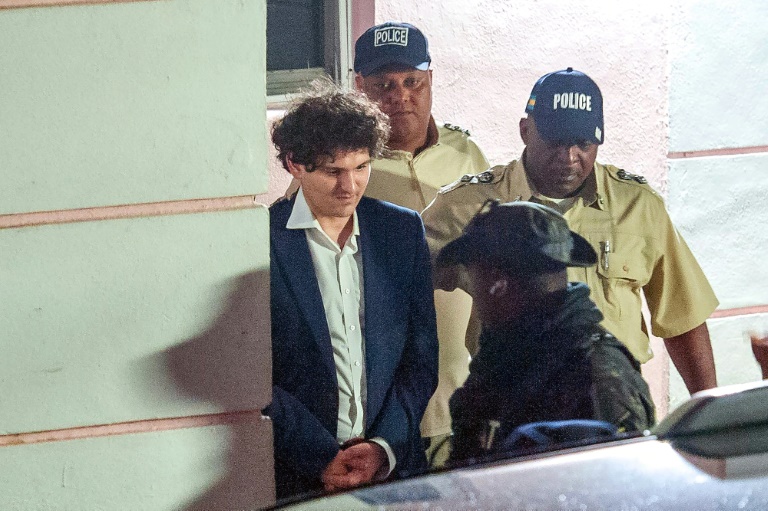
The 30-year-old tycoon — currently detained in the Bahamas awaiting US extradition proceedings — had in recent years become one of the largest public donors to the Democratic Party, and claimed to have privately donated an equal amount to the Republican camp too.

Recipients reach as far into the US political world as President Joe Biden, whose 2020 campaign accepted more than $5 million in donations from Bankman-Fried.

Asked about the situation Tuesday, White House spokeswoman Karine Jean-Pierre deflected.

“I’m limited on what I can say,” she said, in reference to a law that prohibits her from discussing political matters in her official capacity. 

The former head of the now-bankrupt cryptocurrency exchange platform was charged in the United States Wednesday with money laundering, violating campaign finance laws and wire fraud. 

He is accused of making risky investments with clients’ money and fraudulently influencing the political sphere with his offerings. 

“Samuel Bankman-Fried and his co-conspirators made millions of dollars in political contributions funded by (his other company) Alameda Research to federal political candidates and committees in advance of the 2022 election,” New York prosecutor Damian Williams said in a statement, referencing a practice which is allowed in the United States. 

But he made those contributions in a way that was designed “to evade contribution limits and reporting requirements,” the statement added.

– ‘Dirty money’ –

According to the prosecutor, Bankman-Fried made these donations in such a way that they would appear to be coming from wealthy associates, instead of him directly. 

“All of this dirty money was used in service of Bankman-Fried’s desire to buy bipartisan influence and impact the direction of public policy in Washington,” Williams said during a press conference. 

A search for Bankman-Fried on the US Federal Election Commission’s website shows 213 donations since 2020, including a September 2020 contribution for $5 million to a pro-Biden political group, and another for $50,000 in October of that year to the “Biden Victory Fund.”

The vast majority of those publicly declared donations were allocated to Democratic groups or candidates. 

But Bankman-Fried, who made several media appearances and statements over the last several months as FTX took on water, insisted during a November interview with cryptocurrency expert Tiffany Fong that he had “donated about the same amount to both parties.”

“All my Republican donations were dark,” he said, but “not for regulatory reasons.”

Reporters “freak” out over donations to Republicans, he said.

“They’re all super liberal, and I didn’t want to have that fight.”

For some of those political beneficiaries, the bill on the price for those donations has come due: The money donated by Bankman-Fried, though legal, now feels toxic. 

Democratic Senator Kirsten Gillibrand of New York told the New York Post that she has given the money she received from Bankman-Fried to an organization working with marginalized communities.

The newspaper reported similar decisions by five other lawmakers, including four Democrats and one Republican. 

But congressman Brad Sherman, a House Democrat opposed to cryptocurrency, recently told NBC that “the right answer” is giving the donations back to the FTX customers and investors through a bankruptcy trustee fund, “because it was never Bankman’s money.”

The nonprofit organization OpenSecrets, which works to demystify campaign finance, has calculated that Bankman-Fried ranked number six in top donors of the nearly $39.2 million in declared donations made during November’s midterm elections.

He becomes the number two donor when looking only at contributions made to Democrats, behind billionaire George Soros, who, via various avenues, gave more than $128 million to the party during the midterms. 

The rules for US campaign finance — a complex scene which involves the exchange of billions of dollars each election cycle — depend on whether the money is given directly to candidates or raised through political action committees.

These so-called PACs — and super PACs, which are political entities that can accept unlimited contributions but can not spend directly on a candidate’s activities — play an important, if sometimes underground, role in US campaigns.

Investors, wealthy patrons, economic special interest groups and organizations representing different societal concerns donate to the PACs and super PACs in efforts to influence races for local office, Congress and the White House. 

The political issue likely most top of mind for SBF, as he has come to be known? The still-nascent topic of regulations for the high-risk cryptocurrency market.

US political world seeks distance from disgraced donor Bankman-Fried

After years of benefitting from the enormous contributions of FTX founder Sam Bankman-Fried — accused of massive financial fraud — America’s political elite are now skittering away, eager to put distance between themselves and the disgraced cryptocurrency darling.

The 30-year-old tycoon — currently detained in the Bahamas awaiting US extradition proceedings — had in recent years become one of the largest public donors to the Democratic Party, and claimed to have privately donated an equal amount to the Republican camp too.

Recipients reach as far into the US political world as President Joe Biden, whose 2020 campaign accepted more than $5 million in donations from Bankman-Fried.

Asked about the situation Tuesday, White House spokeswoman Karine Jean-Pierre deflected.

“I’m limited on what I can say,” she said, in reference to a law that prohibits her from discussing political matters in her official capacity. 

The former head of the now-bankrupt cryptocurrency exchange platform was charged in the United States Wednesday with money laundering, violating campaign finance laws and wire fraud. 

He is accused of making risky investments with clients’ money and fraudulently influencing the political sphere with his offerings. 

“Samuel Bankman-Fried and his co-conspirators made millions of dollars in political contributions funded by (his other company) Alameda Research to federal political candidates and committees in advance of the 2022 election,” New York prosecutor Damian Williams said in a statement, referencing a practice which is allowed in the United States. 

But he made those contributions in a way that was designed “to evade contribution limits and reporting requirements,” the statement added.

– ‘Dirty money’ –

According to the prosecutor, Bankman-Fried made these donations in such a way that they would appear to be coming from wealthy associates, instead of him directly. 

“All of this dirty money was used in service of Bankman-Fried’s desire to buy bipartisan influence and impact the direction of public policy in Washington,” Williams said during a press conference. 

A search for Bankman-Fried on the US Federal Election Commission’s website shows 213 donations since 2020, including a September 2020 contribution for $5 million to a pro-Biden political group, and another for $50,000 in October of that year to the “Biden Victory Fund.”

The vast majority of those publicly declared donations were allocated to Democratic groups or candidates. 

But Bankman-Fried, who made several media appearances and statements over the last several months as FTX took on water, insisted during a November interview with cryptocurrency expert Tiffany Fong that he had “donated about the same amount to both parties.”

“All my Republican donations were dark,” he said, but “not for regulatory reasons.”

Reporters “freak” out over donations to Republicans, he said.

“They’re all super liberal, and I didn’t want to have that fight.”

For some of those political beneficiaries, the bill on the price for those donations has come due: The money donated by Bankman-Fried, though legal, now feels toxic. 

Democratic Senator Kirsten Gillibrand of New York told the New York Post that she has given the money she received from Bankman-Fried to an organization working with marginalized communities.

The newspaper reported similar decisions by five other lawmakers, including four Democrats and one Republican. 

But congressman Brad Sherman, a House Democrat opposed to cryptocurrency, recently told NBC that “the right answer” is giving the donations back to the FTX customers and investors through a bankruptcy trustee fund, “because it was never Bankman’s money.”

The nonprofit organization OpenSecrets, which works to demystify campaign finance, has calculated that Bankman-Fried ranked number six in top donors of the nearly $39.2 million in declared donations made during November’s midterm elections.

He becomes the number two donor when looking only at contributions made to Democrats, behind billionaire George Soros, who, via various avenues, gave more than $128 million to the party during the midterms. 

The rules for US campaign finance — a complex scene which involves the exchange of billions of dollars each election cycle — depend on whether the money is given directly to candidates or raised through political action committees.

These so-called PACs — and super PACs, which are political entities that can accept unlimited contributions but can not spend directly on a candidate’s activities — play an important, if sometimes underground, role in US campaigns.

Investors, wealthy patrons, economic special interest groups and organizations representing different societal concerns donate to the PACs and super PACs in efforts to influence races for local office, Congress and the White House. 

The political issue likely most top of mind for SBF, as he has come to be known? The still-nascent topic of regulations for the high-risk cryptocurrency market.

US regulator says reform will boost individual investors

Emphasizing the need to protect small investors, US securities regulators Wednesday proposed new rules to ensure competition in the execution of stock market trades.

The Securities and Exchange Commission proposal aims to replace the current system in which retail brokers route more than 90 percent of trades by individual investors to wholesalers — financial middlemen who provide liquidity.

Wholesalers, or “off-exchange” dealers such as Citadel Securities and Virtu Financial, benefit from lower costs on these transactions than are available on the New York Stock Exchange and other exchanges.

But the SEC maintains that not all of the savings are being passed on to consumers, pointing to a $1.5 billion “competitive shortfall” in a press release.

The proposed change — which now will be subject to a 60-day public comment — would require orders by individual investors to go onto “fair and open” auctions, the SEC said in a news release.

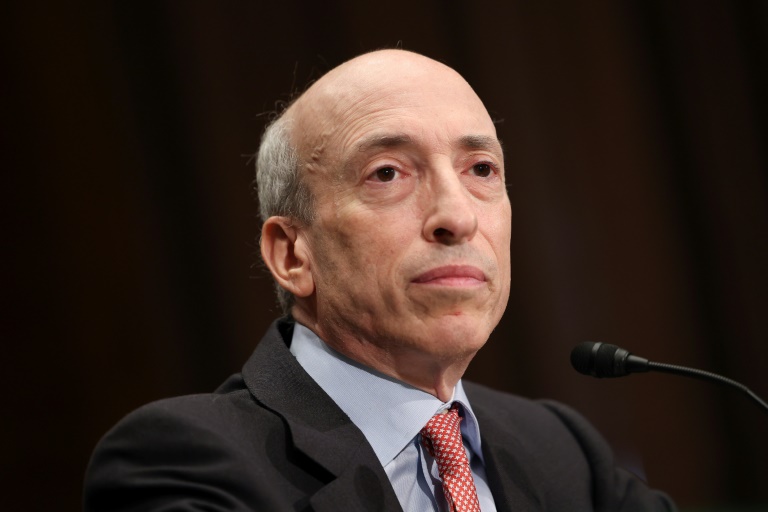
“Today’s markets are not as fair and competitive as possible for individual investors — everyday retail investors,” said SEC Chair Gary Gensler. “This is in part because there isn’t a level playing field among different parts of the market: wholesalers, dark pools, and lit exchanges.

“Today’s proposal is designed to bring greater competition in the marketplace for retail market orders,” Gensler added.

But SEC Commissioner Hester Peirce, a Republican appointed by former President Donald Trump, said the proposal “threatens to create disorder in the capital markets” and should be rejected. 

“The Commission has a habit of trying to micromanage the markets,” Peirce said.

“Regulation has a role in ensuring that market participants have information and that markets are orderly, but issuing decrees about how each order should be routed is outside of that role.”

Ukraine downs swarm of attack drones over Kyiv

Ukraine said Wednesday it had shot down more than a dozen Iranian-made drones in Moscow’s latest assault on Kyiv. 

The attack came as the Kremlin promised no let-up to fighting over Christmas and as Ukrainian President Volodymyr Zelensky urged European leaders to assist in setting up a court to try Russian leaders over the war.

“The terrorists started this morning with 13 Shaheds,” Zelensky said, referring to the Iran-made weapons.

“All 13 were shot down,” he added, urging residents to heed air raid sirens.

The national energy provider Ukrenergo said no electricity facilities had been damaged in the attack, crediting Ukrainian air defences for their “brilliant” work.

Such defense forces appeared set for a boost with ally Washington preparing to send a batch of Patriot missile defense batteries to Kyiv.

Ukraine has been subjected to frequent and deadly aerial attacks in the 10 months since Russia invaded Ukraine in February and tried to capture the capital. 

But since a series of key battlefield setbacks this summer and autumn, Russia began systematically targeting critical infrastructure in Ukraine.

With temperatures dropping, the missile and drone attacks have disrupted electricity, water and heat to millions of Ukrainians.

– ‘Nearly 7 million children’ at risk –

The strikes targeting energy infrastructure have piled pressure on Ukraine’s power grid, whose operators have for weeks been forced to implement rolling blackouts.

That left “nearly seven million children without sustained access to electricity, heating and water, putting them at increased risk”, UNICEF, the UN children’s agency said Wednesday.

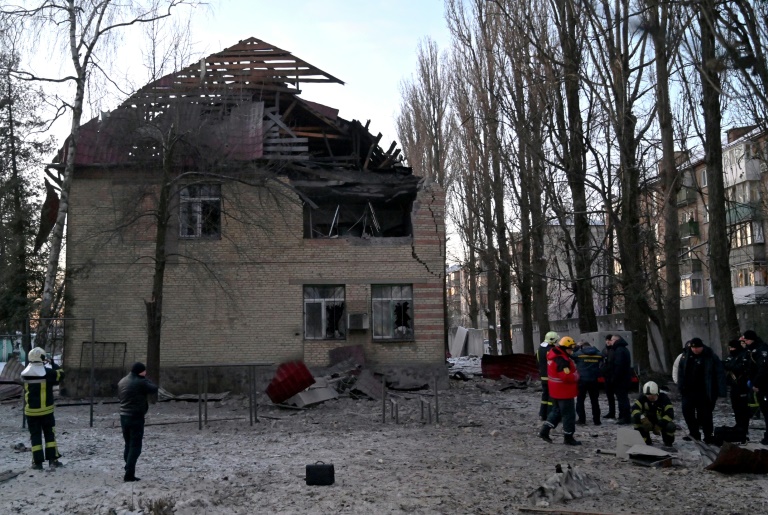
Explosions rang out over central Kyiv and AFP journalists later saw law enforcement and emergency service workers inspecting metal fragments at a snow-covered impact site.

City officials said debris from the downed drones had damaged residential homes and a local administrative building. 

No one was reported injured or killed, but residents cleaning up broken window glass and assessing damage vented their frustration at the Russian barrages.

“Winter is coming, how can people survive?” asked Svetlana, a local resident who described how a drone rumbled over homes before she heard a loud explosion.

“They do not let Ukrainians live.”

The latest round of attacks came a day after dozens of countries and international organisations meeting in Paris responded to Zelensky’s plea to help the country withstand Russia’s onslaught on its energy grid with 1 billion euros ($1.1 billion).

In a video message from Kyiv, Zelensky said Ukraine needed assistance for its battered energy sector and spare parts for repairs, high-capacity generators, extra gas and increased electricity imports.

Foreign Minister Dmytro Kuleba called on Ukraine’s allies to provide his country with more weapons to help it “fight through the winter” and sustain Kyiv’s military advances.

The United States has been a major contributor to Ukraine’s arsenal throughout the war, and a US official confirmed to AFP that Washington is finalising plans to send batteries of the advanced Patriot missile system to Ukraine.

The public announcement on the Patriot, described by the US Army as its “most advanced air defense system,” could come as soon as Thursday.

– US citizen freed –

Ukraine separately said Wednesday it had secured the release of a US citizen as well as 64 Ukrainian members of the military in its latest prisoner swap with Russian forces.

Russia’s state-run TASS news agency earlier reported that the American, Suedi Murekezi, had been arrested in the eastern Donetsk region of Ukraine in June and charged with attending anti-Russian protests.

After nearly 10 months of fighting, Russia has yet to fulfil any of its stated key goals in what it refers to as its “special military operation” in Ukraine, including seizing the capital or the eastern Donbas region.

But the Moscow-installed leader of Ukraine’s Donetsk province on Wednesday called for Russia to widen its goals and annex two more areas of Ukraine: the Black Sea region of Odessa and Chernigiv in the north.

Kremlin spokesman Dmitry Peskov said a ceasefire was not on Moscow’s agenda, and that it had not received proposals from Kyiv to pause fighting during the upcoming holiday period.

Meanwhile on Wednesday, Zelensky accepted the European Union Sakharov Prize for human rights on behalf of Ukraine’s people.

As he accepted the EU’s top rights award, he urged Europe to help set up a tribunal swiftly to try Russia’s leadership for the “crime of aggression”.

Zelensky also warned the International Olympic Committee against welcoming back Russian athletes to international competition, after US Olympic officials signaled they were open to the idea.

The only response is “the complete isolation of the terrorist state on the international stage,” Ukraine’s leader told IOC president Thomas Bach in a statement.

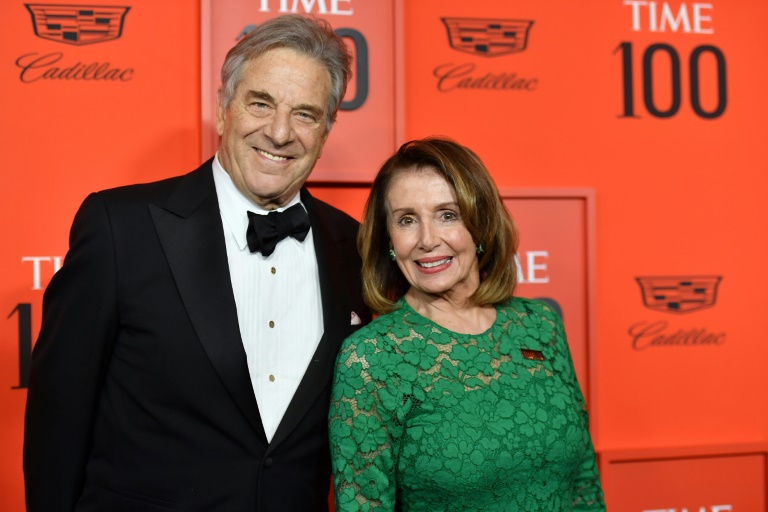
Suspect in Paul Pelosi assault: 'pretty amicable' before hammer attack

The man accused of attacking the husband of US House Speaker Nancy Pelosi told investigators the incident had been “pretty amicable” until he hit the 82-year-old with a hammer, a court heard on Wednesday.

David DePape, 42, appeared in a San Francisco courtroom for a hearing to determine if the case against him will go to trial.

The former public nudity activist has denied attempted murder and other charges in connection with a break-in in October, during which he had intended to kidnap Nancy Pelosi, he told police.

Instead, he found her 82-year-old husband, Paul, whom he is alleged to have bludgeoned with a hammer.

Prosecutors played Judge Stephen Murphy parts of an interview DePape gave to investigators from hospital.

The suspect, a Canadian citizen, said he had told Paul Pelosi that he had no intention of surrendering, the San Francisco Chronicle reported.

“I had threatened him a couple of times but for the most part it was pretty amicable,” DePape said on the recording.

But when he lunged at Pelosi, he did so with “full force,” the Chronicle said.

The US Justice Department has said DePape intended to tie up Nancy Pelosi, one of the most powerful politicians in the United States, and break her kneecaps with a hammer if she did not confess to Democratic “lies.”

DePape had tape, rope, zip ties and other materials with him, the Justice Department said.

Nancy Pelosi — who is second in line to the US presidency after the vice president — was not in San Francisco at the time of the attack.

Paul Pelosi had managed to call police while his assailant was in the house.

Officers were able to subdue the attacker, but not before he had fractured Paul Pelosi’s skull, knocking him unconscious.

Prosecutors on Wednesday showed body camera footage from one of the officers, the Chronicle reported.

DePape could be heard saying “Uh, nope,” after he was ordered to drop the hammer before the attack and subsequent tussle.

“A sound that appeared to be Pelosi’s snoring was heard loudly at the end of the video,” the Chronicle reported.

The assault and attempted kidnapping came just days before the high-stakes midterm elections, with America’s febrile political atmosphere being regularly fed by outlandish conspiracy theories from national figures.

If the state trial goes ahead, and if he is convicted, DePape would face 13 years to life in prison, San Francisco District Attorney Brooke Jenkins has previously said.

A separate federal case against DePape is ongoing. He has denied charges of kidnap and assault levied there.

Paul Pelosi spent almost a week in hospital after the attack, where he underwent surgery.

Nancy Pelosi later said he was facing “a long recovery process.”

Close Bitnami banner
Bitnami