World

G20 talks end with pledge to accelerate energy transition

G20 energy talks in Bali ended Friday with the world’s leading economies pledging to accelerate the transition to cleaner energy, but there was no binding agreement as officials struggle to overcome discord over Russia’s invasion of Ukraine.

The price of energy has skyrocketed since Moscow launched its military offensive, with many Western countries scrambling to find alternative sources in an attempt to cut ties with Russia.

Energy upheavals have put pressure on global efforts to address climate change.

Host Indonesia put forward a plan at the talks outlining principles to speed up a “fair” transition to greener energy and it was endorsed by the G20 nations.

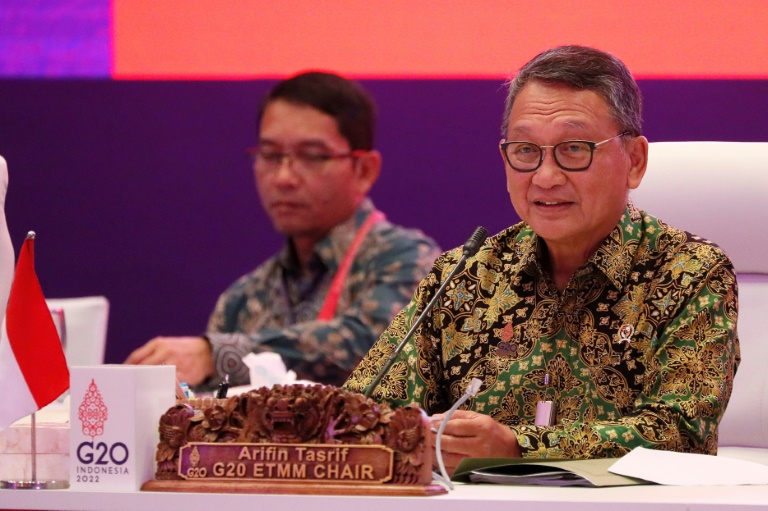
The non-binding “Bali Compact”, which lists principles for achieving net zero emissions, was agreed by all members, Indonesian energy minister Arifin Tasrif said. 

Details were not released but the minister said the plan seeks to strengthen national energy planning and implementation to improve energy security, efficiency and boost investment and financing.

“G20 energy ministers sent a strong signal to the market that policymakers are taking action to strengthen the investment-enabling environment,” Tasrif told an online press conference Friday.

But the officials failed to reach a consensus on a joint communique due to “differences among countries” at the one-day meeting, Tasrif said without elaborating.

Several nations, including Britain and France, denounced the invasion of Ukraine and said it had destabilised energy supply. 

The presence of Russia at the forum meant a consensus could not be reached for a communique, a source close to the meeting told AFP.

The “current energy crisis shows the urgency to accelerate the energy transition”, the source added.

Representatives from the United States, Saudi Arabia, Australia, Germany, India, South Africa and the European Union were also present, according to a list seen by AFP. 

The energy talks follow G20 environment discussions in Bali on Wednesday that also ended without a joint communique, reflecting divisions among member countries over how to tackle climate change.

Britain’s climate minister Alok Sharma said governments should “revisit and strengthen” their commitments to achieving net zero emissions.

“There must not be any backsliding on commitments,” he tweeted on Wednesday. 

This week’s talks are a prelude to a November leaders’ summit that Indonesian President Joko Widodo has said Russian counterpart Vladimir Putin will attend despite Moscow’s isolation.
Queen Elizabeth II to miss Highland Games event

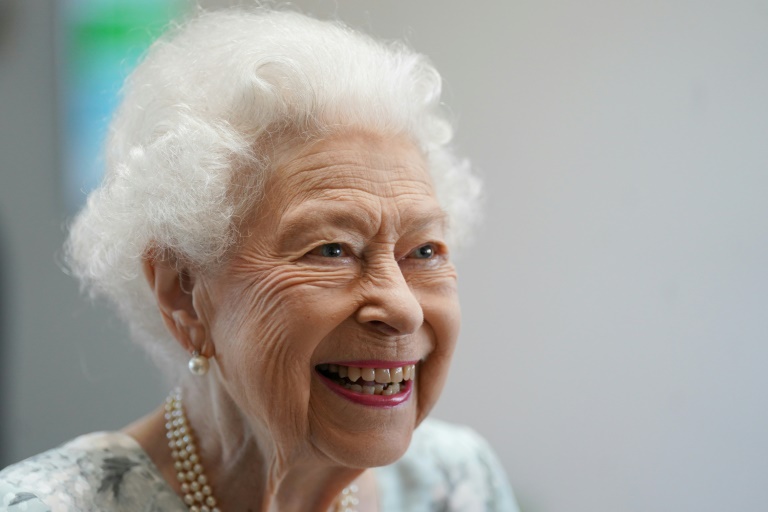
Queen Elizabeth II will not attend a traditional highlight of her summer trip to Scotland because of persistent health worries, British media said Friday.

The 96-year-old monarch has been dogged by problems walking and standing since last year, forcing her to cancel a series of public engagements.

Fears about a flare-up of what royal officials call “episodic mobility problems” have prevented her returning to London to appoint a new prime minister.

The queen had this weekend been expected to attend the Braemar Gathering near her remote Balmoral retreat in northeast Scotland.

A decision on her withdrawal was made for her comfort, British media reported, without quoting sources.

The event, which is always held on the first Saturday in September, is the most famous on the Highland Games circuit.

Senior royals, including the monarch, have attended the games regularly since the mid-19th century, to watch feats of strength and endurance.

Events include tossing the caber, in which kilted competitors endeavour to lift and throw a full-length log Scots pine.

Attendees this year — the first since 2019 because of the coronavirus pandemic — include the queen’s eldest son and heir, Prince Charles.

She is due to meet Boris Johnson at Balmoral on Tuesday to accept his formal resignation as prime minister.

She will also ask his replacement — either Foreign Secretary Liz Truss or former finance minister Rishi Sunak — to form a new government.

Truss and Sunak are vying to become the next Conservative party leader. The winner is due to be announced on Monday.

Bankrupt Sri Lanka's deposed president 'to return home'

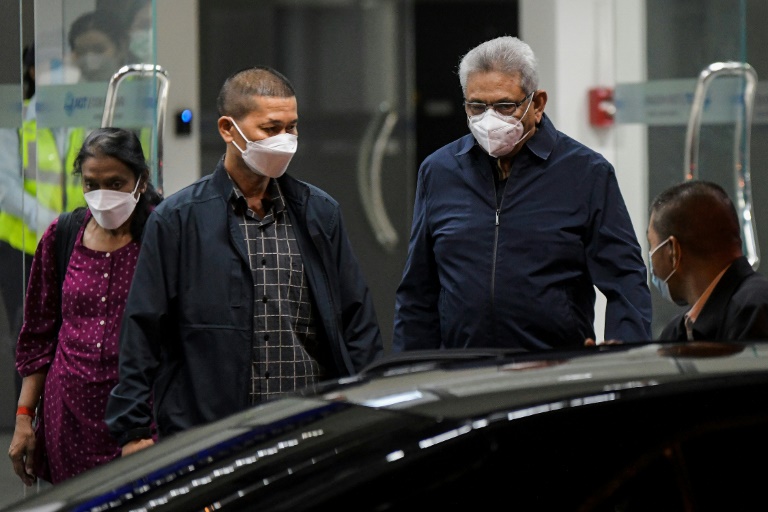
Bankrupt Sri Lanka’s deposed former president Gotabaya Rajapaksa is expected to end his self-imposed exile in Thailand and return home imminently, authorities told AFP on Friday.

The 73-year-old fled the island under military escort in July after unarmed crowds stormed his official residence, following months of angry demonstrations blaming him for the nation’s unprecedented economic crisis.

He issued his resignation in Singapore before flying onward to Bangkok, from where he has been petitioning his successor to facilitate his return, now slated for late Friday evening or early Saturday.

“He has been living in a Thai hotel as a virtual prisoner and was keen to return,” a defence official, who asked not to be named, told AFP.

“We have just created a new security division to protect him after his return,” the official added. “The unit comprises elements from the army and police commandos.”

Sri Lanka’s constitution guarantees bodyguards, a vehicle and housing for former presidents.

Rights activists said they would press for Rajapaksa’s arrest over a series of crimes, including his alleged role in the 2009 assassination of prominent newspaper editor Lasantha Wickrematunge.

“We welcome his decision to return so that we can bring him to justice for the crimes he has committed,” said Tharindu Jayawardhana, a spokesman for the Sri Lanka Young Journalists’ Association.

Rajapaksa’s resignation ended his presidential immunity, which could see the revival of stalled criminal cases against the former leader. 

He also faces charges in a California court over Wickrematunge’s murder and the torture of Tamil prisoners at the end of the island’s traumatic civil war in 2009. 

Singapore declined to extend Rajapaksa’s short-term visa and he travelled to Thailand in August, but authorities in Bangkok instructed him not to step out of his hotel for his own safety.

Rajapaksa’s youngest brother, Basil, the former finance minister, met with President Ranil Wickremesinghe last month and requested protection to allow for the deposed leader’s return.

Police deployed plainclothes officers and armed guards outside a government residence allocated to Rajapaksa in Colombo on Friday. Security at his private home was also stepped up, officials said.

Police at Colombo’s main airport said a security operation was underway to prepare for his arrival.

“What we are told is that he will fly commercial,” an airport official told AFP. “If it is on schedule, the aircraft should land just before midnight.”

– ‘Vistas of prosperity’ –

Sri Lanka has endured months of acute food, fuel and medicine shortages, lengthy blackouts and runaway inflation after running out of foreign currency to finance essential imports. 

The coronavirus pandemic dealt a hammer blow to the island’s tourism industry and dried up remittances from Sri Lankans working abroad — both key foreign exchange earners.

Rajapaksa, who was elected in 2019 promising “vistas of prosperity and splendour”, saw his popularity nosedive as hardships multiplied for the country’s 22 million people. 

His government was accused of introducing unsustainable tax cuts that drove up government debt and exacerbated the crisis. 

Wickremesinghe was elected by parliament to see out the remainder of Rajapaksa’s term. He has since cracked down on street protests and arrested leading activists. 

The government defaulted on its $51 billion foreign debt in April and the central bank forecasts a record eight percent GDP contraction this year. 

After months of negotiations, the International Monetary Fund agreed on Thursday to a conditional $2.9 billion bailout package to repair the nation’s battered finances. 

But the bailout still requires ratification from the lender’s board and a deal with creditors to restructure Sri Lanka’s debt. 

China — Sri Lanka’s biggest bilateral lender, accounting for more than 10 percent of borrowings — has so far not publicly shifted from its offer of issuing more loans instead of taking a haircut on outstanding debt.

Wickremesinghe’s administration has raised fuel and electricity prices more than threefold and removed energy subsidies to meet preconditions of the IMF bailout, with more tax hikes announced this week. 

Myanmar's Suu Kyi sentenced to three years for electoral fraud: source

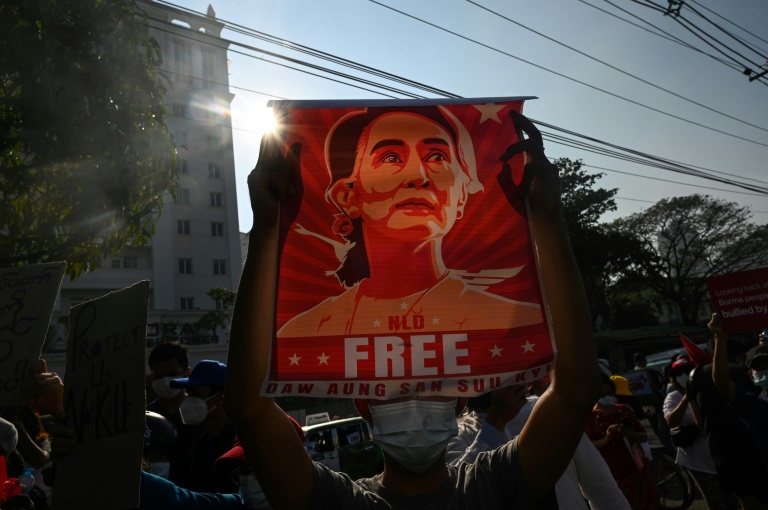
A Myanmar junta court sentenced ousted leader Aung San Suu Kyi to three years in jail “with hard labour” on Friday, for electoral fraud in the 2020 polls that her party won in a landslide, a source said. 

The latest sentence, handed down by the closed court, takes the total jail time the Nobel laureate and democracy figurehead is facing to two decades. 

She was “sentenced to three years’ imprisonment with hard labour”, a source with knowledge of the case said, adding that Suu Kyi, 77, appeared to be in good health.

Her lawyers would appeal the ruling, the source added.

Detained since a coup last year, Suu Kyi had already been convicted of corruption and a clutch of other charges by a closed junta court and sentenced to 17 years in prison.

Journalists have been barred from proceedings in the military-built capital Naypyidaw and her lawyers have been prevented from speaking to the press.

Ex-president Win Myint, who was on trial for the same charge, also received a jail sentence of three years, the source said.

A junta spokesman did not respond to a request for comment.

The military alleged widespread voter fraud during the November 2020 election, won resoundingly by Suu Kyi’s National League for Democracy (NLD), although international observers said the poll was largely free and fair.

The military has since cancelled the result and said it uncovered more than 11 million instances of voter fraud.

Last month, junta chief Min Aung Hlaing said the military was being “lenient” on Suu Kyi and could have taken “more serious actions” against her.

Myanmar was plunged into crisis following the military’s power grab last year, with swathes of the country ravaged by fighting and the economy in free fall.

More than 2,200 people have been killed and 15,000 arrested in the military’s crackdown on dissent since it seized power, according to a local monitoring group.

– ‘Eradicate for good’ –

“These closed-door hearings make it difficult to see how any of the sentencing of Aung San Suu Kyi can be credible,” said Manny Maung, Myanmar researcher at Human Rights Watch.

Other analysts questioned what Suu Kyi’s jail time would look like.

“I can’t see them sending Suu Kyi to a labour camp,” said independent Myanmar analyst David Mathieson.

But he added: “No act of violence or torture is off limits, and Suu Kyi is the nemesis they (the military) want to humiliate and eradicate, for good.”

The junta declared a state of emergency after ousting Suu Kyi’s government, and has previously said elections would be held by August 2023.

In a speech broadcast last month, Min Aung Hlaing did not mention a date for fresh polls but said they could only be held when the country was “peaceful and stable”.

He also said “reform” to the electoral system was needed, including combining the first-past-the-post system — under which Suu Kyi’s NLD has won sweeping majorities — with proportional representation.

Last month, the junta-stacked Union Election Commission said the country’s 92 registered political parties would have to ask for permission if they wished to meet foreign organisations or individuals.

“Political parties need to respect the law,” the commission said.

“If they fail to do so their party’s registration will be dissolved.”

Afghanistan mosque blast kills 18, including top cleric

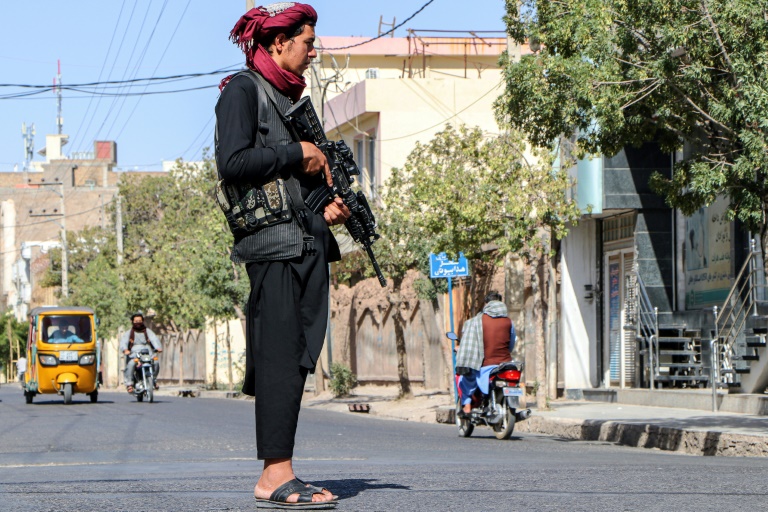
A huge bomb blast Friday at one of the biggest mosques in western Afghanistan killed at least 18 people, including an influential imam who earlier this year called for those who commit “the smallest act” against the government to be beheaded.

Images posted on Twitter showed what appeared to be blood-stained bodies scattered around the compound of Gazargah Mosque in Herat city.

Violence has largely declined since the Taliban returned to power last year, but several bomb blasts — some targeting minority communities — have rocked the country in recent months, many claimed by the jihadist Islamic State (IS) group.

At least 18 people were killed and 23 wounded in Friday’s blast, said Hameedullah Motawakel, spokesman for the governor of Herat province, in a text message to media.

Government spokesman Zabihullah Mujahid confirmed Mujib ur Rahman Ansari, the imam of the mosque, was among the dead.

“A strong and courageous religious scholar of this country was martyred in a brutal attack,” he said on Twitter.

Ansari was an influential cleric known for his fiery speeches.

In July, during a religious gathering in Kabul, he strongly defended Afghanistan’s new Taliban rulers.

“Whoever commits the smallest act against our Islamic government should be beheaded,” he said.

“This (Taliban) flag has not been raised easily, and it will not be lowered easily.”

Before the Taliban returned to power in August last year, Ansari was known for his tirades against the previous US-backed governments.

Ansari is the second pro-Taliban cleric to be killed in a blast in less than a month, after an earlier suicide attack targeted Rahimullah Haqqani at his madrassa in Kabul.

Haqqani was known for angry speeches against IS, who later claimed responsibility for his death.

He had also spoken in favour of girls being allowed to attend secondary school, despite the government banning them from attending classes in most provinces.

Several mosques across the country have been targeted this year, some in attacks claimed by IS.

At least 21 people were killed and dozens more wounded on August 17 when a blast ripped through a mosque packed with worshippers in Kabul.

IS has primarily targeted minority communities such as Shiites, Sufis and Sikhs.

While IS is a Sunni Islamist group like the Taliban, the two are bitter rivals and greatly diverge on ideological grounds.

Government officials claim that IS has been defeated but experts say the group is the main security challenge for the country’s current Islamist rulers.

European equities stage rebound before US data

Europe’s stock markets rose Friday before key US jobs data, after diving the previous day on fears of an inflation-induced recession.

Frankfurt won 1.5 percent, London gained 0.7 percent and Paris added 0.6 percent after a subdued Asian session.

All three markets tanked Thursday as record-high eurozone inflation fuelled fears that the European Central Bank will ramp up interest rates again next week, even as the region faces rocketing winter energy prices over Russia’s war on Ukraine.

Elsewhere on Friday, oil prices rallied Friday on fading expectations for an Iran nuclear deal anytime soon, but remain under pressure from issues including the strong dollar, China’s renewed Covid lockdowns, and worries about a demand-sapping recession.

– Data ‘commands attention’ –

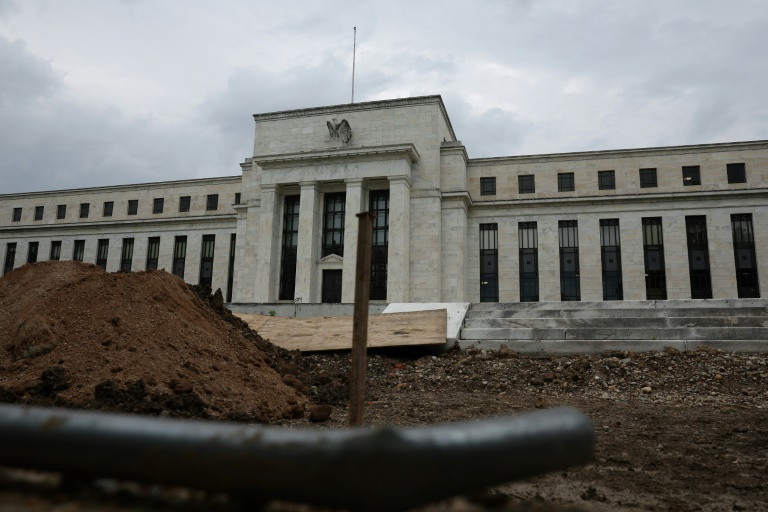
All eyes are now on a key US non-farm payrolls (NFP) report slated for publication later Friday, for clues on the Federal Reserve’s interest rate outlook.

“This economic reading commands the most attention,” noted AvaTrade analyst Naeem Aslam.

“As always, the Fed will watch this data very closely and it is highly likely to influence their monetary policy decision.”

With US rates expected to keep rising, the dollar has rallied to highs not seen for decades including against the pound and euro.

Bets are now increasing on a third successive 75-basis-point increase at the Fed’s September meeting. 

The dollar eased Friday but held above 140 yen — one day after breaching the key level for the first time since 1998.

“Profit-taking was the name of the game as euro/dollar climbed back above parity, although dollar/yen continued to press ahead,” noted City Index analyst Fawad Razaqzada.

Recent healthy readings on US factory activity, unemployment claims and private jobs creation indicated the world’s top economy remained strong despite rising interest rates and four-decade-high inflation.

Wall Street ended Thursday with a late rally, with the Dow and S&P 500 snapping a four-day retreat, though the Nasdaq extended its losing streak.

– Key figures at around 1100 GMT –

London – FTSE 100: UP 0.7 percent at 7,200.60 points

Frankfurt – DAX: UP 1.5 percent at 12,820.41

Paris – CAC 40: UP 0.6 percent at 6,071.24

EURO STOXX 50: UP 0.8 percent at 3,484.42

Tokyo – Nikkei 225: FLAT at 27,650.84 (close)

Hong Kong – Hang Seng Index: DOWN 0.7 percent at 19,452.09 (close)

Shanghai – Composite: UP 0.1 percent at 3,186.48 (close)

New York – Dow: UP 0.5 percent at 31,656.42 (close)

Dollar/yen: UP at 140.32 yen from 139.44 yen on Thursday

Euro/dollar: UP at $1.0008 from $0.9946

Pound/dollar: UP at $1.1564 from $1.1545

Euro/pound: UP at 86.51 pence from 86.14 pence

West Texas Intermediate: UP 2.3 percent at $88.62 per barrel

Brent North Sea crude: UP 2.1 percent at $94.27

burs-rfj/rl

Myanmar junta jails former British envoy for one year

Myanmar’s ruling military jailed on Friday a former British ambassador and her husband for a year each for breaching immigration rules, a junta spokesman said.

Vicky Bowman, who served as envoy from 2002 to 2006, was detained last month for failing to declare she was living at an address different from the one listed on her foreigner’s registration certificate.

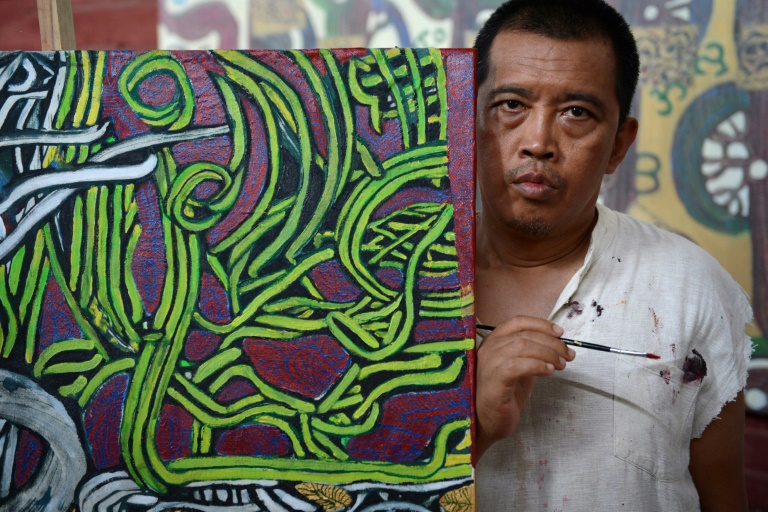
Htein Lin, a Myanmar national and prominent artist, was arrested for helping his wife reside at an address different to their registered home in commercial hub Yangon.

The couple, who have a daughter, could have been jailed for up to five years.

Since carrying out a coup last year, Myanmar’s military has carried out a bloody clampdown on dissent and battled forces opposed to the takeover. Scores of foreign nationals have been caught up in the crackdown.

Local media said the hearing took place at a court inside Yangon’s Insein prison.

A spokesperson for the United Kingdom’s foreign ministry said it would “continue to support Ms Bowman and her family until their case is resolved”. 

Ties between Myanmar and its former colonial ruler Britain have soured since the military’s takeover, with the junta this year criticising the UK’s recent downgrading of its mission in the country as “unacceptable”.

Before serving as ambassador, Bowman was the second secretary in the British embassy from 1990 to 1993. 

She is now director at the Myanmar Centre for Responsible Business and is a fluent Burmese speaker.

Htein Lin took part in a 1988 student uprising against a former junta, and later spent years underground. 

He was arrested in 1998 and imprisoned for allegedly opposing junta rule.

After he was freed in 2004, he came to the attention of then-ambassador Bowman for a series of paintings he completed in jail using smuggled materials.

She persuaded him to let her take the politically sensitive artwork, which depicted his life behind bars, for his own security.

He later proposed to her during a holiday in Britain, and the pair married in 2006.

– Soured ties –

“The latest reports on the conviction of the former UK ambassador and her Burmese artist husband are extremely concerning,” Amnesty International’s deputy regional director for campaigns Ming Yu Hah said. 

The United Nations Human Rights Office in Geneva said it was “deeply shocked that the de facto authorities have sought to punish people who have been committed to the development of the country”.

The British government has sanctioned several military-linked companies and individuals following the army’s power grab.

Bowman and her husband were arrested the day before London announced new sanctions on companies it said had helped raise funds for the military during its 2017 crackdown on the mostly Muslim Rohingya minority.

Australian economist Sean Turnell — who worked as an adviser to civilian leader Aung San Suu Kyi — was detained shortly after the coup and is accused of breaching the colonial-era official secrets act.

Japanese filmmaker Toru Kubota is currently being held in Insein prison, after he was arrested last July near an anti-government rally in Yangon.

He was the fifth foreign journalist to be detained in Myanmar, after US citizens Nathan Maung and Danny Fenster, Robert Bociaga of Poland and Yuki Kitazumi of Japan — all of whom were later freed and deported.

More than 2,200 people have been killed and 15,000 arrested in the military’s crackdown on dissent since it seized power, according to a local monitoring group.

Greenpeace drops boulders on UK seabed to curb bottom-trawling fishing

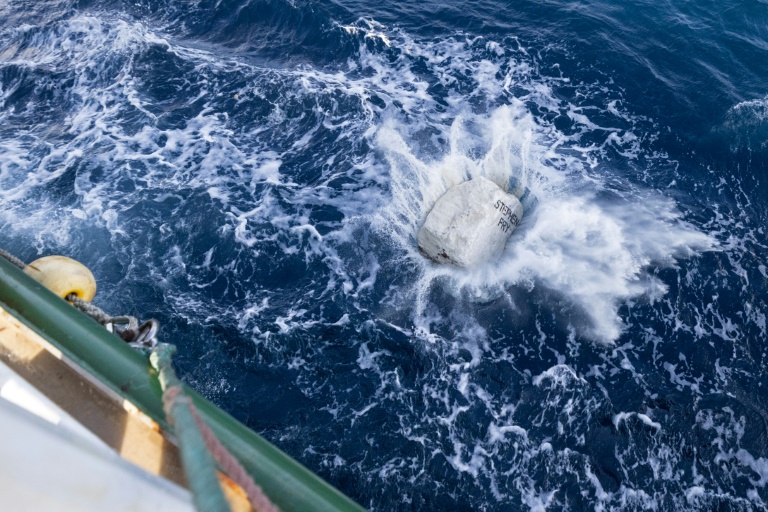
Greenpeace UK said Friday it had dropped 18 large boulders on the seabed in a marine conservation zone off the coast of southwest England to prevent “destructive” industrial fishing.

The environmental campaigners sailed to the western part of the Channel between the UK and France, loaded with the boulders of Portland limestone, each weighing between 500 and 1,400 kilograms (1,100 and 3,100 pounds). 

The giant rocks were dropped on Thursday from its Arctic Sunrise research vessel in an area of the South West Deeps (East) Conservation Zone, which lies some 190 kilometres (120 miles) off Land’s End, the most westerly point of mainland England.

“We are placing large limestone boulders on the seabed to create a protective underwater barrier which will put the area off limits to destructive fishing,” Anna Diski, UK oceans campaigner, told AFP on board.

The action would make it “impossible for them to drag the heavy fishing gear along the seabed, destroying the habitat and disturbing the carbon”, she added.

Artists created a giant ammonite sculpture — inspired by the fossil often found in Portland limestone — out of one of the boulders, which was also placed on the seabed.

The names of the action’s celebrity backers and supportive politicians were also inscribed on the rocks.

“Right now, there’s an industrial fishing frenzy happening in UK waters, and what’s our government doing about it?” asked Greenpeace UK’s head of oceans, Will McCallum.

“Greenpeace UK has created this underwater boulder barrier as a last resort to protect the oceans. We’d much rather the government just did their job.” 

McCallum said it was “outrageous” that bottom-trawlers are allowed to operate on the seabed in protected areas.

“They destroy huge swathes of the marine ecosystem and make a mockery of our so-called ‘protection’,” he added.

– ‘Get serious!’ –

The action comes after the latest round of UN talks to try to secure protection for marine life in international waters broke up without agreement.

Greenpeace said the 4,600-square-kilometre (1,776-square-mile) South West Deeps is “one of the most heavily fished so-called Marine Protected Areas in the UK”.

It cited figures from the Global Fishing Watch monitoring agency that said that 110 vessels — more than half of them from France — fished for 18,928 hours in area in the 18 months to July.

Of that, industrial vessels with bottom-towed fishing gear spent 3,376 hours fishing in the zone. 

Bottom-trawling is only banned in four out of the UK’s 76 offshore Marine Protected Areas, and the government is consulting over the possible bans in a further 13. 

“The problem is that the majority of the UK’s MPAs don’t have any actual protection at all,” said Jasmine Watkiss, one of those on board the Arctic Sunrise.

“The government needs to get serious about ocean protection before it’s too late.

“The next prime minister should ban industrial fishing in all of the UK’s Marine Protected Areas by tweaking commercial fishing licences,” she added.

Neil Whitney, a fisherman from East Sussex in southern England, said bottom-trawling was “like ploughing a combine harvester through a national park”. 

“They’re able to take out entire ecosystems, and if they cause a fishery to collapse, they just move on to the next one,” he added.

“Industrial fishing, like fly-shooters (vessels which tow lead-weighted ropes along the seabed) and supertrawlers (trawlers over 100 metres long), are killing our marine environment, and small-scale UK fishermen like me are losing out big time.”

He said it was “absurd” that bottom-trawling was legal in MPAs. “MPAs are supposed to be the areas where fish stocks can recover, so that we fish for generations to come.

“It’s a case of common sense.”

video-jwp/phz/lth

Greenpeace drops boulders on UK seabed to curb bottom-trawling fishing

Greenpeace UK said Friday it had dropped 18 large boulders on the seabed in a marine conservation zone off the coast of southwest England to prevent “destructive” industrial fishing.

The environmental campaigners sailed to the western part of the Channel between the UK and France, loaded with the boulders of Portland limestone, each weighing between 500 and 1,400 kilograms (1,100 and 3,100 pounds). 

The giant rocks were dropped on Thursday from its Arctic Sunrise research vessel in an area of the South West Deeps (East) Conservation Zone, which lies some 190 kilometres (120 miles) off Land’s End, the most westerly point of mainland England.

“We are placing large limestone boulders on the seabed to create a protective underwater barrier which will put the area off limits to destructive fishing,” Anna Diski, UK oceans campaigner, told AFP on board.

The action would make it “impossible for them to drag the heavy fishing gear along the seabed, destroying the habitat and disturbing the carbon”, she added.

Artists created a giant ammonite sculpture — inspired by the fossil often found in Portland limestone — out of one of the boulders, which was also placed on the seabed.

The names of the action’s celebrity backers and supportive politicians were also inscribed on the rocks.

“Right now, there’s an industrial fishing frenzy happening in UK waters, and what’s our government doing about it?” asked Greenpeace UK’s head of oceans, Will McCallum.

“Greenpeace UK has created this underwater boulder barrier as a last resort to protect the oceans. We’d much rather the government just did their job.” 

McCallum said it was “outrageous” that bottom-trawlers are allowed to operate on the seabed in protected areas.

“They destroy huge swathes of the marine ecosystem and make a mockery of our so-called ‘protection’,” he added.

– ‘Get serious!’ –

The action comes after the latest round of UN talks to try to secure protection for marine life in international waters broke up without agreement.

Greenpeace said the 4,600-square-kilometre (1,776-square-mile) South West Deeps is “one of the most heavily fished so-called Marine Protected Areas in the UK”.

It cited figures from the Global Fishing Watch monitoring agency that said that 110 vessels — more than half of them from France — fished for 18,928 hours in area in the 18 months to July.

Of that, industrial vessels with bottom-towed fishing gear spent 3,376 hours fishing in the zone. 

Bottom-trawling is only banned in four out of the UK’s 76 offshore Marine Protected Areas, and the government is consulting over the possible bans in a further 13. 

“The problem is that the majority of the UK’s MPAs don’t have any actual protection at all,” said Jasmine Watkiss, one of those on board the Arctic Sunrise.

“The government needs to get serious about ocean protection before it’s too late.

“The next prime minister should ban industrial fishing in all of the UK’s Marine Protected Areas by tweaking commercial fishing licences,” she added.

Neil Whitney, a fisherman from East Sussex in southern England, said bottom-trawling was “like ploughing a combine harvester through a national park”. 

“They’re able to take out entire ecosystems, and if they cause a fishery to collapse, they just move on to the next one,” he added.

“Industrial fishing, like fly-shooters (vessels which tow lead-weighted ropes along the seabed) and supertrawlers (trawlers over 100 metres long), are killing our marine environment, and small-scale UK fishermen like me are losing out big time.”

He said it was “absurd” that bottom-trawling was legal in MPAs. “MPAs are supposed to be the areas where fish stocks can recover, so that we fish for generations to come.

“It’s a case of common sense.”

video-jwp/phz/lth

Trial opens in France over 2016 Nice truck massacre

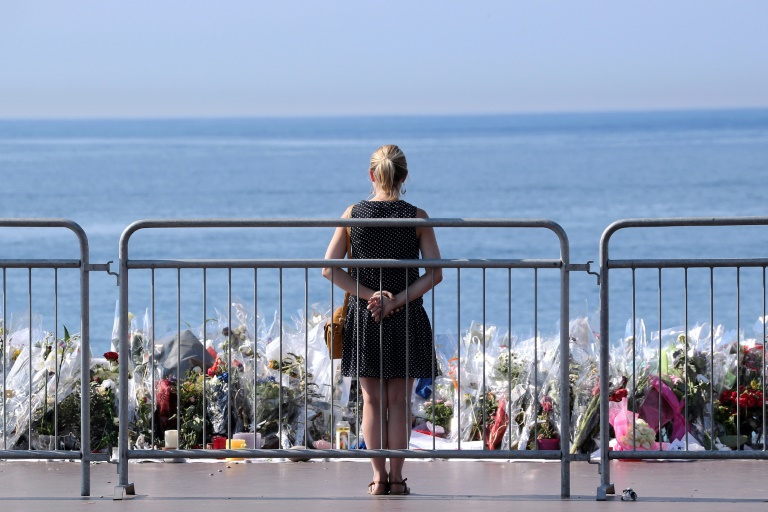
Eight suspects go on trial Monday over the July 2016 attack in the Mediterranean city of Nice where a radical Islamist killed 86 people by driving a truck into thousands of locals and tourists celebrating France’s national day.

The attacker Mohamed Lahouaiej-Bouhlel, a 31-year-old Tunisian, was shot dead by  police following the more than four-minute rampage when he zig-zagged down the  seaside embankment of the Promenade des Anglais, destroying lives in his wake.

The seven men and one woman who will go on trial in Paris are accused of crimes from being aware of his intentions to providing logistical support and supplying weapons.

Only one suspect, Ramzi Kevin Arefa, faces the maximum penalty of life imprisonment if convicted as a recurring offender. The others risk between five and 20 years in prison.

The trial, which is due to last until mid-December, is the latest legal process over the Islamist attacks that have hit France since 2015.

A Paris court on June 29 convicted all 20 suspects in the trial over the November 2015 attacks in the French capital which left 130 dead.

The extremist Islamic State (IS) group rapidly claimed the Nice attack, although French investigators did not find any links between the attacker and the jihadist organisation which at the time controlled swathes of Iraq and Syria.

– ‘Frustration’ –

While Lahouaiej-Bouhlel cannot now be brought to justice, the trial — as in the November 2015 case — marks a hugely important moment for survivors and relatives of the victims.

“It is better not to expect much from it so as not to be disappointed. Above all, we want a good trial, for everyone,” said Bruno Razafitrimo, who lost his wife Mino in the tragedy and is now bringing up their two young sons alone.

Of the accused, three suspects are charged with association in a terrorist conspiracy and the five others with association in a criminal conspiracy and violating arms laws.

The attack was the second most deadly post-war atrocity on French soil after the November 2015 Paris attacks.

Six years after the attack “the fact that the sole perpetrator is not there will create frustration. There will be many questions that no one will be able to answer,” said Eric Morain, lawyer for a victims’ association which is taking part in the trial.

“We are trying to prepare them for the fact that the sentences may not be commensurate with their suffering,” said Antoine Casubolo-Ferro, another lawyer for the victims.

In the November 2015 attacks trial, just one member of the assault team, Salah Abdeslam, was not killed during or in the wake of the strikes. 

He discarded his suicide belt on the night of the attacks and claimed to have changed his mind about attacking. But he was sentenced to life in prison with only a tiny chance of parole after 30 years, the toughest possible punishment under French law.

– ‘Wound will never heal’ –

Of the accused, seven will appear in court with one suspect, Brahim Tritrou, tried in absentia, after fleeing judicial supervision to Tunisia where he is now believed to be under arrest.

Just three of the accused are currently under arrest with one held in connection with another case. The defendants are a mix of Tunisians, French-Tunisians and also Albanians. 

The trial will take place within the historic Palais de Justice in central Paris in the same purpose-built courthouse that hosted the November 2015 attacks hearings.

Some 30,000 people gathered on the seafront to watch a fireworks display celebrating France’s annual July 14 national day when Lahouaiej-Bouhlel began his murderous rampage.

The attack left permanent scars on the city of Nice, a byword for urban seaside glamour on France’s Cote d’Azur but which like the neighbouring Mediterranean cities of Toulon and Marseille has seen rising immigration and social tension.

Nice was struck again in October 2020 when a Tunisian Islamist radical stabbed to death three people in a church.

Nice’s right-wing mayor, Christian Estrosi said: “This wound will never heal, whatever the outcome of the trial. This wound is too deep.”

According to French and Tunisian press reports, the body of Lahouaiej-Bouhlel was in 2017 repatriated to Tunisia and buried in his home town of M’saken, south of Tunis. This has never been confirmed by the Tunisian authorities.

Close Bitnami banner
Bitnami