World

Man arrested for attempted shooting of Argentine VP Kirchner

A man attempted to shoot Argentine Vice President Cristina Kirchner near her home in Buenos Aires on Thursday, a shocking incident that prompted a wave of sympathy from Latin American leaders.

“Cristina remains alive, because for a reason that has not yet been technically confirmed, the gun which contained five bullets did not fire despite the trigger having been pulled,” Argentina’s President Alberto Fernandez said in an address to the nation.

“This is the most serious event that has happened since we restored democracy” in 1983, Fernandez said.

Footage of the incident showed the man pointing a handgun at close range at Kirchner, who was the country’s leader from 2007 to 2015 and is now facing corruption charges.

The incident took place in Buenos Aires’ upscale Recoleta neighborhood.

“I saw this arm come up over my shoulder behind me with a gun, and with people around me, he was subdued,” a supporter of Kirchner, who did not give his name, told AFP.

Security Minister Anibal Fernandez said a suspect had been arrested on Thursday night but investigators still needed to examine the crime scene and circumstances surrounding the incident. 

Local media reported that the suspect was a 35-year-old Brazilian national.

President Fernandez declared Friday a public holiday to allow people to “express themselves in defense of the life of democracy and in solidarity with our vice president.”

– ‘Solidarity’ –

Several well-known Latin American politicians voiced support for Kirchner, 69, after the failed attack.

Venezuelan President Nicolas Maduro, a strong Kirchner ally, tweeted his support Thursday night.

“We send our solidarity to Vice President Cristina Kirchner in the face of the attack against her life,” he wrote. 

“We strenuously reject this act that sought to destabilize the peace of the brotherly Argentine people. The great homeland is with you, comrade!” 

Chile’s President Gabriel Boric also tweeted out support to Kirchner and the Argentine people. 

“The assassination attempt… deserves the repudiation and condemnation of the entire continent,” he said. “The path will always be the debate of ideas and dialogue, never weapons or violence.”

Bolivian President Luis Arce also expressed his support for Kirchner.

Within the country, opposition party Together for Change condemned the attempted attack on Kirchner and called for a full investigation.

“My absolute repudiation of the attack suffered by Cristina Kirchner, who fortunately was not injured,” tweeted opposition leader Mauricio Macri, who was president after Kirchner. 

“This very serious act requires an immediate and deep investigation by prosecutors and security forces.”

Luiz Inacio Lula da Silva, Brazil’s former president now locked in a fierce election battle, also slammed Kirchner’s attacker as “a fascist criminal who does not know how to respect differences and diversity.”

– Court case –

Kirchner, a lawyer by training who succeeded her late husband, Nestor Kirchner, as president, stands accused of fraudulently awarding public works contracts in her political stronghold of Patagonia.

Government prosecutors have accused her of defrauding the state out of an estimated $1 billion and are seeking a prison sentence of 12 years and a lifetime ban from politics.

Hundreds of activists have gathered in recent days in front of her home to protest the claims.

“Nothing, absolutely nothing that they have said was proven,” Kirchner said last week.

The verdict in her case is expected at the end of the year.

She is president of the country’s Senate and enjoys parliamentary immunity, granting her some legal protection.

Even if convicted she would not go to prison unless her sentence was ratified by the country’s Supreme Court, or if she loses her Senate seat at the next elections at the end of 2023.
Myanmar's Suu Kyi sentenced to three years for electoral fraud: source

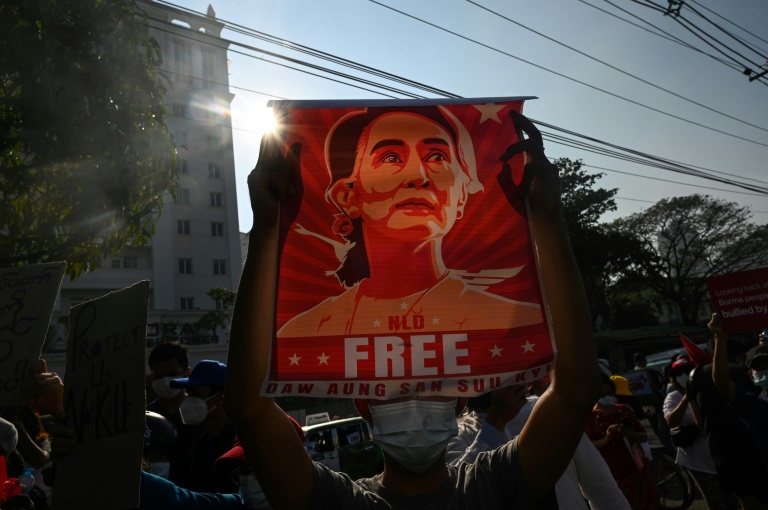
A Myanmar junta court sentenced ousted leader Aung San Suu Kyi to three years in jail on Friday for electoral fraud over 2020 polls which her party won in a landslide.

Suu Kyi was “sentenced to three years’ imprisonment with hard labour”, a source with knowledge of the case said, adding that the Nobel laureate, 77, appeared to be in good health.

Detained since a putsch last year, Suu Kyi has already been convicted of corruption and a clutch of other charges by a closed junta court and sentenced to 17 years in prison.

Journalists have been barred from proceedings in the military-built capital Naypyidaw and her lawyers have been prevented from speaking to the press.

The military alleged widespread voter fraud during the November 2020 election, won resoundingly by Suu Kyi’s National League for Democracy (NLD), although international observers said the poll was largely free and fair.

The military has since cancelled the result and said it uncovered more than 11 million instances of voter fraud.

Last month junta chief Min Aung Hlaing said the military was being “lenient” on Suu Kyi and could have taken “more serious actions” against her.

Myanmar was plunged into crisis following the military’s power grab last year, with swathes of the country ravaged by fighting and the economy in freefall.

More than 2,200 people have been killed and over 15,000 arrested in the military’s crackdown on dissent since it seized power, according to a local monitoring group.

– ‘Peaceful and stable’ –

The junta declared a state of emergency after ousting Suu Kyi’s government, and has previously said elections would be held and the state of emergency lifted by August 2023.

In a speech broadcast last month Min Aung Hlaing did not mention a date for fresh polls but said they could only be held when the country was “peaceful and stable”.

He also said “reform” to the electoral system was needed, including combining the first-past-the-post system — under which Suu Kyi’s NLD has won sweeping majorities — with proportional representation.

Last month the junta-stacked Union Election Commission said the country’s 92 registered political parties would have to ask for permission if they wished to meet foreign organisations or individuals.

“Political parties need to respect the law,” the commission said.

“If they fail to do so their party’s registration will be dissolved.”

Gone in 30 years? The Welsh village in crosshairs of climate change

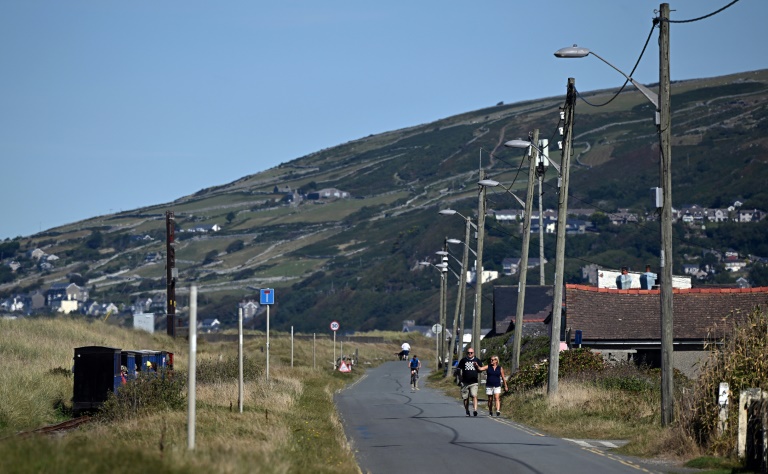
Occasionally at night, if the weather’s bad when she walks her dog along the waterfront, Georgina Salt admits feeling a little “frisson” at the vulnerability of her exposed Welsh village.

Otherwise, like many residents in Fairbourne, northwest Wales, she tries not to worry that rising sea levels are predicted to swamp the village.

A decade ago, Fairbourne — in a stunning but perilous position sandwiched between the Irish Sea, an estuary and the mountains of Snowdonia National Park — was given an official death sentence.

But Salt, a community councillor, thinks the decision by local authority Gwynedd Council and others to relocate Fairbourne by the mid-2050s was made prematurely, without adequate consideration or consultation — and could now itself be abandoned.

“The biggest problem was they put a date on things,” she told AFP in the condemned village.

“We’re trying to get them (the council) to… be a bit more flexible about it and say, ‘we’re going to keep an eye on things’.”

After a summer of drought and record temperatures, the UK is increasingly bracing for the many varied impacts of human-caused climate change while this week saw a US government report emerge showing the planet’s sea levels rising for a 10th straight year.

Meteorologists noted last month that the seas surrounding the UK are rising at a far faster rate than a century ago, while the head of the Environment Agency warned in June that some coastal communities “cannot stay where they are”.

– ‘Catastrophic’ –

But Fairbourne, founded in the late 1880s by a Victorian flour merchant and now home to up to 900 people, could be considered a cautionary tale of how to proceed.

In 2013, Gwynedd Council adopted proposals in the region’s latest Shoreline Management Plan (SMP) to stop maintaining the village’s flood defences and relocate its residents in 40 to 50 years. 

The following year, the devolved Welsh Assembly in Cardiff, which has powers over environmental policy, also signed off on the SMP, which said Fairbourne faced long-term “catastrophic flood risk”.

A subsequent multi-agency “masterplan” proposed decommissioning the village “by 2054”.

SMPs have been conducted for the entire UK coastline in recent decades but Fairbourne appears to be the first place given that fate, despite not flooding severely in generations.

Residents say the order quickly “blighted” the village. They were labelled Britain’s first “climate refugees” in a flurry of media attention.

With prospective home buyers unable to get mortgages, sales dried up and property values fell by nearly half.

Meanwhile, Gwynedd Council has faced persistent criticism for failing to detail its relocation plans, with frustrated locals left feeling they were unfairly singled out.

– ‘Death… by supposition’ –

“We weren’t told where we were going to live… how people with jobs will find new jobs,” said retiree Angela Thomas. 

Locals are living under a “sword of Damocles”, unsure whether to spend money on their homes or even on a holiday, she added.

“Some people may be thinking, ‘Crikey, I’ve got to leave that money in the bank just in case I’m turfed out of my home’.”

Residents note other more flood-prone places, such as Barmouth on the other side of the estuary, have not had the same treatment.

“There’s many villages… around the coast of Great Britain that will also be in the same predicament,” said Stuart Eves, another local councillor who also runs a campsite. 

“You can’t condemn a village 40 years into the future and not have… any form of plan in place,” he added, sitting off the main street near the sole pub, post office, grocery store and railway station.

“(It’s) the ultimate death of a village by supposition.” 

Some even sense a conspiracy given that Fairbourne, which sits in a predominantly Welsh-speaking part of Wales, hosts many retirees from England.

“We had even Welsh residents coming back to us saying ‘I do sometimes think that we’re being targeted because it’s a mainly English community’,” said Salt.

– ‘Don’t agree’ –

After nearly a decade of recriminations, locals say the devolved Welsh Assembly is reassessing the SMP and 2054 decision.

External consultants have been chosen to review the latest evidence, residents claim — though the Welsh government has not confirmed as much. 

That includes a report by a local academic with relevant expertise which argues the SMP ignored the dynamism of Fairbourne’s natural shingle bank beach, as well as the cost of decommissioning and returning the village to marshland.

A spokesman for the Labour-led government in Cardiff declined to confirm that a review was underway but said Gwynedd Council’s decision “does not necessarily mean that funding will end in 2054” for flood defences.

Natural Resources Wales, the government agency which maintains sea defences, conceded that protecting Fairbourne was “working against nature”.

“As long as funding is available, we will continue to monitor and maintain the village’s flood defences to protect the community of Fairbourne,” a spokesperson added.

Gwynedd Council declined to comment.

In the meantime, the village appears to be recovering from the earlier fallout. Some property sales are now happening and new residents arriving.

“I can’t see it (relocation) happening,” said one of them, 23-year-old Mike Owen.

He recently moved with his parents and girlfriend from northwest England, drawn by the area’s relative affordability and natural beauty.

“I don’t agree with it — why would you give up on something?”

Chile to vote on overhauling dictatorship-era constitution

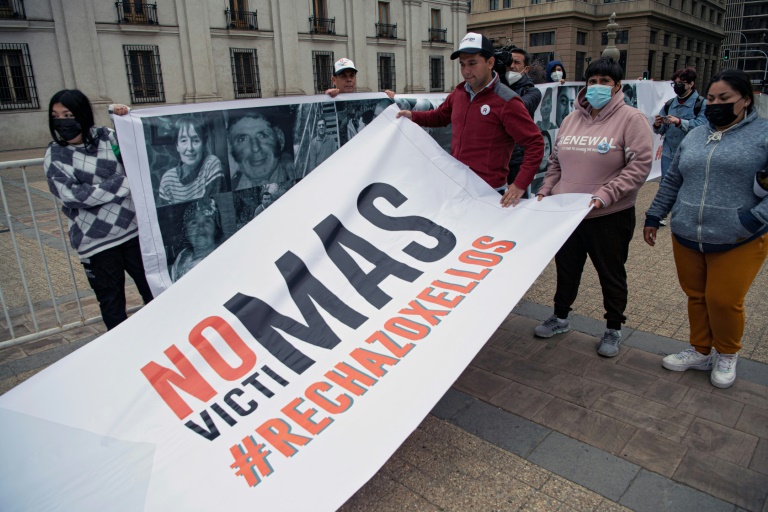
Chileans will vote Sunday on whether to adopt a new constitution and shift from a market-driven society to a more welfare-based one.

The proposed draft aims to replace the current constitution, written during the Augusto Pinochet dictatorship (1973-1990), that — despite several successive reforms — is still considered an obstacle to any fundamental social changes.

Education, health care and pensions are still in the hands of the private sector.

But despite an overwhelming majority of Chileans — close to four-fifths — voting previously to rewrite the constitution, opinion polls suggest the new document will be rejected.

Chief among the concerns of voters, though, is the prominence given to the country’s Indigenous peoples, who make up close to 13 percent of the 19 million population.

Proposals to legalize abortion and protect the environment as well as natural resources such as water, which are currently often overexploited by private mining companies, have also garnered much attention.

For many people, the thought of a new constitution that aims to de-privatize certain key sectors has sparked fears.

“I don’t want to be another Venezuela; we have a lot to lose,” Patricio Gutierrez, 40, an engineer for a transnational mining company, told AFP.

Like many others, he fears the new constitution would generate instability and uncertainty, which could then harm the economy.

“Social reforms are necessary but not changing the rules in a country that is doing well,” added Gutierrez.

Yet around 40 world-renowned economists and political scientists have expressed their support for the new project.

– Starting somewhere –

Those in favor of the new constitution say it will prompt major changes in a conservative country marked by social and ethnic tensions and lay the foundation for a more egalitarian country.

Anadriel Hernandez, 18, a first-time voter, expects the new constitution “will change Chile, maybe not overnight, because that would be impossible, but you always have to start somewhere.”

One of the main drivers for the new constitution was the outbreak of massive social unrest in 2019, initially in response to a metro fare hike. But it mushroomed into demands for greater social justice in a country that enjoyed years of economic strength but widening inequality.

Many people blamed the constitution, which gave private enterprise free reign over crucial industries, creating fertile breeding ground for the rich to prosper and the poor to struggle.

Although the constitution has undergone several reforms since it was implemented in 1980, it retains the stigma of having been introduced during a dictatorship.

But Luz Galarce, 53, who teaches young children, said she will vote no because the idea to rewrite the constitution “came from a moment of great crisis in our country, it wasn’t a decision taken objectively.”

– Rejection likely –

Some 15 million people will go to the ballot box in a compulsory vote.

Having already voted to rewrite the constitution and then elect the representatives to do so, this will be the third time in two years Chileans have headed to the polls over this issue.

The new text was drawn up by a constitutional commission made up of 154 members — mostly without political affiliation — split equally between men and women, and with 17 places reserved for Indigenous people.

The resulting proposal recognizes 11 Indigenous peoples and offers them greater autonomy, particularly in terms of justice.

It is the most controversial clause, with some critics accusing the authors of trying to turn the traditionally marginalized Indigenous people into a higher class of citizen.

“Most likely the reject vote will win, and for that to change depends on the number of people who vote and who votes,” political scientist Marcelo Mella told AFP.

If accepted, Chile’s congress will then start deciding how to apply the new laws. If the new text is rejected, then the current constitution will remain in place.

If that happens, then the simmering unrest that has gripped the nation for three years may well boil over once again.

Pandas and Trump teach Hong Kong kids about national security crimes

Rows of fidgeting Hong Kong schoolchildren looked on as a short film explained what constitutes a national security crime, using former US President Donald Trump as an example — and a warning.

The TV was surrounded by dozens of stuffed panda toys, which the children were assured they could play with later if they listened attentively.

The screening was at Hong Kong’s first patriotic education centre, which teaches students about the city’s new national security law as well as China’s history and achievements.

Beijing imposed the sweeping law on Hong Kong to snuff out dissent after huge and sometimes violent democracy protests in 2019 — and schools have been ordered to instil a new sense of patriotism into children.

As the new academic year began on Thursday, another group of some 40 students from Pui Kiu College, known for its patriotic teaching, were among the first visitors.

“Can anyone tell me why national security matters,” a retired teacher-turned-volunteer guide, who gave her surname Kan, asked the chirping crowd.

“Without national security, humankind cannot live well,” a student answered.

“Well said,” Kan replied. “People cannot live well, nor can the pandas.”

Kan told AFP her “most important” task was helping children understand the four new offences under the security law: secession, subversion, collusion with foreign forces and terrorism.

– Trump and Lai –

During Kan’s talk, Trump and the January 6, 2021 Capitol Hill riot were used to illustrate subversion — the offence of trying to topple or undermine the government.

For foreign collusion, she used jailed Hong Kong pro-democracy media tycoon Jimmy Lai — without naming him.

Lai and senior editors from the now-shuttered Apple Daily newspaper are facing an upcoming trial on collusion charges for allegedly lobbying for international sanctions against Hong Kong.

Then Kan turned to the moment Hong Kong’s legislature was broken into by democracy protesters in 2019.

“What offence was committed by the children who looked like they were going mad in the legislative council,” Kan asked.

“Terrorism,” some students replied.

“They didn’t set a fire or kill people,” Kan said, nudging them towards the offence of subversion.

– Political conversion –

The centre is operated by the city’s largest pro-Beijing teachers union in a vacated school at the foot of Lion Rock — a mountain popularly considered a symbol of the city’s can-do spirit. 

Until recently, Hong Kong teachers could also join a pro-democracy union but it closed in the wake of the political crackdown.

The huge 2019 rallies came after years of growing demands for Hong Kongers to have a greater say in how their city is run.

Leaders in Beijing and Hong Kong have dismissed calls for democracy and instead portrayed the movement as a foreign-directed plot to destabilise all of China.

Hong Kong’s new leader John Lee, a former security chief who helped lead that crackdown, attended the centre’s inauguration ceremony in July.

“In the past, some ill-intentioned people… smeared national education for a long time,” he said at the time.

“I fully believe the centre will become… a learning field that nurtures a new generation of youth who love China and Hong Kong.”

Kan told AFP that she used to attend the annual vigils in Hong Kong to commemorate democracy protesters killed by Chinese troops in Tiananmen Square.

“But after I saw how violent it became on TV (in 2019), I had a big turn,” she said, referring to the protests.

“I regret how late I began to love my country,” she said as tears welled up in her eyes.

Amid financial uncertainty, Brazilians prepare to vote

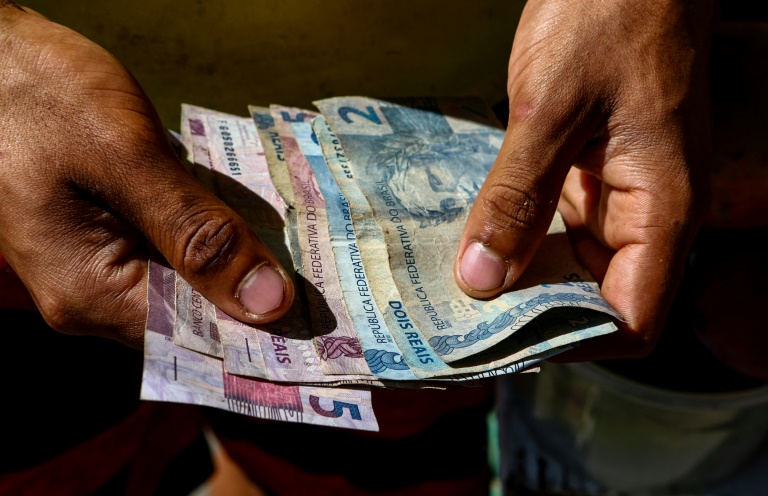
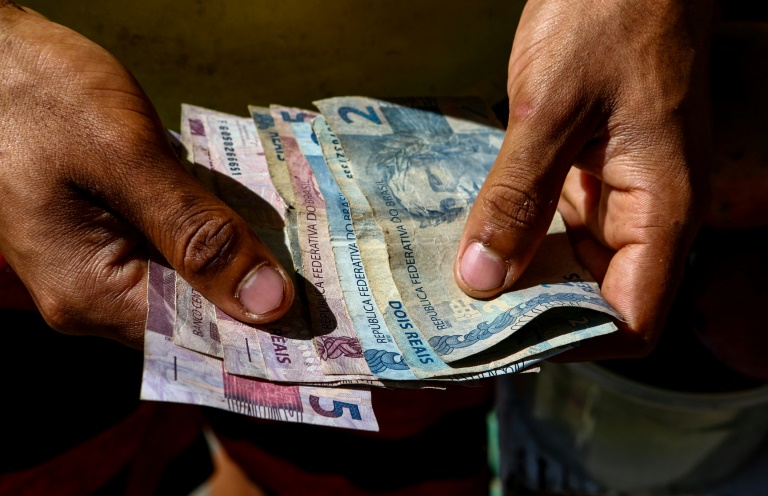
At a market in Sao Paulo, Celia Silva counts her cash, hoping Brazil will soon be “back on track” and she will no longer struggle to make ends meet.

The 61-year-old marketing analyst is not alone: a majority of Brazilians will be thinking of their own pocketbooks first when they cast ballots in presidential elections next month.

According to a Datafolha poll, the economy will be the top issue for 53 percent of Brazilians as they choose among candidates including far-right incumbent Jair Bolsonaro and leftist ex-president Luiz Inacio Lula da Silva. 

The largest economy in Latin America has shown recent signs of recovery after being hit hard by the coronavirus pandemic.

It registered growth of 1.1 percent in the first quarter and 1.2 percent in the second after advancing 4.6 percent in 2021 compared to 2020, when the economy declined 3.9 percent.

These figures, coupled with a drop in unemployment to 9.1 percent and a 0.68 percent decline in inflation in July, are campaign gold for Bolsonaro, who insists they prove Brazil is “better than many other countries” in a gloomy global context. 

As economic metrics have improved, so has Bolsonaro’s standing in the pre-election opinion polls.

But Datafolha figures released Thursday showing Lula still garnering more favor, with 45 percent of the vote intention, compared to 32 percent for Bolsonaro.

In July, the difference was 18 points.

– ‘Worst is over’ –

“The worst is over: there is an improvement in the economy and employment recovered faster than expected,” said Igor Barenboim, chief economist of the consulting firm Reach Capital.

In the three months to July, unemployment reached a near seven-year low of 9.1 percent, down from 13.7 percent in the same period in 2021.

But the effects are not yet always apparent in Brazilian households.

“The average real wage of the Brazilian (2,693 reais, about $540 per month) is at one of the worst levels in a decade,” said Andre Perfeito of the Necton consultancy.

Despite slowing in July, year-on-year inflation was at 10.07 percent and has been in the double digits since September last year.

The July drop, said Perfeito, was largely due to fuel and electricity price cuts backed by the government of Bolsonaro, with his eye on re-election.

But food inflation continued a relentless climb to reach 14.72 percent over the 12 months to July, aggravating the scourge of hunger. 

“There have never been so many hungry people in Brazil,” said Paulo Feldmann, professor of economics at the University of Sao Paulo.

“Brazil is today above the world average… Sixty percent of the population today suffer from food insecurity,” he added.

While Bolsonaro publicly denies a hunger crisis, Lula could benefit from public anger over the issue, Feldmann said.

When Lula was president from 2003 to 2010, some 30 million Brazilians emerged from poverty, according to official data.

– No more chicken feet –

But the left is up against the government machine.

For the period August to December this year, the government has increased allowances under an aid program started during the Lula presidency from 400 reais (about $80) to 600 reais ($120) per month for more than 20 million poor families. 

It has also increased gas subsidies and expanded truck drivers’ benefits.

Amid these announcements, perceptions about the economy improved, with 58 percent of Brazilians polled expecting their finances to improve in the coming months, according to Datafolha. 

The market forecast for 2022 economic growth for Brazil has increased from 0.28 percent in January to 2.1 percent, according to the latest central bank survey.

This was due in large part due to higher global prices for commodities, of which Brazil is a major exporter.

But analysts warn of a fiscal mismatch caused by increased public spending.

A big question is whether the fiscal debt, at 77.6 percent of GDP, “will follow an explosive trajectory,” said Barenboim. 

At the Sao Paulo market, shoppers are clear about their voting intention.

Edelzuita Ferreira, a 71-year-old pensioner, falls in the Lula camp.

“If Lula wins, it will be easy, we will be able to eat meat again. With Bolsonaro, we are eating chicken feet,” she told AFP.

But Adriana Do Prado, 38, will opt for Bolsonaro.

“We are only standing today thanks to the things he (Bolsonaro) did during the pandemic,” she said, underlining the president’s refusal to shutter public establishments, such as the restaurant she runs, as a Covid preventative measure.

“If it wasn’t for him, I would have had to close,” said Do Prado.

Amid financial uncertainty, Brazilians prepare to vote

At a market in Sao Paulo, Celia Silva counts her cash, hoping Brazil will soon be “back on track” and she will no longer struggle to make ends meet.

The 61-year-old marketing analyst is not alone: a majority of Brazilians will be thinking of their own pocketbooks first when they cast ballots in presidential elections next month.

According to a Datafolha poll, the economy will be the top issue for 53 percent of Brazilians as they choose among candidates including far-right incumbent Jair Bolsonaro and leftist ex-president Luiz Inacio Lula da Silva. 

The largest economy in Latin America has shown recent signs of recovery after being hit hard by the coronavirus pandemic.

It registered growth of 1.1 percent in the first quarter and 1.2 percent in the second after advancing 4.6 percent in 2021 compared to 2020, when the economy declined 3.9 percent.

These figures, coupled with a drop in unemployment to 9.1 percent and a 0.68 percent decline in inflation in July, are campaign gold for Bolsonaro, who insists they prove Brazil is “better than many other countries” in a gloomy global context. 

As economic metrics have improved, so has Bolsonaro’s standing in the pre-election opinion polls.

But Datafolha figures released Thursday showing Lula still garnering more favor, with 45 percent of the vote intention, compared to 32 percent for Bolsonaro.

In July, the difference was 18 points.

– ‘Worst is over’ –

“The worst is over: there is an improvement in the economy and employment recovered faster than expected,” said Igor Barenboim, chief economist of the consulting firm Reach Capital.

In the three months to July, unemployment reached a near seven-year low of 9.1 percent, down from 13.7 percent in the same period in 2021.

But the effects are not yet always apparent in Brazilian households.

“The average real wage of the Brazilian (2,693 reais, about $540 per month) is at one of the worst levels in a decade,” said Andre Perfeito of the Necton consultancy.

Despite slowing in July, year-on-year inflation was at 10.07 percent and has been in the double digits since September last year.

The July drop, said Perfeito, was largely due to fuel and electricity price cuts backed by the government of Bolsonaro, with his eye on re-election.

But food inflation continued a relentless climb to reach 14.72 percent over the 12 months to July, aggravating the scourge of hunger. 

“There have never been so many hungry people in Brazil,” said Paulo Feldmann, professor of economics at the University of Sao Paulo.

“Brazil is today above the world average… Sixty percent of the population today suffer from food insecurity,” he added.

While Bolsonaro publicly denies a hunger crisis, Lula could benefit from public anger over the issue, Feldmann said.

When Lula was president from 2003 to 2010, some 30 million Brazilians emerged from poverty, according to official data.

– No more chicken feet –

But the left is up against the government machine.

For the period August to December this year, the government has increased allowances under an aid program started during the Lula presidency from 400 reais (about $80) to 600 reais ($120) per month for more than 20 million poor families. 

It has also increased gas subsidies and expanded truck drivers’ benefits.

Amid these announcements, perceptions about the economy improved, with 58 percent of Brazilians polled expecting their finances to improve in the coming months, according to Datafolha. 

The market forecast for 2022 economic growth for Brazil has increased from 0.28 percent in January to 2.1 percent, according to the latest central bank survey.

This was due in large part due to higher global prices for commodities, of which Brazil is a major exporter.

But analysts warn of a fiscal mismatch caused by increased public spending.

A big question is whether the fiscal debt, at 77.6 percent of GDP, “will follow an explosive trajectory,” said Barenboim. 

At the Sao Paulo market, shoppers are clear about their voting intention.

Edelzuita Ferreira, a 71-year-old pensioner, falls in the Lula camp.

“If Lula wins, it will be easy, we will be able to eat meat again. With Bolsonaro, we are eating chicken feet,” she told AFP.

But Adriana Do Prado, 38, will opt for Bolsonaro.

“We are only standing today thanks to the things he (Bolsonaro) did during the pandemic,” she said, underlining the president’s refusal to shutter public establishments, such as the restaurant she runs, as a Covid preventative measure.

“If it wasn’t for him, I would have had to close,” said Do Prado.

Bankrupt Sri Lanka's deposed president 'to return home'

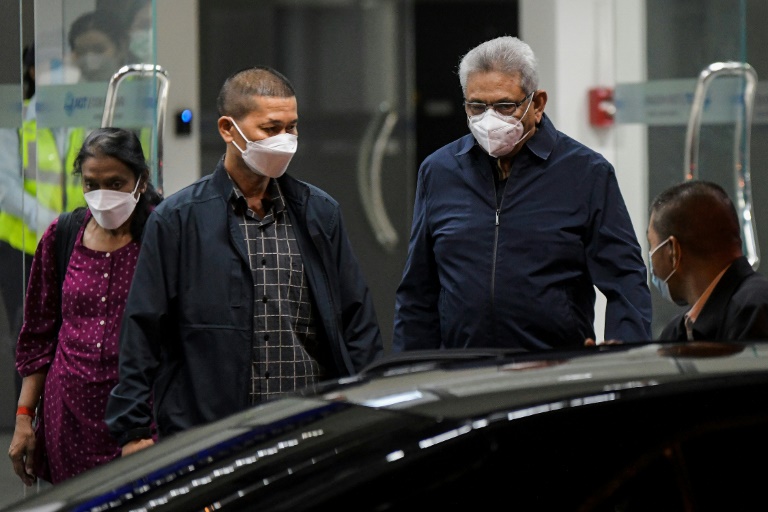
Bankrupt Sri Lanka’s deposed former president Gotabaya Rajapaksa is expected to end his self-imposed exile in Thailand and return home on Saturday, a top defence official told AFP.

The 73-year-old fled the island under military guard in July after a huge crowd stormed his official residence, following months of angry public protests blaming him for the island nation’s unprecedented economic crisis. 

He issued his resignation from Singapore before flying onward to Bangkok, where he has been petitioning his successor to facilitate his return.

“He has been living in a Thai hotel as a virtual prisoner and was keen to return,” the defence official, who asked not to be named, told AFP on Friday. “We are told he will return very early on Saturday.”

“We have just created a new security division to protect him after his return on Saturday. The unit comprises elements from the army and police commandos.”

Sri Lanka’s constitution guarantees bodyguards, a vehicle and housing for former presidents.

Rajapaksa travelled to Thailand after Singapore declined to extend his 28-day visa, but security authorities in Bangkok told him not to step out of his hotel for his own safety. 

The former president had a 90-day visa to remain in Thailand, but opted to return with his wife, a bodyguard and another aide, the official said.

Rajapaksa’s youngest brother, Basil, the former finance minister, met with President Ranil Wickremesinghe last month and requested protection to allow for the deposed leader’s return.

“Basil Rajapaksa requested the president to make arrangements for the former president to return home,” their Sri Lanka Podujana Peramuna (SLPP) party said in a statement.

Sri Lanka has endured months of acute food, fuel and medicine shortages, lengthy blackouts and runaway inflation after running out of foreign currency to finance essential imports. 

The coronavirus pandemic was a hammer blow to the island’s tourism industry and dried up remittances from Sri Lankans working abroad — both key foreign exchange earners.

Rajapaksa, who was elected in 2019 promising “vistas of prosperity and splendour”, saw his popularity nosedive as hardships multiplied for the country’s 22 million people. 

His government was accused of introducing unsustainable tax cuts that drove up government debt and exacerbated the crisis. 

Rajapaksa’s resignation ended his presidential immunity, which could see the revival of stalled corruption cases against the former leader. 

Wickremesinghe was elected by parliament to see out the remainder of Rajapaksa’s term. He has since cracked down on street protests and arrested leading activists. 

Google's immersive Street View could be glimpse of metaverse

Fifteen years after its launch, a Google Maps feature that lets people explore faraway places as though standing right there is providing a glimpse of the metaverse being heralded as the future of the internet.

There was not yet talk of online life moving to virtual worlds when a “far-fetched” musing by Google co-founder Larry Page prompted Street View, which lets users of the company’s free navigation service see imagery of map locations from the perspective of being there.

Now the metaverse is a tech-world buzz, with companies including Facebook parent Meta investing in creating online realms where people represented by videogame-like characters work, play, shop and more.

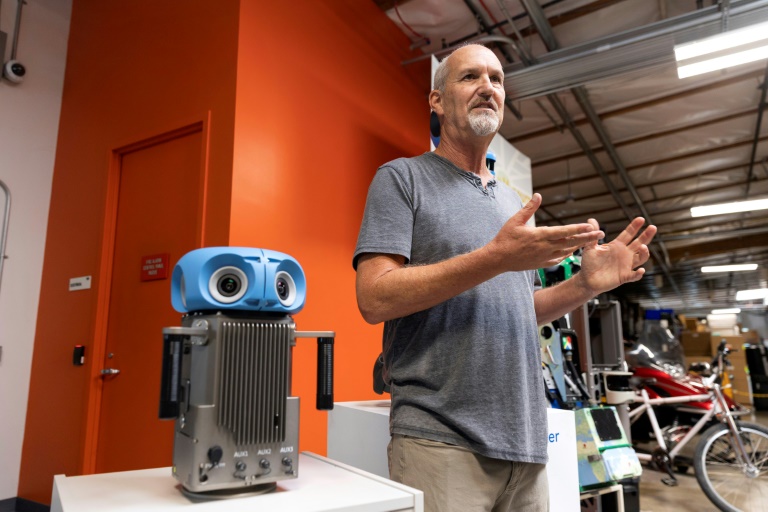
“Larry Page took a video camera and stuck it out the window of his car,” Google senior technical program manager Steven Silverman said, while showing AFP the garage where the company builds cameras for cars, bikes, backpacks, and even snowmobiles dispatched to capture 360-degree images worldwide.

“He was talking to some of his colleagues at the time, saying, ‘I bet we can do something with this.’ That was the start of Street View.”

Street View lets people click on locations in Google Maps to see what it might look like were they at that spot, and even look around.

Now, the internet behemoth is introducing an “immersive view” that fuses Street View images with artificial intelligence to create “a rich, digital model of the world,” Miriam Daniel, Google Maps Experiences vice president, said in a post.

“You’ll be able to experience what a neighborhood, landmark, restaurant or popular venue is like — and even feel like you’re right there before you ever set foot inside,” Daniel said.

“With a quick search, you can virtually soar over Westminster to see the neighborhood and stunning architecture of places, like Big Ben, up close.”

Google will start rolling out immersive view later this year, starting in Los Angeles, London, New York, San Francisco and Tokyo.

– From maps to metaverse –

Street View imagery has been gathered in more than 100 countries and territories, ranging from places such as Mount Fuji and Grand Canyon National Park to the Great Barrier Reef.

“If you want to see what it’s like to go down a ski slope, you can see where that snowmobile has gone,” Silverman said, nodding toward a maroon snowmobile in the garage in the Silicon Valley city of Mountain View, California.

“That trike was really funny because it went around Stonehenge; and we put it on a barge and went down the Amazon River,” he said of another vehicle.

He pointed to a backpack camera system taken for a zip-line ride in the Amazon, to provide a bird’s-eye perspective.

Years spent capturing the real world in 360-degree imagery bodes well for Google when it comes to a future in which internet life shifts to immersive digital worlds, said Creative Strategies tech analyst Carolina Milanesi.

“It absolutely plays into the metaverse,” Milanesi said.

“The idea of a digital twin of the world is certainly one aspect of it that Google will solve.”

Silverman reasoned that, in a sense, Street View has been giving users a virtual experience for more than a decade, and the imagery naturally lends itself to depicting the real world in virtual settings.

“Ideally, that metaverse, that world that we move into, we’re going to be there,” Silverman said.

Scores of tech firms have been rushing to invest in building the metaverse, a loose term covering the growing ecosystem of interactive online worlds, games and 3D meeting places that are already attracting millions of users.

Facebook renamed its parent company to Meta last year to emphasize its virtual reality vision, and opened Horizon World virtual reality platform to the North American public.

Earlier this year, Japanese giant Sony and Lego’s Danish parent firm announced a $2 billion investment in US gaming powerhouse Epic Games for its work toward joining the metaverse vision for the internet’s future.

In the form of video games such as Epic’s hit Fortnite, the precursors of the metaverse already exist in minimalist ways, with people coming together not only to play, but also to interact and participate in events.

What started as a “far-fetched idea” by Page is “critical to our mapping efforts — letting you see the most up-to-date information about the world, while laying the foundation for a more immersive, intuitive map,” Google Maps product director Ethan Russell said in a blog post.

Truss on brink of power as UK Tories finish voting

After a gruelling nationwide tour, a dozen hustings and three televised debates, Liz Truss appears poised to take over as the UK’s next prime minister heading into the close of voting by Conservative party members on Friday.

The result of the summer-long campaign pitting the foreign secretary against former chancellor Rishi Sunak will be announced on Monday, before Prime Minister Boris Johnson formally tenders his resignation to Queen Elizabeth II the next day.

Postal and online voting by the estimated 200,000 Tory members began in early August, a month after Johnson announced his resignation, and concludes at 5:00 pm (1600 GMT).

Truss enjoys overwhelming support over Sunak in polling of the members.

But the winner faces a vanishingly short political honeymoon once they return to 10 Downing Street from meeting the queen in the Scottish Highlands.

The UK is in the throes of its worst cost-of-living crisis in generations, with inflation soaring by double digits as energy prices rocket on the back of Russia’s war in Ukraine. 

Millions say that with bills set to rise by 80 percent from October — and further from January — they face a painful choice between eating and heating this winter, according to surveys. 

Truss has vowed tax cuts but those would do nothing to benefit the poorest.

For weeks, the Tory front-runner has been ruling out direct handouts, and went further at the final hustings Wednesday by repeating former US president George Bush’s promise of no more taxes — which he soon broke.

But writing in Thursday’s edition of The Sun newspaper, Truss vowed to “deliver immediate support to ensure people are not facing unaffordable fuel bills” this winter.

“I firmly believe, in these grave times, we need to be radical,” she added, previewing her Thatcherite agenda of reform to cement Johnson’s Brexit legacy. 

– Challenge –

Tory MPs turned on their Brexit hero Johnson after months of scandal, and favoured Sunak over Truss as the more electable leader to take them until the next general election due by January 2025.

But the party’s rank and file have rallied to Truss’s right-wing platform, even if she is a former Liberal Democrat who opposed leaving the European Union in Britain’s 2016 referendum.

“She’s a better politician,” John Curtice, professor of politics at the University of Strathclyde, told AFP after Truss stuck to a simple script over the long, hot summer of campaigning.

“Sunak has demonstrated some of the qualities you might hope to see in a good minister. But Miss Truss has demonstrated the qualities that you need in a politician,” Curtice added.

However, whoever wins, recent polls of the wider electorate show the Conservatives face a growing challenge to retain their 12-year grip on power.

The Labour party has profited from attacking Johnson’s “zombie government” as the Conservatives have taken their time electing a new leader, gripped by infighting despite the wider crisis. 

The main opposition party now boasts a double-digit lead over the Tories in opinion polls, as the economic landscape turns the bleakest it has been since Margaret Thatcher won power in 1979.

Close Bitnami banner
Bitnami