World

Macron defends Russia dialogue to prepare 'negotiated peace'

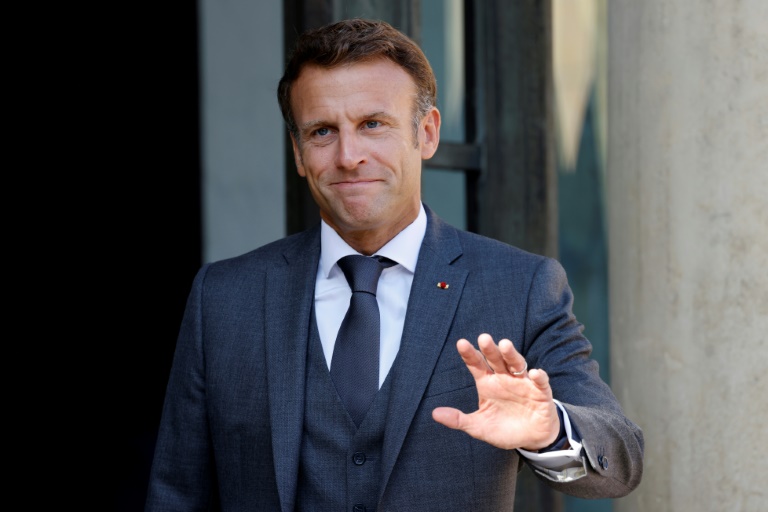
French President Emmanuel Macron on Thursday defended his policy of keeping up a dialogue with Russia after its invasion of Ukraine, saying that Turkey should not be the only power talking to Moscow and preparations should already be made for a negotiated peace.

Macron has repeatedly spoken to Russian counterpart Vladimir Putin since Moscow launched its attack on Ukraine in February, with their latest conversation coming on August 19 following a lengthy pause.

Turkish President Recep Tayyip Erdogan, with whom Macron has had a fractious relationship, has meanwhile actively sought to play the role of mediator, meeting in person with both Putin and Ukrainian President Volodymyr Zelensky.

“Who wants Turkey to be the only world power which continues to talk to Russia?” the president told a meeting of French ambassadors at the Elysee Palace.

“We must not give in to any form of false morality which would leave us powerless,” he added.

“The job of a diplomat is to talk to everyone, especially to people with whom we do not agree. And so we will continue to do so, in coordination with our allies.”

Macron argued that world powers should already be preparing for a “negotiated peace” to end the conflict that has already lasted over half a year, while emphasising it was up to Kyiv to decide on the timing and the terms.

“We must prepare for a long war. We must avoid escalation and prepare the peace,” he said.

“Preparing the peace means talking to all the parties including, as I did just a few days ago and will again, to Russia.”

He said such a negotiated peace would not be on the terms “Ukraine would have been subjected to if we had abandoned it to its fate.”

Macron argued that Western military assistance for Ukraine, including from France, had allowed the country to withstand the Russian invasion far more effectively than many experts and also Russia had predicted. 

“We are not participating in the war, we do not want to,” he said, repeating an argument Macron has used since the first days of the war.

“But we cannot let Russia win this war militarily by gaining territory and, at the same time, showing the defeat of the international order and our values on the basis of an aggression.”

He also warned that Europe must keep up unity, noting that some countries were calling for a more bellicose stance or thinking of unilateral measures.

“We must not let Europe be divided by this war. European unity is key. The division of Europe was one of Russia’s aim of the war,” he said.
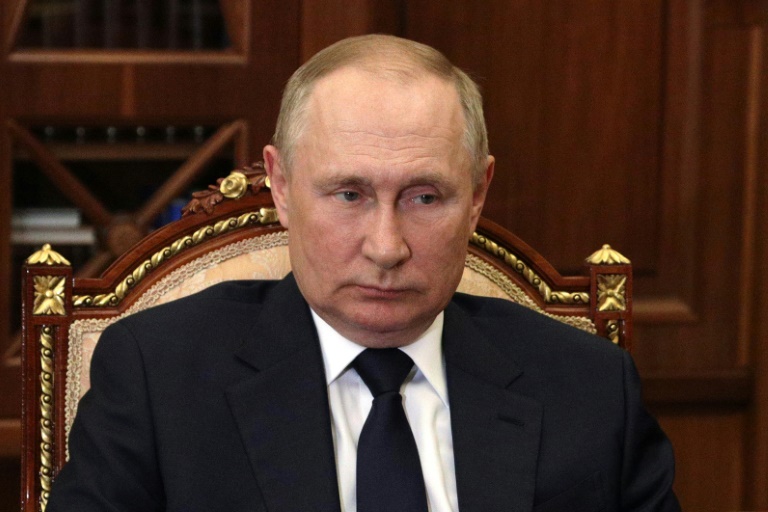
Putin will not attend Mikhail Gorbachev funeral: Kremlin

Russian President Vladimir Putin will not attend the funeral of the last Soviet leader Mikhail Gorbachev due to scheduling issues, his spokesman said on Thursday. 

“The farewell ceremony and funeral will take place on September 3 but unfortunately the president’s work schedule will not allow him (to attend),” Kremlin spokesman Dmitry Peskov told reporters.

Peskov said that Putin had paid his last respects to Gorbachev at the hospital where he died on Tuesday, aged 91.

Russian state TV showed Putin placing a bouquet of red roses near Gorbachev’s open casket in a big empty hall before pausing for a moment of silence.

Putin bowed his head, briefly laid his hand on the casket then made the sign of the cross.

Gorbachev’s funeral ceremony will be held on Saturday in the Moscow Hall of Columns, historically used for funeral services of high officials, including Joseph Stalin in 1953. 

The same day, Gorbachev will be buried at the prestigious Novodevichy cemetery in Moscow next to his wife Raisa, who died in 1999. 

Peskov said that there will be “elements of a state funeral” for Gorbachev, including a guard of honour, and that the ceremony will be organised with the help of the state. 

Gorbachev changed the course of history by triggering the demise of the Soviet Union and was one of the great figures of the 20th century.

His reforms as Soviet leader transformed his country and allowed Eastern Europe to free itself from Soviet rule.

While the changes he set in motion saw him lionised in the West, they earned him the scorn of many Russians after the country was plunged into economic chaos and saw its international influence decline.

Putin, who called the Soviet collapse the greatest geopolitical catastrophe of the 20th century, has spent much of his more than 20-year rule reversing parts of Gorbachev’s legacy.

By cracking down on independent media and political opposition, critics say, Putin has worked to undo Gorbachev’s efforts to bring “glasnost”, or openness, to the Soviet system.

And with the launch earlier this year of a military campaign in Ukraine, he has sought to reassert Russian influence in one of the countries that won its independence when the Soviet Union fell apart.

Gorbachev’s death triggered an outpouring of tributes from the West but reaction was muted in Russia, where many blamed him for the loss of the country’s status as a global superpower.

In a letter of condolences published by the Kremlin, Putin said Gorbachev “was a politician and statesman who had a huge impact on the course of world history”.

“He led our country during a period of complex, dramatic changes, large-scale foreign policy, economic and social challenges,” Putin added. 

10 times normal rainfall drove vast Pakistan flooding: ESA

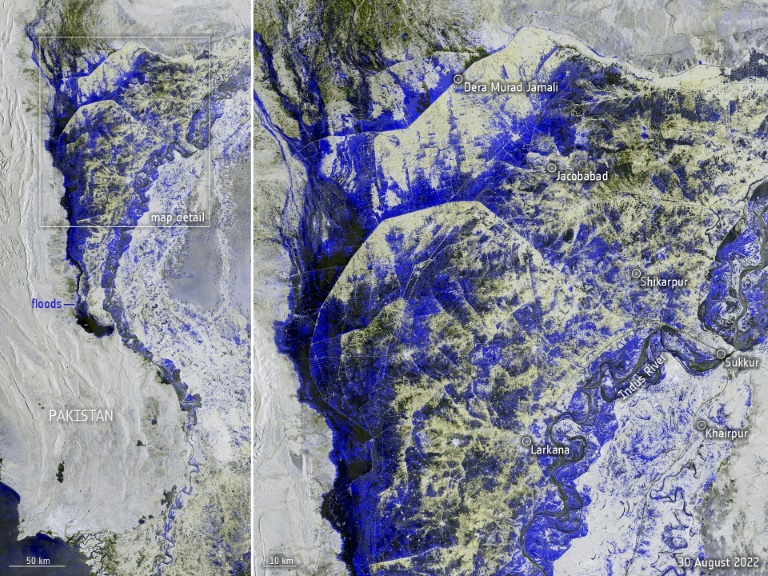
Rainfall 10 times heavier than usual caused Pakistan’s devastating floods, the European Space Agency said Thursday, as it released satellite images of a vast lake created by the overflowing Indus river.

Rains, described by UN chief Antonio Guterres as a “monsoon on steroids” have claimed hundreds of lives since June, unleashing powerful floods that have washed away swathes of vital crops and damaged or destroyed more than a million homes.

Data from the EU’s Copernicus satellite has been used to map the scale of the deluge from space to help the rescue efforts, the ESA said in a statement. 

“Heavy monsoon rainfall — ten times heavier than usual — since mid-June have led to more than a third of the country now being underwater,” it said. 

The agency released images from the satellite showing an area where the Indus River has overflowed “effectively creating a long lake, tens of kilometres wide”, between the cities of Dera Murad Jamali and Larkana.  

Officials say more than 33 million people are affected — one in every seven Pakistanis — and reconstruction work will cost more than $10 billion.

Guterres has called the floods a “climate catastrophe” and launched an appeal for $160 million in emergency funding.

While it is too early to quantify the contribution of global warming in the floods, scientists say the rains are broadly consistent with expectations that climate change will make the Indian monsoon wetter. 

A recent study, based on climate models, predicted that exceptionally wet monsoons in the Indian subcontinent would become six times more likely during the 21st century, even if humanity rachets down carbon emissions.

Russian firm Lukoil says chairman dies after 'serious illness'

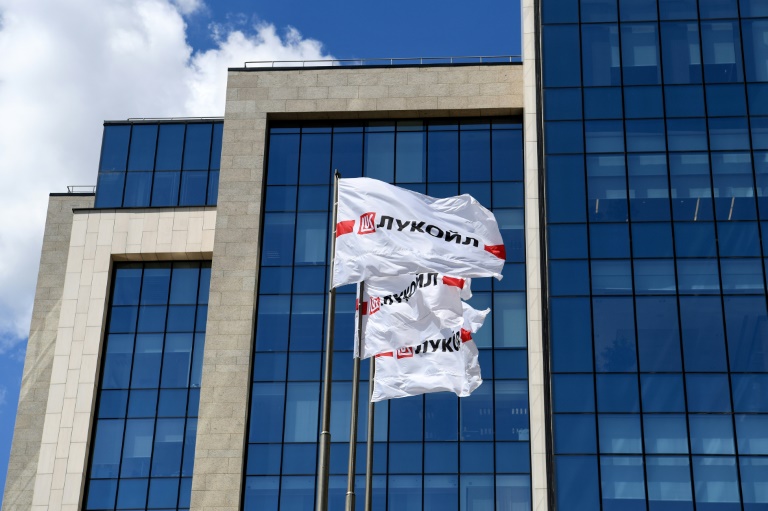
Russian energy firm Lukoil said Thursday its chairman Ravil Maganov had passed away following a “serious illness”, after Russian media reports said he died after falling out of a hospital window.

Lukoil was one of the few major Russian companies to call for end of fighting in Ukraine after Moscow sent its troops to the pro-Western country in February.

In a statement at the time, the Lukoil board called for an “immediate” end to the fighting, expressing its sympathy to those affected by the “tragedy”. 

“We deeply regret to announce that Ravil Maganov… passed away following a serious illness,” Lukoil said on Thursday without providing further details about his death. 

Several Russian media had earlier reported that Maganov died after falling out of a window of the Central Clinical Hospital in Moscow. 

It is often called the Kremlin Hospital because it counts Russia’s political and business elites among its patients.

“This morning Maganov fell out of a window of the Central Clinical Hospital. He died from his injuries,” Interfax news agency reported quoting an “informed” source.

According to a police source of RBC business daily, Maganov fell from the sixth-floor window of the hospital.

President Vladimir Putin’s spokesman Dmitry Peskov told reporters on Thursday that Maganov’s death was not a matter for the Kremlin. 

Maganov was born in 1954. He had worked at Lukoil since 1993 and was also the company’s president. 

He was among the first leaders of Lukoil and, according to the company, came up with its present name.

Maganov was appointed chairman in 2020.

In its statement on Thursday, Lukoil said Maganov “immensely contributed” to the company and the Russian oil and gas sector.

It credited Maganov’s “managerial talent” with making Lukoil one of the world’s leading energy companies.

In April, Lukoil announced the resignation of its billionaire chief executive Vagit Alekperov after he was hit by UK sanctions over the Ukraine offensive.

Global stocks selloff intensifies on recession fears

Global stock markets sank Thursday, propelled by rampant inflation and growing recession fears.

Frankfurt, London and Paris equities each slid about 1.5 percent, while oil prices tumbled on demand worries.

That followed losses across Asia as investors braced for more interest rate hikes, which seek to quell runaway inflation yet could derail economic activity.

Europe’s stocks also fell Wednesday as record-high eurozone inflation fuelled fears that borrowing costs are set to climb even higher, as the region faces rocketing winter energy costs due to Russia’s war on Ukraine.

The European Central Bank will announce its latest monetary policy decision next Thursday, after delivering its first rate hike in a decade in July.

– ‘Tougher times ahead’ –

“Markets remain unable to snap their recent losing streak, with investors still positioning for tougher times ahead,” said Interactive Investor analyst Richard Hunter.

“Central to current concerns are recessionary fears in the US and a beleaguered China. 

“With the world’s two largest economies under pressure, the immediate outlook is poor.”

Asian equities weakened further Thursday as traders continued to digest shrinking factory activity in powerhouse economy China.

Shanghai also dropped after news that the Chinese city of Chengdu would effectively lock down around 16 million people in a bid to contain a Covid-19 outbreak, likely dealing another blow to a stuttering economy.

Wall Street slid Wednesday as Treasury yields — a key gauge of future interest rates — rose further, as a broadly healthy report on US private jobs showed there was room for the Federal Reserve to continue tightening monetary policy.

Another top Fed official signalled the bank was determined to keep lifting borrowing costs, mirroring recent comments by the US central bank’s head Jerome Powell that there would be no let-up in the fight against inflation.

US interest rates are currently at 2.25-2.5 percent, and there is a growing expectation they will be hiked by a bumper 75 basis points for a third successive meeting later this month.

A government jobs report Friday will be closely watched by traders hoping for an idea about the next move by the bank.

The prospect of more US rate hikes continued to push the dollar higher, with 140 yen within reach for the first time since 1998.

The greenback was also at its strongest level against the pound since the height of the pandemic in 2020, with sterling buying less than $1.16.

– Key figures at around 1040 GMT –

London – FTSE 100: DOWN 1.5 percent at 7,175.82 points

Frankfurt – DAX: DOWN 1.3 percent at 12,673.46

Paris – CAC 40: DOWN 1.5 percent at 6,032.09

EURO STOXX 50: DOWN 1.4 percent at 3,467.88

Tokyo – Nikkei 225: DOWN 1.5 percent at 27,661.47 (close)

Hong Kong – Hang Seng Index: DOWN 1.8 percent at 19,597.31 (close)

Shanghai – Composite: DOWN 0.5 percent at 3,184.98 (close)

New York – Dow: DOWN 0.9 percent at 31,510.43 (close)

Euro/dollar: DOWN at $1.0011 from $1.0054 on Wednesday

Pound/dollar: DOWN at $1.1564 from $1.1622

Euro/pound: UP at 86.56 pence from 86.50 pence

Dollar/yen: UP at 139.34 yen from 138.96 yen

West Texas Intermediate: DOWN 2.1 percent at $87.64 per barrel

Brent North Sea crude: DOWN 2.5 percent at $93.22

burs-rfj/rl

China slams UN report alleging litany of rights abuses in Xinjiang

China on Thursday accused the United Nations of becoming a “thug and accomplice of the US and the West” after the global body released a highly anticipated report warning crimes against humanity may have taken place in the Xinjiang region.

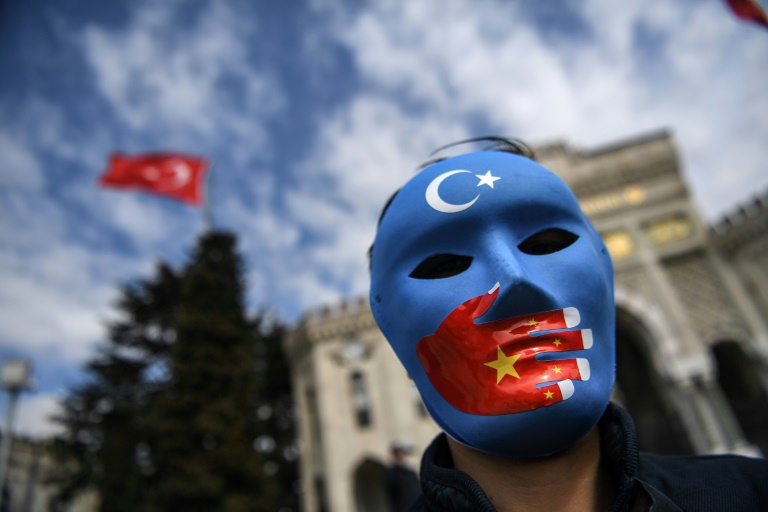
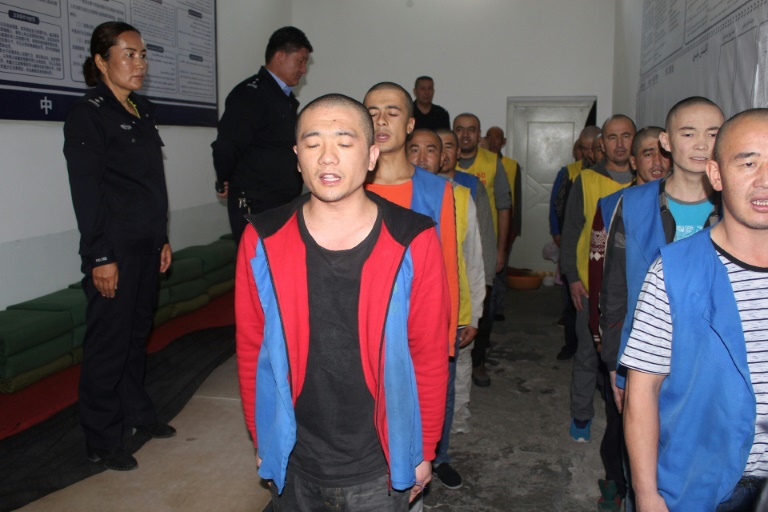
The landmark report detailed a string of rights violations including torture and forced labour against Uyghurs and other Muslim minorities in the far-western region, bringing the UN seal to many of the allegations long brought by activist groups, Western nations and the Uyghur community in exile.

However, it stopped short of calling China’s actions a genocide — claims made by the United States and several Western lawmakers — leaving some activists “disappointed”.

“The extent of arbitrary and discriminatory detention of members of Uyghur and other predominantly Muslim groups… may constitute international crimes, in particular crimes against humanity,” the report said.

It said the world must now pay “urgent attention” to the situation in Xinjiang.

Beijing hit back hard against the report — over a year in the making — and maintained its firm opposition to its release, sharing a more-than-100-page document from the Xinjiang provincial government defending its policies.

“The so-called critical report you mentioned is planned and manufactured firsthand by the US and some Western forces, it is wholly illegal and invalid,” foreign ministry spokesman Wang Wenbin told a regular briefing Thursday.

“The report is a hodgepodge of misinformation, and it is a political tool which serves as part of the West’s strategy of using Xinjiang to control China,” he added.

Wang also slammed the UN rights office as having “sunk to becoming the thug and accomplice of the US and the West”, but said the report’s omission in calling China’s actions genocide shows their “lies… have fallen apart”.

Michelle Bachelet, the UN human rights chief, said she had decided a full assessment was needed of the situation inside the Xinjiang Uyghur Autonomous Region (XUAR).

Bachelet was determined to release it before her four-year term as the UN High Commissioner for Human Rights expired at the end of August — and did so with 13 minutes to spare at 11:47 pm in Geneva.

“I said that I would publish it before my mandate ended and I have,” Bachelet said in an email to AFP Thursday.

“The politicisation of these serious human rights issues by some states did not help.”

– ‘Serious human rights violations’ –

China has been accused for years of detaining more than one million Uyghurs and other Muslims in the region.

Beijing has vehemently rejected the claims, insisting it is running Vocational Education and Training Centres (VETCs), designed to curb extremism.

“Serious human rights violations have been committed in XUAR in the context of the government’s application of counter-terrorism and counter-‘extremism’ strategies,” the UN report said.

“Allegations of patterns of torture or ill-treatment, including forced medical treatment and adverse conditions of detention, are credible, as are allegations of individual incidents of sexual and gender-based violence,” the report said.

The UN Human Rights Office could not confirm how many people were affected by the VETCs but concluded that the system operated on a “wide scale” across the entire region.

The number in the VETCs, at least between the years 2017 and 2019, “was very significant, comprising a substantial proportion of the Uyghur and other predominantly Muslim minority populations”.

Campaigners have accused China of forcibly sterilising women, and the report cited “credible indications of violations of reproductive rights through the coercive enforcement of family planning policies”.

– ‘A game-changer’ –

Campaign groups have said the report should act as a launchpad for further action.

Human Rights Watch’s China director Sophie Richardson said the “damning” findings of sweeping rights abuses showed why Beijing “fought tooth and nail” to prevent its publication.

The response from the Uyghur activist community was mixed, with some groups praising its work while others wished it had gone further in its condemnation.

“This is a game-changer for the international response to the Uyghur crisis,” said Uyghur Human Rights Project executive director Omer Kanat.

“Despite the Chinese government’s strenuous denials, the UN has now officially recognised that horrific crimes are occurring.”

And World Uyghur Congress president Dolkun Isa said the report paved the way for “meaningful and tangible action” by countries, businesses and the UN.

But Salih Hudayar, a Uyghur-American who campaigns for Xinjiang independence, told AFP the report was “sadly not as strong as we had hoped”.

“Our people have been waiting years for the UN to speak out,” said Hudayar.

“Unfortunately, because of Chinese government pressure the UN has long remained silent.”

And Elfidar Iltebi, president of the Uyghur American Association, said: “We, as Uyghur community members, are disappointed honestly.

“I was looking for, hoping for, dreaming for the ‘g-word’ — genocide.”

Volkswagen shifts gears with Oliver Blume taking wheel

Volkswagen on Thursday hands over the reins to new CEO Oliver Blume, tasked with steering the German automotive giant through challenging economic conditions after four turbulent years under his predecessor, Herbert Diess.

Blume, nurtured in house at Volkswagen and the current CEO of premium sports brand Porsche, is unlikely to signal a significant departure from the electric strategy laid out by his predecessor.

The board under “Herbert Diess has done a good job strategically and technologically,” Blume said at a conference Thursday. “We will keep up the current pace and where possible, increase it.”

The success of a business is “always the product of a strong team”, said Blume, who will head up a trimmed nine-person board.

Diess owed his exit in part to tensions with workers’ representatives, riled by his uncompromising leadership style.

As such, Blume takes the wheel at a “really difficult time” for Volkswagen, said Matthias Schmidt, an analyst specialising in electric cars.

Russia’s invasion of Ukraine has not only compounded supply chain problems unleashed by the coronavirus pandemic, but introduced uncertainties over energy supplies across Europe.

The economic turmoil comes as Volkswagen is ploughing tens of billions into an ambitious switch to electric vehicles, opening a clutch of battery factories across Europe.

Meanwhile, the new boss will also be tasked with sorting out persistent setbacks at the group’s software arm and guiding premium brand Porsche to a tricky stock market entry. 

– Electric strategy –

Diess took over at Volkswagen in 2018 with a mandate to turn the page on the “dieselgate” emissions-cheating scandal.

The Austrian’s response was to launch Volkswagen on a headlong drive into electric vehicles, but his often combative style ruffled feathers at the legacy auto manufacturer.

The 63-year-old finally lost the confidence of Volkswagen’s main shareholders — the Porsche-Piech family — as problems mounted in the group’s software division, headed by the CEO himself.

His successor, Blume, a 28-year Volkswagen veteran, is set to cut a more conciliatory figure than Diess, hired as an outsider from rival BMW.

“Blume is not known as someone who wages wars. He takes less risk than Diess,” Ferdinand Dudenhoeffer, head of the Center of Automotive Research, told AFP.

Following Diess’s exit, Volkswagen’s chief financial officer, Arno Antlitz, was sent out to stress that there would be “continuity” at the manufacturer.

But Blume has signalled that he could be more open to extending the life of old combustion engines with alternative fuels. 

In a recent interview with weekly Automobilwoche, Blume said he saw synthetic fuels as a “sensible complement of electric mobility”.

In theory, such “e-fuels”, made from carbon dioxide using renewable electricity, allow traditional engines to be run with almost no net carbon emissions. 

While Diess remained unconvinced by the alternative to petrol and diesel, synthetic fuels would allow Volkswagen to keep working on a future for combustion engines. 

Blume was unlikely to perform a full U-turn on the electrification plan laid out by Diess, Dudenhoeffer said. 

But the carmaker could “move a little further away from the purely electric strategy” given the risks of an abrupt move to battery-powered vehicles, he said.

– Legacies –

In the end, the issue is likely to be decided in Brussels, where lawmakers have backed a ban on new non-electric vehicles from 2035.

Blume may also chart a different course in the area of software. Where Diess led an ambitious drive to bring development almost completely in-house, Blume could be open to using more external suppliers.

“It’s a massive profit centre, that’s the reason they want to keep it all in-house,” said Schmidt, but the analyst pointed out that “you need software people to run a software company, not car people”.

Meanwhile, Blume was likely to support Volkswagen’s renewed emphasis on the American market, following years of struggles in the wake of dieselgate.

The move would mesh with a decision for Volkswagen to invest massively in developing and making its own batteries, thereby reducing its reliance on suppliers in China. 

“That could be Diess’s legacy in a way, that and getting the electrification post-dieselgate in motion, those are probably the two biggest legacies to leave behind,” said Schmidt.

Uyghurs notch victory, even as UN report is seen pulling punches

Uyghur activists and exiles had hoped a long-delayed United Nations report into alleged human rights violations by China would make it impossible for the world to ignore their plight.

On Thursday, they grappled with a less decisive outcome: a report vindicating claims of systemic Chinese abuse but stopping short of using the word “genocide”, signalling a long battle ahead.

Minutes before leaving her post as UN human rights chief, Michelle Bachelet released a 46-page “final assessment” documenting what she described as possible “crimes against humanity” committed by China over several years.

The text — fiercely opposed by Beijing — contained serious allegations of mass detention, torture, sexual violence and forced medical procedures targeting China’s Muslim and Uyghur minorities in the Xinjiang region.

For Norway-based activist Abduweli Ayup it was “a very emotional moment”, a vindication after years of being stonewalled by Beijing’s vociferous denials.

It was a statement to sceptics “that yes, these things have really happened” he said. 

“That’s really important.”

– ‘Need real action’ –

Many Uyghurs had counted on Bachelet to be their champion, believing her past experiences would lead her to lend an empathetic ear to their plight. 

The former Chilean president was herself a political prisoner, suffered torture and was forced into exile.

Her father died opposing military dictator Augusto Pinochet’s regime. 

Crucially, the UN report stopped short of declaring the alleged crimes a genocide — a charge with the power to upend China’s relations with much of the world.

For many Uyghurs, that made the report only a partial victory.

“We had hoped Bachelet would’ve been a voice for Uyghurs,” said Salih Hudayar, a Uyghur-American who campaigns for independence for Xinjiang, also known as “East Turkestan” to some.

“But on the contrary, she remained silent and tried to appease the Chinese government.”

Like many, Hudayar suspects intense behind-the-scenes lobbying by China caused the report to be watered down significantly, calling the integrity of the UN itself into question. 

Sadam Abdusalam was not surprised. A young Australian Uyghur whose wife and infant child were until recently trapped in China, Abdusalam never put much faith in the UN or its report to change anything. 

“There have been lots of reports already about what’s happening in Xinjiang,” he told AFP, pointing to years of revelations that have failed to stop abuses and hit a wall of Chinese denials.

“Lots of Uyghurs have false hope. What can the UN or the rest of the world actually do to help?” he asked. “We need real action.”

– ‘Humanity is still alive’ –

For others, the UN can still redeem itself.

Borne from the ashes of World War II and the horrors of the Nazi Holocaust, Bachelet’s UN Office for Human Rights was created to ensure history was not repeated.

Tahir Imin, an activist and academic, said the UN could have done more sooner, but he believes a half-step is better than no step at all.

It is a “signal that humanity is still alive” he said, expressing hope that leaders will now see the report and feel spurred to action.

Above all, he wants what is happening in Xinjiang to end — regardless of what label it is given.

“I wish my mum, two brothers, my sisters-in-law, uncles and aunts, who are imprisoned for their identity and their relations with me, come out of prison,” he told AFP.

“(I wish) my ex-wife, my daughter and all others could see the light of a bright sun, take a free breath, and hear my voice.”

Angola's leader faces uphill battle after narrow win

President Joao Lourenco faces Herculean tasks of fixing Angola’s economy and winning over its disillusioned youth as he enters his second term with decimated support, analysts say.

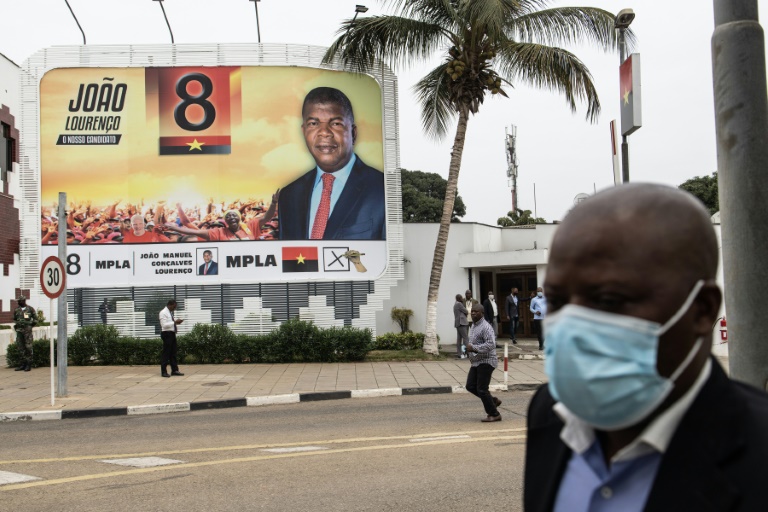
Lourenco’s Movement for the Liberation of Angola (MPLA), which has been in power for nearly half century, won 51.17 percent of the vote in the August 24 elections for the National Assembly.

The leader of the winning party automatically ascends to the presidency, which means Lourenco has earned a second spell at the helm.

But it was also the MPLA’s poorest showing since the first democratic vote in the former Portuguese colony in 1992. In 2017, it picked up 61 percent of the ballot.

The falloff will hike pressure on Lourenco to deliver on touted economic reforms and will reinvigorate the opposition, Augusto Santana of the non-profit Democracy Works Foundation predicted.

He could face possible street protests and dissent from within the MPLA, Santana told AFP by phone from Luanda, the capital.

“He faces quite a lot of challenges,” he said.

Lourenco, 68, came to power in 2017 when he took over from long-time ruler Jose Eduardo dos Santos, who bequeathed a country deep in recession and riddled by corruption and nepotism.

The former general embarked on an ambitious reform programme to tackle graft, attract foreign investors and diversify the oil-dependent economy. 

– ‘No quick fix’ –

The country eventually emerged from a five-year slump in 2021, but reforms have not translated into better living conditions for most Angolans.

Analyst Justin Pearce said that, because of the economic crisis, Lourenco’s government had so far not “been able to address the immediate demands from the poor in society”.

Now the president will be expected to deliver long-promised economic diversification away from oil.

But “there’s no quick fix,” said the Angola expert at South Africa’s Stellenbosch University.

The economic crisis, compounded by the coronavirus pandemic and a drought, has squeezed most people, pushing them into the arms of the opposition.

The leading opposition party and former rebel movement, the National Union for the Total Independence of Angola (UNITA), gained 43.95 percent of the vote, up from 26.67 percent in 2017, also winning the capital, Luanda.  

Its charismatic leader Adalberto Costa Junior, 60, has proved popular in urban areas and among youth disaffected with a ruling party many think has run out of ideas.

Turnout was low, with only about 45 percent of those registered bothering to cast their ballots. 

On Tuesday, large numbers of angry onlookers heckled a motorcade of MPLA supporters celebrating the victory in Luanda — something unthinkable only a few years ago, Santana said. 

“There will be more protests, because this time people think that there’s nothing else that the MPLA can still do, that the MPLA should just go and leave space for others to try,” he said.

– Dialogue or oppression? –

UNITA is contesting the vote’s outcome, alleging discrepancies in the count, but similar attempts have failed in the past. 

Still, it will have more lawmakers, which will give the opposition more leverage in parliament.

They could also make further gains in local elections set to be held within the next two years.

Lourenco struck a conciliatory tone in his inaugural address, pledging to promote “dialogue” and pay particular attention “to the expectations of young people”. 

But resources to turn things around are limited. 

Angola is Africa’s second largest crude producer, but it has to import back fuel to cover most of its needs, having developed only limited refining capacity over the past decades.

And while the war in Ukraine has pushed up oil prices it also raised food costs, partially offsetting gains from crude sales, said Pearce.

As this should be Lourenco’s last term, Santana added, he will also have to deal with growing internal opposition, as party cadres jostling to replace him are likely to become more vocal in their criticism of his leadership.

Alex Vines, of the UK-based think tank Chatham House, said all eyes were on the president.

“Will Lourenco really have heard what the electorate is saying? Will he… try and grow the economy, reduce inequality and provide more jobs?” he asked.

“Or will there be a… posture of increased oppression and defensiveness?”

Europe's fiery summer: a climate 'reality check'?

Wildfires and storms. Rivers at record lows. Parched crops withering in the fields. For many Europeans, this year’s scorching summer means climate change is increasingly hard to ignore. 

After months of cloudless days and drought, the weather has been one of the major themes of media coverage — and discussions during family gatherings — over the annual August holiday period.

“This summer has seen a series of extreme weather events,” French government spokesman Olivier Veran told a first press conference after he and the government returned to the office last week.

It had been a “complete reality check, even for the most sceptical,” he said.

France experienced its second-hottest summer on record, its driest one since 1976 and the worst in terms of the loss of forestry to wildfires since 2003, he said.

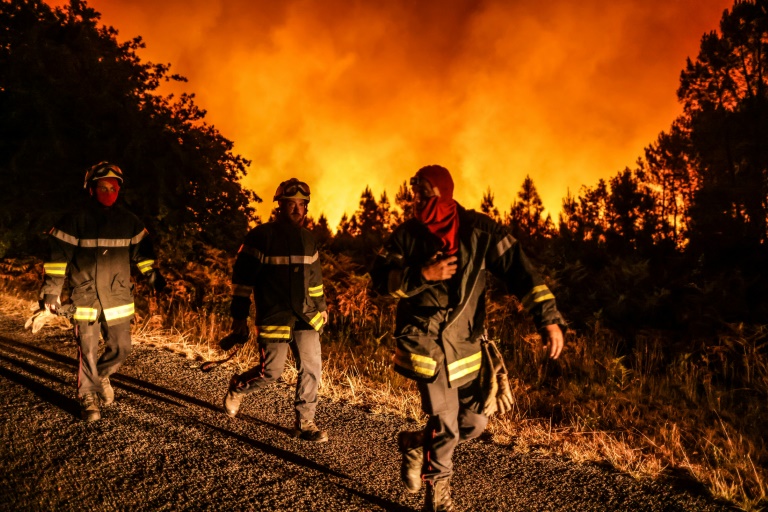
In recent months, some French villages have needed to be supplied with water trucks as their usual sources have dried up. Fires have repeatedly ravaged pine forests near Bordeaux.

Even in the normally verdant Alps, cheese makers complain that their cows are producing less milk than usual because their pastures are dried up. 

The picture is similar across Europe.

In Italy, the collapse of the country’s largest Alpine glacier in July sparked an avalanche that killed 11 people.

“The year 2022 in terms of extreme climate events is code red,” said the head of environmental group Legambiente, Stefano Ciafani, in an August report.

After a punishing drought, around 400 Spanish wildfires destroyed 290,000 hectares (72,000 acres) of forest — way above the recent average of 67,000 hectares a year.

As reservoir water levels plunged, a previously flooded centuries-old church and a huge megalithic complex emerged from their depths.

And a year after shocking major floods that claimed more than 180 lives in Germany, the country saw the Rhine river — a crucial trade route — shrink to levels that were barely navigable.

– Jets and steak – 

The question for experts and campaigners is how much the sweltering summer of 2022 will translate into political change and lifestyle shifts from consumers.

As people return to work, France’s green EELV party has been setting the news agenda with eye-catching proposals to crack down on executive jets as well as private swimming pools.

“We’ve just lived through a summer when we’ve seen the real impact of climate change for the first time and what are we doing? What are we prepared to do?” said leading MP Sandrine Rousseau.

She found herself at the centre of a national furore this week after suggesting men needed to cut down on emissions-heavy barbecued steak which they saw as a “symbol of virility.”

“What has become quite obvious is that climate impacts and climate hazards are happening throughout Europe to differing degrees and with differing hazards,” Carolina Cecilio from the E3G think-tank told AFP.

“It’s not limited to southern Europe, which is more used to periods of drought and forest fires,” she added.  

Greater awareness in big EU member states such as France, Germany and Italy could help “shape the political agenda,” Cecilio said. 

– Energy crisis – 

Some campaigners see an opportunity for real change in the energy crisis that has gripped Europe since Russia began turning off its gas deliveries following its invasion of Ukraine.

“I think that the scale and the coming together of overlapping crises should drive us to really question our use of energy,” Lola Vallejo from the IDDRI think-tank told AFP.

“We can only hope that the summer we’ve just lived through will play a role in accelerating our collective will,” said Vallejo.

But a working paper from the Organisation for Economic Cooperation and Development in June laid bare the scale of the challenge.

Analysing survey results from 20 mostly rich countries, its experts concluded that climate change awareness was high, with 60-90 percent of people understanding it was caused by human activity.

The problem was their willingness to change.

“Respondents were generally unwilling to limit their beef or meat consumption significantly. Few are willing to limit driving or heating or cooling their homes by a lot,” the authors wrote.

Italy’s elections on September 25 will be a test of how much climate change has really hit home, with campaigning so far dominated by worries about the cost of living. 

Polls suggests that the next government could be a coalition of far-right and right-wing parties who have put it low on their agenda.

Close Bitnami banner
Bitnami