World

Taiwan tycoon to train three million 'civilian warriors'

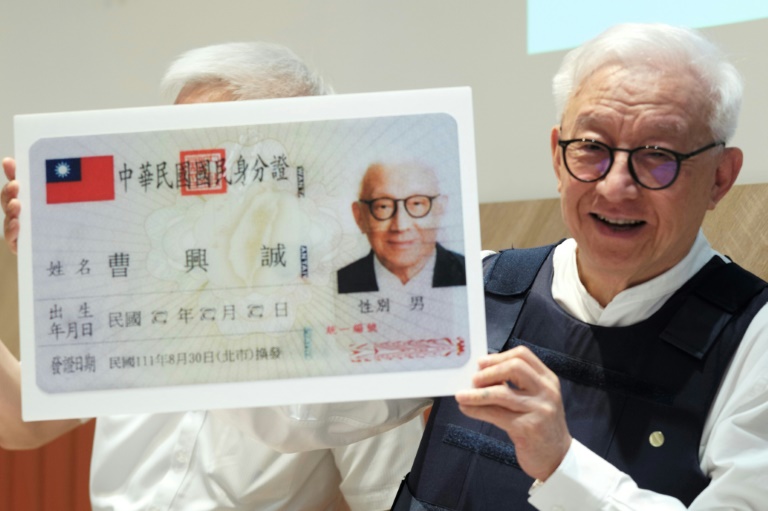
A colourful Taiwanese tycoon unveiled plans Thursday to train more than three million “civilian warriors” to help defend the democratic island in the event of a Chinese invasion, donating TW$1 billion ($33 million) of his own money.

Robert Tsao, 75, is one of Taiwan’s most successful businessmen and founded major microchip maker United Microelectronics Corp (UMC). 

He has been increasingly outspoken against Beijing, and his donation comes after China’s military put on a huge show of force to protest US House Speaker Nancy Pelosi’s visit to Taipei last month. 

Taiwan lives under constant threat of invasion by China, which claims the self-ruled island as part of its territory to be seized one day — by force if necessary. 

For a week after Pelosi’s visit, China sent warships, missiles and fighter jets into the waters and skies around Taiwan, its largest and most aggressive exercises since the mid-1990s. 

Tsao, who donned body armour for his announcement, warned it would be “an intentional slaughter and vicious war crime and crime against humanity” if China were to use force against Taiwan.

The tycoon said he would put TW$600 million towards training three million “black bear warriors” in the next three years who could work alongside the military. 

Another TW$400 million will be used to train 300,000 “marksmen” with shooting skills.

– Taiwan outgunned –

Tsao, who no longer holds any position or title with UMC, portrayed the risk posed by China as existential.

“The Chinese Communist Party’s threat to Taiwan is growing and the fight against (it) stands for freedom against slavery, democracy against authoritarianism and civilised against barbaric,” he said. 

Taiwan has spent decades living alongside China’s threats, but the sabre rattling has become more pronounced under President Xi Jinping.

China’s most authoritarian leader in a generation, Xi is on the cusp of securing an unprecedented third term later this year and has made gaining Taiwan a key part of his “national rejuvenation” goals. 

Taiwan remains massively outgunned, with 88,000 ground forces compared to China’s one million troops, according to Pentagon estimates.

Mandatory military service for Taiwanese men is currently just four months. 

American and Taiwanese strategists have increasingly pushed Taipei to adopt a “porcupine” strategy of asymmetric warfare, which would include training civilians to fight.

Russia’s stalled invasion of Ukraine has also focused attention in Taiwan on both the threats posed by a giant authoritarian neighbour and how huge armies can be resisted by a much smaller but determined defender.

Like many of Taiwan’s leading business figures, Tsao had huge investments in China and spent years speaking cautiously about Beijing.

But he became more vocal in recent years as he stopped being involved in UMC and especially after China embarked on a sweeping political crackdown in nearby Hong Kong.

At Thursday’s press conference he said Taiwan should not be turned “into another Hong Kong”.

“The essence of the Chinese communists are hooligans. They learnt violence and lying from the Soviet Union… The People’s Republic of China is a gangster organisation disguised as a government and country.” 

Tsao previously gave up Taiwanese citizenship for a Singaporean passport.

But last month he told Radio Free Asia he planned to take up Taiwanese citizenship again because he wants to die in his homeland. 
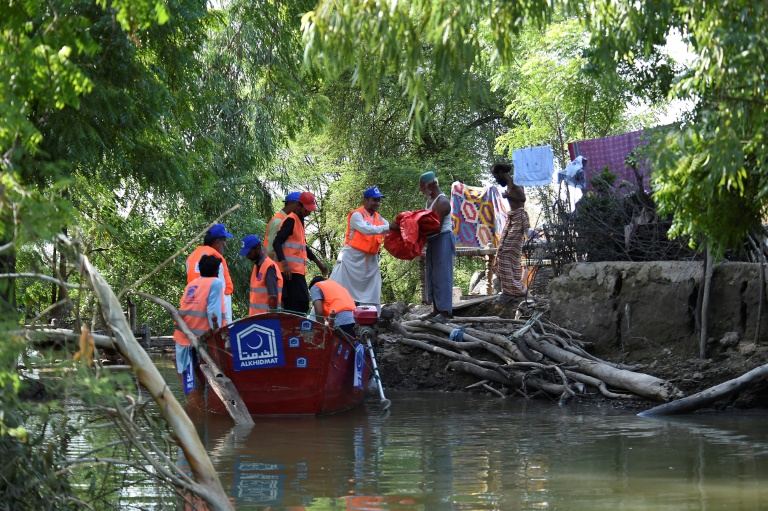
Villagers brave snakes and hunger to protect land in flooded Pakistan

The southern Pakistan village of Karim Bakhsh is almost entirely under muddy water after catastrophic monsoon rains — hardly any stable buildings are left for shelter, the wheat silos are empty and venomous snakes are a constant threat.

But unlike the tens of thousands of people who have fled their flooded homes, villages and towns across the country, several families here have refused to leave.

Without formal property deeds, many residents are worried that if they take off opportunists will seize their land, where their families have lived for generations.

“We had ownership papers from the British colonial government,” Intizar Ahmed, a 55-year-old farmer, told AFP Wednesday while standing on an elevated patch of land near his mostly submerged homestead in Sindh province.

“But we lost them many years ago in a flood like this… (besides) we have no place to go.”

Others said they worried about the fate of their livestock — a resource far too valuable for poor villagers to leave behind.

“We have buffaloes, cows and goats… if we leave the cattle behind they would be stolen,” said Shah Mohammad, 35.

Mohammad and others were scrambling to find food not just for themselves, but for their animals too.

There was enough for the animals to eat for now, he said, but villagers have been struggling to replenish empty wheat bins.

– Cut off from the world –

Aid delivered by boat by charities is the only lifeline for those who can’t or don’t want to leave Karim Bakhsh.

The village has been besieged by murky floodwaters extending for more than a kilometre in some spots.

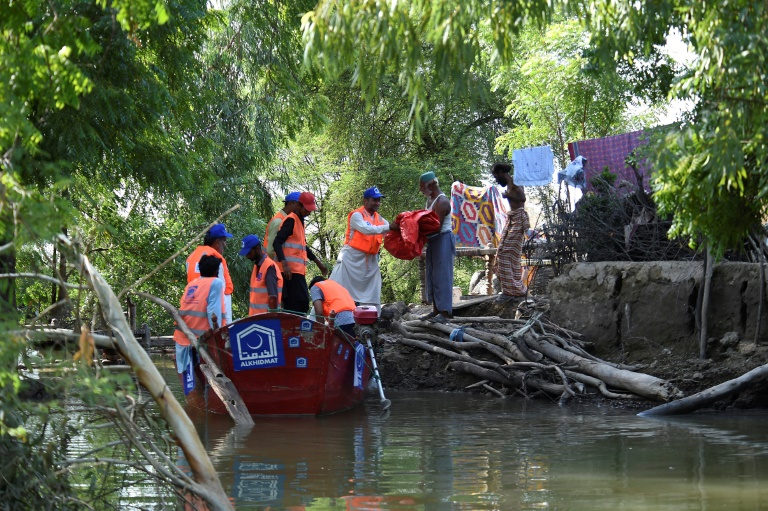
Villagers gathered on the few dry patches of land to wait for a boat operated by the Alkhidmat Foundation — a Pakistan-based humanitarian organisation — as it puttered through the waist-deep water in the streets.

It was the first aid delivery in days.

The boat made multiple stops in the village so relief workers could hand out tents, food packages and other supplies.

An aid worker said the charity had decided to make the deliveries after it found out that some families did not want to leave.

At every stop, there was evidence of the destruction wrought by the torrential rains and floods — the worst in decades.

Most homes and structures were ruined, and villagers were desperate for any material that might help build temporary shelter from both the rain and — when it came out — the scorching sun.

“Our homes fell… We cut down the trees and used that wood to hold up whatever was left of our walls,” said Gul Badshah, 70.

Maqbool Ahmed, another resident, prepared to face a different local threat especially common during floods: venomous snakes.

He connected a small lamp to a car battery, placing the setup on an earthen mound.

“We light it up in the night to guard against snakes,” he told AFP.

“Sometimes, cobras and vipers sneak into our place.”

Villagers brave snakes and hunger to protect land in flooded Pakistan

The southern Pakistan village of Karim Bakhsh is almost entirely under muddy water after catastrophic monsoon rains — hardly any stable buildings are left for shelter, the wheat silos are empty and venomous snakes are a constant threat.

But unlike the tens of thousands of people who have fled their flooded homes, villages and towns across the country, several families here have refused to leave.

Without formal property deeds, many residents are worried that if they take off opportunists will seize their land, where their families have lived for generations.

“We had ownership papers from the British colonial government,” Intizar Ahmed, a 55-year-old farmer, told AFP Wednesday while standing on an elevated patch of land near his mostly submerged homestead in Sindh province.

“But we lost them many years ago in a flood like this… (besides) we have no place to go.”

Others said they worried about the fate of their livestock — a resource far too valuable for poor villagers to leave behind.

“We have buffaloes, cows and goats… if we leave the cattle behind they would be stolen,” said Shah Mohammad, 35.

Mohammad and others were scrambling to find food not just for themselves, but for their animals too.

There was enough for the animals to eat for now, he said, but villagers have been struggling to replenish empty wheat bins.

– Cut off from the world –

Aid delivered by boat by charities is the only lifeline for those who can’t or don’t want to leave Karim Bakhsh.

The village has been besieged by murky floodwaters extending for more than a kilometre in some spots.

Villagers gathered on the few dry patches of land to wait for a boat operated by the Alkhidmat Foundation — a Pakistan-based humanitarian organisation — as it puttered through the waist-deep water in the streets.

It was the first aid delivery in days.

The boat made multiple stops in the village so relief workers could hand out tents, food packages and other supplies.

An aid worker said the charity had decided to make the deliveries after it found out that some families did not want to leave.

At every stop, there was evidence of the destruction wrought by the torrential rains and floods — the worst in decades.

Most homes and structures were ruined, and villagers were desperate for any material that might help build temporary shelter from both the rain and — when it came out — the scorching sun.

“Our homes fell… We cut down the trees and used that wood to hold up whatever was left of our walls,” said Gul Badshah, 70.

Maqbool Ahmed, another resident, prepared to face a different local threat especially common during floods: venomous snakes.

He connected a small lamp to a car battery, placing the setup on an earthen mound.

“We light it up in the night to guard against snakes,” he told AFP.

“Sometimes, cobras and vipers sneak into our place.”

Chinese city of 16 million to shut down over new Covid outbreak

Around 16 million people in the Chinese city of Chengdu will be effectively under lockdown from Thursday as authorities race to snuff out a new Covid-19 outbreak.

China is the last major economy wedded to a zero-Covid policy, stamping out virus flare-ups with snap shutdowns, mass testing and lengthy quarantines.

Chengdu, in the southwest, has become the latest to announce a shutdown, saying in an official notice that residents must “stay home in principle” from 6 pm on Thursday to combat a new wave of infections.

Each household will be allowed to send one person out to buy groceries and essential goods per day, provided they have tested negative in the previous 24 hours, the notice said.

It said that all residents would be tested for the virus between Thursday and Sunday, and urged them not to leave the city unless “absolutely necessary”.

“The current state of epidemic control is abnormal, complex and grim,” the announcement said, adding that the measures aimed to “decisively arrest the spread of the outbreak and guarantee the health of all citizens”. 

Chengdu recorded 157 new local infections on Thursday, of which 51 displayed no symptoms, the city government said in a separate notice.

Children in at least 10 cities and provinces are facing disruption to the new academic year as pandemic controls force schools to switch to measures like online learning, according to a report on Thursday by a media outlet affiliated with the state-run People’s Daily.

Xining, the capital of western Qinghai province and home to 2.5 million people, has ordered schools to conduct lessons online, rolled out a mass testing drive and told residents in its main urban area to work from home for three days.

China has stuck fast to its zero-tolerance virus strategy despite disruptions from the fast-spreading Omicron strain and concern that the approach is stifling its post-pandemic economic recovery.

Last month, travellers in the southern island province of Hainan protested after more than 80,000 tourists were stranded in a resort city because of a Covid-19 flare-up.

Social media videos from the eastern megacity of Shanghai showed panicked crowds fleeing an Ikea store and another building as officials tried to impose local lockdowns in response to two suspected cases.

UN report lists litany of rights abuses in China's Xinjiang

The United Nations released a major report into serious human rights abuses in China’s Xinjiang region Wednesday, saying torture allegations were credible and citing possible crimes against humanity but stopping short of calling it genocide. 

The long-awaited report detailed a string of rights violations against Uyghurs and other Muslim minorities in the far-western region, bringing the UN seal to many of the allegations long brought by activist groups, Western nations and the Uyghur community in exile.

“The extent of arbitrary and discriminatory detention of members of Uyghur and other predominantly Muslim groups… may constitute international crimes, in particular crimes against humanity,” the report said.

It said the world must now pay “urgent attention” to the human rights situation in the Xinjiang.

Michelle Bachelet, the UN human rights chief, decided that a full assessment was needed of the situation inside the Xinjiang Uyghur Autonomous Region (XUAR).

The report was in the making for around a year and its release was bitterly opposed by China.

Bachelet was determined to release it before her four-year term as the UN High Commissioner for Human Rights expired at the end of August — and did so with 13 minutes to spare at 11:47pm in Geneva.

“I said that I would publish it before my mandate ended and I have,” Bachelet said in an email sent to AFP on Thursday.

“The politicisation of these serious human rights issues by some states did not help.”

– Torture allegations ‘credible’ –

China has been accused for years of detaining more than one million Uyghurs and other Muslims in the region.

Beijing has vehemently rejected the claims, insisting it is running vocational centres designed to curb extremism.

“Serious human rights violations have been committed in XUAR in the context of the government’s application of counter-terrorism and counter-‘extremism’ strategies,” the UN report said.

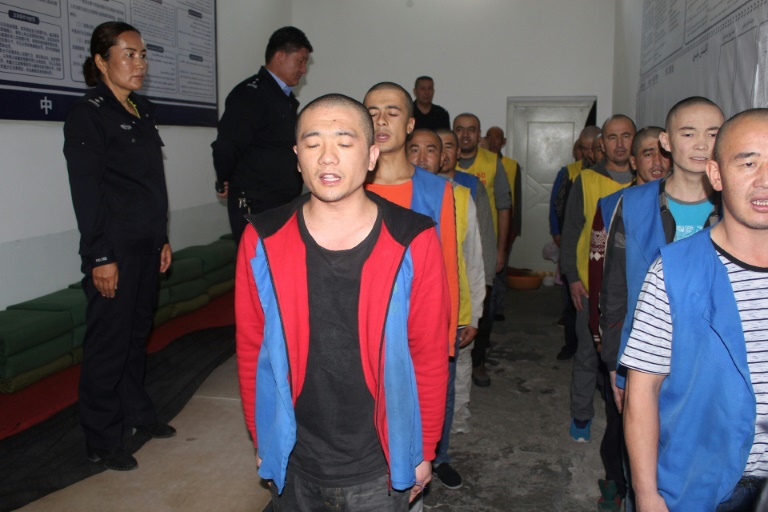
The assessment raised concerns about the treatment of people held in China’s so-called “Vocational Education and Training Centres” (VETCs). 

“Allegations of patterns of torture or ill-treatment, including forced medical treatment and adverse conditions of detention, are credible, as are allegations of individual incidents of sexual and gender-based violence,” the report said. 

The UN Human Rights Office could not confirm how many people were affected by the VETCs but concluded that the system operated on a “wide scale” across the entire region.

The number in the VETCs, at least between 2017 and 2019, “was very significant, comprising a substantial proportion of the Uyghur and other predominantly Muslim minority populations”.

Campaigners have accused China of forcibly sterilising women, and the report cited “credible indications of violations of reproductive rights through the coercive enforcement of family planning policies”.

– ‘Disinformation and lies’ –

China’s mission in Geneva hit out at the report and maintained its firm opposition to its release, sharing a 121-page document from the Xinjiang provincial government defending Beijing’s policies in the region.

“Based on the disinformation and lies fabricated by anti-China forces and out of presumption of guilt, the so-called ‘assessment’ distorts China’s laws and policies, and wantonly smears and slanders China, and interferes in China’s internal affairs,” it said.

“People of all ethnic groups in Xinjiang are living a happy life in peace and contentment. It is the greatest human rights protection and the best human rights practice.”

Non-governmental organisations and campaign groups said the report should act as a launchpad for further action.

Human Rights Watch’s China director Sophie Richardson said the “damning” findings of sweeping rights abuses showed why Beijing “fought tooth and nail” to prevent its publication.

The response from the Uyghur activist community was mixed, with some groups praising its work while others wishing it had gone further it its condemnation of Beijing’s actions in Xinjiang.

“This is a game-changer for the international response to the Uyghur crisis,” said Uyghur Human Rights Project executive director Omer Kanat.

“Despite the Chinese government’s strenuous denials, the UN has now officially recognised that horrific crimes are occurring.”

And World Uyghur Congress president Dolkun Isa said the report paved the way  for “meaningful and tangible action” by countries, businesses and the UN, adding: “Accountability starts now.”

But Salih Hudayar, a Uyghur-American who campaigns for Xinjiang independence, told AFP the report was “sadly not as strong as we had hoped.”

“Our people have been waiting years for the UN to speak out,” said Hudayar. 

“Unfortunately, because of Chinese government pressure the UN has long remained silent.”

Taiwan tycoon to train three million 'civilian warriors'

A colourful Taiwanese tycoon unveiled plans Thursday to train more than three million “civilian warriors” to help defend the democratic island in the event of a Chinese invasion, donating TW$1 billion ($33 million) of his own money.

Robert Tsao, 75, is one of Taiwan’s most successful businessmen and founded major microchip maker United Microelectronics Corp (UMC). 

He has been increasingly outspoken against Beijing, and his donation comes after China’s forces put on a huge show of force to protest US House Speaker Nancy Pelosi’s visit to Taipei last month. 

Taiwan lives under constant threat of invasion by China, which claims the self-ruled island as part of its territory to be seized one day — by force if necessary. 

For a week after Pelosi’s visit, China sent warships, missiles and fighter jets into the waters and skies around Taiwan, its largest and most aggressive exercises since the mid-1990s. 

Tsao warned it would be “an intentional slaughter and vicious war crime and crime against humanity” if China were to use force against Taiwan.

The tycoon said he would put TW$600 million towards training three million “black bear warriors” in the next three years who could work alongside the military. 

Another TW$400 million will be used to train 300,000 “marksmen” with shooting skills.

Tsao, who no longer holds any position or title with UMC, portrayed the risk posed by China as existential.

“The Chinese Communist Party’s threat to Taiwan is growing and the fight against (it) stands for freedom against slavery, democracy against authoritarianism and civilised against barbaric,” he said. 

“If we can successfully resist China’s ambitions, we not only will be able to safeguard our homeland but make a big contribution to the world situation and the development of civilisation”. 

Taiwan has spent decades living alongside China’s threats, but the sabre rattling has become more pronounced under President Xi Jinping.

China’s most authoritarian leader in a generation, Xi is on the cusp of securing an unprecedented third term later this year and has made gaining Taiwan a key part of his “national rejuvenation” goals. 

Taiwan remains massively outgunned, with 88,000 ground forces compared to China’s one million troops, according to Pentagon estimates.

Mandatory military service for Taiwanese men is currently just four months. 

American and Taiwanese strategists have increasingly pushed Taipei to adopt a “porcupine” strategy of asymmetric warfare, which would include training civilians to fight.

Russia’s stalled invasion of Ukraine has also focused attention in Taiwan on both the threats posed by a giant authoritarian neighbour and how huge armies can be resisted by a much smaller but determined defender.

As US midterms loom, Biden heads to Philadelphia to condemn Trump supporters

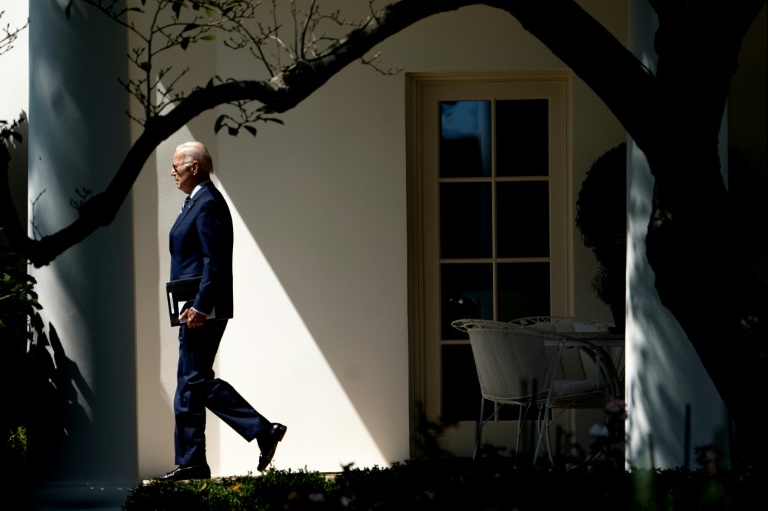
The symbolism is not lost on the White House: US President Joe Biden heads Thursday to Philadelphia, the cradle of American statehood, to deliver a rare primetime speech on what he calls “the battle for the soul of the nation.”

His speech, set for 8:00 pm local time (0000 GMT), will take place near the building where the Declaration of Independence and the US Constitution were adopted more than two centuries ago.

Pennsylvania, the eastern US state that includes Philadelphia, may also prove key to the crucial midterms elections in November. The Democratic president will visit the state three times this week alone.

White House spokesman Karine Jean-Pierre has already signaled that the 79-year-old leader will mince no words in his speech attacking his opponents. 

“The president thinks that there is an extremist threat to our democracy,” she told reporters Wednesday.

– ‘MAGA’ –

And the threat has a name: “MAGA” or “ultra-MAGA” Republicans who embrace former president Donald Trump’s “Make America Great Again” ideology.

“They just don’t respect the rule of law,” said Jean-Pierre before she called out several Republican officials and lawmakers by name for urging violence against public figures, a move that is highly unusual for a White House press briefing.

“The president believes, which is a reason to have this in primetime, that there are… a majority of Americans who believe that we need to… save the core values of our country,” said Jean-Pierre.

The theme of Biden’s speech Thursday harks back to an article he published in the influential American magazine The Atlantic in 2017, after a deadly white nationalist rally in the city of Charlottesville. The march in the southern state of Virginia made him decide to run for president.

“We are living through a battle for the soul of this nation,” Biden wrote then.

After his election in 2020, the veteran politician initially planned to wage this battle through dialogue with moderate Republican lawmakers, and through economic and social policies aimed at the middle class.

But the rhetoric of reconciliation has died down, as Biden faced a Republican party still influenced by Trump.

– Surveys – 

Instead, opinion polls seem to show that Biden would benefit from being more aggressive towards his opponents. Last week, Biden accused Trump’s supporters of being consumed by “semi-fascism.”

The latest opinion poll from Quinnipiac University, released Wednesday, shows him with a 40 percent approval rating, still very low, but a significant improvement over the 31 percent recorded in July.

Moreover, according to the same survey, 67 percent of Americans now believe that their democracy is in danger, compared to 58 percent in January. 

The Democrats are hoping for an upset in the November elections, in which all of the seats in the House of Representatives and a third of the Senate seats are on the ballot. Traditionally, the midterms don’t favor the ruling party.

Things have been going well for Biden lately, however, with inflation slowing, a series of his landmark reforms finally pushed through Congress, Trump fighting off a series of criminal investigations, and — most importantly — the Republicans’ anti-abortion efforts appearing to be turning against them.

This would be enough to give hope to the Democrats, who are battling to keep their hold on the House and preserve their Senate majority or even strengthen it.

And Pennsylvania will be crucial for any of that to happen.

Biden already traveled to the battleground state on Tuesday, and he will return there on Monday to celebrate Labor Day with Democratic Senate hopeful John Fetterman. 

Trump is also planning an appearance in Pennsylvania on Saturday to support his candidate in this race, Mehmet Oz.

Moscow approves Japan stakes in Sakhalin energy project

Two Japanese trading houses will maintain stakes in a Russian energy project despite Tokyo joining sanctions on Moscow over the war in Ukraine, as the Asian country looks to secure its power supply.

Moscow is transferring operation of the Sakhalin-2 oil and gas project to a new Russian firm, with foreign stakeholders required to apply for approval to maintain their interests.

Like other countries that have joined sanctions, Japan is seeking to reduce its reliance on Russian energy imports but struggling to find alternatives.

The resource-poor country faced a power crunch during a summer heatwave this year, and is looking ahead to a potentially difficult winter.

Mitsubishi Corp said Thursday that its 10 percent stake in the Sakhalin-2 project had been approved by Moscow, a day after Mitsui said its 12.5 percent interest had also been given the green light.

The Japanese government had backed both firms continuing in the project.

Russia supplies around nine percent of Japan’s liquified natural gas (LNG) demands, almost all of which comes from Sakhalin-2.

“This decision is extremely significant for our nation’s stable energy supply,” government spokesman Hirokazu Matsuno said at a regular briefing on Thursday.

“We will continue to monitor the situation to ensure stable LNG supplies, together with the public and private sectors.”

Japan is heavily dependent on imported fossil fuels, in part because many of its nuclear reactors have been offline since the 2011 Fukushima disaster.

The country had previously ruled out withdrawal from the Sakhalin-2 project, despite joining Western-led energy sanctions on Russia.

Last week, Prime Minister Fumio Kishida called for a push to revive the country’s nuclear power industry in a bid to tackle soaring imported energy costs linked to the war.

Before the Fukushima meltdown, around a third of Japan’s power generation came from nuclear sources, but in 2020 the figure was less than five percent.

“LNG accounts for over one-third of electricity generation in Japan, while the recent closure of ageing thermal power plants has further constrained policymakers’ options,” wrote James Brady, vice president of Teneo consultancy, in a note.

“The Sakhalin decisions reflect the pragmatic realities of keeping the country’s heat and lights on during the most challenging international energy market environment for decades.”

South Korean Netflix hit 'Extraordinary Attorney Woo' sparks autism debate

A hit Netflix K-drama about a high-functioning autistic lawyer is prompting soul-searching in South Korea, where some on the spectrum say they can feel invisible.

The endearing “Extraordinary Attorney Woo”, featuring a neurodivergent attorney, has been Netflix’s most-watched non-English show for over a month, following a path blazed by fellow Korean smash “Squid Game”.

Even K-pop sensation BTS are fans of the global hit, with band members posting a video performing the signature greeting between Woo and her best friend — a dance step-slash-dab that is tearing across social media.

But the 16-episode series, which follows a rookie lawyer whose condition helps her find brilliant solutions to legal conundrums but often leaves her socially isolated, has gone beyond memes to trigger a serious debate in South Korea about autism.

Star lawyer Woo Young-woo is fiercely intelligent, with an IQ of 164, but also has visible autistic traits such as echolalia — the precise repetition of words or sentences, often out of context.

Lead actress Park Eun-bin, 29, who has received rave reviews, said she initially hesitated to accept the role, aware of the power of the story to impact perceptions of autistic people in South Korea and beyond.

“I felt I had a moral responsibility as an actor,” she told AFP. 

“I knew (the show) was inevitably going to have an influence on people with autism and their families,” she said, adding that she had questioned whether she would be able to pull off the complex character.

“It was the first time that I had absolutely no idea what to do, when it came to how to express things, while I was reading the script,” she added.

– ‘Erased’ in South Korea – 

But in South Korea, some families of autistic people have described the show as pure “fantasy”, saying her character is unrealistic.

For many on the spectrum, achieving like Woo would be equivalent to “a kid winning an Olympic medal for cycling without being able to walk yet”, Lee Dong-ju, the mother of an autistic child, told a local broadcaster.

But while Woo is clearly “a fictional character that has been created to maximise the dramatic effect”, there is actually more truth to her story than many South Koreans realise, said psychiatry professor Kim Eui-jung of the Ewha Womans University Mokdong Hospital.

About a third of people on the spectrum have average or above-average intelligence, she said, and may not have any noticeable autistic characteristics — or even realise they have the condition.

This was the case for Lee Da-bin, who is on the spectrum but was not diagnosed until later in life.

“People don’t recognize the mild forms of autism at all,” she said. “I feel that I’m being erased.”

Lee shares many traits with the fictional Woo, from hypersensitivity to taste to academic excellence despite suffering from bullying. She grew up knowing she was different but blamed herself for not being able to fit in.

It was only after she had dropped out of school and began seeing a psychiatrist for depression that she was diagnosed with autism and her teenage struggles to connect with others began to make sense.

“It was a life where you would not even speak 10 words a day,” Lee told AFP of her time at school.

“I’d lived my whole life thinking that I’m just a weird person… and it’s my fault that I can’t get along with other people.”

– Limited understanding –

“Public awareness or understanding of high-functioning autism is still very limited in South Korea,” said Kim Hee-jin, professor in psychiatry at Chung-Ang University Hospital in Seoul.

The general public views autism as “a condition that involves severe intellectual disability”, she said, adding this contributed to broader failures to diagnose and offer support early on.

Early interventions can help prevent those on the spectrum “from blaming themselves for the challenges they face due to autism, such as difficulty making and maintaining friendships.”

For Lee Da-bin, knowing her condition earlier in life could have helped her avoid enormous hurt and pain.

Since receiving her diagnosis, she has been able to restart her studies with the ultimate goal of a career in medicine. 

And, like the fictional Attorney Woo — whose struggles with dating and dreams of living fully independently are touchingly portrayed in the hit show — Lee said she wants a life with a sense of agency and connection.

“I want to make enough money to support myself and afford my own place, where I can live with someone I love.” 

Volkswagen shifts gears with Oliver Blume taking wheel

Volkswagen on Thursday hands over the reins to new CEO Oliver Blume, tasked with steering the German automotive giant through challenging economic conditions after four turbulent years under his predecessor, Herbert Diess.

In July, the storied manufacturer announced its decision to part ways with Diess, who stirred up discontent with his uncompromising push to electrify the group.

Blume, the current boss of sports car brand Porsche, takes the wheel at a “really difficult time” for Volkswagen, said Matthias Schmidt, an analyst specialising in electric cars.

Russia’s invasion of Ukraine has not only compounded supply chain problems unleashed by the coronavirus pandemic, but introduced uncertainties over energy supplies across Europe.

The economic turmoil comes as Volkswagen is ploughing tens of billions into an ambitious switch to electric vehicles, opening a clutch of battery factories across Europe.

Meanwhile, the new boss will also be tasked with sorting persistent setbacks at the group’s software arm and guiding premium brand Porsche to a tricky stock market entry. 

– Electric strategy –

Diess took over at Volkswagen in 2018 with a mandate to turn the page on the “dieselgate” emissions-cheating scandal.

The Austrian’s response was to launch Volkswagen on a headlong drive into electric vehicles, but his often combative style ruffled feathers at the legacy auto manufacturer.

The 63-year-old finally lost the confidence of Volkswagen’s main shareholders — the Porsche-Piech family — as problems mounted in the group’s software division, headed by the CEO himself.

His successor, Blume, a longtime Volkswagen employee, is set to cut a more conciliatory figure than Diess, hired as an outsider from rival BMW.

“Blume is not known as someone who wages wars. He takes less risk than Diess,” Ferdinand Dudenhoeffer, head of the Center of Automotive Research, told AFP.

Following Diess’s exit, Volkswagen’s chief financial officer, Arno Antlitz, was sent out to stress that there would be “continuity” at the manufacturer.

But Blume has signalled that he could be more open to extending the life of old combustion engines with alternative fuels. 

In a recent interview with weekly Automobilwoche, Blume said he saw synthetic fuels as a “sensible complement of electric mobility”.

In theory, such “e-fuels”, made from carbon dioxide using renewable electricity, allow traditional engines to be run with almost no net carbon emissions. 

While Diess remained unconvinced by the alternative to petrol and diesel, synthetic fuels would allow Volkswagen to keep working on a future for combustion engines. 

Blume was unlikely to perform a full U-turn on the electrification plan laid out by Diess, Dudenhoeffer said. 

But the carmaker could “move a little further away from the purely electric strategy” given the risks of an abrupt move to battery-powered vehicles, he said.

– Legacies –

In the end, the issue is likely to be decided in Brussels, where lawmakers have backed a ban on new non-electric vehicles from 2035.

Blume may also chart a different course in the area of software. Where Diess led an ambitious drive to bring development almost completely in-house, Blume could be open to using more external suppliers.

“It’s a massive profit centre, that’s the reason they want to keep it all in-house,” said Schmidt, but the analyst pointed out that “you need software people to run a software company, not car people”.

Meanwhile, Blume was likely to support Volkswagen’s renewed emphasis on the American market, following years of struggles in the wake of dieselgate.

The move would mesh with a decision for Volkswagen to invest massively in developing and making its own batteries, thereby reducing its reliance on suppliers in China. 

“That could be Diess’s legacy in a way, that and getting the electrification post-dieselgate in motion, those are probably the two biggest legacies to leave behind,” said Schmidt.

Close Bitnami banner
Bitnami