World

Gazprom halts pipeline gas flow in new jitters for Europe

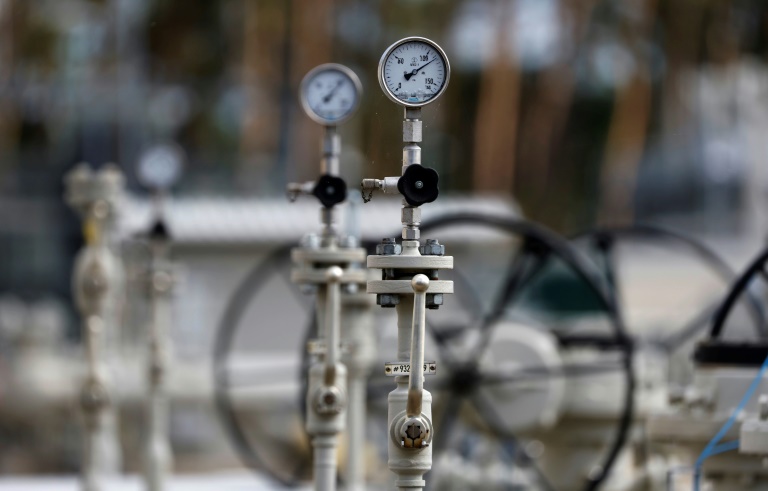
Russian energy giant Gazprom suspended gas deliveries to Germany for maintenance on a major pipeline on Wednesday, the latest in a series of supply halts that have fuelled an energy crisis in Europe.

Gazprom said supplies via Nord Stream 1 were “completely stopped” for “preventative work” at a compressor unit, shortly after the the pipeline’s operator, Entsog, announced that deliveries had stopped.

The move comes as European countries have faced soaring energy prices since Russia invaded Ukraine in late February and subsequently curbed its gas deliveries to the region.

Germany, which is heavily dependent on Russian gas, has accused Moscow of using energy as a “weapon”.

But Gazprom has said the three-day maintenance work was “necessary” and had to be be carried out after “every 1,000 hours of operation”.

Germany’s Federal Network Agency chief Klaus Mueller has called it a “technically incomprehensible” decision, warning that it was likely just a pretext by Moscow to wield energy supplies as a threat.

Experience shows that Moscow “makes a political decision after every so-called maintenance”, he said, adding that “we’ll only know at the beginning of September if Russia does that again”. 

– ‘Much better position’ –

With winter around the corner, European consumers are staring down the barrel of huge power bills. Some countries like France have warned that rationing is a possibility.

The European Union is preparing to take emergency action to reform the electricity market in order to bring galloping prices under control, with energy ministers scheduled to hold extraordinary talks next week.

Asked if gas supplies would resume after the three-day works were completed on Saturday, Russian government spokesman Dmitry Peskov said “there is a guarantee that, apart from technical problems caused by sanctions, nothing interferes with supplies”.

Western capitals “have imposed sanctions against Russia, which do not allow for normal maintenance, repair work”, he added, in what appeared to hint at a replay of an earlier round of start-stop rigmarole.

Gazprom had already carried out 10 days of long-scheduled maintenance works in July. While it restored gas flows following the works, it drastically dwindled supplies just days later, claiming a technical issue on a turbine.

The Russian company insists that a key turbine could not be sent to Russia because of sanctions on Moscow. But Germany, where the turbine was located, has said Moscow was itself in fact blocking the turbine’s delivery to Russia.

An official at Gascade, which operates the distribution network within Germany, also viewed Gazprom’s latest actions sceptically.

“In July, it was regular maintenance planned for a long time by Nord Stream 1, this time it was not planned and we don’t know what is behind this operation,” the official said on condition of anonymity.

A day ahead of the new shutdown, Chancellor Olaf Scholz said Germany was now “in a much better position” in terms of energy security, having achieved its gas storage targets far sooner than expected.

Europe as a whole was also getting a march on filling its gas storage tanks. On Sunday, storage levels were already at 79.9 percent of capacity in the EU.

– ‘Gas emergency’ –

At the same time, fears over throttled supplies have also driven companies to slash their energy usage.

Germany’s industry consumed 21.3 percent less gas in July than the average for the month from 2018 to 2021, said the Federal Network Agency.

Mueller has said such pre-emptive action “could save Germany from a gas emergency this winter”.

And Europe’s biggest economy was already racing to turn its back on Russian gas. 

At the German coastal city of Lubmin, where Nord Stream 1 comes onshore, plans are already well underway for the switch to liquefied natural gas (LNG).

The LNG, transported in by ships, will arrive at Lubmin’s industrial port and be converted back into gas and pumped into Gascade’s distribution network, which has so far been used to funnel Russian gas around the country.

“We expect to be able to inject gas into the distribution network on December 1,” said Stephan Knabe of Deutsche ReGas — the company managing the LNG project.

The company believes that up to 4.5 billion cubic metres of gas can be imported via the Lubmin LNG terminal alone, making up around eight percent of Nord Stream 1’s capacity.
Lives swept away: rescued tourists recount Pakistan flood horror

It was midnight when Yasmin and her family were ordered to urgently evacuate their room at the Honeymoon Hotel, perched above the picturesque ice-blue waters of the Swat river. 

They had swapped the sticky Lahore summer for the cooler climes of the northeastern mountains last week when they became embroiled in one of Pakistan’s worst disasters — one that has left more than 1,100 dead and a third of the country submerged by heavy flooding.

In the darkness, they fled their hotel in the remote Kalam valley.

Hours later, from the safety of higher ground, they watched it collapse and crumble into the thundering waters. 

“There was chaos, everyone was rushing to save their life,” the 53-year-old Yasmin told AFP Tuesday after she was evacuated to Mingora.

“We heard very strong bangs and then I saw the hotel we were staying in submerged in water. The sound of the water was so strong. It was like something had exploded.”

In the panic, she witnessed the despair of a mother unable to hold onto her small child.

“The child was shouting but his voice was overwhelmed by the gush of the water. His mother was trying to save him but she couldn’t,” Yasmin recalled, choking on her words. 

The boy was one of at least 21 people in the area lost to the floods, mainly due to collapsed houses. 

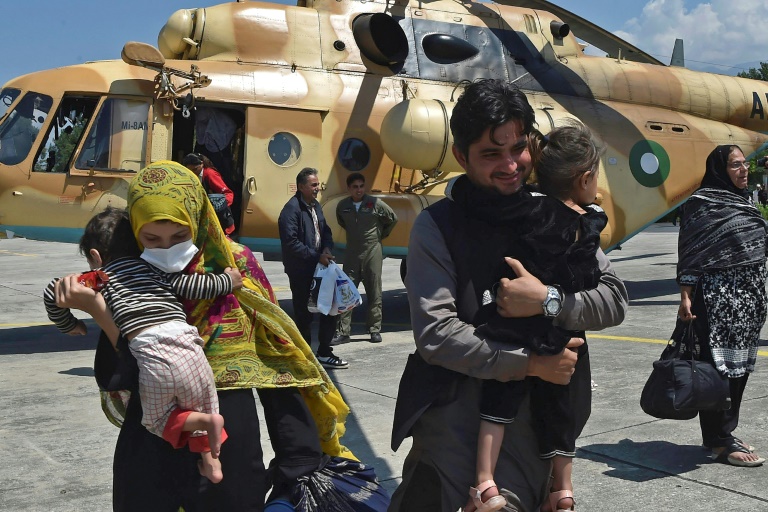
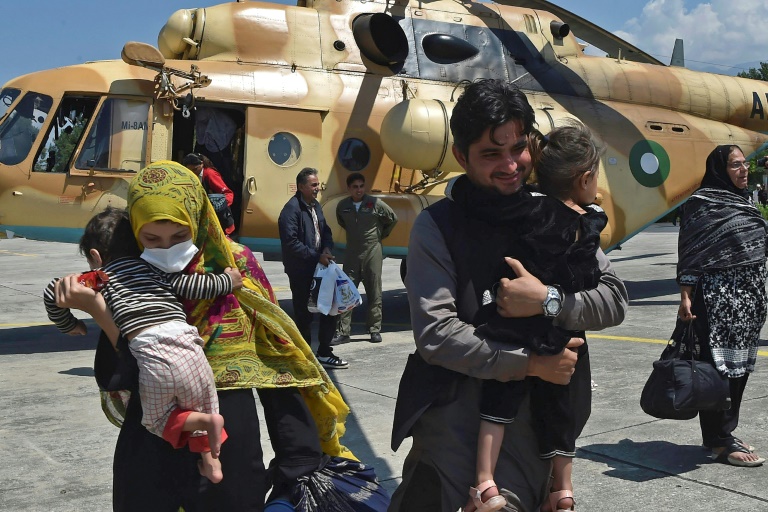
Accounts of last Thursday night’s horror have started to emerge after tourists were airlifted to safety by helicopter rescue missions — the only way of accessing remote valleys cut off by the flooding.

– Thousands still stranded –

All along the Swat river are the remnants of destroyed bridges, upended roads and the remains of hotels clinging to the banks.  

The water has receded but it could be days before road links are re-established with nearby towns. 

Junaid Khan, deputy commissioner for Swat, told AFP that up to 200,000 people were cut off.

More than 600 stricken tourists have made up the majority of evacuations — with women, children and the sick prioritised in an effort led by the military and supported by the provincial government’s helicopter. 

About 3,500 food aid packages have already been delivered –- some dropped from the back of a helicopter when crowds of people reaching for the aircraft made it impossible to land.

The stunning Swat Valley, known locally as the “Pakistani Switzerland”, is a popular destination for its majestic mountains, lakes and rivers. 

For days after her initial night of terror, Yasmin’s family sheltered in guest houses farther away from the swollen river until she could be rescued with her husband, who has a kidney condition, and her 12-year-old daughter. 

Her two adult sons stayed behind. 

While generally expectant of seasonal monsoon rains, tourists were surprised by the scale of the flooding that swept through the area.

“It feels like I have got a second life after arriving here,” said Yasmin from the safety of the airfield.

Lives swept away: rescued tourists recount Pakistan flood horror

It was midnight when Yasmin and her family were ordered to urgently evacuate their room at the Honeymoon Hotel, perched above the picturesque ice-blue waters of the Swat river. 

They had swapped the sticky Lahore summer for the cooler climes of the northeastern mountains last week when they became embroiled in one of Pakistan’s worst disasters — one that has left more than 1,100 dead and a third of the country submerged by heavy flooding.

In the darkness, they fled their hotel in the remote Kalam valley.

Hours later, from the safety of higher ground, they watched it collapse and crumble into the thundering waters. 

“There was chaos, everyone was rushing to save their life,” the 53-year-old Yasmin told AFP Tuesday after she was evacuated to Mingora.

“We heard very strong bangs and then I saw the hotel we were staying in submerged in water. The sound of the water was so strong. It was like something had exploded.”

In the panic, she witnessed the despair of a mother unable to hold onto her small child.

“The child was shouting but his voice was overwhelmed by the gush of the water. His mother was trying to save him but she couldn’t,” Yasmin recalled, choking on her words. 

The boy was one of at least 21 people in the area lost to the floods, mainly due to collapsed houses. 

Accounts of last Thursday night’s horror have started to emerge after tourists were airlifted to safety by helicopter rescue missions — the only way of accessing remote valleys cut off by the flooding.

– Thousands still stranded –

All along the Swat river are the remnants of destroyed bridges, upended roads and the remains of hotels clinging to the banks.  

The water has receded but it could be days before road links are re-established with nearby towns. 

Junaid Khan, deputy commissioner for Swat, told AFP that up to 200,000 people were cut off.

More than 600 stricken tourists have made up the majority of evacuations — with women, children and the sick prioritised in an effort led by the military and supported by the provincial government’s helicopter. 

About 3,500 food aid packages have already been delivered –- some dropped from the back of a helicopter when crowds of people reaching for the aircraft made it impossible to land.

The stunning Swat Valley, known locally as the “Pakistani Switzerland”, is a popular destination for its majestic mountains, lakes and rivers. 

For days after her initial night of terror, Yasmin’s family sheltered in guest houses farther away from the swollen river until she could be rescued with her husband, who has a kidney condition, and her 12-year-old daughter. 

Her two adult sons stayed behind. 

While generally expectant of seasonal monsoon rains, tourists were surprised by the scale of the flooding that swept through the area.

“It feels like I have got a second life after arriving here,” said Yasmin from the safety of the airfield.

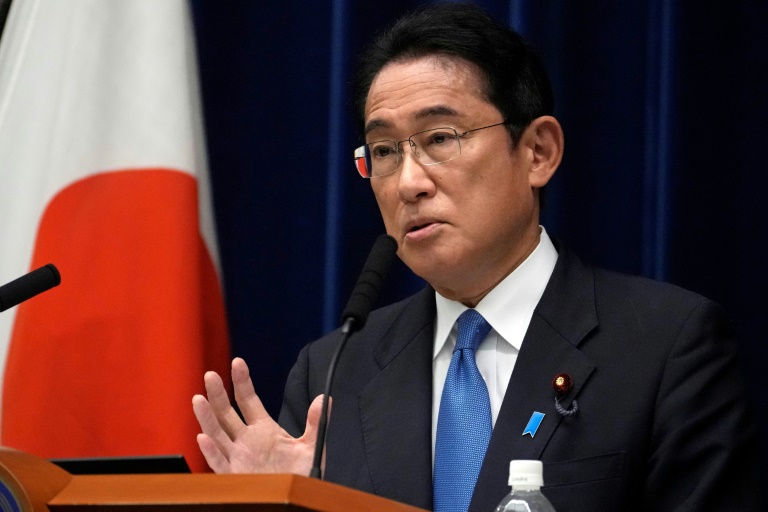
Japan PM says ruling party to cut ties with Unification Church

Japan’s prime minister on Wednesday said members of his ruling party will have to cut ties with the Unification Church, which has faced renewed scrutiny following ex-premier Shinzo Abe’s assassination.

Abe’s alleged assassin resented the church over his mother’s involvement with and hefty donations to the organisation, and targeted the former prime minister believing he was linked to the sect.

In the wake of his murder, revelations of links between the church and a raft of politicians have caused controversy.

The Unification Church has condemned Abe’s murder and denied accusations of coercive fundraising tactics among its members, but Prime Minister Fumio Kishida’s government has seen its approval ratings drop in recent weeks as more details have emerged.

“We will make it the party’s policy that our lawmakers sincerely reflect on their past, abandon cosy relationships and cut off ties with the organisation in question,” Kishida told reporters Wednesday.

“Politicians must be cautious about having relationships with organisations that society recognises as problematic,” he said, promising an investigation into ties between members of his party and the church.

Politicians including Abe’s brother and former defence minister Nobuo Kishi have acknowledged receiving help from church members during elections.

The church says political support is decided by individual members without official involvement, but experts say it has long cultivated ties with powerful figures internationally.

There has also been a fresh examination of allegations the church engages in “spiritual sales”, pressuring members to buy high-priced items to raise funds.

The church denies engaging in the practice, but Kishida said the government would “make an all-out effort” to assist victims of such sales.

Abe was not a member of the church but had addressed an affiliated group, as have various prominent international businesspeople and politicians, including Donald Trump.

-Controversial funeral-

Abe was shot last month in the western Nara region while on the campaign trail, and the government is planning a September 27 state funeral expected to be attended by many current and former heads of state.

The plan is controversial in Japan, however, with some questioning if public money should be spent on an event celebrating a politician.

And while Abe was the country’s longest-serving and best-known politician, he was also divisive, particularly because of his nationalist views and links to alleged cronyism.

Kishida defended the state funeral on Wednesday and said he would submit to questioning over the issue during a televised session of parliament.

“The fact we are holding this state funeral doesn’t mean we’re forcing people to express their condolences,” Kishida said at his first press conference since he contracted Covid-19 earlier this month.

“But I’m aware that there have been various opinions as well as criticism that we have provided insufficient explanations.”

He defended the decision by citing Abe’s achievements domestically and internationally, saying he had received requests from world leaders to visit and pay their condolences.

Kishida said 6,000 people were expected to attend the funeral but that its final cost would not be clear until a guest list of foreign dignitaries was finalised.

A budget of 249 million yen ($1.8 million) has been approved for the event, but that figure does not include security for the dozens of high-profile foreign guests expected to attend.

IAEA inspectors set off for Russian-held Ukrainian nuclear plant

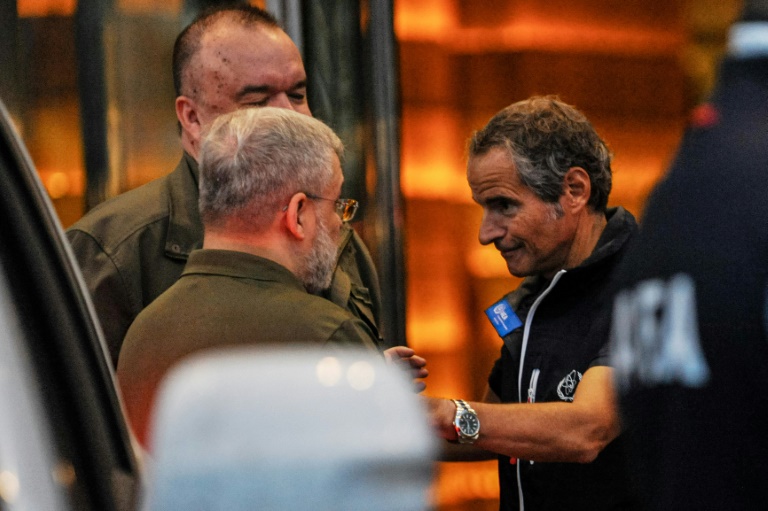
A team led by the head of the International Atomic Energy Agency set off from Kyiv on Wednesday for a Russian-held nuclear power plant in southern Ukraine that has sparked global concern.

The Zaporizhzhia plant, Europe’s biggest, is on the front line between Russian and Ukrainian forces, and the area has been shelled repeatedly in recent days, with the two sides accusing each other.

“We are now finally moving,” IAEA chief Rafael Grossi, who arrived in Kyiv on Monday with a 13-strong team, told reporters before heading off.

Grossi said the inspectors planned to spend “a few days” at the plant and would report back afterwards.

The plant has been occupied by Russian troops since March and Ukraine has accused Russia of deploying hundreds of soldiers and storing ammunition there.

Ukraine had initially feared an IAEA visit at Zaporizhzhia would legitimise the Russian occupation of the site, before finally supporting the idea of a mission.

But Ukraine has insisted that the mission should travel there from Ukrainian-held territory, meaning the inspectors will have to cross the front line with security guarantees from both sides.

“Sadly, Russia is not stopping its provocations precisely in the directions the mission needs to travel to arrive at the plant,” Ukrainian President Volodymyr Zelensky said in his daily address to the nation on Tuesday after meeting with Grossi.

“I hope the IAEA team will be able to start its work,” he added, calling the situation at the plant “extremely menacing”.

“The occupiers have not abandoned the plant, they are continuing bombardments and are not withdrawing arms and ammunition from the site. They are intimidating our personnel. The risk of a nuclear catastrophe due to Russian actions is not diminishing for even an hour,” he added.

“An immediate and total demilitarisation in Zaporizhzhia is necessary.”

Meanwhile, intensive fighting raged across the nearby southern regions of Kherson and Donbas, Zelensky said.

Most of the region of Kherson bordering the Black Sea and its provincial capital of the same name were seized by Russian forces at the start of the invasion six months ago.

With the war in the eastern Donbas region largely stalled, analysts have said for weeks that combat is likely to shift south to break the stalemate before winter comes.

– A ‘long and complicated’ fight –

On Tuesday, fresh Russian strikes on the centre of the northeastern city of Kharkiv killed at least five people and injured seven. 

But much of the attention remained on the counter-offensive in the south. 

In Bereznehuvate, a town near the frontline about 70 kilometres (43 miles) north of Kherson city, AFP reporters could hear artillery fire and saw soldiers resting by the roadside.

“We forced them well back,” said Victor, an infantryman in his 60s who declined to give a surname.

But his commander Oleksandr, a veteran of the Soviet war in Afghanistan, predicted the fight to retake Kherson would be “long and complicated”.

Russia’s defence ministry claimed Tuesday that Ukraine had met “defeat” in its southern counter-attack, suffering “large-scale losses” of more than 1,200 soldiers and around 150 military vehicles. 

For its part, the Ukrainian presidency claimed its forces had destroyed “almost all large bridges” over the Dnipro and that “only pedestrian crossings remain” in the Kherson region.

Overnight, the Ukrainian-held city of Mykolaiv, 80 kilometres northwest of Kherson, came under “massive bombardment”, with Russian anti-aircraft missiles killing two civilians and injuring 24, the army’s southern command said. 

– ‘We are not afraid’ – 

The fresh fighting came as students across Ukraine prepared for the start of a new academic year after schools were shut by the Russian invasion, now in its seventh month.

Only those schools with air-raid bunkers will be permitted to reopen, with the rest reverting to online learning.

“We just want to live our life fully,” 16-year-old student Polina told AFP in Kyiv.

“We are not afraid, we have already lived enough. Our generation has decided to live in the present moment.”

European Union defence ministers meeting in Prague Tuesday began planning a training program for Ukrainian soldiers. 

“There are many training initiatives but the needs are enormous,” said EU foreign policy chief Josep Borrell, who says Ukrainian troops could be trained in nearby EU member states.

EU member states were meanwhile split over a proposal to ban Russian travellers from entering its territory, with heavyweights Germany and France insisting on the need to differentiate between those who were responsible for the war and those who were not.

EU foreign ministers were due to hold talks on the issue at an informal meeting in Prague later on Wednesday.

China's factory activity contracts for second straight month in August

China’s factory activity shrank in August for the second month in a row, official data showed Wednesday, as the sector was hit by strict zero-Covid restrictions and extreme heat.

The Purchasing Managers’ Index (PMI), a key gauge of manufacturing in the world’s second-biggest economy, came in at 49.4, up from July’s 49.0 but still below the 50-point mark separating growth from contraction, National Bureau of Statistics (NBS) data showed.

Sporadic Covid-19 lockdowns around China have dampened consumer enthusiasm and business confidence, while searing temperatures across large parts of the country this summer prompted power rationing for factories.

The economy faced “unfavourable factors including the epidemic and high temperatures” this month, NBS senior statistician Zhao Qinghe said in a statement.

Zhao said the data showed “the recovery of manufacturing production and demand still needs to be strengthened”, though he noted an uptick in activity in agricultural product processing and food producers ahead of the mid-Autumn festival on September 10.

China’s manufacturing PMI has been in contraction territory for five out of the past six months, in the wake of a disruptive months-long lockdown in Shanghai and Covid-related restrictions elsewhere.

But officials show few signs of relaxing strict pandemic curbs, with the southern tech hub of Shenzhen sealing off the world’s largest electronics market this week despite just dozens of daily cases in the city of more than 18 million.

Chinese leaders had originally set a full-year GDP growth target of around 5.5 percent, but with economic expansion of just 0.4 percent in the second quarter, analysts believe it is unlikely to hit that goal.

Zhao noted that while larger businesses saw an expansion in activity this month, small and medium-sized enterprises reported contractions, dragging the overall PMI down.

“China’s economic weakness is increasingly becoming demand-driven,” ANZ’s Greater China chief economist Raymond Yeung, said.

“Consumption and investment sentiment among households and enterprises are weak, increasing the risk of a deflationary spiral.”

China’s non-manufacturing PMI came in at 52.6 points in August, down from 53.8 in July, NBS data showed.

Statistician Zhao said that the accommodation, food and beverage and telecommunications industries saw “sustained rapid growth” in the past month.

But ANZ’s Yeung noted that weak expansion in the service sector “bodes ill for China’s overall growth outlook”.

He said authorities were likely to continue their tough Covid approach in the leadup to a key political meeting in October — the 20th Communist Party Congress.

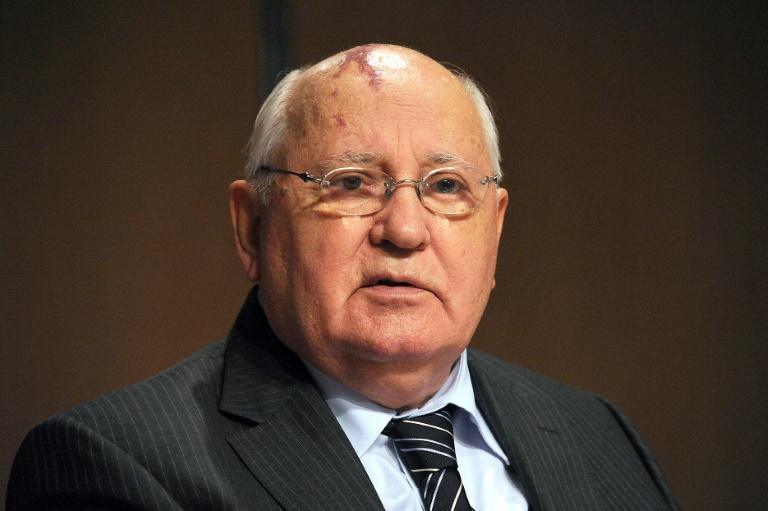
Mikhail Gorbachev, last Soviet leader, dies at 91

Mikhail Gorbachev, who changed the course of history by triggering the demise of the Soviet Union and was one of the great figures of the 20th century, has died in Moscow aged 91.

His death was announced on Tuesday by Russian news agencies, which said Gorbachev had died at a central hospital in Moscow “after a serious and long illness”.

Gorbachev, in power between 1985 and 1991, helped bring US-Soviet relations out of a deep freeze and was the last surviving Cold War leader.

His life was one of the most influential of his times, and his reforms as Soviet leader transformed his country and allowed Eastern Europe to free itself from Soviet rule.

The changes he set in motion saw him lionised in the West — he won the Nobel Peace Prize in 1990 — but also earned him the scorn of many Russians who lamented the end of their country’s role as a global superpower.

He spent much of the past two decades on the political periphery, intermittently calling for the Kremlin and the White House to mend ties as tensions soared to Cold War levels after Russia annexed Crimea in 2014 and launched an offensive in Ukraine earlier this year.

– ‘One-of-a-kind’ –

His relationship with President Vladimir Putin was difficult at times, but the Russian leader nonetheless expressed his “deep sympathies” after Gorbachev’s death. 

“In the morning, (Putin) will send a telegram of condolences to his family and friends,” Kremlin spokesman Dmitry Peskov told Russian news agencies.

Gorbachev spent the twilight years of his life in and out of hospital with increasingly fragile health and observed self-quarantine during the pandemic as a precaution against the coronavirus. 

Gorbachev was regarded fondly in the West, where he was affectionately referred to as Gorby and best known for defusing US-Soviet nuclear tensions in the 1980s as well as bringing Eastern Europe out from behind the Iron Curtain.

He won the Nobel Peace Prize for negotiating a historic nuclear arms pact with US leader Ronald Reagan, and his decision to withhold the Soviet army when the Berlin Wall fell a year earlier was seen as key to preserving Cold War peace.

He was also championed in the West for spearheading reforms to achieve transparency and greater public discussion that hastened the breakup of the Soviet empire.

In a statement, US President Joe Biden credited Gorbachev with having “the imagination to see that a different future was possible and the courage to risk his entire career to achieve it”.

“The result was a safer world and greater freedom for millions of people,” he added.

British Prime Minister Boris Johnson, meanwhile, said he “always admired the courage and integrity” Gorbachev showed in bringing the Cold War to a peaceful conclusion.

“In a time of Putin’s aggression in Ukraine, his tireless commitment to opening up Soviet society remains an example to us all,” he said in a Twitter post.

UN chief Antonio Guterres praised Gorbachev as “a one-of-a-kind statesman who changed the course of history” and “did more than any other individual to bring about the peaceful end of the Cold War”.

– ‘Man of peace’ –

French President Emmanuel Macron praised him as a “man of peace whose choices opened up a path of liberty for Russians. His commitment to peace in Europe changed our shared history.”

The first Russian leader to live past the age of 90, he was congratulated by world leaders, including US President Joe Biden and former German chancellor Angela Merkel on his 90th birthday.

At home, Gorbachev remained a controversial figure and had a difficult relationship with Putin.

For Putin and many Russians, the breakup of the Soviet Union was a tragedy, bringing with it a decade of mass poverty and a weakening of Russia’s stature on the global stage.

Many Russians still look back fondly on the Soviet period, and Putin leans on its achievements to buttress Russia’s claim to greatness and his own prestige.

As the USSR collapsed, Gorbachev was superseded by the younger Boris Yeltsin, who became post-Soviet Russia’s first president. 

From then on, Gorbachev was relegated to the sidelines, devoting himself to educational and humanitarian projects. 

He made a disastrous attempt to return to politics and ran for president in 1996 but received just 0.5 percent of the vote.

Over the years, he saw many of his major achievements rolled back by Putin.

– Supporter of free press –

An early supporter of Russia’s leading independent newspaper Novaya Gazeta, founded in 1993, he donated part of his Nobel winnings to help it buy its first computers. 

But the newspaper, like Russian independent media across the board, came under increasing pressure during Putin’s two-decade reign.

Novaya Gazeta, whose chief editor Dmitry Muratov last year won the Nobel Peace Prize, suspended publication in late March after Moscow’s military intervention in Ukraine.

Gorbachev himself made no public statements about Russia’s military action in Ukraine, though his foundation called for “an early cessation (to) hostilities and immediate start of peace negotiations”.

Uniquely among Soviet leaders, Gorbachev made no secret of his warm and supportive relationship with his wife Raisa, an elegant woman who often appeared in public with him and whose premature death from cancer was a devastating blow.

A source close to the Gorbachev family told news agency TASS that he would be buried next to Raisa at Moscow’s Novodevichy cemetery, the resting place of many other famous Russian figures, including Yeltsin.

Cambodian psychiatrist helping genocide survivors wins 'Asia's Nobel Prize'

A Cambodian psychiatrist treating victims of the Khmer Rouge and a French environmentalist cleaning up Indonesian rivers were among the winners Wednesday of the 2022 Ramon Magsaysay Award — considered Asia’s Nobel Prize.

The annual award, established in 1957 and named after a Philippines president who died in a plane crash, honours those who have performed “selfless service to the peoples of Asia”.

The foundation that runs the award announced four winners in an online announcement.

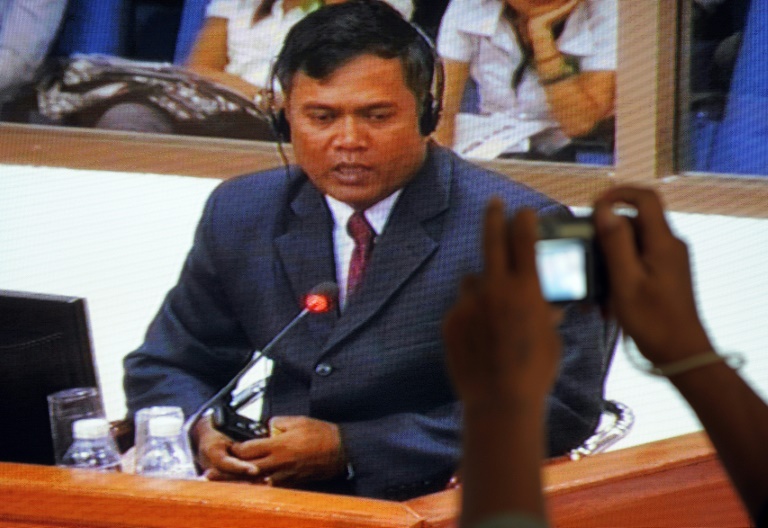
Among them was Sotheara Chhim, 54, a psychiatrist and survivor of the murderous, ultra-Maoist Khmer Rouge regime that killed nearly a quarter of Cambodia’s population through starvation, overwork and mass executions in the 1970s.

He was cited for devoting his life to helping people who suffered under the Khmer Rouge, with a focus on treating “baksbat” — “broken courage” — a syndrome seen in Cambodia that is similar to post-traumatic stress disorder.

The Magsaysay Award organisers praised “his calm courage in surmounting deep trauma to become his people’s healer”.

Sotheara Chhim also testified as an expert witness before a United Nations-backed tribunal trying senior Khmer Rouge leaders.

“I’m… traumatised myself as a victim under the Khmer Rouge, but working to help survivors of the Khmer Rouge helped me heal myself too,” he said in a 2017 interview.

French environmental activist and filmmaker Gary Bencheghib, 27, was given the award for his efforts to clean up Indonesia’s polluted waterways.

Bencheghib and his brother have built kayaks made of plastic bottles and bamboo to pick up trash in the Citarum river, one of the most polluted rivers in the world.

Filipino doctor Bernadette Madrid, 64, got the award for setting up child protection centres across the Philippines to help domestic abuse victims.

Japanese opthalmologist Tadashi Hattori, 58, was honoured for providing free eye surgeries in Vietnam, where such specialists and facilities are limited. 

His generosity, the Magsaysay Award foundation said, was “the embodiment of individual social responsibility”.

An in-person ceremony honouring the winners will be held in Manila in November.

Netflix in row over inspiration for Mexican drug 'queen' show

A Mexican woman whose links to drug traffickers earned her the nickname “Queen of the Pacific” is demanding compensation from Netflix for an award-winning show that she says is based on her life.

Sandra Avila Beltran has filed a claim with Mexico’s intellectual property agency alleging that the character Teresa Mendoza in “La Reina del Sur” (Queen of the South) is inspired by her own story.

Avila Beltran wants 40 percent of the royalties from Netflix and Spanish-language television network Telemundo, her lawyer Israel Razo told Milenio TV, saying the show had hurt the 61-year-old’s reputation.

“Living with the nickname of a drug trafficker is very difficult,” he said.

In response, Netflix and Telemundo argued that Avila Beltran’s life is “a matter of public interest” so there are no grounds for a complaint, according to documents published by Milenio’s sister newspaper.

A source close to the matter confirmed to AFP that Avila Beltran had taken her case to the Mexican Institute of Industrial Property, but declined to give details.

She was first arrested in Mexico City in 2007 with her boyfriend, Juan Diego Espinosa, who was accused of being a go-between for the infamous Sinaloa drug cartel and Colombian traffickers.

Avila Beltran was acquitted of charges of handling illicit funds in 2012 and extradited to the United States to face accusations of conspiring to import cocaine.

She struck a plea bargain that resulted in a conviction on charges of helping Espinosa to avoid arrest, and a judge sentenced her to time served and deported her back to Mexico in 2013.

Avila Beltran, whose nickname comes from a drug ballad written in her honor, was released in 2015 after a Mexican judge ruled that she could not be tried twice for the same crime.

“La Reina del Sur” is based on the novel with the same name by Spanish writer Arturo Perez-Reverte about a Mexican woman with links to drug lords.

The second season of the television series won an International Emmy Award for Best Non-English Language US Primetime Program in 2020.

Welcome: Palestinians with disabilities out front at Bethlehem hotel

In the heart of Bethlehem, in the occupied West Bank, Palestinians with learning disabilities are front and centre at a new boutique hotel welcoming guests from across the globe.

Showcasing their skills at the hotel is intended to make Palestinians with disabilities more visible and overhaul perceptions within the community.

The hotel is located near the Church of the Nativity, one of the most important sites in the Holy Land, where Christians believe Jesus was born and crowds of pilgrims stroll early on a hot summer morning.

“Slowly, slowly, we (can) change the idea in the whole society, in the whole world, because here in Bethlehem we receive guests from the whole world,” said Mahera Nassar Ghareeb, the community leader of Maan lil-Hayat, an organisation which supports Palestinians with intellectual disabilities.

Maan lil-Hayat (Together for Life), which was founded in 2009, is just weeks into its hotel venture in a restored 19th century house.

From the upper floor, where the original stone walls and tilework have been preserved, Ghareeb explained that those with disabilities can help with everything from doing the laundry to serving food.

“We tried to see what abilities our core members have and we try to let them do what they can, with some training in order to improve their abilities,” she said.

Around 40 Palestinians from the Bethlehem area are members of Maan lil-Hayat, some of whom have Down’s syndrome, autism or disabilities related to head injuries.

A handful of them will take on tasks at the 12-room hotel, working alongside the same number of staff who do not have disabilities.

Mariam Kansan, who has learning difficulties, is busy preparing a room overlooking the hills of southern Bethlehem.

“I grew up at Maan,” said the 27-year-old.

For her, the best part of the organisation is the friends she has made since she joined as a teenager.

– ‘Rather extraordinary’ –

The group meets together every weekday morning, and for years has been using wool sourced from local shepherds to make crafts for sale.

Taking on her new role, Kansan’s morning tasks at the hotel also included clearing the table after French guests Veronique Gandon and Herve Tisserand finished breakfast.

Tisserand, 64, who enthused about the building’s historic frescoes featuring big cats and an angel, said he found the hotel “rather extraordinary”.

Gandon said they were unaware of the community project when they made their reservation, but were glad to see it.

“I think it’s a good idea if it can help the association to have more revenue… It’s also a way to make their association known,” said the 62-year-old.

The search for a regular income was, in fact, one of the main drivers for opening the hotel, Ghareeb said.

Maan also receives donations and makes some money from selling its wool products, but “we don’t have a stable donor, so we had to depend on ourselves since the beginning”, she said.

The West Bank has been occupied by Israel since the 1967 Six-Day War, with Bethlehem and other cities administered by the Palestinian Authority (PA).

In May the World Bank warned that the Palestinian economy was in a “precarious” state.

The PA faces a fiscal deficit of more than five percent of gross domestic product, before financial aid, according to the World Bank.

There are insufficient funds to meet the needs of the territory’s intellectually disabled.

Renovating the hotel, which carries Maan’s name, cost around $200,000 and was funded by donors from Switzerland, Germany, Italy and Canada.

Maan also approached the Italian organisation Albergo Etico which runs multiple hotels with disabled staff.

– ‘Change the reality’ –

Antonio De Benedetto, the founder of Albergo Etico, said his team “lead them to their independent life” by giving staff a wide variety of skills such as cooking.

Speaking from Italy where he is due to host members of Maan later this year, De Benedetto said he is also keen to link Palestinian parents with their Italian counterparts, who can serve as an “antidote to fear” for wary families.

Around five percent of Palestinians in the West Bank have a learning or physical disability, the Palestinian Central Bureau of Statistics estimates.

Across the globe about 15 percent of the population lives with a disability, according to the World Health Organization.

In Bethlehem, Ghareeb said many families “feel it’s a burden” to have a relative in that situation.

“They do not even let the visitors, let the neighbours see them or know about them,” she said. 

“Either they are locked at home, or they are running in the streets doing nothing and no one is taking care of them.”

The hotel project is not just about giving them an opportunity “to be part of the team”, Ghareeb said.

“It’s also to change the reality, to change the society.”

Close Bitnami banner
Bitnami