World

New launch attempt Saturday for NASA's Moon rocket

NASA will make a second attempt to launch its powerful new Moon rocket on Saturday, after scrubbing a test flight earlier in the week, an official said Tuesday.

The highly anticipated uncrewed mission — dubbed Artemis 1 — will bring the United States a step closer to returning astronauts to the Moon five decades after humans last walked on the lunar surface.

Mission manager Mike Sarafin, said the NASA team “agreed to move our launch date to Saturday, September the third.”

Blastoff had been planned for Monday morning but was canceled because a test to get one of the rocket’s four RS-25 engines to the proper temperature range for launch was not successful.

Sarafin announced the date for the new launch attempt during a media briefing on Tuesday, and NASA later tweeted that the two-hour launch window on Saturday would begin at 2:17 pm (1817 GMT).

Launch weather officer Mark Burger said there is a 60 percent chance of rain or thunderstorms on the day of the launch, but added that there is still a “pretty good opportunity weather-wise to launch on Saturday.”

The goal of Artemis 1, named after the twin sister of Apollo, is to test the 322-foot (98-meter) Space Launch System rocket and Orion crew capsule that sits on top.

Mannequins equipped with sensors are standing in for astronauts on the mission and will record acceleration, vibration and radiation levels.

Tens of thousands of people — including US Vice President Kamala Harris — had gathered to watch the launch, 50 years after Apollo 17 astronauts last set foot on the Moon.

Ahead of the planned Monday launch, operations to fill the orange-and-white rocket with ultra-cold liquid hydrogen and oxygen were briefly delayed by a risk of lightning.

A potential leak was detected during the filling of the main stage with hydrogen, causing a pause. After tests, the flow resumed.

NASA engineers later detected the engine temperature problem and decided to scrub the launch.

“The way the sensor is behaving… doesn’t line up with the physics of the situation,” said John Honeycutt, manager of the Space Launch System program, adding that such issues with sensors were “not terribly unusual.”

Sarafin said the team would reconvene on Thursday to assess the situation.

– Orbiting the Moon –

The Orion capsule is to orbit the Moon to see if the vessel is safe for people in the near future. At some point, Artemis aims to put a woman and a person of color on the Moon for the first time.

During the 42-day trip, Orion will follow an elliptical course around the Moon, coming within 60 miles (100 kilometers) at its closest approach and 40,000 miles at its farthest — the deepest into space by a craft designed to carry humans.

One of the main objectives is to test the capsule’s heat shield, which at 16 feet in diameter is the largest ever built.

On its return to Earth’s atmosphere, the heat shield will have to withstand speeds of 25,000 miles per hour and a temperature of 5,000 degrees Fahrenheit (2,760 degrees Celsius) — roughly half as hot as the Sun.

NASA is expected to spend $93 billion between 2012 and 2025 on the Artemis program, which is already years behind schedule, at a cost of $4.1 billion per launch.

The next mission, Artemis 2, will take astronauts into orbit around the Moon without landing on its surface.

The crew of Artemis 3 is to land on the Moon in 2025 at the earliest.

And since humans have already visited the Moon, Artemis has its sights set on another lofty goal: a crewed mission to Mars.

The Artemis program aims to establish a lasting human presence on the Moon with an orbiting space station known as Gateway and a base on the surface.

Gateway would serve as a staging and refueling station for a voyage to the Red Planet that would take a minimum of several months.


Asian markets down again as traders eye more monetary tightening

Stock markets resumed their downward trend Wednesday, with traders fearing the Federal Reserve’s determination to beat inflation with higher interest rates will tip the world’s top economy into recession.

After bouncing from their June lows, global equities are once again taking a hiding from worried investors after Fed chief Jerome Powell warned last week the bank would need to tighten policy much more to succeed in its battle against prices.

Wall Street’s three main indexes fell for a third straight day Tuesday to sit at a one-month low, with healthy data on US consumer sentiment and job openings indicating the economy remained resilient despite recent rate hikes and four-decade high inflation.

But analysts said the readings were a case of good news being bad news as they would allow the Fed to stick to its plan of lifting borrowing costs further. Expectations are growing for a third successive three-quarter-point increase next month.

Traders are now awaiting the release of US jobs creation figures on Friday for a better idea about the state of the economy.

But commentators said trying to plot a course through the next few months would be tricky owing to inflation and rate increases as well as other issues such as the Ukraine war, geopolitical tensions and China’s Covid-damaged economy.

“What’s clear is that predicting this market is not clean cut,” Angeline Newman, of UBS Global Wealth Management, told Bloomberg Television.

“We are living in a world where conflicting economic signals are making the path of monetary policy very difficult to determine.”

Hong Kong and Shanghai-led Asian markets opened lower after a report on Chinese factory activity showed another contraction, as the sector was buffeted by lockdowns due to Beijing’s zero-Covid strategy and high temperatures that led to energy rationing.

The reading reinforced the view that the world’s number two economy continued to struggle.

There were also big losses in Tokyo, Seoul, Singapore, Manila and Jakarta.

Worries about an economic slowdown and the possible hit to demand were also dragging on oil, which was on course for a third monthly drop, with both main contracts tumbling more than five percent Tuesday.

However, while they remain wedged below $100 a barrel, market-watchers pointed out the commodity had plenty of upside potential as investors grapple with a range of supply issues including unrest in Libya and Iraq and expectations that Iran nuclear talks will not end anytime soon.

Adding to the upward pressure was news that Russian energy giant Gazprom intends to shut off gas deliveries for three days from Wednesday via the Nord Stream pipeline through Germany.

– Key figures at around 0230 GMT –

Tokyo – Nikkei 225: DOWN 0.6 percent at 28,039.91 (break)

Hong Kong – Hang Seng Index: DOWN 1.3 percent at 19,684.90

Shanghai – Composite: DOWN 0.7 percent at 3,203.54

Euro/dollar: DOWN at $1.0021 from $1.0024 on Tuesday

Pound/dollar: UP at $1.1666 from $1.1661

Euro/pound: DOWN at 85.91 pence from 85.95 pence

Dollar/yen: DOWN at 138.54 yen from 138.66 yen

West Texas Intermediate: UP 0.7 percent at $92.26 per barrel

Brent North Sea crude: UP 0.5 percent at $99.85 per barrel

New York – Dow: DOWN 1.0 percent at 31,790.87 (close)

London – FTSE 100: DOWN 0.9 percent at 7,361.63 (close)

California law would make tech firms think of children

California legislators on Tuesday passed a bill to require tech firms to put the well-being of children over profits when designing apps or other online products.

The bill is heading to the desk of Governor Gavin Newsom whose signature is needed for the Age-Appropriate Design Code Act to become law in the state that is home to Silicon Valley titans such as Meta, Google, and Apple.

The office of Assembly woman Buffy Wicks said the bill – AB 2273 – passed by a unanimous vote.

If signed into law, firms making apps or websites would have to build protections for children into products, even if they are intended for adults, according to the bill.

“Businesses that develop and provide online services, products, or features that children are likely to access should consider the best interests of children when designing, developing, and providing that online service, product, or feature,” the bill read.

“If a conflict arises between commercial interests and the best interests of children, companies should prioritize the privacy, safety, and well-being of children over commercial interests.”

The law would stop tech firms from profiling children; selling their data; estimating their ages, or designing features that are detrimental to their well-being, Wicks said in a tweet.

The bill was modeled on the Age Appropriate Design Code passed in Britain last year, according to 5Rights Foundation, an advocacy group for children’s online rights.

“With this bill, California is not only setting the standard for children who live in the tech sector’s backyard, but it also paves the way for the rest of the United States and for the world,” 5Rights founder Beeban Kidron said in a release.

Trade association NetChoice, whose members include Google, Meta and TikTok, called for the California governor to veto the bill, along with two others that seek to regulate how online platforms operate.

One of the bills requires social media platforms to publicly disclose their policies regarding online hate, disinformation, extremism, and harassment, as well as key metrics and data regarding the enforcement of those policies.

“California has been a leader in technology development, but the legislature’s actions would give innovators yet another reason to leave the Golden State to avoid overly burdensome regulation that harms families and violates the First Amendment,” said NetChoice policy counsel Jennifer Huddleston.

NetChoice argued that there are better policies the state could employ to help parents keep children safe online and support the mental health of teenagers.

William and Harry to mark Diana anniversary in private, apart

Princes William and Harry will on Wednesday mark the 25th anniversary of the death of their mother Princess Diana, in private but apart as a feud between the brothers shows no sign of ending. 

The former Lady Diana Spencer, whose fairytale marriage to Prince Charles captivated the world until it publicly unravelled with infidelity and divorce, died in a car crash on August 31, 1997.

Five years ago, her sons attended a series of public commemorations of her life, and spoke of the enduring effect of her death on them.

This year the brothers will not take part in any official commemorations, preferring instead to mark the occasion in private with their own families.

William, 40, recently announced a move from London to the Windsor estate west of London with his wife, Catherine, and their three young children.

Harry, 37, now lives in California with his wife, Meghan, and their two children, after the couple quit the royal family in early 2020.

The Daily Telegraph said on Saturday that the brothers had “agreed to draw a line under their public commemorations” at the 20th anniversary.

Spokespeople for both couples confirmed they would spend the day privately.

Diana’s shock death aged just 36 saw a sea of floral tributes laid at the gates of her former London home, Kensington Palace.

Well-wishers are again expected to lay flowers at the palace, and near the entrance to the Paris road tunnel where the high-speed crash happened.

– Legacy –

Diana remains widely revered as a fashion icon and for having cut through stuffy royal convention, particularly after her very public divorce.

She was also praised for charity work highlighting the scourge of landmines and encouraging a change in attitudes to people with HIV/AIDS.

In a sign of the enduring fascination with the royal, last weekend a sporty Ford Escort she once owned was sold for £737,000 ($864,000) at auction.

Her marital troubles will also feature in the latest series of the hit Netflix drama “The Crown” later this year.

Joe Little, managing editor at Majesty Magazine, said Diana had influenced her sons to be less formal than traditional royals.

“They are much more ‘touchy feely’ than they ever would have been,” he said, pointing to William’s hugs for England’s women footballers after their Euro 2022 victory this month.

“William can see there is no need for much of the formality in royal life that existed when his father was of a similar age, the institution of the monarchy functions well without all that starchiness,” he added.

Last week Harry, who has admitted to mental health struggles because of his mother’s death, said he would “share the spirit of my mum with my family, with my children, who I wished could have met her”.

“Every day I hope to do her proud,” he told a fundraising dinner in the United States last week for his Sentebale charity, which supports young people with HIV.

“I want it to be a day filled with memories of her incredible work and love for the way she did it,” he added.

– Rift –

William and Harry were just 15 and 12 when Diana died and provided the enduring image of her funeral, walking heads bowed behind her coffin.

Last year the brothers unveiled a statue of her at Kensington Palace on what would have been her 60th birthday.

They said they remembered “her love, strength and character — qualities that made her a force for good around the world, changing countless lives for the better”.

But a rift — said to date back to soon after Harry began dating Meghan — was barely concealed.

The pair were seen together briefly at the April 2021 funeral of their grandmother Queen Elizabeth II’s husband Prince Philip.

They were apart too at the recent public celebrations marking the queen’s 70 years on the throne.

William has angrily hit back at claims in a television interview from the couple of racism in the royal family.

Harry, who is expected to make more revelations in an upcoming memoir, has also said William and their father were trapped in a hidebound institution.

The couple are due at a series of charity events in Britain next week, staying near William and Kate on the sprawling Windsor estate.

There are reportedly no plans for the brothers to meet, nor for Harry to visit his ailing 96-year-old grandmother at her Balmoral retreat in Scotland. 

Gazprom halts pipeline gas flow in new jitters for Europe

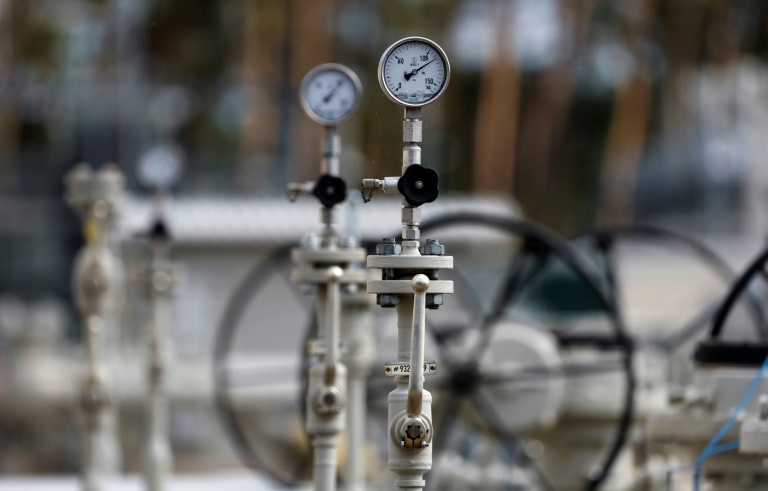
Russian energy giant Gazprom on Wednesday cuts off its gas supplies to Germany via the Nord Stream 1 pipeline for maintenance work, further raising tensions on an already taut electricity market.

The three-day works at a compressor station are “necessary”, Gazprom has said, adding that they had to be carried out after “every 1,000 hours of operation”.

But Germany’s Federal Network Agency chief Klaus Mueller has called it a “technically incomprehensible” decision, warning that it was likely just a pretext by Moscow to wield energy supplies as a threat.

Experience shows that Moscow “makes a political decision after every so-called maintenance”, he said, adding that “we’ll only know at the beginning of September if Russia does that again”. 

Europe has been on edge over soaring energy prices as Russia curbed its gas deliveries in the wake of its invasion of Ukraine.

Germany, which is heavily dependent on Russian gas, has accused Moscow of using energy as a “weapon”.

– ‘Much better position’ –

With winter round the corner, European consumers are staring down the barrel of huge power bills. Some countries like France have warned that rationing is a possibility.

Asked if gas supplies would resume after the three-day works are completed on Saturday, Russian government spokesman Dmitry Peskov said “there is a guarantee that, apart from technical problems caused by sanctions, nothing interferes with supplies”.

Western capitals “have imposed sanctions against Russia, which do not allow for normal maintenance, repair work”, he added, in what appeared to hint at a replay of an earlier round of start-stop rigmarole.

Gazprom had already carried out 10 days of long-scheduled maintenance works in July. While it restored gas flows following the works, it drastically dwindled supplies just days later, claiming a technical issue on a turbine.

The Russian company insists that a key turbine could not be sent to Russia because of sanctions on Moscow. But Germany, where the turbine was located, has said Moscow was itself in fact blocking the turbine’s delivery to Russia.

An official at Gascade, which operates the distribution network within Germany, also viewed Gazprom’s latest actions sceptically.

“In July, it was regular maintenance planned for a long time by Nord Stream 1, this time it was not planned and we don’t know what is behind this operation,” the official said on condition of anonymity.

A day ahead of the new shutdown, Chancellor Olaf Scholz said Germany was now “in a much better position” in terms of energy security, having achieved its gas storage targets far sooner than expected.

Europe as a whole was also getting a march on filling its gas storage tanks. On Sunday, storage levels were already at 79.9 percent of capacity in the EU.

– ‘Gas emergency’ –

At the same time, fears over throttled supplies have also driven companies to slash their energy usage.

Germany’s industry consumed 21.3 percent less gas in July than the average for the month from 2018 to 2021, said the Federal Network Agency.

Mueller has said such pre-emptive action “could save Germany from a gas emergency this winter”.

And Europe’s biggest economy was already racing to turn its back on Russian gas. 

At the German coastal city of Lubmin, where Nord Stream 1 comes onshore, plans are already well underway for the switch to liquefied natural gas (LNG).

The LNG, transported in by ships, will arrive at Lubmin’s industrial port and be converted back into gas and pumped into Gascade’s distribution network, which has so far been used to funnel Russian gas around the country.

“We expect to be able to inject gas into the distribution network on December 1,” said Stephan Knabe of Deutsche ReGas — the company managing the LNG project.

The company believes that up to 4.5 billion cubic metres of gas can be imported via the Lubmin LNG terminal alone, making up around eight percent of Nord Stream 1’s capacity.

Europe as a bloc meanwhile was preparing to take emergency action to reform the electricity market in order to bring galloping prices under control. Fear of shortages of natural gas has driven futures contracts for electricity in France and Germany to record levels.

Gazprom halts pipeline gas flow in new jitters for Europe

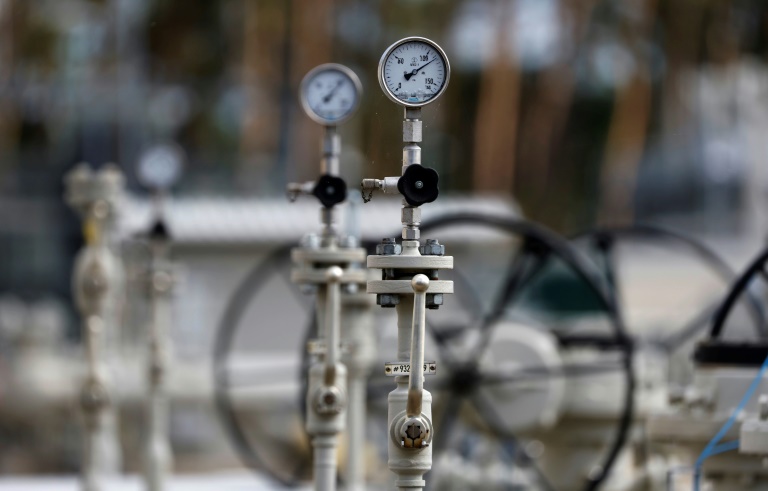
Russian energy giant Gazprom on Wednesday cuts off its gas supplies to Germany via the Nord Stream 1 pipeline for maintenance work, further raising tensions on an already taut electricity market.

The three-day works at a compressor station are “necessary”, Gazprom has said, adding that they had to be carried out after “every 1,000 hours of operation”.

But Germany’s Federal Network Agency chief Klaus Mueller has called it a “technically incomprehensible” decision, warning that it was likely just a pretext by Moscow to wield energy supplies as a threat.

Experience shows that Moscow “makes a political decision after every so-called maintenance”, he said, adding that “we’ll only know at the beginning of September if Russia does that again”. 

Europe has been on edge over soaring energy prices as Russia curbed its gas deliveries in the wake of its invasion of Ukraine.

Germany, which is heavily dependent on Russian gas, has accused Moscow of using energy as a “weapon”.

– ‘Much better position’ –

With winter round the corner, European consumers are staring down the barrel of huge power bills. Some countries like France have warned that rationing is a possibility.

Asked if gas supplies would resume after the three-day works are completed on Saturday, Russian government spokesman Dmitry Peskov said “there is a guarantee that, apart from technical problems caused by sanctions, nothing interferes with supplies”.

Western capitals “have imposed sanctions against Russia, which do not allow for normal maintenance, repair work”, he added, in what appeared to hint at a replay of an earlier round of start-stop rigmarole.

Gazprom had already carried out 10 days of long-scheduled maintenance works in July. While it restored gas flows following the works, it drastically dwindled supplies just days later, claiming a technical issue on a turbine.

The Russian company insists that a key turbine could not be sent to Russia because of sanctions on Moscow. But Germany, where the turbine was located, has said Moscow was itself in fact blocking the turbine’s delivery to Russia.

An official at Gascade, which operates the distribution network within Germany, also viewed Gazprom’s latest actions sceptically.

“In July, it was regular maintenance planned for a long time by Nord Stream 1, this time it was not planned and we don’t know what is behind this operation,” the official said on condition of anonymity.

A day ahead of the new shutdown, Chancellor Olaf Scholz said Germany was now “in a much better position” in terms of energy security, having achieved its gas storage targets far sooner than expected.

Europe as a whole was also getting a march on filling its gas storage tanks. On Sunday, storage levels were already at 79.9 percent of capacity in the EU.

– ‘Gas emergency’ –

At the same time, fears over throttled supplies have also driven companies to slash their energy usage.

Germany’s industry consumed 21.3 percent less gas in July than the average for the month from 2018 to 2021, said the Federal Network Agency.

Mueller has said such pre-emptive action “could save Germany from a gas emergency this winter”.

And Europe’s biggest economy was already racing to turn its back on Russian gas. 

At the German coastal city of Lubmin, where Nord Stream 1 comes onshore, plans are already well underway for the switch to liquefied natural gas (LNG).

The LNG, transported in by ships, will arrive at Lubmin’s industrial port and be converted back into gas and pumped into Gascade’s distribution network, which has so far been used to funnel Russian gas around the country.

“We expect to be able to inject gas into the distribution network on December 1,” said Stephan Knabe of Deutsche ReGas — the company managing the LNG project.

The company believes that up to 4.5 billion cubic metres of gas can be imported via the Lubmin LNG terminal alone, making up around eight percent of Nord Stream 1’s capacity.

Europe as a bloc meanwhile was preparing to take emergency action to reform the electricity market in order to bring galloping prices under control. Fear of shortages of natural gas has driven futures contracts for electricity in France and Germany to record levels.

Exec departures at Snap after report of workforce cuts

Two top executives at Snap are leaving to join Netflix, the streaming giant said Tuesday, after a report emerged that the Snapchat parent company is to slash its workforce by a fifth.

Netflix said in a statement that Snap’s chief business officer Jeremi Gorman and Peter Naylor, the vice president of ad sales for the Americas, will be joining the company in September.

The announcement came after tech news website The Verge reported that the southern California-based Snap Inc. plans to lay off about 20 percent of its more than 6,400 employees. or

Snap declined to comment on the report but shares sank more than four percent to less than $10 in after-market trades.

On an earnings call in July, Snap chief financial officer Derek Andersen said the company has seen “macroeconomic challenges develop” through the first half of this year and that headcount was a significant portion of its operating expenses.

Snap reported that its loss in the recently ended quarter nearly tripled to $422 million despite revenue increasing 13 percent under conditions “more challenging” than expected.

A hit with young internet users in its early days, image-centric ephemeral messaging app Snapchat has remained a small player in the social networking space as competition has grown ever more intense.

The number of people using Snapchat daily grew to 347 million in the recently ended quarter, Snap reported.

Snap recast itself a while back as a “camera company,” fielding offerings such as picture-taking glasses called Spectacles and a pocket-sized Pixy flying camera drone.

“Long-term the most exciting opportunity is (augmented reality) and we’re investing heavily around the future of AR,” Andersen said in the earnings call.

Meanwhile, the battle for people’s attention online grows increasingly fierce as established titans such as Meta and Google adapt offerings to changing trends and relative newcomers such as TikTok grab the spotlight.

Amazon to unveil its $1bn bet with 'Lord of the Rings' prequel launch

Stanley Kubrick once famously said J.R.R. Tolkien’s “The Lord of the Rings” trilogy of novels was unfilmable.

It is hard to imagine what the great director would have made of Amazon’s $1 billion gamble on “The Lord of the Rings: The Rings of Power,” a 50-hour television series based on the dry historical footnotes published at the end of book three.

The show, out Friday globally on Prime Video, aims to tap into the huge and enduring appeal of books still regularly voted the world’s best-loved novels of all time, as well as Peter Jackson’s Oscar-winning film adaptations.

It is central to Amazon’s bid to stand out in the “streaming wars” with Netflix, Disney+ and HBO Max — whose own “Game of Thrones” prequel just launched — and is bankrolled by multi-billionaire founder Jeff Bezos, a Tolkien mega-fan.

But populated by heroes and villains who are barely — if at all — referenced in Tolkien’s trilogy and its “Appendices” of fictional mythology, and featuring a largely unknown cast and creators, there is no doubting the scale of the gamble.

“It is quite nerve wracking — we’re building something from the ground up that’s never been seen before,” said Sophia Nomvete, who plays Princess Disa, the first female and first Black dwarf depicted on screen in Tolkien’s world.

“There’s definitely a few nerves. We want to get it right,” she told AFP at the Comic-Con fan event last month.

“The Rings of Power” is set in Tolkien’s “Second Age” — a period of history in his fictional Middle Earth world thousands of years before the events of “The Hobbit” and “The Lord of the Rings.”

So while a handful of characters from Jackson’s films reappear in Amazon’s show — mostly younger versions of elves such as Galadriel and Elrond, who are of course immortal — there is no Frodo, Gollum or Aragorn in sight.

Most characters from Tolkien lore are appearing on screen for the first time, and some have even been created entirely from scratch for the show.

“Tolkien hasn’t really written much about who he is as a person,” said Maxim Baldry, whose character Isildur was briefly seen fighting the evil lord Sauron in a flashback at the start of Jackson’s trilogy.

Here, Baldry plays a younger version of the tragic hero, struggling with the death of his mother, over-bearing pressure from his father, and a romantic yearning for adventure.

“What a gift, firstly, to explore someone’s beginnings, finding their true colors, understanding who they really are,” said Baldry.

He added: “Season one is purely about setting up characters and introducing new characters to the family… fleshing out a pretty skeletal world that Tolkien just created in the Second Age.”

– ‘Wonderfully crazy’ –

The fate of the series rests in the hands of creators — or “showrunners” — Patrick McKay and J.D. Payne, who pitched their concept to Amazon after it bought the rights in 2017, but had only a handful of previous projects credited on their CVs.

“We wanted to find a huge Tolkienian mega epic. And Amazon were wonderfully crazy enough to say ‘yes, let’s do that,” McKay said at Comic-Con.

At the London premiere Tuesday, Bezos admitted that “some people even questioned our choice” to bring in “this relatively unknown team.”

“But we saw something special,” he said, according to Variety.

Amazon has also put on glitzy premieres for “The Rings of Power” in Los Angeles, New York and Mumbai.

The show’s lavish globe-trotting promotion is just a drop in the ocean compared to the astonishing cost of actually making a series dubbed the most expensive ever for television.

Amazon splurged $250 million buying the rights from Tolkien’s estate, and some $465 million on the first season alone. It has committed from the start to making five full seasons, meaning the final cost is expected to pass $1 billion.

With high stakes has come considerable secrecy.

Plot details and reviews were strictly embargoed until Wednesday, just two days before the series’ launch, and even its actors have not been told the fates of their characters.

“No idea! I don’t even know what’s happening next season,” said Megan Richards, who plays Poppy Proudfellow, a character whose Harfoot race are ancestors of the hobbits.

“There’s an arc that Tolkien has given us for the Second Age. So there are certain things we know,” Daniel Weyman, who plays a mysterious man billed simply as “The Stranger,” told AFP.

“The thing that I hold on to is that our showrunners, they definitely know their arc. They know their arc already.”

Taliban celebrate anniversary of foreign troop withdrawal

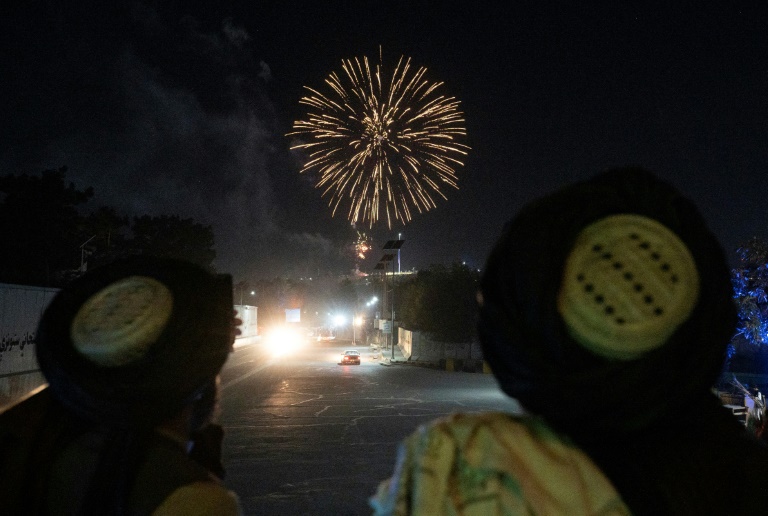
The Taliban declared Wednesday a national holiday and lit up the capital with coloured lights to celebrate the first anniversary of the withdrawal of US-led troops from Afghanistan after a brutal 20-year war.

The country’s new rulers — not formally recognised by any other nation — have reimposed their harsh version of Islamic law on the impoverished country, with women squeezed out of public life.

But despite the restrictions, and a deepening humanitarian crisis, many Afghans say they are glad the foreign force that prompted the Taliban insurgency has gone.

“We are happy that Allah got rid of the infidels from our country, and the Islamic Emirate has been established,” said Zalmai, a resident of Kabul.

The withdrawal of troops at midnight as August 31 began last year ended America’s longest war — a military intervention that began in the wake of the September 11, 2001 attacks in New York.

Some 66,000 Afghan troops and 48,000 civilians were killed in the conflict, but it was the deaths of US service members — 2,461 in total — that became too much for the American public to bear.

More than 3,500 troops from other NATO countries were also killed.

“The burden of the war in Afghanistan, however, went beyond Americans,” the US military said Tuesday.

Two weeks before the end of last year’s withdrawal, the Taliban seized power following a lightning offensive against government forces.

Banners celebrating victories against three empires — the former Soviet Union and Britain also lost wars in Afghanistan — were flying in Kabul on Wednesday.

Hundreds of white Taliban flags bearing the Islamic proclamation of faith flew from lamposts and government buildings.

Late Tuesday, the skies above Kabul were lit up with fireworks and celebratory gunfire from crowds of Taliban fighters.

In Massoud Square, near the former US embassy, armed fighters carrying Taliban flags chanted “Death to America”. Others drove across the city honking their horns. 

– Flaunting equipment –

Taliban social media accounts posted scores of videos and pictures of newly trained troops — many flaunting the US military equipment left behind in the haste of Washington’s chaotic withdrawal.

“This is how you troll a superpower after humiliating them and forcing them to withdraw from your country,” read the caption of one post on Twitter featuring a photo of a giant Taliban flag now painted on the wall of the former US embassy.

Despite the Taliban’s pride in taking over, Afghanistan’s 38 million people now face a desperate humanitarian crisis — aggravated after billions of dollars in assets were frozen and foreign aid dried up.

Hardships for ordinary Afghans, especially women, have increased.

The Taliban have shut secondary girls’ schools in many provinces and barred women from many government jobs.

They have also ordered women to fully cover up in public — ideally with an all-encompassing burqa.

“Now I’m sitting at home without a job,” said Oranoos Omerzai, a resident of Kandahar, the de facto power centre of the Taliban.

Government spokesman Zabihullah Mujahid insisted “major achievements” had been recorded in the past year.

“Afghans are no more being killed in war, foreign forces have withdrawn, and security has improved,” he told reporters last week.

Madagascar police confirm killing 19 civilians after albino kidnap

Madagascar police confirmed Tuesday that officers killed 19 people and injured 21 others after opening fire on what was described as a lynch mob angered over the kidnapping of an albino child. 

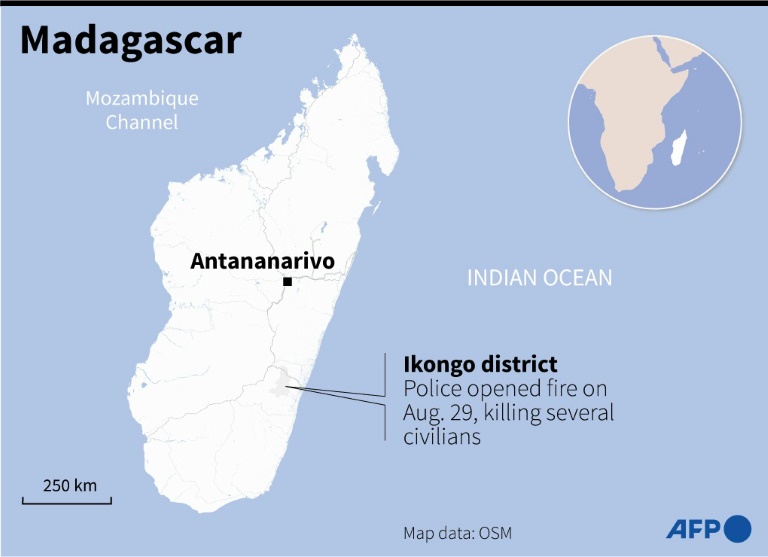
“Nineteen people lost their lives and 21 are injured and are still being treated” at Ikongo hospital in the country’s southeast, the national police said in a statement. 

The hospital’s chief physician, Tango Oscar Toky, confirmed the death toll speaking to AFP by phone on Tuesday.

A previous report from police on Monday said 11 people had died.

Around 500 protesters armed with blades and machetes attempted to force their way into a police station, a police officer involved in the shooting told AFP, speaking on condition of anonymity. 

Police said calm returned to Ikongo, a town about 350 kilometres (220 miles) south of the capital Antananarivo, on Tuesday, with additional officers deployed “to keep the peace”. 

An investigation into the incident was ongoing, police said, offering condolences to the families of the dead.

The kidnapping took place last week, according to Jean-Brunelle Razafintsiandraofa, a member of parliament for Ikongo district. 

No further details have been released about the child. Officials said the child’s mother was killed by “bandits”. 

Four suspects were arrested and taken into custody, but some members of the community allegedly decided to take matters into their own hands.

National police chief Andry Rakotondrazaka defended officers at a press conference Monday, saying they had done everything they could to avoid confrontation and were left with no choice but to resort to self-defence. 

He said police moved from firing tear gas to live rounds when the crowd breached a security perimeter.

– Prison break –

Madagascar’s Defence Minister Richard Rakotonirina, who visited Ikongo on Tuesday, said the incident needed a more thorough investigation. 

“Was it a blunder? Was it misconduct? We need to see who was responsible for what. In any case, we will take the necessary sanctions,” he told AFP by phone.

A source at the defence ministry said some inmates at the nearby prison took advantage of the commotion to escape.

Revenge attacks are common in Madagascar.

Ikongo saw 800 people barge into a prison in February 2017, in search of a murder suspect they intended to kill. They overpowered guards, allowing 120 prisoners to break out of jail.

In 2013, a Frenchman, a Franco-Italian and a local man accused of killing a child on the tourist island of Nosy Be were burnt alive by a crowd. 

Some sub-Saharan African countries have suffered a wave of assaults against people with albinism, whose body parts are sought for witchcraft practices in the mistaken belief that they bring luck and wealth. 

Albinism is caused by a lack of melanin, the pigment that colours skin, hair and eyes. The genetic condition affects hundreds of thousands of people across the globe, particularly in Africa.

Madagascar, a large Indian Ocean island country, is ranked among the poorest in the world.

Close Bitnami banner
Bitnami