World

Pakistan floods 'worst in country's history', aid efforts gather pace

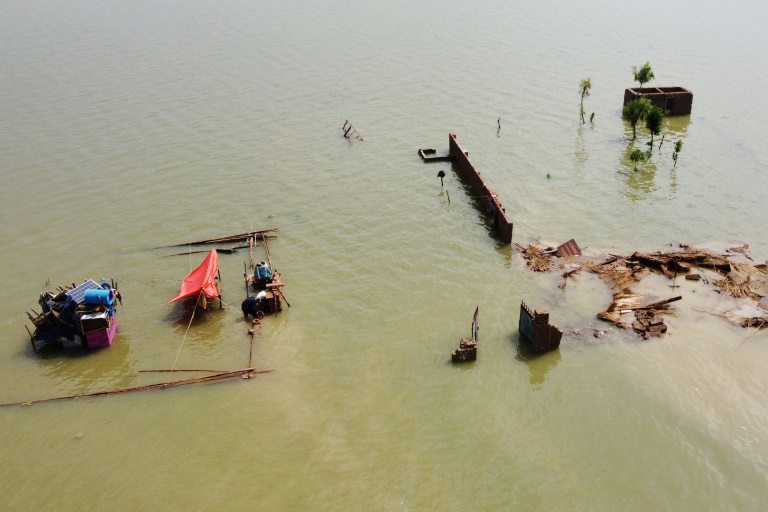
Aid efforts ramped up across flooded Pakistan on Tuesday to help tens of millions of people affected by relentless monsoon rains that have submerged a third of the country and claimed more than 1,100 lives.

Prime Minister Shehbaz Sharif called the flooding “the worst in the history of Pakistan”, adding it would cost at least $10 billion to repair damaged infrastructure spread across the country. 

The rains that began in June have unleashed powerful floods across the country that have washed away swathes of vital crops and damaged or destroyed more than a million homes.

Authorities and charities are struggling to accelerate aid delivery to more than 33 million people, a challenging task in areas cut off because many roads and bridges have been critically damaged.

Displaced people have been wandering what dry land remains, seeking shelter, food and drinking water.

“For God’s sake help us out,” said Qadir, 35, who was camped out with his extended family on a road near the southern city of Sukkur.

“We walked along the road for three days to reach here. There’s nothing left back at home, we only managed to save our lives.”

In the country’s south and west, many Pakistanis have crammed onto elevated highways and railroad tracks to escape the flooded plains.

“We don’t even have space to cook food. We need help,” Rimsha Bibi, a schoolgirl in Dera Ghazi Khan in central Pakistan, told AFP.

Pakistan receives heavy — often destructive — rains during its annual monsoon season, which are crucial for agriculture and water supplies.

But such intense downpours have not been seen for three decades.

Pakistani officials have blamed climate change, which is increasing the frequency and intensity of extreme weather around the world.

– ‘Mind-boggling devastation’ –

“To see the devastation on the ground is really mind-boggling,” Pakistan’s climate change minister Sherry Rehman told AFP.

“When we send in water pumps, they say, ‘Where do we pump the water?’ It’s all one big ocean, there’s no dry land to pump the water out.”

She said “literally a third” of the country was under water, comparing scenes from the disaster to a dystopian movie.

Tributaries of the Indus River, which runs the length of the South Asian nation, have sent torrents of water rushing downstream.

Pakistan as a whole has been deluged with twice the usual monsoon rainfall, the meteorological office said, but Balochistan and Sindh provinces have seen more than four times the average of the last three decades.

– ‘Monsoon on steroids’ –

The disaster could not have come at a worse time for Pakistan, where the economy is in free fall.

Appealing for international help, the government has declared an emergency.

Aid flights have arrived in recent days from China, Turkey and the United Arab Emirates, while other countries including Canada, Australia and Japan have also pledged assistance.

The United Nations launched a formal $160 million appeal on Tuesday to fund emergency aid.

“Pakistan is awash in suffering. The Pakistani people are facing a monsoon on steroids — the relentless impact of epochal levels of rain and flooding,” UN Secretary-General Antonio Guterres said in a video statement, calling it a “colossal crisis”.

His spokesman later said that Guterres would visit the country next week in “solidarity” with victims.

And the United States said Tuesday that it was sending $30 million in humanitarian assistance. 

Pakistan’s Sharif promised donors that any funding would be responsibly spent.

“I want to give my solemn pledge and solemn commitment… every penny will be spent in a very transparent fashion. Every penny will reach the needy,” he said.

Pakistan was already desperate for international support and the floods have compounded the challenge.

Prices of basic goods — particularly onions, tomatoes and chickpeas — are soaring as vendors bemoan a lack of supplies from the flooded breadbasket provinces of Sindh and Punjab.

There was some relief on Monday when the International Monetary Fund approved the revival of a loan programme for Pakistan, releasing a $1.1 billion tranche.

Makeshift relief camps have sprung up all over Pakistan — in schools, on motorways and in military bases.

In the northwestern town of Nowshera, a technical college was turned into a shelter for up to 2,500 flood victims.

They sweltered in the summer heat with sporadic food aid and little access to water.

“I never thought that one day we will have to live like this,” said 60-year-old Malang Jan.

“We have lost our heaven and are now forced to live a miserable life.”

Mississippi declares drinking water emergency for state capital

Mississippi officials declared a health emergency Tuesday after historic flooding damaged treatment systems and left 180,000 people in the state capital Jackson without safe drinking water.

Governor Tate Reeves warned residents about the crisis and on Tuesday deployed the National Guard to assist in water distribution throughout the city.

The Mississippi State Department of Health (MSDH) said water treatment pumps had failed and there were low levels of water in storage tanks serving Jackson.

Many city taps were dry, and water that was flowing was contaminated or untreated, officials cautioned.

“We do not have reliable running water at scale,” Reeves told a press conference late Monday. 

“The city cannot produce enough water to fight fires, to reliably flush toilets and to meet other critical needs,” he said, adding emergency services would distribute drinking water to residents in a “massively complicated logistical task.” 

Facing aging infrastructure, Jackson has been under a boil water order since late July.

Recent torrential rains intensified the crisis as the city’s Pearl River has faced historic flooding, which finally started to ease Monday, Jackson City Hall said in a statement. 

“It is no surprise that we have a very fragile water-treatment facility, and (the city’s treatment plant) OB Curtis receives its water from the reservoir, and because of the river water coming into the plant, we have to change how we treat the water,” Jackson Mayor Chokwe Antar Lumumba said at a press conference, according to the Mississippi Clarion Ledger newspaper.

According to the MSDH, water treatment plants in Jackson do not have sufficient maintenance staff or certified operators to safely run the system, leading to potential for contamination from dangerous organisms such as E.Coli and Giardia.

Reeves urged residents to avoid the water coming out of their faucets. 

“In too many cases, it is raw water from the reservoir being pushed through the pipes. Be smart, protect yourself, protect your family, preserve water, look out for your fellow man and look out for your neighbors.”

Without water, Jackson public schools were conducting virtual learning Tuesday, with no return to school yet scheduled.

White House spokeswoman Karine Jean-Pierre said President Joe Biden had been briefed on the situation.

“At his direction, we have been in regular contact with state and local officials, including Mayor Lumumba, and made clear that the Federal Government stands ready to offer assistance,” she tweeted. 

Jackson’s water system has suffered “significant deficiencies” since 2016, according to an MDSH report, with lead-contaminated pipes often more than a century old. 

The majority-Black city’s former public works director Charles Williams told AFP in April it could cost up to $5 billion to replace the necessary infrastructure.

London mayor warns of possible 'Tube' fare hikes

London’s mayor warned Tuesday of possible fare rises and service cuts after the capital’s transport operator struck a 20-month funding deal with the UK government that still leaves a budget “gap”.

Transport for London (TfL), which runs the underground “Tube” network, said the government had agreed to provide £1.2 billion ($1.4 bn) until the end of March 2024, as the system struggles to recover from the pandemic.

But Labour mayor Sadiq Khan said the settlement with the ruling Conservative government meant a £740 million funding shortfall remained, and that fare hikes and service reductions were under consideration.

“There could well be increases in fares coming during the midst of a cost-of-living crisis, which to me seems nonsensical, but also we could see some cuts in services to make sure our books balance,” he added.

The government has provided TfL, which also operates bus and overground railway services throughout the capital, with billions of pounds in emergency funding since March 2020, when the UK first went into lockdown due to coronavirus.

Although the country has been free from restrictions for nearly a year, the transport system has not fully recovered from the financial impact, as some employees continue to work from home part of the week.

Meanwhile, TfL has been hit by strikes this summer amid a dispute over jobs and pensions, one of many UK sectors suffering from industrial action as decades-high inflation impacts across the economy.

Transport Secretary Grant Shapps said the latest funding deal showed the government’s “unwavering commitment to London and the transport network it depends on”, but added that ministers “have to be fair to taxpayers across the entire country”.

“This deal more than delivers for Londoners,” he argued, while urging Khan “to get TfL back on a steady financial footing (and) stop relying on government bailouts”.

UN appeals for $160 mn to help worst hit in Pakistan floods

The United Nations and Pakistan launched an emergency appeal for $160 million on Tuesday as the country was submerged by floods, with the United States quickly offering $30 million.

The funds will provide 5.2 million of the worst-affected and most vulnerable people with aid including food, clean water, sanitation and emergency education, UN Secretary General Antonio Guterres said, calling the disaster a “colossal crisis”.

“Pakistan is awash in suffering. The Pakistani people are facing a monsoon on steroids — the relentless impact of epochal levels of rain and flooding,” he said in a video statement before announcing plans to visit Pakistan next week.

The United States, the largest donor to Pakistan, said it was providing a fresh $30 million for urgent needs including food, safe water and hygiene.

The US Agency for International Development in a statement announcing the aid said that one of its disaster specialists was working out of Islamabad to assess needs and coordinate with the Pakistani government and other local partners.

The United Nations said the aid would cover the initial six months of the crisis response and help to avoid outbreaks of diseases such as cholera, as well as providing nutrition to young children and their mothers.

It will also provide assistance to refugees and facilitate schemes to reunite families separated by the disaster.

“The people of Pakistan urgently need international solidarity and support,” Jens Laerke, spokesman for the UN humanitarian agency OCHA, told a press briefing in Geneva.

He said some 500,000 people displaced by the floods were sheltering in relief camps, with many more temporarily staying with host families.

Around 150 bridges have been washed away, he said, and 3,500 kilometres (2,175 miles) of roads damaged in flooding and landslides, hampering access.

“The heavy rains are forecast to continue and with many dams and rivers already at flood levels, the flooding is likely to get worse before it gets better,” Laerke said.

– Health facilities wrecked –

Tens of millions of people have been affected by relentless monsoon rains that have submerged a third of Pakistan and claimed more than 1,100 lives.

The rains that began in June have unleashed the worst flooding in more than a decade, washing away swathes of vital crops and damaging or destroying more than a million homes.

World Health Organization spokesman Christian Lindmeier said Pakistan’s health facilities had been severely affected by the flooding, with 180 “completely damaged”.

He said there was already a vast disparity between rural and urban healthcare provision, while treatment for non-communicable diseases such as diabetes would be “severely” impacted.

“It’s a vast problem which opens up here,” he said.

The UN refugee agency said there were 1.3 million Afghan refugees registered in Pakistan and it had already delivered $1.5 million worth of emergency relief and shelter items — but “much, much more” would be needed in the coming weeks.

– ‘Climate catastrophe’ –

Guterres branded the floods a “climate catastrophe”, saying South Asia was one of the world’s hotspots where people are “15 times more likely to die from climate impacts”.

“It is outrageous that climate action is being put on the back burner as global emissions of greenhouse gases are still rising, putting all of us — everywhere — in growing danger,” he said.

The UN’s World Meteorological Organization said that Pakistan and northwest India have been witnessing an intense 2022 monsoon season.

One site at Padidan in the southern Sindh province was reporting 1,288 millimetres of rain so far in August, compared to the monthly average of 46 millimetres, said WMO spokeswoman Clare Nullis.

Iran seizes, then releases US Navy drone vessel: Pentagon

An Iranian ship seized an American military unmanned research vessel in the Gulf but released it after a US Navy patrol boat and helicopter were deployed to the location, the Pentagon said Tuesday.

The US Central Command’s 5th Fleet said a support ship from Iran’s Islamic Revolutionary Guard Corps Navy, the Shahid Baziar, was spotted towing the seven-meter (23-foot) Saildrone Explorer unmanned surface vessel (USV) late Monday.

The US naval drone, equipped with an array of sensors, radars and cameras, was in international waters collecting navigation and other unspecified data, the 5th Fleet said in a statement.

When the Iranian vessel was seen towing the unmanned boat, US forces sent the USS Thunderbolt coastal patrol ship, which was operating nearby, to the scene.

In addition, an MH-60S Sea Hawk helicopter based in Bahrain flew to the location.

Those actions “resulted in the IRGCN vessel disconnecting the towing line to the USV and departing the area approximately four hours later” without further incident, the 5th Fleet said.

“IRGCN’s actions were flagrant, unwarranted and inconsistent with the behavior of a professional maritime force,” said Vice Admiral Brad Cooper, commander of US Naval Forces Central Command, in a statement.

“US naval forces remain vigilant and will continue to fly, sail and operate anywhere international law allows while promoting rules-based international order throughout the region,” he added.

With solar panels and a sail wing five meters tall, the Saildrone Explorer is driven by solar and wind energy and can be deployed on missions on the ocean for up to one year, monitored remotely by a human pilot.

It can collect a broad range of oceanic, navigational and meteorological data, as well as strategic intelligence.

The 5th Fleet stressed the vessel was US government property but that the technology it carries is “available commercially” and “does not store sensitive or classified information.”

The US Navy first began operational testing of the USV in the Gulf of Aqaba last December.

Tigray rebels vow to pursue military advance in northern Ethiopia

Tigrayan rebels said Tuesday they intended to advance further into neighbouring regions of northern Ethiopia but were still open to peace talks after fighting erupted last week and put paid to a five-month-long truce.

The government of Prime Minister Abiy Ahmed and the Tigray People’s Liberation Front (TPLF) have each blamed the other for unleashing the renewed hostilities in areas bordering the southeastern tip of Tigray.

“We are fighting a defensive war,” TPLF spokesman Getachew Reda said at a press conference broadcast online by the local Tigrai TV channel, adding: “We will remain open for any negotiations.”

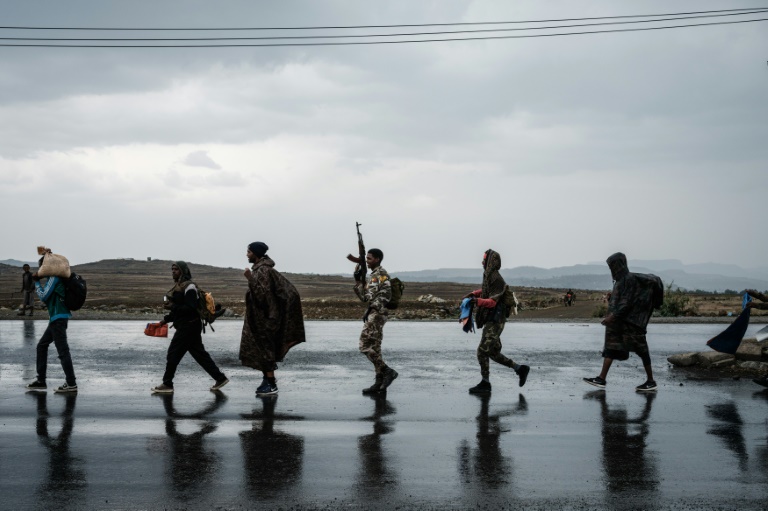
Residents as well as diplomatic and humanitarian sources have said that in recent days TPLF fighters have pushed about 50 kilometres (30 miles) south from Tigray into Amhara as well as to the southeast into Afar, sending many people fleeing.

The fresh combat has shattered a truce announced in late March and cast a shadow over international efforts to try to end the nearly 22-month conflict in the north of Africa’s second most populous country.

Access to northern Ethiopia is severely restricted and it is not possible to independently verify the situation on the ground or the claims by the warring sides.

“We have defended our positions and we are now launching a counter-offensive,” Getachew said. 

“Abiy keeps making miscalculation after miscalculation, he keeps sending reinforcements and we’ll continue to neutralise (them) and that will take us probably deeper and deeper into Amhara region.”

– Roads ‘clogged with fleeing people’ –

Abiy’s government announced Saturday that federal forces had pulled back from the town of Kobo to avoid “mass casualties”.

Getachew said Tuesday a significant part of the North Wollo zone in Amhara was in rebel hands although the TPLF did not want to control the area.

He also accused the Abiy government of hoodwinking the international community into believing it was “serious about peace” and said the rebels had no option but to protect their “safety and security”.     

In response, the Government Communication Service said: “The federal government is still committed to the peaceful resolution to the conflict that was once again initiated by the TPLF terrorist group.”

A local NGO active in Afar, the APDA, said on Twitter it had counted about 18,000 people displaced by the recent fighting in the region, mainly women and children, and that roads in one area were “clogged with fleeing people”. 

It said the TPLF was apparently advancing towards Keliwan, a town in Afar to the direct east of Kobo, and that people were evacuating.

– Calls for restraint –

The war has killed untold numbers of civilians and left millions in need of humanitarian aid across the north.

Since the latest combat flared, the international community has issued appeals for restraint, including from UN chief Antonio Guterres and the African Union, which is leading the drive for peace under Horn of Africa envoy Olusegun Obasanjo.

Guterres’ spokesman Stephane Dujarric confirmed last week that he had spoken to Abiy as well as TPLF leader Debretsion Gebremichael to call for an immediate cessation of hostilities “as well as the creation of conditions to restart an effective political dialogue”.

Since June both warring sides had evoked the possibility of peace talks, with Debretsion disclosing last week that “two rounds of confidential face-to-face” meetings with top civilian and military officials had taken place, the first acknowledgement by either side of direct contracts.

The rivals have been at odds over who should lead negotiations, with Abiy’s government saying Obasanjo should broker any dialogue while the TPLF wanted Kenya’s outgoing President Uhuru Kenyatta to mediate and has also called for the restoration of basic services to Tigray.

The March truce had allowed the resumption of international aid convoys to Tigray that had been halted for three months, while the region remains without access to basic services and struggling with food and fuel shortages.

Abiy, a Nobel Peace laureate, sent troops into Tigray to topple the TPLF in response to what he said were rebel attacks on federal army camps after months of tensions with the party that dominated Ethiopian politics for three decades until he took power in 2018.

The TPLF mounted a comeback, recapturing most of Tigray in June 2021 and expanding into Afar and Amhara, before the fighting reached a stalemate.

Will take 'a few years' to get US inflation back to 2%: Fed official

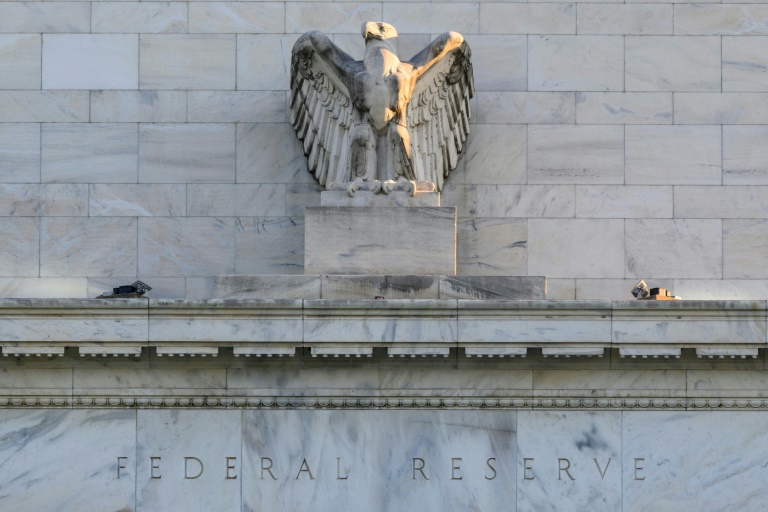
The Federal Reserve is committed to bringing soaring US inflation back down to two percent, but that will take “a few years,” a top central banker said Tuesday.

The Fed this year has moved aggressively to raise interest rates to try to rein in price surges that have hit American families, and central bankers, notably Fed chief Jerome Powell, have doused any hopes they would alter course anytime soon.

New York Federal Reserve Bank President John Williams echoed Powell’s tough comments, saying the benchmark lending rate will have to remain high for some time to bring demand back into line with supply.

US annual inflation ebbed slightly in July to a still-painfully high 8.5 percent, and Williams said the Fed is “absolutely committed” to achieving the two-percent goal.

“The situation is very challenging. Inflation is very high. The economy has a lot of crosscurrents. I do think it will take a few years, but we’re going to get that done,” Williams said in a discussion with The Wall Street Journal.

The Fed has increased the key lending rate four times this year, including two supersized 0.75 percentage point hikes in June and July, and Powell said Friday another similar increase is possible next month as well.

Inflation was already high at the start of the year and spiked globally following the Russian invasion of Ukraine, but gas prices at the pump have been moving down in recent weeks, taking some of the pressure off American consumers.

That in turn led to a jump in consumer confidence in August, according to The Conference Board’s monthly survey released Tuesday.

But the US labor market remains very strong, which the Fed fears will add fuel to the inflation fires as wages rise. 

New data from the Labor Department Tuesday showed that after dipping in June, job openings rebounded slightly in July, which means there are about two positions available for every unemployed person in the country.

The Fed on Friday will get a look at one more employment report before its September 20-21 policy meeting, and will look for a slowdown after the surprise surge in July.

Williams said the September policy decision will depend on the data, but added “it’s clear that we need to get interest rates significantly higher by the end of the year.”

Inflation is “far too high. And that’s really what we’re focusing on.”

Baltic nations to boost offshore wind energy seven-fold by 2030

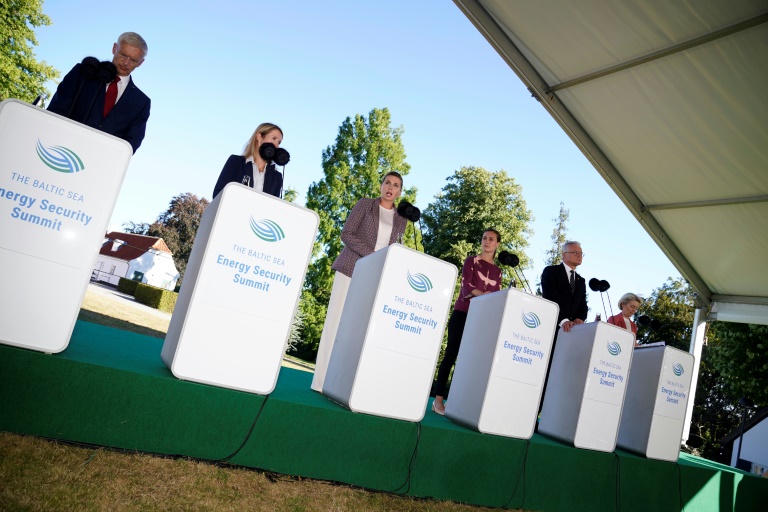
Nations bordering the Baltic Sea agreed Tuesday to increase offshore wind energy  to 20 gigawatts by 2030, as Europe seeks to wean itself off Russian gas following Moscow’s invasion of Ukraine.

“We have agreed to increase offshore wind in the Baltic Sea seven-fold by 2030,” Danish Prime Minister Mette Frederiksen told reporters after hosting a meeting between Denmark, Estonia, Finland, Germany, Latvia, Lithuania, Poland and Sweden.

“We are the frontline of European energy security”, Frederiksen said.

Russia was the only Baltic Sea nation not in attendance at Tuesday’s meeting. 

“In this war Putin is using energy as a weapon and has put Europe, as we all know, on the brink of an energy crisis with skyrocketing energy prices”, Frederiksen said.

Twenty gigawatts would be enough to supply electricity to 20 million households, “more than the current wind offshore capacity in the whole of the EU today”, she added.

By 2050, the Baltic Sea’s wind energy capacity could be brought to 93 gigawatts, the countries said in a statement.

“Putin’s attempt to blackmail us with fossil fuels is failing”, European Commission President Ursula van der Leyen said.

“We’re accelerating the green transition. We are getting rid of the dependency on Russian fossil fuels,” she added.

The Commission said in March it wanted to reduce dependence on Russian gas by two-thirds this year, and completely by 2030.

It also unveiled a target to increase its share of renewable energy from 40 to 45 percent by 2030.

The EU also aims to reduce greenhouse gases by 55 percent by 2030 and to be carbon neutral by 2050.

On Monday, Denmark said it would increase its wind capacity off the Baltic Sea island of Bornholm from two to three gigawatts, and link this production to Germany’s electricity grid.

In May, Germany, Denmark, the Netherlands and Belgium announced a similar agreement to increase the North Sea’s wind power capacity tenfold to 150 gigawatts by 2050 to help the EU achieve climate goals and avoid Russian hydrocarbons.

Baltic nations to boost offshore wind energy seven-fold by 2030

Nations bordering the Baltic Sea agreed Tuesday to increase offshore wind energy  to 20 gigawatts by 2030, as Europe seeks to wean itself off Russian gas following Moscow’s invasion of Ukraine.

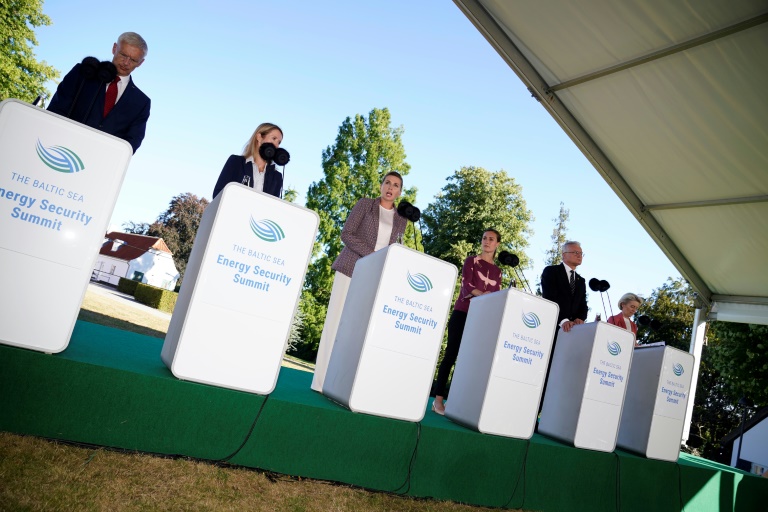
“We have agreed to increase offshore wind in the Baltic Sea seven-fold by 2030,” Danish Prime Minister Mette Frederiksen told reporters after hosting a meeting between Denmark, Estonia, Finland, Germany, Latvia, Lithuania, Poland and Sweden.

“We are the frontline of European energy security”, Frederiksen said.

Russia was the only Baltic Sea nation not in attendance at Tuesday’s meeting. 

“In this war Putin is using energy as a weapon and has put Europe, as we all know, on the brink of an energy crisis with skyrocketing energy prices”, Frederiksen said.

Twenty gigawatts would be enough to supply electricity to 20 million households, “more than the current wind offshore capacity in the whole of the EU today”, she added.

By 2050, the Baltic Sea’s wind energy capacity could be brought to 93 gigawatts, the countries said in a statement.

“Putin’s attempt to blackmail us with fossil fuels is failing”, European Commission President Ursula van der Leyen said.

“We’re accelerating the green transition. We are getting rid of the dependency on Russian fossil fuels,” she added.

The Commission said in March it wanted to reduce dependence on Russian gas by two-thirds this year, and completely by 2030.

It also unveiled a target to increase its share of renewable energy from 40 to 45 percent by 2030.

The EU also aims to reduce greenhouse gases by 55 percent by 2030 and to be carbon neutral by 2050.

On Monday, Denmark said it would increase its wind capacity off the Baltic Sea island of Bornholm from two to three gigawatts, and link this production to Germany’s electricity grid.

In May, Germany, Denmark, the Netherlands and Belgium announced a similar agreement to increase the North Sea’s wind power capacity tenfold to 150 gigawatts by 2050 to help the EU achieve climate goals and avoid Russian hydrocarbons.

Eldest son of Che Guevara dies in Venezuela

Camilo Guevara March, the eldest son of communist revolutionary icon Ernesto “Che” Guevara, died in Caracas aged 60, Cuban President Miguel Diaz-Canel said on Tuesday.

According to Prensa Latina, Guevara March was visiting Venezuela when he died on Monday due to a blood clot that led to a heart attack.

“It is with great sadness that we say goodbye to Camilo, son of Che and promoter of his ideas,” said Diaz-Canel on Twitter.

He was one of four children that Argentine Guevara had with Cuban Aleida March.

Guevara also had a daughter, Hilda, from a previous marriage to Peruvian Hilda Gadea.

He leaves behind Venezuelan wife Rosa Aliso and three daughters, one of whom was from a previous relationship.

Venezuela’s ambassador in Cuba, Adan Chavez, the brother of the late strongman Hugo Chavez, said Guevara March was “an incredible companion.”

A graduate in labor law, Guevara March was the director of the Center for Che Guevara Studies in Havana, an institution dedicated to promoting the work and ideology of his father, who remains a hugely influential figure in Cuba.

Born in Argentina, Che Guevara studied medicine before traveling through Latin America in the early 1950s and meeting Cuban revolutionaries Fidel and Raul Castro in Mexico.

Guevara joined their army and helped overthrow US-backed Cuban dictator Fulgencio Batista, before later unsuccessfully attempting to spark similar Marxist revolutions in Congo and then Bolivia, where he was shot dead by a soldier in 1967 at age 39.

Close Bitnami banner
Bitnami