World

Pakistan floods fuel 'back-breaking' food inflation

Catastrophic monsoon floods in Pakistan have sent food prices skyrocketing, putting many staples out of the reach of the poor as the cash-strapped nation battles shortages.

The floods have submerged a third of the country, killing more than 1,100 people and affecting over 33 million.

Recovery could cost more than $10 billion, according to the planning minister.

The rains — which began in June, and whose unusual intensity has been blamed on climate change — have also damaged vast swathes of rich agricultural land and crops. Parts of the mountainous north and breadbasket south have been cut off because roads and bridges have been washed away.

“Things are so expensive because of this flood that we can’t buy anything,” said Zahida Bibi, who had come to a market in the central city of Lahore to get vegetables for dinner.

She told AFP she had to forego some items on her shopping list because inflation had put them out of reach.

“What can we do? We don’t make enough money to buy things at such high prices.”

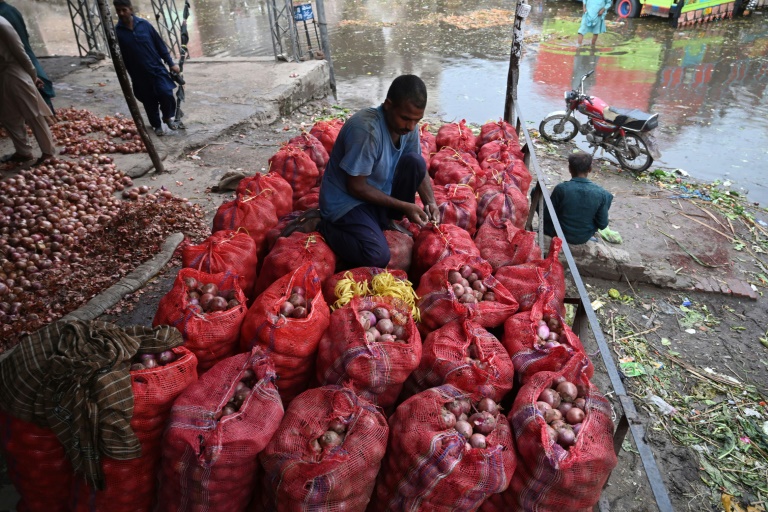
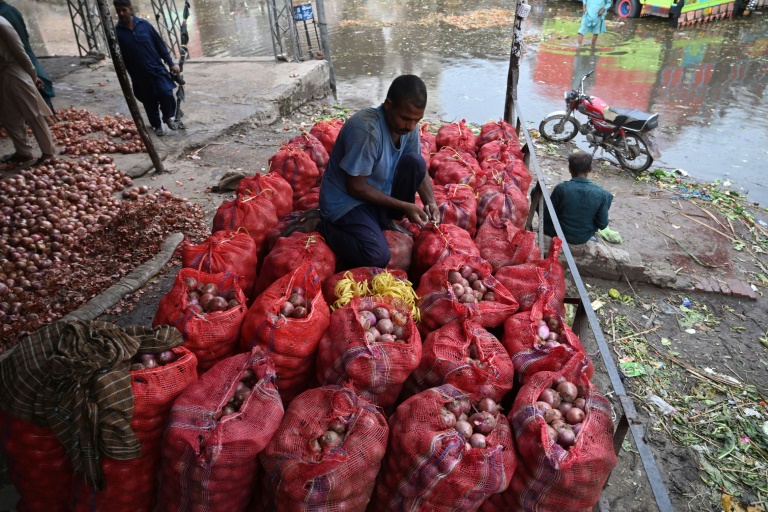
Onions and tomatoes — common ingredients in most Pakistani meals — have been affected the most.

The prices of both had increased by 40 percent, the Pakistan Bureau of Statistics said Friday.

But on Monday, Finance Minister Miftah Ismail said the price of onions had shot up by more than five times, and that the government was trying to quickly implement policies to stabilise food prices — including importing from arch-rival India.

“We need to consider getting some vegetables over the land border,” he told broadcaster Geo News.

“We have to do it because of the kind of prices and shortages we are experiencing… Inflation has broken people’s backs.”

– Out of reach –

With millions of acres of farmland still under water and certain roads inaccessible, prices are expected to climb further.

“About 80 percent of the tomato crop in Pakistan has been damaged in the floods, and onion supply has been badly hit as well,” Shahzad Cheema, secretary of the Lahore Market Committee, told AFP.

“These are basic items, and ultimately it is the average buyer who will be most affected.”

Vegetable seller Muhammad Owais at a market in Lahore was struggling to find buyers at the current high prices.

“Prices have increased so much because of (the flood) that many customers leave without buying anything,” he told AFP.

Pakistan was struggling with record high inflation even before the floods, because of rising global oil prices and a balance of payments crisis.

The government found some room to manoeuvre Monday when the International Monetary Fund approved the resumption of a massive loan programme for Pakistan, releasing $1.1 billion immediately.
Pakistan floods fuel 'back-breaking' food inflation

Catastrophic monsoon floods in Pakistan have sent food prices skyrocketing, putting many staples out of the reach of the poor as the cash-strapped nation battles shortages.

The floods have submerged a third of the country, killing more than 1,100 people and affecting over 33 million.

Recovery could cost more than $10 billion, according to the planning minister.

The rains — which began in June, and whose unusual intensity has been blamed on climate change — have also damaged vast swathes of rich agricultural land and crops. Parts of the mountainous north and breadbasket south have been cut off because roads and bridges have been washed away.

“Things are so expensive because of this flood that we can’t buy anything,” said Zahida Bibi, who had come to a market in the central city of Lahore to get vegetables for dinner.

She told AFP she had to forego some items on her shopping list because inflation had put them out of reach.

“What can we do? We don’t make enough money to buy things at such high prices.”

Onions and tomatoes — common ingredients in most Pakistani meals — have been affected the most.

The prices of both had increased by 40 percent, the Pakistan Bureau of Statistics said Friday.

But on Monday, Finance Minister Miftah Ismail said the price of onions had shot up by more than five times, and that the government was trying to quickly implement policies to stabilise food prices — including importing from arch-rival India.

“We need to consider getting some vegetables over the land border,” he told broadcaster Geo News.

“We have to do it because of the kind of prices and shortages we are experiencing… Inflation has broken people’s backs.”

– Out of reach –

With millions of acres of farmland still under water and certain roads inaccessible, prices are expected to climb further.

“About 80 percent of the tomato crop in Pakistan has been damaged in the floods, and onion supply has been badly hit as well,” Shahzad Cheema, secretary of the Lahore Market Committee, told AFP.

“These are basic items, and ultimately it is the average buyer who will be most affected.”

Vegetable seller Muhammad Owais at a market in Lahore was struggling to find buyers at the current high prices.

“Prices have increased so much because of (the flood) that many customers leave without buying anything,” he told AFP.

Pakistan was struggling with record high inflation even before the floods, because of rising global oil prices and a balance of payments crisis.

The government found some room to manoeuvre Monday when the International Monetary Fund approved the resumption of a massive loan programme for Pakistan, releasing $1.1 billion immediately.
Fighting in Iraqi capital leaves 23 dead after Sadr quits politics

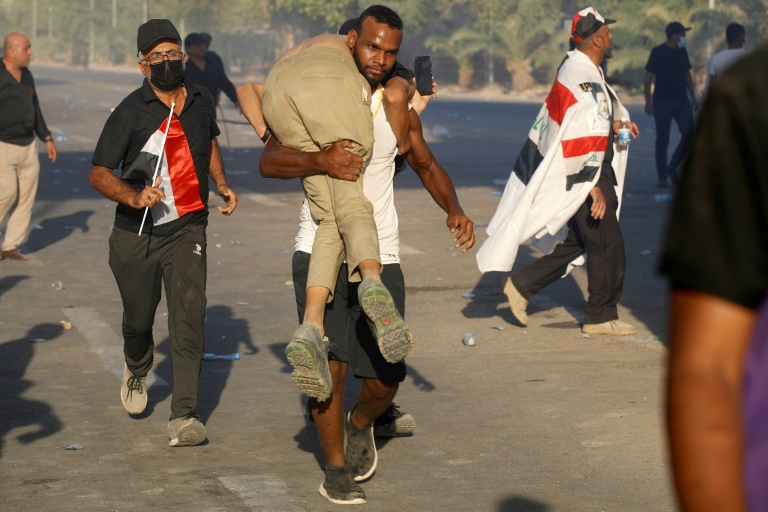
Fighting between rival Iraqi forces raged for a second day Tuesday with rocket fire echoing from Baghdad’s Green Zone where 23 supporters of powerful Shiite leader Moqtada Sadr have been shot dead, medics said.

Tensions have soared in Iraq amid a political crisis that has left the country without a new government, prime minister or president for months, and escalated sharply after Sadr’s supporters on Monday afternoon stormed the government palace following their leader’s announcement that he was quitting politics.

The violence pitches backers of Sadr against rival Shiite factions backed by neighbouring Iran.

Overnight, shelling targeted the high-security Green Zone that houses government buildings and diplomatic missions, a security source said, amid angry protests after Sadr’s surprise announcement.

At least seven shells fell in the high-security Green Zone, the security source said on condition of anonymity, but it was not immediately clear who was responsible.

The security source said Sadr’s supporters opened fire at the Green Zone from the outside, adding security forces inside “were not responding”.

After a lull in violence, fresh clashes between Sadr’s supporters and the army and men of the Hashed al-Shaabi, former Tehran-backed paramilitaries integrated into the Iraqi forces, erupted again on Tuesday morning.

The rattle of automatic gunfire and heavier explosions of rocket-propelled grenades could be heard from the Green Zone, AFP correspondents reported.

– ‘Dangerous escalation’ –

The United Nations mission in Iraq warned of “an extremely dangerous escalation” and called on all sides to “refrain from acts that could lead to an unstoppable chain of events”.

“The very survival of the state is at stake,” it warned.

But amid an army-imposed nationwide curfew that continued Tuesday, Baghdad was otherwise quiet, with shops shuttered and few cars venturing out on the streets.

On Tuesday morning, medics updated the toll of Sadr supporters killed to 23, with some 380 others injured — some with bullet wounds and others suffering tear gas inhalation.

Witnesses said earlier that Sadr loyalists and supporters of a rival Shiite bloc, the pro-Iran Coordination Framework, had exchanged fire.

The Framework condemned an “attack on state institutions”, urging the Sadrists to engage in “dialogue”.

Caretaker Prime Minister Mustafa al-Kadhemi said “security or military forces, or armed men” were prohibited from opening fire on protesters.

The United States also urged calm amid the “disturbing” reports, while France called on “the parties to exercise the utmost restraint”.

– ‘Definitive retirement’ –

Shortly after he made his announcement, Sadr’s followers burst into the Republican Palace in Baghdad — where cabinet meetings are usually held — and initially celebrated including by cooling off in a swimming pool in the garden.

Sadr — a grey-bearded preacher with millions of devoted followers, who once led a militia against American and Iraqi government forces — announced earlier on Twitter he was stepping back from politics.

“I’ve decided not to meddle in political affairs. I therefore announce now my definitive retirement,” said Sadr, a longtime player in the war-torn country’s political scene, though he himself has never directly been in government.

His latest statement came two days after he said “all parties” including his own should give up government positions in order to help resolve the political crisis.

His bloc emerged from last year’s election as the biggest in the legislature, with 73 seats, but short of a majority. 

In June, his lawmakers quit in a bid to break the logjam, which led to the Coordination Framework becoming the largest bloc.

Hamzeh Hadad, from the European Council on Foreign Relations, said it was “not clear” what Sadr’s strategy was.

“Whatever it does mean, in typical Sadrist fashion, there is always backtracking expected,” Hadad said.

“The second, and more terrifying thought on this is that he is giving his followers the green light to do whatever they like.”

Iraq has been mired in political deadlock since legislative elections in October last year due to disagreement between Shiite factions over forming a coalition.

Sadr’s supporters have for weeks been staging a sit-in outside Iraq’s parliament, after storming the legislature’s interior on July 30 to press their demands.

The Coordination Framework wants a new head of government to be appointed before any new polls are held.

sf-gde/pjm/dv

China imposes Covid-19 lockdowns for millions around Beijing

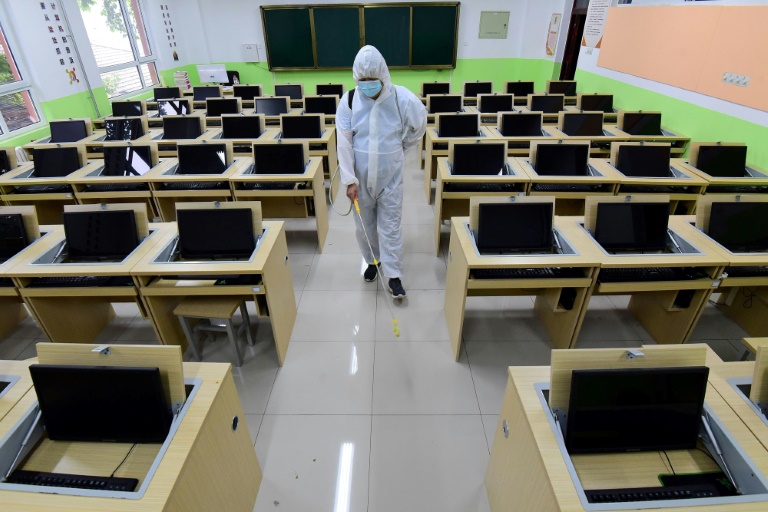
Millions of people in areas surrounding China’s capital were ordered into lockdown Tuesday, with authorities doubling down on efforts to contain Covid-19 ahead of a key ruling Communist Party meeting this year.

Nearly four million people in Hebei province, which surrounds Beijing, were ordered to stay home until the end of the week as officials rush to curb a small virus flare-up.

And more than 13 million in the neighbouring port city of Tianjin must undergo mass testing from 6 am (2200 GMT), after 51 mostly mild cases were reported.

China is the only major global economy sticking to a zero-Covid policy, and lockdowns, travel restrictions and mass testing have disrupted businesses and cooled growth.

Beijing has doubled down on the policy ahead of the Communist Party’s 20th National Congress, expected to take place within the next three months.

The handling of the pandemic is widely seen as central to the political legacy of President Xi Jinping, who is set to be anointed for an unprecedented third term in office at the meeting.

But “the actual Covid situation in China might be worsening, as Omicron has once again spread to large cities”, Nomura analyst Ting Lu warned in a research note.

Chengdu, western China’s largest city, has also seen strict travel restrictions.

And in the southern tech hub of Shenzhen, two districts are under partial lockdown, while the world’s biggest electronics market in Huaqiangbei has closed — despite just 35 daily cases being reported in the city of over 18 million.

“The notice to close came abruptly, we only had a few hours to put our stock into warehouses and lock up,” a trader at the Huaqiangbei tech market, who only offered his last name Chen, told AFP.

In Futian, where the city government is located, cinemas, karaoke bars and parks are closed until Friday and large public events have been cancelled.

Officials also sealed off Wanxia neighbourhood on the city’s outskirts, which offers affordable housing for delivery drivers and migrant workers, although no cases were reported there.

In shadow of abandoned US airbase, Bagram's economy withers

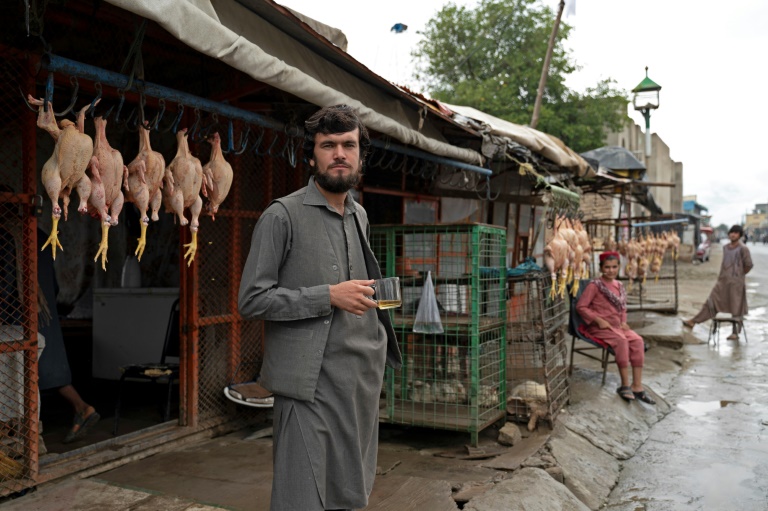
For years, the sprawling military base at Bagram, just north of Kabul, was a potent symbol of the United States’ two decades of war in Afghanistan.

The sprawling complex included an air base that was the linchpin of the US invasion; a prison where rights groups allege widespread violations occurred; and a residential area that featured swimming pools, cinemas and spas.

But weeks before Washington officially ended its military presence in Afghanistan last August, US troops left the airbase in the dead of night.

Today, the military base is occupied by the Taliban, who took over the country in a swift offensive as US forces were exiting.

The US departure from Bagram has also seen the collapse of the economy in the nearby town of the same name, an illustration of how Afghanistan’s fortunes were so heavily tied to the war and foreign aid.

“Today, I’m jobless. I don’t know much about politics, but the exit of US forces from the base is a big economic loss,” said Saifulrahman Faizi, one of the town’s 80,000 residents.

Faizi earned $30 a day when he was employed at the base, at a time when hundreds would queue for hours outside the compound in the hope of getting work.

“Now, nobody goes there. Everything has just crashed, everybody is struggling”, he said.

– Shuttered shops –

Nowhere is the town’s economic collapse more evident than in the main market.

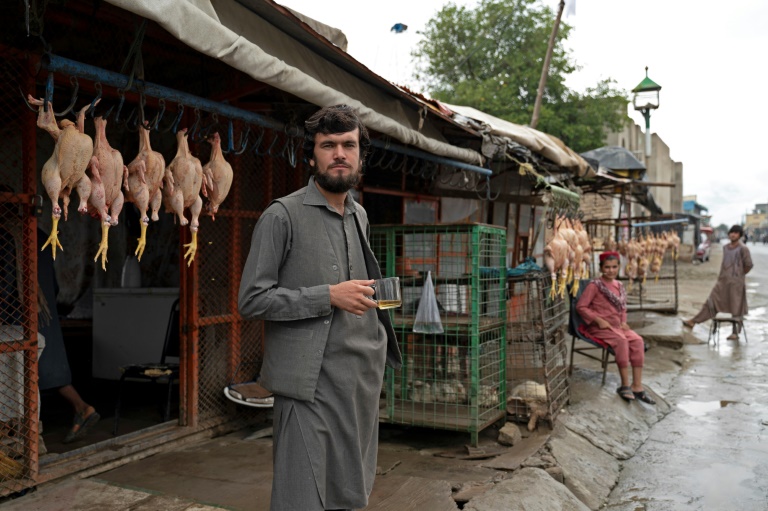
It is marked by rows of shuttered shops and warehouses, and those that remain open have seen sales plummet. 

Shah Wali, a 46-year-old grocery store keeper, said he used to earn an income of between 20,000 and 30,000 Afghanis ($230 and $340). 

Today, he can barely pay his rent.

“With the Islamic Emirate (Taliban) coming to power, peace has returned but business has gone,” Wali told AFP, clutching his prayer beads.

At the peak of the US invasion, Bagram was home to tens of thousands of troops and contractors, with the town serving as a hub for tons of supplies that would service the base.

The airfield was first built by the Americans for their Afghan ally during the Cold War in the 1950s.

The Soviet Union vastly expanded it after the Red Army invaded Afghanistan in 1979.

After their withdrawal, the base was controlled by the Moscow-backed government, and later by the shaky mujahideen administration during the 1990s civil war.

With the Taliban seizing power last year, the airfield is now under their control.

– ‘Empty town’ –

When the US military pulled out, it took much of its military hardware home, but tons of civilian equipment was left behind. 

For several months, the town managed to thrive on a booming scrap business, but residents say that now that, too, is dying.

Shops that sold used gym equipment, generators, air conditioners and spare car parts are either shut or receive few orders.

Several houses are now deserted, their residents having moved to Kabul or elsewhere in search of work.

Many who had worked at the base have also fled the country, fearing reprisals from the Taliban.

“Half the people have gone, the town feels so empty,” said Faizi.

In shadow of abandoned US airbase, Bagram's economy withers

For years, the sprawling military base at Bagram, just north of Kabul, was a potent symbol of the United States’ two decades of war in Afghanistan.

The sprawling complex included an air base that was the linchpin of the US invasion; a prison where rights groups allege widespread violations occurred; and a residential area that featured swimming pools, cinemas and spas.

But weeks before Washington officially ended its military presence in Afghanistan last August, US troops left the airbase in the dead of night.

Today, the military base is occupied by the Taliban, who took over the country in a swift offensive as US forces were exiting.

The US departure from Bagram has also seen the collapse of the economy in the nearby town of the same name, an illustration of how Afghanistan’s fortunes were so heavily tied to the war and foreign aid.

“Today, I’m jobless. I don’t know much about politics, but the exit of US forces from the base is a big economic loss,” said Saifulrahman Faizi, one of the town’s 80,000 residents.

Faizi earned $30 a day when he was employed at the base, at a time when hundreds would queue for hours outside the compound in the hope of getting work.

“Now, nobody goes there. Everything has just crashed, everybody is struggling”, he said.

– Shuttered shops –

Nowhere is the town’s economic collapse more evident than in the main market.

It is marked by rows of shuttered shops and warehouses, and those that remain open have seen sales plummet. 

Shah Wali, a 46-year-old grocery store keeper, said he used to earn an income of between 20,000 and 30,000 Afghanis ($230 and $340). 

Today, he can barely pay his rent.

“With the Islamic Emirate (Taliban) coming to power, peace has returned but business has gone,” Wali told AFP, clutching his prayer beads.

At the peak of the US invasion, Bagram was home to tens of thousands of troops and contractors, with the town serving as a hub for tons of supplies that would service the base.

The airfield was first built by the Americans for their Afghan ally during the Cold War in the 1950s.

The Soviet Union vastly expanded it after the Red Army invaded Afghanistan in 1979.

After their withdrawal, the base was controlled by the Moscow-backed government, and later by the shaky mujahideen administration during the 1990s civil war.

With the Taliban seizing power last year, the airfield is now under their control.

– ‘Empty town’ –

When the US military pulled out, it took much of its military hardware home, but tons of civilian equipment was left behind. 

For several months, the town managed to thrive on a booming scrap business, but residents say that now that, too, is dying.

Shops that sold used gym equipment, generators, air conditioners and spare car parts are either shut or receive few orders.

Several houses are now deserted, their residents having moved to Kabul or elsewhere in search of work.

Many who had worked at the base have also fled the country, fearing reprisals from the Taliban.

“Half the people have gone, the town feels so empty,” said Faizi.

We're hiring: babies wanted for Japan nursing home

A nursing home in southern Japan is “hiring” babies for a very important job — to keep its elderly residents company and make them smile. The salary? Nappies and milk formula.

New recruits at the facility in Kitakyushu must be under four years old, and their guardians have to sign a contract stipulating that the babies and toddlers can show up for work “whenever they feel like it”.

They are allowed to take a break “when they feel hungry, sleepy or depending on their mood”, the contract says.

More than 30 babies have been signed up so far, tasked with lifting the spirits of more than 100 residents who are mostly in their 80s, said Kimie Gondo, head of the nursing home.

“The mere sight of babies makes our residents smile,” she told AFP, adding with a chuckle that “there is no shift roster or anything”.

A job advert pinned to the wall at the facility says “We’re hiring!” in large characters and informs would-be workers they will be compensated for their services in diapers and powdered milk.

Successful candidates’ main — and perhaps only — responsibility will be to “take a stroll” around the nursing home while accompanied by their guardians, it says.

“The babies stay with their mothers all the time. It’s just like they’re being taken for a walk in a park,” Gondo said.

The residents appear delighted by the young recruits and have been greeting them, striking up conversations, or offering them hugs.

“They’re cute. It reminds me of when I was parenting,” one resident told a local TV station.

So far, the scheme has produced excellent results, Gondo said.

“Some of the children get along with our residents so well, they’re now like real grandparents and grandchildren.”

French-Indian textile designer brings back Mughal patterns

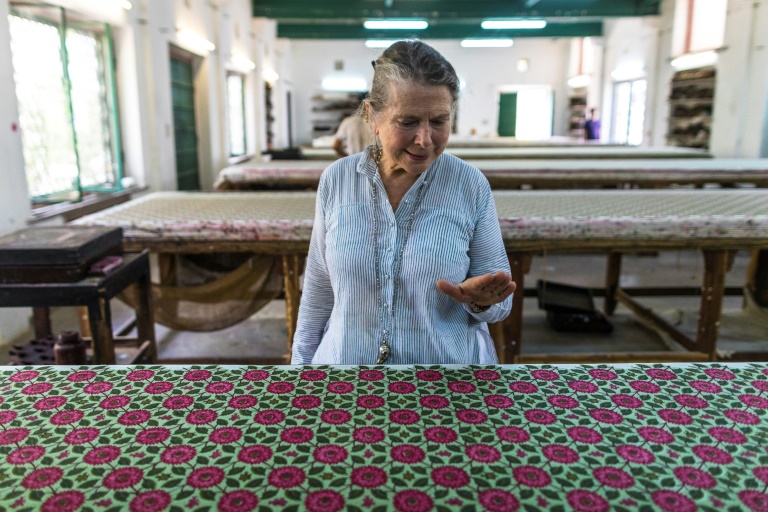
Textiles designer Brigitte Singh lovingly lays out a piece of cloth embossed with a red poppy plant she says was probably designed for emperor Shah Jahan, builder of the Taj Mahal, four centuries ago.

For Singh — who moved from France to India 42 years ago and married into a maharaja’s family — this exquisite piece remains the ever-inspiring heart of her studio’s mission.

The 67-year-old is striving to keep alive the art of block printing, which flourished in the 16th and 17th centuries under the conquering but sophisticated Mughal dynasty that then ruled India.

“I was the first to give a renaissance to this kind of Mughal design,” Singh told AFP in her traditional printing workshop in Rajasthan.

Having studied decorative arts in Paris, Singh arrived aged 25 in 1980 in western India’s Jaipur, the “last bastion” of the technique of using carved blocks of wood to print patterns on material.

“I dreamed of practising (miniature art) in Isfahan. But the Ayatollahs had just arrived in Iran (in the Islamic revolution of 1979). Or Herat, but the Soviets had just arrived in Afghanistan,” she remembers.

“So by default, I ended up in Jaipur,” she said.

– ‘Magic potion’ – 

A few months after arriving, Singh was introduced to a member of the local nobility who was related to the maharaja of Rajasthan. They married in 1982.

At first, Singh still hoped to try her hand at miniature painting.

But after scouring the city for traditional paper to work on, she came across workshops using block printing.

“I fell into the magic potion and could never go back,” she told AFP. 

She started by making just a few scarves, and when she passed through London two years later, gave them as presents to friends who were connoisseurs of Indian textiles. 

Bowled over, they persuaded her to show them to Colefax and Fowler, the storied British interior decorations firm.

“The next thing I knew, I was on my way back to India with an order for printed textiles,” she said.

Since then, she has never looked back.

– Soul comfort –

For the next two decades, she worked with a “family of printers” in the city before building her own studio in nearby Amber — a stone’s throw from Jaipur’s famous fort.

It was her father-in-law, a major collector of Rajasthan miniatures, who gave her the Mughal-era poppy cloth connected to Shah Jahan.

Her reproduction of that print was a huge success the world over, proving especially popular with Indian, British and Japanese clients.

In 2014, she made a Mughal poppy print quilted coat, called an Atamsukh — meaning “comfort of the soul” — that was later acquired by the Victoria and Albert Museum in London.

Another piece of her work is in the collection of the Metropolitan Art Museum in New York.

– ‘Sophistication of simplicity’ –

Singh starts her creative process by handing precise paintings to her sculptor, Rajesh Kumar, who then painstakingly chisels the designs onto blocks of wood. 

“We need a remarkable sculptor, with a very serious eye,” she said. 

“The carving of the wood blocks is the key. This tool has the sophistication of simplicity.”

Kumar makes several identical blocks for each colour used in each printed fabric.

“The poppy motif, for example, has five colours. I had to make five blocks,” he said. “It took me 20 days.”

At Singh’s workshop, six employees work on pieces of cloth laid out on tables five metres (16 feet) long.

They dip the blocks in dye, place them carefully on the cloth, push down and tap.

The work is slow and intricate, producing no more 40 metres of material every day.

Her workshop makes everything from quilts to curtains and rag dolls to shoes.

Singh just finished another Atamsukh for a prince in Kuwait.

“The important thing is to keep the know-how alive,” she said.

“More precious than the product, the real treasure is the savoir faire.”

China arrests hundreds over banking scandal that sparked rare protests

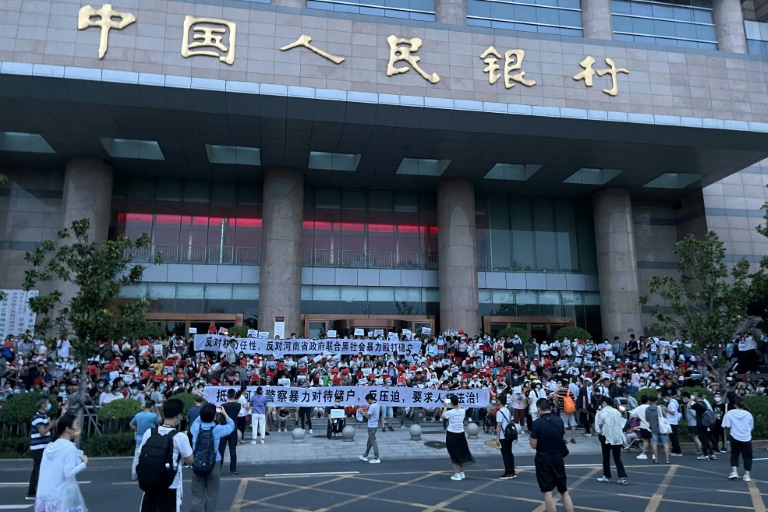
Chinese police have arrested more than 200 suspects linked to one of the country’s biggest banking scandals that triggered rare mass protests and dealt a major blow to confidence in the country’s financial system.

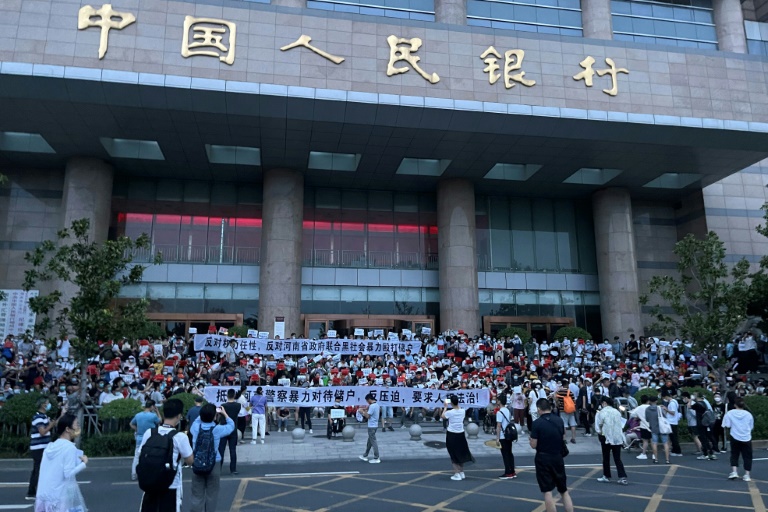
Four banks in China’s central Henan province suspended cash withdrawals in April as regulators cracked down on mismanagement, freezing the funds of hundreds of thousands of customers and sparking protests that at times ended in violence.

Police in the city of Xuchang said Monday they had now arrested 234 people in connection with the scandal and that progress was being made in recovering stolen funds.

They said in a statement that a “gang” had taken control of a number of local banks, attracting depositors with interest rates as high as 18 percent.

Large amounts of funds, they said, were then “exploited by financial brokers”.

Authorities previously said the gang had effectively controlled the banks since 2011.

China’s rural banking sector has been hit hard by Beijing’s efforts to rein in a property bubble and spiraling debt, in a financial crackdown that has had ripple effects across the world’s second-largest economy.

The size and scale of the fraud dealt an unprecedented blow to public confidence in China’s financial system, analysts have said, with the banks involved allegedly operating illegally for more than a decade.

Beijing is desperate to avoid disruptions to social stability just months away from a major meeting of the ruling Communist Party, where President Xi Jinping is expected to secure an unprecedented third term in power. 

A July 10 mass demonstration by depositors in Henan’s provincial capital Zhengzhou was violently quashed, with demonstrators forced onto buses by police and beaten, according to eyewitness accounts given to AFP and verified photos on social media.

Regulators have been gradually offering repayments to depositors since mid-April.

On Monday, the Henan banking and insurance regulator promised to repay those who had deposited between 400,000 and 500,000 yuan ($57,900 to $72,300) starting this week. 

Depositors who owed smaller amounts had been repaid.

China arrests hundreds over banking scandal that sparked rare protests

Chinese police have arrested more than 200 suspects linked to one of the country’s biggest banking scandals that triggered rare mass protests and dealt a major blow to confidence in the country’s financial system.

Four banks in China’s central Henan province suspended cash withdrawals in April as regulators cracked down on mismanagement, freezing the funds of hundreds of thousands of customers and sparking protests that at times ended in violence.

Police in the city of Xuchang said Monday they had now arrested 234 people in connection with the scandal and that progress was being made in recovering stolen funds.

They said in a statement that a “gang” had taken control of a number of local banks, attracting depositors with interest rates as high as 18 percent.

Large amounts of funds, they said, were then “exploited by financial brokers”.

Authorities previously said the gang had effectively controlled the banks since 2011.

China’s rural banking sector has been hit hard by Beijing’s efforts to rein in a property bubble and spiraling debt, in a financial crackdown that has had ripple effects across the world’s second-largest economy.

The size and scale of the fraud dealt an unprecedented blow to public confidence in China’s financial system, analysts have said, with the banks involved allegedly operating illegally for more than a decade.

Beijing is desperate to avoid disruptions to social stability just months away from a major meeting of the ruling Communist Party, where President Xi Jinping is expected to secure an unprecedented third term in power. 

A July 10 mass demonstration by depositors in Henan’s provincial capital Zhengzhou was violently quashed, with demonstrators forced onto buses by police and beaten, according to eyewitness accounts given to AFP and verified photos on social media.

Regulators have been gradually offering repayments to depositors since mid-April.

On Monday, the Henan banking and insurance regulator promised to repay those who had deposited between 400,000 and 500,000 yuan ($57,900 to $72,300) starting this week. 

Depositors who owed smaller amounts had been repaid.

Close Bitnami banner
Bitnami