World

'Third' of Pakistan under water as flood aid efforts gather pace

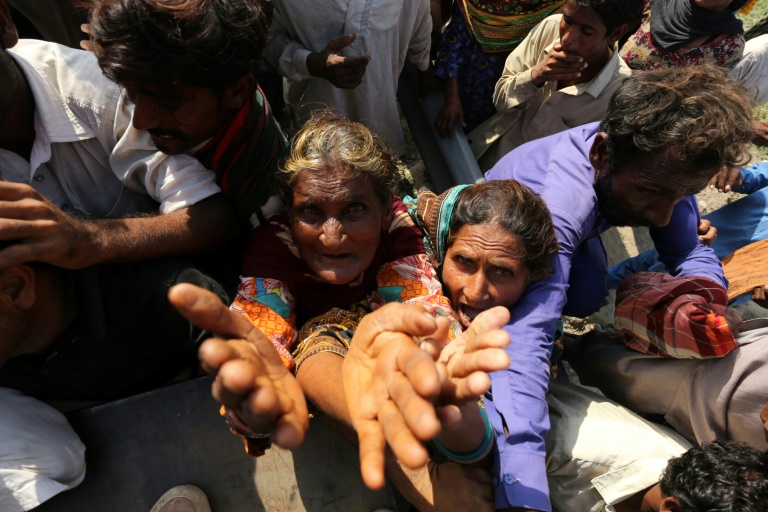
Aid efforts ramped up across flooded Pakistan on Tuesday to help tens of millions of people affected by relentless monsoon rains that have submerged a third of the country and claimed more than 1,100 lives.

The rains that began in June have unleashed the worst flooding in more than a decade, washing away swathes of vital crops and damaging or destroying more than a million homes.

Authorities and charities are struggling to accelerate aid delivery to more than 33 million people affected, a challenging task in areas cut off because roads and bridges have been washed away.

In the south and west, dry land is limited, with displaced people crammed onto elevated highways and railroad tracks to escape the flooded plains.

“We don’t even have space to cook food. We need help,” Rimsha Bibi, a schoolgirl in Dera Ghazi Khan in central Pakistan, told AFP.

Pakistan receives heavy — often destructive — rains during its annual monsoon season, which are crucial for agriculture and water supplies.

But such intense downpours have not been seen for three decades.

Pakistani officials have blamed climate change, which is increasing the frequency and intensity of extreme weather around the world.

“To see the devastation on the ground is really mind-boggling,” Pakistan’s climate change minister Sherry Rehman told AFP.

“When we send in water pumps, they say ‘Where do we pump the water?’ It’s all one big ocean, there’s no dry land to pump the water out.”

She said “literally a third” of the country was under water, comparing scenes from the disaster to a dystopian movie.

Planning Minister Ahsan Iqbal said Pakistan needed more than $10 billion to repair and rebuild damaged infrastructure.

“Massive damage has been caused… especially in the areas of telecommunications, roads, agriculture and livelihoods,” he told AFP Tuesday.

The Indus River, which runs along the length of the South Asian nation, is threatening to burst its banks as torrents of water rush downstream from its tributaries in the north.

Pakistan as a whole had been deluged with twice the usual monsoon rainfall, the meteorological office said, but Balochistan and Sindh provinces had seen more than four times the average of the last three decades.

– International help –

The disaster could not have come at a worse time for Pakistan, where the economy is in free fall.

Appealing for international help, the government has declared an emergency.

Aid flights have arrived in recent days from Turkey and the UAE, while other nations including Canada, Australia and Japan have also pledged assistance.

The United Nations has announced it will launch a formal $160 million appeal on Tuesday to fund emergency aid.

Pakistan was already desperate for international support and the floods have compounded the challenge.

Prices of basic goods — particularly onions, tomatoes and chickpeas — are soaring as vendors bemoan a lack of supplies from the flooded breadbasket provinces of Sindh and Punjab.

There was some relief on Monday when the International Monetary Fund approved the revival of a loan programme for Pakistan, releasing an initial $1.1 billion.

Makeshift relief camps have sprung up all over Pakistan — in schools, on motorways and in military bases.

In the northwestern town of Nowshera, a technical college was turned into a shelter for up to 2,500 flood victims.

They sweltered in the summer heat with sporadic food aid and little access to water.

“I never thought that one day we will have to live like this,” said 60-year-old Malang Jan.

“We have lost our heaven and are now forced to live a miserable life.”
'Third' of Pakistan under water as flood aid efforts gather pace

Aid efforts ramped up across flooded Pakistan on Tuesday to help tens of millions of people affected by relentless monsoon rains that have submerged a third of the country and claimed more than 1,100 lives.

The rains that began in June have unleashed the worst flooding in more than a decade, washing away swathes of vital crops and damaging or destroying more than a million homes.

Authorities and charities are struggling to accelerate aid delivery to more than 33 million people affected, a challenging task in areas cut off because roads and bridges have been washed away.

In the south and west, dry land is limited, with displaced people crammed onto elevated highways and railroad tracks to escape the flooded plains.

“We don’t even have space to cook food. We need help,” Rimsha Bibi, a schoolgirl in Dera Ghazi Khan in central Pakistan, told AFP.

Pakistan receives heavy — often destructive — rains during its annual monsoon season, which are crucial for agriculture and water supplies.

But such intense downpours have not been seen for three decades.

Pakistani officials have blamed climate change, which is increasing the frequency and intensity of extreme weather around the world.

“To see the devastation on the ground is really mind-boggling,” Pakistan’s climate change minister Sherry Rehman told AFP.

“When we send in water pumps, they say ‘Where do we pump the water?’ It’s all one big ocean, there’s no dry land to pump the water out.”

She said “literally a third” of the country was under water, comparing scenes from the disaster to a dystopian movie.

Planning Minister Ahsan Iqbal said Pakistan needed more than $10 billion to repair and rebuild damaged infrastructure.

“Massive damage has been caused… especially in the areas of telecommunications, roads, agriculture and livelihoods,” he told AFP Tuesday.

The Indus River, which runs along the length of the South Asian nation, is threatening to burst its banks as torrents of water rush downstream from its tributaries in the north.

Pakistan as a whole had been deluged with twice the usual monsoon rainfall, the meteorological office said, but Balochistan and Sindh provinces had seen more than four times the average of the last three decades.

– International help –

The disaster could not have come at a worse time for Pakistan, where the economy is in free fall.

Appealing for international help, the government has declared an emergency.

Aid flights have arrived in recent days from Turkey and the UAE, while other nations including Canada, Australia and Japan have also pledged assistance.

The United Nations has announced it will launch a formal $160 million appeal on Tuesday to fund emergency aid.

Pakistan was already desperate for international support and the floods have compounded the challenge.

Prices of basic goods — particularly onions, tomatoes and chickpeas — are soaring as vendors bemoan a lack of supplies from the flooded breadbasket provinces of Sindh and Punjab.

There was some relief on Monday when the International Monetary Fund approved the revival of a loan programme for Pakistan, releasing an initial $1.1 billion.

Makeshift relief camps have sprung up all over Pakistan — in schools, on motorways and in military bases.

In the northwestern town of Nowshera, a technical college was turned into a shelter for up to 2,500 flood victims.

They sweltered in the summer heat with sporadic food aid and little access to water.

“I never thought that one day we will have to live like this,” said 60-year-old Malang Jan.

“We have lost our heaven and are now forced to live a miserable life.”
Ukraine launches offensive in south, IAEA team head to nuclear plant

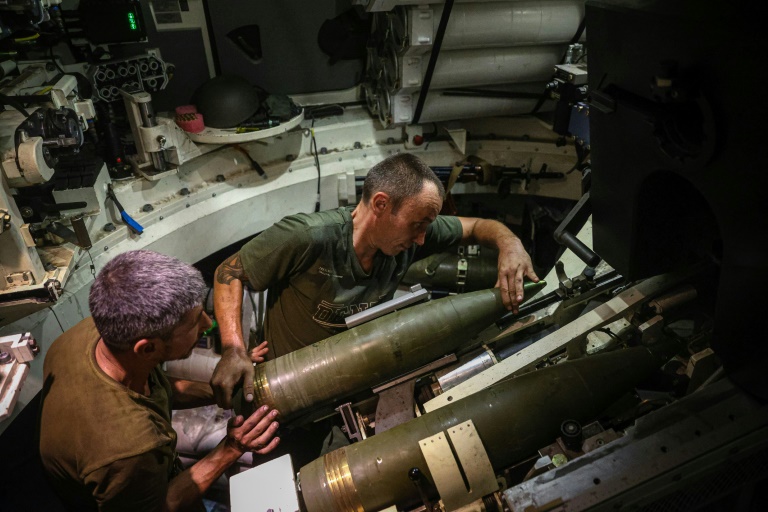
Ukrainian forces pressed their counter-offensive to retake the Russian-occupied southern region of Kherson, while a team of UN experts were en route to inspect the Zaporizhzhia nuclear plant which was targeted by fresh shelling over the weekend.

The coastal region of Kherson and its capital city of the same name have been contested by Russian troops since the war broke out six months ago.

“Ukrainian armed forces have launched their offensive in several areas in the south,” the head of the regional administration, Yaroslav Yanushevych, said on the Telegram app.

In his daily address Monday night, President Volodymyr Zelensky did not specifically mention the counter-offensive but said they would oust the occupying forces “to the border”.

“If they want to survive, it is time for the Russian military to flee. Go home,” he said.

Russian forces seized Kherson, a town of 280,000 inhabitants, on March 3.

It was the first major city to fall following Moscow’s invasion of Ukraine on February 24. 

“Today there was a powerful artillery attack on enemy positions in… the occupied Kherson region,” local government official Sergey Khlan told Ukraine’s Pryamyi TV channel.

“This is what we have been waiting for since the spring — it is the beginning of the de-occupation of Kherson region.”

US National Security Council spokesman John Kirby said Ukraine’s move was already having an impact on Russian military capabilities as it forced them to reposition forces and deplete some units in the east.

“Because the Russians have had to pull resources from the east simply because of reports that the Ukrainians might be going more on the offence in the south,” Kirby told reporters Monday, CNN reported.

A senior Pentagon official said Russia was struggling to find soldiers to fight in Ukraine and that many new recruits were older, in poor shape and lacking training.

– ‘Ukraine regaining its own’ –

Russia’s defence ministry meanwhile claimed it had repulsed attacks in the Kherson and Mykolaiv regions and inflicted “heavy losses” on Ukrainian forces.

The spokeswoman for the Ukrainian military’s Southern Command, Nataliya Gumenyuk, had said Kyiv’s forces were attacking from many directions to push the Russians back to the other bank of the Dnipro river.

In an update on Facebook early Tuesday, the Southern Command said the situation remained “tense” in its area of operations.

“The enemy attacked our positions five times, but was unsuccessful,” it said. The city of Mykolaiv, just northwest of Kherson, had come under “massive bombardment” from Russian anti-aircraft missiles, with two civilians killed and 24 wounded, it said.

“Ukraine is regaining its own. And it will regain the Kharkiv region, Lugansk region, Donetsk region, Zaporizhzhia region, Kherson region, Crimea,” Zelensky said in his address.

Kherson city lies some 200 kilometres (125 miles) southwest of the Zaporizhzhia nuclear plant — Europe’s largest atomic facility — which has also been occupied by Russian troops since early March. 

Regional governor Oleksandr Starukh said early Tuesday that Russia had launched a missile attack on Zaporizhzhia city.

“According to preliminary information, there are no casualties,” he said. “So far, no significant damage to infrastructure facilities has been detected.”

– UN team to assess damage –

International Atomic Energy Agency chief Rafael Grossi said on Monday he was en route with a team of experts to inspect the Zaporizhzhia nuclear plant.

The team would assess the damage to the facilities and determine the functionality of the main and backup safety and security systems, the UN nuclear watchdog said.

“At the same time, the mission will undertake urgent safeguards activities to verify that nuclear material is used only for peaceful purposes,” it said.

The IAEA has for months been asking to visit the site, warning of “the very real risk of a nuclear disaster”.

The plant was targeted over the weekend by fresh shelling, its operator said, with Moscow and Kyiv trading blame for attacks around the complex of six nuclear reactors in Energodar, a town on the banks of the Dnipro River.

Ukraine’s nuclear agency Energoatom has warned of the risk of a radiation leak.

The United Nations has called for an end to all military activity in the area surrounding the complex.

Ukraine initially feared an IAEA visit would legitimise the Russian occupation of the site, before finally supporting the idea of a mission.

Ukraine was the site of the world’s worst nuclear catastrophe in 1986, when a reactor at the northern Chernobyl plant exploded and spewed radiation into the atmosphere.

Experts say any leak at Zaporizhzhia would more likely be on the scale of the 2011 Fukushima disaster in Japan.

Energoatom on Monday warned any leak would scatter radiation over swathes of southern Ukraine and southwestern regions of Russia.

The United States on Monday urged a complete shutdown of the plant and renewed calls for a demilitarised zone around the facility.

Schools in Zaporizhzhia city began distributing iodine pills to reduce medical risk of radiation in the event of a disaster, with some 200 people turning up to collect them on Friday when distribution began, an AFP correspondent said.

“The tablet is taken in case of danger, when the alarm is raised,” said Elena Karpenko, a nurse at the Zaporizhzhia Children’s Hospital. 

burs-hmw/mtp/leg

Ukraine launches offensive in south, IAEA team head to nuclear plant

Ukrainian forces pressed their counter-offensive to retake the Russian-occupied southern region of Kherson, while a team of UN experts were en route to inspect the Zaporizhzhia nuclear plant which was targeted by fresh shelling over the weekend.

The coastal region of Kherson and its capital city of the same name have been contested by Russian troops since the war broke out six months ago.

“Ukrainian armed forces have launched their offensive in several areas in the south,” the head of the regional administration, Yaroslav Yanushevych, said on the Telegram app.

In his daily address Monday night, President Volodymyr Zelensky did not specifically mention the counter-offensive but said they would oust the occupying forces “to the border”.

“If they want to survive, it is time for the Russian military to flee. Go home,” he said.

Russian forces seized Kherson, a town of 280,000 inhabitants, on March 3.

It was the first major city to fall following Moscow’s invasion of Ukraine on February 24. 

“Today there was a powerful artillery attack on enemy positions in… the occupied Kherson region,” local government official Sergey Khlan told Ukraine’s Pryamyi TV channel.

“This is what we have been waiting for since the spring — it is the beginning of the de-occupation of Kherson region.”

US National Security Council spokesman John Kirby said Ukraine’s move was already having an impact on Russian military capabilities as it forced them to reposition forces and deplete some units in the east.

“Because the Russians have had to pull resources from the east simply because of reports that the Ukrainians might be going more on the offence in the south,” Kirby told reporters Monday, CNN reported.

A senior Pentagon official said Russia was struggling to find soldiers to fight in Ukraine and that many new recruits were older, in poor shape and lacking training.

– ‘Ukraine regaining its own’ –

Russia’s defence ministry meanwhile claimed it had repulsed attacks in the Kherson and Mykolaiv regions and inflicted “heavy losses” on Ukrainian forces.

The spokeswoman for the Ukrainian military’s Southern Command, Nataliya Gumenyuk, had said Kyiv’s forces were attacking from many directions to push the Russians back to the other bank of the Dnipro river.

In an update on Facebook early Tuesday, the Southern Command said the situation remained “tense” in its area of operations.

“The enemy attacked our positions five times, but was unsuccessful,” it said. The city of Mykolaiv, just northwest of Kherson, had come under “massive bombardment” from Russian anti-aircraft missiles, with two civilians killed and 24 wounded, it said.

“Ukraine is regaining its own. And it will regain the Kharkiv region, Lugansk region, Donetsk region, Zaporizhzhia region, Kherson region, Crimea,” Zelensky said in his address.

Kherson city lies some 200 kilometres (125 miles) southwest of the Zaporizhzhia nuclear plant — Europe’s largest atomic facility — which has also been occupied by Russian troops since early March. 

Regional governor Oleksandr Starukh said early Tuesday that Russia had launched a missile attack on Zaporizhzhia city.

“According to preliminary information, there are no casualties,” he said. “So far, no significant damage to infrastructure facilities has been detected.”

– UN team to assess damage –

International Atomic Energy Agency chief Rafael Grossi said on Monday he was en route with a team of experts to inspect the Zaporizhzhia nuclear plant.

The team would assess the damage to the facilities and determine the functionality of the main and backup safety and security systems, the UN nuclear watchdog said.

“At the same time, the mission will undertake urgent safeguards activities to verify that nuclear material is used only for peaceful purposes,” it said.

The IAEA has for months been asking to visit the site, warning of “the very real risk of a nuclear disaster”.

The plant was targeted over the weekend by fresh shelling, its operator said, with Moscow and Kyiv trading blame for attacks around the complex of six nuclear reactors in Energodar, a town on the banks of the Dnipro River.

Ukraine’s nuclear agency Energoatom has warned of the risk of a radiation leak.

The United Nations has called for an end to all military activity in the area surrounding the complex.

Ukraine initially feared an IAEA visit would legitimise the Russian occupation of the site, before finally supporting the idea of a mission.

Ukraine was the site of the world’s worst nuclear catastrophe in 1986, when a reactor at the northern Chernobyl plant exploded and spewed radiation into the atmosphere.

Experts say any leak at Zaporizhzhia would more likely be on the scale of the 2011 Fukushima disaster in Japan.

Energoatom on Monday warned any leak would scatter radiation over swathes of southern Ukraine and southwestern regions of Russia.

The United States on Monday urged a complete shutdown of the plant and renewed calls for a demilitarised zone around the facility.

Schools in Zaporizhzhia city began distributing iodine pills to reduce medical risk of radiation in the event of a disaster, with some 200 people turning up to collect them on Friday when distribution began, an AFP correspondent said.

“The tablet is taken in case of danger, when the alarm is raised,” said Elena Karpenko, a nurse at the Zaporizhzhia Children’s Hospital. 

burs-hmw/mtp/leg

Relief and desperation in Pakistan's makeshift flood camps

Makeshift camps have sprung up all over Pakistan — in schools, along motorways and at military bases — to give shelter to millions of displaced flood victims.

But the relief at finding safety can turn to desperation for many.

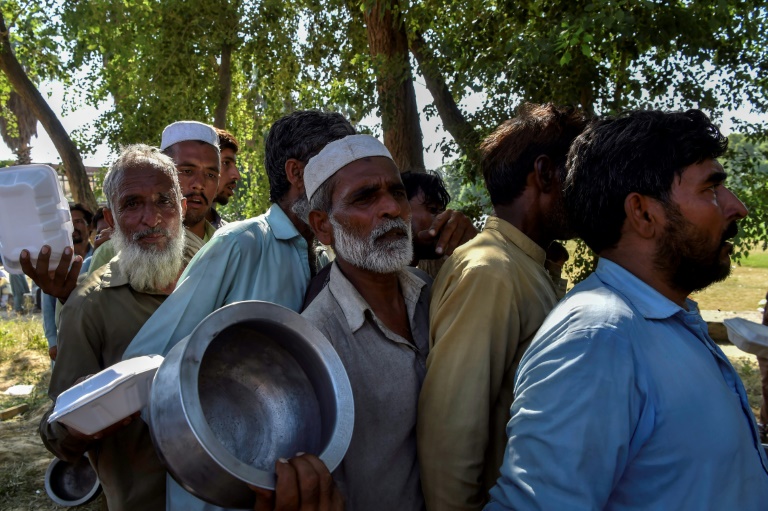
In the northwestern town of Nowshera, a technical college was turned into a shelter for up to 2,500 flood victims, who sweltered in the summer heat with sporadic food aid and little access to water for bathing.

“We have been only eating rice for the past three days,” 60-year-old Malang Jan told AFP.

“I never thought that one day we will have to live like this. We have lost our heaven and are now forced to live a miserable life.”
Jan’s family were rescued by boat when his home was submerged in the floods that have swamped a third of the country, killing more than 1,100 people and affecting tens of millions more.

The college gardens are lined with tents — the classrooms are filled with the families who arrived first and grabbed the chance for privacy.

Others rest shoulder-to-shoulder in corridors with their meagre bundles of belongings.

Goats and chickens salvaged from the rising water graze in the campus courtyard.

The camp of 2,500 is managed by various charities, political parties and administrative officials overwhelmed by the scale of the disaster.

Volunteers hand out tents, mattresses, water, daal and naan.

“It’s a situation of panic,” said Mushfiq ur Rehman, a district court official who stepped in to oversee food delivery for the local administration.

“There is enough food, but people are getting desperate because they don’t trust if they will get a meal again or not.”

– ‘We’re humiliated’ –

It is particularly difficult for women in this deeply conservative region of the country, where the all-covering burqa is commonly worn, and women rarely mix with men who are not relatives.

“We are Pashtun people; we don’t come out of our homes often, but now we are forced to come out,” said Yasmin Shah, 56, who is sheltered in a classroom with her family.

Young women with burqas pulled up over their heads watch from upper floors.

“I cannot come out of this classroom unless I have to,” added another, looking after a blind uncle. 

Older women take their place in queues to ensure they get a share of food handouts. 

The heat is worsened when the few working fans stop working because of power cuts. There are no showers and only a few toilets available for the displaced. 

“Our self respect is at stake… I stink but there is no place to take a shower,” said Fazal e Malik, who is staying with seven family members in a tent.

“Our women are also facing problems and they too feel humiliated.”

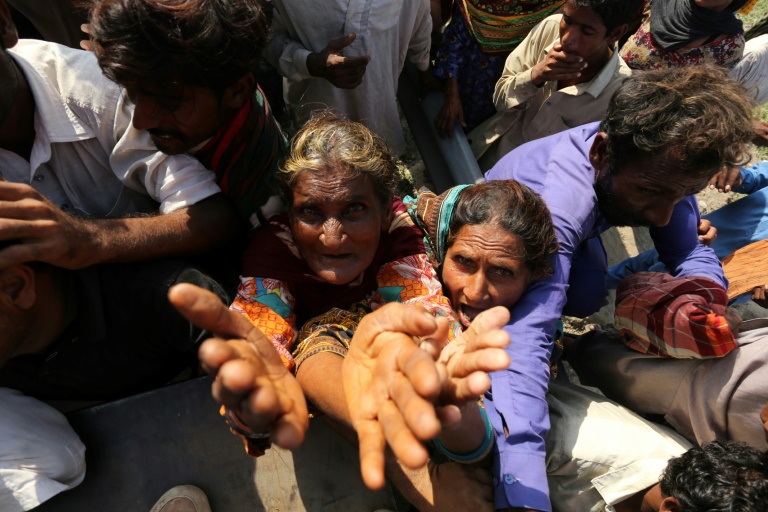
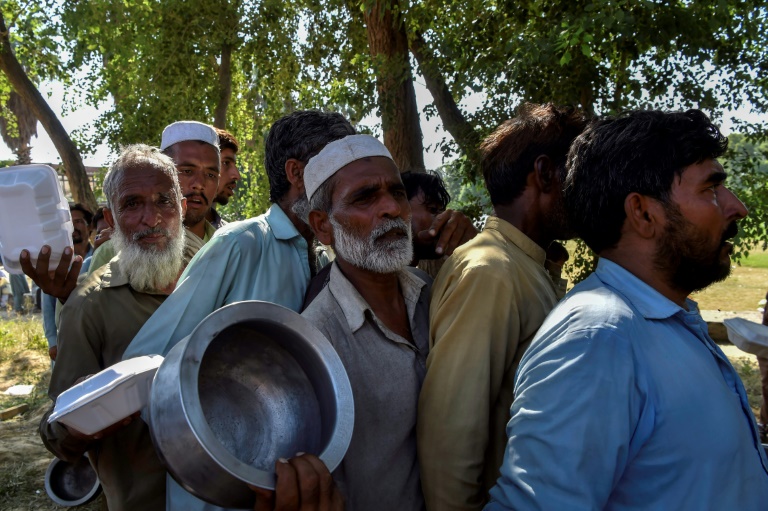
When food aid arrives at the college, desperate families mob the trucks, and are sometimes pushed back by police armed with long sticks.

“People send relief goods here but the distribution is not well organised at all,” Yasmin said.

“There are routine scuffles and people have to fight to get some food. In the end, some people have a bigger share and others have nothing.”

The largest camp in the town was set up at the Pakistan Air Force academy centre, sheltering a further 3,000 people in the accommodation usually reserved for training staff.  

Nearby, armed members of a local political party have stepped in to protect abandoned homes, using rowing boats to navigate the flooded streets and watch for looters.

For some fleeing the deluge across the country, the only dry areas are elevated roads and railroad tracks, alongside which tens of thousands of poor rural folk have taken shelter with their livestock. 

Relief and desperation in Pakistan's makeshift flood camps

Makeshift camps have sprung up all over Pakistan — in schools, along motorways and at military bases — to give shelter to millions of displaced flood victims.

But the relief at finding safety can turn to desperation for many.

In the northwestern town of Nowshera, a technical college was turned into a shelter for up to 2,500 flood victims, who sweltered in the summer heat with sporadic food aid and little access to water for bathing.

“We have been only eating rice for the past three days,” 60-year-old Malang Jan told AFP.

“I never thought that one day we will have to live like this. We have lost our heaven and are now forced to live a miserable life.”
Jan’s family were rescued by boat when his home was submerged in the floods that have swamped a third of the country, killing more than 1,100 people and affecting tens of millions more.

The college gardens are lined with tents — the classrooms are filled with the families who arrived first and grabbed the chance for privacy.

Others rest shoulder-to-shoulder in corridors with their meagre bundles of belongings.

Goats and chickens salvaged from the rising water graze in the campus courtyard.

The camp of 2,500 is managed by various charities, political parties and administrative officials overwhelmed by the scale of the disaster.

Volunteers hand out tents, mattresses, water, daal and naan.

“It’s a situation of panic,” said Mushfiq ur Rehman, a district court official who stepped in to oversee food delivery for the local administration.

“There is enough food, but people are getting desperate because they don’t trust if they will get a meal again or not.”

– ‘We’re humiliated’ –

It is particularly difficult for women in this deeply conservative region of the country, where the all-covering burqa is commonly worn, and women rarely mix with men who are not relatives.

“We are Pashtun people; we don’t come out of our homes often, but now we are forced to come out,” said Yasmin Shah, 56, who is sheltered in a classroom with her family.

Young women with burqas pulled up over their heads watch from upper floors.

“I cannot come out of this classroom unless I have to,” added another, looking after a blind uncle. 

Older women take their place in queues to ensure they get a share of food handouts. 

The heat is worsened when the few working fans stop working because of power cuts. There are no showers and only a few toilets available for the displaced. 

“Our self respect is at stake… I stink but there is no place to take a shower,” said Fazal e Malik, who is staying with seven family members in a tent.

“Our women are also facing problems and they too feel humiliated.”

When food aid arrives at the college, desperate families mob the trucks, and are sometimes pushed back by police armed with long sticks.

“People send relief goods here but the distribution is not well organised at all,” Yasmin said.

“There are routine scuffles and people have to fight to get some food. In the end, some people have a bigger share and others have nothing.”

The largest camp in the town was set up at the Pakistan Air Force academy centre, sheltering a further 3,000 people in the accommodation usually reserved for training staff.  

Nearby, armed members of a local political party have stepped in to protect abandoned homes, using rowing boats to navigate the flooded streets and watch for looters.

For some fleeing the deluge across the country, the only dry areas are elevated roads and railroad tracks, alongside which tens of thousands of poor rural folk have taken shelter with their livestock. 

Hong Kong court orders search of media tycoon Jimmy Lai's phones

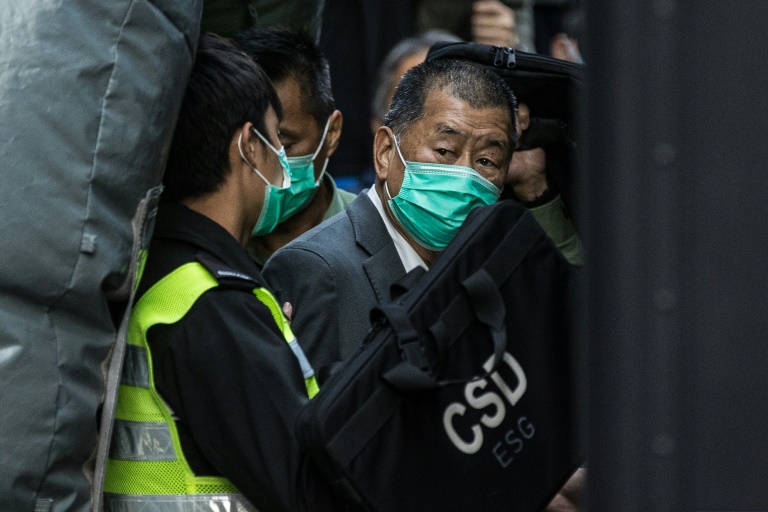
Two phones owned by jailed pro-democracy media tycoon Jimmy Lai can be searched on national security grounds and are not protected by journalistic privilege, a senior judge ruled Tuesday in Hong Kong.

Lai, owner of the now-shuttered Apple Daily tabloid, will soon go on trial for “collusion with foreign forces”, an offence that carries up to life in prison under the sweeping national security law Beijing imposed on Hong Kong two years ago.

Two smartphones were seized when hundreds of police officers arrested Lai and raided the newsroom of Apple Daily, which eventually collapsed after its assets were frozen under the security law

Lai’s legal team claimed the content of the phones was covered by journalistic privilege, which is recognised by case law in Hong Kong, as well as legal privilege that protects conversations between lawyers and their clients.

Last month, police applied for a warrant to search the phones under the national security law.

Wilson Chan, one of the High Court judges handpicked by the government to try security cases, on Tuesday ruled that police could search Lai’s phones, including journalistic materials. He excluded content covered by legal privilege.

“Press freedom simply does not equate (to) any blanket prohibition against the seizure, production or disclosure of journalistic materials,” Chan wrote in his judgement.

Chan ruled the warrant covers all types of materials so long as they contain or are likely to contain evidence of a national security offence, including journalistic materials. 

In a day-long judicial review hearing last week, Lai’s lead lawyer Philip Dykes warned that the lack of safeguards for journalistic materials would cause a chilling effect.

“Confidential journalistic materials are an essential feature and a cornerstone of a healthy and functioning free press,” Dykes told the court.

Dykes, a former chairman of the Hong Kong Bar Association, argued that the national security warrant “abrogated the protection of journalistic materials” under Hong Kong law. 

Jenkin Suen, representing the Department of Justice, countered that “journalistic materials cannot by definition form the subject of any order or direction of the court authorising search or requiring disclosure or production.”

Hong Kong has tumbled down press freedom rankings since the imposition of the security law, which has begun transforming Hong Kong’s legal landscape, including toughening bail requirements and eliminating juries in some cases.

Shelling targets Baghdad's Green Zone amid deadly chaos after Sadr quits politics

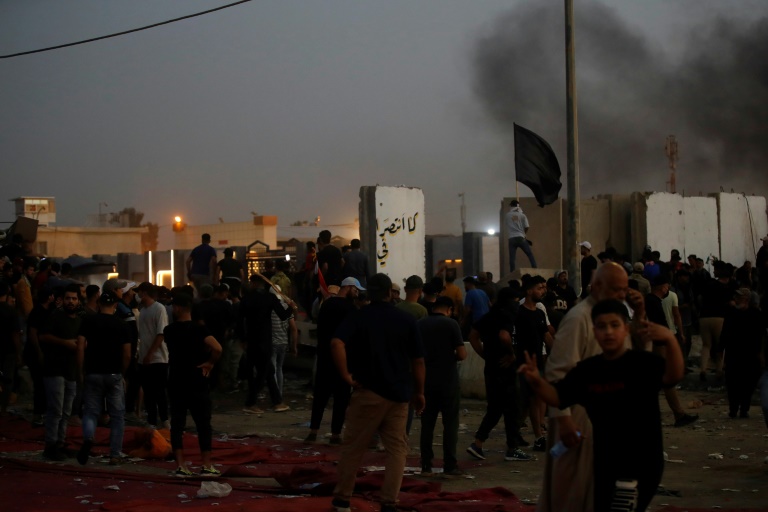
Shelling targeted Baghdad’s high-security Green Zone on Monday, a security source said, after Shiite cleric Moqtada Sadr said he was quitting politics, sparking chaos in which 15 of his supporters were killed.

Tensions have soared in Iraq amid a political crisis that has left the country without a new government, prime minister or president for months, and escalated sharply after Sadr’s supporters stormed the government palace following their leader’s announcement.

At least seven shells fell in the high-security Green Zone, which houses government buildings and diplomatic missions, the security source said late Monday on condition of anonymity.

It was not immediately clear who was behind the shelling, which was followed by the sound of automatic weapons in the Green Zone.

The security source said Sadr’s supporters opened fire at the Green Zone from the outside, adding that security forces inside “were not responding”.

Shots were fired earlier in the fortified area, an AFP correspondent said, and medics said 15 Sadr supporters had been shot dead and 350 other protesters injured — some with bullet wounds and others suffering tear gas inhalation.

Witnesses said earlier that Sadr loyalists and supporters of a rival Shiite bloc, the pro-Iran Coordination Framework, had exchanged fire.

The Framework condemned an “attack on state institutions”, urging the Sadrists to engage in “dialogue”.

The army had announced a nationwide curfew from 7:00 pm (1600 GMT).

Caretaker Prime Minister Mustafa al-Kadhemi said “security or military forces, or armed men” were prohibited from opening fire on protesters.

Calling the earlier developments “an extremely dangerous escalation”, the United Nations Assistance Mission in Iraq (UNAMI) urged “all” sides to “refrain from acts that could lead to an unstoppable chain of events”.

“The very survival of the state is at stake,” it warned.

The United States also urged calm amid the “disturbing” reports of unrest in Baghdad while France called on “the parties to exercise the utmost restraint” and “immediately cease the deadly clashes”.

– ‘Definitive retirement’ –

Protests spread to other parts of the country, with Sadr followers storming government buildings in the cities of Nasiriyah and Hillah south of Baghdad, an AFP correspondent and witnesses said.

Shortly after he made his surprise declaration, Sadr’s followers burst into the Republican Palace in Baghdad, where cabinet meetings are usually held.

Inside the opulent palace, protesters lounged in armchairs in a meeting room, some waved Iraqi flags and took photographs of themselves, and others cooled off in a swimming pool in the garden.

Sadr — a grey-bearded preacher with millions of devoted followers, who once led a militia against American and Iraqi government forces — announced earlier on Twitter he was stepping back from politics.

“I’ve decided not to meddle in political affairs. I therefore announce now my definitive retirement,” said Sadr, a longtime player in the war-torn country’s political scene, though he himself has never directly been in government.

He added that “all the institutions” linked to his Sadrist movement will be closed, except the mausoleum of his father, assassinated in 1999, and other heritage facilities.

His latest statement came two days after he said that “all parties” including his own should give up government positions in order to help resolve the political crisis.

His bloc emerged from last year’s election as the biggest in the legislature, with 73 seats, but short of a majority. 

In June, his lawmakers quit in a bid to break the logjam, which led to the Coordination Framework becoming the largest bloc. 

Hamzeh Hadad, from the European Council on Foreign Relations (ECFR), said it was “not clear” what Sadr’s strategy was.

“Whatever it does mean, in typical Sadrist fashion, there is always backtracking expected,” Hadad said.

“The second, and more terrifying thought on this is that he is giving his followers the green light to do whatever they like.”

– Millions of followers –

Iraq has been mired in political deadlock since legislative elections in October last year due to disagreement between Shiite factions over forming a coalition.

Sadr’s supporters have been calling for parliament to be dissolved and for new elections. 

But on Saturday, the cleric said it was “more important” that “all parties and figures who have been part of the political process” since the 2003 US-led invasion “no longer participate”.

“That includes the Sadrist movement,” he said.

Sadr’s supporters have for weeks been staging a sit-in outside Iraq’s parliament, after storming the legislature’s interior on July 30 to press their demands.

The Coordination Framework wants a new head of government to be appointed before any new polls are held.

Kadhemi had earlier this month convened crisis talks with party leaders, but the Sadrists boycotted.

Ecuador investigates killing of four Galapagos giant tortoises

Prosecutors in Ecuador on Monday announced an investigation into the alleged hunting and killing of four giant tortoises on the Galapagos Islands, a unique and fragile ecosystem considered a world heritage site.

The prosecutor’s office said on Twitter it was investigating the “suspected hunting and killing of four giant tortoises in the Galapagos National Park wetland complex.” 

A unit that specializes in environmental crimes is collecting testimonies from national park agents and appointing experts to carry out autopsies on the tortoises. 

The park management has filed a complaint over the death of the animals, the Environment Ministry said on its WhatsApp channel. 

The ministry did not specify which species the four tortoises belonged to, but said they had been hunted in the wetlands of Isabela Island, located 1,000 kilometers (600 miles) from the coast of Ecuador in the Pacific Ocean. 

Hunting wild animals is punishable by up to three years in prison in Ecuador.

In 2019, a man who rammed a tortoise and damaged its shell was fined $11,000. That same year, another driver had to pay over $15,000 for running over and killing a native Galapagos iguana. 

With an area of more than 4,500 square kilometers (1,800 square miles), Isabela is the largest island in the archipelago, and makes up 60 percent of the land surface of the remote oceanic chain. 

The Galapagos archipelago is designated as a biosphere reserve for its unique flora and fauna. It was once home to 15 species of tortoises, three of which went extinct centuries ago, according to the Galapagos National Park. 

In 2019, a tortoise of the species Chelonoidis phantastica was discovered on the island, more than a century after its supposed extinction.

Asian markets mixed as traders steel for more rate hikes

Asian markets were mixed Tuesday with confidence at a premium as traders contemplate the prospect of more Federal Reserve interest rate hikes and a possible recession.

Wall Street suffered another day in the red after Friday’s capitulation in response to a warning from US central bank boss Jerome Powell that more tightening was needed to bring inflation down from four-decade highs.

Bets on a third successive three-quarter-point increase next month have surged since his comments, which blew a hole in a recent rally across markets from their June lows.

Now there is a growing fear that the Fed’s priority of beating inflation at any cost will damage the world’s top economy, which is already in a technical recession following two straight quarters of contraction.

“The markets are spooked because they are afraid that the Fed could create a hard landing — that they’ll raise rates into a recession, and that will be really painful for the economy and for corporate profits,” Terri Spath, of Zuma Wealth, told Bloomberg Television.

After Monday’s retreat, Asian equities fared a little better, though sentiment remained weak.

Tokyo, Sydney, Seoul, Singapore, Jakarta and Wellington all rose, but Hong Kong, Shanghai and Manila sank.

In light of the sell-off in response to the Powell speech, Minneapolis Fed President Neel Kashkari said it appeared traders had now accepted the fact that policymakers were focused on fighting price rises.

“People now understand the seriousness of our commitment to getting inflation back down to two percent,” he said.

But while central banks around the world commit to lifting rates to fight inflation, a major driver of the gains continues to cause a headache.

A warning from OPEC kingpin Saudi Arabia that it could cut output has put fresh upward pressure on the commodity, offsetting concerns about a hit to demand from any economic slowdown.

Waning optimism about an imminent Iran nuclear deal, fresh unrest in Libya and China’s economic travails were adding to the oil market’s strength.

“A combination of fresh supply risks from Libya, along with uncertainty over the upcoming OPEC+ meeting, has provided a boost,” Warren Patterson, of ING Groep NV, said. 

But he added that “fundamentally, the market is in a more comfortable state, and in the absence of a large supply disruption or OPEC+ intervention, it is difficult to see significant upside in the short term”.

– Key figures at around 0230 GMT –

Tokyo – Nikkei 225: UP 1.0 percent at 28,162.52 (break)

Hong Kong – Hang Seng Index: DOWN 1.8 percent at 19,669.45

Shanghai – Composite: DOWN 0.6 percent at 3,220.96

Euro/dollar: DOWN at $0.9985 from $0.9998 on Monday

Pound/dollar: DOWN at $1.1692 from $1.1703

Euro/pound: DOWN at 85.40 pence from 85.42 pence 

Dollar/yen: DOWN at 138.59 yen from 138.73 yen

West Texas Intermediate: DOWN 0.3 percent at $96.68 per barrel

Brent North Sea crude: DOWN 0.7 percent at $104.38

New York – Dow: DOWN 0.6 percent at 32,098.99 (close)

London – FTSE 100: Closed for public holiday

Close Bitnami banner
Bitnami