World

China arrests hundreds over banking scandal that sparked rare protests

Chinese police have arrested more than 200 suspects linked to one of the country’s biggest-ever banking scandals, which triggered rare mass protests.

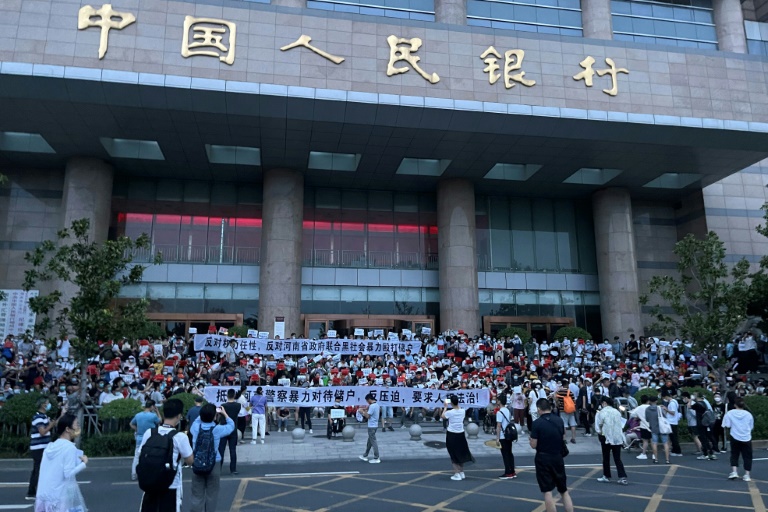
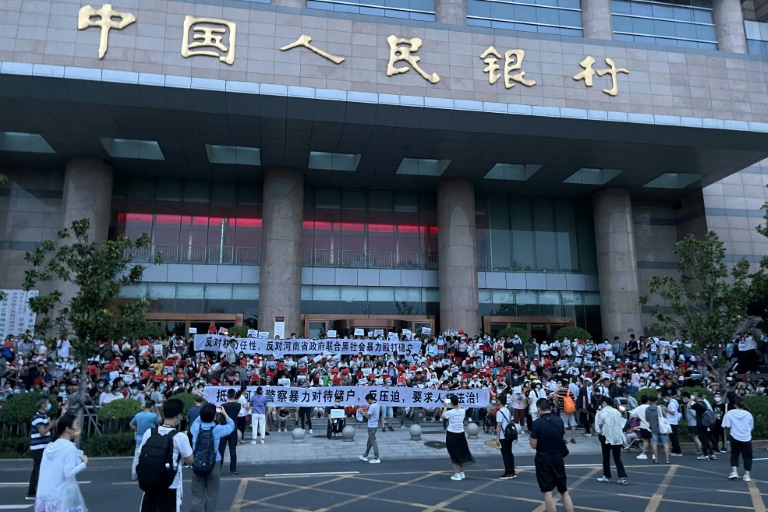
Four banks in central China’s Henan province suspended cash withdrawals in April as regulators cracked down on mismanagement, freezing the funds of hundreds of thousands of customers and sparking protests that at times ended in violence.

Police said Monday they had now arrested 234 people in connection with the scandal and that “significant progress” was being made in recovering stolen funds.

“A criminal gang… illegally controlled four village and town banks… and was suspected of committing a series of serious crimes,” police in the city of Xuchang said in a statement on Monday.

China’s rural banking sector has been hit hard by Beijing’s efforts to rein in a property bubble and spiralling debt in a financial crackdown that has had ripple effects across the world’s second-largest economy.

Regulators have been gradually offering repayments to depositors since mid-April. 

On Monday, the Henan banking and insurance regulator promised to repay those who had deposited between 400,000 and 500,000 yuan ($57,900 to $72,300) starting this week. 

Depositors who owed smaller amounts were repaid earlier.

The size and scale of the fraud dealt an unprecedented blow to public confidence in China’s financial system, analysts have said, with the banks involved allegedly operating illegally for more than a decade.

A July 10 mass demonstration by depositors in Henan’s provincial capital, Zhengzhou, was violently quashed, with demonstrators forced onto buses by police and beaten, according to eyewitness accounts given to AFP and verified photos on social media.

China arrests hundreds over banking scandal that sparked rare protests

Chinese police have arrested more than 200 suspects linked to one of the country’s biggest-ever banking scandals, which triggered rare mass protests.

Four banks in central China’s Henan province suspended cash withdrawals in April as regulators cracked down on mismanagement, freezing the funds of hundreds of thousands of customers and sparking protests that at times ended in violence.

Police said Monday they had now arrested 234 people in connection with the scandal and that “significant progress” was being made in recovering stolen funds.

“A criminal gang… illegally controlled four village and town banks… and was suspected of committing a series of serious crimes,” police in the city of Xuchang said in a statement on Monday.

China’s rural banking sector has been hit hard by Beijing’s efforts to rein in a property bubble and spiralling debt in a financial crackdown that has had ripple effects across the world’s second-largest economy.

Regulators have been gradually offering repayments to depositors since mid-April. 

On Monday, the Henan banking and insurance regulator promised to repay those who had deposited between 400,000 and 500,000 yuan ($57,900 to $72,300) starting this week. 

Depositors who owed smaller amounts were repaid earlier.

The size and scale of the fraud dealt an unprecedented blow to public confidence in China’s financial system, analysts have said, with the banks involved allegedly operating illegally for more than a decade.

A July 10 mass demonstration by depositors in Henan’s provincial capital, Zhengzhou, was violently quashed, with demonstrators forced onto buses by police and beaten, according to eyewitness accounts given to AFP and verified photos on social media.

Musk subpoenas Twitter whistleblower in buyout battle

Elon Musk has formally subpoenaed a Twitter whistleblower to share information about spam accounts at the social network, as the billionaire fights in court to back out of a massive buyout deal.

Musk has tried to pull out of the $44 billion agreement by saying Twitter misled him on the number of false accounts, or bots, prompting strong denials and a lawsuit from the social media firm.

The Tesla boss hopes that allegations made by the former Twitter security chief Peiter Zatko, about major security gaps and problematic practices at the firm, will bolster his case.

According to court documents made public on Monday, Musk’s attorneys served Zatko with a subpoena Saturday demanding he share any documents or messages regarding the impact of spam and false accounts on Twitter’s activity, dating back to January 2019.

Zatko was also ordered to answer questions on the record for Musk lawyers on September 9.

His lawyers told AFP that their client would comply with the subpoena — but said that his appearance at the deposition would be “involuntary”. 

“He did not make his whistleblower disclosures to the appropriate governmental bodies to benefit Musk or to harm Twitter, but rather to protect the American public and Twitter shareholders,” the lawyers said in a statement.

Musk’s attempt to back out of buying Twitter has struggled for momentum in court.

Twitter won some early battles in the case, including a fast-track trial date, and its stock had risen as analysts predicted the platform would prevail over the mercurial Musk.

But a US judge last week told Twitter to surrender more data to Musk on the key issue of fake accounts, and the billionaire hopes Zatko’s whistleblower complaint could further turn the tide in its favor.

While Twitter has pointed out that Musk opted not to perform due diligence typically seen in merger deals, the billionaire’s attorney Alex Spiro told the Delaware judge he had trusted the firm’s filings with the Securities and Exchange Commission (SEC).

The market watchdog was one of the recipients of Zatko’s complaint, which accuses Twitter of issuing untrue statements on account numbers because “if accurate measurements ever became public, it would harm the image and valuation of the company.”

Ukrainians flee war to find refuge in occupied West Bank

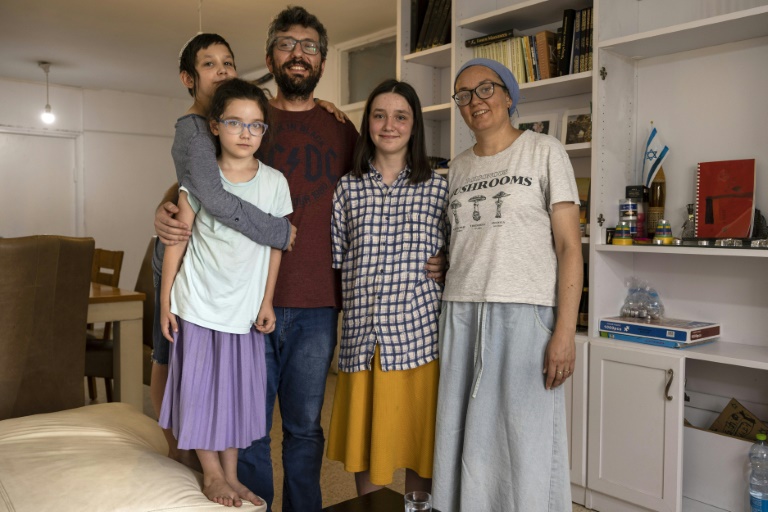
After the Russian invasion of Ukraine, Olena and Eduard German, a Jewish couple from Kharkiv, found refuge in an Israeli settlement in the occupied West Bank.

Six months since the start of the war in their homeland, the Germans are rebuilding their lives in a new home decorated with Israeli flags in Maale Adumim, a settlement of over 42,000 between Jerusalem and the Dead Sea, regarded as illegal under international law.

The February 24 Russian invasion triggered the largest refugee crisis in Europe since World War II, leaving over 6.8 million Ukrainians registered as refugees across the continent, according to the latest United Nations figures.

Israel itself has welcomed more than 30,000 Ukrainians, including 12,000 Jews who made “Aliyah”, or immigrated under the Law of Return which offers automatic citizenship to people with Jewish roots.

The couple, who were university lecturers, recalled their terrifying exodus out of Kharkiv, a city near the Russian frontier in northeastern Ukraine, on a gruelling two-day drive for the relative safety of Lviv in Ukraine’s west.

“Please don’t look out the windows, you’ve got to have good memories”  of Kharkiv, Olena told her three young children, as their convoy, organised by local Jewish organisations, set off.

From Lviv, local charities helped them reach Budapest, where they met with officials from Israeli organisations that helped organise their Aliyah.

Initially given accommodation in Nof Hagalil, a city in the north of Israel, the family was determined to settle in Judea and Samaria, the biblical Jewish term for the West Bank, and set about finding a place to live in a settlement.

-‘Meaningful life’ in West Bank-

Shortly after the Russian invasion, the Yesha Council, the umbrella organisation representing the 475,000 Israelis in the West Bank, was one of the Israeli groups that sent teams to border countries and then Ukraine, where they provided counselling services and distributed aid.

Yet they had more to offer Ukrainian Jews -– a new homeland.

“Those who want to make Aliyah, we offer them an option to live here and we can put them in contact with the regional authorities and with Russian-speaking families who can accompany them in their integration process,” Yesha Council director Yigal Dilmoni told AFP.

“If you are living here, in the land of the Bible, it makes your Aliyah to Israel more meaningful,” said Dilmoni in reference to the West Bank.

According to Dilmoni, around 60 Ukrainian families, including the Germans, have moved to the West Bank since the refugee crisis began.

– From occupied to ‘occupier’ –

To many Israelis, the West Bank is the ancestral land of the Jewish people, seized from Jordan in the 1967 Middle East war.  

But the international community sees Israel’s control of the territory and the settlements it built there as illegal and an obstacle to a possible peace agreement with the Palestinians.

Earlier this year, Palestinian president Mahmud Abbas expressed concern Ukrainian Jews would flee the war to join other expats from the former Soviet Union in settlements.

He also accused the West of “double standards” over the sanctions imposed on Russia but not on Israel for its invasion of the West Bank.

To Dianna Buttu, a Palestinian human rights lawyer, sending Ukrainians to settlements was a cynical exploitation of their plight.

“The Ukrainians are fleeing occupation and they are fleeing war, only to then turn into tools of war criminals, and to be settling in war crimes themselves,” she told AFP.

Eduard, who left under an exemption from military service for men with three children or more, rejects any suggestions that he has fled Russian occupation only to become an occupier himself.

“I can’t understand how Judea could be occupied by Jews,” he told AFP.

To him, the parallel should be drawn not between Russia and Israel, but rather Ukraine and Israel.

“Ukraine is now a young state that is fighting for its independence, which it received after the collapse of the Soviet Union,” Eduard said.

“Israel also walked this path a little earlier,” he said, without reference to Palestinian aspirations for statehood in the lands in which his family have chosen to settle.

No choice: Colombia's ex-guerrillas revert to coca, crime

When he laid down arms at the end of Colombia’s decades-long civil conflict, Eiber Andrade did not expect to ever return to a life of crime.

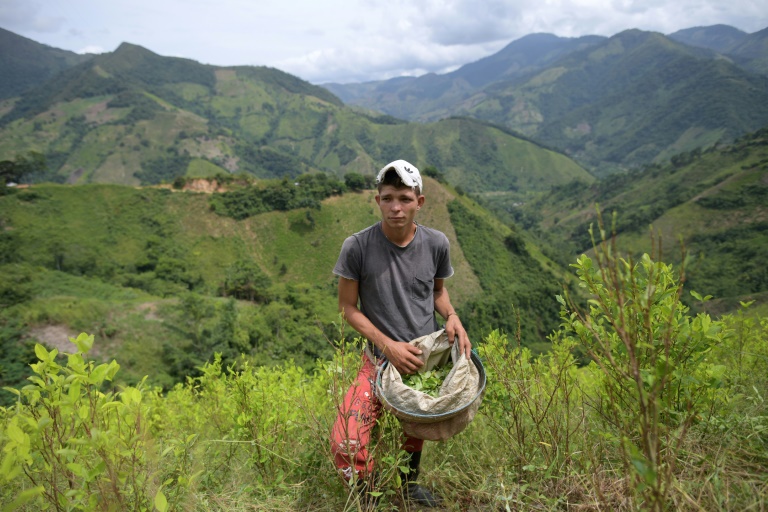
Yet a mere five years later, the 24-year-old ex-guerrilla fighter makes a living from coca — from which cocaine is derived — in a region where the government’s post-conflict commitment to peace and better living has yet to bear fruit.

After the 2016 peace agreement that saw the disarmament of the FARC guerrilla group and its withdrawal from the Catatumbo region near the border with Venezuela, Andrade tried his hand at agriculture.

The region is home to the world’s largest concentration of coca crops — a total of 40,084 hectares under cultivation in 2020 according to the UN.

It is also fertile ground for coffee, cacao and bananas, but none of these are as profitable.

Short on skills and capital, Andrade’s brief foray into food farming failed — making him one of many among the 13,000-odd disarmed FARC combatants unable to find a way to make a legitimate living.

Andrade, who became a guerrilla fighter at the tender age of 10, said he felt let down by the government.

The money he and other disarmed fighters were to have received as part of the peace deal never materialized. 

And in the end, Andrade told AFP, he had no choice but to rejoin the criminal underworld and become a coca harvester.

He has a three-year-old daughter to take care of.

“The presidents we have had have not given us any help,” Andrade said.

– ‘May Petro help us’ –

Other demobilized FARC fighters unable to find a niche in civilian life turned to violence.

Hundreds rejoined rebels battling other groups in a violent rivalry for control of drug and illegal mining resources and smuggling routes in the border region.

Colombia’s new president, Gustavo Petro, has vowed to stop the violence and negotiate peace with the last recognized guerrilla group still fighting, the ELN.

He has denounced the failure of the war on drugs that presidents before him had waged with US backing at a cost of tens of thousands of lives among police, soldiers, judges, journalists, subsistence farmers and others over four decades.

Petro has said he wants no more coca growers in jail in Colombia, the world’s biggest producer of cocaine, consumed mainly in the United States and Europe.

The country’s first left-wing president has also urged cocaine-importing countries to shift the focus from dismantling production to diminishing consumption.

The 2016 peace agreement had envisaged a program of rural development to replace Colombia’s lucrative drug trade with legitimate farming activities.

But with lagging funding for bridging projects, there has been no significant decline of coca production. 

In 2020, the country had 142,783 hectares under cultivation, according to the latest UN report, compared to 146,139 hectares in 2016.

“May Petro help us,” said Andrade. “If he does not, we will have to continue with these things.”

Three other ex-guerrillas work with Andrade as coca pickers on a six-hectare estate in Catatumbo.

They earn about $3 per 10 kilograms of coca leaf harvested. 

– ‘Out of necessity’ –

Last Friday, Petro visited the Catatumbo region for talks with coca growers on how best to ease their transition to legitimate and viable farming.

The president, who as a youngster belonged to an urban guerrilla group that later downed arms, wants to boost domestic food production at the same time.

But former FARC child soldier Carlos Abril, now 25, said he had heard similar promises before.

“We entered the (peace) process with joy, with the expectation that we are going to see a new Colombia, in peace,” Abril told AFP.

Instead, he too had to become a coca harvester “out of necessity.”

Elizabeth Pabon, leader of the Catatumbo small-scale farmers’ association of mainly coca growers, welcomed Petro’s stated aversion to the large-scale chemical or manual eradication of coca crops.

“It is a relief,” she told the government delegation.

And Wilder Mora, leader of the COCCAM coca growers’ grouping, said “we are willing to substitute” coca with other crops.

But he stressed could only happen with public investment, which coca-growers have been clamoring for since the 1990s.

Greenland already locked in to major sea level rise: study

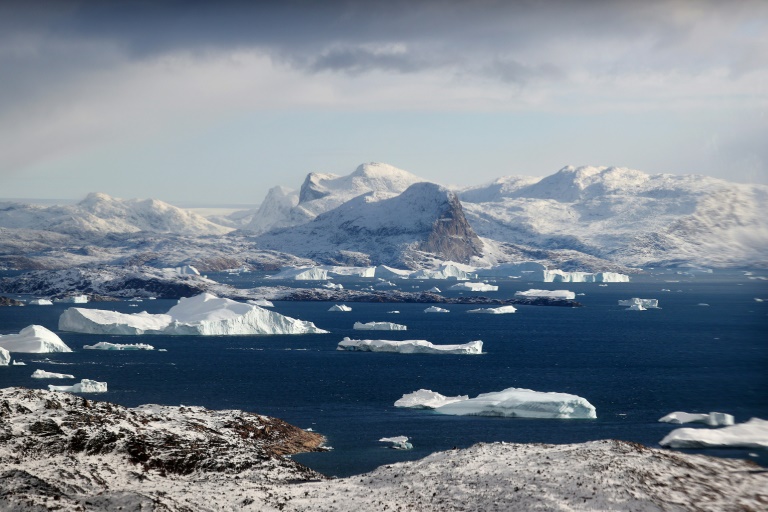
Even without any future global warming, Greenland’s melting ice sheet will cause major sea level rise, with potentially “ominous” implications over this century as temperatures continue to rise, according to a study published Monday.

Rising sea levels — pushed up mainly by melting ice sheets on Greenland and Antarctica — are set to redraw the map over centuries and could eventually swamp land currently home to hundreds of millions of people, depending on humanity’s efforts to halt warming. 

The Greenland ice sheet is currently the main factor in swelling the Earth’s oceans, according to NASA, with the Arctic region heating at a faster rate than the rest of the planet. 

In the new study, published in Nature Climate Change, glaciologists found that regardless of any future fossil fuel pollution, warming to date will cause the Greenland ice sheet to shed 3.3 percent of its volume, committing 27.4 centimetres to sea level rise. 

While the researchers were not able to give an exact timeframe, they said most of it could happen by 2100 — meaning that current modelled projections of sea level rise could be understating the risks this century. 

The “shocking” results are also a lowest estimate because they do not take future warming into account, said lead author Jason Box, of the National Geological Survey of Denmark and Greenland. 

“It’s a conservative lower bound. The climate has only to continue warming around Greenland for more commitment,” he told AFP. 

If the high levels of melting seen in 2012 became an annual occurrence, the study estimated sea-level rise could be around 78 cm, enough to swamp vast swathes of low-lying coastlines and supercharge floods and storm surges. 

This should serve “as an ominous prognosis for Greenland’s trajectory through a 21st century of warming”, the authors said. 

In a landmark report on climate science last year, the Intergovernmental Panel on Climate Change (IPCC) said the Greenland ice sheet would contribute up to 18cm to sea level rise by 2100 under the highest emissions scenario. 

Box, who was an author on that report, said his team’s latest research suggests those estimates could be “too low”. 

Instead of using computer models, Box and colleagues used two decades of measurements and observational data to predict how the Greenland ice sheet will adjust to the warming already experienced. 

Upper areas of the ice sheet adds mass through snowfall every year, but since the 1980s the territory has been running an ice “budget deficit”, which sees it lose more ice than it gains through surface melting and other processes.

– ‘Radical’ method –

The theory that researchers used was initially developed to explain changes in Alpine glaciers, said Box. 

This holds that if more snow piles up on top of a glacier, lower areas to expand. In this case the reduced snow is driving shrinking in lower parts of the glacier as it rebalances, he said. 

Box said the methods his team used were “radically different” from computer modelling, but could complement this work. 

Gerhard Krinner, another IPCC author specialising in ice sheet climate modelling and who was not involved in the study, said the findings broadly tallied with total levels of sea level rise seen in more complicated models, but questioned the arguments that this would largely happen this century. 

“The work really provides an estimate of the committed long-term (multi-century or even multi-millennial) response of the Greenland Ice Sheet, not an estimate of minimum loss over this century,” said Krinner, a senior scientist at the French research agency CNRS. 

The world has warmed an average of nearly 1.2 degrees Celsius since pre-industrial times, unleashing a catalogue of impacts from heatwaves to more intense storms.  

Under the Paris climate deal, countries have agreed to limit warming to 2C. 

In their report on climate impacts this year, the IPCC said even if warming is stabilised at 2C to 2.5C, “coastlines will continue to reshape over millennia, affecting at least 25 megacities and drowning low-lying areas”, which were home to up to 1.3 billion people in 2010. 

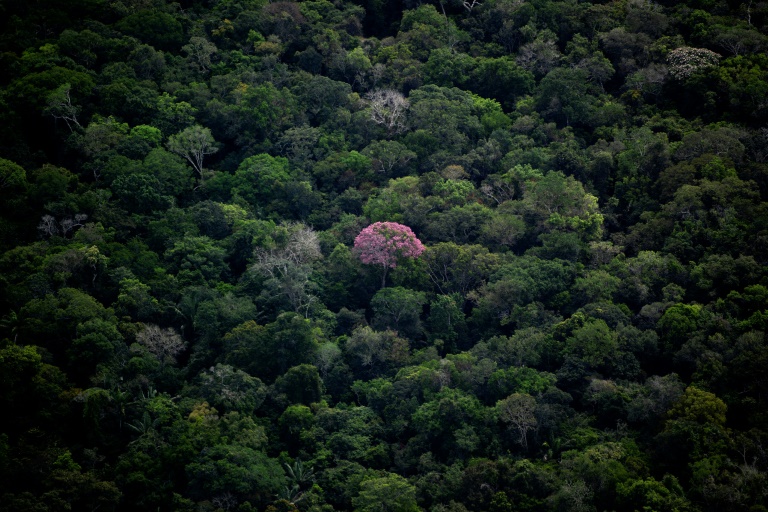
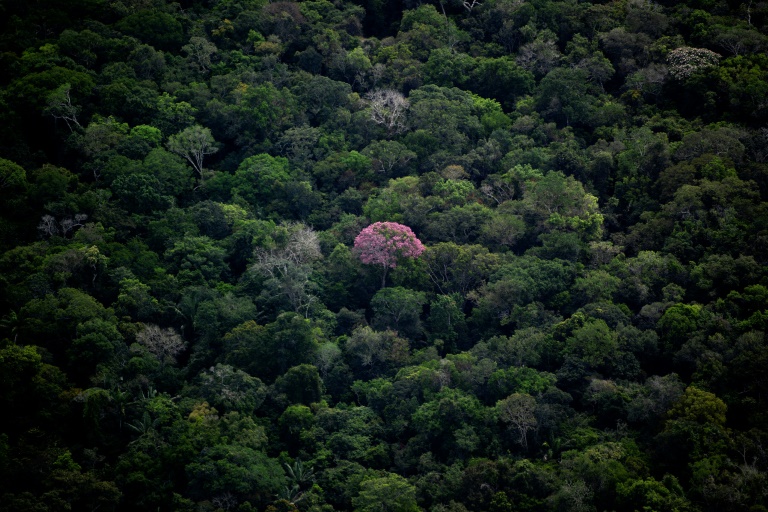
Last member of Brazilian indigenous community found dead

The last of his people, a Brazilian indigenous man known only as “the man of the hole” has been found dead, decades after the rest of his uncontacted tribe were killed off by ranchers and illegal miners, officials said.

Having lived in complete isolation for 26 years, the man — whose real name was never known to the outside world — was found in a hammock in a hut in the Tanaru indigenous territory in Rondonia state on the border with Bolivia on August 23, Brazil’s National Indian Foundation (FUNAI) said in a statement.

Since losing everyone he knew, the man had refused all contact with the outside world and supported himself by hunting and raising crops. His nickname derived from his habit of digging deep holes inside the huts he built, possibly to trap animals in but also to hide inside.

He lived in an indigenous territory surrounded by vast cattle ranches and under constant threat from illegal miners and loggers in one of the most dangerous parts of the Brazilian Amazon rainforest, according to Survival International.

Authorities did not comment on the cause of the man’s death, nor his age, which wasn’t known, but said “there were no signs of violence or struggle.”

They also found no evidence of the presence of anyone else in his home or around it.

“Everything indicates that the death was from natural causes,” said FUNAI, a government agency under the justice ministry that is tasked with handling indigenous affairs.

Local media reported that the man’s body had been covered in macaw feathers, prompting one expert to speculate that he had known he was about to die.

The man was believed to have been alone since the remaining members of his small tribe were killed in the mid-1990s by illegal loggers and miners seeking to exploit the tribal area.

Rights groups said that the majority of the tribe had been killed in the 1970s when ranchers moved into the area, cutting down the forest and attacking the inhabitants.

“With his death, the genocide of this indigenous people is complete,” said Fiona Watson, Survival’s director of investigation, who visited the Tanaru territory in 2004.

“It really was genocide: the deliberate elimination of an entire people by ranchers hungry for land and wealth,” she added.

According to the most recent government data, there are some 800,000 indigenous people belonging to more than 300 distinct groups living in Brazil, a country of 212 million.

More than half live in the Amazon and many of those are under threat from illegal exploitation of natural resources that they rely on for their survival.

According to FUNAI, there are 114 records of isolated indigenous groups in Brazil, although that number varies.

Under Brazil’s far-right President Jair Bolsonaro, Amazon deforestation reached a record level in the first half of 2022.

The president, who is trailing in polls ahead of this year’s elections, has encouraged mining and farming activity in protected areas, sparking anger among environmentalists.

Last member of Brazilian indigenous community found dead

The last of his people, a Brazilian indigenous man known only as “the man of the hole” has been found dead, decades after the rest of his uncontacted tribe were killed off by ranchers and illegal miners, officials said.

Having lived in complete isolation for 26 years, the man — whose real name was never known to the outside world — was found in a hammock in a hut in the Tanaru indigenous territory in Rondonia state on the border with Bolivia on August 23, Brazil’s National Indian Foundation (FUNAI) said in a statement.

Since losing everyone he knew, the man had refused all contact with the outside world and supported himself by hunting and raising crops. His nickname derived from his habit of digging deep holes inside the huts he built, possibly to trap animals in but also to hide inside.

He lived in an indigenous territory surrounded by vast cattle ranches and under constant threat from illegal miners and loggers in one of the most dangerous parts of the Brazilian Amazon rainforest, according to Survival International.

Authorities did not comment on the cause of the man’s death, nor his age, which wasn’t known, but said “there were no signs of violence or struggle.”

They also found no evidence of the presence of anyone else in his home or around it.

“Everything indicates that the death was from natural causes,” said FUNAI, a government agency under the justice ministry that is tasked with handling indigenous affairs.

Local media reported that the man’s body had been covered in macaw feathers, prompting one expert to speculate that he had known he was about to die.

The man was believed to have been alone since the remaining members of his small tribe were killed in the mid-1990s by illegal loggers and miners seeking to exploit the tribal area.

Rights groups said that the majority of the tribe had been killed in the 1970s when ranchers moved into the area, cutting down the forest and attacking the inhabitants.

“With his death, the genocide of this indigenous people is complete,” said Fiona Watson, Survival’s director of investigation, who visited the Tanaru territory in 2004.

“It really was genocide: the deliberate elimination of an entire people by ranchers hungry for land and wealth,” she added.

According to the most recent government data, there are some 800,000 indigenous people belonging to more than 300 distinct groups living in Brazil, a country of 212 million.

More than half live in the Amazon and many of those are under threat from illegal exploitation of natural resources that they rely on for their survival.

According to FUNAI, there are 114 records of isolated indigenous groups in Brazil, although that number varies.

Under Brazil’s far-right President Jair Bolsonaro, Amazon deforestation reached a record level in the first half of 2022.

The president, who is trailing in polls ahead of this year’s elections, has encouraged mining and farming activity in protected areas, sparking anger among environmentalists.

Energy price hikes could force UK pubs to shut

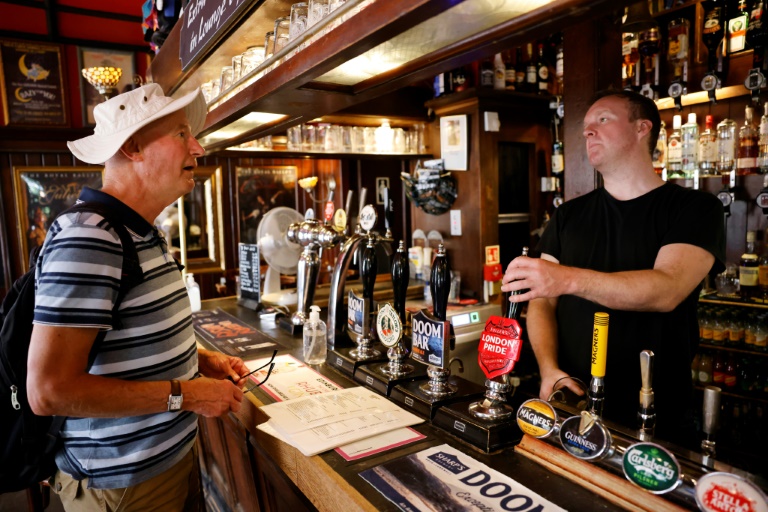
British pubs could be forced to close because of massive increases in energy prices, leading industry figures said on Tuesday, urging the government to step in.

Six of the country’s biggest pub and brewing firms said some pubs had seen a more than three-fold hike in bills this year, as part of a wider cost of living crisis.

“We have publicans who are experiencing 300-percent-plus increases in energy costs and some energy companies are refusing to even quote for supply,” said William Lees Jones, managing director of the JW Lees pub group.

“In some instances, tenants are giving us notice since their businesses do not stack up with energy at these costs.”

One pub tenant in the 2,700-strong Greene King group has seen a £33,000 ($38,600) increase in their energy bill this year, said chief executive Nick Mackenzie.

“While the government has introduced measures to help households cope with this spike in prices, businesses are having to face this alone, and it is only going to get worse come the autumn.

“Without immediate government intervention to support the sector, we could face the prospect of pubs being unable to pay their bills, jobs being lost and beloved locals across the country forced to close their doors, meaning all the good work done to keep pubs open during the pandemic could be wasted.”

Britain’s cost of living crisis has seen inflation soar to 40-year highs, with a widening number of strikes over pay offers that fail to keep pace with rising prices.

Last week energy regulator Ofgem announced an eye-watering 80-percent increase in gas and electricity prices for the average household from October, with even higher bills expected from January.

But the energy price cap does not apply to businesses.

The companies — Greene King, JW Lees, Carlsberg Marston’s, Admiral Taverns, Drake & Morgan and St Austell Brewery — urged the government in an open letter to extend the cap to businesses.

– Hospitality fears –

Pubs — a mainstay of British social life for centuries — have faced a torrid few years, with a slump in business due to coronavirus lockdowns and social distancing restrictions.

The number of pubs in England and Wales plunged below 40,000 for the first time ever in the first six months of this year, down more than 7,000 in a decade.

The British Beer and Pub Association, an industry body, said energy price rises, caused by hikes in wholesale costs and a squeeze on supplies due to the war in Ukraine, could damage the sector more than the pandemic if nothing is done.

Independent restaurants and takeaways including those selling another British mainstay — fish and chips — have also voiced concern.

The war in Ukraine has forced up the price of the deep-fried delicacy, because of increased tariffs on the import of white fish from Russia and a reduction in the supply of vegetable oil from Ukraine.

On Monday, more than 750 outlets signed an open letter to the government warning that food price and energy inflation, as well as a lack of staff and supply chain delays, were now making hospitality “unsustainable”.

“If we lose these our local favourites, we risk losing part of what makes us British,” they added. 

The British Takeaway Campaign said some shops were now being quoted an eightfold increase in energy prices. 

It called for grants for small businesses, a temporary cut in sales tax (VAT) and business rates plus a freeze on the introduction of new regulations bringing increased red tape.

Black Sea dolphins casualties of Russia's war in Ukraine

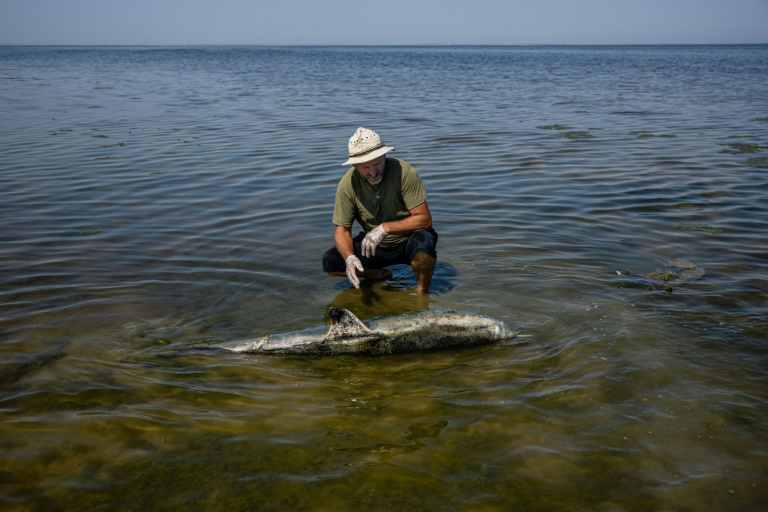
Pacing up and down a beach of fine white sand on the Black Sea coast, 63 year-old Ukrainian scientist Ivan Rusev breathes a sigh of relief: he did not find any dead dolphins today.

A few moments earlier he had rushed towards what he thought was a stranded dolphin. Mercifully it turned out only to be “tangled fishing gear”.

Rusev spoke to AFP from the Tuzly Estuaries National Nature Park, a protected area of 280 square kilometres (108 square miles) in the Bessarabia region of south-west Ukraine.

Rusev, whose weather-beaten face is shaded by a hat he brought during adventures in central Asia, is the scientific director of the park.

Now his job entails walking every morning along beaches bordered by anti-tank mines in search of the dolphins that have been washing up here since the beginning of the war.

“We only found three dolphins over our entire 44 kilometres (27 miles) coastline last year,” he tells AFP.

“This year, over the five kilometres (3 miles) that we can still access, we already found 35 of them.”

Much of the coastline has been off-limits to employees of the park since Ukrainian troops took up positions there to prevent any possible Russian sea assault.

This means Rusev and his team cannot say exactly how many dolphins have been stranded in the park or survey the full extent of the damage.

– Dangerous sonars – 

In any case, the death toll is “terrifying,” says Rusev, who has been keeping an online diary — now widely followed on Facebook — about the impact of the war on wildlife.

When dolphins started washing up on the coast in March, Rusev and his team had to get to work quickly to spot dead animals before the many jackals roaming the area got to them. 

“Then, we reached out to our colleagues in Turkey, Bulgaria, Romania. Everyone witnessed the same thing: a huge number of dolphins have died since the beginning of the war,” Rusev said.

The Turkish Marine Research Foundation (TUDAV) warned in March of an “unusual increase” in dead dolphins washing ashore on the Black Sea coast.

Rusev estimates that 5,000 dolphins have been killed — about 2 percent of the total dolphin population in the Black Sea. 

The Black Sea was home to an estimated 2 million dolphins during the 20th century, but fishing and pollution contributed to their decline.

A survey found there were about 250,000 of dolphins left in 2020. 

There’s no doubt in Rusev’s mind: military sonars used by Russian warships are to blame for the current bloodbath.

The powerful sonars used by warships and submarines “interfere with dolphin’s hearing systems”, he explains.

“This destroys their inner ear, they become blind and cannot navigate or hunt,” and are more susceptible to lethal disease due to their weakened immune systems, according to Rusev.

The dolphin remains do not show any trace of fishing nets or wounds, which for Rusev is further evidence ruling out the possibility they died any other way.

– Trading blame –

Russia and Ukraine are trading blame even on the environmental toll of the war, so Rusev’s theory is disputed. 

Russian scientists who looked into the increase in dolphin mortality blamed morbillivirus, a common lethal disease for the species.

Rusev and his team took samples from dolphins that had recently been found and have sent them to Germany and Italy to settle the debate.

Usually Rusev sleeps in a cabin next to the entrance of the park.

Today, the carcass of a dead dolphin lies next to his cabin, in the lagoon’s stagnant waters.

Rusev covered it with a fishing net. That way, he explains, fish will eat the flesh, and he can give the remaining skeleton to a museum. 

The scientist, sometimes halting conversation to marvel at a white-tailed sea eagle or a flock of pelicans, is visibly worried. 

Military strikes have already hit the national park and burned 100 hectares of protected land.

“War is a terrifying thing,” he said. “It impacts the whole ecosystem, including species that won’t easily recover. 

“Nature’s balance won’t easily recover either.”

Close Bitnami banner
Bitnami