World

Pakistan's south braces for deluge from swollen northern rivers

Pakistan’s flooded southern Sindh province braced Sunday for a fresh deluge from swollen rivers in the north as the death toll from this year’s monsoon topped 1,000.

The mighty Indus River that courses through Pakistan’s second-most populous region is fed by dozens of mountain tributaries to the north, but many have burst their banks following record rains and glacier melt.

Officials warned torrents of water are expected to reach Sindh in the next few days, adding misery to millions already affected by the floods.

“Right now, Indus is in high flood,” said Aziz Soomro, the supervisor of Sukkur Barrage — a massive colonial-era construction that regulates the river’s flow and redirects water to a vast system of canals.

The annual monsoon is essential for irrigating crops and replenishing lakes and dams across the Indian subcontinent, but it also brings destruction.

Officials say this year’s monsoon flooding has affected more than 33 million people — one in seven Pakistanis — destroying or badly damaging nearly a million homes.

On Sunday, the country’s National Disaster Management Authority said the death toll from the monsoon rains had reached 1,033, with 119 killed in the previous 24 hours.

It said this year’s floods were comparable to 2010 — the worst on record — when over 2,000 people died and nearly a fifth of the country was under water.

Prime Minister Shehbaz Sharif, who cancelled a trip to Britain to oversee relief operations, said he had never seen anything like it before.

“Village after village has been wiped out. Millions of houses have been destroyed. There has been immense destruction,” he said after flying over Sindh by helicopter.

Thousands of people living near flood-swollen rivers in Pakistan’s north were ordered to evacuate from danger zones, but army helicopters and rescuers are still plucking laggards to safety.

“People were informed around three or four o’clock in the morning to evacuate their houses,” rescue worker Umar Rafiq told AFP. 

“When the flood water hit the area we had to rescue children and women.”

Many rivers in the area — a picturesque tourist destination of rugged mountains and valleys — have burst their banks, demolishing scores of buildings including a 150-room hotel that crumbled into a raging torrent.

Guest house owner Nasir Khan, whose business was badly hit by the 2010 flooding, said he had lost everything.

“It has washed away the remaining part of the hotel,” he told AFP.

The flood-swollen rivers were also yielding unlikely riches.

Locals scrambled to snag thousands of valuable cedar, pine and oak logs that had likely been illegally harvested in the mountains but were being washed downstream.

– Climate change to blame –

Officials blame the devastation on human-driven climate change, saying Pakistan is unfairly bearing the consequences of irresponsible environmental practices elsewhere in the world.

Pakistan is eighth on NGO Germanwatch’s Global Climate Risk Index, a list of countries deemed most vulnerable to extreme weather caused by climate change.

Exacerbating the situation, corruption, poor planning and the flouting of local regulations mean thousands of buildings have been erected in areas prone to seasonal flooding.

The government has declared an emergency and mobilised the military to deal with what Climate Change Minister Sherry Rehman has called “a catastrophe of epic scale”.

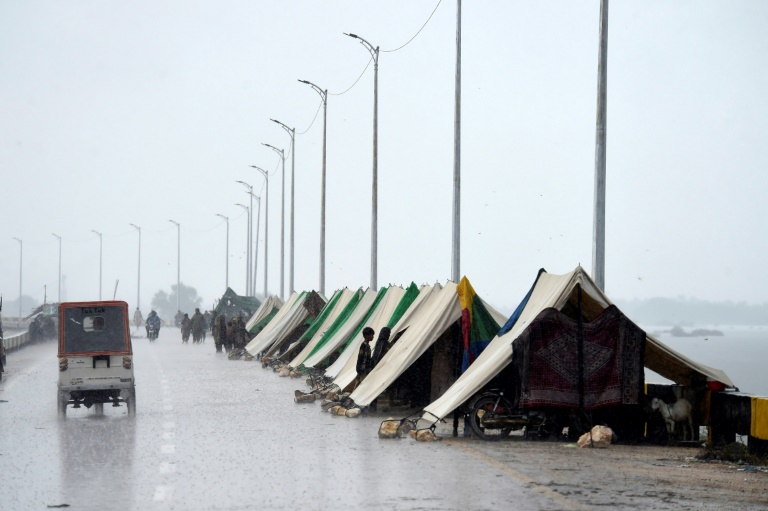
In parts of Sindh, the only dry areas are the elevated roads and railroad tracks, alongside which tens of thousands of poor rural folk have taken shelter with their livestock.

Near Sukkur, a row of tents stretched for two kilometres, with people still arriving by boats loaded with wooden charpoy beds and pots and pans — the only possessions they could salvage.

“Water started rising in the river from yesterday, inundating all the villages and forcing us to flee,” labourer Wakeel Ahmed, 22, told AFP.

Sukkur Barrage supervisor Soomro told AFP every sluice gate was open to deal with a river flow of more than 600,000 cubic metres per second.

The flooding could not come at a worse time for Pakistan, where the economy is in free fall and the former prime minister Imran Khan was ousted by a parliamentary vote of no confidence in April.

While the capital Islamabad and adjoining twin garrison city of Rawalpindi have escaped the worst of the flooding, its effects were still being felt.

“Currently supplies are very limited,” said Muhammad Ismail, a produce shopkeeper in Rawalpindi.

“Tomatoes, peas, onions and other vegetables are not available due to the floods,” he told AFP, adding prices were also soaring.

Pakistan's south braces for deluge from swollen northern rivers

Pakistan’s flooded southern Sindh province braced Sunday for a fresh deluge from swollen rivers in the north as the death toll from this year’s monsoon topped 1,000.

The mighty Indus River that courses through Pakistan’s second-most populous region is fed by dozens of mountain tributaries to the north, but many have burst their banks following record rains and glacier melt.

Officials warned torrents of water are expected to reach Sindh in the next few days, adding misery to millions already affected by the floods.

“Right now, Indus is in high flood,” said Aziz Soomro, the supervisor of Sukkur Barrage — a massive colonial-era construction that regulates the river’s flow and redirects water to a vast system of canals.

The annual monsoon is essential for irrigating crops and replenishing lakes and dams across the Indian subcontinent, but it also brings destruction.

Officials say this year’s monsoon flooding has affected more than 33 million people — one in seven Pakistanis — destroying or badly damaging nearly a million homes.

On Sunday, the country’s National Disaster Management Authority said the death toll from the monsoon rains had reached 1,033, with 119 killed in the previous 24 hours.

It said this year’s floods were comparable to 2010 — the worst on record — when over 2,000 people died and nearly a fifth of the country was under water.

Prime Minister Shehbaz Sharif, who cancelled a trip to Britain to oversee relief operations, said he had never seen anything like it before.

“Village after village has been wiped out. Millions of houses have been destroyed. There has been immense destruction,” he said after flying over Sindh by helicopter.

Thousands of people living near flood-swollen rivers in Pakistan’s north were ordered to evacuate from danger zones, but army helicopters and rescuers are still plucking laggards to safety.

“People were informed around three or four o’clock in the morning to evacuate their houses,” rescue worker Umar Rafiq told AFP. 

“When the flood water hit the area we had to rescue children and women.”

Many rivers in the area — a picturesque tourist destination of rugged mountains and valleys — have burst their banks, demolishing scores of buildings including a 150-room hotel that crumbled into a raging torrent.

Guest house owner Nasir Khan, whose business was badly hit by the 2010 flooding, said he had lost everything.

“It has washed away the remaining part of the hotel,” he told AFP.

The flood-swollen rivers were also yielding unlikely riches.

Locals scrambled to snag thousands of valuable cedar, pine and oak logs that had likely been illegally harvested in the mountains but were being washed downstream.

– Climate change to blame –

Officials blame the devastation on human-driven climate change, saying Pakistan is unfairly bearing the consequences of irresponsible environmental practices elsewhere in the world.

Pakistan is eighth on NGO Germanwatch’s Global Climate Risk Index, a list of countries deemed most vulnerable to extreme weather caused by climate change.

Exacerbating the situation, corruption, poor planning and the flouting of local regulations mean thousands of buildings have been erected in areas prone to seasonal flooding.

The government has declared an emergency and mobilised the military to deal with what Climate Change Minister Sherry Rehman has called “a catastrophe of epic scale”.

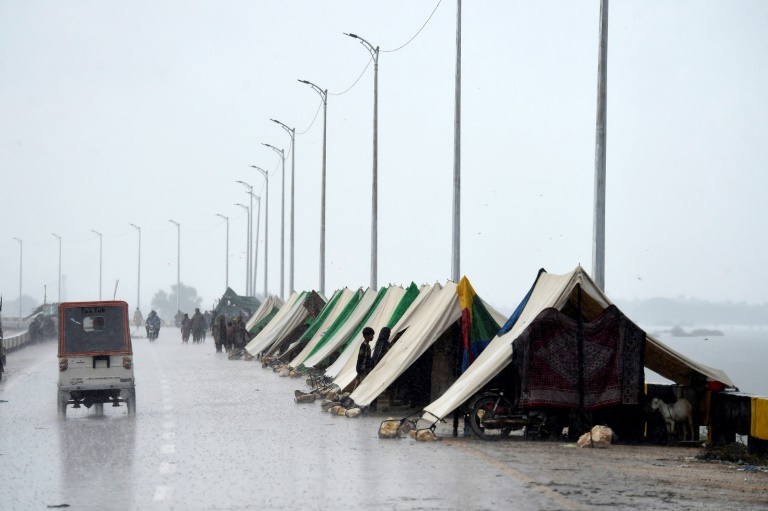
In parts of Sindh, the only dry areas are the elevated roads and railroad tracks, alongside which tens of thousands of poor rural folk have taken shelter with their livestock.

Near Sukkur, a row of tents stretched for two kilometres, with people still arriving by boats loaded with wooden charpoy beds and pots and pans — the only possessions they could salvage.

“Water started rising in the river from yesterday, inundating all the villages and forcing us to flee,” labourer Wakeel Ahmed, 22, told AFP.

Sukkur Barrage supervisor Soomro told AFP every sluice gate was open to deal with a river flow of more than 600,000 cubic metres per second.

The flooding could not come at a worse time for Pakistan, where the economy is in free fall and the former prime minister Imran Khan was ousted by a parliamentary vote of no confidence in April.

While the capital Islamabad and adjoining twin garrison city of Rawalpindi have escaped the worst of the flooding, its effects were still being felt.

“Currently supplies are very limited,” said Muhammad Ismail, a produce shopkeeper in Rawalpindi.

“Tomatoes, peas, onions and other vegetables are not available due to the floods,” he told AFP, adding prices were also soaring.
A dancing Hillary Clinton comes to Finnish leader's defense

“Keep dancing,” former US presidential candidate Hillary Clinton tweeted Sunday, lending her personal support to Finnish Prime Minister Sanna Marin, whose taste for partying has drawn global attention.

Clinton’s post included a photo of herself, dancing with a big smile on her face in a crowded club during a 2012 trip to Colombia while still secretary of state. It concluded with the words “Keep dancing, @marinsanna.”

Marin quickly responded, tweeting back, “Thank you @Hillary Clinton,” and including a heart emoji.

A recently leaked video showed Marin dancing and partying with a group of friends and celebrities.

Critics said it showed inappropriate behavior for a prime minister, while others — now including Clinton — have defended the 36-year-old politician’s right to enjoy a private event with friends.

Marin told fellow members of her Social Democratic party that it was important to cut loose at times.

“I am human. And I too sometimes long for joy, light and fun amidst these dark clouds,” said Marin, the world’s youngest prime minister. She added that she had not missed “a single day of work.”

But she encountered further blowback when a photo emerged of two women lifting their tops during a party at the prime minister’s residence in July.

Marin again apologized.

Clinton, who is 74, headed the State Department from 2009 to 2013 under president Barack Obama.

In 2016, she was the Democratic candidate for US president. Though heavily favored, she lost to real estate magnate Donald Trump in a stunning upset. 

Six dead as truck hits Dutch village barbecue

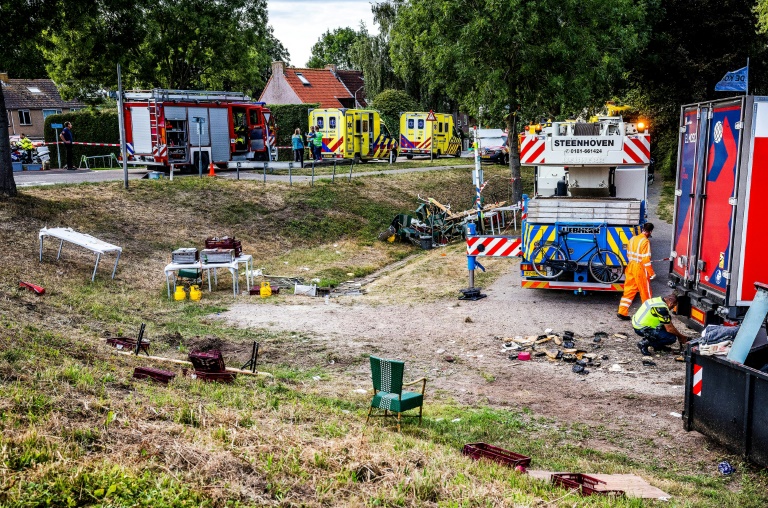
Dutch police on Sunday said six people were killed and seven others hurt after a truck ran off the top of a dike and ploughed into a neighbourhood barbecue.

Police were questioning the Spanish-registered driver of the lorry following the accident on Saturday evening in Nieuw-Beijerland, a village 30 kilometres (18 miles) south of Rotterdam.

The victims were three women aged 28, 32 and 75, and three men aged 41, 50 and 62, all from the local area, police said. One of the injured was in a critical condition in hospital.

Dutch King Willem-Alexander said he was “shocked” and Prime Minister Mark Rutte offered condolences over the “terrible” accident.

Police had first confirmed at least two dead after the vehicle drove into the crowded community barbecue, which Dutch news reports said was being hosted by an ice-skating club.

“We now have six people killed and seven injured, one seriously after yesterday’s accident,” police spokeswoman Mirjam Boers told AFP.

“We are still investigating what exactly happened,” she said.

Witnesses said the truck stopped for a moment at a T-junction on the narrow Zuidzijdsedijk dike, before taking off and ploughing into the revellers, according to local broadcaster Rijnmond.

Photographs from the scene taken immediately after the accident identified the truck as belonging to the El Mosca company, based in Spain. They showed scattered chairs lying on the ground and bunting hanging from trees.

– ‘Ripped from their lives’ –

Local mayor Charlie Aptroot said the accident had devastated the tight-knit community.

“Six residents have literally been ripped from their lives. One of the victims was heavily pregnant,” he said, adding that children were among the injured.

Three of the dead — a mother, son and daughter-in-law who was eight months pregnant — came from the same family, Rijnmond reported, quoting a local church announcement.

Residents were laying flowers at the location of the accident on Sunday, an AFP journalist at the site said. A police car stood guard at the scene.

“When we got here it was really terrible. There were a lot of police, ambulances, fire trucks, they were all here,” local resident Bob van den Burg, 20, who went to the scene after the accident on Saturday, told AFP.

“Everybody is affected and mourns with the people here. Nothing ever happens here, there are almost no thefts or something terrible, and suddenly something like this happens.” 

– ‘Unimaginable sadness’ –

Police spokeswoman Boers confirmed the 46-year-old driver from Spain had been arrested “and was not under the influence of alcohol” at the time of the accident.

“He was arrested for causing a fatal accident and serious bodily injury. His role in the incident is under investigation,” police said in a statement.

Investigators had taken blood samples to see if he was on any medication and were also checking whether he was using his phone at the time of the accident, Dutch prosecutors said.

King Willem-Alexander and Queen Maxima said they were “shocked” by the tragedy.

“We are shocked and moved by the terrible accident in Nieuw-Beijerland last night in which so many people were killed. An unimaginable sadness within this close-knit community,” they said in an official message.

Premier Rutte also sent condolences.

“Terrible news… my thoughts are with the victims and relatives of this terrible drama. I wish them a lot of strength,” Rutte said on Twitter.

People from the surrounding region travelled to the village to offer their support.

“We live in another town close by and we all heard the sirens,” said Jolanda Koster, 61. 

“Of course you mourn with these people. Now we are here to lay some flowers to show we are thinking of the relatives and all the other people that have been affected.” 

Angola's ex-strongman dos Santos laid to rest in Luanda

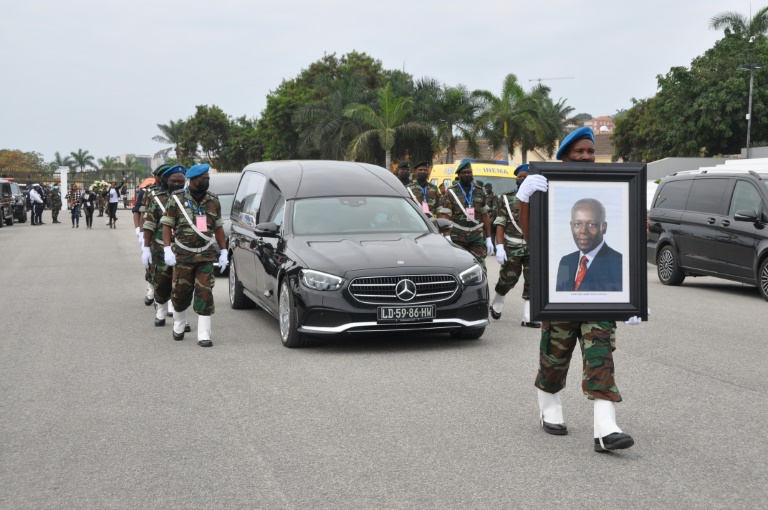
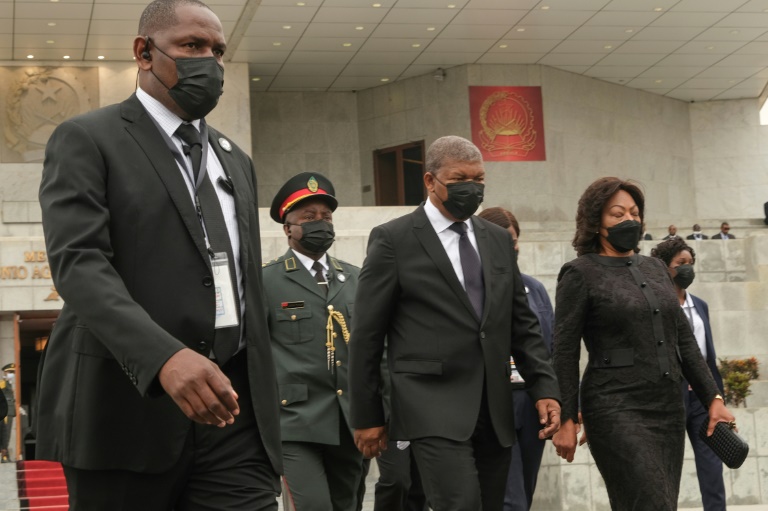
Angola’s former strongman president Jose Eduardo dos Santos, whose nearly four-decade rule was marred by graft and nepotism allegations, was buried in Luanda on Sunday despite a family row over his final resting place.

The funeral was held at the historic palm tree-lined Praca da Republica in the seaside capital Luanda on what would have been dos Santos’s 80th birthday.

It comes days after his party, the People’s Movement for the Liberation of Angola (MPLA) — which has ruled the oil-rich country for nearly half a century — saw its worst results at the polls in the most hotly contested elections since independence.

Dos Santos — who died last month following a cardiac arrest — will be remembered as a “statesman and devoted pan-Africanist”, Namibia’s ex-president Sam Nujoma, 93, told the hundreds of mourners in attendance.

A choir sang dirges while flags flew at half-mast around the square, which houses an imposing concrete mausoleum where the country’s founding president Agostinho Neto is interred.

Dignitaries including South African President Cyril Ramaphosa, the Democratic Republic of Congo’s leader Felix Tshisekedi and Portugal’s President Marcelo Rebelo de Sousa filled rows of white and gold seats.

Josiane dos Santos, the late leader’s daughter, sobbed while recalling her father’s love for music. 

During Angola’s war for independence, the young “Zedu”, as he was called, began his career as a revolutionary by recording LPs that encouraged the fight against coloniser Portugal while he took refuge in neighbouring DRC, she said.

A representative of his foundation collapsed in the middle of his eulogy.  

A 21-gun salute rang as a portrait of dos Santos was carried ahead of the coffin, supported by military-clad pallbearers, in a slow procession to the mausoleum where he was laid to rest. 

– ‘Architect of peace’ –

Dos Santos was referred to by many, particularly MPLA members, as the “architect of peace” who brought democracy and multiparty politics to the country. 

On the streets of Luanda, some people were more critical of his legacy. 

“He left a high rate of youth unemployment, extreme poverty and one of the most unequal societies,” said Mariana Quissanga, 42, a furniture businesswoman. 

Dos Santos led the country from 1979 to 2017 under the MPLA banner — which saw its worst performance in this week’s election.

After 97 percent of the results were tallied, an initial count showed the MPLA had won 51.07 percent of the vote, with 44.05 percent for the party’s main rival, the National Union for the Total Independence of Angola (UNITA).

UNITA — which fought a bitter 27-year civil war against the MPLA government — has rejected the results.

Five members of the election commission have threatened not to sign off the results.

Despite political differences, UNITA leader Adalberto Costa Junior attended Sunday’s funeral.

“We have already lodged complaints with the electoral commission on where we believe the results do not match our count,” he told reporters on the sidelines of the service. 

Dos Santos died at a Barcelona clinic, and some of his children were at loggerheads with the government and his estranged wife over where and when he was to be buried. 

But a Spanish court ruled that the body be returned to Angola and it was buried in a specially built tomb behind the Neto mausoleum. 

His eldest daughter Isabel dos Santos, who has faced a slew of investigations into her multinational businesses, did not attend the funeral.

Instead, as the ceremony was under way, Isabel posted an old picture of herself and her father on Instagram, captioned in Portuguese “Happy birthday papa”.

His other daughter Tchize also wished him a happy birthday on Instagram in a post showing herself on a yacht, while criticising the choice of a Sunday and his birthday to hold the funeral. 

Under dos Santos, Angola became one of Africa’s top oil producers. While he and his family reaped vast wealth from the country’s resources, most of its 33 million people remain among the poorest in the world. 

He stepped down in 2017, appointing Joao Lourenco his successor, who now stands to gain a second term in office. Lourenco did not speak at the funeral.

Dos Santos passed a series of laws before his departure from government, granting himself broad judicial immunity.  

Japan vows to work for 'more resilient' African economies

Japan will cooperate closely with African countries to promote “more resilient” economies, Prime Minister Fumio Kishida told the final session of an investment conference in Tunisia on Sunday.

He also promised Japan would use its place on the United Nations Security Council next year to push for a permanent African seat on the world body, a day after announcing $30 billion in public and private finance for the continent.

Japan wants “to create an environment where African people can live in peace and security so they can develop,” Kishida said, speaking via live video from Tokyo after testing positive for Covid-19 days earlier.

Senegalese President Macky Sall, chair of the 55-member African Union, backed Kishida’s call for the continent to have a seat on the UN Security Council.

Conflicts “that destabilise us and prevent us from developing must be taken into account by the Security Council” whose mission it is to promote international peace and security, Sall said.

He also called for a greater role for African peacekeepers in resolving conflicts.

“Without security there can be no development,” Sall said.

The eighth Tokyo International Conference on African Development (TICAD) took place in Tunisia, one of many import-dependent countries battered by global supply disruptions and price spikes unleashed by the coronavirus pandemic and the war in Ukraine.

Some 20 African heads of state and government took part in the summit in the North African nation, which brought together around 5,000 people from business and other sectors and shut down major roads across Tunis, causing weekend traffic chaos.

– ‘New approach’ –

Tunisian host President Kais Saied called for a “new approach” towards Africa, noting that many countries which had racked up large foreign debts since independence were also net exporters of human resources — taking skills gained in Africa to be used in the global North.

“Who is lending to whom?” he asked.

Sall called for African debts to be rescheduled or cancelled, as well as for the implementation of a promise by the G20 group of nations to suspend interest payments.

“Given the double crisis we’re facing, these measures are necessary to relaunch our economies,” he said.

The conference came as Japan’s rival China cements its influence on the continent with its “Belt and Road” infrastructure initiative, and as experts express concern about the long-term sustainability of some African nations’ borrowing from Beijing.

Kishida also announced that Japan would appoint a special envoy to the Horn of Africa, where a long and devastating drought in parts of Ethiopia, Kenya and Somalia has prompted the UN’s weather agency to warn this week of an “unprecedented humanitarian catastrophe”.

In West Africa, Kishida said Japan would pump $8.3 million into the troubled but gold-rich Liptako-Gourma tri-border area between Mali, Niger and Burkina Faso that has been ravaged by jihadist attacks in recent years.

The aid will aim to “develop good cooperation between residents and local authorities” and help improve administrative services for the area’s five million residents, he said.

In a final statement, the conference participants voiced “deep concern (over) the negative socio-economic impact” of the Ukraine crisis, saying it had created food insecurity in Africa.

“(We) reiterate the repeated calls for the resumption of the export of cereals, grains and agricultural products as well as fertilisers to global markets in order to relieve the African population,” the declaration read.

Angola bids solemn farewell to ex-strongman dos Santos

Angola’s former strongman president Jose Eduardo dos Santos, whose nearly four-decade rule of the oil-rich nation was marred by allegations of plunder and nepotism was laid to rest amid a family row.

The funeral, which was disputed by some of his children, was held at the historic palm tree lined Praca da Republica in the seaside capital Luanda on what would have been dos Santos’s 80th birthday.

It comes days after his party, the People’s Movement for the Liberation of Angola (MPLA) — which has ruled the country for nearly half a century — saw its worst results at the polls in the most hotly contested elections since independence.

Dos Santos — who died last month following a cardiac arrest — will be remembered as a “statesman and devoted pan-Africanist,” Namibia’s ex-president Sam Nujoma, 93, told the hundreds of mourners in attendance.

A choir sang dirges while flags flew at half-mast around the square, which houses an imposing concrete mausoleum where the country’s founding president Agostinho Neto is interred.

Dignitaries including South Africa’s President Cyril Ramaphosa, the Democratic Republic of Congo’s President Felix Tshisekedi and Portugal’s President Marcelo Rebelo de Sousa filled rows of white and gold seats.

Josiane dos Santos, the late leader’s daughter, sobbed while recalling her father’s love for music. 

During Angola’s war for independence, the young “Zedu”, as he was called, began his career as a revolutionary by recording LPs that encouraged the fight against coloniser Portugal while he took refuge in the neighbouring DRC, she said.

A representative of his foundation collapsed in the middle of his eulogy.  

A 21-gun salute rang as a portrait of dos Santos was carried ahead of the coffin, supported by military-clad pallbearers, in a slow procession to the mausoleum where he was laid to rest. 

– ‘Architect of peace’ –

Dos Santos was referred to by many, particularly MPLA members, as the “architect of peace” who brought democracy and multiparty politics to the country. 

On the streets of Luanda, some people were more critical of his legacy. 

“He left a high rate of youth unemployment, extreme poverty and one of the most unequal societies,” said Mariana Quissanga, 42, a furniture and clothes businesswoman. 

Dos Santos led the country from 1979 to 2017 under the MPLA banner — which saw its worst performance in this week’s election.

After 97 percent of the results were tallied, an initial count showed the MPLA had won 51.07 percent of the vote, with 44.05 percent for the party’s main rival, the National Union for the Total Independence of Angola (UNITA).

UNITA — which fought a bitter 27-year civil war against the MPLA government — has rejected the results.

Five members of the election commission have threatened not to sign off the results.

Despite political differences, UNITA leader Adalberto Costa Junior attended Sunday’s funeral.

“We have already lodged complaints with the electoral commission on where we believe the results do not match our count,” he told reporters on the sidelines of the service. 

Dos Santos died at a Barcelona clinic, and some of his children were at loggerheads with the government and his estranged wife over where and when he was to be buried.

But a Spanish court ruled that the body be returned to Angola. 

His eldest daughter Isabel dos Santos, who has faced a slew of investigations into her multinational business dealings, did not attend the funeral.

Instead, as the ceremony was under way, Isabel posted a picture of herself and her father on Instagram, captioned in Portuguese “Happy birthday papa”.

His other daughter Tchize also wished him a happy birthday on Instagram in a post showing herself on a yacht, while criticising the choice of a Sunday and his birthday to hold the funeral. 

Under dos Santos, Angola became one of Africa’s top oil producers. While he and his family reaped vast wealth from Angola’s resources, most of the country’s 33 million people remain among the poorest in the world. 

He stepped down in 2017, appointing Joao Lourenco as his successor, who now stands to gain a second term in office. 

Dos Santos passed a series of laws before his departure from government, granting himself broad judicial immunity.  

bur-cld-giv-str/sn/cdw

Two US Navy warships transit through Taiwan Strait

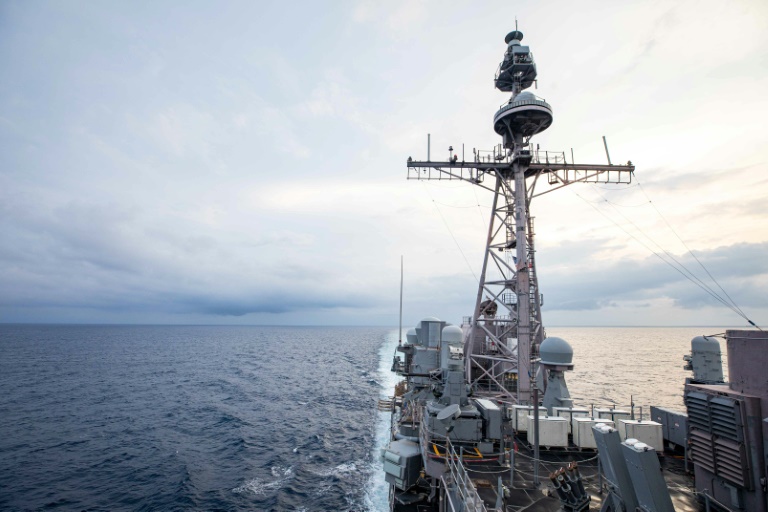
Two United States warships sailed through the Taiwan Strait on Sunday, the American navy said, the first such transit since China staged unprecedented military drills around the island.

In a statement, the US Navy said the passage “demonstrates the United States’ commitment to a free and open Indo-Pacific.”

Tensions in the Taiwan Strait soared to their highest level in years this month after US House Speaker Nancy Pelosi visited Taipei.

Beijing reacted furiously, staging days of air and sea exercises around Taiwan. Taipei condemned the drills and missile tests as preparation for an invasion.

Taiwan lives under constant threat of an invasion by China, which claims the self-ruled, democratic island as part of its territory to be seized one day — by force if necessary.

Washington diplomatically recognizes Beijing over Taipei, but maintains de facto relations with Taiwan and supports the island’s right to decide its own future.

The US Seventh Fleet said the pair of Ticonderoga-class guided-missile cruisers — the USS Antietam and the USS Chancellorsville — conducted the “routine” transit on Sunday “through waters where high seas freedoms of navigation and overflight apply in accordance with international law.”

“These ships transited through a corridor in the Strait that is beyond the territorial sea of any coastal State,” a statement said. 

“It sends a very clear message,” a White House official, National Security Council spokesman John Kirby, said Sunday on CNN. “The US Navy will sail, fly and operate wherever international law allows it to.”

Kirby, a retired navy rear admiral, said the operation had been “planned long ago.”

The Chinese People’s Liberation Army (PLA) said the United States had “openly hyped up” the ships’ passage through the strait.

“The PLA Eastern Theatre Command is following and warning the US vessels throughout their entire journey, and is aware of all movements,” spokesman Senior Colonel Shi Yi said.

“Troops in the (eastern) theatre remain on high alert and are prepared at all times to foil any provocations.”

Taiwan’s defense ministry confirmed a pair of warships sailed from north to south through the channel.

“During their southward journey through the Taiwan Strait, the military is fully monitoring relevant movements in our surrounding sea and airspace, and the situation is normal.”

– ‘Freedom of navigation’ –

The Seventh Fleet is based in Japan and is a core part of the US Navy presence in the Pacific.

The US and Western allies have increased “freedom of navigation” crossings by naval vessels of both the Taiwan Strait and South China Sea to reinforce the concept that those seas are international waterways, sparking anger from Beijing.

Washington has said its position on Taiwan remains unchanged and has accused China of threatening peace in the Taiwan Strait and using the visit by Pelosi as a pretext for military exercises.

China’s drills included firing multiple ballistic missiles into waters off Taiwan — some of the world’s busiest shipping routes — which was the first time Beijing has taken such a step since the mid-1990s.

Taiwan staged its own drills, simulating a defense against invasion and displaying its most advanced fighter jet in a rare nighttime demonstration.

Under President Xi Jinping, China’s tone on Taiwan has grown more aggressive, with increased military activity and more combative messaging in recent years.

Six dead as truck hits Dutch village barbecue

Dutch police on Sunday said six people were killed and seven others hurt after a truck ran off the top of a dike road and ploughed into revellers at a neighbourhood barbecue.

The accident happened around 6 pm (1600 GMT) on Saturday when the Spanish-registered lorry went off the road in the village of Nieuw-Beijerland, 30 kilometres (18 miles) south of Rotterdam.

The victims were three women aged 28, 32 and 75, and three men aged 41, 50 and 62, all from the local area, police said. One of the injured was in a critical condition in hospital.

Police had first confirmed at least two dead after the vehicle drove into the crowded community barbecue, which Dutch news reports said was being hosted by an ice-skating club.

“We now have six people killed and seven injured, one seriously after yesterday’s accident,” police spokeswoman Mirjam Boers told AFP.

“We are still investigating what exactly happened,” she said.

Photographs from the scene identified the truck as belonging to the El Mosca company, based in Spain.

Boers confirmed the 46-year-old driver from Spain had been arrested “and was not under the influence of alcohol,” at the time of the accident.

“He was arrested for causing a fatal accident and serious bodily injury. His role in the incident is under investigation. For the time being, we are keeping all scenarios about the facts open,” police said in a statement.

Residents were laying flowers at the location of the accident on Sunday, an AFP journalist at the site said. A police car stood guard at the scene. 

– ‘Unimaginable sadness’ –

Dutch King Willem-Alexander and Queen Maxima said they were “shocked” by the tragedy.

“We are shocked and moved by the terrible accident in Nieuw-Beijerland last night in which so many people were killed. An unimaginable sadness within this close-knit community,” the king and queen said in an official message.

Dutch Prime Minister Mark Rutte also sent s condolences.

“Terrible news … my thoughts are with the victims and relatives of this terrible drama. I wish them a lot of strength,” Rutte said on Twitter.

Quoting witnesses, the Rijnmond regional broadcaster said the truck stopped for a moment at a T-junction on the narrow Zuidzijdsedijk dike, before taking off and ploughing into the revellers.

Three of the victims — a mother, son and daughter-in-law who was eight months pregnant — came from the same family, the broadcaster reported, quoting a local church announcement.

The incident has shaken the tight-knit community of the Nieuw-Beijerland region with police calling for more witnesses to help with the investigation.

Flood fate of thousands lies with colonial-era Pakistan barrage

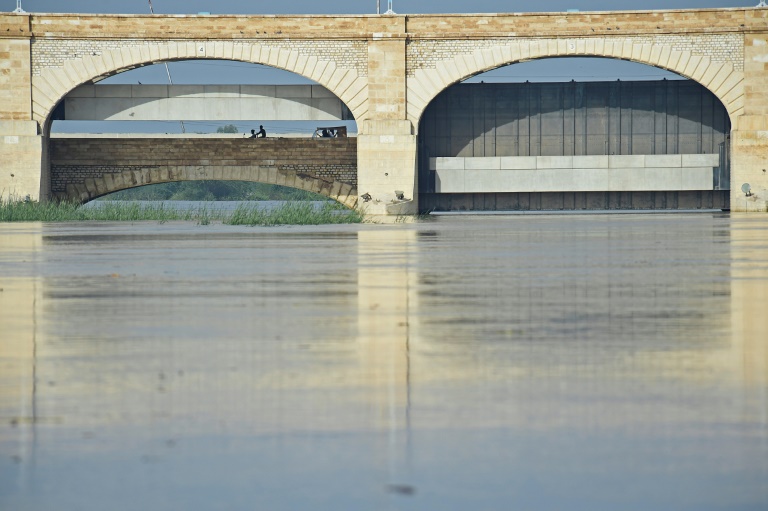
The fate of hundreds of thousands of people in Pakistan’s southern Sindh province lies with a 90-year-old barrage that directs the flow of water from the mighty Indus River into one of the world’s largest irrigation systems.

The government has declared an emergency to deal with floods caused by record monsoon rains that have affected nearly 33 million people — many whose livelihoods depend on the Indus.

But just as the river provides during times of plenty, it can also take away.

Sindh has been pounded by weeks of torrential rain that have flooded farmlands across the province, but now torrents from swollen tributaries in the mountainous north are coursing down the Indus, due to arrive in coming days.

The river rises in Tibet and bisects Pakistan as it meanders more than 3,000 kilometres (2,000 miles) south to the Arabian Sea near Karachi.

“That water coming into the river is scaring us,” Irshad Ali, a 42-year-old farmer near the city of Sukkur, told AFP as he lamented the date palms and vegetable patches he lost to the monsoon.

“A big storm is about to come.”

Water from the Indus is already lapping over its banks in several places, and unless the Sukkur Barrage can control the flow, catastrophe will result.

Originally known as Lloyd Barrage, it was considered an engineering marvel when completed in 1932, capable of discharging 1.4 million cubic metres of water per second through 19 steel gates hinged between stone pillars.

It is the centrepiece of the city, a favourite site for tourists to photograph, and also provides a key bridge across the river.

“It has completed 90 years, whereas it had a 50-year guarantee,” Syed Khursheed Shah, Pakistan’s Minister for Water Resources, told AFP.

“So we are 40 years beyond its guaranteed life.”

– Fortunate forecast –

Water is redirected by the barrage to a series of canals totalling nearly 10,000 kilometres that thread through farmlands, but years of neglect mean they are not capable of dealing with today’s record volumes.

“Silt has been piling up and it is not being removed,” said Shah, adding a lack of equipment meant the canals hadn’t been dredged since 2010.

Metres-thick layers of silt leave less room for the water to flow, causing a backlog and likely flooding at the Indus.

Water is already flowing into the streets of Sukkur, seeping through the walls of buildings along Bandar Road, which leads to the barrage.

“The city is already four feet below the river levels,” minister Shah said.

Engineers were scrambling Sunday to reinforce Ali Wahan levee, a crucial curve of the river Indus in the city that is threatened by the swollen river.

Optimism, and a bit of time, are the only relieving factors.

“This embankment is strong, machinery is available and the staff on alert,” said overseer Shahid Hussain.

“The good thing is the timing,” he added, explaining that flooding caused by local rain should have receded by the time the water from the north courses through.

But if it does rain again closer to home, the situation could change quickly.

“Fortunately the forecast suggests there will be no rains in coming days,” Minister Shah said.

Close Bitnami banner
Bitnami