World

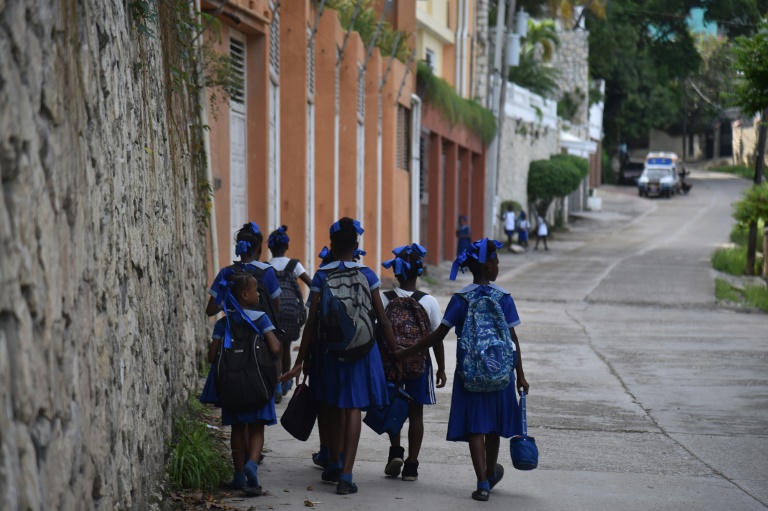
Haiti pushes back school year start as economic crisis bites

Haitian authorities are postponing the start of the school year by one month, as the Caribbean nation grapples with an economic crisis that has caused a fuel shortage and soaring prices.

The Ministry of National Education released a statement on Friday announcing that “the start of the school year for the 2022-2023 academic year is now set for Monday, October 3, 2022” instead of September 5.

The text did not give a reason for the postponement, and the ministry did not immediately respond to requests for comment by AFP.  

The impoverished island nation has been struggling to deal with insecurity, inflation and fuel shortages, all of which have made travel difficult and cast doubts over the start of school for weeks now. 

In July the inflation rate reached 29 percent, according to data from the Haitian Institute of Statistics and Information Technology (IHSI). 

As a result, the prices of basic necessities continue to rise, as do those of school supplies. 

The coordinator of the National Union of Normalists and Educators of Haiti, Kenson Delice, pointed out that authorities have not announced any measures to allow a return to school in better conditions within a month. 

“The government is content to announce the postponement of the start of the school year without saying what it intends to do to alleviate the misery of the population, resolve the problem of insecurity and make fuel available,” he said. 

Haiti has also been mired in a political crisis for several years, and the assassination of President Jovenel Moise in 2021 has made the situation much worse. 

Gangs also enjoy widespread impunity and violence has increased in recent years.

Pope creates new cardinals who may choose successor

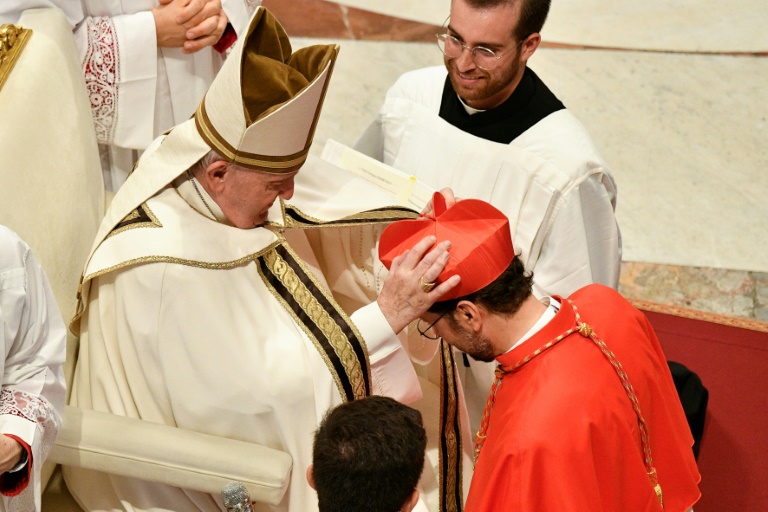
Pope Francis on Saturday created 20 new cardinals picked from the four corners of the world, most of whom could one day end up choosing his successor.

Francis has raised the possibility of retiring due to his declining health, a path taken by his predecessor Benedict XVI. If he were to do so, a conclave involving all cardinals aged under 80 would be called to pick a successor.

Sixteen of the 20 cardinals created Saturday would be eligible for that conclave based on their ages.

The ceremony at St. Peter’s Basilica was the 85-year-old pope’s eighth since being elected in 2013 and included clergy known for their pastoral work and, in some cases, progressive views.

All parts of the globe were represented in his selection, including new cardinals from Brazil and Nigeria, Singapore and East Timor, among others.

They each knelt before the pontiff, who presented them with the red square cap and ring typical of their new station.

“A cardinal loves the Church… by dealing with the big issues as well as the small ones, by meeting the great people of this world as well as the smallest, who are great before God,” said the pope, who arrived in a wheelchair but seemed in good shape.

All new cardinals attended the ceremony, except for Ghana’s Richard Kuuia Baawobr who had to be hospitalised over a cardiac issue.

After this weekend, Francis will have chosen 83 out of the 132 cardinals currently qualified to elect a new pope. 

That is nearly two-thirds of the total and precisely the percentage needed for any proposed name to pass.

In recent months, the pope has been forced to rely on a wheelchair due to knee pain, which he has said is inoperable.

He also suffers from sciatica, a chronic nerve condition that causes pain in his hip.  

– Future clues? –

The new cardinals are always scrutinised by Vatican observers for clues as to the future direction of the Church and its 1.3 billion faithful. 

Experts caution, however, that cardinals named by one pope do not necessarily choose successors in their likeness.

The Argentine pontiff has this year completed a major shake-up of the Vatican’s powerful governing body, the Roman Curia, which makes winning new converts a priority.

In keeping with his focus on making the Church more inclusive, transparent and responsive to the needs of the poor and marginalised, Francis has chosen two Africans and five Asians, including two cardinals who hail from India. 

Vatican expert Bernard Lecomte told AFP the pope’s choices are “representative of the Church today, with a large spot for the southern hemisphere”, where 80 percent of the world’s Catholics live.

Virgilio Do Carmo Da Silva, the archbishop of Dili, will on Saturday become the first cardinal of tiny East Timor, an overwhelmingly Catholic nation in Southeast Asia.

The pope has also felt free to bypass the archbishops of major cities to choose those from less powerful seats, such as Robert McElroy, the 68-year-old bishop of San Diego, California. 

McElroy has supported gay Catholics and criticised moves to deny Communion to US politicians — like President Joe Biden — who support abortion.

The pope will also create the youngest cardinal in the world, 48-year-old Italian missionary Giorgio Marengo, who works in Mongolia.

The new crop of cardinals also includes Nigeria’s Peter Okpaleke, the bishop of Ekwulobia, and Leonardo Ulrich Steiner, archbishop of Manaus, Brazil. 

The 80-year-old bishop emeritus of Ghent, Lucas Van Looy, had been nominated but asked to be exempted following criticism of his handling of child sexual abuse by priests in Belgium. 

Saturday’s ceremony at the Vatican will be followed by the traditional “courtesy visit,” in which the general public is invited to greet the new cardinals.

Serbia, Kosovo reach free movement agreement: EU

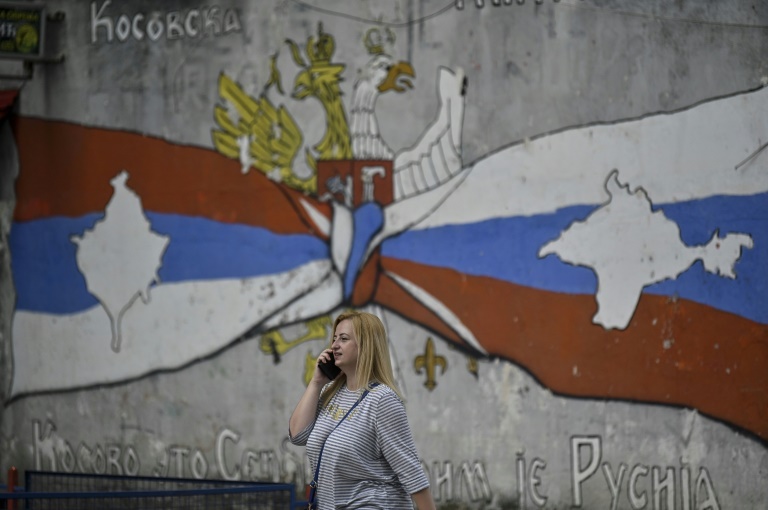
Serbia and Kosovo have agreed on an arrangement for free movement between their countries, the European Union’s foreign policy chief Josep Borrell announced Saturday.

Serbia had agreed to abolish its entry-exit document for Kosovo ID holders, and Kosovo had agreed to not introduce them for Serbian ID holders, said Borrell, in a video statement posted online.

“Kosovo Serbs, as well as all other citizens, will be able to travel freely between Kosovo and Serbia using their ID cards,” he added.

The agreement came after talks in Brussels earlier this week between Kosovo Prime Minister Albin Kurti and Serbian President Aleksandar Vucic, chaired by Borrell.

“I am very happy that we have found a European solution that facilitates travel between Kosovo and Serbia,” said Borrell, thanking both leaders. 

The Brussels meeting was called to try to defuse antagonism between the Balkan neighbours that had led to violent incidents in northern Kosovo in recent weeks.

Kurti and Vucic also met visiting US Deputy Assistant Secretary of State Gabriel Escobar in Brussels late Wednesday, and Borrell thanked the United States for their support of the talks.

“But this work on freedom of movement is not over,” he said. “There are some problems pending.”

“I expect both leaders to continue showing pragmatism and constructiveness in order to solve the problem with their license plates,” he added.

Another point of tension between the two countries has been over vehicle licence plates that Pristina has imposed across Kosovo, including on the Serbian minority living in the north.

Serbia deeply resents Kosovo’s breakaway status. 

The territory’s ethnic Albanian majority fought Serbian forces in 1999 with support from NATO warplanes. In 2008 it declared independence, which has been recognised by most, but not all, EU member states.

New violence flared in late July in northern Kosovo, prompting NATO chief Jens Stoltenberg on Wednesday to say that the 3,700 NATO peacekeepers deployed in Kosovo would do what was necessary to ensure a secure environment.

Tunisia, Morocco recall envoys in W. Sahara tit-for-tat

Tunisia announced Saturday the recall of its ambassador to Morocco for consultations, a day after the kingdom did the same in response to Tunisia’s president hosting the Polisario movement’s leader.

The Polisario wants an independent state in the Western Sahara, a vast stretch of mineral-rich desert which Morocco sees as a sovereign part of its own territory.

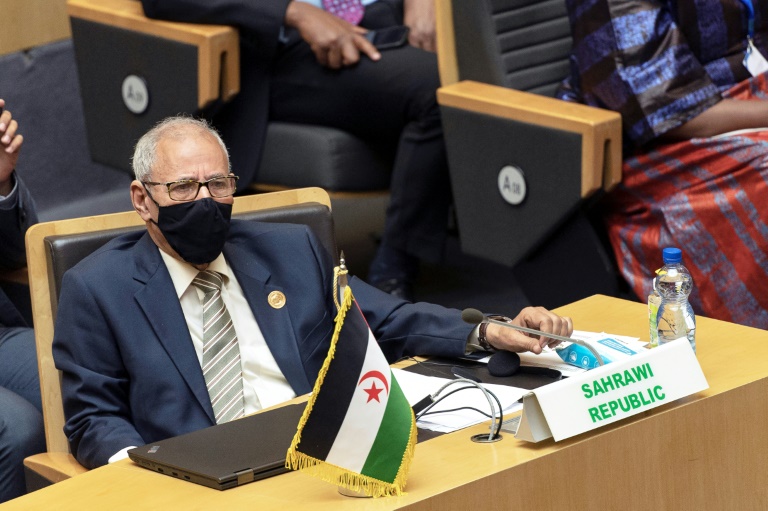
Tunisian President Kais Saied had on Friday hosted Polisario chief Brahim Ghali who arrived to attend the Japanese-African investment conference TICAD.

In response to what it called a “hostile” and “unnecessarily provocative” act, Morocco immediately withdrew its Tunis ambassador for consultations and cancelled its own participation in the high-profile conference.

On Saturday, the Tunisian Foreign Ministry voiced its “surprise” at Morocco’s reaction.

“Tunisia has maintained its total neutrality on the Western Sahara issue in line with international law,” it said in a statement.

“This position will not change until the concerned parties find a peaceful solution acceptable to all.”

Saied spent much of Friday welcoming African leaders arriving for the TICAD conference, including Ghali who is also president of the self-proclaimed Sahrawi Arab Democratic Republic (SADR).

Morocco accused Tunisia of “unilaterally” inviting the Polisario chief “against the advice of Japan and in violation of the process of preparation and established rules”. 

But Tunisia said Saturday the African Union (AU) had issued a direct invitation to the SADR, a member state, to join the conference, noting that it had attended previous such gatherings — alongside Morocco.

The foreign ministry in Rabat hit back, charging Tunisia’s response was riddled with “many approximations and untruths”.

The tit-for-tat diplomatic row came as French President Emmanuel Macron visited Morocco’s arch-rival and Polisario backer Algeria on a visit aimed at healing ties with the former French colony.

Diplomatic sources said Guinea-Bissau President Umaro Sissoco Embalo, current chairman of the Economic Community of West African States (ECOWAS), walked out of the conference in protest at the Polisario’s participation.

In a speech at the forum’s opening, AU chair Macky Sall regretted Morocco’s absence caused by “a lack of consensus on a question of representation”.

“We hope that this problem will find a solution for the smooth running of our partnership” between Africa and Japan, he said.

It is not the first time that Ghali’s travels have sparked Moroccan anger.

In April 2021, he headed to Spain to be treated for Covid-19, sparking a year-long diplomatic row between Spain and the North African kingdom.

That only ended after Madrid dropped its decades-long stance of neutrality over the Western Sahara — a former Spanish colony — and backed a Moroccan plan for limited self-rule there.

The Polisario had waged an armed struggle before agreeing to a ceasefire in 1991 on the promise of a UN-supervised referendum on self-determination, which has never happened.

Libya clashes kill 12, spark fears of new war

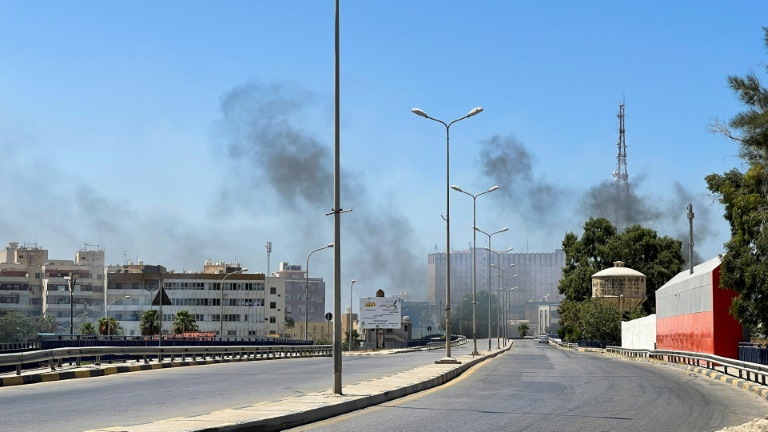
Clashes between backers of rival governments killed at least 12 people and damaged six hospitals in Libya’s capital Saturday, sparking fears that a political crisis could spiral into a major new conflict.

Small arms fire and explosions rocked several districts of Tripoli overnight and into Saturday, when smoke could be seen rising from damaged buildings.

Early on Saturday evening, the health ministry in Tripoli gave a preliminary toll of 12 dead and 87 wounded from the fighting.  

Six hospitals were hit and ambulances were unable to reach areas affected by the clashes, the ministry had said earlier, condemning “war crimes”.

The two rival administrations exchanged blame as videos posted online showed burned-out cars and buildings riddled with bullet holes, as well as a mosque on fire.

The UN’s Libya mission called for “an immediate cessation of hostilities”, citing “ongoing armed clashes including indiscriminate medium and heavy shelling in civilian-populated neighbourhoods” that it said had damaged hospitals.

The US embassy in Libya said it was “very concerned” about the clashes.

News agency Lana said actor Mustafa Baraka had been killed in one of the neighbourhoods hit by fighting, sparking anger and mourning on social media.

The Government of National Unity (GNU) of Abdulhamid Dbeibah said fighting had broken out after negotiations to avoid bloodshed in the western city collapsed.

Dbeibah’s government, installed as part of a United Nations-led peace process following a previous round of violence, is challenged by a rival government led by former interior minister Fathi Bashagha.

– Trading blame –

Bashagha, who is backed by Libya’s parliament and eastern-based military strongman Khalifa Haftar, says the GNU’s mandate has expired.

But he has so far been unable to take office in Tripoli, as Dbeibah has insisted on only handing power to an elected government.

Dbeibah’s government accused Bashagha of “carrying out his threats” to seize Tripoli by force.

Dbeibah’s GNU said negotiations had been underway to “hold elections at the end of the year to resolve the political crisis”, but that Bashagha had “walked out at the last moment”.

Bashagha denied such talks had taken place, and accused Dbeibah’s “illegitimate” administration of “clinging to power”.

Emadeddin Badi, a senior fellow at the Atlantic Council, warned that the violence could quickly escalate.

“Urban warfare has its own logic, it’s harmful both to civilian infrastructure and to people, so even if it isn’t a long war, this conflict will be very destructive as we have already seen,” he told AFP.

He added that the fighting could strengthen Haftar and those close to him.

“They stand to benefit from western Libya divisions and have a better negotiating position once the dust settles.”

Bashagha was appointed in February by the parliament, which was elected in 2014 and is based in the eastern city of Tobruk, but he has been unable to impose his authority in Tripoli.

Initially ruling out the use of violence, the former interior minister has since hinted that he could resort to force.

Last week, he called on “Libyan men of honour” to drop their support for Dbeibah’s “obsolete and illegitimate” administration.

Last month, clashes between rival groups in Tripoli left 16 people dead, including a child.

It was the deadliest violence to hit the Libyan capital since Haftar’s ill-fated attempt to seize it by force in 2019 and 2020.

Japan vows billions at Africa investment conference

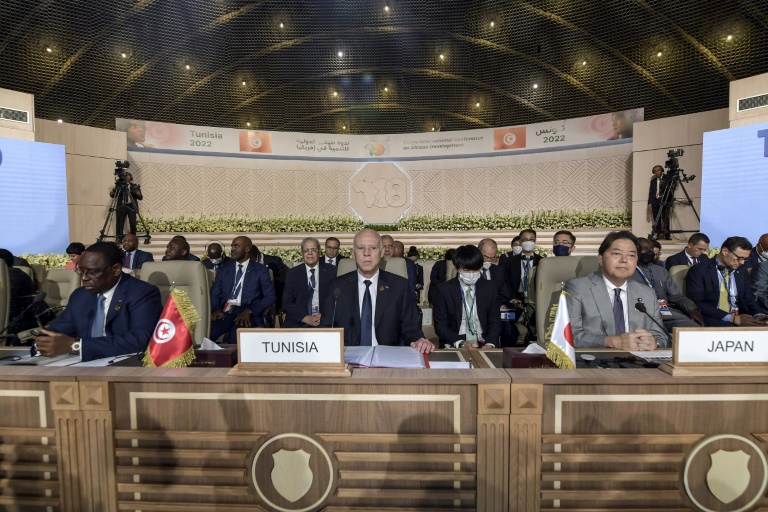
Japanese Prime Minister Fumio Kishida Saturday pledged $30 billion over three years for Africa in a virtual address to a development conference in Tunis aiming to counter China’s growing continental influence.

The eighth Tokyo International Conference on African Development (TICAD8) takes place amid a “complex” international environment caused by the coronavirus pandemic and the war in Ukraine, the Japanese foreign ministry said.

Host country Tunisia is among the countries bearing the brunt of global supply chain disruptions and price spikes unleashed by these two factors, since it is heavily import dependent and is not an energy player.

In his opening speech, Tunisian President Kais Saied urged delegates to “search together for ways for African peoples to achieve the hopes and dreams of the first generation after independence”.

Praising Japan’s strong track record of development and “preserving” its culture, he said that “the world cannot continue as it was. With all its wealth and assets, Africa cannot watch its people live through poverty.”

Kishida, speaking over live video from Tokyo after testing positive for Covid-19 days earlier, pledged that “Japan will invest both public and private funds worth $30 billion over the next three years” across Africa.

“To improve the lives of Africans, we will provide up to $5 billion in co-financing with the African Development Bank,” he said.

The pledge come as China cements its influence on the continent with its “Belt and Road” infrastructure initiative, and as experts express concern about the long-term sustainability of some African nations’ borrowing from Beijing. 

– Rabat-Tunis tensions –

Japan’s initiative “includes up to $1 billion in a new special quota to be established by Japan to promote debt consolidation reforms” in Africa, the Japanese premier said.

He also pledged $300 million in co-financing with the African Development Bank to boost food production, vowing to help African countries weather grain shortages caused by the war in Ukraine, a major wheat producer.

Senegalese President Macky Sall, the current chairman of the African Union, paid tribute to Africa’s “partnership” with Japan, praising “concrete results in the agriculture, health, education and water” sectors.

He also urged a suspension of interest on debt owed to G20 countries, calling for a seat for the continent at the next G20 summit.

On the eve of TICAD, Morocco withdrew from the event and recalled its ambassador from Tunisia for consultations, after Saied hosted the head of Western Sahara’s Polisario secessionist movement.

Tunis in turn said it would recall its own ambassador from Rabat, pointing to its “total neutrality” on Western Sahara, a territory Rabat sees as an integral part of Morocco. 

Sall said he “regrets Morocco’s absence”, expressing hopes for a solution to the disagreement.

It is the first TICAD — held every three years either in Japan or an African country — since the coronavirus pandemic began.

The Japanese delegation is led by Foreign Minister Yoshimasa Hayashi, with about 5,000 participants set to attend.

Among those are 48 representatives of African countries, including at least 20 heads of state or government, according to Tunisian diplomatic sources.

A slick promotional video said the conference aims to promote “African development led by African people”.

But no journalists from African news outlets were given access to delegates ahead of the event, except Tunisian state media, alongside Japanese journalists.

The conference has sparked anger among Tunisians as major road closures threatened traffic disruptions in the capital.

Authorities spruced up parts of the city likely to be seen by delegates and dug in roadside plants, but these efforts also drew ire from social media users.

“I feel deeply insulted by the clean-up of Tunis for the TICAD,” one Tunisian wrote on Twitter, arguing that “those we pay to make our lives easier” should instead focus on making the capital livable for citizens all year round.

Japan vows billions at Africa investment conference

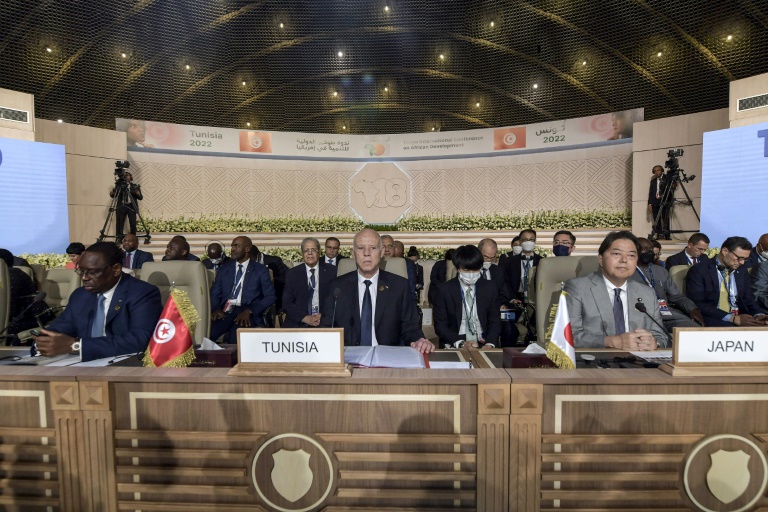
Japanese Prime Minister Fumio Kishida Saturday pledged $30 billion over three years for Africa in a virtual address to a development conference in Tunis aiming to counter China’s growing continental influence.

The eighth Tokyo International Conference on African Development (TICAD8) takes place amid a “complex” international environment caused by the coronavirus pandemic and the war in Ukraine, the Japanese foreign ministry said.

Host country Tunisia is among the countries bearing the brunt of global supply chain disruptions and price spikes unleashed by these two factors, since it is heavily import dependent and is not an energy player.

In his opening speech, Tunisian President Kais Saied urged delegates to “search together for ways for African peoples to achieve the hopes and dreams of the first generation after independence”.

Praising Japan’s strong track record of development and “preserving” its culture, he said that “the world cannot continue as it was. With all its wealth and assets, Africa cannot watch its people live through poverty.”

Kishida, speaking over live video from Tokyo after testing positive for Covid-19 days earlier, pledged that “Japan will invest both public and private funds worth $30 billion over the next three years” across Africa.

“To improve the lives of Africans, we will provide up to $5 billion in co-financing with the African Development Bank,” he said.

The pledge come as China cements its influence on the continent with its “Belt and Road” infrastructure initiative, and as experts express concern about the long-term sustainability of some African nations’ borrowing from Beijing. 

– Rabat-Tunis tensions –

Japan’s initiative “includes up to $1 billion in a new special quota to be established by Japan to promote debt consolidation reforms” in Africa, the Japanese premier said.

He also pledged $300 million in co-financing with the African Development Bank to boost food production, vowing to help African countries weather grain shortages caused by the war in Ukraine, a major wheat producer.

Senegalese President Macky Sall, the current chairman of the African Union, paid tribute to Africa’s “partnership” with Japan, praising “concrete results in the agriculture, health, education and water” sectors.

He also urged a suspension of interest on debt owed to G20 countries, calling for a seat for the continent at the next G20 summit.

On the eve of TICAD, Morocco withdrew from the event and recalled its ambassador from Tunisia for consultations, after Saied hosted the head of Western Sahara’s Polisario secessionist movement.

Tunis in turn said it would recall its own ambassador from Rabat, pointing to its “total neutrality” on Western Sahara, a territory Rabat sees as an integral part of Morocco. 

Sall said he “regrets Morocco’s absence”, expressing hopes for a solution to the disagreement.

It is the first TICAD — held every three years either in Japan or an African country — since the coronavirus pandemic began.

The Japanese delegation is led by Foreign Minister Yoshimasa Hayashi, with about 5,000 participants set to attend.

Among those are 48 representatives of African countries, including at least 20 heads of state or government, according to Tunisian diplomatic sources.

A slick promotional video said the conference aims to promote “African development led by African people”.

But no journalists from African news outlets were given access to delegates ahead of the event, except Tunisian state media, alongside Japanese journalists.

The conference has sparked anger among Tunisians as major road closures threatened traffic disruptions in the capital.

Authorities spruced up parts of the city likely to be seen by delegates and dug in roadside plants, but these efforts also drew ire from social media users.

“I feel deeply insulted by the clean-up of Tunis for the TICAD,” one Tunisian wrote on Twitter, arguing that “those we pay to make our lives easier” should instead focus on making the capital livable for citizens all year round.

Diamond magnate appeals Swiss corruption verdict

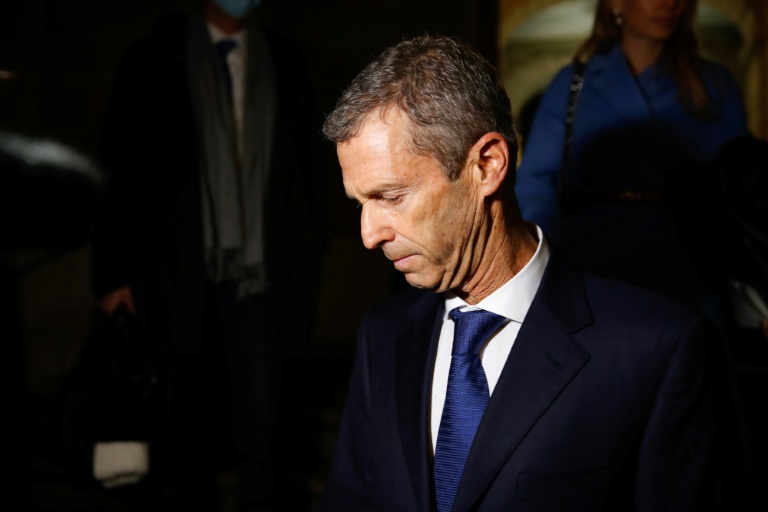
French-Israeli diamond magnate Beny Steinmetz will be back in court in Switzerland on Monday to appeal against a corruption sentence linked to mining rights in Guinea.

A Geneva court convicted the 66-year-old businessman in January 2021 of setting up a complex financial web to pay bribes to ensure his company could obtain permits in an area estimated to contain the world’s biggest untapped deposits of iron ore.

He was sentenced to five years in prison and also ordered to pay 50 million Swiss francs ($52 million) in compensation to the canton of Geneva.

Two of his alleged co-conspirators, who were slapped with shorter jail terms, are also appealing.

Steinmetz maintained his innocence throughout that trial and immediately appealed against the ruling, decrying it as a “big injustice”.

He has changed his legal and communications team for the appeal, and they are preparing to argue that the lower court had not fully heard his arguments and had misunderstood the situation.

“We expect that the tribunal recognises that Beny Steinmetz did not bribe anyone,” his new lawyer Daniel Kinzer told AFP in an email ahead of the appeals trial. 

“I am confident the appeals Court can be convinced,” he said, saying a deeper look at the case revealed “a totally different picture than the one painted by the first verdict.”

Far from being corrupt, Beny Steinmetz Group Resources (BSGR) had legitimately obtained the mining rights in question, and had striven in difficult and complex circumstances to set up an operation that would have benefited Guinea’s national interests, his team said.

– ‘Pact of corruption’ –

Swiss prosecutors painted a far different picture during the first trial, which was the culmination of a drawn-out international investigation that kicked off in Switzerland in 2013.

They accused Steinmetz and two partners of bribing a wife of the then Guinean president Lansana Conte and others in order to win mining rights in the southeastern Simandou region.

The prosecutors said Steinmetz obtained the rights shortly before Conte died in 2008 after about $10 million was paid in bribes over a number of years, some through Swiss bank accounts.

Conte’s military dictatorship ordered global mining giant Rio Tinto to relinquish two concessions to BSGR for around $170 million in 2008.

Just 18 months later, BSGR sold 51 percent of its stake in the concession to Brazilian mining giant Vale for $2.5 billion.

But in 2013, Guinea’s first democratically-elected president Alpha Conde launched a review of permits allotted under Conte and later stripped the VBG consortium formed by BSGR and Vale of its permit.

To secure the initial deal, prosecutors claimed Steinmetz and representatives in Guinea entered a “pact of corruption” with Conte and his fourth wife Mamadie Toure.

Toure, who has admitted to having received payments, has protected status in the United States as a state witness. 

She and a number of other key witnesses in the case failed to appear in the first trial, and it remained unclear if they would attend the appeal.

– ‘Totally false’ –

Steinmetz, who lived in Geneva during the years when the bribes were allegedly paid, continues to maintain that the bribery allegations are “totally false”, according to a document released by his team.

It insisted that Rio Tinto had lost the rights to half of its concessions in Simandou over its failure to develop them, in accordance with Guinean mining laws, and that BSGR later legitimately bid for and obtained exploration rights.

“The mining rights were withdrawn from a competitor because it was hoarding them and then awarded to BSGR on the basis of a solid and convincing business case with no need to bribe a public official,” Kinzer said.

Steinmetz, who was granted a legal free-passage guarantee in order to participate in the first trial, left Switzerland without serving his sentence.

He will be back in the Geneva court from Monday to argue his case after receiving another free-passage, with the appeal hearing due to last through September 7. The verdict will come at a later date.

Angola pays homage to ex-leader dos Santos amid vote dispute

Angolans started paying their final respect to former president Jose Eduardo dos Santos on Saturday as the veteran strongman’s historically dominant party emerged from its worst electoral result.

Dos Santos, who ruled Angola with an iron fist for 38 years, died on July 8 at a hospital in Spain after suffering a cardiac arrest. 

His tenure saw members of his family plunder the nation’s oil riches while most Angolans remained mired in poverty.

He will be buried at a state funeral on Sunday, on what would have been his 80th birthday.

The funeral is set to be attended by about a dozen foreign leaders, including the presidents of Portugal, Mozambique and South Africa.

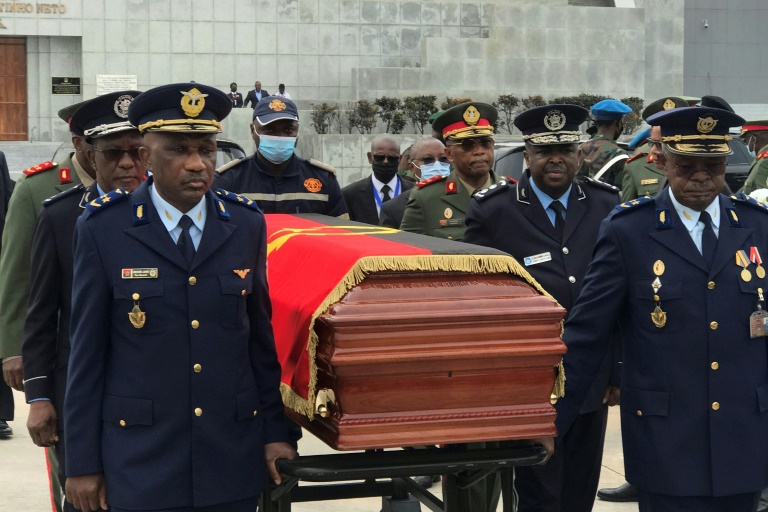
A brown casket carrying dos Santos’s body and draped with the Angolan flag made the solemn trip through the streets to the city’s central Praca da Republica plaza. 

Most people went about their daily lives while some watched the cortege slowly drive past.

The coffin will lie in state in a tent for the public to pay their last respects. Hundreds of blue seats neatly laid out in the square for mourners were empty with a few MPLA supporters filing past the coffin to bid their final farewell.

– ‘President of peace’ –

“We are here to salute our president, the president of peace, the president of national reconciliation, the president who helped us through the war, and we live in peace thanks to him,” said Solange Quiniani, dressed in the colours of the ruling party.

Religious chants echoed through loudspeakers in the vast plaza, where there were black flags and posters paying homage to “Zedu” — dos Santos’s nickname. 

“Farewell beloved President!”, “Forever our commander”, “Zedu, man of the people”.    

A small group of women wept, chanting the name of the man whose tenure was marred by allegations of sweeping nepotism and plunder of the oil-rich state’s resources. 

A few family members and government officials accompanied the casket to the square, but none of his children were present.

Some of his children were at loggerheads with the government and his estranged wife over where and when he was to be buried.

But a Spanish court last week ruled that the body be repatriated to his wife in Angola. 

His eldest daughter Isabel dos Santos, who has faced a slew of investigations into her multinational business dealings, last week wrote on Instagram that she would not be able to see her father to his final resting place. 

The funeral comes as dos Santos’s MPLA party notched up its worst electoral performance in this week’s polls.

After 97 percent of the results were tallied, an initial count showed the MPLA had won 51.07 percent of the vote, against 44.05 percent of its main rival, the National Union for the Total Independence of Angola (UNITA).

UNITA — which fought a bitter 27-year civil war against the MPLA government — has rejected the results and wants a review of the results led by an impartial international panel.

The election handed dos Santos’s successor President Joao Lourenco a second five-year term in office. 

MPLA’s support has been on a gradual decline in recent elections.

Born in the slums of Luanda, dos Santos was one of Africa’s longest-serving leaders.

Critics say he used his nation’s oil wealth to enrich his family and cronies but left most of his 33 million people among the poorest on the planet.

When he stepped down in 2017, dos Santos handed over to former defence minister Lourenco whom he had handpicked to succeed him. 

But Lourenco quickly turned on his erstwhile patron, unleashing an anti-corruption drive to recoup the billions he suspected had been embezzled under dos Santos.

Lourence is to lead the funeral on Sunday.

Tunisia recalls Morocco envoy in W. Sahara row

Tunisia said Saturday it would recall its ambassador from Morocco for consultations, a day after the kingdom did the same in response to Tunisia’s president hosting the Polisario movement’s head.

The Polisario wants an independent state in the Western Sahara, a vast stretch of mineral-rich desert which Morocco sees as a sovereign part of its own territory.

Tunisian President Kais Saied had on Friday hosted Polisario chief Brahim Ghali who arrived to attend the Japanese-African investment conference TICAD.

In response to what it called a “hostile” and “unnecessarily provocative” act, Morocco immediately withdrew its Tunis ambassador for consultations and cancelled its own participation in the high-profile conference.

On Saturday the Tunisian Foreign Ministry voiced its “surprise” at Morocco’s reaction.

“Tunisia has maintained its total neutrality on the Western Sahara issue in line with international law,” it said in a statement.

“This position will not change until the concerned parties find a peaceful solution acceptable to all.”

Saied spent much of Friday welcoming African leaders arriving for the TICAD conference, including Ghali who is also president of the self-proclaimed Sahrawi Arab Democratic Republic (SADR).

Morocco accused Tunisia of “unilaterally” inviting the Polisario chief “against the advice of Japan and in violation of the process of preparation and established rules”. 

But Tunisia said Saturday the African Union had issued a direct invitation to the SADR, a member state, to join the conference, noting that it had attended previous such gatherings — alongside Morocco.

The move came as French President Emmanuel Macron visited Morocco’s arch-rival and Polisario backer Algeria for a three-day visit aimed at healing ties with the former French colony.

It is not the first time that Ghali’s travels have sparked Moroccan anger.

In April 2021, he headed to Spain to be treated for Covid-19, sparking a year-long diplomatic row between Spain and the North African kingdom.

That only ended after Madrid dropped its decades-long stance of neutrality over the Western Sahara — a former Spanish colony — and backed a Moroccan plan for limited self-rule there.

The Polisario had waged an armed struggle before agreeing to a ceasefire in 1991 on the promise of a UN-supervised referendum on self-determination, which has never happened.

The current chair of the African Union, Macky Sall, said he “regretted the absence of Morocco” in a speech to TICAD delegates on Saturday.

“We hope that this problem will find a solution for the smooth running of our partnership” between Africa and Japan, he said.

Close Bitnami banner
Bitnami