World

Taiwan fruit, fish farmers feel squeeze of China's sanctions

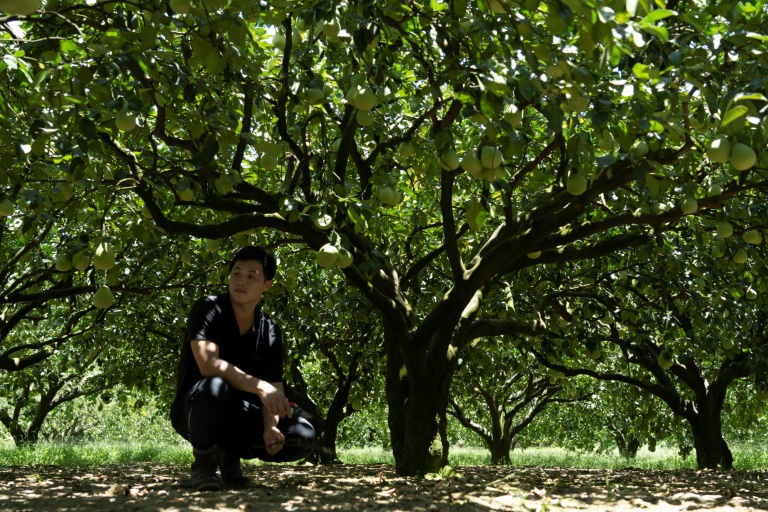
As a Taiwanese fighter jet screamed over the lush green fields of eastern Hualien county last week, pomelo farmer Mulin Ou sat in his orchard counting the cost of China’s latest push to squeeze the island.

Cross-strait tensions have risen to their highest level in decades as China rages over a visit by United States House Speaker Nancy Pelosi earlier this month.

Beijing, which claims democratic Taiwan as its own, launched drills in response, sending missiles into waters around the island — and it torpedoed exports of certain fruit and fish products to China with fresh import bans.

The overall impact of China’s latest economic sanctions is limited. But producers like Ou are paying a painful price.

“Our mainland orders have all been cancelled. Our pomelos have no way of getting there,” he said.

His farm in Hualien’s Ruisui township has dispatched about 180,000 kilogrammes (397,000 pounds) of the citrus fruit to the mainland every year for several decades.

“The clients are waiting for the pomelos, but there’s nothing we can do, it’s a political problem,” he shrugged.

– Grouper gap –

Taiwanese farmers and producers have increasingly had to get used to import bans from China — with Beijing authorities typically citing sudden regulatory discrepancies rather than a direct link to politics.

After Pelosi’s visit, China announced bans on Taiwanese citrus fruit and some mackerel, while halting its own exports to the island of natural sand used in construction.

The month before her visit, it targeted grouper fish, the vast majority of which had previously gone to Chinese consumers.

Taipei said the move was politically motivated, while China claimed it found some fish to be contaminated by banned chemicals.

A year earlier, pineapple imports were halted after Chinese authorities claimed to have discovered pests in shipments, just as the annual harvest was under way.

At a grouper facility in Pingtung, Taiwan’s southernmost county, third-generation farmer Hans Chen of the Lijia Green Energy and Biotechnology Company said he would be “severely impacted” if the sanctions were not lifted by the end of the year.

Chen, 35, manages a farm of some 500,000 groupers, and 90 percent of its exports go to China. 

He said the ban was imposed without any warning and came at the worst time for producers already bruised by the coronavirus pandemic.

The fish farmer says his business and others are relying too much on the lucrative China market and need to diversify away from their aggressive neighbour after the surprise ban.

“Everyone felt the Covid-19 situation was slowly improving and the China market is slowly stabilising and prices will rise again, so there will be… some profit to make up for the previous losses,” he said.

“That’s why everyone’s anxiety and (the sanctions’) impact are very big.”

– Symbolic and limited –

China remains Taiwan’s largest trading partner, with the mainland accounting for 28 percent of total exports.

But Taiwan’s government and businesses have also pushed economic diversification in response to Beijing’s increased aggression under President Xi Jinping, China’s most authoritarian leader in a generation.

Since 2016, Taiwanese President Tsai Ing-wen has pursued a “New Southbound Policy” to grow trade with the rest of Southeast and East Asia.

Taiwan is also seeing a surge of sympathy from like-minded democracies in the region. 

Much of last year’s pineapple harvest was saved when Japanese consumers rushed to purchase “freedom pineapples” in an act of solidarity.

And China has so far been careful with what it targets.

Taiwan is one of the world’s largest producers of semiconductor chips, and Beijing has steered clear of hitting a market it leans on to satisfy demand at home.

“China is highly selective in choosing the instruments of economic sanctions against Taiwan,” Christina Lai, a research fellow at Taiwan’s government-run Academia Sinica told AFP.

“It has always refrained from damaging its domestic economy and technology industries. Beijing cannot afford to ban the most crucial imports from Taiwan — semiconductors, high-end instruments, or machinery,” she added.

The overall impact on Taiwan’s economy is therefore “very limited”, said National Taiwan Normal University professor Fan Shih-ping.

“It is a political manipulation, as China wants to show it is calling the shots and has control over Taiwan,” he added.

But for farmers who have become the victims of the latest uptick in tensions, the scale of the sanctions feels seismic.

“We are looking for help from the government, if there’s any way they can help us,” said Ou. 

“We have to start to find some sales within the country. This is a big headache.”
Taiwan fruit, fish farmers feel squeeze of China's sanctions

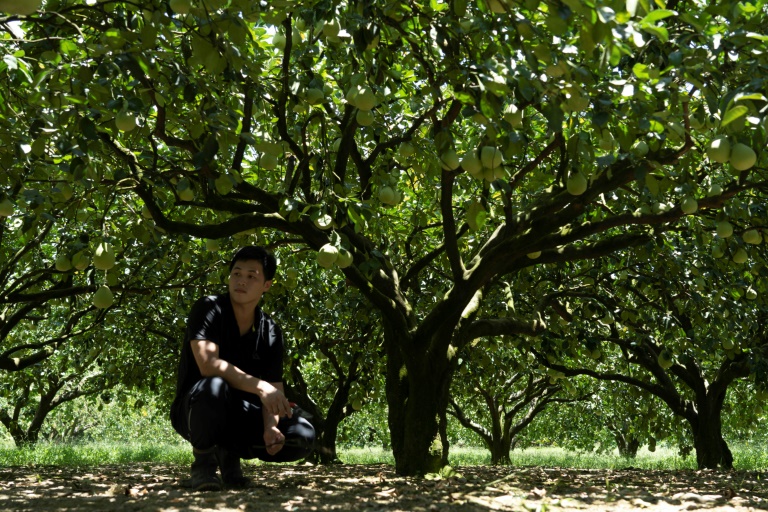
As a Taiwanese fighter jet screamed over the lush green fields of eastern Hualien county last week, pomelo farmer Mulin Ou sat in his orchard counting the cost of China’s latest push to squeeze the island.

Cross-strait tensions have risen to their highest level in decades as China rages over a visit by United States House Speaker Nancy Pelosi earlier this month.

Beijing, which claims democratic Taiwan as its own, launched drills in response, sending missiles into waters around the island — and it torpedoed exports of certain fruit and fish products to China with fresh import bans.

The overall impact of China’s latest economic sanctions is limited. But producers like Ou are paying a painful price.

“Our mainland orders have all been cancelled. Our pomelos have no way of getting there,” he said.

His farm in Hualien’s Ruisui township has dispatched about 180,000 kilogrammes (397,000 pounds) of the citrus fruit to the mainland every year for several decades.

“The clients are waiting for the pomelos, but there’s nothing we can do, it’s a political problem,” he shrugged.

– Grouper gap –

Taiwanese farmers and producers have increasingly had to get used to import bans from China — with Beijing authorities typically citing sudden regulatory discrepancies rather than a direct link to politics.

After Pelosi’s visit, China announced bans on Taiwanese citrus fruit and some mackerel, while halting its own exports to the island of natural sand used in construction.

The month before her visit, it targeted grouper fish, the vast majority of which had previously gone to Chinese consumers.

Taipei said the move was politically motivated, while China claimed it found some fish to be contaminated by banned chemicals.

A year earlier, pineapple imports were halted after Chinese authorities claimed to have discovered pests in shipments, just as the annual harvest was under way.

At a grouper facility in Pingtung, Taiwan’s southernmost county, third-generation farmer Hans Chen of the Lijia Green Energy and Biotechnology Company said he would be “severely impacted” if the sanctions were not lifted by the end of the year.

Chen, 35, manages a farm of some 500,000 groupers, and 90 percent of its exports go to China. 

He said the ban was imposed without any warning and came at the worst time for producers already bruised by the coronavirus pandemic.

The fish farmer says his business and others are relying too much on the lucrative China market and need to diversify away from their aggressive neighbour after the surprise ban.

“Everyone felt the Covid-19 situation was slowly improving and the China market is slowly stabilising and prices will rise again, so there will be… some profit to make up for the previous losses,” he said.

“That’s why everyone’s anxiety and (the sanctions’) impact are very big.”

– Symbolic and limited –

China remains Taiwan’s largest trading partner, with the mainland accounting for 28 percent of total exports.

But Taiwan’s government and businesses have also pushed economic diversification in response to Beijing’s increased aggression under President Xi Jinping, China’s most authoritarian leader in a generation.

Since 2016, Taiwanese President Tsai Ing-wen has pursued a “New Southbound Policy” to grow trade with the rest of Southeast and East Asia.

Taiwan is also seeing a surge of sympathy from like-minded democracies in the region. 

Much of last year’s pineapple harvest was saved when Japanese consumers rushed to purchase “freedom pineapples” in an act of solidarity.

And China has so far been careful with what it targets.

Taiwan is one of the world’s largest producers of semiconductor chips, and Beijing has steered clear of hitting a market it leans on to satisfy demand at home.

“China is highly selective in choosing the instruments of economic sanctions against Taiwan,” Christina Lai, a research fellow at Taiwan’s government-run Academia Sinica told AFP.

“It has always refrained from damaging its domestic economy and technology industries. Beijing cannot afford to ban the most crucial imports from Taiwan — semiconductors, high-end instruments, or machinery,” she added.

The overall impact on Taiwan’s economy is therefore “very limited”, said National Taiwan Normal University professor Fan Shih-ping.

“It is a political manipulation, as China wants to show it is calling the shots and has control over Taiwan,” he added.

But for farmers who have become the victims of the latest uptick in tensions, the scale of the sanctions feels seismic.

“We are looking for help from the government, if there’s any way they can help us,” said Ou. 

“We have to start to find some sales within the country. This is a big headache.”

Brazil's Bolsonaro bets on 'moderate' tone to win vote: minister

Far-right President Jair Bolsonaro is not exactly known for mild rhetoric, but with Brazil deeply divided heading into elections, he is counting on a more moderate image and economic upturn to win, his communications minister says.

Bolsonaro is trailing his leftist nemesis, ex-president Luiz Inacio Lula da Silva (2003-2010), ahead of the October 2 election, bruised by a weak economy, his controversial handling of Covid-19 and what critics call his extremism.

But his charismatic, cool-tempered communications chief, Fabio Faria, says he is confident a critical mass of Brazilians will ultimately pick Bolsonaro over four more years of the Workers’ Party (PT), whose time in power crashed to an end in 2016 with a corruption scandal, recession and the impeachment of Lula’s hand-picked successor, Dilma Rousseff.

Surging onto the national scene in the wake of that triple crisis, Bolsonaro won the presidency in 2018 with broad support, taking 55 percent of the vote.

And though some of those voters are disillusioned today, Bolsonaro’s camp is confident the incumbent will win them back with a softer tone and an improving economy, Faria told AFP in an interview at the presidential palace in Brasilia.

Known for downplaying Covid-19 as a “little flu,” urging Brazilians to stop being “sissies” about the pandemic, and attacking institutions such as the Superior Electoral Tribunal, whose new chief he once called a “scumbag,” Bolsonaro has been dialing his rhetoric down a notch, Faria said.

“The president’s more moderate tone speaks to voters who had turned against him because they felt the president’s style could have been more moderate,” said the telegenic 44-year-old, a businessman and ex-congressman brought in to give the administration a communications makeover in June 2020.

“A lot of people who voted for Bolsonaro (in 2018) and then left his camp are coming back because they’re anti-PT voters. The PT left a huge stain of corruption in the past, and voters… are coming back because they see Brazil is polarized between Bolsonaro and Lula — there’s no third candidate.”

As evidence of Bolsonaro’s softer touch, he offered the incumbent’s prime-time interview Monday on TV Globo, the biggest broadcaster in the country of 213 million people.

Despite being a fierce critic of Globo and the “fake news” media in general, Bolsonaro was less aggressive than usual during the interview.

But he drew criticism for casting doubt on whether he would accept the election result if he loses.

Bolsonaro, who has repeatedly attacked Brazil’s election system as fraud-prone — with little evidence — said he would respect the outcome “as long as the elections are clean and transparent.”

– Riding an upturn? –

Lula leads Bolsonaro by 47 percent to 32 percent, according to the latest poll from the Datafolha institute.

Ten other contenders are polling in single digits.

If no candidate wins more than 50 percent of valid votes in the first round, the election will go to a runoff on October 30.

Faria said Bolsonaro is betting an improving economy will boost him to victory.

Like many countries, Brazil is suffering from surging prices, fueled by the effects of the pandemic and Russia’s invasion of Ukraine.

The Latin American giant’s annual inflation rate came in at 10.07 percent last month, far above the central bank’s target of 3.5 percent.

But prices posted a record drop of 0.68 percent in July, thanks partly to government fuel tax cuts.

Bolsonaro has also passed a massive social spending program called Auxilio Brasil that recently began making welfare payments of around $110 a month to some 20 million families.

Critics blast the move as economic populism. Supporters say it is just plain popular.

“People are starting to realize Brazil is better off than other countries,” said Faria.

“The economy is going to get Bolsonaro reelected.”

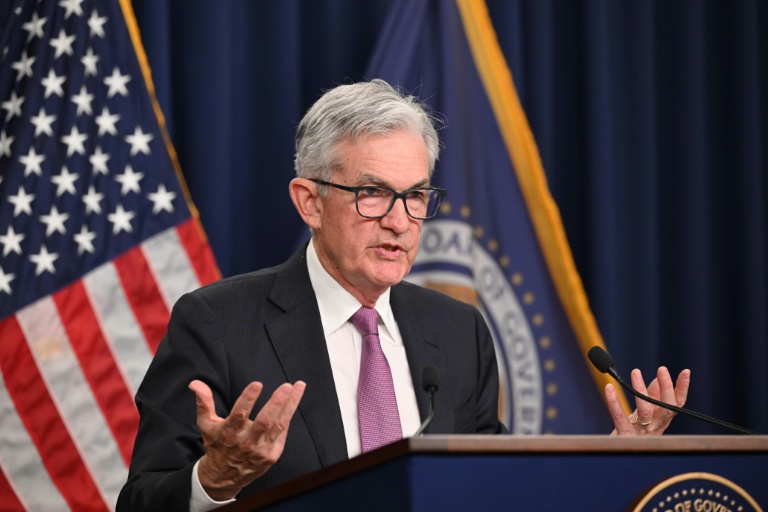
Fed's Powell to hammer home inflation-fighting message

With US inflation at a 40-year high, economists say there is no doubt about the Federal Reserve’s policy course: Interest rates will continue to rise.

Against the backdrop of the majestic Grand Teton mountains, Fed Chair Jerome Powell is expected to once again send a clear message at the annual gathering of central bankers in Jackson Hole, Wyoming on Friday that the fight against inflation is not over.

Modest signs of slowing in the world’s largest economy and easing price pressures spurred hope in financial markets that the central bank might ease up on its aggressive rate hikes, and perhaps even start to reverse course next year.

But former Bank of England board member Adam Posen called that view “nonsense.”

“I think there’s wishful thinking on the part of the markets,” said Posen, who leads the Peterson Institute for International Economics in Washington.  

“Right now there’s no debate,” he told reporters. “They’ve got no choice but to hike.”

Until and unless there is a recession that also pushes down inflation expectations, “nothing else matters” besides bringing down prices.

A succession of Fed officials, even those like Posen who are considered to be “doves” on inflation, have repeated the same message.

Kansas City Fed President Esther George, host of the Jackson Hole conference, did so Thursday, telling Fox Business Network that rates are likely to rise through the end of the year until “inflation begins to meaningfully decelerate.”

Posen said he expects the benchmark lending rate will reach four percent by February, and will be “willing to go further if needed, with the chances of a reversal in 2023 year “very, very low.”

– New price data –

Economist Tim Duy of SGH Macro Advisors agreed, and said Powell will “push the story… they will do what they need to get inflation under control.” 

“What that means is pushing rates into restrictive territory,” he told AFP.

But he said the Fed chief will have to be “humble” about any forecasts on the path of the economy or inflation, after telling the conference last year that price spikes would be transitory.

Powell’s speech last year “didn’t age well, to say the least,” Duy said.

Supply chain issues have continued, worsened by a series of Covid lockdowns in China, and have combined with Russia’s war in Ukraine, to send prices soaring worldwide.

In the battle to contain red-hot US inflation, which topped nine percent in June, the Fed has hiked rates four times, including massive, three-quarter point increases in June and July — steep moves unheard of since the early 1980s — to the current level of a range of 2.25 to 2.5 percent.

But recent data has shown signs of a slowing in price increases. 

Before his speech, Powell will get a look at the latest report on the Fed’s preferred inflation measure, the personal consumption expenditures price index.

That is expected to show a dramatic slowdown from the 1.0 percent surge in June, although central bankers may not take much comfort since it is likely to reflect the recent sharp retreat in global oil prices.

Avoiding a recession as interest rates rise remains a tough job for central bankers everywhere.

“The post-pandemic economy globally will have more constraints that we faced for the last 25 years,” Duy warned.

More US states ban abortion as Democrats push back

Abortion became illegal in three more US states on Thursday, further restricting access to elective terminations for millions of women despite some signs of popular and judicial pushback.

Two months after the Supreme Court struck down the constitutional right to abortion, nearly 21 million women have already lost access to the procedure in their home states, according to an analysis by The Washington Post. 

And with Idaho, Tennessee and Texas joining 10 other Republican-controlled states on Thursday in implementing near-total bans on abortion, that number is set to rise. Another dozen states are expected to follow suit with their own restrictions.

The laws in Idaho, Tennessee and Texas were “triggered” after the Supreme Court on June 24 overturned the landmark 1973 “Roe v. Wade” decision enshrining a woman’s right to an abortion and allowed states to set their own laws.

In Texas, under the new law, doctors could face life in prison and a fine of no less than $100,000 for performing an abortion. Texas and Tennessee make no exceptions for rape or incest, though Idaho does.

State restrictions range from total bans on elective abortions to bans after six weeks, when many women do not even know they are pregnant. Many women have already been forced to travel hundreds of miles to obtain the procedure in other states.

Democratic President Joe Biden condemned the ruling by the conservative-dominated Supreme Court and has pledged to do everything within his power to ensure access to abortion.

The Biden administration notched up a narrow victory in Idaho on Wednesday when a judge ruled that federal law requires doctors to provide abortions to women suffering medical emergencies at hospitals that receive Medicare funding from the government.

In an illustration of the complicated legal landscape, however, a judge in Texas, an appointee of Republican Donald Trump, issued a contrary ruling in a similar case, setting the stage for further court battles.

White House Press Secretary Karine Jean-Pierre welcomed the outcome in Idaho but called the Texas ruling a “devastating decision for women in that state, who can now be denied the same life-saving care.” 

Besides battling in the courts, Democrats are hoping abortion will be a galvanizing issue for their candidates in the upcoming midterm elections.

US voters will decide control of Congress in November, with all 435 House seats up for grabs, as well as 35 of the 100 Senate seats and the governor’s mansion in 36 out of 50 states.

– ‘Health care is on the ballot’ –

“More women today are living with fewer freedoms thanks to Republicans’ relentless war to ban abortion in their states,” Democratic National Committee chairman Jaime Harrison said.

“Make no mistake: No matter what state you live in, reproductive health care is on the ballot this November, and GOP candidates will be held accountable for their extreme anti-choice agenda,” Harrison said.

A Democratic candidate notched up a victory in a special election in New York on Tuesday seen as a bellwether of the public mood on abortion ahead of November’s midterms.

According to political data firm Target Smart, women have been outpacing men in new voter registrations in numerous states.

In a Pew Research Center poll, 56 percent of registered voters said the abortion issue will be very important in their midterm vote, up from 43 percent in March.

Abortion rights advocates also recently celebrated a victory in a referendum in Kansas that would have removed the right to the procedure from the constitution of the conservative midwestern state.

The state is a Republican stronghold, but Kansans, by a 59 to 41 percent margin amid unusually heavy turnout, rejected the amendment that would have scrapped language in the state constitution guaranteeing the right to abortion.

Planned Parenthood, which lobbies for abortion access and plans to reportedly spend $50 million on the midterms, called the Kansas vote “a clear warning to anti-abortion politicians.”

While some two dozen Republican-led states are restricting access to abortion, a number of Democratic-controlled states, including giants California and New York, are putting protections in place.

France's Macron announces 'new page' in Algeria ties

French President Emmanuel Macron announced a “new page” in ties with Algeria on Thursday, the first day of a three-day visit aimed at mending ties with the former French colony months after it marked 60 years of independence.

Macron’s office said his visit aims to “lay a foundation to rebuild and develop” a sometimes difficult relationship with the North African nation after a particularly tense few months.

“We didn’t choose the past, we inherited it,” he said at a joint press conference on Thursday evening alongside Algerian President Abdelmadjid Tebboune.

“We must look at it and recognise it, but we have a responsibility to build our future for ourselves and our youth,” said Macron, the first French president to be born since Algerian independence in 1962.

Tebboune hailed the “positive dynamic” in the countries’ ties, saying there were “promising prospects for improving the special partnership that binds us”.

Macron had landed earlier at Algiers’ main airport where he was warmly greeted by Tebboune and a military band that played both national anthems.

Later, the French leader visited a monument to martyrs of Algeria’s war for independence, laying a wreath at the site and observing a minute of silence.

The French president announced Thursday evening that the two countries would set up a joint French-Algerian commission of historians to study archives on France’s 130 years of colonial rule in Algeria, including the devastating eight-year independence war.

“We have a common (but) complex and painful past,” said Macron, adding that the researchers would have full access to the archives.

Ties between Paris and Algiers have seen repeated crises over the years.

They had been particularly stormy since last year when Macron questioned Algeria’s existence as a nation before the French occupation and accused the government of fomenting “hatred towards France”.

Tebboune withdrew his country’s ambassador in response and banned French military aircraft from its airspace.

But Macron’s office said he “regretted” the misunderstandings caused by his comments, and his aides believe both sides have moved on, noting the resumption of normal diplomatic relations and overflights to French army bases in sub-Saharan Africa.

– Reconciliation ‘political necessity’ –

The French leader, on his second visit to Algeria since he took power in 2017, “has chosen to direct this visit towards the future, (focusing on) start-ups, innovation, youth, new sectors,” his office said.

Algerian media said Macron’s visit showed both countries’ desire for relations built around “a new vision based on equal treatment and balance of interests”.

Analyst Mansour Kedidir said that “given instability in the Maghreb region, conflicts in the Sahel and the war in Ukraine, improving ties between France and Algeria is a political necessity”.

Tebboune said he and Macron had discussed how to bring stability to Libya, the Sahel region and the disputed territory of Western Sahara.

The two leaders are also expected to discuss boosting Algerian gas deliveries to Europe to help fill the vast shortfall following Russia’s invasion of Ukraine in February.

European nations are seeking to end their dependence on Russian hydrocarbons, giving Algeria — Africa’s biggest gas exporter with direct pipelines to Spain and Italy — renewed clout.

“The French president will certainly ask Algeria to make an effort to try to increase its gas production,” said Algerian economist Abderrahmane Mebtoul.

Macron’s office has said gas is not a major feature of the visit — although the head of French energy firm Engie, Catherine MacGregor, is in Macron’s delegation.

Energy expert Geoff Porter of North Africa Risk Consulting wrote that Macron’s trip had at least two aims: “feeling out Algeria’s energy sector stability and potential additional export capacity… and trying to woo Algiers away from some of its other diplomatic relationships” including Russia and China.

– ‘Different discourse’ –

Macron has long ruled out issuing an apology for the highly sensitive issue of colonialism, but he has made a series of gestures aimed at healing past wounds.

In Algiers, few have much sympathy towards Macron, who during his first election campaign had described French colonialism as a “crime against humanity”.

“Before he was president, he used nice words, he visited (Algeria), but right after he went back to France, he changed,” said computer scientist Othmane Abdellouche, 62. 

“He used a totally different discourse”.

French historians say half a million civilians and combatants died during Algeria’s bloody war for independence, 400,000 of them Algerian. The Algerian authorities say 1.5 million were killed.

Tebboune’s office said in October that over 5.6 million Algerians were killed during the colonial period.

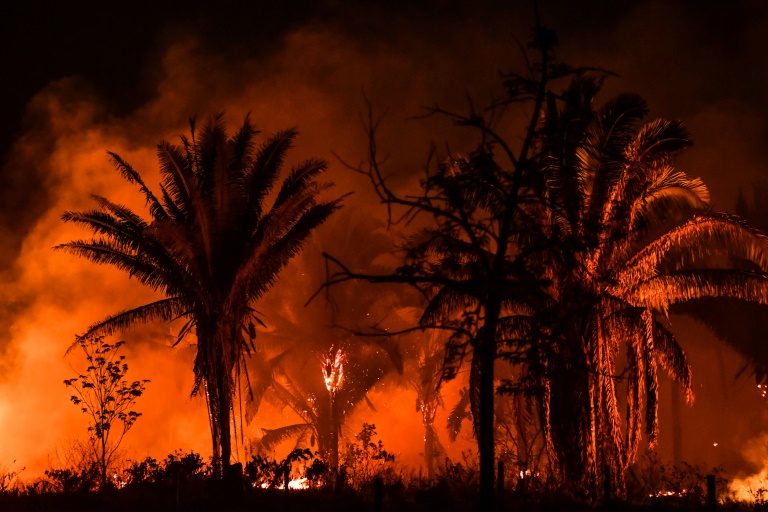
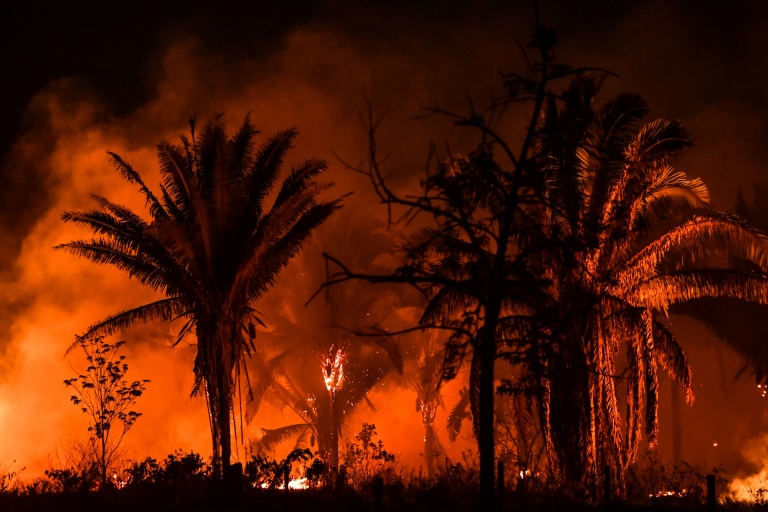
Brazil records worst day for Amazon fires in 15 years

The number of forest fires in the Brazilian Amazon hit a nearly 15-year high this week, according to official figures that provided the latest warning on the advancing destruction of the world’s biggest rainforest.

Satellite monitoring detected 3,358 fires on Monday, August 22, the highest number for any 24-hour period since September 2007, according to the Brazilian space agency, INPE.

The number was nearly triple that recorded on the so-called “Day of Fire” — August 10, 2019 — when farmers launched a coordinated plan to burn huge amounts of felled rainforest in the northern state of Para.

Then, fires sent thick gray smoke all the way to Sao Paulo, some 2,500 kilometers (1,500 miles) away, and triggered a global outcry over images of one of Earth’s most vital resources burning.

There is no indication that Monday’s fires were coordinated, said Alberto Setzer, head of INPE’s fire monitoring program.

Rather, they appear to fit a pattern of increasing deforestation and burning, he said.

Experts say Amazon fires are caused mainly by illegal farmers, ranchers and speculators clearing land and torching the trees.

In Brazil, the so-called “arc of deforestation” has been advancing.

“The regions where the most fires are occurring are moving farther and farther north,” Setzer told AFP.

“The ‘arc of deforestation’ is undoubtedly evolving.”

August is typically when fire season starts in earnest in the Amazon, with the arrival of drier weather.

This has been a worrying year so far for the forest, a key buffer against global warming: INPE detected 5,373 fires last month, up eight percent from July last year.

And with 24,124 fires so far this month, it is on track to be the worst August under President Jair Bolsonaro — though well below the 63,764 fires detected in August 2005, the worse for the month since records began in 1998.

Bolsonaro, an agribusiness ally, faces international criticism for a surge in Amazon destruction on his watch. Since he took office in January 2019, average annual deforestation in the Brazilian Amazon has increased by 75 percent compared to the previous decade.

The far-right president rejects that criticism.

“None of those who are attacking us have the right. If they wanted a pretty forest to call their own, they should have preserved the ones in their countries,” he wrote on Twitter Thursday.

“The Amazon belongs to Brazilians, and always will.”

But with Bolsonaro running for reelection in October, the destruction risks accelerating, said Ane Alencar, director of science at the Amazon Environmental Research Institute (IPAM).

“We know from previous years that there is a link between elections and deforestation,” with officials and enforcement agencies distracted by the campaign, she said.

This year, “we have high rates of deforestation… and there are still lots of felled trees waiting to burn.”

Brazil records worst day for Amazon fires in 15 years

The number of forest fires in the Brazilian Amazon hit a nearly 15-year high this week, according to official figures that provided the latest warning on the advancing destruction of the world’s biggest rainforest.

Satellite monitoring detected 3,358 fires on Monday, August 22, the highest number for any 24-hour period since September 2007, according to the Brazilian space agency, INPE.

The number was nearly triple that recorded on the so-called “Day of Fire” — August 10, 2019 — when farmers launched a coordinated plan to burn huge amounts of felled rainforest in the northern state of Para.

Then, fires sent thick gray smoke all the way to Sao Paulo, some 2,500 kilometers (1,500 miles) away, and triggered a global outcry over images of one of Earth’s most vital resources burning.

There is no indication that Monday’s fires were coordinated, said Alberto Setzer, head of INPE’s fire monitoring program.

Rather, they appear to fit a pattern of increasing deforestation and burning, he said.

Experts say Amazon fires are caused mainly by illegal farmers, ranchers and speculators clearing land and torching the trees.

In Brazil, the so-called “arc of deforestation” has been advancing.

“The regions where the most fires are occurring are moving farther and farther north,” Setzer told AFP.

“The ‘arc of deforestation’ is undoubtedly evolving.”

August is typically when fire season starts in earnest in the Amazon, with the arrival of drier weather.

This has been a worrying year so far for the forest, a key buffer against global warming: INPE detected 5,373 fires last month, up eight percent from July last year.

And with 24,124 fires so far this month, it is on track to be the worst August under President Jair Bolsonaro — though well below the 63,764 fires detected in August 2005, the worse for the month since records began in 1998.

Bolsonaro, an agribusiness ally, faces international criticism for a surge in Amazon destruction on his watch. Since he took office in January 2019, average annual deforestation in the Brazilian Amazon has increased by 75 percent compared to the previous decade.

The far-right president rejects that criticism.

“None of those who are attacking us have the right. If they wanted a pretty forest to call their own, they should have preserved the ones in their countries,” he wrote on Twitter Thursday.

“The Amazon belongs to Brazilians, and always will.”

But with Bolsonaro running for reelection in October, the destruction risks accelerating, said Ane Alencar, director of science at the Amazon Environmental Research Institute (IPAM).

“We know from previous years that there is a link between elections and deforestation,” with officials and enforcement agencies distracted by the campaign, she said.

This year, “we have high rates of deforestation… and there are still lots of felled trees waiting to burn.”

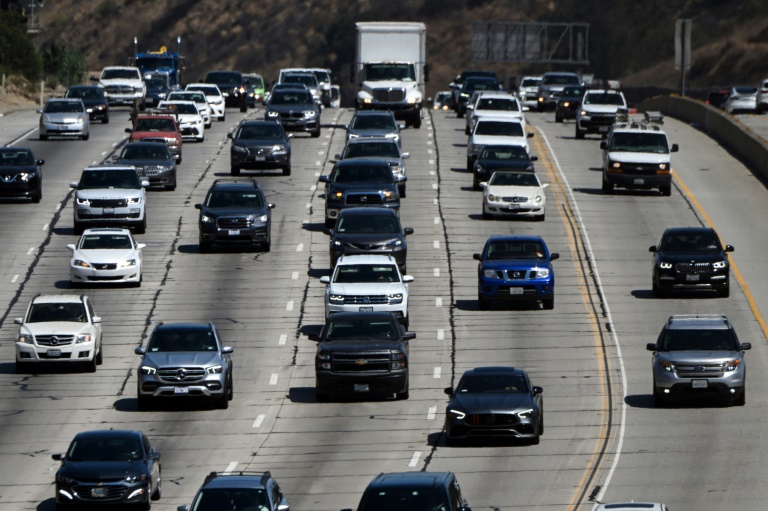
California says new cars must be zero emission by 2035

California ruled Thursday that all new cars sold in America’s most populous state must be zero emission from 2035, in what was billed as a nation-leading step to slash the pollutants that cause global warming.

The widely touted move has been hailed by environmentalists, who hope it will prod other parts of the United States to quicken the adoption of electric vehicles.

The rules demand an ever-increasing percentage of new cars sold to California’s 40 million inhabitants produce no tailpipe pollutants, until their total ban in 13 years’ time.

“The timeline is ambitious but achievable: by the time a child born this year is ready to enter middle school, only zero-emission vehicles or a limited number of plug-in hybrids (PHEVs) will be offered for sale new in California,” the California Air Resources Board said.

The board, which was tasked with finding a way to implement Governor Gavin Newsom’s order to transition the state’s automotive sector, said the health benefits would be significant.

“By 2037, the regulation delivers a 25 percent reduction in smog-causing pollution from light-duty vehicles.

“This benefits all Californians but especially the state’s most environmentally and economically burdened communities along freeways and other heavily traveled thoroughfares.”

From 2026 through 2040 the regulation is expected to result in 1,290 fewer cardiopulmonary deaths, 460 fewer hospital admissions for cardiovascular or respiratory illness, and 650 fewer emergency room visits for asthma, it said.

– Popularity –

California already accounts for the lion’s share of electric vehicles in the United States, with 1.13 million of them on the state’s roads — 43 percent of the nation’s total.

Their popularity has mushroomed in the years since they were seen as little more than novelty golf carts for tree-huggers content to drive no more than a few dozen miles (kilometers).

Ten years ago only two percent of new cars sold in the state were electric; that figure is now 16 percent, and Teslas and other premium offerings with a range of hundreds of miles are a common sight on roads around Los Angeles and San Francisco.

Still, the vehicles remain more expensive than their fossil fuel-powered equivalents and critics say only federal subsidies of up to $7,500 make them viable for many buyers.

But supporters say the incentives are necessary short-term supports that will fade away as increased adoption boosts economies of scale and drives down prices.

As the biggest auto market in the United States, one manufacturers cannot ignore, California has an outsized influence in effectively setting national standards.

Thursday’s ruling comes on the heels of a climate law signed last week by US President Joe Biden, which sets aside hundreds of millions of dollars in incentives for clean energy programs.

Biden and his Democratic Party are rushing to make up climate policy ground they feel was lost under former president Donald Trump, who yanked the United States out of the Paris Climate Accord and reversed what many environmentalists viewed as already-weak progress in reducing the fossil fuel emissions that drive global warming.

Newsom, a leading light in the Democratic Party, who is rumored to have presidential ambitions, welcomed the ruling.

– ‘Groundbreaking’ –

“California now has a groundbreaking, world-leading… roadmap to reducing dangerous carbon emissions and moving away from fossil fuels,” he said.

The reduction in the number of petrol and diesel-powered cars on the roads is equivalent to “915 million oil barrels’ worth of emissions that won’t pollute our communities.”

“With the historic $10 billion we’re investing to accelerate the transition… we’re making it easier and cheaper for all Californians to purchase electric cars.”

In recent years jurisdictions around the world, notably in Europe, have set their sights on the polluting automobile sector.

Norway is aiming to have all new cars produce zero tailpipe emissions by 2025.

The UK, Singapore and Israel are eyeing 2030, while the European Union wants to end the sale of new petrol and diesel cars by 2035. 

Human-caused global warming has already raised average temperatures around the planet, affecting weather patterns and worsening natural hazards like wildfires and storms.

Scientists say dramatic action is required to limit the damage, and point to curbing emissions from fossil fuels as key to the battle.

California says new cars must be zero emission by 2035

California ruled Thursday that all new cars sold in America’s most populous state must be zero emission from 2035, in what was billed as a nation-leading step to slash the pollutants that cause global warming.

The widely touted move has been hailed by environmentalists, who hope it will prod other parts of the United States to quicken the adoption of electric vehicles.

The rules demand an ever-increasing percentage of new cars sold to California’s 40 million inhabitants produce no tailpipe pollutants, until their total ban in 13 years’ time.

“The timeline is ambitious but achievable: by the time a child born this year is ready to enter middle school, only zero-emission vehicles or a limited number of plug-in hybrids (PHEVs) will be offered for sale new in California,” the California Air Resources Board said.

The board, which was tasked with finding a way to implement Governor Gavin Newsom’s order to transition the state’s automotive sector, said the health benefits would be significant.

“By 2037, the regulation delivers a 25 percent reduction in smog-causing pollution from light-duty vehicles.

“This benefits all Californians but especially the state’s most environmentally and economically burdened communities along freeways and other heavily traveled thoroughfares.”

From 2026 through 2040 the regulation is expected to result in 1,290 fewer cardiopulmonary deaths, 460 fewer hospital admissions for cardiovascular or respiratory illness, and 650 fewer emergency room visits for asthma, it said.

– Popularity –

California already accounts for the lion’s share of electric vehicles in the United States, with 1.13 million of them on the state’s roads — 43 percent of the nation’s total.

Their popularity has mushroomed in the years since they were seen as little more than novelty golf carts for tree-huggers content to drive no more than a few dozen miles (kilometers).

Ten years ago only two percent of new cars sold in the state were electric; that figure is now 16 percent, and Teslas and other premium offerings with a range of hundreds of miles are a common sight on roads around Los Angeles and San Francisco.

Still, the vehicles remain more expensive than their fossil fuel-powered equivalents and critics say only federal subsidies of up to $7,500 make them viable for many buyers.

But supporters say the incentives are necessary short-term supports that will fade away as increased adoption boosts economies of scale and drives down prices.

As the biggest auto market in the United States, one manufacturers cannot ignore, California has an outsized influence in effectively setting national standards.

Thursday’s ruling comes on the heels of a climate law signed last week by US President Joe Biden, which sets aside hundreds of millions of dollars in incentives for clean energy programs.

Biden and his Democratic Party are rushing to make up climate policy ground they feel was lost under former president Donald Trump, who yanked the United States out of the Paris Climate Accord and reversed what many environmentalists viewed as already-weak progress in reducing the fossil fuel emissions that drive global warming.

Newsom, a leading light in the Democratic Party, who is rumored to have presidential ambitions, welcomed the ruling.

– ‘Groundbreaking’ –

“California now has a groundbreaking, world-leading… roadmap to reducing dangerous carbon emissions and moving away from fossil fuels,” he said.

The reduction in the number of petrol and diesel-powered cars on the roads is equivalent to “915 million oil barrels’ worth of emissions that won’t pollute our communities.”

“With the historic $10 billion we’re investing to accelerate the transition… we’re making it easier and cheaper for all Californians to purchase electric cars.”

In recent years jurisdictions around the world, notably in Europe, have set their sights on the polluting automobile sector.

Norway is aiming to have all new cars produce zero tailpipe emissions by 2025.

The UK, Singapore and Israel are eyeing 2030, while the European Union wants to end the sale of new petrol and diesel cars by 2035. 

Human-caused global warming has already raised average temperatures around the planet, affecting weather patterns and worsening natural hazards like wildfires and storms.

Scientists say dramatic action is required to limit the damage, and point to curbing emissions from fossil fuels as key to the battle.

Close Bitnami banner
Bitnami