World

Webb telescope finds CO2 for first time in exoplanet atmosphere

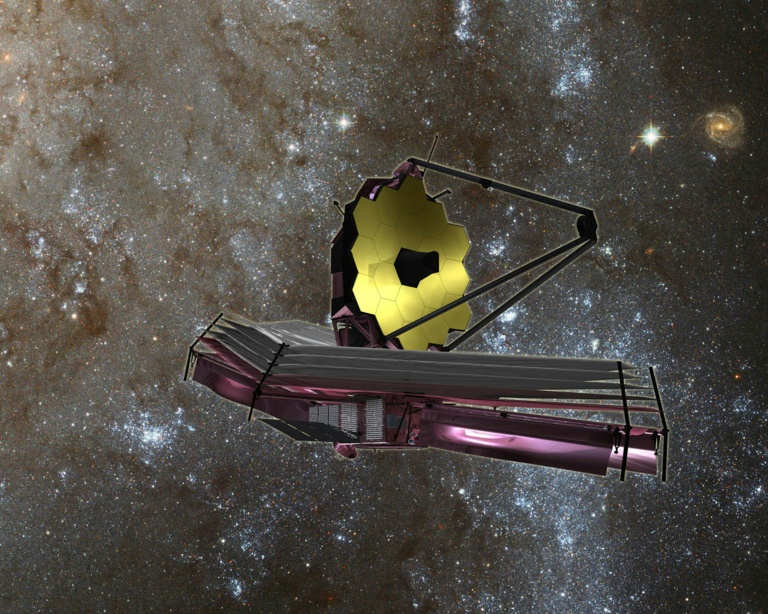
The months-old James Webb Space Telescope has added another major scientific discovery to its growing list: detecting for the first time signs of carbon dioxide in the atmosphere of a planet outside our solar system.

Although the exoplanet would never be able to support life as we know it, the successful discovery of CO2 gives researchers hope that similar observations could be carried out on rocky objects more hospitable to life.

“My first thought: wow, we really do have a chance to detect the atmospheres of terrestrial-size planets,” tweeted Natalie Batalha, a professor at the University of California at Santa Cruz and one of hundreds who worked on the Webb project.

Their study of exoplanet WASP-39, a hot gas giant closely orbiting a star 700 light years away, will soon be published in the journal Nature.

“For me, it opens a door for future research on super-Earths (planets larger than Earth but smaller than Neptune), or even Earth-sized planets,” Pierre-Olivier Lagage, an astrophysicist with France’s Atomic Energy Commission (CEA), told AFP.

The detection of CO2 will also help scientists learn more about how WASP-39 formed, NASA said in a press release. The exoplanet, which orbits its star once every four Earth days, has a mass one-quarter that of Jupiter but a diameter 1.3 times bigger.

The frequency of its orbit and large atmosphere made WASP-39 an ideal candidate for an early test of Webb’s state-of-the-art infrared sensor, known as NIRSpec.

Each time the exoplanet crosses in front of its star, it blocks out an almost imperceptible amount of light.

But around the edges of the planet, a tiny amount of light passes through the atmosphere.

Webb’s highly sensitive NIRSpec can detect the small changes that the atmosphere has on the light, allowing scientists to determine its gas composition.

The Hubble and Spitzer telescopes had already detected water vapor, sodium and potassium in WASP-39’s atmosphere, but carbon dioxide can now be added to that list thanks to Webb and its NIRSpec instrument.

“It was a special moment, crossing an important threshold in exoplanet sciences,” said Zafar Rustamkulov, a Johns Hopkins University researcher, in the NASA press release.

US strikes in Syria aimed at Iran-backed forces: Biden

US President Joe Biden said Thursday that US air and artillery strikes that killed four militants in eastern Syria were ordered to protect US forces from attacks by Iran-backed militia.

“I directed the August 23 strikes in order to protect and defend the safety of our personnel . . .  and to deter the Islamic Republic of Iran and Iran-backed militia groups from conducting or supporting further attacks on United States personnel and facilities,” Biden said in a statement informing Congress of the action.

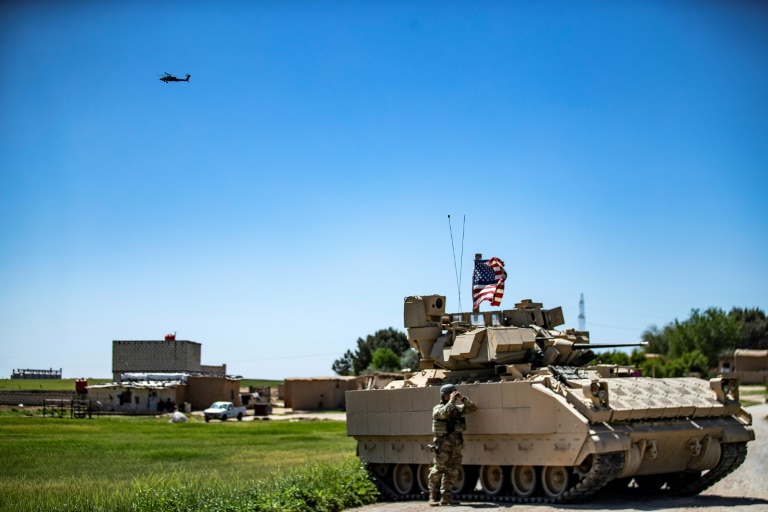
He said the US strikes, the heaviest action by American forces in the region in many months, responded to a series of rocket attacks on the facilities of US and partner troops in the area, including two on the al-Tanf Garrison and the Mission Support Site Green Village on August 15.

Biden said the retaliatory strikes, which involved Apache attack helicopters, AC-130 gunships and M777 artillery, targeted a facility used by the attackers for logistics and ammunition storage.

The first US strikes took place on Tuesday. But after the Iran-allied fighters launched a new barrage on US positions on Wednesday, a heftier force of American aircraft flew in to push back.

In total four militia fighters were killed and seven rocket launchers destroyed, the US Central Command, which oversees Middle East operations, said in a statement.

Three US service members incurred minor injuries in the shelling on Wednesday. 

“We made a concerted decision … to provide a proportional response here from a deterrence standpoint,” said Pentagon spokesman Brigadier General Patrick Ryder.

The strikes were over by early Thursday.

“We do not have anymore troops in contact. We believe this last round of escalation has terminated,” a US official said on grounds of anonymity.

The fighting took place in Deir Ezzor, a strategic, oil-rich province bordering Iraq.

The area east of the Euphrates is dominated by the Kurdish-led Syrian Democratic Forces, allies of the United States and other coalition partners that are maintaining a mission against the remnants of the Islamic State jihadist group.

Tehran rejected US claims that it was behind the militia attacks on the American garrisons in Syria.

It says it only has Islamic Revolutionary Guard Corps positioned inside Syria as “military advisers” with pro-regime forces.

But Iraq’s Kataeb Hezbollah, a pro-Iran group operating under the umbrella of the Hashed al-Shaabi network of militias, is involved inside Syria, as are the Iraqi Imam Ali Brigades and Sayyed al-Shuhada Brigades.

All three are close to the Revolutionary Guards.

The flare-up in attacks and counter-attacks came just as the United States and Iran near a possible deal to restore the 2015 nuclear deal, which could see the West ease sanctions on Tehran for it recommitting to strict limits on its nuclear program.

US officials say the fighting in Syria is not linked to the nuclear talks brokered by the European Union in Vienna.

Twitter ordered to give Musk additional bot account data

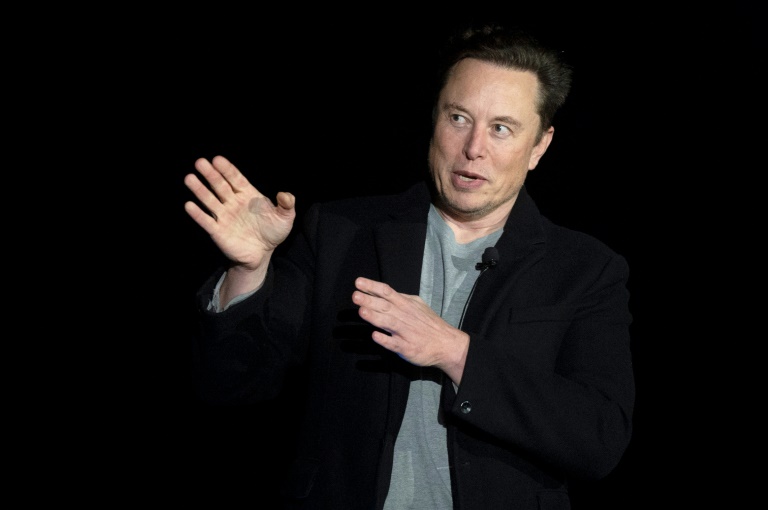
A US judge told Twitter on Thursday to surrender more data to Elon Musk on fake accounts, a key issue the billionaire is using to try to cancel his buyout bid.

While Judge Kathaleen McCormick allowed the Tesla boss’s team an opening to bolster its argument that Musk was misled, she chastised them for “absurdly broad” requests for “trillions upon trillions of data points.”

The judge ordered Twitter to hand over data on 9,000 accounts the firm audited at the end of 2021, which opens the door for that information to be used in Musk’s effort to quit the $44 billion deal.

“Some additional data from plaintiff (Twitter) seems warranted,” McCormick wrote, without elaborating, in her four-page ruling.

Musk has argued Twitter was dishonest on the number of false or spam accounts, prompting strong denials and a lawsuit from the social media firm that has led to a trial set for mid-October.

Musk’s lawyers pushed hard in a hearing Wednesday to force the firm to turn over mountains of information, while seizing upon a freshly revealed Twitter whistleblower’s claims of serious flaws inside the company. 

Twitter lawyer Bradley Wilson countered that the company deceived nobody, and that Musk wants a “do-over” regarding questions he should have asked before he made his unsolicited buyout offer early this year.

The firm opposed handing over certain types of data for reasons including the potential to violate user privacy protected by law, its attorney Wilson argued.

Even if Musk’s experts come to a different conclusion about the number of spam accounts at Twitter, that would not amount to a breach significant enough to let him break the buyout contract, Twitter attorneys argue.

Whistleblower Peiter Zatko’s complaint to US authorities accuses Twitter of issuing untrue statements on account numbers because “if accurate measurements ever became public, it would harm the image and valuation of the company.”

It was not immediately clear whether the complaint, and its use by Musk’s attorneys, will significantly alter the course of the case.

Twitter’s lawyers had expressed concern that Musk could misuse sensitive data they turn over to his lawyers.

The judge said the billionaire’s team “have agreed to treat this data as highly confidential.”

Boeing eyes February for space capsule's first crewed flight

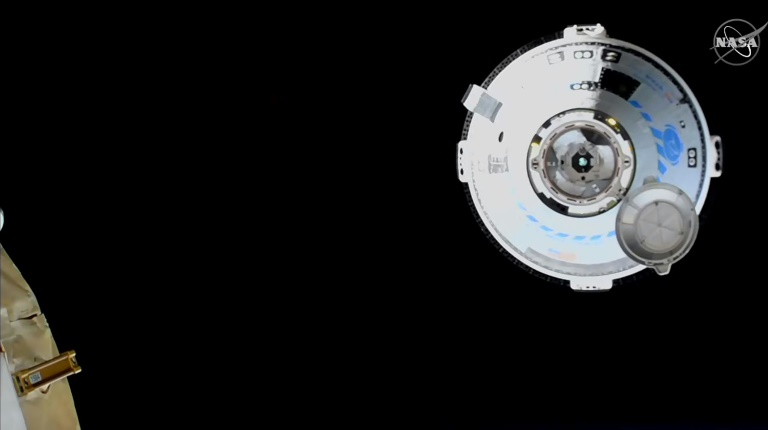
The first crewed flight of Boeing’s space capsule Starliner is scheduled for February 2023, the company and NASA announced Thursday, as the United States seeks to secure a second way for its astronauts to reach the International Space Station.

Since 2020, American astronauts have traveled to the ISS aboard SpaceX’s vessels but the US space agency wants to widen its options.

After a series of hiccups in its space program that led to serious delays, including a 2019 flight that did not reach the ISS, Boeing finally managed to send the gumdrop-shaped capsule to the station in May — without a crew.

This time, the aerospace giant will send the Starliner up with humans aboard, to earn NASA’s green light to begin regular missions — at an expected pace of one per year.

“Currently, we’re targeting a launch date as early as February of 2023,” Steve Stich, the manager of NASA’s Commercial Crew Program, told reporters.

“We’re in good shape to execute these plans to be ready for that flight in February,” added Mark Nappi, the Starliner program manager at Boeing.

The test flight — aptly named CFT, or Crew flight test — will carry US astronauts Barry Wilmore and Sunita Williams. 

They are expected to be docked for eight days at the ISS, where they will conduct a series of experiments, said ISS program manager Joel Montalbano.

“Our agency goal is to get two US commercial providers up and running as soon as we can.”

Boeing had hoped to conduct this test flight before the end of the year, but a few glitches experienced in the uncrewed May flight led to necessary adjustments to the vessel.

An issue was detected in the propulsion system: two thrusters responsible for placing Starliner in a stable orbit failed, though officials insisted there was plenty of redundancy built into the system to overcome the problem.

Boeing’s teams later determined that “debris-related conditions” were to blame, Nappi said, adding that the origin of said debris was still unknown.

Some filters were removed to fix a pressure problem, and flight software was updated to avoid a data overload.

Boeing and SpaceX were awarded contracts in 2014, shortly after the end of the space shuttle program, during a time when the United States was left reliant on Russian Soyuz rockets for rides to the ISS.

Elon Musk’s SpaceX filled the void first, providing space “taxi” service since a successful test mission for its Dragon capsule in 2020.

Boeing eyes February for space capsule's first crewed flight

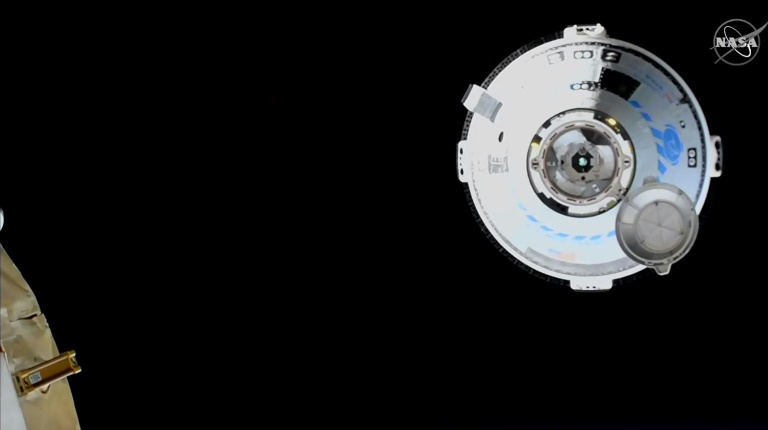
The first crewed flight of Boeing’s space capsule Starliner is scheduled for February 2023, the company and NASA announced Thursday, as the United States seeks to secure a second way for its astronauts to reach the International Space Station.

Since 2020, American astronauts have traveled to the ISS aboard SpaceX’s vessels but the US space agency wants to widen its options.

After a series of hiccups in its space program that led to serious delays, including a 2019 flight that did not reach the ISS, Boeing finally managed to send the gumdrop-shaped capsule to the station in May — without a crew.

This time, the aerospace giant will send the Starliner up with humans aboard, to earn NASA’s green light to begin regular missions — at an expected pace of one per year.

“Currently, we’re targeting a launch date as early as February of 2023,” Steve Stich, the manager of NASA’s Commercial Crew Program, told reporters.

“We’re in good shape to execute these plans to be ready for that flight in February,” added Mark Nappi, the Starliner program manager at Boeing.

The test flight — aptly named CFT, or Crew flight test — will carry US astronauts Barry Wilmore and Sunita Williams. 

They are expected to be docked for eight days at the ISS, where they will conduct a series of experiments, said ISS program manager Joel Montalbano.

“Our agency goal is to get two US commercial providers up and running as soon as we can.”

Boeing had hoped to conduct this test flight before the end of the year, but a few glitches experienced in the uncrewed May flight led to necessary adjustments to the vessel.

An issue was detected in the propulsion system: two thrusters responsible for placing Starliner in a stable orbit failed, though officials insisted there was plenty of redundancy built into the system to overcome the problem.

Boeing’s teams later determined that “debris-related conditions” were to blame, Nappi said, adding that the origin of said debris was still unknown.

Some filters were removed to fix a pressure problem, and flight software was updated to avoid a data overload.

Boeing and SpaceX were awarded contracts in 2014, shortly after the end of the space shuttle program, during a time when the United States was left reliant on Russian Soyuz rockets for rides to the ISS.

Elon Musk’s SpaceX filled the void first, providing space “taxi” service since a successful test mission for its Dragon capsule in 2020.

Search for trapped Mexican miners could take 'almost a year'

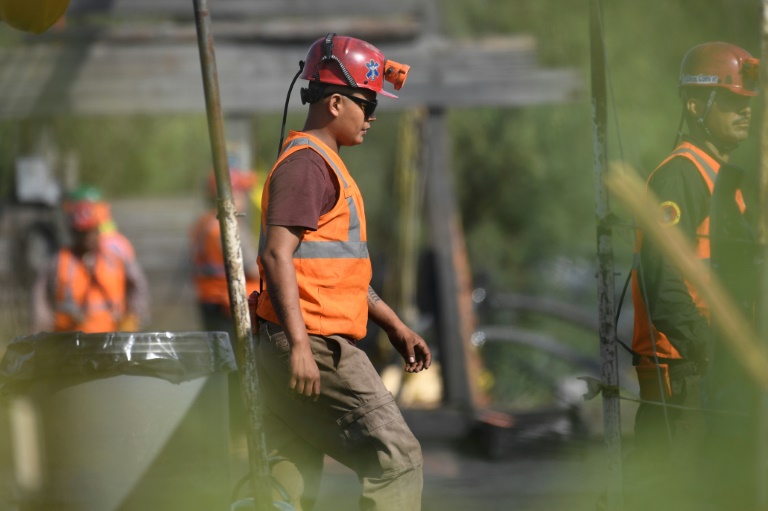
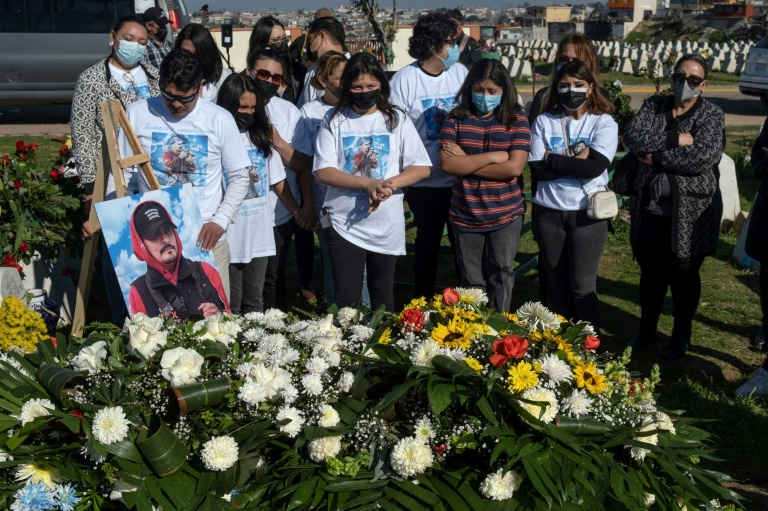
Relatives of 10 workers trapped in a flooded Mexican coal mine reacted with despair on Thursday after being told by authorities that the search operation could take nearly a year.

The news appeared to extinguish any lingering hope of the miners being brought out alive, three weeks after the launch of a major rescue effort in the northern state of Coahuila.

“They tell us that it would take between six and 11 months to get them out,” Juani Cabriales, the sister of one of the workers, said after being briefed by the government on its latest plan.

“We’re desperate. We don’t know what to do. We can’t accept this,” she told AFP by telephone.

Five miners managed to escape following the accident on August 3, but there have been no signs of life from the others.

The workers are thought to have inadvertently made a hole that brought water gushing in from a bigger, abandoned mine.

Authorities were forced to rethink their initial plan to send military divers into the tunnels of the roughly 60-meter (200-foot) deep El Pinabete mine after a sharp rise in the water level inside.

Last week the government said it planned to drill holes and inject cement to seal the leaks.

On Wednesday, authorities said that they were also considering digging an open pit with a ramp to access the area where the miners were believed to be trapped.

“We were hoping that it would take a month, and now they come out with this,” said Guadalupe Cabriales, another sister of one of the missing workers.

“It’s almost a year. It’s not possible. There must be other ways,” she said.

Coahuila, Mexico’s main coal-producing region, has seen a series of fatal mining accidents over the years.

The worst was an explosion that claimed 65 lives at the Pasta de Conchos mine in 2006.

Only two bodies were retrieved after that tragedy.

Outgoing HRW chief says govts no longer able to hide repression

After three decades at the helm of Human Rights Watch, Kenneth Roth has come to believe that governments are “always tempted” to violate citizens’ rights.

But as he prepares to stand down later this month, Roth also believes that a more powerful human rights movement means they can no longer hide this “ugly reality.” 

In an interview ahead of vacating his role, Roth looked back on the “endless struggle,” the ups and downs, victories and defeats since he became HRW’s executive director in 1993.

“I think the big trend over the last 30 years is that the human rights movement has deepened and strengthened,” he told AFP in his New York apartment. “Every country I visit has human rights defenders in it.”

“Does that mean that human rights violations go away? Obviously not,” said Roth.

“Governments are always tempted to violate human rights,” he said, citing China’s repression of Uyghurs, Russia’s invasion of Ukraine, and regions he feels receives less attention, such as Tigray in Ethiopia, and Yemen.

But thanks to the stronger activism, “it’s virtually impossible for governments to hide their abuses, particularly in an era of social media where everybody has a smartphone.”

“And by spotlighting that discrepancy between the pretense and the ugly reality, we do generate pressure,” he insisted.

Looking back over the past 30 years, he believes the world has witnessed “enormous changes, some for the good, some for the bad.”

On the one hand, he highlights the birth of democracies in Eastern Europe and South America, but laments that the Middle East and North Africa, are “still pretty much the same” as they were.

– ‘Shame them’ –

As for Russia and China, after a “positive evolution with significant opening,” the former is “reverting back” towards the Soviet era and the latter towards Maoist-style rule, he said.

“It’s a struggle, it’s an endless struggle,” said the former lawyer, who plans to devote his time after leaving HRW to writing a book about how to put pressure on governments.

“At a minimum, you can shame them, you can embarrass them. But we also go to allied governments around the world and say, would you use your influence on our behalf to push for positive change?” Roth added.

“(And) abusive governments, they always care about something: they want the next military aid package, they want a trade deal, they want to be invited to some fancy summit,” he said. 

But does it work?

“I don’t pretend that we turn these governments into good guys,” he conceded. “Often, all they care about is staying in power.” 

“But if we put enough pressure on them, the benefits they see from violating human rights begin to be outweighed by the cost to their reputation,” Roth said.

“Sometimes we succeed in changing the cost-benefit analysis to make governments feel that it’s just not worth it to violate human rights, but other times we fail. And that’s just inevitable.” 

Mexico arrests alleged mastermind of journalist's murder

Mexican authorities have arrested an alleged drug trafficker accused of masterminding the murder of a photojournalist in the northern border city of Tijuana in January, the government said Thursday.

The killing of Margarito Martinez — and the murder of a second journalist in Tijuana days later — triggered international condemnation and calls for the government to step up protection of media workers.

The suspect, identified as “David N,” was detained on Wednesday with two other people in the town of Apodaca in the northern state of Nuevo Leon, Deputy Security Minister Ricardo Mejia told reporters.

He is the “alleged intellectual author of Margarito’s murder” and head of a cell of the once-powerful Arellano Felix drug cartel, Mejia told reporters, without revealing the suspected motive.

Remnants of the same cartel are also accused of murdering reporter Lourdes Maldonado less than a week later for complaining about drug dealing in her neighborhood of Tijuana.

According to the government, 13 journalists have been killed in Mexico in 2022 — already one of the deadliest years yet for the country’s press.

Media rights watchdog Reporters Without Borders (RSF) puts the number at 14 — at least 10 of whom it considers were killed because of their work.

More than 150 media workers have been murdered since 2000 in the Latin American country, one of the world’s most dangerous countries for journalists, according to RSF.

Ethiopia's return to conflict: what we know

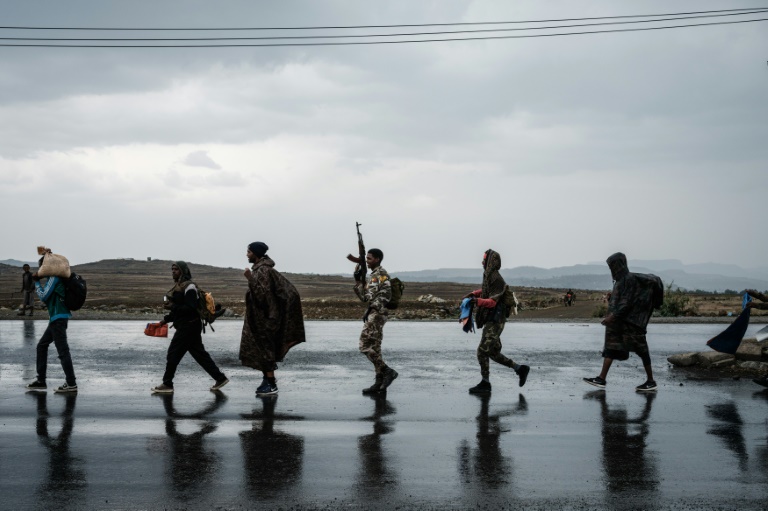
Fresh fighting between Ethiopian forces and Tigrayan rebels has broken a five-month truce that had paved the way for the resumption of humanitarian aid and tentative peace efforts.

The facts behind the sudden return to conflict in northern Ethiopia remain sparse. Here’s what we know so far and the questions that still linger:

– How did it happen? –

As has been the case throughout the 21-month conflict, both sides have accused each other of starting the fighting and violating the truce that had been in place since late March.

The Tigray People’s Liberation Front (TPLF) said government forces and their allies launched a “large-scale” offensive towards southern Tigray at 5 am (0200 GMT) on Wednesday.

But Prime Minister Abiy Ahmed’s government said it was the rebels who struck first.

The tit-for-tat claims could not be independently verified as access to northern Ethiopia is severely restricted.

Later in the day, Ethiopia’s air force announced it had downed a plane carrying weapons for the TPLF that had entered its airspace via Sudan, a claim the rebels dismissed as a “blatant lie”.

– What does this mean for peace efforts? –

Regardless of who initiated Wednesday’s clashes, the prospects for peace in Africa’s second most populous nation appear grim, analysts say.

Even before the latest eruption of violence, the two sides were already at odds over the question of who should mediate potential negotiations. 

The Abiy government wants the African Union’s Horn of Africa envoy Olusegun Obasanjo to lead peace talks while the TPLF has been pushing for Kenya’s outgoing President Uhuru Kenyatta to broker dialogue.

They have also sparred over the restoration of basic services such as electricity, communications and banking to Tigray — a key precondition for dialogue according to the TPLF.

The government on the other hand says federal service providers cannot work inside Tigray without a “secure environment”.

The Eurasia Group political risk consultancy flagged “the pre-emptive recruitment and training of troops by both camps” — an indication that neither side had put much stock in peace negotiations.

“Amid a resurgence in fighting, neither party will be willing to reduce their leverage for future talks by compromising on key issues,” said Eurasia’s Africa analyst Connor Vasey.

“Rather, they will likely aim to use the next phase of fighting to bolster their negotiating positions,” he said, setting the stage for an escalation in violence.

– How will humanitarian aid be affected? –

Prior to the truce, no aid had reached Tigray by road for three months, leaving the region of six million in desperate need of food.

Even after convoys resumed, fuel shortages have made it difficult for aid workers to distribute supplies.

Last week, the UN’s World Food Programme warned that nearly half the population in Tigray was suffering from a severe lack of food and rates of malnutrition had “skyrocketed”.

The return to conflict will worsen an already dire situation.

On Wednesday, the UN said the rebels had “forcibly entered” a WFP warehouse in Tigray’s capital Mekele that morning and taken a dozen tankers carrying 570,000 litres of fuel intended for emergency relief operations.

“Millions will starve if we do not have fuel to deliver food. This is OUTRAGEOUS and DISGRACEFUL,” WFP chief David Beasley said on Twitter.

But the rebels dismissed the “incendiary allegations”, saying they had originally loaned over 600,000 litres of fuel to the WFP on the condition that it “would pay back the fuel in kind”, enabling the TPLF to “run hospitals, schools and other public services” in Tigray.

– Is this a full-blown return to war? –

In recent weeks, both warring parties appear to have simultaneously broached the possibility of peace while also making preparations for a potential return to conflict.

Whether the latest conflagration leads to all-out war will depend on which view prevails, with analysts urging the international community to play a more active role in bringing both players to the negotiating table.

In a statement dated August 23, TPLF leader Debretsion Gebremichael said the rebels had participated in “two rounds of confidential face-to-face” meetings with top Ethiopian officials, the first acknowledgement by either side of direct talks. 

The government has not confirmed the existence of such talks, but last week an official committee tasked with looking into negotiations called for a formal ceasefire in a proposal it planned to submit to the AU.

The eruption of hostilities is “a deafening warning to the key international and regional actors that they must immediately ensure peace talks actually occur”, said William Davison, senior Ethiopia analyst for the International Crisis Group think tank.

“They should accordingly instruct the belligerents to issue all of their demands when at the negotiating table, rather than making them preconditions for talks.”

Diplomatic efforts in the past have run into trouble.

The TPLF has accused Obasanjo of being biased in favour of the government, and Addis Ababa in turn has chastised US and EU envoys for urging a resumption of basic services to Tigray, reflecting the scale of the challenge ahead.

France's Macron looks to 'future' on Algeria trip to mend ties

President Emmanuel Macron arrived in Algeria on Thursday for a three-day visit aimed at mending ties with the former French colony, which this year marked its 60th anniversary of independence.  

The first French president to be born after Algerian independence, Macron is hoping “to lay a foundation to rebuild and develop” a sometimes difficult relationship with the North African nation, his office said.

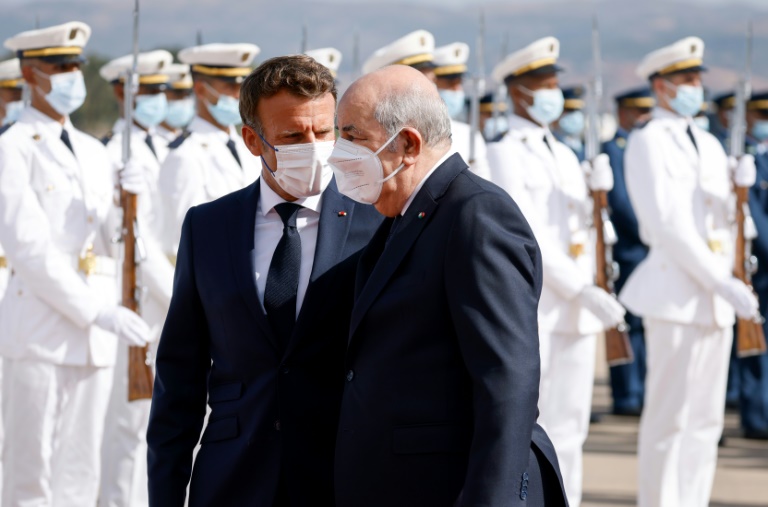
Accompanied by seven ministers, Macron landed at 3:30 pm (1430 GMT) at Houari Boumediene Airport in the capital Algiers, where he was warmly greeted by President Abdelmadjid Tebboune.

The two men, wearing face masks, walked along a red carpet lined by ceremonial guards, then a military band played both national anthems.

Later, Macron visited a monument to martyrs of the country’s war for independence, which ended more than 130 years of French colonial rule in 1962.

Accompanied by Algeria’s top diplomat Ramtane Lamamra, Macron laid a wreath at the site and observed a minute of silence, according to state news agency APS.

The French leader, on his second visit to Algeria since he took power in 2017, “has chosen to direct this visit towards the future, (focusing on) start-ups, innovation, youth, new sectors,” his office said.

Algerian media said Macron’s visit showed both countries’ desire for relations built around “a new vision based on equal treatment and balance of interests”.

It also reflected “a recognition of Algeria’s central role in the region” and the country’s “return to the international scene.”

Macron, who will meet entrepreneurs in Algiers as well as young people in the second city Oran, is accompanied by a 90-strong delegation.

France’s chief rabbi Haim Korsia, the son of Algerian-born Jews, withdrew from the trip at the last moment after testing positive for Covid-19.

His planned attendance had been criticised by prominent Islamist politician Abderrazak Makri and social media users in Algeria, where the Palestinian cause is widely supported.

Ties between Paris and Algiers have been particularly stormy since last year, when Macron questioned Algeria’s existence as a nation before the French occupation and accused the government of fomenting “hatred towards France”.

Tebboune withdrew his country’s ambassador in response and banned French military aircraft from its airspace.

– Better ties ‘a necessity’ –

But Macron’s office said he “regretted” the misunderstandings caused by his comments, and his aides believe both sides have moved on.

They note the resumption of normal diplomatic relations and overflights to French army bases further south in Africa.

Analyst Mansour Kedidir said that “given instability in the Maghreb region, conflicts in the Sahel and the war in Ukraine, improving ties between France and Algeria is a political necessity”.

Macron and Tebboune will discuss the situation in Algeria’s southern neighbour Mali, as well as the growing influence in the region of Russia, Algeria’s top arms supplier.

France’s latest efforts to mend ties comes as Algeria moves to fill a vast shortfall in gas supplies to Europe following Russia’s invasion of Ukraine.

European nations are seeking to end their dependence on Russian hydrocarbons, giving Algeria — Africa’s biggest gas exporter with direct pipelines to Spain and Italy — renewed clout.

“The French president will certainly ask Algeria to make an effort to try to increase its gas production,” said Algerian economist Abderrahmane Mebtoul.

But Macron’s office has said gas is not a major feature of the visit — although the head of French energy firm Engie, Catherine MacGregor, will be on Macron’s delegation.

– ‘Different discourse’ –

Macron has long ruled out issuing an apology for the highly sensitive issue of colonialism, but he has made a series of gestures aimed at healing past wounds.

In Algiers, few have much sympathy towards Macron, who during his first election campaign had described French colonialism as a “crime against humanity”.

“Before he was president, he used nice words, he visited (Algeria), but right after he went back to France, he changed,” said computer scientist Othmane Abdellouche, 62. 

“He used a totally different discourse”.

But businessman Kamel Moula, who heads the Council of Economic Renewal Algerian, told the TSA news website that he wanted to see “a new mode of cooperation” between the two countries that would see them “jointly conquer new markets”.

French historians say half a million civilians and combatants died during Algeria’s bloody war for independence, 400,000 of them Algerian. The Algerian authorities say 1.5 million were killed.

Tebboune’s office said in October that over 5.6 million Algerians were killed during the colonial period.

Algerian rights groups have also urged Macron not to overlook human rights abuses by the government that came to power after long-time leader Abdelaziz Bouteflika stepped down in 2019.

Tebboune, a prime minister under Bouteflika, has clamped down on the Hirak opposition movement that forced his predecessor to resign.

Close Bitnami banner
Bitnami