World

'Dangerous' heatwaves likely to grip the tropics daily by 2100: study

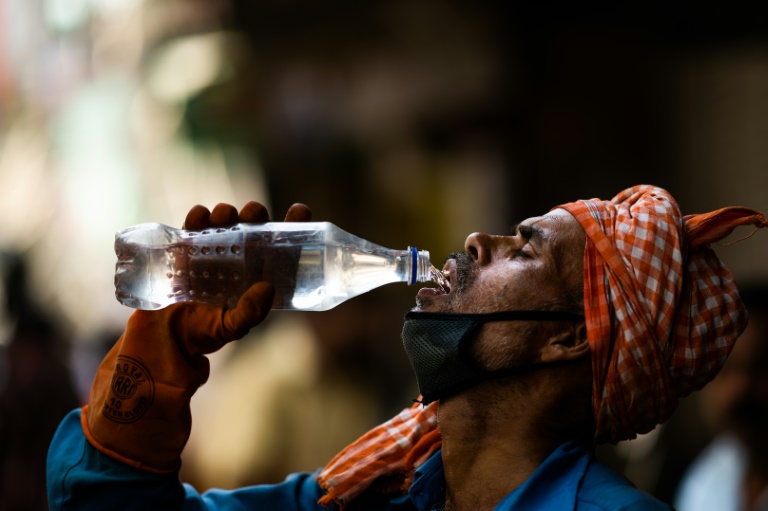
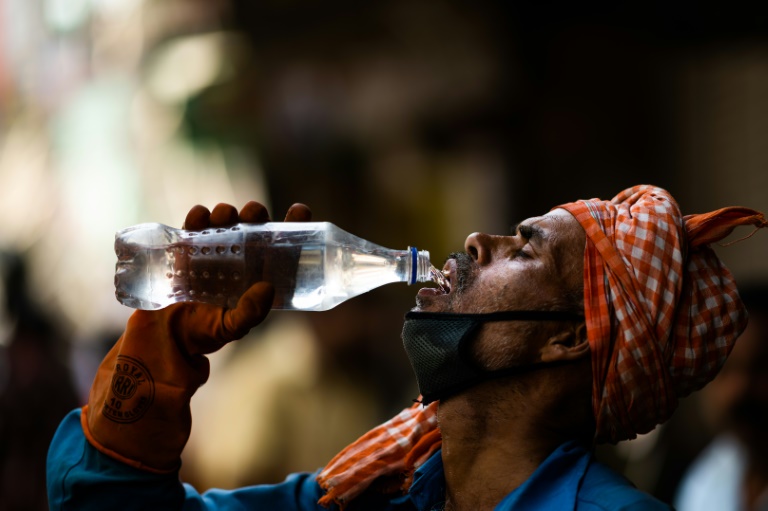
Many millions of people in the tropics could be exposed to dangerous heat for half the year by 2100 even if humanity manages to meet climate goals, researchers warned Thursday.

In the most likely scenario, the world would miss those targets — potentially subjecting people across the tropics to harmful temperatures most days of each typical year by the end of the century, the study found.

If emissions go unchecked, large numbers of people in these regions could face potentially “nightmarish” periods of extreme heat.

“There’s a possibility that if we don’t get our act together, billions of people are going to be really, really overexposed to these extremely dangerous temperatures in a way that we just fundamentally haven’t seen,” said lead author Lucas Vargas Zeppetello of Harvard University. 

Severe heatwaves — made hotter and more frequent by climate change — are already being felt across the world, threatening human health, wildlife and crop yields.

Most climate projections predict temperature increases under different policy scenarios, but do not say which of those pathways is more likely. 

In this study, published in the journal Communications Earth and Environment, researchers estimated potential exposure to dangerous heat and humidity.

They used statistical projections to predict levels of carbon dioxide emissions from human activity and the resultant levels of global warming.

They found that many people in tropical regions could face dangerous heat levels for half the year by the end of the century, even if the world limits temperature rises to the Paris climate deal goal of less than two degrees Celsius (35.6 degrees Fahrenheit) above preindustrial levels.

Outside the tropics, they said deadly heatwaves will likely become annual occurrences. 

The researchers used a heat index that puts “dangerous” levels at 39.4C, while temperatures above 51C are considered “extremely dangerous” and totally unsafe for humans.

The extreme measure was originally developed for people working in scorching indoor environments, like a ship’s boiler room, and have rarely been observed outdoors, Zeppetello said.

But by the end of the century, the researcher said it was “virtually guaranteed” that people in some parts of the tropics would experience this level of heat every year unless emissions are severely curtailed, with swathes of sub-Saharan Africa and India particularly at risk.

“That’s pretty scary,” he told AFP, adding that even walking outside would be dangerous under those conditions. 

– ‘Nightmarish’ conditions –

Earth has warmed nearly 1.2C so far and current predictions based on countries’ carbon-cutting pledges would see the world far exceed the Paris Agreement’s 2C target for 2100, let alone its more ambitious 1.5C aspiration. 

In their research Zeppetello and colleagues analysed predictions from global climate models, human population projections, and looked at the relationship between economic growth and carbon emissions.

They estimated that there is only a 0.1 percent chance of limiting global average warming to 1.5C by 2100, projecting that the world is likely to reach 1.8C by 2050. 

In 2100, the researchers found, the most likely global average temperature rise would be 3C, which Zeppetello said would spell “nightmarish” conditions for many people.  

In a worst case scenario, in which emissions continue unchecked, he said extreme temperatures could last up to two months every year in parts of the tropics. 

But he said it depends on how swiftly humanity can cut emissions. 

“We don’t have to go to that world. There’s nothing right now that says it is a certainty, but people need to be aware of just how dangerous that would be if it were to pass,” he said. 

The researchers said that under all scenarios there could be a large increase in heat-related illnesses, particularly among the elderly, vulnerable and those working outside. 

“I think this is a very important point that is receiving far too little attention,” said Kristin Aunan, a research professor at the Center for International Climate Research specialising in emissions and human health, who was not involved in the study. 

“Reduced workability in outdoor environments could have large economic impacts in addition to the human suffering arising from having to work under extreme temperatures,” she told AFP, adding crop production and livestock can also be affected by temperature extremes. 
'Dangerous' heatwaves likely to grip the tropics daily by 2100: study

Many millions of people in the tropics could be exposed to dangerous heat for half the year by 2100 even if humanity manages to meet climate goals, researchers warned Thursday.

In the most likely scenario, the world would miss those targets — potentially subjecting people across the tropics to harmful temperatures most days of each typical year by the end of the century, the study found.

If emissions go unchecked, large numbers of people in these regions could face potentially “nightmarish” periods of extreme heat.

“There’s a possibility that if we don’t get our act together, billions of people are going to be really, really overexposed to these extremely dangerous temperatures in a way that we just fundamentally haven’t seen,” said lead author Lucas Vargas Zeppetello of Harvard University. 

Severe heatwaves — made hotter and more frequent by climate change — are already being felt across the world, threatening human health, wildlife and crop yields.

Most climate projections predict temperature increases under different policy scenarios, but do not say which of those pathways is more likely. 

In this study, published in the journal Communications Earth and Environment, researchers estimated potential exposure to dangerous heat and humidity.

They used statistical projections to predict levels of carbon dioxide emissions from human activity and the resultant levels of global warming.

They found that many people in tropical regions could face dangerous heat levels for half the year by the end of the century, even if the world limits temperature rises to the Paris climate deal goal of less than two degrees Celsius (35.6 degrees Fahrenheit) above preindustrial levels.

Outside the tropics, they said deadly heatwaves will likely become annual occurrences. 

The researchers used a heat index that puts “dangerous” levels at 39.4C, while temperatures above 51C are considered “extremely dangerous” and totally unsafe for humans.

The extreme measure was originally developed for people working in scorching indoor environments, like a ship’s boiler room, and have rarely been observed outdoors, Zeppetello said.

But by the end of the century, the researcher said it was “virtually guaranteed” that people in some parts of the tropics would experience this level of heat every year unless emissions are severely curtailed, with swathes of sub-Saharan Africa and India particularly at risk.

“That’s pretty scary,” he told AFP, adding that even walking outside would be dangerous under those conditions. 

– ‘Nightmarish’ conditions –

Earth has warmed nearly 1.2C so far and current predictions based on countries’ carbon-cutting pledges would see the world far exceed the Paris Agreement’s 2C target for 2100, let alone its more ambitious 1.5C aspiration. 

In their research Zeppetello and colleagues analysed predictions from global climate models, human population projections, and looked at the relationship between economic growth and carbon emissions.

They estimated that there is only a 0.1 percent chance of limiting global average warming to 1.5C by 2100, projecting that the world is likely to reach 1.8C by 2050. 

In 2100, the researchers found, the most likely global average temperature rise would be 3C, which Zeppetello said would spell “nightmarish” conditions for many people.  

In a worst case scenario, in which emissions continue unchecked, he said extreme temperatures could last up to two months every year in parts of the tropics. 

But he said it depends on how swiftly humanity can cut emissions. 

“We don’t have to go to that world. There’s nothing right now that says it is a certainty, but people need to be aware of just how dangerous that would be if it were to pass,” he said. 

The researchers said that under all scenarios there could be a large increase in heat-related illnesses, particularly among the elderly, vulnerable and those working outside. 

“I think this is a very important point that is receiving far too little attention,” said Kristin Aunan, a research professor at the Center for International Climate Research specialising in emissions and human health, who was not involved in the study. 

“Reduced workability in outdoor environments could have large economic impacts in addition to the human suffering arising from having to work under extreme temperatures,” she told AFP, adding crop production and livestock can also be affected by temperature extremes. 

Gas prices approach record peak on Russian supply fears

European natural gas prices climbed Thursday towards a record peak on heightened fears over Russian supplies, while equities rose on the eve of a key speech from Federal Reserve chair Jerome Powell.

Europe’s benchmark Dutch TTF gas contract advanced to 322 euros per megawatt hour, not far from the record high 345 euros struck in March shortly after key gas producer Russia invaded Ukraine.

Prices have spiked in recent days as a three-day halt in Russian deliveries to Germany via the Nord Stream 1 pipeline approaches amid fears that Moscow will not turn the taps back on afterwards.

At the same time, one-year forward contracts for electricity prices in both France and Germany surged on Thursday to record pinnacles on worries over a winter energy crunch.

– ‘Unstoppable march upwards’ –

“Gas is on a seemingly unstoppable march upwards again, a dramatic move which will intensify the energy crisis,” said Hargreaves Lansdown analyst Susannah Streeter.

“Already plans are being brought in to save energy which will darken streets across Germany and make public buildings colder, but much tougher measures may have to be enforced given dwindling gas reserves.”

In stock market trade, European equities mostly advanced, with Frankfurt drawing some strength from news that the German economy expanded by an anaemic 0.1 percent in the second quarter.

That was upgraded from the prior projection of zero growth, but analysts remain downbeat.

“I’m trying to find a reason to be optimistic on the back of that, but in reality it just means the economy may take a little longer to fall into recession,” warned OANDA analyst Craig Erlam.

“With the energy crisis unlikely to improve, this likely means another quarter of flat growth at best before the economy falls into recession later this year.”

Wall Street also pushed higher as traders looked to central bankers meeting in Jackson Hole in the US state of Wyoming this week.

All eyes are on Powell’s Friday speech for clues about the Federal Reserve’s plans to tame runaway inflation with higher borrowing costs.

Central banks around the world are trying to find a delicate balance between curbing inflation and avoiding recessions.

The challenge has been compounded this year by Russia’s invasion of Ukraine, which has sent energy and food prices skyrocketing.

There are concerns that the Fed’s fight against soaring inflation could lead to a recession in the United States, which could, in turn, hit a global economy that is still recovering from the Covid pandemic.

But the latest data out Thursday showed a continuing drop in first time claims to 243,000 last week, suggesting the US economy remains strong.

“A reading below 250,000 certainly indicates that labor market conditions remain tight, which means the potential for sticky wage-based inflation pressures also remains tight, and that is unlikely to be a comforting indication for Fed officials,” said Briefing.com analyst Patrick O’Hare.

US second-quarter GDP figures were also revised higher, to a 0.6-percent contraction from the initial estimate of a 0.9-percent contraction.

– China stimulus –

Asian indices rose after China unveiled fresh measures to boost its economy.

The moves to shore up the economy were announced by China’s State Council on Wednesday, including steps to encourage lending, consumption and investment, according to the official Xinhua news agency.

They also included support for electricity producers and agriculture, two sectors hit especially hard by the heatwave, though Xinhua’s readout of the State Council meeting did not mention the extreme weather.

– Key figures at around 1530 GMT –

New York – Dow: UP 0.1 percent at 33,001.63 points

EURO STOXX 50: UP 0.2 percent at 3,674.05

London – FTSE 100: UP 0.1 percent at 7,479.74 (close)

Frankfurt – DAX: UP 0.4 percent at 13,271.96 (close) 

Paris – CAC 40: DOWN less than 0.1 percent at 6,381.56 (close)

Tokyo – Nikkei 225: UP 0.6 percent at 28,479.01 (close)

Hong Kong – Hang Seng Index: UP 3.6 percent at 19,968.38 (close)

Shanghai – Composite: UP 1.0 percent at 3,246.25 (close)

Euro/dollar: UNCHANGED from Wednesday at $0.9970

Pound/dollar: UP at $1.1814 from $1.1799

Euro/pound: DOWN at 84.36 pence from 84.47 pence

Dollar/yen: UP at 136.71 yen from 136.36 yen

West Texas Intermediate: DOWN 0.6 percent at $94.30 per barrel

Brent North Sea crude: DOWN 0.4 percent at $100.83

burs-rl/kjm

War in Ukraine: latest developments

Here are the latest developments in the war in Ukraine:

– Nuclear plant disconnected –

Ukraine’s Zaporizhzhia nuclear plant, controlled by Russian forces since the early days of the war, is disconnected from the national power supply, the state energy operator says.

“The actions of the invaders caused a complete disconnection of the (plant) from the power grid — the first in the history of the plant,” Energoatom says on the Telegram messaging app.

Europe’s largest nuclear plant has been the target of military strikes, which each side blames on the other.

The attacks have raised fears of a nuclear disaster on the scale of that in Ukraine’s Chernobyl in 1986.

Kyiv officials have said they believe Moscow has seized the station in southern Ukraine to divert power to the Crimean Peninsula, annexed by Russia in 2014.

– Deadly railway station strike –

Russia says it killed over 200 Ukrainian troops in an attack on a railway station in central Ukraine that Kyiv said left 25 people dead, including children.

“As a result of a direct hit by an Iskander missile on a military train at the Chaplyne railway station in the Dnipropetrovsk region, more than 200 servicemen of the reserve of Ukraine’s Armed Forces and 10 units of military equipment were destroyed,” Russia’s defence ministry says in its daily briefing. 

Ukraine’s railways have been vital in the effort to evacuate vast swathes of the country since Moscow sent in troops.

The defence ministry says the train was “en route to combat zones” in the eastern Donbas region, which Moscow seeks to fully control. 

The EU has condemned the “heinous” attack on civilians carried out on Wednesday, the day Ukraine marked Independence Day and six months since the start of Moscow’s invasion.

– Putin raises army headcount –

Russian President Vladimir Putin signs a decree to increase the headcount of the country’s army.  

Russia’s army will have over two million people, including 1.15 million servicemen, starting January 2023. 

Putin last set the army headcount in 2017, at around 1.9 million people with 1.01 million soldiers.

While the decree does not outline the reasons for the increase, it comes as Moscow’s troops are focused on capturing territories in eastern Ukraine. 

The decree also comes at a time of soaring tensions between Moscow and Western countries, which have imposed sanctions on Russia.

– Latvia removes Soviet-era monument –

Latvia takes down a Soviet-era monument in Riga following Russia’s invasion of Ukraine, despite protests from the Baltic state’s ethnic Russian minority to keep it. 

Demolition machinery was used to remove the 79-metre (259-foot) World War II memorial, which has become a rallying point for pro-Kremlin supporters in Latvia. 

Like fellow Baltic states Estonia and Lithuania, Latvia is a NATO and EU member which has shown strong support for Ukraine in the conflict with Russia.

Latvia’s ethnic Russian community — which makes up 30 percent of the population — had protested against the removal of the Monument to the Liberators of Soviet Latvia and Riga from the German Fascist Invaders. 

Riga’s parliament has voted to remove all remaining Soviet statues and plaques by mid-November.

burs-jmy/lcm

Europeans cross borders to get monkeypox vaccine

Hundreds of Europeans have crossed borders for the monkeypox vaccine, sparking calls to address a gaping inequality in access to doses between nations.

The current outbreak began in Europe in May, when the virus began spreading rapidly outside areas in Africa where it has long been endemic.

The virus, which is rarely fatal but can cause extremely painful lesions, has overwhelmingly affected men who have sex with men, some of whom have sought to swiftly get vaccinated.

However some countries have had much larger and quicker rollouts of the only approved vaccine for monkeypox, a smallpox jab produced by Danish firm Bavarian Nordic and marketed in Europe as Imvanex.

Belgium, for example, has just 3,000 doses, which are only available to LGBT sex workers, men who have sex with men with sexually transmitted infections or HIV, and some rare contact cases.

But neighbouring France has far more doses. While the exact number is unknown, more than 53,000 doses have already been administered in the country.

During the European summer many Belgians have popped over the border to get a jab.

Pharmacist Virginie Ceyssac said that 30 to 40 percent of those who had been vaccinated at her Aprium pharmacy in the northern French city of Lille were Belgians.

– ‘Very warm’ welcome –

Samy Soussi of the Brussels-based HIV association ExAequo said that “thanks to word of mouth, we knew that it was possible for Belgians to be vaccinated in France”.

ExAequo even contacted Lille’s vaccination centre to organise carpooling for Belgians to attend a jab rollout day on August 6.

“444 Belgians were vaccinated that morning,” Soussi said, adding they were given a “very warm” welcome.

Around 90 percent of those vaccinated on the day were from Belgium, Lille’s town hall told AFP.

The Hauts-de-France region’s health agency said that its vaccination centres are asked to “respond favourably to requests from Belgian border residents, provided that it does not affect access to vaccinations for the French”.

In France’s capital, vaccinations have also been available for people from outside the country.

“Foreign tourists have taken advantage of their trip to get vaccinated,” said Checkpoint Paris, a sexual health centre dedicated to LGBT people.

However on France’s southern borders, Italians and Spaniards have been very much in the minority for vaccinations, according to local HIV organisations.

Switzerland meanwhile has had zero vaccine doses of its own, though the government bowed to growing criticism by announcing on Wednesday that it would buy 100,000 doses.

Lacking any local doses, “some people have gone to France to get vaccinated without any problems, but others have been refused,” said Alexandra Calmy, head of the HIV unit at Geneva University Hospitals.

Thomas, a 32-year-old in the Swiss town of Montreux, told AFP he spent a fortnight trying to get a vaccination appointment in France.

He eventually managed get an appointment in the eastern French city of Besancon. 

“I’ve taken a day off work, I’m going to rent a car and drive,” he said.

– ‘Expensive and unfair’ –

A vaccination centre in the French Alpine town of Chambery in the Savoie department refused to give him an appointment.

“We only take people who live in Savoie,” local doctor Silvere Biavat told AFP.

The centre has been “overwhelmed with calls from Swiss people” and has had to turn them away due to a lack of resources, he added.

The French health ministry’s DGS directorate said it was up to vaccination sites whether they administer doses to foreigners.

After being denied an appointment in France, Sergio, a 41-year-old who lives in Geneva, looked farther afield. First he tried in his native Portugal, then in the United States, before finally getting an appointment in London.

“I paid almost 600 euros ($598) for a last-minute flight from Geneva to London,” he said.

“It’s expensive and it’s unfair because not everyone can do this… but everyone is afraid” of monkeypox, he said.

The inequality in access has spurred organisations and healthcare professionals across Europe to call for new diplomatic agreements for doses to be shared with countries in need.

“It is not logical that countries like France, Germany and the Netherlands have a great number of the vaccines” while countries like Spain — one of the world’s worst-hit countries — only has 17,000 doses, said Toni Poveda, director of the Spanish HIV organisation CESIDA.

Marc Dixneuf, head of French group AIDES, said that “epidemics don’t pay much attention to borders”.

“What we want is a concerted response at the European level, within the World Health Organization and not just European Union — because we have to include Switzerland,” he said.

French health authorities said they are in contact with Belgium and Switzerland to discuss cross-border monkeypox vaccinations, including financing.

Australia's 'Black Summer' fires affected ozone layer: study

Australia’s catastrophic “Black Summer” bushfires significantly affected the hole in the Earth’s ozone layer, according to a new report published Friday.

The report, which appeared in the Nature journal “Scientific Reports”, traced a link from the unprecedented smoke released by the fires to the ozone hole above Antarctica.

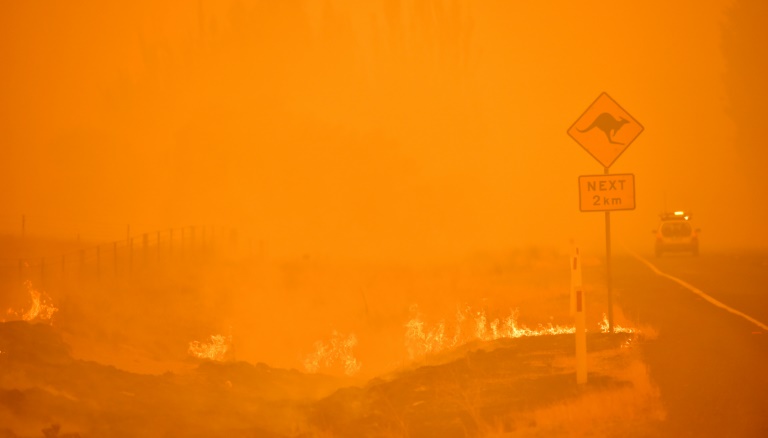
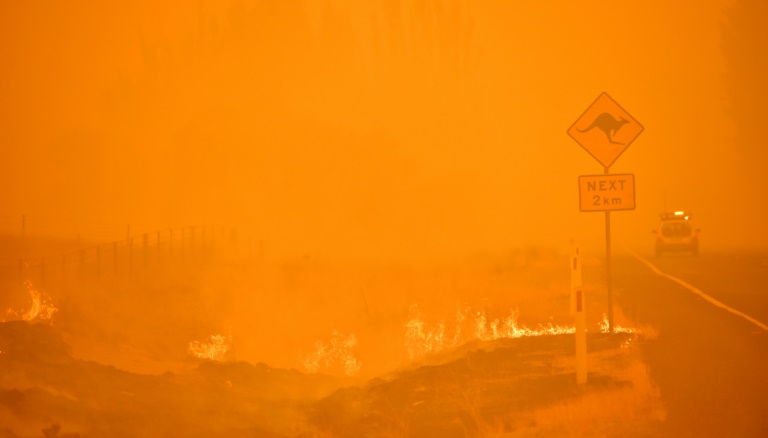
The fires, which burned through 5.8 million hectares of Australia’s east in late 2019 and early 2020, were so intense they caused dozens of smoke-infused pyrocumulonimbus clouds to form.

Pyrocumulonimbus clouds, referred to as the “fire-breathing dragon of clouds” by NASA, are so powerful they can affect the local weather, causing fire tornadoes and lightning storms.

During the “Black Summer”, these clouds shot more smoke high into the atmosphere than the previous record, set by the 2017 North American wildfires.

Around New Year 2019, uncontrolled fires along Australia’s east coast caused a pyrocumulonimbus event that stretched on for days.

The result was “millions of tonnes of smoke and associated gases being injected into the upper troposphere and lower stratosphere”, according to researchers from the University of Exeter and the University of Manchester.

A build-up of smoke particles, in turn, caused the lower stratosphere to warm to levels not seen since the eruption of Mount Pinatubo in 1991, they found.

Because of this stratospheric warming, the fires also prolonged the Antarctic ozone hole, which appears above Antarctica each spring and “reached record levels in observations in 2020”.

– Ozone gains threatened –

The hole was first created by human pollution — particularly the chlorofluorocarbons (CFCs) that were once emitted from many refrigerators — but in recent decades, global cooperation has given the ozone layer a chance to repair.

The Montreal Protocol, signed in 1987 and since ratified by 195 countries, sharply reduced the amount of CFCs in the atmosphere, and the ozone layer was expected to fully recover by 2060, according to United Nations modelling.

However, the researchers warn that because climate change will increase the frequency and intensity of bushfires, similar events — in which pyrocumulonimbus clouds shoot smoke high into the stratosphere –- will become more likely.

Professor James Haywood told AFP that climate change could “absolutely” stymie the gains made by the Montreal Protocol. 

“Our climate models suggest an increase in frequency and intensity of wildfires in the future under global warming. This may lead to more events like that in 2020, which could in turn lead to more ozone depletion,” he said. 

“So the considerable efforts that we’ve put in protecting the ozone hole could be thwarted by global warming.”

Australia's 'Black Summer' fires affected ozone layer: study

Australia’s catastrophic “Black Summer” bushfires significantly affected the hole in the Earth’s ozone layer, according to a new report published Friday.

The report, which appeared in the Nature journal “Scientific Reports”, traced a link from the unprecedented smoke released by the fires to the ozone hole above Antarctica.

The fires, which burned through 5.8 million hectares of Australia’s east in late 2019 and early 2020, were so intense they caused dozens of smoke-infused pyrocumulonimbus clouds to form.

Pyrocumulonimbus clouds, referred to as the “fire-breathing dragon of clouds” by NASA, are so powerful they can affect the local weather, causing fire tornadoes and lightning storms.

During the “Black Summer”, these clouds shot more smoke high into the atmosphere than the previous record, set by the 2017 North American wildfires.

Around New Year 2019, uncontrolled fires along Australia’s east coast caused a pyrocumulonimbus event that stretched on for days.

The result was “millions of tonnes of smoke and associated gases being injected into the upper troposphere and lower stratosphere”, according to researchers from the University of Exeter and the University of Manchester.

A build-up of smoke particles, in turn, caused the lower stratosphere to warm to levels not seen since the eruption of Mount Pinatubo in 1991, they found.

Because of this stratospheric warming, the fires also prolonged the Antarctic ozone hole, which appears above Antarctica each spring and “reached record levels in observations in 2020”.

– Ozone gains threatened –

The hole was first created by human pollution — particularly the chlorofluorocarbons (CFCs) that were once emitted from many refrigerators — but in recent decades, global cooperation has given the ozone layer a chance to repair.

The Montreal Protocol, signed in 1987 and since ratified by 195 countries, sharply reduced the amount of CFCs in the atmosphere, and the ozone layer was expected to fully recover by 2060, according to United Nations modelling.

However, the researchers warn that because climate change will increase the frequency and intensity of bushfires, similar events — in which pyrocumulonimbus clouds shoot smoke high into the stratosphere –- will become more likely.

Professor James Haywood told AFP that climate change could “absolutely” stymie the gains made by the Montreal Protocol. 

“Our climate models suggest an increase in frequency and intensity of wildfires in the future under global warming. This may lead to more events like that in 2020, which could in turn lead to more ozone depletion,” he said. 

“So the considerable efforts that we’ve put in protecting the ozone hole could be thwarted by global warming.”

France's Macron looks to 'future' on Algeria trip to mend ties

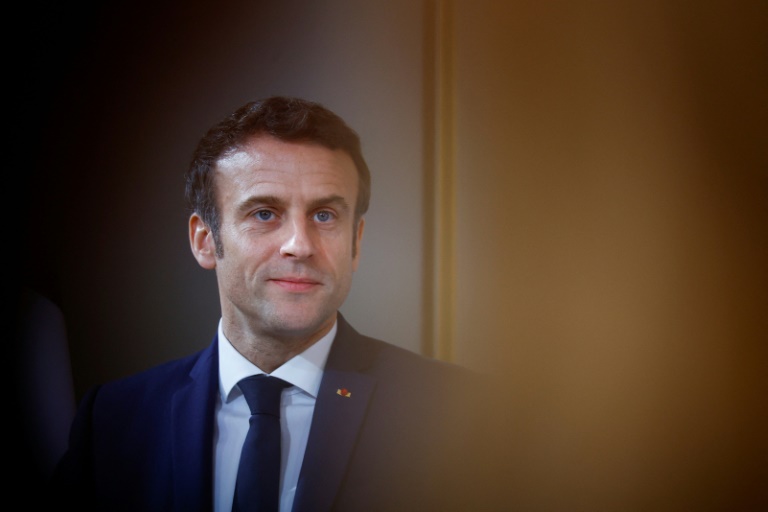
President Emmanuel Macron arrived in Algeria on Thursday for a three-day visit aimed at mending ties with the former French colony, which this year marked its 60th anniversary of independence.

The first French president to be born after Algerian independence, Macron is hoping “to lay a foundation to rebuild and develop” a sometimes difficult relationship with the North African nation, his office said.

Accompanied by seven ministers, Macron arrived landed at 3:30 pm (1430 GMT) at Houari Boumediene Airport in the capital Algiers, where he was to be received by President Abdelmadjid Tebboune.

The two heads of state will visit a monument to martyrs of the country’s war for independence, which ended more than 130 years of French colonial rule in 1962.

Franco-Algerian relations have seen repeated crises since then.

The French leader, on his second visit to Algeria since he took power in 2017, “has chosen to direct this visit towards the future, (focusing on) start-ups, innovation, youth, new sectors,” the Elysee said.

Algerian media said Macron’s visit showed both countries’ desire for relations built around “a new vision based on equal treatment and balance of interests”.

It also reflected “a recognition of Algeria’s central role in the region” and the country’s “return to the international scene.”

Macron, who will meet entrepreneurs in Algiers as well as young people in the second city Oran, is accompanied by a 90-strong delegation.

France’s chief rabbi Haim Korsia, the son of Algerian-born Jews, withdrew from the trip at the last moment after testing positive for Covid-19.

His planned attendance had been criticised by prominent Islamist politician Abderrazak Makri and social media users in Algeria, where the Palestinian cause is widely supported.

Ties between Paris and Algiers have been particularly stormy since last year, when Macron questioned Algeria’s existence as a nation before the French occupation and accused the government of fomenting “hatred towards France”.

Tebboune withdrew his country’s ambassador in response and banned French military aircraft from its airspace.

– Better ties ‘a necessity’ –

But Macron’s office said he “regretted” the misunderstandings caused by his comments, and his aides believe both sides have moved on.

They note the resumption of normal diplomatic relations and overflights to French army bases further south in Africa.

Analyst Mansour Kedidir said that “given instability in the Maghreb region, conflicts in the Sahel and the war in Ukraine, improving ties between France and Algeria is a political necessity”.

Macron and Tebboune will discuss the situation in Algeria’s southern neighbour Mali, as well as the growing influence in the region of Russia, Algeria’s top arms supplier.

France’s latest efforts to mend ties comes as Algeria moves to fill a vast shortfall in gas supplies to Europe following Russia’s invasion of Ukraine.

European nations are seeking to end their dependence on Russian hydrocarbons, giving Algeria — Africa’s biggest gas exporter with direct pipelines to Spain and Italy — renewed clout.

“The French president will certainly ask Algeria to make an effort to try to increase its gas production,” said Algerian economist Abderrahmane Mebtoul.

But Macron’s office has said gas is not a major feature of the visit — although the head of French energy firm Engie, Catherine MacGregor, will be on Macron’s delegation.

– ‘Different discourse’ –

Macron has long ruled out issuing an apology for the highly sensitive issue of colonialism, but he has made a series of gestures aimed at healing past wounds.

In Algiers, few have much sympathy towards Macron, who during his first election campaign had described French colonialism as a “crime against humanity”.

“Before he was president, he used nice words, he visited (Algeria), but right after he went back to France, he changed,” said computer scientist Othmane Abdellouche, 62. 

“He used a totally different discourse”.

But businessman Kamel Moula, who heads the Council of Economic Renewal Algerian, told the TSA news website that he wanted to see “a new mode of cooperation” between the two countries that would see them “jointly conquer new markets”.

French historians say half a million civilians and combatants died during Algeria’s bloody war for independence, 400,000 of them Algerian. The Algerian authorities say 1.5 million were killed.

Tebboune’s office said in October that over 5.6 million Algerians were killed during the colonial period.

Algerian rights groups have also urged Macron not to overlook human rights abuses by the government that came to power after long-time leader Abdelaziz Bouteflika stepped down in 2019.

Tebboune, a prime minister under Bouteflika, has clamped down on the Hirak opposition movement that forced his predecessor to resign.

Gas prices approach record peak on Russian supply fears

European natural gas prices climbed Thursday towards a record peak on heightened fears over Russian supplies, while equities marked time on the eve of a key speech from Federal Reserve chair Jerome Powell.

Europe’s benchmark Dutch TTF gas contract advanced to 318 euros per megawatt hour before paring gains.

That was not far from the record high 345 euros struck in March shortly after key gas producer Russia invaded Ukraine.

Prices have spiked in recent days as a three-day halt in Russian deliveries to Germany via the Nord Stream 1 pipeline approaches amid fears that Moscow will not turn the taps back on afterwards.

At the same time, one-year forward contracts for electricity prices in both France and Germany surged on Thursday to record pinnacles on worries over a winter energy crunch.

– ‘Unstoppable march upwards’ –

“Gas is on a seemingly unstoppable march upwards again, a dramatic move which will intensify the energy crisis,” said Hargreaves Lansdown analyst Susannah Streeter.

“Already plans are being brought in to save energy which will darken streets across Germany and make public buildings colder, but much tougher measures may have to be enforced given dwindling gas reserves.”

In stock market trade, European equities were broadly steady, with Frankfurt drawing some strength from news that the German economy expanded by an anaemic 0.1 percent in the second quarter.

That was upgraded from the prior projection of zero growth, but analysts remain downbeat.

“I’m trying to find a reason to be optimistic on the back of that, but in reality it just means the economy may take a little longer to fall into recession,” warned OANDA analyst Craig Erlam.

“With the energy crisis unlikely to improve, this likely means another quarter of flat growth at best before the economy falls into recession later this year.”

Wall Street opened mixed, with the Dow dipping, as traders looked to central bankers meeting in Jackson Hole in the US state of Wyoming this week.

All eyes are on Powell’s Friday speech for clues about the Federal Reserve’s plans to tame runaway inflation with higher borrowing costs.

Central banks around the world are trying to find a delicate balance between curbing inflation and avoiding recessions.

The challenge has been compounded this year by Russia’s invasion of Ukraine, which has sent energy and food prices skyrocketing.

There are concerns that the Fed’s fight against soaring inflation could lead to a recession in the United States, which could, in turn, hit a global economy that is still recovering from the Covid pandemic.

But the latest data out Thursday showed a continuing drop in first time claims to 243,000 last week, suggesting the US economy remains strong.

“A reading below 250,000 certainly indicates that labor market conditions remain tight, which means the potential for sticky wage-based inflation pressures also remains tight, and that is unlikely to be a comforting indication for Fed officials,” said Briefing.com analyst Patrick O’Hare.

US second quarter GDP figures were also revised higher, to a 0.6 percent contraction from the initial estimate of a 0.9 percent contraction.

– China stimulus –

Asian indices rose after China unveiled fresh measures to boost its economy.

Fresh measures to shore up the economy were announced by China’s State Council on Wednesday, including steps to encourage lending, consumption and investment, according to the official Xinhua news agency.

They also included support for electricity producers and agriculture, two sectors hit especially hard by the heatwave, though Xinhua’s readout of the State Council meeting did not mention the extreme weather.

– Key figures at around 1330 GMT –

London – FTSE 100: UP less than 0.1 percent at 7,478.02 points

Frankfurt – DAX: UP less than 0.1 percent at 13,230.34 

Paris – CAC 40: DOWN 0.2 percent at 6,373.08

EURO STOXX 50: DOWN 0.1 percent at 3,663.21

New York – Dow: DOWN less than 0.1 percent at 32,956.25

Tokyo – Nikkei 225: UP 0.6 percent at 28,479.01 (close)

Hong Kong – Hang Seng Index: UP 3.6 percent at 19,968.38 (close)

Shanghai – Composite: UP 1.0 percent at 3,246.25 (close)

Euro/dollar: DOWN at $0.9966 from $0.9970 on Wednesday

Pound/dollar: UP at $1.1807 from $1.1799

Euro/pound: DOWN at 84.42 pence from 84.47 pence

Dollar/yen: UP at 136.78 yen from 136.36 yen

West Texas Intermediate: UP 0.4 percent at $95.29 per barrel

Brent North Sea crude: UP 0.6 percent at $101.86

burs-rl/lth

Ethiopia's return to conflict: what we know

Fresh fighting between Ethiopian forces and Tigrayan rebels has broken a five-month truce that had paved the way for the resumption of humanitarian aid and tentative peace efforts.

The facts behind the sudden return to conflict in northern Ethiopia remain sparse. Here’s what we know so far and the questions that still linger:

– How did it happen? –

As has been the case throughout the 21-month conflict, both sides have accused each other of starting the fight and violating the truce that had been in place since late March.

The Tigray People’s Liberation Front (TPLF) said government forces and their allies launched a “large-scale” offensive towards southern Tigray at 5 am (0200 GMT) on Wednesday.

But Prime Minister Abiy Ahmed’s government said it was the rebels who struck first.

The tit-for-tat claims could not be independently verified as access to northern Ethiopia is severely restricted.

Later in the day, Ethiopia’s air force announced it had downed a plane carrying weapons for the TPLF that had entered its airspace via Sudan, a claim the rebels dismissed as a “blatant lie”.

– What does this mean for peace efforts? –

Regardless of who initiated Wednesday’s clashes, the prospects for peace in Africa’s second most populous nation appear grim, analysts say.

Even before the latest eruption of violence, the two sides were already at odds over the question of who should mediate potential negotiations. 

The Abiy government wants the African Union’s Horn of Africa envoy Olusegun Obasanjo to lead peace talks while the TPLF has been pushing for Kenya’s outgoing President Uhuru Kenyatta to broker dialogue.

They have also sparred over the restoration of basic services such as electricity, communications and banking to Tigray — a key precondition for dialogue according to the TPLF.

The government on the other hand says federal service providers cannot work inside Tigray without a “secure environment”.

The Eurasia Group political risk consultancy flagged “the pre-emptive recruitment and training of troops by both camps” — an indication that neither side had put much stock in peace negotiations.

“Amid a resurgence in fighting, neither party will be willing to reduce their leverage for future talks by compromising on key issues,” said Eurasia’s Africa analyst Connor Vasey.

“Rather, they will likely aim to use the next phase of fighting to bolster their negotiating positions,” he said, setting the stage for an escalation in violence.

– How will humanitarian aid be affected? –

Prior to the truce, no aid had reached Tigray by road for three months, leaving the region of six million in desperate need of food.

Even after convoys resumed, fuel shortages have made it difficult for aid workers to distribute supplies.

Last week, the UN’s World Food Programme warned that nearly half the population in Tigray was suffering from a severe lack of food and rates of malnutrition had “skyrocketed”.

The return to conflict will worsen an already dire situation.

On Wednesday, the UN said the rebels had “forcibly entered” a WFP warehouse in Tigray’s capital Mekele that morning and taken a dozen tankers carrying 570,000 litres of fuel intended for emergency relief operations.

“Millions will starve if we do not have fuel to deliver food. This is OUTRAGEOUS and DISGRACEFUL,” WFP chief David Beasley said on Twitter.

– Is this a full-blown return to war? –

In recent weeks, both warring parties appear to have simultaneously broached the possibility of peace while also making preparations for a potential return to conflict.

Whether the latest conflagration leads to all-out war will depend on which view prevails, with analysts urging the international community to play a more active role in bringing both players to the negotiating table.

In a statement dated August 23, TPLF leader Debretsion Gebremichael said the rebels had participated in “two rounds of confidential face-to-face” meetings with top Ethiopian officials, the first acknowledgement by either side of direct talks. 

The government has not confirmed the existence of such talks, but last week an official committee tasked with looking into negotiations called for a formal ceasefire in a proposal it planned to submit to the AU.

The eruption of hostilities is “a deafening warning to the key international and regional actors that they must immediately ensure peace talks actually occur”, said William Davison, senior Ethiopia analyst for the International Crisis Group think tank.

“They should accordingly instruct the belligerents to issue all of their demands when at the negotiating table, rather than making them preconditions for talks.”

Diplomatic efforts in the past have run into trouble.

The TPLF has accused Obasanjo of being biased in favour of the government, and Addis Ababa in turn has chastised US and EU envoys for urging a resumption of basic services to Tigray, reflecting the scale of the challenge ahead.

Close Bitnami banner
Bitnami