World

Grain prices ease back but fertiliser costs a growing risk

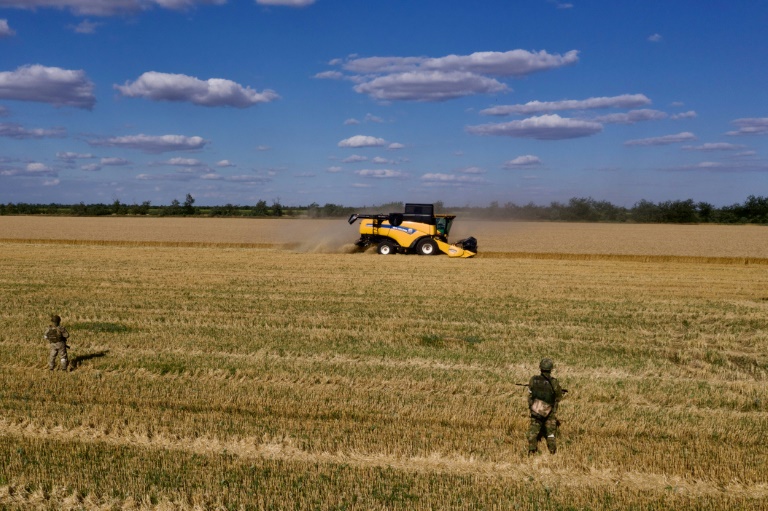
Grain prices have dropped sharply from the record highs they reached following Russia’s invasion of Ukraine, but another menace to global food security remains: a shortage of fertiliser.

The conflict sparked fears of famine in poorer countries reliant on agricultural goods from Ukraine and Russia, two nations that were responsible for nearly a third of global wheat exports last year.

Wheat prices reached a peak of nearly 440 euros ($440) a tonne on the European market in mid-May, double the level of one year ago, as crucial Ukrainian shipments were stuck at port due to a Russian naval blockade in the Black Sea.

But prices have fallen to around 300 euros in August.

“The situation began to calm down at the end of May, beginning of June with the first reassuring harvest forecasts for Europe and the resumption of Ukrainian exports, first by road and rail, then by sea,” said Gautier Le Molgat, analyst at consultancy Agritel.

Kyiv and Moscow reached an agreement in July, brokered by the United Nations and Turkey, that allowed Ukraine to resume grain shipments in the Black Sea.

The agreement opened a shipping corridor for 20 million tonnes of maize, wheat and sunflower seed oil stocked in Ukraine. According to the Joint Coordination Centre which manages the sea corridor, more than 720,000 tonnes have already left Ukraine.

“Thanks to intensive international cooperation, Ukraine is on track to export as much as four million metric tonnes of agricultural products in August,” a senior US State Department official told AFP on Tuesday.

– Strong ruble –

In addition to more supplies reaching markets and helping lower prices, the deal has led to a drop in insurance premiums, reducing transport costs.

But the reduction in tensions is, for the moment, benefitting Ukraine more than Russia, which is expecting a bumper harvest of 88 million tonnes of wheat.

Russian wheat exports in July and August are running 27 percent lower than last year, according to estimates by the Russian market research firm SovEcon.

That is due to fierce competition on the international grain market, as well as the strong value of the ruble and a high Russian export tax. 

“As a result, farmers remain reluctant sellers,” said Andrei Sizov, SovEcon’s managing director. 

The low volume of Russian exports is one of the main reasons why wheat prices have remained so high, said Sizov.

– Fertiliser costs a growing problem –

One of the reasons prices have not come down further is the surge in energy prices, due to the post-pandemic recovery and the war.

Higher oil prices impact transportation costs, while natural gas is a feedstock for manufacturing the chemical fertilisers that most farmers now use.

“Fertiliser prices have tripled in the last 18 months and the hard part of my job is forecasting what they will do in the next 18 months,” Joel Jackson, a fertiliser analyst at BMO Capital Markets, said at an analyst conference in July in the United States.

With European gas prices soaring above 300 euros per megawatt hour, compared to an average of 20 euros over the past decades, “we’ve got a big problem as it’s untenable for ammonia manufacturers,” said Nicolas Broutin, head of the French subsidiary of Yara, the Norwegian firm which is Europe’s largest fertiliser producer. 

Yara announced Thursday it was reducing once again its production in Europe of ammonia, which is made using hydrogen obtained from natural gas and which provides the nitrogen in synthetic fertilisers.

The firm will only be using 35 percent of its production capacity in Europe. A number of other European manufacturers have either reduced or halted output.

Although fertilisers do not fall under international sanctions, farmers are also at risk of shortages of another major element of fertiliser — potassium or potash — as both Russia and Belarus are major producers. 

BMO Capital Markets’ Joel Jackson said fertiliser manufacturers worry that the high prices will prompt farmers to reduce or eliminate their use.

“We’re already seeing that throughout Europe,” said Yara’s Nicolas Broutin.

CyclOpe, a French-based commodities research firm, said “it’s in 2023-2024 that the rise in fertiliser prices and eventually their reduced use will be felt.”

Farmers will try to pass on higher fertiliser costs to consumers, driving up food costs.

Meanwhile, reduced fertiliser use will result in lower crop yields and harvests, which will also drive up food prices.

CyclOpe expects in particular “considerably reduced” output in Africa, where farmers and consumers are both more sensitive to prices.

Former British ambassador to Myanmar detained in Yangon

Myanmar authorities have arrested Britain’s former ambassador to the country and her husband, a prominent artist and one-time political prisoner, for allegedly violating immigration laws, the junta said on Thursday.

Vicky Bowman, who served as envoy from 2002 to 2006, was detained for failing to declare she was living at an address different from the one listed on her foreigner’s registration certificate, a junta statement said.

Her husband Htein Lin was arrested for helping his wife reside at an address different to their registered home in commercial hub Yangon, it added.

A spokesperson for the British embassy in Yangon said they were “concerned by the arrest of a British woman in Myanmar”, without mentioning Bowman by name. 

“We are in contact with the local authorities and are providing consular assistance,” they said.

A source with knowledge of the matter said Bowman and Htein Lin had been taken to Yangon’s Insein prison. 

A hearing had been set for September 6, although it was not known what would take place then, the source added.

Breaching immigration law carries a maximum of five years in prison.

A junta spokesman did not respond to requests for comment.

Ties between Myanmar and former colonial ruler Britain have soured since a military takeover in 2021, with the junta this year criticising the UK’s recent downgrading of its mission in the country as “unacceptable”.

Prior to serving as ambassador, Bowman was the second secretary in the British embassy from 1990 to 1993. 

She now works as director at the Myanmar Centre for Responsible Business and is a fluent Burmese speaker.

Htein Lin took part in a 1988 student uprising against a former junta, and later spent years underground. 

He was arrested in 1998 and imprisoned for allegedly opposing junta rule.

After he was freed in 2004, he came to the attention of then-ambassador Bowman for a series of paintings he completed in jail using smuggled materials.

She persuaded him to let her take the politically sensitive artwork of his life behind bars for his own security.

He later proposed to her during a holiday in Britain by creating a message in the sand on a beach, and the pair married in 2006.

In 2017 Bowman gave a TEDx talk about their courtship and juggling her role as envoy to the junta “when your lover is potentially an enemy of the state”.

– ‘Provocative step’ –

“This is a provocative step for the regime to take,” Richard Horsey of the International Crisis Group told AFP. 

“Vicky and Htein Lin are hugely respected and have contributed so much to Myanmar over the decades. The fact that Vicky is the former British ambassador adds further gravity to this case.”

The British government has sanctioned several military-linked companies and individuals following the army’s power grab last year, which triggered mass uprisings and a bloody crackdown on dissent.

On Thursday, Britain announced new sanctions on firms it said had helped raise funds for the military during its 2017 crackdown on the mostly Muslim Rohingya minority.

Scores of foreign nationals have been caught up in the junta’s crackdown following its takeover.

Japanese filmmaker Toru Kubota is being held in Insein prison after he was detained last month near an anti-government rally in Yangon.

He is the fifth foreign journalist to be held in Myanmar, after US citizens Nathan Maung and Danny Fenster, Robert Bociaga of Poland and Yuki Kitazumi of Japan — all of whom were later freed and deported.

Gas prices approach record peak on Russian supply fears

European natural gas prices climbed Thursday towards a record peak on heightened fears over Russian supplies, while global equities rose on the eve of a key speech from Federal Reserve chair Jerome Powell.

Europe’s benchmark Dutch TTF gas contract advanced to 318 euros per megawatt hour before paring gains.

That was not far from the record high 345 euros struck in March shortly after key gas producer Russia invaded Ukraine.

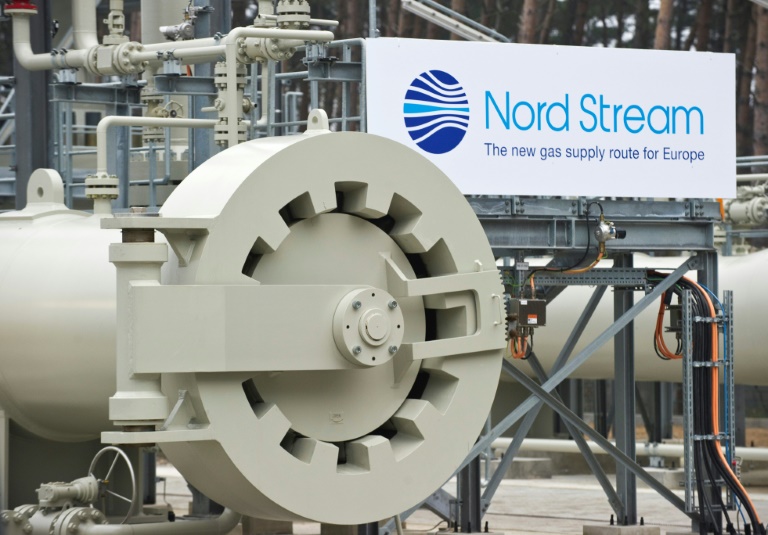
Prices have spiked in recent days as a three-day halt in Russian deliveries to Germany via the Nord Stream 1 pipeline approaches.

At the same time, one-year forward contracts for electricity prices in both France and Germany surged on Thursday to record pinnacles on worries over a winter energy crunch.

– ‘Unstoppable march upwards’ –

“Gas is on a seemingly unstoppable march upwards again, a dramatic move which will intensify the energy crisis,” said Hargreaves Lansdown analyst Susannah Streeter.

“Already plans are being brought in to save energy which will darken streets across Germany and make public buildings colder, but much tougher measures may have to be enforced given dwindling gas reserves.”

In stock market trade, European equities pushed higher mirroring Asian gains.

Frankfurt also drew some strength from news that the German economy expanded by an anaemic 0.1 percent in the second quarter.

That was upgraded from the prior projection of zero growth, but analysts remain downbeat.

“I’m trying to find a reason to be optimistic on the back of that, but in reality it just means the economy may take a little longer to fall into recession,” warned OANDA analyst Craig Erlam.

“With the energy crisis unlikely to improve, this likely means another quarter of flat growth at best before the economy falls into recession later this year.”

Asian indices rose after China unveiled fresh measures to boost its economy.

Traders followed a positive lead from Wall Street, where the Dow, Nasdaq and S&P 500 all closed higher.

Meanwhile, central bankers are meeting in Jackson Hole in the US state of Wyoming this week.

All eyes are on Powell’s Friday speech for clues about the Federal Reserve’s plans to tame runaway inflation with higher borrowing costs.

There are concerns that the Fed’s fight against soaring inflation could lead to a recession in the United States, which could, in turn, hit a global economy that is still recovering from the Covid pandemic.

– China stimulus –

Central banks around the world are trying to find a delicate balance between curbing inflation and avoiding recessions.

The challenge has been compounded this year by Russia’s invasion of Ukraine, which has sent energy and food prices skyrocketing.

Traders are also keeping an eye on how China will repair the economic damage from its strict Covid controls, a crisis in its property sector and power shortages caused by a record-breaking heatwave.

Fresh measures to shore up the economy were announced by China’s State Council on Wednesday, including steps to encourage lending, consumption and investment, according to the official Xinhua news agency.

They also included support for electricity producers and agriculture, two sectors hit especially hard by the heatwave, though Xinhua’s readout of the State Council meeting did not mention the extreme weather.

– Key figures at around 1010 GMT –

London – FTSE 100: UP 0.4 percent at 7,501.04 points

Frankfurt – DAX: UP 0.2 percent at 13,251.85 

Paris – CAC 40: UP 0.1 percent at 6,395.84

EURO STOXX 50: UP 0.2 percent at 3,674.31

Tokyo – Nikkei 225: UP 0.6 percent at 28,479.01 (close)

Hong Kong – Hang Seng Index: UP 3.6 percent at 19,968.38 (close)

Shanghai – Composite: UP 1.0 percent at 3,246.25 (close)

New York – Dow: UP 0.2 percent at 32,969.23 points (close)

Euro/dollar: UP at $0.9999 from $0.9970 on Wednesday

Pound/dollar: UP at $1.1842 from $1.1799

Euro/pound: DOWN at 84.44 pence from 84.47 pence

Dollar/yen: UP at 136.42 yen from 136.36 yen

West Texas Intermediate: UP 0.1 percent at $94.94 per barrel

Brent North Sea crude: UP 0.1 percent at $101.32

burs-rfj/lth

Rohingya refugees mark 'Genocide Remembrance Day'

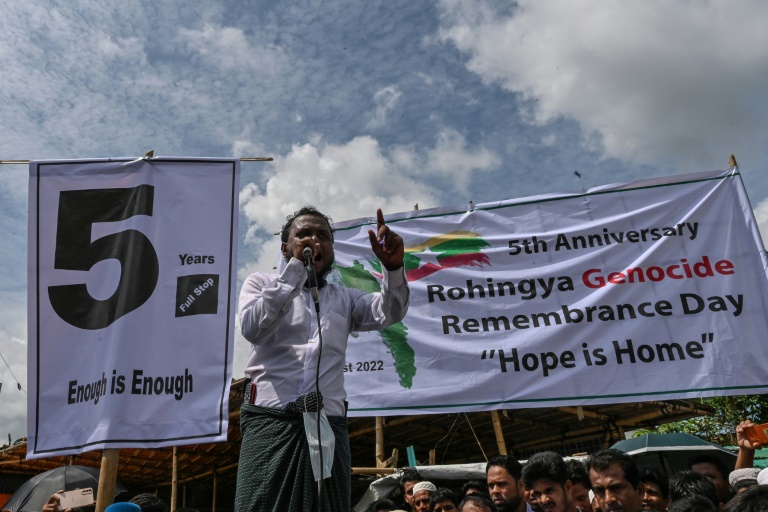
Thousands of Rohingya refugees held “Genocide Remembrance Day” rallies on Thursday across a huge network of camps in Bangladesh, marking five years since fleeing a military offensive in Myanmar.

In August 2017 around 750,000 of the mostly Muslim minority streamed over the border with mainly Buddhist Myanmar to escape the onslaught, which is now the subject of a landmark genocide case at the UN’s top court.

Today there are nearly a million Rohingya — half of them under 18 — in rickety huts in camps where the mud lanes regularly become rivers of sewage during monsoon rains.

Thousands staged rallies in many of the camps on Thursday, holding banners, shouting slogans and demanding a safe return to their home state of Rakhine in western Myanmar.

“Today is the day thousands of Rohingya were killed,” young leader Maung Sawyedollah said with tears in his eyes as he led a rally in Kutupalong — the world’s largest refugee settlement.    

“Five years ago this day nearly one million Rohingya were displaced. On this day in 2017 more than 300 of our villages were burnt down to ashes,” he said.

“All we want is a safe and dignified return to our homeland,” said Sayed Ullah, another community leader.

“Unfortunately, our cries have fallen on deaf ears. The international community is not doing anything,” he added. 

Other protesters recalled the horror of the Myanmar offensive, which the government says was a legitimate response to militant attacks.

“First they burnt our house. My mother was hiding in the house and they dragged her from there. First they cut her hands and then cut her throat,” said Sufia Khatun, 42.

– ‘A prison’ –

Several attempts at repatriation have failed, with Rohingya refusing to return without guarantees for their security and rights in Myanmar, where many see the minority as foreigners.

Rohingya say that the security situation in the Bangladeshi camps — surrounded by barbed wire — is also deteriorating, with at least 100 people killed since 2017.

Much of the violence is blamed on a Rohingya insurgent group and gangs involved in drug smuggling and human trafficking, which find easy recruits among the many bored young men in the camps.

“It’s a prison for the Rohingyas,” said one young activist, declining to give his name for fear of retaliation from Bangladeshi police.

“Rohingya shops were demolished. We need to take permission to go out of the camps to meet our relatives,” he added.

A survey of the refugees published by Doctors Without Borders (MSF) on Thursday showed that the camps were becoming increasingly unhygienic, with soaring rates of diarrhoea and skin infections like scabies.

Last year, a massive fire left around 15 people dead, 560 injured and more than 45,000 displaced.

The UNHCR has called for more funding and support from the international community.

“Generations could be affected if we fail in our obligation to protect the Rohingya and all the people of Myanmar, their fundamental rights and dignity,” Noeleen Heyzer, UN special envoy on Myanmar, said Thursday after a visit to the camps.

To ease overcrowding, Bangladesh authorities have relocated about 30,000 Rohingya to an island but there are concerns it is prone to flooding.

“Voluntary and sustainable repatriation is the only solution to the crisis,” said Bangladesh Foreign Minister A.K. Abdul Momen.

Sony hikes PS5 prices in some markets, US consumers spared

Sony’s PlayStation 5 is already notoriously difficult to find, and on Thursday the popular console’s manufacturer said that it will also become more expensive for gamers in many parts of the world.

Sony Interactive Entertainment (SIE) has recommended raising the console’s retail price in Europe, the United Kingdom, Japan, China, Australia, Mexico and Canada, the company’s top official Jim Ryan said.

US consumers will be spared from the hikes, Ryan said, without providing further explanation.

The price rises will see a PS5 Digital Edition retail in Europe for 449.99 euros ($450), up from 399.99 euros.

The same console will be sold in the UK for 389.99 pounds ($462), up from 359.99 pounds, and in Japan for 49,478 yen ($363), up from 43,978 yen.

Sony blamed “high global inflation rates as well as adverse currency trends” for the price increases.

“Based on these challenging economic conditions, SIE has made the difficult decision to increase the recommended retail price of PlayStation 5 in select markets,” Ryan said in a statement.

Sony’s current top priority is to address a supply crunch that has made PS5s difficult to buy, he said.

Earlier, console competitor Nintendo said it was not considering raising prices for the moment. 

“In order to offer unique entertainment to a wide range of customers, we want to avoid pricing people out,” President Shuntaro Furukawa told the Nikkei business daily in an article published earlier this month.

“Our competition is the variety of entertainment in the world, and we always think about pricing in terms of the value of the fun we offer,” he said.

Sony hikes PS5 prices in some markets, US consumers spared

Sony’s PlayStation 5 is already notoriously difficult to find, and on Thursday the popular console’s manufacturer said that it will also become more expensive for gamers in many parts of the world.

Sony Interactive Entertainment (SIE) has recommended raising the console’s retail price in Europe, the United Kingdom, Japan, China, Australia, Mexico and Canada, the company’s top official Jim Ryan said.

US consumers will be spared from the hikes, Ryan said, without providing further explanation.

The price rises will see a PS5 Digital Edition retail in Europe for 449.99 euros ($450), up from 399.99 euros.

The same console will be sold in the UK for 389.99 pounds ($462), up from 359.99 pounds, and in Japan for 49,478 yen ($363), up from 43,978 yen.

Sony blamed “high global inflation rates as well as adverse currency trends” for the price increases.

“Based on these challenging economic conditions, SIE has made the difficult decision to increase the recommended retail price of PlayStation 5 in select markets,” Ryan said in a statement.

Sony’s current top priority is to address a supply crunch that has made PS5s difficult to buy, he said.

Earlier, console competitor Nintendo said it was not considering raising prices for the moment. 

“In order to offer unique entertainment to a wide range of customers, we want to avoid pricing people out,” President Shuntaro Furukawa told the Nikkei business daily in an article published earlier this month.

“Our competition is the variety of entertainment in the world, and we always think about pricing in terms of the value of the fun we offer,” he said.

France's Macron looks to 'future' on Algeria trip to mend ties

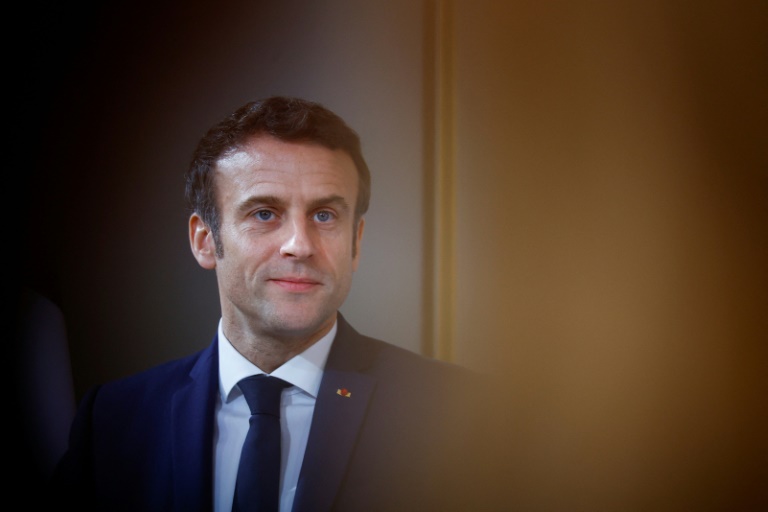
President Emmanuel Macron starts a three-day visit Thursday to Algeria to help mend ties with the former French colony, which this year marks its 60th anniversary of independence.

The first French president to be born after Algerian independence, Macron is hoping “to lay a foundation to rebuild and develop” a sometimes difficult relationship with the North African nation, his office said.

Accompanied by seven ministers, Macron will be met at the airport in the capital Algiers by President Abdelmadjid Tebboune at around 3:00 pm (1400 GMT).

The two heads of state will visit a monument to martyrs of the country’s war for independence, which ended more than 130 years of French colonial rule in 1962.

Franco-Algerian relations have seen repeated crises since then.

The French leader, on his second visit to Algeria since he took power in 2017, “has chosen to direct this visit towards the future, (focusing on) start-ups, innovation, youth, new sectors,” the Elysee said.

Macron, who will meet entrepreneurs in Algiers as well as young people in the second city Oran, is accompanied by a 90-strong delegation.

France’s chief rabbi Haim Korsia, the son of Algerian-born Jews, withdrew from the trip at the last moment after testing positive for Covid-19.

His planned attendance had been criticised by prominent Islamist politician Abderrazak Makri and social media users in Algeria, where the Palestinian cause is widely supported.

Ties between Paris and Algiers have been particularly stormy since last year, when Macron questioned Algeria’s existence as a nation before the French occupation and accused the government of fomenting “hatred towards France”.

Tebboune withdrew his country’s ambassador in response and banned French military aircraft from its airspace.

– Better ties ‘a necessity’ –

But Macron’s office said he “regretted” the misunderstandings caused by his comments, and his aides believe both sides have moved on.

They note the resumption of normal diplomatic relations and overflights to French army bases further south in Africa.

Analyst Mansour Kedidir said that “given instability in the Maghreb region, conflicts in the Sahel and the war in Ukraine, improving ties between France and Algeria is a political necessity”.

Macron and Tebboune will discuss the situation in Algeria’s southern neighbour Mali, as well as the growing influence in the region of Russia, Algeria’s top arms supplier.

France’s latest efforts to mend ties comes as Algeria moves to fill a vast shortfall in gas supplies to Europe following Russia’s invasion of Ukraine.

European nations are seeking to end their dependence on Russian hydrocarbons, giving Algeria — Africa’s biggest gas exporter with direct pipelines to Spain and Italy — renewed clout.

“The French president will certainly ask Algeria to make an effort to try to increase its gas production,” said Algerian economist Abderrahmane Mebtoul.

But Macron’s office has said gas is not a major feature of the visit, and an adviser said the trip is “about being oriented towards the future”.

– ‘Different discourse’ –

Macron has long ruled out issuing an apology for the highly sensitive issue of colonialism, but he has made a series of gestures aimed at healing past wounds.

In Algiers, few have much sympathy towards Macron, who during his first election campaign had described French colonialism as a “crime against humanity”.

“Before he was president, he used nice words, he visited (Algeria), but right after he went back to France, he changed,” said computer scientist Othmane Abdellouche, 62. “He used a totally different discourse”.

French historians say half a million civilians and combatants died during Algeria’s bloody war for independence, 400,000 of them Algerian. The Algerian authorities say 1.5 million were killed.

Tebboune’s office said in October that over 5.6 million Algerians were killed during the colonial period.

Algerian rights groups have also urged Macron not to overlook human rights abuses by the government that came to power after long-time leader Abdelaziz Bouteflika stepped down in 2019.

Tebboune, a prime minister under Bouteflika, has clamped down on the Hirak opposition movement that forced his predecessor to resign.

Former Pakistan PM Khan granted bail by anti-terror court

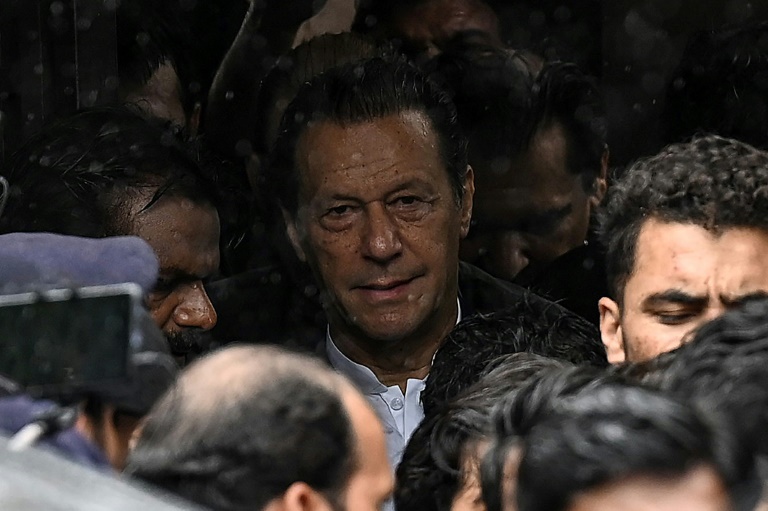
Former Pakistan prime minister Imran Khan accused the government Thursday of trying to score a “technical knockout” against him, after being granted bail on charges brought under the country’s anti-terrorism act.

Khan’s court appearance is the latest twist in months of political wrangling that began when he was ousted by a vote of no confidence in the national assembly in April.

The former cricket star retains widespread support, however, staging mass rallies railing against Prime Minister Shehbaz Sharif’s government and scoring successes in recent provincial assembly by-elections.

A court judgement was not immediately available, but officials from Khan’s Pakistan Tehreek-e-Insaf (PTI) party said he had been granted “interim bail” until September 1.

The latest allegations against Khan stem from a weekend rally when he criticised a magistrate responsible for keeping a PTI official in police custody, after party leaders said he was “tortured”.

Outside the court, Khan repeated his criticism of the judge and said the government was running scared because of his popularity.

“Due to that fear, they are looking for technical knockouts. Just to save themselves, they are making a mockery of the country,” he said.

The political crisis comes as officials struggle to deal with record monsoon rains that have flooded a vast swathe of the country.

Figures from the national disaster agency showed Thursday that 903 people had died in the floods since June, and more than 180,000 were forced to flee their rural homes.

The economy is also in free fall, with the country at risk of defaulting on foreign loans unless, as expected, the International Monetary Fund approves the resumption of a $6 billion bailout package next week.

Khan and other senior party officials have faced a raft of charges since being booted from office.

– Political history –

The country has a history of those in power using the police and courts to stifle their political opponents, and premier Sharif has several pending cases brought against him while in opposition.

One senior PTI official, Shahbaz Gill, has been in detention for nearly two weeks after being arrested following a TV interview in which he urged army officers to disobey orders that went against the interests of the country.

Khan said Gill had been tortured and sexually abused in custody, and vowed action against those responsible.

“That includes the inspector general, deputy inspector general of police and a magistrate who sent him on physical remand despite knowing he was tortured,” he said.

Khan said the government had turned the country into a “banana republic”.

“There is no law here and any charges can be brought against anyone,” he said.

Khan’s main goal is an early general election — the next one must be held before October next year — but the government has shown no sign of wanting to go to the polls.

“I think if an election is not called soon, Imran Khan’s popularity will further grow so he shouldn’t be concerned,” said Talat Masood, a former general and now political analyst.

“These massive demonstrations show that Imran Khan has the backing of millions of supporters, but this also shows that the public lacks interest in parliamentary democracy,” he said.

Khan swept into power in 2018 thanks to an electorate weary of the dynastic politics of the country’s two major parties, promising to sweep away decades of entrenched corruption and cronyism. 

But under his rule the country’s economy went backwards, and the IMF suspended the loan programme that the new government has only just gotten back on track.

Khan also lost the support of the powerful military.

Still, analyst Masood said he doubted the former premier would be jailed on any of the charges he faces.

“The courts might fine him, but going harder will be counterproductive,” he said. 

Sony hikes PS5 prices in some markets, US consumers spared

Sony’s PlayStation 5 is already notoriously difficult to find, and on Thursday’s the popular console’s manufacturer said that it will also become more expensive for gamers in many parts of the world.

Sony Interactive Entertainment (SIE) has recommended raising the console’s retail price in Europe, the United Kingdom, Japan, China, Australia, Mexico and Canada, the company’s top official Jim Ryan said.

US consumers will be spared from the hikes, Ryan said, without providing further explanation.

The price rises will see a PS5 Digital Edition retail in Europe for 449.99 euros ($450), up from 399.99 euros.

The same console will be sold in the UK for 389.99 pounds ($462), up from 359.99 pounds, and in Japan for 49,478 yen ($363), up from 43,978 yen.

SIE blamed “high global inflation rates as well as adverse currency trends” for the price increases.

“Based on these challenging economic conditions, SIE has made the difficult decision to increase the recommended retail price of PlayStation 5 in select markets,” Ryan said in a statement.

Sony’s current top priority is to address a supply crunch that has made PS5s difficult to buy, he said.

Sony hikes PS5 prices in some markets, US consumers spared

Sony’s PlayStation 5 is already notoriously difficult to find, and on Thursday’s the popular console’s manufacturer said that it will also become more expensive for gamers in many parts of the world.

Sony Interactive Entertainment (SIE) has recommended raising the console’s retail price in Europe, the United Kingdom, Japan, China, Australia, Mexico and Canada, the company’s top official Jim Ryan said.

US consumers will be spared from the hikes, Ryan said, without providing further explanation.

The price rises will see a PS5 Digital Edition retail in Europe for 449.99 euros ($450), up from 399.99 euros.

The same console will be sold in the UK for 389.99 pounds ($462), up from 359.99 pounds, and in Japan for 49,478 yen ($363), up from 43,978 yen.

SIE blamed “high global inflation rates as well as adverse currency trends” for the price increases.

“Based on these challenging economic conditions, SIE has made the difficult decision to increase the recommended retail price of PlayStation 5 in select markets,” Ryan said in a statement.

Sony’s current top priority is to address a supply crunch that has made PS5s difficult to buy, he said.

Close Bitnami banner
Bitnami