World

Gimme shelter: older Chinese take refuge from heatwave in subways

In chaotic and crowded subways, middle-aged and older residents of Chinese megacity Chongqing are taking shelter from the country’s hottest summer on record — the air conditioning and subterranean cool providing respite from the scorching temperatures outside.

Multiple Chinese provinces are sweltering under a heatwave, prompting power curbs that have forced factories to close and lights to dim on some of the country’s best-known city streets. 

Experts have said the intensity, scope and duration of the heatwave could make it one of the most severe recorded in global history.

In Chongqing, home to 30 million, the Jialing River — a tributary of the Yangtze — is running dry and patience is wearing thin.

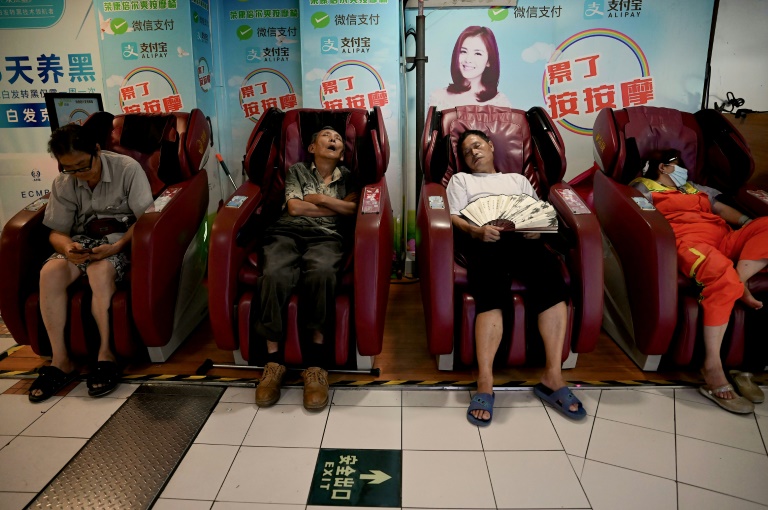
Desperate to escape the heat, hundreds of middle-aged and older residents have headed to the depths of the city’s subway stations, whiling away the hours smoking, playing cards and napping.

Spread out snoozing in massage chairs or on blankets, some are street cleaners on their breaks, others manual labourers, while some just live close by or are out-of-work with nothing better to do.

Despite a recent Covid-19 outbreak in the city that saw 10 million summoned for mandatory testing, masks are few and between.

In a nearby supermarket that has become a hive of activity, one manager told AFP that many passing time underground have air conditioning at home but are bored and want to have a bit of subterranean fun with friends.

Nonplussed commuters squeeze past the crowds — a reminder that business in the city carries on despite the heat searing the streets above. 
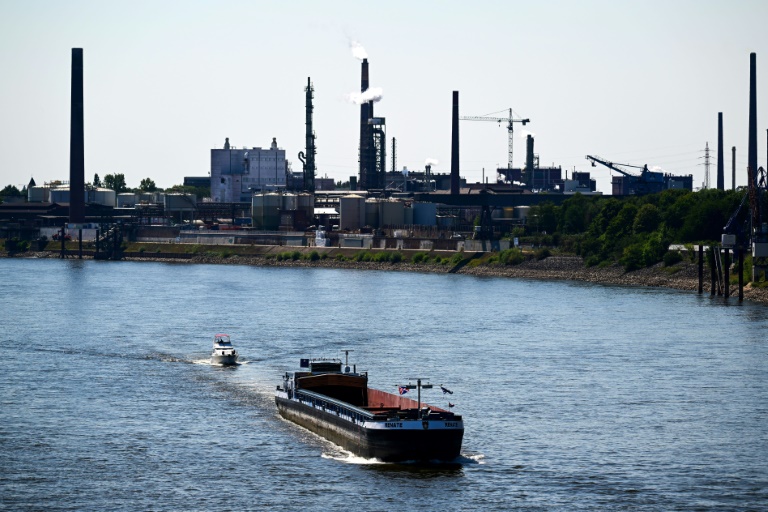
German economy grew in second quarter, better than feared

Germany’s economy grew slightly in the second quarter, an upgrade from a previous estimate of stagnation, revised official data showed Thursday, pushing back the spectre of recession.

Output expanded by 0.1 percent in the April to June period, according to the federal statistics agency, which had previously projected zero growth.

The economy was propped up by both private and public domestic demand, with spending by the state up by 2.3 percent.

Private spending rose 0.8 percent from the previous quarter as the end of Covid-19 restrictions brought more tourism and restaurant dining.

Europe’s biggest economy has been slowing as inflation soars, with Russia’s invasion of Ukraine sending energy and food prices through the roof.

Germany has been highly reliant on supplies of Russian gas to meet its energy demands, but Moscow has slowly dwindled supplies since the start of the war.

The threat that Russia could cut deliveries completely has raised the possibility of shortages over the winter and brought Germany closer to rationing supplies, with a punishing impact on business.

Even if the latest data offered Germany some reprieve from negative growth, economic indicators in the last days are painting a pessimistic picture.

The Ifo monthly confidence barometer, based on a survey of 9,000 companies, slumped for a third month in a row in August to reach 88.5 points.

“Companies were somewhat less satisfied with their current business, and the strong pessimism of their outlook for the coming months is virtually unchanged,” said the institute.

“Uncertainty among the companies remains high, and the German economy as a whole is expected to shrink in the third quarter,” it added.

Bundesbank president Joachim Nagel had warned in a recent interview that although the German economy held up well in the second quarter, new supply chain problems would “further darken the outlook for the second half”.

Particularly, if the energy crisis were to worsen, “a recession appears probable for the coming winter”.

Solomon Islands threatens to ban foreign journalists

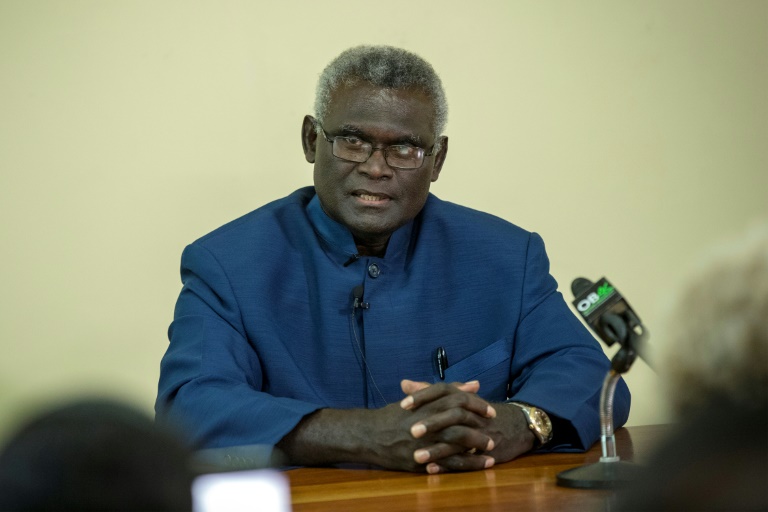
The Solomon Islands has threatened to ban or deport foreign journalists for “disrespectful and demeaning” coverage, fuelling concerns about democratic backsliding in the Pacific nation as its alliance with China deepens.

In a lengthy statement castigating recent media coverage, the office of Prime Minister Manasseh Sogavare on Wednesday accused Western journalists of trying to “engineer regime change”.

It also accused the media of “containing China and spreading anti-China sentiments”, while raising the threat of deportation.

Targeting an ABC report about rising Chinese influence in the Solomon Islands, the statement accused the Australian public broadcaster of “racial profiling”, “racism and racial stereotyping”.

“The Constitution of Solomon Islands protects Solomon Islands from racial discrimination and the Government of Solomon Islands will ensure that racial practices are eliminated from Solomon Islands.”

The statement then noted that Kiribati — another Beijing ally — “had in the past deported journalists”.

“ABC or other foreign media must understand that the manner in which journalists are allowed to conduct themselves in other (countries) does not give them the right to operate in the same manner in the Pacific.”

Sogavare has deepened ties with China’s autocratic government and proposed changing the constitution to delay scheduled elections.

The four-time prime minister has twice been ousted by votes of no confidence, and has faced street protests against his decision to switch diplomatic recognition from Taipei to Beijing.

After widespread rioting in the capital Honiara demanding his ouster late last year, Sogavare signed a secretive security pact with Beijing that — according to a leaked draft — allows him to call in Chinese security forces to quell further unrest.

That has raised concerns in Canberra and Washington about the prospect of a Chinese military base being established, or China being allowed to develop dual-use facilities.

Sogavare has repeatedly said he will not allow any military base to be built in the Solomon Islands, a point reiterated in the statement.

But he has said China will be permitted to build wharves and airports — which could be useful for both civilian and military purposes.

“There will never be a Chinese military base in his country, any such deal with Beijing would undermine regional security, make Solomon Islands an enemy and put our country and our people as potential targets for military strikes,” the statement said.

Asian, European markets rise with eyes on China, Fed speech

Hong Kong led gains in Asian markets Thursday after China unveiled fresh measures to boost its economy, while investors awaited a speech by the Fed chair that may hold clues about future rate hikes.

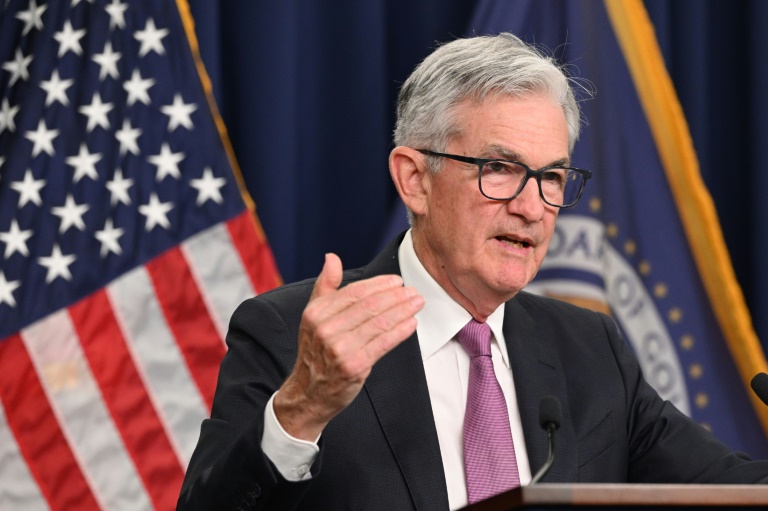
Central bankers are meeting in Jackson Hole in the US state of Wyoming, and all eyes are on Federal Reserve boss Jerome Powell’s Friday speech for clues about plans to tame inflation.

Market sentiment was also boosted by the Chinese government’s Wednesday announcement of new policies to help sustain the recovery of the world’s second-largest economy.

Asian traders on Thursday followed a positive lead from Wall Street, where the Dow, Nasdaq and S&P 500 all closed higher.

After Typhoon Ma-On delayed the start of trading until 1:00pm local time (0500 GMT), Hong Kong surged to close more than 3.6 percent higher.

Tokyo, Shanghai and Sydney rose. There were also gains in Singapore, Taipei and Seoul.

In early European trade, London, Frankfurt and Paris opened higher.

There are concerns that the Fed’s fight against soaring inflation could lead to a recession in the United States, which could, in turn, hit a global economy still recovering from the Covid-19 pandemic.

“A slower global growth environment is not going away anytime soon and now we are clearly seeing broader signs of weakness for the US economy,” OANDA’s Edward Moya said in a note.

“Powell’s fight against inflation might send the US economy into a recession late next year, but for now he needs to stick to the hawkish script and leave all options of tightening on the table.”

– China stimulus –

Central banks around the world are trying to find a delicate balance between curbing inflation and avoiding recessions.

The challenge has been compounded this year by Russia’s invasion of Ukraine, which has sent energy and food prices skyrocketing.

Traders are also keeping an eye on how China will repair the economic damage from its strict Covid controls, a crisis in its property sector and power shortages caused by a record-breaking heatwave.

Fresh measures to shore up the economy were announced by China’s State Council on Wednesday, including steps to encourage lending, consumption and investment, according to the official Xinhua news agency.

They also included support for electricity producers and agriculture, two sectors hit especially hard by the heatwave, though Xinhua’s readout of the State Council meeting did not mention the extreme weather.

Crude oil traded higher Thursday with concerns building about global supplies, affected by key exporter Saudi Arabia teasing the possibility of production cuts and ongoing talks about the resurrection of the Iran nuclear deal.

– Key figures at around 0815 GMT –

Tokyo – Nikkei 225: UP 0.6 percent at 28,479.01 (close)

Hong Kong – Hang Seng Index: UP 3.6 percent at 19,968.38 (close)

Shanghai – Composite: UP 1.0 percent at 3,246.25 (close)

London – FTSE 100: UP 0.8 percent at 7,527.96

Euro/dollar: UP at 0.9996 from 0.9967 on Wednesday

Pound/dollar: UP at 1.1837 from 1.1797

Euro/pound: DOWN at 84.46 pence from 84.49 pence

Dollar/yen: DOWN at 136.57 yen from 137.06 yen

West Texas Intermediate: UP 0.3 percent at $95.15 per barrel

Brent North Sea crude: UP 0.5 percent at $101.70

New York – Dow: UP 0.2 percent at 32,969.23 points (close)

Japan national police chief resigns over Abe assassination

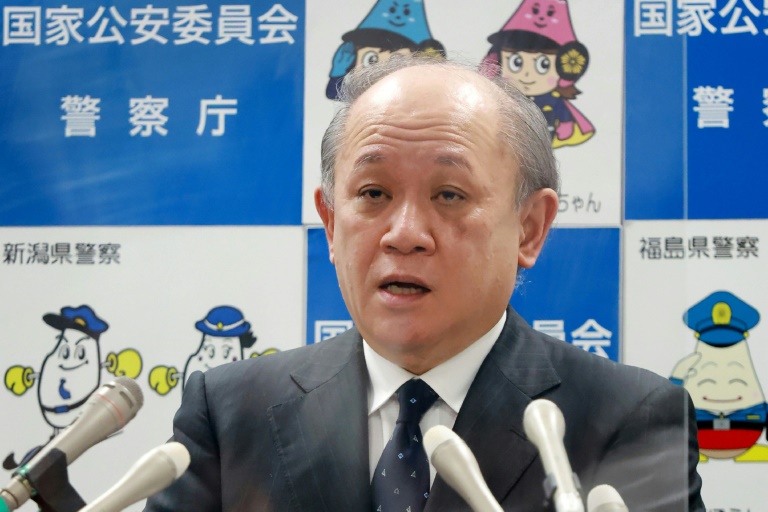
The head of Japan’s National Police Agency announced his resignation on Thursday after an investigation confirmed “shortcomings” in the security plans for assassinated former prime minister Shinzo Abe.

Abe, the country’s best-known politician and longest-serving premier, was shot and killed while delivering a stump speech on July 8 in the city of Nara in western Japan.

“There were shortcomings in the security plans and the risk assessments on which they were based, and direction from the field commander was insufficient,” Itaru Nakamura told reporters.

“The root of this problem lies in the limitations of the current system, which has been in place for years, in which local police bear sole responsibility for providing security.”

Nakamura said he would take responsibility for the failings and step down from his post as police chief.

“We have decided to shake up our personnel and start afresh with our security duties, and that’s why I tendered my resignation to the National Public Safety Commission today,” he said.

Abe’s suspected killer was detained at the scene and is believed to have targeted the politician because he thought he was linked to the Unification Church.

Local police in the area Abe was killed had already acknowledged “undeniable” flaws in security for the former leader, which was comparatively light on the day he was shot.

The Nara police chief also made a tearful resignation on Thursday.

The National Police Agency’s report said areas south of the podium from which Abe spoke were not properly guarded, leaving a route open for the shooter to approach.

If adequate security personnel had been in place there, “it is deemed highly probable that this incident could have been prevented”, the report concluded.

– New training planned for police –

The man suspected of killing Abe, Tetsuya Yamagami, is believed to have fired two shots from a handmade weapon.

But the police report found officials at the scene did not immediately realise the sound made by the first shot was caused by a gun, “leading to delays in their coming to his (Abe’s) defence”.

“There is a possibility that what happened could have been prevented had they understood the situation immediately and evacuated (Abe) for protection when the first gunshot was heard,” Nakamura said.

He added it was “essential” to improve capacity among security officials and that the police agency would “implement high-level education and drills aimed at contingency responses, including helping officials better discern gunshots and take immediate evacuation measures”.

The report also said the National Police Agency will now become more involved in organising security for individuals, and will collect and share intelligence with local police.

Suspected shooter Yamagami is reportedly undergoing a psychiatric evaluation to determine his state of mind at the time of the assassination.

Prosecutors are expected to determine whether he can bear criminal liability based on the examination, before making a decision on whether to indict him.

Yamagami’s mother is reported to have made large donations to the Unification Church, which her son blamed for the family’s financial difficulties.

Abe’s family held a private funeral for him shortly after his death, but a state funeral is also being organised, with leaders from around the world expected to attend the September 27 event.

The event will be “non-denominational, simple and sombre” according to the government — but the plan has faced some opposition, with criticism over the expenditure of public funds on a funeral for a politician.

While Abe maintained a prominent place in public life even after resigning in 2020 for health reasons, he was also a divisive figure who faced cronyism allegations and was criticised for his staunch nationalist views.

Former UK ambassador to Myanmar detained in Yangon: source

Myanmar authorities have detained the United Kingdom’s former ambassador to the country, a diplomatic source said on Thursday. 

Vicky Bowman, who served as envoy from 2002 to 2006 was arrested on Wednesday in the commercial hub Yangon, the source said, requesting anonymity.

A spokesperson for the UK embassy said they were “concerned by the arrest of a British woman in Myanmar”, without mentioning Bowman by name. 

“We are in contact with the local authorities and are providing consular assistance,” they said.

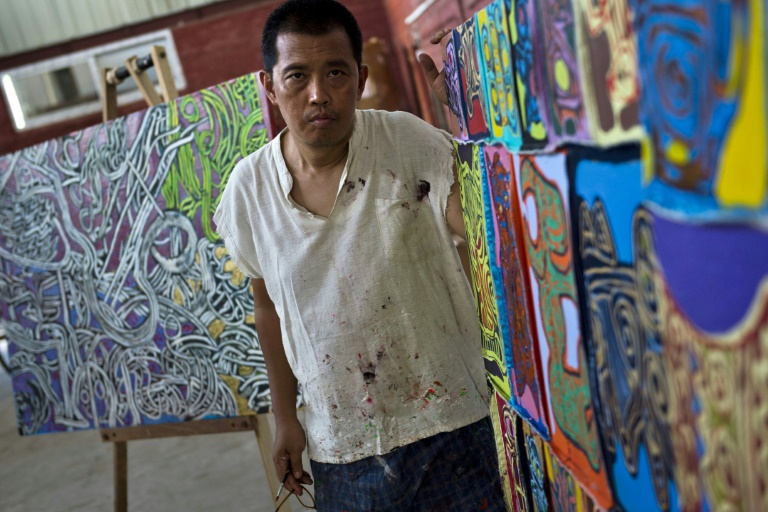
Bowman’s husband and prominent artist Htein Lin was also arrested, the diplomatic source said. Local media said the pair had been taken to Yangon’s Insein prison.

A source with knowledge of Bowman’s case said the pair had been arrested for allegedly violating immigration laws. Each charge carries a maximum of five years in prison.

A junta spokesman did not respond to requests for comment.

Ties between the UK and Myanmar have soured since the military takeover in 2021, with the junta earlier this year criticising Britain’s recent downgrading of its mission in the country as “unacceptable”.

Prior to serving as ambassador, Bowman was the second secretary in the UK’s embassy from 1990 to 1993. She now works as director at the Myanmar Centre for Responsible Business and is a fluent Burmese speaker.

Htein Lin was arrested in 1998 and imprisoned for allegedly opposing the rule of the then-junta.

After he was freed in 2004, he came to the attention of then-ambassador Bowman for a series of paintings he had made while imprisoned, using smuggled materials. 

She persuaded him to let her take the paintings for his own security, and the pair married in 2006.

– ‘Provocative step’ –

“This is a provocative step for the regime to take,” Richard Horsey of the International Crisis Group told AFP. 

“Vicky and Htein Lin are hugely respected and have contributed so much to Myanmar over the decades. The fact that Vicky is the former British ambassador adds further gravity to this case.”

The UK government has sanctioned several military-linked companies and individuals following the army’s power grab last year, which triggered mass uprisings and a bloody crackdown on dissent.

On Thursday, the UK announced new sanctions on companies it said had helped raise funds for the military during its 2017 crackdown on the mostly Muslim Rohingya minority.

Scores of foreign nationals have been caught up in the junta’s crackdown following its power grab.

Japanese filmmaker Toru Kubota is currently being held in Insein prison, after he was detained last month near an anti-government rally in Yangon.

He is the fifth foreign journalist to be detained in Myanmar, after US citizens Nathan Maung and Danny Fenster, Robert Bociaga of Poland and Yuki Kitazumi of Japan — all of whom were later freed and deported.

Former Pakistan PM Khan granted bail by anti-terror court: party

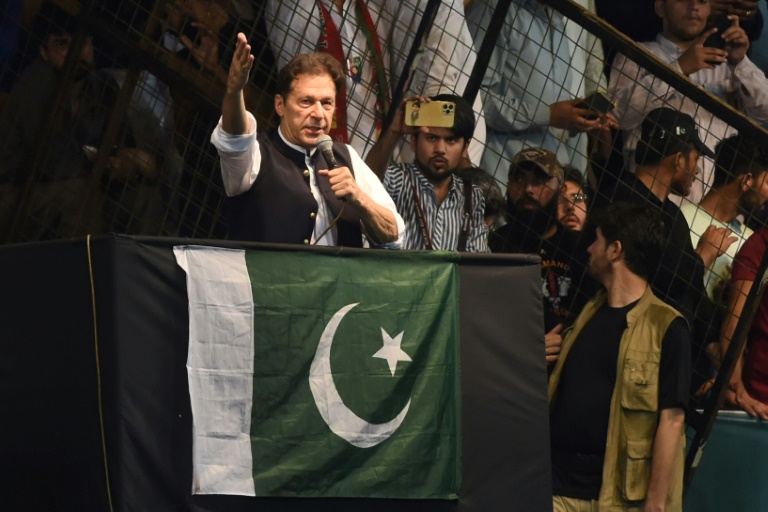
Pakistan’s former prime minister Imran Khan was granted bail Thursday on charges brought under the country’s anti-terrorism act, a party official said, leaving him free to continue his nationwide rallies calling for early elections.

Khan’s court appearance is the latest twist in months of political wrangling that began when he was ousted by a vote of no confidence in the national assembly in April.

But the former cricket star retains widespread support, staging mass rallies railing against the establishment and Prime Minister Shehbaz Sharif’s government, which he says was imposed on Pakistan by a “conspiracy” involving the United States.

A court judgment was not immediately available, but Fawad Chaudhry — a former information minister and senior party official — said Khan had been granted “interim bail” until September 1.

“We are not satisfied with this decision. Instead the court should have quashed the case,” he said

The political crisis comes as officials struggle to deal with record monsoon rains that have flooded a vast swath of the country.

Figures from the national disaster agency showed Thursday that 903 people had died in the floods since June, and over 180,000 were forced to flee their rural homes.

The economy is also in free fall, with the country at risk of defaulting on foreign loans unless, as expected, the International Monetary Fund approves the resumption of a $6 billion bailout package next week.

Khan and other senior officials of his Pakistan Tehreek-e-Insaf party (PTI) have faced a raft of charges since losing power.

The country has a history of those in power using the police and courts to stifle their political opponents, and premier Sharif has several pending cases brought against him while in opposition.

The latest charges against Khan stem from comments he made at a weekend rally when he criticised a magistrate responsible for keeping a PTI official in police custody, after party leaders said he was tortured.

Khan’s main goal is an early general election — the next one must be held before October next year — but the government has shown no sign of wanting to go to the polls.

Khan swept into power in 2018 thanks to an electorate weary of the dynastic politics of the country’s two major parties, promising to sweep away decades of entrenched corruption and cronyism. 

But under his rule the country’s economy went backwards, and the IMF suspended the loan programme that the new government has only just gotten back on track.

Khan also lost the support of the military.

Over the weekend, Pakistan’s media watchdog banned television channels from broadcasting live addresses by Khan, saying he was “spreading hate speech”.

“His provocative statements against state institutions and officers… is likely to disturb public peace and tranquillity,” the Pakistan Electronic Media Regulatory Authority said.

Rohingya refugees mark fifth 'Genocide Remembrance Day'

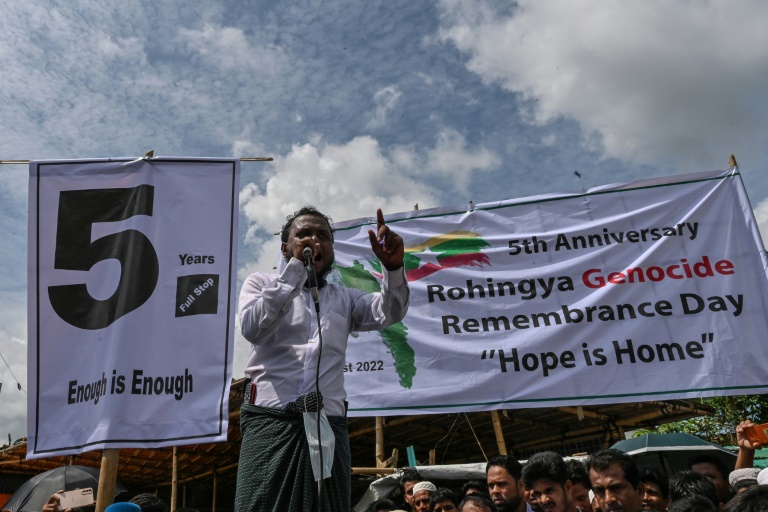
Thousands of Rohingya refugees held “Genocide Remembrance Day” rallies on Thursday across a huge network of camps in Bangladesh, marking five years since fleeing a military offensive in Myanmar.

In August 2017 around 750,000 of the mostly Muslim minority streamed over the border with mainly Buddhist Myanmar to escape the onslaught, which is now the subject of a landmark genocide case at the UN’s top court.

Today there are nearly a million Rohingya, half of them under 18, in rickety huts in camps where the mud lanes regularly become rivers of sewage during monsoon rains.

On Thursday thousands staged rallies in many of the camps, holding banners, shouting slogans and demanding a safe return to their home state of Rakhine in western Myanmar.

“Today is the day thousands of Rohingya were killed,” young leader Maung Sawyedollah said with tears in his eyes as he led a rally in Kutupalong — the world’s largest refugee settlement.    

“Only Rohingya can understand the pain of the 25th of August. Five years ago this day nearly one million Rohingya were displaced. On this day in 2017 more than 300 of our villages were burnt down to ashes,” he said.

“All we want is a safe and dignified return to our homeland,” said Sayed Ullah, another community leader.

“Unfortunately, our cries have fallen on deaf ears. The international community is not doing anything. Here in the camps we are languishing in tarp and bamboo shelters and barely surviving on handouts,” he said. 

Many shouted slogans also demanding the repeal of a 1982 law that stripped them of their citizenship in Myanmar, where they are widely seen as foreigners.

– ‘A prison’ –

Several attempts at repatriation have failed, with Rohingya refusing to return without security and rights guarantees.

Rohingya community leaders complain that the security situation in the Bangladeshi camps — surrounded by barbed wire — is also deteriorating, with at least 100 people killed in violence since 2017.

Many of the killings are blamed on a Rohingya insurgent group, as well as gangs involved in drug smuggling and human trafficking that find easy recruits among the many bored young men in the camps.

“It’s a prison for the Rohingyas. The life of the Rohingyas has worsened in these five years,” said one young activist, declining to give his name for fear of retaliation from Bangladeshi police.

“Rohingya shops were demolished. We need to take permission to go out of the camps to meet our relatives. We feel unsafe because of violence and the rising number of targeted killings,” he said.

A survey of the refugees published by Doctors Without Borders (MSF) on Thursday showed that the camps were becoming increasingly unhygienic.

It said that 76 percent of respondents said toilets were overflowing, up from 38 percent in 2018. 

Acute watery diarrhoea cases have increased by 50 percent compared to 2019 and cases of skin infections like scabies have also soared.

Fires are common. Last year, a massive blaze left around 15 people dead, 560 injured and up to 10,000 families — more than 45,000 people — displaced.

The UNHCR has called for more funding from the international community.

To ease overcrowding, Bangladesh authorities have relocated about 30,000 Rohingya to an island but there are worries it is prone to flooding.

“Voluntary and sustainable repatriation is the only solution to the crisis,” said Bangladesh Foreign Minister A.K. Abdul Momen.

'I cannot accept it': Bali bomb survivors fume after attacker's term cut

Almost two decades after the Bali bombings left Thiolina Ferawati Marpaung with permanent eye injuries, news that one of the masterminds could be released early has caused fresh trauma.

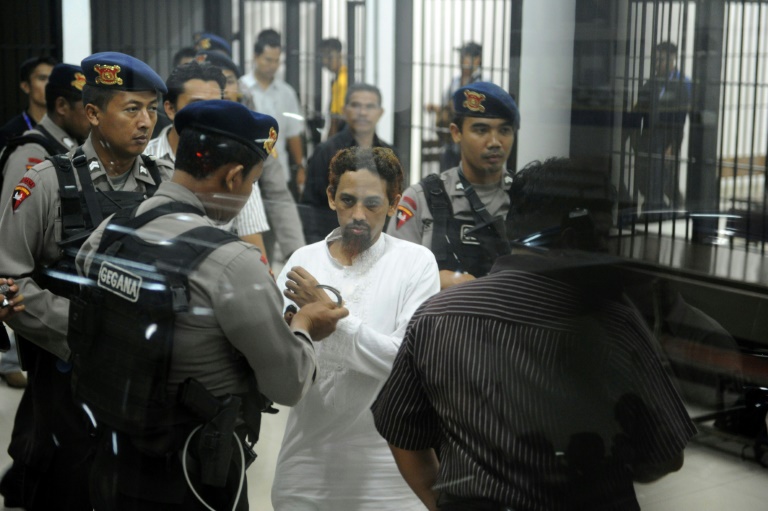
Indonesia’s latest reduction to Umar Patek’s prison sentence — revealed last week by Australian Prime Minister Anthony Albanese and confirmed by AFP — means the bomber could be released on parole before the island marks the 20th anniversary of the attacks in October.

That is a galling prospect for survivors of the attack, which killed 202 people, including 88 Australians.

“It is not that I don’t respect other people’s rights, but he has hurt the survivors and families with his evil and inhumane acts,” Marpaung told AFP by phone from Denpasar, the resort island’s biggest city. 

The smell of smoke triggers vivid memories of the blasts that sent shards of broken glass tearing into her eyes, Marpaung said.

Patek — a member of an Al Qaeda-affiliated group who was captured in the same Pakistani town where Osama bin Laden was killed — should be kept locked up, she said.

“Please let him serve what he deserves as a terror convict, not like a chicken thief whom we can easily forgive,” the 47-year-old said. 

But Indonesia says Patek is giving up his extremist beliefs after completing a deradicalisation programme.

He was granted a sentence reduction on August 17 because he had served two-thirds of his 20-year prison term and shown progress towards reform, said Teguh Wibowo, spokesperson of the Law and Human Rights Ministry office in East Java.

“He has dutifully undergone a deradicalisation programme and behaves well in the prison,” Wibowo said, referring to Indonesia’s rehabilitation scheme to make terror convicts abandon extremism and pledge loyalty to the state.

The attacks on a nightclub and bar were the deadliest in Indonesian history and led to a crackdown on extremism in the country, which has the largest Muslim population in the world.

Tied side-by-side to wooden posts on a small prison island, the attackers were executed by firing squad in 2008 after a years-long probe.

– ‘Contempt’ –

Patek was found to have made the bombs used in the assault on Bali, a Hindu island popular with foreign tourists.

He was captured with a $1 million bounty on his head after nearly a decade on the run.

Prosecutors only sought a life sentence for the 52-year-old on a charge of premeditated murder because he showed remorse during his 2012 trial.

Any release from prison must be approved by Indonesia’s Ministry of Justice.

For survivors of the attack the thought of him leaving prison and living a normal life is difficult to bear.

“Deep down in my heart, I cannot accept it but I am trying to,” said Chusnul Chotimah, another survivor who suffered severe burns that have left scars across her face and body. 

Australia has also been angered by the news of Patek’s sentence reduction.

The country lost 88 of its citizens in the attacks, the most of any of the 21 countries whose nationals were killed.

Albanese said he had nothing but “contempt” and disgust for Patek’s actions, saying his early release would only renew distress and trauma for the victims’ grieving families. 

But Chotimah met with Patek’s relatives and said she learned they had also suffered from the tragedy he helped to commit.

The 52-year-old is trying to make peace with what happened to her, despite the news of Patek’s potential release before the anniversary of the day that changed her life.

“The longer I keep the grudge, the more aching my heart is,” she said. 

Asian markets rise with eyes on China, Fed speech

Asian markets rose Thursday after China unveiled fresh measures to boost its economy, while investors awaited a speech by the Fed chair that may hold clues about future rate hikes.

Central bankers are meeting in Jackson Hole in the US state of Wyoming, and all eyes are on Federal Reserve boss Jerome Powell’s Friday speech for clues about plans to tame inflation.

Market sentiment was also boosted by the Chinese government’s Wednesday announcement of new policies to help sustain the recovery of the world’s second-largest economy.

Asian traders on Thursday followed a positive lead from Wall Street, where the Dow, Nasdaq and S&P 500 all closed higher.

Tokyo, Hong Kong and Sydney rose. There were also gains in Shanghai, Singapore, Taipei and Seoul.

There are concerns that the Fed’s fight against soaring inflation could lead to a recession in the United States, which could, in turn, hit a global economy still recovering from the Covid-19 pandemic.

“A slower global growth environment is not going away anytime soon and now we are clearly seeing broader signs of weakness for the US economy,” OANDA’s Edward Moya said in a note.

“Powell’s fight against inflation might send the US economy into a recession late next year, but for now he needs to stick to the hawkish script and leave all options of tightening on the table.”

– China stimulus –

Central banks around the world are trying to find a delicate balance between curbing inflation and avoiding recessions.

The challenge has been compounded this year by Russia’s invasion of Ukraine, which has sent energy and food prices skyrocketing.

Traders are also keeping an eye on how China will repair the economic damage from its strict Covid controls, a crisis in its property sector and power shortages caused by a record-breaking heatwave.

Fresh measures to shore up the economy were announced by China’s State Council on Wednesday, including steps to encourage lending, consumption and investment, according to the official Xinhua news agency.

They also included support for electricity producers and agriculture, two sectors hit especially hard by the heatwave, though Xinhua’s readout of the State Council meeting did not mention the extreme weather.

Crude oil traded higher Thursday with concerns building about global supplies, affected by key exporter Saudi Arabia teasing the possibility of production cuts and ongoing talks about the resurrection of the Iran nuclear deal.

– Key figures at around 0630 GMT –

Tokyo – Nikkei 225: UP 0.6 percent at 28,479.01 (close)

Hong Kong – Hang Seng Index: UP 2.4 percent 19,734.60

Shanghai – Composite: UP 0.1 percent at 3,219.58

Euro/dollar: UP at 1.0025 from 0.9967 on Wednesday

Pound/dollar: UP at 1.1852 from 1.1797

Euro/pound: UP at 84.59 pence from 84.49 pence

Dollar/yen: DOWN at 136.55 yen from 137.06 yen

West Texas Intermediate: UP 0.4 percent at $95.31 per barrel

Brent North Sea crude: UP 0.5 percent at $101.77

New York – Dow: UP 0.2 percent at 32,969.23 points (close)

London – FTSE 100: DOWN 0.2 percent at 7,471.51 (close) 

Close Bitnami banner
Bitnami