World

Ukraine leader vows fight 'until the end' on 6-month war anniversary

British Prime Minister Boris Johnson was in Kyiv on Wednesday, hailing Ukraine’s six-month long resistance to the Russian invasion as his counterpart President Volodymyr Zelensky vowed the fight would continue “until the end”.

Wednesday marks half a year since Russian President Vladimir Putin ordered the large-scale invasion of Ukraine, as well as the day the nation annually celebrates its 1991 independence from the Soviet Union.

During a surprise visit to the Ukrainian capital — hounded by air raid sirens throughout the day — Johnson said Putin had failed to account for the “strong will of Ukrainians to resist”.

“You defend your right to live in peace, in freedom, and that’s why Ukraine will win,” he said in front of reporters during the afternoon.

Johnson — who has less than two weeks left in office — warned against relaxing sanctions or normalising relations with Putin. 

“It is not the time to advance some flimsy plan for negotiation with someone that is simply not interested,” he told a press conference with Zelensky.

The Ukrainian leader had issued his own defiant morning video address, declaring: “We don’t care what army you have, we only care about our land. We will fight for it until the end.”

Referring to Russia he vowed Ukraine “will not try to find an understanding with terrorists”.

“For us Ukraine is the whole of Ukraine,” he said. “All 25 regions, without any concession or compromise.”

– Fresh aid –

Meanwhile on Wednesday, the US announced $3 billion in fresh military aid.

The new tranche of American funding will help Kyiv acquire more weaponry, ammunition and other supplies for its armed forces, locked in a grinding war of attrition with Russian troops in the east and south with neither side advancing significantly in weeks.

Johnson also unveiled his own £54 million ($64 million) package of aid, including 2000 “state-of-the-art drones” as well as anti-tank munitions.

The White House announcement came as Washington warned Moscow could be planning a surge in strikes on civilian targets coinciding with Independence Day observations.

Gatherings have been banned in the capital Kyiv and Zelensky has urged citizens to be on guard against “Russian terror”.

Nevertheless the leader and his wife marked a minute of silence for fallen Ukrainian soldiers and laid yellow and blue floral bouquets at a memorial in central Kyiv, the president’s office said.

– European support –

Johnson’s visit was accompanied by other messages of support from Ukraine’s allies.

United Nations Secretary-General Antonio Guterres  called the anniversary of the start of Russia’s war in Ukraine a “sad and tragic milestone”.

European Commission President Ursula von der Leyen said the EU has been standing with Ukraine “from the very beginning” and “will be for as long as it takes”.

But in an absurd message, the authoritarian leader of Belarus — which offered its territory as a staging ground for Russia’s invasion — gave congratulations to Ukraine on its Independence Day.

“I am convinced that today’s contradictions will not be able to destroy the centuries-old foundation of sincere good neighbourly ties between the peoples of our two countries,” Alexander Lukashenko said.

– Muted anniversary –

In the early days and weeks of Russia’s invasion, Kyiv was under siege by Russian troops which reached the suburbs of the capital.

Moscow’s offensive quickly faltered, and its forces withdrew in late March to regroup for assaults on Ukraine’s east and south.

But in the capital, Ukrainians were sombre about the anniversary after a half-year of death and destruction. 

“Six months, the peace of life has been broken in every family,” Nina, an 80-year-old pensioner, said at Independence Square in central Kyiv, on Tuesday.

“How much destruction, how many dead, how can we relate to it?” she asked.

The capital city’s administration said it would shut public service centres on Wednesday and Thursday, and shopping malls said they would close for the anniversary for safety concerns. 

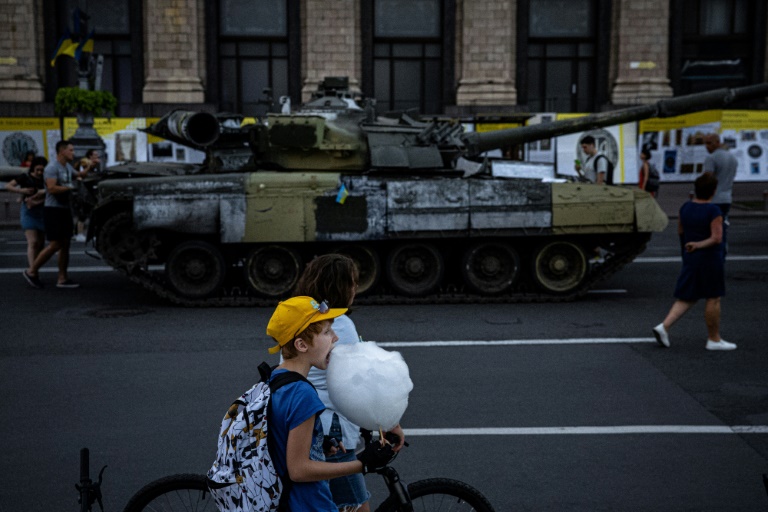
However in central Kyiv trailing crowds of people gathered in a surreal atmosphere to inspect dozens of disabled Russian tanks, trucks and armoured vehicles installed near the government quarter to showcase Ukraine’s military prowess.

Cotton candy vendors plied trade to pedestrians, who peered down tank barrels and posed for selfies, draped in the Ukrainian flag. 

– Threatened nuclear plant –

Meanwhile, discussions continued on how to protect the Zaporizhzhia nuclear plant in southern Ukraine, occupied by Russian troops and threatened by shelling, which Moscow blames on Kyiv.

The two sides traded accusations at a Tuesday meeting of the UN Security Council on Zaporizhzhia, with Ukraine and its allies demanding Russia pull its troops out of the plant — Europe’s largest nuclear facility — and agree to a demilitarised zone.

Zelensky told the  Security Council Wednesday via video link that Russia “should unconditionally stop nuclear blackmail” and “completely withdraw” from the plant.

The Russian and French foreign ministers spoke on Tuesday by telephone about an expected visit to the plant by inspectors from UN nuclear watchdog the International Atomic Energy Agency (IAEA), amid worries over the high risk of a radiation accident.

And on Wednesday the head of Russia’s state nuclear energy agency met the IAEA chief to follow up on the expected inspection.
London bus drivers latest UK workers to strike over pay

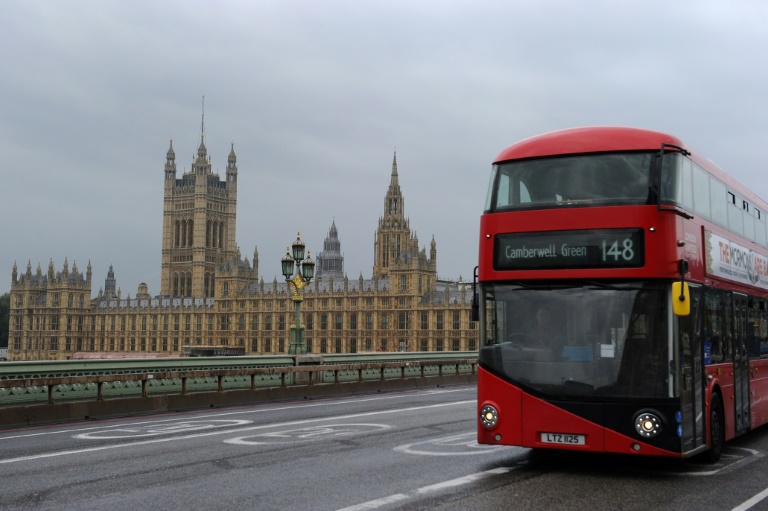
Bus drivers in London are set to strike over pay for two days this weekend, their union announced on Wednesday, as decades-high inflation prompts walkouts across Britain’s ailing economy.

Around 1,600 drivers from the London United bus company will stage the stoppage on Sunday and Monday over the traditional end-of-summer long weekend, the union Unite said.

The strike, which will affect only a portion of London’s famous red buses, could hinder people trying to reach the annual Notting Hill Carnival, which will take place on both days and typically draws up to two million people.

Unite accused French company RATP, which owns London United, of offering the drivers a “real terms pay cut” in negotiations over pay.

It said the firm was offering an increase of 3.6 percent for 2022 and 4.2 percent in 2023, despite Britain’s inflation rate reaching double figures last month for the first time since 1982.

“It (RATP) can fully afford to pay its workers a decent pay increase, but it is refusing to do so,” Unite general secretary Sharon Graham said.

A spokesperson for RATP said it remained “committed to resolving the dispute as soon as possible and we urge Unite to reconsider our invitation to return to the negotiating table”.

The stoppage is the latest by public and private sector workers in the UK, as the spiralling cost of living has led employees to seek salary hikes to keep up with their surging bills.

London Underground and national railway staff have held a series of walkouts in recent months, while the unrest has hit numerous other industries and sectors.

They range from dock workers at Felixstowe — the country’s biggest container port — and refuse collectors in Scotland, to criminal lawyers across England and Wales.

UN chief laments 'sad and tragic' six-month Ukraine war milestone

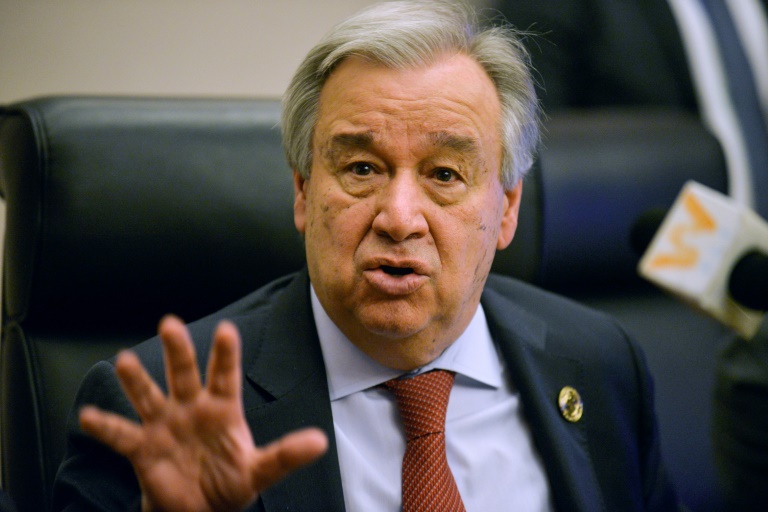
United Nations Secretary-General Antonio Guterres on Wednesday called the six-month anniversary of the start of Russia’s war in Ukraine a “sad and tragic milestone.”

Guterres made the comments during a special meeting of the UN Security Council in New York to mark the anniversary of Russia’s invasion of its neighbor on February 24.

The UN chief described the six months of conflict as “devastating.”

“The consequences of this senseless war are being felt far beyond Ukraine,” said Guterres, referring to its impact on food and fuel prices.

“If we don’t stabilize the fertilizer market in 2022, there simply will not be enough food in 2023,” the secretary-general warned.

Guterres said he remained “gravely concerned” about military activity around the Zaporizhzhia nuclear plant in southern Ukraine, Europe’s largest atomic power plant.

“The warning lights are flashing,” he said.

“Any further escalation of the situation could lead to self-destruction. The security of the plant must be ensured, and the plant must be re-established as purely civilian infrastructure,” he added.

The plant is occupied by Russian troops and threatened by shelling, which Moscow blames on Kyiv.

Ukrainian President Volodymyr Zelensky, addressing the meeting via video-link, told the UN that Russia “should unconditionally stop nuclear blackmail” and “completely withdraw” from the plant. 

“Europe and neighboring regions face the threat of the radiation pollution. This is a fact,” Zelensky, told the session, which had been requested by the United States, France and Britain.

Russia’s ambassador to the UN, Vassily Nebenzia, objected to Zelensky being allowed to speak.

He said he was not opposed to the Ukrainian leader’s participation, but to the fact that he was not attending in person.

The 15-member council voted 13 to one in favor of allowing Zelensky to speak, with China abstaining.

Fighting resumes in northern Ethiopia after five-month lull

Fighting erupted between government forces and Tigrayan rebels in northern Ethiopia on Wednesday, shattering a five-month truce and dealing a blow to peace talks. 

Within hours, reports of fresh offensives were followed by Ethiopia’s air force announcing it had downed a plane carrying weapons for the Tigray People’s Liberation Front (TPLF) that encroached on the country’s airspace via neighbouring Sudan.

The government and the Tigray rebels have accused each other of undermining efforts to peacefully resolve the brutal 21-month war in Africa’s second most populous nation, and traded blame over who was responsible for returning to combat.

UN chief Antonio Guterres said he was “deeply shocked” by the renewed fighting and appealed for an “immediate cessation of hostilities and for the resumption of peace talks”.

The TPLF said government forces and their allies had launched a “large scale” offensive towards southern Tigray early Wednesday after a months-long lull in fighting.

But the Government Communication Service accused the TPLF of striking first, saying its action had “destroyed the truce”.

“Disregarding the numerous peace options presented by the Ethiopian government, the armed wing of the terror group TPLF, pushing with its recent provocations starting 5 am (0200 GMT) today committed an attack” around southern Tigray, it said in a statement.

The rival claims could not be independently verified as access to northern Ethiopia is restricted, but there were reports of fighting around southern Tigray in areas bordering the Amhara and Afar regions.

“They launched the offensive early this morning around 5 am local time. We are defending our positions,” TPLF spokesman Getachew Reda told AFP in Nairobi in a brief message.

He said on Twitter that the “large-scale” offensive was launched “against our positions in the southern front” by the Ethiopian army and special forces and militias from neighbouring Amhara.

– ‘Violated our airspace’ –

The air force said Wednesday it had shot down a plane “believed to be a property of historical enemies who want Ethiopia’s weakness”.

“The airplane which violated our airspace from Sudan… and aimed to supply weapons to the terror group was shot down by our heroic air force,” the Ethiopian News Agency quoted armed forces Major General Tesfaye Ayalew as saying.

The date of the incident, the type of aircraft and how it was downed were not detailed.

A truce forged in March paused fighting in a war that first began in November 2020, allowing a resumption of some international aid to war-stricken Tigray after a three-month break.

Prime Minister Abiy Ahmed’s government and the TPLF have been locked in a war of words in recent weeks over possible peace talks.

The two sides disagree on who should lead negotiations, and the TPLF also insists basic services must be restored to Tigray’s six million people before dialogue can begin.

Abiy’s government says any negotiations must be brokered by the African Union’s Horn of Africa envoy Olusegun Obasanjo, who is leading the international push for peace, but the rebels want outgoing Kenyan President Uhuru Kenyatta to mediate.

William Davison, senior Ethiopia analyst for the International Crisis Group (ICG) think tank, urged all parties to cease fighting to avert “a return to full-blown war”.

“This serious breach of the truce agreed earlier this year demonstrates the need for the two parties to arrange unconditional face-to-face negotiations as soon as these hostilities cease,” Davison said in a statement.

“It is also a deafening warning to the key international and regional actors that they must immediately ensure peace talks actually occur.”

– ‘Enough of this war’ –

The conflict has killed untold numbers of people, with widespread reports of atrocities including mass killings and sexual violence.

Millions of people need humanitarian assistance in Tigray, the country’s northernmost region, as well as Afar and Amhara.

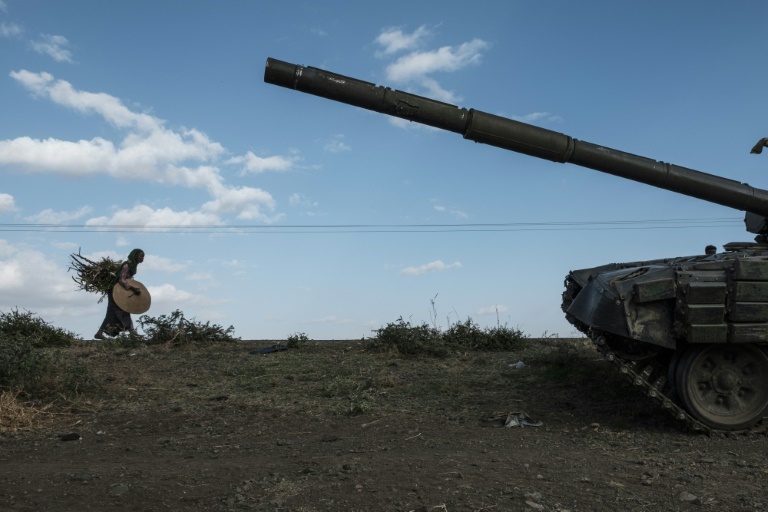
The UN’s World Food Programme said last week that nearly half the population in Tigray is suffering from a severe lack of food and that rates of malnutrition had “skyrocketed”.

The dire assessment came despite the resumption of desperately needed international aid convoys to Tigray’s capital Mekele in April, with fuel shortages making it difficult to distribute supplies.

Tigray is largely cut off from the rest of Ethiopia, without basic services such as electricity, communications and banking.

Abiy sent troops into Tigray in November 2020 to topple the TPLF after months of seething tensions with the party that had dominated Ethiopian politics for three decades.

The 2019 Nobel Peace Prize winner said the move came in response to rebel attacks on army camps. 

The TPLF mounted a comeback, recapturing Tigray and expanding into Afar and Amhara, before the war reached a stalemate.

Last Wednesday, an Ethiopian government committee tasked with looking into negotiations had called for a formal ceasefire as part of a proposal it planned to submit to the AU.

“If you can’t win, then you’ve got to sit down and talk,” Abiy said Sunday in remarks carried on state media.

“My advice is… let’s have enough of (this) war.”

Oldest human relative walked upright 7 mn years ago: study

The earliest known human ancestor walked on two feet as well as climbing through trees around seven million years ago, scientists said Wednesday after studying three limb bones.

When the skull of Sahelanthropus tchadensis was discovered in Chad in 2001, it pushed back the age of the oldest known representative species of humanity by a million years. 

Nicknamed “Toumai”, the nearly complete cranium was thought to indicate that the species walked on two feet because of the position of its vertebral column and other factors.

However the subject triggered fierce debate among scientists, partly due to the scarcity and quality of the available bones, with some even claiming that Toumai was not a human relative but just an ancient ape.

In a study published in the Nature journal on Wednesday, a team of researchers exhaustively analysed a thigh bone and two forearm bones found at the same site as the Toumai skull.

“The skull tells us that Sahelanthropus is part of the human lineage,” said paleoanthropologist Franck Guy, one of the authors of the study.

The new research on the limb bones demonstrates that walking on two feet was its “preferred mode of getting around, depending on the situation,” he told a press conference. 

But they also sometimes moved through the trees, he added. 

– ‘Not a magical trait’ –

The leg and arm bones were found alongside thousands of other fossils in 2001, and the researchers were not able to confirm that they belonged to the same individual as the Toumai skull.

After years of testing and measuring the bones, they identified 23 characteristics which were then compared to fossils from great apes as well as hominins — which are species more closely related to humans than chimpanzees.

They concluded that “these characteristics are much closer to what would be seen in a hominin than any other primate,” the study’s lead author Guillaume Daver told the press conference.

For example, the forearm bones did not show evidence that the Sahelanthropus leaned on the back of its hands, as is done by gorillas and chimpanzees.

The Sahelanthropus lived in an area with a combination of forests, palm groves and tropical savannahs, meaning that being able to both walk and climb through trees would have been an advantage.

There have been previous suggestions that it was the ability to walk on two feet that drove humans to evolve separately from chimpanzees, putting us on the path to where we are today.

However the researchers emphasised that what made Sahelanthropus human was its ability to adapt to its environment.

“Bipedalism (walking on two legs) is not a magical trait that strictly defines humanity,” paleontologist Jean-Renaud Boisserie told the press conference.

“It is a characteristic that we find at the present time in all the representatives of humanity.”

– Our ‘bushy’ family tree –

Paleoanthropologist Antoine Balzeau of France’s National Museum of Natural History said the “extremely substantial” study gives “a more complete image of Toumai and therefore of the first humans”.

It also bolstered the theory that the human family tree is “bushy”, and was not like the “simplistic image of humans who follow one another, with abilities that improve over time,” Balzeau, who was not involved in the research, told AFP.

Daniel Lieberman, a professor of human evolutionary biology at Harvard University, said in a linked paper in Nature that the study’s “authors have squeezed as much information as possible from the fossil data”.

But he added that the research will not offer “full resolution” of the debate.

Milford Wolpoff, a paleoanthropologist at the US University of Michigan cast doubt on whether Toumai is a hominin, telling AFP that “extraordinary claims require extraordinary evidence”.

Wednesday’s study was carried out by researchers from the PALEVOPRIM paleontology institute, a collaboration between France’s CNRS research centre and Poitiers University, as well as scientists in Chad.

Guy said the team hopes to continue its research in Chad next year — “security permitting”.

Chadian paleontologist Clarisse Nekoulnang said the team was “trying to find sites older than that of Toumai”.

UK port strike threatens to deepen supply chain and price woes

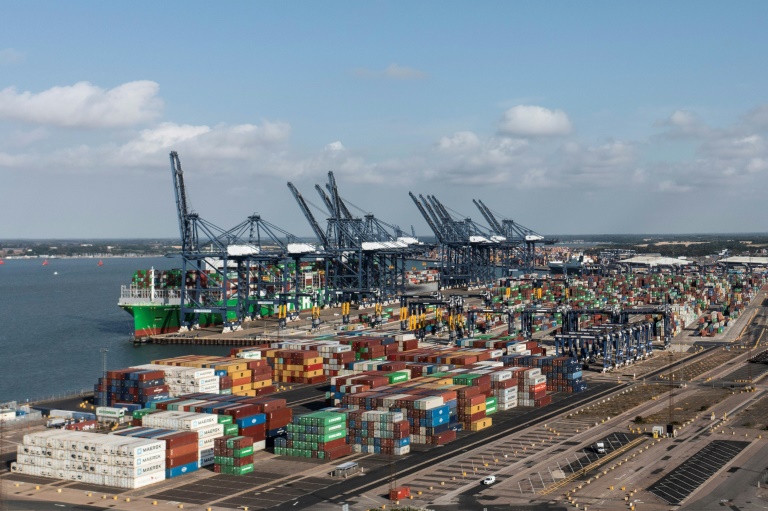
A strike over pay at Britain’s largest container port threatens to spark fresh delays and rising costs for companies and consumers alike, but logistics experts say there should be no product shortages.

Workers at Felixstowe port in southeastern England on Sunday began an eight-day strike, the first in 30 years, as decades-high inflation intensifies a cost-of-living crisis.

UK workers are striking in vast numbers as runaway inflation erodes wages at a record pace and is set to plunge the economy into recession.

“The strikes at Felixstowe are set to send some British businesses into a spin,” said Ed Winterschladen, executive vice president at Proxima, a logistics consultancy.

“The port is not just Britain’s largest, it is the largest by quite some margin as the port of entry for almost half of ocean freight into the UK,” he said, warning that delays “will have a sustained pricing impact in an already inflationary market”.

The dockers’ walkout mirrors similar action at the UK activities of US online giant Amazon and British postal operator Royal Mail. 

Those three strikes will together have a £1-billion ($1.2-billion) impact on trade and cause severe delays, according to delivery firm ParcelHero.

“The triple whammy of industrial actions at ports, postal networks and e-commerce giants means serious disruption,” said David Jinks, ParcelHero head of consumer research.

“Home deliveries will be affected, as will retailers waiting for new stock and manufacturers needing key components.

“Someone will have to foot the bill for all these increased transport costs and history tells us that it is usually the consumer.”

Felixstowe takes daily deliveries from nations such as China and Japan, with containers transporting everything from bicycles and frozen food to household appliances like fridges and washing machines.

They also carry key parts for manufacturers, so any major hold-ups could potentially worsen the nation’s post-Brexit supply-chain crunch.

– ‘Enough stock’ –

However, industry body the British International Freight Association (BIFA) insisted that it was “too early” to assess the impact of the port strike.

Some companies are far more flexible after increasing inventory levels in the face of supply-chain problems sparked by the pandemic.

However, BIFA conceded that past Felixstowe disruption has had a knock-on impact on freight transport and international supply chains.

Jonathan Owens, logistics expert at the University of Salford, gave an upbeat assessment barring any escalation in the dispute.

“The strike is a week and may not cause too much disruption as Felixstowe is not a ‘just-in-time’ delivery port. In general, everything arriving is scheduled in advance,” Owens told AFP.

“There should be enough stock in the supply chain to cope with key products.

“Should the strike progress go on beyond the current time or more disruption planned quickly after this strike period, then alternative inbound supply routes will be found.”

Many retailers have developed such contingency plans to reroute container ships or switch to other transportation, the British Retail Consortium (BRC) said.

Fresh food imports would not be affected because these tend to pass through the port of Dover, the BRC noted.

Nevertheless, the Felixstowe row presents a major headache for international freight.

Shipping giant Maersk said three of its ships have so far been diverted to other North European ports, before seeking to transfer cargo back to Britain.

“For affected export cargo from UK we have been offering our customers alternative ports and routings as far as possible,” a Maersk spokesman told AFP.

“It is hard for us to say whether any specific products will be missing in the supermarkets, etc.”

– Impasse –

Back in Felixstowe, discussions appear at an impasse between management and trade unions.

Nearly 2,000 unionised employees at the port in eastern England, including crane drivers, machine operators and stevedores, are involved in the first strike there since 1989.

Dockers want a 10-percent pay rise with inflation currently running at a 40-year high of 10.1 percent. 

The Port of Felixstowe described as “fair” its offer of salary increases of an average eight percent.

“The port regrets the impact this action will have on UK supply chains,” it added.

Heatwave triggers 'false autumn' in UK

Searing summer temperatures in the UK have not just parched the earth and dried up rivers, lakes and reservoirs but are also seeing trees shed their leaves early.

Instead of green, many gardens, parks and woods are now a sea of orange, yellow, red and brown, with thick carpets of leaves on the ground.

The early leaf fall — dubbed a “false autumn” — is a sign of stress, as trees shed their leaves to try to retain moisture.

But experts say while older trees with deep roots can withstand the drier conditions, younger, less established ones could be at risk.

“The trees are enacting the hormones they use in autumn to just retract and ensure their survival,” said Rosie Walker, of the Woodland Trust conservation charity.

“They’ll keep going like this for a few years but it is going to start impacting our trees if we’re not very careful,” she told BBC radio.

Temperatures soared above 40 degrees Celsius (104 degrees Fahrenheit) for the first time in Britain in July, with the month the driest on record in many parts of southern and eastern England.

Climate change has been blamed for the searing heatwave, which has led to drought being declared and a ban on the use of hosepipes to save water in some areas.

The Woodland Trust said fallen leaves are most likely to come from birch, silver birch and rowan trees.

“We saw the first turn in silver birch on August 12, which is incredibly early,” said Walker, adding that other species were also shedding their leaves.

– Wildlife –

Leigh Hunt, principal horticultural adviser at the Royal Horticultural Society, said a similar situation was observed during prolonged dry spells in 2006-7 and just before the coronavirus pandemic.

“It really is pretty severe this year,” he told Times Radio on Wednesday. “But what I am noticing is that these events seem to be happening more frequently. 

“The idea that it’s going to be hotter, drier summers and more erratic rain very much fits in with that idea of climate change.”

The Woodland Trust meanwhile said it had recorded its earliest ever appearance of ripe wild blackberries — normally an autumn fruit — on June 28.

The premature ripening of berries and nuts could hit small mammals and birds who store energy in September and October for the cold winter months.

Animals such as dormice consume high-fat foods such as hazelnuts and other hedgerow fruits in autumn but could struggle if they are gone by August.

“Nature’s timing is everything for our wildlife,” said Steve Hussey, from the Devon Wildlife Trust in southwest England. 

“The climate crisis is bringing with it seasonal weather patterns which our wildlife is just not adapted to.

“Our long, hot summer and the ‘false autumn’ will have a knock-on for many species right into the real autumn months and beyond.”

Markets mark time ahead to US Fed chair speech

European and US equities moved sideways on Wednesday as investors awaited signals on the next US interest rate hikes.

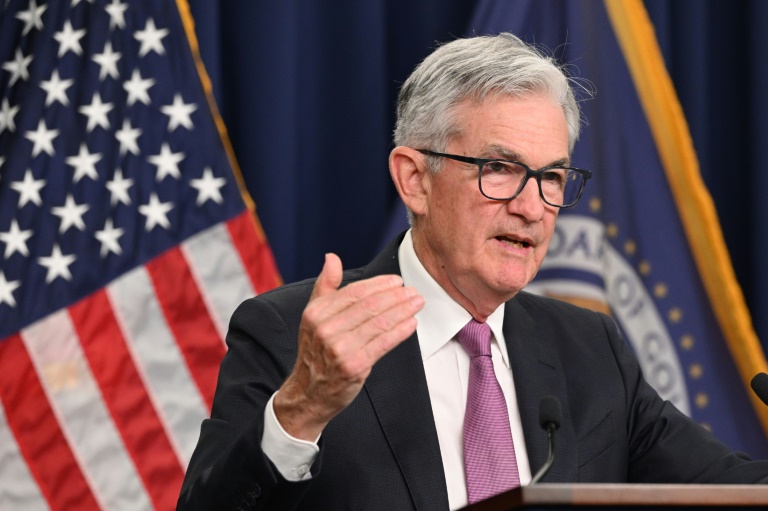
With the Jackson Hole meeting of central bankers this week, focus is on what US Federal Reserve chief Jerome Powell will say Friday about plans to tackle high prices — with many fearing higher borrowing costs could send the world’s biggest economy into recession in its battle to rein in inflation.

The euro held close to a two-decade low against the dollar, and the greenback struck a two-year peak against China’s yuan.

European gas prices rose close to record intraday prices.

– Losing momentum –

“Markets seem to have lost their momentum,” noted AJ Bell investment director Russ Mould.

“Investors have become nervous once again, with all eyes on Powell and what he says this coming Friday.” 

Analyst Patrick O’Hare at Briefing.com said a mountain of expectations were building ahead of Powell’s speech.

“Those expectations range from fear of a resolutely hawkish speech to hope of a tempered rate-hike outlook,” he said.

Central banks face a delicate balancing act between battling inflation, with Russia’s war in Ukraine sending energy prices soaring, and avoiding recession.

Yet concerns are growing that spiking energy costs could still prompt a worldwide downturn.

“Investor anxiety is growing that a combination of central banks raising rates and higher energy prices will tip the global economy into a long recession,” said CMC Markets analyst Michael Hewson.

Key markets in Asia slid on Wednesday.

In Europe, London shed 0.5 percent but Frankfurt and Paris were broadly steady.

Wall Street opened narrowly mixed, with the Dow dipping 0.1 percent.

– Rollercoaster ride –

The foreign exchange market has faced a rollercoaster ride so far this week.

The euro tumbled on Tuesday to $0.9901 — a new two-decade low — but later clawed back losses as the greenback was hit by poor US economic data.

The dollar had strengthened this week ahead Powell’s speech, as markets speculate that the Fed will continue to tighten its monetary policy.

Higher interest rates boost the American currency as they make dollar-denominated debt more attractive to investors.

But the euro also has been weighed down by a gloomy outlook for the eurozone economy amid fears of a halt to Russia’s gas deliveries.

Oil was steady following talk of an OPEC output cut, with Brent crude hovering just above $100 per barrel.

“While this may simply be a case of Saudi Arabia talking up the price, for now, the prospect of the group taking such action effectively removes two of the biggest downside risks for prices,” said OANDA analyst Craig Erlam.

Oil prices fell back under $100 per barrel this month on worries of a global economic slowdown and the possibility of Iran reaching a deal on its nuclear programme that would end international sanctions on its crude exports.

– Key figures at around 1330 GMT –

London – FTSE 100: DOWN 0.5 percent at 7,454.51 points

Frankfurt – DAX: DOWN 0.1 percent at 13,179.98 

Paris – CAC 40: UP less than 0.1 percent at 6,364.87

EURO STOXX 50: UP less than 0.1 percent at 3,654.51

New York – Dow: DOWN 0.1 percent at 32,867.49

Tokyo – Nikkei 225: DOWN 0.5 percent at 28,313.47 (close)

Hong Kong – Hang Seng Index: DOWN 1.2 percent at 19,268.74 (close)

Shanghai – Composite: DOWN 1.9 percent at 3,215.20 (close)

Euro/dollar: DOWN at 0.9925 from 0.9970 on Tuesday

Pound/dollar: DOWN at 1.1763 from 1.1836

Euro/pound: UP at 84.38 pence from 84.23 pence

Dollar/yen: UP at 137.04 yen from 136.36 yen

West Texas Intermediate: UP less than 0.1 percent at $93.80 per barrel

Brent North Sea crude: UP less than 0.1 percent at $100.26

Whistle blows in Germany for world's first hydrogen train fleet

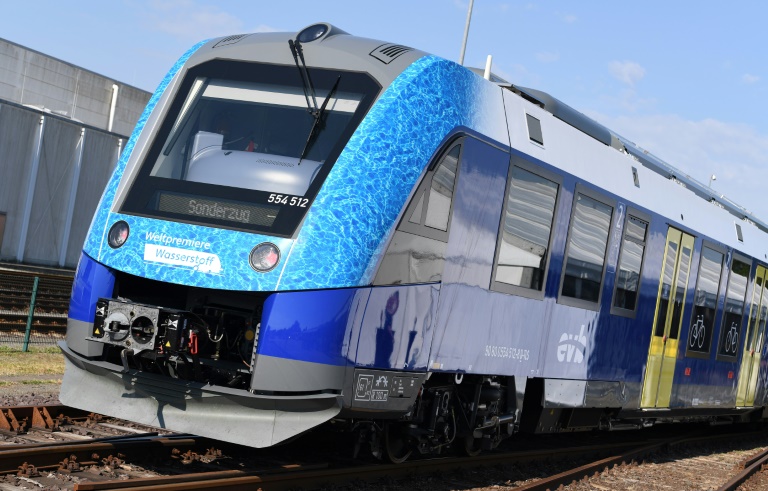
Germany on Wednesday inaugurated a railway line powered entirely by hydrogen, a “world premiere” and a major step forward for green train transport despite nagging supply challenges.

A fleet of 14 trains provided by French industrial giant Alstom to the German state Lower Saxony has replaced diesel locomotives on the 100 kilometres (60 miles) of track connecting the cities of Cuxhaven, Bremerhaven, Bremervoerde and Buxtehude near Hamburg.

“We are very proud to put this technology into operation together with our strong partners as a world premiere,” Alstom CEO Henri Poupart-Lafarge said in a statement.

Hydrogen trains have become a promising way to decarbonise the rail sector and replace climate-warming diesel, which still powers 20 percent of journeys in Germany.

Billed as a “zero emission” mode of transport, the trains mix hydrogen on board with oxygen present in the ambient air, thanks to a fuel cell installed in the roof. This produces the electricity needed to pull the train.

Regional rail operator LNVG said the fleet, which cost 93 million euros (dollars), would prevent 4,400 tonnes of CO2 being released into the atmosphere each year.

– Run for its money –

Designed in the southern French town of Tarbes and assembled in Salzgitter in central Germany, Alstom’s trains — called Coradia iLint — are trailblazers in the sector.

The project created jobs for up to 80 employees in the two countries, according to Alstom. 

Commercial trials have been carried out since 2018 on the line with two hydrogen trains but now the entire fleet is adopting the groundbreaking technology.

The French group has inked four contracts for several dozen trains between Germany, France and Italy, with no sign of demand waning. 

In Germany alone “between 2,500 and 3,000 diesel trains could be replaced by hydrogen models”, Stefan Schrank, project manager at Alstom, told AFP.

“By 2035, around 15 to 20 percent of the regional European market could run on hydrogen,” according to Alexandre Charpentier, a rail expert at consultancy Roland Berger.

Hydrogen trains are particularly attractive on short regional lines where the cost of a transition to electric outstrips the profitability of the route. 

Currently, around one out of two regional trains in Europe runs on diesel.

But Alstom’s competitors are ready to give it a run for its money. German behemoth Siemens unveiled a prototype hydrogen train with national rail company Deutsche Bahn in May, with a view to a roll-out in 2024.

But, despite the attractive prospects, “there are real barriers” to a big expansion with hydrogen, Charpentier said.

For starters, trains are not the only means of transport hungry for the fuel.

The entire sector, whether it be road vehicles or aircraft, not to mention heavy industry such as steel and chemicals, is eyeing hydrogen to slash CO2 emissions.

– Colossal investment –

Although Germany announced in 2020 an ambitious seven-billion-euro plan to become a leader in hydrogen technologies within a decade, the infrastructure is still lacking in Europe’s top economy.

It is a problem seen across the continent, where colossal investment would be needed for a real shift to hydrogen.

“For this reason, we do not foresee a 100-percent replacement of diesel trains with hydrogen,” Charpentier said.

Furthermore, hydrogen is not necessarily carbon-free: only “green hydrogen”, produced using renewable energy, is considered sustainable by experts. 

Other, more common manufacturing methods exist, but they emit greenhouse gases because they are made from fossil fuels. 

The Lower Saxony line will in the beginning have to use a hydrogen by-product of certain industries such as the chemical sector.

The French research institute IFP specialising in energy issues says that hydrogen is currently “95 percent derived from the transformation of fossil fuels, almost half of which come from natural gas”. 

Europe’s enduring reliance on gas from Russia amid massive tensions over the Kremlin’s invasion of Ukraine poses major challenges for the development of hydrogen in rail transport.

“Political leaders will have to decide which sector to prioritise when determining what the production of hydrogen will or won’t go to,” Charpentier said. 

Germany will also have to import massively to meet its needs. 

Partnerships have recently been signed with India and Morocco, and Chancellor Olaf Scholz sealed a green hydrogen deal with Canada on a visit this week, laying a path for a transatlantic supply chain.

Whistle blows in Germany for world's first hydrogen train fleet

Germany on Wednesday inaugurated a railway line powered entirely by hydrogen, a “world premiere” and a major step forward for green train transport despite nagging supply challenges.

A fleet of 14 trains provided by French industrial giant Alstom to the German state Lower Saxony has replaced diesel locomotives on the 100 kilometres (60 miles) of track connecting the cities of Cuxhaven, Bremerhaven, Bremervoerde and Buxtehude near Hamburg.

“We are very proud to put this technology into operation together with our strong partners as a world premiere,” Alstom CEO Henri Poupart-Lafarge said in a statement.

Hydrogen trains have become a promising way to decarbonise the rail sector and replace climate-warming diesel, which still powers 20 percent of journeys in Germany.

Billed as a “zero emission” mode of transport, the trains mix hydrogen on board with oxygen present in the ambient air, thanks to a fuel cell installed in the roof. This produces the electricity needed to pull the train.

Regional rail operator LNVG said the fleet, which cost 93 million euros (dollars), would prevent 4,400 tonnes of CO2 being released into the atmosphere each year.

– Run for its money –

Designed in the southern French town of Tarbes and assembled in Salzgitter in central Germany, Alstom’s trains — called Coradia iLint — are trailblazers in the sector.

The project created jobs for up to 80 employees in the two countries, according to Alstom. 

Commercial trials have been carried out since 2018 on the line with two hydrogen trains but now the entire fleet is adopting the groundbreaking technology.

The French group has inked four contracts for several dozen trains between Germany, France and Italy, with no sign of demand waning. 

In Germany alone “between 2,500 and 3,000 diesel trains could be replaced by hydrogen models”, Stefan Schrank, project manager at Alstom, told AFP.

“By 2035, around 15 to 20 percent of the regional European market could run on hydrogen,” according to Alexandre Charpentier, a rail expert at consultancy Roland Berger.

Hydrogen trains are particularly attractive on short regional lines where the cost of a transition to electric outstrips the profitability of the route. 

Currently, around one out of two regional trains in Europe runs on diesel.

But Alstom’s competitors are ready to give it a run for its money. German behemoth Siemens unveiled a prototype hydrogen train with national rail company Deutsche Bahn in May, with a view to a roll-out in 2024.

But, despite the attractive prospects, “there are real barriers” to a big expansion with hydrogen, Charpentier said.

For starters, trains are not the only means of transport hungry for the fuel.

The entire sector, whether it be road vehicles or aircraft, not to mention heavy industry such as steel and chemicals, is eyeing hydrogen to slash CO2 emissions.

– Colossal investment –

Although Germany announced in 2020 an ambitious seven-billion-euro plan to become a leader in hydrogen technologies within a decade, the infrastructure is still lacking in Europe’s top economy.

It is a problem seen across the continent, where colossal investment would be needed for a real shift to hydrogen.

“For this reason, we do not foresee a 100-percent replacement of diesel trains with hydrogen,” Charpentier said.

Furthermore, hydrogen is not necessarily carbon-free: only “green hydrogen”, produced using renewable energy, is considered sustainable by experts. 

Other, more common manufacturing methods exist, but they emit greenhouse gases because they are made from fossil fuels. 

The Lower Saxony line will in the beginning have to use a hydrogen by-product of certain industries such as the chemical sector.

The French research institute IFP specialising in energy issues says that hydrogen is currently “95 percent derived from the transformation of fossil fuels, almost half of which come from natural gas”. 

Europe’s enduring reliance on gas from Russia amid massive tensions over the Kremlin’s invasion of Ukraine poses major challenges for the development of hydrogen in rail transport.

“Political leaders will have to decide which sector to prioritise when determining what the production of hydrogen will or won’t go to,” Charpentier said. 

Germany will also have to import massively to meet its needs. 

Partnerships have recently been signed with India and Morocco, and Chancellor Olaf Scholz sealed a green hydrogen deal with Canada on a visit this week, laying a path for a transatlantic supply chain.

Close Bitnami banner
Bitnami