World

Term-limit row leaves Thai PM facing calls to quit

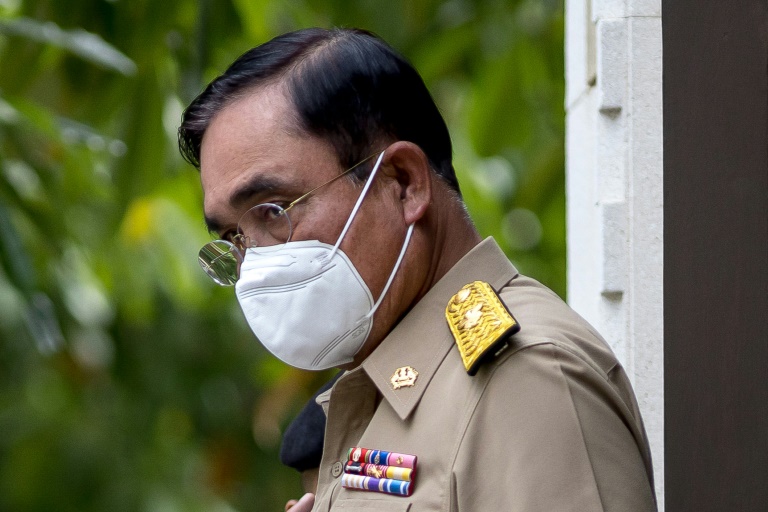
A legal showdown that could oust embattled Thai Prime Minister Prayut Cha-O-Cha reaches the country’s constitutional court this week, threatening fresh political turmoil for the kingdom just months before national elections.

The former general has clung on to office through major anti-government protests in 2020, a bruising pandemic, a faltering economy and scores of political near-misses — but now the very constitution whose design he oversaw is being used against him.

Opponents of the 68-year-old — who seized control in a coup — are agitating for his removal under rules limiting a prime minister to a maximum of eight years in office, a threshold they say he will reach Wednesday.

While the outcome is uncertain, many observers think the court will rule in Prayut’s favour.

Prayut’s adversaries say his term started when he took power in the coup in May 2014, the latest of the more than a dozen military putsches to upend Thai politics since the birth of democracy in 1932.

But supporters say he has been the premier from 2017 — when the current army-drafted constitution was implemented — or in 2019, when he controversially won much-delayed national polls.

Opposition parties have asked the constitutional court to rule on when Prayut’s term ends, and on Wednesday, the judges are expected to say whether they will consider the case.

If it accepts the case, the court could suspend Prayut from office. 

The former general — who has held on to power with a tenacity few anticipated — appears unruffled by the latest drama.

“Let the court decide,” he told opponents before he appeared outside parliament, brandishing a “rock on” hand sign at bemused reporters.

The court has played a key role at important moments in the upheavals that have convulsed Thai politics over the last 20 years, cancelling general election results in 2006 and 2014.

“I would not be surprised if the verdict of the Constitutional Court would be in favour of Prayut,” political analyst Napisa Waitoolkiat at Naresuan University told AFP.

Such a decision, anticipated by many, could see him remain prime minister until 2025 or 2027 — if he and his Palang Pracharat party can win re-election.

– Stagnation –

The kingdom is experiencing one of the lowest growth rates in the region, with the resumption of international tourism failing to lift the economy from the doldrums. 

“Uncle Tu”, as Prayut is known, has never enjoyed widespread popularity, and Thailand’s years-long economic battering has only exacerbated a public sense of stagnation. 

Earlier this year, the kingdom’s royalist-military elite were spooked when Chadchart Sittipunt, an ex-minister of the opposition Pheu Thai party, won a landslide victory in the Bangkok governor election.

With a general election due by March next year, the prime minister’s dismal popularity — with the candidate linked to him taking only eight percent of votes — is setting off alarm bells for his own MPs.

“If you see the behaviour of these politicians, they are not paying attention to the government now. They are more concerned about the next election,” political analyst Waitoolkiat said.

A recent National Institute of Development Administration survey found two-thirds of 1,300 people polled wanted Prayut gone immediately.

Protesters are expected to hit the streets from Tuesday evening demanding Prayut quit, and police have already placed shipping containers to protect streets around government buildings.

But Prayut rode out months of street protests in Bangkok in 2020 and has survived four no-confidence motions in parliament. Many believe he is determined to stay on to host the high-profile APEC summit in Bangkok in November.

– ‘Tyrant’ –

At a small gathering Sunday, students and anti-government groups promised action against the “tyrant” Prayut and in a statement urged people to “view the upcoming election as a turning point in our fight”.

“Ball”, a student who gave only his nickname, said he believed Prayut would likely continue as prime minister, backed by the courts — and Thais may take to the streets once again.

“During the past eight years, nothing has improved in this country, and people are almost at their breaking point,” he said.

Flash flooding hits US parks, southern states in latest weather disasters

A hiker swept away in flash floods and torrential rain was still missing Monday as a weekend of storms forced hundreds to evacuate in the latest weather disasters to hit national parks in the United States.

Heavy rains were also causing havoc in parts of Texas on Monday as forecasters predicted more precipitation throughout the southern part of the country for the rest of the week.

Jetal Agnihotri, who park officials said they were still searching for Monday, was one of a number of hikers hit by surging waters Friday when flash floods tore through an area of Zion National Park in Utah called the Narrows, known for red rock cliffs and towering canyons.

One injured hiker was carried hundreds of yards (meters) downstream by the sudden inundation, while others were left stranded until rangers reached them, the National Park Service said.

In New Mexico’s Carlsbad Caverns National Park, around 200 people had to be evacuated after being trapped for several hours by rising waters.

No one was injured in that incident.

The flash flooding came after heavy rains pummeled the drought-hit southwest, with several inches (centimeters) falling in a short space of time.

The downtown area of Moab, Utah was left under three feet of water by the rains, the New York Times quoted a city spokeswoman as saying.

“We had water that came through in a huge rush along with lots of debris and some full-sized trees,” Lisa Church said, adding the river had overflowed its banks in three places.

Elsewhere, footage showed children in Arizona being rescued from a school bus stranded by rising waters.

The National Weather Service (NWS) said northern Texas was expected to be walloped this week with up to seven inches of rain, with parts of the state of Mississippi also expected to be affected.

“Much of this rainfall will be beneficial and welcome due to the effects of an ongoing drought,” the agency said.

“But the potential still exists for instances of flash flooding in urban areas and places with poor drainage.”

Flash flood warnings were in effect around Dallas on Monday, with forecasters predicting difficult conditions on the roads, and videos showed vehicles becoming submerged in floodwaters while driving in the city overnight.

“Turn around, don’t drown when encountering flooded roads. Most flood deaths occur in vehicles. Be aware of your surroundings and do not drive on flooded roads,” the NWS said.

– Worsening drought –

The western United States is more than 20 years into a painful drought that has left rivers and reservoirs badly depleted, and the countryside tinder-dry.

But sudden, intense downpours are often unhelpful.

“If the water all comes down over a very quick period of time, it’ll run off,” Chris Rasmussen, an NWS meteorologist in Tucson, Arizona, told AFP last week.

“It doesn’t get a chance to really soak into the ground, as you would like to see.

“It’s always nicer to have good, moderate amount of rains over a long period of time.”

Human activity, specifically the runaway use of fossil fuels over the last century, has caused the Earth’s average temperature to rise.

This has altered weather patterns, worsening droughts in some parts of the world, and intensifying storms in other areas.

Much of Europe has baked under an intense heatwave over the last few months, with record-low rainfall emptying rivers and leaving the countryside vulnerable to wildfire.

Chinese authorities said Monday they were powering down key landmarks to save energy as faltering rivers send hydroelectric plants dark.

Germany's Scholz looks to Canada as energy supplier

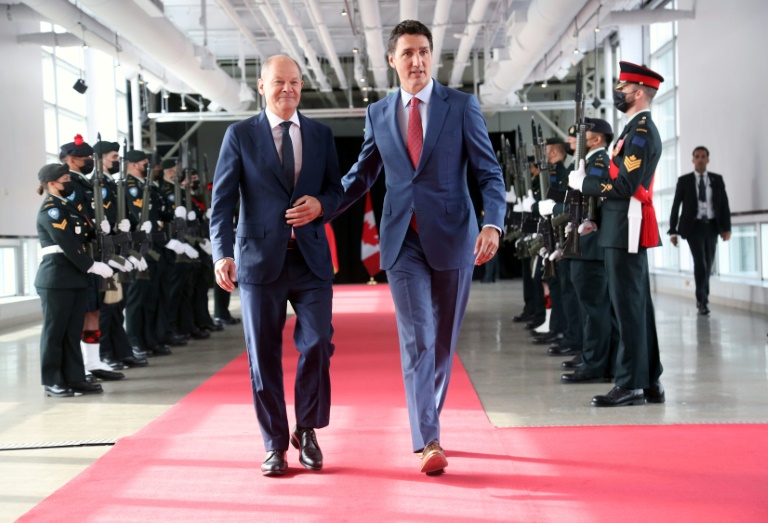
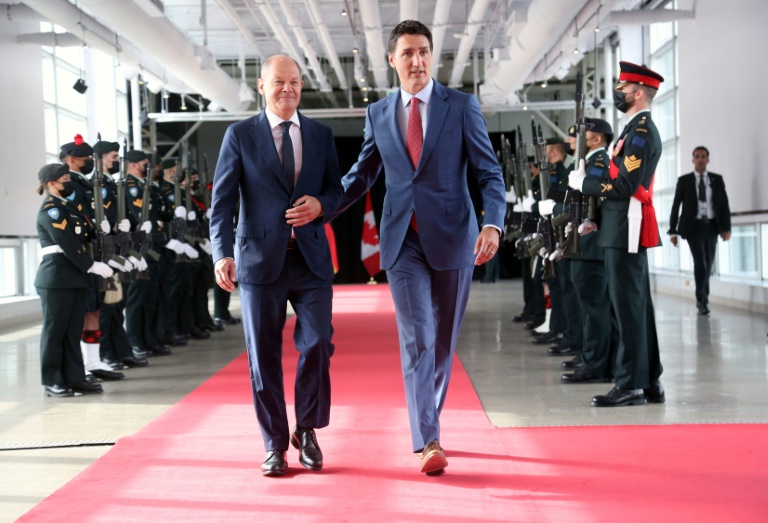
German Chancellor Olaf Scholz on Monday met with Prime Minister Justin Trudeau in Canada to firm up access to new energy supplies as his country moves to quickly end its reliance on Russian oil and gas.

At a joint news conference in Montreal on the first full day of his three-day visit, Scholz said Germany is rushing construction of liquid natural gas (LNG) ports infrastructure and pipelines to boost imports and is reaching out to other nations, like Canada, to increase their output.

Germany will need more liquid natural gas during its energy transition, he said, adding: “It is indispensable because we want to move away from our dependency of Russian gas supplies.”

Scholz is also eyeing future Canadian hydrogen exports. On Tuesday the two leaders, along with a sizeable business delegation, are to tour a proposed site in Newfoundland province for hydrogen production.

Trudeau touted Canada as “a reliable supplier of the clean energy that a net-zero (emissions) world requires.”

But he downplayed the likelihood of direct LNG shipments from Canada to Germany, citing the long distance from Western Canada gas fields to Atlantic ports for shipping overseas.

“We’re exploring ways to see if it makes sense to export LNG, and if there’s a business case for it to export (LNG) directly to Europe,” Trudeau told reporters.

In the meantime, he and Scholz hinted at a major hydrogen deal to be announced on Tuesday.

“We’re moving forward on a range of investments around hydrogen and look forward to speaking about that more tomorrow,” Trudeau said.

Scholz explained that Germany has bet on hydrogen to help it get to a net-zero economy, and said “Canada will play a tremendously important role in developing green hydrogen in the future.”

“It can become one of the big powers in supplying green hydrogen to many industrialized nations,” he said, referring to the use of renewables such as wind power to make hydrogen.

The two leaders are also scheduled to discuss business opportunities in the automotive and critical minerals mining sectors, and support for Ukraine, including its eventual post-war reconstruction.

Germany's Scholz looks to Canada as energy supplier

German Chancellor Olaf Scholz on Monday met with Prime Minister Justin Trudeau in Canada to firm up access to new energy supplies as his country moves to quickly end its reliance on Russian oil and gas.

At a joint news conference in Montreal on the first full day of his three-day visit, Scholz said Germany is rushing construction of liquid natural gas (LNG) ports infrastructure and pipelines to boost imports and is reaching out to other nations, like Canada, to increase their output.

Germany will need more liquid natural gas during its energy transition, he said, adding: “It is indispensable because we want to move away from our dependency of Russian gas supplies.”

Scholz is also eyeing future Canadian hydrogen exports. On Tuesday the two leaders, along with a sizeable business delegation, are to tour a proposed site in Newfoundland province for hydrogen production.

Trudeau touted Canada as “a reliable supplier of the clean energy that a net-zero (emissions) world requires.”

But he downplayed the likelihood of direct LNG shipments from Canada to Germany, citing the long distance from Western Canada gas fields to Atlantic ports for shipping overseas.

“We’re exploring ways to see if it makes sense to export LNG, and if there’s a business case for it to export (LNG) directly to Europe,” Trudeau told reporters.

In the meantime, he and Scholz hinted at a major hydrogen deal to be announced on Tuesday.

“We’re moving forward on a range of investments around hydrogen and look forward to speaking about that more tomorrow,” Trudeau said.

Scholz explained that Germany has bet on hydrogen to help it get to a net-zero economy, and said “Canada will play a tremendously important role in developing green hydrogen in the future.”

“It can become one of the big powers in supplying green hydrogen to many industrialized nations,” he said, referring to the use of renewables such as wind power to make hydrogen.

The two leaders are also scheduled to discuss business opportunities in the automotive and critical minerals mining sectors, and support for Ukraine, including its eventual post-war reconstruction.

Court denies Ben & Jerry's effort to prevent sales in Israeli settlements

Ben & Jerry’s lost its bid Monday to block its parent company Unilever from selling its ice cream in West Bank settlements, which the US firm said would run counter to its values.

The company, known for its political activism, took the unusual step seeking an injunction after London-based Unilever announced it had sold its interest in the ice cream to an Israeli license-holder.

However, a US federal judge ruled Monday the ice cream company had “failed to demonstrate” that the move to sell the goods in the Israeli-occupied settlements caused it “irreparable harm.”

In July last year, Vermont-based Ben & Jerry’s announced it would no longer sell its ice cream in the Palestinian territories, which the Jewish state seized in 1967, saying it was “inconsistent with our values,” although it said it would keep selling its products in Israel.

However, Israeli license-holder Avi Zinger had continued to produce the ice cream in his factory in the suburbs of Tel Aviv and distribute it to the Israeli settlements, going against the company’s decision.

Hundreds of thousands of Jewish settlers live in the occupied West Bank and east Jerusalem, in communities widely regarded as illegal under international law.

On July 5, Ben and Jerry’s asked that any agreement allowing distribution or sale of its products in the West Bank be dissolved and that any further such transaction go before its board of directors to be given a green light. 

Unilever’s decision was “made without the consent of Ben & Jerry’s Independent Board,” and goes against the merger agreement that gave the board the ability to protect the founder’s values and reputation, the complaint said.

However, US District Court Judge Andrew Carter Jr in Manhattan said the idea the company’s messaging could be marred or customers could become confused about its core values was “too speculative.” 

Founded in the United States in 1978, Ben & Jerry’s is known for championing progressive causes, including protecting the environment and promoting human rights, and has frequently released special ice cream flavors to support causes or in protest.

Contacted by AFP Monday, Ben & Jerry’s declined to immediately comment on the decision.

Unilever did not respond to an AFP request for comment.

You're crying! Study shows dogs get teary-eyed when they reunite with owners

Dog owners know the pure joy of returning home from a long trip to be greeted by their tail-wagging, uncontrollably jumping, face-licking companion.

But those ecstatic canines might be shedding more than just fur on your clothes — they might also be tearing-up, according to a new study published Monday in the journal Current Biology.

“We had never heard of the discovery that animals shed tears in joyful situations, such as reuniting with their owners,” said Takefumi Kikusui, one of authors of the study, which he called a possible “world first.”

The scientists measured the amount of tears in the dogs’ eyes with the widely-used Schirmer test, which consists of placing a specialized strip under the eyelids. For a baseline reading, they performed the test on dogs during a normal interaction with their owner.

When dogs were reunited with their owners after five to seven hours of separation, they “significantly” increased tear production in the ensuing five minutes, the researchers found.

They also discovered that the dogs’ volume of tears were higher when they reunited with their owner versus other people the dog is familiar with.

According to the researchers, this reaction to tear up is likely linked to the release of oxytocin, nicknamed the “love hormone,” due to its connection with bond-building.

The scientists then sought to test whether the tears might have an emotional impact on the owners. To do so, they asked the owners to rank various photos of their dogs with and without artificial tears by how much they wanted to care for them.

“The dog photos with artificial tears were ranked significantly higher than the normal tearless dog photos,” the Japanese research team wrote.

“It is possible that the dogs that show teary eyes during interaction with the owner would be cared for by the owner more,” hypothesized Kikusui.

In humans, the authors note, infants share their negative feelings by crying, which leads to more care-giving by the parents.

Domesticated by humans like no other animal, dogs have developed specific communication skills over time. Eye contact has been shown to play a role in forming the relationship between a dog and its owner.

In future studies, the researchers would like to test whether dogs similarly produce tears when they meet other canine pals.

Stocks slide as traders mull Fed outlook

World stocks sank Monday and the dollar rallied on concern the Federal Reserve will stick to its interest rate-hiking plans to combat steep inflation.

Wall Street equities tumbled, with all three major US indices ending with losses of about two percent or more, and the tech-rich Nasdaq Composite sinking 2.6 percent.

Eurozone equities also tanked as spiking natural gas prices sparked fears that winter energy shortages could cause recession, which helped push the euro down to a 20-year low, under parity against the greenback.

Meanwhile, oil slumped on speculation over an Iran nuclear deal that could ease a supply crunch caused by producer Russia’s invasion of Ukraine.

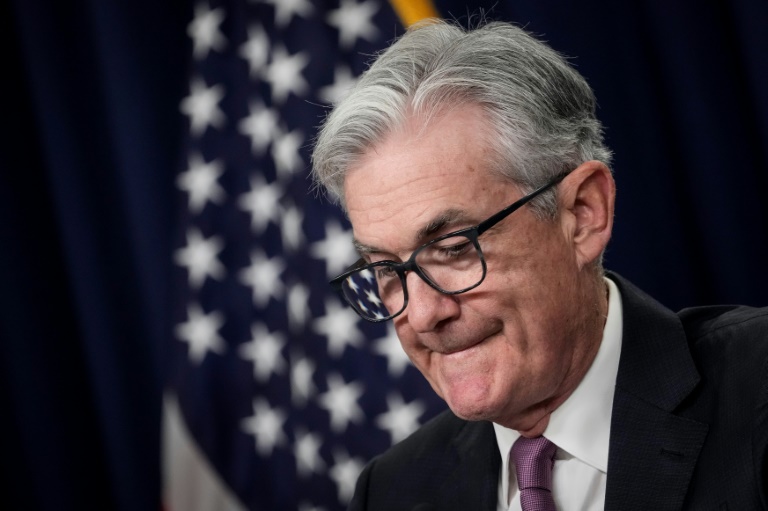
All eyes are on this week’s central banking symposium in Jackson Hole, Wyoming, where Fed Chair Jerome Powell will deliver a speech that is expected to repeat the message that policymakers are not done raising rates yet.

“This week is going to be an opportunity for the Federal Reserve to… send a very clear message to markets. And I think that message will be one that is still focused on inflation,” said Andy Kapyrin of Regent Atlantic.

“That creates risk for the market, particularly the higher valuation tech stocks” such as those on the Nasdaq, he told AFP.

Easing price pressures and signs of economic slowdown had raised hopes Fed policymakers would pause and possibly even cut rates next year after two successive, 75-basis-point hikes, helping equities rally globally in recent weeks.

But that optimism has slowly been eroded in recent weeks as Fed officials, including Powell, have warned that the battle against inflation was far from won, particularly as the jobs market remained resilient.

The recent rally in equities “was probably a little premature,” said Ross Mayfield at Baird.

“Really, nothing in the macro story had changed all that much. The Fed was still signaling rate hikes,” he told AFP.

– ‘Recessionary risk’ –

The euro has come under additional pressure after Russia’s Gazprom said late Friday that the Nord Stream pipeline would be closed for maintenance at the end of the month, cutting Europe’s daily gas deliveries.

As a result, Europe’s Dutch TTF Gas Futures contract soared on Monday close to 300 euros per megawatt hour — not far from record struck after Moscow launched its assault on Ukraine — due to worries that Russia will not resume supplies afterwards.

In Europe, London shed 0.2 percent, but both Paris sank 1.8 percent and Frankfurt 2.3 percent on spiking as prices.

Surging energy prices have this year driven inflation to 40-year peaks in nations including Britain and the United States, in turn prompting tighter monetary policy.

US banking group Citi has forecast that UK inflation would peak at 18.6 percent next January on the back of rocketing domestic energy prices.

Asian equity markets mostly fell, although Shanghai stocks rose after China’s central bank cut prime loan rates as it tries to bolster the world’s second-biggest economy, which has been ravaged by lockdowns as part of a zero-Covid strategy.

The prospect of more US hikes also sent the dollar rallying against the yen, and it is nearing the 140-yen mark for the first time in 24 years.

– Key figures at around 2030 GMT –

New York – Dow: DOWN 1.9 percent at 33,063.61 points (close)

New York – S&P 500: DOWN 2.1 percent at 4,137.99 (close)

New York – Nasdaq: DOWN 2.6 percent at 12,381.57 (close)

EURO STOXX 50: DOWN 1.9 percent at 3,658.22 (close)

London – FTSE 100: DOWN 0.2 percent at 7,533.79 (close)

Frankfurt – DAX: DOWN 2.3 percent at 13,230.57 (close)

Paris – CAC 40: DOWN 1.8 percent at 6,378.74 (close)

Tokyo – Nikkei 225: DOWN 0.5 percent at 28,794.50 (close)

Hong Kong – Hang Seng Index: DOWN 0.6 percent at 19,656.98 (close)

Shanghai – Composite: UP 0.6 percent at 3,277.79 (close)

Euro/dollar: DOWN at $0.9941 from $1.0037 Friday

Pound/dollar: DOWN at $1.1763 from $1.1829

Euro/pound: DOWN at 84.51 pence from 84.86 pence

Dollar/yen: UP at 137.48 yen from 136.97 yen

West Texas Intermediate: DOWN 0.6 percent at $90.23 per barrel

Brent North Sea crude: DOWN 0.2 percent at $96.48

burs-rl-bfm/

Russia accuses Ukraine over car bomb assassination

Russia on Monday accused Ukraine over the assassination of the daughter of a leading hardliner, as Kyiv said nearly 9,000 of its soldiers had been killed since Moscow launched its invasion.

The FSB security services pointed the finger at Ukraine for Saturday’s shock car bombing in Moscow’s outskirts that killed Daria Dugina, the 29-year-old daughter of Russian ideologue Alexander Dugin, an outspoken advocate for the invasion of Ukraine.

“The crime was prepared and committed by Ukrainian special services,” the FSB said in a statement carried by Russian news agencies, adding that a bomb had been attached to the car driven by Dugina.

The brazen killing — and Moscow’s rapid accusation — marks a potentially destabilizing turn in the six-month-old conflict.

Russian President Vladimir Putin denounced the killing of the journalist and political commentator as a “vile crime” in a message of condolence to her family.

The FSB said the person responsible was a Ukrainian woman born in 1979 who had rented an apartment in the same building where Dugina lived.

After the car bombing, she had fled to EU member Estonia, it added.

Dugin, 60, is an outspoken Russian ultranationalist intellectual who enthusiastically backs Russia’s invasion of Ukraine, as did his daughter. Russian media reports suggest Dugina had borrowed her father’s car at the last minute.

Over the weekend, Kyiv denied any link to the bombing.

– Ukrainian casualties –

Authorities on Monday meanwhile revealed the extent of the casualties among Ukrainian troops.

General Valeriy Zaluzhny, Ukraine’s commander-in-chief, said the country’s children needed particular attention “because their fathers have gone to the front and are maybe among the nearly 9,000 heroes who have been killed”.

Zaluzhny’s comments on the Ukrainian death toll, reported by Interfax-Ukraine news agency, were the first indication of Kyiv’s military losses since April.

On Wednesday, Ukraine will mark its independence day — and six months since Russian troops invaded.

After Ukrainian resistance thwarted an early Russian push on Kyiv, Moscow’s forces have focused on gaining ground in the country’s east.

The European Union foreign policy chief Josep Borrell told reporters in Spain that the bloc was considering military training for Ukrainian troops.

The shockwaves of the war are being felt around the world with soaring energy prices and food shortages.

– Buying time? –

A Ukraine presidential adviser said Russia is trying to coax Ukraine into fresh talks in order to buy time to regroup for a fresh offensive.

For weeks, the Kremlin has been “trying to convince Ukraine to enter into negotiations”, Mykhaylo Podolyak told AFP.

He suggested this was a ploy to “freeze the conflict while preserving the status quo in the occupied Ukrainian territories.”

Podolyak said Kyiv believes Moscow does not really want serious peace talks but “an operation pause for its army” ahead of a new offensive.

– Tense Independence Day –

In Spain, Borrell told reporters that EU defence ministers would next week discuss launching a major training operation for Ukrainian forces in nearby countries.

“It seems reasonable that a war that is lasting and looks set to last requires an effort not only in terms of supplies of material,” Borrell said.

All EU member states would have to agree to step up the training that several are already providing Ukraine under bilateral agreements.

EU defence ministers have a two-day meeting in Prague from next Monday.

With much of Europe preparing for fuel shortages as Moscow cuts back its deliveries to the West in response to sanctions, Bulgaria said it was seeking talks with Russia gas giant Gazprom.

The country is almost totally dependent on Russia for natural gas supplies.

“We obviously have to turn to them,” said Energy Minister Rosen Hristov.

Ukraine President Volodymyr Zelensky warned over the weekend that Russia might mark Ukraine’s Independence Day by launching a trial of Ukrainian soldiers captured during the siege of Mariupol.

“This will be the line beyond which no negotiations are possible,” he warned Sunday.

Soldiers from Ukraine’s Azov regiment captured by Russian forces after the battle for Mariupol said Monday they had been beaten in captivity.

The soldiers, released as part of a prisoner exchange, told reporters they saw soldiers who were beaten until their bones were broken.

One ex-prisoner said he had observed cases of “serious torture”.

Kim Kardashian among celebrities flouting US drought rules: report

Kim Kardashian and celebrity neighbors including Sylvester Stallone have been handed warnings for repeatedly flouting water restrictions at their homes in drought-hit California, the Los Angeles Times reported Monday.

Strict water limits — imposed as the western United States endures its 23rd successive year of drought, worsened by human-caused climate change — are in place across swathes of southern California, including the affluent neighborhoods of Calabasas and Hidden Hills.

But more than 2,000 residents of the two glitzy enclaves north of Los Angeles, known for their sprawling green lawns and giant swimming pools, are continuing to breach the limits, often by eye-watering amounts.

Celebrity reality stars Kim and Kourtney Kardashian were among repeat offenders in June, the newspaper reported, citing notices obtained via a Public Records Act request.

A Hidden Hills home and adjacent lot owned by a trust linked to Kim Kardashian exceeded their water allowance by a combined 232,000 gallons (878,000 liters) for the month, while her sister Kourtney’s property in nearby Calabasas was around 100,000 gallons in excess.

“Rocky” star Stallone’s $18-million Hidden Hills property exceeded its June limits by 230,000 gallons, or 533 percent, having been 195,000 gallons over the limit the previous month, it said.

Repeat offenders are initially fined hundreds of dollars, but deep-pocketed homeowners who are still not dissuaded can eventually have their supplies physically reduced to a trickle.

Water authorities in Las Virgenes Municipal Water District, covering Calabasas and Hidden Hills, have already installed metal flow restrictor devices at around 20 properties’ main shutoff valves, the newspaper reported.

A representative for the Kardashians did not immediately respond to AFP request for comment.

Stallone’s lawyer told the Times that its report “could mischaracterize and misrepresent the situation” at a property sustaining around 500 mature trees, saying his clients had “proactively” installed a drip irrigation system and let certain lawns die.

Others named in the newspaper’s investigation included comedian Kevin Hart and former NBA basketball star Dwyane Wade.

Famous for its rows of palm trees, Los Angeles has also traditionally been known for its lush, green lawns, often maintained with automatic sprinklers.

Residents are increasingly replacing their thirsty lawns with plants native to this desert region, and Las Virgenes spokesman Mike McNutt said he hoped celebrities could set a positive example.

“People listen to you, people look at you, people value what you do,” he said.

“We need you to step up to the plate, to be examples and to be leaders so that other people will follow.”

Ford confirms cutting 3,000 jobs as it pushes towards electric

US auto giant Ford confirmed Monday it is eliminating around 3,000 jobs, mainly in North America and India, as the company pushes to accelerate its transition to electric vehicles.

Challenged by Tesla and other start-ups, traditional carmakers have accelerated production of their electric models in recent years.

The restructuring involves 2,000 salaried positions and 1,000 contractors mostly in the United States, Canada and India but does not affect factory workers, a spokesman told AFP.

US media had already reported in July that Ford, which has around 182,000 employees worldwide, was preparing to cut several thousand jobs.

“We absolutely have too many people in certain places, no doubt about it,” president and CEO Jim Farley said in a conference call in late July.

“We have skills that don’t work anymore… and we have jobs that need to change,” he said, without specifying the number of positions to be eliminated.

The automaker has previously said it plans to spend $50 billion on electric vehicle production by 2026.

And Ford announced in March that it aimed to cut spending on traditional vehicles by up to $3 billion a year.

The job cuts announced Monday are “consistent with what we have been describing for quite some time” and are intended at making Ford “more efficient,” the spokesman said.

Close Bitnami banner
Bitnami