World

Stocks slide as traders mull Fed outlook, gas price spike

World stocks sank Monday and the dollar rallied on concern the Federal Reserve will stick to its interest rate-hiking plans to combat runaway inflation.

Eurozone equities also tanked as spiking natural gas prices sparked fears that winter energy shortages could cause recession, which helped push the euro down to a 20-year low under parity against the greenback.

Oil slumped on speculation over an Iran nuclear deal that could ease a supply crunch caused by producer Russia’s invasion of Ukraine, as well as recession fears.

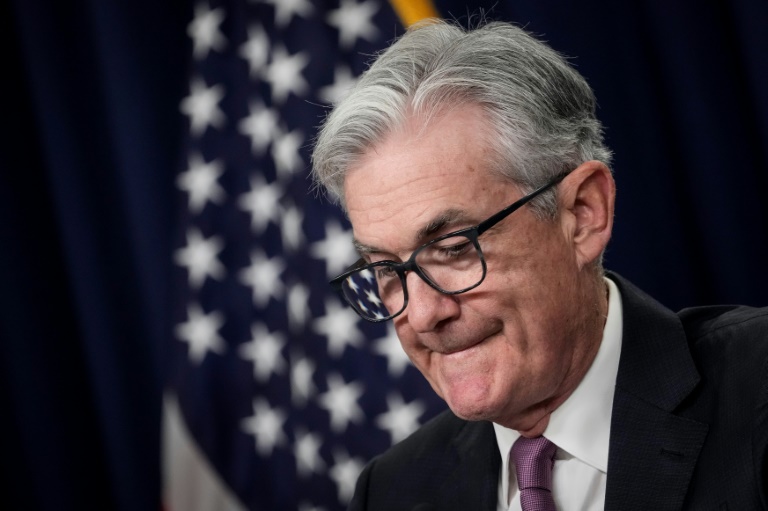
All eyes are on this week’s symposium in Jackson Hole, Wyoming, where Fed boss Jerome Powell will deliver a speech that traders will follow for an idea about the US central bank’s next moves.

– ‘Critical moment’ –

Stocks “began Monday in downbeat mood ahead of what could prove to be a critical moment for markets at the end of this week”, said AJ Bell investment director Russ Mould.

“The Jackson Hole summit of central bankers and finance ministers is widely expected to see Powell take to the floor — and puncture optimism which has built up over hopes the Fed may be nearing the point at which it pivots away from rate hikes.”

A dip in price rises and signs of economic slowdown had raised hopes policymakers would ease up — and possibly cut rates next year — after two successive, 75-basis-point hikes, helping equities rally globally.

But that optimism has slowly been eroded in recent weeks as Fed officials, including Powell, have warned that the battle against inflation was far from won, particularly as the jobs market remained resilient.

The euro is under additional pressure after Russia’s Gazprom said late Friday that the Nord Stream pipeline would be closed for maintenance at the end of the month, cutting Europe’s daily gas deliveries.

As a result, Europe’s Dutch TTF Gas Futures contract soared on Monday close to 300 euros per megawatt hour, not far from record struck after Russia launched its assault on Ukraine, amid worries that Russia will not resume supplies afterwards.

“It matters little whether Russia will decide to cut off flows completely,” said CMC Markets analyst Michael Hewson. “The market is behaving as if they will.”

– ‘Recessionary risk’ –

Rabobank analyst Jane Foley told AFP the rise in gas prices “focussed attention on recessionary risk for the eurozone. A clear break of parity risks a moves towards $0.95,” she added.

In early morning London deals, the euro dipped as low as $0.9990 before clawing its way back above the psychological barrier.

Surging energy prices have this year driven inflation to 40-year peaks in nations including Britain and the United States, in turn prompting tighter monetary policy.

US banking group Citi has forecast that UK inflation would peak at 18.6 percent next January on the back of rocketing domestic energy prices.

Asian equity markets mostly fell on Monday, although Shanghai stocks rose after China’s central bank cut prime loan rates as it tries to bolster the world’s second-biggest economy, which has been ravaged by lockdowns as part of a zero-Covid strategy.

In Europe, London shed 0.2 percent, but both Paris sank 1.8 percent and Frankfurt 2.3 percent on spiking as prices.

In late morning trading on Wall Street, both the Dow and S&P 500 were down more than one percent, while the tech-heavy Nasdaq fell more than two percent.

The prospect of more US hikes also sent the dollar rallying versus the yen, and it is nearing the 140 yen mark for the first time in 24 years.

– Key figures at around 1530 GMT –

New York – Dow: DOWN 1.4 percent at 33,236.26 points

EURO STOXX 50: DOWN 1.8 percent at 3,653.40

London – FTSE 100: DOWN 0.2 percent at 7,533.79 

Frankfurt – DAX: DOWN 2.3 percent at 13,230.57 

Paris – CAC 40: DOWN 1.8 percent at 6,378.74

Tokyo – Nikkei 225: DOWN 0.5 percent at 28,794.50 (close)

Hong Kong – Hang Seng Index: DOWN 0.6 percent at 19,656.98 (close)

Shanghai – Composite: UP 0.6 percent at 3,277.79 (close)

Euro/dollar: DOWN at $0.9941 from $1.0037 Friday

Pound/dollar: DOWN at $1.1758 from $1.1829

Euro/pound: DOWN at 84.49 pence from 84.86 pence

Dollar/yen: UP at 137.63 yen from 136.97 yen

West Texas Intermediate: DOWN 2.3 percent at $88.70 per barrel

Brent North Sea crude: DOWN 2.0 percent at $94.80

burs-rl/jj
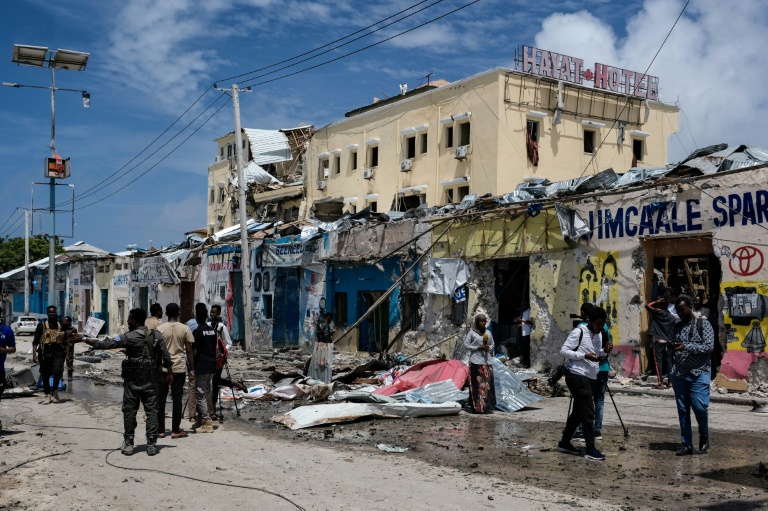
Somalia PM vows accountability over deadly hotel siege

Somalia’s prime minister pledged that the government will be held accountable over the deadly Mogadishu hotel siege by Al-Shabaab jihadists, whom he branded “children of hell”.

Hamza Abdi Barre also called on Somalis to unite against the Al-Qaeda-linked group, which has been waging a bloody insurgency in the impoverished Horn of Africa nation for more than 15 years.

“There will be accountability in the government… anyone who neglected the responsibility he was entrusted with will be held accountable,” Barre told reporters late Sunday.

He was speaking after visiting a hospital treating victims of the bomb and gun attack on the Hayat Hotel that the health ministry says claimed the lives of 21 people and wounded 117.

The 30-hour siege was the deadliest attack in Mogadishu since President Hassan Sheikh Mohamud was elected in May after a protracted political crisis.

Al-Shabaab commandos stormed the hotel on Friday evening, with the siege only ending at around midnight Saturday after security forces bombarded the building, leaving much of it in ruins.

Police said more than 100 people, including women and children, had been rescued.

– ‘Unite against the enemy’ –

“There is only one of two choices here, we either allow Al-Shabaab — the children of hell — to live, or we live. We cannot live together,” said Barre, appointed prime minister in June.

“I call on the Somali people to unite to fight against the enemy… so that what they did now will never happen again.

“The fight against them has already started taking place around several locations,” he said, without elaborating.

The Hayat was a favoured meeting spot for government officials and scores of people were inside when a suicide bomber triggered a massive blast, opening a way into the site for heavily-armed gunmen.

Minutes later, a second explosion struck as rescuers, security forces and civilians rushed to help the injured, witnesses said.

Security officials were still combing through the rubble on Monday, hunting for explosives and possibly buried bodies.

The building remained cordoned off, but roads nearby had reopened and traffic was back to normal in Mogadishu.

“The only difference between this attack and previous ones is the length of the siege and how long it took for security forces to contain the situation,” said Samira Gaid, executive director of the Mogadishu-based Hiraal Institute think tank.

She said the change in Somalia’s leadership may have affected how the security forces responded. “There was the fact that security forces and security heads are expected to be changed whenever there is a new administration coming in.”

– ‘Repent’ –

Al-Shabaab has carried out several attacks in the mainly Muslim country since Mohamud took office. Last month it also mounted an incursion into neighbouring Ethiopia and raided a military base on the border.

Former Al-Shabaab commander Mukhtar Robow, who is now religion minister in Barre’s cabinet, condemned the attack and called on fighters to abandon the extremist group.

“I call on them to repent… I say to them, ‘you know that this is not right so repent and abandon (Al-Shabaab) and God willing you will survive’,” he said.  

Somalia’s allies, including the United States, Britain, the European Union and Turkey, as well as the UN, strongly condemned the attack, as did ATMIS, the African Union force tasked with helping Somali forces take over primary responsibility for security by the end of 2024.

Earlier this month, Washington said its forces had killed 13 Al-Shabaab operatives in an air raid, the latest strike since President Joe Biden in May ordered the re-establishment of a US troop presence in Somalia, reversing a decision by Donald Trump.

The Islamist militants, who espouse a strict version of sharia or Islamic law, were driven out of Mogadishu by an African Union (AU) force in 2011.

But they still control swathes of countryside and retain the ability to launch deadly strikes, often hitting hotels and restaurants as well as military and political targets.

The deadliest attack occurred in October 2017 when a truck packed with explosives blew up in Mogadishu, killing 512 people.

The Hayat assault was reminiscent of deadly sieges in neighbouring Kenya, a contributor to the AU force. 

Al-Shabaab claimed responsibility for a four-day siege at a mall in Nairobi in September 2013 that killed 67 people and an hours-long attack on an upmarket hotel complex there in 2019 that left 21 dead.

Finnish PM tests negative in drug test taken to 'clear suspicion'

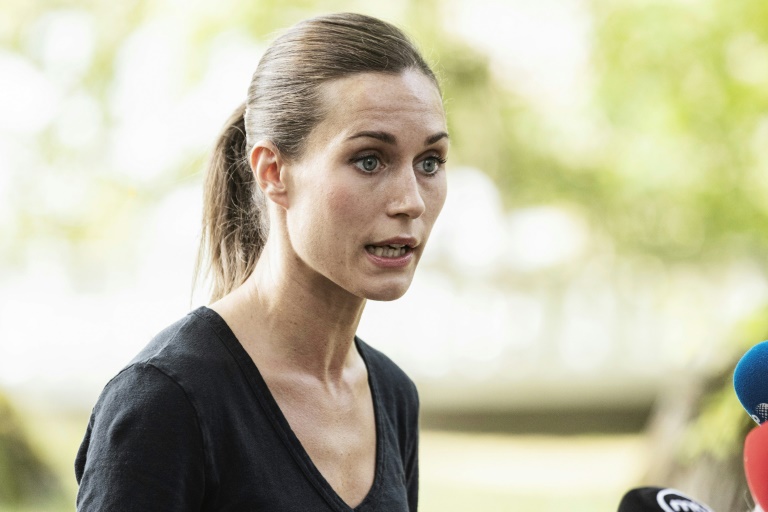
Finland’s prime minister received a negative result in a drug test which she took to “clear up suspicions” after a video of the 36-year-old partying sparked criticism, her office said Monday.

Marin’s urine sample was tested for the presence of various drugs, such as cocaine, amphetamine, cannabis and opioids, Iida Vallin, a special adviser to the prime minister, told AFP.

“Drug test taken from Prime Minister Sanna Marin on 19 August 2022 did not reveal the presence of drugs,” Marin’s office said in a statement, adding that the results were signed by a doctor.

“The test was a comprehensive drug test. We did not choose how the test was done,” Vallin said.

A video leaked last week showed Marin dancing and partying with a group of friends and celebrities that created controversy across the world.

Some interpreted comments heard on the video as referring to narcotics, something heavily debated on social media and strongly denied by the prime minister.

“To clear up any suspicions, I have taken a drug test today,” she told reporters at her residence on Friday.

Marin previously said she was “spending an evening with friends” and that the videos were “filmed in private premises”. 

She admitted to having drunk alcohol. In addition to denying taking drugs, she said she did not witness any drug use by any of the attendees.

“Never in my life, not even in my youth, have I ever used any drugs,” she said.

Marin — who was appointed in 2019 at the age of 34 — has previously been the target of criticism over parties at her official residence.

In December 2021, she came under sustained criticism after it was revealed she stayed out dancing until the early hours despite having been exposed to Covid-19.

A poll commissioned by Finnish TV channel MTV3 at the time found two-thirds of respondents thought her night out was a “serious mistake”.

Nearly 9,000 Ukrainian troops killed so far, says Kyiv

Nearly 9,000 Ukrainian soldiers have been killed since Russia invaded, the country’s top military officer said Monday, as Moscow accused Kyiv over the assassination of the daughter of a leading hardliner.

The European Union foreign policy chief Josep Borrell meanwhile told reporters in Spain that the bloc was considering military training for Ukraine’s forces.

General Valeriy Zaluzhny, Ukraine’s commander-in-chief, said Ukraine’s children needed particular attention “because their fathers have gone to the front and are maybe among the nearly 9,000 heroes who have been killed”.

Zaluzhny’s comments on the Ukrainian death toll, reported by Interfax-Ukraine news agency, was the first indication of Kyiv’s military losses since April.

On Wednesday, Ukraine will mark its independence day — and six months since Russian troops invaded.

After Ukrainian resistance thwarted an early Russian push on the capital Kyiv, Moscow’s forces have focussed on gaining ground in the east of the country.

The shockwaves of the war are being felt around the world with soaring energy prices and food shortages.

– Putin denounces ‘vile crime’ –

Russia’s FSB security services on Monday accused Ukraine of being behind Saturday’s car bombing in the outskirts of Moscow that killed Daria Dugina, the daughter of hard-line Russian ideologue Alexander Dugin.

“The crime was prepared and committed by Ukrainian special services,” the FSB said in a statement Monday carried by Russian news agencies.

Russian President Vladimir Putin denounced the “vile crime” in a message of condolence to her family.

The FSB statement said the person responsible was a Ukrainian woman born in 1979 who had rented an apartment in the same building where Dugina lived.

After the car bombing, she had fled to EU member Estonia, it added.

Dugin, 60, is an outspoken Russian ultranationalist intellectual who enthusiastically backs Russia’s invasion of Ukraine, as did his daughter. Russian media reports suggest Dugina had borrowed her father’s car at the last minute.

Over the weekend, Ukrainian presidential adviser Mykhaylo Podolyak denied that Kyiv had had anything to do with the bombing.

– Tense Independence Day –

In Spain Borrell told reporters that EU defence ministers would next week discuss launching a major training operation for Ukrainian forces in nearby countries.

“It seems reasonable that a war that is lasting and looks set to last requires an effort not only in terms of supplies of material,” Borrell said.

EU defence ministers have a two-day meeting in Prague from next Monday.

“I hope it will be approved,” said Borrell, adding that the details would have to be agreed by all EU member states.

Any such operation would be a step up from the military training that several nations are already providing to Ukrainian forces under bilateral agreements.

With much of Europe preparing for fuel shortages as Moscow cuts back its deliveries to the west in response to sanctions, Bulgaria said Monday it was seeking talks with Russia gas giant Gazprom.

The country is almost totally dependent on Russia for its annual consumption of 3.0 billion cubic metres of natural gas.

“We obviously have to turn to them,” said Energy Minister Rosen Hristov.

Ukraine President Volodymyr Zelensky warned over the weekend that Russia might mark Ukraine’s Independence Day by launching a trial of Ukrainian soldiers captured during the siege of Mariupol.

“This will be the line beyond which no negotiations are possible,” he warned in Sunday’s nightly address.

The capital Kyiv has already announced a ban on public gatherings around Wednesday’s public holiday, and the city of Kharkiv, in the east, has declared a curfew.

Ahead of independence day, residents in Kyiv clambered on destroyed Russian tanks put on display in the city centre over the weekend.

Kenya's Odinga mounts court challenge to presidential poll result

Kenya’s defeated presidential candidate Raila Odinga filed a petition to the country’s top court Monday, challenging the outcome of the August 9 election in what he called a fight for “democracy and good governance”.

Odinga, a veteran opposition leader who ran with the backing of President Uhuru Kenyatta and the ruling party, has rejected the outcome of the poll that delivered victory to his rival William Ruto, branding it a “travesty”.

The 77-year-old politician lost his fifth bid for the presidency by a narrow margin of around 230,000 votes — less than two percentage points.

Hundreds of supporters cheered as dozens of boxes of evidence were unloaded from a truck outside the Supreme Court.

“We have enough evidence that it is us who won the election. We didn’t have an election we can be proud of,” Odinga told a press conference after filing the case.

The outcome of the poll represented a “continuing struggle pitting the forces for democracy and good governance against the corruption cartels that… will stop at nothing to take control of government,” he said, without giving specific details.

“The action we have taken… affirms our deep belief in constitutionalism, the rule of law and a peaceful resolution of disputes.”

Although polling day passed off peacefully, the announcement of the results a week ago sparked angry protests in some Odinga strongholds and there are fears a drawn-out dispute may lead to violence in a country with a history of post-poll unrest.

Since 2002, no presidential election in Kenya has gone uncontested, with this year’s outcome also causing a rift within the Independent Electoral and Boundaries Commission (IEBC) which oversaw the poll.

According to a copy of the 72-page petition seen by AFP, Odinga’s team alleges that IEBC chairman Wafula Chebukati failed to tally around 140,000 votes.

As a result, Ruto “did not meet the constitutional threshold of 50% plus 1 of the valid votes cast” — a requirement for him to be declared the winner.

Judges now have 14 days to issue a ruling. If they order an annulment, a new vote must be held within 60 days.

– ‘We want justice’ –

Odinga supporters began gathering outside the court hours before his arrival, blowing whistles and waving placards reading “Electoral Justice Now!” and “We want justice now”. 

“Odinga must win so that we get the 6,000 shillings ($50) promised in his manifesto,” said one man, wearing a crown made with plants who was referring to a monthly cash handout for vulnerable households.

Another man — armed with a Bible and wearing huge green glasses — knelt down in prayer as police guarded the court premises.

A court clerk told AFP the tribunal had also received another eight petitions over the results filed by voters, politicians and non-profit organisations.

The IEBC was under heavy pressure to deliver a clean vote after facing sharp criticism over its handling of the August 2017 election, which was also challenged by Odinga.

The court annulled that election in a first for Africa and ordered a re-run which was boycotted by Odinga. Dozens of people died during a police crackdown on protests.

In a shock development shortly before the results of this year’s poll were announced, four of the IEBC’s seven commissioners accused chairman Chebukati of running an “opaque” operation and later said the numbers did not add up.

Chebukati dismissed the claims, insisting he had carried out his duties according to the law of the land despite “intimidation and harassment”.

– Divided opinion –

Legal experts are divided on whether Chebukati needed the commissioners’ backing to announce the results, with constitutional lawyer Charles Kanjama telling AFP there was “some ambiguity” surrounding the issue.

Odinga has previously said he was cheated of victory in the 2007, 2013 and 2017 elections, and the poll’s aftermath is being keenly watched as a test of democratic maturity in the East African powerhouse.

On the campaign trail, both frontrunners pledged to resolve any disputes in court rather than on the streets.

Since the results were declared, Odinga has commended his supporters for “remaining calm” while Ruto has taken a conciliatory tone and promised to “work with all leaders”.

Kenya’s worst electoral violence occurred after the 2007 vote, when more than 1,100 people died in politically motivated clashes involving rival tribes.

If the Supreme Court upholds the results, Ruto will become Kenya’s fifth president since independence from Britain in 1963, taking the reins of a country battling inflation, high unemployment and a crippling drought.

Markets looking for clarity but tuning out Fed message

US central bankers have been hammering home a single message: Interest rates will rise until inflation begins to come down. But financial markets keep hoping to hear a different tune, one indicating the pace of rate hikes will slow.

All eyes will be on this week’s annual gathering of policymakers in Jackson Hole, Wyoming to hear Federal Reserve Chair Jerome Powell explain his stance — again — with market watchers hoping to get something more to their liking.

The Fed could be a victim of its own success. 

After keeping the benchmark borrowing rate at zero throughout the pandemic, the steep spike in prices, which surged to a 40-year high following Russia’s invasion of Ukraine, prompted the central bank to take aggressive action.

In the battle to contain red-hot inflation, which topped nine percent in June, the Fed has hiked rates four times, including massive, three-quarter point increases in June and July — steep moves unheard of since the early 1980s.

But in recent weeks signs of easing price pressures and a slowing economy, along with falling energy costs and indications global supply chain snarls have lessened, caused financial markets to become optimistic the Fed will dial back or even pause rate increases — and even begin to cut next year.

Stocks on Wall Street have risen for four straight weeks, despite a string of officials repeating the message that rates will continue to rise, even though annual inflation slowed in July as oil prices fell.

While the annual gathering often becomes a place for global central bankers to signal shifting policy, Powell is expected to repeat that message Friday — though he may acknowledge that a slowdown will come later in the year.

“It does seem like what we’ve heard from Powell so far suggests there’s quite a high bar for them to transition from aggressive hikes” to a slower pace of 25 basis point steps, said Jonathan Millar of Barclays.

Millar, who served as a Fed economist and forecaster under four central bank chiefs, told AFP that markets are looking further ahead, anticipating the rate hikes will be successful in slowing inflation.

But for policymakers “One thing they definitely want to communicate is that they remain very much focused on issues with price stability and that they will react very cautiously to any signs of improvements in the inflation data.”

That means indications prices are coming down more broadly, not just because of falling oil.

Managing the market’s expectations “is really job one,” Millar said. “They have to enforce that credibility.”

But like other economists he believes the Fed’s policy-setting Federal Open Market Committee (FOMC) at its September meeting will step down to a 0.5 percentage point increase, taking the range of the key lending rate up to 2.75 to 3.0 percent, to be followed up with quarter-point hikes in November and December

– Walking a narrow line –

Kathy Bostjancic of Oxford Economics said the dilemma for Powell is to recognize the progress towards achieving a soft landing — bringing inflation back down towards the two percent target, without derailing economic growth — while confirming the Fed’s resolve.

He “continues to have to walk kind of a narrow line,” she told AFP. “You don’t want to be too pessimistic.”

And with housing prices and sales cooling from their torrid pace along with other encouraging data “he has the wind at his back.”

But she said, “The message he really has to give is that we’re still going to be looking to raise rates to a restrictive level to really make sure inflation is still our number one priority.”

The annual monetary policy symposium hosted by the Kansas City Federal Reserve Bank runs August 25-27. It often is a place for officials from around the world to come to discuss policy changes in the works, but Powell is virtually the only major global central bank chief confirmed to speak at the event.

European Central Bank chief Christine Lagarde is not planning to attend, Bank of England governor Andrew Bailey is expected to be there but not speak. Francois Villeroy de Galhau, governor of the Bank of France, is due to give a speech on Saturday.

Poaching, horn trade declining but rhinos still threatened

The rhino’s survival remains in grave danger despite Covid-related drops in poaching and the illegal trade in their horns, a conservation body said on Monday.

The International Union for Conservation of Nature (IUCN) said that poaching was still “an acute threat” to the survival of the species.

A total of 2,707 rhinos were poached in Africa between 2018 and 2021, according to the IUCN, the vast majority of which were killed in South Africa, mainly in the Kruger National Park.

South Africa is home to nearly 80 percent of the world’s rhinos.

Rhino poaching rates in Africa have declined from a peak of 5.3 percent of the total population in 2015 to 2.3 percent in 2021, the Swiss-based organisation said.

“The overall decline in poaching of rhinos is encouraging, yet this remains an acute threat to the survival of these iconic animals,” said Sam Ferreira, scientific officer with the IUCN African Rhino Specialist Group.

He told AFP there was no formal analysis into why poaching rates were declining.

“A number of factors could lead to this slowing, including improved local cooperation in law enforcement, international collaboration between range and consumer states, as well as changes in the demand for rhino horn”, said Ferreira.

– 2020 blip –

The IUCN said 2020 was an abnormal year, with lockdowns and restrictions due to the Covid pandemic seeing several African countries witnessing dramatically-reduced poaching rates.

South Africa lost 394 rhinos to poaching in 2020, while Kenya recorded no rhino poaching at all that year, it said.

However, as Covid-19 travel restrictions were lifted, some countries reported new increases in poaching activities: 451 rhinos were poached in South Africa and six in Kenya.

“These numbers are still significantly lower than during the peak in 2015, when South Africa alone lost 1,175 rhinos to poaching,” IUCN said.

The rhino population in Africa has fallen by 1.6 percent annually, from 23,562 in 2018 to 22,137 at the end of last year.

IUCN said the number of white rhinos — which it classifies as vulnerable on its Red List of Threatened Species — declined by almost 12 percent from 18,067 to 15,942 during this period.

However, the number of black rhinos — deemed critically-endangered — rose by 12 percent to 6,195.

“It is essential to continue active population management and anti-poaching activities for all subspecies across different range states,” the IUCN said.

Data also suggests that, on average, between 575 and 923 rhino horns entered illegal trade markets each year between 2018 and 2020, compared to approximately 2,378 per year between 2016 and 2017.

However, in 2019, before the pandemic, the reported seized weight of illegal rhino specimens reached its highest point of the decade, possibly due to increased regulations and law enforcement efforts.

– Javan, Sumatran rhinos –

IUCN said the numbers of one-horned rhino, found mainly in India and Nepal, and the critically-endangered Javan rhino, had increased since 2017.

Their numbers in India and Nepal increased from an estimated 3,588 in 2018 to 4,014 at the end of 2021, it said.

This was “thanks to conservation efforts, including strengthened law enforcement”, it added. 

The population of Javan rhinos increased from between 65 and 68 individuals in 2018 to 76 at the end of 2021.

But the number of Sumatran rhinos fell to an estimated 34 to 47 in 2021, compared with between 40 and 78 individuals in 2018.

The IUCN classifies the Sumatran rhino, the smallest of all rhino species, as critically endangered.

The World Wild Fund for Nature estimates that fewer than 80 Sumatran rhinos remain in the world, mainly in Indonesia on the islands of Sumatra and Borneo.

The IUCN report said 11 rhino poaching incidents were recorded in Asia — 10 in India and one in Nepal — since the beginning of 2018, all of which involved greater one-horned rhinos. 

British cinema chain mulls US bankruptcy filing

British-based cinema chain Cineworld confirmed Monday that a US bankruptcy filing is among options for the debt-laden group, which has been slammed by dwindling audience numbers.

The group, which operates hundreds of cinemas mainly in the United States, revealed last week that it was “evaluating various strategic options” to boost liquidity and potentially restructure, with demand below expectations since reopening from the pandemic.

Cineworld said in an update on Monday that those options “include a possible voluntary Chapter 11 filing in the United States and associated ancillary proceedings in other jurisdictions”.

The London-listed group added it was holding talks with “many of its major stakeholders including its secured lenders”.

A Chapter 11 filing “would be expected to allow the group to access near-term liquidity and support the orderly implementation of” debt reduction, it noted.

Cineworld would maintain its normal operations with “no significant impact” on staff, under such an outcome.

However, it also warned of a “very significant dilution of existing equity interests”.

Further announcements would be made when appropriate, it added.

Cineworld’s share price has collapsed since the start of this year to stand at just three pence on Monday.

Analysts argue that its 2018 takeover of American peer Regal left it saddled with too much debt.

The chain, whose second biggest market is Britain, was then hit hard by pandemic fallout and the booming popularity of streaming.

“Cineworld’s problems stem from an overly aggressive growth strategy which relied on using huge amounts of debt to buy US chain Regal,” said AJ Bell analyst Russ Mould.

“This may have made Cineworld one of the largest cinema operators in the world, but bigger isn’t necessarily better — and the pandemic swiftly exposed the company’s strained balance sheet.”

Swiss glaciers shrink in half since 1931: study

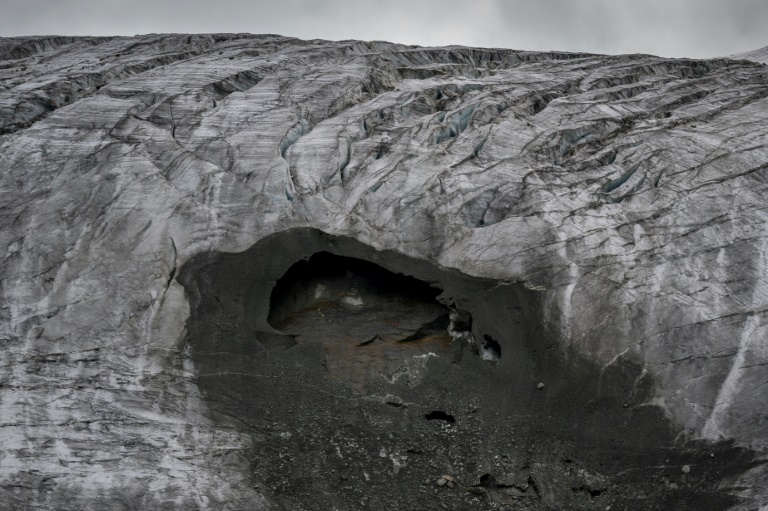
Swiss glaciers have shed half their volume since 1931, Swiss researchers said Monday, following the first reconstruction of the country’s ice loss in the 20th century.

Rapid glacier melt in the Alps and elsewhere, which scientists say is driven by climate change, has been increasingly closely monitored since the early 2000s. However, until now there has been little insight into how glaciers changed prior to that during the 20th century, with only a handful of individual glaciers tracked over time, and with different models for estimating their volume.

But Swiss researchers from the ETH Zurich technical university and the Swiss Federal Institute for Forest, Snow and Landscape Research WSL say they had now reconstructed the topography of all Swiss glaciers in 1931, making it possible to show how they have evolved.

“Based on these reconstructions and comparisons with data from the 2000s, the researchers conclude that the glacier volume halved between 1931 and 2016,” they said in a statement.

Their study, published in the scientific journal The Cryosphere, used material from the TerrA image archive, which covers about 86 percent of Switzerland’s glacierised area, analysing around 21,700 photographs taken between 1916 and 1947.

– Dramatic change –

For their reconstruction, the glaciologists used so-called stereophotogrammetry — a technique used to determine the nature, shape and position of any object on the basis of image pairs.

“If we know the surface topography of a glacier at two different points in time, we can calculate the difference in ice volume,” lead study author Erik Schytt Mannerfelt said in the statement.

The researchers presented side-by-side picture pairs showing the same spot nearly a century apart, indicating the dramatic change that has taken place.

The Fiescher Glacier, for instance, resembled a massive sea of ice in 1928, but in 2021, a few tiny specs of white were all that remained on the lush green mountainside. 

Since the images used for the reconstruction were taken in different years, the study used the mean year 1931 as a reference and reconstructed the surface topography of all glaciers for that year, the statement said.

In their statement, the researchers stressed that glaciers did not continuously recede over the past century, pointing out that there was even sporadic mass glacier growth in the 1920s and 1980s.

But while there may have been growth over short-term periods, Daniel Farinotti, a glaciology professor at ETH Zurich and WSL and co-author of the study, said it was “important to keep the big picture in mind.”

“Our comparison between the years 1931 and 2016 clearly shows that there was significant glacial retreat during this period,” he said in the statement.

And the total glacier volume is decreasing at an ever faster rate.

While Swiss glaciers lost half their volume in the 85 years leading up to 2016, the Swiss glacier monitoring network, GLAMOS indicates that they lost a further 12 percent in the following six years alone.

Farinotti said the evidence was clear: “Glacier retreat is accelerating.” 

UK dock workers' union threatens further strikes

A trade union on Monday warned of more strikes at the UK’s largest container port if pay demands are not met, threatening to cause further disruptions to the supply chain.

Workers at Felixstowe port in southeastern England began an eight-day strike over pay on Sunday, in the latest industrial action as decades-high inflation intensifies the country’s cost-of-living crisis.

They say the pay offer they received does not keep up with inflation — which has surged above 10 percent — and includes a one-off lump sum payment.

“If we don’t achieve what we’re trying to achieve, there will be more strikes,” Robert Morton, national officer for the Unite union, told Sky News.

“We’ve been asking for a minimum of the rate of inflation,” Morton said.

Nearly 2,000 unionised employees at the port in eastern England, including crane drivers, machine operators and stevedores, are involved in the first strike at Felixstowe since 1989.

It comes amid stoppages over pay and working conditions across various UK industries, with railway workers just the latest to strike on Thursday and Saturday this week.

The strike comes after Covid and post-Brexit labour shortages have already hit the UK supply chain.

Morton said he accepted that further strikes at Felixstowe would mean “the supply chain will be severely disrupted”, while saying the strike will end as soon as the port agrees to meet for negotiations.

The Port of Felixstowe said in a statement Friday that it was “disappointed” the walkout had gone ahead and called its offer of salary increases of on average eight percent “fair”.

It said it “regrets the impact this action will have on UK supply chains”.

Pal Davey, head of corporate affairs at the port, told Sky News on Monday that average pay at the port is “40 percent higher than national average” and workers had been given a “very fair offer”.

“Our workers have been much better placed to weather the cost-of-living storm than the majority of workers in the rest of the country,” he said.

Strike action over pay matching inflation is taking place in a wide range of sectors.

Even criminal lawyers who represent clients in court have launched strike action.

On Monday, their union, The Criminal Bar Association announced its members had voted to escalate their action and will stop taking on any new cases indefinitely from September 6.

Close Bitnami banner
Bitnami