World

Two more bodies pulled from Iraq shrine after landslide: rescuers

The bodies of two pilgrims were pulled from an Iraqi shrine on Monday, two days after a landslide caused it to partially collapse, taking the overall toll to seven dead, rescuers said.

“Unfortunately, we found this morning two bodies, a man and a woman”, under the rubble of Qattarat al-Imam Ali, Jawdat Abdelrahman, director of the civil defence media department, told AFP.

So far, the bodies retrieved from the site were a child, four women and two men, while three children had been rescued and rushed to hospital.

“We are continuing the search for other victims,” Abdelrahman said, adding eyewitnesses had reported that there was another body, of a woman, still under the rubble.

Civil defence spokesman Nawas Sabah Shaker had said on Sunday that between six and eight pilgrims had been reported trapped under the debris of the shrine, near the Shiite holy city of Karbala.

The three children rescued earlier were in “good condition” and being monitored in a hospital, emergency services had said on Sunday.

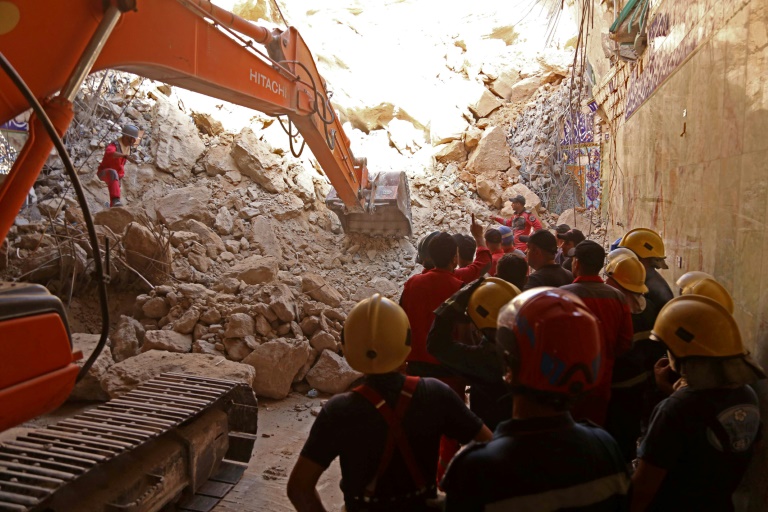
Search and rescue operations have been carried out since the shrine, which sits at the base of high, bare rock walls, became partially buried when earthen embankments collapsed on Saturday due to saturation from humidity, according to the civil defence.

– Political paralysis –

It is the latest tragedy to befall oil-rich but poverty-stricken Iraq, which is trying to move past decades of war but is hobbled by political paralysis, endemic corruption and other challenges.

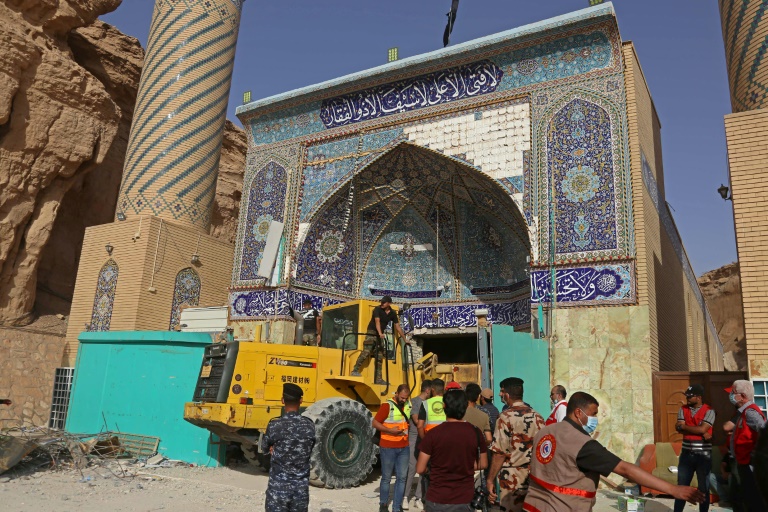
Rescuers on Sunday drove a bulldozer through the shrine’s entrance, which resembles half a dome ornately decorated with blue tiles covered in Arabic script.

The rescue teams said they had worked to provide supplies of oxygen, food and water to those trapped under the rubble before the bodies were found, according to the state news agency INA.

Iraqi President Barham Saleh on Sunday called on rescue workers to “mobilise all efforts to save the trapped people”, while Caretaker Prime Minister Mustafa al-Kadhemi urged his interior minister to directly supervise operations.

The stricken shrine is dedicated to Imam Ali, the son-in-law of the Prophet Mohammed, who according to Shiite tradition stopped there with his army on his way to a battle in AD 657.

It is located in a natural depression about 25 kilometres (15 miles) west of Karbala, which is the burial place of Imam Hussein, grandson of the Prophet Mohammed.

Shiites view Hussein, who died in battle in AD 680, as the rightful successor to the Prophet Mohammed, the issue at the heart of a schism with Sunni Islam.
str-sf/gde/jsa/dv

UK dock workers' union threatens further strikes

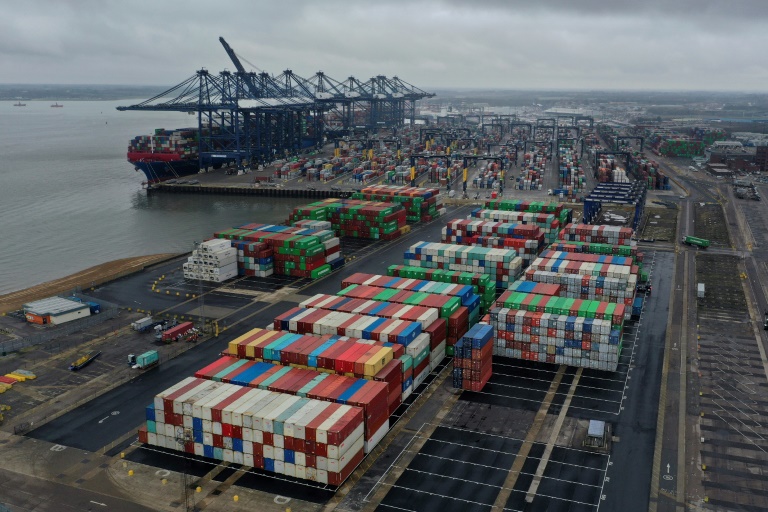
A trade union on Monday warned of more strikes at the UK’s largest container port if pay demands are not met, threatening to cause further disruptions to the supply chain.

Workers at Felixstowe port in southeastern England began an eight-day strike over pay on Sunday, in the latest industrial action as decades-high inflation intensifies the country’s cost-of-living crisis.

They say the pay offer they received does not keep up with inflation — which has surged above 10 percent — and includes a one-off lump sum payment.

“If we don’t achieve what we’re trying to achieve, there will be more strikes,” Robert Morton, national officer for the Unite union, told Sky News.

“We’ve been asking for a minimum of the rate of inflation,” Morton said.

Nearly 2,000 unionised employees at the port in eastern England, including crane drivers, machine operators and stevedores, are involved in the first strike at Felixstowe since 1989.

It comes amid stoppages over pay and working conditions across various UK industries, with railway workers just the latest to strike on Thursday and Saturday this week.

The strike comes after Covid and post-Brexit labour shortages have already hit the UK supply chain.

Morton said he accepted that further strikes at Felixstowe would mean “the supply chain will be severely disrupted”, while saying the strike will end as soon as the port agrees to meet for negotiations.

The Port of Felixstowe said in a statement Friday that it was “disappointed” the walkout had gone ahead and called its offer of salary increases of on average eight percent “fair”.

It said it “regrets the impact this action will have on UK supply chains”.

Pal Davey, head of corporate affairs at the port, told Sky News on Monday that average pay at the port is “40 percent higher than national average” and workers had been given a “very fair offer”.

“Our workers have been much better placed to weather the cost-of-living storm than the majority of workers in the rest of the country,” he said.

Strike action over pay matching inflation is taking place in a wide range of sectors.

Even criminal lawyers who represent clients in court have launched strike action.

On Monday, their union, The Criminal Bar Association announced its members had voted to escalate their action and will stop taking on any new cases indefinitely from September 6.

Most markets down as traders eye key Powell speech

Stocks sank Monday and the dollar rallied on renewed concerns about Federal Reserve plans to ramp up interest rates to combat runaway inflation.

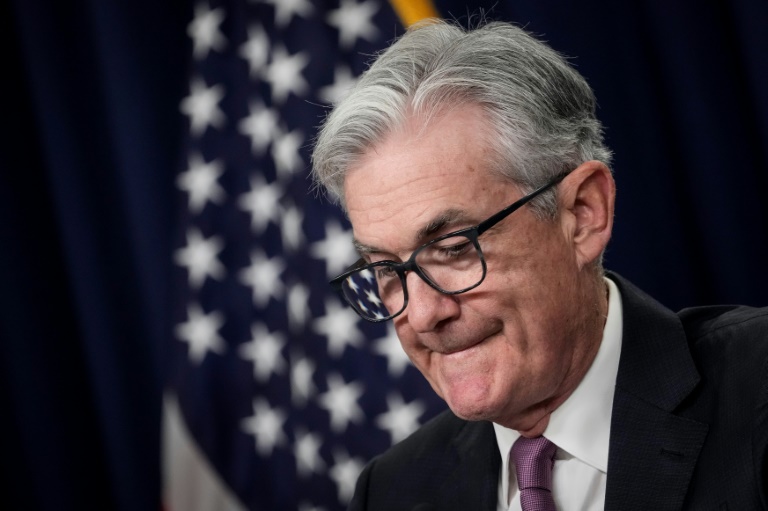
All eyes are on a symposium in Jackson Hole, Wyoming where Fed boss Jerome Powell will deliver a speech that traders will follow for an idea about the bank’s next moves.

A dip in price rises and signs of economic slowdown had raised hopes policymakers would ease up — and possibly cut rates next year — after two successive, 75-basis-point hikes, helping equities rally globally.

But that optimism has slowly been eroded in recent weeks as Fed officials, including Powell, have warned that the battle against inflation was far from won, particularly as the jobs market remained resilient.

One of the latest was Richmond Fed boss Thomas Barkin, who reasserted his commitment to bringing inflation back to two percent from the four-decade high of around nine percent.

He said on Friday the policy board would “do what it takes to get there”, but warned: “There’s a path to getting inflation under control but a recession could happen in the process.”

Jonathan Millar of Barclays said it was unlikely Powell would signal a slowdown in rate hikes this week.

“It does seem like what we’ve heard from Powell so far suggests there’s quite a high bar for them to transition from aggressive hikes” to 25 basis points.

“One thing they definitely want to communicate is that they remain very much focused on issues with price stability and that they will react very cautiously to any signs of improvements in the inflation data.”

And National Australia Bank’s Rodrigo Catril added that the Fed chief will likely say that “while we may be close to the end of the beginning of the current tightening cycle, we are still a long way from the end”.

All three main indexes on Wall Street fell Friday and Asia followed suit.

Hong Kong, Tokyo, Sydney, Seoul, Mumbai, Taipei, Manila and Jakarta dropped.

But Shanghai rose after China’s central bank cut prime loan rates as it tries to bolster the world’s second-biggest economy, which has been ravaged by lockdowns as part of a zero-Covid strategy.

Singapore, Bangkok and Wellington also edged up.

London, Paris and Frankfurt all fell in early trade.

The prospect of more US hikes to come has given another boost to the dollar, which rallied against the yen and is approaching the 140 yen mark for the first time in 24 years. 

It also broke parity with the euro again — after having done so last month for the first time in nearly 20 years.

The stronger greenback was helping to keep oil prices down, while downward pressure was being enhanced by speculation rising about a possible Iran nuclear deal that could ease a supply crisis caused by Russia’s invasion of Ukraine.

Both main contracts tumbled Monday and wiped out all the gains seen in reaction to the start of conflict in eastern Europe.

“The global balance for the remainder of the year is not as tight as many were expecting, with Russian supply holding up well,” said Warren Patterson, of ING Groep NV.

“While it may take several months for Iran to get production back to pre-sanction levels in the event of a deal, in the short term, they should still be able to boost exports by relying on storage.”

– Key figures at around 0810 GMT –

Tokyo – Nikkei 225: DOWN 0.5 percent at 28,794.50 (close)

Hong Kong – Hang Seng Index: DOWN 0.6 percent at 19,656.98 (close)

Shanghai – Composite: UP 0.6 percent at 3,277.79 (close)

London – FTSE 100: DOWN 0.6 percent at 7,508.61

Euro/dollar: DOWN at $0.9994 from $1.0034 Friday

Pound/dollar: DOWN at $1.1790 from $1.1827

Euro/pound: DOWN at 84.80 pence from 84.81 pence

Dollar/yen: UP at 136.77 yen from 136.93 yen

West Texas Intermediate: DOWN 2.0 percent at $89.00 per barrel

Brent North Sea crude: DOWN 1.8 percent at $95.01 per barrel

New York – Dow: DOWN 0.9 percent at 33,706.74 points (close)

LGBTQ Singaporeans welcome sex law repeal, decry marriage exclusion

Singapore’s LGBTQ community on Monday welcomed the government’s plan to decriminalise gay sex but warned that upholding the traditional definition of marriage would only promote further inequality.

Prime Minister Lee Hsien Loong announced on Sunday that the city-state would repeal the colonial-era law, but said the definition of marriage as being between a man and a woman will be kept to allay fears of “a drastic shift in our societal norms”.

Section 377A of Singapore’s penal code penalises sex between men with up to two years in jail. 

Gay rights campaigners have long said the law runs counter to the affluent city-state’s vibrant culture and have unsuccessfully challenged the law in court.

“I am elated and relieved for Singapore’s LGBT community,” said Roy Tan, one of several people who had unsuccessfully challenged the law in court. 

Describing the repeal as the result of an “arduous” struggle, Tan said “we can progressively dismantle the impediments to the visibility and progress of queer citizens”.

While the law remained on the books, no one had been arrested or charged under Article 377A in Singapore for more than a decade, activists say.

Sunday’s announcement also put barriers on the path to full marriage equality.

Lee said national policies such as those covering access to subsidised public housing and adoption rules will continue to be based on the traditional definition of marriage.

As it stands, people can still challenge the constitutionality of the definition. Lee, however, said that doing so would risk the court stepping into policy-making.

“Judges interpret and apply the law… They have neither the expertise nor the mandate to settle political questions, nor rule on social norms and values,” Lee said.

Reactions to Lee’s Facebook post on repealing the law were mixed, with some lauding the move as a “bold step” while others said they were “saddened” by the decision.

– Barriers to marriage equality –

The constitution would need to be amended to shield the definition of marriage from further constitutional challenges, Lee said, a move that is likely to sail through parliament if undertaken as the ruling People’s Action Party has a more than two-thirds majority.

It was unclear what the amendments would look like but the challenges to 377A largely revolved around a constitutional provision which guarantees citizens equality and equal protection under the law.

The LGBTQ community said the repeal “is the first step on a long road towards full equality”.

But they opposed any further laws and constitutional changes to protect the traditional definition of marriage as they would promote unequal treatment.

“We urge the government not to heed recent calls from religious conservatives to enshrine the definition of marriage into the constitution,” more than 20 LGBTQ groups said in a joint statement late Sunday.

“Such a decision will undermine the secular character of our constitution, codify further discrimination into supreme law, and tie the hands of future parliaments.”

Tan, the activist, said: “I look forward to a future where we can hold our heads up high as equals in the eyes of the law instead of living as marginalised, second-class citizens in our own country.”

Maria Sjodin, executive director at US-based LGBTQ rights campaigner OutRight Action International, said the repeal would “hopefully also inspire the continued struggle across the world to remove the laws that hinder equality and respect for LGBTQ people everywhere”.

According to a 2020 report by the International Lesbian, Gay, Bisexual, Trans and Intersex Association (ILGA), homosexuality is prohibited in 69 countries, including 11 where it is punishable by death.

Released Azovstal soldier recounts his ordeal

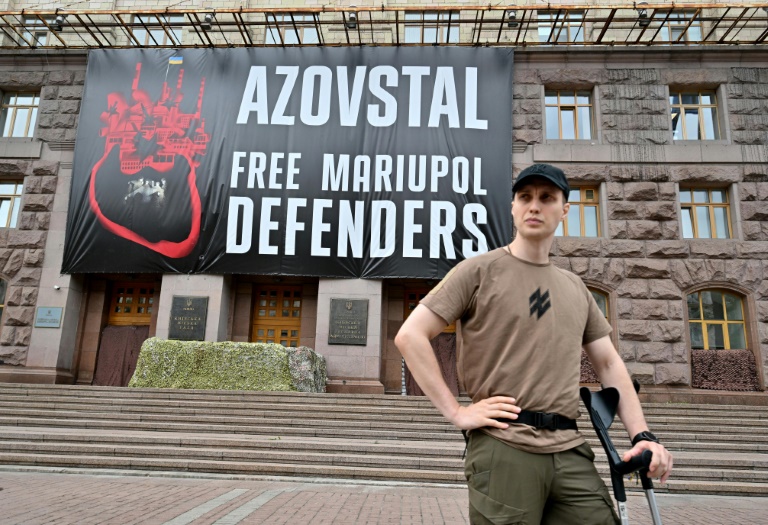
In contrast to festive summer crowds around him in central Kyiv, Vladyslav Zhaivoronok has a grim story to tell about the defence of Mariupol, the injuries he suffered and his weeks in captivity.

The 29-year-old Azov Regiment soldier, who leans on his crutches as he lost his left leg in combat, spoke to AFP in front of a huge banner reading “Free Mariupol Defenders” on a city hall building.

“It was getting worse and worse, harder and harder. We held the defence as long as it could be held,” he said of the fighting at the Azovstal steelworks — some of the fiercest in the last six months.

Russian forces invaded Ukraine on February 24 and within days had surrounded Mariupol, a strategic industrial port hub on the Sea of Azov.

Zhaivoronok said he and his comrades took up positions in the city’s sprawling Azovstal facility in March in a desperate attempt to fight on.

Under constant shelling, he made his base in a half-ruined bunker, going out during the day to carry out his duties as a drone operator.

He said that “the entire area was littered with fragments of buildings” and there was a desperate lack of water, food and weapons.

“It was consistently bad everywhere,” said Zhaivoronok.

As he spoke, passers-by looked back at the soldier, who wore military-style brown shorts with an empty left trouser leg.

– Stretchered out of Azovstal –

Despite the rapidly deteriorating situation at Azovstal, Zhaivoronok said the soldiers managed to keep up morale. 

“The last days I was anticipating a kind of the last battle. We were waiting for this and were ready for this,” he said.

Then, on May 15, he was hit by an anti-tank missile.

Rushed to the “medical bunker”, he found himself on an improvised operating table on the verge of death.

His right eye was also badly wounded in the blast.

On the morning of the following day, he had his leg amputated.

He regained consciousness afterwards for just a few seconds before being taken out of Azovstal.

He remembers being stretchered out and seeing the Russian soldiers’ patches bearing the “Z” symbol used by the invaders.

Due to his heavy injury, he was spared the fate of his comrades who were sent to the notorious Olenivka prison in the occupied Donetsk region, where a blast last month reportedly killed dozens of Ukrainian prisoners.

But the weeks that Zhaivoronok spent in captivity in one of the Donetsk hospitals brought him suffering of a different kind.

“There was no contact with relatives, no access to the phone,” he said.

Medical care was “very low-grade” and medicines were in short supply.

“I was just dripping rotten meat because, after being seriously wounded, I did not start receiving antibiotics until the fifth day,” he said.

He and three other soldiers from his ward were given just enough food “so that the heart would not stop”.

“And we were told every day that no one needed us, that they would not exchange us for anyone, that everyone had abandoned us.”

– ‘What presses from within’ –

His month-and-a-half of captivity ended without warning.

“We were awakened at 4:00 am, the lists were read out, we were taken outside, loaded onto buses and driven until evening,” Zhaivoronok recalls.

He and over a hundred other wounded Ukrainian prisoners left the hospital for a prisoner exchange.

“I could not breathe out until I was on Ukrainian territory, out of reach of (Russian) artillery.”

Zhaivoronok tries to crack jokes, making light of his heavy injuries.

“I’ve brought a lot of work to our medics,” he grins.

As a career serviceman, he said he continues to fulfil certain military obligations despite his injuries.

The soldier speaks very calmly.

His voice slightly breaks only once — when he talks about the thousands of Ukrainian prisoners remaining in Russian captivity.

“It does not give rest. This is what presses from within. When the guys are back, I’ll be able to breathe more freely.”

'We are divided': lake upends life for tiny Kenyan tribe

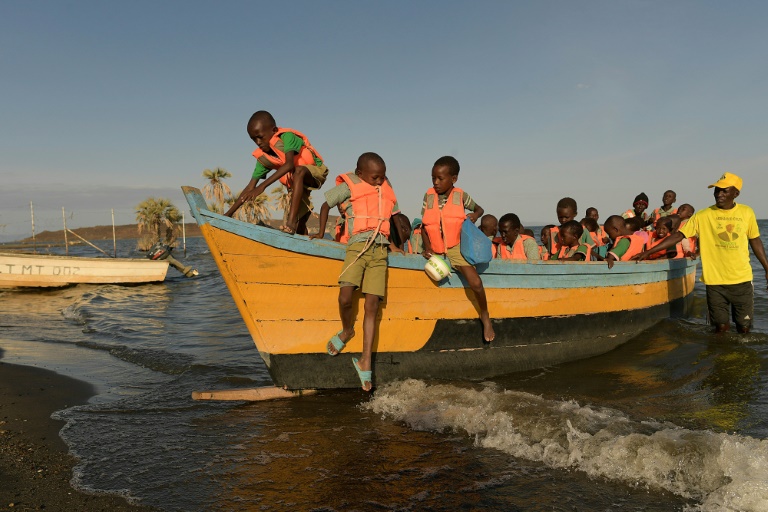
At first light, children from one of Kenya’s smallest and most isolated tribes put on life jackets and board a fishing boat for the journey across the lake to school.

Until recently, they could walk the distance. A road connected the El Molo with the world beyond their tiny village, a lifeline for a secluded community of fishers and craftspeople subsisting on the shores of Lake Turkana.

But three years ago the lake started rising dramatically, lapping at the El Molo’s dome-shaped huts draped in dry fish, then pushing inland, forcing villagers to higher ground.

As the tide reached levels not seen in living memory, the El Molo watched their only freshwater pipeline slip beneath the surface, as well as the burial mounds of their ancestors.

Eventually, the road to the mainland disappeared completely, marooning the El Molo on an island in a lake so large and imposing it is sometimes called the “Jade Sea”.

“There never used to be water here,” said El Molo fisherman Julius Akolong as he crossed the wide channel that today separates his community from the rest of far northern Kenya.

“You could drive a jeep across.”

Turkana, already the world’s largest desert lake, stretching 250 kilometres (155 miles) tip to tip, grew 10 percent in the decade to 2020, according to a government study published last year.

That expansion submerged nearly 800 additional square kilometres (about 300 square miles) of land including around El Molo Bay, where the tribespeople live on Turkana’s eastern shores.

Extreme rainfall over catchment areas -– a climatic event linked to global warming — greater soil runoff from deforestation and farming, and tectonic activity were all cited as contributing causes.

– Blessings and curses –

The phenomenon has profoundly impacted the El Molo, whose distinct Cushitic culture was already under serious threat.

Barely numbering 1,100 in the last census, the El Molo are dwarfed by Kenya’s larger and more prosperous ethnic groups that dominate a country of around 50 million people.

Known as “the people who eat fish” by the livestock-rearing tribes of northern Kenya, the El Molo are believed to have migrated from Ethiopia to Turkana around 1,000 BC.

But few today speak a word of their mother tongue, and ancient customs have evolved or vanished entirely through generations of intermarriage with neighbouring ethnic groups.

The lake’s unexpected rise fragmented the remaining El Molo still following the old ways of life.

Some displaced in the disaster made the wrenching decision to relocate to the mainland, erecting a squatter camp on the opposite shore.

The cluster of shanties on a barren and wind-swept clearing is nearer to the school and other facilities, but a world away from their tight-knit community and its traditions.

“It was very difficult… We had to go and discuss this with the elders so they could permit or bless us to go with no curses,” said Akolong, a 39-year-old father of two.

For those who stayed, life on the island has become a struggle.

The El Molo are skilled fishers, but as Turkana rose higher their people went hungry.

The fishing nets and baskets used for millennia, hand-woven with reeds and doum palm fibre, proved less effective in the deeper water, reducing catch. 

No longer able to access freshwater, the El Molo were forced to drink from Turkana, the most saline lake in Africa.

Children in the village suffer chalky teeth and bleached hair, a side effect of the lake’s high fluoride content.

“We often get diarrhoea… we have no other clean water. This is all we have. It is salty, and corrodes our teeth and hair,” said Anjela Lenapir, a 31-year-old mother of three who decided to stay.

– Disappearing culture – 

School attendance has fallen sharply because parents cannot afford the boat fare, said David Lesas, deputy head teacher at El Molo Bay Primary School.

“Most of them remain at home,” he lamented.

The local government and World Vision, an aid group, are assisting but resources are scarce and needs many in the region, which is experiencing a once-in-a-generation drought.

The school has suffered too: the perimeter fence and toilet block are underwater, and crocodiles have taken over part of the playground.

But the real damage to the El Molo is indelible.

Separated from his people, Akolong has missed initiation rites, naming ceremonies, and funerals — rituals that strengthen tribal identity and community.

“We are now divided,” he said bitterly.

Stone cairns marking the resting place of El Molo’s dead have been swept away, erasing memories of the past, while the lake threatens venerated shrines to tribal deities.

“It is a place that is deeply respected in our culture. With the water rising, we will lose that tradition too,” said Lenapir.

South Korean police locate relative of children found dead in suitcases

A woman who is believed to be related to two children whose remains were found in suitcases in New Zealand is in South Korea, Seoul police told AFP Monday.

Last week, New Zealand police said they had discovered the remains of two children, who are thought to have been between five and 10 years old when they died, in suitcases.

The bodies were discovered after an unsuspecting family bought a trailer-load of items — including the suitcases — at an auction for abandoned goods.

New Zealand police have said the bodies were likely to have been in storage for several years, which has complicated the investigation into the crime.

Police said Monday that a woman of Korean descent, who is believed to be related to the children, is currently in South Korea.

“We confirm that she is in South Korea, and that she is a New Zealand national of Korean descent,” an official at the Korean National Police Agency told AFP.

She arrived in the South in 2018 and had no record of leaving the country since that year, he added.

“New Zealand police are leading this investigation and we intend to cooperate at their request,” the official added.

Police have been checking hours of CCTV footage, but key moments could have already been erased due to the delay between when the victims died and the discovery of the bodies.

Both the storage unit and property where the suitcases were taken have been thoroughly examined by forensic experts.

Authorities in New Zealand reiterated last week that the family who found the bodies were not connected to the homicide.

They are receiving support to help deal with the trauma, the country’s Detective Inspector Tofilau Faamanuia Vaaelua said at the time. 

Five pilgrims killed in landslide at Iraq Muslim shrine

Rescue workers searched through the rubble of a Shiite Muslim shrine in central Iraq into Sunday night, after a landslide killed at least five people including a child.

After more than 24 hours of digging through collapsed rocks, wood and other debris, “we have found five bodies,” civil defence General Abdelrahman Jawdat told AFP. 

“That could be the final toll,” he added, while digging continued in case there were other victims.

It is the latest tragedy to befall oil-rich but poverty-stricken Iraq, which is trying to move past decades of war but is hobbled by political paralysis, endemic corruption and other challenges.

Civil defence spokesman Nawas Sabah Shaker said earlier that between six and eight pilgrims had been reported trapped under the debris of the shrine, known as Qattarat al-Imam Ali, near the city of Karbala. 

Rescuers drove a bulldozer through the shrine’s entrance, which resembles half a dome ornately decorated with blue tiles covered in Arabic script.

The sacred building, flanked by two minarets, sits at the base of high, bare rock walls. Part of its concrete roof had been torn apart.

Jawdat said rescuers had recovered the bodies of two women, a man and a child, and were working to free the corpse of the fifth victim, another woman whom they had located.

Armed security forces guarded the shrine entrance while rescuers worked inside and onlookers watched from behind a metal fence.

Three children were rescued earlier following the Saturday afternoon disaster, emergency services had said, adding that they were in “good condition” and being monitored in a hospital.

Rescue teams working through the night Saturday were able to provide supplies of oxygen, as well as food and water to some of those trapped through gaps in the rubble, state news agency INA said.

– ‘Mobilise all efforts’ –

Iraqi President Barham Saleh on Twitter called on the “heroic” rescue workers to “mobilise all efforts to save the trapped people”.

Caretaker Prime Minister Mustafa al-Kadhemi urged his interior minister to directly supervise the rescue on the ground and wished the injured a swift recovery.

Emergency responders had said earlier they were maintaining verbal contact with the victims “to reassure them”.

“We are working hard, with the utmost precision, to reach” those trapped, Jawdat, director of the civil defence media department, had said.

“Any mistake could lead to further collapses.”

One man at the scene, Bassem Khazali, said his nephew was among those buried. 

“I am afraid that all the efforts undertaken will be in vain… We want to know what happened, why it happened,” Khazali told AFP.

Civil defence spokesman Shaker told AFP that “sand dunes and rocks collapsed onto the shrine building”, blaming humidity.

The stricken shrine is dedicated to Imam Ali, the son-in-law of the Prophet Mohammed, who according to Shiite tradition stopped there with his army on his way to a battle in AD 657.

It is located in a natural depression about 25 kilometres (15 miles) west of Karbala, the Shiite holy city which is the burial place of Imam Hussein, grandson of the Prophet Mohammed.

Shiites view Hussein, who died in battle in AD 680, as the rightful successor to the Prophet Mohammed, the issue at the heart of a schism with Sunni Islam.

Philippine classrooms reopen after more than two years

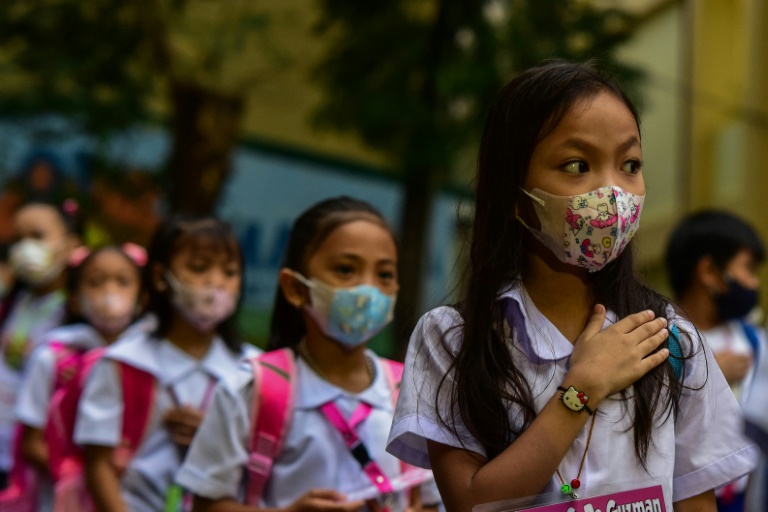
Millions of children in the Philippines returned to school as the academic year started on Monday, with many taking their seats in classrooms for the first time since the Covid-19 pandemic hit.

The Philippines is one of the last countries in the world to resume full-time, in-person lessons — sparking warnings that the prolonged closure of classrooms had worsened an education crisis in the country.

Children in masks and uniforms lined up for a temperature check and squirt of hand sanitiser at Pedro Guevara Elementary School in Manila, which had shut classrooms since March 2020.

The school has adopted a hybrid system of in-person and remote learning as it transitions its nearly 6,000 students back to face-to-face classes by November — a deadline set by President Ferdinand Marcos Jr soon after he took office two months ago.

Grade six student Sophia Macahilig said she was “excited” to meet her classmates and teachers after two years of Zoom lessons.

“We used to have fun and now I can have fun again,” 11-year-old Macahilig told AFP.

But many students have a lot of catching up to do.

Even before the pandemic, nine out of 10 Filipino children could “not read a simple text with comprehension” by age 10, the World Bank and other agencies said in a recent report.

Only 10 countries were worse off, including Afghanistan, Laos, Chad and Yemen.

– Lagging behind –

After Philippine schools closed, a “blended learning” programme involving online classes, printed materials and lessons broadcast on television and social media was introduced.

As face-to-face classes resume, old problems persist: large class sizes, outdated teaching methods, poverty, and lack of basic infrastructure — such as toilets — have been blamed for contributing to the education crisis. 

Pedro Guevara science teacher Ethel Tumanan, 32, said she was worried that students had missed out on valuable learning over the past two years.

“As a teacher, we really prefer face-to-face, at least we are the ones who can gauge and assess where our pupils are at.”

In the lead-up to the reopening of classrooms, the government has been ramping up a vaccination drive and will provide students with free public transport until the end of the calendar year. 

On Saturday, the government began handing out cash aid to students and parents struggling to cover expenses, leading to chaotic scenes outside distribution centres.

In the city of Zamboanga, 29 people were injured when several thousand tried to push through the gate of a high school.

China central bank cuts lending rates to boost economy

China’s central bank on Monday cut benchmark loan rates in an attempt to boost an economy battered by the government’s strict zero-Covid policy and a slump in the property market.

The world’s second-biggest economy saw an improvement after some coronavirus restrictions eased in June, but consumer and business sentiment remains weaker than usual.

The one-year Loan Prime Rate, which serves as a benchmark for corporate loans, was reduced from 3.7 percent to 3.65 percent, the People’s Bank of China (PBOC) said in a statement.

The five-year LPR, which is used to price mortgages, was cut from 4.45 percent to 4.3 percent, it added.

The PBOC slashed key interest rates last week, bringing its seven-day reverse repurchase rate — a key rate at which it provides short-term liquidity to banks — to a new low.

Analysts had expected cuts to the LPR rates, but said they may not be enough to rescue the property sector — which is estimated to account for as much as a quarter of China’s GDP.

“The much larger cut to the five-year rate suggests the PBOC is particularly concerned about problems in the housing market,” Capital Economics said in a note on Monday.

“However, homebuyers with existing mortgages will have to wait until the start of next year for the change to affect them.”

China’s housing market was shaken by frustrated homebuyers in dozens of cities who boycotted mortgage payments as cash-strapped developers struggled to complete the units they had sold in advance.

With property firms struggling to manage mountains of debt, fears have swirled since last year that the sector’s troubles could spread to the rest of the economy.

“Most home mortgages are linked to the (five-year) loan prime rate. So this rate cut is obviously to reduce the burden on borrowers,” Iris Pang, chief economist for Greater China at ING, in a note.

“When the market sees progress in the construction of uncompleted projects, we may see an improvement in home buying sentiment and home prices should stabilise.”

China’s economic growth came in at just 0.4 percent on-year in the second quarter — its slowest rate since the Covid crisis began in 2020.

Close Bitnami banner
Bitnami