World

Earning its stripes: tech bid to crack tiger trade

In a town in northeastern Scotland, Debbie Banks looks for clues to track down criminals as she clicks through a database of tiger skins.

There are thousands of photographs, including of rugs, carcasses and taxidermy specimens. 

Banks, the crime campaign leader for the Environmental Investigation Agency (EIA), a London-based charity, tries to identify individual big cats from their stripes.

Once a tiger is identified, an investigator can pinpoint where it comes from. 

“A tiger’s stripes are as unique as human fingerprints,” Banks told AFP.

“We can use the images to cross-reference against images of captive tigers that might have been farmed.”

Currently this is slow painstaking work.

But a new artificial intelligence tool, being developed by The Alan Turing Institute, a centre in the UK for data science and artificial intelligence, should make life much easier for Banks and law enforcement officials. 

The project aims to develop and test AI technology that can analyse the tigers’ stripes in order to identify them.

“We have a database of images of tigers that have been offered for sale or have been seized,” Banks said.

“When our investigators get new images, we need to scan those against the database.

“At the moment we are doing that manually, looking at the individual stripe patterns of each new image that we get and cross-referencing it against the ones we have in our database.”

It is hoped that the new technology will help law enforcement agencies determine where tiger skins come from and allow them to investigate the transnational networks involved in trafficking tigers.

Once the officials know the origins of confiscated tiger skins and products, they will be able to tell whether the animal was farmed or poached from a protected area.

Poaching, fuelled by consumer demand, remains a major threat to the survival of the species, according to the EIA. 

Tiger skins and body parts are sought after, partly due to their use in traditional Chinese medicine.

An estimated 4,500 tigers remain in the wild across Asia. 

“Tigers faced a massive population decline in the last 120 years, so we want to do everything we can to help end the trade in their parts and products, including tiger skins,” Banks said.

Anyone with photographs of tigers is invited to submit them to the EIA to help bolster the AI database. 

“We are inviting individuals — whether they are photographers or researchers and academics — who may have images of tigers where their stripe patterns are clear,” Banks said.

“They could be live tigers, dead tigers or tiger parts.

“If they can share those with us, the data scientists can then develop, train and test the algorithm,” she said.

“We need thousands of images just to do that phase of the project.”

Earning its stripes: tech bid to crack tiger trade

In a town in northeastern Scotland, Debbie Banks looks for clues to track down criminals as she clicks through a database of tiger skins.

There are thousands of photographs, including of rugs, carcasses and taxidermy specimens. 

Banks, the crime campaign leader for the Environmental Investigation Agency (EIA), a London-based charity, tries to identify individual big cats from their stripes.

Once a tiger is identified, an investigator can pinpoint where it comes from. 

“A tiger’s stripes are as unique as human fingerprints,” Banks told AFP.

“We can use the images to cross-reference against images of captive tigers that might have been farmed.”

Currently this is slow painstaking work.

But a new artificial intelligence tool, being developed by The Alan Turing Institute, a centre in the UK for data science and artificial intelligence, should make life much easier for Banks and law enforcement officials. 

The project aims to develop and test AI technology that can analyse the tigers’ stripes in order to identify them.

“We have a database of images of tigers that have been offered for sale or have been seized,” Banks said.

“When our investigators get new images, we need to scan those against the database.

“At the moment we are doing that manually, looking at the individual stripe patterns of each new image that we get and cross-referencing it against the ones we have in our database.”

It is hoped that the new technology will help law enforcement agencies determine where tiger skins come from and allow them to investigate the transnational networks involved in trafficking tigers.

Once the officials know the origins of confiscated tiger skins and products, they will be able to tell whether the animal was farmed or poached from a protected area.

Poaching, fuelled by consumer demand, remains a major threat to the survival of the species, according to the EIA. 

Tiger skins and body parts are sought after, partly due to their use in traditional Chinese medicine.

An estimated 4,500 tigers remain in the wild across Asia. 

“Tigers faced a massive population decline in the last 120 years, so we want to do everything we can to help end the trade in their parts and products, including tiger skins,” Banks said.

Anyone with photographs of tigers is invited to submit them to the EIA to help bolster the AI database. 

“We are inviting individuals — whether they are photographers or researchers and academics — who may have images of tigers where their stripe patterns are clear,” Banks said.

“They could be live tigers, dead tigers or tiger parts.

“If they can share those with us, the data scientists can then develop, train and test the algorithm,” she said.

“We need thousands of images just to do that phase of the project.”

Earning its stripes: tech bid to crack tiger trade

In a town in northeastern Scotland, Debbie Banks looks for clues to track down criminals as she clicks through a database of tiger skins.

There are thousands of photographs, including of rugs, carcasses and taxidermy specimens. 

Banks, the crime campaign leader for the Environmental Investigation Agency (EIA), a London-based charity, tries to identify individual big cats from their stripes.

Once a tiger is identified, an investigator can pinpoint where it comes from. 

“A tiger’s stripes are as unique as human fingerprints,” Banks told AFP.

“We can use the images to cross-reference against images of captive tigers that might have been farmed.”

Currently this is slow painstaking work.

But a new artificial intelligence tool, being developed by The Alan Turing Institute, a centre in the UK for data science and artificial intelligence, should make life much easier for Banks and law enforcement officials. 

The project aims to develop and test AI technology that can analyse the tigers’ stripes in order to identify them.

“We have a database of images of tigers that have been offered for sale or have been seized,” Banks said.

“When our investigators get new images, we need to scan those against the database.

“At the moment we are doing that manually, looking at the individual stripe patterns of each new image that we get and cross-referencing it against the ones we have in our database.”

It is hoped that the new technology will help law enforcement agencies determine where tiger skins come from and allow them to investigate the transnational networks involved in trafficking tigers.

Once the officials know the origins of confiscated tiger skins and products, they will be able to tell whether the animal was farmed or poached from a protected area.

Poaching, fuelled by consumer demand, remains a major threat to the survival of the species, according to the EIA. 

Tiger skins and body parts are sought after, partly due to their use in traditional Chinese medicine.

An estimated 4,500 tigers remain in the wild across Asia. 

“Tigers faced a massive population decline in the last 120 years, so we want to do everything we can to help end the trade in their parts and products, including tiger skins,” Banks said.

Anyone with photographs of tigers is invited to submit them to the EIA to help bolster the AI database. 

“We are inviting individuals — whether they are photographers or researchers and academics — who may have images of tigers where their stripe patterns are clear,” Banks said.

“They could be live tigers, dead tigers or tiger parts.

“If they can share those with us, the data scientists can then develop, train and test the algorithm,” she said.

“We need thousands of images just to do that phase of the project.”
Musk says tweet about buying Manchester United was a joke

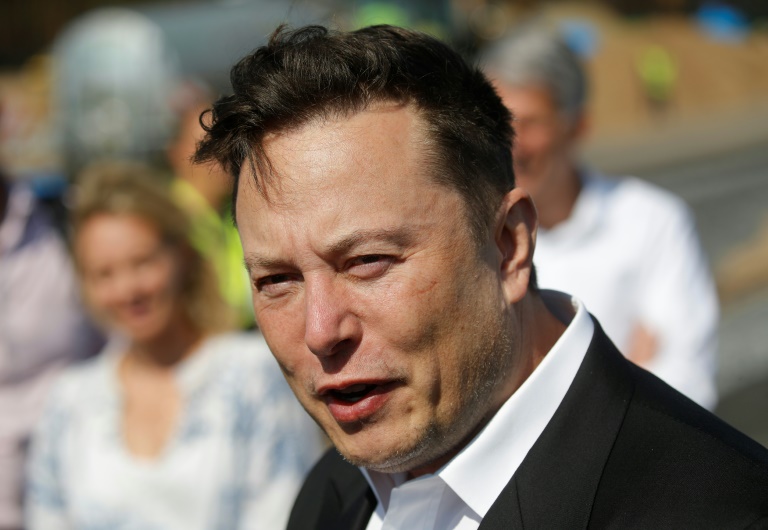
Elon Musk tweeted on Tuesday that “I’m not buying any sports teams”, calling a viral post about him purchasing Manchester United a joke.

The world’s richest man has a habit of posting provocative statements on Twitter for fun and Musk was at it again when he told his more than 103 million followers: “Also, I’m buying Manchester United ur welcome.”

The billionaire Tesla and SpaceX CEO made the comment in reply to another of his tweets, about supporting both of the United States’ two major political parties.

The 51-year-old, who is embroiled in a lawsuit over his bid to buy Twitter, was subsequently asked on the platform if he was serious about owning Manchester United. 

“No, this is a long-running joke on Twitter. I’m not buying any sports teams,” Musk replied, after his original tweet garnered nearly 500,000 “likes” in a matter of hours.

“Although, if it were any team, it would be Man U. They were my fav team as a kid.”

Manchester United, one of the biggest clubs in world football but suffering a prolonged slump, are owned by the Glazer family. They have been targeted by angry fans.

There was no immediate reaction from United or its owners to Musk’s tweets.

Shares of the team listed on the New York Stock Exchange are down year to date, but ended Tuesday flat, with a market capitalization of $2.1 billion.

Despite calling it a joke, Musk’s tweet could land him in trouble with US regulators.

The Glazers are the focus of fan fury after the team’s dramatic fall from grace.

The Americans also own the Tampa Bay Buccaneers, an NFL franchise in Florida.

United fans have protested against the team’s senior management for poor performances in recent years, as well as their involvement in a plan to start a new “Super League” of Europe’s richest teams.

The Red Devils finished last season a lowly sixth in the English Premier League.

United have made another poor start to the campaign under their new coach Erik ten Hag and are bottom of the table after two defeats in as many games.

Fresh protests against the Glazers are planned ahead of United’s next game, at home to fierce rivals Liverpool on August 22.

Musk, who recently sold nearly $7 billion worth of Tesla shares, is in a major legal battle in the US state of Delaware over his aborted plan to buy Twitter.

Former Australian PM defends secret power grab

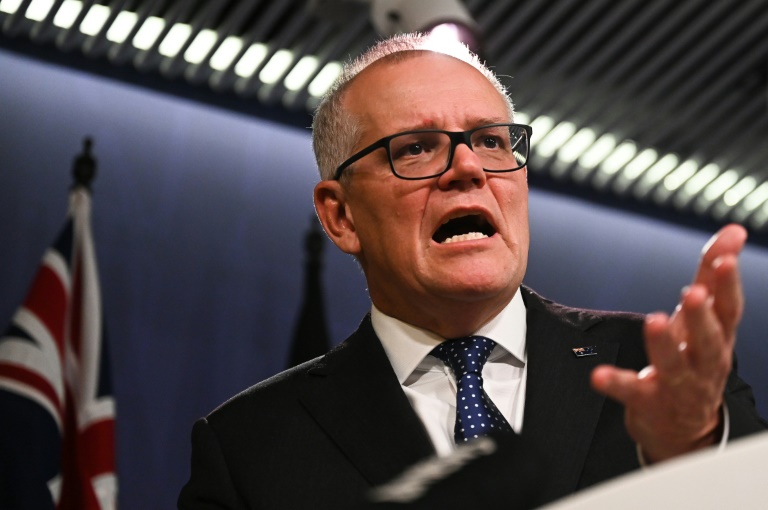
Australia’s former leader on Wednesday defended secret arrangements he made to swear himself in to key portfolios including defence and treasury, saying he would only have used the roles in an emergency during the Covid-19 pandemic.

Revelations about Scott Morrison’s covert actions — labelled by his successor as the creation of a “shadow government” — have sparked a political firestorm in Australia this week.

During a lengthy and at-times fiery press conference Wednesday, Morrison rejected calls that he resign from parliament, including those from his own home affairs minister.

“You’re standing on the shore after the fact. I was steering the ship in the middle of the Tempest,” he said.

He faced a barrage of questions about why he failed to tell the public — or even many of his fellow ministers — that he was giving himself the additional powers.

The conservative former prime minister added that he gained “no personal advantage” from being sworn in to administer five portfolios and stressed that the arrangements were only to be used in an emergency, such as if a minister died during the pandemic.

Morrison said he only used the powers once, which was to override his resources minister and block a controversial offshore gas project — a move he conceded was separate from the pandemic.

“I’m very happy with that decision,” he said.

“And if people think I should have made a different decision and allowed that project to proceed… well they can make that argument.”

During his time in power, Morrison was routinely criticised for a lack of transparency — an indictment that burst onto the global stage when French President Emmanuel Macron accused him of lying over an abandoned submarine deal.

Morrison’s conservative coalition lost power in May elections, ending nearly a decade of centre-right rule in the country.

In Australia, elected politicians are selected by the prime minister before being sworn in by the governor-general in a formal ceremony that is usually publicly recorded.

As yet, it is not clear whether Morrison will face any political or legal fallout from the scandal.

Australia’s new prime minister, Anthony Albanese, has asked the solicitor-general to advise on whether his predecessor acted legally.

He said Morrison’s actions were “fundamentally a trashing of our democratic system”.

Arrest tally in El Salvador gang crackdown reaches 50,000

El Salvador has arrested some 50,000 suspected gang members since President Nayib Bukele launched a “war” in March on criminal groups terrorizing the country, the head of the country’s police force announced Tuesday.

“We can inform the Salvadoran people that we have already reached 50,000 recorded detentions during the period of the emergency regime,” said Mauricio Arriaza, director of the National Civil Police.

Arriaza, as well as Justice Minister Gustavo Villatoro and Defense Minister Rene Merino appeared Tuesday at parliament to request an extension of the emergency powers, which have done away with the need for arrest warrants.

They were first enacted in March and have been prolonged by the legislature on a month-by-month basis ever since.

The 84-seat unicameral assembly agreed Tuesday night to grant the government’s newest request to maintain the decree, with 66 members voting in favor of an extension through mid-September.

The small Central American country has also increased sentences for gang membership five-fold, to up to 45 years.

To house part of the detainees, Bukele ordered the construction of a gigantic prison for 40,000 gang members in a rural area of the city of Tecoluca, in the center of the country, which should be ready before the end of the year.

“The results of the emergency regime have been overwhelming, we have had a strong impact on these terrorist structures,” Villatoro said Tuesday in his report on the gang crackdowns.

Almost 69 percent of the detainees are accused of belonging to the notorious Mara Salvatrucha gang — also known as MS-13 — followed by the Surenos faction of the Barrio 18 gang (17.7 percent) and the Revolucionarios faction of the same group (12.7 percent).

Rights groups have denounced the arbitrary arrest of many people, including minors, with no gang links.

In different operations, the police and the army have seized more than a million dollars, in addition to 1,283 weapons.

More than 1,500 vehicles, as well as drugs and cell phones, have also been seized.

The wave of detentions is unprecedented in the country of 6.5 million people, who have suffered decades of violent crime driven by powerful gangs such as MS-13 and Barrio 18.

These gangs count some 70,000 members, most of them now behind bars, according to the authorities.

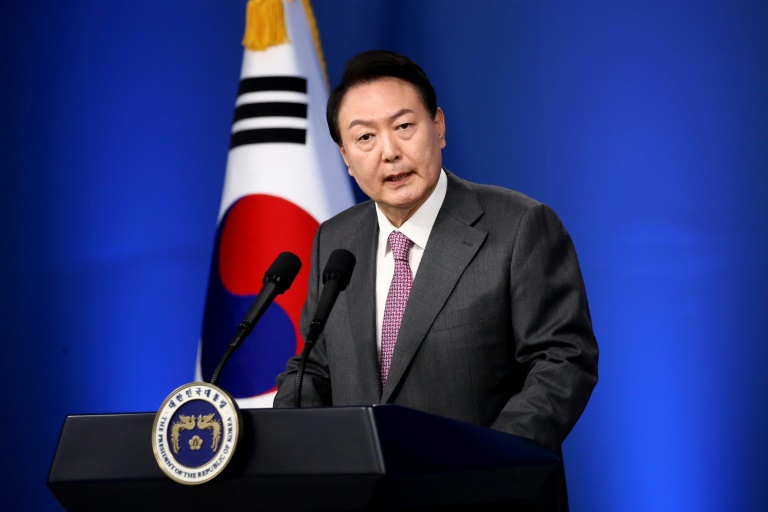
South Korea's Yoon says not fixated on record-low approval ratings

Battling record-low approval ratings after just three months on the job, South Korea’s conservative President Yoon Suk-yeol said Wednesday he was not fixated on his dire polling numbers.

Since taking office in May, Yoon has seen his approval ratings plunge to a low of 24 percent, and he said at a press briefing to mark 100 days in office that he would reflect on what had gone wrong.

But it is “more important to humbly examine the public sentiment reflected by the opinion polls rather than fixate on the number itself,” he told reporters.

Yoon, a lifelong prosecutor with no prior experience in elected office, has made what analysts describe as a string of unforced errors during his first months in the role — which is typically a honeymoon period for new presidents in South Korea.

His predecessor Moon Jae-in enjoyed approval ratings of about 70 percent at the same stage in his term, polling data showed, and Yoon started work with 52 percent of people polled thinking he was doing a good job.

Despite a steady drumbeat of criticism in local media over his team, Yoon said Wednesday he was not planning a wholesale reshuffle to try and appease angry voters, who have deserted him in droves, polls show.

“Personnel reshuffle should be carried out carefully rather than for political purposes to turn around… approval (ratings),” he said, adding that he wanted people to give his administration more time.

In the latest misstep, his office released a photo showing Yoon at a basement apartment in Seoul where three people died in flooding last week, captioned: “People’s safety is utmost priority”. 

The image was widely lambasted as an insensitive PR stunt politicising the tragedy. His office later took it down from his social media pages.

He has also been criticised for mishandling US House Speaker Nancy Pelosi’s high-profile visit to South Korea after a contentious stop in Taiwan.

His ministerial appointments have been dogged with dropouts and resignations, and his decision to relocate from the presidential Blue House has made him a topic of derision online.

“The polls collectively show that the public see Yoon as not being presidential,” political commentator Shin Jang-sik told AFP. 

“His words are far short of what was needed… People will likely see his speech today as indicative of his lack of willingness to change course.”

– North Korea aid –

Yoon took office vowing to get tough on North Korea, but said Wednesday he did not support regime change by force and remained willing to offer massive aid to Pyongyang — if Kim Jong Un will give up his nuclear weapons.

Analysts say the chances of Pyongyang accepting such an offer — first floated during Yoon’s inaugural speech — are vanishingly slim, as North Korea, which invests a vast chunk of its GDP into weapons programmes, has long made it clear it will not barter its missiles away.

When asked if he would consider acquiring nuclear weapons if Kim does not halt his nuclear programme, Yoon said he would “uphold the principle of Non-Proliferation of Nuclear Weapons to the end”. 

North Korea has conducted a record-breaking blitz of weapons tests this year, and is widely believed to be preparing for another nuclear test.

China heat wave pushes up prices as hens lay fewer eggs

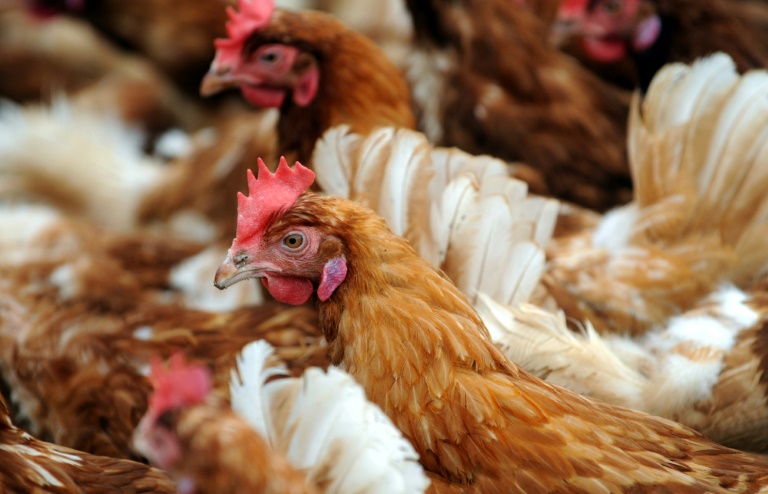
Scorching temperatures in eastern China have pushed up egg prices because hens are laying fewer in a hotter-than-usual summer, local media reported.

Extreme weather has become more frequent owing to climate change, scientists say, and this will likely grow more intense as temperatures rise, impacting economies and societies around the world.

Multiple major cities in China have recorded their hottest days ever this year, and the country’s national observatory issued a red alert on Monday.

And the heat wave is putting not only humans, but animals under stress too.

In Hefei city, farmers reported a drop in egg production because of the heat, according to a Jianghuai Morning News report last week, adding that some facilities have installed cooling systems for their hens.

The drop in supply in several provinces has caused egg prices to jump.

In Hefei, Anhui province’s capital, they were up around 30 percent, and there were similar spikes in the cities of Hangzhou and Hai’an, according to local media.

Hefei has so far logged 14 days of temperatures above 38 degrees Celsius, Hefei Evening News said, noting that this was a record.

Sustained exposure to extreme temperatures can exacerbate losses in production from animals, including eggs and milk, according to the US Department of Agriculture.

While the number of hens laying in China has not decreased, they have been eating less on hot days, Qianjiang Evening News added.

In addition to impacting poultry farms, the heat wave has also forced electricity rationing in lithium hub Sichuan in the face of soaring demand for power.

Provinces including Zhejiang, Jiangsu and Anhui that rely on power from western China have also issued electricity curbs for industrial users to ensure homes had enough power, local media reported.

And in eastern China’s Jiangxi province, which is in the grip of a severe drought, 11,000 people had difficulty accessing drinking water while more than 140,000 hectares of crops were damaged, according to the official Xinhua news agency on Tuesday.

Top Republican Trump critic Cheney loses seat in US Congress

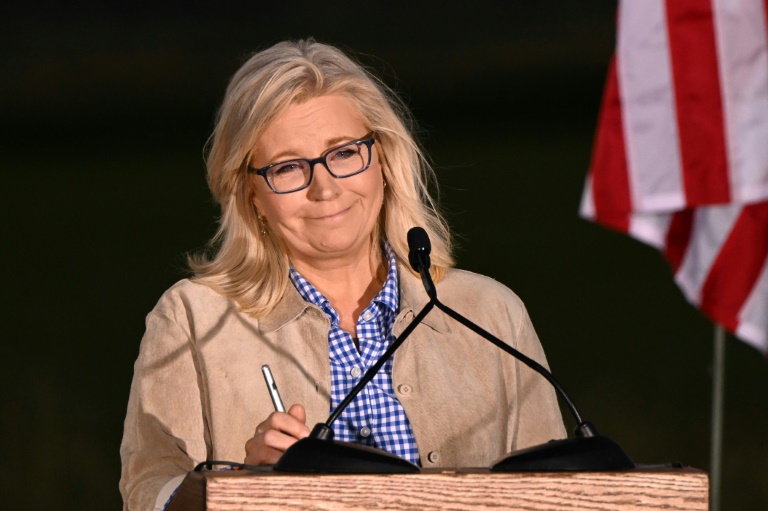
Republican rebel Liz Cheney lost her seat in Congress Tuesday to an election conspiracy theorist, but vowed to fight on and do “whatever it takes” to ensure that former president Donald Trump is never returned to power.

Once considered Republican royalty, the lawmaker from Wyoming has become a pariah in the party over her membership on the congressional panel investigating the January 6 assault on the US Capitol — and Trump’s role in fanning the flames.

“I have said since January 6 that I will do whatever it takes to ensure Donald Trump is never again anywhere near the Oval Office, and I mean it,” the Wyoming congresswoman said in a concession speech after losing her bid at reelection.

Defeat for the 56-year-old daughter of former vice president Dick Cheney in the Wyoming Republican primary marks the end of the family’s four-decade political association with one of America’s most conservative states.

The Republican nomination to contest November’s midterms instead goes to 59-year-old lawyer Harriet Hageman — Trump’s hand-picked candidate who has amplified his false claims of a “rigged” 2020 election.

In her speech Tuesday night, Cheney delivered a stark warning about the danger of Trump’s election fraud conspiracy theories, urging politicians on both sides of the aisle to join her fight to protect US democracy.

Speaking at a cattle ranch near Jackson, Cheney sought to move quickly beyond her defeat, setting out what she said was “real work” of her effort to ensure Trump never regains the White House. 

She blamed the former president, who is embroiled in numerous criminal and civil investigations over alleged misconduct in office, for sending the deeply-divided United States towards “crisis, lawlessness and violence” with his inflammatory rhetoric. 

“No American should support election deniers, for any position of genuine responsibility, (because) their refusal to follow the rule of law will corrupt our future,” she warned.

– ‘Under attack’ –

There is already speculation that Cheney may challenge Trump for the Republican presidential nomination in 2024 — or even run as an independent — and supporters were hoping her concession speech would double up as a blueprint for her political future.

She pointedly avoided addressing the issue, but had earlier told CBS that the primary — regardless of the result — would be “the beginning of a battle that is going to continue.”

“We are facing a moment where our democracy really is under attack and under threat,” she said.

Cheney had framed her campaign as a battle for the soul of a party she is trying to save from the anti-constitutional forces of Trumpism.

She was the last of 10 Republicans in the House of Representatives who backed Trump’s second impeachment to face primary voters. 

Four retired rather than seek reelection, three lost to Trump-backed opponents, and only two — California’s David Valadao and Dan Newhouse of Washington state — have made it through to November’s midterm elections.

Cheney voted in line with Trump’s positions 93 percent of the time when he was president but he didn’t pull his punches as he sought vengeance for her role in the House committee probe.

Trump has made Cheney his bete noire, calling her “disloyal” and a “warmonger,” prompting death threats that have forced her to travel with a police escort.

He called her defeat Tuesday night “a wonderful result for America.”

“Now she can finally disappear into the depths of political oblivion where, I am sure, she will be much happier than she is right now,” he posted on his Truth Social platform.

– Palin comeback bid –

During the lead-up to Tuesday’s vote in Wyoming — the first US state to grant women the right to vote, in 1869 — the congresswoman was forced to run a kind of shadow campaign, with no rallies or public events.

She even avoided the traditional election day photo op Tuesday, eschewing media at her local polling station to instead cast her ballot in nearby Jackson.

“Liz is representing the constituents that are in her mind, and they aren’t the constituents of Wyoming,” said Mary Martin, chairwoman of the Republican Party in Teton County — Cheney’s Wyoming base.

There were also elections on Tuesday in Alaska, where 2008 Republican vice presidential candidate Sarah Palin’s comeback battle — to complete the term of a congressman who died in office — divided locals.

Fourteen years after rising to international fame on the losing Republican presidential ticket headed by John McCain, Palin remains popular among women as the “soccer mom” who pioneered the ultra-conservative “Tea Party” movement that paved the way for Trumpism.

But many voters blame her for abandoning her single term as governor halfway through, amid ethics complaints, and a recent poll showed her to be viewed unfavorably by 60 percent of Alaskans.

The results in Palin’s race are not expected for several days.

Germany's Russian gas crisis sparks coal rush

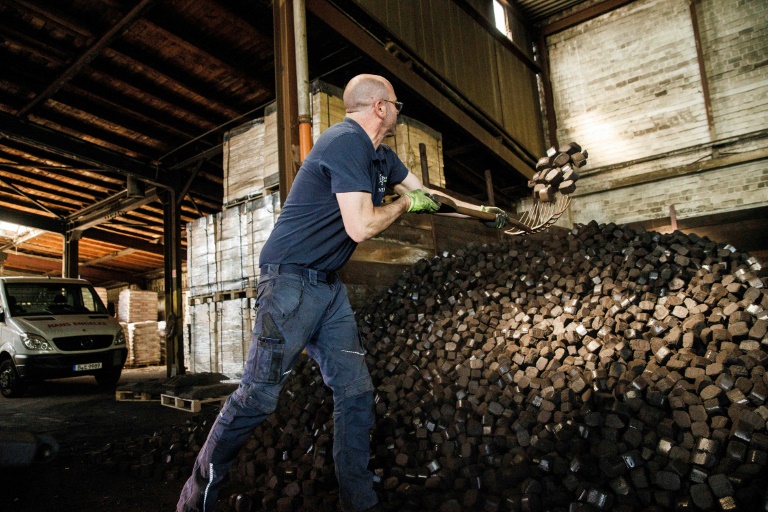
“A rush like this in the summertime, it’s unheard of — everybody wants coal,” says Frithjof Engelke, a supplier of the briquettes which have become a hot commodity in the German capital.

A looming shortage of Russian gas in the wake of the Ukraine war has reignited enthusiasm for this method of heating private homes despite its sooty residue and heavy carbon footprint.

Engelke, 46, head of the century-old Berlin business Hans Engelke Energie, says it’s brought a bonanza for his family business: “My holidays will have to wait.”

He and his team are frenziedly taking orders, organising deliveries by truck — now booked out until October, and getting supplies ready for those who come directly to pick up coal from his warehouse.  

On a hot summer’s day, he weighs and bags loose coal amid the dust and din of his filling machine, then arranges the bags on pallets, awaiting customers. 

In Berlin, 5-6,000 homes still heat with coal — only a fraction of the city’s 1.9 million homes, say municipal authorities.

Engelke’s customers are often elderly people, sometimes entirely dependent on coal and living in old dwellings that have never been renovated.

Others are lovers of the “cosy” heat emanating from often ornate old ceramic stoves. 

But this year, new customers have arrived “en masse”, says Engelke, whose medium-sized company has also diversified into wood pellets and fuel oil.

“Those who heat with gas but who still have a stove at home now all want to have coal,” he said, citing a phenomenon seen throughout Germany as winter approaches.

– ‘Better than being cold’ –

Jean Blum is one of the new converts. 

The 55-year-old man with tousled hair and a bushy white beard loads 25-kilogram (55-pound) bags filled with precious black briquettes in his trailer. 

“I’m buying coal for the first time in years,” he tells AFP.

Since his home is equipped with gas heating, he sometimes lights his stove, but only with wood.

With the jump in gas prices, which will be exacerbated this autumn when operators will be able to pass on the increase in energy levies to the consumer, Blum wants to make sure he has a safety net. 

“Even if it’s bad for your health, it’s still better than being cold,” he says.

Although coal prices have soared 30 percent this season, it remains cheaper than wood, whose price has more than doubled. 

“I worry when I wonder if there will be enough gas for everyone,” he adds, noting that Russian President Vladimir Putin has already partially closed the gas tap on Germany after Western nations imposed new sanctions on Moscow.

– ‘Renaissance’ –

The black fuel is experiencing a comeback on several fronts in Europe’s top economy. 

The German government had already resolved to increase the use of coal-fuelled power plants to satisfy the enormous appetites of several industries. 

However Berlin insists it will keep its pledge to phase out the heavily polluting energy source by 2030 and rules out a “renaissance of fossil fuels, in particular coal,” as Chancellor Olaf Scholz recently vowed.

However with new private customers coming out of the woodwork, production has a hard time keeping up, and many small coal merchants in the capital are running out of supplies. 

“We produce at full capacity during the summer, with three shifts, seven days a week,” Thoralf Schirmer, spokesman for LEAG, a mining site in the Lusatia basin, told AFP. 

The company supplies DIY stores and fuel sellers with coal briquettes.

Production has jumped 40 percent since January, he said, but demand is strong everywhere and the situation is expected to remain tense at least until this winter.

Adding to the pressure is the fact that the other factory supplying the market in Germany, based in the Rhine valley, will cease production at the end of the year, reducing supply.

“I dread the winter a bit,” Engelke, the coal seller, admits. 

Currently, people are relatively relaxed when they learn that they will have to wait at least two months before getting deliveries, he says. 

“Things will be radically different when it starts to get cold outside.”

Close Bitnami banner
Bitnami