World

Asian markets fluctuate as traders weigh economic outlook

Markets drifted in Asia on Wednesday, with investors trying to navigate an uncertain economic landscape as central banks hike interest rates to fight runaway inflation, in turn fuelling fears of a possible recession.

But while officials at the Federal Reserve and its peers are expected to keep tightening monetary policy for the rest of the year, talk is building that they will be able to ease up in 2023 — and maybe even cut rates — if the pace of price rises comes down.

Minutes from the Fed’s July meeting will be pored over when they are released later in the day, with investors hoping for some insight into policymakers’ thinking and an idea of its plan for next month’s gathering.

“We expect the … minutes to have a hawkish tilt,” Carol Kong, at Commonwealth Bank of Australia, said. “We would not be surprised if the minutes show (officials) considered a 100 basis points increase in July.”

The bank lifted rates by 75 points in both June and July.

Forecast-beating earnings from retail titans Walmart and Home Depot provided optimism that US consumers remain resilient even as inflation remains elevated and borrowing costs are going up.

However, Asia struggled to match the positive lead from Wall Street, with concerns about China’s economy dampening appetite.

The country’s central bank announced a surprise interest rate cut Monday and a report Tuesday said Premier Li Keqiang called on six key provinces — accounting for about 40 percent of the economy — to bolster pro-growth policies.

However, analysts said markets are more concerned about the debilitating impact of lockdowns and other strict containment measures implemented as part of the government’s zero-Covid strategy.

“Visibility over the evolution of China’s zero-Covid policy is low and recent messaging has suggested virus containment remains a top policy priority of the country,” said Adam Montanaro, investment director of global emerging markets equities at abrdn.

“Not only do investors hate uncertainty, but the negative economic impact of this policy is increasingly visible.”

Hong Kong was flat and Shanghai slipped, while there were also losses in Seoul and Wellington.

Tokyo, Singapore, Taipei and Manila rose.

Equities have enjoyed several weeks of gains since hitting their June lows, and while the initial bounce was broadly seen as a bear market rally there is a hope that they may have already reached their nadir.

“It looks like a bottom, acts like a bottom, and trades like a bottom, then it probably is a bottom,” said OANDA’s Edward Moya in a note.

“Bear market rally calls are suddenly becoming quiet these days. The risks of the Fed sending the economy into a recession are easing as inflation is slowly coming down.

“The Fed’s soft landing seems achievable and that has allowed this rally to continue.”

– Key figures at around 0230 GMT –

Tokyo – Nikkei 225: UP 0.8 percent at 29,101.33 (break)

Hong Kong – Hang Seng Index: FLAT at 19,837.16

Shanghai – Composite: DOWN 0.4 percent at 3,263.71

West Texas Intermediate: UP 0.3 percent at $86.78 per barrel

Brent North Sea crude: UP 0.2 percent at $92.51 per barrel

Euro/dollar: UP at $1.0174 from $1.0166 Tuesday

Pound/dollar: UP at $1.2108 from $1.2092

Euro/pound: DOWN at 84.01 pence from 84.04 pence

Dollar/yen: DOWN at 134.06 yen from 134.21 yen

New York – Dow: UP 0.7 percent at 34,152.01 (close)

London – FTSE 100: UP 0.4 percent at 7,536.06 (close)

— Bloomberg News contributed to this story —
Journalist found dead in northwest Mexico

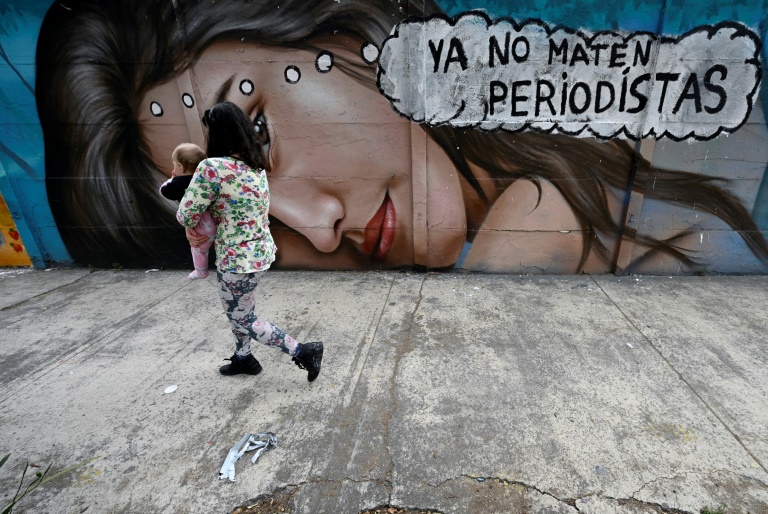
A crime reporter has been found dead in northwestern Mexico, authorities said Tuesday — the latest suspected murder in what is already one of the deadliest years yet for the country’s press.

The body of Juan Arjon Lopez, an independent journalist who ran a news page on Facebook, was discovered in San Luis Rio Colorado in the northwestern state of Sonora near the US border.

The 62-year-old was identified from his fingerprints, a source at the Sonora attorney general’s office told AFP, hours after state prosecutor Indira Contreras told reporters that a body with tattoos matching those of Arjon had been found.

He had been reported missing on August 9.

An autopsy found that the cause of death was blunt trauma, the attorney general’s office said in a statement, adding that it was not ruling out any line of investigation.

Arjon had alternated between working as a reporter and at a local restaurant, media rights group Reporters Without Borders (RSF) said. 

His final news reports on his Facebook page “What are you afraid of” were about a drug seizure and the recovery of several stolen goods.

At least 13 journalists have been murdered so far this year in Mexico, one of the world’s most dangerous countries for the press, according to media rights groups.

More than 150 media workers have been killed since 2000 in the Latin American country, with only a fraction of the crimes resulting in convictions.

Gloves off in Brazil as Bolsonaro, Lula launch campaigns

Ex-president Luiz Inacio Lula da Silva and incumbent Jair Bolsonaro traded insults Tuesday as they launched their campaigns for Brazil’s October elections in dueling rallies highlighting the South American giant’s deep divisions.

The two front-runners, who have in reality been campaigning for months, made it official on opening day with events that also showcased their polar-opposite styles.

Bolsonaro, 67, launched his campaign with a rally in Juiz de Fora, the small southeastern city where an attacker stabbed and nearly killed him during his 2018 campaign — cementing his image in the minds of die-hard supporters as their “Messias,” or Messiah, his middle name.

“This is where I was reborn… This is where the creator saved my life so I could give my best for our nation as president,” an emotional Bolsonaro told cheering supporters packed into the street where he was stabbed by a man later deemed mentally unfit to stand trial.

Hitting hard on the themes of Christianity and family values, Bolsonaro acknowledged Brazil’s “serious problems.” But the ex-army captain called himself the best candidate to lead the country, warning his opponent’s return would be a “step backwards” and usher in “communism” and “gender ideology.”

Bolsonaro’s image as a savior swooping in to rough up the political establishment has suffered as he has lurched through a series of crises, from the coronavirus pandemic — which he insistently downplayed, even as Brazil’s death toll surged — to soaring inflation that is hurting Brazilian families.

The president drew his loudest cheers when he handed the mic to beaming, telegenic First Lady Michelle Bolsonaro, a devout Evangelical Christian who led the crowd in prayer and took her own digs at Lula.

“Our enemy just wants to steal, deceive and destroy,” she said, to chants of “Lula, thief, you belong in jail!”

Draped in the Brazilian flag, 50-year-old teacher Jaqueline Lopes said she was voting for Bolsonaro to “continue the clean-up that started four years ago.”

“I want the left to be eradicated from this country,” said Lopes, who made the three-hour drive from Rio de Janeiro to attend the rally.

– ‘Bogus, genocidal president’ –

Lula meanwhile launched his campaign with a visit to a Volkswagen plant in Sao Bernardo do Campo, the industrial heartland of Sao Paulo state where the 76-year-old launched his political career as a union leader in the 1970s.

“I’m returning so we can take our country back,” he said in his trademark gravelly voice, riling up the crowd with a fiery speech.

Slamming Bolsonaro as a “bogus, genocidal president,” he condemned the “lies” he said the incumbent’s camp was spreading about him in a bid to win the powerful Evangelical vote — an estimated 31 percent of Brazil’s 213 million people.

“If anyone is possessed by the devil, it’s Bolsonaro,” he said.

Lula currently leads with 44 percent of the vote to 32 percent for Bolsonaro, according to the latest poll from the Ipec institute, published Monday.

If no candidate wins more than 50 percent of valid votes in the October 2 election, a runoff will be held on October 30.

Brazil has been torn in a two-way race since March last year, when the Supreme Court annulled a controversial corruption conviction that had sent Lula to jail and sidelined him from politics.

The ex-president (2003-2010) left office as the most popular leader in Brazilian history, after presiding over an economic boom that helped lift some 30 million people from poverty.

But he fell spectacularly from grace when he was convicted in Brazil’s sprawling “Car Wash” scandal.

Lula, who denies wrongdoing, calls the case a trumped-up bid to topple his legacy — which he is now clearly out to restore.

“Lula is the Brazilian people’s hope for a better life,” said 48-year-old welder Mauricio Souza, who was at the leftist’s rally belting out songs on his trumpet.

Many Brazilians fear if Bolsonaro loses he will follow in the footsteps of his political role model, former US president Donald Trump, and try to fight the result.

Bolsonaro, who regularly blasts alleged fraud in Brazil’s electronic voting system — without evidence — is fond of saying “only God” can remove him from office.

After a day on the campaign trail, the two foes crossed paths late Tuesday in Brasilia at an inauguration ceremony for the new head of the top court overseeing the country’s elections, who has been a frequent critic of the current president.

Sitting almost face to face — Bolsonaro on the podium and Lula in the front row of the audience along with several other former presidents — the two candidates did not exchange any words, at least in front of the cameras.

As he was sworn in, Justice Alexandre de Moraes said Brazil was “one of the largest democracies in the world (…) but we are the only one that counts and discloses the results on the same day, with agility, security, competence and transparency. That is a source of national pride.”

Amazon tribe go behind the camera in Nat Geo film 'The Territory'

When Covid-19 reached Brazil’s Amazon, and an indigenous tribe sealed off its borders, director Alex Pritz found an innovative way to finish his documentary — he handed the cameras over to the Uru-eu-wau-wau themselves.

“The Territory,” to be released by National Geographic on Friday, follows the plight of some 200 hunter-gatherers who live in a protected area of rainforest, surrounded and encroached upon by aggressive and illegal settlers, farmers and loggers.

While shown in the movie dressed in traditional garb and honoring ancient customs, the Uru-eu-wau-wau and their young leader Bitate — the film’s main subject — were more than happy to use modern technology to fight back.

“When Covid happened, Bitate made the really bold decision to say ‘Okay, no more journalists coming into our territory, no more filmmakers, no more Alex, no more documentary crew, nobody,'” said Pritz.

“We had to have a conversation with him like, ‘Okay, are we done with the film? Do we have everything we need? Is there more? Should we start editing?’

“Bitate was really clear: ‘No, we’re not done. We still have a lot left to do. You guys weren’t done before, why should you be done now?

“‘Just send us better cameras, send us audio equipment, and we’ll shoot and produce the last part of the movie.'”

The result was a “co-production model” in which an Uru-eu-wau-wau filmmaker is credited as cinematographer, and the community more broadly acted as producers with a share of profits and a say in business decisions about the film’s distribution.

Besides enabling filming to continue into the pandemic, Pritz believes the decision to provide equipment and training directly to the Uru-eu-wau-wau benefited the film by adding a “firsthand perspective” on the group’s activities, which include patrolling the land to arrest interlopers.

“I shot a bunch of surveillance missions myself. None of them made the cut!” said Pritz.

“Not because we wanted to transfer the filmmaking… it was more raw, it was more urgent.”

– ‘Digital children’ –

Even before Pritz’s crew arrived, the Uru-eu-wau-wau had become adept at using the power of modern technology and media to champion their cause, positioning themselves on the global stage as guardians of a forest whose survival is bound up in issues of climate change and biodiversity.

“Bitate and this younger generation within the Uru-eu-wau-wau are digital children. He’s born in the late 90s. He’s on Instagram. And that’s part of how he engages with the world,” said Pritz.

When drones capturing stunning and harrowing footage of vast deforestation appear early in the documentary, many audiences assume they belong to the filmmakers, said Pritz. 

But in fact, the flying cameras were bought and are operated by the Uru-eu-wau-wau themselves.

“Whereas it would have taken four days to walk over a mountain range of thick, dense, old-growth rainforest… with the drone, you’re there in 30 minutes, you have images tagged with metadata,” said Pritz.

“People can’t argue with that.”

It is a stark contrast to the farmers and settlers, who are also central subjects of the film.

In astonishing footage, the documentary follows one group as they brazenly chainsaw and set ablaze protected forest, illegally clearing space for roads to territory they one day wish to settle and claim as their own.

Access was possible because many settlers see themselves as heroic pioneers, speaking in interviews to Pritz about opening up the rainforest for the good of their nation — a heady mix of “Wild West” cowboy culture borrowed from American movies, and nationalist propaganda stoked by Brazilian President Jair Bolsonaro.

“The settlers were these naive people who had no understanding of the historical context of their actions, the ecological consequences, what they were doing for the rest of the planet,” said Pritz.

For the settlers, many of whom lack education or any other economic opportunities, “it was just about ‘me and mine,’ ‘just this one little plot,’ ‘if only I can get this.'”

“Whereas Bitate has this expansive outlook. He’s thinking about climate change. He’s thinking about the planet. He’s politically savvy, media-oriented.”

Spain, Portugal battle to control huge wildfires

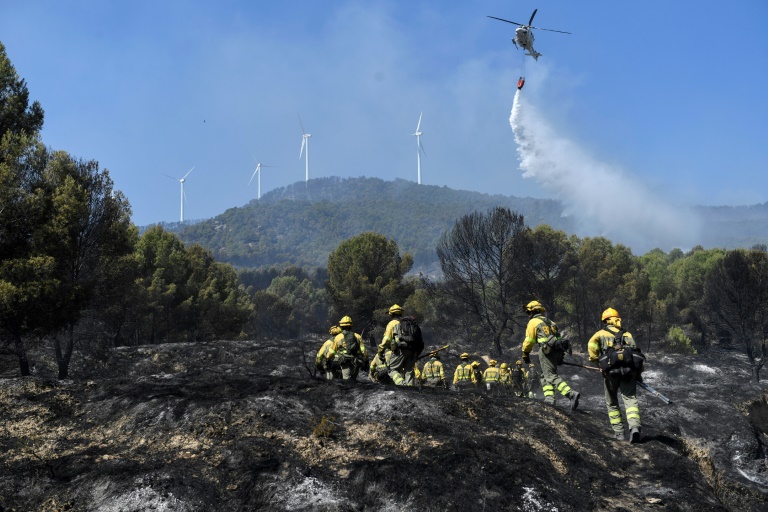
Spain and neighbouring Portugal fought against large wildfires on Tuesday, while three people were badly injured after their train hurtled into a smaller Spanish blaze.

Some 300 firefighters spent a difficult night battling a huge wildfire in southeastern Spain that has burnt through nearly 10,000 hectares in an area notoriously difficult to access, officials said Tuesday.

The fire began when lightning hit the Vall de Ebo area in Valencia late Saturday and has since spread rapidly, fuelled by strong winds, forcing the evacuation of more than 1,500 people, regional authorities said.

“At the moment, we are talking about more than 9,500 hectares (235,000 acres) burnt with a perimeter of 65 kilometres (40 miles),” regional president Ximo Puig said late Monday, describing the blaze as “absolutely huge”.

“It’s a very complicated situation… The fire is creating enormous difficulties that are absolutely impossible to tackle with the speed we would like.”

Regional interior minister Gabriela Bravo told Antena 3 television some 300 firefighters were battling the flames, backed by 24 planes and helicopters.

Firefighters elsewhere in the region were also battling two other wildfires north of Valencia city, with hundreds of firefighters and at least 10 firefighting planes engaged in the operation, officials said.

Three people were badly wounded after the train they were riding on ran into flames.

“Three people suffered bad burn injuries,” the regional health authorities said, adding one had to be evacuated by helicopter to hospital. More than eight others were lightly injured, they added.

Further north, firefighters in the Aragon region were battling another major blaze that broke out Saturday and has burnt more than 6,000 hectares of land, forcing at least 1,500 people from their homes.

Meanwhile, a huge wildfire in central Portugal that raged for a week in a UNESCO-designated natural park and was finally brought under control on Friday night, flared up again Tuesday, the civil protection authority said. 

More than 1,200 firefighters had been drafted in to tackle the blaze, which has already consumed some 15,000 hectares and was “burning fiercely” with the flames whipped up by strong winds, the authority said.

– Worse than 2021 –

So far this year, Spain has suffered 391 wildfires, fuelled by scorching temperatures and drought conditions, which have destroyed a total of 271,020 hectares of land, according to the latest figures from the European Forest Fire Information System (EFFIS).

This year’s fires in Spain have been particularly devastating, destroying more than three times the area consumed by wildfires in the whole of 2021, which amounted to 84,827 hectares, the figures show.

Portugal has suffered 195 wildfires so far this year, which have ravaged 84,717 hectares of land, EFFIS figures show. 

Scientists say human-induced climate change is making extreme weather events, including heatwaves and droughts, more frequent and intense. They in turn increase the risk of fires, which emit climate-heating greenhouse gases.

Fires have blazed across Europe, particularly in France, Greece and Portugal, making 2022 a record year for wildfires on the continent.

The blaze in Portugal’s Serra da Estrela natural park started on August 6 outside the central town of Covilha and authorities have deployed 373 fire engines and 12 planes and helicopters to bolster firefighters’ attempts to tame it.

The blaze has so far left three people seriously hurt and 19 others less seriously while 45 people have been evacuated as a precaution since Monday as Portugal battles its worst forest fires since 2017 when some 100 lives were lost.  

Portugal’s civil protection agency head Andre Fernandes warned of the probability the fire would spread and said attempts to stabilise it were liable to be hampered by wind.

Spain, Portugal battle to control huge wildfires

Spain and neighbouring Portugal fought against large wildfires on Tuesday, while three people were badly injured after their train hurtled into a smaller Spanish blaze.

Some 300 firefighters spent a difficult night battling a huge wildfire in southeastern Spain that has burnt through nearly 10,000 hectares in an area notoriously difficult to access, officials said Tuesday.

The fire began when lightning hit the Vall de Ebo area in Valencia late Saturday and has since spread rapidly, fuelled by strong winds, forcing the evacuation of more than 1,500 people, regional authorities said.

“At the moment, we are talking about more than 9,500 hectares (235,000 acres) burnt with a perimeter of 65 kilometres (40 miles),” regional president Ximo Puig said late Monday, describing the blaze as “absolutely huge”.

“It’s a very complicated situation… The fire is creating enormous difficulties that are absolutely impossible to tackle with the speed we would like.”

Regional interior minister Gabriela Bravo told Antena 3 television some 300 firefighters were battling the flames, backed by 24 planes and helicopters.

Firefighters elsewhere in the region were also battling two other wildfires north of Valencia city, with hundreds of firefighters and at least 10 firefighting planes engaged in the operation, officials said.

Three people were badly wounded after the train they were riding on ran into flames.

“Three people suffered bad burn injuries,” the regional health authorities said, adding one had to be evacuated by helicopter to hospital. More than eight others were lightly injured, they added.

Further north, firefighters in the Aragon region were battling another major blaze that broke out Saturday and has burnt more than 6,000 hectares of land, forcing at least 1,500 people from their homes.

Meanwhile, a huge wildfire in central Portugal that raged for a week in a UNESCO-designated natural park and was finally brought under control on Friday night, flared up again Tuesday, the civil protection authority said. 

More than 1,200 firefighters had been drafted in to tackle the blaze, which has already consumed some 15,000 hectares and was “burning fiercely” with the flames whipped up by strong winds, the authority said.

– Worse than 2021 –

So far this year, Spain has suffered 391 wildfires, fuelled by scorching temperatures and drought conditions, which have destroyed a total of 271,020 hectares of land, according to the latest figures from the European Forest Fire Information System (EFFIS).

This year’s fires in Spain have been particularly devastating, destroying more than three times the area consumed by wildfires in the whole of 2021, which amounted to 84,827 hectares, the figures show.

Portugal has suffered 195 wildfires so far this year, which have ravaged 84,717 hectares of land, EFFIS figures show. 

Scientists say human-induced climate change is making extreme weather events, including heatwaves and droughts, more frequent and intense. They in turn increase the risk of fires, which emit climate-heating greenhouse gases.

Fires have blazed across Europe, particularly in France, Greece and Portugal, making 2022 a record year for wildfires on the continent.

The blaze in Portugal’s Serra da Estrela natural park started on August 6 outside the central town of Covilha and authorities have deployed 373 fire engines and 12 planes and helicopters to bolster firefighters’ attempts to tame it.

The blaze has so far left three people seriously hurt and 19 others less seriously while 45 people have been evacuated as a precaution since Monday as Portugal battles its worst forest fires since 2017 when some 100 lives were lost.  

Portugal’s civil protection agency head Andre Fernandes warned of the probability the fire would spread and said attempts to stabilise it were liable to be hampered by wind.

Cuba authorizes foreign investment in wholesale, retail

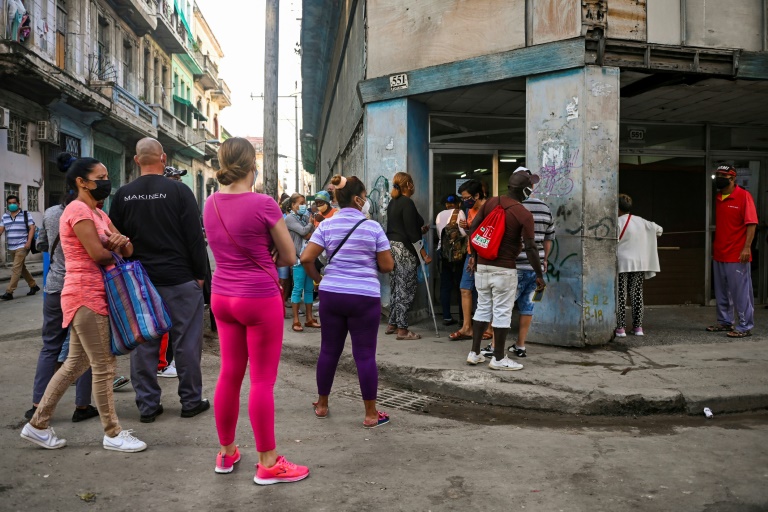
The Cuban government has announced it will allow foreign investment in domestic wholesale and retail trade for the first time in 60 years, in a move aimed at addressing critical shortages of goods.

The decision could also give a boost to local industry, all without relinquishing state control over foreign trade.

“Foreign investment in wholesale and retail trade, with state regulation, will allow the expansion and diversification of supply to the population and will contribute to the recovery of domestic industry,” Economy Minister Alejandro Gil tweeted Tuesday, expanding on an announcement made late the previous night.

Foreign investors would be allowed to fully own Cuban wholesalers for the first time since Fidel Castro’s 1959 revolution, while retailers could enter into public-private ventures, according to deputy trade minister Ana Gonzalez Fraga.

Until now, foreign investment has been allowed only in the domestic production of goods and in the services sector.

The move to open up a sector hitherto controlled by the communist government is indicative of the difficulty state companies face in accessing foreign currency and raw materials.

This has aggravated severe shortages in basic goods such as food, medicine and fuel, and triggered rising discontent with the government that has prompted repeated protests in recent months.

There has also been rapid growth of informal trade in essential products, triggering consumer inflation which closed some 70 percent higher at the end of last year.

– Raw materials needed –

According to Cuban economist Mauricio Miranda Parrondo, “the state monopoly on foreign trade and retail is responsible for the shortage of consumer goods in the domestic market.”

Gonzalez Fraga told state TV late Monday that the latest measure sought to ensure investment in “raw materials, inputs, equipment and other goods that can contribute to the development of domestic production.”

Under US sanctions since 1962, Cuba began timidly opening up to private capital in the 1990s before fuller authorization in 2010 followed by a boom after a warming of ties with Washington under then-president Barack Obama.

In August last year, Havana gave the green light for small and medium enterprises to start operating on the island.

Months earlier, it had authorized private enterprise for the first time — though that was limited to individual entrepreneurs, not businesses.

The reforms represent a major ideological shift in a country where the government and its affiliate companies have monopolized most of the economy for decades. 

The country is battling its worst economic crisis in 30 years, fueled by toughened sanctions under the administration of Donald Trump and the fallout from the coronavirus crisis, which has hit Cuba’s crucial tourism sector hard.

US cuts water supply for some states, Mexico as drought bites

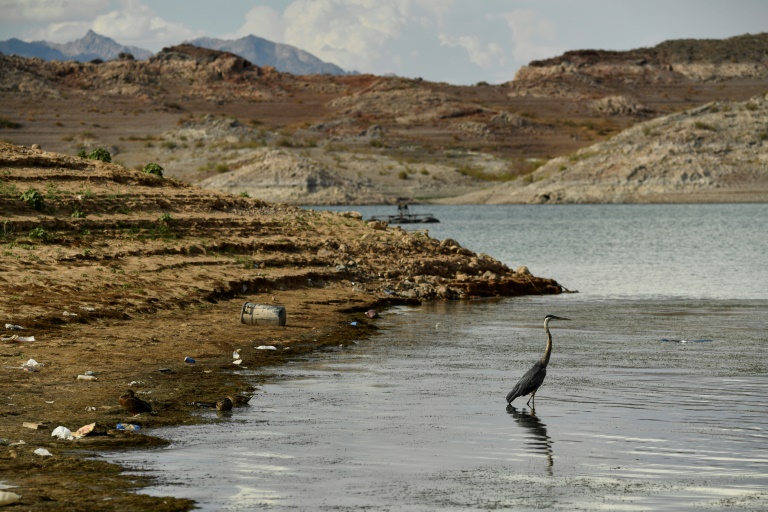
Water supplies to some US states and Mexico will be cut to avoid “catastrophic collapse” of the Colorado River, Washington officials said Tuesday, as a historic drought bites.

More than two decades of well below average rainfall have left the river — the lifeblood of the western United States — at critical levels, as human-caused climate change worsens the natural drought cycle.

Despite years of warnings and a deadline imposed by Washington, states that depend on the river have not managed to agree on a plan to cut their usage, and on Tuesday, the federal government said it was stepping in.

“In order to avoid a catastrophic collapse of the Colorado River System and a future of uncertainty and conflict, water use in the Basin must be reduced,” said Tanya Trujillo, assistant secretary for water and science at the US Interior Department.

Arizona’s allocation from the river will fall by 21 percent in 2023, while Nevada will get eight percent less. Mexico’s allotment will drop by seven percent.

California, the biggest user of the river’s water and the most populous of the western states, will not be affected next year.

The Colorado River rises in the Rocky Mountains and snakes its way through Colorado, Utah, Arizona, Nevada, California and northern Mexico, where it empties into the Gulf of California.

It is fed chiefly by snowpack at high altitudes, which melts slowly throughout the warmer months.

But reduced precipitation and the higher temperatures caused by humanity’s unchecked burning of fossil fuels means less snow is falling, and what snow exists, is melting faster.

As a consequence, there is not as much water in the river that supplies tens of millions of people and countless acres of farmland.

The states that use the water have been locked in negotiations over how to slash usage, but missed a Monday deadline to cut a deal, so Washington stepped in.

Officials in upstream states hit out Tuesday at what they saw as an unfair settlement, with California exempted from any cuts.

“It is unacceptable for Arizona to continue to carry a disproportionate burden of reductions for the benefit of others who have not contributed,” said a statement by Tom Buschatzke, director of the state’s Department of Water Resources and Ted Cooke, general manager of the Central Arizona Project. 

– Climate change –

Deputy Interior Secretary Tommy Beaudreau said his department — which oversees US water supplies — was “using every resource available to conserve water and ensure that irrigators, Tribes and adjoining communities receive adequate assistance.”

“The worsening drought crisis impacting the Colorado River Basin is driven by the effects of climate change, including extreme heat and low precipitation,” he said.

“In turn, severe drought conditions exacerbate wildfire risk and ecosystems disruption, increasing the stress on communities and our landscapes.”

The western United States is suffering under a drought that is now in its 23rd year, the worst episode in more than 1,000 years.

That drought has left swathes of the country dry and vulnerable to hotter, faster and more destructive wildfires.

Communities served by the Colorado River, including Los Angeles, have been ordered to save water, with unpopular restrictions in place on outdoor watering.

Those restrictions are unevenly adhered to, with some lawns — especially in the plushest parts of Los Angeles and its surroundings — still remarkably green.

Boy loses part of leg to shark bite off Florida coast

A 10-year-old boy had part of his leg amputated after being bitten by a shark while snorkeling on vacation in the Florida Keys, his family has said.

Jameson Reeder Jr. was attacked on Saturday at Looe Key Reef, the Florida Fish and Wildlife Conservation Commission said in a statement.

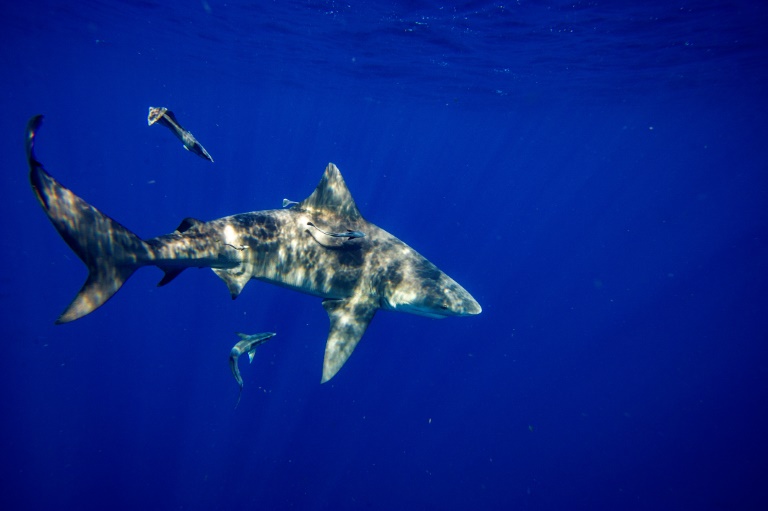
A Facebook post by his uncle Joshua Reeder said Jameson had gone on a boat trip with his parents and three other siblings and was snorkeling in a shallow reef when he “took a crushing blow below his knee,” by what they believed was an eight-foot-long bull shark.

Jameson was able to hold on to a noodle float and was rescued by his father, who applied a tourniquet to the leg and flagged down another, faster boat that raced the family ashore. 

The boy was then airlifted to the Miami Children’s Hospital where a medical team saved his life but was forced to amputate the leg below the knee.

“He is now out of surgery and resting,” wrote Joshua Reeder, crediting Jameson’s strong religious faith for helping him to survive the ordeal.

A GiveSendGo appeal by the family for financial assistance had surpassed its target of $50,000 as of Tuesday afternoon.

While a higher than normal number of shark encounters off the coast of New York this summer have attracted attention, the overall risk of being bitten by a shark remains low.

Global trends are now roughly stable after rising slightly over the past 30 years, partly due to increased recreational activity by humans, and recovery of vulnerable shark populations.  

Last year, there were 73 unprovoked attacks globally, according to the Florida Museum. Nearly every attack is a result of mistaken identity as sharks do not intentionally target humans.

Most attacks in the United States occur off the Atlantic coast of Florida, home to choppy waters and bait fish that several shark species feed on.

Polish firemen pull tonnes of dead fish from Oder river

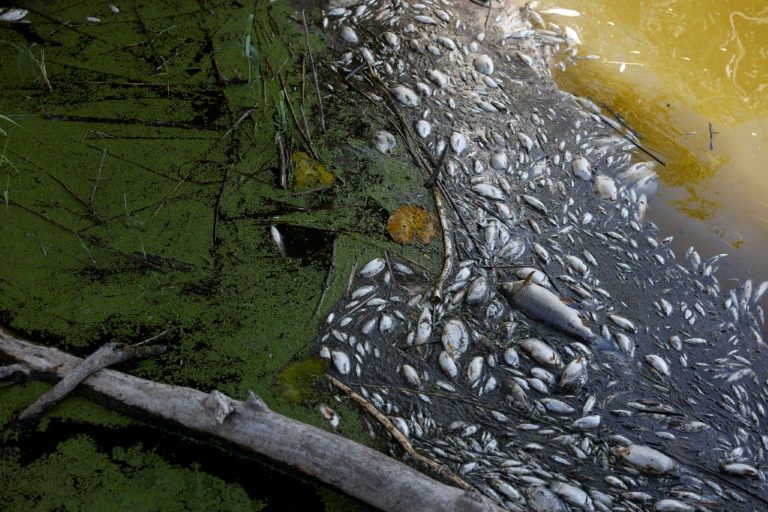
Polish firefighters said Tuesday they had recovered 100 tonnes of dead fish from the Oder river running through Germany and Poland, deepening concerns of an environmental disaster.

“We’d never had an operation of this scope on a river before,” said Monika Nowakowska-Drynda from the national firefighter press office.

She confirmed that around 100 tonnes (220,500 pounds) of dead fish had been recovered since Friday. 

The cause of death is uncertain, though officials believe the fish are likely to have been poisoned. 

“Probably enormous quantities of chemical waste was dumped into the river in full knowledge of the risk and consequences,” Polish Prime Minister Mateusz Morawiecki said last week.

But Climate and Environment Minister Anna Moskwa said on Tuesday that “none of the samples tested so far has shown the presence of toxic substances”.

She said the government was also looking into possible natural causes and in particular higher concentrations of pollutants and salinity as a result of lower water levels and high temperatures.

A third hypothesis being examined is that industrial waste water with a high chlorine content was poured into the river, she said.

Water samples have also been sent to laboratories in the Czech Republic, the Netherlands and Britain in the hopes of finding the cause.

The first reports of mass fish deaths were made by Polish locals and anglers as early as July 28.

German officials have accused Polish authorities of failing to inform them about the deaths, and were taken by surprise when the wave of lifeless fish came floating into view.

In Poland, the government has also come under heavy criticism for failing to take swift action.

The Oder has over the last years been known as a relatively clean river, and 40 domestic species of fish are found in the waterway.

But now, dead fish — some reaching up to 40 centimetres (16 inches) — can be seen across the river.

Nowakowska-Drynda said more than 500 firefighters have been recovering the dead fish in Poland with the help of dams, boats, quad bikes and even a drone. 

Close Bitnami banner
Bitnami