World

Water levels on Italy's Lake Garda drop to 15-year low

The pedalos lie far from the water’s edge and the flat stone slabs around the Sirmione peninsula are exposed after drought reduced the level of Italy’s Lake Garda to a 15-year low.

Italy’s largest lake, a major tourist destination nestled among mountains in the north of the country, is suffering like many others from months without rain.

“We are currently at 30 centimetres (12 inches) above the (benchmark) hydrographic level,” compared to an average for this time of year of between 80 and 100, said Gianluca Ginepro, head of Garda Unico, which promotes the lake.

It is the lowest since 2007, when levels dropped to 9.9 cm, according to official data.

“It’s a situation to keep an eye on, even if from the point of view of using the lake — like wind surfing, sailing — there is no problem,” Ginepro told AFP.

Tourism was holding up well, he said, although operators of trips across the lake had switched from hydrofoils to catamarans.

He also said that “the possibility of providing water for agriculture has dropped”.

Farmers have also been hit by a lack of water in the River Po, which stretches across northern Italy and is suffering its worst drought for 70 years.

But the issue goes beyond Italy, with land across Europe parched by a lack of rainfall and sweltering temperatures, driven by climate change.

Several other European countries, as well as reporting record temperatures during recent heatwaves, have also reported low levels of water in rivers.

Walmart results top estimates as inflation alters consumer behavior

Walmart scored a big jump in revenues partly driven by inflation but the retail giant faces increasing evidence of shifting consumer behavior due to rising prices, according to quarterly results released Tuesday.

The big-box retailer, which stunned Wall Street three weeks ago by cutting its profit forecast, ended up reporting better-than-expected results for the latest three months, following a late-July improvement in business.

The chain even tweaked its latest profit forecast in a positive way as ebbing gasoline prices and a rise in back-to-school shopping boosted activity.

The news sent shares higher, however, executives continued to signal they expect the headwinds facing customers to persist.

“I think this inflationary environment is going to last for a while,” Chief Executive Doug McMillon said on a conference call with analysts. “So people are going to be value conscious, which plays to our strength.”

Revenues for the second fiscal quarter ending July 31 rose to $152.9 billion, an 8.4 percent increase from the same period of last year.

Profits jumped 20.4 percent to $5.1 billion, though some of the increase was connected to the accounting for an asset sale in Brazil.

– ‘Trading down’ –

Walmart’s US comparable store sales rose 6.5 percent from a year ago, but the company expects the pace to slow to about three percent growth in the second half of 2022.

Higher gasoline prices, along with elevated costs for grocery staples have prompted more consumers to “trade down” to lower-priced goods.

An example has been in a shift from deli meats at higher prices to purchases of hot dogs, and canned tuna and chicken, said Chief Financial Officer John Rainey. 

In general, as consumers have to spend more on groceries, demand has fallen for apparel, electronics and home products, leading to more promotions in these areas.

Rainey said the company also had to cancel “billions of dollar” in orders to address inventory gluts.

“The swings we’ve seen in consumer behavior through the pandemic shifting from in-store to online, along with big swings in the purchase of goods versus services and then the reversion back to pre-pandemic norms have been sharp and difficult to predict,” Rainey said.

“These trends have been exacerbated by inflationary pressure on the consumer that many of us have not experienced in our lifetime.”

On July 25, Walmart cut its earnings forecast, saying shifting consumer behavior was denting sales of merchandise with higher profit margins.

The company now projects its full-year adjusted profit will decline nine to 11 percent. That is still worse than the May outlook but, a smaller drop than the 11 to 13 percent plunge expected three weeks ago.

Neil Saunders of GlobalData Retail said Walmart’s results demonstrate the advantages of its position at a time when consumers are worried about higher prices, but the company also faces challenges.

“Walmart is fighting a battle on two fronts,” Saunders said in an analysis. “One is to retain its position as a price leader and grow its food business. Here, we are optimistic about its prospects. 

“The other is to punch out better operating profit numbers. This will be more challenging as the business is facing higher costs and unfavorable sales mix trends.”

Walmart is trying to boost its non-retail business, most recently unveiling a venture with the Paramount+ streaming service, which will be included in the company’s Walmart+ subscription program.

The new benefit will launch in September, according to a joint news release announcing the venture.

Shares of Walmart rose 5.6 percent to $140.04 in mid-morning trading.

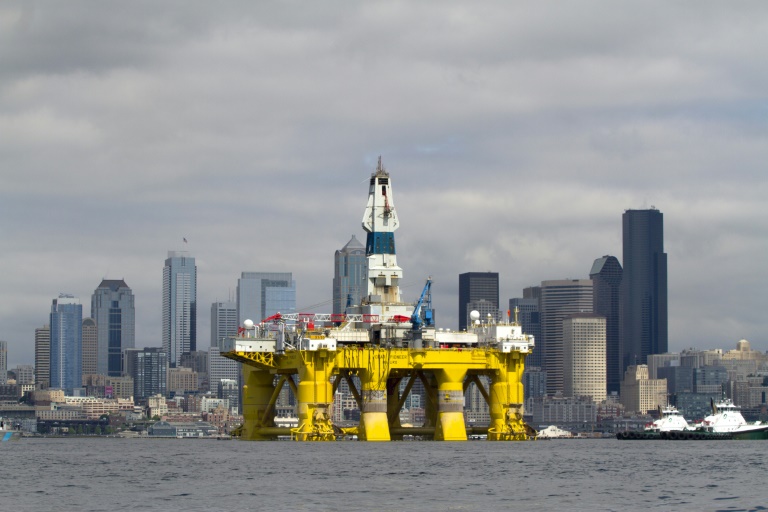
Oil majors' climate visions 'inconsistent' with Paris targets

Global decarbonisation scenarios envisioned by oil and gas majors are incompatible with the Paris climate deal temperature goals aimed at averting devastating heating, according to research published Tuesday.

The landmark 2015 accord saw nations commit to limit planetary heating to “well below” two degrees Celsius (3.6 Farenheit) above pre-industrial levels and to work towards a safer 1.5-C warming cap. 

Writing in the journal Nature Communications, an international team of experts analysed six emissions scenarios from three European energy giants — Equinor, BP and Shell — as well as those produced by the International Energy Agency.

They then compared the analysed pathways to scenarios outlined in a special report from the Intergovernmental Panel on Climate Change on 1.5C of warming. 

The team used these to evaluate peak and end-of-century temperatures under each scenario, noting that average global temperatures may decline by 2100 in some scenarios after peaking.

They also assessed the underlying energy system changes that drive emissions and could lead to a given scenario meeting — or failing to meet — the Paris temperature goals.

“Most of the scenarios we evaluated would be classified as inconsistent with the Paris Agreement as they fail to limit warming to ‘well below 2C’, let alone 1.5C, and would exceed the 1.5C warming limit by a significant margin,” said Robert Brecha of the Climate Analytics think tank and co-lead author of the study. 

“Energy system transformation is critical to reaching the Paris Agreement warming limit, and decision makers need sound and transparent scientific assessments. This paper adds to that transparency.”

– ‘Catastrophic impacts’ –

The analysis found that Shell’s Sky scenario would lead to warming of 1.81C by 2069 — a far cry from 1.5C.

A Shell spokeswoman told AFP that the Sky pathway was just one of several envisaged by the company.

The team responsible for modelling scenarios “makes assessments based on plausible assumptions and quantifications, which are not intended to be predictions of likely future events or outcomes, let alone our energy transition plan”, she added.

Equinor’s Rebalance scenario would see warming peak at 1.73C above pre-industrial levels by 2060, according to the study.

BP’s Rapid scenario would see peak warming of 1.73C by 2058, while its Net Zero scenario would see median warming peak at 1.65C, the analysis found. 

Equinor declined to comment, while BP did not respond to a comment request.

Only the IEA’s Net Zero 2050 pathway is fully aligned with the Paris agreement’s 1.5C goal, the authors concluded. 

“Fossil fuel companies claim that we can continue to burn oil and gas while keeping to the 1.5C warming limit, and they cite their own scenarios as justification,” said Bill Hare, CEO and Senior Scientist at Climate Analytics. 

“But our research shows that their pathways would bust the Paris Agreement. Even temporarily exceeding the 1.5C warming would lead to catastrophic impacts and severely weaken our ability to adapt to climate change.”

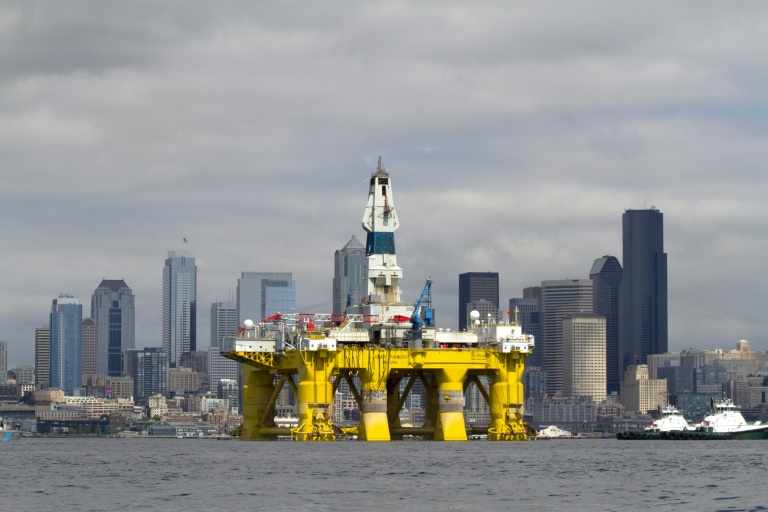
Oil majors' climate visions 'inconsistent' with Paris targets

Global decarbonisation scenarios envisioned by oil and gas majors are incompatible with the Paris climate deal temperature goals aimed at averting devastating heating, according to research published Tuesday.

The landmark 2015 accord saw nations commit to limit planetary heating to “well below” two degrees Celsius (3.6 Farenheit) above pre-industrial levels and to work towards a safer 1.5-C warming cap. 

Writing in the journal Nature Communications, an international team of experts analysed six emissions scenarios from three European energy giants — Equinor, BP and Shell — as well as those produced by the International Energy Agency.

They then compared the analysed pathways to scenarios outlined in a special report from the Intergovernmental Panel on Climate Change on 1.5C of warming. 

The team used these to evaluate peak and end-of-century temperatures under each scenario, noting that average global temperatures may decline by 2100 in some scenarios after peaking.

They also assessed the underlying energy system changes that drive emissions and could lead to a given scenario meeting — or failing to meet — the Paris temperature goals.

“Most of the scenarios we evaluated would be classified as inconsistent with the Paris Agreement as they fail to limit warming to ‘well below 2C’, let alone 1.5C, and would exceed the 1.5C warming limit by a significant margin,” said Robert Brecha of the Climate Analytics think tank and co-lead author of the study. 

“Energy system transformation is critical to reaching the Paris Agreement warming limit, and decision makers need sound and transparent scientific assessments. This paper adds to that transparency.”

– ‘Catastrophic impacts’ –

The analysis found that Shell’s Sky scenario would lead to warming of 1.81C by 2069 — a far cry from 1.5C.

A Shell spokeswoman told AFP that the Sky pathway was just one of several envisaged by the company.

The team responsible for modelling scenarios “makes assessments based on plausible assumptions and quantifications, which are not intended to be predictions of likely future events or outcomes, let alone our energy transition plan”, she added.

Equinor’s Rebalance scenario would see warming peak at 1.73C above pre-industrial levels by 2060, according to the study.

BP’s Rapid scenario would see peak warming of 1.73C by 2058, while its Net Zero scenario would see median warming peak at 1.65C, the analysis found. 

Equinor declined to comment, while BP did not respond to a comment request.

Only the IEA’s Net Zero 2050 pathway is fully aligned with the Paris agreement’s 1.5C goal, the authors concluded. 

“Fossil fuel companies claim that we can continue to burn oil and gas while keeping to the 1.5C warming limit, and they cite their own scenarios as justification,” said Bill Hare, CEO and Senior Scientist at Climate Analytics. 

“But our research shows that their pathways would bust the Paris Agreement. Even temporarily exceeding the 1.5C warming would lead to catastrophic impacts and severely weaken our ability to adapt to climate change.”

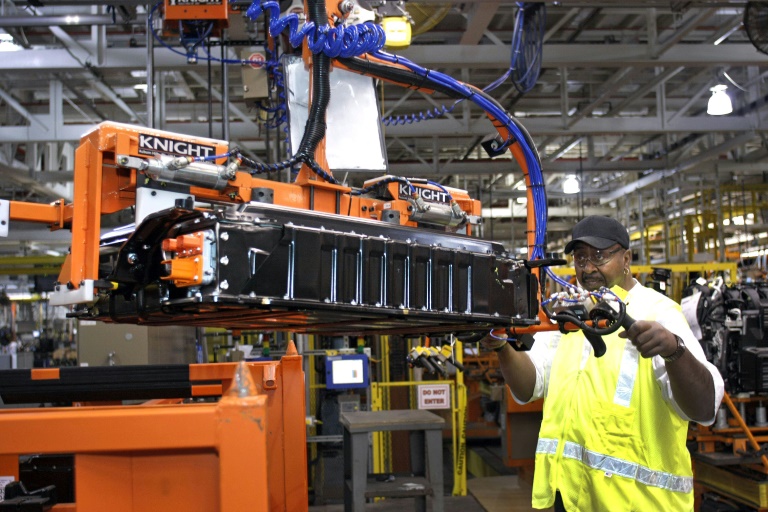
US industrial output jumps in July on solid manufacturing gain

A solid rebound in American manufacturing, especially vehicles, following two months of declines, help push overall industrial production up in July, the Federal Reserve said Tuesday.

A massive 6.6 percent surge in motor vehicle and parts production was a key driver the 0.7 percent rise in manufacturing, which was the biggest gain since March, the data showed. 

That boosted total industrial output by 0.6 percent last month, which was double the consensus forecast among economists.

The gain contrasted with the massive decline in a regional survey by the New York Fed for the first week of August, which briefly spooked investors on Monday.

“Manufacturing activity is cooling, but retains some momentum; no indications of a massive pullback,” said Gregory Daco, chief economist of EY Parthenon. 

“I’d downplay the huge drop in the Empire State survey & focus on the ISM readings pointing to cooling activity,” Daco said on Twitter, referring to a nationwide survey that showed a slowdown but continued growth last month.

Mining production also rose 0.7 percent, on “gains in coal mining and in oil and gas well drilling,” while utilities fell 0.8 percent, the Fed said.

Overall production was 3.9 percent higher compared to July 2021, while manufacturing has risen 3.2 percent, the report said.

Industrial capacity in use edged back over 80 percent, to 80.3 percent, after slipping below that threshold in June.

Space mission shows Earth's water may be from asteroids: study

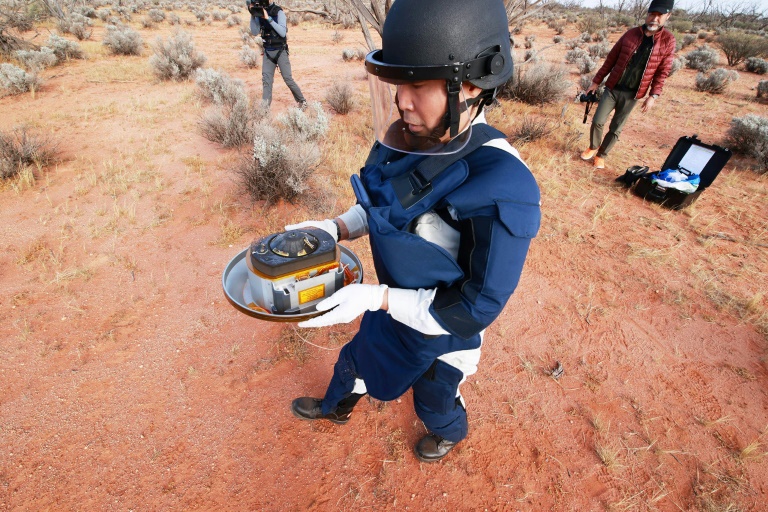
Water may have been brought to Earth by asteroids from the outer edges of the solar system, scientists said after analysing rare samples collected on a six-year Japanese space mission.

In a quest to shed light on the origins of life and the formation of the universe, researchers are scrutinising material brought back to earth in 2020 from the asteroid Ryugu.

The 5.4 grams (0.2 ounces) of rocks and dust were gathered by a Japanese space probe, called Hayabusa-2, that landed on the celestial body and fired an “impactor” into its surface.

Studies on the material are beginning to be published, and in June, one group of researchers said they had found organic material which showed that some of the building blocks of life on Earth, amino acids, may have been formed in space.

In a new paper published in the journal Nature Astronomy, scientists said the Ryugu samples could give clues to the mystery of how oceans appeared on Earth billions of years ago.

“Volatile and organic-rich C-type asteroids may have been one of the main sources of Earth’s water,” said the study by scientists from Japan and other countries, published Monday.

“The delivery of volatiles (that is, organics and water) to the Earth is still a subject of notable debate,” it said.

But the organic materials found “in Ryugu particles, identified in this study, probably represent one important source of volatiles”.

The scientists hypothesised that such material probably has an “outer Solar System origin”, but said it was “unlikely to be the only source of volatiles delivered to the early Earth”.

Hayabusa-2 was launched in 2014 on its mission to Ryugu, around 300 million kilometres away, and returned to Earth’s orbit two years ago to drop off a capsule containing the sample.

In the Nature Astronomy study, the researchers again hailed the findings made possible by the mission.

“Ryugu particles are undoubtedly among the most uncontaminated Solar System materials available for laboratory study and ongoing investigations of these precious samples will certainly expand our understanding of early Solar System processes,” the study said.

China factories ration power as heatwave sends demand soaring

Chinese lithium hub Sichuan province will ration electricity supply to factories until Saturday, state media reported, as a heatwave sends power demands soaring and dries up reservoirs.

Temperatures in the province — home to nearly 84 million people — have hovered above 40-42 degrees Celsius (104-108 degrees Fahrenheit) since last week, according to data from China’s Meteorological Administration, increasing the demand for air conditioning.

The region relies on dams to generate 80 percent of its electricity, but rivers in the area have dried up this summer, Beijing’s Water Resources Ministry said. 

The province in China’s southwest produces half the nation’s lithium, used in batteries for electric vehicles, and its hydropower projects provide electricity to industrial hubs along the country’s east coast. 

But the local government has decided to prioritise residential power supply, ordering industrial users in 19 out of 21 cities in the province to suspend production until Saturday, according to a notice issued Sunday.

Several companies including aluminium producer Henan Zhongfu Industrial and fertiliser producers Sichuan Meifeng Chemical Industry said in stock exchange statements they were suspending production.

A plant operated by Taiwanese giant and Apple supplier Foxconn in the province has also suspended production, Taipei’s Central News Agency reported. 

Some companies will be permitted to operate at a limited capacity, depending on their production needs.

“Sources estimate at least 1,200 tonnes of lithium output will be cut due to the operations disruptions in these five days,” Susan Zou, an analyst at Rystad Energy, told AFP, adding the cost of lithium carbonate had jumped since Monday.

A summer of extreme weather in China has seen multiple major cities record their hottest days ever.

China’s national observatory reissued a red alert for high temperatures on Monday, state media reported, as the mercury soared past 40 degrees Celsius (104 Fahrenheit) across swathes of the country.

Provinces including Zhejiang, Jiangsu and Anhui that rely on power from western China have also issued electricity curbs for industrial users to ensure homes had enough power, according to local media reports. 

Scientists say extreme weather across the world has become more frequent due to climate change, and will likely grow more intense as global temperatures rise.

China factories ration power as heatwave sends demand soaring

Chinese lithium hub Sichuan province will ration electricity supply to factories until Saturday, state media reported, as a heatwave sends power demands soaring and dries up reservoirs.

Temperatures in the province — home to nearly 84 million people — have hovered above 40-42 degrees Celsius (104-108 degrees Fahrenheit) since last week, according to data from China’s Meteorological Administration, increasing the demand for air conditioning.

The region relies on dams to generate 80 percent of its electricity, but rivers in the area have dried up this summer, Beijing’s Water Resources Ministry said. 

The province in China’s southwest produces half the nation’s lithium, used in batteries for electric vehicles, and its hydropower projects provide electricity to industrial hubs along the country’s east coast. 

But the local government has decided to prioritise residential power supply, ordering industrial users in 19 out of 21 cities in the province to suspend production until Saturday, according to a notice issued Sunday.

Several companies including aluminium producer Henan Zhongfu Industrial and fertiliser producers Sichuan Meifeng Chemical Industry said in stock exchange statements they were suspending production.

A plant operated by Taiwanese giant and Apple supplier Foxconn in the province has also suspended production, Taipei’s Central News Agency reported. 

Some companies will be permitted to operate at a limited capacity, depending on their production needs.

“Sources estimate at least 1,200 tonnes of lithium output will be cut due to the operations disruptions in these five days,” Susan Zou, an analyst at Rystad Energy, told AFP, adding the cost of lithium carbonate had jumped since Monday.

A summer of extreme weather in China has seen multiple major cities record their hottest days ever.

China’s national observatory reissued a red alert for high temperatures on Monday, state media reported, as the mercury soared past 40 degrees Celsius (104 Fahrenheit) across swathes of the country.

Provinces including Zhejiang, Jiangsu and Anhui that rely on power from western China have also issued electricity curbs for industrial users to ensure homes had enough power, according to local media reports. 

Scientists say extreme weather across the world has become more frequent due to climate change, and will likely grow more intense as global temperatures rise.

Net zero, Russia war driving nascent hydrogen economy

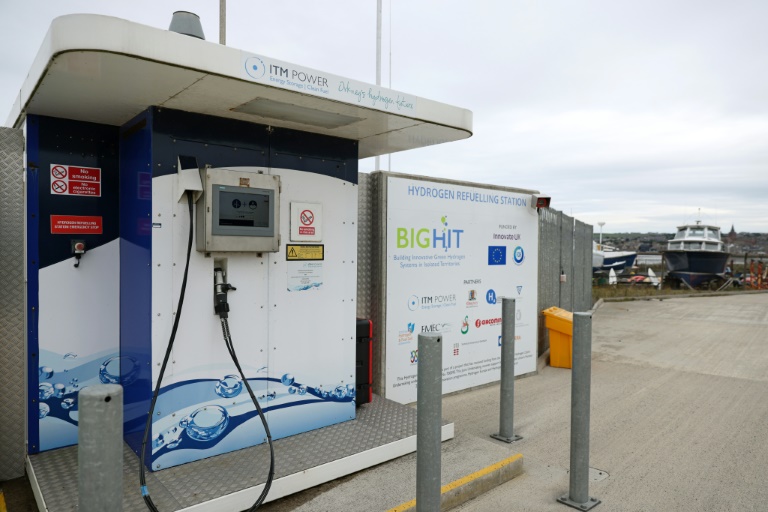
Kevin Kendall pulls up at the only green hydrogen refuelling station in Birmingham, Britain’s second-biggest city, and swiftly fills his sedan with clean gas.

Green hydrogen is in sharp focus as governments seek to slash carbon emissions amid record-high temperatures and to safeguard energy supplies hit by the invasion of Ukraine by oil and gas producer Russia.

But the “hydrogen economy” has not fully kicked into gear awaiting significant uptake from high-polluting sectors like steel and aviation.

For Kendall, being an early user of green hydrogen means he does not have to queue during his lunchtime trip to what resembles a petrol pump.

“There is very little green hydrogen being produced in Britain at the moment,” the professor of chemical engineering tells AFP. “It needs now to move forward.”

In Birmingham, central England, it costs about £50 ($60) to fill Kendall’s Toyota Mirai with the green hydrogen that is produced at a plant next to the refuelling station.

That is around half the bill for a similar-sized diesel car after the Ukraine war sent fossil fuel prices rocketing.

Despite the price benefit, Britain is home to around only a dozen hydrogen refuelling stations.

While hydrogen is the most abundant element on Earth, it is locked in water and hydrocarbons such as natural gas, meaning “it’s difficult to make”, according to Kendall’s daughter, Michaela Kendall.

Together they founded Adelan, a small-sized business producing box-shaped fuel cells similar to the metal-encased devices used to help power the Toyota Mirai.

Set up 26 years ago, Adelan is the longest-running maker of fuel cells in Britain — which work also with liquefied petroleum gas (LPG) — while the company also offers a leasing service for the Japanese automaker’s hydrogen cars.

– ‘Increasingly attractive’ –

“Since the Russian invasion of Ukraine, the economics of green hydrogen have become increasingly attractive,” Minh Khoi Le, head of hydrogen research at Rystad Energy, told AFP.

“Coupled with many incentives in the second half of 2022 globally, green hydrogen looks to satisfy the trilemma of the energy system: energy security, affordability, and sustainability.”

Fallout from the war has caused the European Union to bolster its gas reserves by slashing consumption 15 percent.

The bloc is also seeking to significantly increase supplies of green hydrogen, which is made from water via electrolysis and with renewable energy. 

This is in contrast to the more available blue hydrogen, which environmentalists oppose as it is produced from natural gas in a process that releases carbon dioxide into the atmosphere.

– £9-billion investment –

At Adelan’s Birmingham workshop, a quaint brick building surrounded by houses, staff are testing the company’s so-called solid oxide fuel cells that are replacing diesel generators.

Overseeing the work, company chief executive Michaela Kendall says she expects “hydrogen capacity to really increase but it will take time”.

“Hydrocarbons will still be used for the foreseeable future,” she predicts “because the hydrogen economy has not really evolved, it’s just at the early stage”.

Britain’s government says £9 billion of investment is needed “to make hydrogen a cornerstone of the UK’s greener future” as it targets net zero carbon emissions by mid-century.

In Birmingham, the plan is for about 10 hydrogen refuelling stations in the next few years following the arrival of 120 hydrogen buses to the city in 2023. Other UK cities, including Aberdeen in Scotland, are travelling the same road.

However, “only Los Angeles has been reasonably successful with something like 9,000 hydrogen vehicles and 40 hydrogen stations”, says Kevin. 

“That’s what we’d like Birmingham to be.”

– Electric surge –

The Toyota, resembling a standard vehicle inside and out, is powered by electricity. This has been produced by green hydrogen combining with oxygen in a fuel cell.

The only waste emitted from the vehicle, which has a range of 400 miles (640 kilometres), is water vapour.

Adelan’s solid oxide fuel cell, so-called because its electrolyte is ceramic, is described as “an electric device”, generating power for batteries.

“It’s hydrogen-ready, but we tend to use hydrocarbon fuels because they’re easier to get right now,” says Michaela.

“We use fuel that is sourced in a low-carbon way” such as BioLPG.

A lack of hydrogen infrastructure means motorists wanting a greener alternative to petrol or diesel are expected to continue purchasing electric vehicles.

Despite lengthy charge times for electric car batteries and big rises in electricity prices this year, Britons are fast ditching polluting automobiles ahead of a UK ban on sales of new diesel and petrol vehicles from 2030.

It comes as oil and gas giant BP recently unveiled plans for green hydrogen production facilities in the UK.


Tibetan Plateau water stores under threat: study

The Tibetan Plateau will experience significant water loss this century due to global warming, according to research published Monday that warns of severe supply stress in a climate change “hotspot”. 

The reservoirs of the Tibetan Plateau, which covers much of southern China and northern India, are fed by monsoons and currently supply most of the water demand for nearly two billion people. 

But the plateau’s complex terrain has made it difficult for scientists to predict how warming temperatures and altered weather patterns linked to climate change will affect the region’s water stores.

Researchers based in China and the United States used satellite-based measurements to determine the net change in water and ice mass over the past two decades.

They added in direct measurements of glaciers, lakes and sub-surface water levels to estimate changes in the water mass, then used a machine learning technique to predict storage changes under scenarios such as higher air temperature and reduced cloud cover.

They found that due to an increasingly warm and wet climate, the Tibetan Plateau has lost just over 10 billion tonnes of water a year since 2002. 

Writing in the journal Nature Climate Change, the team projected changes in water storage across the plateau under a middle-of-the-road emissions scenario, where levels of carbon pollution stay roughly at current levels before falling gradually after 2050. 

They found two river basins were particularly vulnerable to water loss.

For the Amu Darya, central Asia’s largest river, water loss could be equivalent to 119 percent of the current demand. 

Communities reliant on the Indus basement for water supply could see a loss equivalent to 79 percent of current demand, the study showed. 

The authors recommended that governments begin to explore alternative water supply options, including more groundwater extraction, to make up for the anticipated shortfall. 

Michael Mann, director of the Penn Center for Science, Sustainability and the Media, said “substantial reductions in carbon emissions over the next decade” would limit global warming and the “predicted collapse of the Tibetan Plateau water towers”.

“But even in a best-case scenario, further losses are likely unavoidable, which will require substantial adaptation to decreasing water resources in this vulnerable, highly populated region of the world. Just what that would look like is hard to say — we’re in unchartered waters,” Mann, a study co-author, told AFP. 

“Suffice it to say, some amount of suffering is locked in.” 

Close Bitnami banner
Bitnami