World

UK meteorologists, water firms issue warnings as extreme heatwave looms

The UK’s meteorological agency on Tuesday issued an “amber” warning for extreme heat while the country’s biggest water provider said restrictions loom, as Britain braces for another punishing heatwave later this week. 

The warning by the Met Office, covering much of southern England and parts of eastern Wales from Thursday through Sunday, predicts possible impacts to health, transport and infrastructure from the heat.  

Temperatures are set to soar to the mid-30s Celsius for several days, it noted.

The sweltering conditions come just weeks after the last heatwave pushed the mercury over 40 degrees Celsius (104 degrees Fahrenheit) for the first time in Britain.

Climate scientists overwhelmingly agree that carbon emissions from humans burning fossil fuels are heating the planet, raising the risk and severity of droughts, heatwaves, and other extreme weather events.

“Thanks to persistent high pressure over the UK, temperatures will be rising day-on-day through this week and an extreme heat warning has been issued,” Met Office deputy chief meteorologist Dan Rudman said in a statement.  

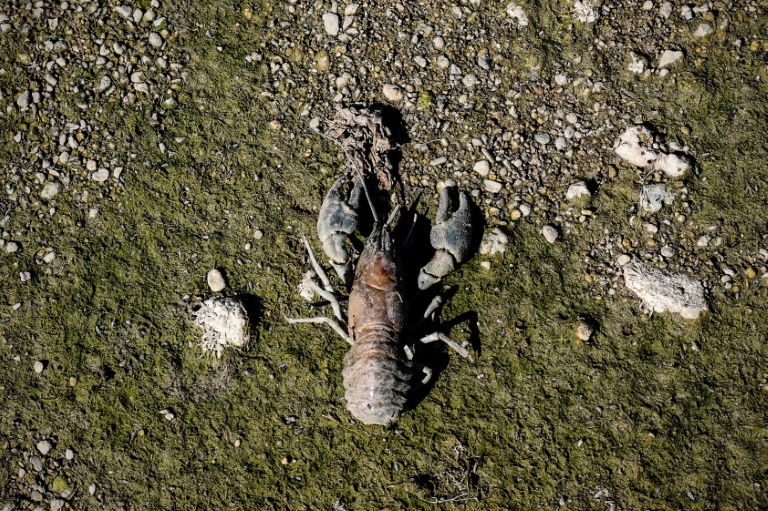
Months of exceptionally dry weather across England are taking their toll, with Thames Water — which supplies London and its surroundings — the latest water provider to warn of imminent restrictions.

The firm said it is planning to issue a so-called hosepipe ban in the coming weeks “given the long-term forecast” of hot and dry weather for the southeast.

Several other UK water suppliers have already announced similar moves ahead of this week’s heatwave, but Thames Water’s 15 million customers would make it the most impactful so far.

The Met Office has confirmed it was the driest July in England since 1935, and little or no rain is forecast for most of the parched areas in the short term.

“Water companies are already managing the unprecedented effects of the driest winter and spring since the 1970s,” said Peter Jenkins, of Water UK, which represents the industry.

“With more hot, dry weather forecast, it’s crucial we be even more mindful of our water use to minimise spikes in demand and ensure there’s enough to go around.”

The parched conditions have seen wildfires break out near houses, including on the outskirts of London, a relatively rare occurrence in Britain.

In neighbouring France, a “historic” drought currently exacerbated by a third extreme heatwave this summer has seen a spate of wildfires nationwide as well as water restrictions ordered in nearly all its 96 mainland departments.

More than 47,000 hectares have already burnt in France this year, including a record amount in July alone, according to the European Union’s satellite monitoring service EFFIS.

On Tuesday, more than 3,000 people in southern France’s Aveyron region, including holidaymakers, were evacuated as a fire swept through at least 700 hectares of vegetation without causing any injuries.
UK meteorologists, water firms issue warnings as extreme heatwave looms

The UK’s meteorological agency on Tuesday issued an “amber” warning for extreme heat while the country’s biggest water provider said restrictions loom, as Britain braces for another punishing heatwave later this week. 

The warning by the Met Office, covering much of southern England and parts of eastern Wales from Thursday through Sunday, predicts possible impacts to health, transport and infrastructure from the heat.  

Temperatures are set to soar to the mid-30s Celsius for several days, it noted.

The sweltering conditions come just weeks after the last heatwave pushed the mercury over 40 degrees Celsius (104 degrees Fahrenheit) for the first time in Britain.

Climate scientists overwhelmingly agree that carbon emissions from humans burning fossil fuels are heating the planet, raising the risk and severity of droughts, heatwaves, and other extreme weather events.

“Thanks to persistent high pressure over the UK, temperatures will be rising day-on-day through this week and an extreme heat warning has been issued,” Met Office deputy chief meteorologist Dan Rudman said in a statement.  

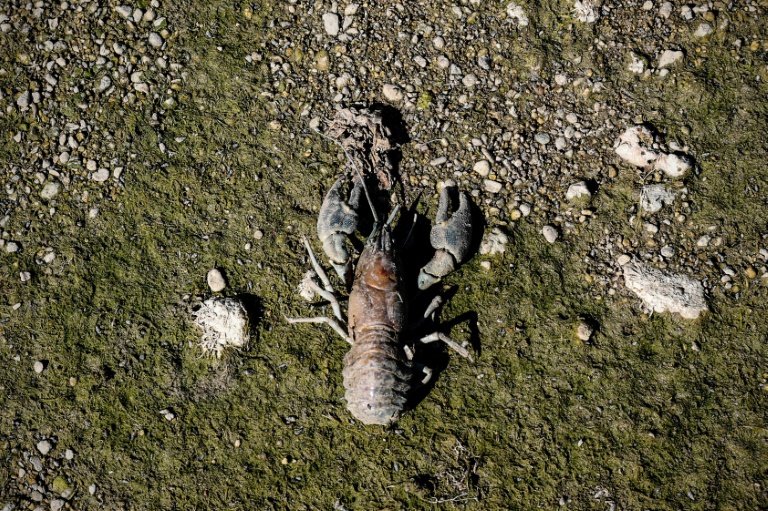
Months of exceptionally dry weather across England are taking their toll, with Thames Water — which supplies London and its surroundings — the latest water provider to warn of imminent restrictions.

The firm said it is planning to issue a so-called hosepipe ban in the coming weeks “given the long-term forecast” of hot and dry weather for the southeast.

Several other UK water suppliers have already announced similar moves ahead of this week’s heatwave, but Thames Water’s 15 million customers would make it the most impactful so far.

The Met Office has confirmed it was the driest July in England since 1935, and little or no rain is forecast for most of the parched areas in the short term.

“Water companies are already managing the unprecedented effects of the driest winter and spring since the 1970s,” said Peter Jenkins, of Water UK, which represents the industry.

“With more hot, dry weather forecast, it’s crucial we be even more mindful of our water use to minimise spikes in demand and ensure there’s enough to go around.”

The parched conditions have seen wildfires break out near houses, including on the outskirts of London, a relatively rare occurrence in Britain.

In neighbouring France, a “historic” drought currently exacerbated by a third extreme heatwave this summer has seen a spate of wildfires nationwide as well as water restrictions ordered in nearly all its 96 mainland departments.

More than 47,000 hectares have already burnt in France this year, including a record amount in July alone, according to the European Union’s satellite monitoring service EFFIS.

On Tuesday, more than 3,000 people in southern France’s Aveyron region, including holidaymakers, were evacuated as a fire swept through at least 700 hectares of vegetation without causing any injuries.
Biden signs ratification of Finland, Sweden NATO bids

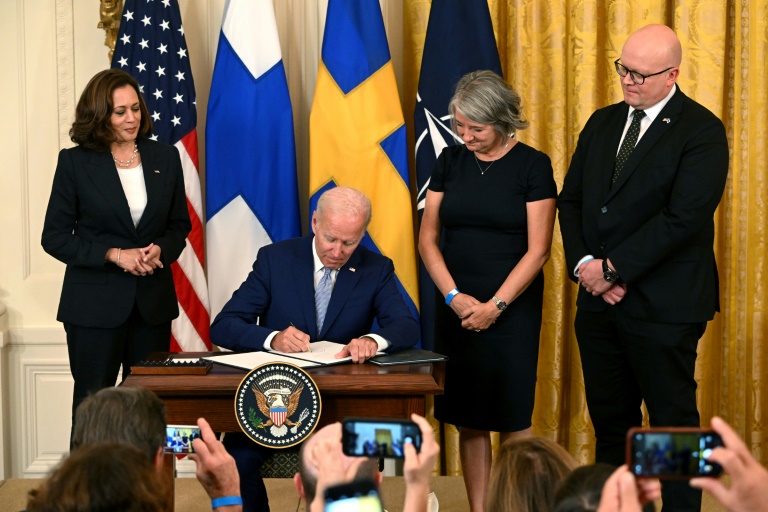
President Joe Biden on Tuesday signed US ratification of bids by Finland and Sweden to enter NATO, taking expansion of the Western alliance in response to Russia’s Ukraine invasion one step closer.

Biden said the two northern European countries would become “strong, reliable highly capable new allies” by making the “sacred commitment” to mutual defense in the US-led transatlantic alliance.

Earlier this month, the Senate voted 95-1 in favor of the Nordic states’ accession, making the United States the 23rd of the 30 NATO countries to give formal endorsement. Unanimous support is needed for new membership.

Biden, who has made restoring traditional US alliances a cornerstone of his administration after Donald Trump’s move to upend ties around the world, praised NATO as “the foundation of American security.”

“The United States is committed to the transatlantic alliance.”

Biden also praised Finland and Sweden, saying both have “strong democratic institutions, strong militaries and strong and transparent economies” that would now bolster NATO.

President Vladimir Putin’s Russia “shattered peace and security in Europe” by invading Ukraine, Biden said. “Putin thought he could break us apart…. Instead, he is getting exactly what he did not want.”

Falling water levels boost Mexican mine rescue mission

Falling water levels have raised hopes that rescuers will be able to enter a flooded Mexican mine, possibly on Wednesday, to look for 10 trapped workers, the government said.

Authorities using an underwater drone equipped with a camera decided that it was still too dangerous to enter the mine in Agujita in the northern state of Coahuila.

But by Wednesday or Thursday, the water level is expected to have dropped to 1.5 meters (around five feet), so “divers and rescuers will be able to enter,” President Andres Manuel Lopez Obrador told reporters.

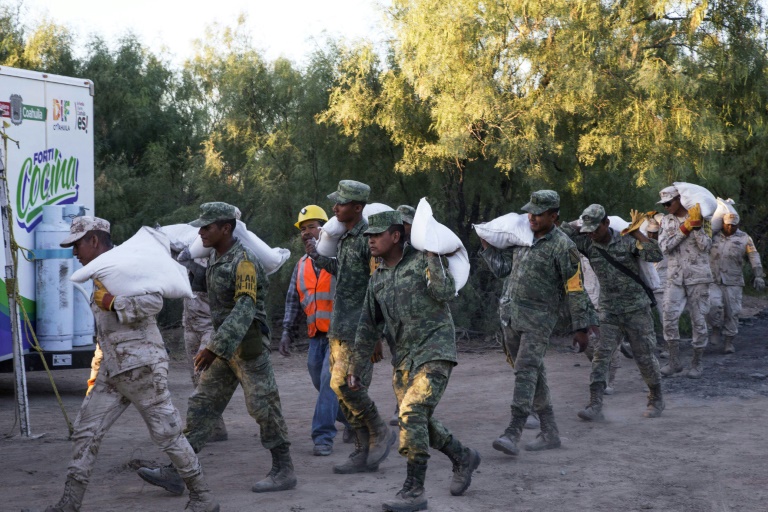
Several hundred rescuers, including soldiers and military scuba divers, are taking part in efforts to save the miners, whose relatives were increasingly anxious nearly a week after the accident.

Images gathered by the drone on Monday showed obstructions and water turbulence, making it still too risky to go inside, civil defense national coordinator Laura Velazquez said.

The focus so far has been on pumping out water from the 60-meter (200 feet) deep mine.

The water in the shafts has fallen significantly, from more than 30 meters initially, but was still at least 10 meters deep, officials said.

According to authorities, the miners were carrying out excavation work when they hit an adjoining area full of water.

Five workers managed to escape from the crudely constructed mine in the initial aftermath of the accident on August 3, but there has been no contract with the others.

Coahuila, Mexico’s main coal-producing region, has seen a series of fatal mining incidents over the years.

The worst accident was an explosion that claimed 65 lives at the Pasta de Conchos mine in 2006.

Last year, seven miners died when they were trapped in the region.

US 'concerned' by reports of Rwandan support for DRC rebels

Secretary of State Antony Blinken on Tuesday said the United States was “concerned” by “credible” reports that Rwanda is supporting rebels in eastern Democratic Republic of Congo.

The resurgence of the M23 group in Congo’s restive east has exacerbated tensions between the neighbours, with Kinshasa accusing Kigali of backing the rebels.

Blinken was speaking in the Congolese capital Kinshasa, where he arrived on Tuesday for the second leg of a three-nation African tour and met President Felix Tshisekedi.

Rwanda has denied the allegations and Blinken is due to visit the country following a one-day stay in Kinshasa.

“We are very concerned by credible reports that Rwanda has supported the M23,” the top US diplomat told a press conference in Kinshasa. 

“All countries have to respect their neighbours’ territorial integrity,” he added, saying he was “not turning a blind eye” and would discuss the issue with Rwandan President Paul Kagame.

Blinken said his trip to the region was to ensure US support for mediation efforts led by Angola and Kenya “to prevent further violence, to end conflict (and) to preserve the territorial integrity of the DRC”.

The DRC is seeking international support as it struggles with Rwanda over the M23, a primarily Congolese Tutsi group that is one of many operating in the troubled east.

After lying mostly dormant for years, the rebels resumed fighting late last year, seizing the strategic town of Bunagana on the Ugandan border in June and prompting thousands of people to flee their homes.

In a 131-page report to the UN Security Council seen last week by AFP, experts said Rwandan troops had intervened militarily inside the DRC since at least November. 

Rwanda also “provided troop reinforcements” for specific M23 operations, the experts’ report said, “in particular when these aimed at seizing strategic towns and areas”.

Kinshasa and Kigali have had strained relations since the mass influx of Rwandan Hutus accused of slaughtering Tutsis during the 1994 Rwanda genocide.

Relations began to thaw after Tshisekedi took office in 2019 but the M23’s resurgence has revived tensions.

The group, also known as the “March 23 Movement”, first leapt to prominence in 2012 when it briefly captured the city of Goma before a joint Congolese-UN offensive drove it out.

– Rwanda and M23 –

Blinken arrived in Kinshasa from South Africa, where he said the United States was seeking a “true partnership” with Africa and was not vying with other powers for influence on the continent.

Tshisekedi was to “raise the questions of strategic partnership” between the DRC and the United States during his meeting with Blinken at the presidential palace, his office said in a statement Monday.

On the eve of Blinken’s swing through the DRC and Rwanda, Human Rights Watch (HRW) urged him to condemn the M23 attacks and press Rwanda on its rights record, which included a “brutal” crackdown on dissent.

“As in 2012, the M23 are committing war crimes against civilians,” said a HRW statement.

“Witnesses described summary killings of at least 29 people, including children, in June and July… The US should raise with Rwanda the reliable reports that it is again supporting the M23’s abusive conduct in eastern Congo.”

The M23 is just one of scores of armed groups that roam eastern DRC, many of them a legacy of two regional wars that flared late last century.

One of the bloodiest militias is the Allied Democratic Forces (ADF) — an organisation the Islamic State group describes as its “Central Africa Province” affiliate.

The State Department placed the ADF on its list of IS-linked “terrorist” organisations in March 2021.

Guinea dissolves FNDC opposition coalition

Guinea’s junta-appointed government has dissolved the country’s leading opposition movement, the National Front for the Defence of the Constitution (FNDC), under a decree dated Saturday.

An alliance of political parties, trade unions and civil groups, the FNDC spearheaded protests against former president Alpha Conde before his ouster in a coup last year.

Friction has been growing for months between the FNDC and the junta, culminating in an announcement by the coalition on Monday that it would stage demonstrations on August 17.

A decree declaring the FNDC’s dissolution, signed by Territorial Administration Minister Mory Conde, was authenticated by AFP on Tuesday.

“The de-facto group called the National Front for the Defence of the Constitution, is dissolved… with effect from the date of signature,” the ruling said.

Rumours of the decree had spread on social media late Monday.

The decree said the FNDC’s “operational mode is based on violent attacks (perpetrated) during banned demonstrations, attacks against individuals who do not share their ideology, and targeted attacks against the security forces”.

The organisation has “the behaviour of combat groups and private militias… threatening national unity, public peace and cohabitation”, it said. 

– Unstable –

Rich in minerals but deeply poor, the West African state has had little stability since it gained independence from France in 1958.

In 2010, Conde, today aged 84, became the country’s first democratically elected president.

But his popularity dived in his second term as critics accused him of authoritarianism, and opposition protests were violently repressed.

Dozens died, the overwhelming majority of them civilians, in protests launched by the FNDC.

On September 5, as anger mounted over Conde’s successful bid for a third term — a move he defended on the grounds of a change to the constitution — mutinous troops rebelled.

Junta strongman Mamady Doumbouya has pledged to return power to elected civilians within three years.

The timeline has put the junta into conflict with the region’s bloc, the Economic Community of West African States (ECOWAS).

ECOWAS’ chair, Guinea-Bissau President Umaro Sissoco Embalo, said late last month that he had convinced the junta to shorten the transition to two years. But the figure has not been confirmed by Guinea.

– Protests –

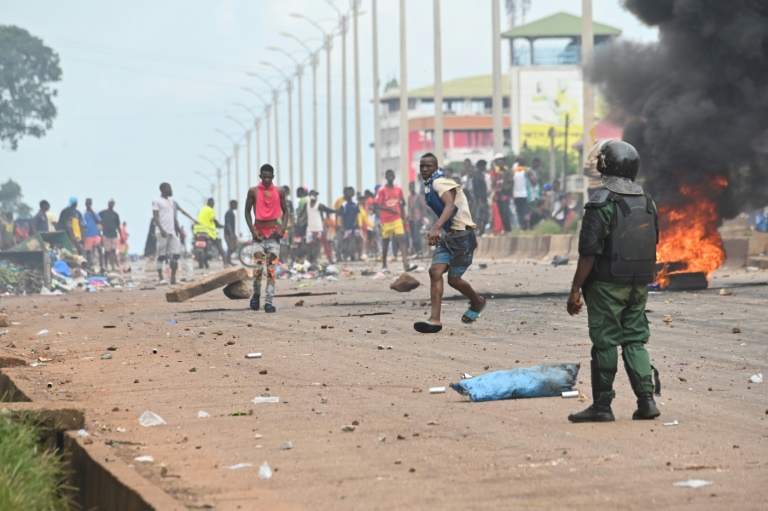
Demonstrations broke out in Guinea on July 28 and 29 over perceptions that the junta was dragging its feet on restoring civilian rule, leaving five dead.

The FNDC on Monday called for nationwide protests on August 17 to condemn the lack of “credible dialogue” and use of lethal weapons against demonstrators. The organisation is also calling for the release of jailed supporters.

The coalition’s communications officer, Abdoulaye Oumou Sow, refused to comment Tuesday on the dissolution order.

But the Guinean Organisation for the Defence of Human Rights (OGDH) separately warned that “confiscating civil liberties or silencing all dissenting voices will only make the situation more complicated.”

It said it was “very concerned… by the turn of events”.

Two FNDC leaders, Oumar Sylla and Ibrahima Diallo, were jailed after the July demonstrations.

They have been charged with taking part in an illegal gathering, destruction of property and bodily harm.

The organisation suspended its activities for a week, including a demonstration planned for August 4, in response to an appeal for calm issued by ECOWAS on August 1.

FBI raid on Trump's home sparks political firestorm

The dramatic FBI raid on Donald Trump’s palatial Florida residence has supercharged the polarizing political debate around the slew of judicial investigations facing the former president as he considers another White House run.

Monday’s shock action marked a stunning escalation of legal probes into the 45th US president, drawing cheers from his political foes and condemnation from his allies.

“Nothing like this has ever happened to a President of the United States before,” the 76-year-old Trump said of the day-long FBI search of his Mar-a-Lago resort.

He denounced the FBI raid as “weaponization of the Justice System” by “Radical Left Democrats who desperately don’t want me to run for President in 2024.”

The FBI declined to provide a reason for the unprecedented move against a former chief executive.

But multiple US media outlets said agents were conducting a court-authorized search related to the potential mishandling of classified documents that had been sent to Mar-a-Lago after Trump left the White House in January 2021.

Trump has also been facing intense legal scrutiny for his efforts to overturn the results of the 2020 election and the January 6 attack on the US Capitol by his supporters.

Since leaving office, Trump has remained the country’s most divisive figure, continuing to sow falsehoods that he actually won the 2020 vote.

– ‘Deep concern’ –

Leading Republicans rallied around the former president, who was not present at Mar-a-Lago when the raid took place.

Trump’s former vice president Mike Pence, a potential 2024 rival, expressed “deep concern” over the search of Trump’s home and said it smacks of “partisanship” by the Justice Department.

Kevin McCarthy, who is seeking to become speaker of the House of Representatives if Republicans win November’s midterm elections, accused the Justice Department of “weaponized politicization.”

Republican Party chairwoman Ronna McDaniel called the raid “outrageous.”

Republican Senator Lindsey Graham, a close Trump ally, said “launching an investigation of a former President this close to an election is beyond problematic.”

Dan Scavino, Trump’s former social media manager, urged him to accelerate an announcement that he would run again.

“DO IT — 45! #TRUMP2024,” Scavino tweeted.

– ‘No one is above the law’ –

Democrats reacted cautiously or withheld comment.

“No person is above the law,” Nancy Pelosi, the Democratic speaker of the House, told NBC. “Not even a former president of the United States.”

Senator Chris Murphy, a Democrat from Connecticut, said “once we decide that the rich and powerful are above the law, we stop being America.”

In his statement, Trump did not give any indication about why the FBI raided his home but said: “They even broke into my safe!”

Andrew McCabe, a former FBI deputy director, said he believed agents may have been looking for “something specific” related to its probe into the handling of classified information.

The National Archives said in February that it had recovered 15 boxes of documents from Mar-a-Lago and asked the Justice Department to look into Trump’s handling of classified material.

The recovery of the boxes raised questions about Trump’s adherence to presidential records laws enacted after the 1970s Watergate scandal that require Oval Office occupants to preserve records.

Speaking on CNN, McCabe said “there had to be a suspicion, a concern and indeed specific information that led (the FBI) to believe that there were additional materials that were not turned over.”

– ‘Some sort of massive overreach’ –

Trump’s former communications director Alyssa Farah Griffin told CNN the raid could fire up his supporters, a small number of whom rallied outside Mar-a-Lago on Tuesday.

“If it’s seen as some sort of massive overreach and not something incredibly serious, this is a very good day for Donald Trump,” Farah Griffin said.

For weeks, Washington has been riveted by hearings in Congress about the January 6 storming of the Capitol and Trump’s attempts to overturn the election won by Democrat Joe Biden.

Attorney General Merrick Garland has been careful not to tip his hand when asked whether the Justice Department is building a legal case against Trump over the Capitol riot.

“No one is above the law,” Garland has said, while adding that he intends to “hold accountable every person who is criminally responsible for trying to overturn a legitimate election.”

An administration official said the White House “did not have notice of the reported action” and referred further questions to the Justice Department.

Trump is also being investigated for his efforts to alter the 2020 voting results in the state of Georgia, while his business practices are being probed in New York in separate cases, one civil and the other criminal.

Russia launches Iranian satellite amid Ukraine war concerns

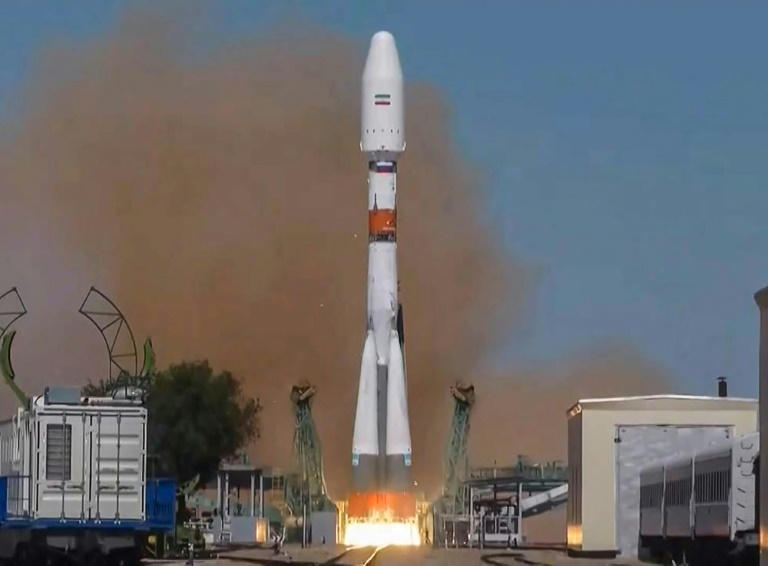
An Iranian satellite launched by Russia blasted off from Kazakhstan Tuesday and reached orbit amid controversy that Moscow might use it to boost its surveillance of military targets in Ukraine.

As Russia’s international isolation grows following Western sanctions over its invasion of Ukraine, the Kremlin is seeking to pivot Russia towards the Middle East, Asia and Africa and find new clients for the country’s embattled space programme.

Speaking at the Moscow-controlled Baikonur cosmodrome in the Kazakh steppe, Russian space chief Yury Borisov hailed “an important milestone in Russian-Iranian bilateral cooperation, opening the way to the implementation of new and even larger projects”.

Iran’s Telecommunications Minister Issa Zarepour, who also attended the launch of the Khayyam satellite, called the event “historic” and “a turning point for the start of a new interaction in the field of space between our two countries”.

Nasser Kanani, the Iranian foreign ministry spokesman, said on Twitter that “the brilliant path of scientific and technological progress of the Islamic republic of Iran continues despite sanctions and the enemies’ maximum pressure”.

Iran, which has maintained ties with Moscow and refrained from criticism of the Ukraine invasion, has sought to deflect suspicions that Moscow could use Khayyam to spy on Ukraine.

Last week, The Washington Post quoted anonymous Western intelligence officials as saying that Russia “plans to use the satellite for several months or longer” to assist its war efforts before allowing Iran to take control.

Less than two hours after the satellite was launched on a Soyuz-2.1b rocket, the Iran Space Agency (ISA) said “ground stations of the Iran Space Agency” had already received “first telemetric data”. 

The space agency stressed on Sunday that the Islamic republic would control the satellite “from day one” in an apparent reaction to the Post’s report.

“No third country is able to access the information” sent by the satellite due to its “encrypted algorithm”, it said.

The purpose of Khayyam is to “monitor the country’s borders”, enhance agricultural productivity and monitor water resources and natural disasters, according to the space agency.

– ‘Long-term cooperation’ –

Khayyam, apparently named after the 11th-century Persian polymath Omar Khayyam, will not be the first Iranian satellite that Russia has put into space. 

In 2005, Iran’s Sina-1 satellite was deployed from Russia’s Plesetsk cosmodrome.

Iran is currently negotiating with world powers, including Moscow, to salvage a 2015 deal aimed at reining in Tehran’s nuclear ambitions.

The United States — which quit the landmark Joint Comprehensive Plan of Action or JCPOA in 2018 under then-president Donald Trump — has accused Iran of effectively supporting Russia’s war against Ukraine while adopting a “veil of neutrality”.

Russian President Vladimir Putin met Iranian counterpart Ebrahim Raisi and Supreme Leader Ayatollah Ali Khamenei in Tehran last month — one of his few trips abroad since Moscow’s February 24 invasion. 

Iran’s Khamenei called for “long-term cooperation” with Russia during their meeting, and Tehran has refused to join international condemnation of Moscow’s invasion of its pro-Western neighbour.

Iran insists its space programme is for civilian and defence purposes only, and does not breach the 2015 nuclear deal, or any other international agreement. 

Western governments worry that satellite launch systems incorporate technologies interchangeable with those used in ballistic missiles capable of delivering a nuclear warhead, something Iran has always denied wanting to build.

Iran successfully put its first military satellite into orbit in April 2020, drawing a sharp rebuke from the United States.

On the eve of the Khayyam launch, ISA praised “the high reliability factor of the Soyuz launcher”.

Borisov, who last month replaced bombastic nationalist Dmitry Rogozin as head of the Russian space agency, had acknowledged that the national space industry is in a “difficult situation” amid tensions with the West.

Russia will continue its space programme but end activities at the International Space Station — an outlier of cooperation between Moscow and the West — after 2024, he said.

Russia launches Iranian satellite amid Ukraine war concerns

An Iranian satellite launched by Russia blasted off from Kazakhstan Tuesday and reached orbit amid controversy that Moscow might use it to boost its surveillance of military targets in Ukraine.

As Russia’s international isolation grows following Western sanctions over its invasion of Ukraine, the Kremlin is seeking to pivot Russia towards the Middle East, Asia and Africa and find new clients for the country’s embattled space programme.

Speaking at the Moscow-controlled Baikonur cosmodrome in the Kazakh steppe, Russian space chief Yury Borisov hailed “an important milestone in Russian-Iranian bilateral cooperation, opening the way to the implementation of new and even larger projects”.

Iran’s Telecommunications Minister Issa Zarepour, who also attended the launch of the Khayyam satellite, called the event “historic” and “a turning point for the start of a new interaction in the field of space between our two countries”.

Nasser Kanani, the Iranian foreign ministry spokesman, said on Twitter that “the brilliant path of scientific and technological progress of the Islamic republic of Iran continues despite sanctions and the enemies’ maximum pressure”.

Iran, which has maintained ties with Moscow and refrained from criticism of the Ukraine invasion, has sought to deflect suspicions that Moscow could use Khayyam to spy on Ukraine.

Last week, The Washington Post quoted anonymous Western intelligence officials as saying that Russia “plans to use the satellite for several months or longer” to assist its war efforts before allowing Iran to take control.

Less than two hours after the satellite was launched on a Soyuz-2.1b rocket, the Iran Space Agency (ISA) said “ground stations of the Iran Space Agency” had already received “first telemetric data”. 

The space agency stressed on Sunday that the Islamic republic would control the satellite “from day one” in an apparent reaction to the Post’s report.

“No third country is able to access the information” sent by the satellite due to its “encrypted algorithm”, it said.

The purpose of Khayyam is to “monitor the country’s borders”, enhance agricultural productivity and monitor water resources and natural disasters, according to the space agency.

– ‘Long-term cooperation’ –

Khayyam, apparently named after the 11th-century Persian polymath Omar Khayyam, will not be the first Iranian satellite that Russia has put into space. 

In 2005, Iran’s Sina-1 satellite was deployed from Russia’s Plesetsk cosmodrome.

Iran is currently negotiating with world powers, including Moscow, to salvage a 2015 deal aimed at reining in Tehran’s nuclear ambitions.

The United States — which quit the landmark Joint Comprehensive Plan of Action or JCPOA in 2018 under then-president Donald Trump — has accused Iran of effectively supporting Russia’s war against Ukraine while adopting a “veil of neutrality”.

Russian President Vladimir Putin met Iranian counterpart Ebrahim Raisi and Supreme Leader Ayatollah Ali Khamenei in Tehran last month — one of his few trips abroad since Moscow’s February 24 invasion. 

Iran’s Khamenei called for “long-term cooperation” with Russia during their meeting, and Tehran has refused to join international condemnation of Moscow’s invasion of its pro-Western neighbour.

Iran insists its space programme is for civilian and defence purposes only, and does not breach the 2015 nuclear deal, or any other international agreement. 

Western governments worry that satellite launch systems incorporate technologies interchangeable with those used in ballistic missiles capable of delivering a nuclear warhead, something Iran has always denied wanting to build.

Iran successfully put its first military satellite into orbit in April 2020, drawing a sharp rebuke from the United States.

On the eve of the Khayyam launch, ISA praised “the high reliability factor of the Soyuz launcher”.

Borisov, who last month replaced bombastic nationalist Dmitry Rogozin as head of the Russian space agency, had acknowledged that the national space industry is in a “difficult situation” amid tensions with the West.

Russia will continue its space programme but end activities at the International Space Station — an outlier of cooperation between Moscow and the West — after 2024, he said.

Russia says ammunition detonated at Crimea base, one dead

Russia Tuesday attributed loud blasts at a key military airbase on the Moscow-annexed Crimean peninsula to exploding ammunitions, downplaying the possibility that the site was hit by Ukrainian fire.

Dramatic amateur footage shared on social media appeared to show panicked holidaymakers fleeing a Crimean beach with young children, as ballooning clouds of grey smoke rose over the horizon.

The blasts rocked the Saki airfield on the 167th day of Moscow’s invasion.

Russia annexed the Crimean peninsula in 2014 and has used the region as a staging ground for its attacks on Ukraine, but it has rarely been a target for Ukrainian forces.

The Russian defence ministry said “several aviation munitions detonated” at the base in an incident the head of the region said had left one person dead. 

Local health officials earlier said five people, including one child, had been injured.

The defence ministry said it was looking to establish the reason for the explosions but indicated the airfield was not targeted in an attack.

There was no immediate reaction from Kyiv.

Ukraine’s army, which for months pleaded for long-range artillery from Western allies, has been hitting targets deeper in Russian-held territory since some started arriving in recent weeks. 

Kyiv has also taken credit for several acts of sabotage inside Russian-held territory.

Moscow seized Crimea from Ukraine in the wake of massive nationwide street demonstrations that led to the ouster of a Kremlin-friendly president.

Those protests precipitated fighting between the army and Moscow-backed separatists in eastern Ukraine, which would lay the groundwork for Moscow’s full-scale assault on February 24 this year.

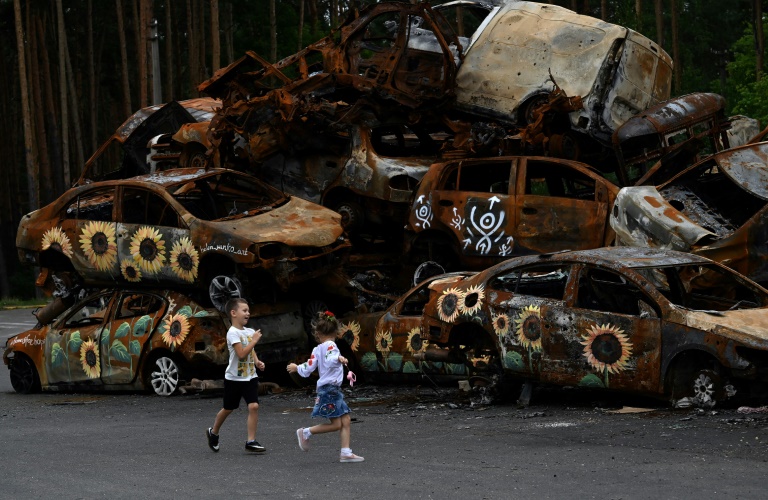
The invasion has left thousands dead, forced millions in Ukraine from their homes, and led to a deep rupture in economic ties between Russia and the West.

– Mandatory evacuations –

In response to economic sanctions against Moscow for the invasion, Russia has squeezed gas deliveries to Europe.

It announced on Tuesday that its oil deliveries through Ukraine had been halted.

Transneft, the Russian pipeline operator, said the Ukrainian side had stopped flows because it was “not receiving funds for these services”.

The Ukrainian side did not comment.

One of the impacted countries, Slovakia, confirmed flows had been halted for several days, and a spokesman for Bratislava refinery Slovnaft cited “technical problems at the bank level in connection with the payment of transit fees from the Russian side”.

The Kremlin lashed out after Ukrainian President Volodymyr Zelensky said in an interview that Europe should close their borders to Russians in response to the war. 

The Ukrainian leader told The Washington Post that current Western sanctions against Moscow were too weak, in a call that has been echoed by Russia’s neighbours Estonia and Finland.

“The irrationality of thinking in this case is off the charts,” Kremlin spokesman Dmitry Peskov told reporters.

On the frontlines, Ukraine said Russia was pursuing a campaign of bombardment of the east of the country that has left much of the industrial Donbas region in ruins.

Kyiv said Tuesday it had transported at least 3,000 people out of the battle-scarred eastern region of Donetsk since it ordered evacuations ahead of winter. 

The Ukrainian authorities are asking people to leave the area, as they do not expect to be able to provide it with heat during the cold winter months.

The presidency earlier said that three people had been killed and 19 more wounded in Russian shelling across the Donetsk region on Monday.

The head of the central region of Dnipro, meanwhile, said that 11 medical facilities had relocated there from the battle-torn Kharkiv and Lugansk regions further east.

“Those facilities transferred over 100 pieces of equipment and 10 ambulances,” Dnipro regional governor Valentyn Reznichenko said.

“The hospitals are restarting work. They are mostly receiving displaced people.”

Close Bitnami banner
Bitnami