World

Three Palestinians killed, 69 shot in Israeli West Bank raid

Three people were killed and dozens wounded Tuesday, the Palestinian health ministry said, as Israeli forces raided the occupied West Bank city of Nablus.

The Israeli military said a senior militant commander was among the dead.

The latest violence comes two days after deadly fighting between Israel and Islamic Jihad militants in the coastal enclave of Gaza was halted by a truce.

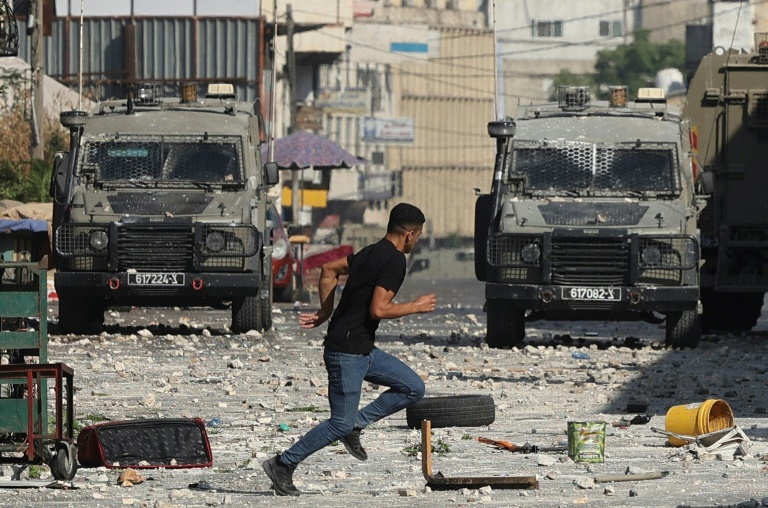
In the old city of Nablus, an AFP correspondent reported Palestinians trading gunfire with Israeli security forces.

The Palestinian Red Crescent Society said its medics treated 69 people for gunshot wounds across the Nablus area, at least four of them in critical condition.

“The terrorist Ibrahim al-Nabulsi was killed in the city of Nablus,” the Israeli army said in a statement, adding that “another terrorist who was staying in the house” also died.

Israeli forces said they launched a shoulder-fired missile at the house and detained four suspects in the raid.

Nabulsi was a commander of the Al-Aqsa Martyrs’ Brigade, one of the main militant groups present in the West Bank operating under the ruling Fatah party.

Following the deadly raid, the militant group said “the response will fit the crime”.

Hundreds of people gathered outside the Nablus hospital where Nabulsi was brought by a dozen gunmen, an AFP correspondent reported.

– Teen killed –

The Palestinian health ministry named those killed as Nabulsi, Islam Sabbouh and Hussein Taha.

Jamal Taha said his 16-year-old son was killed while they were walking to work.

“The army was in the old city. My son went ahead of me to the market, he was carrying his food. There was shooting and four of us were injured,” he told AFP.

Heavy gunfire was heard as dozens of Israeli military vehicles brought traffic in one of the West Bank’s largest cities to a standstill.

Clashes with the Israeli army also broke out in other parts of the city, as Palestinians hurled stones at the troops.

“A violent clash developed with dozens of rioters who threw stones and threw explosives at the forces, who responded by means of crowd dispersal and shooting. Several injuries were confirmed,” the army said.

“All the forces have left the city, there are no casualties to our forces,” it added.

Israeli security forces have conducted near-daily and often deadly operations in the West Bank in recent months, focusing on militants from the Islamic Jihad group.

– Deadly Gaza fighting –

On Friday, Israel launched what it called a “pre-emptive” aerial and artillery bombardment of Islamic Jihad positions in the Gaza Strip, leading militants in the coastal enclave to fire more than a thousand rockets in retaliation, according to the army.

An Egypt-brokered ceasefire reached Sunday ended three days of intense fighting that killed 46 Palestinians, 16 of them children, and wounded 360, according to Gaza’s health ministry.

Israeli Prime Minister Yair Lapid spoke by telephone with Egyptian President Abdel Fattah al-Sisi on Monday, with the premier praising Cairo for its role in “preserving regional stability and security.”

But following the Nablus raid, a spokesman for Palestinian president Mahmud Abbas said Israel is “not interested in calm and stability”.

“It’s exploiting and killing Palestinians for gains in internal Israeli politics,” Nabil Abu Rudeineh said, alluding to a snap Israeli general election called for November 1.

The Israeli prime minister said Monday the strikes on Gaza had hit the “entire senior military command of Islamic Jihad” in the Palestinian enclave.

Islamic Jihad said 12 of its members had been killed, including commanders Taysir al-Jabari and Khaled Mansour.

Israel insists that some civilians counted in the Palestinian toll were killed by Islamic Jihad rockets that fell short or misfired.
Russia launches Iranian satellite amid Ukraine war concerns

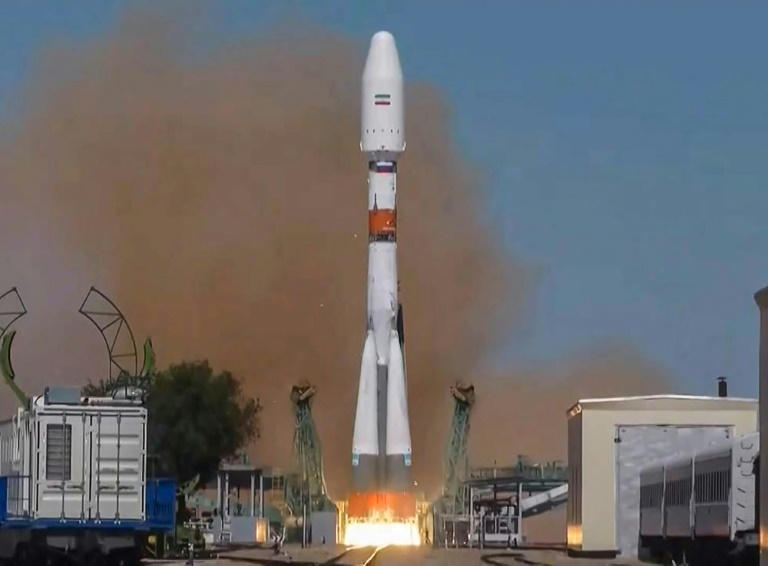
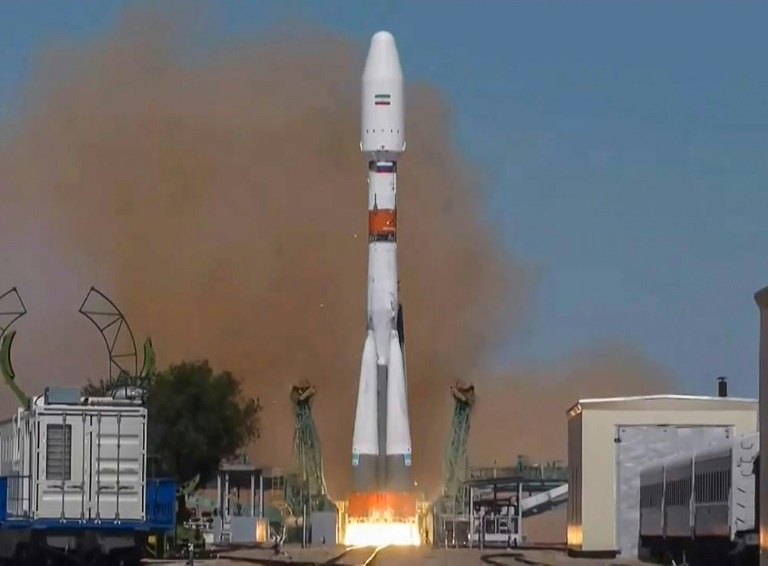
An Iranian satellite launched by Russia blasted off from Kazakhstan Tuesday and reached orbit amid controversy that Moscow might use it to boost its surveillance of military targets in Ukraine.

As Russia’s international isolation grows following Western sanctions over its invasion of Ukraine, the Kremlin is seeking to pivot Russia towards the Middle East, Asia and Africa and find new clients for the country’s embattled space programme.

Russian space chief Yury Borisov hailed “an important milestone in Russian-Iranian bilateral cooperation, opening the way to the implementation of new and even larger projects”, speaking at the Moscow-controlled Baikonur cosmodrome in the Kazakh steppe. 

Iran’s Telecommunications Minister Issa Zarepour, who also attended the launch, called the launch of the Khayyam satellite “historic” and “a turning point for the start of a new interaction in the field of space between our two countries”.

Iran, which has maintained ties with Moscow and refrained from criticism of the Ukraine invasion, has sought to deflect suspicions that Moscow could use Khayyam to spy on Ukraine.

Last week, The Washington Post quoted anonymous Western intelligence officials as saying that Russia “plans to use the satellite for several months or longer” to assist its war efforts before allowing Iran to take control.

But the Iran Space Agency (ISA) said, less than two hours after the satellite was launched on a Soyuz-2.1b rocket, that “ground stations of the Iran Space Agency” had already received “first telemetric data”. 

The space agency stressed on Sunday that the Islamic republic would control the satellite “from day one” in an apparent reaction to the Post’s report.

“No third country is able to access the information” sent by the satellite due to its “encrypted algorithm”, it said.

The purpose of Khayyam is to “monitor the country’s borders”, enhance agricultural productivity and monitor water resources and natural disasters, according to the space agency.

– ‘Long-term cooperation’ –

Khayyam, apparently named after the 11th-century Persian polymath Omar Khayyam, will not be the first Iranian satellite that Russia has put into space. 

In 2005, Iran’s Sina-1 satellite was deployed from Russia’s Plesetsk cosmodrome.

Iran is currently negotiating with world powers, including Moscow, to salvage a 2015 deal aimed at reining in Tehran’s nuclear ambitions.

The United States — which quit the landmark Joint Comprehensive Plan of Action or JCPOA in 2018 under then-president Donald Trump — has accused Iran of effectively supporting Russia’s war against Ukraine while adopting a “veil of neutrality”. 

Russian President Vladimir Putin met Iranian counterpart Ebrahim Raisi and Supreme Leader Ayatollah Ali Khamenei in Tehran last month — one of his few trips abroad since Moscow’s February 24 invasion. 

Iran’s Khamenei called for “long-term cooperation” with Russia during their meeting, and Tehran has refused to join international condemnation of Moscow’s invasion of its pro-Western neighbour.

Iran insists its space programme is for civilian and defence purposes only, and does not breach the 2015 nuclear deal, or any other international agreement. 

Western governments worry that satellite launch systems incorporate technologies interchangeable with those used in ballistic missiles capable of delivering a nuclear warhead, something Iran has always denied wanting to build.

Iran successfully put its first military satellite into orbit in April 2020, drawing a sharp rebuke from the United States.

In a statement on the eve of the Khayyam launch, ISA praised “the high reliability factor of the Soyuz launcher”.

Borisov, who last month replaced bombastic nationalist Dmitry Rogozin as head of the Russian space agency Roscosmos, has acknowledged that the national space industry is in a “difficult situation” amid tensions with the West.

Russia will continue its space programme but end activities at the International Space Station — an outlier of cooperation between Moscow and the West — after 2024, he said.

Russia launches Iranian satellite amid Ukraine war concerns

An Iranian satellite launched by Russia blasted off from Kazakhstan Tuesday and reached orbit amid controversy that Moscow might use it to boost its surveillance of military targets in Ukraine.

As Russia’s international isolation grows following Western sanctions over its invasion of Ukraine, the Kremlin is seeking to pivot Russia towards the Middle East, Asia and Africa and find new clients for the country’s embattled space programme.

Russian space chief Yury Borisov hailed “an important milestone in Russian-Iranian bilateral cooperation, opening the way to the implementation of new and even larger projects”, speaking at the Moscow-controlled Baikonur cosmodrome in the Kazakh steppe. 

Iran’s Telecommunications Minister Issa Zarepour, who also attended the launch, called the launch of the Khayyam satellite “historic” and “a turning point for the start of a new interaction in the field of space between our two countries”.

Iran, which has maintained ties with Moscow and refrained from criticism of the Ukraine invasion, has sought to deflect suspicions that Moscow could use Khayyam to spy on Ukraine.

Last week, The Washington Post quoted anonymous Western intelligence officials as saying that Russia “plans to use the satellite for several months or longer” to assist its war efforts before allowing Iran to take control.

But the Iran Space Agency (ISA) said, less than two hours after the satellite was launched on a Soyuz-2.1b rocket, that “ground stations of the Iran Space Agency” had already received “first telemetric data”. 

The space agency stressed on Sunday that the Islamic republic would control the satellite “from day one” in an apparent reaction to the Post’s report.

“No third country is able to access the information” sent by the satellite due to its “encrypted algorithm”, it said.

The purpose of Khayyam is to “monitor the country’s borders”, enhance agricultural productivity and monitor water resources and natural disasters, according to the space agency.

– ‘Long-term cooperation’ –

Khayyam, apparently named after the 11th-century Persian polymath Omar Khayyam, will not be the first Iranian satellite that Russia has put into space. 

In 2005, Iran’s Sina-1 satellite was deployed from Russia’s Plesetsk cosmodrome.

Iran is currently negotiating with world powers, including Moscow, to salvage a 2015 deal aimed at reining in Tehran’s nuclear ambitions.

The United States — which quit the landmark Joint Comprehensive Plan of Action or JCPOA in 2018 under then-president Donald Trump — has accused Iran of effectively supporting Russia’s war against Ukraine while adopting a “veil of neutrality”. 

Russian President Vladimir Putin met Iranian counterpart Ebrahim Raisi and Supreme Leader Ayatollah Ali Khamenei in Tehran last month — one of his few trips abroad since Moscow’s February 24 invasion. 

Iran’s Khamenei called for “long-term cooperation” with Russia during their meeting, and Tehran has refused to join international condemnation of Moscow’s invasion of its pro-Western neighbour.

Iran insists its space programme is for civilian and defence purposes only, and does not breach the 2015 nuclear deal, or any other international agreement. 

Western governments worry that satellite launch systems incorporate technologies interchangeable with those used in ballistic missiles capable of delivering a nuclear warhead, something Iran has always denied wanting to build.

Iran successfully put its first military satellite into orbit in April 2020, drawing a sharp rebuke from the United States.

In a statement on the eve of the Khayyam launch, ISA praised “the high reliability factor of the Soyuz launcher”.

Borisov, who last month replaced bombastic nationalist Dmitry Rogozin as head of the Russian space agency Roscosmos, has acknowledged that the national space industry is in a “difficult situation” amid tensions with the West.

Russia will continue its space programme but end activities at the International Space Station — an outlier of cooperation between Moscow and the West — after 2024, he said.

Papua New Guinea prime minister Marape re-elected

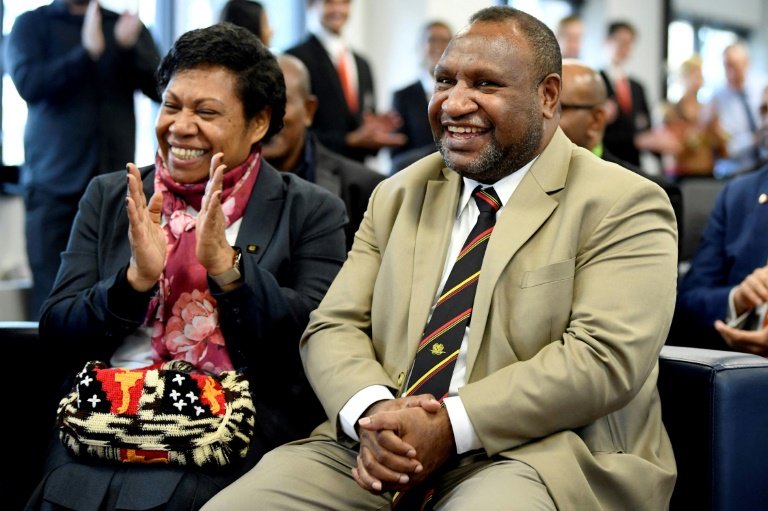
Papua New Guinea’s Prime Minister James Marape was sworn in for a second term Tuesday, after an election hit by violence and alleged corruption that also ended a five-year absence of women in parliament.

Marape won support from a majority of members in the Pacific island nation’s newly elected parliament.

In a wide-ranging first speech to the new parliament, he reiterated his pledge to make Papua New Guinea the “richest black Christian nation on Earth” and welcomed the unanimous parliamentary vote that secured his leadership. 

“We are one, one people, one country, one nation,” Marape said.

“And I just want to appreciate the fact that today, the parliament came in total unison.”

Addressing concerns — raised by Commonwealth election observer teams — over bribery allegations and missing names from voter rolls, Marape also flagged a review of polling. 

“We must reform our electoral processes. It is evident that maintaining the status quo on this is no longer an option.”

Among the newly elected members were Rufina Peter and Kessy Sawang, the first female candidates confirmed to have secured a seat in parliament. 

Their victories marked a return of women to national politics after none won seats in the previous election in 2017. 

It is a “proud moment,” said Peter O’Neill, leader of the People’s National Congress — of which Rufina Peter is a member.

“Our mothers, girls and women in PNG and in fact the whole Pacific region have a true champion, an experienced woman in Parliament,” O’Neill said in a statement.

Voting ended on Friday but the count is still underway for some seats in the mountainous, forest-covered country, which is rich in resources but suffers from widespread poverty.

About 10,000 police, army and corrections services personnel were mobilised for the vote.

In one politically motivated attack on July 26, a machete-wielding gang chased down two victims outside a counting centre, leaving one with a traumatic brain injury and another with a wounded limb.

In an ethnically diverse country with more than 800 languages, voters traditionally focus on the material benefits candidates can bring to their communities.

US lifts policy requiring asylum-seekers to wait in Mexico

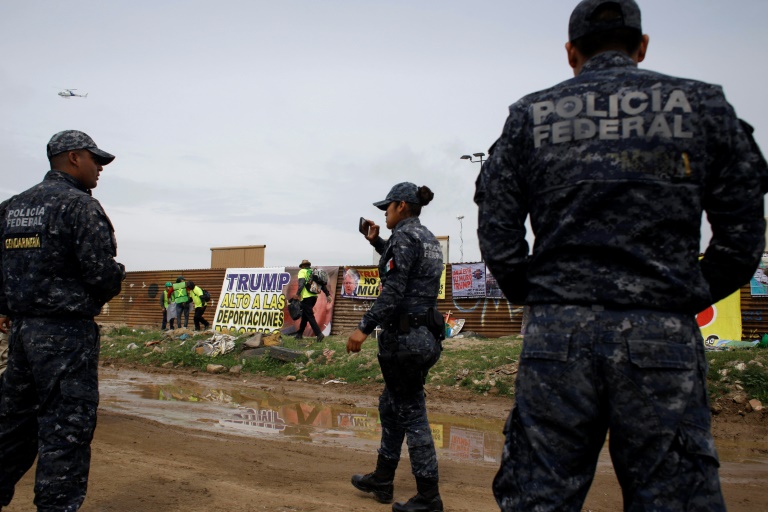
The US Department of Homeland Security announced Monday night it will end a Trump-era policy requiring asylum-seekers to wait in Mexico while their applications play out in court.

The DHS announcement comes hours after a judge lifted an injunction that had prevented US President Joe Biden’s administration from ending the so-called “Remain in Mexico” policy.

Under the policy, instituted in 2019 under former president Donald Trump, tens of thousands of asylum-seekers were sent across the border until required to appear in the United States for their immigration hearings. 

Critics called the program cruel and dangerous, with vulnerable people sometimes forced to wait in border towns the United States had advised its own citizens against visiting due to violence. 

The policy will be rolled back “in a quick, and orderly, manner,” the department wrote in a statement. 

No one else will be enrolled and those who cross the border for their court dates will no longer be sent back to Mexico afterwards, the DHS added.

The Migrant Protection Protocols (MPP), as the policy is officially called, “has endemic flaws, imposes unjustifiable human costs, and pulls resources and personnel away from other priority efforts to secure our border,” DHS said. 

Soon after taking office, Biden attempted to fulfill a campaign promise to end the border measure as part of what he called a more humane approach to immigration. 

But a group of Republican-governed states led by Texas sued the administration and a US District Court ordered the policy to be reinstated.

The case eventually ended up before the Supreme Court, which ruled on June 30 that Biden had the authority to end the program. 

From the start of the policy in January 2019 until its initial suspension under Biden, at least 70,000 people were sent to Mexico, according to the American Immigration Council. 

Human Rights First said there were 1,544 publicly documented cases of murder, rape, torture, kidnapping or other assaults of individuals sent across the border under Remain in Mexico between January 2019 and 2021, with multiple people, including at least one child, dying.

The Trump administration had argued a “zero tolerance” approach was needed to stem illegal immigration to the United States.

Under the resurrected policy, from December 2021 until June 2022, 9,563 people were enrolled in the policy, most of whom were not from Mexico but Nicaragua.

During Biden’s tenure, more than 200,000 people attempting to enter the country illegally have been stopped at the border each month and sent back, either under Remain in Mexico or a separate, Covid-related policy blocking people at the border.

Japanese fashion designer Issey Miyake dies at 84

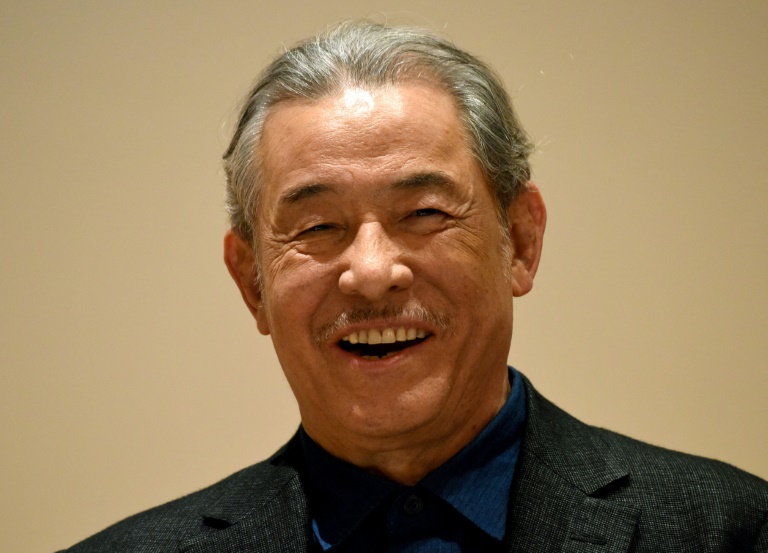
Japanese fashion designer Issey Miyake, whose global career spanned more than half a century, has died aged 84, an employee at his office in Tokyo told AFP on Tuesday.

“He died on the evening of August 5,” she said over the telephone, without giving further details of his death and declining to be named.

Miyake’s funeral had already taken place, with “only relatives participating” in line with his wishes, and there were no plans for a public ceremony, she said.

Public broadcaster NHK and other Japanese media reported the news of his passing, with the Asahi Shimbun newspaper and other outlets saying he had died of liver cancer.

Miyake — who pioneered high-tech, comfortable clothing — was part of a wave of young Japanese designers who made their mark in Paris from the mid-1970s.

His fashion house nurtured many talented young designers, and was known for innovative and dazzling catwalk shows.

After two years of showcasing collections online or with installations during the Covid-19 pandemic, the brand made its live comeback at Paris Fashion Week in June with a men’s show featuring models, dancers and acrobats.

Born in Hiroshima in 1938, he was seven years old when the United States dropped an atomic bomb on the city in August 1945.

He survived the blast, which killed an estimated 140,000 people on impact and led to the end of World War II after the bombing of Nagasaki three days later.

“I have never chosen to share my memories or thoughts of that day,” Miyake wrote in the New York Times in 2009.

“I have tried, albeit unsuccessfully, to put them behind me, preferring to think of things that can be created, not destroyed, and that bring beauty and joy.”

The designer studied at an art school in Tokyo, and moved to Paris in 1965, where he studied at the elite Ecole de la Chambre Syndicale de la Couture Parisienne.

He established the Miyake Design Studio in Tokyo in 1970, and soon afterwards opened his first Paris boutique.

By the 1980s, his career was in full swing as he experimented with materials from plastic to metal wire and even artisanal Japanese paper.

Among his inventions were the “Pleats Please” line, permanently pleated items which do not crease, the futuristic triangles of his “Bao Bao” bag, and his “A-POC (A Piece Of Cloth)” concept — using computers to cut whole garments with no seams.

He also made more than 100 black turtlenecks for Apple co-founder Steve Jobs.

Mine-riddled French island becomes unlikely walkers' paradise

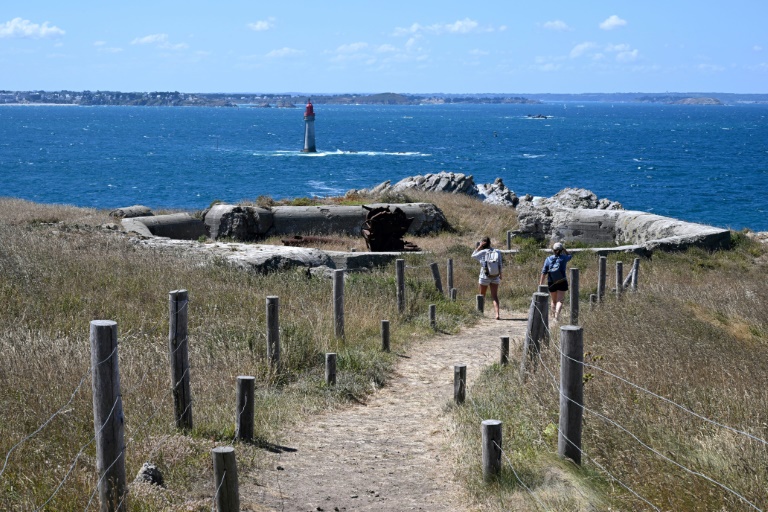
Every year, thousands of day-trippers make the short boat journey from France’s northern coast to the island of Cezembre, marvelling at the spectacular maritime views and flourishing wildlife.

But they better tread carefully and stick to the path, as almost all the island remains perilous due to unexploded munitions from World War II.

Cezembre opened to visits only in 2018, over seven decades after the end of World War II, after extensive demining efforts allowed the opening of a marked path for visitors.

However, the area safe for visitors makes up just three percent of the island, which experts say was the most bombed area of all of World War II in terms of the number of hits per square metre.

“It’s magnificent!” enthused Maryse Wilmart, a 60-year-old visitor from the southwestern town of La Rochelle, contemplating the sandy beach with turquoise waters and looking out to the ramparts of the port city of Saint-Malo beyond.

“But when you see all that behind us… Can you even imagine what happened here?” she asked, pointing to the barbed wire and signs warning “Danger! Ground not cleared beyond the fences!”

– ‘Like Stalingrad’ –

A visitor needs to go back 80 years to understand what happened on this usually uninhabited rocky outcrop.

In 1942, the occupying Nazi German army seized the strategically important island and installed bunkers and artillery pieces.

On August 17, 1944, Saint-Malo was liberated by the Americans but the Nazi commander of Cezembre, leading some 400 men, refused to surrender.

There then followed a devastating bombardment from the air by the Allies.

“It is said that per square metre it sustained the greatest number of bombardments of all the theatres of operation of World War II,” said Philippe Delacotte, author of the book “The Secrets of the Island of Cezembre”.

“There were between 4,000 and 5,000 bombs dropped”, some of which contained napalm, he said.

On September 2, 1944, the white flag was finally raised and some 350 exhausted men surrendered. 

“Some survivors claimed it was like Stalingrad,” Delacotte said. The island was completely devastated, to the extent that its altitude even dropped because of the bombs.

After the war, the island became the property of the French ministry of defence and access was totally closed, with the first demining efforts starting in the 1950s.

It was handed over to a public coastal conservation body, the Conservatoire du Littoral, in 2017.

– ‘Recolonised and revegetated’ –

The path of about 800 metres (875 yards) lets visitors wander between rusty cannons and bunkers, with breathtaking views towards Cap Frehel and the Pointe de la Varde.

Since the opening of the path, “there has been no accident” even if “there are always people who want to go beyond the authorised section,” said Jean-Christophe Renais, a coast guard.

Over time, colonies of seabirds have reappeared, including seagulls, cormorants, razorbills and guillemots.

“Biodiversity is doing wonderfully, everything has been recolonised and revegetated, birds have taken back possession of the site,” said Gwenal Hervouet, who manages the site for Conservatoire du Littoral.

“It’s just a joy.”

Because of the focus on restoring wildlife, the trail was partially closed in April “to maximise the chances of success and the flight of peregrine falcon chicks,” said local conservation activist Manon Simonneau.

Some walkers say they hope the trail will be lengthened to allow a complete tour of the island, but according to the Conservatoire there is little chance of this — the cost of further demining would be astronomical, so it is now birds and nature that are the masters of Cezembre.

Taiwan accuses China of preparing invasion, holds defence drill

Taiwan held an artillery drill Tuesday simulating defence against an attack as its top diplomat accused Beijing of preparing to invade the island after days of massive Chinese war games.

China launched its largest-ever air and sea exercises around Taiwan last week in a furious response to a visit by US House Speaker Nancy Pelosi, the highest-ranking American official to visit the self-ruled island in decades. 

Taiwan lives under the constant threat of invasion by China, which views its neighbour as part of Chinese territory to be seized one day, by force if necessary.

“China has used the drills in its military playbook to prepare for the invasion of Taiwan,” foreign minister Joseph Wu told a press conference in Taipei on Tuesday, accusing Beijing of using Pelosi’s visit as a pretext for military action.

“China’s real intention is to alter the status quo in the Taiwan Strait and entire region.”

The Chinese military said its Taiwan drills continued Tuesday and involved air and sea units.

The Eastern Theater command of the People’s Liberation Army said in a statement that it was conducting training exercises around the island, “focusing on joint blockade and joint support operations”.

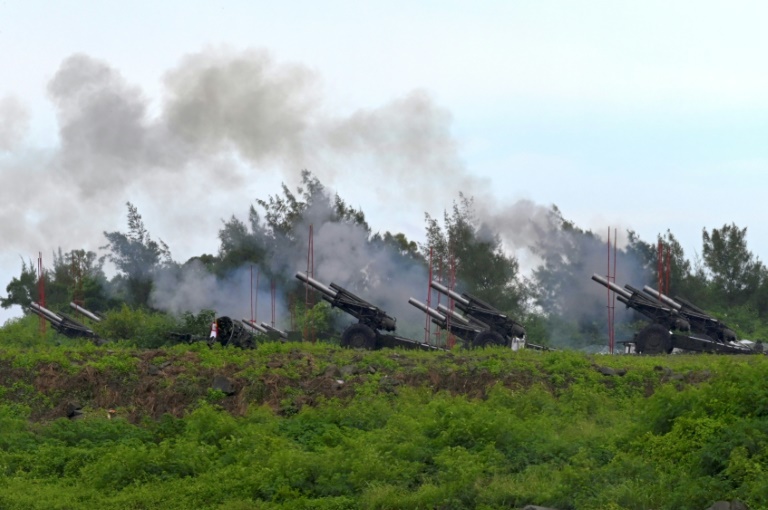
Taipei’s drill in the southern county of Pingtung included the firing of target flares and artillery, lasting just under an hour, said Lou Woei-jye, spokesman for Taiwan’s Eighth Army Corps.

Soldiers fired from howitzers tucked into the coast, hidden from view of the road that leads to popular beach destination Kenting.

The drills, which will also take place Thursday, included the deployment of hundreds of troops and about 40 howitzers, the army said. 

Tuesday’s exercise attracted a crowd of onlookers.

“We need to have some countermeasures against mainland China’s blockade,” said one of the spectators, who only gave his surname Chen.

“Conducting military drills will also let them know Taiwan is prepared. I hope both sides can have some restraint.”

On Monday, spokesman Lou told AFP the drills were previously scheduled and were not in response to China’s exercises. 

The island routinely stages military drills simulating defence against a Chinese invasion.

But the latest drill prompted an ominous warning from Beijing, which regularly unleashes fiery rhetoric against Taiwan’s independence hopes.

“Any conspiracy to go against the trend of history and resist reunification through arms… will end in failure like a mantis trying to stop a chariot,” foreign ministry spokesman Wang Wenbin told a regular briefing Tuesday.

– ‘Not worried’ –

The anti-landing exercise took place after China extended its own joint sea and air drills around Taiwan on Monday, but Washington said it did not expect an escalation from Beijing.

“I’m not worried, but I’m concerned they’re moving as much as they are. But I don’t think they’re going to do anything more than they are,” Biden told reporters at Dover Air Force Base.

Taiwan’s Wu on Tuesday condemned Beijing for pressing on with military exercises around the island, accusing them of trying to control the Taiwan Strait and waters in the wider Asia-Pacific region.

“It is conducting large-scale military exercises and missile launches, as well as cyber-attacks, a disinformation campaign and economic coercion in order to weaken public morale in Taiwan,” he said.

Wu went on to thank Western allies, including the US, for standing up to China.

“It also sends a clear message to the world that democracy will not bow to the intimidation of authoritarianism,” he said.

Taiwan has insisted that no Chinese warplanes or ships entered its territorial waters — within 12 nautical miles of land — during Beijing’s drills.

But its defence ministry said Tuesday the extension of the drills showed China’s “threat of force has not diminished” around the island and all of its units would “maintain combat readiness”.

The Chinese military released a video last week of an air force pilot filming the island’s coastline from his cockpit, showing how close it came to Taiwan’s shores.

Its ships and planes have also regularly crossed the median line —  an unofficial demarcation between China and Taiwan that the former does not recognise — since drills began last week.

On Tuesday, the Chinese military released more details about the anti-submarine drills it had conducted a day earlier around the island.

The Eastern Theater command said the exercises were aimed at enhancing the ability of air and sea units to work together while hunting submarines.

The scale and intensity of China’s drills — as well as its withdrawal from key talks on climate and defence — have triggered outrage in the United States and other democracies.

But foreign ministry spokesman Wang on Monday defended Beijing’s behaviour as “firm, forceful and appropriate” to American provocation. 

“We urge the US to do some earnest reflection, and immediately correct its mistakes,” he told a regular briefing.

Issey Miyake: seamless innovator of avant-garde style

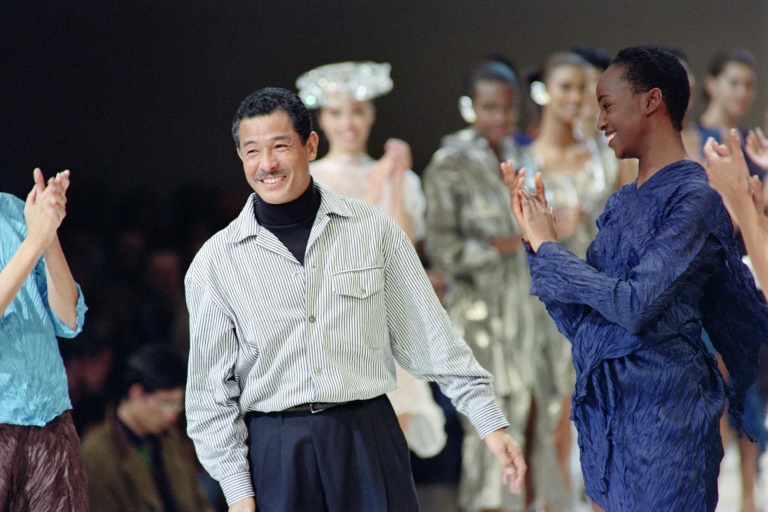
Fashion innovator Issey Miyake shook up Parisian style with his highly wearable avant-garde designs, saying he was driven to create clothes that “bring beauty and joy” after witnessing the horrors of Hiroshima.

Alongside Rei Kawakubo and Yohji Yamamoto, Miyake was part of a wave of young Japanese designers who made their mark in the French capital from the mid-1970s, following the lead of fashion greats Kenzo Takada and Hanae Mori.

Throughout his global career spanning more than half a century, he pioneered high-tech, comfortable clothing — side-stepping the grandiosity of haute couture in favour of what he called simply “making things”.

Among his inventions were the “Pleats Please” line, permanently pleated items which do not crease, refreshing an old-fashioned concept to exude fluidity and comfort.

The much-copied futuristic triangles of Miyake’s geometric “Bao Bao” bag complemented countless chic outfits, and he made more than 100 black turtlenecks for Apple co-founder Steve Jobs.

Miyake also wowed runway audiences with his “A-POC (A Piece Of Cloth)” concept, using computer programming to cut whole garments with no seams.

“When I grow weary with where I’m going, or when I stumble, I’ll return to the theme of ‘A Piece of Cloth’,” Miyake said in 2006 after winning the prestigious Kyoto Prize.

“From ancient times, in Greece or Africa, every culture has started (making clothes) from a single piece of cloth, or skin,” he explained.

– Hiroshima survivor –

Born in Hiroshima in 1938, Miyake was just seven years old when the United States dropped an atomic bomb on the city in August 1945, obliterating everything he knew.

He survived the blast, which killed an estimated 140,000 people on impact and led to the end of World War II after the bombing of Nagasaki three days later.

Although the bombing left him with a lifelong limp, he rarely spoke of his trauma, once breaking his silence in a 2009 New York Times article calling for nuclear disarmament.

“When I close my eyes, I still see things no one should ever experience: a bright red light, the black cloud soon after, people running in every direction trying desperately to escape,” he wrote.

“I remember it all. Within three years, my mother died from radiation exposure.”

In the article, he urged Barack Obama to visit Hiroshima, a wish realised in 2016 when the then US president made a historic trip to the city.

“I have never chosen to share my memories or thoughts of that day. I have tried, albeit unsuccessfully, to put them behind me, preferring to think of things that can be created, not destroyed, and that bring beauty and joy,” Miyake wrote.

– ‘Open to everything’ –

Having graduated from Tama Art University in Tokyo, Miyake moved to Paris in 1965, where he studied at the elite Ecole de la Chambre Syndicale de la Couture Parisienne.

As a cub designer he worked under Guy Laroche and Givenchy, but his outlook was also influenced by the huge student-led uprising of May 1968.

Seeing protests engulf the French capital made him realise “the world was moving beyond the needs of haute couture for the few and towards simple more universal elements such as jeans and T-shirts,” Miyake told CNN in 2016.

He established the Miyake Design Studio in Tokyo in 1970, and soon afterwards opened his first Paris boutique.

By the 1980s, his career was in full swing as he experimented with materials from plastic to metal wire and even artisanal Japanese paper.

Teamwork was essential to Miyake, who preferred the anonymity of his research and development lab full of textile scientists and engineers to the bright lights of the catwalk.

“You always see things in a different way when you allow others to become part of a creative process,” he told the New York Times.

He pulled back from designing his Paris collections at the turn of the century and has since given a series of talented young designers their big break.

But he continued to oversee the brand, and his obsession with technology endured — with everything from fabrics to stitching explained in minute detail in the notes of every catwalk show.

Miyake is perhaps especially revered in France, whose former culture minister Jack Lang came to Tokyo in 2016 to award him the Legion of Honour at a major retrospective.

Lang, who still wears Miyake pieces he bought many years ago, described the designer in October 2021 as a “man of a deep humanity, open to everything”.

“Issey Miyake is a researcher, a discoverer, a real inventor who conceived of and used new materials and textures the world had never seen,” he told AFP.

Markets mostly up as focus turns to inflation data

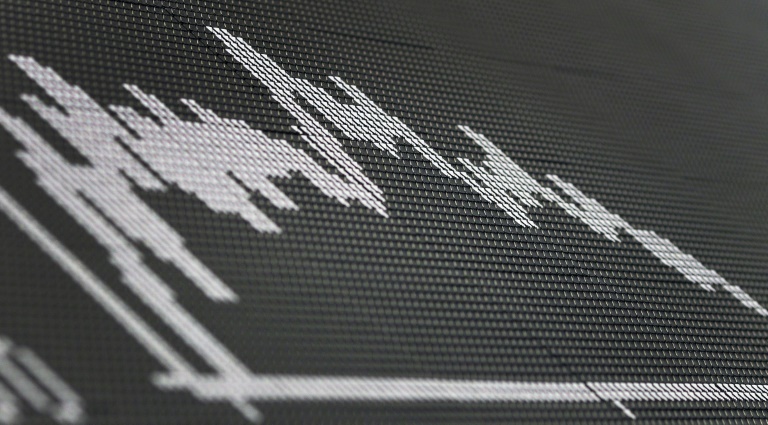
Most markets rose Tuesday but investors moved cautiously ahead of US inflation data later in the week, after a jobs report suggested the Federal Reserve would likely need to continue its sharp interest rate hikes to tame runaway prices.

A rally across global markets from June lows appeared to have hit the buffers after Friday’s forecast-busting employment reading showed the world’s top economy remained resilient but meant more monetary tightening was on the cards.

There had been a hope that recent weak data — including one showing the economy contracted for two straight quarters — would allow the bank to take its foot off the pedal in lifting borrowing costs, and possibly begin cutting in 2023.

Now, investors are on edge ahead of Wednesday’s figures, with some observers warning that an above-estimate reading on inflation, which is already at a four-decade high, could spur another sharp market sell-off.

There is a growing expectation that central bank interest rate hikes will go too far and tip the global economy into recession.

Saira Malik, at investment manager Nuveen, told Bloomberg Television the losses could kick in when investors realise “the Fed is not going to pivot on interest-rate hikes in early 2023, inflation should remain pretty persistent and rate hikes should continue”.

Wall Street provided a glum lead as tech firms took a hit following a disappointing earnings report from chip giant Nvidia caused by lower-than-expected gaming income, which was seen as a warning that the end of the downturn was still some way off.

“While it’s tempting to buy into the narrative that we’ve seen the lows of the year, none of the price action thus far serves to support that conclusion,” said CMC Markets analyst Michael Hewson.

“Nvidia’s profit warning merely serves to underline the challenges facing, not only the tech sector, but the wider global economy.”

Asian equities fluctuated in the morning but improved as the day progressed.

Shanghai, Sydney, Seoul, Wellington, Taipei, Bangkok, Jakarta and Manila were in positive territory but Tokyo fell.

Hong Kong reversed a morning rally led by developers after the government denied claims it was considering removing an extra stamp duty for mainland Chinese buying property in the city.

London was slightly higher in the morning, though Paris and Frankfurt edged down.

Oil prices fell and remain around six-month lows as recession fears mount and traders fret over the impact on demand. They are also keeping tabs on Iran nuclear talks after the European Union submitted a “final text” at negotiations to salvage a 2015 deal.

An agreement could open the way for Tehran to resume sales of crude on international markets, partly helping to plug a hole left by the ban on Russian exports following the invasion of Ukraine. 

However, OANDA’s Edward Moya said that “it seems unlikely a breakthrough will happen anytime soon. Tehran seems like they are willing to negotiate, but an imminent decision to agree to the EU’s proposal seems unlikely”.

– Key figures at around 0810 GMT –

Tokyo – Nikkei 225: DOWN 0.9 percent at 27,999.96 (close)

Hong Kong – Hang Seng Index: DOWN 0.2 percent at 20,003.44 (close)

Shanghai – Composite: UP 0.3 percent at 3,247.43 (close)

London – FTSE 100: UP 0.1 percent at 7,486.01

Euro/dollar: UP at $1.0209 from $1.0194 Monday

Pound/dollar: UP at $1.2083 from $1.2079

Euro/pound: UP at 84.49 pence from 84.35 pence

Dollar/yen: DOWN at 134.94 yen from 134.98 yen

West Texas Intermediate: DOWN 0.8 percent at $90.01 per barrel

Brent North Sea crude: DOWN 0.8 percent at $95.93 per barrel

New York – Dow: UP 0.1 percent at 32,832.54 (close)

Close Bitnami banner
Bitnami