World

Record rainfall, flooding in Seoul kill seven

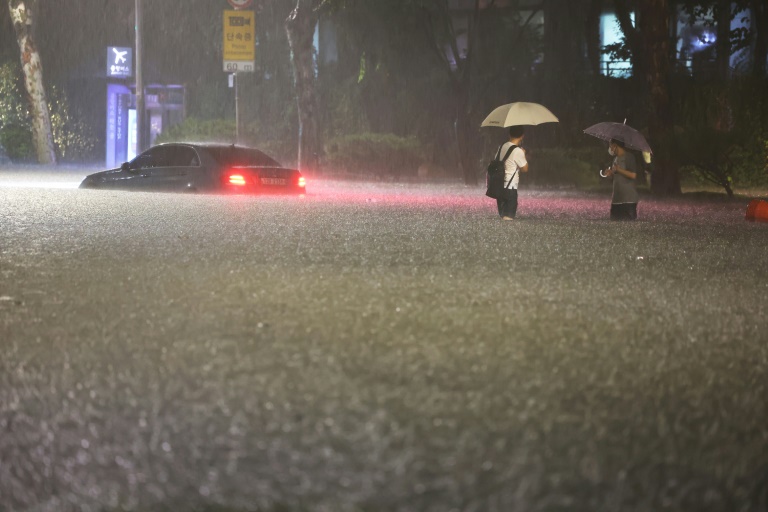
Subway stations and major roads were underwater in the South Korean capital Seoul after record-breaking rains caused severe flooding, with at least seven people dead and seven more missing, officials said Tuesday.

Authorities warned there was more rain to come even as emergency workers struggled to clear the hulks of flooded cars, which AFP reporters saw strewn across major intersections throughout the city.

Dramatic images shared on social media late Monday showed people wading through waist-deep water, metro stations overflowing, and cars half-submerged in Seoul’s posh Gangnam district, which was particularly hard-hit when torrential rain battered the city.

The downpour that began Monday is the heaviest rainfall in South Korea in 80 years, according to Seoul’s Yonhap News Agency.

“At least seven people died in the Seoul metropolitan area, while seven others are missing, due to heavy rain,” an official at Seoul’s interior ministry told AFP.

Local reports said three people living in a banjiha — cramped basement flats of the kind made famous in Bong Joon-ho’s Oscar-winning “Parasite” — including a teenager, died as their apartment was inundated by floodwaters. 

– Climate change –

President Yoon Suk-yeol blamed the record rainfall on climate change and said the government needed to adapt.

“The government must review the current disaster management system from square one, given that abnormal weather caused by climate change is becoming a part of everyday life,” he said.

“We should respond all out until the situation is over in order to protect the precious people’s lives and property and take steps until the end, until the people feel that they are enough.”

But Yoon, who has seen his approval rating plummet to just 24 percent since taking office in May, according to the latest Gallup Korea poll, was facing online criticism for failing to go to the government’s emergency control center late Monday.

Local media reported his absence was due to flooding in his area, but Yoon’s office denied that was a factor, saying he had decided to stay home as his team, including the prime minister, already had the response in hand.

Yoon still lives in his pre-election accommodation, having declined to move into the presidential Blue House, which he has decried as “imperial” and opened to the public as a park.

“Why did you leave the Blue House” became a trending topic online, as netizens shared videos purportedly showing flooding at his residence alongside mocking comments.

– Gangnam floods –

Gangnam, a wealthy district in southern Seoul — featured in Psy’s 2012 K-pop hit “Gangnam Style” — received 326.5 millimetres of rainfall on Monday, data from the Korea Meteorological Administration showed.

“Gangnam is said to be the centre of the economy and well developed, but it is ironic that it is so vulnerable to natural disasters,” 45-year-old office worker Moon Yong-chun told AFP as he tried to rescue his car from a flooded car park. 

“I am shocked by the damage. The same thing happened around 11 years ago, and it is sad that the government has not taken any measures,” he added.

The Korea Meteorological Administration warned South Koreans to “be careful of the heavy rain, gusts, as well as thunder and lightning in the central region” for the next few days.

The KMA also said that up to 300 more millimetres of rain was forecast for the central region that includes Seoul through Thursday.

Transportation in South Korea remained highly disrupted Tuesday, with many roads and tunnels closed for safety reasons, Yonhap reported.

Power outages were also reported across the capital late Monday, while some operation of the Seoul metro and railway services was temporarily disrupted by the heavy rain.

Hiking trails at many of the country’s national parks were closed and passenger ferry routes, including from Incheon port, were suspended.
Russia launches Iranian satellite amid Ukraine war concerns

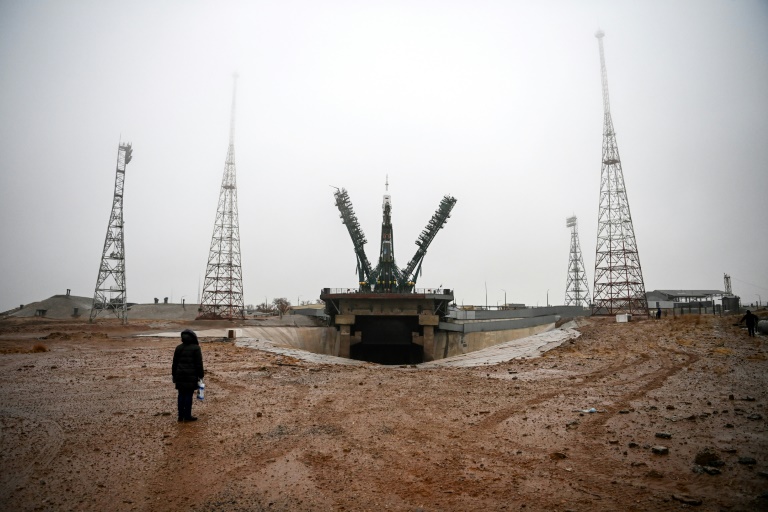
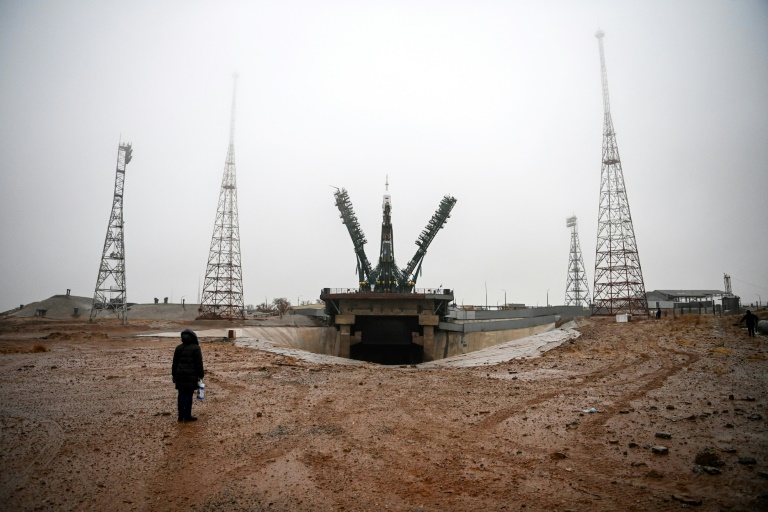
An Iranian satellite launched by Russia blasted off from Kazakhstan early Tuesday and went into orbit amid controversy that Moscow might use it to improve its surveillance of military targets in Ukraine.

A live feed from Russian space agency Roscosmos showed the launch of the Soyuz-2.1b rocket carrying the Khayyam satellite from the Russia-controlled Baikonur cosmodrome at the scheduled time of 0552 GMT.

The Russian mission control confirmed its subsequent entry into orbit. 

Iran, which has maintained ties with Moscow and refrained from criticism of the Ukraine invasion, has sought to deflect suspicions that Moscow could use Khayyam to spy on Ukraine.

Last week, US daily The Washington Post quoted anonymous Western intelligence officials as saying that Russia “plans to use the satellite for several months or longer” to assist its war efforts before allowing Iran to take control.

But the Iranian Space Agency said on Sunday that the Islamic republic would control the Khayyam satellite “from day one”.

“No third country is able to access the information” sent by the satellite due to its “encrypted algorithm,” it said.

The purpose of Khayyam is to “monitor the country’s borders”, enhance agricultural productivity and monitor water resources and natural disasters, the space agency said.

In a pre-launch statement on Monday ISA praised “the high reliability factor of the Soyuz launcher”.

“Due to Khayyam satellite’s weight of more than half a ton and the very high success rate of the Soyuz launcher, the launch of the Khayyam satellite has been entrusted to Russia,” the statement on the space agency’s website noted. 

As Moscow’s international isolation grows under the weight of Western sanctions over Ukraine, the Kremlin is seeking to pivot Russia towards the Middle East, Asia and Africa and find new clients for the country’s embattled space programme.

Russian President Vladimir Putin met Iranian counterpart Ebrahim Raisi and Supreme Leader Ayatollah Ali Khamenei in Tehran last month — one of his few trips abroad since the invasion began. 

– ‘Long-term cooperation’ –

Khayyam, apparently named after the 11th-century Persian polymath Omar Khayyam, will not be the first Iranian satellite that Russia has put into space — in 2005, Iran’s Sina-1 satellite was deployed from Russia’s Plesetsk cosmodrome.

Iran is currently negotiating with world powers, including Moscow, to salvage a 2015 deal aimed at reining in Tehran’s nuclear ambitions.

The United States — which quit the landmark Joint Comprehensive Plan of Action or JCPOA under then-president Donald Trump in 2018 — has accused Iran of effectively supporting Russia’s war against Ukraine while adopting a “veil of neutrality”. 

During his meeting with Putin last month, Iran’s Khamenei called for “long-term cooperation” with Russia, and Tehran has refused to join international condemnation of Moscow’s invasion of its pro-Western neighbour.

Iran insists its space programme is for civilian and defence purposes only, and does not breach the 2015 nuclear deal, or any other international agreement. 

Western governments worry that satellite launch systems incorporate technologies interchangeable with those used in ballistic missiles capable of delivering a nuclear warhead, something Iran has always denied wanting to build.

Iran successfully put its first military satellite into orbit in April 2020, drawing a sharp rebuke from the United States.

Russia launches Iranian satellite amid Ukraine war concerns

An Iranian satellite launched by Russia blasted off from Kazakhstan early Tuesday and went into orbit amid controversy that Moscow might use it to improve its surveillance of military targets in Ukraine.

A live feed from Russian space agency Roscosmos showed the launch of the Soyuz-2.1b rocket carrying the Khayyam satellite from the Russia-controlled Baikonur cosmodrome at the scheduled time of 0552 GMT.

The Russian mission control confirmed its subsequent entry into orbit. 

Iran, which has maintained ties with Moscow and refrained from criticism of the Ukraine invasion, has sought to deflect suspicions that Moscow could use Khayyam to spy on Ukraine.

Last week, US daily The Washington Post quoted anonymous Western intelligence officials as saying that Russia “plans to use the satellite for several months or longer” to assist its war efforts before allowing Iran to take control.

But the Iranian Space Agency said on Sunday that the Islamic republic would control the Khayyam satellite “from day one”.

“No third country is able to access the information” sent by the satellite due to its “encrypted algorithm,” it said.

The purpose of Khayyam is to “monitor the country’s borders”, enhance agricultural productivity and monitor water resources and natural disasters, the space agency said.

In a pre-launch statement on Monday ISA praised “the high reliability factor of the Soyuz launcher”.

“Due to Khayyam satellite’s weight of more than half a ton and the very high success rate of the Soyuz launcher, the launch of the Khayyam satellite has been entrusted to Russia,” the statement on the space agency’s website noted. 

As Moscow’s international isolation grows under the weight of Western sanctions over Ukraine, the Kremlin is seeking to pivot Russia towards the Middle East, Asia and Africa and find new clients for the country’s embattled space programme.

Russian President Vladimir Putin met Iranian counterpart Ebrahim Raisi and Supreme Leader Ayatollah Ali Khamenei in Tehran last month — one of his few trips abroad since the invasion began. 

– ‘Long-term cooperation’ –

Khayyam, apparently named after the 11th-century Persian polymath Omar Khayyam, will not be the first Iranian satellite that Russia has put into space — in 2005, Iran’s Sina-1 satellite was deployed from Russia’s Plesetsk cosmodrome.

Iran is currently negotiating with world powers, including Moscow, to salvage a 2015 deal aimed at reining in Tehran’s nuclear ambitions.

The United States — which quit the landmark Joint Comprehensive Plan of Action or JCPOA under then-president Donald Trump in 2018 — has accused Iran of effectively supporting Russia’s war against Ukraine while adopting a “veil of neutrality”. 

During his meeting with Putin last month, Iran’s Khamenei called for “long-term cooperation” with Russia, and Tehran has refused to join international condemnation of Moscow’s invasion of its pro-Western neighbour.

Iran insists its space programme is for civilian and defence purposes only, and does not breach the 2015 nuclear deal, or any other international agreement. 

Western governments worry that satellite launch systems incorporate technologies interchangeable with those used in ballistic missiles capable of delivering a nuclear warhead, something Iran has always denied wanting to build.

Iran successfully put its first military satellite into orbit in April 2020, drawing a sharp rebuke from the United States.

At a Jakarta crosswalk, Indonesian teens take to the catwalk

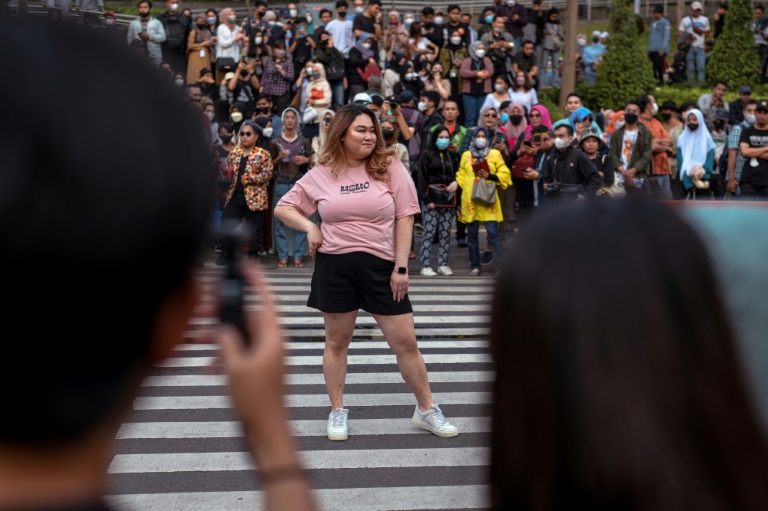
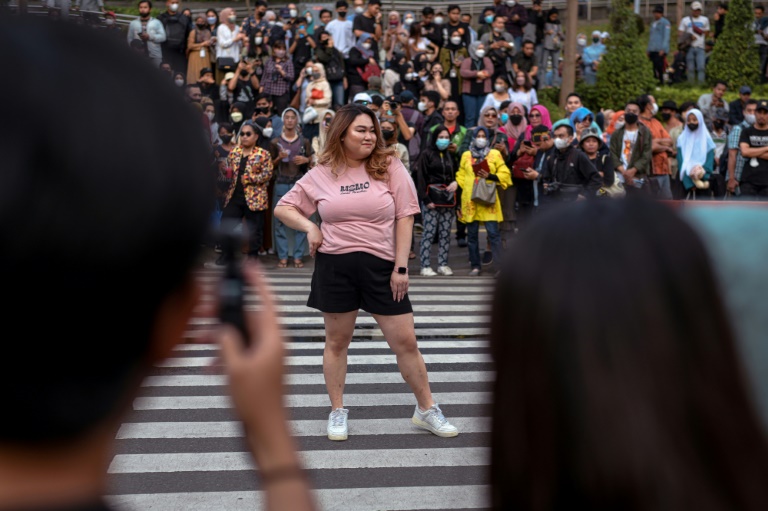
A pedestrian crossing turned viral catwalk has become a site for Jakarta’s young fashionistas to express themselves, while attracting the disapproval of police in the traffic-clogged Indonesian capital.

The informal downtown gathering has drawn sartorial adventurists from across the suburbs of the metropolis, including from Citayam, leading it to be dubbed “Citayam Fashion Week”.

And with their poses and struts all being shared on TikTok and Instagram, some Citayam pioneers have found instant fame, earning modelling jobs, endorsements and an army of adoring fans.

“I feel like this is the place where I can express my style and create content. It is so much fun because there are so many people and I can meet new friends here. I don’t even want to go home,” 18-year-old student Ricat Al Fendri told AFP.

He and some friends had taken a morning train to the central meeting spot, tucked between sleek skyscrapers and trendy cafes, to flaunt their outfits for the day.

Police, who previously moved to ban the use of the crosswalk as a runway, now regularly shout through a loudspeaker to ward the crowd off the street.

But that does not deter girls who don wide-legged jeans and colourful sunglasses — and boys in leather jackets, stylish sneakers and faux-fur coats — from filming their struts for social media.

Some of the more enthusiastic teenagers have been caught sleeping on the area’s sidewalks at night after missing the last train home.

“We have the right to hang out here. It’s a public space and for me, it’s a great stress reliever from school exams,” said Al Fendri. 

– Copycat crowds –

The outfits on display have begun to draw crowds, with news of the phenomenon spreading by word of mouth in the megacity of 30 million people.

Saera Wulan Sari, a 15-year-old school dropout from North Jakarta who makes a living selling clams, comes to watch the crowds with her friends.

“I am always amazed by other people’s outfits, they are so much cooler than me and their clothes are very stylish,” Sari said. 

The gathering has been likened to a smaller version of Tokyo’s famed Harajuku fashion district.

The movement has become so popular that copycat gatherings have spread elsewhere in Java –- Indonesia’s most populous island -– in cities such as Semarang and Bandung.

And its viral fame has attracted attention from celebrities and influencers, as well as public officials including President Joko Widodo, who said young people should be able to express themselves creatively.

– ‘It’s beautiful’ –

Local brands are now starting to take note and capitalise on the momentum by advertising their products and endorsing the “stars” of the movement, providing free clothes, shoes, and publicity. 

“Teenagers are searching for their identity and they need recognition and validation. These teens saw that the quick and easy way to earn them is through likes and shares,” Devie Rahmawati, a social affairs expert from the University of Indonesia told AFP. 

“Marginalised teenagers used to resort to violence or illegal racing, now they choose fashion instead. This is a positive thing and I think it’s beautiful.”

For many, the booming street fashion scene has also become an affordable arena for fashionable experimentation, set against the backdrop of the city’s most affluent district. 

Teenagers from poor households who cannot afford designer outfits can join the gathering without judgement, Khairul Badmi, a 22-year-old aspiring actor, told AFP. 

“To be a part of Citayam Fashion Week, you don’t have to wear certain outfits or brands that empty your wallet,” he said. 

At a Jakarta crosswalk, Indonesian teens take to the catwalk

A pedestrian crossing turned viral catwalk has become a site for Jakarta’s young fashionistas to express themselves, while attracting the disapproval of police in the traffic-clogged Indonesian capital.

The informal downtown gathering has drawn sartorial adventurists from across the suburbs of the metropolis, including from Citayam, leading it to be dubbed “Citayam Fashion Week”.

And with their poses and struts all being shared on TikTok and Instagram, some Citayam pioneers have found instant fame, earning modelling jobs, endorsements and an army of adoring fans.

“I feel like this is the place where I can express my style and create content. It is so much fun because there are so many people and I can meet new friends here. I don’t even want to go home,” 18-year-old student Ricat Al Fendri told AFP.

He and some friends had taken a morning train to the central meeting spot, tucked between sleek skyscrapers and trendy cafes, to flaunt their outfits for the day.

Police, who previously moved to ban the use of the crosswalk as a runway, now regularly shout through a loudspeaker to ward the crowd off the street.

But that does not deter girls who don wide-legged jeans and colourful sunglasses — and boys in leather jackets, stylish sneakers and faux-fur coats — from filming their struts for social media.

Some of the more enthusiastic teenagers have been caught sleeping on the area’s sidewalks at night after missing the last train home.

“We have the right to hang out here. It’s a public space and for me, it’s a great stress reliever from school exams,” said Al Fendri. 

– Copycat crowds –

The outfits on display have begun to draw crowds, with news of the phenomenon spreading by word of mouth in the megacity of 30 million people.

Saera Wulan Sari, a 15-year-old school dropout from North Jakarta who makes a living selling clams, comes to watch the crowds with her friends.

“I am always amazed by other people’s outfits, they are so much cooler than me and their clothes are very stylish,” Sari said. 

The gathering has been likened to a smaller version of Tokyo’s famed Harajuku fashion district.

The movement has become so popular that copycat gatherings have spread elsewhere in Java –- Indonesia’s most populous island -– in cities such as Semarang and Bandung.

And its viral fame has attracted attention from celebrities and influencers, as well as public officials including President Joko Widodo, who said young people should be able to express themselves creatively.

– ‘It’s beautiful’ –

Local brands are now starting to take note and capitalise on the momentum by advertising their products and endorsing the “stars” of the movement, providing free clothes, shoes, and publicity. 

“Teenagers are searching for their identity and they need recognition and validation. These teens saw that the quick and easy way to earn them is through likes and shares,” Devie Rahmawati, a social affairs expert from the University of Indonesia told AFP. 

“Marginalised teenagers used to resort to violence or illegal racing, now they choose fashion instead. This is a positive thing and I think it’s beautiful.”

For many, the booming street fashion scene has also become an affordable arena for fashionable experimentation, set against the backdrop of the city’s most affluent district. 

Teenagers from poor households who cannot afford designer outfits can join the gathering without judgement, Khairul Badmi, a 22-year-old aspiring actor, told AFP. 

“To be a part of Citayam Fashion Week, you don’t have to wear certain outfits or brands that empty your wallet,” he said. 

30 Palestinians wounded as Israel mounts West Bank raid

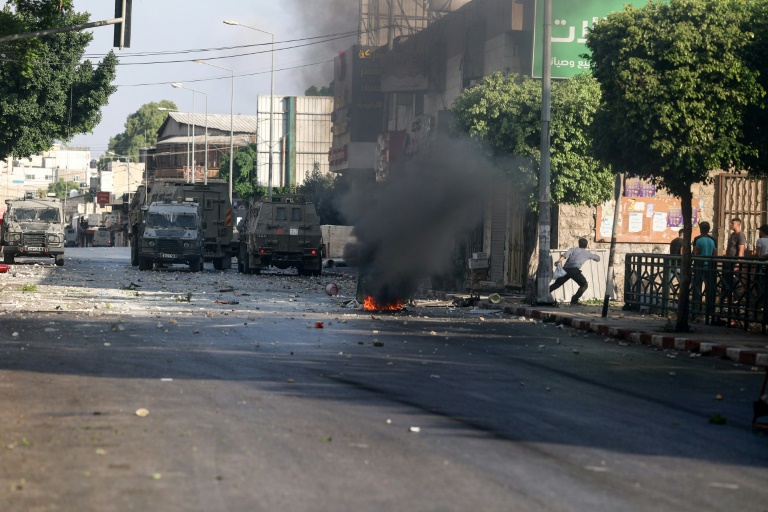
At least 30 Palestinians were wounded in heavy clashes Tuesday as Israeli troops raided a house in the occupied West Bank city of Nablus, two days after deadly fighting in Gaza was halted by a truce.

“Israeli army and special forces are surrounding the house of a wanted man in Nablus. There is exchange of fire,” the army said in a statement.

At least 30 Palestinians were wounded and at least one was in serious condition, according to the Red Crescent.

Palestinians traded gunfire with the Israeli army in the old city of Nablus, an AFP correspondent reported.

Clashes with the Israeli army also broke out in other parts of Nablus, as Palestinians hurled stones at the troops.

Heavy gunfire was heard from the ongoing clashes, as dozens of Israeli military vehicles brought traffic in one of the West Bank’s largest cities to a standstill.

Israeli security forces have conducted near-daily operations in the West Bank in recent months, focusing on militants from the Islamic Jihad group.

On Friday, Israel launched what it called a “pre-emptive” aerial and artillery bombardment of Islamic Jihad positions in the Gaza Strip, leading militants in the coastal enclave to fire more than a thousand rockets in retaliation, according to the army.

An Egypt-brokered ceasefire reached Sunday ended three days of intense fighting that killed 46 Palestinians, 16 of them children, and wounded 360, according to Gaza’s health ministry.

Israel insists that some of children and other civilians counted in the Palestinian toll were killed by Islamic Jihad rockets that fell short or misfired.

Prime Minister Yair Lapid said Monday that the bombardment had “landed a devastating blow to the enemy”, and that the “entire senior military command of Islamic Jihad in Gaza was successfully targeted.”

Islamic Jihad said 12 of its members had been killed, including commanders Taysir al-Jabari and Khaled Mansour.

Record rainfall, flooding in Seoul kill seven

Subway stations and major roads were underwater in the South Korean capital Seoul after record-breaking rains caused severe flooding, with at least seven people dead and seven more missing, officials said Tuesday.

Authorities warned there was more rain to come even as emergency workers struggled to clear the hulks of flooded cars, which AFP reporters saw strewn across major intersections throughout the city.

Dramatic images shared on social media late Monday showed people wading through waist-deep water, metro stations overflowing, and cars half-submerged in Seoul’s posh Gangnam district, which was particularly hard-hit when torrential rain battered the city.

The downpour that began Monday is the heaviest rainfall in South Korea in 80 years, according to Seoul’s Yonhap News Agency.

“At least seven people died in the Seoul metropolitan area, while seven others are missing, due to heavy rain,” an official at Seoul’s interior ministry told AFP.

Local reports said three people living in a banjiha — cramped basement flats of the kind made famous in Bong Joon-ho’s Oscar-winning “Parasite” — including a teenager, died as their apartment was inundated by floodwaters. 

– Climate change –

President Yoon Suk-yeol blamed the record rainfall on climate change and said the government needed to adapt.

“The government must review the current disaster management system from square one, given that abnormal weather caused by climate change is becoming a part of everyday life,” he said.

“We should respond all out until the situation is over in order to protect the precious people’s lives and property and take steps until the end, until the people feel that they are enough.”

But Yoon, who has seen his approval rating plummet to just 24 percent since taking office in May, according to the latest Gallup Korea poll, was facing online criticism for failing to go to the government’s emergency control center late Monday.

Local media reported his absence was due to flooding in his area, but Yoon’s office denied that was a factor, saying he had decided to stay home as his team, including the prime minister, already had the response in hand.

Yoon still lives in his pre-election accommodation, having declined to move into the presidential Blue House, which he has decried as “imperial” and opened to the public as a park.

“Why did you leave the Blue House” became a trending topic online, as netizens shared videos purportedly showing flooding at his residence alongside mocking comments.

– Gangnam floods –

Gangnam, a wealthy district in southern Seoul — featured in Psy’s 2012 K-pop hit “Gangnam Style” — received 326.5 millimetres of rainfall on Monday, data from the Korea Meteorological Administration showed.

“Gangnam is said to be the centre of the economy and well developed, but it is ironic that it is so vulnerable to natural disasters,” 45-year-old office worker Moon Yong-chun told AFP as he tried to rescue his car from a flooded car park. 

“I am shocked by the damage. The same thing happened around 11 years ago, and it is sad that the government has not taken any measures,” he added.

The Korea Meteorological Administration warned South Koreans to “be careful of the heavy rain, gusts, as well as thunder and lightning in the central region” for the next few days.

The KMA also said that up to 300 more millimetres of rain was forecast for the central region that includes Seoul through Thursday.

Transportation in South Korea remained highly disrupted Tuesday, with many roads and tunnels closed for safety reasons, Yonhap reported.

Power outages were also reported across the capital late Monday, while some operation of the Seoul metro and railway services was temporarily disrupted by the heavy rain.

Hiking trails at many of the country’s national parks were closed and passenger ferry routes, including from Incheon port, were suspended.
Hero's burial for former Philippine leader Ramos

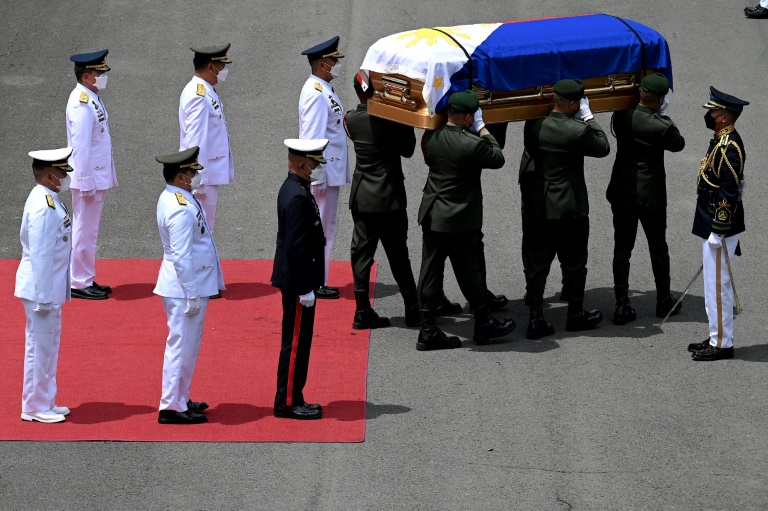
Former Philippine president Fidel Ramos, a soldier regarded as one of the country’s most effective leaders ever, was interred at the National Heroes Cemetery on Tuesday in a sombre state burial.

A low-flying military helicopter dropped flowers as a wagon bearing the flag-draped coffin containing an urn with his ashes rolled through the leafy cemetery grounds, lined with white crosses marking the tombs of dead soldiers also buried at the site.

Incumbent President Ferdinand Marcos Jr joined the ex-leader’s widow and relatives as the silver urn with the cremated remains was lowered into the ground after a military parade and a 21-gun salute.

A career soldier who oversaw a rare period of steady growth and peace in the turbulent years that followed the dictatorship of Marcos Jr’s father and namesake, Ramos died late last month aged 94. The cause of death was not specified.

Known as “Steady Eddie” for his unflappable demeanour during the country’s regular moments of upheaval, he was frequently pictured chewing unlit cigars as he guided the Philippines with a sure hand from 1992-1998.

His widow Amelita Ramos thanked Filipinos in a brief address at the end of the state burial, saying soldiers like him lived a “hard life”.

“It entailed difficult adjustments. He would be at home for two years and in the province two years after that,” she said, apart from overseas deployments in the Korean War and the Vietnam War.

A graduate of the prestigious West Point military academy in the United States, Ramos also saw combat against communist guerrillas back at home.

He was later commander of the paramilitary Philippine Constabulary — the key institution that enforced the brutal repression of dissent after Marcos Sr declared martial law in 1972.

Ramos broke from Marcos Sr in February 1986, throwing his support behind a group of young military officers who holed up in a Manila military camp after their plot to topple the leader in a coup was discovered.

Coming amid popular outrage over the 1983 murder of opposition leader Benigno Aquino and massive regime cheating in a snap election, the events led to a peaceful “People Power” revolt that sent the dictator into exile.

An endorsement from Corazon Aquino, the assassinated politician’s widow and the first post-Marcos president, helped Ramos score a narrow presidential victory in 1992.

As president, he solved a crippling power crisis caused by years of under-investment in energy, and broke up cartels in telecommunications, aviation and shipping — boosting a moribund economy that reaped a period of renewed growth. 

He also signed peace deals with Muslim separatists and military coup-plotters, but communist guerrillas rejected his overtures.

Ramos was also a key, early supporter of Rodrigo Duterte, who won the presidency in 2016.

The relationship swiftly soured as Ramos criticised Duterte’s expletive-laden speeches, his moves away from the US alliance and his anti-drug campaign that claimed thousands of lives.

The last former president to be buried at the National Heroes Cemetery was Marcos Sr in 2016, courtesy of Duterte who brushed off popular outrage at his plan.

Marcos Jr won a landslide election victory last May, completing the rehabilitation of the family name.

Trump says Florida home 'raided' by FBI

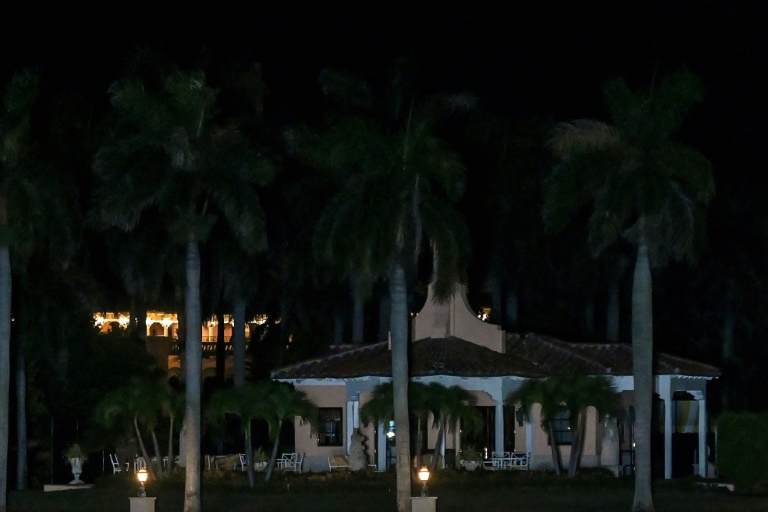
Former US president Donald Trump said Monday that his Mar-a-Lago residence in Florida was being “raided” by FBI agents in what he called an act of “prosecutorial misconduct.”

The FBI declined to comment on whether the search was happening or what it might be for, nor did Trump give any indication of why federal agents were at his home — a situation that adds to the legal pressures on the ex-president.

Multiple US media outlets cited sources close to the investigation as saying that agents were conducting a court-authorized search related to the potential mishandling of classified documents that had been sent to Mar-a-Lago.

In a statement posted on his Truth Social network, Trump said his “beautiful home, Mar-A-Lago in Palm Beach, Florida, is currently under siege, raided, and occupied by a large group of FBI agents.”

Aerial footage of Mar-a-Lago showed police cars outside the property. Supporters of the ex-US leader also gathered outside, waving banners with Trump’s name or American flags emblazoned with his face.

“It is prosecutorial misconduct, the weaponization of the Justice System, and an attack by Radical Left Democrats who desperately don’t want me to run for President in 2024,” said Trump, who was not present during the raid, according to The New York Times.

“Such an assault could only take place in broken, Third-World Countries. Sadly, America has now become one of those Countries,” he said, adding: “They even broke into my safe!”

Some senior Republicans also took to social media to criticize the raid and accuse the Justice Department of overreach.

The National Archives said in February it had recovered 15 boxes of documents from Trump’s Florida estate, which The Washington Post reported included highly classified texts, taken with him when he left Washington following his reelection defeat.

The documents and mementos — which also included correspondence from ex-US president Barack Obama — should by law have been turned over at the end of Trump’s presidency but instead ended up at his Mar-a-Lago resort.

The recovery of the boxes raised questions about Trump’s adherence to presidential records laws enacted after the 1970s Watergate scandal that require Oval Office occupants to preserve records related to administration activity.

The Archives had requested then that the Justice Department open a probe into Trump’s practices.

– ‘Accountable’ –

White House staff also regularly discovered wads of paper clogging toilets, leading them to believe Trump was trying to get rid of certain documents, according to a forthcoming book by New York Times reporter Maggie Haberman.

Since taking his last Air Force One flight from Washington to Florida on January 20 last year, Trump has remained the country’s most polarizing figure, continuing his unprecedented campaign to sow falsehoods that he actually won the 2020 election.

For weeks, Washington has been riveted by hearings in Congress about the January 6 storming of the Capitol by a mob of Trump supporters and his attempts to overturn the election.

The US Department of Justice is also investigating the January 6 attack.

While Attorney General Merrick Garland has declined to comment on growing speculation that Trump could face criminal charges, he has insisted that “no person is above the law” and that he intends to “hold accountable every person who is criminally responsible for trying to overturn a legitimate election.”

Trump is also being investigated for his efforts to alter the 2020 voting results in the state of Georgia, while his business practices are being probed in New York in separate cases, one civil and the other criminal.

The real estate mogul has not yet officially declared his candidacy for the 2024 presidential election, although he has dropped strong hints over the past few months.

With President Joe Biden’s approval rating currently below 40 percent and Democrats forecast to lose control of Congress in November’s midterm elections, Trump is apparently bullish that he could ride the Republican wave to the White House in 2024.

Taiwan accuses China of preparing invasion, holds defence drill

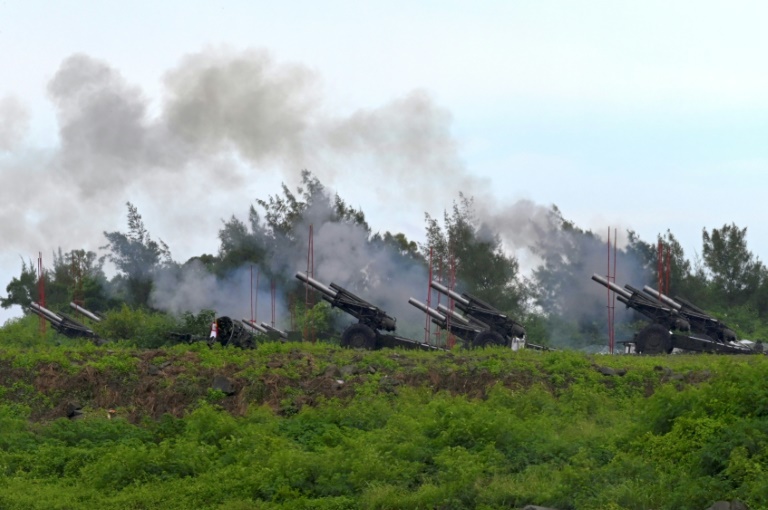
Taiwan held an artillery drill Tuesday simulating defence against an attack as its top diplomat accused Beijing of preparing to invade the island after days of massive Chinese war games.

China launched its largest-ever air and sea exercises around Taiwan last week in a furious response to a visit by US House Speaker Nancy Pelosi, the highest-ranking American official to visit the self-ruled island in decades. 

Taiwan lives under the constant threat of invasion by China, which views its neighbour as part of Chinese territory to be seized one day, by force if necessary.

“China has used the drills in its military playbook to prepare for the invasion of Taiwan,” foreign minister Joseph Wu told a press conference in Taipei on Tuesday, accusing Beijing of using Pelosi’s visit as a pretext for military action.

“China’s real intention is to alter the status quo in the Taiwan Strait and entire region,” he said.

The Chinese military said its Taiwan drills continued Tuesday and involved air and sea units.

The Eastern Theater command of the People’s Liberation Army said in a statement that it was conducting training exercises around the island, “focusing on joint blockade and joint support operations”.

Taipei’s drill started in the southern county of Pingtung shortly after 0040 GMT with the firing of target flares and artillery, ending just under an hour later at 0130 GMT, said Lou Woei-jye, spokesman for Taiwan’s Eighth Army Corps. 

Soldiers fired from howitzers tucked into the coast, hidden from view of the road that leads to popular beach destination Kenting.

The drills, which will also take place Thursday, included the deployment of hundreds of troops and about 40 howitzers, the army said. 

On Monday, Lou told AFP the drills had been scheduled previously and were not in response to China’s exercises. 

The island routinely stages military drills simulating defence against a Chinese invasion, and last month practised repelling attacks from the sea in a “joint interception operation” as part of its largest annual exercises.

-‘Not worried’-

The anti-landing exercise took place after China extended its own joint sea and air drills around Taiwan on Monday, but Washington said it did not expect an escalation from Beijing.

“I’m not worried, but I’m concerned they’re moving as much as they are. But I don’t think they’re going to do anything more than they are,” Biden told reporters at Dover Air Force Base.

Taiwan’s Wu on Tuesday condemned Beijing for pressing on with military exercises around the island, accusing them of trying to control the Taiwan Strait and waters in the wider Asia-Pacific region.

“It is conducting large-scale military exercises and missile launches, as well as cyber-attacks, a disinformation campaign and economic coercion in order to weaken public morale in Taiwan,” he said.

Wu went on to thank Western allies, including the US after Pelosi’s visit, for standing up to China.

“It also sends a clear message to the world that democracy will not bow to the intimidation of authoritarianism,” he said.

Taiwan has insisted that no Chinese warplanes or ships entered its territorial waters — within 12 nautical miles of land — during Beijing’s drills.

The Chinese military, however, released a video last week of an air force pilot filming the island’s coastline and mountains from his cockpit, showing how close it had come to Taiwan’s shores.

Its ships and planes have also regularly crossed the median line —  an unofficial demarcation between China and Taiwan that the former does not recognise — since drills began last week.

Ballistic missiles were fired over Taiwan’s capital, Taipei, during the exercises last week, according to Chinese state media.

-‘Issuing a warning’-

On Tuesday, the Chinese military released more details about the anti-submarine drills it had conducted a day earlier around the island.

The People’s Liberation Army’s Eastern Theater command said the exercises were aimed at enhancing the ability of air and sea units to work together while hunting submarines.

It said maritime patrol aircraft, fighter jets, helicopters and a destroyer practiced locating and attacking targets in the waters off Taiwan.

The scale and intensity of China’s drills — as well as its withdrawal from key talks on climate and defence — have triggered outrage in the United States and other democracies.

But Beijing on Monday defended its behaviour as “firm, forceful and appropriate” to American provocation. 

“(We) are only issuing a warning to the perpetrators,” foreign ministry spokesman Wang Wenbin told a regular briefing, promising China would “firmly smash the Taiwan authorities’ illusion of gaining independence through the US”.

“We urge the US to do some earnest reflection, and immediately correct its mistakes.”

Close Bitnami banner
Bitnami