World

Russia to launch Iranian satellite amid Ukraine war concerns

Russia is scheduled to launch an Iranian satellite into orbit on Tuesday, but Tehran brushed off fears that Moscow might use it in the war against Ukraine.

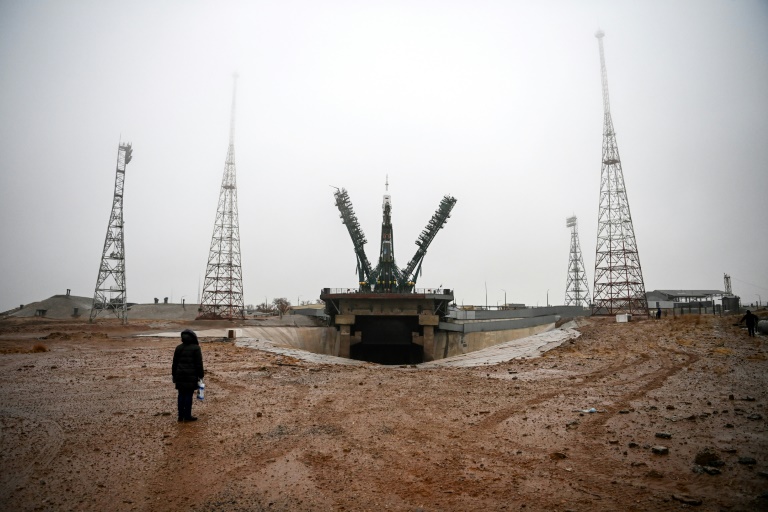
Iran’s “Khayyam” satellite is scheduled to take off from the Moscow-operated Baikonur cosmodrome in Kazakhstan at 0552 GMT, three weeks after Russian President Vladimir Putin met Iranian counterpart Ebrahim Raisi and Supreme Leader Ayatollah Ali Khamenei in Tehran.

Iran has sought to deflect suspicions that Moscow could use Khayyam to improve its surveillance of military targets in Ukraine.

Last week, US daily The Washington Post quoted anonymous Western intelligence officials as saying that Russia “plans to use the satellite for several months or longer” to assist its war efforts before allowing Iran to take control.

But the Iranian Space Agency said on Sunday that the Islamic republic would control the Khayyam satellite “from day one.”

“No third country is able to access the information” sent by the satellite due to its “encrypted algorithm,” it said.

The purpose of Khayyam is to “monitor the country’s borders”, enhance agricultural productivity and monitor water resources and natural disasters, the space agency said.

Khayyam is being taken into orbit by a Soyuz-2.1b rocket, Russia’s space agency Roscosmos said last week.

As Moscow’s international isolation grows under the weight of Western sanctions over Ukraine, Putin is seeking to pivot Russia towards the Middle East, Asia and Africa and find new clients for the country’s embattled space programme.

– ‘Long-term cooperation’ –

Khayyam, apparently named after the 11th-century Persian polymath Omar Khayyam, will not be the first Iranian satellite that Russia has put into space — in 2005, Iran’s Sina-1 satellite was deployed from Russia’s Plesetsk cosmodrome.

Iran is currently negotiating with world powers, including Moscow, to salvage a 2015 deal aimed at reining in Tehran’s nuclear ambitions.

The United States — which quit the landmark Joint Comprehensive Plan of Action or JCPOA under then-president Donald Trump in 2018 — has accused Iran of effectively supporting Russia’s war against Ukraine while adopting a “veil of neutrality”. 

During his meeting with Putin last month, Iran’s Khamenei called for “long-term cooperation” with Russia, and Tehran has refused to join international condemnation of Moscow’s invasion of its pro-Western neighbour.

Iran insists its space programme is for civilian and defence purposes only, and does not breach the 2015 nuclear deal, or any other international agreement. 

Western governments worry that satellite launch systems incorporate technologies interchangeable with those used in ballistic missiles capable of delivering a nuclear warhead, something Iran has always denied wanting to build.

Iran successfully put its first military satellite into orbit in April 2020, drawing a sharp rebuke from the United States.

Russia to launch Iranian satellite amid Ukraine war concerns

Russia is scheduled to launch an Iranian satellite into orbit on Tuesday, but Tehran brushed off fears that Moscow might use it in the war against Ukraine.

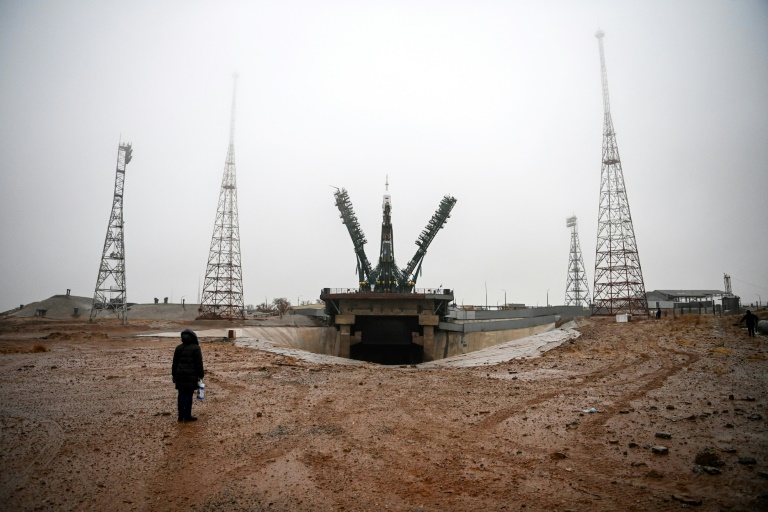
Iran’s “Khayyam” satellite is scheduled to take off from the Moscow-operated Baikonur cosmodrome in Kazakhstan at 0552 GMT, three weeks after Russian President Vladimir Putin met Iranian counterpart Ebrahim Raisi and Supreme Leader Ayatollah Ali Khamenei in Tehran.

Iran has sought to deflect suspicions that Moscow could use Khayyam to improve its surveillance of military targets in Ukraine.

Last week, US daily The Washington Post quoted anonymous Western intelligence officials as saying that Russia “plans to use the satellite for several months or longer” to assist its war efforts before allowing Iran to take control.

But the Iranian Space Agency said on Sunday that the Islamic republic would control the Khayyam satellite “from day one.”

“No third country is able to access the information” sent by the satellite due to its “encrypted algorithm,” it said.

The purpose of Khayyam is to “monitor the country’s borders”, enhance agricultural productivity and monitor water resources and natural disasters, the space agency said.

Khayyam is being taken into orbit by a Soyuz-2.1b rocket, Russia’s space agency Roscosmos said last week.

As Moscow’s international isolation grows under the weight of Western sanctions over Ukraine, Putin is seeking to pivot Russia towards the Middle East, Asia and Africa and find new clients for the country’s embattled space programme.

– ‘Long-term cooperation’ –

Khayyam, apparently named after the 11th-century Persian polymath Omar Khayyam, will not be the first Iranian satellite that Russia has put into space — in 2005, Iran’s Sina-1 satellite was deployed from Russia’s Plesetsk cosmodrome.

Iran is currently negotiating with world powers, including Moscow, to salvage a 2015 deal aimed at reining in Tehran’s nuclear ambitions.

The United States — which quit the landmark Joint Comprehensive Plan of Action or JCPOA under then-president Donald Trump in 2018 — has accused Iran of effectively supporting Russia’s war against Ukraine while adopting a “veil of neutrality”. 

During his meeting with Putin last month, Iran’s Khamenei called for “long-term cooperation” with Russia, and Tehran has refused to join international condemnation of Moscow’s invasion of its pro-Western neighbour.

Iran insists its space programme is for civilian and defence purposes only, and does not breach the 2015 nuclear deal, or any other international agreement. 

Western governments worry that satellite launch systems incorporate technologies interchangeable with those used in ballistic missiles capable of delivering a nuclear warhead, something Iran has always denied wanting to build.

Iran successfully put its first military satellite into orbit in April 2020, drawing a sharp rebuke from the United States.

Torrential rain, flooding in Seoul kill seven

Subway stations and major roads were underwater in the South Korean capital Seoul after record-breaking rains caused severe flooding, with at least seven people dead and seven more missing, officials said Tuesday.

Dramatic images shared on social media late Monday showed people wading through waist-deep water, metro stations overflowing, and cars half-submerged in Seoul’s posh Gangnam district after torrential rain battered the city.

The downpour that began Monday is the heaviest rainfall in South Korea in 80 years, according to Seoul’s Yonhap news agency.

“At least seven people died in the Seoul metropolitan area, while seven others are missing, due to heavy rain as of 7:30 this morning,” an official at Seoul’s Interior ministry told AFP.

Local reports said three people living in a banjiha — cramped basement flats of the kind made famous in Bong Joon-ho’s Oscar-winning “Parasite” — including a teenager, died as their apartment was inundated by floodwaters. 

Parts of Seoul, surrounding Gyeonggi province and port city Incheon recorded rains of more than 100 millimeters per hour Monday night, according to the Yonhap news agency, with per-hour precipitation in the capital’s Dongjak district surpassing 141.5 mm at one point, the heaviest downpour since 1942.

President Yoon Suk-yeol ordered government officials to evacuate residents from high-risk areas and encouraged businesses to allow employees flexible commuting hours on Tuesday morning.

“Nothing is more precious than life and safety. The government will thoroughly manage the heavy rain situation,” he wrote on his Facebook account.

Neighbourhoods close to the presidential residence in southern Seoul were affected, according to images of the flooding posted on social media.

Power outages were reported across the capital area late Monday, while some operation of the Seoul metro as well as railway services was temporarily disrupted by the heavy rain.

The Seoul express bus terminal in Gangnam was submerged, and flood water also leaked into a cafe and library at the COEX Convention and Exhibition Center in the same area.

An image of a man in a suit sitting on the hood of a submerged vehicle in the wealthy district in southern Seoul — which was featured in Psy’s 2012 K-pop hit “Gangnam Style” — went viral online.  

South Korea remained highly disrupted Tuesday, with many roads and tunnels closed for safety reasons, Yonhap reported.

Hiking trails at many of South Korea’s national parks were closed and passenger ferry routes, including from Incheon port, were suspended.

In New York, renters desperate as soaring rents exacerbate housing crisis

In mid-May, Paula Sevilla and her roommates joined the many New Yorkers suffering under the city’s crushing housing crisis, which has seen rents soar in the pandemic’s wake.

The tenants argued their landlord had violated rules requiring sufficient notice but ultimately were told if they would have to pay an additional $800 per month if they wanted to stay at their Brooklyn rental.

Sevilla and one roommate began a grueling search for new housing in a market that over the past year has spawned countless apartment search horror stories.

After two months of searching, some 30 apartment visits and constant stress, they finally found a two-bedroom spot for $3,000 dollars per month.

Renting in New York has long been a struggle, but recently costs have skyrocketed, jumping an average 20.4 percent in the second quarter of this year alone, according to the housing search website StreetEasy.

And finding a home increasingly takes longer, with long lines of applicants vying for space.

“One time we lost an apartment because we turned in an application four minutes too late,” recounted Sevilla, a 26-year-old originally from Spain. 

– Boiling point –

Draconian prerequisites to rent in New York aren’t new: earn income 40 times the monthly rent, have perfect credit history, present the last two years of tax returns and current bank balances.

And the city’s housing crisis has been simmering for years, with construction of units lagging behind a growing population. 

Now, as hundreds of thousands of people who fled the city during the pandemic’s early days return — along with the normal flow of transplants to America’s cultural and economic nexus — the situation is growing untenable.

There are “too many clients and not enough apartments,” said Miguel Urbina, a real estate agent.

In some cases, it’s not even enough to arrive first or offer more than the asking price to owners, which are often large firms or investment funds, especially in Manhattan.

Sevilla makes $75,000 annually, slightly more than the average salary in New York — but it’s not enough to rent on her own.

In New York, renters must often also pay significant broker fees to rental agents, generally at least between one month and 15 percent of the annual rental cost.

Many people who stayed in the city in 2020 and 2021 signed leases at a discount, but now many landlords are bumping those prices back up — pushing out more than a third of tenants who can’t afford the increases, according to StreetEasy.

Even New Yorkers lucky enough to live in rent-stabilized apartments — approximately one million units and two million tenants, according to city data — are not immune to the increases.

Those rents can only be raised based on a vote by the city’s rent guidelines board, whose members are appointed by the mayor. 

For eight years under Bill de Blasio, the highest increases were 1.5 percent for one-year leases — but under the board appointed by new mayor Eric Adams, rents are set to see their sharpest rise in nearly a decade.

In June, the board approved a 3.25 percent increase for one-year contracts and five percent for two years, which will affect many of the city’s residents with limited means and triggered outrage among housing rights advocates.

– ‘Staggering financial burden’ –

Manhattan families spend some 55 percent of their income on rent, a figure that is 43 percent in Queens and 60 percent in Brooklyn, according to StreetEasy data.

“Rent is becoming a staggering financial burden,” read a recent report from the online real estate portal.

Gia Elika, the owner of a real estate agency, says average rent in Manhattan is some $5,000 a month — but in a city of stark class division, some agencies are offering monthly rents of $140,000 on Fifth Avenue.

The shocking price tags are driving more middle-class families and young people like Sevilla to seek housing in neighborhoods historically occupied by immigrants, Latinos and African Americans, fostering relentless gentrification.

Elika told AFP that while “there is always a shortage of housing” in New York, “now it’s magnifying” with unprecedented prices.

According to the Washington-based policy research group Up For Growth, in 2019, the New York metropolitan area needed some 340,000 more units.

Rising interest rates in the face of rampant inflation has aggravated the crisis by pushing would-be buyers to rent, in a market “hampered by historically low inventory,” according to Lee’s report.

Decades-old zoning restrictions limit building size in some areas is one barrier, along with construction costs, limited public housing and legislative foot-dragging that has seen state and local politicians largely put off solving an increasingly pressing problem.

And the outlook is grim: much of the skyscraper boom in Manhattan has been for luxury and commercial purposes, and despite high-rise construction in Brooklyn, Queens and New Jersey, agents don’t foresee prices to quit rising any time soon.

Trump says Florida home 'raided' by FBI

Former US president Donald Trump said Monday that his Mar-A-Lago residence in Florida was being “raided” by FBI agents in what he called an act of “prosecutorial misconduct.”

The FBI declined to comment on whether the search was happening or what it might be for, nor did Trump give any indication of why federal agents were at his home — a situation that adds to the legal pressure on the ex-president.

“These are dark times for our Nation, as my beautiful home, Mar-A-Lago in Palm Beach, Florida, is currently under siege, raided, and occupied by a large group of FBI agents,” Trump said in a statement posted on his Truth Social network.

Aerial footage of Mar-a-Lago showed police cars outside the property.

“It is prosecutorial misconduct, the weaponization of the Justice System, and an attack by Radical Left Democrats who desperately don’t want me to run for President in 2024,” said the former president, who was not present during the raid, according to The New York Times.

“Such an assault could only take place in broken, Third-World Countries. Sadly, America has now become one of those Countries,” Trump said, adding: “They even broke into my safe!”

Multiple US media outlets cited sources close to the investigation as saying that agents were conducting a court-authorized search related to the potential mishandling of classified documents that had been sent to Mar-a-Lago.

The National Archives said in February it had recovered 15 boxes of documents from Trump’s Florida estate, which The Washington Post reported included highly classified texts, taken with him when he left Washington following his reelection defeat.

The documents and mementos — which also included correspondence from ex-US president Barack Obama — should by law have been turned over at the end of Trump’s presidency but instead ended up at his Mar-a-Lago resort.

The recovery of the boxes raised questions about Trump’s adherence to presidential records laws enacted after the 1970s Watergate scandal that require Oval Office occupants to preserve records related to administration activity.

The Archives had requested then that the Justice Department open a probe into Trump’s practices.

– ‘Accountable’ –

White House staff also regularly discovered wads of paper clogging toilets, leading them to believe Trump was trying to get rid of certain documents, according to a forthcoming book by New York Times reporter Maggie Haberman.

Since taking his last Air Force One flight from Washington to Florida on January 20 last year, Trump has remained the country’s most polarizing figure, continuing his unprecedented campaign to sow falsehoods that he actually won the 2020 election.

For weeks, Washington has been riveted by hearings in Congress about the January 6 storming of the Capitol by a mob of Trump supporters and his attempts to overturn the election.

The US Department of Justice is also investigating the January 6 attack.

While Attorney General Merrick Garland has declined to comment on growing speculation that Trump could face criminal charges, he has insisted that “no person is above the law” and that he intends to “hold accountable every person who is criminally responsible for trying to overturn a legitimate election.”

Trump is also being investigated for his efforts to alter the 2020 voting results in the state of Georgia, while his business practices are being probed in New York in separate cases, one civil and the other criminal.

The real estate mogul has not yet officially declared his candidacy for the 2024 presidential election, though he has dropped strong hints over the past few months.

With President Joe Biden’s approval rating currently below 40 percent and Democrats forecast to lose control of Congress in November midterm elections, Trump is apparently bullish that he could ride the Republican wave all the way to the White House in 2024.

Mexico to use underwater drone in search for trapped miners

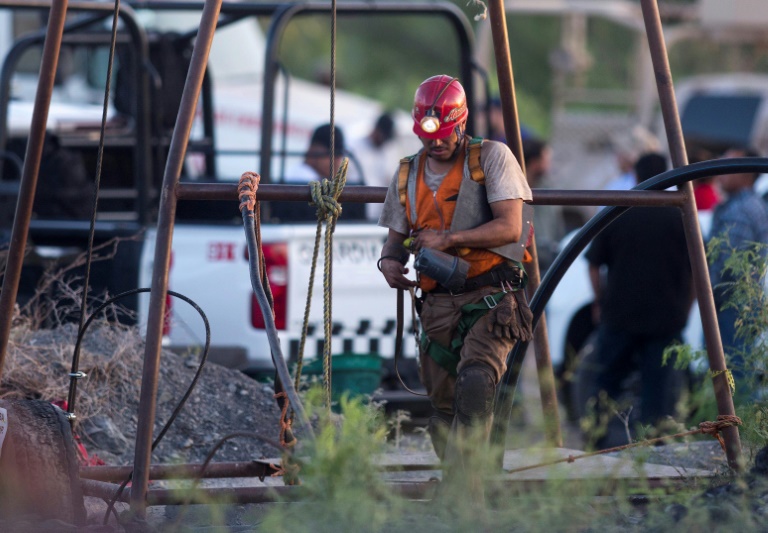
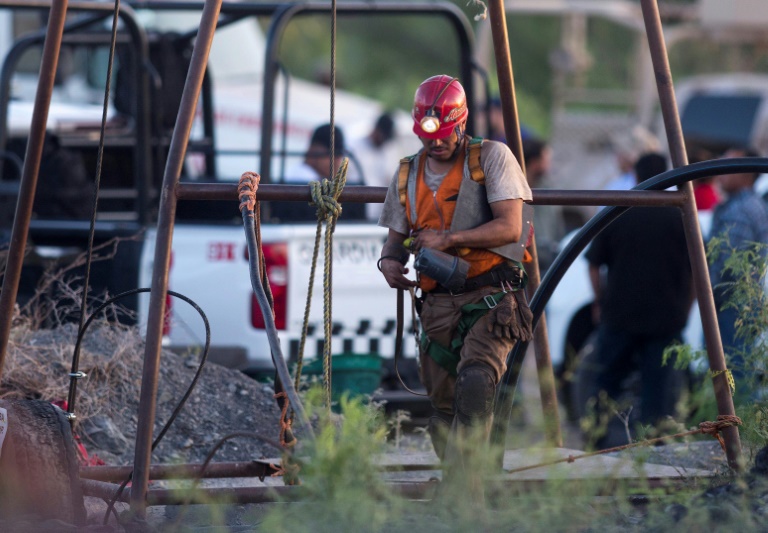
Rescuers will deploy an underwater drone as part of intensified efforts to save 10 workers trapped for five days in a flooded coal mine in northern Mexico, authorities said Monday.

The device provided by the navy has a high-resolution camera and light to identify possible obstacles without putting lives at risk, civil defense national coordinator Laura Velazquez said.

Work continued to pump water from the mine in Agujita in the northern state of Coahuila to make it safe enough for rescuers to go inside.

The military said that it was hoped rescuers would be able enter to one of the shafts in the middle of this week if the water level drops to 1.5 meters (around five feet).

The mine shafts descend about 60 meters and the water inside the one that rescuers plan to go into was 19.4 meters deep, down from more than 30 meters initially, officials said.

“We’re hurrying to remove the water so that the rescuers can enter,” said President Andres Manuel Lopez Obrador, who visited the site on Sunday and urged greater efforts to save the miners.

Around 300 liters were being pumped out each second, he told reporters back in Mexico City.

“Everyone has faith. No one is thinking about anything other than the rescue,” he said.

Authorities said the miners had been carrying out excavation work when they hit an adjoining area full of water.

Five workers managed to escape from the crudely constructed mine in the initial aftermath of Wednesday’s accident, but there has been no contract with the others.

– ‘Very painful’ –

With each passing hour relatives were becoming increasingly desperate and more reluctant to talk to the media.

Authorities reinforced a security cordon around the mine, about 1,130 kilometers (700 miles) north of Mexico City.

Several hundred soldiers and other personnel, including six military scuba divers, are taking part in the rescue effort, according to the government.

The Attorney General’s Office said on Sunday that it asked the labor ministry to provide information on safety inspections carried out at mines in the area to determine the cause of the accident.

Coahuila, Mexico’s main coal-producing region, has seen a series of fatal mining incidents over the years.

Last year, seven miners died when they were trapped in the region.

The worst accident was an explosion that claimed 65 lives at the Pasta de Conchos mine in 2006.

Only two bodies were retrieved after that tragedy and the families have repeatedly urged the Mexican authorities to recover the others.

Rogelio Mireles worked in the Pasta de Conchos mine at the time but by a twist of fate was not there on the day of the disaster.

The latest accident is “something very painful — we experienced it firsthand,” said the 36-year-old, who now works at a supermarket near where the 10 workers are trapped.

Digging for coal in makeshift mines like the one in Agujita is much more dangerous than working in industrial mines, Mireles said.

But “there’s no alternative. People need to work,” he said.

Mexico to use underwater drone in search for trapped miners

Rescuers will deploy an underwater drone as part of intensified efforts to save 10 workers trapped for five days in a flooded coal mine in northern Mexico, authorities said Monday.

The device provided by the navy has a high-resolution camera and light to identify possible obstacles without putting lives at risk, civil defense national coordinator Laura Velazquez said.

Work continued to pump water from the mine in Agujita in the northern state of Coahuila to make it safe enough for rescuers to go inside.

The military said that it was hoped rescuers would be able enter to one of the shafts in the middle of this week if the water level drops to 1.5 meters (around five feet).

The mine shafts descend about 60 meters and the water inside the one that rescuers plan to go into was 19.4 meters deep, down from more than 30 meters initially, officials said.

“We’re hurrying to remove the water so that the rescuers can enter,” said President Andres Manuel Lopez Obrador, who visited the site on Sunday and urged greater efforts to save the miners.

Around 300 liters were being pumped out each second, he told reporters back in Mexico City.

“Everyone has faith. No one is thinking about anything other than the rescue,” he said.

Authorities said the miners had been carrying out excavation work when they hit an adjoining area full of water.

Five workers managed to escape from the crudely constructed mine in the initial aftermath of Wednesday’s accident, but there has been no contract with the others.

– ‘Very painful’ –

With each passing hour relatives were becoming increasingly desperate and more reluctant to talk to the media.

Authorities reinforced a security cordon around the mine, about 1,130 kilometers (700 miles) north of Mexico City.

Several hundred soldiers and other personnel, including six military scuba divers, are taking part in the rescue effort, according to the government.

The Attorney General’s Office said on Sunday that it asked the labor ministry to provide information on safety inspections carried out at mines in the area to determine the cause of the accident.

Coahuila, Mexico’s main coal-producing region, has seen a series of fatal mining incidents over the years.

Last year, seven miners died when they were trapped in the region.

The worst accident was an explosion that claimed 65 lives at the Pasta de Conchos mine in 2006.

Only two bodies were retrieved after that tragedy and the families have repeatedly urged the Mexican authorities to recover the others.

Rogelio Mireles worked in the Pasta de Conchos mine at the time but by a twist of fate was not there on the day of the disaster.

The latest accident is “something very painful — we experienced it firsthand,” said the 36-year-old, who now works at a supermarket near where the 10 workers are trapped.

Digging for coal in makeshift mines like the one in Agujita is much more dangerous than working in industrial mines, Mireles said.

But “there’s no alternative. People need to work,” he said.

US diverges from global stock rally as investors focus on inflation

US stocks trailed other global markets and the dollar retreated Monday as investors turned their attention to US inflation data later this week and weighed the prospect of more interest rate hikes.

Wall Street’s early enthusiasm faded by the close, with the broad S&P 500 dipping 0.1 percent, as inflation data coming this week combined with the strong jobs report Friday are boosting the view the US Federal Reserve will announce a third successive rate increase of three-quarters of a percentage point in September.

“With persistent inflation and a strong labor market, the Fed is on a clear path to raise rates,” OANDA analyst Edward Moya said. “This week is all about inflation.”

Data due Wednesday are expected to show inflation in the world’s biggest economy slowed slightly in July, but remained close to the 40-year highs seen in recent months. The June report showed consumer prices soared 9.1 percent over the past 12 months.

However, even if the pace slows, SPI Asset Management analyst Stephen Innes said the reading “seems very unlikely to offer compelling evidence of a slowdown needed for the Fed to pull away from its aggressive inflation-fighting mode.”

Global stocks had rallied over the past several sessions after another negative US GDP report convinced some traders the Fed might be able to ease up on the aggressive inflation-fighting campaign. 

But central bankers in recent days have tried to deflate their enthusiasm, saying more rate hikes are coming.

Oil prices gained, making good some of the losses from last week, when a rise in US crude stockpiles was partly responsible for a 10-percent drop in prices.

Both main oil contracts have lost all the gains seen in the wake of Russia’s invasion of Ukraine, which led the United States and Europe to ban imports of Russian crude, hammering already thin supplies.

– Key figures at around 2045 GMT –

New York – Dow: UP 0.1 percent at 32,832.54 (close)

New York – S&P 500: DOWN 0.1 percent at 4,140.06 (close)

New York – Nasdaq: DOWN 0.1 percent at 12,644.46 (close)

London – FTSE 100: UP 0.6 percent at 7,482.37 (close)

Frankfurt – DAX: UP 0.8 percent at 13,687.69 (close)

Paris – CAC 40: UP 0.8 percent at 6,524.44 (close)

EURO STOXX 50: UP 0.9 percent at 3,757.90

Tokyo – Nikkei 225: UP 0.3 percent at 28,249.24 (close)

Hong Kong – Hang Seng Index: DOWN 0.8 percent at 20,045.77 (close)

Shanghai – Composite: UP 0.3 percent at 3,236.93 (close)

Euro/dollar: UP at $1.0194 from $1.0184 Friday

Pound/dollar: UP at $1.2079 from $1.2075

Euro/pound: UP at 84.35 pence from 84.32 pence

Dollar/yen: DOWN at 134.98 yen from 135.00 yen

West Texas Intermediate: UP 1.5 percent at $90.32 per barrel

Brent North Sea crude: UP 1.3 percent at $96.18 per barrel

US regulators clear Boeing to resume 787 deliveries

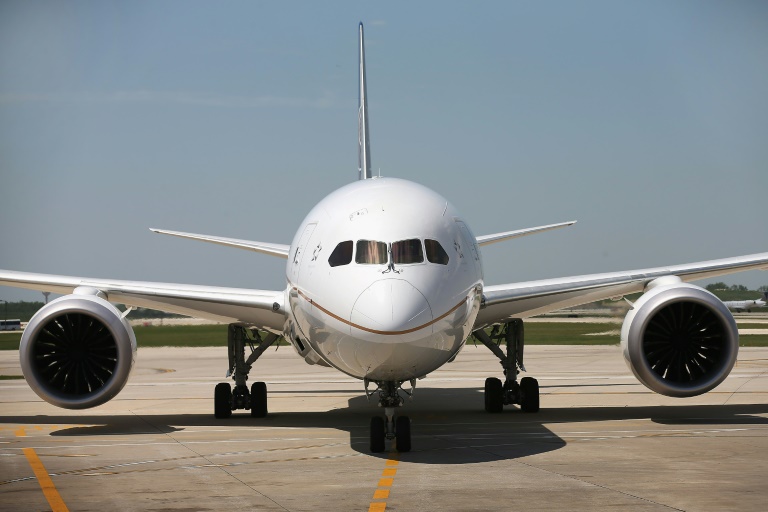
After more than a year, aviation giant Boeing will be allowed to resume deliveries of its 787 Dreamliner aircraft “in the coming days,” after the company made changes to its manufacturing process, US air safety regulators announced Monday.

Deliveries of the top-selling widebody plane have been halted since spring 2021, so the news will be welcomed by US airlines and travelers who have suffered from massive delays and canceled flights in recent weeks, partly due to the shortage of aircraft.

“Boeing has made the necessary changes to ensure that the 787 Dreamliner meets all certification standards,” the Federal Aviation Administration said in a statement.

The plane’s travails date to late summer 2020, when the company uncovered manufacturing flaws with some jets. Boeing subsequently identified additional issues, including with the horizontal stabilizer.

The difficulties curtailed deliveries between November 2020 and March 2021. Boeing suspended deliveries later in spring 2021 after more problems surfaced.

Acting FAA Administrator Billy Nolen met with safety inspectors in South Carolina last week to confirm they were satisfied with the company’s improvements, which were made to ensure they comply with standards and to identify potential risks after defects were uncovered on the plane.

“The FAA will inspect each aircraft before an airworthiness certificate is issued and cleared for delivery,” the statement said. “We expect deliveries to resume in the coming days.”

– Cleared for takeoff –

A company spokesman told AFP that Boeing will “continue to work transparently with the FAA and our customers toward resuming 787 deliveries,” but did not confirm the firm had received final FAA approval.

During a July 27 earnings conference call, Chief Executive Dave Calhoun described the company was “on the verge” of garnering approval, though he declined to give a precise target date.

At the end of June, Boeing had 120 Dreamliner planes in inventory and was producing the jet “at very low rates,” the company said in a filing.

The company’s stock price gained ground on the news, closing 0.5 percent higher.

Inability to deliver the Dreamliner has dragged down Boeing’s profits, which plunged 67 percent in the second quarter. And the manufacturing changes have led to billions in additional costs for the company.

The firm has delivered just over 1,000 of the planes since it was first introduced in 2004.

The enhanced regulatory scrutiny of the 787 and other Boeing planes comes on the heels of a pair of crashes in 2018 and 2019 on the 737 MAX, which led to aircraft being banned from the skies globally for more than a year.

But the MAX has since returned to service, enabling Boeing to ramp up production of the planes, collect meaningful revenues and announce significant new orders at the Farnborough Airshow earlier this month.

Even so, Boeing’s backlog of orders in the pipeline lags behind that of archrival Airbus.

French experts ponder plan to transport whale back to sea

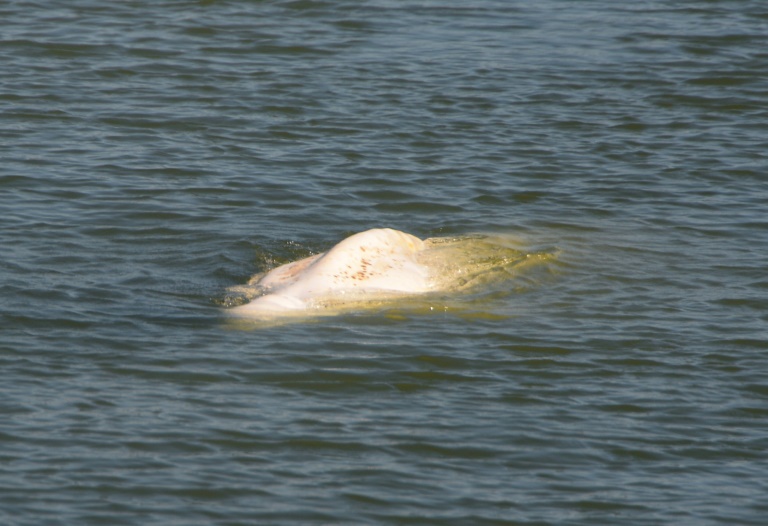
Experts are looking at a plan to transport a malnourished beluga whale that has swum up France’s River Seine back to sea before its health deteriorates any further, officials said Monday.

Sub-prefect Isabelle Dorliat-Pouzet of France’s northern Eure department said they were seriously considering the option.

“In the interests of this beluga it can be attempted,” she said. “We are working hard on it.” But she was unable to say when they might make the attempt.

Officials in the prefecture of the Eure told AFP that the whale could be transported on a barge, overland or even by helicopter.

But the challenges are considerable, given they would be transporting a creature that weighs some 800 kilograms (nearly 1,800 pounds) and is already sick and malnourished.

It would be a journey of 130 kilometres (80 miles) just to get to the north coast of France.

Members of environmental group Sea Shepherd monitoring the whale said Monday that it was no longer swimming up-river.

But it was still not eating, Sea Shepherd France president Lamya Essemlali told AFP in a text message. There was, however, “no worsening of its condition”, she said.

The whale was first spotted in the river that runs through Paris to the Channel last Tuesday. 

Since Friday, it has been between two locks some 70 kilometres north of the French capital.

– Marineland experts join operation – 

The last-ditch bid to save the animal is partly because of fears that the river’s warm water is harming its health.

Another alternative would be to open the locks in the hope that the beluga swims towards the Channel, authorities said.

But doing that runs the risk that it moves further upriver towards Paris, which would be even worse for it.

Several attempts to feed the whale have failed in the past days.

A three-person team from Marineland, Europe’s biggest sea animal theme park located in the southern French resort of Antibes, was due on site later Monday.

“We’ve been following the operations at a distance from the start,” said Isabelle Brasseur, in charge of education, research and conservation at Marineland.

“We are slowly making progress,” she told AFP. “There’s not an ideal solution, we must weigh the pros and the cons” of each option to rescue the whale.

One of the experts on the team is a specialist for sea mammals, she said, adding they were bringing a stretcher and other equipment to try and move the animal.

On Saturday, veterinarians administered “vitamins and products to stimulate its appetite”, said a statement Sunday by the police in Normandy’s Eure department, which is overseeing the rescue effort.

Belugas are normally found only in cold Arctic waters, and while they migrate south in the autumn to feed as ice forms, they rarely venture so far.

An adult can reach up to four metres (13 feet) in length.

According to France’s Pelagis Observatory, specialised in sea mammals, the nearest beluga population is off the Svalbard archipelago, north of Norway, 3,000 kilometres from the Seine.

Close Bitnami banner
Bitnami