World

US regulators clear Boeing to resume 787 deliveries

Aviation giant Boeing will be allowed to resume deliveries of its 787 Dreamliner aircraft “in the coming days,” after the company made changes to its manufacturing process, US air safety regulators announced Monday.

Deliveries of the top-selling widebody have been halted since spring 2021, but “Boeing has made the necessary changes to ensure that the 787 Dreamliner meets all certification standards,” the Federal Aviation Administration said in a statement.

Acting FAA Administrator Billy Nolen met with safety inspectors in South Carolina last week to confirm they were satisfied with the company’s improvements, which were made to ensure they comply with standards and to identify potential risks after defects were uncovered on the plane.

“The FAA will inspect each aircraft before an airworthiness certificate is issued and cleared for delivery,” the statement said. “We expect deliveries to resume in the coming days.”

The 787’s travails date to late summer 2020, when the company uncovered manufacturing flaws with some jets. Boeing subsequently identified additional issues, including with the horizontal stabilizer.

The difficulties curtailed deliveries between November 2020 and March 2021. Boeing suspended deliveries later in spring 2021 after more problems surfaced.

A company spokesman told AFP that Boeing will “continue to work transparently with the FAA and our customers toward resuming 787 deliveries,” but did not confirm the firm had received final FAA approval.

During a July 27 earnings conference call, Chief Executive Dave Calhoun described the company as “on the verge” of garnering approval, though he declined to give a precise target date.

At the end of June, Boeing had 120 Dreamliner planes in inventory and was producing the jet “at very low rates,” the company said in a filing.

Gaza clears rubble, buries dead as truce with Israel holds

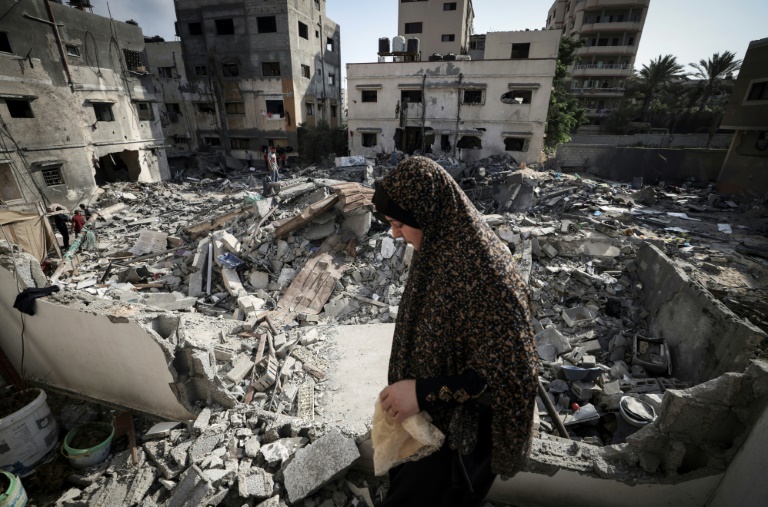
Shell-shocked Gazans on Monday sifted through the rubble of three days of deadly fighting between Israel and Islamic Jihad militants as a truce held and life slowly returned to normal.

An Egypt-brokered ceasefire reached late Sunday ended the intense fighting that killed 46 people including 16 children and wounded 360 in the enclave, according to Gaza’s health ministry, updating an earlier toll of 44.

Israel had since Friday launched a heavy aerial and artillery bombardment of Islamic Jihad positions in the Gaza Strip, leading the militants to fire more than a thousand rockets in retaliation, according to the Israeli army.

On Monday evening, nearly a day since the truce began, Israeli Prime Minister Yair Lapid gave a televised address saying the bombardment had “landed a devastating blow to the enemy”, and that the “entire senior military command of Islamic Jihad in Gaza was successfully targeted.”

As relative calm returned to Gaza, and electricity was restored, Palestinians tried to salvage their belongings from the rubble of shattered homes and to clear the debris.

“We received the news of the ceasefire with joy and happiness and we went back to our work,” said Gaza shopkeeper Hazem Douima. “We did not want more bloodshed.”

– Mourners –

Bereaved families buried their dead, including at one funeral joined by hundreds of mourners in Jabalia in the northern Gaza Strip where a family laid to rest four minors killed in the conflict.

“Gaza is tending to its wounds,” said one resident, Mohammed Alai.

Israel insists that some of the civilian deaths including children were killed by Islamic Jihad rockets that fell short or misfired.

Gaza’s sole power plant, after a two-day shutdown, “started working to generate electricity”, said spokesman Mohammed Thabet, hours after fuel trucks passed the reopened border crossing for goods.

The outage had sparked fears about the impact on hospitals overwhelmed with casualties during Gaza’s worst fighting since an 11-day war with militant movement Hamas last year.

North of Gaza in the Israeli city of Ashkelon where air raid sirens had wailed and people fled to bunkers, beachgoers returned to the Mediterranean shore. 

Sitting in a cafe, Eitan Casandini said locals were feeling “very good”.

“After we destroy them we can sleep peacefully,” he told AFP. “I don’t think (Islamic) Jihad will do anything again in the next three or four years.”

Three people in Israel were wounded by shrapnel and 31 lightly hurt while running for safety, emergency services said.

– ‘Right to respond’ –

US President Joe Biden welcomed the truce and thanked Egyptian President Abdel Fattah al-Sisi for Cairo’s role in brokering it. 

Both Israel and Islamic Jihad have said they are committed to the ceasefire, but that they would respond to aggression.

Israel has said it was necessary to launch an operation against Islamic Jihad. 

The group had been planning an attack by sniper fire or with anti-tank missiles, said a senior Israeli diplomatic official, speaking on condition of anonymity.

“Even in the future, if it becomes necessary, we will launch a pre-emptive strike, in order to protect the citizens of Israel,” Israeli Defence Minister Benny Gantz warned Monday, speaking alongside Lapid.

Islamic Jihad, an Iran-backed group designated as a terrorist organisation by several Western nations, has also accepted the truce but said it too “reserves the right to respond”.

The militants have said 12 of their leaders and members had been killed, including Taysir al-Jabari and Khaled Mansour, while its supporter Iran said it will always “defend the active resistance”.

Mohammad al-Hindi, a senior member of the group, said the ceasefire deal “contains Egypt’s commitment to work towards the release of two prisoners”.

They were named as Bassem al-Saadi, a senior figure in the group’s political wing who was arrested in the occupied West Bank early last week, and Khalil Awawdeh, a militant also in Israeli detention.

Islamic Jihad is aligned with Gaza’s rulers Hamas but often acts independently.

Hamas has fought four wars with Israel since seizing control of the enclave in 2007, including the conflict in May last year.

The United Nations Security Council was to hold an emergency meeting on Monday to discuss the situation in Gaza.


Kremlin accuses Kyiv of shelling nuclear plant

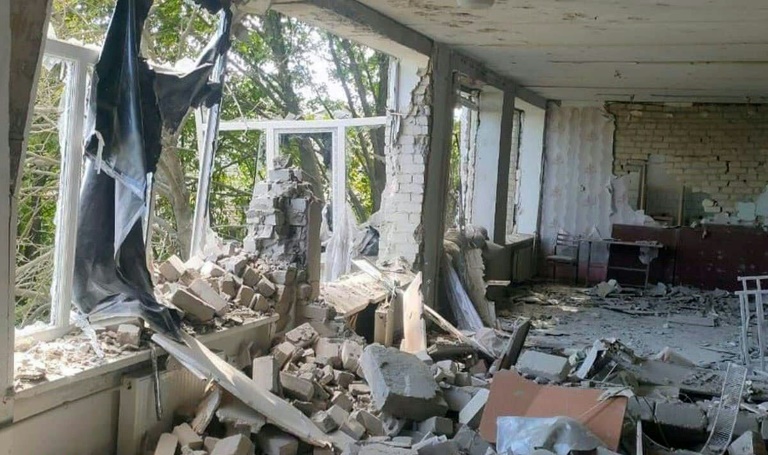
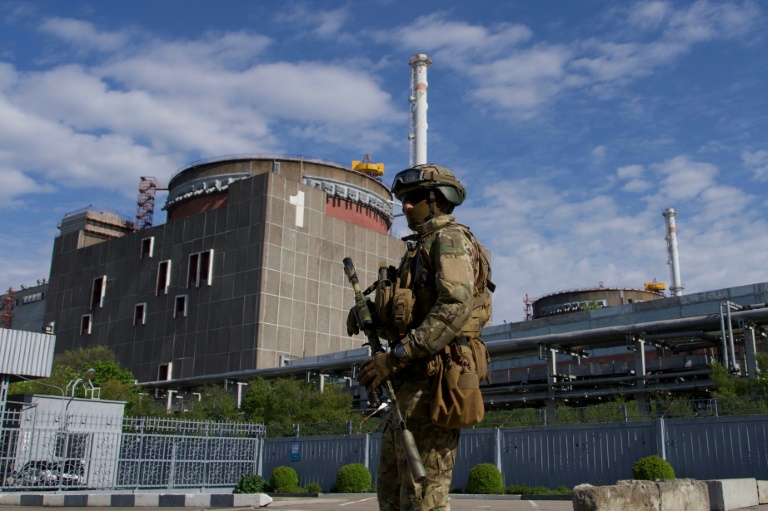
The Kremlin accused Ukrainian forces Monday of firing on Europe’s largest nuclear power plant in occupied Ukraine and warned the alleged attacks could have “catastrophic consequences”.

Kyiv said Moscow was responsible and called for the area to be demilitarised, adding that two employees had been wounded in recent attacks.

Fighting continued meanwhile along battle lines stretching across eastern Ukraine, and Russia continued its crackdown on dissent at home.

Each side has blamed the other for the escalation in fighting around the nuclear facility in Zaporizhzhia in southeastern Ukraine, which was captured by Russian forces soon after their late February invasion.

Recent fighting at the plant has prompted the UN’s nuclear watchdog, the International Atomic Energy Agency (IAEA), to warn of “the very real risk of a nuclear disaster”.

Ukraine said the plant should be cleared of Russian military and called for the establishment of an international security and energy team to oversee the site.

“What needs to be done is to remove occupying forces from the station and to create a de-militarised zone on the territory of the station,” said Petro Kotin, president of Ukraine’s nuclear energy company, Energoatom.

“There should be a peacekeeping mission including experts from the IAEA and other security organisations,” he added.

“Their presence and initially giving control to them and then to the Ukrainian side would have solved this problem”.

– ‘Nuclear terrorism’ –

Kotin said Russia had deployed some 500 Russian troops and 50 pieces of hardware including tanks at Zaporizhzhia, echoing earlier claims from Kyiv that Moscow was using the site for military cover.

Ukraine’s Prime Minister Denys Shmygal meanwhile accused Russia of “nuclear terrorism,” urging the world to “unite now to prevent a catastrophe”.

The Kremlin has captured swathes of Ukrainian territory since February, introducing Russian currency and announcing plans to formally annex the areas by holding votes, including in the Zaporizhzhia region.

The head of its Moscow-installed administration Yevgeny Balitsky said on social media Monday he had signed a decree “on the issue of organising a referendum on the reunification of the Zaporizhzhia region with the Russian Federation”.

The plans follow a similar move by Moscow in 2014 after it annexed the Crimean peninsula, a highly controversial vote that has not been recognised by most Western countries.

Although attention was focused on the fallout from fighting at Zaporizhzhia, Russian forces continued shelling across the sprawling eastern frontline. 

Among the attacks, Ukraine said one woman had died and four more were injured in Russian bombardments on Kharkiv region in the northeast. It has been under persistent Russian shelling for weeks.

Ukrainian forces in turn said they had bombed a strategic bridge over the Dnipro river overnight in the Russian-held city of Kherson in the south.

There were fresh pledges of Western aid.

The Pentagon announced military aid for Ukraine worth $1 billion including additional precision missiles for the Himars system that have helped Kyiv’s forces attack Russian troops far behind the front lines.

The World Bank said it was mobilising another $4.5 billion in US-provided financial support to help Kyiv pay for services and pensions, key to easing the invasion’s economic impacts.

– Fresh fine for journalist –

The authorities in Moscow pursued their crackdown on opposition to the war, handing down a new fine to journalist Marina Ovsyannikova.

Ovsyannikova shot to prominence in March for interrupting a live broadcast to denounce Russia’s military intervention in Ukraine.

On Monday, her lawyer did not rule out the possibility of her facing another criminal probe.

A Ukrainian court meanwhile jailed a Russian tank crewman for 10 years for firing on a multi-storied apartment block in the northern city of Chernigiv early on in the invasion, the security services (SBU) announced Monday. 

The Chernigiv court convicted sergeant Mikhail Kulikov of a war crime.

The SBU also said it arrested Russian agents who were planning to assassinate the defence minister and the military intelligence chief.

There was progress on one rare area of compromise between Russian and Ukraine Monday, after the first cargo ship that left a Ukrainian port and reach its final destination under a recent deal brokered by Ankara and UN docked in Turkey.

While Kyiv welcomed the news, officials also said there was a delay in the first delivery to leave Ukrainian ports because the buyer had refused delivery, citing a five-month delay in shipment.

Infrastructure Minister Oleksandr Kubrakov said on social media that a cargo ship carrying grain had departed for the first time from the Black Sea port of Pivdennyi.

Mexico to use underwater drone in search for trapped miners

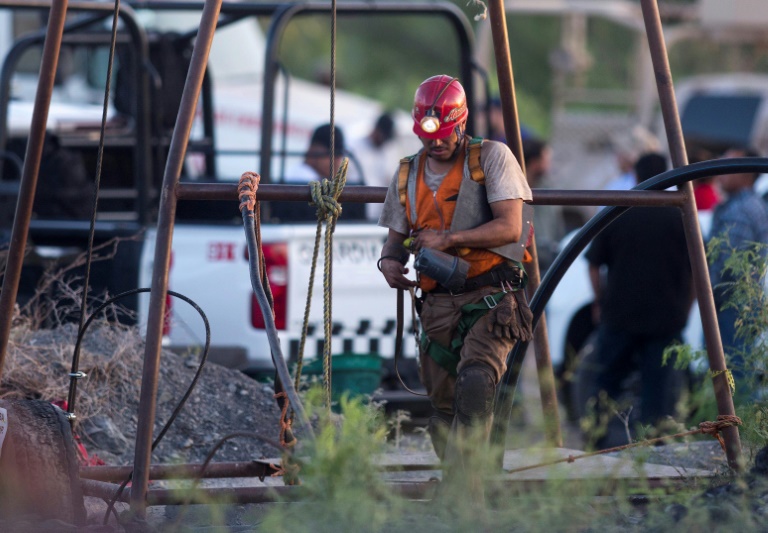
Rescuers will deploy an underwater drone as part of efforts to save 10 workers trapped for five days in a flooded coal mine in northern Mexico, authorities said Monday.

The device provided by the navy has a high-resolution camera and light to identify possible obstacles without putting lives at risk, civil defense national coordinator Laura Velazquez said.

Work continued to pump water from the mine in Agujita in the northern state of Coahuila to make it safe enough for rescuers to go inside.

The military said that it was hoped rescuers would be able enter to one of the shafts in the middle of this week if the water level drops to 1.5 meters (around five feet).

The mine shafts descend about 60 meters and the water inside the one that rescuers plan to go into was 19.4 meters deep, down from more than 30 meters initially, officials said.

“We’re hurrying to remove the water so that the rescuers can enter,” said President Andres Manuel Lopez Obrador, who visited the site on Sunday and urged intensified efforts to save the miners.

Around 300 liters were being pumped out each second, he told reporters back in Mexico City.

“Everyone has faith. No one is thinking about anything other than the rescue,” he said.

Authorities said the miners had been carrying out excavation work when they hit an adjoining area full of water.

Five workers managed to escape from the crudely constructed mine in the initial aftermath of Wednesday’s accident, but there has been no contract with the others.

With each passing hour relatives were becoming increasingly desperate and more reluctant to talk to the media.

Authorities reinforced a security cordon around the mine, about 1,130 kilometers (700 miles) north of Mexico City.

Several hundred soldiers and other personnel, including six military scuba divers, are taking part in the rescue effort, according to the government.

The Attorney General’s Office said on Sunday that it asked the labor ministry to provide information on safety inspections carried out at mines in the area to determine the cause of the accident.

Coahuila, Mexico’s main coal-producing region, has seen a series of fatal mining incidents over the years.

Last year, seven miners died when they were trapped in the region.

The worst accident was an explosion that claimed 65 lives at the Pasta de Conchos mine in 2006.

Only two bodies were retrieved after that tragedy and the families have repeatedly urged the Mexican authorities to recover the others.

Mexico to use underwater drone in search for trapped miners

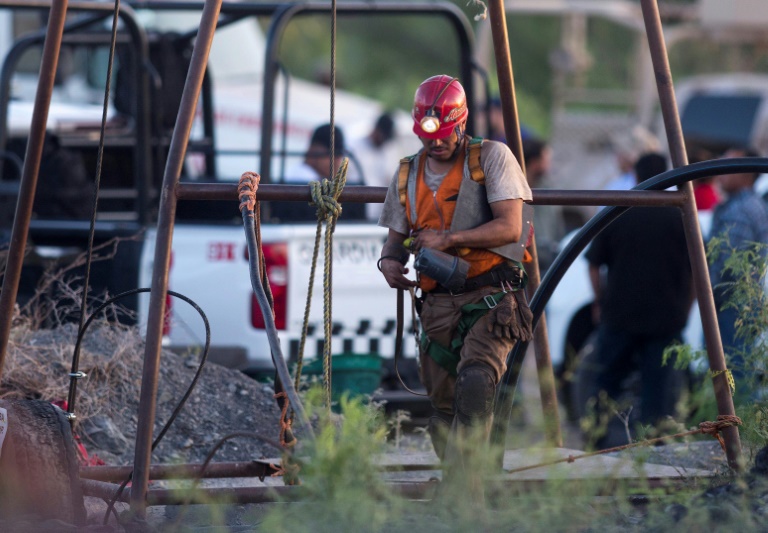
Rescuers will deploy an underwater drone as part of efforts to save 10 workers trapped for five days in a flooded coal mine in northern Mexico, authorities said Monday.

The device provided by the navy has a high-resolution camera and light to identify possible obstacles without putting lives at risk, civil defense national coordinator Laura Velazquez said.

Work continued to pump water from the mine in Agujita in the northern state of Coahuila to make it safe enough for rescuers to go inside.

The military said that it was hoped rescuers would be able enter to one of the shafts in the middle of this week if the water level drops to 1.5 meters (around five feet).

The mine shafts descend about 60 meters and the water inside the one that rescuers plan to go into was 19.4 meters deep, down from more than 30 meters initially, officials said.

“We’re hurrying to remove the water so that the rescuers can enter,” said President Andres Manuel Lopez Obrador, who visited the site on Sunday and urged intensified efforts to save the miners.

Around 300 liters were being pumped out each second, he told reporters back in Mexico City.

“Everyone has faith. No one is thinking about anything other than the rescue,” he said.

Authorities said the miners had been carrying out excavation work when they hit an adjoining area full of water.

Five workers managed to escape from the crudely constructed mine in the initial aftermath of Wednesday’s accident, but there has been no contract with the others.

With each passing hour relatives were becoming increasingly desperate and more reluctant to talk to the media.

Authorities reinforced a security cordon around the mine, about 1,130 kilometers (700 miles) north of Mexico City.

Several hundred soldiers and other personnel, including six military scuba divers, are taking part in the rescue effort, according to the government.

The Attorney General’s Office said on Sunday that it asked the labor ministry to provide information on safety inspections carried out at mines in the area to determine the cause of the accident.

Coahuila, Mexico’s main coal-producing region, has seen a series of fatal mining incidents over the years.

Last year, seven miners died when they were trapped in the region.

The worst accident was an explosion that claimed 65 lives at the Pasta de Conchos mine in 2006.

Only two bodies were retrieved after that tragedy and the families have repeatedly urged the Mexican authorities to recover the others.

Zaporizhzhia: Nuclear power plant caught in Ukraine war

The Russian-held Zaporizhzhia power plant in Ukraine, which is at the centre of international concern amid mutual accusations of shelling by Moscow and Kyiv, is Europe’s biggest nuclear plant.

Recent fighting around the plant has prompted the International Atomic Energy Agency (IAEA) to warn of the “very real risk of a nuclear disaster”, while Kyiv has accused Moscow of “nuclear terrorism”.

Fears of a possible incident have brought back haunting memories of the 1986 Chernobyl nuclear disaster in then Soviet Ukraine, which left hundreds dead and spread radioactive contamination across Europe.

Here are some key facts about the facility:

– History –

Located near the city of Energodar on the Dnipro River, the plant has six of Ukraine’s 15 reactors — enough to power four million homes.

The reactors were all switched on between 1984 and 1995, according to the Ukrainian state agency Energoatom, which runs the plant.

Before the war, the plant was generating around a fifth of Ukraine’s electricity.

The country, which has significant uranium reserves, is the seventh-largest producer of nuclear power in the world, according to the IAEA.

It began developing nuclear energy in the 1970s with the construction of Chernobyl, near the capital Kyiv, and has made major improvements in nuclear safety over the years since that cataclysmic event.

The Zaporizhzhia plant is “relatively modern”, Mark Wenman of Imperial College London told the Science Media Centre earlier, noting that its reactor components are housed inside a heavily reinforced containment building that can “withstand extreme external events, both natural and man-made, such as an aircraft crash or explosions”.

– Capture –

The power plant — located close to the Crimean peninsula which was annexed by Moscow in 2014 — was captured by Russian forces on March 4 following a battle in the early days of Moscow’s invasion.

The fighting caused a fire at a training facility. Firefighters said they were prevented from reaching the blaze for hours.

Energoatom initially shut off two of the reactors — and more recently a third — but the plant has continued to be operated by Ukrainian technicians under Russian control.

The IAEA has repeatedly said it wants to organise an inspection of the plant.

This was initially opposed by Ukrainian authorities but officials have sounded less adamant about the prospect recently.

– Renewed fighting –

Ukraine on July 21 accused Moscow of storing heavy weapons at the plant after Russia said Ukraine’s troops had fired on the facility.

Energoatom said Russia had moved over two dozen pieces of military equipment and ammunition into the engine room of the first reactor.

US Secretary of State Antony Blinken said Moscow was using it as a “military base to fire at Ukrainians, knowing that they can’t and won’t shoot back”.

On August 5, Ukraine accused Russian forces of carrying out strikes near a reactor. Russia said Ukraine was behind them.

Following the attacks, Energoatom said it would have to shut down another reactor because of damage to a power cable.

Another reactor is being repaired, meaning only two reactors are now functioning.

Ukraine says there are around 500 Russian troops at the plant and has called for the establishment of a demilitarised zone.

Despite the tensions, Energoatom has said it is still in contact with the plant and receives data on radiation monitoring.

It said on Monday that there had been no change to radiation levels.

US news site Axios agrees to $525 mn buyout

US news website Axios, which has shot to prominence since its 2016 founding, has agreed to a $525 million deal to sell itself to US telecom group Cox Enterprises, the firms said Monday. 

The site, built by long-time Washington journalists, quickly built a brand during the turbulent and news-filled presidency of Donald Trump. 

Since Axios’s launch as a news source specializing in technology and politics it has expanded into local news — and the buyout investment will help grow that expansion.

The founders of Axios will keep stakes in the company and continue to lead day-to-day editorial and business decisions, Cox said in a release.

“With so much happening in the world, Axios plays a critical role in delivering balanced, trusted news that people need,” said Cox chief executive Alex Taylor.

Cox Enterprises was founded as a family business in 1898 and is now based in Atlanta in the US state of Georgia.

Cox subsidiaries range from media outlets such as the Atlanta Journal-Constitution to internet-service provider Cox Communications and an eponymous automotive sales division.

Axios was launched by three former Politico journalists as an online media outlet known for short, snappy articles along with podcasts and newsletters.

“Our shared ambitions should be clear: to spread clinical, nonpartisan, trusted journalism to as many cities and as many topics as fast as possible,” Axios chief executive Jim VandeHei said in a release.

An Axios communications software unit will become an independent entity with co-founders Mike Allen, Roy Schwartz, and VandeHei owning the majority of that company with Cox holding a minor stake, the release stated.

EU submits a 'final text' at Iran nuclear talks

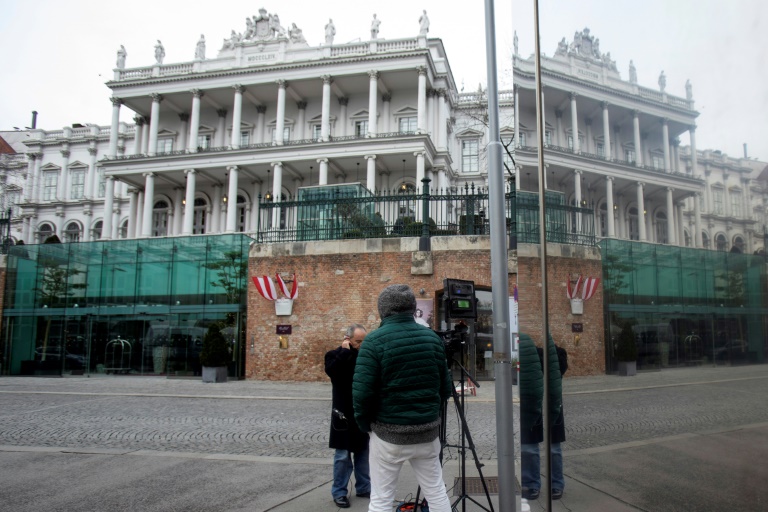
The European Union submitted a “final text” at talks to salvage a 2015 deal aimed at reining in Iran’s nuclear ambitions and Tehran said Monday it was reviewing the proposals.

Britain, China, France, Germany, Iran and Russia, as well as the United States indirectly, resumed talks on Thursday in Vienna, months after they had stalled.

The European Union has submitted a “final text”, a European official said on Monday. “We worked for four days and today the text is on the table,” the official told reporters on condition of anonymity.

“The negotiation is finished, it’s the final text… and it will not be renegotiated.”

“Now the ball is in the court of the capitals and we will see what happens,” the European official added. “No one is staying in Vienna.”

The official said he hoped to see the “quality” text accepted “within weeks”.

Iran said it was examining the 25-page document.

“As soon as we received these ideas, we conveyed our initial response and considerations,” state news agency IRNA quoted an unnamed foreign ministry official as saying.

“But naturally, these items require a comprehensive review, and we will convey our additional views and considerations.”

On Sunday, Iran demanded the UN nuclear watchdog “completely” resolve questions over nuclear material at undeclared sites.

Iranian sources have suggested a key sticking point has been a probe by the International Atomic Energy Agency (IAEA) on traces of nuclear material found at undeclared Iranian sites.

“That has nothing to do with” the Joint Comprehensive Plan of Action (JCPOA) agreement of 2015, the European official said.

“I hope Iran and the IAEA will reach an agreement because that will facilitate a lot of things.”

– ‘Irrelevant and unconstructive’ –

The UN agency’s board of governors adopted a resolution in June, censuring Iran for failing to adequately explain the previous discovery of traces of enriched uranium at three previously undeclared sites.

“We believe that the agency should completely resolve the remaining safeguard issues from a technical route by distancing itself from irrelevant and unconstructive political issues, Iran’s foreign minister Hossein Amir-Abdollahian said on Sunday.

Kelsey Davenport, an expert at the Arms Control Association, warned against abandoning the IAEA probe in a bid to revive the JCPOA, which she called “the most effective way to verifiably block Iran’s pathways to nuclear weapons”.

If the United States and the other signatories to the 2015 deal do not support the UN body, it will “undermine the agency’s mandate” and broader non-proliferation goals, she wrote on Twitter.

The EU-coordinated negotiations to revive the JCPOA began in April 2021 before coming to a standstill in March.

The 2015 accord gave Iran sanctions relief in exchange for curbs on its atomic programme to guarantee Tehran could not develop a nuclear weapon — something it has always denied wanting to do.

But the unilateral withdrawal of the United States from the deal under president Donald Trump in 2018 and the reimposition of biting economic sanctions prompted Iran to begin rolling back on its own commitments.

Stocks rise, dollar eases as investors focus on US inflation

Stock markets rose and the dollar retreated Monday as investors turned their attention to US inflation data later this week and weigh the prospect of further monetary policy tightening.

The dollar was weaker as investors took profit on the strong gains notched up last week on speculation that the US Federal Reserve will announce a third successive rate increase of three-quarters of a percentage point in September.

“The macro calendar is quiet this week with US inflation data being the main highlight,” said Forex.com analyst Fawad Razaqzada. 

“This will keep the dollar… in focus after a very strong US jobs report on Friday rekindled the possibility of a hat trick of 75-basis-point rate hikes in September.” 

Data due Wednesday are expected to show inflation in the world’s biggest economy slowed slightly in July, but remained close to the four-decade highs seen in recent months.

The reading “seems very unlikely to offer compelling evidence of a slowdown needed for the Fed to pull away from its aggressive inflation-fighting mode”, said SPI Asset Management analyst Stephen Innes.

Oil prices gained, making good some of the losses from last week, when a rise in US crude stockpiles was partly responsible for a 10-percent drop in prices.

Both main oil contracts have lost all the gains seen in the wake of Russia’s invasion of Ukraine, which led the United States and Europe to ban imports of Russian crude, hammering already thin supplies.

A blockbuster US jobs report last week “highlighted how strong the economy remains although traders are now increasingly nervous about more aggressive tightening sending the economy into a deeper recession further down the road”, said OANDA analyst Craig Erlam.

“The resumption of Iran nuclear talks today is one potential downside risk for the oil price, given the ability of the country to quickly ramp up production if a deal is struck.”

Iran on Sunday demanded that the UN nuclear watchdog, the International Atomic Energy Agency, “completely” resolve outstanding issues, as talks resume to revive a 2015 deal to rein in Tehran’s nuclear ambitions.

Iranian sources have suggested that one of the key sticking points is a probe by the IAEA into traces of nuclear material found at undeclared Iranian sites.

– Key figures at around 1540 GMT –

New York – Dow: UP 0.3 percent at 32,891.96 points

London – FTSE 100: UP 0.6 percent at 7,482.37 (close)

Frankfurt – DAX: UP 0.8 percent at 13,687.69 (close)

Paris – CAC 40: UP 0.8 percent at 6,524.44 (close)

EURO STOXX 50: UP 0.9 percent at 3,757.22

Tokyo – Nikkei 225: UP 0.3 percent at 28,249.24 (close)

Hong Kong – Hang Seng Index: DOWN 0.8 percent at 20,045.77 (close)

Shanghai – Composite: UP 0.3 percent at 3,236.93 (close)

Euro/dollar: UP at $1.0210 from $1.0184 Friday

Pound/dollar: UP at $1.2097 from $1.2075

Euro/pound: UP at 84.41 pence from 84.32 pence

Dollar/yen: DOWN at 134.75 yen from 135.00 yen

West Texas Intermediate: UP 0.9 percent at $89.81 per barrel

Brent North Sea crude: UP 1.0 percent at $95.90 per barrel

Kremlin accuses Kyiv of shelling nuclear plant

The Kremlin accused Ukrainian forces on Monday of firing on Europe’s largest nuclear power plant in occupied Ukraine and warned that the alleged attacks could have “catastrophic consequences”.

Kyiv said Moscow was responsible and called for the area to be demilitarised, saying two employees had been wounded in recent attacks.

Fighting continued meanwhile along battle lines stretching across eastern Ukraine, and Russia continued its crackdown on dissent at home.

Each side has blamed the other for the escalation in fighting around the facility in Zaporizhzhia, southeast Ukraine, which was captured by Russian forces early in their invasion, launched in late February.

Recent fighting at the plant has prompted the UN’s nuclear watchdog, the International Atomic Energy Agency (IAEA), to warn of “the very real risk of a nuclear disaster”.

Ukraine said that the plant should be cleared of Russian military and called for the establishment of an international security and energy team to oversee the sight.

“What needs to be done is to remove occupying forces from the station and to create a de-militarised zone on the territory of the station,” said Petro Kotin, president of Ukraine’s nuclear energy company, Energoatom.

“There should be a peacekeeping mission including experts from the IAEA and other security organisations,” he added.

“Their presence and initially giving control to them and then to the Ukrainian side would have solved this problem”.

– ‘Nuclear terrorism’ –

Kotin said that Russia had deployed some 500 Russian troops and 50 pieces of hardware including tanks at Zaporizhzhia, echoing earlier claims from Kyiv that Moscow was using the site for military cover.

Ukraine Prime Minister Denys Shmygal meanwhile accused Russia of “nuclear terrorism,” urging the world to “unite now to prevent a catastrophe.”

The Kremlin has captured swathes of Ukrainian territory since February, introducing Russian currency and by announcing plans to formally annex the areas by holding votes, including in the Zaporizhzhia region.

The head of its Moscow-installed administration Yevgeny Balitsky said on social media Monday he had signed a decree “on the issue of organising a referendum on the reunification of the Zaporizhzhia region with the Russian Federation”.

The plans follow a similar move by Moscow in 2014 after it annexed the Crimean peninsula, a highly controversial vote that has not been recognised by most Western countries.

Although attention was focused on the fallout from fighting at Zaporizhzhia, Russian forces continued shelling across the sprawling eastern frontline. 

Among the attacks, Ukraine said that one woman had died and four more were injured in Russian bombardments on Kharkiv region in the north east. It has been under persistent Russian shelling for weeks.

Ukrainian forces in turn said they had bombed a strategic bridge over the Dnipro river overnight in the Russian-held city of Kherson in the south.

– Fresh fine for journalist –

The authorities in Moscow pursued their crackdown on opposition to the war, handing down a new fine to journalist Marina Ovsyannikova.

Ovsyannikova shot to prominence in March for interrupting a live broadcast to denounce Russia’s military intervention in Ukraine.

On Monday, her lawyer did not rule out the possibility of her facing another criminal probe.

There was progress on one rare area of compromise between Russian and Ukraine Monday, after the first boat to leave Ukrainian ports under a recent deal Ankara and UN reached its destination in Turkey.

While Kyiv welcomed the news, officials also said there was a delay in the first delivery to leave Ukrainian ports because the buyer had refused delivery, citing a five-month delay in shipment.

Infrastructure Minister Oleksandr Kubrakov said on social media that a cargo ship carrying grain had departed for the first time from the Black Sea port of Pivdennyi.

Close Bitnami banner
Bitnami