World

Pfizer to acquire sickle cell drugmaker GBT for $5 bn

American drugmaker Pfizer announced a deal on Monday to acquire Global Blood Therapeutics, makers of a recently approved treatment for sickle cell disease, for $5.4 billion.

With the agreement, Pfizer, one of the top makers of Covid-19 vaccines, acquires GBT’s Oxbryta to treat the potentially fatal blood disorder that primarily affects people of African, Middle Eastern or South Asian descent.

The drug was authorized for those over 12 years old in 2019 but gained federal approval in December for children aged four to 11. 

“We are excited to welcome GBT colleagues into Pfizer and to work together to transform the lives of patients, as we have long sought to address the needs of this underserved community,” Pfizer Chairman and CEO Albert Bourla said in a statement. 

Net sales for Oxbryta were approximately $195 million in 2021, and Pfizer said GBT’s suite of SCD treatments have the potential to generate more than $3 billion in worldwide sales. 

Bourla said the merger will help “accelerate innovation for the sickle cell disease community and bring these treatments to patients as quickly as possible.”

Sales of Oxbryta helped GBT generate first-quarter turnover of $55 million (up 41 percent), while the company registered a net loss of $81.4 million.

The San Francisco-based firm is due to publish its second-quarter numbers on Monday, but will not hold a previously scheduled call to discuss the earnings report.

Pfizer’s second-quarter turnover jumped 47 percent — to a record $27.74 billion — boosted by sales of its Covid vaccine and pills.

Its net profit soared by 78 percent, to $9.9 billion.

Following the merger announcement, GBT shares rose 4.4 percent in early trading Monday, while Pfizer shares slipped 0.7 percent.

Stocks rise, dollar eases as investors focus on US inflation

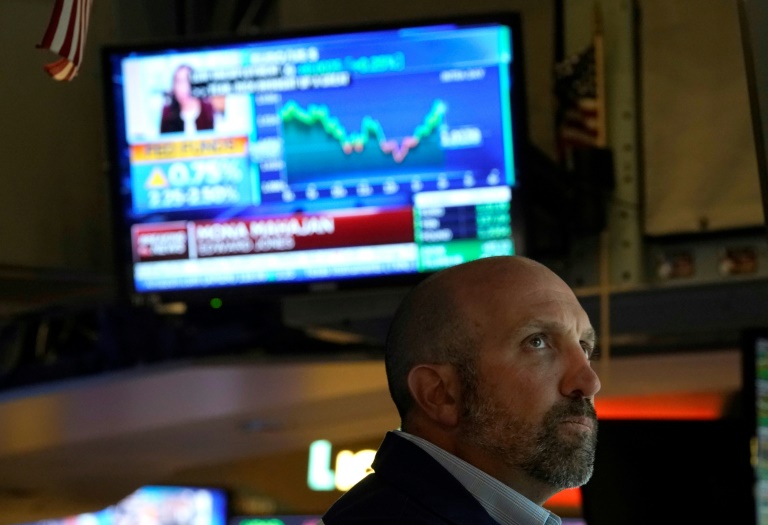
Stock markets rose and the dollar retreated Monday as investors turned their attention to US inflation data later this week and weigh the prospect of further monetary policy tightening.

The dollar was weaker as investors took profit on the strong gains notched up last week on speculation that the US Federal Reserve will announce a third successive rate increase of three-quarters of a percentage point in September.

“The macro calendar is quiet this week with US inflation data being the main highlight,” said Forex.com analyst Fawad Razaqzada. 

“This will keep the dollar… in focus after a very strong US jobs report on Friday rekindled the possibility of a hat trick of 75-basis-point rate hikes in September.” 

Data due Wednesday is expected to show inflation in the world’s biggest economy slowed slightly in July, but remained close to the four-decade highs seen in recent months.

The reading “seems very unlikely to offer compelling evidence of a slowdown needed for the Fed to pull away from its aggressive inflation-fighting mode”, said SPI Asset Management analyst Stephen Innes.

Oil prices retreated on expectations of weaker demand amid a cost-of-living crisis.

A rise in US crude stockpiles was partly responsible for a 10-percent drop in prices last week.

Both main oil contracts have lost all the gains seen in the wake of Russia’s invasion of Ukraine, which led the United States and Europe to ban imports of Russian crude, hammering already thin supplies.

A blockbuster US jobs report last week “highlighted how strong the economy remains although traders are now increasingly nervous about more aggressive tightening sending the economy into a deeper recession further down the road”, said OANDA analyst Craig Erlam.

“The resumption of Iran nuclear talks today is one potential downside risk for the oil price, given the ability of the country to quickly ramp up production if a deal is struck.”

Iran on Sunday demanded that the UN nuclear watchdog, the International Atomic Energy Agency, “completely” resolve outstanding issues, as talks resume to revive a 2015 deal to rein in Tehran’s nuclear ambitions.

Iranian sources have suggested that one of the key sticking points is a probe by the IAEA into traces of nuclear material found at undeclared Iranian sites.

– Key figures at around 1345 GMT –

New York – Dow: UP 0.7 percent at 33,038.85 points

London – FTSE 100: UP 0.9 percent at 7,504.26

Frankfurt – DAX: UP 1.2 percent at 13,734.97

Paris – CAC 40: UP 1.4 percent at 6,560.62

EURO STOXX 50: UP 1.4 percent at 3,775.84

Tokyo – Nikkei 225: UP 0.3 percent at 28,249.24 (close)

Hong Kong – Hang Seng Index: DOWN 0.8 percent at 20,045.77 (close)

Shanghai – Composite: UP 0.3 percent at 3,236.93 (close)

Euro/dollar: UP at $1.0210 from $1.0184 Friday

Pound/dollar: UP at $1.2132 from $1.2075

Euro/pound: DOWN at 84.15 pence from 84.32 pence

Dollar/yen: DOWN at 134.65 yen from 135.00 yen

West Texas Intermediate: DOWN 0.6 percent at $88.52 per barrel

Brent North Sea crude: DOWN 0.3 percent at $94.68 per barrel

Ukraine 'optimistic' after arrival of first grain shipment

The first cargo ship to reach its final destination after departing from Ukraine under a deal between Moscow and Kyiv docked in Turkey Monday, Kyiv said, while a consignment due in Lebanon reported delays.

Ukraine, one of the world’s largest grain exporters, was forced to halt almost all deliveries after Russia’s invasion, but Black Sea exports recently restarted under a deal brokered by the UN and Turkey.

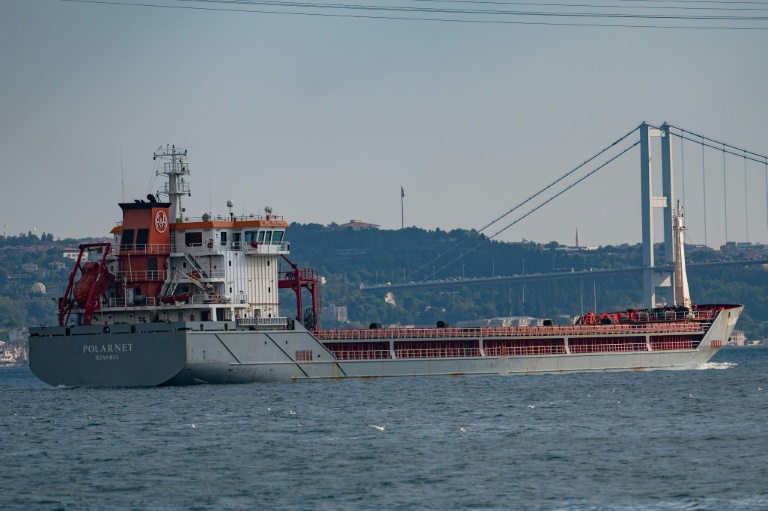
The Turkish cargo ship — the Polarnet — that reached its final destination left the Ukrainian port of Chornomorsk last week carrying 12,000 tonnes of corn.

It arrived in Turkey as scheduled after being inspected by the Joint Coordination Center (JCC) established in Istanbul under the international agreement signed last month, Kyiv said.

“This first successful completion of the implementation of the ‘grain deal’ means it is possible to be optimistic about future transportation,” Infrastructure Minister Oleksandr Kubrakov was quoted as saying in a statement by the ministry.

The statement did not give the ship’s destination, but the website vesselfinder.com gave its location as the port of Derince, Turkey.

The deal brokered by Turkey and the UN lifted a Russian blockade of Ukraine’s ports and set terms for millions of tonnes of wheat and other grain to start flowing from silos and ports.

The Razoni was the first ship to leave Ukraine under the deal.

It left the port of Odessa on August 1 carrying 26,000 tonnes of corn and was expected in Tripoli in Lebanon this weekend but has yet to reach the destination.

The Ukrainian embassy in Lebanon explained on social media that the consignment was delayed after the original buyer refused delivery, citing a five-month delay in shipment.

“The sender is therefore looking for another recipient. This may be in Lebanon or in another country,” it added in a statement on Twitter.

Eight ships have left Ukrainian ports since the agreement was signed, Kyiv said Monday, and it hoped that between three and five ships would be able to depart daily within two weeks.

Stocks rise, oil falls tracking recession risks

Stock markets largely rose and oil prices retreated Monday as investors mulled the prospect of recession in the United States and elsewhere and central banks seek to tame soaring inflation with aggressive interest rate hikes.

The dollar, which had surged on Friday on the prospect of further large increases in US borrowing costs, fell back on profit-taking at the start of the new week. 

Speculation is growing that the US Federal Reserve will announce a third successive rate increase of three-quarters of a percentage point following a blockbuster US jobs report last week.

This week, all eyes will turn to the release of US July inflation data, which are expected to show a slight slowdown, but still not far from the four-decade highs seen in recent months.

The latest reading “seems very unlikely to offer compelling evidence of a slowdown needed for the Fed to pull away from its aggressive inflation-fighting mode”, said SPI Asset Management analyst, Stephen Innes.

Oil prices retreated further on expectations of weaker demand amid a cost-of-living crisis.

A rise in US crude stockpiles was partly responsible for a 10-percent drop in prices last week.

Both main oil contracts have lost all the gains seen in the wake of Russia’s invasion of Ukraine, which led the United States and Europe to ban imports of Russian crude, hammering already thin supplies.

The US jobs report last week “highlighted how strong the economy remains although traders are now increasingly nervous about more aggressive tightening sending the economy into a deeper recession further down the road”, said Oanda analyst Craig Erlam.

“The resumption of Iran nuclear talks today is one potential downside risk for the oil price, given the ability of the country to quickly ramp up production if a deal is struck.”

Iran on Sunday demanded that the UN nuclear watchdog, the International Atomic Energy Agency, “completely” resolve outstanding issues, as talks resume to revive a 2015 deal to rein in Tehran’s nuclear ambitions.

Iranian sources have suggested that one of the key sticking points is a probe by the IAEA into traces of nuclear material found at undeclared Iranian sites.

– Key figures at around 1100 GMT –

London – FTSE 100: UP 0.5 percent at 7,479.12 points

Frankfurt – DAX: UP 0.7 percent at 13,674.28

Paris – CAC 40: UP 0.9 percent at 6,533.50

EURO STOXX 50: UP 0.9 percent at 3,759.44

Tokyo – Nikkei 225: UP 0.3 percent at 28,249.24 (close)

Hong Kong – Hang Seng Index: DOWN 0.8 percent at 20,045.77 (close)

Shanghai – Composite: UP 0.3 percent at 3,236.93 (close)

New York – Dow: UP 0.2 percent at 32,803.47 (close)

Euro/dollar: UP at $1.0194 from $1.0184 Friday

Pound/dollar: UP at $1.2104 from $1.2075

Euro/pound: DOWN at 84.20 pence from 84.32 pence

Dollar/yen: DOWN at 134.86 yen from 135.00 yen

West Texas Intermediate: DOWN 1.0 percent at $88.09 per barrel

Brent North Sea crude: DOWN 1.1 percent at $93.88 per barrel

China holds fresh military drills around Taiwan

China carried out fresh military drills around Taiwan Monday, Beijing said, defying calls to end its largest-ever exercises encircling the island in the wake of a visit by US House Speaker Nancy Pelosi.

Beijing has raged at the trip by Pelosi — the highest-ranking elected US official to visit Taiwan in decades — ripping up a series of talks and cooperation agreements with Washington, most notably on climate change and defence.

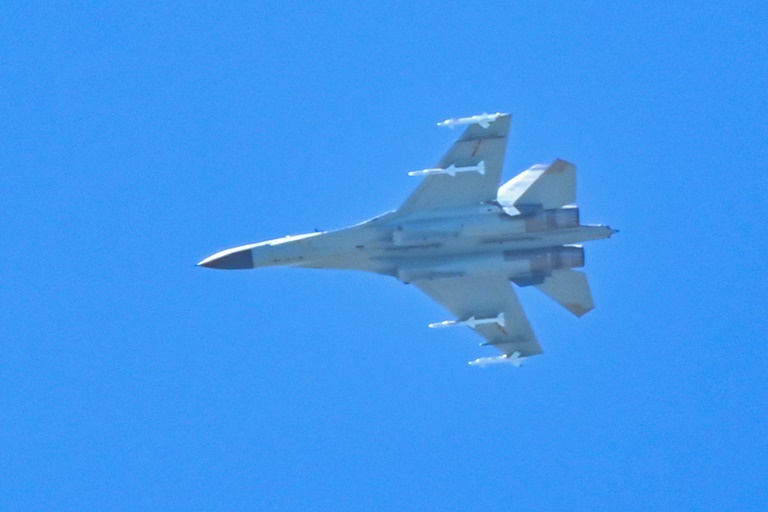
It has also deployed fighter jets, warships and ballistic missiles in what analysts have described as practice for a blockade and ultimate invasion of the self-ruled democratic island that China claims as its territory.

Those drills had been expected to draw to a close on Sunday, but China said Monday they were still ongoing.

“The eastern theatre of the Chinese People’s Liberation Army continued to carry out practical joint exercises and training in the sea and airspace around Taiwan island,” the military said.

The exercises, the PLA’s Eastern Command said, were “focusing on organising joint anti-submarine and sea assault operations”.

Taipei condemned Beijing for extending the drills.

“China’s provocation and aggression have harmed the status quo of the Taiwan Strait and raised tensions in the region,” the island’s foreign ministry said in a statement.

Beijing was also set to carry out live-fire drills on Monday in parts of the South China Sea and the Yellow Sea.

– Taipei defiant –

Taiwan has remained defiant throughout the Chinese drills.

Its military said it would hold anti-landing exercises in Taiwan’s south on Tuesday and Thursday.

“We will practise counter moves against simulated enemy attacks on Taiwan,” Lou Woei-jye, spokesman for the Eighth Army Corps, told AFP. 

They will include the deployment of hundreds of troops and about 40 howitzer guns, the military said.

Taiwan has insisted that no Chinese planes or ships have entered Taiwan’s territorial waters during the drills.

But to show how close it came to Taiwan’s shores, the Chinese military released a video of an air force pilot filming the island’s coastline and mountains from his cockpit.

The Eastern Command also shared a photo it said was of a warship on patrol with Taiwan’s shoreline visible in the background.

Ballistic missiles were fired over Taiwan’s capital during the exercises last week, according to Chinese state media.

The scale and intensity of China’s drills — as well as its withdrawal from key talks on climate and defence — have triggered outrage in the United States and other democracies.

US Secretary of State Antony Blinken has said Washington is “determined to act responsibly” to avoid a major global crisis.

– ‘Issuing a warning’ –

But Beijing on Monday defended its behaviour as “firm, forceful and appropriate” to American provocation. 

“(We) are only issuing a warning to the perpetrators,” foreign ministry spokesman Wang Wenbin told a regular briefing, promising China would “firmly smash the Taiwan authorities’ illusion of gaining independence through the US”.

“We urge the US to do some earnest reflection, and immediately correct its mistakes.”

Experts say the drills have revealed an increasingly emboldened Chinese military capable of carrying out a gruelling blockade of the island and obstructing US forces from coming to Taiwan’s aid.

“In some areas, the PLA might even surpass US capabilities,” Grant Newsham, a researcher at the Japan Forum for Strategic Studies and a former US Navy officer, told AFP.

“If the battle is confined to the area right around Taiwan, today’s Chinese navy is a dangerous opponent — and if the Americans and Japanese do not intervene for some reason, things would be difficult for Taiwan.”

Stranded Beluga whale is now stationary in Seine: NGO

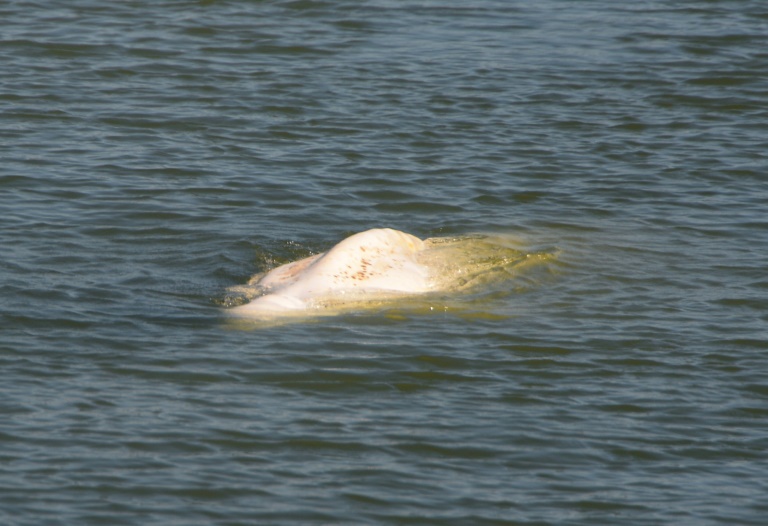
A malnourished beluga whale that has swum up France’s River Seine is no longer progressing but is still alive, environmental group Sea Shepherd said Monday.

Hopes are fading to save the animal, which was first spotted on Tuesday in the river that runs through Paris to the English Channel.

“It is alert but not eating,” Sea Shepherd France president Lamya Essemlali told AFP in a text message.

There was, however, “no worsening of its condition”, she said.

Since Friday the whale has been between two locks some 70 kilometres (44 miles) north of the French capital.

Rescuers are considering last-ditch efforts to extract the animal from the Seine as the river’s warm water is harming its health.

One alternative would be to open the locks in the hope that the beluga will swim towards the English Channel, authorities said.

Opening the locks would harbour the risk of the whale moving further upriver towards Paris, which would be even more disastrous.

Several attempts to feed the whale have failed in the past days.

On Saturday, veterinarians administered “vitamins and products to stimulate its appetite”, said a statement on Sunday by the police in Normandy’s Eure department, which is overseeing the rescue effort.

Belugas are normally found only in cold Arctic waters, and while they migrate south in the autumn to feed as ice forms, they rarely venture so far.

An adult can reach up to four metres (13 feet) in length.

According to France’s Pelagis Observatory, specialised in sea mammals, the nearest beluga population is off the Svalbard archipelago, north of Norway, 3,000 kilometres from the Seine.

Gaza counts cost of conflict as truce holds between Israel, Islamic Jihad

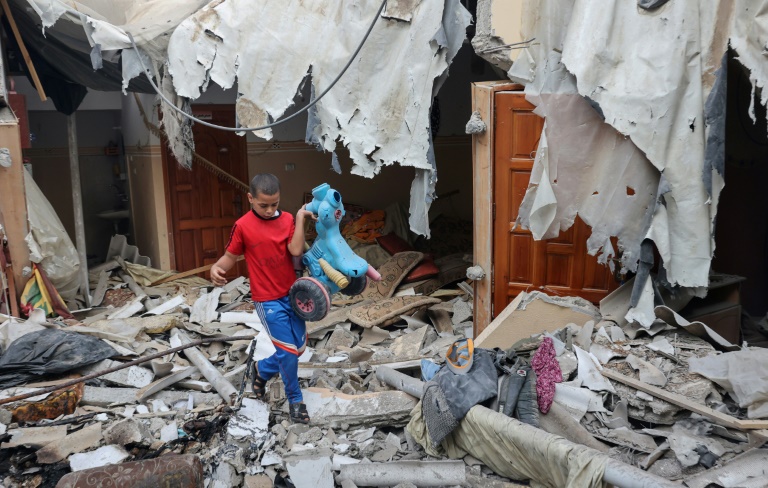
Shell-shocked Gazans on Monday sifted through the rubble of three days of deadly conflict between Israel and Islamic Jihad militants as a truce held and life slowly returned to normal with power restored.

The sole power plant in the blockaded enclave “started working to generate electricity” after a two-day shutdown, distributor spokesman Mohammed Thabet told AFP, hours after fuel trucks for the plant entered Gaza.

A ceasefire reached late Sunday has raised hopes of ending the intense fighting that killed 44 people according to Gaza’s health ministry, with 15 children among the dead.

The power shutdown on Saturday had sparked concern about the impact on hospitals treating casualties and on other vital services, amid the worst fighting in Gaza since an 11-day war last year.

The Israeli military said roads would slowly reopen in the border area.

“It was decided to gradually lift the restrictions,” which have seen Israelis living near Gaza remain close to their bomb shelters, the army said.

Across areas hit by air strikes in Gaza, Palestinians tried Monday to salvage belongings from the rubble of shattered homes and to start clearing the debris.

Mohammed Alai, who lives east of Gaza City, described the situation as “tragic and tough”. 

“We have a lot of martyrs and wounded, and devastation and destruction, but Gaza is tending to its wounds,” he said.

– Hundreds wounded –

US President Joe Biden welcomed the ceasefire and thanked Egyptian President Abdel Fattah al-Sisi for his country’s role in brokering it.

Israeli Prime Minister Yair Lapid’s office late Sunday thanked “Egypt for its efforts” as it agreed to the truce, but said that “if the ceasefire is violated”, Israel “maintains the right to respond strongly”.

Islamic Jihad, an Iran-backed group designated as a terrorist organisation by several Western nations, also accepted the truce but said it too “reserves the right to respond” to any aggression.

Tehran said it will always “defend the active resistance”.

“A ceasefire was established because the Zionists (Israel) only understand the language of power,” Iranian Foreign Minister Hossein Amir-Abdollahian wrote on Instagram.

Starting on Friday, Israel had launched a heavy aerial and artillery bombardment of Islamic Jihad positions in Gaza, leading the militants to fire hundreds of rockets in retaliation.

In addition to those killed, Gazan health officials said 360 people were wounded in the Palestinian enclave, which is run by the Islamist group Hamas.

A senior Israeli diplomatic official said Monday that “most of the civilians that were killed in Gaza were killed by Islamic Jihad rockets” that fell short or misfired.

The militant group on Monday said 12 of its leaders and members had been killed.

Three people in Israel were wounded by shrapnel, while 31 others were lightly hurt while running for safety, emergency services said.

Islamic Jihad member Mohammad al-Hindi said the ceasefire deal “contains Egypt’s commitment to work towards the release of two prisoners”.

They were named as Bassem al-Saadi, a senior figure in the group’s political wing who was recently arrested in the occupied West Bank, and Khalil Awawdeh, a militant also in Israeli detention.

– ‘Sleep peacefully’ –

In the Israeli city of Asheklon, north of Gaza, beachgoers returned to the shore.

Sitting in a cafe, Eitan Casandini said residents were feeling “very good”.

“After we destroy them we can sleep peacefully,” he told AFP. “I don’t think Jihad will do anything again in the next three or four years.”

Islamic Jihad is aligned with Hamas but often acts independently. Hamas has fought four wars with Israel since seizing control of Gaza in 2007, including the conflict in May last year.

Israel has said it was necessary to launch a “pre-emptive” operation against Islamic Jihad, while the diplomatic official said the group had been planning an attack by sniper fire or with anti-tank missiles.

The army has killed senior leaders of Islamic Jihad in Gaza, including Taysir al-Jabari and Khaled Mansour.

The senior Israeli diplomatic official said Islamic Jihad had been dealt “a very serious blow” which had “taken them back decades”.

bur-rsc/pjm/fz

China holds fresh military drills around Taiwan

China carried out fresh military drills around Taiwan Monday, Beijing said, defying calls for it to end its largest-ever exercises encircling the democratic island in the wake of a visit by US House Speaker Nancy Pelosi.

Beijing has raged at the trip by Pelosi — the highest-ranking elected US official to visit Taiwan in decades — ripping up a series of talks and cooperation agreements with Washington, most notably on climate change and defence.

It has also deployed fighter jets, warships and ballistic missiles in what analysts have described as practice for a blockade and ultimate invasion of the self-ruled island that China claims as its territory.

Those drills had been expected to draw to a close on Sunday, but neither Beijing nor Taipei confirmed their conclusion, though Taiwan’s transport ministry said it had seen some evidence suggesting at least a partial drawdown.

China then said Monday they were ongoing, reporting “the eastern theatre of the Chinese People’s Liberation Army continued to carry out practical joint exercises and training in the sea and airspace around Taiwan island”.

The exercises, the Chinese military’s Eastern Command said, were “focusing on organising joint anti-submarine and sea assault operations”.

Beijing is also set to carry out live-fire drills on Monday in parts of the South China Sea and Yellow Sea.

– Taipei defiant –

Taiwan has remained defiant throughout days of drills by Beijing and will hold anti-landing exercises in its southernmost county of Pingtung on Tuesday and Thursday, Taipei’s army said.

“We will practise counter moves against simulated enemy attacks on Taiwan,” Lou Woei-jye, spokesman for the Eighth Army Corps, told AFP. 

They will include the deployment of hundreds of troops and about 40 howitzer guns, the military said.

Taipei on Monday condemned Beijing’s exercises but insisted that no Chinese planes or ships had entered Taiwan’s territorial waters.

To show how close it has come to Taiwan’s shores, the Chinese military released a video of an air force pilot filming the island’s coastline and mountains from his cockpit.

The Eastern Command also shared a photo it said was of a warship on patrol with Taiwan’s shoreline visible in the background.

Ballistic missiles were fired over Taiwan’s capital during the exercises last week, according to Chinese state media.

The scale and intensity of China’s drills — as well as Beijing’s withdrawal from key talks on climate and defence — have triggered outrage in the United States and other democracies.

US Secretary of State Antony Blinken has said Washington is “determined to act responsibly” to avoid a major global crisis.

– ‘Issuing a warning’ –

But Beijing on Monday defended its behaviour as “firm, forceful and appropriate” to American provocation. 

“(We) are only issuing a warning to the perpetrators,” foreign ministry spokesman Wang Wenbin told a regular briefing, promising China would “firmly smash the Taiwan authorities’ illusion of gaining independence through the US”.

“We urge the US to do some earnest reflection, and immediately correct its mistakes.”

Experts say the drills have revealed an increasingly emboldened Chinese military capable of carrying out a gruelling blockade of the island and obstructing US forces from coming to Taiwan’s aid.

“In some areas, the PLA might even surpass US capabilities,” Grant Newsham, a researcher at the Japan Forum for Strategic Studies and a former US Navy officer, told AFP.

“If the battle is confined to the area right around Taiwan, today’s Chinese navy is a dangerous opponent — and if the Americans and Japanese do not intervene for some reason, things would be difficult for Taiwan.”

Gaza crossing opens as truce holds between Israel, Islamic Jihad

Fuel trucks entered Gaza as an Egypt-brokered truce between Israel and Islamic Jihad militants held Monday, raising hopes that the intense conflict that left dozens of Palestinians dead has ended.

An AFP journalist at the goods crossing to southern Gaza saw trucks loaded with fuel enter the enclave, ending a severe shortage which had prompted the only power station there to shut down Saturday.

The arrival of vital supplies follows the start of a ceasefire late Sunday to stem the worst fighting in Gaza since an 11-day war last year devastated the Palestinian coastal territory.

Gaza’s health ministry said 15 children were among 44 people killed in three days of intense fighting.

Despite a flurry of strikes and rocket attacks in the run-up to the truce, neither side had reported any major violations of the agreement overnight.

The Israeli military said roads would gradually reopen in the border area on Monday.

“It was decided to gradually lift the restrictions,” which have seen Israelis living near Gaza remain close to their bomb shelters, the army said.

– Hundreds wounded –

US President Joe Biden welcomed the ceasefire and thanked Egyptian President Abdel Fattah al-Sisi for his country’s role in brokering it.

Israeli Prime Minister Yair Lapid’s office late Sunday thanked “Egypt for its efforts” as it agreed to the truce, but said that “if the ceasefire is violated”, Israel “maintains the right to respond strongly”.

Islamic Jihad, an Iran-backed group designated as a terrorist organisation by several Western nations, also accepted the truce but said it too “reserves the right to respond” to any aggression.

Tehran said it will always “defend the active resistance”.

“A ceasefire was established because the Zionists (Israel) only understand the language of power,” Iranian Foreign Minister Hossein Amir-Abdollahian wrote on Instagram.

Starting on Friday, Israel had launched a heavy aerial and artillery bombardment of Islamic Jihad positions in Gaza, leading the militants to fire hundreds of rockets in retaliation.

In addition to those killed, Gazan health officials said 360 people had been wounded in the Palestinian enclave, which is run by the Islamist group Hamas.

A senior Israeli diplomatic official said Monday that “most of the civilians that were killed in Gaza were killed by Islamic Jihad rockets” that fell short or misfired.

The militant group on Monday said 12 of its leaders and members had been killed.

Three people in Israel were wounded by shrapnel, while 31 others were lightly hurt while running for safety, emergency services said.

Islamic Jihad member Mohammad al-Hindi said the ceasefire deal “contains Egypt’s commitment to work towards the release of two prisoners”.

They were named as Bassem al-Saadi, a senior figure in the group’s political wing who was recently arrested in the occupied West Bank, and Khalil Awawdeh, a militant also in Israeli detention.

– ‘Sleep peacefully’ –

Across areas hit in Gaza, Palestinians tried to salvage belongings from the rubble and remove debris.

Mohammed Alai, who lives east of Gaza City, said the situation was “tragic and tough”. 

“We have a lot of martyrs and wounded, and devastation and destruction, but Gaza is tending to its wounds,” he said.

In the Israeli city of Asheklon, north of Gaza, beachgoers returned to the shore.

Sitting in a cafe, Eitan Casandini said residents were feeling “very good”.

“After we destroy them we can sleep peacefully,” he told AFP. “I don’t think Jihad will do anything again in the next three or four years.”

Islamic Jihad is aligned with Hamas but often acts independently. Hamas has fought four wars with Israel since seizing control of Gaza in 2007, including the conflict in May last year.

Israel has said it was necessary to launch a “pre-emptive” operation against Islamic Jihad, while the diplomatic official said the group had been planning an attack by sniper fire or with anti-tank missiles.

The army has killed senior leaders of Islamic Jihad in Gaza, including Taysir al-Jabari and Khaled Mansour.

The senior Israeli diplomatic official said Islamic Jihad had been dealt “a very serious blow” which had “taken them back decades”.

bur-rsc/pjm/fz

Japan's SoftBank reports record quarterly net loss

Japan’s SoftBank Group on Monday reported a record quarterly net loss of $23.4 billion, after interest rate hikes tanked tech shares.

The telecom firm-turned-investment behemoth posted a net loss of 3.16 trillion yen, nosediving from a net profit of 761.5 billion yen in the same April-June period the previous year.

“Global stock declines and the rapid depreciation of the yen” contributed to the slump, CEO Masayoshi Son told reporters.

A company statement elaborated, blaming the “global downward trend in share prices due to growing concerns over economic recession driven by inflation and rising interest rates”.

SoftBank’s big stakes in global tech giants and volatile new ventures have made for unpredictable earnings, and it has lurched between record highs and lows in recent years.

The portfolio companies that suffered large losses for the quarter included South Korean e-commerce giant Coupang and US meal delivery platform DoorDash, SoftBank Group said.

The outspoken Son said he wanted to reflect and learn from the huge losses suffered by SoftBank’s technology-focused Vision Fund, which suffered even worse declines than the tech-rich Nasdaq.

“All sorts of things can be used as excuses, such as the bad market environment, the war and the pandemic. But if we had been a bit more selective and made proper investments, we wouldn’t have suffered so much pain,” he said.

“I don’t know how long this winter will continue,” he added, referring to the challenging global situation for business.

“It could be three months. It could be three years,” Son said, joking that his “worries are reflected on his hair”.

– ‘Long-term’ lens –

Japanese media outlets including Kyodo News said the Q1 result was the largest quarterly loss the country has ever seen.

In May, SoftBank reported its worst-ever full-year net loss — and a then-record quarterly loss for Q4 — after a bruising 2021-22 that saw its assets hit by a US tech stocks rout and a regulatory crackdown in China.

That came after logging Japan’s biggest-ever annual net profit in 2020-21, when people moved their lives online during the pandemic and sent tech stocks soaring.

And in 2019-20, SoftBank Group reported a then-record annual net loss of 961.6 billion yen, as the emergence of Covid-19 compounded woes caused by its investment in troubled office-sharing firm WeWork.

SoftBank “faces a very tough situation in the immediate term”, Hideki Yasuda, senior analyst at Toyo Securities, told AFP before the earnings announcement.

“They have to wait for the market to rebound. You have to look at the company through the lens of long-term investment. It may experience one or two bad years, but over a decade or more, the world economy will keep growing and it could grow further.”

The US Federal Reserve and many other central banks have announced aggressive rate increases aimed at battling sky-high inflation linked to the Ukraine war and Covid-related supply chain woes.

But going against the grain, the Bank of Japan has stuck to its long-held monetary easing policies because it sees the latest price hikes as temporary.

This has pushed Japan’s currency down to 24-year lows against the dollar in recent months, driving down the yen value of SoftBank’s investments.

On Monday, Son also announced a new 400 billion yen share buyback, effectively extending its current trillion-yen buyback scheme.

Close Bitnami banner
Bitnami