World

Markets mixed as strong US jobs data fans Fed rate hike bets

Markets were mixed Monday and the dollar held big gains as a blockbuster US jobs report ramped up bets that the Federal Reserve will announce more sharp interest rate hikes as it tries to tame runaway inflation.

While the employment reading — which was more than twice as high as expected — indicated the world’s top economy remained resilient despite rising prices and borrowing costs, it will complicate the central bank’s plans to tighten monetary policy.

Traders have hoped that with several indicators pointing to a slowdown, including GDP figures showing a technical recession, policymakers could begin to ease back on their pace of rate hikes.

Now, speculation is growing that the Fed will have to announce a third successive 75 basis-point increase next month, particularly as officials have said their decisions will be data-dependent.

“Friday’s payroll report indicates an overheated labour market that continues to tighten further,” said SPI Asset Management’s Stephen Innes.

“Hence at minimum, the markets expect another 100 basis points of Fed funds rate increases over the next three meetings… with risks skewed towards significant increases.”

All eyes are now on the release this week of US July inflation data, which is expected to show a slight slowdown from June but still at four-decade highs.

The “report seems very unlikely to offer ‘compelling evidence’ of a slowdown needed for the Fed to pull away from its aggressive inflation-fighting mode”, Innes added.

The jobs figures left Wall Street’s main indexes mixed Friday, and Asia followed suit with markets fluctuating in early trade.

However, there was some relief that tensions had calmed since US House Speaker Nancy Pelosi’s visit to Taiwan last week sparked a furious reaction from China, including live-fire military drills around the island that continued Monday.

Hong Kong fell, with little excitement generated by news that the city will cut the amount of time incoming travellers must spend in hotel quarantine.

Singapore, Taipei, Bangkok, Jakarta and Wellington were also down, but Tokyo, Sydney, Seoul, Mumbai and Manila edged up.

Shanghai was boosted by better-than-expected Chinese trade data, though the gains were tempered by fresh worries about Covid lockdowns in the country that threaten the economic recovery.

London, Frankfurt and Paris rose in the morning.

– Oil demand concerns –

The prospect of higher interest rates sent the dollar surging, and it held on to those gains in Asia.

Oil rose but bets on a recession across leading economies continued to fuel concerns about demand — figures last week indicated Americans were driving less now than in summer 2020 at the height of the pandemic.

A rise in US stockpiles was partly responsible for a 10 percent drop in the commodity last week, pushing WTI below $90 for the first time since February.

Both main contracts have lost all the gains seen in the wake of Vladimir Putin’s invasion of Ukraine, which led the United States and Europe to ban imports of Russian crude, hammering already thin supplies.

Fresh talks on Iran’s nuclear programme were being followed.

“The resumption of Iran nuclear talks… is one potential downside risk for the oil price, given the ability of the country to quickly ramp up production if a deal is struck,” said OANDA’s Craig Erlam.

“Not to mention its reportedly large oil and gas reserves. A deal could apparently be struck within days, although we have heard that a lot at times this year.”

– Key figures at around 0810 GMT –

Tokyo – Nikkei 225: UP 0.3 percent at 28,249.24 (close)

Hong Kong – Hang Seng Index: DOWN 0.8 percent at 20,045.77 (close)

Shanghai – Composite: UP 0.3 percent at 3,236.93 (close)

London – FTSE 100: UP 0.2 percent at 7,451.24

Euro/dollar: UP at $1.0205 from $1.0184 Friday

Pound/dollar: UP at $1.2113 from $1.2075

Euro/pound: DOWN at 84.26 pence from 84.32 pence

Dollar/yen: UP at 135.07 yen from 135.00 yen

West Texas Intermediate: UP 0.5 percent at $89.45 per barrel

Brent North Sea crude: UP 0.5 percent at $95.38 per barrel

New York – Dow: UP 0.2 percent at 32,803.47 (close)
Hong Kong reduces Covid quarantine for arrivals

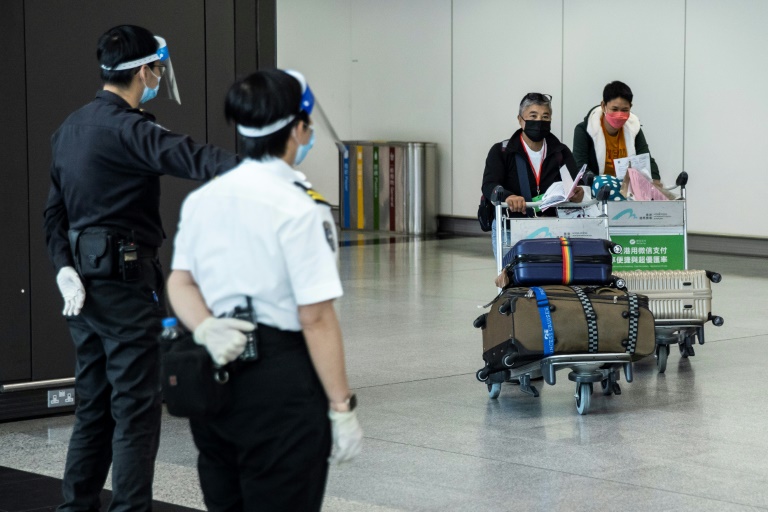
Hong Kong will cut its hotel quarantine for international arrivals from one week to three days from Friday, leader John Lee announced, in an easing of Covid restrictions that have severely curbed travel.

Once a global logistics and transportation hub, Hong Kong has been largely cut off from the world for more than two years due to its adherence to China’s strict zero-Covid policy.

Under some of the world’s tightest pandemic rules, Hong Kong had required overseas arrivals to undergo seven days of quarantine and repeated testing while confined to a room in a designated hotel, a restriction that residents and the business community complained has deterred them from travelling.

Lee, Hong Kong’s ex-security chief turned city leader, announced Monday that the quarantine period for arrivals would be shortened to three days in a hotel plus four days of health monitoring at home or in a hotel of their choice.

“We hope to maintain livelihood activities and Hong Kong’s competitiveness, and to give the society the best development momentum and economic vitality,” Lee said. 

He denied the easing signalled any departure from China’s policy. 

“Staying in touch with the outside world and working to resume quarantine-free travel with the mainland are no contradiction,” he said.

Alongside the new quarantine arrangements, Hong Kong will implement a health code system similar to mainland China’s on a government-developed tracking app.

Under the system, an infected person will be given a red code that prevents them from leaving quarantine.

Overseas arrivals will be given a yellow code and will not be allowed in places such as restaurants, bars, gyms and cinemas during their four days of self-monitoring.

“The situation may give business visitors some relief but it is still not very attractive to tourists,” said Perry Yiu, a lawmaker responsible for Hong Kong’s tourism sector.

“I hope… we can get rid of mandatory hotel quarantine by the fourth quarter this year.”

But a Hong Kong IT professional working in Singapore expressed caution about returning home.

“I will adopt a wait-and-see model to see if the policy is stable,” said the man, who identified himself as Tom.

“From the standpoint of a tourist, I will definitely not go.”

Gustavo Petro sworn in as Colombia's first leftist president

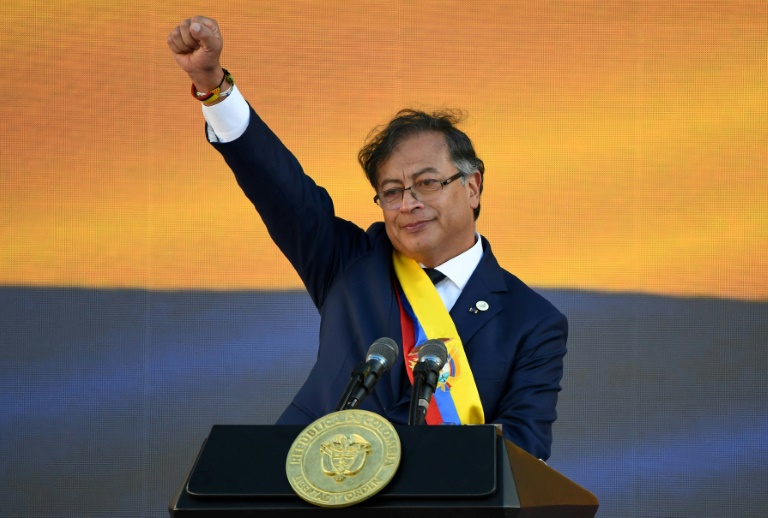
Gustavo Petro on Sunday took the oath of office as Colombia’s first-ever leftist president, before a crowd of hundreds of thousands at his inauguration in Bogota.

The 62-year-old former guerrilla and one-time mayor takes over from the deeply unpopular Ivan Duque, with plans for profound reforms in a country beset by economic inequality and drug violence.

Petro’s hard-fought victory in June elections brought Colombia, long ruled by a conservative elite, into an expanding left-wing fold in Latin America.

“I swear to God and promise the people that I will faithfully enforce the constitution and the laws of Colombia,” said Petro before the large crowd of supporters gathered in Bogota’s Bolivar Square.

Petro — whose government should enjoy support from a left-leaning majority in Congress — called in his inaugural address for Colombian armed groups to “lay down their arms” and accept legal benefits “in exchange for peace.”

He also took aim at decades of counter-narcotics efforts, saying: “It is time for a new international convention recognizing that the war on drugs has failed.”

And he called for the creation of an international fund to help the deforestation-plagued Colombian Amazon.

On the campaign trail, Petro had promised during his four-year term to raise taxes on the rich, invest in health care and education, and reform the police after a brutal crackdown on anti-inequality protests last year that was internationally condemned.

He has vowed to suspend oil exploration, to promote clean energy and to reactivate diplomatic and commercial relations with the government of Nicolas Maduro in Venezuela, suspended since 2019.

Petro starts from an “enviable position, with a large majority in Congress and, in terms of the street, with support that no government had in recent years,” analyst Jorge Restrepo of the Resource Center for Conflict Analysis (Cerac), told AFP.

Maduro congratulated Petro on his inauguration, saying in a video: “I extend my hand to the people of Colombia, to President Gustavo Petro, to rebuild brotherhood on the basis of respect and love between peoples”.

The Venezuelan leader had not been invited to the ceremony by outgoing president Duque, whose office oversaw preparations for the event.

Duque had also denied a request by Petro to have the sword of revolutionary figure Simon Bolivar present at the ceremony — a decision the new president quickly reversed right after taking his oath.

The sword, which was eventually brought by ceremonial guards to Bolivar Square, was of particular significance for Petro, as it had decades ago been stolen by the M-19 guerrilla group of which he was once a member, before being returned in 1991 after a negotiated peace deal.

– ‘Critical’ debt burden –

Petro’s presidency is historic in another sense, too: by his side will be the country’s first-ever Afro-Colombian woman vice-president, 40-year-old environmental and women’s rights activist Francia Marquez.

The pair will grapple with an economy reeling from the coronavirus pandemic, a spike in violence and deep-rooted anger at the political establishment that culminated in last year’s protests.

Almost 40 percent of Colombia’s 50 million people live in poverty, while 11.7 percent are unemployed.

Inflation in July also reached 10.2 percent year-on-year.

On Monday, a preparatory commission set up by Petro said he was inheriting “a level of indebtedness and fiscal deficit that… is critical.”

Thousands of Colombians descended on Bogota’s main square to celebrate Petro’s inauguration and his promise of change.

“We feel very grateful… to the millions of Colombians who believed in change and today we are going to start working together hand in hand to achieve it,” said Alexandra Rojas, a supporter of the new president. 

Others could not contain their excitement.

“I am happy to see the inauguration of our president Gustavo Petro, what a happiness, I can’t contain it, the happiness is great, the change has happened, the change has arrived,” said Ruth Perez, wrapped in the colours of the national flag. 

– Peace talks –

Petro has promised to implement outstanding provisions of the 2016 peace agreement that saw the rebel FARC movement lay down arms after nearly six decades of civil conflict.

The former mayor of Bogota has also vowed to pursue negotiations with the National Liberation Army (ELN) armed group.

Despite the FARC disbanding to become a political party, Colombia has seen a surge in violence.

Thousands of dissidents continue to battle the ELN and powerful cartels for control of drug fields, illegal gold mines and lucrative smuggling routes.

According to the Indepaz peace research institute, there are 90 armed groups with some 10,000 members active in Colombia, the world’s largest producer of cocaine.

Petro has proposed allowing armed groups to hand themselves over in exchange for some form of amnesty.

Colombian presidents serve only one term.

Markets struggle as strong US jobs boost Fed rate hike bets

Markets struggled Monday and the dollar held big gains as a blockbuster US jobs report ramped up bets that the Federal Reserve will announce more sharp interest rate hikes as it tries to tame runaway inflation.

While the employment reading — which was more than twice as high as expected — indicated the world’s top economy remained resilient despite rising prices and borrowing costs, it will complicate the bank’s plans to tighten monetary policy.

Traders have hoped that with several indicators pointing to a slowdown, including GDP figures showing a technical recession, policymakers could begin to ease back on their pace of rate hikes.

Now, speculation is growing that the Fed will have to announce a third successive 75 basis-point increase next month, particularly as officials have said their decisions will be data-dependent.

“Friday’s payroll report indicates an overheated labour market that continues to tighten further,” said SPI Asset Management’s Stephen Innes.

“Hence at minimum, the markets expect another 100 basis points of Fed funds rate increases over the next three meetings… with risks skewed towards significant increases.”

All eyes are now on the release this week of US July inflation data, which is expected to show a slight slowdown from June but still at four-decade highs.

The “report seems very unlikely to offer ‘compelling evidence’ of a slowdown needed for the Fed to pull away from its aggressive inflation-fighting mode.” Innes added.

The jobs figures left Wall Street’s main indexes mixed Friday, and Asia followed suit with markets fluctuating in early trade.

However, there was some relief that tensions had calmed since Nancy Pelosi’s visit to Taiwan last week sparked a furious reaction from China that saw it conduct days of live-fire military drills around the island, which contiued Monday.

Hong Kong fell with little excitement generated by news that the city will cut the amount of time incoming travellers must spend in hotel quarantine.

Singapore, Taipei, Bangkok, Jakarta and Wellington were also down, but Tokyo, Sydney, Seoul, Mumbai and Manila edged up.

Shanghai was boosted by better-than-expected Chinese trade data, though the gains were tempered by fresh worries about Covid lockdowns in the country that threaten the economic recovery.

London, Frankfurt and Paris rose at the open.

The prospect of higher interest rates sent the dollar surging, and it held on to those gains in Asia.

Oil rose but bets on a recession across leading economies continued to fuel concerns about demand — figures last week indicated Americans were driving less now than in summer 2020 at the height of the pandemic.

A rise in US stockpiles was partly responsible for a 10 percent drop in the commodity last week, pushing WTI below $90 for the first time since February.

Both main contracts have lost all the gains seen in the wake of Vladimir Putin’s invasion of Ukraine, which led the United States and Europe to ban imports of Russian crude, hammering already thin supplies.

Fresh talks on Iran’s nuclear programme were being followed.

“The resumption of Iran nuclear talks… is one potential downside risk for the oil price, given the ability of the country to quickly ramp up production if a deal is struck,” said OANDA’s Craig Erlam.

“Not to mention its reportedly large oil and gas reserves. A deal could apparently be struck within days, although we have heard that a lot at times this year.”

– Key figures at around 0720 GMT –

Tokyo – Nikkei 225: UP 0.3 percent at 28,249.24 (close)

Hong Kong – Hang Seng Index: DOWN 0.8 percent at 20,040.95

Shanghai – Composite: DOWN 0.3 percent at 3,236.93 (close)

London – FTSE 100: UP 0.5 percent at 7,480.08

Euro/dollar: DOWN at $1.0177 from $1.0184 Friday

Pound/dollar: UP at $1.2079 from $1.2075

Euro/pound: DOWN at 84.25 pence from 84.32 pence

Dollar/yen: UP at 135.37 yen from 135.00 yen

West Texas Intermediate: UP 0.9 percent at $89.78 per barrel

Brent North Sea crude: UP 0.8 percent at $95.71 per barrel

New York – Dow: UP 0.2 percent at 32,803.47 (close)
Gaza crossing opens as truce holds between Islamic Jihad and Israel

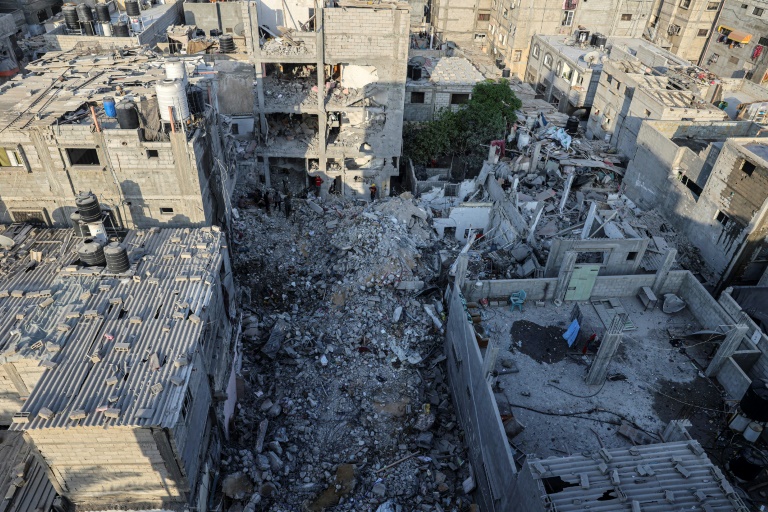
Fuel trucks entered Gaza as an Egypt-brokered truce between Israel and Islamic Jihad militants held Monday, raising hopes that the intense conflict that left dozens of Palestinians dead has ended.

An AFP journalist at the goods crossing to southern Gaza saw trucks loaded with fuel enter the enclave, ending a severe shortage which prompted the only power station there to shut down Saturday.

The arrival of vital supplies follows the implementation of a ceasefire at 11:30 pm (2030 GMT) Sunday, to stem the worst fighting in Gaza since an 11-day war last year devastated the Palestinian coastal territory.

Gaza’s health ministry said 15 children were among 44 people killed in the intense fighting.

Despite a flurry of strikes and rocket attacks in the run-up to the truce, neither side had reported any major violations of the agreement overnight.

The Israeli military said roads will gradually reopen in the border area on Monday.

“It was decided to gradually lift the restrictions,” which have seen Israelis remain close to their bomb shelters, the army said.

– ‘Fragile’ truce –

In a statement sent three minutes after the ceasefire began, Israel’s army said that “in response to rockets fired toward Israeli territory, the (military) is currently striking a wide range of targets” belonging to Islamic Jihad in Gaza.

In a subsequent statement, the army clarified that its “last” strikes took place at 11:25 pm.

While both sides agreed to the truce, each warned the other that it would respond with force to any violence.

US President Joe Biden welcomed the ceasefire and thanked Egyptian President Abdel Fattah al-Sisi for his country’s role in brokering it.

In a statement, UN Middle East peace envoy Tor Wennesland said: “The situation is still very fragile, and I urge all parties to observe the ceasefire.”

Israeli Prime Minister Yair Lapid’s office late Sunday thanked “Egypt for its efforts” as it agreed to the truce, but said that “if the ceasefire is violated”, Israel “maintains the right to respond strongly”.

Islamic Jihad, an Iran-backed group designated as a terrorist organisation by several Western nations, also accepted the truce but said it too “reserves the right to respond” to any aggression.

Starting on Friday, Israel launched a heavy aerial and artillery bombardment of Islamic Jihad positions in Gaza, leading the militants to fire hundreds of rockets in retaliation.

In addition to those killed, Gazan health officials said 360 people had been wounded in the Palestinian enclave, which is run by the Islamist group Hamas.

Israel insists several children in the territory were killed by stray militant rockets.

Three people in Israel were wounded by shrapnel, while 31 others were lightly hurt while running for safety, emergency services said.

Islamic Jihad member Mohammad al-Hindi said the ceasefire deal “contains Egypt’s commitment to work towards the release of two prisoners”.

The pair were named as Bassem al-Saadi, a senior figure in the group’s political wing who was recently arrested in the occupied West Bank, and Khalil Awawdeh, a militant also in Israeli detention.

– ‘Terrifying’ –

Gaza resident Nour Abu Sultan, 29, said the three days of conflict were “terrifying”, and that she had been unable to sleep during the “shelling and rockets, the sound of aircraft above us”.

Dalia Harel, a resident of the Israeli town of Sderot close to the Gaza border, said she was “disappointed” at news of a truce Sunday despite her five children being “traumatised”.

“We’re tired of having a military operation every year,” she said. “We need our military and political leaders to get it over with once and for all… we’re not for war, but we can’t go on like this.”

Islamic Jihad is aligned with Hamas but often acts independently. Hamas has fought four wars with Israel since seizing control of Gaza in 2007, including the conflict in May last year.

The Israeli army has said the entire “senior leadership of the military wing of the Islamic Jihad in Gaza has been neutralised”.

Israel has said it was necessary to launch a “pre-emptive” operation Friday against Islamic Jihad, which it said was planning an imminent attack.

The army has killed senior leaders of Islamic Jihad in Gaza, including Taysir al-Jabari and Khaled Mansour.

Japan's SoftBank reports record quarterly net loss

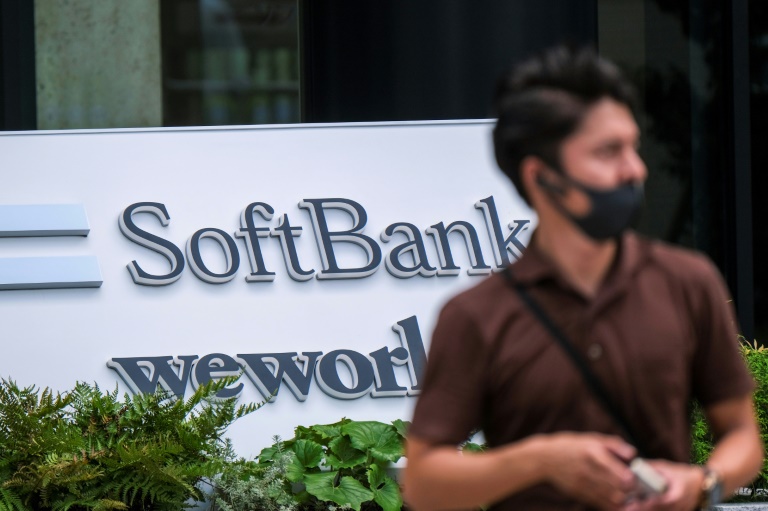
Japan’s SoftBank Group on Monday reported a record quarterly net loss of $23.4 billion, after central bank interest rate hikes caused tech shares to tank.

The telecoms firm that has turned into an investment behemoth posted a net loss of 3.16 trillion yen, nose-diving from a net profit of 761.5 billion yen in the same April-June period the previous year.

A weaker yen and the “global downward trend in share prices due to growing concerns over economic recession driven by inflation and rising interest rates” contributed to the slump, it said.

Among its portfolio companies that suffered large losses for the quarter were South Korean e-commerce giant Coupang and US meal delivery platform DoorDash, SoftBank added.

SoftBank’s big stakes in global tech giants and volatile new ventures have made for unpredictable earnings, and it has lurched between record highs and lows in recent years.

In May, it reported its worst-ever full-year net loss — and a then-record quarterly loss for Q4 — after a bruising year in 2021-22 that saw its assets hit by a US tech share rout and a regulatory crackdown in China.

That came after logging Japan’s biggest-ever annual net profit in 2020-21, after people moved their lives online during the pandemic, sending tech stocks soaring.

And in 2019-20, SoftBank Group reported a then-record annual net loss of 961.6 billion yen, as the emergence of Covid-19 compounded woes caused by its investment in troubled office-sharing start-up WeWork.

Hideki Yasuda, senior analyst at Toyo Securities, told AFP the company “cannot help” big losses, “because the market is down”.

The company “faces a very tough situation in the immediate term”, Yasuda said before the earnings announcement.

“They have to wait for the market to rebound. You have to look at the company through the lens of long-term investment. It may experience one or two bad years, but over a decade or more, the world economy will keep growing and it could grow further.”

The US Federal Reserve and many other central banks have announced aggressive rate increases aimed at battling sky-high inflation linked to the Ukraine war and Covid-related supply chain woes.

But going against the grain, the Bank of Japan has stuck to its long-held monetary easing policies because it sees the latest price hikes as temporary.

This has pushed Japan’s currency down to 24-year lows against the dollar in recent months, driving down the yen value of SoftBank’s investments.

China spokeswoman's Taiwan restaurant tweet sparks ridicule online

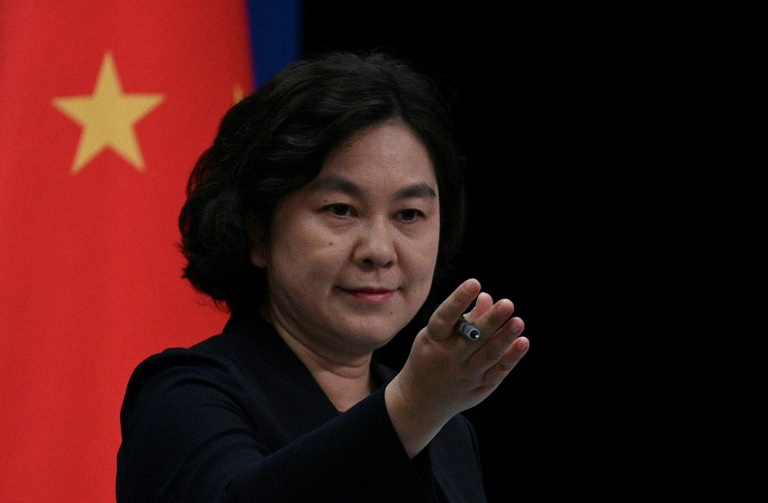
A senior Chinese foreign ministry spokeswoman has prompted a storm of ridicule online, after a late-night tweet where she used restaurant listings to assert Beijing’s claim over Taiwan. 

“Baidu Maps show that there are 38 Shandong dumpling restaurants and 67 Shanxi noodle restaurants in Taipei,” spokeswoman Hua Chunying posted on the social media site late on Sunday.

“Palates don’t cheat. #Taiwan has always been a part of China. The long lost child will eventually return home,” she added.

Hua’s tweet comes at the end of a week of tensions around the Taiwan Strait, during which Beijing raged at a trip by US House Speaker Nancy Pelosi to the island, which China considers part of its territory.

The Chinese government has responded to Pelosi’s trip by cancelling a series of talks and cooperation agreements with Washington, as well as deploying fighter jets, warships and ballistic missiles around democratic, self-ruled Taiwan.

Hua’s tweet on Sunday appeared to backfire, as thousands of users on Twitter — a site banned in China and only accessible via special VPN software — piled on to poke holes in the top official’s logic.

“There are over 100 ramen restaurants in Taipei, so Taiwan is definitely a part of Japan,” a Twitter user with the handle “Marco Chu” wrote in Hua’s replies.

“Google Maps show that there are 17 McDonalds, 18 KFCs, 19 Burger Kings, and 19 Starbucks in Beijing. Palates don’t cheat. #China has always been a part of America. The long lost child will eventually return home,” Twitter user “@plasticreceiver” wrote in a parody of Hua’s tweet.

Others wondered jokingly if Hua’s logic meant Beijing could place claims on territories far beyond the Asia Pacific region.

“There are 29 dumpling houses in the Greater Los Angeles area not to mention 89 noodle restaurants,” a person tweeting under the name “Terry Adams” wrote.

“Using Hua’s logic, LA has always been a part of China.”

Sunday’s tweet is far from the first time Beijing’s diplomats have raised eyebrows with their use of social media that their own government prohibits.

Foreign ministry spokesman Zhao Lijian has frequently promoted conspiracy theories on Twitter, including the idea that the US military might have brought Covid-19 to China.

China continues military drills around Taiwan

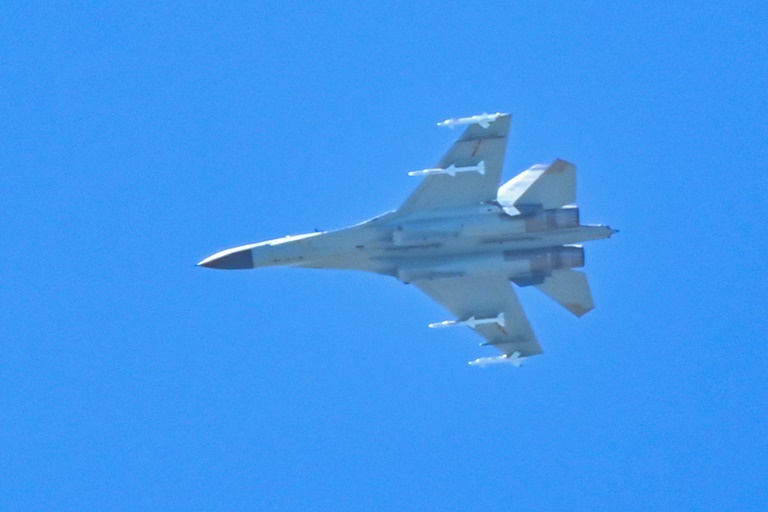
China carried out fresh military drills around Taiwan Monday, Beijing said, defying calls for it to end its largest-ever exercises encircling the democratic island in the wake of a visit by US House Speaker Nancy Pelosi.

Beijing has raged at the trip by Pelosi — the highest-ranking elected US official to visit Taiwan in decades — ripping up a series of talks and cooperation agreements with Washington, most notably on climate change and defence.

It has also deployed fighter jets, warships and ballistic missiles in what analysts have described as practice for a blockade and ultimate invasion of the self-ruled island which China claims as its territory.

Those drills were expected to draw to a close on Sunday, but neither Beijing nor Taipei confirmed their conclusion, though Taiwan’s transport ministry said it had seen some evidence suggesting at least a partial drawdown.

China then Monday said they were ongoing, reporting “the eastern theatre of the Chinese People’s Liberation Army continued to carry out practical joint exercises and training in the sea and airspace around Taiwan island.”

The exercises, the Chinese military’s Eastern Command said, were “focusing on organising joint anti-submarine and sea assault operations”.

Beijing is also Monday set to carry out live fire drills in parts of the South China Sea and Yellow Sea.

– Taipei defiant –

Taiwan has remained defiant throughout days of exercises by Beijing and is due to begin its own live-fire drills on Tuesday.

Su Tseng-chang, Taiwan’s premier, said China was “barbarously using military action” to disturb peace in the Taiwan Strait.

“We call on the Chinese government not to go around wielding its military power, showing its muscles everywhere and jeopardising the peace of the region,” he told reporters Sunday.

Taipei’s foreign ministry said the drills threatened “the region and even the world”.

To show how close it has got to Taiwan’s shores, the Chinese military released a video of an air force pilot filming the island’s coastline and mountains from his cockpit.

The Eastern Command also shared a photo it said was of a warship on patrol with Taiwan’s shoreline visible in the background.

Ballistic missiles were also fired over Taiwan’s capital during the exercises last week, according to Chinese state media.

The scale and intensity of China’s drills — as well as Beijing’s withdrawal from key talks on climate and defence — have triggered outrage in the United States and other democracies.

US Secretary of State Antony Blinken has said Washington is “determined to act responsibly” to avoid a major global crisis.

And experts say the drills have revealed an increasingly emboldened Chinese military capable of carrying out a gruelling blockade of the island as well as obstructing US forces from coming to its aid.

“In some areas, the PLA might even surpass US capabilities,” Grant Newsham, a researcher at the Japan Forum for Strategic Studies and a former US Navy officer, told AFP, referring to China’s military by its official name.

“If the battle is confined to the area right around Taiwan, today’s Chinese navy is a dangerous opponent — and if the Americans and Japanese do not intervene for some reason, things would be difficult for Taiwan.”

Drought forces water use rethink in Spain

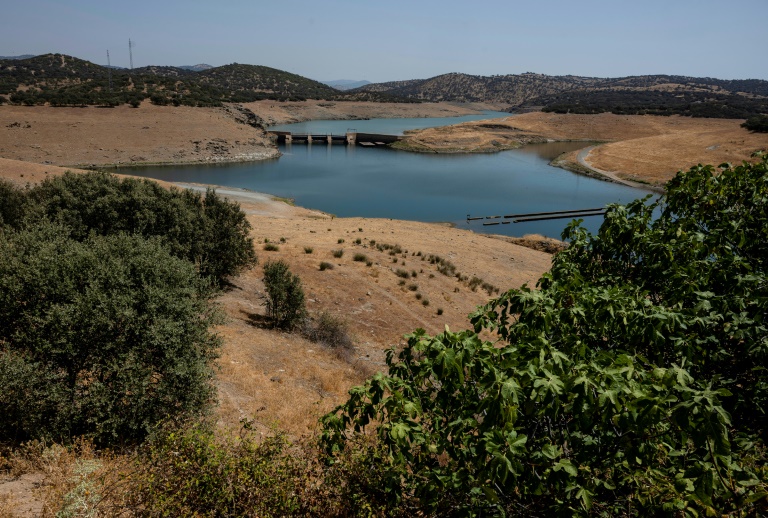
Faced with a historic drought and threatened by desertification, Spain is rethinking how it spends its water resources, which are used mainly to irrigate crops.

“We must be extremely careful and responsible instead of looking the other way,” Spain’s Minister for the Ecological Transition Teresa Ribera said recently, about the impact of the lack of rain.

Like France and Italy, Spain has been gripped by several extreme heatwaves this summer after an unusually dry winter.

That has left the country’s reservoirs at 40.4 percent of their capacity in August, 20 percentage points below the average over the last decade for this time of the year.

Officials have responded by limiting water use, especially in the southern region of Andalusia, which grows much of Europe’s fruits and vegetables.

Reservoir water levels in the region are particularly low, just 25 percent at most of their capacity.

“The situation is dramatic,” said University of Jaen hydrology professor Rosario Jimenez, adding both underground aquifers and surface bodies of water were running low.

The situation is especially worrying since it is part of a long-term trend linked to climate change, she added.

Parts of Spain are the driest they have been in a thousand years due to an atmospheric high-pressure system driven by climate change, according to a study published last month in the journal, Nature Geoscience.

Greenpeace estimates that 75 percent of the country is susceptible to desertification.

– ‘Overexploitation’ –

Spain has built a vast network of dams to provide water for its farms and towns.

During the 20th century, 1,200 large dams were built in the country, the highest number in Europe per capita.

This has allowed Spain to increase the amount of irrigated land it has from 900,000 hectares (2,224,000 acres) to 3,400,000 hectares, according to the ecological transition ministry’s website, which calls the country’s water management system “an example of success”.

But many experts say the system is now showing its limits.

The dams “had their use” but they have also encouraged the “overexploitation” of water and the decline in its quality by blocking the natural course of rivers, said Julio Barea, a water expert at Greenpeace Spain.

For the scientific council of the Rhone-Mediterranean Basin Committee, a French body which groups hydrology specialists, Spain is nearing the “physical limits” of its water management model.

Spain’s network of dams relies on sufficient rainfall to replenish its many reservoirs, it said.

But “the climate changes already under way, which will continue in the decades to come, will increase the risk of failures,” the body said in a recent report.

Experts say the way Spain uses water is also a major problem.

“Consumption has not stopped increasing while water is becoming increasingly scarce. It’s an aberration,” said Barea.

– ‘Europe’s vegetable garden’ –

Spain is the second most visited country in the world and significant amounts of water are used in tourism infrastructure like swimming pools and golf courses.

But agriculture absorbs the bulk — over 80 percent — of the country’s water resources.

It is sometimes used to grow crops that are not suitable for a dry climate — such as strawberries or avocados — for export to other European countries.

Spain’s use of irrigation “is irrational,” said Julia Martinez, biologist and director of the FNCA Water Conservation Foundation.

“We cannot be Europe’s vegetable garden” while “there are water shortages for the inhabitants,” she added.

Socialist Prime Minister Pedro Sanchez’s government adopted a strategic plan last month to adapt Spain’s water management system to “the impacts of global warming”.

It includes measures to promote water recycling and “efficient and rational” uses of resources.

But specialists say that reforms remain timid, with many regions continuing to increase the amount of irrigated land.

“We need more drastic measures,” said Barea, who called for a restructuring of the agriculture system.

Martinez shares this view, saying Spain is currently the European nation “exerting the most pressure on its water resources.”

“Today there are decisions that no one wants to take. We can’t continue to blindly forge ahead,” she said.

More Ukraine grain sets sail as new strike hits nuclear site

Four more ships loaded with grain set off from Ukrainian ports on Sunday, as Moscow and Kyiv blamed each other for a new strike at a Russian-occupied nuclear plant. 

Odessa regional authorities, meanwhile, announced that another two grain shipments were due to leave on Monday.

Kyiv’s infrastructure ministry wrote on Telegram on Sunday that a convoy of Ukrainian supplies had left, with three ships departing from Chornomorsk and one from Odessa.

The Mustafa Necati, the Star Helena, the Glory and the Riva Wind were carrying “around 170,000 tonnes of agriculture-related merchandise”, it said.

The spokesman for the Odessa regional military administration said early Monday morning that the MV Sacura and MV Arizona had also been cleared to set sail. 

It would “transport more than 59,000 tonnes of food via the maritime humanitarian corridor today”, he said.

– ‘A suicidal thing’ –

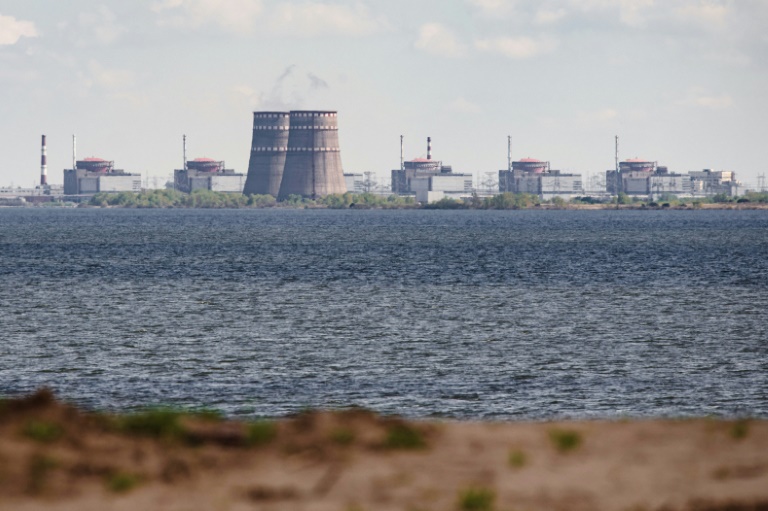
Moscow and Kyiv traded accusations on Sunday over who bombed the Zaporizhzhia nuclear site in southern Ukraine.

Europe’s largest atomic power complex has been under Russian control since the early days of the February 24 invasion.

Recent fighting at the plant has prompted the UN’s nuclear watchdog, the International Atomic Energy Agency (IAEA), to warn of “the very real risk of a nuclear disaster”.

Russia’s occupying authorities in the town of Enerhodar, where the plant is located, said the Ukrainian army overnight “carried out a strike with a cluster bomb fired from an Uragan multiple rocket launcher”.

The projectiles fell “within 400 metres of a working reactor” and in a “zone storing used nuclear fuel”, Russia’s state news agency TASS reported.

Ukrainian state nuclear energy company Enerhoatom, however, said the “Russian occupiers once again fired rockets at the nuclear power plant (and) its host town, Enerhodar”. One worker there had been hospitalised with shrapnel wounds, it added.

AFP was not able to confirm the allegations from an independent source.

Without assigning blame, United Nations Secretary-General Antonio Guterres condemned the strike in remarks from Tokyo on Monday morning.

“Any attack to a nuclear plant is a suicidal thing. I hope that those attacks will end, and at the same time I hope that the IAEA will be able to access the plant,” he said.

On Saturday, Enerhoatom had already said parts of the facility had been “seriously damaged” by military strikes the previous day, forcing the shutdown of one of its reactors. 

Ukraine President Volodymyr Zelensky in his nightly address Sunday, called for a “principled response” from the international community.

Evoking the possibility that the plant was hit causing the release of a toxic cloud, he added: “No one will stop the wind that will spread the radioactive contamination.”

– Amnesty’s regret –

Amnesty International on Sunday said it deeply regretted the “distress and anger” caused after it alleged Ukrainian forces were flouting international law by exposing civilians to Russian fire, but stood by its controversial report.

The Thursday report, which sparked outrage in Ukraine, accused the military of endangering civilians by establishing bases in schools and hospitals, and launching counter-attacks from heavily populated areas.

Meanwhile, the renewed shipments of Ukrainian grain to help ease global food shortages and bring down prices offered a small glimmer of hope as the war entered its sixth month.

Ukraine, one of the world’s largest grain exporters, had been forced to halt almost all deliveries in the wake of Russia’s invasion.

That sent global food prices soaring, making imports prohibitively expensive for some of the world’s poorest nations.

A bulk carrier arrived in Chornomorsk on Saturday to be loaded with grain for the first time since Moscow’s invasion.

The departure Sunday of the four other vessels, along with Monday’s planned departure of two more, came after several others set sail last week under a deal brokered with the help of Turkey.

– ‘Sign of hope’ –

In Rome on Sunday, Pope Francis welcomed the resumption of grain exports as “a sign of hope” that showed dialogue was possible to end the war. 

Sunday also saw Zelensky post photos of himself meeting with Oscar-winning US actress Jessica Chastain in Ukraine, just as Moscow was celebrating the re-election of a former senior Russian politician to the world body governing chess.

On Telegram Zelensky underlined the value of visits from famous people, writing: “Thanks to this, the world will hear, know and understand the truth about what is happening in our country even more.”

Earlier on Sunday, Moscow had celebrated a diplomatic victory of its own with the re-election of Russia’s Arkady Dvorkovich to the helm of the international chess body FIDE.

Dvorkovich, a former deputy premier under Russian President Vladimir Putin, comfortably saw off a challenge from Ukrainian grandmaster Andrii Baryshpolets who had accused him of being part of Moscow’s “war machine”.

Close Bitnami banner
Bitnami