World

'Decisive day' for trapped Mexican miners

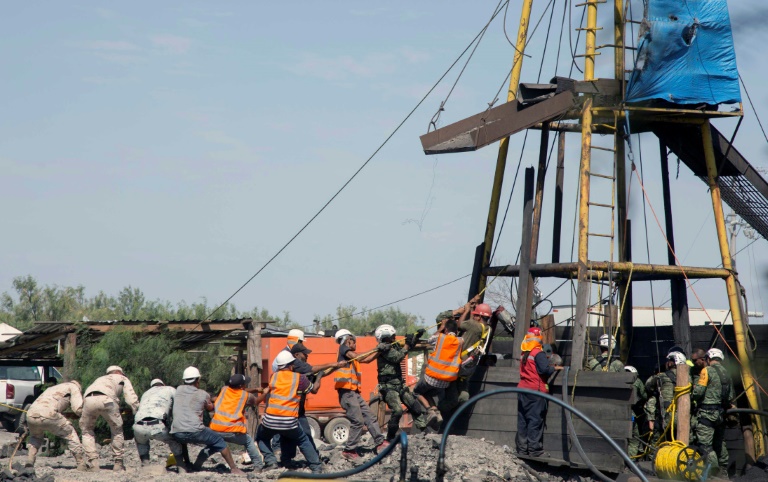
A major operation to rescue 10 trapped Mexican coal miners was approaching a crucial moment on Saturday, President Andres Manuel Lopez Obrador said, raising the hopes of desperate relatives.

“Today is a decisive day because, according to the experts, we’ll know if it’s possible for the divers to enter safely,” he tweeted.

More than 300 soldiers and other personnel, including six military scuba divers, have joined the rescue effort in the northern state of Coahuila following Wednesday’s accident, the government said.

A camera was lowered into one of the mine shafts to evaluate the conditions inside, civil defense authorities said, but there was no news of significant developments as nightfall approached.

Five workers managed to escape from the crudely constructed mine in the initial aftermath of the disaster, but since then, no survivors have been found.

The focus has been on pumping out water from the mine in Agujita in the municipality of Sabinas to make it safe enough to enter.

Authorities said that the three mine shafts descended 60 meters (200 feet) and on Friday the floodwater inside was reported to be 30 meters deep.

“The main problem is the flood, although the pumping equipment is sufficient,” said Lopez Obrador.

Coahuila’s state government said the miners had been carrying out excavation work when they hit an adjoining area full of water.

– ‘Trust in God’ –

Experts detected a leak coming from nearby mines and aim to find its exact location so they can stop water flowing into the area where the workers are trapped, Coahuila’s labor secretary, Nazira Zogbi, said.

A French company has provided equipment to assist in the task, she said, without naming the firm.

The arrival of more powerful pumping equipment was also a reason for optimism, Zogbi added.

“Major progress has been made. It looks like we’ll have better news,” she said.

Water was seen flowing from the mine through drainage channels, lifting the hopes of relatives who spent a third night waiting anxiously for news.

“The last two days we didn’t see any progress with the water, but now we see that a lot of water has come out,” Elva Hernandez, mother-in-law of one of the trapped workers, told AFP.

“We’re still hoping that they’re in a higher part (of the mine), although there’s too much water… but we trust in God,” the 71-year-old added.

The state prosecutor’s office said that it had conducted interviews with the five miners who managed to escape.

“Apparently they were expelled by a torrent of water,” Coahuila attorney general Gerardo Marquez told the press.

Prosecutors have requested information from the landowner and mine concession holder, he said.

Coahuila, Mexico’s main coal-producing region, has seen a series of fatal mining accidents over the years.

Last year, seven miners died when they were trapped in the region.

The worst accident was an explosion that claimed 65 lives at the Pasta de Conchos mine in 2006.

Only two bodies were retrieved after that tragedy.

Miners and their relatives painted a picture of a precarious profession fraught with risks due to lax safety standards.

“When everything’s fine, you don’t think about the danger, but when things happen you think about quitting,” said Luis Armando Ontiveros.

However, looking for a new job does not seem like a viable option for the 48-year-old, whose father taught him to dig for coal at an early age.

The father-of-three said he needed the monthly salary equivalent to about $500 to pay for his children’s education so they do not have to follow in his footsteps.
'Decisive day' for trapped Mexican miners

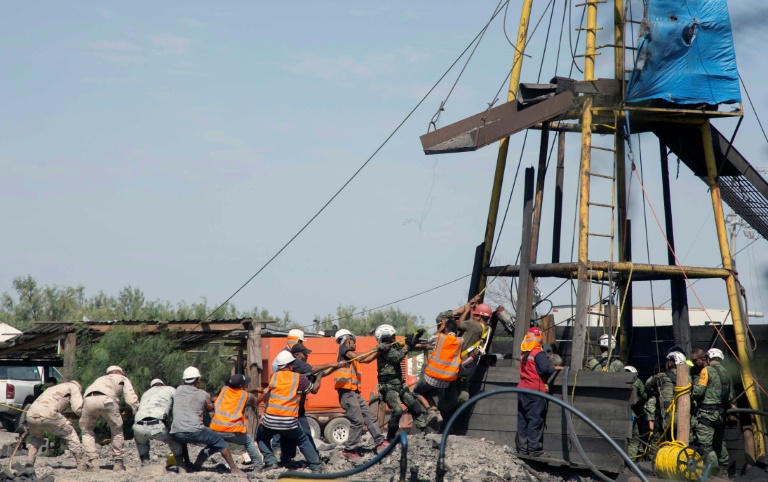
A major operation to rescue 10 trapped Mexican coal miners was approaching a crucial moment on Saturday, President Andres Manuel Lopez Obrador said, raising the hopes of desperate relatives.

“Today is a decisive day because, according to the experts, we’ll know if it’s possible for the divers to enter safely,” he tweeted.

More than 300 soldiers and other personnel, including six military scuba divers, have joined the rescue effort in the northern state of Coahuila following Wednesday’s accident, the government said.

A camera was lowered into one of the mine shafts to evaluate the conditions inside, civil defense authorities said, but there was no news of significant developments as nightfall approached.

Five workers managed to escape from the crudely constructed mine in the initial aftermath of the disaster, but since then, no survivors have been found.

The focus has been on pumping out water from the mine in Agujita in the municipality of Sabinas to make it safe enough to enter.

Authorities said that the three mine shafts descended 60 meters (200 feet) and on Friday the floodwater inside was reported to be 30 meters deep.

“The main problem is the flood, although the pumping equipment is sufficient,” said Lopez Obrador.

Coahuila’s state government said the miners had been carrying out excavation work when they hit an adjoining area full of water.

– ‘Trust in God’ –

Experts detected a leak coming from nearby mines and aim to find its exact location so they can stop water flowing into the area where the workers are trapped, Coahuila’s labor secretary, Nazira Zogbi, said.

A French company has provided equipment to assist in the task, she said, without naming the firm.

The arrival of more powerful pumping equipment was also a reason for optimism, Zogbi added.

“Major progress has been made. It looks like we’ll have better news,” she said.

Water was seen flowing from the mine through drainage channels, lifting the hopes of relatives who spent a third night waiting anxiously for news.

“The last two days we didn’t see any progress with the water, but now we see that a lot of water has come out,” Elva Hernandez, mother-in-law of one of the trapped workers, told AFP.

“We’re still hoping that they’re in a higher part (of the mine), although there’s too much water… but we trust in God,” the 71-year-old added.

The state prosecutor’s office said that it had conducted interviews with the five miners who managed to escape.

“Apparently they were expelled by a torrent of water,” Coahuila attorney general Gerardo Marquez told the press.

Prosecutors have requested information from the landowner and mine concession holder, he said.

Coahuila, Mexico’s main coal-producing region, has seen a series of fatal mining accidents over the years.

Last year, seven miners died when they were trapped in the region.

The worst accident was an explosion that claimed 65 lives at the Pasta de Conchos mine in 2006.

Only two bodies were retrieved after that tragedy.

Miners and their relatives painted a picture of a precarious profession fraught with risks due to lax safety standards.

“When everything’s fine, you don’t think about the danger, but when things happen you think about quitting,” said Luis Armando Ontiveros.

However, looking for a new job does not seem like a viable option for the 48-year-old, whose father taught him to dig for coal at an early age.

The father-of-three said he needed the monthly salary equivalent to about $500 to pay for his children’s education so they do not have to follow in his footsteps.
Ivory Coast president Ouattara pardons predecessor Gbagbo

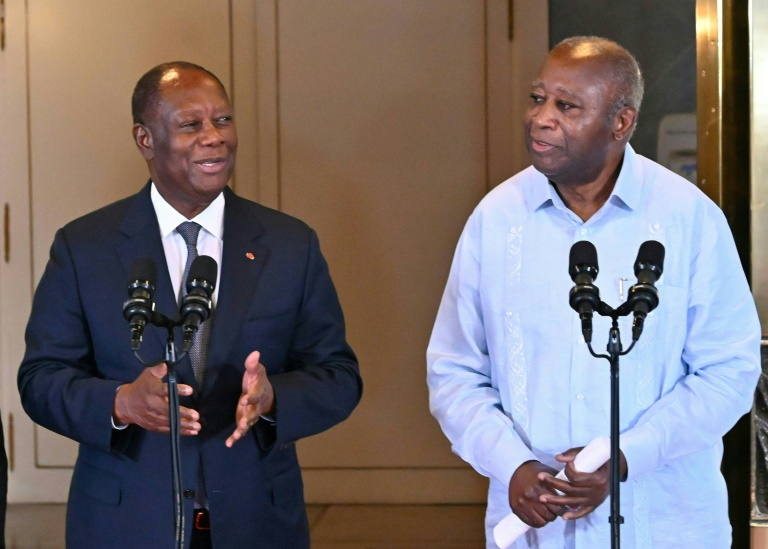
Ivory Coast President Alassane Ouattara announced Saturday that he had pardoned his predecessor, Laurent Gbagbo, who faced a 20-year jail term for a 2018 conviction over political unrest.

“In the interests of strengthening social cohesion, I have signed a decree granting a presidential pardon,” Ouattara said in a speech to mark the 62nd anniversary of the country’s independence.

The president said he had asked that Gbagbo’s bank accounts be unfrozen and that his life annuity be paid.

Ouattara also said he had signed a decree for the conditional release two of Gbagbo’s closest associates, former navy chief Vagba Faussignaux and a former commander of a key gendarmerie unit, Jean-Noel Abehi, both convicted for their role in the post-election unrest.

Gbagbo was acquitted by the International Criminal Court (ICC) for alleged war crimes committed during the 2011 civil conflict that broke out after he refused to recognise Ouattara’s victory in presidential elections a year earlier.

But in 2018, an Ivorian court handed Gbagbo a 20-year term in absentia over the looting of the Central Bank of West African States (BCEAO) during the country’s post-election crisis.

After his acquittal by the ICC, Gbagbo returned from exile in 2021 and launched a new political party, but he has kept a low profile since, despite having said he wants to remain in politics until his death.

Since his return to the country, there had been no attempt to imprison him on the basis of the 2018 conviction.

– A ‘fraternal meeting’ –

The announcement of the pardon comes just weeks after a meeting on July 14 between Outtara, Gbagbo and another former president, Henri Konan Bedie.

Ouattara, in his speech Saturday, described that occasion as a “fraternal meeting” in which the three men had “discussed, in a friendly atmosphere, matters of the national interest and the ways and means of consolidating peace in our country”.

Both Gbagbo and Bedie have been invited to attend independence day celebrations on Sunday at Yamoussoukro, the country’s political capital.

In 2020, the ex-presidents had challenged Outtara’s candidacy for a new term — which they deemed unconstitutional — with that election also leading to political violence.

But reconciliation efforts began the following year during legislative elections, which took place without major incident.

Though Ouattara’s party won that poll, it did allow for the return of the opposition to the National Assembly, including Gbagbo’s supporters, who had boycotted every election since his defeat in 2010 after 10 years in power.

A “political dialogue” between the government, parties and civil society organisations is currently under way with the aim of allowing local polls in 2023 and the next presidential election in 2025 to go ahead without violence.

Ivorian political life has been dominated for more than 20 years by Ouattara, Bedie and Gbagbo, aged 80, 88 and 77, respectively.

Cuba seeks help to contain depot fire that has killed at least one, injured dozens

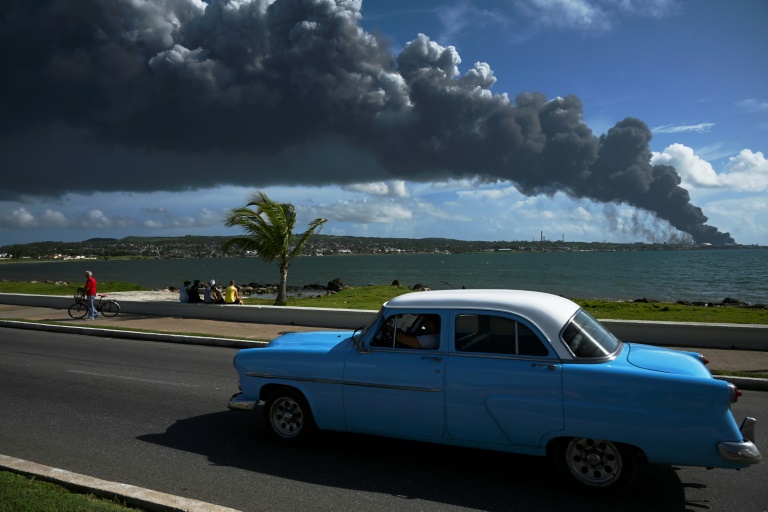
Cuba asked for help Saturday to contain a massive fire at a fuel depot that has left at least one person dead, 121 people injured and 17 firefighters missing.

Some 1,900 people have been evacuated from the affected area, according to officials from the western Matanzas province, where lightning struck a fuel tank late Friday, triggering an explosion.

Provincial health official Luis Armando Wong told a press conference Saturday evening a first body had been recovered at the site. 

Five people were critically injured, according to an update by the Cuban presidency on Twitter, with three others in a very serious condition in hospital.

The wounded included Energy Minister Livan Arronte.

The president’s office said 17 firefighters were missing, those “who were closest” to the fire in an industrial zone of Matanzas, a city some 100 kilometers (62 miles) east of Havana.

“Cuba requested help and advice from friendly countries with experience in fuel” to help put out the fire, the presidency added in a statement.

Later in the day, President Miguel Diaz-Canel expressed thanks to the governments of Mexico, Venezuela, Russia, Nicaragua, Argentina and Chile, “which have promptly offered material aid.”

“We also appreciate the offer of technical advice from the US,” he added.

The US embassy in Havana said on Twitter: “We want to make clear that US law authorizes US entities and organizations to provide disaster relief and response in Cuba.”

The United States has had sanctions against the one-party Communist state for six decades.

– ‘The sky was yellow’ –

The fire broke out after a bolt of lightning struck a tank Friday at the depot on the outskirts of Matanzas, a city of 140,000 people.

By the early hours of Saturday, the fire had spread to a second tank, causing another blast and sending a huge plume of black smoke into the sky.

Helicopters were hard at work fighting the blaze on Saturday, with ambulances, water tanks and cranes at the scene.

Exhausted firefighters were gathered at the plant, waiting to enter to look for their comrades who seemingly could not escape the second explosion.

“We felt the blast, like a shock wave that pushed you back,” Laura Martinez, a resident of La Ganadera, near the disaster zone, told AFP.

Upon hearing the first explosion, 32-year-old Yuney Hernandez and her children fled their home just two kilometers from the depot. They returned a few hours later. 

Then, they heard more blasts in the early morning hours, “like pieces of the tank were falling,” she said.

Ginelva Hernandez, 33, said she, her husband and three children were asleep when the explosions rang out.

“We threw ourselves out of bed; when we went out to the street, the sky was yellow,” she told AFP. 

“The fear of people on the street is uncontrollable,” she added. 

– ‘Could take time’ –

Diaz-Canel said extinguishing the blaze “could take time,” while Asbel Leal, director of the Cupet state oil company, said the country had never experienced a fire “of the magnitude we have today.”

According to Cupet, the first tank contained about 26,000 cubic meters of crude, about half its capacity, when it was struck by lightning.

The second contained 52,000 cubic meters of fuel oil. 

Official newspaper Granma reported the fire was likely due to “a fault in the lightning-rod system, which could not withstand the energy from the electrical discharge.”  

The depot supplies the Antonio Guiteras thermoelectric plant, the largest in Cuba, but service to the plant has not been interrupted, the official said.

The disaster comes at a time when the island — with an outdated energy network and persistent fuel shortages — has faced mounting difficulties in meeting increased energy demands amid severe summer heat. 

Since May, authorities have imposed energy blackouts of up to 12 hours a day in some regions — sparking at least 20 protests around the Portugal-sized nation of 11 million people.

ICoast president Ouattara pardons predecessor Gbagbo

Ivory Coast President Alassane Ouattara announced Saturday that he had pardoned his predecessor, Laurent Gbagbo, who still faced a 20-year jail term for a 2018 conviction over political unrest.

“In the interests of reinforcing social cohesion, I have signed a decree granting a presidential pardon,” Ouattara said in a speech to mark the 62nd anniversary of the country’s independence.

He had also asked that Gbagbo’s bank accounts be unfrozen and that his life annuity be paid, he added.

And he had signed a decree for the release two of Gbagbo’s closest associates, former navy chief Vagba Faussignaux and a former commander of a key gendarmerie unit, Jean-Noel Abehi, both convicted for their role in the post-election unrest.

Gbagbo was acquitted by the International Criminal Court (ICC) for alleged war crimes committed during the 2011 civil conflict that broke out after he refused to recognise Ouattara’s victory in presidential elections a year earlier.

But in 2018, an Ivorian court handed Gbagbo a 20-year term in absentia over the looting of the Central Bank of West African States (BCEAO) during the country’s post-election crisis.

After his acquittal by the ICC, Gbagbo returned from exile in 2021, and the 77-year-old political veteran has kept a low profile since.

Holiday rush drives demand at Europe's busiest fuel station

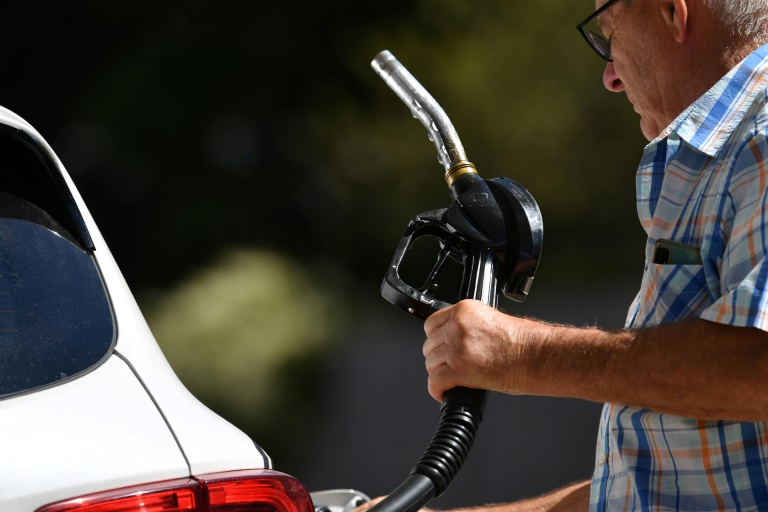
The first Saturday in August, when Europe’s July holidaymakers head homewards and its August sunseekers head south, is the busiest day of the year at the continent’s busiest filling station.

And even surging global fuel prices did not deter thousands of motorists and truckers from filling their tanks at Shell’s Berchem station in southern Luxembourg, on the busy A3 motorway.

The Grand Duchy may be small, but it is a crossroads between Belgium, Germany and the Netherlands and the route south to the holiday beaches of France, Italy and Spain.

And — crucially in a summer of soaring prices — it has famously cheap fuel, making it a prime spot for long-distance truckers and cost-conscious travelling families alike. 

Even outside of the holiday rush, French and German motorists and cross-border workers often fill up in Luxembourg. 

When a family’s final destination is on the Med and a full tank of fuel costs more than 100 euros (dollars), the savings add up.

On Saturday, two 40,000 litre tanker trucks were on course to make between 16 and 20 round trips a day keeping Berchem’s petrol and diesel pumps working as the vast forecourt filled with camper vans.

– Colossal budget –

Earlier this year, Russia’s invasion of Ukraine and global supply chain challenges in the wake of the coronavirus pandemic sent fuel prices and oil giant’s profits soaring.

World oil prices and retail petrol prices have started to come down now and governments have begun to subsidise discounts to head off motorists’ grumbles.

France, for example, has already cut the price at the pump by 18 centimes and will expand the discount to 30 centimes in September. Belgium cut duty by 17.5 centimes a litre in March.

Luxembourg’s cut was only 7.5 centimes, in April, and it is not clear whether the government will extend it until the end of August. For the moment, however, it retains an advantage.

On Saturday, AFP paid 1.79 euros a litre for petrol in Brussels, and fuel-price monitoring websites estimated the average Belgian rate at 1.867 euros per litre.   

Meanwhile, motorists in Berchem in low-duty Luxembourg were paying only 1.636 euros — albeit while queueing with drivers from half of Europe and truckers from as far as Cyprus, Ireland and Poland.

“This is due to the location, which is perfect in the middle of Europe, and the advantageous fuel prices also make a difference,” said Daniel Calderon, manager of Shell’s biggest station.

Calderon said the motorists that created Saturday’s rush were largely good-humoured, thanks to the holiday spirit after two years of pandemic-restricted travel.

But he said the cross-border trade with local French and German drivers had been disrupted by soaring fuel rates in late spring, and some of them are still concerned.

Runners take on Swiss glacier race despite melt

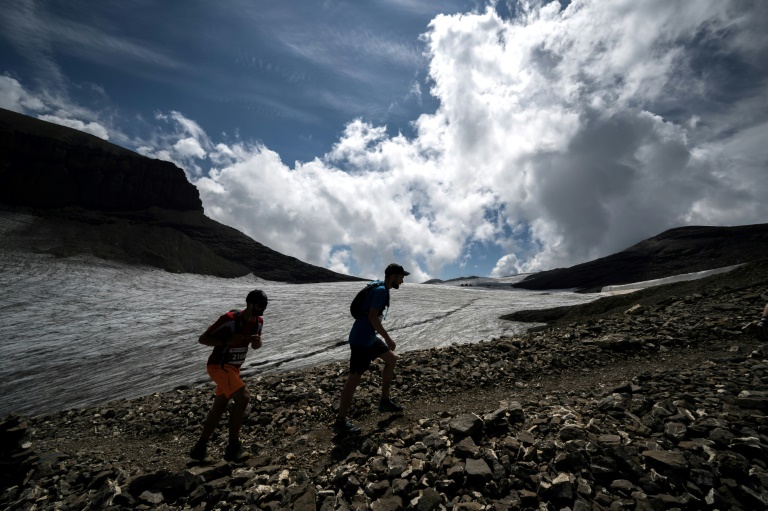
Hundreds of runners braved a lung-busting ascent into the Alps in Switzerland’s Glacier 3000 Run on Saturday, albeit on a shortened course due to summer heatwaves melting the ice.

The event’s 14th edition was back without limitations after being cancelled in 2020 due to Covid-19 and run in 2021 with restrictions imposed due to the pandemic.

The race is normally run over 26.2 kilometres but was contested on a slightly modified 25.2km course this year due to the glacier melting, with the last pass over its surface shortened.

“The accelerated melting of the top layer of the glacier has created an camber and a soft layer which the runner sinks into,” said race director Oliver Hermann.

“Rather than intervening to flatten the track, we preferred to deviate the course.”

The finish line is 1,886 metres higher than the start, at nearly 3,000 metres up in the mountains by the Scex Rouge peak.

The route begins in the jet set ski resort town of Gstaad, at 1,050 metres above sea level.

It passes through forests, green mountain pastures before heading into rocky lunar-like landscapes and taking in the Tsanfleuron Glacier.

The course follows the Saane river upstream for 15 km before climbing up 1,800 metres over the remaining 10 km to the finish line — at an altitude of 2,936 metres.

Some 311 men and 98 women completed the individual course, while 50 two-person teams also took part.

The first man to finish was Kenyan competitor Geoffrey Ndungu in two hours and 17 minutes. He had finished in second place last year.

He was followed by compatriot Abraham Ebenyo Ekwam in 2:21 and then Switzerland’s Jonathan Schmid in 2:23.

Victoria Kreuzer was the first woman to finish, in 2:46, ahead of Nicole Schindler and Pascale Rebsamen — a Swiss clean sweep.

President Biden tests negative after second bout of Covid-19

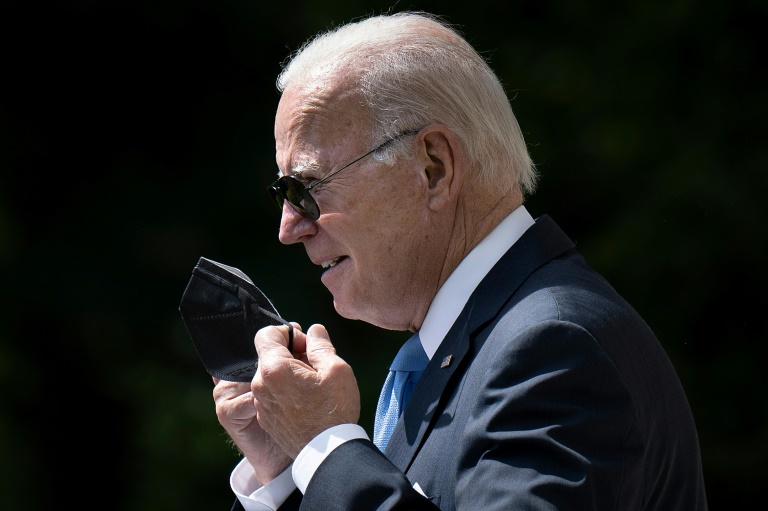
US President Joe Biden on Saturday tested negative for Covid-19, days after coming down with a second bout of the illness.

“The President continues to feel very well,” Biden’s physician Kevin O’Connor said in a statement. “This morning, his SARS-CoV-2 antigen testing was negative.”

Biden, who at 79 is the oldest person to hold the US presidency, has been in quarantine for the past week, after testing positive for the virus following an initial recovery in what is known as a “rebound” case.

O’Connor said Biden will continue to isolate pending a second negative test “in an abundance of caution.”

According to Biden’s official schedule he is set to travel to the southern state of Kentucky, the scene of devastating floods, on Monday.

Israel warns aerial onslaught against Gaza militants may last a week

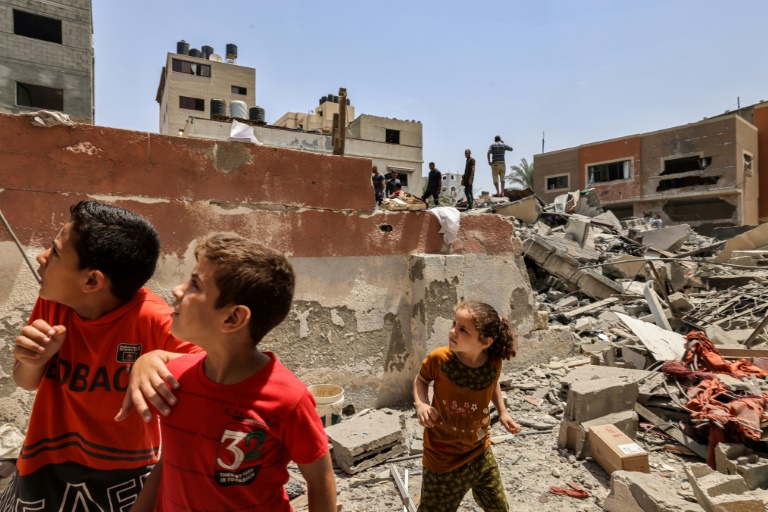
Israel’s military warned Saturday deadly air strikes against Palestinian militants in Gaza could last a week, as cross-border fire reverberated for a second day in the worst escalation since last year’s war.

Israel has said it was necessary to launch a “pre-emptive” operation against Islamic Jihad, saying the group was planning an imminent attack following days of tensions along the border with Gaza.

Health authorities in the Palestinian enclave, which is controlled by the Islamist group Hamas, said a five-year-old girl was among 15 people killed since Friday, adding that more than 140 have been wounded.

Civilians meanwhile took refuge in air raid shelters on the Israeli side, with AFP journalists hearing sirens warning of incoming fire in the Tel Aviv area on Saturday evening.

Israel’s ongoing strikes are being met with barrages of rockets from the Palestinian side, stoking fears of a repeat of an 11-day conflict that devastated Gaza in May 2021. 

Egyptian President Abdel Fattah al-Sisi said Cairo is talking “around the clock” with both sides, which so far have rejected calls for hostilities to end.

Daily life in Gaza has come to a standstill, while the electricity distributor said the sole power station shut down due to a lack of fuel after Israel closed its border crossings.

Gaza’s health ministry said the next few hours will be “crucial and difficult”, warning it risked suspending vital services within 72 hours as a result of the lack of electricity.

– ‘We are all alone’ –

In Gaza City, resident Dounia Ismail said Palestinians have become accustomed to preparing a “survival bag” of items such as money and medicine.

“This latest escalation brings back images of fear, anxiety, and the feeling that we are all alone,” she told AFP.

On the Israeli side of the frontier, the Magen David Adom emergency service said two people were hospitalised with shrapnel wounds and 13 others were lightly hurt while running for safety.

In Kibbutz Nahal Oz, an Israeli community beside the Gaza border, resident Nadav Peretz said he has been “in the bomb shelter or around it” since Friday. 

“We recognise that on the other side too there is an uninvolved civilian population, and on both sides children deserve to enjoy their summer vacation,” the 40-year-old said.

Egypt’s Sisi said Cairo is “making great efforts with our partners to restore calm”.

“Contacts are maintained around the clock with everyone, so that things do not get out of control,” the president said in a speech.

But an Israeli military spokesman said its forces were “preparing for the operation to last a week,” and told AFP that the army is “not currently holding ceasefire negotiations”.

Islamic Jihad’s leader in Gaza, Mohammed al-Hindi, said: “The battle is still at its beginning.”

Israel and Islamic Jihad confirmed the killing of Taysir al-Jabari, a key commander of the militant group, in a Friday strike.

Islamic Jihad is aligned with Hamas, but often acts independently. Both are blacklisted as terrorist organisations by much of the West.

Hamas has fought four wars with Israel since seizing control of Gaza in 2007, including the conflict last May. 

A flare-up with Islamic Jihad came in 2019, following Israel’s killing of Baha Abu al-Ata, Jabari’s predecessor. Hamas did not join the fray in that conflict.

Hamas’s moves now could prove crucial, with the group facing pressure from some to restore calm in order to improve economic conditions in Gaza.

– Five-year-old girl –

Mohammed Abu Salameh, the director of Shifa, Gaza City’s main hospital, said medics are facing “acute shortages of medical supplies”. 

The UN humanitarian chief for the occupied Palestinian territories, Lynn Hastings, urged the warring sides to allow “fuel, food, and medical supplies” to be delivered to Gaza amid the worsening crisis.

On Friday, the health ministry reported “a five-year-old girl” was among those killed by Israeli fire. 

The girl, Alaa Kaddum, had a pink bow in her hair and a wound on her forehead, as her body was carried by her father at her funeral.

Israeli military spokesman Richard Hecht said Friday “we are assuming about 15 killed in action” in Gaza, referring to Palestinian combatants.

The Gaza strikes follow the arrest in the occupied West Bank of two senior members of Islamic Jihad, including Bassem al-Saadi, who Israel accuses of orchestrating recent attacks. 

Israel on Saturday broadened its operation against Islamic Jihad, announcing the arrest of 19 people in the West Bank it said were members of the group. 

Israel has conducted a wave of often deadly raids in the West Bank since mid-March in response to lethal attacks on Israelis.

France to give vitamins to beluga stranded in the Seine

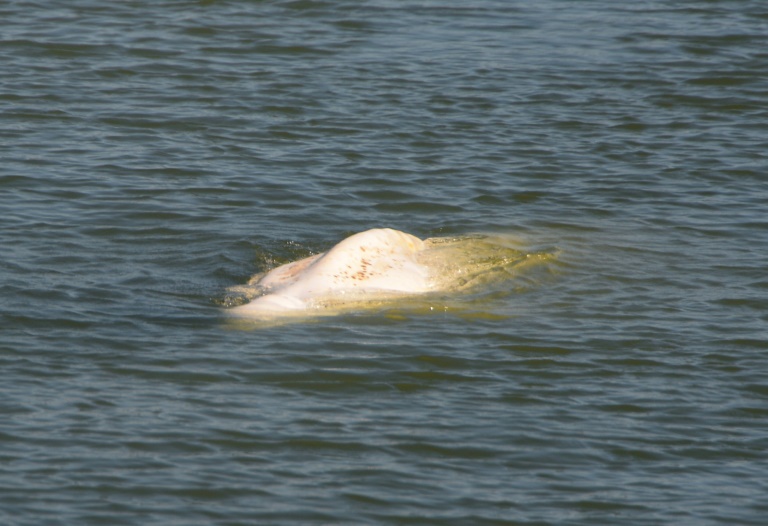
French authorities were preparing Saturday to give vitamins to a beluga whale that swam way up the Seine river, as they raced to save the malnourished creature, which has so far refused food.

The visibly underweight whale was first spotted Tuesday in the river that flows through Paris to the English Channel. On Saturday it had made its way to around 70 kilometres (44 miles) north of the French capital.

“It’s quite emaciated and seems to be having trouble eating,” Isabelle Dorliat-Pouzet, a senior police official in the Eure department in Normandy, which is overseeing the rescue operation, told journalists.

Rescuers had tried feeding it frozen herring and then live trout, but it did not seem to accept either, she said.

It is hoped that injecting the animal with vitamins will stimulate its appetite, she said.

Authorities were deciding whether to keep the animal in the waterway so it could regain its appetite or guide it back toward the sea, she said, adding that no decision has yet been taken.

She said that small spots had appeared on its pale skin, but that scientists hadn’t yet determined whether these were a natural occurrence because of the fresh water or signs of health difficulties.

On Friday, Gerard Mauger of the GECC marine conversation society told AFP that despite being a notably sociable mammal, “it is behaving the same as yesterday, it seems very skittish. It rises to the surface only briefly, followed by long dives.” 

Based on sonar recordings, it was also emitting very few of the chirps and quicks the whales are known for, raising further concerns about the animal’s health.

Mauger appealed to the public to stay away from the animal.

“Even trying to approach it with a lot of precautions, it’s difficult,” he said.

– Rare sighting –

Belugas are normally found only in cold Arctic waters, and while they migrate south in the autumn to feed as ice forms, they rarely venture so far.

An adult can reach up to four metres (13 feet) in length.

It is only the second recorded sighting of a beluga in a French river since 1948, when a fisherman in the estuary of the Loire river found one in his nets.

The sighting comes just a few months after a killer whale — also known as an orca, but technically part of the dolphin family — became stranded in the Seine and was later found dead between Le Havre and Rouen in late May.

An autopsy found that the animal, more than four metres long, had likely suffered exhaustion after being unable to feed, though officials said they had also discovered a bullet lodged in the base of its skull — though it was far from clear that the wound played a role in its death.

burs/jj/ah

Close Bitnami banner
Bitnami