World

Receding floodwater lets police evacuate people trapped in US Death Valley

Hours after rare and intense flooding hit California’s Death Valley, closing roads and stranding some 1,000 people, waters were receding Saturday and police escorted many of those trapped to safety.

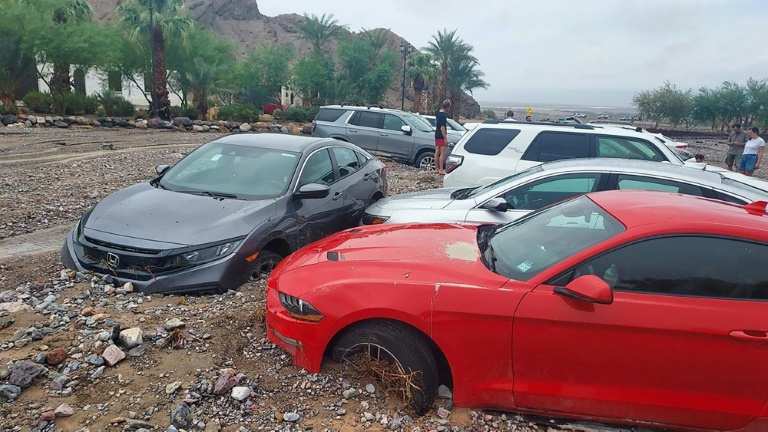
After “unprecedented amounts of rainfall caused substantial flooding” in the famously parched park, around 60 cars were bogged down under mounds of debris, the National Park Service (NPS) said.

“Aerial searches are underway to ensure that there are no stranded vehicles in remote areas,” the Death Valley National Park said on its website Saturday.

“Hard work from road crews allowed visitors who were previously unable to leave the area hotels to be able to carefully drive out with law enforcement escorts,” the park said.

“At this time, there are no reported stranded visitors on park roadways and no reported injuries.”

Earlier, the NPS said that about 500 visitors and 500 staff had been “unable to exit the park,” which is in the Mojave Desert, straddling the California-Nevada border.

Death Valley, with its vast sand dunes, scorching salt flats and endless badlands, is the largest national park in the 48 lower states. 

It is the hottest and, normally, the driest of the national parks.

But the recent floodwaters tore up sections of paved roads, pushed dumpster containers into parked cars, and flooded offices and hotels.

“With over 1,000 miles of roadway in the park, and 3.4 million acres,” the NPS said, “it will take time to get a full assessment of the damage.”

The park service said that all roads serving the park will remain off-limits for now. 

Park Superintendent Mike Reynolds added that “with the severity and widespread nature of this rainfall it will take time to rebuild and reopen everything.”

A total of 1.46 inches (3.7 centimeters) of rain fell in the park’s Furnace Creek area, almost tying the previous daily record of 1.47 inches. The average annual rainfall is less than two inches a year.

According to UN climate experts, even if the world manages to limit warming to 1.5 degrees Celsius, some regions will experience increasingly intense and frequent rainfall.
'Decisive day' for trapped Mexican miners, president says

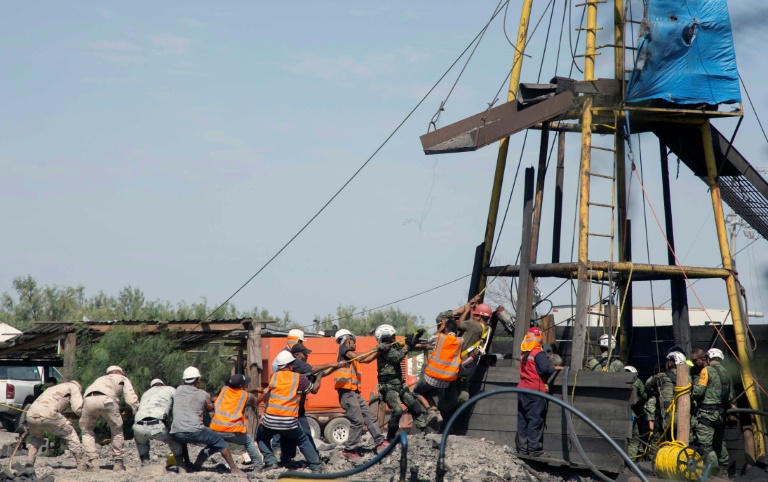
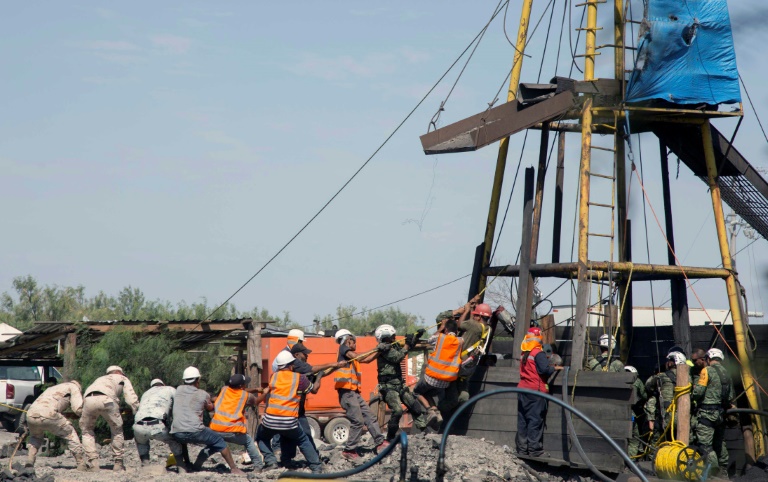
A major operation to rescue 10 workers trapped in a flooded coal mine in northern Mexico was approaching a crucial moment on Saturday, President Andres Manuel Lopez Obrador said.

“Today is a decisive day because, according to the experts, we’ll know if it’s possible for the divers to enter safely,” he tweeted.

More than 300 soldiers and other personnel have joined the rescue effort in Coahuila state about 1,130 kilometers (700 miles) north of Mexico City, the government said.

Five workers managed to escape from the crudely constructed mine in the initial aftermath of the cave-in on Wednesday, but since then no survivors have been found.

The focus has been on pumping out water from the mine in Agujita in the municipality of Sabinas to make it safe enough to enter.

Authorities said that the three mine shafts descended 60 meters (200 feet) and on Friday the floodwater inside was reported to be 30 meters deep.

“The main problem is the flood, although the pumping equipment is sufficient,” said Lopez Obrador.

Coahuila’s state government said the miners had been carrying out excavation work when they hit an adjoining area full of water, causing the shaft to collapse and flood.

Family members spent a third night waiting anxiously for news after the latest disaster to strike Mexico’s main coal-producing region.

“I feel desperate, not knowing what’s happening and when I’ll see him again,” said Jesus Mireles Romo, whose father was among the missing.

“But I have faith that it will turn out well, that they will all get out,” he told AFP, his eyes red from crying.

Coahuila has seen a series of fatal mining accidents over the years.

Last year, seven miners died when they were trapped in the region.

The worst accident was an explosion that claimed 65 lives at the Pasta de Conchos mine in 2006.

Only two bodies were retrieved after that tragedy and the families have repeatedly urged the authorities to recover the others.

'Decisive day' for trapped Mexican miners, president says

A major operation to rescue 10 workers trapped in a flooded coal mine in northern Mexico was approaching a crucial moment on Saturday, President Andres Manuel Lopez Obrador said.

“Today is a decisive day because, according to the experts, we’ll know if it’s possible for the divers to enter safely,” he tweeted.

More than 300 soldiers and other personnel have joined the rescue effort in Coahuila state about 1,130 kilometers (700 miles) north of Mexico City, the government said.

Five workers managed to escape from the crudely constructed mine in the initial aftermath of the cave-in on Wednesday, but since then no survivors have been found.

The focus has been on pumping out water from the mine in Agujita in the municipality of Sabinas to make it safe enough to enter.

Authorities said that the three mine shafts descended 60 meters (200 feet) and on Friday the floodwater inside was reported to be 30 meters deep.

“The main problem is the flood, although the pumping equipment is sufficient,” said Lopez Obrador.

Coahuila’s state government said the miners had been carrying out excavation work when they hit an adjoining area full of water, causing the shaft to collapse and flood.

Family members spent a third night waiting anxiously for news after the latest disaster to strike Mexico’s main coal-producing region.

“I feel desperate, not knowing what’s happening and when I’ll see him again,” said Jesus Mireles Romo, whose father was among the missing.

“But I have faith that it will turn out well, that they will all get out,” he told AFP, his eyes red from crying.

Coahuila has seen a series of fatal mining accidents over the years.

Last year, seven miners died when they were trapped in the region.

The worst accident was an explosion that claimed 65 lives at the Pasta de Conchos mine in 2006.

Only two bodies were retrieved after that tragedy and the families have repeatedly urged the authorities to recover the others.

France to give vitamins to beluga stranded in the Seine

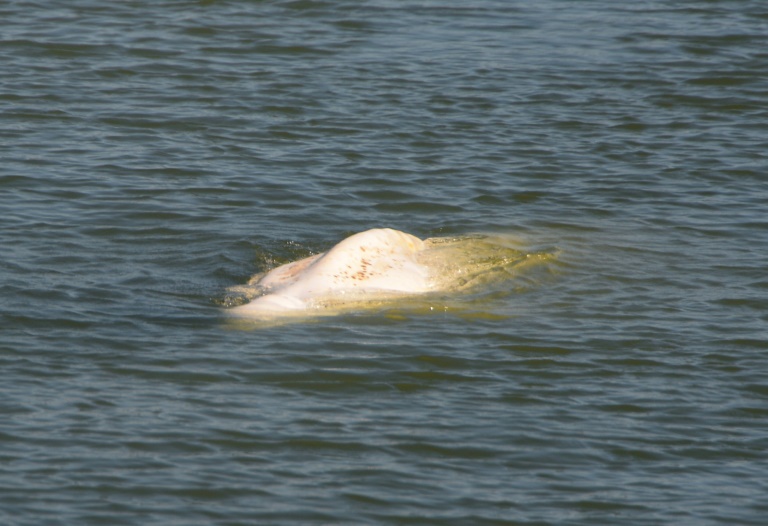
French authorities were planning on Saturday to give vitamins to a beluga whale that swam way up the Seine river, as they raced to  save the malnourished cetacean refusing food.

The apparently underweight whale was first spotted Tuesday in the river that flows through Paris to the English Channel. On Saturday it had made its way to around 70 kilometres (44 miles) north of the French capital.

“It’s quite emaciated and seems to be having trouble eating,” Isabelle Dorliat-Pouzet, a senior police official in the Eure department in Normandy, which is overseeing the rescue operation, told a press conference.

Rescuers had tried feeding it frozen herring and then live trout, but it didn’t seem to accept either, she said.

It is hoped that injecting the animal with vitamins will stimulate its appetite, she said.

Authorities were deciding whether to keep the animal in the waterway so it could regain its appetite or guide it back toward the sea, she said, adding that no decision has yet been taken.

She said that small spots had appeared on its pale skin, but that scientists hadn’t yet determined whether these were a natural occurrence because of the fresh water or signs of health difficulties.

On Friday, Gerard Mauger of the GECC marine conversation society told AFP that despite being a notably sociable mammal, “it is behaving the same as yesterday, it seems very skittish. It rises to the surface only briefly, followed by long dives.” 

Based based on sonar recordings, it was also emitting very few of the chirps and quicks the whales are known for, raising further concerns about the animal’s health.

– Rare sighting –

Belugas are normally found only in cold Arctic waters, and while they migrate south in the autumn to feed as ice forms, they rarely venture so far.

An adult can reach up to four metres (13 feet) in length.

It is only the second recorded sighting of a beluga in a French river since 1948, when a fisherman in the estuary of the Loire river found one in his nets.

The sighting comes just a few months after a killer whale — also known as an orca, but technically part of the dolphin family — became stranded in the Seine and was later found dead between Le Havre and Rouen in late May.

An autopsy found that the animal, more than four metres long, had likely suffered exhaustion after being unable to feed, though officials said they had also discovered a bullet lodged in the base of its skull — though it was far from clear that the wound played a role in its death.

burs/yad/bp

Fire at Cuba fuel depot leaves 67 injured: hospital

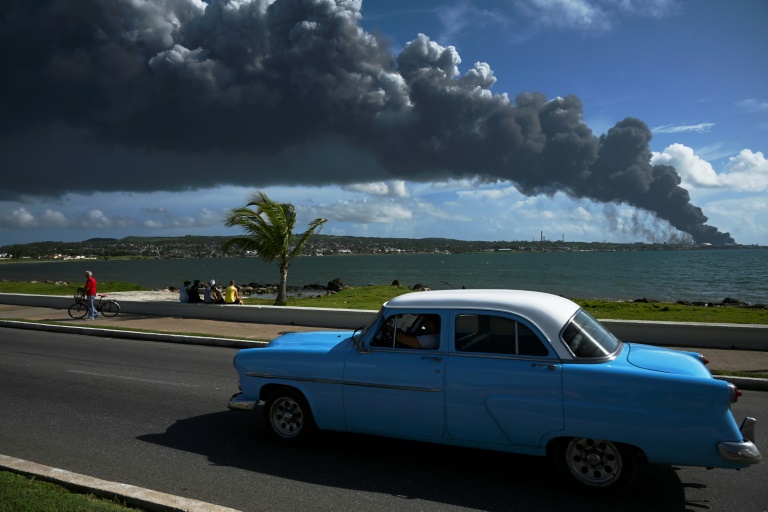
A fire at a fuel depot in western Cuba sparked by a lightning strike has injured more than 60 people, three of them critically, officials said Saturday.

The official newspaper Granma attributed the fire, which began Friday evening, to an “electric discharge” that struck a tank at the depot outside the city of Matanzas, 100 kilometers (62 miles) east of Havana.

The fire spread early Saturday from one fuel tank to a second, sending a huge plume of black smoke into the sky.

The Faustino Perez provincial hospital reported that 67 people had been injured, with 15 in serious or very serious condition.

And the Cuban presidency said 17 others, primarily firefighters, are listed as missing. And some 800 people had been evacuated from the area, according to regional officials.

Cuban President Miguel Diaz-Canel and Prime Minister Manuel Marrero were supervising rescue efforts.

Upon hearing a first explosion, Yuney Hernandez and her family left their home just two kilometers from the depot, the 32-year-old mother told AFP. They returned a few hours later. 

But then around 5am Saturday (0900 GMT) they heard more explosions, “like pieces of the tank were falling,” she said.

The journal Granma quoted a senior official of state-owned Cubapetroleo as saying that the fire was due to “a fault in the lightning-rod system, which could not withstand the energy from the electrical discharge.”  

The depot supplies the Antonio Guiteras thermoelectric plant, but service to the plant has not stopped, the official said.

The fire occurred at a time when the island — with an outdated energy network and persistent fuel shortages — has faced mounting difficulties in meeting increased energy demands amid severe summer heat. 

Since May, the authorities have imposed energy blackouts of up to 12 hours a day in some regions — sparking at least 20 protests across the island’s interior. 

Fire at Cuba fuel depot leaves 67 injured: hospital

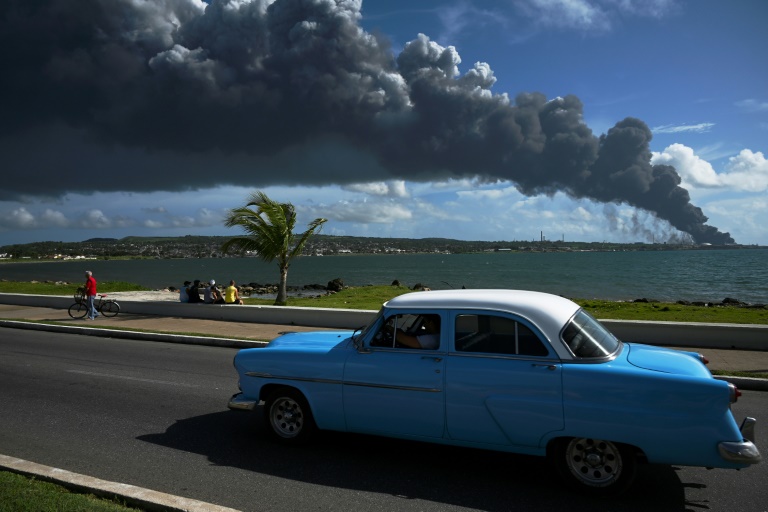
A fire at a fuel depot in western Cuba sparked by a lightning strike has injured more than 60 people, three of them critically, officials said Saturday.

The official newspaper Granma attributed the fire, which began Friday evening, to an “electric discharge” that struck a tank at the depot outside the city of Matanzas, 100 kilometers (62 miles) east of Havana.

The fire spread early Saturday from one fuel tank to a second, sending a huge plume of black smoke into the sky.

The Faustino Perez provincial hospital reported that 67 people had been injured, with 15 in serious or very serious condition.

And the Cuban presidency said 17 others, primarily firefighters, are listed as missing. And some 800 people had been evacuated from the area, according to regional officials.

Cuban President Miguel Diaz-Canel and Prime Minister Manuel Marrero were supervising rescue efforts.

Upon hearing a first explosion, Yuney Hernandez and her family left their home just two kilometers from the depot, the 32-year-old mother told AFP. They returned a few hours later. 

But then around 5am Saturday (0900 GMT) they heard more explosions, “like pieces of the tank were falling,” she said.

The journal Granma quoted a senior official of state-owned Cubapetroleo as saying that the fire was due to “a fault in the lightning-rod system, which could not withstand the energy from the electrical discharge.”  

The depot supplies the Antonio Guiteras thermoelectric plant, but service to the plant has not stopped, the official said.

The fire occurred at a time when the island — with an outdated energy network and persistent fuel shortages — has faced mounting difficulties in meeting increased energy demands amid severe summer heat. 

Since May, the authorities have imposed energy blackouts of up to 12 hours a day in some regions — sparking at least 20 protests across the island’s interior. 

Fire at Cuba fuel depot leaves 67 injured: hospital

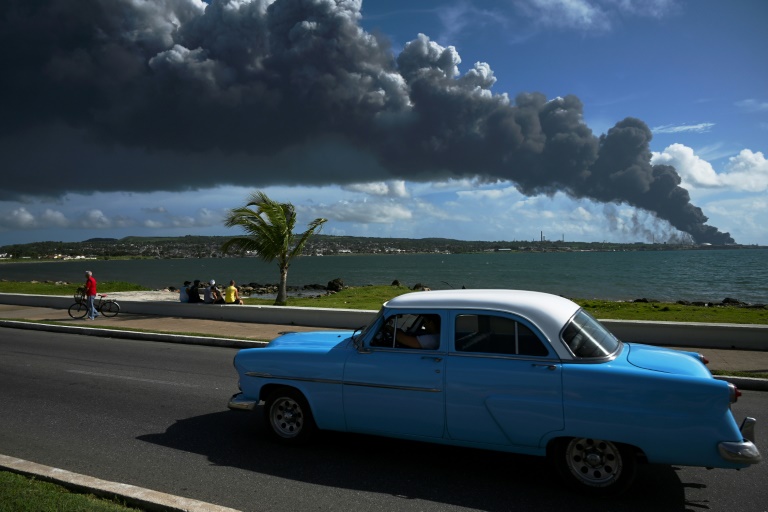
A fire at a fuel depot in western Cuba sparked by a lightning strike has injured more than 60 people, three of them critically, officials said Saturday.

The official newspaper Granma attributed the fire, which began Friday evening, to an “electric discharge” that struck a tank at the depot outside the city of Matanzas, 100 kilometers (62 miles) east of Havana.

The fire spread early Saturday from one fuel tank to a second, sending a huge plume of black smoke into the sky.

The Faustino Perez provincial hospital reported that 67 people had been injured, with 15 in serious or very serious condition.

And the Cuban presidency said 17 others, primarily firefighters, are listed as missing. And some 800 people had been evacuated from the area, according to regional officials.

Cuban President Miguel Diaz-Canel and Prime Minister Manuel Marrero were supervising rescue efforts.

Upon hearing a first explosion, Yuney Hernandez and her family left their home just two kilometers from the depot, the 32-year-old mother told AFP. They returned a few hours later. 

But then around 5am Saturday (0900 GMT) they heard more explosions, “like pieces of the tank were falling,” she said.

The journal Granma quoted a senior official of state-owned Cubapetroleo as saying that the fire was due to “a fault in the lightning-rod system, which could not withstand the energy from the electrical discharge.”  

The depot supplies the Antonio Guiteras thermoelectric plant, but service to the plant has not stopped, the official said.

The fire occurred at a time when the island — with an outdated energy network and persistent fuel shortages — has faced mounting difficulties in meeting increased energy demands amid severe summer heat. 

Since May, the authorities have imposed energy blackouts of up to 12 hours a day in some regions — sparking at least 20 protests across the island’s interior. 

Israel warns aerial onslaught against Gaza militants may last a week

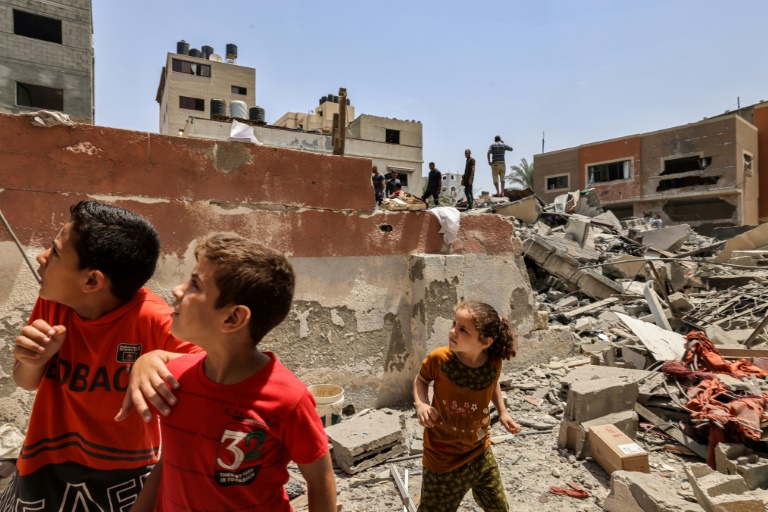
Israel’s military warned Saturday deadly air strikes against Palestinian militants in Gaza could last a week, as cross-border fire reverberated for a second day in the worst escalation since last year’s war.

Israel has said it was necessary to launch a “pre-emptive” operation against Islamic Jihad, saying the group was planning an imminent attack following days of tensions along the border with Gaza.

Health authorities in the Palestinian enclave, which is controlled by the Islamist group Hamas, said a five-year-old girl was among 15 people killed in the Israeli bombardment, adding that more than 120 have been wounded.

Civilians meanwhile took refuge in air raid shelters on the Israeli side, with AFP journalists hearing sirens warning of incoming fire in the Tel Aviv area on Saturday evening.

Israel’s ongoing strikes are being met with barrages of rockets from the Palestinian side, stoking fears of a repeat of an 11-day conflict that devastated Gaza in May 2021. 

Daily life in the enclave has come to a standstill, while the electricity distributor said the sole power station shut down due to a lack of fuel after Israel closed its border crossings.

Gaza’s health ministry said the next few hours will be “crucial and difficult”, warning it risked suspending vital services within 72 hours as a result of the lack of electricity.

There have been no reports of Israelis wounded by rockets, though officials said a home was hit and land was set ablaze by income fire near the border.

– Hamas’s crucial decision –

An Israeli military spokesman said its forces were “preparing for the operation to last a week,” and told AFP that the army is “not currently holding ceasefire negotiations”.

Islamic Jihad’s leader in Gaza, Mohammed al-Hindi, said: “The battle is still at its beginning.”

Israel and Islamic Jihad confirmed the killing of Taysir al-Jabari, a key commander of the militant group, in a Friday strike.

Jamal al-Fadi, a political science professor at Gaza’s Al-Azhar University, said he expected the violence to end “within days”.

“Islamic Jihad is reacting in a limited manner and by doing so is preventing the occupation (Israeli military) from intensifying its air strikes,” he told AFP.

Islamic Jihad is aligned with Hamas, but often acts independently. Both are blacklisted as terrorist organisations by much of the West.

Hamas has fought four wars with Israel since seizing control of Gaza in 2007, including the conflict last May. 

A flare-up with Islamic Jihad came in 2019, following Israel’s killing of Baha Abu al-Ata, Jabari’s predecessor. Hamas did not join the fray in that conflict.

Hamas’s moves now could prove crucial.

Mairav Zonszein, a senior analyst at the International Crisis Group think tank, said Hamas currently has an interest in staying on the sidelines as it has recently won more economic aid for Gazans. 

“But if more civilians are killed, then it will feel obligated to respond,” she told AFP.

– Five-year-old girl –

Mohammed Abu Salameh, the director of Shifa, Gaza City’s main hospital, said medics are facing “acute shortages of medical supplies”. 

The UN humanitarian chief for the occupied Palestinian territories, Lynn Hastings, urged the warring sides to allow “fuel, food, and medical supplies” to be delivered to Gaza amid the worsening crisis.

On Friday, the health ministry reported “a five-year-old girl” was among those killed by Israeli fire. 

The girl, Alaa Kaddum, had a pink bow in her hair and a wound on her forehead, as her body was carried by her father at her funeral.

Israeli military spokesman Richard Hecht said Friday “we are assuming about 15 killed in action” in Gaza, referring to Palestinian combatants.

The Gaza strikes followed the arrest in the occupied West Bank of two senior members of Islamic Jihad, including Bassem al-Saadi, who Israel accuses of orchestrating recent attacks. 

Israel on Saturday broadened its operation against Islamic Jihad, announcing the arrest of 19 people in the West Bank it said were members of the group. 

Israel has conducted a wave of often deadly raids inside West Bank towns and cities since mid-March in response to lethal attacks on Israelis.

Spain battles northwest wildfires

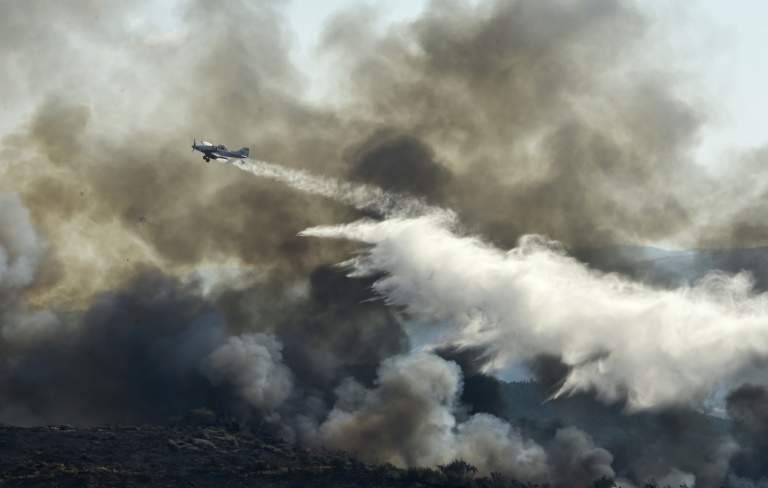
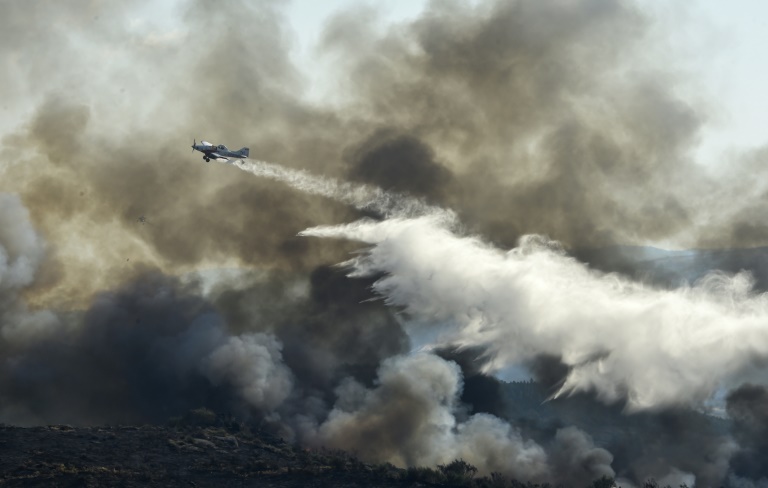
Spanish firefighters on Saturday struggled to contain wildfires that have ravaged large tracts in the northwest, as a third summer heat wave grips the country.

Firefighters were battling six blazes in Galicia that have scorched nearly 3,000 hectares (7,400 acres).

Some 700 people have been evacuated from the area around Boiro, where a blaze broke out on Thursday, according to regional officials.

But no casualties have been reported so far. 

“The situation remains complicated. Helicopters are not enough to control all of the homes,” the mayor of neighbouring A Pobra do Caraminal, Xose Lois Pinero, wrote on Facebook. 

Near the town of Verin, by the border with Portugal, authorities were managing to contain a fire that started Wednesday and is suspected to have been arson, Galicia government said.

Temperatures hit a 40.9 degrees Celsius (105.62 Fahrenheit) high on Thursday, according to the national weather agency. They have eased since, but were expected to remain around 35C across much of the country on Saturday.

Scientists say human-induced climate change is making extreme weather events including heatwaves and droughts more frequent and more intense. They in turn increase the risk of fires, which emit climate heating greenhouse gases.

Spain has faced 366 wildfires since the start of the year, fuelled by scorching temperatures and drought conditions.

The flames have destroyed more than 233,000 hectares, more than in any other nation in Europe, according to the European Union’s satellite monitoring service EFFIS.

Spain battles northwest wildfires

Spanish firefighters on Saturday struggled to contain wildfires that have ravaged large tracts in the northwest, as a third summer heat wave grips the country.

Firefighters were battling six blazes in Galicia that have scorched nearly 3,000 hectares (7,400 acres).

Some 700 people have been evacuated from the area around Boiro, where a blaze broke out on Thursday, according to regional officials.

But no casualties have been reported so far. 

“The situation remains complicated. Helicopters are not enough to control all of the homes,” the mayor of neighbouring A Pobra do Caraminal, Xose Lois Pinero, wrote on Facebook. 

Near the town of Verin, by the border with Portugal, authorities were managing to contain a fire that started Wednesday and is suspected to have been arson, Galicia government said.

Temperatures hit a 40.9 degrees Celsius (105.62 Fahrenheit) high on Thursday, according to the national weather agency. They have eased since, but were expected to remain around 35C across much of the country on Saturday.

Scientists say human-induced climate change is making extreme weather events including heatwaves and droughts more frequent and more intense. They in turn increase the risk of fires, which emit climate heating greenhouse gases.

Spain has faced 366 wildfires since the start of the year, fuelled by scorching temperatures and drought conditions.

The flames have destroyed more than 233,000 hectares, more than in any other nation in Europe, according to the European Union’s satellite monitoring service EFFIS.

Close Bitnami banner
Bitnami