World

Blinken hails 'strong' US-Philippine alliance in talks with Marcos

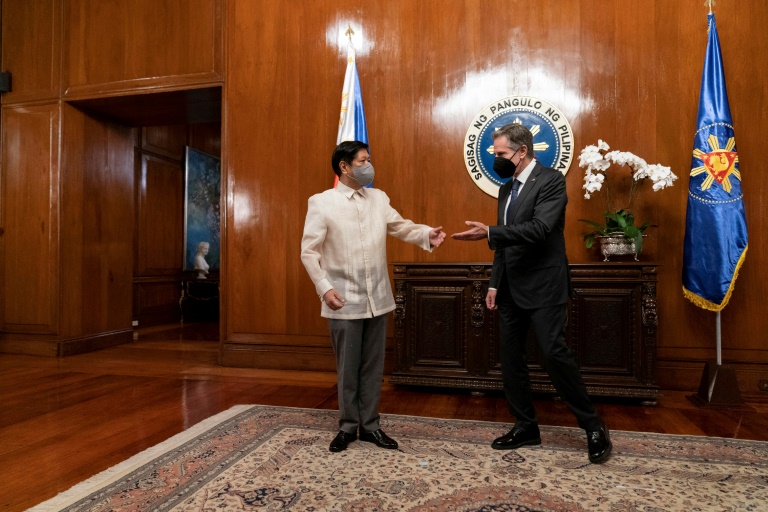
US Secretary of State Antony Blinken met with Philippine President Ferdinand Marcos Jr Saturday in a bid to bolster the countries’ “strong” alliance, as China conducts military drills around Taiwan. 

Blinken is the most senior US official to visit the Philippines — a treaty-bound ally of the United States — since Marcos took office.

“The alliance is strong and I believe can grow even stronger,” Blinken told Marcos at the presidential palace.

Marcos hailed the “special relationship” between the two countries.

The United States has a security pact with the Philippines, and has backed the Southeast Asian nation in increasingly heated disputes with Beijing in the South China Sea.

Blinken’s meeting with Marcos came after China launched a series of military exercises around Taiwan that the United States has condemned.

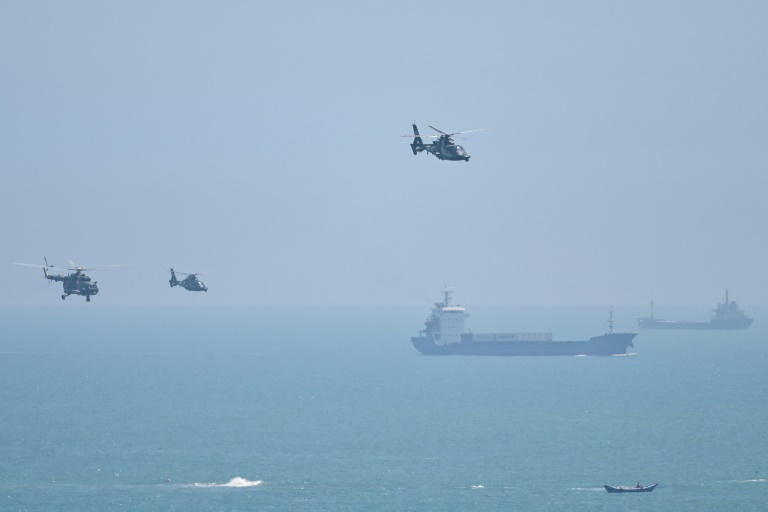
On Saturday, the third day of the war games, Taiwan accused the Chinese military of simulating an attack on its main island as they deployed fighter jets and warships just 400 kilometres (250 miles) north of the Philippines. 

The drills came in response to US House Speaker Nancy Pelosi’s visit to Taiwan, which prompted fury in China.

Marcos said Pelosi’s visit demonstrated the existing “intensity” of the conflict, rather than adding to tensions.

In virtual talks with his Philippine counterpart Enrique Manalo, Blinken said the United States was “determined to act responsibly” to avoid a crisis.

“Maintaining peace and stability across the Taiwan Strait is vital not only for Taiwan but for the Philippines and many other countries,” Blinken told reporters after the meeting.

Manalo told Blinken the Philippines could not afford a “further escalation of tensions in the region” as it battles “significant challenges”, such as reviving its pandemic-hit economy.

“The Philippines continues to look at big powers to help calm the waters and keep the peace,” he said.   

– ‘Significant escalation’ –

Blinken arrived in the capital Manila on Friday after attending an Association of Southeast Asian Nations summit in Cambodia.

There, he condemned China’s drills as “a significant escalation”.

Like other ASEAN members, the Philippines does not formally recognise Taiwan and has shown no appetite for backing Taipei against Beijing — its biggest trade partner. 

The United States has a complex relationship with the Philippines — and the Marcos family.

After Ferdinand Marcos Senior ruled the former US colony for two decades with the support of Washington, which saw him as a Cold War ally, he went into exile in Hawaii in 1986 in the face of mass protests and the nudging of the United States.

As regional tensions rise, Washington is keen to preserve its security alliance with Manila, which includes a mutual defence treaty and permission for the US military to store defence equipment and supplies on several Philippine bases.

It also allows US troops to access certain military bases in the country.

Blinken said Saturday the US commitment to the mutual defence pact was “ironclad”.

“We always stand by our partners,” he told reporters. “It’s important to underscore that because of what’s happening north of here in the Taiwan Strait.”

Marcos has indicated he will strike a balance between China and the United States, which are vying to have the closest ties with his administration.

Washington-Manila relations rebounded towards the end of the tenure of Marcos’ predecessor Rodrigo Duterte, who had threatened to axe a key military agreement with the United States. 

Snickers owner apologises after referring to Taiwan as a country

American candy giant Mars Wrigley has insisted it “respects China’s national sovereignty” and apologised after an advert for its Snickers bar referred to Taiwan as a country, sparking outrage on the mainland.

Screenshots of marketing for the nutty confectionery featuring the South Korean boyband BTS were swiftly picked up on social media in mainland China, where any suggestion the island is an independent nation is highly taboo.

“We are aware of reports on Snickers-related activities in certain regions of Asia, take this very seriously and express our deep apologies,” said a Mars Wrigley statement posted Friday on Snickers China’s Weibo page.

The company has asked Snickers’ local team to check and adjust its official website and social media account “to ensure the company’s publicity content is accurate”, it added.

“Mars Wrigley respects China’s national sovereignty and territorial integrity, and conducts business operations in strict compliance with local Chinese laws and regulations,” the statement said.

Hours after the first statement, Snickers China shared another Weibo post adding that “there is only one China in this world, and Taiwan is an inalienable part of China’s territory”.

Beijing reacted with fury this week when US House Speaker Nancy Pelosi defied its warnings and visited Taiwan — which China claims as part of its territory and has vowed to take, by force if necessary.

China said Friday it was ending cooperation with the United States on key issues including climate change, and has in recent days encircled the self-ruled democratic island with a series of military drills.

Mars Wrigley is far from the first international firm to issue an apology over worries of losing access to China’s massive consumer market.

In 2019, French luxury brand Dior apologised after using a map of China in a presentation that did not include Taiwan.

Hotel chain Marriott’s website in China was shut down by authorities for a week in 2018 after a customer questionnaire listed Taiwan, Tibet and Hong Kong as separate countries.

Snickers owner apologises after referring to Taiwan as a country

American candy giant Mars Wrigley has insisted it “respects China’s national sovereignty” and apologised after an advert for its Snickers bar referred to Taiwan as a country, sparking outrage on the mainland.

Screenshots of marketing for the nutty confectionery featuring the South Korean boyband BTS were swiftly picked up on social media in mainland China, where any suggestion the island is an independent nation is highly taboo.

“We are aware of reports on Snickers-related activities in certain regions of Asia, take this very seriously and express our deep apologies,” said a Mars Wrigley statement posted Friday on Snickers China’s Weibo page.

The company has asked Snickers’ local team to check and adjust its official website and social media account “to ensure the company’s publicity content is accurate”, it added.

“Mars Wrigley respects China’s national sovereignty and territorial integrity, and conducts business operations in strict compliance with local Chinese laws and regulations,” the statement said.

Hours after the first statement, Snickers China shared another Weibo post adding that “there is only one China in this world, and Taiwan is an inalienable part of China’s territory”.

Beijing reacted with fury this week when US House Speaker Nancy Pelosi defied its warnings and visited Taiwan — which China claims as part of its territory and has vowed to take, by force if necessary.

China said Friday it was ending cooperation with the United States on key issues including climate change, and has in recent days encircled the self-ruled democratic island with a series of military drills.

Mars Wrigley is far from the first international firm to issue an apology over worries of losing access to China’s massive consumer market.

In 2019, French luxury brand Dior apologised after using a map of China in a presentation that did not include Taiwan.

Hotel chain Marriott’s website in China was shut down by authorities for a week in 2018 after a customer questionnaire listed Taiwan, Tibet and Hong Kong as separate countries.

China drills reveal plans for Taiwan blockade: experts

Beijing’s largest-ever exercises around Taiwan have offered key clues into its plans for a gruelling blockade in the event of a war to take the self-ruled island, and revealed an increasingly emboldened Chinese military, experts told AFP.

The visit to Taiwan by US House Speaker Nancy Pelosi — second in line to the presidency — sparked outrage from Beijing, which launched vast military manoeuvres around the island, even at the risk of partially exposing its plans to the United States and its Asian allies.

Mobilising fighter planes, helicopters and even warships, the drills aim to simulate a blockade of Taiwan and include practising an “attack on targets at sea”, according to state news agency Xinhua.

It is the first time Chinese exercises have taken place so close to Taiwan, with some of the drills happening less than 20 kilometres from the island’s coast.

Also unprecedented are Beijing’s drills on Taiwan’s eastern flank, a strategically vital area for supplies to the island’s military forces — as well as any potential American reinforcements.

China sees Taiwan as part of its territory and has vowed to one day take it, by force if necessary.

A “blockade scenario” was long speculated to be one of China’s preferred strategies were it to try and conquer the island, and this week’s drills have revealed how that might go down.

Such a besiegement would aim to prevent any entry or exit of commercial or military ships and aircraft.

But it would also deny American forces stationed in the region access to the island.

The Chinese military “obviously has all the capabilities to impose such a blockade”, Song Zhongping, an independent Chinese military commentator, told AFP.

“We already see during the current exercises that Taiwanese fighter jets and ships absolutely cannot take off or leave their ports.”

– ‘They can’t be dismissed’ –

The Chinese military fired a dozen ballistic missiles on Thursday that hit various areas around Taiwan — with some flying over the island, Beijing’s state broadcaster CCTV said on Friday.

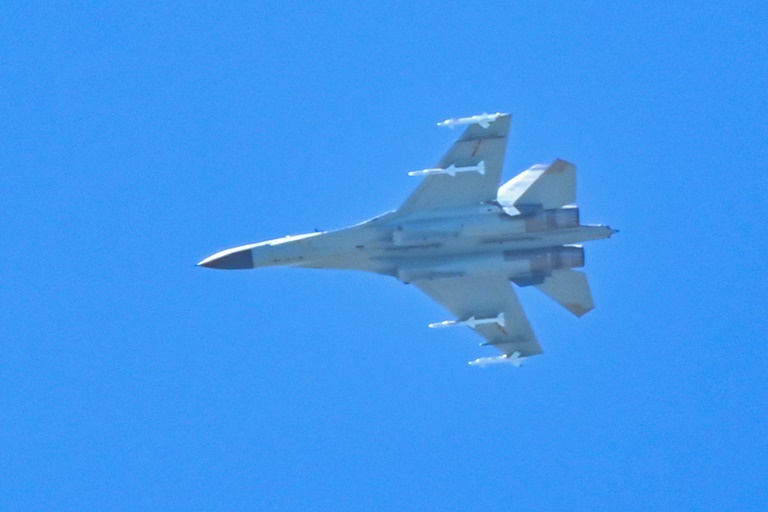
According to Xinhua, Beijing has mobilised more than 100 planes and more than 10 frigates and destroyers — including the J-20 stealth fighter and a Type 055 destroyer, the crown jewels of China’s air and naval forces.

But beyond the big guns, these exercises make it possible to test and sharpen the level of coordination between the various army corps mobilised: land, sea, air and rocket forces, as well as strategic support, tasked with cyber warfare.

It is also a crucial test for the recently inaugurated Eastern Theatre of Operations of the Chinese army, created in 2016 and which oversees the country’s entire eastern maritime space — and therefore Taiwan.

What China has done so far demonstrates its “robust capabilities”, John Blaxland, professor of international security at the Australian National University, told AFP.

“They can’t be dismissed as some kind of less inexperienced, incapable force,” he said. 

“They clearly have the ability to coordinate their land and sea, they have the ability to deploy missile systems and they function effectively.”

These exercises also demonstrate to the Taiwanese, the Americans and the Japanese that the Chinese “have what it takes to do what they threaten to do”, he added.

“The converse, of course to this is that what they are doing is being closely studied and monitored for lessons to be learned by Taiwan, the United States, Japan and others,” Blaxland noted.

– ‘Dangerous opponent’ –

During the previous Taiwan Strait crisis from 1995 to 1996, under Bill Clinton, the US Navy transited several warships through the waterway and deployed aircraft carriers near the island.

This time, however, “the US Government is taking prudent steps to avoid unwanted escalation”, said Lonnie Henley, a former US intelligence officer and professor at the Elliott School of International Studies in Washington.

American caution is also rooted in the fact that China has greatly increased its military capabilities since 1996, when it was unable to deny the US Navy access to the area.

“In some areas the PLA might even surpass US capabilities,” noted Grant Newsham, a former US Navy officer and researcher at the Japan Forum for Strategic Studies, referring to China’s military by its official name.

“If the battle is confined to the area right around Taiwan, today’s Chinese navy is a dangerous opponent — and if the Americans and Japanese do not intervene for some reason, things would be difficult for Taiwan.”

Chinese incursions across the so-called median line between the mainland and Taiwan — never recognised by Beijing — also speak to a growing confidence, experts said.

“China has not felt comfortable to push its claims on the median line until recently,” said Blaxland. 

“We can expect them to continue to operate as if the median line is not valid. That’s been the case for a while, but it’s now accelerating.”

Israel, Palestinian militants trade fire in major Gaza escalation

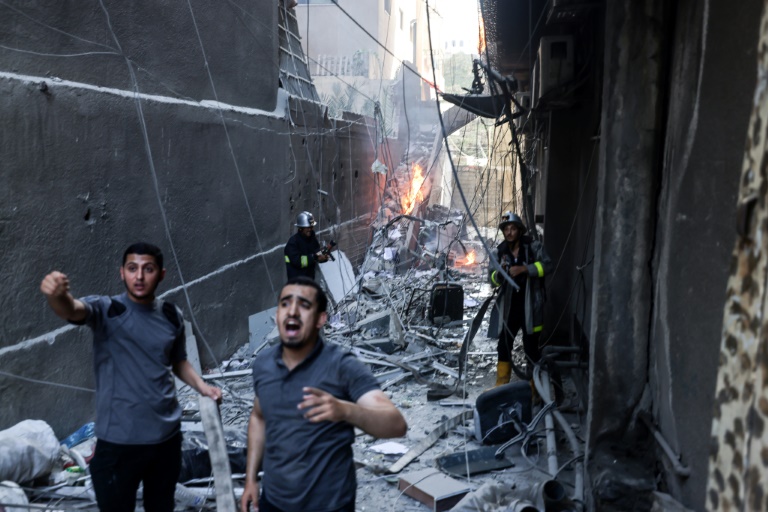
Israel hit Gaza with air strikes on Saturday and a Palestinian militant group retaliated with a barrage of rocket fire, in the territory’s worst escalation of violence since a war last year.

Israel has said it was forced to launch a “pre-emptive” operation against Islamic Jihad, insisting the group was planning an imminent attack following days of tensions along the Gaza border.  

Health authorities in Gaza, a Palestinian enclave controlled by the Islamist group Hamas, said 10 people have been killed by Israel’s bombardment, including a five-year-old girl, with 79 others injured. Israel’s army estimated that its operation has killed 15 militants. 

Early on Saturday Israel broadened its operation against Islamic Jihad, a group that is aligned with Hamas but often acts independently.

The Israeli army announced the arrest of 19 people it said were members of the group in the occupied West Bank, alongside the arrest of one other person. 

Israel and Islamic Jihad have both confirmed the killing of Taysir al-Jabari, a key leader of the militants, in a Friday strike on a building in the west of Gaza city. 

Islamic Jihad said that initial Israeli bombardment amounted to a “declaration of war”, before it unleashed a barrage of rockets towards Israel.

The rocket fire and Israeli strikes were continuing early Saturday, risking a repeat of an 11-day conflict in May 2021 that devastated Gaza and forced countless Israelis to rush to bomb shelters.

– Escalation, mediation –

“Israel isn’t interested in a wider conflict in Gaza, but will not shy away from one either,” Prime Minister Yair Lapid said in a nationally televised address on Friday. 

Air raid sirens sounded across southern Israel early Saturday, but there were no immediate reports of casualties or major damage, with many rockets intercepted by the Iron Dome aerial defence system.

Officials in border areas urged people to stay close to shelters, which have also been opened in the commercial capital of Tel Aviv. 

Egypt, a historic broker between Israel and armed groups in Gaza, was seeking to mediate and may host an Islamic Jihad delegation later Saturday, Egyptian officials told AFP in Gaza.

Hamas has fought four wars with Israel since seizing control of Gaza in 2007, including the conflict last May. 

Both Hamas and Islamic Jihad are considered terrorist organisations by much of the West. 

A flare up with Islamic Jihad came in 2019, following Israel’s killing of Baha Abu al-Ata, Jabari’s predecessor.

The sides exchanged fire for several days without Hamas joining the fray.

Hamas’s moves amid the current violence could prove crucial in determining its severity, with the group facing pressure from some to maintain calm in order to improve economic conditions in the territory.

Gaza City resident Abdullah al-Arayshi said the situation was “very tense”. 

“The country is ravaged. We’ve had enough of wars. Our generation has lost its future,” he told AFP.

Streets were largely deserted in Gaza City early Saturday, with many shops shuttered, and daily life largely paralysed, an AFP reporter said. 

– Five-year-old girl –

Fire balls and plumes of smoke have billowed out of targets hit in Gaza, but there were no reports of new casualties in recent hours. 

On Friday, the health ministry reported “a five-year-old girl, targeted by the Israeli occupation” was among those killed. 

Five-year-old Alaa Kaddum had a pink bow in her hair and a wound on her forehead, as her body was carried by her father at her funeral.

Hundreds of mourners gathered in Gaza City for the funerals of Jabari and others killed in the air strikes.

Israeli military spokesman Richard Hecht said “we are assuming about 15 killed in action” in Gaza, referring to Palestinian combatants.

Israeli tanks were lined up along the border and the military said Thursday it was reinforcing its troops. 

The strikes come four days after Israel closed its two border crossings with Gaza and restricted the movement of Israeli civilians living near the frontier, citing security concerns.

The measures followed the arrest in the occupied West Bank of two senior members of Islamic Jihad, including Bassem al-Saadi, who Israel accuses of orchestrating recent attacks. 

Israel has conducted a near relentless wave of raids inside the West Bank since mid-March in response to deadly attacks on Israeli citizens. 

Islamic Jihad did not launch rockets after Saadi’s arrest, but Israel has insisted through the week that the group was committed to seeking revenge. 

Taiwan accuses China of simulating invasion as US relations nosedive

Taiwan accused the Chinese army of simulating an attack on its main island Saturday, as Beijing doubled down on its retaliation for US House Speaker Nancy Pelosi’s visit to Taipei after announcing a suspension of cooperation with Washington on key issues.

Relations between the two superpowers have nosedived in the wake of Pelosi’s trip to China’s self-ruled neighbour — which it claims as its territory — prompting calls from the UN for an urgent de-escalation of tensions.

And Friday saw the environment become the latest victim of the geopolitical jousting, as Beijing said it would withdraw from a series of talks and cooperation agreements with Washington — most notably on climate change and defence cooperation. 

The world’s two largest polluters had pledged to work together to accelerate climate action this decade and vowed to meet regularly to tackle the crisis — a deal that now looks shaky.

Beijing on Saturday continued some of its largest-ever military drills around Taiwan — exercises aimed at practicising a blockade and ultimate invasion of the island, analysts say. 

Taipei said it observed “multiple” Chinese planes and ships operating in the Taiwan Strait, believing them to be simulating an attack on the self-ruled democracy’s main island.

“Multiple batches of Communist planes and ships conducting activities around the Taiwan Strait, some of which crossed the median line,” its defence ministry said in a statement, referring to a demarcation line that runs down the Taiwan Strait which Beijing does not recognise.

In a bid to show just how close China’s forces have been getting to Taiwan’s shores, Beijing’s military overnight released a video of an air force pilot filming the island’s coastline and mountains from his cockpit.

And the Eastern Command of the Chinese army shared a photo it said was taken of a warship patrolling in seas near Taiwan, the island’s shoreline clearly visible in the background.

Beijing also said they would hold a live-fire drill in a southern part of the Yellow Sea — located between China and the Korean peninsula — from Saturday until August 15.

China’s state broadcaster, CCTV, has reported that Chinese missiles have flown directly over Taiwan during the exercises — a major escalation if confirmed.

But Taipei has remained defiant, insisting it will not be cowed by its “evil neighbour”.

– ‘Punishing the whole world’ –

The scale and intensity of China’s drills have triggered outrage in the United States and other democracies, with the White House summoning China’s ambassador to Washington on Friday to rebuke him over Beijing’s actions.

And Beijing’s decision to withdraw from hard-won cooperation on climate change has now sparked wider fears about the future of the planet.

“It’s obviously worrying and raises concerns,” Alden Meyer, a senior associate at E3G, a climate-focused think tank, told AFP.

It’s “impossible to address the climate emergency if the world’s number one and number two economies and number one and number two emitters are not taking action,” he said. 

“And it’s always preferable that they do that in a collaborative way.”

National Security Council spokesman John Kirby told reporters in Washington the decision was “fundamentally irresponsible”.

“They’re actually punishing the whole world, because the climate crisis doesn’t recognise geographic boundaries and borders,” Kirby said.

“The world’s largest emitter now is refusing to engage on critical steps necessary to combat the climate crisis.”

UN Secretary-General Antonio Guterres warned the two superpowers must continue to work together — for the world’s sake.

“For the secretary-general, there is no way to solve the most pressing problems of all the world without an effective dialogue and cooperation between the two countries,” his spokesman Stephane Dujarric said.

– ‘The new normal’ – 

But with tensions over Taiwan having risen to their highest level in nearly 30 years with an elevated risk of military conflict, experts told AFP the latest downturn in relations between the two superpowers could be deep and long-lasting.

“The relationship is in a very bad place right now,” said Bonnie Glaser, a China expert at the German Marshall Fund.

The suspension Friday of bilateral military and maritime dialogue while China continues its military exercises was “particularly worrisome”, she said. 

“We don’t know what else they will do,” she said. “We just don’t know if this is just a temporary thing.”

John Culver, a former CIA Asia analyst, said in a discussion hosted by the Center for Strategic and International Studies that Beijing’s main purpose with its military exercises was to change that status quo.

“I think that this is the new normal,” Culver said. 

“The Chinese want to show… that a line has been crossed by the speaker’s visit.”

Blinken hails 'strong' US-Philippine alliance in talks with Marcos

US Secretary of State Antony Blinken met with Philippine President Ferdinand Marcos Jr Saturday in a bid to bolster the countries’ “strong” alliance, as China conducts military drills around nearby Taiwan. 

Blinken is the most senior US official to visit the Southeast Asian nation — a treaty-bound ally of the United States — since Marcos took office on June 30.

“The alliance is strong and I believe can grow even stronger,” Blinken told Marcos as they met at the presidential palace in the capital Manila.

Marcos hailed the “special relationship” between the two countries.

The United States has a security pact with the Philippines and has backed its former colony in increasingly heated disputes in the South China Sea with Beijing.

Blinken’s meeting with Marcos came after China launched a series of huge military exercises around Taiwan that have been condemned by the United States and other Western allies.

On Saturday, the third day of the war games, Taiwan accused the Chinese military of simulating an attack on its main island as they deployed fighter jets and warships just 400 kilometres north of the Philippines. 

The People’s Liberation Army has also declared multiple no-go danger zones around Taiwan, straddling major shipping lanes and coming within 20 kilometres (12 miles) of the island’s shores at some points.

The moves came in response to a visit to Taiwan by US House Speaker Nancy Pelosi, which prompted fury in China.

Marcos said Pelosi’s visit only demonstrated the existing “intensity” of the conflict, rather than adding to tensions.

In virtual talks with his Philippine counterpart Enrique Manalo, who is recovering from Covid-19, Blinken said the United States was “determined to act responsibly so that we avoid crisis, we avoid conflict”, without specifically mentioning China or Taiwan.

Manalo said the Philippines could not afford a “further escalation of tensions in the region” as it battles “significant challenges”, such as reviving its pandemic-hit economy.

“The Philippines continues to look at big powers to help calm the waters and keep the peace,” he said.   

– ‘Significant escalation’ –

Blinken arrived in Manila late Friday after attending an Association of Southeast Asian Nations summit in Cambodia.

There, he condemned China’s military drills as “a significant escalation”.

Like other members of ASEAN, the Philippines does not formally recognise Taiwan and has shown no appetite for backing Taipei against China. 

The Philippine Department of Foreign Affairs said Thursday it was “concerned with the rising tensions” to its north and urged “restraint by all parties”.

“Diplomacy and dialogue must prevail,” it said in a statement.

The United States has a complex relationship with the Philippines — and the Marcos family.

After ruling the former US colony for two decades with the support of Washington, which saw him as a Cold War ally, Ferdinand Marcos Senior went into exile in Hawaii in the face of mass protests and with the nudging of the United States in 1986.

As regional tensions rise, Washington is keen to preserve its security alliance with Manila, which includes a mutual defence treaty and permission for the US military to store defence equipment and supplies on several Philippine bases.

It also allows US troops to access certain military bases in the country.

Marcos has indicated he will strike a balance between China and the United States, which are vying to have the closest ties with his administration.

US relations rebounded with Manila toward the end of the tenure of Marcos’ predecessor Rodrigo Duterte, who waged a brutal war on drugs that rights groups say left tens of thousands of dead.

Nuclear weapons a 'loaded gun', UN chief warns in Hiroshima

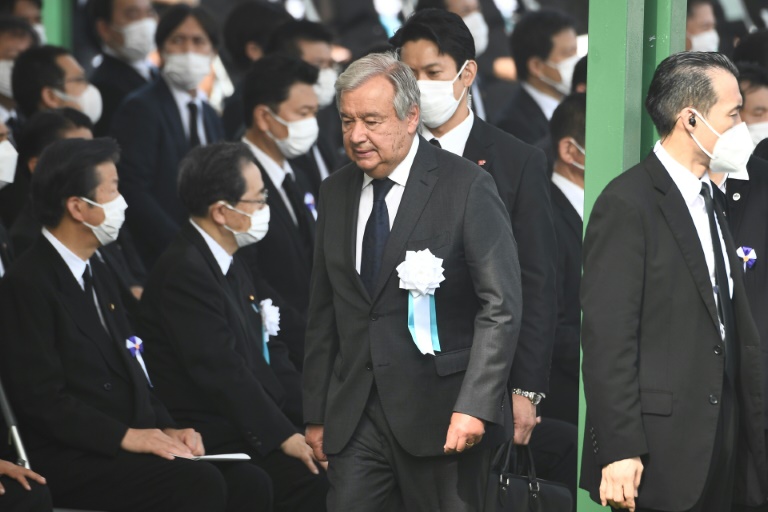
“Humanity is playing with a loaded gun” as crises with the potential for nuclear disaster proliferate worldwide, UN head Antonio Guterres said in Hiroshima on Saturday, the 77th anniversary of the first atomic bomb attack.

At an annual memorial, Guterres warned of the risk posed by crises in Ukraine, the Middle East and the Korean peninsula as he described the horrors endured by the Japanese city.

“Tens of thousands of people were killed in this city in the blink of an eye. Women, children and men were incinerated in a hellish fire,” he said.

Survivors were “cursed with a radioactive legacy” of cancer and other health problems.

“We must ask: What have we learned from the mushroom cloud that swelled above this city?”

Around 140,000 people died when Hiroshima was bombed by the United States on August 6, 1945, a toll that includes those who perished after the blast from radiation exposure.

Today, “crises with grave nuclear undertones are spreading fast,” Guterres said, repeating warnings he made this week at a nuclear Non-Proliferation Treaty conference in New York.

“Humanity is playing with a loaded gun.”

Before dawn, survivors and their relatives began to gather at Hiroshima’s Peace Memorial Park to pay tribute to the victims.

A silent prayer was held at 8.15 am, the moment the bomb was dropped.

The Russian ambassador was not invited to the ceremony but visited Hiroshima on Thursday to lay flowers at the memorial site.

Since Russia invaded Ukraine in February, President Vladimir Putin has made thinly veiled threats hinting at a willingness to deploy tactical nuclear weapons.

In a speech on Saturday, Hiroshima Mayor Kazumi Matsui cited Leo Tolstoy, the Russian author of “War and Peace”, saying: “Never build your happiness on the misfortune of others, for only in their happiness can you find your own.”

Three days after the Hiroshima bombing, Washington dropped a second atomic bomb on the Japanese port city of Nagasaki, killing about 74,000 people and leading to the end of World War II.

There are now fewer than 119,000 officially recognised survivors of the two nuclear attacks, according to government statistics from March.

The United States remains the only country ever to have used nuclear weapons in conflict.

But around 13,000 are now held in state arsenals worldwide, Guterres said.

Saturday was the first time Guterres attended the Hiroshima memorial in person as UN chief, with a visit last year cancelled because of the Covid-19 pandemic.

Rare flooding traps 1,000 people in US Death Valley

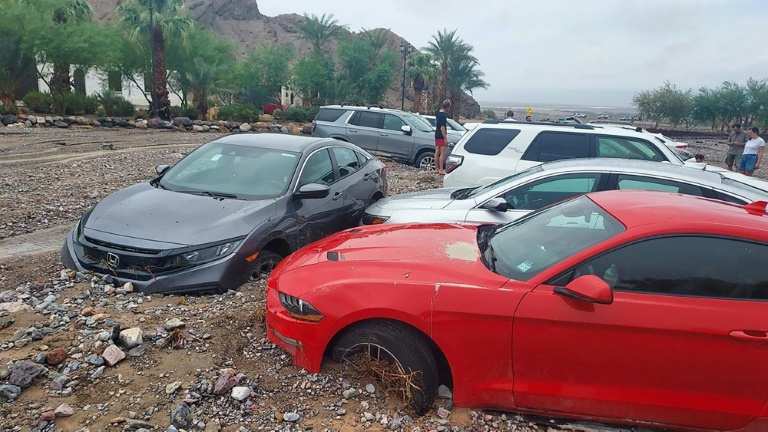
Major flooding in California’s Death Valley on  Friday stranded approximately 1,000 people, buried cars and shut down all roads into and out of the famously parched national park.

No injuries were reported, according to the National Park Service, but around 60 cars were bogged down under several feet of debris.

“Unprecedented amounts of rainfall caused substantial flooding,” the National Park Service said in a statement, adding that “there are approximately 500 visitors and 500 staff currently unable to exit the park,” which is in Eastern California’s Mojave Desert.

The floodwaters tore up sections of paved roads and pushed dumpster containers into parked cars, causing the vehicles to collide. The rain also flooded offices and hotels, the park said.

The park service added that all roads serving the park will remain off-limits until officials can determine the extent of the damage. 

A total of 1.46 inches (3.7 centimeters) of rain fell in the park’s Furnace Creek area, almost tying the previous daily record of 1.47 inches. The average annual rainfall is less than two inches a year.

Higher temperatures caused by climate change mean the atmosphere holds more moisture, unleashing more rain.

According to UN climate experts, even if the world manages to limit warming to 1.5 degrees Celsius, some regions will experience an increase in frequency, intensity and quantity of heavy rainfall.

The risk of heavy precipitation episodes increases with temperature rise.

Going once, going twice… Pakistan lions up for auction

A Pakistan zoo is auctioning off a dozen lions to private collectors next week to free up space for a pride that won’t stop growing.

Lahore Safari Zoo now has so many big cats that their lions and tigers have to take it in turns to access the paddocks, said Tanvir Ahmed Janjua, the zoo’s deputy director.

“Not only will we free up more space here, but our expenses for meat to feed them will also decrease,” he told AFP.

The zoo is currently home to 29 lions, and officials plan an auction on August 11 to sell 12 of them, aged between two and five years old.

There are also six resident tigers and two jaguars.

Conservationists are opposed to the sale, with the environmental group WWF saying the creatures should be moved to other established zoos, or breeding females sterilised or given contraceptives.

“Animal exchanges and donations between zoos are a widely accepted practice,” the organisation’s Uzma Khan told AFP.

“Once an institution such as a zoo places a price tag on a wildlife species it is promoting trade — which is counterproductive to conservation,” she added.

Keeping lions, tigers and other exotic wildlife as pets is not uncommon in Pakistan, and is seen as a status symbol.

Wealthy owners post images and video clips of their big cats on social media, and rent them out as props for movies and photoshoots.

Zoo officials have set a reserve of 150,000 Pakistan rupees ($700) per cat, but hope each will fetch around two million rupees.

Not just anyone can take part in the auction, however.

Janjua said buyers will have to be registered with provincial authorities and show they have the means to provide proper care and shelter for the creatures.

Zoo veterinary officer Muhammad Rizwan Khan told AFP an initial attempt last year to auction lions fell through as potential buyers lacked the necessary documentation or licences.

Nouman Hassan, who fell foul of authorities in the past when he was filmed walking his pet tiger on a leash in Lahore, plans to take part.

“I will try to buy two to three lions for sure,” he told AFP, adding the auction was a good way to diversify the gene pool for private collectors who already owned a big cat.

With little legislation to safeguard animal welfare, zoos across Pakistan are notorious for their poor facilities, but the Lahore Safari Zoo is considered one of the best, set over 200 acres.

In April 2020 a court ordered the only zoo in the country’s capital to shut after poor facilities and mistreatment of the animals there were revealed.

The facility had drawn international condemnation for its treatment of an Asian elephant named Kaavan, who was later airlifted to retirement in Cambodia in a jumbo project spearheaded by US popstar and actress Cher. 

Veterinarian Khan said the animals at Lahore Safari Zoo were being given the best possible care — something reflected in their fecundity.

“They are experiencing a good life in captivity with us,” he said.

Close Bitnami banner
Bitnami