World

Colombian soprano breaking opera 'molds'

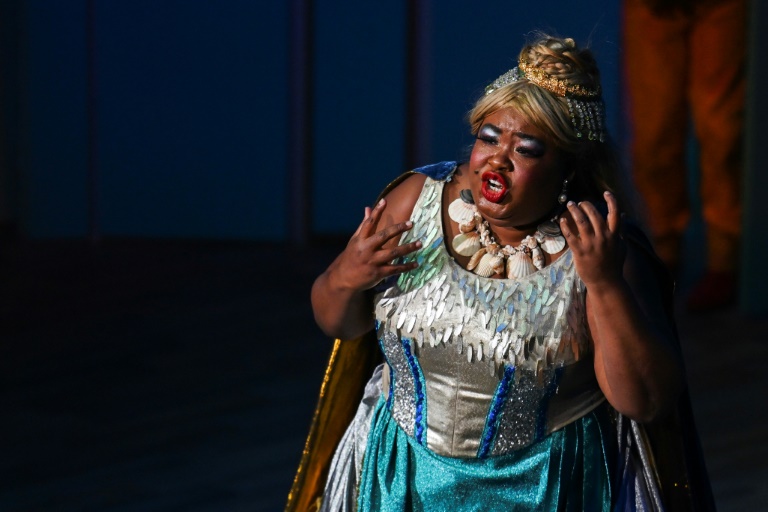
Betty Garces grew up in an impoverished port city on Colombia’s Pacific coast to the rhythm of drums and marimbas, always with a background echo of violence. 

Until she was a teenager, she had never even heard of opera. Now she is one of Latin America’s few black sopranos. 

Garces is from the city Buenaventura, which ironically translates as “good fortune” but is better known for rampant poverty, crime and drug violence.

Squeezed between the jungle and the Pacific coast, 91 percent of the city’s 315,000 inhabitants are black, 41 percent are poor, and 18 percent unemployed.

“The environment in which I grew up in Buenaventura did not give me many opportunities to dream,” the singer, now 39, recalled of her young days. 

At the age of 14, her parents — a math teacher and an artist — sent her away to the city of Cali, some 120 kilometers (75 miles) to the east and considered safer.

They did the same with her two sisters when they turned 14, “to protect us,” said Garces.

It was in Cali that she first encountered the musical genre that would change her life. 

At the conservatory where she studied music, a teacher made her listen to a Richard Wagner interpretation by African American soprano Jessye Norman. 

“In that moment, I don’t know what happened here, inside, but everything moved,” Garces recounted. 

“I began to study singing without having any idea what opera was about…  

“I had no idea what I was saying because I never heard anyone speak German. But the connection was strong.” 

– Beauty from pain –

A scholarship took Garces to Germany in 2009, and she has lived there ever since. 

She has appeared on stage in more than 20 countries and capital cities including Rome, Madrid, Lisbon, Bangkok and Paris. 

On a recent visit to Bogota to perform in the opera Ariadna on Naxos at the Teatro Colon, she told AFP it was not only her humble background she had to overcome. 

“In this world they tend to pigeonhole a lot, there are many molds… Depending on the context, I am (described as) a black woman, I am a Latin or American woman, I am a woman of big size,” she said.

“I look very different to what they expect.” 

Quick to smile, Garces said she became interested in music thanks to her grandparents — one of them deaf and the other blind.  

She had a strained relationship with her own parents, was bullied at school, and found refuge at her grandparents’ house. 

Her grandfather played the harmonica, Garces said, recalling how she used to lie with her ear to the floor to amplify the sound and “imagined that I was in a different world.” 

When her grandmother died, she cried herself hoarse. But from that grief, Garces said she found her singing voice.

“I was left alone… in that ordeal… For a 10-year-old girl, losing her only reference of love in life is very strong,” Garces recalled. 

One day, amid the tears, “I began to moan,” she told AFP.

“From that moan, I started to form melodies without words. It was my soul looking for a way to release the pain.” 

This is her first memory, Garces said, of “conscious chant.”

“From that moment I began to sing and I never stopped.”
China Evergrande to get $818 mn for scrapping stadium deal

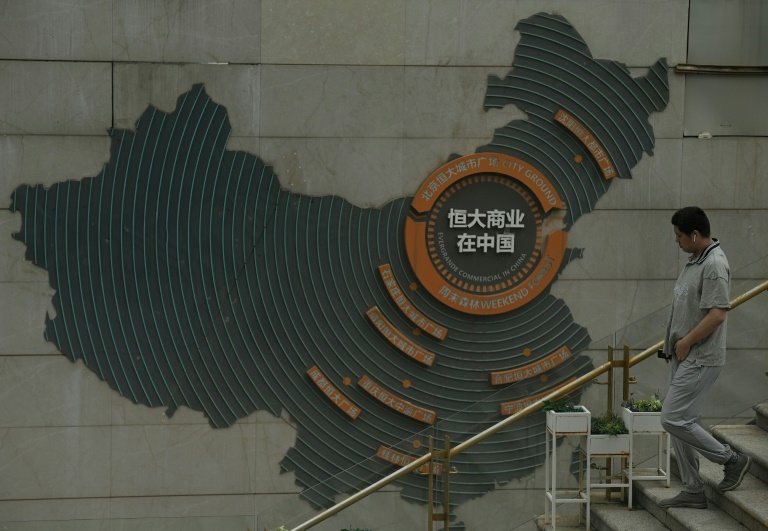
Embattled Chinese property giant Evergrande has cancelled a contract to build a football stadium in a southern city in return for 5.52 billion yuan ($818 million), it said in a filing.

The real estate behemoth has been involved in restructuring negotiations after racking up $300 billion in liabilities in the wake of  Beijing’s crackdown on excessive debt and rampant speculation in the property sector.

Last week, the company failed to meet a self-imposed deadline to publish a preliminary restructuring proposal, although it said it has made positive progress.

In a filing to the Hong Kong stock exchange late Thursday, Evergrande said “the group’s liquidity issue has adversely affected the development of and construction on the land” in Guangzhou.

Evergrande entered a contract with the city’s authorities in 2020 for use of the land, designated for sports and industrial purposes.

The contract allowed for commercial and sports uses of the land for 40 years, as well as other business uses for 50 years, the filing said.

Evergrande had started construction, including the building of the Guangzhou Evergrande Football Stadium, which was set to have at least 80,000 seats, it said.

The latest refund will enter a project escrow account designated by the government and will be used to settle debts relating to the deal, Evergrande said.

“It is expected that the group will record a loss of approximately 1.255 billion” yuan over the total book value of the land along with buildings, structures and other items at the site after deducting the refund, Evergrande said.

Evergrande, one of China’s biggest developers, has scrambled to offload assets in recent months, with chairman Hui Ka Yan paying off some of its debts using his personal wealth.

It has also found a potential buyer for its Hong Kong headquarters, according to earlier media reports.

Its troubles are emblematic of the problems rippling across China’s massive property sector, with smaller companies also defaulting on loans and others struggling to raise cash.

Cash-strapped developers have increasingly struggled to deliver projects on time, sparking mortgage boycotts from angry homebuyers in many cities.

Ukraine's Zelensky accuses Amnesty of victim blaming, more grain shipments expected

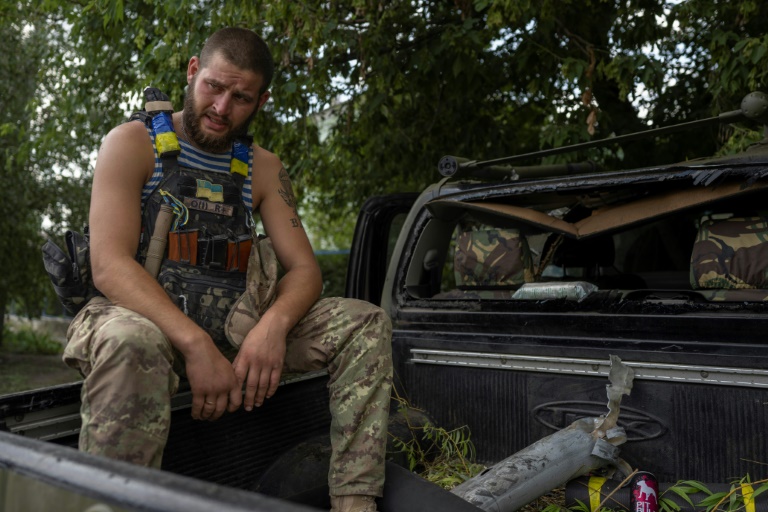
Ukrainian President Volodymyr Zelensky has lashed out at Amnesty International after it accused his forces of violating international law and endangering civilians in their defence against Russia’s invasion.

The sharp rebuke came as three more ships loaded with over 58,000 tonnes of Ukrainian grain were set to depart from Black Sea ports on Friday under a recent agreement between Moscow and Kyiv aimed at easing a global food shortage. 

In a report on Thursday, Amnesty listed incidents in 19 cities and towns in which Ukrainian forces appeared to have put civilians in harm’s way by establishing bases in residential areas — findings Zelensky equated to victim blaming in his evening address. 

The rights group, he said, had sought to offer “amnesty (to) the terrorist state and shift the responsibility from the aggressor to the victim”.  

“There is no condition, even hypothetically, under which any Russian strike on Ukraine becomes justified. Aggression against our state is unprovoked, invasive and terrorist,” he added.  

“If someone makes a report in which the victim and the aggressor are supposedly equal in some way… then this cannot be tolerated.”  

After a four-month investigation, Amnesty said it had found that the Ukrainian military had established bases in schools and hospitals, and launched attacks from populated areas, asserting that the tactics violated international humanitarian law.  

The group noted, however, that the tactics “in no way justify Russia’s indiscriminate attacks”, which have battered civilian populations.  

On Thursday, Russian bombardments targeted several towns and villages, including Mykolaiv in the south, where residential buildings were damaged in two neighbourhoods, according to the mayor.

Eight people were killed and four wounded on Thursday by a Russian strike that hit a bus stop in Toretsk, near the eastern front line, the regional governor announced.  

And in Kharkiv, the country’s second most populous city, local authorities reported Russian missile attacks on industrial zones.  

Ukrainian forces are conducting a counter-offensive in the country’s south, where they claim to have retaken more than 50 villages previously controlled by Moscow.  

– New grain shipments –

Meanwhile, three more ships laden with Ukrainian maize were set to depart on Friday morning — two from the city of Chornomorsk, and one from Odessa, where the first grain shipment to leave Ukraine since the war began set sail on Monday.  

Grain shipments to global markets have been able to resume under a deal struck last month between Kyiv and Moscow — mediated by Turkey and under the aegis of the UN — in a bid to alleviate a crisis that has seen food prices soar in several countries.  

Turkish Defence Minister Hulusi Akar credited Friday’s expected departures to “the intensive work of the Joint Coordination Center”, according to the Anadolu state news agency. The centre is overseeing the implementation of the agreement.  

The deal provides for the establishment of secure corridors in the Black Sea to allow merchant ships to export between 20 and 25 million tonnes of Ukrainian grain held up in port.  

A similar agreement signed at the same time allows Russia to export its agricultural products and fertiliser despite Western sanctions.   

Turkey hopes the agreements could build confidence and lead to a ceasefire between the two countries.  

– Ex-president sanctioned –

Separately, the European Union on Thursday announced it was slapping sanctions on former Ukrainian president Viktor Yanukovych and his son Oleksandr for allegedly undermining Ukraine’s security. 

Yanukovych was overthrown in 2014 by a popular uprising against the pro-Russian stance his government had taken. Following his ouster, Moscow moved to annex Ukraine’s Crimean peninsula and the eastern Donbas region.  

The EU argues that the now 72-year-old Russia-based Yanukovych still plays a “role in undermining or threatening the territorial integrity, sovereignty and independence of Ukraine and the state’s stability and security”.  

The sanctions document accuses him of plotting to return to power if the Russian invasion succeeds in toppling Zelensky. His son stands accused of “conducting transactions with the separatist groups in the Donbas region”, a reference to Russian proxy forces.  

Finland, meanwhile, presented plans on Thursday to limit tourist visas for Russians, who have increasingly flocked to the country to transit to other European nations after flights from Russia were interrupted by EU sanctions.  

Finland, along with Sweden, is seeking NATO membership, with the US ratifying the two countries’ accession protocols on Wednesday.  

Taiwan condemns 'evil neighbour' China over war drills

Taiwan blasted its “evil neighbour next door” on Friday after China encircled the island with a series of huge military drills that were condemned by the United States and other Western allies.

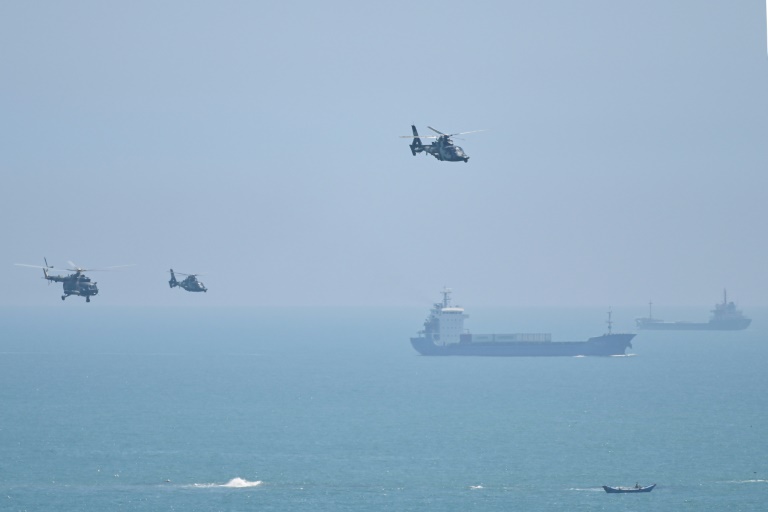
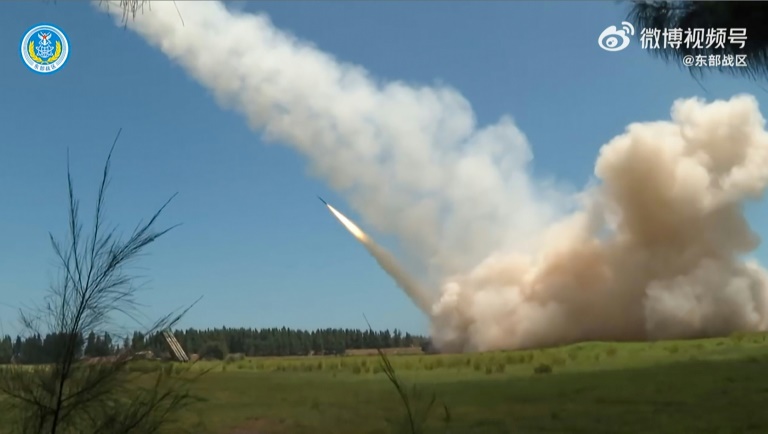
During Thursday’s military exercises, which continued Friday, China fired ballistic missiles and deployed both fighter jets and warships around Taiwan.

The People’s Liberation Army declared multiple no-go danger zones around Taiwan, straddling some of the busiest shipping lanes in the world and at some points coming within 20 kilometres (12 miles) of the island’s shores.

Beijing has said the exercises will continue until midday Sunday, and Taipei reported that Chinese fighter jets and ships crossed the “median line” that runs down the Taiwan Strait on Friday morning.

“As of 11am, multiple batches of Chinese warplanes and warships conducted exercises around the Taiwan Strait and crossed the median line of the strait,” Taipei’s defence ministry said in a statement. 

The median line is an unofficial but once largely adhered-to border that runs down the middle of the Taiwan Strait, which separates Taiwan and China.

Chinese incursions have become more common since Beijing declared in 2020 that the unofficial border no longer existed.

Beijing has called its war games a “necessary” response to a visit to the self-ruled, democratic island by US House Speaker Nancy Pelosi, but Washington countered that China’s leaders had “chosen to overreact”.

Pelosi defended her visit Friday, saying Washington will “not allow” China to isolate Taiwan.

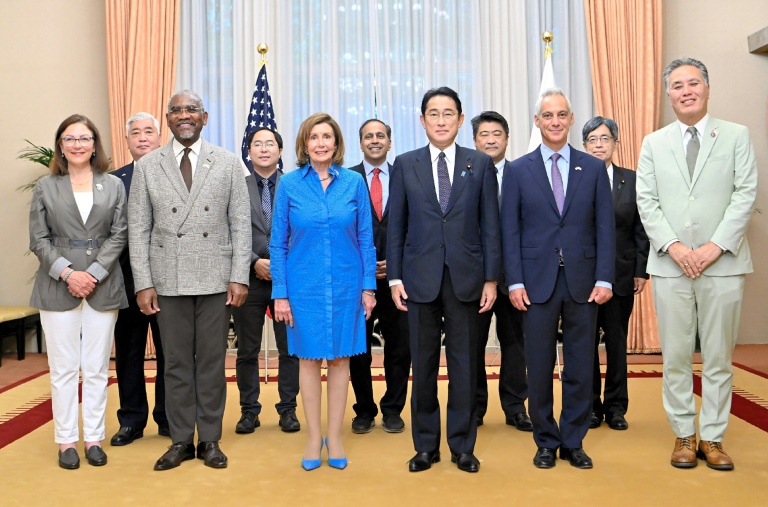
“We have said from the start that our representation here is not about changing the status quo here in Asia, changing the status quo in Taiwan,” she told reporters in Tokyo on the final leg of an Asia tour.

Taiwan’s premier Su Tseng-chang, meanwhile, called for allies to push for de-escalation.

“(We) didn’t expect that the evil neighbour next door would show off its power at our door and arbitrarily jeopardise the busiest waterways in the world with its military exercises,” he told reporters.

– Missiles over Taiwan –

China’s drills involved a “conventional missile firepower assault” in waters to the east of Taiwan, the Chinese military said. 

The state-run Xinhua news agency said the Chinese army “flew more than 100 warplanes including fighters and bombers” during the exercises, as well as “over 10 destroyers and frigates”.

State broadcaster CCTV reported that Chinese missiles had flown directly over Taiwan.

Japan also claimed that of the nine missiles it had detected, four were “believed to have flown over Taiwan’s main island”.

Taipei’s military said it would not confirm missile flight paths, in a bid to protect its intelligence capabilities and not allow China “to intimidate us”.

– ‘Temperature’s pretty high’ –

China’s ruling Communist Party views Taiwan as part of its territory and has vowed to one day take it, by force if necessary.

But the scale and intensity of the drills have triggered outrage in the United States and other democracies.

“China has chosen to overreact and use the speaker’s visit as a pretext to increase provocative military activity in and around the Taiwan Strait,” John Kirby, a White House spokesman, told reporters.

“The temperature’s pretty high,” but tensions “can come down very easily by just having the Chinese stop these very aggressive military drills”, he added.

Japan lodged a formal diplomatic complaint against Beijing, with five of the missiles believed to have landed in its exclusive economic zone.

Prime Minister Fumio Kishida called China’s exercises a “serious problem that impacts our national security and the safety of our citizens” and called for an “immediate cancellation of the military drills”.

But Chinese Foreign Minister Wang Yi said the “flagrant provocation” by the United States had set an “egregious precedent”.

– Trading places – 

The manoeuvres are taking place along some of the busiest shipping routes on the planet, used to supply vital semiconductors and electronic equipment produced in East Asian factory hubs to global markets.

Taiwan’s Maritime and Port Bureau has warned ships to avoid the areas being used for the Chinese drills.

“The shutting down of these transport routes — even temporarily — has consequences not only for Taiwan, but also trade flows tied to Japan and South Korea,” Nick Marro, the Economist Intelligence Unit’s lead analyst for global trade, wrote in a note.

Taiwan said the drills would disrupt 18 international routes passing through its flight information region while several international airlines told AFP they would divert flights.

But markets in Taipei appeared to shrug off the tensions, with the Taiwan Taiex Shipping and Transportation Index, which tracks major shipping and airline stocks, up 2.3 percent early Friday.

And analysts broadly agree that despite all its aggressive posturing, Beijing does not want an active military conflict against the United States and its allies over Taiwan — just yet.

“The last thing Xi wants is an accidental war ignited,” Titus Chen, an associate professor of political science at the National Sun Yat-Sen University in Taiwan, told AFP.

Blue Origin sends first Egyptian and Portuguese nationals to space

Jeff Bezos’ Blue Origin on Thursday launched six people to space, including the first from Egypt and Portugal, on the company’s sixth crewed flight. 

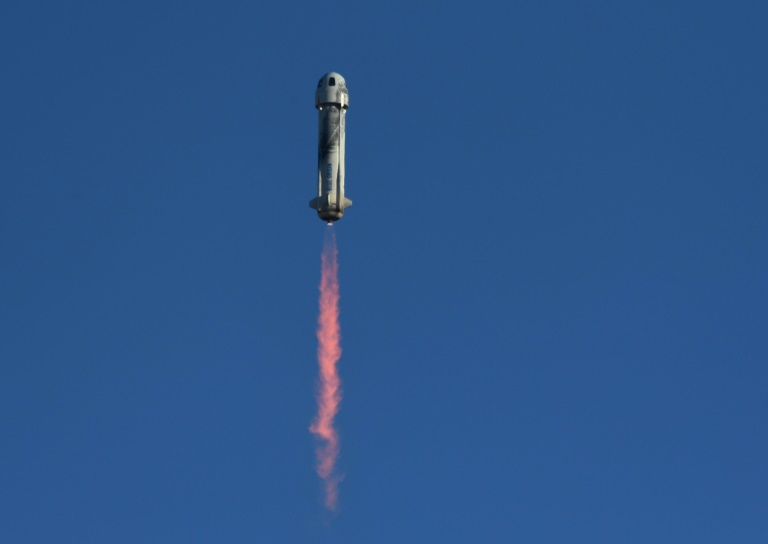
Mission “N-22” saw the New Shepard suborbital rocket blast off around 8:58 am local time (1358 GMT) from Blue’s base in the west Texas desert.

The autonomous, re-usable vehicle sent its crew capsule soaring above the Karman line, the internationally recognized space boundary, 62 miles (100 kilometers) above sea level. 

“I’m floating!” a crew mate could be heard saying on a livestream, as the capsule coasted to its highest point and the passengers experienced a few minutes of weightlessness. 

Both the rocket and capsule separately returned to the base — the latter using giant parachutes — completing the mission around 11 minutes after lift-off.

The crew included Egyptian engineer Sara Sabry, and Portuguese entrepreneur Mario Ferreira, both the first people of their countries to leave Earth.

It also included Coby Cotton, one of five co-founders of the YouTube sports and comedy channel Dude Perfect, which boasts more than 57 million followers.

A Blue Origin spokeswoman confirmed all six crew were paying passengers — though Sabry’s seat was sponsored by nonprofit Space for Humanity.

Blue Origin has not revealed its ticket prices. 

Past flights have included celebrity guests who have flown for free, including Star Trek legend William Shatner. 

Blue Origin sends first Egyptian and Portuguese nationals to space

Jeff Bezos’ Blue Origin on Thursday launched six people to space, including the first from Egypt and Portugal, on the company’s sixth crewed flight. 

Mission “N-22” saw the New Shepard suborbital rocket blast off around 8:58 am local time (1358 GMT) from Blue’s base in the west Texas desert.

The autonomous, re-usable vehicle sent its crew capsule soaring above the Karman line, the internationally recognized space boundary, 62 miles (100 kilometers) above sea level. 

“I’m floating!” a crew mate could be heard saying on a livestream, as the capsule coasted to its highest point and the passengers experienced a few minutes of weightlessness. 

Both the rocket and capsule separately returned to the base — the latter using giant parachutes — completing the mission around 11 minutes after lift-off.

The crew included Egyptian engineer Sara Sabry, and Portuguese entrepreneur Mario Ferreira, both the first people of their countries to leave Earth.

It also included Coby Cotton, one of five co-founders of the YouTube sports and comedy channel Dude Perfect, which boasts more than 57 million followers.

A Blue Origin spokeswoman confirmed all six crew were paying passengers — though Sabry’s seat was sponsored by nonprofit Space for Humanity.

Blue Origin has not revealed its ticket prices. 

Past flights have included celebrity guests who have flown for free, including Star Trek legend William Shatner. 

Chinese missiles flew over Taiwan during drills: state media

Chinese missiles flew over Taiwan during Beijing’s latest military drills, state media reported Friday, as the country pressed ahead with exercises encircling the island following a visit by US House Speaker Nancy Pelosi.

Pelosi was the highest-profile US official to head to Taiwan in years, defying stark threats from Beijing, which views the self-ruled island as its territory.

China launched a series of exercises in multiple zones around Taiwan in response, straddling some of the busiest shipping lanes in the world. 

Beijing is yet to formally confirm whether missiles overflew the islands during the drills, while Taipei has refused to confirm or deny the flight paths, citing intelligence concerns.

But Japan’s defence ministry said of the nine missiles it had detected, four were “believed to have flown over Taiwan’s main island”.

And on Friday, a hashtag shared by state media asking “what does it mean for the People’s Liberation Army’s conventional missiles to pass over Taiwan island?” attracted some 43.7 million views on China’s Twitter-like Weibo.

“Our exercises this time included live-firing tests, and it was the first time they crossed Taiwan island,” Meng Xiangqing, a professor at China’s military-affiliated National Defence University, told state broadcaster CCTV, lauding the accuracy of Beijing’s capabilities. 

He added that they passed through an airspace where Patriot missiles — a highly mobile surface-to-air missile system that would be a crucial defence against Chinese warplanes — are densely deployed.

The latest drills also represented the PLA’s closest-ever exercises to the island, its first encirclement and the first time it set up a shooting range east of Taiwan, Meng said. 

China’s official Xinhua news agency reported that the military “flew more than 100 warplanes including fighters and bombers” during the exercises, as well as “over 10 destroyers and frigates.”

The latest drills are expected to continue until midday Sunday, and have sparked outrage from the United States, Japan and the European Union, as well as Taipei.

White House spokesman John Kirby called it an overreaction by China and a “pretext” to increase military activity around the Taiwan Strait.

China defends the drills as just countermeasures in the face of provocations by the United States and its allies in Taiwan.

Blue Origin sends first Egyptian and Portuguese nationals to space

Jeff Bezos’ Blue Origin on Thursday launched six people to space, including the first from Egypt and Portugal, on the company’s sixth crewed flight. 

Mission “N-22” saw the New Shepard suborbital rocket blast off around 8:58 am local time (1358 GMT) from Blue’s base in the west Texas desert.

The autonomous, re-usable vehicle sent its crew capsule soaring above the Karman line, the internationally recognized space boundary, 62 miles (100 kilometers) above sea level. 

“I’m floating!” a crew mate could be heard saying on a livestream, as the capsule coasted to its highest point and the passengers experienced a few minutes of weightlessness. 

Both the rocket and capsule separately returned to the base — the latter using giant parachutes — completing the mission around 11 minutes after lift-off.

The crew included Egyptian engineer Sara Sabry, and Portuguese entrepreneur Mario Ferreira, both the first people of their countries to leave Earth.

It also included Coby Cotton, one of five co-founders of the YouTube sports and comedy channel Dude Perfect, which boasts more than 57 million followers.

A Blue Origin spokeswoman confirmed all six crew were paying passengers — though Sabry’s seat was sponsored by nonprofit Space for Humanity.

Blue Origin has not revealed its ticket prices. 

Past flights have included celebrity guests who have flown for free, including Star Trek legend William Shatner. 

Blue Origin sends first Egyptian and Portuguese nationals to space

Jeff Bezos’ Blue Origin on Thursday launched six people to space, including the first from Egypt and Portugal, on the company’s sixth crewed flight. 

Mission “N-22” saw the New Shepard suborbital rocket blast off around 8:58 am local time (1358 GMT) from Blue’s base in the west Texas desert.

The autonomous, re-usable vehicle sent its crew capsule soaring above the Karman line, the internationally recognized space boundary, 62 miles (100 kilometers) above sea level. 

“I’m floating!” a crew mate could be heard saying on a livestream, as the capsule coasted to its highest point and the passengers experienced a few minutes of weightlessness. 

Both the rocket and capsule separately returned to the base — the latter using giant parachutes — completing the mission around 11 minutes after lift-off.

The crew included Egyptian engineer Sara Sabry, and Portuguese entrepreneur Mario Ferreira, both the first people of their countries to leave Earth.

It also included Coby Cotton, one of five co-founders of the YouTube sports and comedy channel Dude Perfect, which boasts more than 57 million followers.

A Blue Origin spokeswoman confirmed all six crew were paying passengers — though Sabry’s seat was sponsored by nonprofit Space for Humanity.

Blue Origin has not revealed its ticket prices. 

Past flights have included celebrity guests who have flown for free, including Star Trek legend William Shatner. 

Pelosi says US will 'not allow' China to isolate Taiwan

US House Speaker Nancy Pelosi said Friday that the United States will “not allow” China to isolate Taiwan, after her visit to the self-ruled island infuriated Beijing.

China, which views Taiwan as part of its territory, launched its largest-ever military exercises around the island after Pelosi defied stern threats to become the highest-profile US official to set foot on Taiwanese soil in years.

Now in Tokyo on the final leg of her Asian tour, Pelosi did not comment directly on the drills but argued that American politicians should be able to travel to Taiwan freely.

“They may try to keep Taiwan from visiting or participating in other places, but they will not isolate Taiwan by preventing us to travel there,” she told reporters.

“We will not allow them to isolate Taiwan,” she said, listing lower-level US visits to the island and reiterating that her trip was “not about changing the status quo” in the region.

“It is about… all of the pieces of legislation and agreements that have established what our relationship is. To have peace in the Taiwan Strait and have the status quo prevail.”

When asked if the trip was more about her own legacy than benefiting Taiwan, Pelosi replied: “This isn’t about me — it’s about them.” 

She called the island “one of the freest countries in the world” and “a great democracy with a thriving economy”, saying she was “proud” of her work showcasing concerns related to mainland China, from alleged trade violations and arms proliferation to human rights.

– Ballistic missiles –

The 82-year-old American politician arrived on Thursday from South Korea, another key US ally, where she visited the border with the nuclear-armed North.

It is her first time in Japan since 2015, and on Friday morning she met Prime Minister Fumio Kishida, who said Japan had “called for the immediate cancellation of the military drills”.

Tokyo said five Chinese ballistic missiles were believed to have fallen in Japan’s exclusive economic zone, with four of those presumed to have flown over Taiwan’s main island.

Kishida condemned the missile launches as a “serious problem that impacts our national security and the safety of our citizens”.

Parts of Japan’s southernmost Okinawa region are close to Taiwan, as are islets at the centre of a long-running dispute between Tokyo and Beijing.

The EEZ extends up to 200 nautical miles from Japan’s coastline, beyond the limits of its territorial waters.

In May, US President Joe Biden also angered Beijing on a visit to Japan, when he said US forces would defend Taiwan militarily if China attempted to take control of the island by force.

However, Biden and his team insisted at the time that their decades-old approach to Taiwan remained in place.

This means support for its government while diplomatically recognising Beijing over Taipei, and opposing a formal independence declaration by Taiwan or a forceful takeover by China.

On Friday, Pelosi said the United States wanted to find “common ground” with China on issues from rights to climate change.

“If we do not speak out for human rights in China because of commercial interests, we lose all moral authority to speak about human rights any place in the world,” she said.

“Again, it isn’t about our visit determining what the US-China relationship is. It’s a much bigger and longer-term challenge, and one that we have to recognize that we have to work together in certain areas.”

Close Bitnami banner
Bitnami