World

Rwanda attacked Congo troops, backed rebels: experts for UN

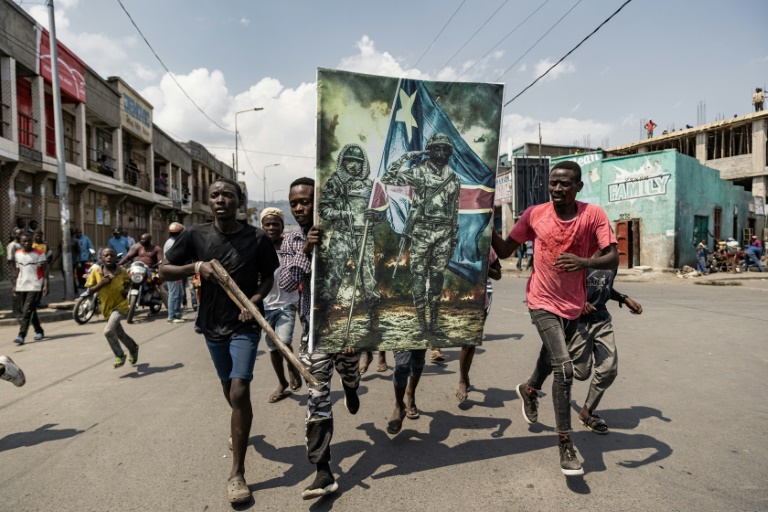
Rwandan troops have attacked soldiers inside DR Congo and aided the M23 rebel group, according to a report by independent experts for the UN seen by AFP on Thursday.

The findings follow months of deepening tensions between the Democratic Republic of Congo (DRC) and Rwanda over the notorious M23.

The DRC has repeatedly accused Rwanda of backing the militia, which has captured swathes of territory in recent months. Kigali has repeatedly denied any involvement. 

But according to a 131-page report by experts for the UN Security Council, Rwanda has launched military interventions inside Congolese territory since at least November 2021.

Rwanda also “provided troop reinforcements” for specific M23 operations, the report said, “in particular when these aimed at seizing strategic towns and areas.”

The investigation also found that Congolese forces had been providing support for armed groups in the deeply troubled east.

The M23 — for “March 23 Movement” — is a primarily Congolese Tutsi group.

It first leapt to prominence in 2012 when it briefly captured the eastern DRC city of Goma before a joint Congolese-UN offensive drove it out.

After lying mostly dormant for years, the rebel group resumed fighting late last year.

It has made significant advances, notably capturing the strategic town of Bunagana on the Ugandan border in June.

– ‘Joint attack’ –

On May 25, the report said, a large DRC army base in Rumangabo in eastern North Kivu province came under heavy mortar and small-arms fire.

M23 fighters and Rwandan troops “jointly attacked” the site after Rwandan troops had crossed into the DRC the day before, it alleged. 

An estimated 1,000 Rwandan troops also cut the main highway leading to the provincial capital Goma, an important commercial hub on the Rwandan border, and attacked Congolese positions, it said. 

On the eve of the attack on Bunagana, and on the day itself, Rwandan soldiers were in the vicinity, the report said, citing drone images from the UN peacekeeping mission in the DRC, eyewitnesses, amateur videos and photos.

It added that Ugandan troops at the border acquiesced to M23 fighters crossing into the DRC.

“On repeated occasions, aerial imagery showed large columns of up to 500 armed men in the vicinity of the DRC, Rwandan and Ugandan borders, moving in a very organized manner,” the report said. 

The columns of soldiers wore “standardized military attire” that bore close resemblance to Rwandan army uniforms, the report added. 

Some 300 Rwandan troops also conducted operations against rebel groups in eastern DRC, such as the Democratic Forces for the Liberation of Rwanda (FDLR).  

The FDLR is a Rwandan Hutu rebel group based in the DRC, which the Rwandan government views as a threat. Kigali has regularly accused Congo of supporting the militia. 

– DRC and militias –

The UN report also found that the Congolese army supported militias active in the east of the country. 

On May 26, after being dislodged from positions near the Goma highway, the Congolese army launched a counterattack alongside militia fighters, for example. 

A coalition of armed groups had formed in May, with the knowledge of Congolese officers, the report said.

Leaders of several militias confirmed to the experts that the Congolese army had provided them with weapons and munitions “on several occasions,” it added.

The DRC and Rwanda have had strained relations since the mass influx of Rwandan Hutus accused of slaughtering Tutsis during the 1994 Rwanda genocide. 

Relations began to thaw after DRC President Felix Tshisekedi took office in 2019 but the M23’s resurgence reignited tensions.

The report comes after 36 people died in eastern Congo last week during protests against the UN’s peacekeeping force, which were fuelled by perceptions that it is ineffectual against armed groups.

A poll by New York University’s Congo Research Group and Congolese research institute Ebuteli, published Thursday, found that 44 percent of Congolese people interviewed thought peacekeepers should leave the country.

Radio warnings signal Taiwan angst over China blockade drills

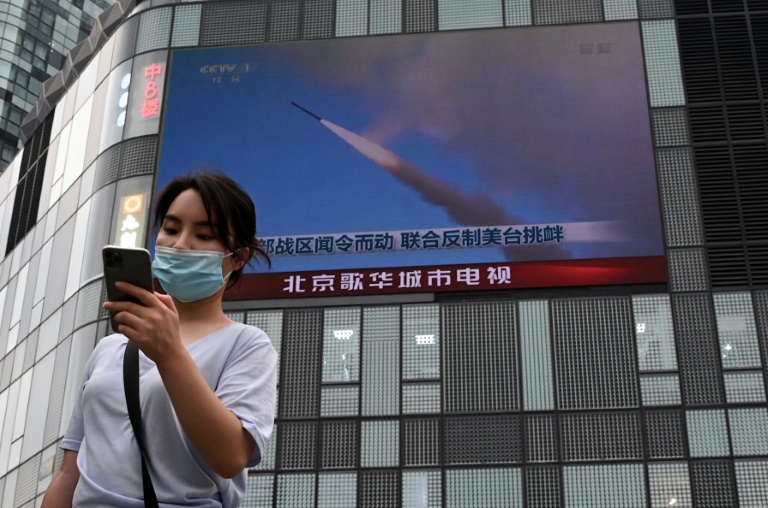
In Taiwan’s Keelung port dispatchers spent much of Thursday broadcasting warnings to fishing boats heading north, reminding them that China’s military was conducting live-fire drills nearby.

“This is the Keelung radio station,” the radio system crackled. “China’s People’s Liberation Army will conduct military exercises from August 4th at noon…”

The warnings, at the top of every hour, were a stark reminder that Taiwan’s 23 million inhabitants live under the constant threat of invasion — a danger that has intensified under China’s current leader Xi Jinping.

Throughout the day, dispatchers received calls from Taiwan’s navy detailing which vessels were heading too close to the multiple danger zones China declared around the island.

They would then scramble to contact individual vessels and warn them off.

“We have had to continuously warn 10-20 boats by radio to leave and stay away,” Huang Li-yue, the 61-year-old chief of Keelung fishing fleet radio station, told AFP. 

“There are also enquires from boats about the locations of exercise areas.”

Huang said she remembered the last time this happened.

In 1995, China began test-firing missiles in the waters around Taiwan, to protest a visit by then president Lee Teng-hui to his alma mater university in the United States. 

Further missile tests were carried out a year later as Taiwan held its first direct presidential election. 

But China’s latest drills — a protest against this week’s visit to Taiwan by US House Speaker Nancy Pelosi — were much closer to the shoreline. 

“The tension during the previous 1995-96 crisis was high too, but this time it is happening in Taiwan’s surrounding waters,” Huang said.

– ‘Not much we can do’ –

China’s Communist Party has never controlled Taiwan, but it regards the island as part of its territory and has vowed to one day take it.

Beijing has ramped up its sabre-rattling ever since Taiwan President Tsai Ing-wen came to power in 2016, as she views the island as a sovereign nation and not a part of China.

Taiwan’s people have long had to get used to threats and spikes in tension that are far outside their control, exemplified by China’s latest drills which have encircled the island. 

Chen Wen-ching, executive secretary of the Keelung Fishermen’s Association, said many members were unhappy about being unable to work during what is peak season. 

“But there’s not much we can do. They (China) do what they want,” he told AFP. 

“Life is more important. You can make money later. Leave the area is what’s most important.” 

Chou Ting-tai, 68, returned from fishing for squid in Taiwan’s northern waters shortly before the Chinese drills started around noon. 

“We can avoid the areas but psychologically there’s still some stress, right? What if something went wrong with their aim and it went astray?” he said.

In nearby Taipei, many residents said they needed to get on with their daily lives unfazed by China’s fresh show of force. 

“I think China is bluffing and it is trying to shift the attention on its domestic and economic woes by staging the military exercises around Taiwan,” said 22-year-old Leo Chung, after serving a string of lunchtime customers at his family’s small restaurant. 

Shopkeeper Wang Yi-ting, 40, said she was hopeful that Taiwan’s allies, such as the United States and Japan, would ultimately intervene if China ever attacked for real.

“Although Taiwan is very small we have a place on the world stage,” Wang said.

But Karen Hsueh, 60, fretted that Taiwan was just a helpless pawn in a struggle between two far stronger powers.

“I think China cannot afford to look weak and it has to take actions to show it is not afraid of the United States,” the shopkeeper told AFP. 

“Frankly I am more worried about China punishing Taiwan with economic means. I think Taiwan is the victim in the confrontation between China and the United States.”

Taliban say 'no information' about Al-Qaeda chief Zawahiri in Afghanistan

The Taliban said Thursday they have no knowledge of Ayman al-Zawahiri’s presence in Afghanistan, days after US President Joe Biden announced the Al-Qaeda chief’s killing by a drone strike in Kabul.

Zawahiri’s assassination is the biggest blow to Al-Qaeda since US special forces killed Osama bin Laden in 2011, and calls into question the Taliban’s promise not to harbour militant groups.

“The Islamic Emirate of Afghanistan has no information about Ayman al-Zawahiri’s arrival and stay in Kabul,” said an official statement — the Taliban’s first mention of his name since Biden’s announcement.

Zawahiri was believed to be in charge of steering Al-Qaeda’s operations — including the 9/11 attacks — as well as serving as bin Laden’s personal doctor.

A senior US administration official said the 71-year-old Egyptian was on the balcony of a three-storey house in the Afghan capital when targeted with two Hellfire missiles early on Sunday.

Thursday’s carefully phrased Taliban statement neither confirmed his presence in Afghanistan nor acknowledged his death.

“The leadership of the Islamic Emirate of Afghanistan has instructed the intelligence agencies to hold a comprehensive and serious investigation,” it said.

“The fact that America invaded our territory and violated all international principles, we strongly condemn the action once again.

“If such action is repeated, the responsibility of any consequences will be on the United States of America.”

The Taliban reiterated in their statement that there was “no threat” to any country from Afghanistan’s soil.

They called on Washington to adhere to the Doha pact signed in February 2020 that paved the way for the withdrawal of foreign forces from Afghanistan, ending two decades of US-led military intervention in the country.

In announcing Zawahiri’s death Tuesday, Biden declared “justice had been delivered” to the families of victims of the 9/11 attacks on the US.

Sunday’s drone attack was the first known over-the-horizon strike by the US on a target in Afghanistan since Washington withdrew its forces from the country on August 31 last year, days after the Taliban swept back to power.

The house targeted in the strike is in Sherpur, one of Kabul’s most affluent neighbourhoods, with several villas occupied by high-ranking Taliban officials and commanders.

Zawahiri took over Al-Qaeda after bin Laden was killed, and had a $25 million US bounty on his head.

News of his death comes a month before the first anniversary of the final withdrawal of US troops from Afghanistan, leaving the country in the hands of the Taliban insurgency that fought Western forces since the US-led invasion in 2001.

abh-sjd-jd-fox/aha

Blasts ring out as fires rage in Berlin forest

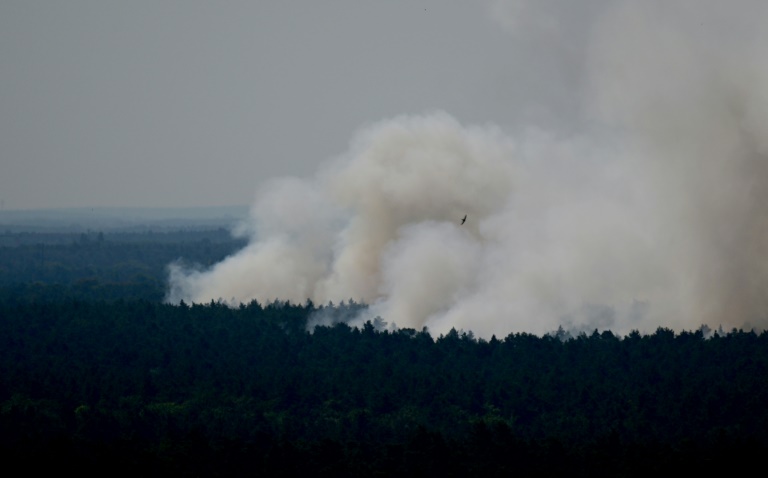
A huge fire  broke out Thursday in a popular forest in western Berlin next to a police munitions storage site, sending plumes of smoke into the skies and setting off intermittent explosions. 

The army sent in a tank aimed at evacuating munitions at the affected storage site as well as remote-controlled de-mining robots, while drones were circling the air to help assess the emergency.

The situation is “extremely extraordinary with munitions,” said Berlin fire brigade spokesman Thomas Kirstein, adding that it was “under control and there was no danger for Berliners.” 

The fire was however expected to last for some time, he said.

Firefighters called to the site in the middle of the night were confronted with intermittent blasts that sent debris flying and hindered their work. 

They have so far been able to begin tackling only two of the four hotspots across the affected area of 15,000 square metres (161,500 square feet), as explosions at the munitions store were still rocking the area.

No one has been hurt by the fires, which came on a day when a new heatwave was due to envelop Germany.

Officials have built a security cordon to allow firefighters to start working around a kilometre from the ammunition storage zone. 

The store holds munitions uncovered by police, but also unexploded World War 2-era ordnance which is regularly dug up during construction works.

Police said they were investigating what set off the fire.

Authorities appealed for the public to avoid the forest, popular with both locals and tourists, as several regional rail lines have been halted.

But authorities said no firefighting choppers were available as they were already in use to calm forest fires in eastern Germany.

– Heatwave –

The German capital is rarely hit by forest fires, even though its 29,000 hectares of forests make it one of the greenest cities in the world.

Brandenburg, the region surrounding Berlin, as well as parts of eastern Germany have for days been battling forest fires.

Scientists say climate change is making heatwaves around the world more frequent and more intense, which increases the risk of fires.

Temperatures are expected to climb as high as 40 degrees Celsius (104 degrees Fahrenheit) across parts of Germany on Thursday. In Berlin, they are predicted to reach 38C.

After a scorching Thursday, heavy thunderstorms are due to sweep into the country from the west on Friday, the German weather service said.

A cold front is predicted to bring temperatures down by more than 10 degrees overnight in western Germany, falling to around 20-25 degrees on Friday.

Bank of England delivers biggest rate hike in 27 years

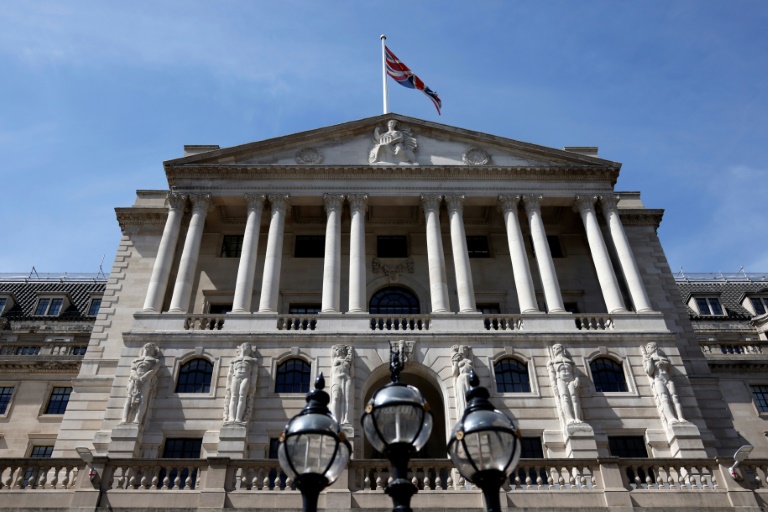
The Bank of England unleashed Thursday its biggest interest rate hike since 1995 as it forecast inflation topping 13 percent this year and warned of a looming year-long recession.

, and forecast inflation will top 13 percent this year, sparking a year-long recession in Britain.

The bank’s Monetary Policy Committee voted 8-1 in favour of lifting its key interest rate by 0.50 percentage points to 1.75 percent.

The increase tallied with expectations and took borrowing costs to the highest level since December 2008.

The move also mirrors aggressive monetary policy from the US Federal Reserve and the European Central Bank last month, as the world races to cool red-hot inflation that has been fuelled by Russia’s invasion of Ukraine.

It also ramps up loan repayments for UK consumers and businesses, who are already facing a squeeze from a worsening cost of living crisis.

– Inflation ‘intensifying’ –

UK inflation is set to peak at 13 percent, or the highest level in more than 42 years, according to the BoE.

“Inflationary pressures in the United Kingdom and the rest of Europe have intensified significantly” since May, read a statement after the decision.

“That largely reflects a near doubling in wholesale gas prices since May, owing to Russia’s restriction of gas supplies to Europe and the risk of further curbs.

“As this feeds through to retail energy prices, it will exacerbate the fall in real incomes for UK households and further increase UK CPI inflation in the near term.”

In more grim news, the BoE predicted the UK economy would enter a painful recession that will last until late 2023.

“GDP growth in the United Kingdom is slowing,” the BoE said.

“The latest rise in gas prices has led to another significant deterioration in the outlook for activity in the United Kingdom and the rest of Europe.

“The United Kingdom is now projected to enter recession from the fourth quarter of this year.”

However, the recession will be shallower than the 2008 crash that was sparked by the global financial crisis.

The UK economy is expected to shrink by up to 2.1 percent in size from its highest point, according to the central bank’s forecast.

UK inflation had already jumped to a four-decade high of 9.4 percent in June, deepening the cost-of-living crisis as workers’ wages fail to keep pace.

Global inflation is surging as energy prices continue to rocket on key gas and oil producer Russia’s war on neighbouring Ukraine. 

Consumer prices have also rocketed on supply-chain strains as demand rebounds on the easing of Covid restrictions.

That has forced central banks to raise interest rates, risking the prospect of recession as higher borrowing costs hurt businesses and consumers.

– ‘Challenging winter ahead’ –

Inflation is also running at a 40-year peak of 9.1 percent in the United States, and a record high of 8.6 percent in the eurozone. 

The Fed in July delivered its second straight 0.75-percentage-point increase, in what economists have called the most aggressive Fed tightening cycle since the 1980s.

The European Central Bank then surprised markets last month with a bigger-than-expected 0.50-percentage-point hike, bringing an end to the era of negative interest rates in the eurozone.

Policymakers are anxious to quell inflation before it becomes dangerously entrenched — and sparks a prolonged economic downturn.

Added to the picture in Britain, energy regulator Ofgem is due to ramp up domestic electricity and gas prices again in October, ahead of the colder northern hemisphere winter.

That could take the average UK household energy bill well above £3,000 ($3,600) per year.

Ofgem warned Thursday that Britons face a “very challenging winter ahead”, adding its so-called energy price cap will now be reviewed every quarter instead of every six months.

ASEAN ministers warn Taiwan tensions could spark 'open conflicts'

Southeast Asian foreign ministers urged restraint Thursday as China launched massive military drills off Taiwan, warning the situation risked spiralling into “open conflicts”.

A furious Beijing kicked off its biggest-ever exercises around Taiwan in response to US House Speaker Nancy Pelosi’s visit this week to the self-ruled island.

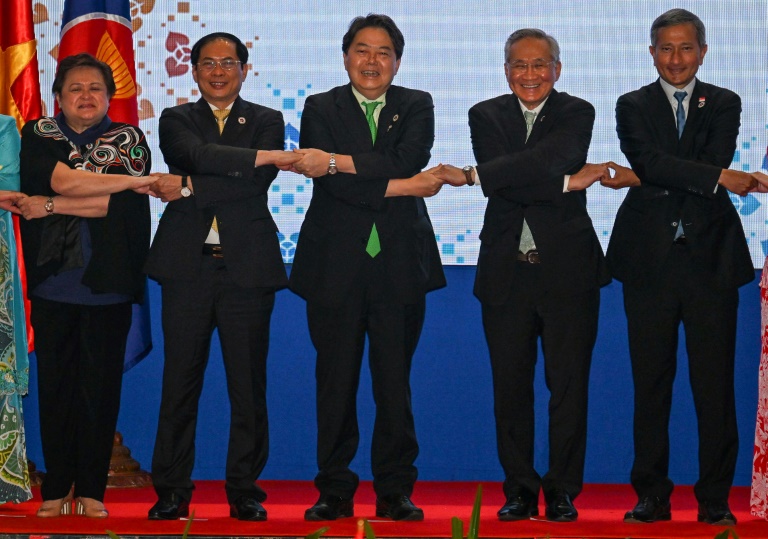
Ministers from the 10-member Association of Southeast Asian Nations (ASEAN) meeting in Phnom Penh warned against “provocative action”.

The situation “could lead to miscalculation, serious confrontation, open conflicts and unpredictable consequences among major powers”, the ministers said in a joint statement published Thursday.

Chinese Foreign Minister Wang Yi is attending the talks along with his US counterpart Antony Blinken, though they are not expected to hold a one-on-one meeting.

At a meeting with ASEAN ministers, Blinken said the United States had contacted China “at every level of government” in recent days to call for calm and stability.

“I hope very much that Beijing will not manufacture a crisis or seek a pretext to increase its aggressive military activity,” Blinken said.

“We and countries around the world believe that escalation serves no one and could have unintended consequences that serve no one’s interests including ASEAN members and including China.”

Beijing, which considers Taiwan a part of its territory to one day be reclaimed, by force if necessary, was enraged by the trip by Pelosi — the highest-profile elected US official to visit the island in 25 years.

It vowed “punishment” and state TV said it began military drills, including live-fire exercises, at 0400 GMT in several areas encircling Taiwan.

EU foreign policy chief Josep Borrell, also in Phnom Penh, condemned the Chinese response.

“There is no justification to use a visit as pretext for aggressive military activity in the Taiwan Strait. It is normal and routine for legislators from our countries to travel internationally,” he tweeted.

Kung Phoak, Cambodia’s deputy foreign minister and ASEAN spokesman, urged both sides to stabilise the situation. 

“We hope de-escalation happens… and normalcy returns to the Taiwan Strait,” he told reporters.

– Miscalculation fear –

ASEAN is split between countries with close ties to China, such as Myanmar, Cambodia and Laos, and others that are warier of Beijing and its growing international assertiveness. 

But no ASEAN country formally recognises Taiwan and none has shown an appetite for backing Taipei against the communist giant.

The ministers’ statement — which avoided referring to Taiwan by name — said ASEAN “stands ready to play a constructive role in facilitating peaceful dialogue”, though it is not clear either side is interested in outside mediation.

While Wang and Blinken are not scheduled to meet bilaterally, they will both attend a meeting Friday of the ASEAN Regional Forum (ARF), a 27-member body set up to discuss security issues that also includes Russia and the EU.

Australian Foreign Minister Penny Wong, who will also join the ARF gathering, said the fragile status quo in the Taiwan Strait must be maintained.

“All parties should consider how they can contribute to de-escalating current tensions,” Wong told AFP.

“One of the risks the region is concerned about is the risk of miscalculation.”

Pelosi’s visit and the flare-up over Taiwan have overshadowed the ASEAN meeting, which had been due to focus on the bloody crisis in Myanmar.

ASEAN has spearheaded so far fruitless diplomatic efforts to ease the turmoil that has flowed from last year’s military coup.

Several members are growing increasingly angry at the junta’s stonewalling tactics.

The final frontier? Just a slice of Spanish sausage

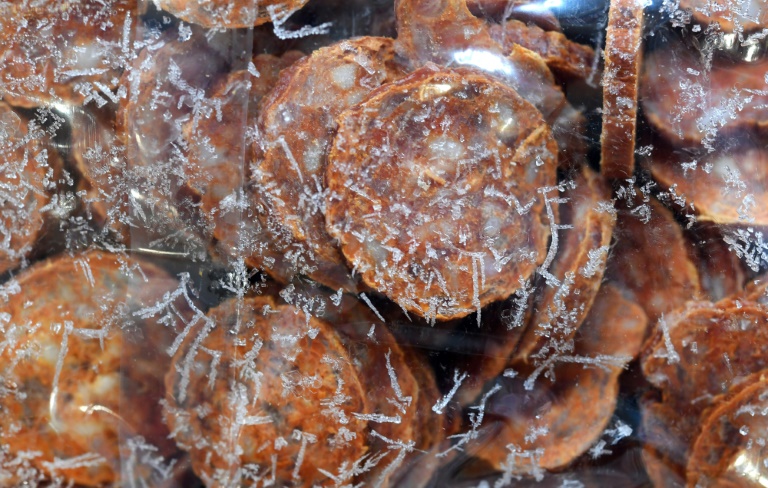
A red ball of spicy fire with luminous patches glowing menacingly against a black background.

This, prominent French scientist Etienne Klein declared, was the latest astonishing picture taken by the James Webb Space Telescope of Proxima Centauri, the closest star to our Sun.

Fellow Twitter users marvelled at the details on the picture purportedly taken by the telescope, which has thrilled the world with images of distant galaxies going back to the birth of the universe.

“This level of detail… A new world is revealed every day,” he gushed.

But in fact, as Klein later revealed, the picture was not of the intriguing star just over four light-years from the Sun but a far more modest slice of the lip-sizzling Spanish sausage chorizo.

“According to contemporary cosmology, no object belonging to Spanish charcuterie exists anywhere but on Earth,” he said.

Klein acknowledged that many users had not understood his joke which he said was simply aimed at encouraging us “to be wary of arguments from people in positions of authority as well as the spontaneous eloquence of certain images”.

However, at a time when battling fake news is of paramount importance for the scientific community, many Twitter users indicated they were unamused by Klein, director of research at France’s Atomic Energy Commission (CEA) and a radio show producer.

On Wednesday, he said sorry to those who were misled.

“I come to present my apologies to those who may have been shocked by my prank, which had nothing original about it,” he said, describing the post as a “scientist’s joke”.

He was shortly back on surer ground posting on Twitter an image of the famous Cartwheel Galaxy taken by the James Webb Space Telescope. This time, he assured users, the photo was real.

Hong Kong billionaire Li Ka-shing's firm to sell stake in fintech upstart

Hong Kong billionaire Li Ka-shing’s firm is selling its stake in the parent company of fintech upstart      AMTD Digital, according to a statement released Thursday, after the company enjoyed a massive rally this week.

Hong Kong-based AMTD Digital was worth more than $203 billion when New York markets closed on Wednesday, making it the world’s fifth-biggest financial company on paper, Bloomberg reported.

AMTD Digital was listed just three weeks ago, and reported $25 million in revenue for the financial year that ended in April 2021. 

Li’s CK Group said in a statement that it holds less than four percent of AMTD Digital’s parent company, AMTD Group, and has entered negotiations to sell those shares.

CK added that it has no representatives on AMTD Group’s board and has no business dealings with or shareholdings in AMTD Digital directly.

The sale would put distance between CK and AMTD Digital’s founder Calvin Choi, a former investment banker who is appealing a ban by Hong Kong regulators for failing to disclose conflicts of interest.

Li’s CK said its current four percent stake was left over from a sale nearly a decade ago, where CK sold a majority of its AMTD Group shares.

AMTD Group was set up in 2003 and lists CK Asset Holdings as a co-founder, according to its website.

Analysts have partly attributed AMTD Digital’s current rally to the small portion of shares that were made available for trading.

“The low free float in the company’s shares means it will be easier for big shareholders to push up the stock price,” research analyst Thomas Nip at Valuable Capital in Hong Kong told Bloomberg, adding that the stock is highly overvalued.

Oktay Kavrak, director at Leverage Shares, told Bloomberg that AMTD Digital was heading for a “nosedive” given the speed of its ascent.

AMTD Digital’s swift rally had prompted questions of whether it was the next “meme stock” — shares that skyrocket due to retail trading mania — similar to video game chain GameStop.

In January 2021, small-time stock traders banded together and rocked Wall Street by driving up the prices of shares like GameStop and cinema chain AMC, reaping massive profits.

But there is no evidence yet of a clear link between AMTD Digital’s stock movements this week and trades driven by social media interest, with some users of Reddit forum WallStreetBets dismissing the connection.

On Tuesday, AMTD Digital said it knew of “no material circumstances, events nor other matters relating to our company’s business and operating activities since the IPO date”.

Spectators flock to Iceland volcano

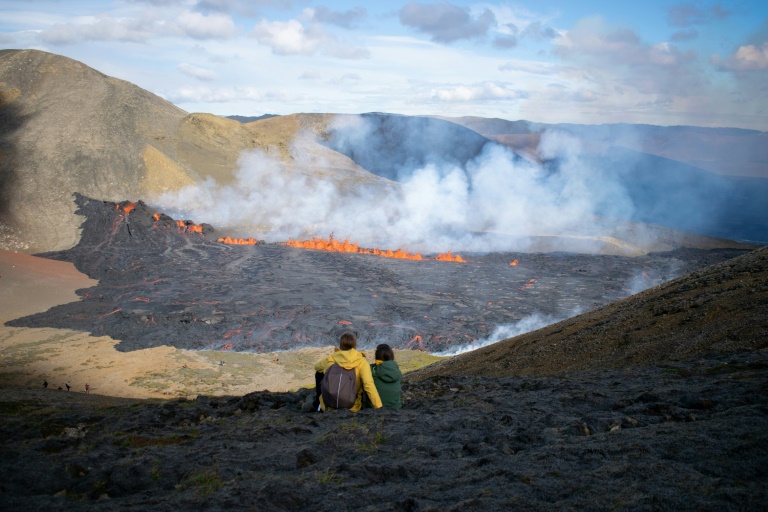
Curious onlookers made their way Thursday to the site of a volcano erupting near Iceland’s capital Reykjavik to marvel at the bubbling lava, a day after the fissure appeared in an uninhabited valley.

The eruption was around 40 kilometres (25 miles) from Reykjavik, near the site of the Mount Fagradalsfjall volcano in southwestern Iceland that spewed magma for six months between March and September 2021.

While last year’s eruption was easily accessible on foot and drew more than 435,000 tourists, the new eruption is trickier to access, requiring a strenuous 90-minute hilly hike from the closest car park. 

Despite that, more than 1,830 people visited the site on the first day of the eruption, according to the Icelandic Tourist Board, and more visitors were seen trekking to the scene early Thursday.

Among them was American tourist Hather Hoff, 42, for whom seeing lava was “a life goal”.

“I had to sit down and have a little cry because it is so beautiful, so emotional — this is the raw power of our planet,” she told AFP.

Anita Sauckel, a 40-year-old German living in Iceland, visited last year’s eruption and could not resist witnessing the latest volcanic activity.

“This is special with the lava, huge fountains popping out in the middle, and I love that a lot,” she said.

The fissure was estimated to be around 360 metres (1,181 feet) long, the Icelandic Meteorological Office said Thursday, with lava fountains about 10-15 metres high.

Wednesday’s eruption was preceded by a period of intense seismic activity, with about 10,000 earthquakes detected since Saturday, including two with a magnitude of at least 5.0.

The frequency of the earthquakes has slowed since the magma burst through the ground.

The average lava flow in the first hours was estimated at 32 cubic metres per second, according to measurements done Wednesday at 1705 GMT — 3.5 hours after the eruption began — by scientists from the Institute of Earth Sciences.

That is about four or five times more than at the beginning of last year’s eruption.

“The current eruption is therefore much more powerful,” the Institute wrote in a Facebook post.

The lava covered an area of about 74,000 square metres (around 800,000 square feet), it said. 

By comparison, last year’s six-month eruption saw 150 million cubic metres of lava spilled over 4.85 square kilometres.

– Gas risk –

Officials had initially urged people to refrain from visiting the site until a danger assessment had been conducted.

But on Thursday, the Department of Civil Protection and Emergency Management said only that young children should not walk up to the eruption site.

Gases from a volcanic eruption — especially sulphur dioxide — can be elevated in the immediate vicinity, may pose a danger to health and even be fatal.

Gas pollution can also be carried by the wind.

Mount Fagradalsfjall belongs to the Krysuvik volcanic system on the Reykjanes peninsula in southwestern Iceland.

Known as the land of fire and ice, Iceland has 32 volcanic systems currently considered active, the highest number in Europe. The country has had an eruption every five years on average.

However, until last year, the Reykjanes peninsula had not experienced an eruption since the 13th century, when a volcano erupted for 30 years from 1210-1240.

Geophysicists have said that the 2021 eruption could signal the beginning of a new period of eruptions lasting centuries.

A vast island near the Arctic Circle, Iceland straddles the Mid-Atlantic Ridge, a crack on the ocean floor separating the Eurasian and North American tectonic plates.

The shifting of these plates is in part responsible for Iceland’s intense volcanic activity.

Spectators flock to Iceland volcano

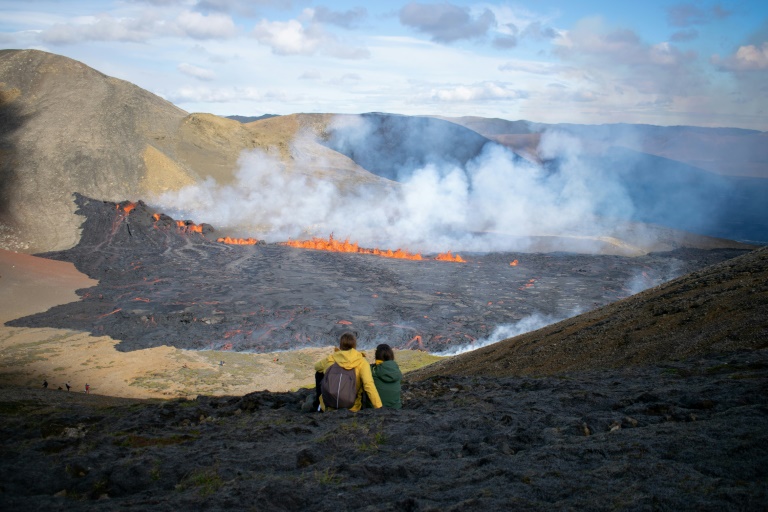
Curious onlookers made their way Thursday to the site of a volcano erupting near Iceland’s capital Reykjavik to marvel at the bubbling lava, a day after the fissure appeared in an uninhabited valley.

The eruption was around 40 kilometres (25 miles) from Reykjavik, near the site of the Mount Fagradalsfjall volcano in southwestern Iceland that spewed magma for six months between March and September 2021.

While last year’s eruption was easily accessible on foot and drew more than 435,000 tourists, the new eruption is trickier to access, requiring a strenuous 90-minute hilly hike from the closest car park. 

Despite that, more than 1,830 people visited the site on the first day of the eruption, according to the Icelandic Tourist Board, and more visitors were seen trekking to the scene early Thursday.

Among them was American tourist Hather Hoff, 42, for whom seeing lava was “a life goal”.

“I had to sit down and have a little cry because it is so beautiful, so emotional — this is the raw power of our planet,” she told AFP.

Anita Sauckel, a 40-year-old German living in Iceland, visited last year’s eruption and could not resist witnessing the latest volcanic activity.

“This is special with the lava, huge fountains popping out in the middle, and I love that a lot,” she said.

The fissure was estimated to be around 360 metres (1,181 feet) long, the Icelandic Meteorological Office said Thursday, with lava fountains about 10-15 metres high.

Wednesday’s eruption was preceded by a period of intense seismic activity, with about 10,000 earthquakes detected since Saturday, including two with a magnitude of at least 5.0.

The frequency of the earthquakes has slowed since the magma burst through the ground.

The average lava flow in the first hours was estimated at 32 cubic metres per second, according to measurements done Wednesday at 1705 GMT — 3.5 hours after the eruption began — by scientists from the Institute of Earth Sciences.

That is about four or five times more than at the beginning of last year’s eruption.

“The current eruption is therefore much more powerful,” the Institute wrote in a Facebook post.

The lava covered an area of about 74,000 square metres (around 800,000 square feet), it said. 

By comparison, last year’s six-month eruption saw 150 million cubic metres of lava spilled over 4.85 square kilometres.

– Gas risk –

Officials had initially urged people to refrain from visiting the site until a danger assessment had been conducted.

But on Thursday, the Department of Civil Protection and Emergency Management said only that young children should not walk up to the eruption site.

Gases from a volcanic eruption — especially sulphur dioxide — can be elevated in the immediate vicinity, may pose a danger to health and even be fatal.

Gas pollution can also be carried by the wind.

Mount Fagradalsfjall belongs to the Krysuvik volcanic system on the Reykjanes peninsula in southwestern Iceland.

Known as the land of fire and ice, Iceland has 32 volcanic systems currently considered active, the highest number in Europe. The country has had an eruption every five years on average.

However, until last year, the Reykjanes peninsula had not experienced an eruption since the 13th century, when a volcano erupted for 30 years from 1210-1240.

Geophysicists have said that the 2021 eruption could signal the beginning of a new period of eruptions lasting centuries.

A vast island near the Arctic Circle, Iceland straddles the Mid-Atlantic Ridge, a crack on the ocean floor separating the Eurasian and North American tectonic plates.

The shifting of these plates is in part responsible for Iceland’s intense volcanic activity.

Close Bitnami banner
Bitnami