World

Two years after Beirut mega-blast, Lebanon hits new lows

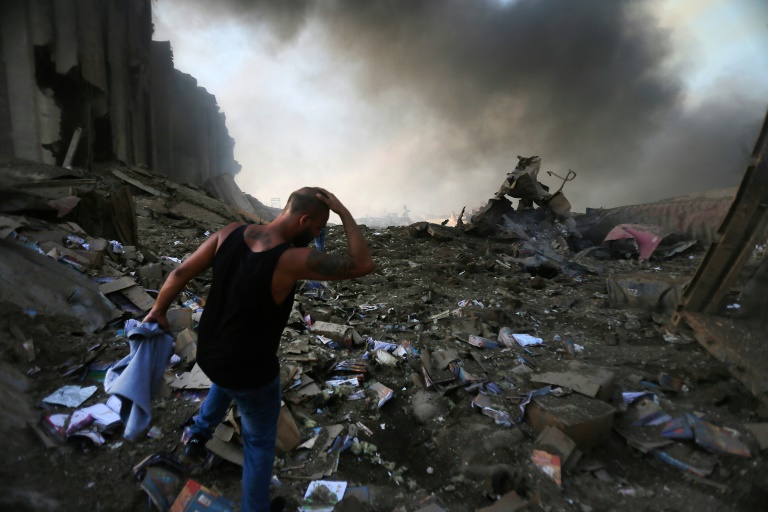
Crisis-hit Lebanon marks two years Thursday since a massive explosion ripped through Beirut, with victims’ relatives planning protest marches as they keep demanding truth and justice. 

The portside blast of haphazardly stored ammonium nitrate, one of the biggest ever non-nuclear explosions, killed more than 200 people, wounded thousands more and decimated vast areas of the capital.

Yet an investigation into the cause has been stalled amid political interference and no state official has yet been held accountable over the August 4, 2020 tragedy, prompting rights defenders and some victims’ families to demand an international probe.

Several heavily damaged grain silos that became a grim symbol of the disaster collapsed last week, and more are dangerously close to coming down, experts warn.

“I hope that seeing the silos fall will give people the will to fight for justice, to battle with us,” said Tatiana Hasrouty, who lost her father in the blast.

Politicians “are doing everything in their power to stop the investigation” into the explosion, she said.

The mega-blast was a nightmarish moment in the chaotic history of Lebanon, which is mired in its worst-ever economic crisis marked by blackouts, runaway inflation and widespread despair.

When protesters in three separate marches starting from 1200 GMT converge at the port, they will smell the smoke wafting from the silos where fermenting grain is smouldering in the blistering summer heat.

– ‘A nightmare’ –

The enormous explosion two years ago was felt as far away as Israel and Cyprus and sowed the kind of devastation normally caused by wars and natural disasters.

It further scarred the crisis-tested population and accelerated a massive exodus that recalls the flight during the 1975-1990 civil war.

Lebanon’s ruling class, accused of misrule, graft and gross negligence, has however clung firmly to power even as the people endure shortages of fuel, medicine and clean water.

“This ruling class is killing us every day,” Hasrouty said. “If we did not die in the blast, we are dying of hunger, from a lack of basic human rights.”

Power cuts last up to 23 hours a day, streets are dark at night and traffic lights out of service, leaving some districts illuminated mainly by the silo fires.

Lara Khatchikian, 51, whose apartment was badly hit two years ago, has watched the blazes, calling the sight “a nightmare”. 

“I have felt fear, we couldn’t sleep,” she said. “It takes superhuman strength to live when you are constantly reminded of the blast.”

– ‘Deliver justice’ –

The government in April ordered the silos’ demolition, but this has been suspended, partially because of objections from victims’ relatives who want them preserved as a memorial.

French civil engineer Emmanuel Durand, who monitors the silos with sensors, has warned that he expected four more towers to collapse Thursday.

Meanwhile, the probe is also at risk of falling apart, as officials close to the powerful Hezbollah movement have curtailed the work of the lead investigator Tarek Bitar with a series of lawsuits.

A judicial official close to the investigations said judge Bitar’s work had been paused since December 23.

Hezbollah, which has repeatedly accused Bitar of bias, on Thursday condemned what it described as a two-year “intense political and media campaign, which contained false accusations” against it, and called for a “fair” investigation.

UN chief Antonio Guterres on Thursday reiterated his call for an “impartial, thorough and transparent investigation into the explosion”.

UN experts and groups including Amnesty International and Human Rights Watch had earlier relaunched an appeal to the United Nations to send a fact-finding mission.

The rights groups jointly declared that “it is now, more than ever, clear that the domestic investigation cannot deliver justice”.

Aya Majzoub of HRW said that an international investigation “may be the only hope for the millions of Lebanese people… to get the answers they deserve”.

China begins major Taiwan military drills after Pelosi visit

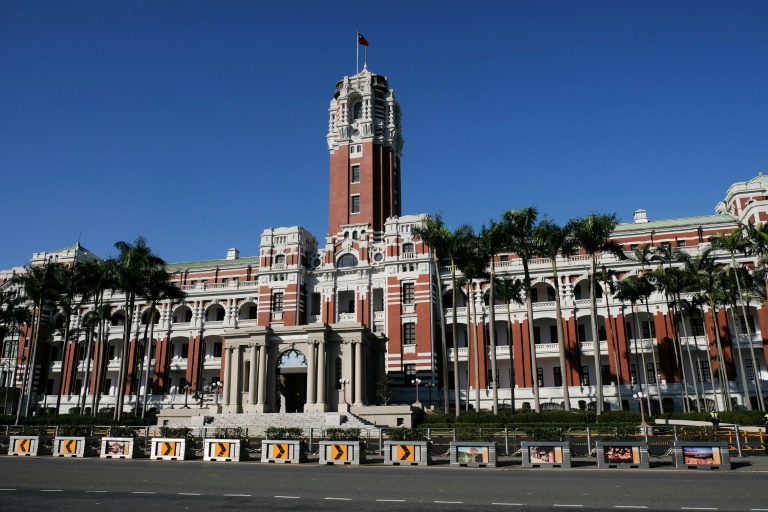
China fired ballistic missiles and deployed fighter jets and warships on Thursday as it began its largest-ever military exercises around Taiwan, a show of force sparked by US House Speaker Nancy Pelosi’s visit to the island.

Pelosi was the highest-profile US official to visit Taiwan in years, defying a series of stark threats from Beijing, which views the self-ruled island as its territory.

In retaliation, China launched a series of exercises in multiple zones around Taiwan, straddling some of the busiest shipping lanes in the world and at some points just 20 kilometres (12 miles) from the island’s shore.

The drills began around 12 pm (0400 GMT), and involved a “conventional missile firepower assault” in waters to the east of Taiwan, the Chinese military said.

The aim was to test the precision of the missiles and their ability to deny an enemy access to or control of an area, Eastern Theater Command spokesman Senior Colonel Shi Yi said in a statement.

Taiwan said the Chinese military fired several Dongfeng-class ballistic missiles, and condemned the exercises as “irrational actions that undermine regional peace”.

Taipei did not say where the missiles landed or whether they flew over the island.

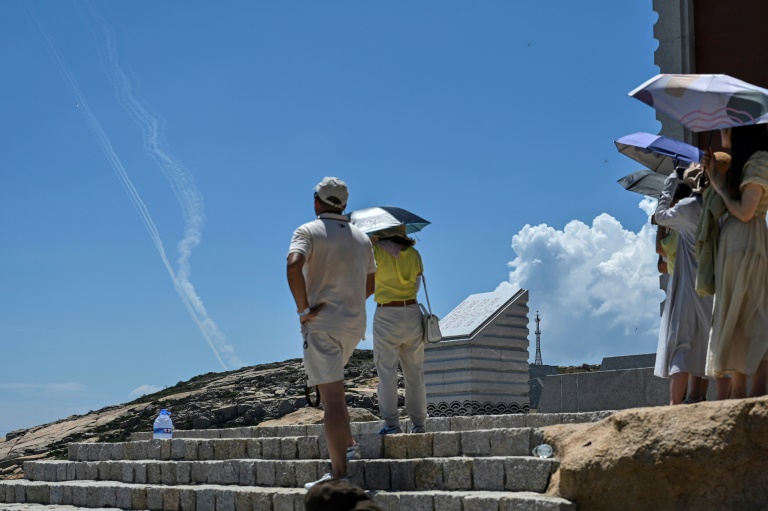
AFP journalists on the border island of Pingtan saw several small projectiles flying into the sky followed by plumes of white smoke and loud booming sounds.

On the mainland, at what is said to be China’s closest point to Taiwan, AFP saw a batch of five military helicopters flying at a relatively low altitude near a popular tourist spot.

The drills will conclude at midday on Sunday.

Beijing’s nationalist state-run tabloid Global Times had said, citing military analysts, that the exercises were “unprecedented” and that missiles would fly over Taiwan for the first time.

– ‘Preparation for actual combat’ –

Beijing has defended the drills as “necessary and just”, pinning the blame for the escalation on the United States and its allies.

“In the current struggle surrounding Pelosi’s Taiwan visit, the United States are the provocateurs, China is the victim,” foreign ministry spokeswoman Hua Chunying told a regular briefing Wednesday.

A Chinese military source also told AFP the exercises would be staged “in preparation for actual combat”.  

“If the Taiwanese forces come into contact with the PLA on purpose and accidentally fire a gun, the PLA will take stern countermeasures, and all the consequences will be borne by the Taiwanese side,” the source said.

The manoeuvres are taking place along some of the busiest shipping routes on the planet, used to supply vital semiconductors and electronic equipment produced in East Asian factory hubs to global markets.

Taiwan’s Maritime and Port Bureau has issued warnings to ships to avoid the areas being used for the Chinese drills.

The Taiwanese cabinet said the drills would disrupt 18 international routes passing through its flight information region (FIR).

– ‘Some limits’ –

Taiwan’s 23 million people have long lived with the possibility of an invasion, but that threat has intensified under President Xi Jinping, China’s most assertive ruler in a generation.

Analysts said the Chinese leadership is keen to project strength ahead of a crucial ruling party meeting this autumn at which Xi is expected to be given an unprecedented third term.

“China’s announced military exercises represent a clear escalation from the existing baseline of Chinese military activities around Taiwan and from the last Taiwan Strait Crisis in 1995-1996,” said Amanda Hsiao, senior analyst for China at the International Crisis Group. 

“Beijing is signalling that it rejects Taiwan’s sovereignty.”

Nevertheless, analysts have told AFP that China is not aiming to escalate the situation beyond its control — at least for now.

Titus Chen, an associate professor of political science at the National Sun Yat-Sen University in Taiwan, said: “The last thing Xi wants is an accidental war.”

Myanmar junta charges Japanese journalist with encouraging dissent

A Japanese journalist detained in Myanmar has been charged with breaching immigration law and encouraging dissent against the military, the ruling junta said Thursday.

Myanmar’s military has clamped down on press freedoms since its coup last year, arresting reporters and photographers as well as revoking broadcasting licences as the country plunged into chaos.

Toru Kubota, who was held while covering a protest in Yangon last week, “has been charged under section 505 (a) and under immigration law 13-1”, the junta said in a statement.

505 (a) — a law that criminalises encouraging dissent against the military and carries a maximum three-year jail term — has been widely used in the crackdown on dissent.

Breaching immigration law 13-1 carries a maximum penalty of five years in prison.

Filmmaker Kubota, 26, was detained near an anti-government rally in Yangon along with two Myanmar citizens.

After the charges were filed, he was transferred from police custody to Yangon’s Insein prison, a security source told AFP, requesting anonymity.

“He’s in good health and embassy officials have visited him already at the police station where he has been detained.”

According to a profile on FilmFreeway, Kubota has previously made documentaries on Myanmar’s Muslim Rohingya minority and “refugees and ethnic issues in Myanmar”.

He is the fifth foreign journalist detained in Myanmar, after US citizens Nathan Maung and Danny Fenster, Robert Bociaga of Poland and Yuki Kitazumi of Japan, who were all eventually freed and deported.

Fenster, who was held in May last year as he attempted to leave the country, faced a closed-door trial inside Insein on charges of unlawful association, incitement against the military and breaching visa rules.

He was sentenced to 11 years in prison before being pardoned and deported.

– ‘War on journalists’ –

“The regime has declared war on journalists, and 505a is its preferred charge,” said Richard Horsey of the International Crisis Group.

“This charge against a Japanese journalist shows the regime is determined to continue stifling objective reporting, whether by local or foreign journalists.”

Japan’s foreign ministry said in a statement that its embassy in Myanmar was “appealing to the Myanmar authorities for the early release of the Japanese man, and will continue to make efforts to gather information and request his early release”.

Tokyo is a top donor to Myanmar and has long-standing relations with the country’s military.

The already isolated junta stoked further international outrage last week when it announced the execution of four prisoners, in the country’s first use of capital punishment in decades. 

“The situation in Burma has gone from bad to worse,” United States Secretary of State Antony Blinken said, using the country’s former name, after talks with EU foreign policy chief Josep Borrell.

Blinken met Borrell on the sidelines of a meeting of Southeast Asian foreign ministers in Cambodia, from which Myanmar’s top diplomat has been excluded over the junta’s failure to open talks with its political opponents.

More than 2,100 people have been killed in the crackdown on dissent in Myanmar and almost 15,000 arrested, according to a local monitoring group.

As of March this year, 48 journalists remain in custody across the country, according to monitoring group Reporting ASEAN.

Only China jailed more reporters than Myanmar last year, according to the Committee to Protect Journalists.

Taiwan govt websites attacked during Pelosi visit

Major Taiwanese government websites were temporarily forced offline by cyber attacks believed to be linked to China and Russia during US House Speaker Nancy Pelosi’s visit to the island, Taipei said Thursday.

The websites of the presidential office, foreign ministry and the main government English portal came under attack Tuesday night when Pelosi arrived for a landmark visit that enraged Beijing.

China, which claims self-ruled democratic Taiwan as part of its territory to be seized one day, kicked off its largest ever military drills around the island on Thursday in response.

Taiwan’s defence ministry also said its website was offline for an hour around midnight Wednesday because of a distributed denial of service (DDoS) attack.

A DDoS is a simple disruption attack that overloads a website with requests for information. It does not involve hacking.

According to Taiwan’s foreign ministry, the attacks on its website and the government’s English portal were linked to Chinese and Russian IP addresses that tried to access the websites up to 8.5 million times per minute.

“As cyber attacks from foreign hostile forces could still occur at any time, the foreign ministry will continue to remain vigilant,” spokeswoman Joanne Ou told reporters Thursday.

The presidential office said it would up its monitoring in the face of “hybrid information warfare by external forces”. 

Taipei has accused Beijing of ramping up cyber attacks since the 2016 election of President Tsai Ing-wen, who views the island as a sovereign nation and not a part of China.

Officials have said Taiwanese government agencies face around five million cyber attacks and probes a day.

In 2020, Taiwanese authorities said Chinese hackers infiltrated at least 10 Taiwan government agencies and gained access to around 6,000 email accounts in an attempt to steal data.

SpaceX debris discovered in Australian sheep paddock

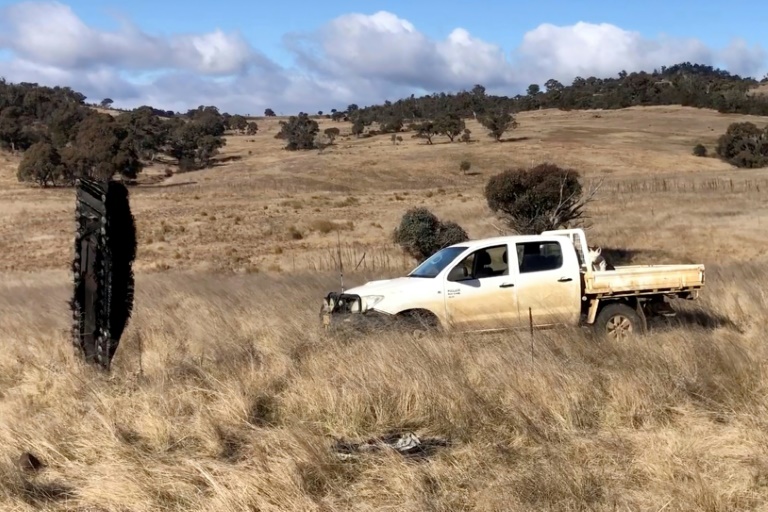
A charred chunk of space junk found jutting from a paddock by an Australian sheep farmer was confirmed to be part of one of Elon Musk’s SpaceX missions by authorities Thursday.

The ethereal-looking debris, believed to have plummeted to Earth on July 9, was found last week in Dalgety — a remote area near Australia’s Snowy Mountains, about five hours’ drive southwest of Sydney.

“It was kind of exciting and weird all in the same way,” astrophysicist Brad Tucker, who visited the site after local farmers contacted him last month, told AFP.

He said that finding the large chunk embedded in an empty field reminded him of something out of the sci-fi film “2001: A Space Odyssey”.

“It’s astounding to see it.”

Australia’s space agency confirmed the debris had come from one of Musk’s missions in a statement and told locals to report any further finds to SpaceX.

“The Agency has confirmed the debris is from a SpaceX mission and continues to engage with our counterparts in the US, as well as other parts of the Commonwealth and local authorities as appropriate,” an Australian Space Agency spokesman said.

Tucker said the piece was part of a trunk jettisoned by the earlier Crew-1 capsule when it re-entered Earth’s atmosphere in 2021.

He said the trunk had split up on re-entry, with reports of other space junk also found at nearby properties, making more discoveries linked to the SpaceX mission likely.

Most space debris splashes down at sea but with the increase in space industries worldwide, the amount crashing to earth would likely increase, he added.

“We do have to realise that there is a likely risk it may hit in a populated area once and what that means.”

Australia’s Space Agency said it was working to mitigate debris and had raised the issue internationally.

China begins major Taiwan military drills after Pelosi visit

China’s largest-ever military exercises encircling Taiwan kicked off Thursday, in a show of force straddling vital international shipping lanes after a visit to the island by US House Speaker Nancy Pelosi.

Pelosi left Taiwan Wednesday after a trip that defied a series of stark threats from Beijing, which views the self-ruled island as its territory.

Pelosi was the highest-profile elected US official to visit Taiwan in 25 years, and said her trip made it “unequivocally clear” that the United States would not abandon a democratic ally.

It sparked a furious reaction from Beijing, which vowed “punishment” and announced military drills in the seas around Taiwan — some of the world’s busiest waterways.

The exercises, which began around 12 pm (0400 GMT), involve “live-firing”, according to state media.

“Six major areas around the island have been selected for this actual combat exercise and during this period, relevant ships and aircraft should not enter the relevant waters and airspaces,” state broadcaster CCTV reported.

AFP journalists in the border island of Pingtan saw several small projectiles flying into the sky followed by plumes of white smoke and loud booming sounds.

AFP was not in a position to identify the projectiles, which were fired from the proximity of nearby military installations, nor their precise direction.

The exercises are taking place in multiple zones around Taiwan — at some points within just 20 kilometres (12 miles) of the shore — and will conclude at midday on Sunday.

Taiwan’s defence ministry said it was closely watching the drills.

“The Ministry of National Defence stresses that it will uphold the principle of preparing for war without seeking war, and with an attitude of not escalating conflict and causing disputes,” it said in a statement.

Beijing’s nationalist state-run tabloid Global Times said, citing military analysts, that the exercises were “unprecedented” and that missiles would fly over Taiwan for the first time.

“This is the first time the PLA will launch live long-range artillery across” the Taiwan Strait, the newspaper said using the Chinese military’s formal name, the People’s Liberation Army.

The Group of Seven industrialised nations has condemned the drills, saying in a statement there was “no justification to use a visit as pretext for aggressive military activity in the Taiwan Strait”.

– ‘Preparation for actual combat’ –

Taiwan’s Maritime and Port Bureau issued warnings on Wednesday to ships to avoid the areas being used for the Chinese drills.

The Taiwanese cabinet said the drills would disrupt 18 international routes passing through its flight information region (FIR).

Hong Kong carrier Cathay Pacific said it had ordered its aircraft to “avoid going through the designated airspace zones around the Taiwan region”.

The manoeuvres will take place along some of the busiest shipping routes on the planet, used to supply vital semiconductors and electronic equipment produced in East Asian factory hubs to global markets.

Beijing has defended the drills as “necessary and just”, pinning the blame for the escalation on the United States and its allies.

“In the current struggle surrounding Pelosi’s Taiwan visit, the United States are the provocateurs, China is the victim,” foreign ministry spokeswoman Hua Chunying told a regular briefing Wednesday.

A Chinese military source also told AFP the exercises would be staged “in preparation for actual combat”.  

“If the Taiwanese forces come into contact with the PLA on purpose and accidentally fire a gun, the PLA will take stern countermeasures, and all the consequences will be borne by the Taiwanese side,” the source said.

– ‘Some limits’ –

Taiwan’s 23 million people have long lived with the possibility of an invasion, but that threat has intensified under President Xi Jinping, China’s most assertive ruler in a generation.

The island is once again a flashpoint between the United States and a Chinese leadership keen to project strength ahead of a crucial ruling party meeting this autumn at which Xi is expected to be given an unprecedented third term.

On the mainland, at what is said to be China’s closest point to Taiwan, AFP saw a batch of five military helicopters flying at a relatively low altitude near a popular tourist spot.

“China’s announced military exercises represent a clear escalation from the existing baseline of Chinese military activities around Taiwan and from the last Taiwan Strait Crisis in 1995-1996,” said Amanda Hsiao, senior analyst for China at the International Crisis Group. 

“Beijing is signalling that it rejects Taiwan’s sovereignty.”

Nevertheless, analysts have told AFP that China is not aiming to escalate the situation beyond its control — at least for now.

Titus Chen, an associate professor of political science at the National Sun Yat-Sen University in Taiwan, said: “The last thing Xi wants is an accidental war.”

In South Korea, Pelosi set to visit heavily fortified DMZ

After her high-profile trip to Taiwan, US House Speaker Nancy Pelosi was in South Korea Thursday where her agenda included a visit to the border with the nuclear-armed North, an official told AFP.

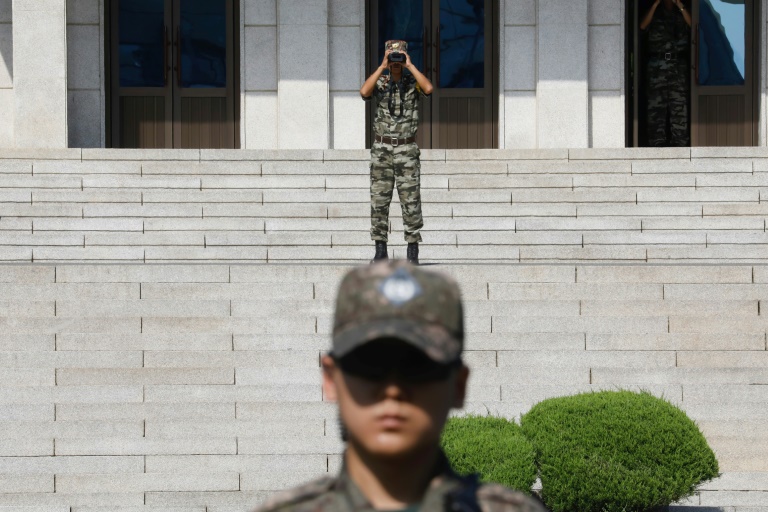
Pelosi, who arrived in Seoul late Wednesday, will visit the heavily fortified Demilitarized Zone (DMZ), where the two neighbours’ forces stand face to face, the South Korean official said.

She would be the highest-ranking US official to visit the inter-Korean truce village of Panmunjom since then president Donald Trump met North Korean leader Kim Jong Un there in 2019.

North Korea’s nuclear weapons programmes were discussed when Pelosi met Seoul’s National Assembly Speaker Kim Jin-pyo.

The pair “expressed concern over the grave situation in which North Korea’s level of threat is heightening”, Kim Jin-pyo said, reading a joint statement after their meeting.

North Korea has conducted a record-breaking blitz of weapons tests so far this year, including firing an intercontinental ballistic missile at full range for the first time since 2017.

The two parliamentarians called for “strong and extended deterrence against North Korea”, and said they would support efforts by the two countries’ leaders to get Pyongyang to denuclearise.

Pelosi is scheduled to speak on the phone with President Yoon Suk-yeol, who is on holiday this week, officials said.

Local media have criticised Yoon’s purported snub of Pelosi, pointing to his failure to meet her in person, and his administration’s decision not to send a delegation to greet her at the airport.

Some published photos of the president attending a play in central Seoul the night Pelosi landed.

Yoon took office in May, vowing to boost ties with the United States, including ramping up the joint military drills that always infuriate North Korea, which views them as rehearsals for invasion.

Joint drills had been suspended due to Covid-19 and during a period of ill-fated diplomatic engagement with Pyongyang under Yoon’s predecessor Moon Jae-in.

The first such joint drills — now known as Ulchi Freedom Shield — will begin later this month.

– Taiwan visit –

At a brief press conference in Seoul, during which she did not take any questions, Pelosi hailed the “special” relationship between South Korea and the United States — but made no mention of her visit to Taipei.

She had defied repeated Chinese warnings to visit Taiwan, which China considers its territory. Beijing had said any such trip would be viewed as a major provocation.

It has since launched massive military drills around the island.

China is North Korea’s key ally and trade partner.

Pyongyang on Wednesday echoed Beijing’s criticism of the Pelosi visit to Taiwan, describing it as “impudent interference” in China’s internal affairs and blaming Washington for raising regional tensions.

South Korea is the fourth stop in Pelosi’s Asia tour, following Singapore, Malaysia and Taiwan.

She is scheduled to fly to Japan later on Thursday for the final leg of her Asia trip.

Wind and water: undersea drone readies to aid offshore boom

In a wave tank at a robot laboratory in the Scottish capital Edinburgh, engineers observe in silence as an underwater drone rises stealthily to the surface.

The team, which led the development of the remotely operated vehicle (ROV) at Heriot-Watt university, believe the submersible machine is a game-changer for offshore wind farms, obviating the need for divers.

The engineers reckon it will soon be ready to perform inspections and maintenance at wind farms, transforming the nature of the high-risk and costly endeavours just as the industry is set for huge expansion.

British Prime Minister Boris Johnson has promised to make the UK the “Saudi Arabia” of wind power, with plans to generate enough electricity from offshore to power every UK home by 2030.

While Johnson is on his way out of office, the industry is banking on the expansion plans, especially after Russia’s invasion of Ukraine sent the price of traditional carbon energy through the roof.

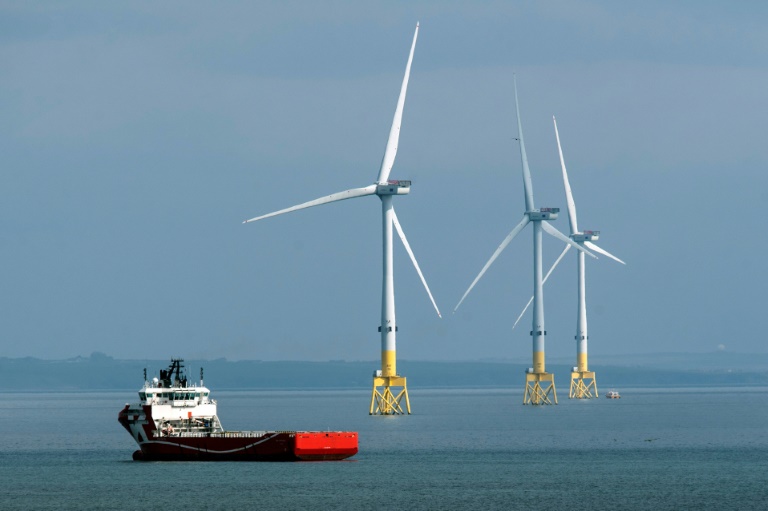
“We have to imagine that in 10, 15 years time there will be hundreds of wind farms, which means thousands of wind turbines all across the coast of the UK,” Yvan Petillot, a robotics and autonomous systems professor at Heriot-Watt, told AFP.

“You also have hydrogen technology being developed and all of this will need to be maintained, inspected and serviced.

“What we are developing is remote technologies where people can inspect and maintain those assets from shore, without putting anyone in harm’s way.”

– Accumulation of micro-organisms –

In May the ROV, which is equipped with sensors and advanced software, conducted what is believed to be the first ever autonomous offshore wind farm inspection.

The device was deployed at French energy firm EDF’s Blyth wind farm, off the coast of Northumberland, northeast England.

It successfully recorded videos that allowed researchers to assess the exterior condition of turbine foundations and cables.

Meanwhile its software created a 3D reconstruction model of parts of the energy company’s underwater assets.

Petillot said the 3D model can pick up the accumulation of micro-organisms, plants and algae on the turbine foundations. 

If a problem is detected, the ROV system can be deployed with a robotic arm to conduct a repair.

“The system will first do an autonomous inspection of the seabed and the structure, and build the 3D model that someone from shore can look at and say, ‘there’s a problem here’,” Petillot said.

“Typically you would have corrosion on the system, you might have to turn a valve, you might have to connect a cable, you might have to change an anode and clean the surface if there is too much bio-fouling.”

Maxime Duchet, an offshore wind research engineer at EDF, said the images and modelling will greatly enhance the ability to conduct operations and maintenance activities on-site.

– ‘Safer and faster’ –

Further tests are needed to estimate the time required to inspect all of the turbine foundations and to demonstrate the full potential of marine robotic technology, he noted.

“However, it is clear from these initial results that the technology can ensure safer and faster operations and a reduced carbon footprint,” Duchet added.

Engineers, who use a joystick to pilot the vehicle, say the ROV can be left alone to perform its primary mapping task for most of the time. 

If it becomes stuck, or lingers too long in a particular area, a pilot can commandeer it. 

Petillot said a long-term benefit could be allowing more people to join the team managing the ROV remotely, who might not have been willing or able to work offshore.

It is incredibly difficult to find a diver or a qualified pilot for such projects, he noted. 

In contrast, finding somebody to help control the system as though they were playing a video game should prove far easier, according to Petillot.

Great Barrier Reef sees fragile coral comeback

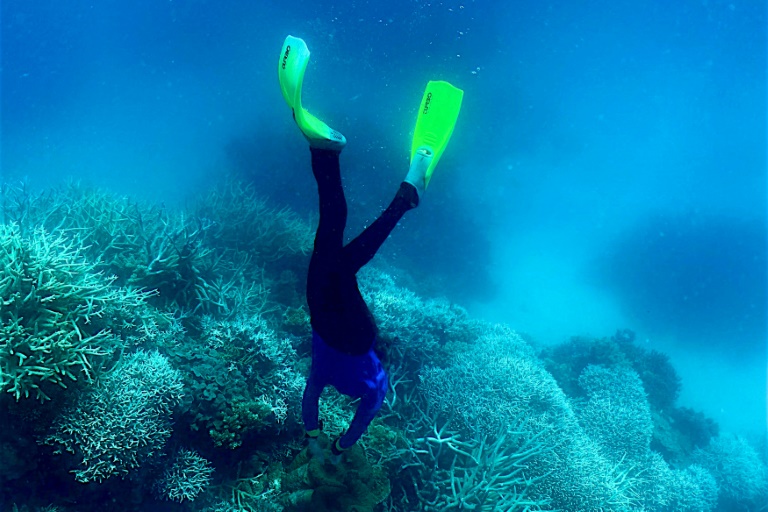
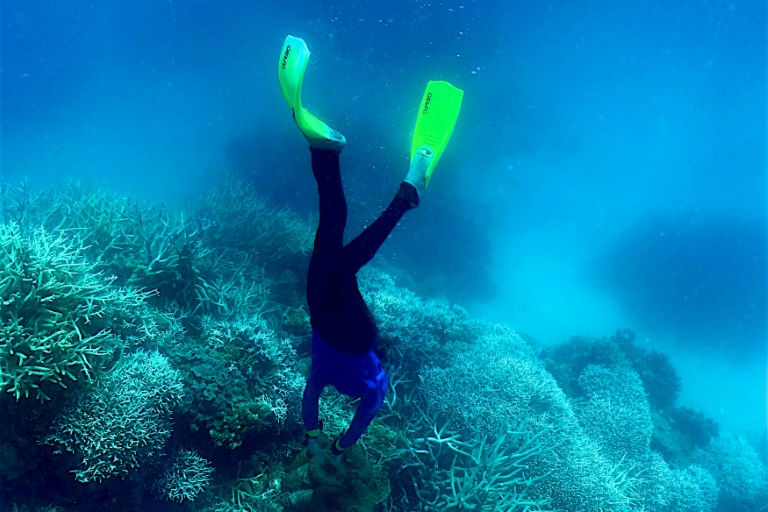
Parts of Australia’s beleaguered Great Barrier Reef now have the highest levels of coral cover seen in decades, a government report said Thursday, suggesting the aquatic wonder could survive given the chance.

Portions of the vast UNESCO heritage site showed a marked increase in coral cover in the last year, reaching levels not seen in 36 years of monitoring, the Australian Institute of Marine Science said. 

Scientists surveying 87 sites said northern and central parts of the reef had bounced back from damage more quickly than some had expected, thanks mainly to fast-growing Acropora — a branching coral that supports thousands of marine species. 

“These latest results demonstrate the reef can still recover in periods free of intense disturbances,” said the Australian Institute of Marine Science’s CEO Paul Hardisty.

But far from declaring victory, Hardisty warned the gains could easily be reversed by cyclones, new bleaching events or crown-of-thorns outbreaks. 

He pointed to a reversal in fortunes for the southern portion of the reef, which a year ago had appeared to be on the mend, but was now in decline again.

“This shows how vulnerable the reef is to the continued acute and severe disturbances that are occurring more often, and are longer-lasting,” he said.

Coral coverage has increased by 36 percent across sites monitored in the northern part of the reef, up from 27 percent in 2021. 

But the picture was less encouraging as the scientists moved south, with a smaller increase in cover in the reef’s central belt and a marked decrease in coral cover in the south.

The spread of coral-killing crown-of-thorns starfish has also taken a toll.

Only fierce lobbying by the Australian government stopped the reef from being labelled “in danger” by UNESCO — a potentially devastating blow to the country’s multi-billion-dollar tourism industry. 

Many fear that the speeding rate of damage could cause the reef to be destroyed entirely. 

Marine scientist Terry Hughes said it was “good news” that coral was regrowing, but warned the species driving the recovery were very vulnerable to ocean heating.

He added that replacing large, old, slow-growing corals that had defined the reef was likely “no longer possible. Instead we’re seeing partial reassembly of fast-growing, weedy corals before the next disturbance.”

Zoe Richards a researcher at the Coral Conservation and Research Group at Curtin University also cautioned against over-optimism.

“This recovery trend is driven by a handful of Acropora species which often grow in a boom-and-bust pattern,” she said. “This means that the next thermal stress event could easily decimate these coral communities once again.”

“We are already finding evidence that each mass bleaching event leads to local extinctions of rarer species, so the short-term success of a handful of fast-growing coral species masks the full story about the largely hidden losses of biodiversity.”

Great Barrier Reef sees fragile coral comeback

Parts of Australia’s beleaguered Great Barrier Reef now have the highest levels of coral cover seen in decades, a government report said Thursday, suggesting the aquatic wonder could survive given the chance.

Portions of the vast UNESCO heritage site showed a marked increase in coral cover in the last year, reaching levels not seen in 36 years of monitoring, the Australian Institute of Marine Science said. 

Scientists surveying 87 sites said northern and central parts of the reef had bounced back from damage more quickly than some had expected, thanks mainly to fast-growing Acropora — a branching coral that supports thousands of marine species. 

“These latest results demonstrate the reef can still recover in periods free of intense disturbances,” said the Australian Institute of Marine Science’s CEO Paul Hardisty.

But far from declaring victory, Hardisty warned the gains could easily be reversed by cyclones, new bleaching events or crown-of-thorns outbreaks. 

He pointed to a reversal in fortunes for the southern portion of the reef, which a year ago had appeared to be on the mend, but was now in decline again.

“This shows how vulnerable the reef is to the continued acute and severe disturbances that are occurring more often, and are longer-lasting,” he said.

Coral coverage has increased by 36 percent across sites monitored in the northern part of the reef, up from 27 percent in 2021. 

But the picture was less encouraging as the scientists moved south, with a smaller increase in cover in the reef’s central belt and a marked decrease in coral cover in the south.

The spread of coral-killing crown-of-thorns starfish has also taken a toll.

Only fierce lobbying by the Australian government stopped the reef from being labelled “in danger” by UNESCO — a potentially devastating blow to the country’s multi-billion-dollar tourism industry. 

Many fear that the speeding rate of damage could cause the reef to be destroyed entirely. 

Marine scientist Terry Hughes said it was “good news” that coral was regrowing, but warned the species driving the recovery were very vulnerable to ocean heating.

He added that replacing large, old, slow-growing corals that had defined the reef was likely “no longer possible. Instead we’re seeing partial reassembly of fast-growing, weedy corals before the next disturbance.”

Zoe Richards a researcher at the Coral Conservation and Research Group at Curtin University also cautioned against over-optimism.

“This recovery trend is driven by a handful of Acropora species which often grow in a boom-and-bust pattern,” she said. “This means that the next thermal stress event could easily decimate these coral communities once again.”

“We are already finding evidence that each mass bleaching event leads to local extinctions of rarer species, so the short-term success of a handful of fast-growing coral species masks the full story about the largely hidden losses of biodiversity.”

Close Bitnami banner
Bitnami