World

A stone's throw from Taiwan, beachgoers aren't worried about war

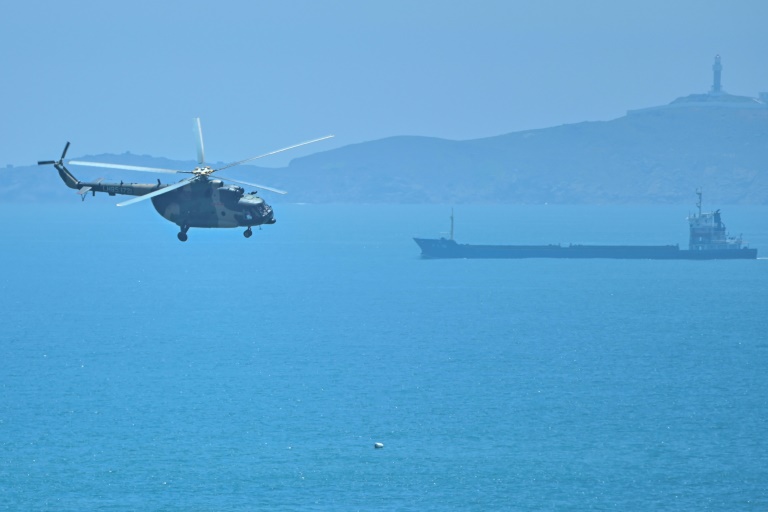
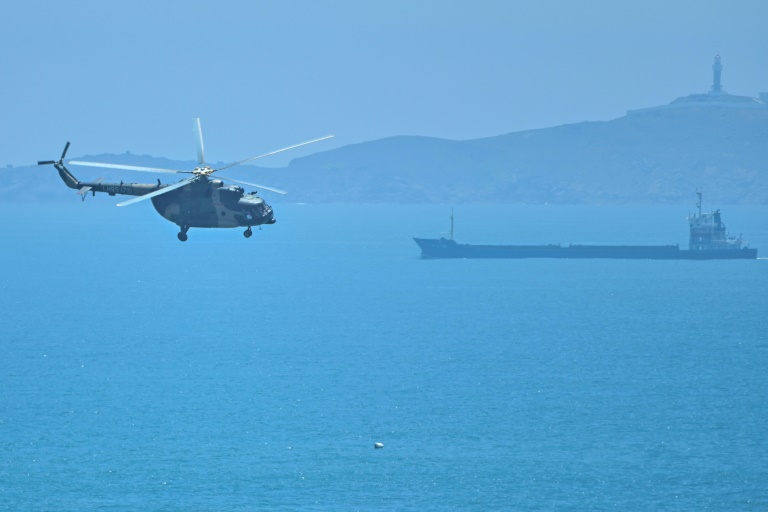
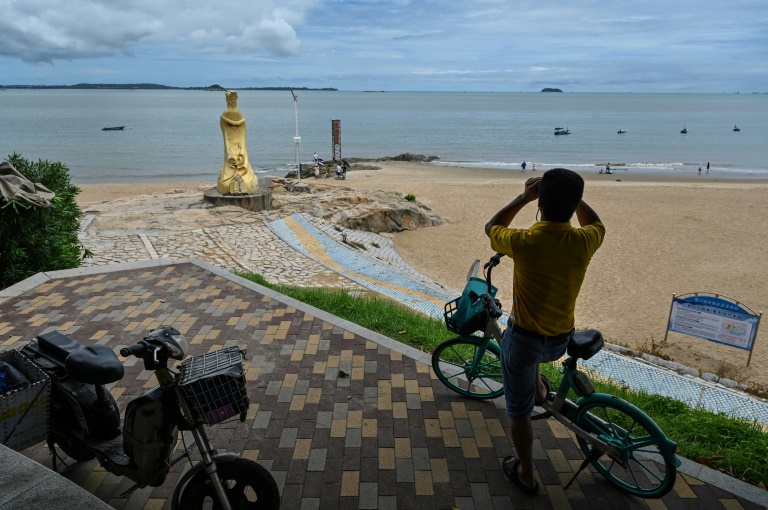
On a beach in the Chinese coastal city of Xiamen, just a few kilometres from an island controlled by the Taiwanese authorities, life is carefree despite some of the worst cross-strait tensions in decades. 

Ignoring stark warnings from Beijing, US House Speaker Nancy Pelosi arrived late Tuesday in Taiwan — the highest-ranking elected US official to visit the island in 25 years — sparking a diplomatic firestorm. 

China on Thursday launched some of its largest-ever military drills in response — exercises set to disrupt one of the world’s busiest shipping lanes. 

But on Xiamen’s palm-fringed beach, on the west side of the 200-kilometre-wide strait that separates Taiwan from mainland China, there is little concern. 

“A war? No, I don’t care,” a young IT worker surnamed Hwang tells AFP as he takes a lunchtime stroll. 

“As residents of Fujian, we’re used to tensions in the Taiwan Strait. We’ve lived with them for decades,” he adds, referencing the frequent flare-ups between the two rivals since the 1950s.  

China’s eastern Fujian province lies just across the sea from Taiwan, and the two share cultural ties as well as a common Chinese dialect. 

– ‘We aren’t worried’ – 

“Something could happen at any moment. But the probability is low, so we aren’t worried,” says Hwang. 

“But Pelosi’s visit breaks the balance that there was.” 

Unfazed by the news, young newlyweds smile for photos, people walk their dogs, and children play in the sand.  

“I think and I hope there won’t be a war,” Zheng Dahai, a 30-year-old who brought his son to set up a tent on the beach and have a bite to eat, tells AFP. 

“A conflict would have repercussions on us, our lives, there might even be injuries,” he says. 

Behind him, six kilometres offshore, is the island of Kinmen, home to just over 100,000 people. 

In a twist of history, Chinese communist forces have never managed to conquer the island, meaning it remains under Taiwan’s control.

This makes this beach one of the few places where the military forces of the mainland and the island face each other at such a short distance. 

If a war were to break out, this would be ground zero. 

– Reunification ‘sooner or later’ –

“We don’t want war. We want to live in peace and mutual respect,” says a retiree who comes here to swim every day, including in winter. 

“On the other hand, if you don’t respect me, if you come to bully me, then that’s another story. If the other is strong or not, even me, an old man, I will fight!” 

Further away, two tourists take a selfie in front of a monument emblematic of Xiamen’s unique location: eight Chinese characters, several metres high, that form a patriotic slogan addressed to the Taiwanese authorities on the other side. 

“One country, two systems: reunify China,” says the slogan, referencing the political compromise that saw Hong Kong and Macau returned to the mainland’s rule in the 1990s.  

“Taiwan is an inseparable part of China,” Hu, a 40-year-old in a yellow tank top who came to run on the seafront, tells AFP. 

“Sooner or later, it will return” to the motherland, he declares calmly before continuing his stretches. 
Heavy rain hits northern Japan, 200,000 urged to evacuate

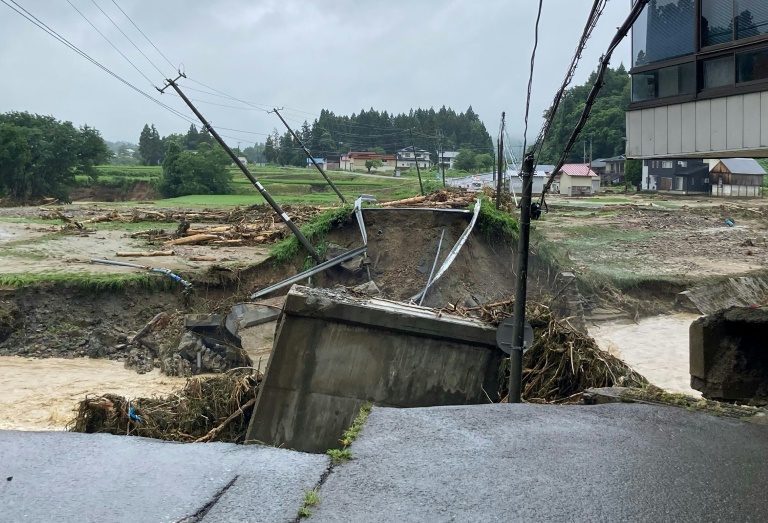
Bridges collapsed and rivers burst their banks as heavy rain lashed northern Japan on Thursday, with 200,000 residents urged to evacuate as authorities warned of dangerous flooding.

TV footage showed a muddy mass of broken trees swept into a mountainous residential area by the downpours, which broke records in some areas.

Two people have been reported missing, top government spokesman Hirokazu Matsuno told reporters.

Authorities have warned of an increased risk of landslides and floods.

Public broadcaster NHK said non-compulsory evacuation advisories were issued to 200,000 residents in five regions: Niigata, Yamagata, Fukushima, Ishikawa and Fukui.

Other TV footage showed homes flooded by an overflowing river and another muddy waterway reaching the height of a bridge.

Some shinkansen bullet trains were suspended in the affected areas.

Scientists say climate change is intensifying the risk of heavy rain in Japan and elsewhere, because a warmer atmosphere holds more water.

Strong rain in 2021 triggered a devastating landslide in the central resort town of Atami that killed 27 people.

And in 2018, floods and landslides killed more than 200 people in western Japan during the country’s annual rainy season.

China's Taiwan war games threaten more global supply chain disruption

Chinese military exercises around Taiwan are set to disrupt one of the world’s busiest shipping zones, analysts told AFP, highlighting the island’s critical position in already stretched global supply chains.

The drills — China’s largest-ever around Taiwan — are a major show of strength after US House Speaker Nancy Pelosi infuriated Beijing by visiting the island.

The manoeuvres kicked off Thursday and will take place along some of the busiest shipping routes on the planet, used to supply vital semiconductors and electronic equipment produced in East Asian factory hubs to global markets.

The routes are also a key artery for natural gas.

Nearly half the world’s container ships passed through the narrow Taiwan Strait — which separates the island from the Chinese mainland — in the first seven months of this year, according to data compiled by Bloomberg. 

“Given that much of the world’s container fleet passes through that waterway, there will inevitably be disruptions to global supply chains due to the rerouting,” said James Char, an associate research fellow at Singapore’s S. Rajaratnam School of International Studies.

– ‘Incredibly busy waterway’ –

Even a small disruption in global supply chains, already battered by the Covid-19 pandemic and Russia’s invasion of Ukraine, could prove costly.

“China’s planned live-fire exercises are occurring in an incredibly busy waterway,” Nick Marro, the Economist Intelligence Unit’s lead analyst for global trade, wrote in a note.

“The shutting down of these transport routes — even temporarily — has consequences not only for Taiwan, but also trade flows tied to Japan and South Korea.”

The uncertainty dragged the Taiwan Taiex Shipping and Transportation Index, which tracks major shipping and airline stocks, down 1.05 percent on Thursday.

The index was down 4.6 percent since the beginning of the week.

Taiwan’s Maritime and Port Bureau has warned ships in northern, eastern and southern areas to avoid the areas being used for the drills.

But several shipping companies contacted by AFP said they were waiting to see the impact of the drills before rerouting.

The ongoing typhoon season made it riskier to divert ships around the eastern coast of Taiwan through the Philippine Sea, some added.

Others said they would stick to their schedules.

“We don’t see any impact during (this) period and we don’t have any plan on re-routing our vessels,” said Bonnie Huang, a spokesman for Maersk China.

The drills have also hit air routes.

Over the last two days, more than 400 flights were cancelled at major airports in Fujian, the Chinese province closest to Taiwan, signalling that the airspace could be used by the military.

Taiwan’s cabinet meanwhile, has said the exercises would disrupt 18 international routes passing through its flight information region (FIR).

– Aggressive posturing –

During the previous Taiwan Strait Crisis in the 1990s, China conducted military exercises for months, including lobbing missiles into waters off Taiwan and rehearsing amphibious assaults on the island.

“The Chinese undoubtedly wanted to demonstrate resolve in ways that went beyond what they did in 1996,” said Bonnie Glaser, director of the Asia programme at the US-based German Marshall Fund think tank.

China’s Global Times newspaper said Wednesday the drills were aimed at showing that China’s military is “capable of blockading the entire island”.

But China’s ongoing economic woes mean it is unlikely to risk a major disruption and would limit itself to aggressive posturing, analysts said.

“Closing off traffic through the Strait for any extended period of time will also hurt the Chinese economy,” Char said.

“It’s not in Beijing’s interest to interrupt civilian travel and trade in the region,” said Natasha Kassam of the Lowy Institute, an Australian think tank.

The extent to which China will escalate its response to the Pelosi visit — flexing its military muscle, cyber attacks and economic sanctions — remains to be seen.

Given its military advances, “China very likely has the ability to enforce an air and maritime blockade against Taiwan,” said Thomas Shugart, an expert at US think tank the Center for a New American Security.

“Whether China will choose to attempt such a blockade… is largely a matter of how much political and economic risk the Chinese Communist Party’s leaders are willing to incur.”

China's Taiwan war games threaten more global supply chain disruption

Chinese military exercises around Taiwan are set to disrupt one of the world’s busiest shipping zones, analysts told AFP, highlighting the island’s critical position in already stretched global supply chains.

The drills — China’s largest-ever around Taiwan — are a major show of strength after US House Speaker Nancy Pelosi infuriated Beijing by visiting the island.

The manoeuvres kicked off Thursday and will take place along some of the busiest shipping routes on the planet, used to supply vital semiconductors and electronic equipment produced in East Asian factory hubs to global markets.

The routes are also a key artery for natural gas.

Nearly half the world’s container ships passed through the narrow Taiwan Strait — which separates the island from the Chinese mainland — in the first seven months of this year, according to data compiled by Bloomberg. 

“Given that much of the world’s container fleet passes through that waterway, there will inevitably be disruptions to global supply chains due to the rerouting,” said James Char, an associate research fellow at Singapore’s S. Rajaratnam School of International Studies.

– ‘Incredibly busy waterway’ –

Even a small disruption in global supply chains, already battered by the Covid-19 pandemic and Russia’s invasion of Ukraine, could prove costly.

“China’s planned live-fire exercises are occurring in an incredibly busy waterway,” Nick Marro, the Economist Intelligence Unit’s lead analyst for global trade, wrote in a note.

“The shutting down of these transport routes — even temporarily — has consequences not only for Taiwan, but also trade flows tied to Japan and South Korea.”

The uncertainty dragged the Taiwan Taiex Shipping and Transportation Index, which tracks major shipping and airline stocks, down 1.05 percent on Thursday.

The index was down 4.6 percent since the beginning of the week.

Taiwan’s Maritime and Port Bureau has warned ships in northern, eastern and southern areas to avoid the areas being used for the drills.

But several shipping companies contacted by AFP said they were waiting to see the impact of the drills before rerouting.

The ongoing typhoon season made it riskier to divert ships around the eastern coast of Taiwan through the Philippine Sea, some added.

Others said they would stick to their schedules.

“We don’t see any impact during (this) period and we don’t have any plan on re-routing our vessels,” said Bonnie Huang, a spokesman for Maersk China.

The drills have also hit air routes.

Over the last two days, more than 400 flights were cancelled at major airports in Fujian, the Chinese province closest to Taiwan, signalling that the airspace could be used by the military.

Taiwan’s cabinet meanwhile, has said the exercises would disrupt 18 international routes passing through its flight information region (FIR).

– Aggressive posturing –

During the previous Taiwan Strait Crisis in the 1990s, China conducted military exercises for months, including lobbing missiles into waters off Taiwan and rehearsing amphibious assaults on the island.

“The Chinese undoubtedly wanted to demonstrate resolve in ways that went beyond what they did in 1996,” said Bonnie Glaser, director of the Asia programme at the US-based German Marshall Fund think tank.

China’s Global Times newspaper said Wednesday the drills were aimed at showing that China’s military is “capable of blockading the entire island”.

But China’s ongoing economic woes mean it is unlikely to risk a major disruption and would limit itself to aggressive posturing, analysts said.

“Closing off traffic through the Strait for any extended period of time will also hurt the Chinese economy,” Char said.

“It’s not in Beijing’s interest to interrupt civilian travel and trade in the region,” said Natasha Kassam of the Lowy Institute, an Australian think tank.

The extent to which China will escalate its response to the Pelosi visit — flexing its military muscle, cyber attacks and economic sanctions — remains to be seen.

Given its military advances, “China very likely has the ability to enforce an air and maritime blockade against Taiwan,” said Thomas Shugart, an expert at US think tank the Center for a New American Security.

“Whether China will choose to attempt such a blockade… is largely a matter of how much political and economic risk the Chinese Communist Party’s leaders are willing to incur.”

New tensions explode over Karabakh, 3 soldiers killed

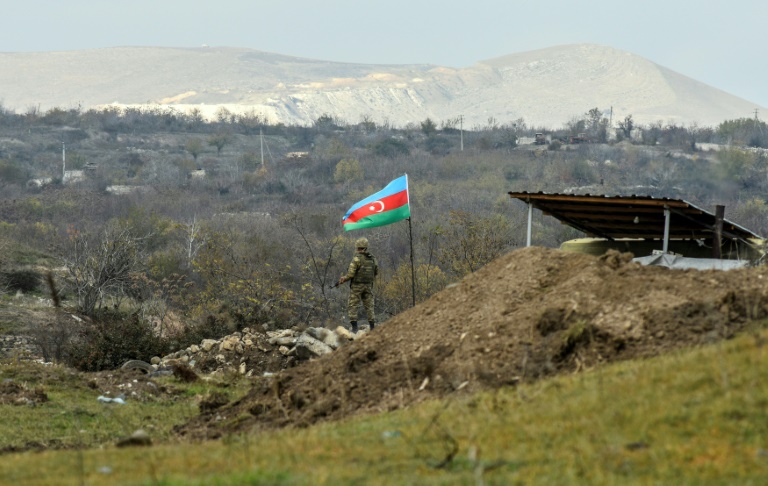
New tensions erupted over Nagorno-Karabakh on Wednesday as three soldiers were killed and Azerbaijan said it had taken control of several strategic heights in the disputed region.

The escalation drew immediate international rebuke, with Russia accusing Baku of violating the brittle ceasefire and the European Union urging an “immediate cessation of hostilities”.

Arch enemies Armenia and Azerbaijan fought two wars — in 2020 and in the 1990s — over Azerbaijan’s Armenian-populated region of Nagorno-Karabakh.

In the aftermath of the latest war, Armenia was forced to cede swathes of territory it had controlled for decades, and Russia deployed some 2,000 peacekeepers to oversee a fragile truce, but tensions persist despite a ceasefire agreement.

On Wednesday, new tensions flared as Azerbaijan said it had lost a soldier and the Karabakh army said two of its troops had been killed and more than a dozen injured.

The Azerbaijani defence ministry said Karabakh troops targeted its army positions in the district of Lachin, which is under the supervision of the Russian peacekeeping force, killing an Azerbaijani conscript.

The Azerbaijani army later said it conducted an operation dubbed “Revenge” in response and took control of several strategic heights in Karabakh.

The army of the breakaway statelet for its part accused Azerbaijan of violating a ceasefire and killing two soldiers and wounding another 14.

Karabakh declared a “partial mobilisation”, the army said in a statement.

Armenia called on the international community to help stop Azerbaijan’s “aggressive actions” after the flare-up.

“Azerbaijan continues its policy of terror against the population of Nagorno-Karabakh,” the foreign ministry said.

Armenia accused Azerbaijan of seeking to make unilateral changes over the Lachin corridor that links Armenia and Karabakh.

Russia accused Azerbaijan of breaking the ceasefire and vowed to stabilise the situation.

“The ceasefire regime was violated by the armed forces of Azerbaijan around the Saribaba height,” the Russian defence ministry said in a statement.

“The command of the Russian peacekeeping force, with representatives of Azerbaijan and Armenia, are taking measures to stabilise the situation.”

– ‘Essential to de-escalate’ –

The escalation came after Russian President Vladimir Putin spoke to Armenian Prime Minister Nikol Pashinyan on Tuesday.

The European Union called for an “immediate cessation of hostilities” between Azerbaijani and Armenian forces in Karabakh. 

“It is essential to de-escalate, fully respect the ceasefire and return to the negotiating table to seek negotiated solutions,” EU foreign policy chief Josep Borrell’s spokesman said in a statement.

“The European Union remains committed to help overcome tensions and continue its engagement towards sustainable peace and stability in the South Caucasus,” he added.

US State Department spokesman Ned Price, meanwhile, expressed concern at the renewed fighting and urged “immediate steps to reduce tensions and avoid further escalation”.

In his statement, he also called for “a negotiated, comprehensive, and sustainable settlement of all remaining issues” tied to the conflict.

Following Russia’s intervention in Ukraine on February 24, an increasingly isolated Moscow lost its status as the primary mediator in the Karabakh conflict.

Six weeks of fighting in the autumn of 2020 claimed more than 6,500 lives and ended with a Russian-brokered ceasefire agreement.

In July, Azerbaijan began the process of returning its people to land recaptured from Armenian separatists in what Baku calls “The Great Return”.

The oil-rich country has vowed to repopulate the recaptured lands.

President Ilham Aliyev had for years promised to recapture lands lost in the 1990s and the first returns marked a symbolic moment for Azerbaijan.

Mexico races to rescue trapped coal miners

Rescuers battled Wednesday to free about 10 workers believed to be trapped in a coal mine in northern Mexico, while three others were found alive, authorities said.

Military personnel and rescue dogs were deployed to the scene of the accident in the state of Coahuila, President Andres Manuel Lopez Obrador said.

“A coal mine collapsed in the municipality of Sabinas, Coahuila, which caused a tunnel to flood” and trapped the workers, he tweeted.

“We hope to find them safe,” he added.

Lopez Obrador had said nine miners were missing, but the security ministry said later that three had been rescued and taken to hospital while 10 were still believed to be inside.

“The work will not stop until they are found,” the ministry said in a statement.

“The Mexican government guarantees all the necessary resources to carry out the search and rescue operations,” it said.

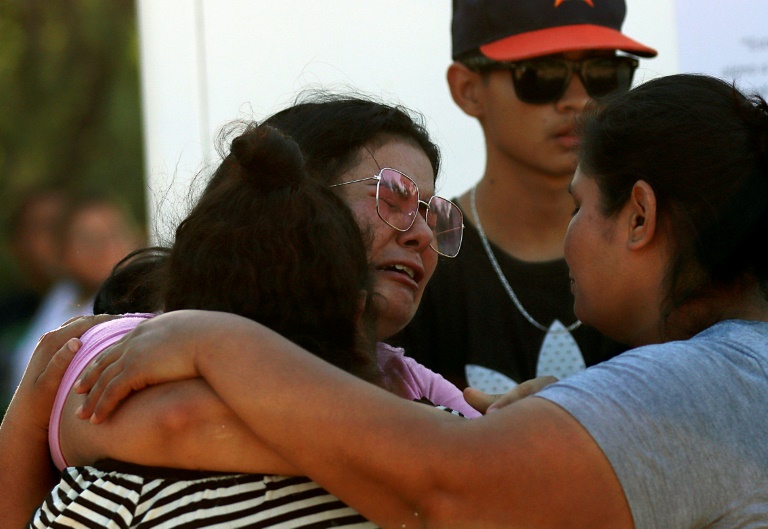
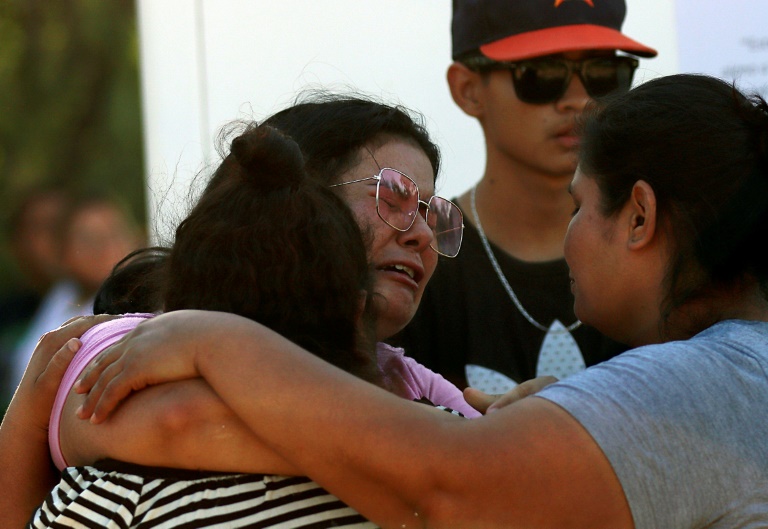
Anxious relatives gathered at the site waiting for news, with some crying and comforting each other.

One woman at the scene said, through tears, that two of her children worked in the mine, though one of them had managed to escape after the accident.

Coahuila’s state government said that the miners had been carrying out excavation work when they hit an adjoining area full of water, causing the shaft to collapse and flood.

“The mine began operating in January of this year and until now there have been no reports of any type of anomaly,” it said in a statement.

Coahuila, the country’s main coal-producing region, has seen a series of fatal mining accidents over the years.

The worst was an explosion that claimed 65 lives at the Pasta de Conchos mine in 2006.

Last year seven miners died after they were trapped in another accident in Coahuila.

Mexico races to rescue trapped coal miners

Rescuers battled Wednesday to free about 10 workers believed to be trapped in a coal mine in northern Mexico, while three others were found alive, authorities said.

Military personnel and rescue dogs were deployed to the scene of the accident in the state of Coahuila, President Andres Manuel Lopez Obrador said.

“A coal mine collapsed in the municipality of Sabinas, Coahuila, which caused a tunnel to flood” and trapped the workers, he tweeted.

“We hope to find them safe,” he added.

Lopez Obrador had said nine miners were missing, but the security ministry said later that three had been rescued and taken to hospital while 10 were still believed to be inside.

“The work will not stop until they are found,” the ministry said in a statement.

“The Mexican government guarantees all the necessary resources to carry out the search and rescue operations,” it said.

Anxious relatives gathered at the site waiting for news, with some crying and comforting each other.

One woman at the scene said, through tears, that two of her children worked in the mine, though one of them had managed to escape after the accident.

Coahuila’s state government said that the miners had been carrying out excavation work when they hit an adjoining area full of water, causing the shaft to collapse and flood.

“The mine began operating in January of this year and until now there have been no reports of any type of anomaly,” it said in a statement.

Coahuila, the country’s main coal-producing region, has seen a series of fatal mining accidents over the years.

The worst was an explosion that claimed 65 lives at the Pasta de Conchos mine in 2006.

Last year seven miners died after they were trapped in another accident in Coahuila.

Argentina economy minister vows to respect IMF deficit deal

Argentina’s new economic “super minister” pledged Wednesday to respect the crisis-wracked country’s commitment with the IMF to reduce its public deficit to 2.5 percent this year.

As part of Argentina’s long-running negotiations with the International Monetary Fund to restructure a $44 billion debt, authorities had agreed to progressively reduce the public deficit from three percent in 2021 to 0.9 percent by 2024.

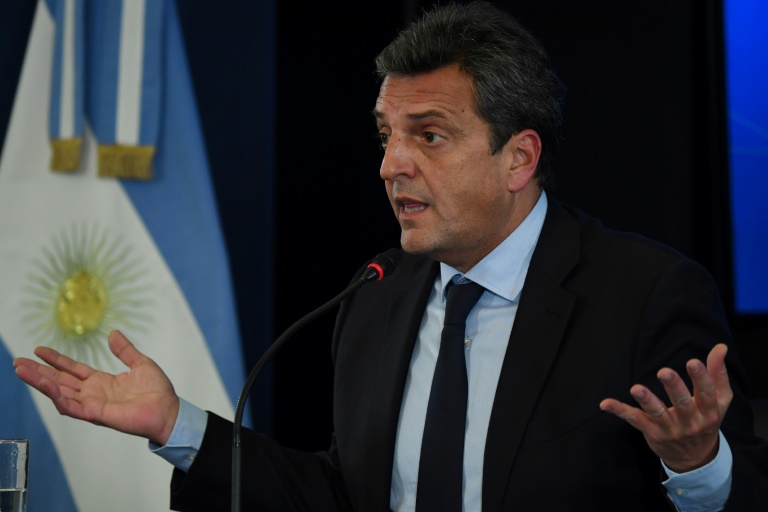
“We will meet the goal of the 2.5 percent primary fiscal deficit. We will make the necessary corrections to comply with our word,” said Sergio Massa, in an announcement of his first measures as the new “super minister” in charge of the economy, development and agriculture ministries, as well as relations with international organizations.

Argentina has suffered years of economic crisis, with some 37 percent of its population now living in poverty.

Inflation for the first half of this year alone topped 36 percent, and is predicted to reach 80 percent by the year’s end.

Speaking at a press conference after being officially presented by President Alberto Fernandez in his new job, Massa described inflation as the “biggest poverty factory” in the country.

“Inflation is one of the main issues to fight. The last month and the one just started will be the most difficult in terms of inflation and from there we will begin a downward curve,” said Massa, 50, a lawyer by trade who on Tuesday resigned as president of the lower house of congress to take up his new post.

Massa brushed aside the monicker “super minister,” saying “I’m not a ‘super’ anything — not a magician, nor a savior. I have come to work in a very determined way.”

Fernandez, speaking at Massa’s swearing-in, hailed a “new stage of government.”

“I am convinced we will come through successfully,” he added.

– Tough challenges ahead –

Massa becomes Argentina’s third economy minister in as many months.

In late July, economist Silvina Batakis was let go less than a month after being chosen by Fernandez to fill the spot suddenly vacated by Martin Guzman, the architect of the debt refinancing deal who had served in the role since December 2019.

In his speech, Massa pledged to tackle the “two-sided Argentina” where there is some economic growth and employment, but “a huge lack of confidence in the currency, spending disorder, public investment gaps and a huge injustice in income distribution.”

One of Massa’s toughest challenges will be to increase Argentina’s available international reserves, which analysts say are at critical levels.

On that front, Massa announced Wednesday an agreement with exporters to advance sales and bring some $5 billion into the Central Bank within 60 days.

For Victor Beker, director of the Center for the Study of the New Economy at the University of Belgrano, the announcements made Wednesday “are important, they go in the right direction, but they fell short of expectations.”

“We are still far from having a comprehensive economic plan, far from having answers on how inflation is going to be fought, nor how the exchange market is going to work,” Beker told AFP.

A problem he will not be able to solve, though, is the ongoing power struggle inside the ruling Frente de Todos political coalition between Fernandez and Vice President Cristina Kirchner, herself a former president.

Asian markets rally on healthy US data, post-Pelosi relief

Asian markets on Thursday tracked a Wall Street rally fuelled by healthy economic and earnings data, while there was some relief that Nancy Pelosi’s Taiwan trip did not elicit a harsher response from China despite grave warnings from Beijing.

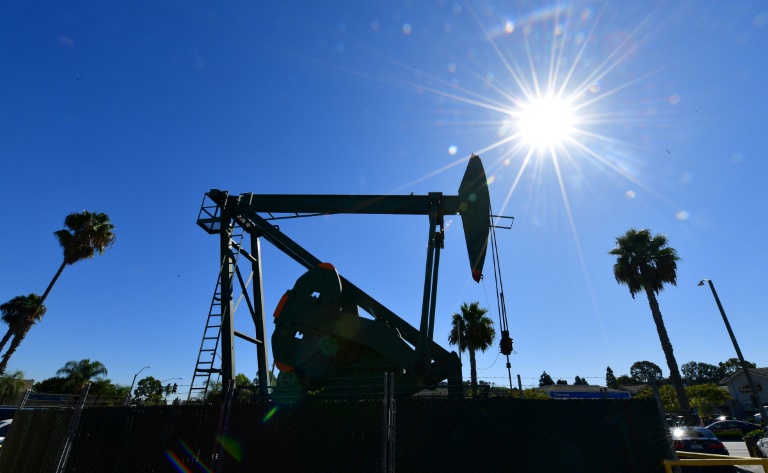
Oil managed to clock up some gains following another sell-off that came on the back of fresh signs of weakening demand in the United States, which came as major producers announced an increase in output, albeit a small one.

New York’s three main indexes surged after a report on the crucial US services sector showed surprise improvement, soothing worries about a possible recession in the world’s top economy.

That came as several companies — including Electronic Arts, Starbucks and Moderna — posted strong earnings, extending a broadly positive reporting season in the face of surging inflation and rising interest rates.

All eyes are now on the release of US jobs data Friday, which will provide the latest snapshot of the economy and could help guide the Federal Reserve in its debate on monetary policy.

Markets have swung this week after a number of Fed officials lined up to suggest there were still some big rate hikes likely and talk of cuts next year might be overdone. 

That came after comments last week from bank chief Jerome Powell indicated that the policy board could start easing up on its tightening campaign.

“Following last week’s Fed meeting that opened up the possibility of a slower hiking pace, markets are still running ‘risk-on’ despite the recent push back from Fed officials,” said SPI Asset Management’s Stephen Innes. 

“But for stock investors, lower oil prices are a pleasure to behold as not only did the US 10-year yields drop but sliding oil prices also downshifted inflation expectations, supporting that slower hiking pace thesis.”

Both main oil contracts edged up Thursday, a day after prices tumbled to a six-month low as a spike in US inventories showed demand waning, while figures showed Americans driving less than summer 2022 when travel was smashed by Covid-19.

Crude has now given up all the gains seen in the aftermath of Russia’s invasion of Ukraine, though the 100,000 barrel output increase by OPEC+ was brushed off by investors as too little to make an impact. 

The mood in Asia was also a lot more settled after the upheaval of this week’s visit to Taiwan by House Speaker Pelosi, which sparked outrage in China with warnings of stern military and economic responses.

While Beijing suspended a limited amount of cross-strait imports and exports and embarked on its largest-ever military exercises encircling Taiwan, Asian investors felt a sense of relief it did not go further.

Hong Kong led gains, adding more than two percent, while there were also advances in Shanghai, Tokyo, Sydney, Seoul, Jakarta and Wellington.

However, Taipei fell again on worries that the Chinese manoeuvres would hit shipping lanes and flights into Taiwan.

Singapore and Manila also dipped.

Pelosi’s trip managed to further strain already-fraught China-US relations, and markets strategist Louis Navellier said “it will be interesting if China retaliates against any US companies or restricts trade in any manner”.

– Key figures at around 0230 GMT –

Tokyo – Nikkei 225: UP 0.5 percent at 27,892.68 (break)

Hong Kong – Hang Seng Index: UP 2.1 percent at 20,182.31

Shanghai – Composite: UP 0.8 percent at 3,188.86

Dollar/yen: DOWN at 133.70 yen from 133.92 yen Wednesday

Euro/dollar: DOWN at $1.0166 from $1.0172

Pound/dollar: UP at $1.2151 from $1.2149

Euro/pound: DOWN at 83.67 pence from 83.71 pence

West Texas Intermediate: UP 0.6 percent at $91.19 per barrel

Brent North Sea crude: UP 0.5 percent at $97.29 per barrel

New York – Dow: UP 1.3 percent at 32,812.50 (close)

London – FTSE 100: UP 0.5 percent at 7,445.68 (close)

Two years after Beirut mega-blast, Lebanon hits new lows

Crisis-hit Lebanon marks two years Thursday since a massive explosion ripped through Beirut, with victims’ relatives planning protest marches as they keep demanding truth and justice.

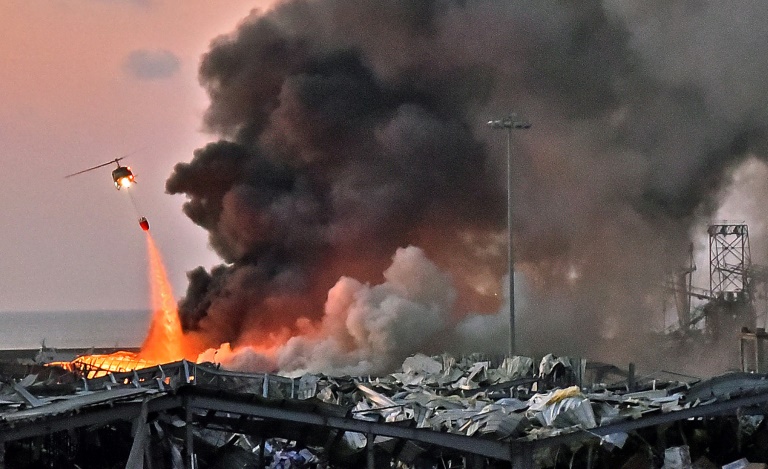
The portside blast of haphazardly stored ammonium nitrate, one of the biggest non-nuclear explosions ever, killed more than 200 people, wounded thousands more and decimated vast areas of the capital.

Yet an investigation into the cause has been stalled amid political interference and no state official has yet been held accountable over the August 4, 2020 tragedy.

Several heavily damaged grain silos that became a grim symbol of the disaster collapsed last week, and more are dangerously close to coming down, experts warn.

“I hope that seeing the silos fall will give people the will to fight for justice, to battle with us,” said Tatiana Hasrouty, who lost her father in the blast.

Politicians “are doing everything in their power to stop the investigation” into the explosion of the fertiliser, she said.

The mega-blast was a nightmarish moment in the chaotic history of Lebanon, which is mired in its worst-ever economic crisis marked by blackouts, runaway inflation and widespread despair.

When protesters in three separate marches starting from 1200 GMT Thursday later converge at the port, they will smell the smoke wafting from the silos where fermenting grain is smouldering in the blistering summer heat.

– ‘A nightmare’ –

The enormous explosion two years ago was felt as far away as Cyprus and sowed the kind of devastation normally caused by wars and natural disasters.

It further scarred the crisis-tested population and accelerated a massive exodus that recalls the flight during the 1975-1990 civil war.

Lebanon’s ruling class, accused of misrule, graft and gross negligence, has however clung firmly to power even as the people endure shortages of fuel, medicine and clean water.

“This ruling class is killing us every day,” Hasrouty said. “If we did not die in the blast, we are dying of hunger, from a lack of basic human rights.”

Power cuts last up to 23 hours a day, streets are dark at night and traffic lights out of service, leaving some districts illuminated mainly by the silo fires.

Lara Khatchikian, 51, whose apartment was badly hit two years ago, has watched the blazes, calling the sight “a nightmare”. 

“My neighbours and I were stressed all the time,” she said. “I have felt fear, we couldn’t sleep. It takes superhuman strength to live when you are constantly reminded of the blast.”

– No justice –

The government in April ordered the silos’ demolition — but this has been suspended, partially because of objections from victims’ relatives who want them preserved as a memorial.

French civil engineer Emmanuel Durand, who monitors the silos, has warned that the danger of a further partial collapse “has never been so high” and could come “at any time”.

Meanwhile, the probe is also at risk of falling apart, as officials have curtailed the work of the lead investigator Tarek Bitar with a series of lawsuits.

A judicial official close to the investigations said judge Bitar’s work had been paused since December 23.

Victims’ families are divided, with some accusing Bitar of bias and others regarding him as their only hope.

Amnesty International, Human Rights Watch and other groups Wednesday relaunched an appeal to the United Nations to send a fact-finding mission.

They jointly declared that “it is now, more than ever, clear that the domestic investigation cannot deliver justice”.

Close Bitnami banner
Bitnami