World

OPEC+ meets after Biden push to hike oil output

The OPEC+ group of major oil exporters began talks on its output strategy on Wednesday after US President Joe Biden lobbied Saudi Arabia to boost production to tame soaring prices.

The cartel led by Saudi Arabia and Russia has so far resisted US pressure to ramp up production significantly after Moscow’s invasion of Ukraine sent oil prices soaring.

After cutting production in 2020 in response to falling prices during the Covid pandemic, OPEC+ began to modestly raise it last year and has renewed the policy every month.

Its output is supposed to have returned to pre-Covid levels — but only on paper, as some members of the 23-nation group have struggled to meet their quotas.

Craig Erlam, analyst at OANDA trading platform, said the OPEC+ meeting will show whether “President Biden has any influence in the cartel at all”.

The OPEC+ group began technical talks early afternoon, to be followed by a ministerial meeting by videoconference.

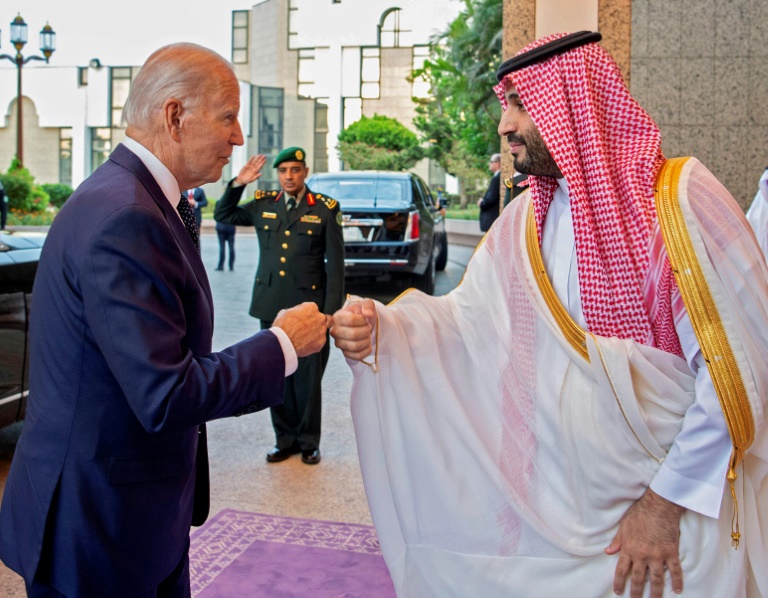
Biden made a controversial trip to Saudi Arabia in July in part to convince the kingdom to loosen the production taps to stabilise the market and curb rampant inflation.

The US president met Crown Prince Mohammed bin Salman despite his promise to make the kingdom a “pariah” in the wake of the 2018 killing of journalist Jamal Khashoggi.

Biden said after his meetings with Saudi officials that he was “doing all I can” to increase the oil supply.

“Saudi Arabia and its allies will have to decide whether to heed Joe Biden’s request and raise production or show solidarity towards Russia by staying put,” said Tamas Varga, analyst at oil broker PVM.

French President Emmanuel Macron also reached out to bin Salman, hosting him last week in Paris, with Macron’s office saying the two leaders agreed to work “to ease the effects” of the Ukraine war.

Before resigning as British prime minister, Boris Johnson had also visited bin Salman in Riyadh in March to lobby for higher oil production.

But Stephen Innes, managing partner at SPI Asset Management, said OPEC+ is “unlikely to announce a significant production increase given growing recession fears” and a drop in oil prices since early June.

– More cautious? –

After reaching close to $140 per barrel in early March, crude prices have slid further this week following weak economic data from China, the world’s biggest importer of oil.

The main contracts were slightly down on Wednesday ahead of the meeting, with Brent — the international benchmark — slipping back under $100.

This week’s price slide “could make OPEC+ more cautious”, Commerzbank said in a note.

The German bank said news that Libyan production has returned to normal levels for the first time in nearly four months could also serve as an argument against a bigger expansion in output.

OPEC+ began to add around 400,000 barrels per day to the market last year, renewing the policy every month until June, when it upped production by almost 650,000 bpd.

Analysts say the group has now reversed cuts totalling 9.7 million bpd that had been agreed in 2020, though only in theory.
OPEC+ meets after Biden push to hike oil output

The OPEC+ group of major oil exporters began talks on its output strategy on Wednesday after US President Joe Biden lobbied Saudi Arabia to boost production to tame soaring prices.

The cartel led by Saudi Arabia and Russia has so far resisted US pressure to ramp up production significantly after Moscow’s invasion of Ukraine sent oil prices soaring.

After cutting production in 2020 in response to falling prices during the Covid pandemic, OPEC+ began to modestly raise it last year and has renewed the policy every month.

Its output is supposed to have returned to pre-Covid levels — but only on paper, as some members of the 23-nation group have struggled to meet their quotas.

Craig Erlam, analyst at OANDA trading platform, said the OPEC+ meeting will show whether “President Biden has any influence in the cartel at all”.

The OPEC+ group began technical talks early afternoon, to be followed by a ministerial meeting by videoconference.

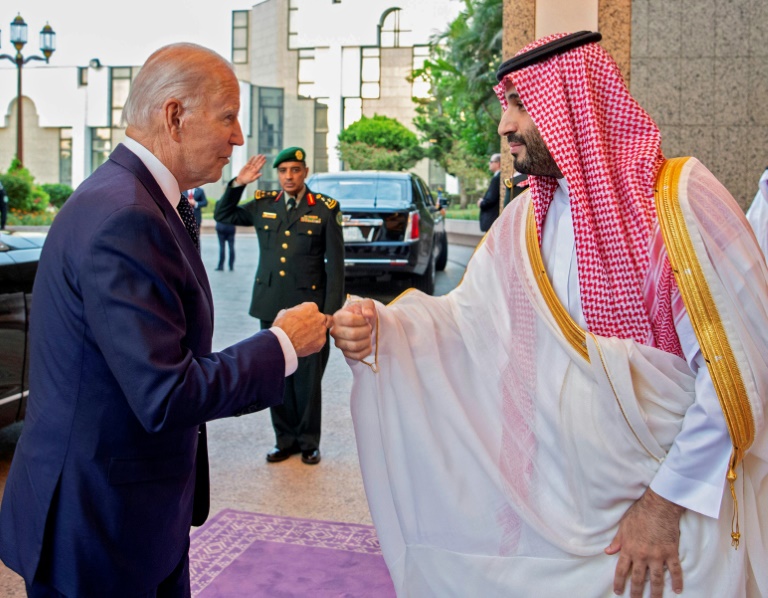
Biden made a controversial trip to Saudi Arabia in July in part to convince the kingdom to loosen the production taps to stabilise the market and curb rampant inflation.

The US president met Crown Prince Mohammed bin Salman despite his promise to make the kingdom a “pariah” in the wake of the 2018 killing of journalist Jamal Khashoggi.

Biden said after his meetings with Saudi officials that he was “doing all I can” to increase the oil supply.

“Saudi Arabia and its allies will have to decide whether to heed Joe Biden’s request and raise production or show solidarity towards Russia by staying put,” said Tamas Varga, analyst at oil broker PVM.

French President Emmanuel Macron also reached out to bin Salman, hosting him last week in Paris, with Macron’s office saying the two leaders agreed to work “to ease the effects” of the Ukraine war.

Before resigning as British prime minister, Boris Johnson had also visited bin Salman in Riyadh in March to lobby for higher oil production.

But Stephen Innes, managing partner at SPI Asset Management, said OPEC+ is “unlikely to announce a significant production increase given growing recession fears” and a drop in oil prices since early June.

– More cautious? –

After reaching close to $140 per barrel in early March, crude prices have slid further this week following weak economic data from China, the world’s biggest importer of oil.

The main contracts were slightly down on Wednesday ahead of the meeting, with Brent — the international benchmark — slipping back under $100.

This week’s price slide “could make OPEC+ more cautious”, Commerzbank said in a note.

The German bank said news that Libyan production has returned to normal levels for the first time in nearly four months could also serve as an argument against a bigger expansion in output.

OPEC+ began to add around 400,000 barrels per day to the market last year, renewing the policy every month until June, when it upped production by almost 650,000 bpd.

Analysts say the group has now reversed cuts totalling 9.7 million bpd that had been agreed in 2020, though only in theory.
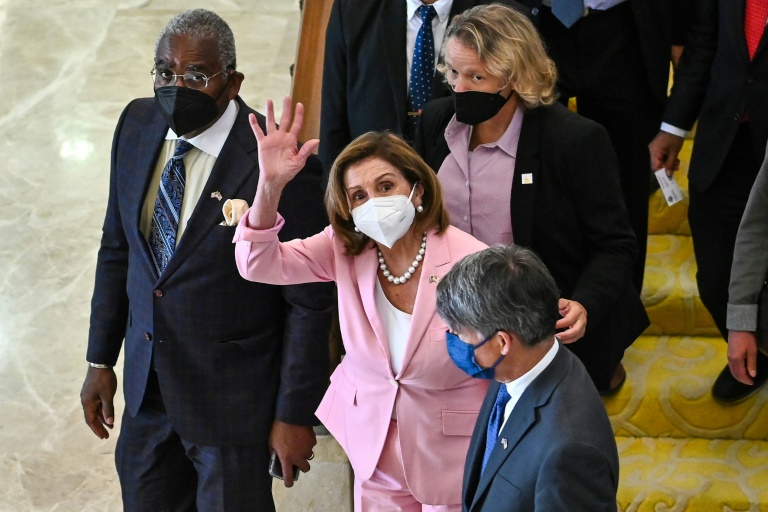
Russia backs Myanmar junta's efforts to 'stabilise' country, hold elections

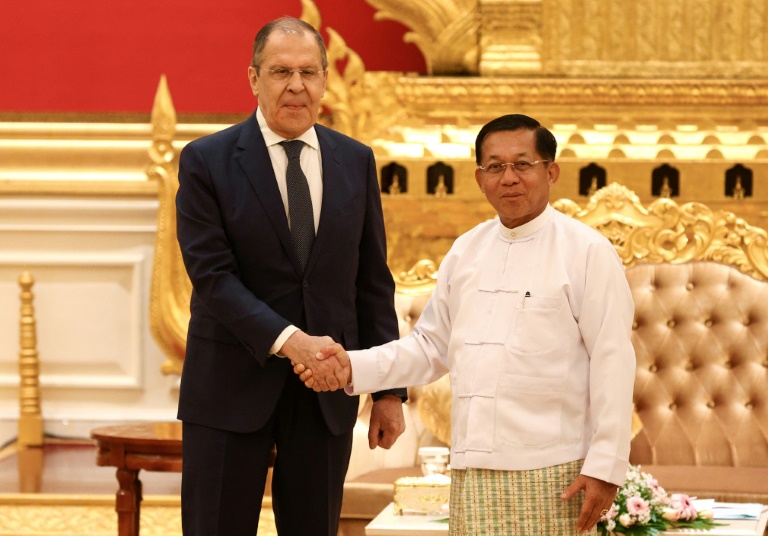
Russia backs the Myanmar junta’s efforts to “stabilise” the crisis-wracked country and hold elections next year, its foreign minister said in talks with top generals on Wednesday, according to Russian state media.

The Southeast Asian nation has been in turmoil since the putsch last year, with the junta accused by rights groups of committing war crimes as it struggles to crush resistance to its rule. 

Isolated internationally and with Western governments imposing sanctions, the military government has sought to deepen ties with major ally and arms supplier Russia — whose invasion of Ukraine it has said was “justified”.

“We are in solidarity with the efforts [by the junta] aimed at stabilising the situation in the country,” Sergei Lavrov said during talks in Myanmar’s capital Naypyidaw, according to the TASS news agency.

“Next year, you will hold legislative elections and we wish you success,” Lavrov added, referring to proposed August 2023 elections that opponents of the coup have said will be neither free nor fair.

On Monday junta chief Min Aung Hlaing — who travelled to Moscow last month — said polls could only take place when the conflict-wracked country was “stable and peaceful”.

The putsch has sparked renewed fighting with established ethnic rebel groups in border areas, while dozens of civilian “People’s Defence Force” militias have also sprung up to battle the military.

Russia — along with ally China — has been accused by rights groups and a UN expert of arming the military with weapons used to attack civilians.

Lavrov and junta chief Min Aung Hlaing also discussed opening new consulates “to promote an increase in travel” between their two countries, TASS said. 

The junta has yet to comment on Lavrov’s visit.

Lavrov is scheduled to travel on to an Association of Southeast Asian Nations (ASEAN) foreign ministers’ meeting in Cambodia from which the junta’s top diplomat has been excluded.

The bloc joined a chorus of international outrage last week after the junta announced it had executed four prisoners, including a former lawmaker and a democracy activist, in the country’s first use of capital punishment in decades.

– ‘Disappointed and disturbed’ –

ASEAN has been growing increasingly frustrated at Myanmar’s lack of progress on a five-point peace plan agreed last year.

Cambodian Prime Minister Hun Sen — the current ASEAN chair — on Wednesday warned Myanmar against further hangings.

He said the regional bloc was “disappointed and disturbed” by last month’s executions, and that the further use of capital punishment would mean a “rethink” of the five-point peace plan.

Isolated on the international stage, the junta has turned increasingly to allies including China and Russia.

Junta chief Min Aung Hlaing was in Moscow on a “private” visit in July and reportedly met with officials from Moscow’s space agency Roscosmos and nuclear agencies. 

In Naypyidaw, Lavrov said Roscosmos would build “new infrastructure” in Myanmar in cooperation with the junta.  

The army has justified its power grab by alleging massive fraud during the 2020 elections, in which Aung San Suu Kyi’s National League for Democracy (NLD) trounced a military-backed party.

Last year, it cancelled the results of the polls, saying it had uncovered more than 11 million instances of voter fraud.

International observers said the voting was largely free and fair.

More than 2,100 people have been killed in a military crackdown on dissent, according to a local monitor.

Stock markets rise but Taiwan fears keep confidence in check

Global stocks mostly rose Wednesday as traders tracked House Speaker Nancy Pelosi’s visit to Taiwan, which has further strained China-US ties.

The highest profile trip to Taiwan in 25 years by a US politician met with condemnation from Beijing, which warned of serious economic and military consequences.

The news had sent shivers on Tuesday through trading floors that were already on edge over the Ukraine war, surging inflation, rising interest rates and slowing economic growth.

However, most equity markets edged upwards on Wednesday.

London nudged higher on the eve of a widely-expected half-point interest rate hike in Britain.

Oil prices slid as the OPEC+ group of major oil exporters convened to discuss output strategy.

Meanwhile, Pelosi departed Taiwan on Wednesday evening, ending her controversial landmark visit that Beijing responded to with threats and military drills.

– Equities hold gains –

“There has been a lot of fear but no material effect,” AvaTrade analyst Naeem Aslam told AFP, when questioned about the markets impact of Pelosi’s visit.

“Hence, we see equities holding on to their gains and moving higher.” 

Analysts are also keen to find out what the White House’s response will be, particularly ahead of mid-term elections in November with anti-China rhetoric playing well with voters, but President Joe Biden keen not to further harm economic ties.

SPI Asset Management’s Stephen Innes added that the US administration was probably not likely to cut Trump-era tariffs before then.

Wednesday’s broadly positive performance followed a drop on Wall Street, where the Taiwan news was compounded by a series of hawkish comments from Federal Reserve officials indicating more big interest rate hikes could still be in the pipeline.

Stocks rallied last week and Treasury yields dropped after boss Jerome Powell hinted the bank could begin slowing down, but the latest remarks suggest a hoped-for dovish pivot might not be coming just yet as inflation remains stubbornly high.

– Key figures at around 1030 GMT –

London – FTSE 100: UP 0.1 percent at 7,413.24 points

Frankfurt – DAX: UP 0.2 percent at 13,478.84

Paris – CAC 40: UP 0.2 at 6,421.76

EURO STOXX 50: UP 0.4 percent at 3,699.33

Tokyo – Nikkei 225: UP 0.5 percent at 27,741.90 (close)

Hong Kong – Hang Seng Index: UP 0.4 percent at 19,767.09 (close)

Shanghai – Composite: DOWN 0.7 percent at 3,163.67 (close)

Taipei – TAIEX: DOWN 0.2 percent at 14,777.02 (close)

New York – Dow: DOWN 1.2 percent at 32,396.17 (close)

Dollar/yen: DOWN at 133.04 yen from 133.10 yen Tuesday

Euro/dollar: UP at $1.0196 from $1.0166

Pound/dollar: UP at $1.2185 from $1.2170

Euro/pound: UP at 83.68 pence from 83.57 pence

Brent North Sea crude: DOWN 0.9 percent at $99.62 per barrel

West Texas Intermediate: DOWN 0.6 percent at $93.88 per barrel

burs/rfj/bp

First Ukrainian grain shipment completes checks in Turkey

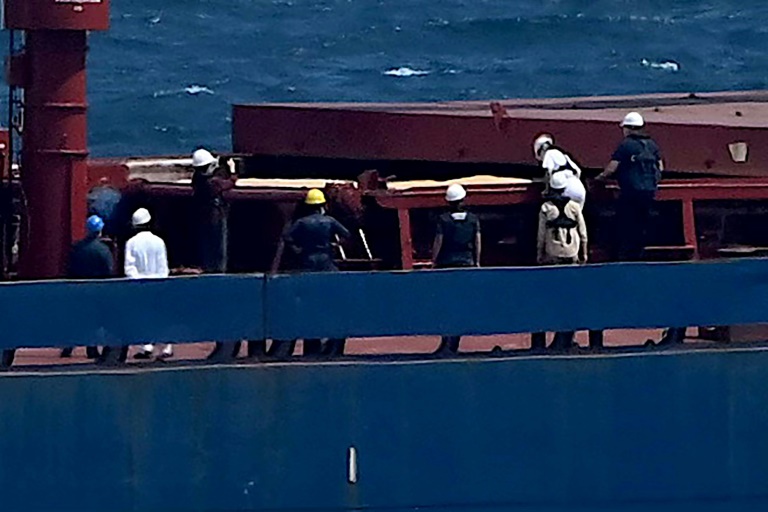
A Russian and Ukrainian team on Wednesday completed a high-stakes inspection of the first shipment of grain from Ukraine since the Kremlin’s invasion five months ago helped spark a global food crisis.

The checks aboard the Sierra Leone-flagged Razoni in Istanbul were being watched closely for signs of how well the first agreement signed by Moscow and Kyiv since Russia invaded its pro-Western neighbour can hold.

A deal brokered by Turkey and the United Nations last month lifted a Russian naval blockade of Ukraine’s Black Sea cities and set terms for millions of tonnes of wheat and other grain to start flowing from Ukraine’s filled silos and ports.

Ukraine exports roughly half of the sunflower oil used on the world market and is one of the world’s main supplies of grain.

An almost complete halt to its exports helped push up global food prices and make imports prohibitively expensive in some of the poorest countries in the world.

The Razoni is due to deliver more than 26,000 tonnes of maize to Lebanon — a crisis-wracked country that imports more than 80 percent of its wheat from Ukraine and Russia.

The ship sailed through a specially designated corridor in the mine-infested waters of the Black Sea before reaching the northern edge of the Bosphorus Strait on Tuesday.

A team of 20 inspectors from the two warring parties and the UN and Turkey strapped on orange helmets and boarded the ship early Wednesday for a check that officials said lasted less than 90 minutes.

– Arms depot –

The 186-metre (610-foot) long vessel is now due to sail down the Bosphorus Strait in the heart of Istanbul before moving on to the Marmara and Aegean seas.

The UN secretary general’s spokesman, Stephane Dujarric, said he hoped for “more outbound movement” from Ukraine on Wednesday.

Kyiv says at least 16 more grain ships are waiting to depart.

But it also accuses Russia of stealing Ukrainian grain in territories seized by Kremlin forces and then shipping it to allied countries such as Syria.

But Turkish hopes that the grain deal could help build trust and lead to ceasefire talks have so far proved futile.

Russia has continued to pound southern Ukrainian cities near the Black Sea with missiles and pressed on with its grinding ground assault across the east.

Officials in Mykolaiv said no one was killed Wednesday in shelling on one of the southern city’s supermarkets that came just days after the region’s grain mogul and his wife died in a targeted strike on their house.

Moscow said on Wednesday that it had destroyed another foreign arms deport in western Ukraine — a region the furthest removed from the fighting.

– Donetsk evacuations –

Kyiv has launched mandatory evacuations from the eastern Donetsk region — now bearing the brunt of Russia’s offensive — because the government does not expect to be able to provide it with heat in the cold winter months.

Ukrainian President Volodymyr Zelensky has urged the estimated 200,000 remaining residents of the Donetsk region to leave.

Kyiv’s forces have been pressing a counter-offensive to drive out the Russians from the southern Kherson region near the Kremlin-annexed Crimea peninsula.

The Ukrainian presidency said it had “liberated” seven more villages in the region while 53 remained under Russian control.

Ukraine has been bolstered by more supplies of Western weapons — particularly long-range rockets — ahead of the planned push to retake Kherson city.

The United States announced a new tranche of weapons worth $550 million for Ukraine’s forces.

These include longer-range ammunition for increasingly important HIMARS rocket launchers and artillery pieces.

Ukraine is using the HIMARS and similar Western weapons to smash Russian arms depots and break down its lines of ground communication across the east.

– ‘Justice’ –

The Russians have been unable to seize any major village or city since gaining full control of the Donbas war zone’s smaller Lugansk region in early July.

Zelensky told US President Joe Biden in a message that “the word ‘HIMARS’ has become almost synonymous with the word ‘justice’ for our country”.

Russia has responded by stepping up its propaganda battle against the West and Kyiv.

Its supreme court this week labelled Ukraine’s Azov regiment a “terrorist” organisation — a decision that could pave the way for captured fighters to face lengthy jail terms.

Azov fighters were among 2,500 Ukrainian soldiers who surrendered in May after weeks of fierce resistance at the Azovstal steel plant in devastated Mariupol.

The regiment — which was incorporated into Ukraine’s national guard in 2014 — is demonised by Moscow for alleged far-right links. 

Its members were among 50 Ukrainian servicemen killed last week in an attack on a jail holding prisoners of war in Russian-occupied territory. 

Ukraine accuses Moscow of deliberately executing the detainees.

Satellite firm bars Russia's NTV Mir over Ukraine Nazi slurs

French satellite company Eutelsat on Wednesday halted European broadcasts of Russian channel NTV Mir after regulators flagged content it had aired comparing Ukrainians to Nazis.

Media regulator Arcom asked for the Russian channel to be blocked because it had repeatedly portrayed not only Ukraine’s leaders but also its population as adhering to Nazi ideology.

Eutelsat has already taken down several Russian channels after requests from the European Union and individual countries dismayed at the dissemination of what they regard as pro-Kremlin propaganda since the February 24 invasion of Ukraine.

NTV Mir’s parent company was sanctioned by the United States in May, the White House labelling it state-owned and alleging its revenue from overseas advertising was fed back to the Kremlin. 

The French regulator said on its website that the channel “tends to repeatedly portray not only the Ukrainian leadership and the Ukrainian army, but also and above all the Ukrainian population, as adhering to the Nazi ideology of the Third Reich”.

Arcom cited a broadcast on 24 April that characterised Ukrainian President Volodymyr Zelensky as “a comedian in the role of Hitler who ordered a missile to be fired at women and children”. 

Eutelsat carries the NTV Mir in Europe but when asked by AFP could not confirm which countries would be affected by the ban.

Arcom said it was possible that NTV Mir could still be picked up on other non-European satellites with more limited coverage on the continent.

Since the Russian invasion, Eutelsat has halted broadcasts of news channel RT in several countries as well as two other Russian state broadcasters, Russia 24 and RTR Planeta.

Make stoves, not war: Ukrainian blacksmith helps troops

He’d hardly know a Beretta from a Bazooka, but Anton Zaika can sure find his way around a blacksmith’s forge — and he is helping Ukraine’s war effort in his own unique way.

The talented artisan had carved out a modest but successful business selling metal furniture to wealthy European clients, but war came five months ago and changed his priorities.

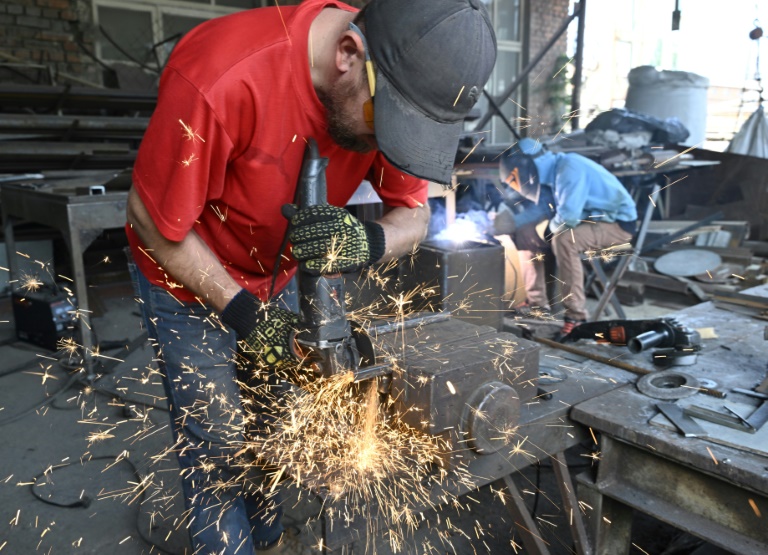
Now he makes anti-tank barriers to protect the local volunteer battalion in the northwestern frontline city of Sumy, and special iron stoves adapted to trenches to keep them warm.  

His services come free-of-charge to the local territorial defence unit fighting the Russian invasion, and he has even started buying and converting beat-up old cars into makeshift armoured personnel carriers.

“After the first day of the war, there were no police anymore in the city and not much army,” Zaika, 32, told AFP at his workshop in Sumy, a city of 260,000 people just 25 kilometres (16 miles) from Ukraine’s border with Russia.

“So, we’ve mainly had a territorial defence. It was our citizens who took up arms and stopped the enemy from entering the city. I’m no good at weapons, so I did what I was good at to help them.”

Sumy, which can trace its history back to its founding by the Cossacks in the mid-17th century, found itself battling for survival from the start of Moscow’s assault on Ukraine in February.

– Urban warfare –

Almost captured by the Russians, the city quickly fought back over six intense weeks of fierce street-to-street urban warfare as part of a wider Ukrainian counteroffensive.

But it remained surrounded and bombarded daily by artillery — with trains and buses out of the city suspended, roads and bridges pulverised, and its population trapped, their food and water running dangerously low.

Air strikes continued into summer, as Russian ground forces made repeated attempts to retake the city.

Zaika, who has run the business for seven years since learning the metalwork trade from his father, had hoped to build another workshop with around 25,000 euros of metal he had bought.

But he used up the entire stockpile within the first month of the war as he began getting requests for help from the local territorial defence unit.

He has since made more than 500 stoves for fighters but also to make life more liveable for people in bomb shelters and in nearby towns and villages where the gas supply had been knocked out by shelling.

Eventually the public began to chip in, bringing materials they had found that could be put to use in the trenches or in military shelters.

– ‘Winter is coming’ –

Zaika says he remembers one patriotic donor walking six kilometres in snow with a stack of electrodes weighing around 20 kilograms (45 pounds). 

Others contributed through a fundraising page on Instagram, giving Zaika enough cash to pay for an early 2000s Suzuki XL 7 people carrier that he gave a military makeover and handed to the volunteer forces.

“We added frame protection and engine protection, we strengthened the front bumper, radiator and trunk and gave the windows metal grills,” he told AFP. 

“With the pickups, we also fit a metal frame that you can attach an awning to and a rack for a machine gun.”

Zaika, who has a six-year-old son and a 16-week-old daughter, has converted 10 cars so far — adding Dodges, Fords and Mitsubishis to the Suzuki and sending each one off to the front.

“I’m not planning on stopping. Winter is coming soon so I’m sure we will need to make more stoves,” he told AFP.

“And with the cars, if the guys come back asking for more help, we’re here to help them.”

Germany's Scholz accuses Russia of blocking gas turbine delivery

German Chancellor Olaf Scholz on Wednesday accused Russia of blocking the delivery of a turbine needed to keep gas flowing to Europe via the Nord Stream 1 pipeline.

As the continent’s biggest economy scrambled for energy sources to fill the gap left by Russia’s throttling of supplies, Scholz also opened the door to keeping Germany’s remaining nuclear plants running.

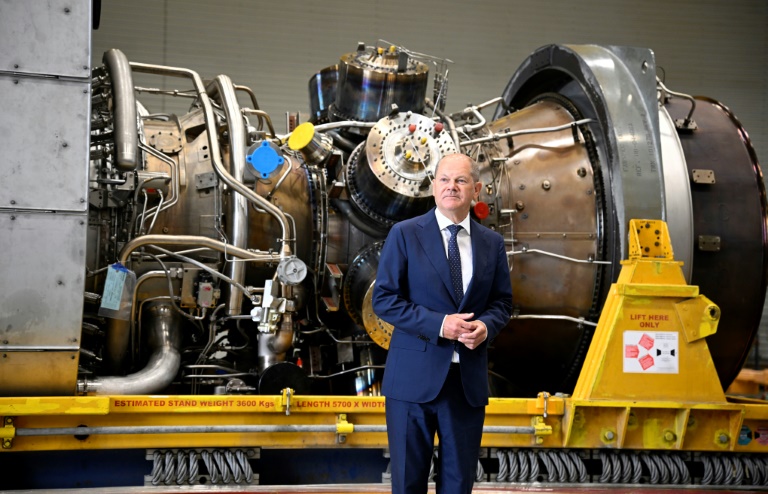
Standing next to the turbine, currently stuck with maker Siemens Energy in Germany, Scholz said the unit was “available and working”.

“There is no reason why this delivery cannot happen,” the chancellor said.

The turbine had received “all the approvals” it needed for export from Germany to Russia, he said.

Pipeline operators only needed to say that “they want to have the turbine and provide the necessary customs information for transport to Russia”, Scholz said, adding that the transfer was “really easy”.

Russian energy giant Gazprom has blamed the delayed return of the unit from Canada, where it was being serviced, for the initial reduction in deliveries of gas via the Nord Stream 1 gas pipeline in June.

Officials in Berlin worked with their counterparts in Canada to expedite the return of the turbine but the unit has yet to reach its final destination.

Deliveries via the undersea energy link were reduced to around 20 percent of capacity in late July, after Gazprom halted the operation of one of the last two operating turbines due to the “technical condition of the engine”.

Germany, which is heavily dependent on Russian gas, has branded the decision to limit supplies as a “political” response over the West’s support for Ukraine.

Scholz said Moscow’s move to limit supplies sent a “difficult message” to the world by creating doubt over Russia’s commitment to its agreements.

– Nuclear debate –

Germany has been working to wean itself off Russian energy imports since the invasion of Ukraine in February.

But the reduction of gas supplies has left Europe’s largest economy facing potential shortages over the winter, leading to calls for Germany’s nuclear power plants to be kept online beyond the end of the year. 

Scholz said Wednesday that it “can make sense” to keep Germany’s remaining three nuclear plants running, despite the long-planned stop.

“As far as the energy supply in Germany is concerned, the three last nuclear plants are relevant exclusively for electricity production, and only for a small part of it,” Scholz said.

The plants, scattered across the country, account for six percent of Germany’s electricity supply. 

The government has said it will await the outcome of a new “stress test” of the national electric grid before determining whether to stick with the phaseout.

Extending the lifetime of the plants has set off a heated debate in Germany, where nuclear energy has long been controversial.

The question has split the governing coalition, with Scholz’s Social democrats and the greens hitherto sceptical, and the FDP favouring an extension.

Germany has already moved to restart mothballed coal power plants to guard against an energy shortfall.

The first of these was already “supplying electricity to the network”, Scholz said Wednesday, adding that Germany had to prepare for a “difficult time”. 

Germany's Scholz accuses Russia of blocking gas turbine delivery

German Chancellor Olaf Scholz on Wednesday accused Russia of blocking the delivery of a turbine needed to keep gas flowing to Europe via the Nord Stream 1 pipeline.

As the continent’s biggest economy scrambled for energy sources to fill the gap left by Russia’s throttling of supplies, Scholz also opened the door to keeping Germany’s remaining nuclear plants running.

Standing next to the turbine, currently stuck with maker Siemens Energy in Germany, Scholz said the unit was “available and working”.

“There is no reason why this delivery cannot happen,” the chancellor said.

The turbine had received “all the approvals” it needed for export from Germany to Russia, he said.

Pipeline operators only needed to say that “they want to have the turbine and provide the necessary customs information for transport to Russia”, Scholz said, adding that the transfer was “really easy”.

Russian energy giant Gazprom has blamed the delayed return of the unit from Canada, where it was being serviced, for the initial reduction in deliveries of gas via the Nord Stream 1 gas pipeline in June.

Officials in Berlin worked with their counterparts in Canada to expedite the return of the turbine but the unit has yet to reach its final destination.

Deliveries via the undersea energy link were reduced to around 20 percent of capacity in late July, after Gazprom halted the operation of one of the last two operating turbines due to the “technical condition of the engine”.

Germany, which is heavily dependent on Russian gas, has branded the decision to limit supplies as a “political” response over the West’s support for Ukraine.

Scholz said Moscow’s move to limit supplies sent a “difficult message” to the world by creating doubt over Russia’s commitment to its agreements.

– Nuclear debate –

Germany has been working to wean itself off Russian energy imports since the invasion of Ukraine in February.

But the reduction of gas supplies has left Europe’s largest economy facing potential shortages over the winter, leading to calls for Germany’s nuclear power plants to be kept online beyond the end of the year. 

Scholz said Wednesday that it “can make sense” to keep Germany’s remaining three nuclear plants running, despite the long-planned stop.

“As far as the energy supply in Germany is concerned, the three last nuclear plants are relevant exclusively for electricity production, and only for a small part of it,” Scholz said.

The plants, scattered across the country, account for six percent of Germany’s electricity supply. 

The government has said it will await the outcome of a new “stress test” of the national electric grid before determining whether to stick with the phaseout.

Extending the lifetime of the plants has set off a heated debate in Germany, where nuclear energy has long been controversial.

The question has split the governing coalition, with Scholz’s Social democrats and the greens hitherto sceptical, and the FDP favouring an extension.

Germany has already moved to restart mothballed coal power plants to guard against an energy shortfall.

The first of these was already “supplying electricity to the network”, Scholz said Wednesday, adding that Germany had to prepare for a “difficult time”. 

Taiwan defiant as China readies military drills over Pelosi visit

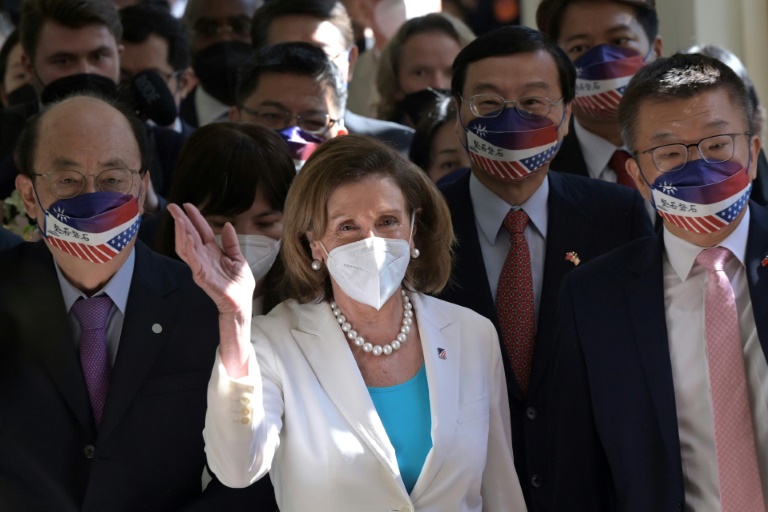
Taiwan struck a defiant tone Wednesday as it hosted US House Speaker Nancy Pelosi, with a furious China gearing up for military exercises dangerously close to the island’s shores in retaliation for the visit.

Pelosi landed in Taiwan on Tuesday despite a series of increasingly stark threats from Beijing, which views the island as its territory and had said it would consider the visit a major provocation.

China responded swiftly, announcing what it said were “necessary and just” military drills in the seas around Taiwan — some of the world’s busiest waterways.

“In the current struggle surrounding Pelosi’s Taiwan visit, the United States are the provocateurs, China is the victim,” Beijing’s foreign ministry said. 

But Taiwanese President Tsai Ing-wen countered that the island of 23 million would not be cowed. 

“Facing deliberately heightened military threats, Taiwan will not back down. We will… continue to hold the line of defence for democracy,” Tsai said at an event with Pelosi in Taipei.

She also thanked the 82-year-old US lawmaker for “taking concrete actions to show your staunch support for Taiwan at this critical moment”.

China tries to keep Taiwan isolated on the world stage and opposes countries having official exchanges with Taipei.

Pelosi, second in line to the presidency, is the highest-profile elected US official to visit Taiwan in 25 years.

“Today, our delegation… came to Taiwan to make unequivocally clear we will not abandon our commitment to Taiwan,” she said at the event with Tsai.

Earlier, Pelosi said her group had come “in friendship to Taiwan” and “in peace to the region”.

– ‘High alert’ –

The administration of President Joe Biden said in the run-up to the visit that US policy towards Taiwan remained unchanged.

This means support for its government while diplomatically recognising Beijing over Taipei, and opposing a formal independence declaration by Taiwan or a forceful takeover by China.

While the White House is understood to be opposed to Pelosi’s Taiwan stop, its National Security Council spokesman John Kirby said she was entitled to go where she pleased. 

After Pelosi touched down Tuesday night in a military aircraft following days of feverish speculation about her plans, Beijing summoned US Ambassador Nicholas Burns.

The Chinese military declared it was on “high alert” and would “launch a series of targeted military actions in response” to the visit.

The drills will include “long-range live ammunition shooting” in the Taiwan Strait, which separates the island from mainland China and straddles vital shipping lanes.

The zone of Chinese exercises will be within 20 kilometres (12 miles) of Taiwan’s shoreline at some points, according to coordinates released by the Chinese military.

“Some of the areas of China’s drills breach into… (Taiwan’s) territorial waters,” defence ministry spokesman Sun Li-fang said at a press conference Wednesday.

“This is an irrational move to challenge the international order.”

Taiwan’s Mainland Affairs Council, which sets the government’s China policies, accused Beijing of “vicious intimidation” that would “seriously impact the peace and prosperity of the entire East Asia”.

It added that democratic countries should “unite and take a solemn stand to punish and deter” Beijing.

Japan, a key US ally in the region, said Wednesday it had expressed concern to China over the exercises, while South Korea called for dialogue to maintain regional peace and stability.

Both countries are on Pelosi’s Asia itinerary, following stops in Singapore, Malaysia and Taiwan.

– ‘We shouldn’t be too worried –

Beijing has long used diplomatic, military and economic pressure on Taiwan.

On Wednesday China announced curbs on the import of fruit and fish from Taiwan — citing the detection of pesticide residue and the coronavirus. It also halted shipments of sand to the island.

“Those who offend China will be punished,” Chinese Foreign Minister Wang Yi told reporters Thursday while on a trip to Cambodia. 

Outside the Taiwanese parliament, 31-year-old computer programmer Frank Chen shrugged off the Chinese warnings against Pelosi’s visit.

“I’m not too worried about China’s intimidation,” he told AFP.

“I think China will take more threatening actions and ban more Taiwanese products, but we shouldn’t be too worried.”

There was a small group of pro-China demonstrators outside parliament as well.

“The United States uses Taiwan as a pawn in its confrontation with China, to try to drag China down so (it) can dominate the world,” Lee Kai-dee, a 71-year-old retired researcher, told AFP.

“If the United States continues to act this way, Taiwan will end up like Ukraine.”

China has vowed to annex self-ruled, democratic Taiwan one day, by force if necessary.

Russia’s invasion of Ukraine in February heightened fears in Taiwan that China may similarly follow through on its threats to annex the island.

Close Bitnami banner
Bitnami