World

OPEC+ meets after Biden push to hike oil output

The OPEC+ group of major oil exporters meets Wednesday to discuss its output strategy after US President Joe Biden lobbied Saudi Arabia to boost production to tame soaring prices.

The cartel led by Saudi Arabia and Russia has resisted US pressure to ramp up production significantly so far after Moscow’s invasion of Ukraine sent oil prices soaring.

After cutting production in 2020 in response to falling prices during the Covid pandemic, OPEC+ began to modestly raise it last year and has renewed the policy every month.

Its output is supposed to have returned to pre-Covid levels — but only on paper as some members of the 23-nation group have struggled to meet their quotas.

Craig Erlam, analyst at OANDA trading platform, said the OPEC+ meeting will show whether “President Biden has any influence in the cartel at all”.

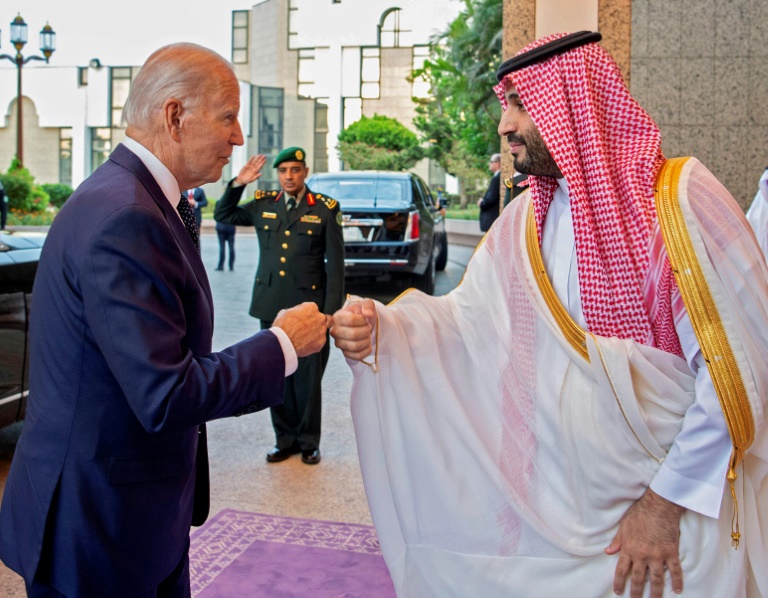
Biden made a controversial trip to Saudi Arabia in July in part to convince the kingdom to loosen the production taps to stabilise the market and curb rampant inflation.

The US president met with Crown Prince Mohammed bin Salman despite his promise to make the kingdom a “pariah” in the wake of the 2018 killing of journalist Jamal Khashoggi.

Biden said after his meetings with Saudi officials that he was “doing all I can” to increase the oil supply.

“Saudi Arabia and its allies will have to decide whether to heed Joe Biden’s request and raise production or show solidarity towards Russia by staying put,” said Tamas Varga, analyst at oil broker PVM.

French President Emmanuel Macron also reached out to bin Salman, hosting him last week in Paris, with Macron’s office saying the two leaders agreed to work “to ease the effects” of the Ukraine war.

Before resigning as British prime minister, Boris Johnson had also visited bin Salman in Riyadh in March to lobby for higher oil production.

But Stephen Innes, managing partner at SPI Asset Management, said OPEC+ is “unlikely to announce a significant production increase given growing recession fears” and a drop in oil prices since early June.

– More cautious? –

After reaching close to $140 per barrel in early March, crude prices have slid further this week following weak economic data from China, the world’s biggest importer of oil.

The main contracts were slightly down on Wednesday ahead of the meeting, though Brent — the international benchmark — was back above $100.

This week’s price slide “could make OPEC+ more cautious”, Commerzbank said in a note.

The German bank said news that Libyan production has returned to normal levels for the first time in nearly four months could also serve as an argument against a bigger expansion in output.

OPEC+ began to add around 400,000 barrels per day to the market last year, renewing the policy every month until June, when it upped production by almost 650,000 bpd.

Analysts say the group has now reversed cuts totalling 9.7 million bpd that had been agreed in 2020, though only in theory.
OPEC+ meets after Biden push to hike oil output

The OPEC+ group of major oil exporters meets Wednesday to discuss its output strategy after US President Joe Biden lobbied Saudi Arabia to boost production to tame soaring prices.

The cartel led by Saudi Arabia and Russia has resisted US pressure to ramp up production significantly so far after Moscow’s invasion of Ukraine sent oil prices soaring.

After cutting production in 2020 in response to falling prices during the Covid pandemic, OPEC+ began to modestly raise it last year and has renewed the policy every month.

Its output is supposed to have returned to pre-Covid levels — but only on paper as some members of the 23-nation group have struggled to meet their quotas.

Craig Erlam, analyst at OANDA trading platform, said the OPEC+ meeting will show whether “President Biden has any influence in the cartel at all”.

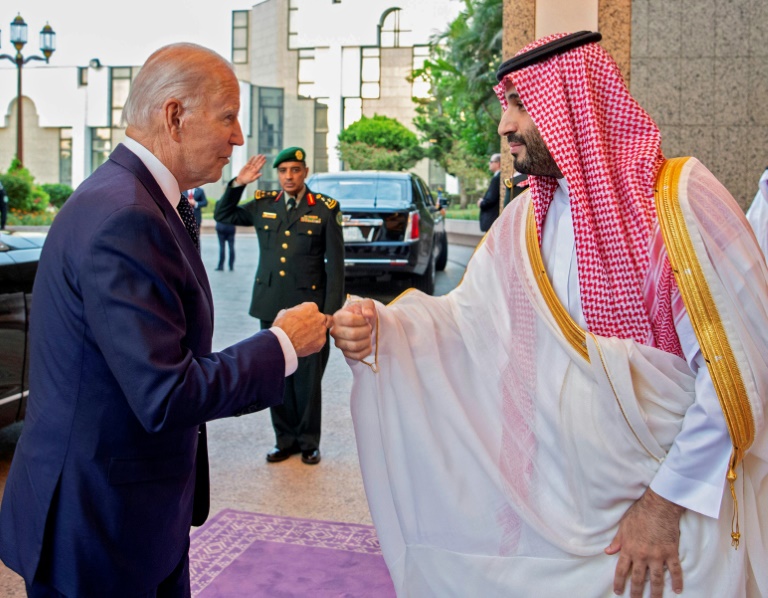
Biden made a controversial trip to Saudi Arabia in July in part to convince the kingdom to loosen the production taps to stabilise the market and curb rampant inflation.

The US president met with Crown Prince Mohammed bin Salman despite his promise to make the kingdom a “pariah” in the wake of the 2018 killing of journalist Jamal Khashoggi.

Biden said after his meetings with Saudi officials that he was “doing all I can” to increase the oil supply.

“Saudi Arabia and its allies will have to decide whether to heed Joe Biden’s request and raise production or show solidarity towards Russia by staying put,” said Tamas Varga, analyst at oil broker PVM.

French President Emmanuel Macron also reached out to bin Salman, hosting him last week in Paris, with Macron’s office saying the two leaders agreed to work “to ease the effects” of the Ukraine war.

Before resigning as British prime minister, Boris Johnson had also visited bin Salman in Riyadh in March to lobby for higher oil production.

But Stephen Innes, managing partner at SPI Asset Management, said OPEC+ is “unlikely to announce a significant production increase given growing recession fears” and a drop in oil prices since early June.

– More cautious? –

After reaching close to $140 per barrel in early March, crude prices have slid further this week following weak economic data from China, the world’s biggest importer of oil.

The main contracts were slightly down on Wednesday ahead of the meeting, though Brent — the international benchmark — was back above $100.

This week’s price slide “could make OPEC+ more cautious”, Commerzbank said in a note.

The German bank said news that Libyan production has returned to normal levels for the first time in nearly four months could also serve as an argument against a bigger expansion in output.

OPEC+ began to add around 400,000 barrels per day to the market last year, renewing the policy every month until June, when it upped production by almost 650,000 bpd.

Analysts say the group has now reversed cuts totalling 9.7 million bpd that had been agreed in 2020, though only in theory.
Most Asian markets rise but Taiwan fears keep confidence in check

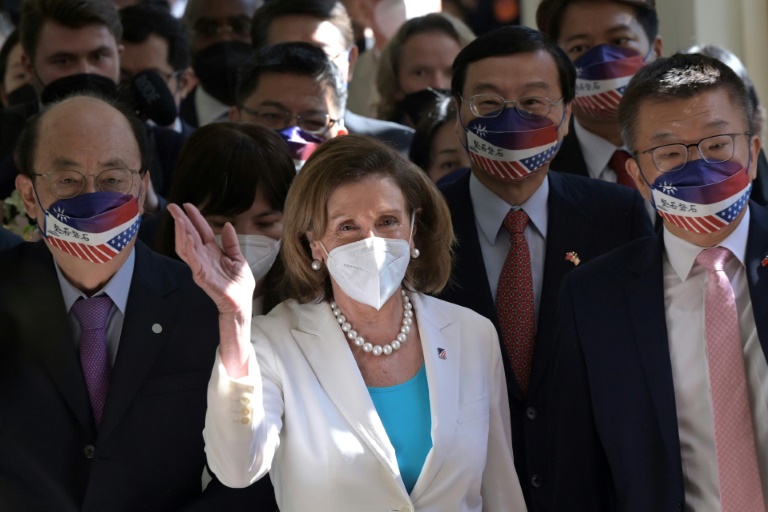
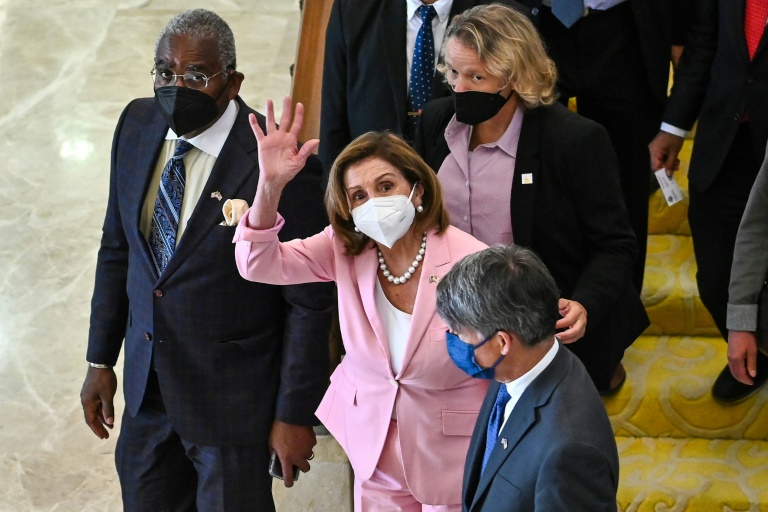
Asian markets mostly rose Wednesday after the previous day’s reverse, though traders remained on edge after House Speaker Nancy Pelosi’s visit to Taiwan, which has further strained China-US ties and raised concerns about the long-term impact on the global outlook.

The highest profile trip to the island in 25 years by a US politician was met with condemnation from Beijing, which warned of serious economic and military consequences.

Taiwan said more than 20 Chinese military aircraft had flown into the island’s air defence identification zone — an area wider than its territorial airspace that overlaps with part of China’s air defence zone. The People’s Liberation Army was also due to conduct a series of drills, while Foreign Minister Wang Yi vowed to “punish” those who offended the country.

Beijing said it would suspend imports of some citrus fruits and fish from Taiwan over alleged “repeated” detection of excessive pesticide residue and positive coronavirus tests on packages, while exports of natural sand were also halted, with no details provided.

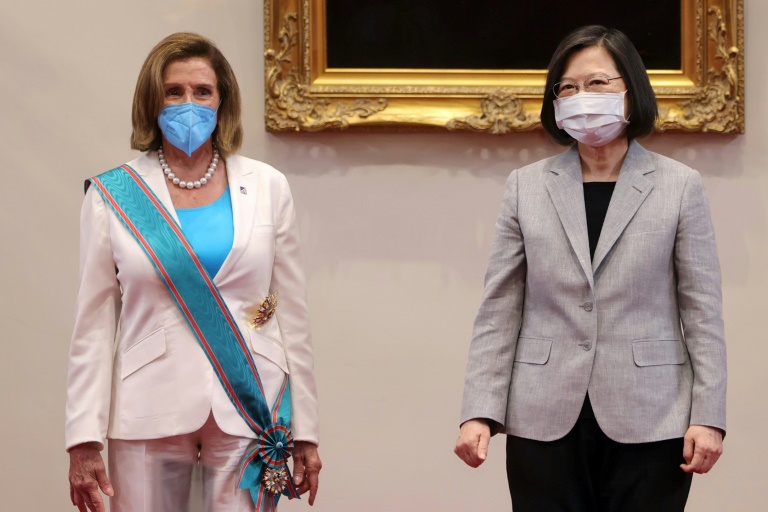
Taiwan President Tsai Ing-wen struck a defiant tone at her meeting with Pelosi, saying the island “will not back down. We will… continue to hold the line of defence for democracy”.

At the event, Pelosi said her delegation “came to Taiwan to make unequivocally clear we will not abandon our commitment to Taiwan”.

No one expected it would spark a conflict, but the crisis sent shivers through trading floors that were already on edge over a range of issues including the Ukraine war, surging inflation, rising interest rates and slowing economic growth.

However, Asia enjoyed a small recovery, though some markets pared morning gains.

Hong Kong, Taipei, Tokyo, Singapore, Seoul, Wellington, Jakarta and Manila all rose, though Shanghai, Mumbai, Sydney and Bangkok edged down.

London, Paris and Frankfurt all fell at the open.

The “short-term implication may be ‘sell the rumour, buy the news’ as the official response so far remains much more restrained versus what the market has feared,” Xiadong Bao, at Edmond de Rothschild Asset Management, said.

“But the mid/long-term implication can be more significant, which may be currently overlooked by the market. The official return of the US influence in Asia-Pacific will inevitably accelerate US-China decoupling.”

Analysts are also keen to find out what the White House’s response will be, particularly ahead of mid-term elections in November with anti-China rhetoric playing well with voters, but with President Joe Biden keen not to further harm economic ties.

SPI Asset Management’s Stephen Innes added that the US administration was probably not likely to cut Trump-era tariffs before then.

The broadly positive performance in Asia followed a drop on Wall Street, where the Taiwan crisis was compounded by a series of hawkish comments from Federal Reserve officials indicating more big interest rate hikes could still be in the pipeline.

Stocks rallied last week and Treasury yields dropped after boss Jerome Powell hinted the bank could begin slowing down, but the latest remarks suggest a hoped-for dovish pivot might not be coming just yet as inflation remains stubbornly high.

“This round of Fed speak suggests markets might be a little too optimistic into pricing in a Fed pivot and that rate cut calls for next year are too optimistic,” said OANDA’s Edward Moya.

The latest developments have raised concerns that the volatility on markets would likely continue for some time.

“It’s hard to see any meaningful upside in equities right now,” said Xi Qiao, of UBS Group. “The market is going to trade pretty mixed, stay choppy until we have a little bit more certainty,” she told Bloomberg News.

– Key figures at around 0810 GMT –

Tokyo – Nikkei 225: UP 0.5 percent at 27,741.90 (close)

Hong Kong – Hang Seng Index: UP 0.4 percent at 19,767.09 (close)

Shanghai – Composite: DOWN 0.7 percent at 3,163.67 (close)

Taipei – TAIEX: DOWN 0.2 percent at 14,777.02 (close)

London – FTSE 100: DOWN 0.3 percent at 7,386.52

Dollar/yen: UP at 133.19 yen from 133.10 yen Tuesday

Euro/dollar: UP at $1.0183 from $1.0168

Pound/dollar: UP at $1.2206 from $1.2163

Euro/pound: UP at 83.43 pence from 83.57 pence

West Texas Intermediate: DOWN 0.9 percent at $93.60 per barrel

Brent North Sea crude: DOWN 0.9 percent at $99.63 per barrel

New York – Dow: DOWN 1.2 percent at 32,396.17 (close)

Sri Lanka faces 'great danger' as crisis drags

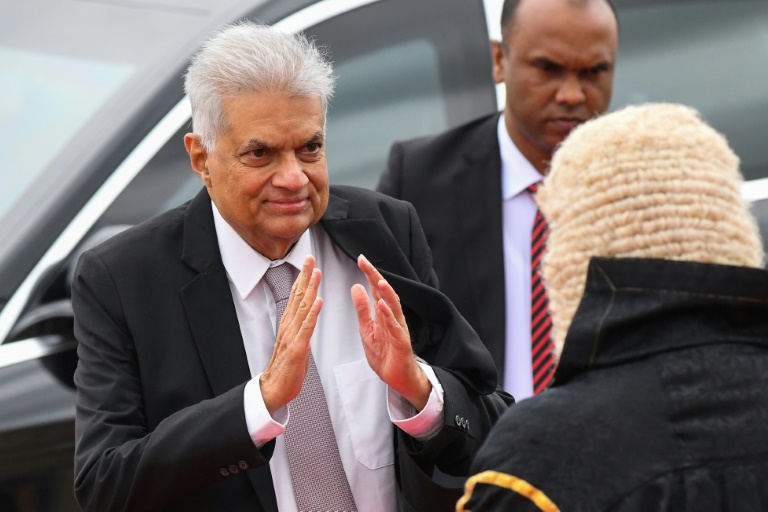
Sri Lanka faces a “great danger” with fuel shortages sparked by its unprecedented economic crisis set to continue at least till the year’s end, President Ranil Wickremesinghe warned Wednesday.

The 73-year-old, who was propelled to power last month after his predecessor Gotabaya Rajapaksa was forced to flee the country and resign after months of protests, said the financial meltdown had turned into a serious political crisis.  

“Today we are facing an unprecedented situation that our country had never faced in recent history,” he said while opening a new session of parliament. 

“We are in great danger.”

Tens of thousands of people overran Rajapaksa’s official residence last month over acute shortages of food, fuel and medicines endured by Sri Lanka’s 22 million people since late last year.

Wickremesinghe said the only way to escape the crisis was “if we all face this challenge together as one people,” and asked all parties in parliament to join his initiative for a “unity government”.

Sri Lanka was considered a prosperous middle-income country before defaulting for the first time on its foreign debt of $51 billion in mid-April. 

The country has run out of foreign exchange to finance imports with officials estimating the country urgently needs at least $4 billion to bring in essential goods and address current shortages.

Wickremesinghe has been leading talks with the International Monetary Fund to secure a four-year bailout program. He told parliament the negotiations were progressing but did not provide a timeline for when a deal would be finalised.  

Motorists spend days waiting to buy rationed fuel while the country faces lengthy electricity blackouts. Inflation has crossed 60 percent.

Wickremesinghe thanked India for granting credit lines to import petrol and diesel, but said Colombo must be able to pay with its own foreign exchange earnings and that rationing would continue at least till the end of this year.

He also criticised Rajapaksa for rejecting two major infrastructure investments from Japan which could have brought in $3 billion.

The cancellation of a light rail transit (LRT) and a deep-sea terminal at the Colombo port also damaged the ties between Japan and Sri Lanka, Wickremesinghe said.

However, the pro-West Wickremesinghe did not refer to China which owns over 10 percent of Sri Lanka’s bilateral loans. Beijing’s agreement is crucial for any debt restructuring deal.

How is China punishing Taiwan for the Pelosi visit?

China has launched a volley of trade curbs against Taiwan in addition to live-fire military drills, as US House Speaker Nancy Pelosi visited the island despite Beijing’s warnings.

China considers Taiwan its territory and tries to keep it isolated internationally, opposing countries from maintaining official contacts with the self-ruled democratic island.

After Pelosi became the highest-profile elected US official to visit Taiwan in 25 years, Chinese foreign ministry spokeswoman Hua Chunying said Wednesday the response will be “resolute, forceful and effective”.

Here are the measures China has announced so far:

– Military exercises –

The first response was announced swiftly: live-fire military drills in zones encircling Taiwan — at some points, within just 20 kilometres (12 miles) of the island’s shore.

The drills will include “long-range live ammunition shooting” in the Taiwan Strait, which separates the island from mainland China and straddles vital shipping lanes.

Taiwan’s defence ministry described the drills as “an irrational move to challenge the international order”.

And the island’s Mainland Affairs Council, which sets the government’s China policies, accused Beijing of “vicious intimidation”.

Beijing cannot afford to be seen as toothless after ramping up the rhetoric ahead of Pelosi’s arrival, analysts said.

“It will be imperative for the Chinese regime to underline its nationalist credentials to its domestic audience,” said James Char, an associate research fellow at Singapore’s S. Rajaratnam School of International Studies.

“Beijing cannot be seen as weak by its own people.”

– Trade curbs –

China on Wednesday also imposed curbs on the import of fruit and fish from Taiwan.

Its customs authorities said it would suspend some citrus fruit imports over alleged “repeated” detection of excessive pesticide residue.

It also banned the import of certain fish from the island, pointing to the discovery of the coronavirus on packages.

These bans came a day after Taipei’s Council of Agriculture said China had cited regulatory breaches in suspending the import of Taiwanese goods including fishery products, tea and honey.

It is not the first time Beijing has aimed at Taiwan’s agricultural products — it banned pineapple imports in March 2021, citing the discovery of pests. However, the move was widely seen as politically driven.

The moves are part of a “common pattern for Beijing”, said Even Pay, an agriculture analyst at consultancy Trivium China.

More disruptions of agricultural and food trade can be expected in the coming days, she added.

“When diplomatic or trade tensions are running high, Chinese regulators typically take an extremely strict approach to compliance… looking for any issues that can be used to justify a trade ban,” she told AFP.

The Chinese commerce ministry said in a separate notice that it would “suspend the export of natural sand to Taiwan” from Wednesday, without providing details.

Natural sand is generally used for producing concrete and asphalt, and most of Taiwan’s imported sand and gravel comes from China.

– Bans on ‘secessionists’ –

Beijing has ramped up pressure on Taiwan since President Tsai Ing-wen took office in 2016, as she views the island as a de facto sovereign nation and not part of “one China”.

The Chinese State Council’s Taiwan Affairs Office said Wednesday that it will punish two Taiwan organisations with close links to “die-hard” secessionists — the Taiwan Foundation for Democracy and International Cooperation and Development Fund.

Enterprises that have donated to the groups, such as Speedtech Energy and Hyweb Technology, will also be prohibited from working with Chinese firms.

Nintendo Q1 net profit jumps thanks to weak yen

Nintendo said Wednesday its first-quarter net profit jumped 28 percent on-year, mainly thanks to a weaker yen, but hardware and software sales declined because of a chip shortage and Covid-19 supply issues.

The yen has plummeted more than 10 percent against the dollar this year as sky-high US inflation fuels a widening monetary policy gap — a boon for Japanese companies like Nintendo who sell products overseas.

For the three months to June, the gaming giant posted a net profit of 118.9 billion yen ($893 million), citing the positive impact of “the depreciation of the yen”.

But the company left its annual forecast unchanged, warning that the global shortage of semiconductors and other logistical snarl-ups could hamper console production and distribution.

New game releases got off to a good start, including “Nintendo Switch Sports” and “Mario Strikers: Battle League”, it said, but sales were still no match for the previous year during the pandemic gaming boom.

“Due to the effects of supply shortages in semiconductors and other components among other factors, hardware sales were down 22.9 percent year-on-year, and software sales were down 8.6 percent year-on-year,” Nintendo added.

Soaring demand for indoor entertainment during virus lockdowns sent the company’s profits soaring to an annual record of 480 billion yen in 2020-21.

The firm nearly matched that figure in the last financial year, with its blockbuster Switch console continuing to perform well and strong software sales, especially for “Mario Party Superstars” and the latest Pokemon titles.

But Nintendo now has a more cautious outlook as life returns to normal, causing the gaming craze to slow, and expects to report a 340-billion yen net profit in 2022-23.

Hideki Yasuda, senior analyst at Toyo Securities, warned that the chip shortage and supply problems linked to Covid-19 lockdowns in China would continue to pose headaches for Nintendo.

“The company is feeling significant pressure on its supply chain,” he told AFP before the earnings release. “The Switch is sold out at stores. There is not enough supply.”

It will be “very difficult” for Nintendo to hit its annual production target for the console if the problems continue, Yasuda said, after Switch sales declined 20 percent on-year in 2021-22.

However, a recession in the United States or elsewhere is unlikely to pose a major problem, he said.

“Video gaming doesn’t feel the impact of recessions. When the economy is strong, people buy products. When the economy weakens, people spend more time playing games.”

Taiwan defiant as China readies military drills over Pelosi visit

Taiwan struck a defiant tone Wednesday as it hosted US House Speaker Nancy Pelosi, with a furious China gearing up for military exercises dangerously close to the island’s shores in retaliation for the visit.

Pelosi landed in Taiwan on Tuesday despite a series of increasingly stark threats from Beijing, which views the island as its territory and had said it would consider the visit a major provocation.

China responded swiftly, warning the US ambassador in Beijing of “extremely serious consequences” and announcing military drills in seas around Taiwan — some of the world’s busiest waterways.

“Facing deliberately heightened military threats, Taiwan will not back down. We will… continue to hold the line of defence for democracy,” Taiwanese President Tsai Ing-wen said at an event with Pelosi in Taipei.

She also thanked Pelosi for “taking concrete actions to show your staunch support for Taiwan at this critical moment”.

China tries to keep Taiwan isolated on the world stage and opposes countries having official exchanges with Taipei.

Pelosi, second in line to the presidency, is the highest-profile elected US official to visit Taiwan in 25 years.

“Today, our delegation… came to Taiwan to make unequivocally clear we will not abandon our commitment to Taiwan,” she said at the event with Tsai.

Earlier, Pelosi said her group had come “in friendship to Taiwan” and “in peace to the region”.

The administration of President Joe Biden said in the run-up to the visit that US policy towards Taiwan remained unchanged.

This means support for its government while diplomatically recognising Beijing over Taipei, and opposing a formal independence declaration by Taiwan or a forceful takeover by China.

While the White House is understood to be opposed to Pelosi’s Taiwan stop, its National Security Council spokesman John Kirby said she was entitled to go where she pleased. 

– ‘Extremely egregious’ –

After Pelosi touched down Tuesday night in a military aircraft following days of feverish speculation about her plans, the Chinese foreign ministry summoned US Ambassador Nicholas Burns.

Her visit “is extremely egregious in nature and the consequences are extremely serious”, Vice Foreign Minister Xie Feng told Burns, according to state news agency Xinhua.

“China will not sit idly by.”

The Chinese military said it was on “high alert” and would “launch a series of targeted military actions in response” to the visit.

The drills will include “long-range live ammunition shooting” in the Taiwan Strait, which separates the island from mainland China and straddles vital shipping lanes.

The zone of Chinese exercises will be within 20 kilometres (12 miles) of Taiwan’s shoreline at some points, according to coordinates released by the Chinese military.

“Some of the areas of China’s drills breach into… (Taiwan’s) territorial waters,” defence ministry spokesman Sun Li-fang said at a press conference Wednesday.

“This is an irrational move to challenge the international order.”

Taiwan’s Mainland Affairs Council, which sets the government’s China policies, accused Beijing of “vicious intimidation” that would “seriously impact the peace and prosperity of the entire East Asia”.

It added that democratic countries should “unite and take a solemn stand to punish and deter” Beijing.

Japan, a key US ally in the region, said Wednesday it had expressed concern to China over the exercises, while South Korea called for dialogue to maintain regional peace and stability.

Both countries are on Pelosi’s Asia itinerary, following stops in Singapore, Malaysia and Taiwan.

China on Wednesday announced curbs on the import of fruit and fish from Taiwan — citing the detection of pesticide residue and the coronavirus. It also halted shipments of sand to the island.

Chinese Foreign Minister Wang Yi vowed Thursday to punish those who offend Beijing. 

“This is a complete farce. The United States is violating China’s sovereignty under the guise of so-called ‘democracy’… those who offend China will be punished,” he said.

– ‘We shouldn’t be too worried –

Outside the Taiwanese parliament, 31-year-old computer programmer Frank Chen shrugged off the Chinese warnings against Pelosi’s visit.

“I’m not too worried about China’s intimidation,” he told AFP.

“I think China will take more threatening actions and ban more Taiwanese products, but we shouldn’t be too worried.”

There was a small group of pro-China demonstrators outside parliament as well.

“The United States uses Taiwan as a pawn in its confrontation with China, to try to drag China down so (it) can dominate the world,” Lee Kai-dee, a 71-year-old retired researcher, told AFP.

“If the United States continues to act this way, Taiwan will end up like Ukraine.”

China has vowed to annex self-ruled, democratic Taiwan one day, by force if necessary.

Russia’s invasion of Ukraine in February heightened fears in Taiwan that China may similarly follow through on its threats to annex the island.

Focus on Samira, celebrity snapper of southern Iraq

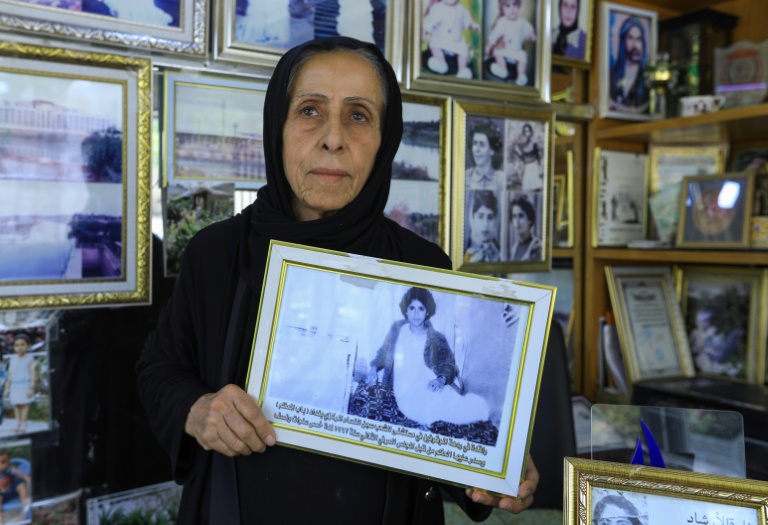
She’s southern Iraq’s celebrity photographer, a former political prisoner who has spent more than 60 years behind the lens documenting people and places and defying convention.

Samira Mazaal is 77 and still going strong more than half a century after turning to photography to feed her family — because she had no choice.

“Peasants, intellectuals, I’ve photographed them all,” says the mother of two, her black hijab framing a face lined by life.

“I have photographed Amarah in all its beauty — I went deep into the marshes,” to the south of the city in the floodplain of the Tigris and Euphrates rivers.

Everyone in the area turns to Studio Samira, be it for a passport photograph or to have a couple’s portrait taken ahead of their wedding.

She tells how she became the first female photographer in Maysan province aged just 16, despite familial conventions that ruled in the Iraq of the 1960s, and also how political activism led to imprisonment and torture.

“My family has never known any other business — we’re all photographers,” Samira says.

Framed photographs lining the walls bear witness to her trade, in both black and white or in colours faded by time.

She has albums of images showing Iraq as it used to be: black-clad women carrying huge bales balanced on their heads; a smiling peasant woman in a flowery dress, her hair braided, standing near a cow; a mother and child filling a pot with water from the river.

– ‘Society can be cruel’ –

Samira’s father was among the first to introduce photography to the province.

“I asked him to initiate me into the craft, but he said: ‘No, you’re too young. You can’t — society can be cruel’,” she recalls.

But soon circumstances would force him to change his mind. He was rendered blind in a botched operation, and could no longer provide for his family.

So Samira had to step in.

She started off using the daguerreotype method of the 1800s that uses silver-plated copper sheets, but then her father sold off some land so she could buy more modern equipment.

“My studio became extraordinarily successful,” she smiles. “Because I was a young woman, I could take pictures of families.”

Samira exploited the norms of a conservative society: the male heads of households preferred that a woman photographer, not a man, take the pictures of their wives and daughters.

Bassem al-Subaid is one satisfied client of Studio Samira.

“There isn’t a single household in all of Maysan province that doesn’t know Samira the photographer,” he tells AFP.

“My generation got to know Samira when we came to be photographed by her,” adds the man in his forties. “It was the previous generation that saw her political activism.”

In 1963, Iraq was being torn apart by revolutions and bloody crackdowns, and the then adolescent had no idea that a communist tract would put her behind bars.

– A source of pride –

After General Abdel Salam Aref took power in a Baath party coup, three militants came to Samira’s studio and asked her to mass-produce a poster denouncing the new regime. 

She accepts that she had not yet completely formed her own political opinions, and was swayed at the time by her brother’s sympathies.

“In all of Amarah, there wasn’t a single wall without a pasted copy of the poster,” she boasts. “It wasn’t a crime — it’s a source of pride.”

A picture of herself, which she still has today, made her famous. It shows her lying on a hospital bed after being tortured in a building in Amarah.

“I was screaming so hard I thought the whole town would come and save me,” she recalls.

It was not to be: she spent the next four years, ill and abused, in a Baghdad prison.

She was freed after an international campaign that led to pardons for several political prisoners in Iraq.

In 1981, she was again jailed briefly under the rule of then dictator Saddam Hussein. And then again 10 years later over a protest in Amarah against the repercussions of the Gulf War over Kuwait.

Like several other women prisoners, she was granted a pardon after just a few months.

Today the photographic studio is still welcoming clients, and despite her age, the revolutionary flame still burns brightly in Samira.

She hails the October 2019 uprising, sparked by angry young Iraqis seeking to bring those in power to account.

“The protesters should have transformed their movement into a massive revolution to root out corruption and the corrupt,” Samira says.

Rare white elephant born in Myanmar: state media

A rare white elephant has been born in western Myanmar, state media said on Wednesday, unveiling what many in the Buddhist-majority country believe to be an auspicious creature.

Born last month in western Rakhine state, the baby weighs about 80 kilograms (180 pounds) and stands roughly 70 cm (two-and-a-half feet) tall, according to the Global New Light of Myanmar newspaper.

Footage released by state TV showed the tusker tot following his mother to a river and being washed by its keepers, and later feeding from her. 

The mother — a 33-year-old called Zar Nan Hla — is kept by the Myanma Timber Enterprise in Rakhine state, the Global New Light said, adding the baby possessed seven of the eight characteristics associated with rare white elephants.

“Pearl-coloured eyes, plantain branch-shaped back, white hair, a distinctive tail, auspicious plot signs on the skin, five claws on the front legs and four on the back legs and big ears,” the newspaper reported.

Social media users first posted about the birth of the elephant — which has not been named yet — late last month. 

Historically, white elephants were considered extremely auspicious in Southeast Asian culture, and the region’s ancient rulers acquired as many as they could to boost their fortunes.

But the ruinous cost of keeping the beasts in appropriately lavish style gave rise to the modern expression in which a “white elephant” is a useless, if beautiful, possession.

There are currently six white elephants in captivity in the military-built capital Naypyidaw, according to state media — mostly from Rakhine state and the southern Ayeyarwady region.

With Myanmar reeling from a military coup last year and its bloody crackdown on dissent, the reaction of many on social media was muted or sceptical.

“Am I colourblind if it just looks brown to me?” posted one user. 

“Elephants were important only in the old eras,” said another.

“Now the poor elephant will have to go to jail.”

Solar electric tricycles give Zimbabwean women a lift

For years, selling eggs was a joyless business for Danai Bvochora, as most of the money she made went to cover minibus fares to the market in a rural area of Zimbabwe.

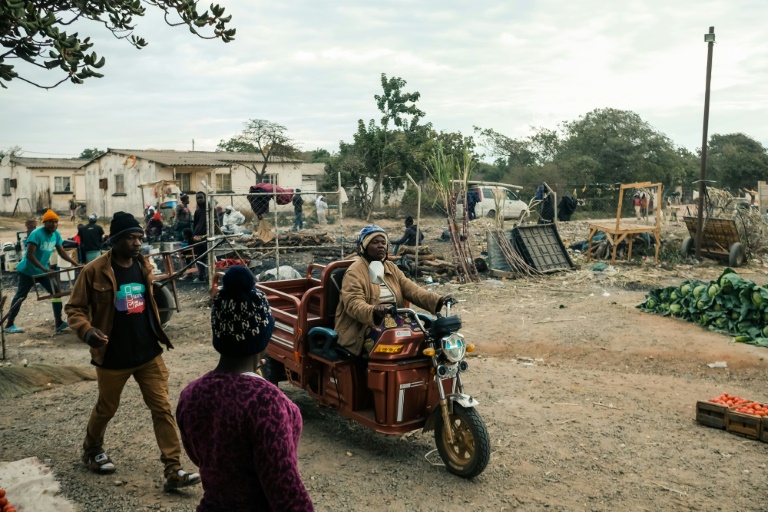
That was until an earth-brown solar-powered electric tricycle changed her life.

“We used to carry loads on our heads before. The tricycle has lessened the burden,” said the 47-year-old from Domboshava, about 40 kilometres (25 miles) north of Zimbabwe’s capital, Harare.

She carefully loads eggs onto the tricycle’s trailer before embarking on a bumpy eight-kilometre journey to the market.

“We even use it to go to church and worship,” Bvochora said, explaining a single trip to buy chicken feed from a local business centre used to cost her $12.

But charging her new solar-powered vehicle sets her back only $2.50 every two weeks, and the mother of two is now making a profit.

Bvochora is among groups of women in Domboshava, a district renowned for its picturesque hills and giant boulders, who received a tricycle last year as part of a European Union-funded project to assist small-scale farmers.

Assembled by Harare-based social enterprise Mobility for Africa, the  three-wheelers were first introduced in Zimbabwe in 2019 to help women develop their businesses, said the company’s director Shantha Bloemen. 

Transport has historically been inadequate in sparsely populated rural areas of Zimbabwe, where women often have to walk long distances carrying heavy loads on their heads to trade products — which sometimes spoil on the way in the heat.

– Electric push –

Yet the idea of addressing that with electric three-wheelers raised a few eyebrows at first, said American-born Bloemen, who is a permanent resident in Zimbabwe and lived in the country in the 1990s when she worked for UNICEF. 

“It was very lonely when we started,” Bloemen said, explaining her team had to work hard to prove to funders that the idea was viable. 

“No one was talking about electric mobility in Africa let alone for rural women.” 

Three years later, the social enterprise is planning to more than triple its current fleet of 88 motorised vehicles by the end of 2022.

It operates three solar-powered stations, where drivers can come to swap their lithium battery for a fully charged one when running low on energy — and foots the bill when something breaks.

Zimbabwe has for more than two decades faced tough economic conditions, with rural areas particularly hard hit. The country’s economy is mainly driven by the informal sector, to which Domboshava women farmers such as these belong. 

While some of the three-wheelers — nicknamed “Hamba” or “go” in the local Ndebele language — were bought by the EU and then gifted to locals, others are rented out for $5 a day.

Phyllis Chifamba, a 37-year-old mother of four, uses her rented vehicle as a taxi.

Her clients include sick people going to a clinic, pregnant women going for medical checks, and villagers and farm dwellers going to do their shopping and other errands.

“I am able to provide food for my family and pay school fees for my children with the money I make from using the Hamba,” she said.

Mobility for Africa said it was planning to expand operations to other areas. 

“African women are the most entrepreneurial, most productive but no one takes them seriously,” said Bloemen. “If we solve the transport problems, rural economies will work. Small farmers will get more produce to the market.”

Beneficiary Frasia Gotosa said her small business has improved since she has been driving to the market as her vegetables no longer rot while waiting for the bus or pushing a wheelbarrow. 

“Now I get to the market while my produce is still fresh,” she said.

Close Bitnami banner
Bitnami