World

Iguanas reproducing on Galapagos island century after disappearing

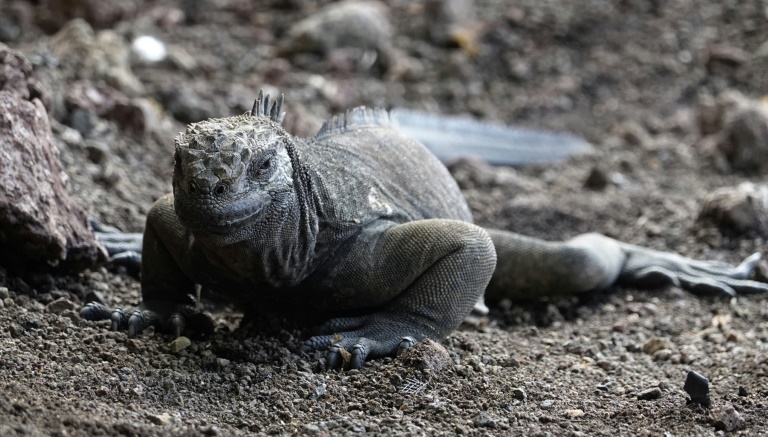
A land iguana that disappeared more than a century ago from one of the Galapagos Islands is reproducing naturally following its reintroduction there, Ecuador’s environment ministry announced Monday.

The reptile from the Conolophus subcristatus species, one of three land iguanas living on the archipelago, disappeared from Santiago Island in the early part of the 20th century according to a 1903-06 expedition there by the California Academy of Sciences, the ministry said.

In 2019, the Galapagos National Park (PNG) authority reintroduced more than 3,000 iguanas from a nearby island to restore the natural ecosystem of Santiago, which lies at the center of the Pacific archipelago.

The remote island chain was made famous by British geologist and naturalist Charles Darwin’s observations on evolution there.

In 1835, Darwin recorded a huge number of iguanas of all ages on Santiago.

PNG director Danny Rueda said “187 years later we are once again seeing a healthy population of land iguanas with adults, juveniles and newborns.

“It’s a great conservation achievement and strengthens our hopes of restoration on the islands that have been severely affected by introduced species.”

Located close to 1,000 kilometers (600 miles) off the coast of Ecuador, the Galapagos islands are home to unique flora and fauna and are a Natural World Heritage site.

Qaeda leader Zawahiri: 9/11 planner and bin Laden successor

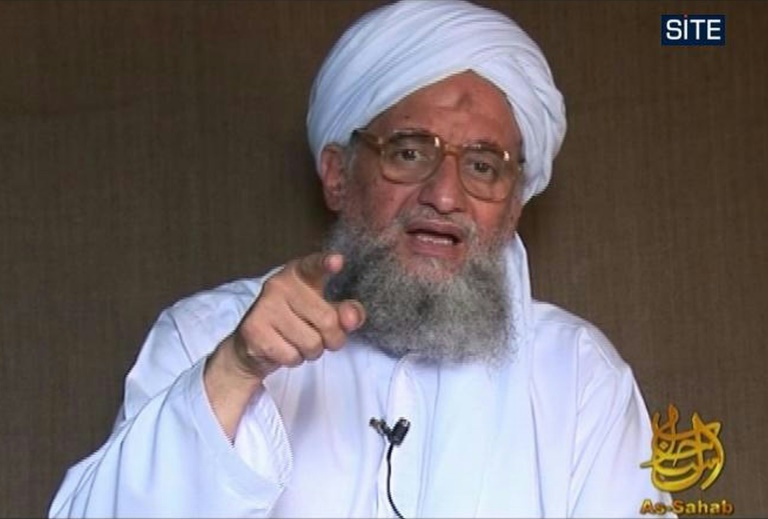
Al-Qaeda leader Ayman al-Zawahiri, who has been killed in a US drone strike in Afghanistan, was the key idealogue behind the global terror network for several decades, but never revived the status it had under charismatic founder Osama bin Laden.

The Egyptian eye doctor, 71, had central roles in Al-Qaeda’s signature attacks on US embassies in Kenya and Tanzania in 1998 and the massive assault on the United States itself on September 11, 2001, that left almost 3,000 dead.

But during the decade that he presided over the group following a US raid that killed bin Laden in 2011, it never recovered its prominence, as the aggressive Islamic State group took the lead in the jihadist movement, seizing large swathes of territory in Iraq and Syria and declaring a caliphate.

But even as some analysts said Zawahiri was increasingly aged and slow, he appeared to be seeking to rebuild the group anew in partnership with the Taliban since they seized control of Afghanistan last August.

“Justice has been delivered and this terrorist leader is no more,” President Joe Biden said as he announced Zawahiri’s death in a US drone strike in Kabul, where he had apparently moved after hiding for years on the Afghan-Pakistan border.

– Bin Laden’s doctor –

Zawahiri grew up in a comfortable household in Cairo before he turned to dissident politics.

He became involved with Egypt’s radical Islamist community at a young age and was reportedly arrested at 15 for joining the outlawed Muslim Brotherhood.

He was jailed for three years in Egypt for militancy and was implicated in the 1981 assassination of president Anwar Sadat and the massacre of foreign tourists at the city of Luxor in 1997.

He then linked up with bin Laden in Afghanistan, becoming Al-Qaeda’s main strategist — and, underscoring their closeness, serving as bin Laden’s personal doctor.

He was one of five signatories to bin Laden’s 1998 “fatwa” calling for attacks against Americans, and he began appearing regularly at the Al-Qaeda leader’s side.

It was often up to Zawahiri — identifiable by a prominent lump on his forehead — to motivate the group’s followers with his hectoring video appearances, jabbing his finger and staring from behind heavy-rimmed glasses.

Like bin Laden, he vanished after the September 11, 2001 attacks, surviving repeated attempts on his life and re-emerging after reports that he had already died.

But he stayed in US sights, with a $25 million bounty on his head for the 1998 Africa attacks.

– Overshadowed by Islamic State –

Zawahiri took command of Al-Qaeda in 2011 after US Navy SEALs swooped on bin Laden’s Pakistani home and killed him at point-blank range.

The new jihadist leader remained at large around the Afghan-Pakistan border, with a much-diminished organization, overshadowed by the Islamic State.

Yet Al-Qaeda was able to maintain a security threat through potent franchises in Yemen, Africa and East Asia. 

Analysts described Zawahiri’s leadership as more of an advisory board than a coherent, centralized command.

Analysts Colin Clarke and Asfandyar Mir wrote in Foreign Policy that while Zawahiri had “conjured less of a personality cult” than bin Laden, he was just as dangerous for the United States.

“While Al-Qaeda has not been able to replicate an assault like 9/11, that’s also a naive metric of success,” they said.

He never shied from publicly threatening his enemies, and maintained allies with those, like the Taliban, who were turned off by Islamic State’s tactics, which targeted fellow Muslims.

“Zawahiri’s call for unity and his general lack of interest in outbidding violence enabled Al-Qaeda to portray itself to its supporters and potential recruits as the more reliable jihadi front opposite the Islamic State,” Clarke and Mir wrote.

– New life with the Taliban –

The Taliban’s rise to control Afghanistan appeared to give the group a hope for a stronger future.

A United Nations report in July said that Zawahiri recently showed “increased comfort and ability to communicate” with close allies in the Taliban administration.

Zawahiri was unlikely to embark on international attacks in the short term to avoid embarrassing the new Kabul leadership, the report said.

Nevertheless, it said, “the international context is favourable to Al-Qaeda, which intends to be recognized again as the leader of global jihad.”

W.House warns Beijing against turning Pelosi Taiwan visit into a 'crisis'

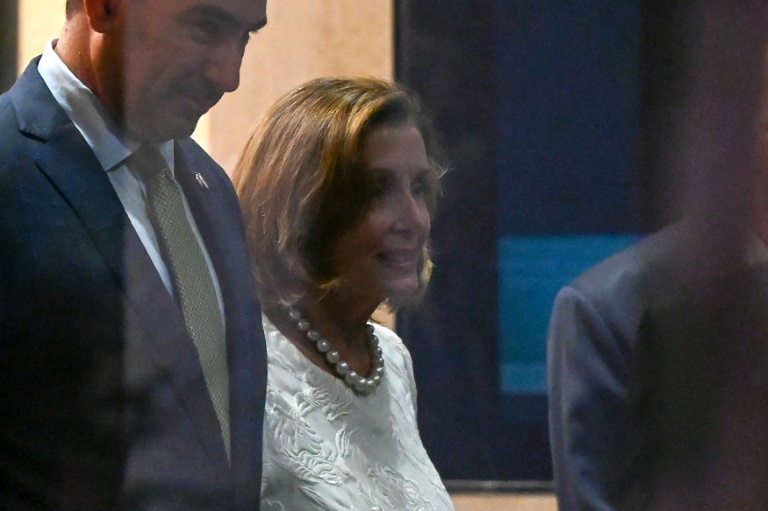
The White House on Monday warned China against overreacting to a trip by US House Speaker Nancy Pelosi to Taiwan, saying she would have every right to visit the self-ruled island despite Beijing viewing it as a highly provocative challenge.

China need not turn any visit by Pelosi into a “crisis,” White House National Security Council spokesman John Kirby told reporters, even as he warned that Beijing may be “positioning” itself for a show of military strength around the island.

Media reports have said that Pelosi, currently on an official Asia tour, will stop off in Taiwan and meet President Tsai Ing-wen on Wednesday — if so, the highest-level US visit to Taipei in decades.

Beijing, which views Taiwan as its territory, has reacted furiously to the idea, warning President Joe Biden that his administration was playing “with fire” and announcing a series of live-fire military drills in the Taiwan Straits. 

While the White House and State Department are both understood to be opposed to Pelosi’s trip, Kirby made it clear that the speaker — who is second in line to the US presidency — was entitled to go where she pleased.

“The speaker has the right to visit Taiwan,” he told reporters, adding: “There is no reason for Beijing to turn a potential visit consistent with longstanding US policies into some sort of crisis.”

Kirby cited intelligence that China was preparing possible military provocations that could include firing missiles in the Taiwan Strait or “large scale” incursions into Taiwan airspace.

Pelosi kicked her trip off Monday with a stop in Singapore, where Prime Minister Lee Hsien Loong urged her at a meeting to strive for “stable” ties with Beijing.

Her itinerary also includes Malaysia, South Korea and Japan, but the prospect of a Taiwan visit has dominated attention.

– ‘Nothing has changed’ –

Speculation about Pelosi’s plans has coincided with an uptick in military activity across the region. 

Kirby said the United States “will not be intimidated” from continuing to move freely in the Pacific region.

However, he sought to lower tension by stressing several times that US policy was unchanged toward Taiwan. This means support for its self-ruling government, while diplomatically recognising Beijing over Taipei and opposing either a full independence bid by Taiwan or a forceful takeover by China.

“Nothing has changed,” he said. “There’s certainly no reason for this to come to blows.”

Kirby confirmed that Pelosi is traveling on a military aircraft and said Washington does not fear a direct attack but warned it “raises the stakes of a miscalculation.”

Pelosi’s office has said her trip “will focus on mutual security, economic partnership and democratic governance in the Indo-Pacific region,” referring to the Asia-Pacific.

The statement did not mention Taiwan. But visits by US officials there are usually kept secret until delegations land.

China’s ambassador to the United Nations Zhang Hun labelled such a visit “very much dangerous, very much provocative” as he spoke to reporters Monday. 

“If the US insists on making the visit, China will take firm and strong measures to safeguard our sovereignty and territorial integrity,” he said at a briefing.

The Global Times, China’s state-run tabloid, suggested that Pelosi might use “emergency excuses like an aircraft fault or refuelling” to land at a Taiwanese airport.

“If she dares to stop in Taiwan, it will be the moment to ignite the powder keg of the situation in the Taiwan Straits,” Hu Xijin, a former Global Times editor and now commentator, tweeted.

And the Chinese army’s Eastern Theater Command shared footage on social media site Weibo featuring a combat-ready army with fighters and helicopters taking off, amphibious troops landing on a beach and a stream of missiles raining down on various targets.

“We will bury all enemies who invade our territory,” a short text accompanying the footage read. 

“We’re ready to fight,” it added. “Advance towards a joint combat and a victorious war.”

– Taiwan government silent –

Taiwan’s 23 million people have long lived with the possibility of an invasion, but the threat has intensified under Chinese President Xi Jinping.

American officials often make discreet visits to Taiwan to show support but a Pelosi trip would be higher-profile than any in recent history.

Taiwan’s government has remained silent on the prospect of a Pelosi visit and there has been minimal local press coverage. 

“I really hate what the Chinese are doing,” Hsu Ching-feng, a fruit vendor in Taipei, told AFP.

“But there’s nothing us common folks can do about it but ignore them.”

Two dead in California's largest wildfire this year

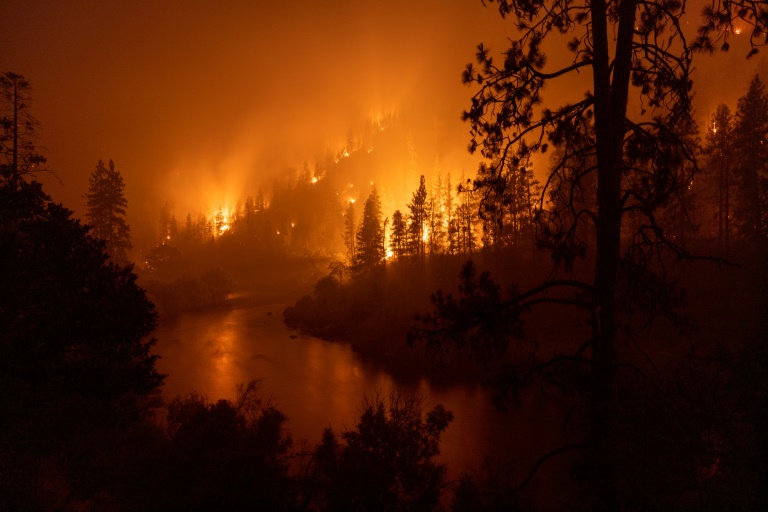
Firefighters faced “extremely dangerous” conditions Monday as they battled to save a community of 8,000 residents, with lightning strikes threatening to worsen a blaze that has already killed at least two people and become California’s biggest fire of the year.

Hundreds of personnel were involved in the fight against the fast-moving McKinney Fire, which has torn through more than 55,000 acres (22,000 hectares) near the border with Oregon, forcing thousands from their homes.

The National Weather Service meanwhile issued a warning because of the threat of dry lightning — powerful electrical strikes that come without any of the desperately needed rain.

“These conditions can be extremely dangerous for firefighters, as winds can be erratic and extremely strong, causing fire to spread in any direction,” said CalFire, an interagency website that collates fire information.

California, along with much of the western United States, is in the grip of its worst drought in more than 1,000 years.

The drought, exacerbated by man-made climate change, has left the countryside parched and exceedingly vulnerable to the wildfires that naturally break out, making the blazes hotter, faster and more destructive.

The McKinney Fire on Sunday claimed its first human lives, with the Siskiyou County Sheriff’s Office saying firefighters found two people dead inside a burned-out car in the driveway of a home in the town of Klamath River.

Sheriff Jeremiah LaRue said the pair were likely caught in the swift-moving fire as they tried to flee.

California Governor Gavin Newsom has declared a state of emergency in Siskiyou County, and more than 2,000 residents of the rural area are under evacuation orders.

A heat wave with temperatures of over 100 degrees Fahrenheit (38 degrees Celsius), tinder dry terrain and thunderstorms packing strong winds are complicating the efforts of firefighters battling the blaze.

“Fire growth is expected to spread in all directions,” the Klamath National Forest service said in a statement. “Warning for thunderstorms and lightning. Gusty outflow winds of 30 to 50 mph (50 to 80 kph) will be possible near thunderstorm cells.”

According to the Siskiyou County Sheriff’s Office, the fire has destroyed more than 100 structures — including homes, a grocery store and a community center — in the area surrounding Yreka, though it has not yet encroached upon the town of about 7,800 people.

“Surrounding areas should be ready to leave if needed. Please don’t hesitate to evacuate,” the county sheriff tweeted.

The McKinney fire is California’s largest wildfire so far this year — though it remains much smaller than last year’s Dixie Fire, which burned nearly one million acres.

– Animal rescue –

An AFP journalist working in the fire area captured a photograph of a kitten with singed whiskers cowering in between rocks in the Klamath National Forest.

As the picture ricocheted around the internet, users asked for updates, with one seemingly offering to look after the animal.

“Do you know if this kitten has been cared for and adopted at this point?” tweeted @bobbiescat

Another journalist shared footage of a young puppy gratefully lapping at a bowl of water after emerging from the ashen ruins of a home in Klamath River.

Rescue Ranch Yreka, which took in the stricken pup, said it had received nearly 140 dogs in less than two days, and appealed for donations to help feed and care for them.

The fast-spreading blaze comes just days after the Oak Fire near Yosemite National Park destroyed dozens of buildings and forced thousands to evacuate.

California still has months of fire season ahead of it.

Other parts of the world have also faced intense wildfires this year, as scientists say climate change is making heatwaves more frequent and more intense, increasing the risk of fires.

In Portugal, a blaze broke out in the Mafra area, north of Lisbon, over the weekend while in France at least four firefighters were seriously injured and motorways were closed.

Also over the weekend, hundreds of firefighters battled a blaze in eastern Germany, with four people injured.

Peru registers first death in monkeypox patient: hospital

Peru on Monday recorded its first death of a monkeypox-infected person, with more than 300 cases reported in the country to date, a health official said.

The fatality was “a patient who came to hospital in a serious condition with monkeypox and their health weakened after abandoning treatment for HIV/Aids,” according to Eduardo Farfan, director of the Dos de Mayo hospital in Lima.

The man, 45, died “of sepsis” due to a weakened immune system, said Farfan.

He had been admitted to hospital with a severe monkeypox infection and “other comorbidities,” said the director.

Farfan said his hospital was treating about eight or nine cases of monkeypox per day, on an outpatient basis.

According to the WHO, more than 18,000 monkeypox cases have been detected throughout the world outside Africa since the beginning of May, most of them in Europe.

Sanctions have huge toll on Russian economy: report

The Russian economy has been deeply damaged by sanctions and the exit of international business since the country invaded Ukraine, according to a new report by Yale University business experts and economists.

Even though Moscow has been able to pull in billions of dollars from continued energy sales at elevated prices, largely unpublished data shows that much of its domestic economic activity has stalled since the February 24 invasion, according to the report released in late July.

“The findings of our comprehensive economic analysis of Russia are powerful and indisputable: Not only have sanctions and the business retreat worked, they have thoroughly crippled the Russian economy at every level,” said the report from the Yale School of Management.

“Russian domestic production has come to a complete standstill with no capacity to replace lost businesses, products and talent,” the 118-page report said.

The report was produced by Jeffrey Sonnenfeld, president of the Yale Chief Executive Leadership Institute, and other members of the institute, a mix of economists and business management experts.

With Moscow having halted or pared the release of official economic statistics, including crucial trade figures, Sonnenfeld’s group tapped into data held by companies, banks, consultants, Russian trading partners and others to build a picture of Russian economic performance.

They also said they obtained unreleased data from experts on the Russian economy, and data in other languages which supported their conclusions.

Even if Russia is able to earn more foreign exchange on gas and oil exports, that has not offset the impact of Western sanctions.

And, they argue, the country’s dependence on Europe to buy 83 percent of its energy exports leaves it under a greater medium-term threat.

“Russia is far more dependent on Europe than Europe is on Russia,” they said.

– Car industry crashes –

Russia largely survived Western economic sanctions after Moscow’s 2014 seizure of the Ukraine region of Crimea.

President Vladimir Putin pushed a program of replacing some imports with domestic products and built up a cushion of financial reserves.

But the country’s industry remained heavily driven by foreign capital investment and the import of higher-tech inputs that Russia had not mastered, like semiconductors.

The barrage of deeper sanctions after the invasion took aim at both of those vulnerabilities, the report said.

Some 1,000 foreign companies halted their activities in the country, potentially impacting up to five million jobs, according to the report.

Industrial output plunged, and Russian retail sales and consumer spending have fallen at an annual rate of 15-20 percent.

Imports have plunged across the board, the report said; crucial imports from China fell by more than half.

A key example of Russian problems, according to the report, is the automobile sector.

Car sales went from 100,000 a month to 27,000 a month, and output has stalled due to a lack of parts and machinery.

Without access to imported components, Russian producers are putting out cars without airbags or modern anti-lock brakes, and only with manual transmissions.

– Threat to gas revenues –

The report challenged the belief that the Russian economy was surviving thanks to the tens of billions of dollars the country reaps each month from oil and gas exports.

Last week the IMF said the Russian economy, though contracting, was doing better than expected due to its energy and commodity export income.

The Yale report said data indicates energy revenues have been falling for the last three months.

If Western Europe succeeds in cutting itself off from Russian natural gas, Moscow faces an “unsolvable” situation with a lack of a market for its output, according to the report.

“Any decrease in oil and gas revenues or oil and gas export volumes would immediately put a strain on the Kremlin’s budget,” it said.

Stock markets waver, oil prices sink

Oil prices tumbled Monday following surprisingly weak China manufacturing data, while global stocks were mixed ahead of key jobs data, earnings and central bank announcements.

China’s closely-watched Purchasing Managers’ Index of manufacturing activity shrank in July as the result of weak demand and the strict zero-Covid measures imposed in parts of the country.

The index, a key gauge of manufacturing activity in the world’s second-biggest economy, came in at 49.0 in July, down from 50.2 June and below the 50-point mark separating growth from contraction, according to the National Bureau of Statistics.

While sweeping curbs have eased in major hubs such as Shanghai and Beijing, sporadic lockdowns in other cities and towns have kept businesses and consumers worried with few signs of the policy easing.

“Oil prices were under pressure after weak Chinese manufacturing figures which really show the continuing impact of lockdowns on the country’s economy,” said AJ Bell investment director Russ Mould.

Oil traders also standing by for another output decision by the OPEC+ group of major crude-producing nations on Wednesday.

Wall Street stocks ended modestly lower after a choppy session as petroleum-linked shares retreated.

London’s FTSE 100 and the Paris CAC 40 were down a bit while the Frankfurt DAX was flat at the close.

In corporate news, Asia-focused lender HSBC provided another boost with a “bullish” outlook, alongside its intention to revert to quarterly shareholder dividends next year.

HSBC shares jumped by more than six percent in the British capital. 

On Wall Street, Boeing surged 6.1 percent as it moved closer to final regulatory approval to resume deliveries of its 787 jet.

This week’s calendar includes the US jobs report for July, which will be closely scrutinized for clues as to whether the Federal Reserve can be expected to dial back its aggressive interest rate hikes, as markets hope.

Major corporate earnings reports include those from oil giant BP, US ride-hailing firm Uber, Japanese automaker Toyota and Chinese tech giant Alibaba.

The Bank of England is expected to deliver a bumper 0.5-percentage-point interest rate hike Thursday as it continues  to combat rocketing inflation.

“Sharp hikes by the US Federal Reserve and European Central Bank in July make it all the more likely that it will pull the trigger on an outsize rate hike,” Markets.com analyst Neil Wilson told AFP.

Global central banks are ramping up borrowing costs in an attempt to get a handle on runaway consumer price inflation.

– Key figures at around 2040 GMT –

New York – Dow: DOWN 0.1 percent at 32,798.40 (close)

New York – S&P 500: DOWN 0.3 percent at 4,118.63 (close)

New York – Nasdaq: DOWN 0.2 percen at 12,368.98 (close)

London – FTSE 100: DOWN 0.1 percent at 7,413.42 (close)

Frankfurt – DAX: FLAT at 13,479.63 (close)

Paris – CAC 40: DOWN 0.2 percent at 6,436.86 (close)

EURO STOXX 50: UP 0.1 percent at 3,711.36 (close)

Tokyo – Nikkei 225: UP 0.7 percent at 27,993.35 (close)

Hong Kong – Hang Seng Index: UP 0.1 percent at 20,165.84 (close)

Shanghai – Composite: UP 0.2 percent at 3,259.96 (close)

Euro/dollar: UP at $1.0262 from $1.0220 Friday

Pound/dollar: UP at $1.2255 from $1.2171 

Euro/pound: DOWN at 83.70 pence from 83.97 pence

Dollar/yen: DOWN at 131.61 yen from 133.27 yen

Brent North Sea crude: DOWN 3.8 percent at $100.03 per barrel

West Texas Intermediate: DOWN 4.7 percent at $93.89 per barrel

burs-jmb

First grain shipment since Russian invasion leaves Ukraine port

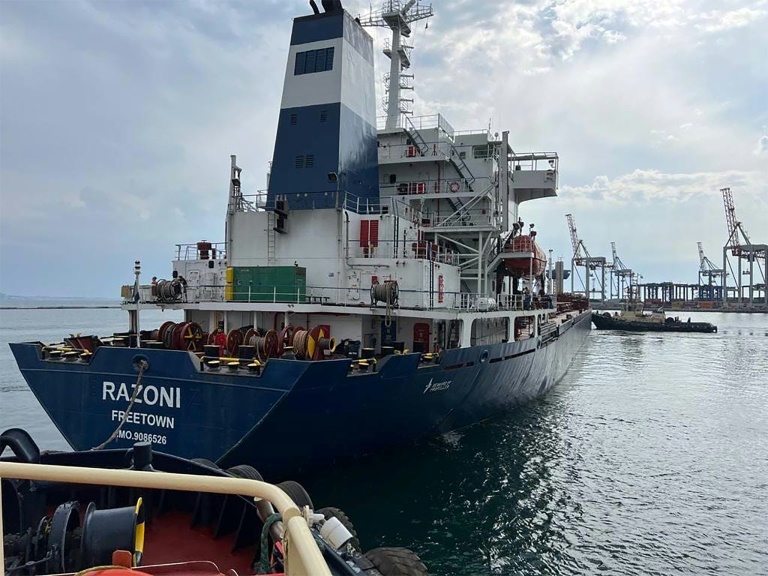
The first shipment of Ukrainian grain since the Russian invasion in February left the port of Odessa on Monday under a landmark deal to lift Moscow’s naval blockade in the Black Sea.

The five-month halt of deliveries from Ukraine — one of the world’s biggest grain exporters — has contributed to soaring food prices, hitting the world’s poorest nations especially hard.

Kyiv said the departure of the Razoni cargo ship would bring “relief for the world” — if Moscow respected its side of the accord — but President Volodymyr Zelensky cautioned it was too soon to celebrate.

“At this time, it is too early to draw any conclusions and make any forecasts,” Zelensky said in his daily video address. 

“Let’s wait and see how the agreement works and whether security will be really guaranteed.” 

The breakthrough pact signed in July was the first significant accord involving Ukraine and Russia since Moscow invaded its neighbour on February 24.

Russian missiles struck Odessa the day after the deal was inked.

Officials said the Razoni, registered in Sierra Leone, was making its way through a specially cleared corridor in the mine-infested waters of the Black Sea with 26,000 tonnes of maize on board.

Ukrainian, Turkish and UN officials said more shipments should follow.

Despite progress on grain exports, Russian shells hit cities in the south and east, and western nations sent a new tranche of high-precision weapons to the Ukrainians.

Diplomatic tensions ratcheted up, with the United States, Britain and France rebuking Moscow for hinting it could use nuclear weapons and the Kremlin blacklisting 39 more high-profile British citizens.

Kyiv said it had received more precision rocket systems from the United States and Germany, adding to a growing arsenal of Western long-range artillery Kyiv says is changing dynamics on the battlefield.

Defence Minister Oleksiy Reznikov tweeted that four more high-mobility advanced rocket launchers (HIMARS) from Washington and the first in a batch of German MARS-II systems had arrived in Ukraine. 

The new $550-million package of US military aid brings to more than $8.0 billion the total committed to Ukraine since President Joe Biden took office, US National Security Council spokesman John Kirby told reporters.

On the diplomatic front, Washington, London and Paris used a review of a key United Nations nuclear treaty to rebuke Moscow for “irresponsible and dangerous” talk about possibly deploying nuclear weapons.

Russian President Vladimir Putin rebuffed the accusation, telling the Tenth Nuclear Proliferation Treaty Review Conference there could be “no winners” in a nuclear war and it should “never be unleashed”.

The Kremlin nevertheless accused Britain, one of Kyiv’s most vocal supporters, of deliberately worsening relations between Russia and the West.

It blacklisted 39 British citizens, including Labour Party leader Keir Starmer and former prime minister David Cameron, saying they “contribute to the hostile course of London, aimed at the demonisation of our country and its international isolation”.

On the ground, Russian shelling killed three people in the space of 24 hours in the eastern Donetsk region, regional head Pavlo Kyrylenko said.

In the southern city of Mykolaiv the governor said “massive” Russian shelling overnight had wounded three people, damaged homes and aid supplies.

Mykolaiv is the closest city to the southern front.  Ukrainian forces are looking to launch a major counter-offensive there to recapture territory lost to Russia after its invasion on February 24.

On Monday, Kyiv said its troops had retaken more than 40 settlements in the key southern region of Kherson.

– Ships ‘waiting to leave’ –

The first grain shipment from Ukraine offered a glimmer of hope.

United Nations secretary general Antonio Guterres, who brokered the plan alongside Turkey, welcomed the Razoni’s departure. The European Union and NATO hailed it as a first step.

The Kremlin hailed the “very positive” development, saying it was a “good opportunity to test the effectiveness of the mechanisms” agreed in Istanbul.

Turkey said the Razoni was expected to arrive on Tuesday in Istanbul, where it would be inspected before continuing its journey.

Other convoys would follow, it said.

Ukraine has worked to boost grain deliveries by train, road and up the river Danube but this has still left a large shortfall compared to what the country was able to export by sea before the war.

Kyiv has repeatedly accused Russia of seizing and illegally exporting cereals from regions it occupies. 

Ukrainian Infrastructure Minister Oleksandr Kubrakov said 16 more ships, blocked since the start of the invasion, were “waiting for their turn”.

Guterres said the World Food Programme was planning to “purchase, load and ship an initial 30,000 metric tons of wheat out of Ukraine on a UN-chartered vessel”.

Iran steps up Bahai persecution with wave of arrests

Iranian authorities have stepped up persecution of the Bahais with a wave of arrests of prominent members of the country’s biggest non-Muslim minority, leaving the battered community in shock, activists said on Monday.

The Bahais in Iran, who have been subjected to harassment ever since the inception of the Islamic republic in 1979, had already complained that dozens of community members had been arrested, summoned or subjected to house searches in June and July.

But the intensification of the persecution reached a new peak on Sunday when 13 Bahais were suddenly arrested in raids on the homes and businesses of 52 Bahais across the country, Diane Alai, the representative of the Bahai International Community (BIC), told AFP.

She said those detained included prominent Iranian Bahai figures Mahvash Sabet, Fariba Kamalabadi and Afif Naemi who had previously each served a decade in jail and been part of a now disbanded Bahai administrative group known as the Yaran.

“This is an outrageous move,” Alai told AFP. “It is an escalation.”

“We did not want to believe that this was going to happen but we could see it in the making,” she said, noting a “campaign of incitement to hatred” in pro-government media.

James Samimi Farr, of the Bahais of the United States, added: “For whatever reason there is an emboldened effort to persecute our community and test the waters of what can be done against us.”

– ‘Not a shred of proof’ –

Iran’s intelligence ministry said Monday it had arrested members of the Bahai minority suspected of spying for a centre located in Israel and of working illegally to spread their religion.

They had been instructed to “infiltrate educational environments at different levels, especially kindergartens across the country”, it said.

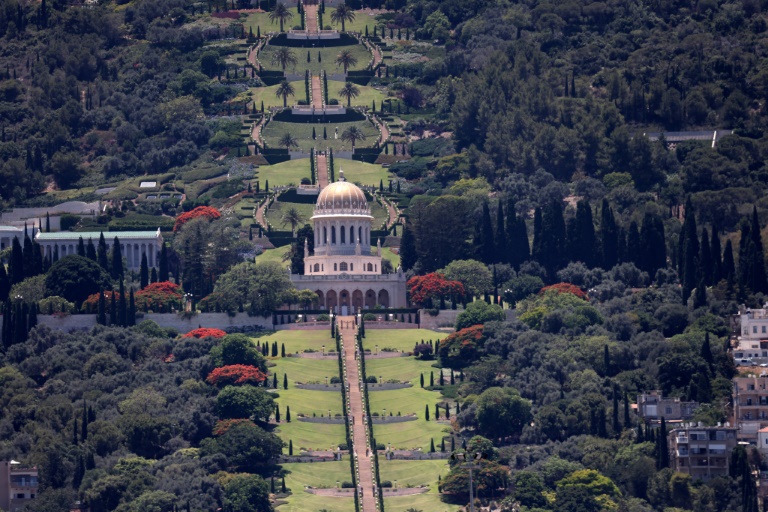
Bahais are used to accusations by Iran of links to Israel, whose northern city of Haifa of hosts a centre of the Bahai faith established due to the exile of a Bahai leader well before the State of Israel was established.

Such allegations contain “not one shred of proof,” said Alai.

Samimi Farr said: “The government has felt emboldened to persecute us on flimsy pretexts that have been disproved again and again”.

The Islamic republic recognises minority non-Muslim faiths including Christianity, Judaism and Zoroastrianism but does not extend the same recognition to Bahaism with followers estimated to number 300,000 in Iran.

Community leaders say Bahais have been subjected to persecution throughout the more than four decade-long existence of the Islamic republic, with members notably facing major obstacles to access higher education.

– ‘Eliminate the community’ –

During her previous stint in prison, Fariba Kamalabadi got to know the daughter of late former president Akbar Hashemi Rafsanjani, Faezeh Hashemi, who had herself been imprisoned in the wake of protests.

When Kamalabadi was allowed a brief break from prison in 2016, Faezeh Hashemi met her, breaking a major taboo in Iran and outraging conservatives and her own father.

Mahvash Sabet, who wrote poetry during her decade in Tehran’s Evin Prison, was recognised in 2017 as an English PEN International Writer of Courage.

The Bahai faith is a relatively modern monotheistic religion with spiritual roots dating back to the early 19th century in Iran, promoting the unity of all people and equality.

Adherents say the tenets of the faith encourage a non-confrontational approach known as “constructive resilience” and insist the Bahais of Iran want to work for the good of the country and not against its leadership.

Iran is currently in the throes of a major crackdown affecting all walks of life in an economic crisis that has sparked protests. Filmmakers, unionists and foreign nationals have been arrested. 

Alai said the latest spike in repression had just one ultimate goal. “Their aim is to eliminate the Bahai community as a viable entity.”

Iraq tensions soar as protesters rally against parliament occupation

Thousands of Iraqis took to the streets of Baghdad Monday in counter-protests as rival supporters of Shiite Muslim cleric Moqtada Sadr extended their occupation of parliament into a third day.

Almost 10 months after Iraqis went to the polls, a political standoff pits two key factions of the Shiite political scene, between the populist Sadr with a devoted following of millions, and the powerful pro-Iran Coordination Framework.

“The people will not allow a coup,” read placards held by supporters of the Coordination Framework as they gathered on a main street leading to the Green Zone, the home of parliament, which Sadr’s supporters have been occupying since Saturday.

“It is the parliament of the people, of all Iraqis, not the parliament of a select group”, said 25-year-old protester Ahmed Ali, condemning “the storming” of government institutions.

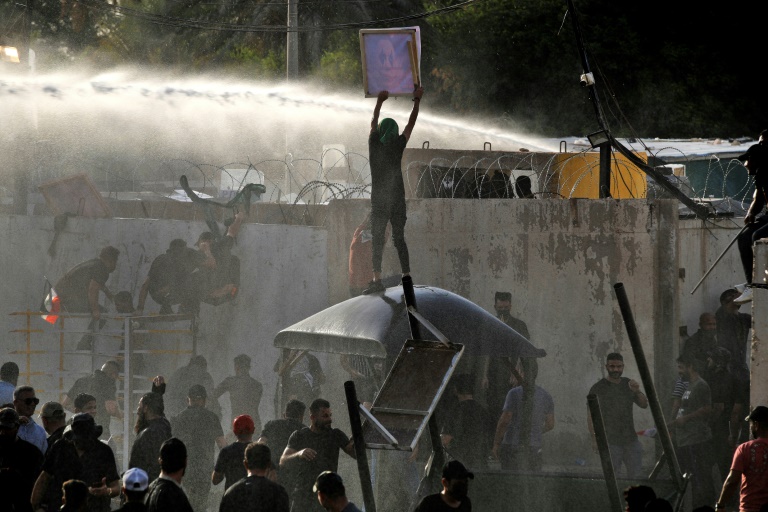
Police fired water cannon at crowds in a bid to prevent them from crossing a bridge leading to the Green Zone, inside which thousands of Sadr supporters maintained their protests, waving flags and carrying placards of their leader.

Sadr’s supporters on Saturday breached the normally high-security Green Zone — also home to government buildings and embassies — in protest at a prime ministerial nomination by the Coordination Framework.

– ‘Defend the state’ –

Followers of the Coordination Framework urged supporters not to enter the Green Zone, saying their objective was to “defend the state and its legitimacy”.

After some two hours, the counter-demonstration announced they were dispersing. 

“They wanted to show their political strength, to show that they too have a base that can take over the Iraqi street,” said political scientist Ihsan al-Shammari, from the University of Baghdad.

In multi-confessional and multi-ethnic Iraq, government formation has involved complex negotiations since a 2003 US-led invasion toppled dictator Saddam Hussein.

In this case, the protracted political deadlock has left the country without a government, a new prime minister or a new president.

Sadr’s massive mobilisation of supporters in recent weeks has underscored the political clout of the firebrand preacher.

The Coordination Framework alliance includes lawmakers from the party of Sadr’s longtime foe, ex-prime minister Nuri al-Maliki.

It also represents the powerful pro-Iran former paramilitary alliance Hashed al-Shaabi, now integrated into the regular forces.

Hadi al-Ameri, who heads a faction of the Hashed, repeated a call Monday for “constructive dialogue” and warned against “an atmosphere of media escalation, sparked by statements and counter-statements calling for mass mobilisations that could get out of control and lead to violence”.

Iranian foreign ministry spokesman Nasser Kanani said Tehran respects “the choice of the Iraqi people”, and that “dialogue is the best way to solve the internal problems of Iraq”.

– ‘Government of the corrupt’ –

Sadr’s 73 lawmakers had made up the biggest group of parliament’s 329 lawmakers, but they were unable to cobble together a government.

In June they quit, a move that made their pro-Iran rivals the largest bloc in the legislature.

But the Sadrist camp was outraged by the Coordination Framework’s recent nomination of former minister Mohammed Shia al-Sudani for premier, prompting them to occupy parliament.

On Sunday, the mercurial Sadr called on “everyone… to support the reformist revolutionaries”. 

The Coordination Framework described the appeal as “a call for a coup against the people, the state and its institutions”.

Followers of Sadr also held rallies in the southern cities of Basra, Kut and Nassiriya on Monday.

“Here are the soldiers of the sons of the sayyed,” Sadr’s supporters shouted in the parliament’s entrance hall, using an honorific reference to the preacher, who wears a black turban symbolic of a descendant of the Prophet Mohammed.

“We want to get rid of the government of the corrupt,” said protester Zaher al-Atabi. “From 2003 until now, those who have run the country have done nothing to develop public services, no health system, no education.”

But while the cleric’s supporters see him as cracking down on graft, Sadrist supporters hold posts at the highest levels of government ministries — and opponents accuse them of being just as corrupt as Iraq’s other political forces.

Close Bitnami banner
Bitnami