World

France and parts of England see driest July on record

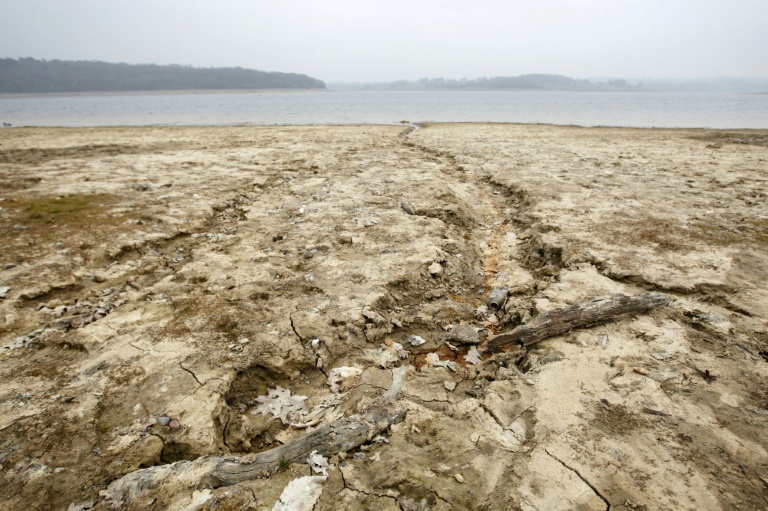
France and parts of England saw their driest July on record, the countries’ weather agencies said on Monday, exacerbating stretched water resources that have forced restrictions on both sides of the Channel.

In France, where an intense drought has hammered farmers and prompted widespread limits on freshwater use, there was just 9.7 millimetres (0.38 inches) of rain last month, Meteo France said.

That was 84 percent down on the average levels seen for July between 1991 and 2022, and made it the second driest month since March 1961, the agency added.

Meanwhile swathes of southern and eastern England recorded the lowest rainfall in July on record, the UK’s Met Office. 

The whole of England recorded an average of 23.1 mm of rain — the lowest figure for the month since 1935 and the seventh lowest July total on record, it said.

The Met Office has been compiling records since 1836.

The low rainfall in both countries has been coupled with a summer of unprecedentedly high temperatures, which topped 40 degrees Celsius (104 degrees Fahrenheit) in England last month for the first time ever.

Climate scientists overwhelmingly agree that carbon emissions from humans burning fossil fuels are heating the planet, raising the risk and severity of droughts, heatwaves, and other extreme weather events.

Analysis by an international team of researchers released last Friday found climate change caused by human activity made the recent record-shattering UK heatwave at least 10 times more likely to occur.

– ‘Vicious circle’ –

Water companies on both sides of the Channel are struggling to respond to the parched conditions.

Nearly all of France’s 96 mainland regions have imposed water use restrictions, also a record. 

The country is bracing for its third heatwave this summer, beginning in the southeast on Monday before heading north toward Paris.

Farmers nationwide are reporting difficulties in feeding livestock because of parched grasslands, while irrigation has been banned in large areas of the northwest and southeast due to freshwater shortages.

On the eastern river Rhine, which runs along the France-Germany border, commercial boats are having to run at a third of their carrying capacity in order to avoid hitting the bottom because the water level is so low.

Environment Minister Christophe Bechu said July’s rainfall represented “just 12 percent of what’s needed”. 

“We have a heatwave that increases the need (for water) and a drought that is limiting what is available, pushing us into this vicious cycle,” Bechu told BFM television during a visit to the hard-hit Isere department in the southeast.

In England, one water provider has so far announced restrictions.

Southern Water, which is responsible for supplies over a swathe of central southern England, will impose limits on its almost one million customers from later this week.

But the so-called hosepipe ban could soon be replicated by other providers, following a warning by the UK government’s Environment Agency that people needed to use water “wisely”.

Most of England has moved into “prolonged dry weather” status, the agency said last week. 

This means it is now taking precautionary actions to mitigate impacts “as hydrological conditions deteriorate”.
France and parts of England see driest July on record

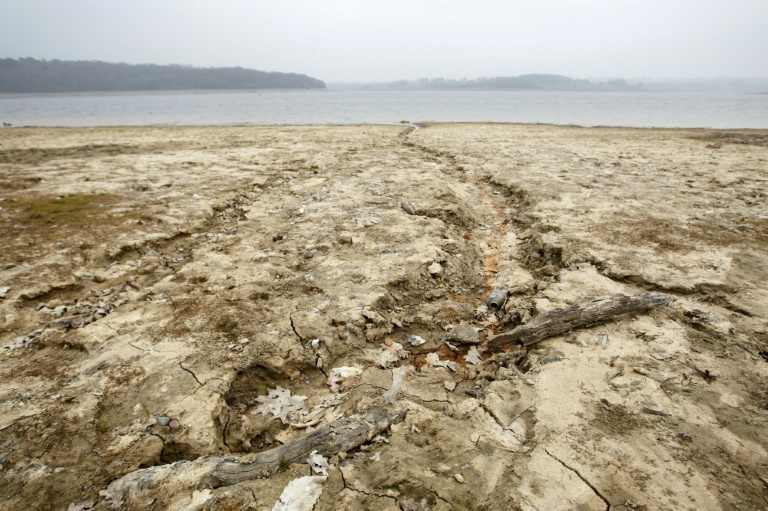
France and parts of England saw their driest July on record, the countries’ weather agencies said on Monday, exacerbating stretched water resources that have forced restrictions on both sides of the Channel.

In France, where an intense drought has hammered farmers and prompted widespread limits on freshwater use, there was just 9.7 millimetres (0.38 inches) of rain last month, Meteo France said.

That was 84 percent down on the average levels seen for July between 1991 and 2022, and made it the second driest month since March 1961, the agency added.

Meanwhile swathes of southern and eastern England recorded the lowest rainfall in July on record, the UK’s Met Office. 

The whole of England recorded an average of 23.1 mm of rain — the lowest figure for the month since 1935 and the seventh lowest July total on record, it said.

The Met Office has been compiling records since 1836.

The low rainfall in both countries has been coupled with a summer of unprecedentedly high temperatures, which topped 40 degrees Celsius (104 degrees Fahrenheit) in England last month for the first time ever.

Climate scientists overwhelmingly agree that carbon emissions from humans burning fossil fuels are heating the planet, raising the risk and severity of droughts, heatwaves, and other extreme weather events.

Analysis by an international team of researchers released last Friday found climate change caused by human activity made the recent record-shattering UK heatwave at least 10 times more likely to occur.

– ‘Vicious circle’ –

Water companies on both sides of the Channel are struggling to respond to the parched conditions.

Nearly all of France’s 96 mainland regions have imposed water use restrictions, also a record. 

The country is bracing for its third heatwave this summer, beginning in the southeast on Monday before heading north toward Paris.

Farmers nationwide are reporting difficulties in feeding livestock because of parched grasslands, while irrigation has been banned in large areas of the northwest and southeast due to freshwater shortages.

On the eastern river Rhine, which runs along the France-Germany border, commercial boats are having to run at a third of their carrying capacity in order to avoid hitting the bottom because the water level is so low.

Environment Minister Christophe Bechu said July’s rainfall represented “just 12 percent of what’s needed”. 

“We have a heatwave that increases the need (for water) and a drought that is limiting what is available, pushing us into this vicious cycle,” Bechu told BFM television during a visit to the hard-hit Isere department in the southeast.

In England, one water provider has so far announced restrictions.

Southern Water, which is responsible for supplies over a swathe of central southern England, will impose limits on its almost one million customers from later this week.

But the so-called hosepipe ban could soon be replicated by other providers, following a warning by the UK government’s Environment Agency that people needed to use water “wisely”.

Most of England has moved into “prolonged dry weather” status, the agency said last week. 

This means it is now taking precautionary actions to mitigate impacts “as hydrological conditions deteriorate”.

UN chief warns of 'nuclear annihilation'

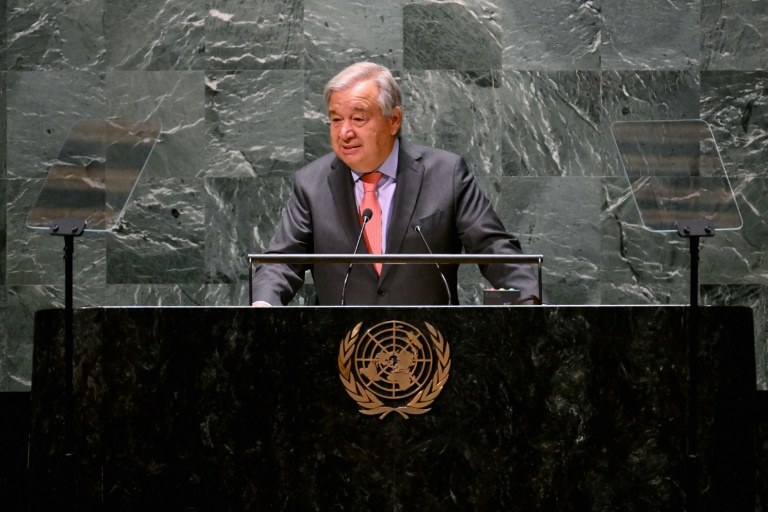
UN head Antonio Guterres warned Monday that a misunderstanding could spark nuclear destruction as the United States, Britain and France urged Russia to stop “its dangerous nuclear rhetoric and behaviour.”

At the opening of a key nuclear Non-Proliferation Treaty (NPT) conference in New York, Guterres warned that the world faced “a nuclear danger not seen since the height of the Cold War.”

Citing Russia’s war with Ukraine and tensions on the Korean peninsula and in the Middle East, Guterres said he feared that crises “with nuclear undertones” could escalate.

“Today, humanity is just one misunderstanding, one miscalculation away from nuclear annihilation,” Guterres told the 10th review conference of the NPT, an international treaty that came into force in 1970 to prevent the spread of nuclear weapons.

“We have been extraordinarily lucky so far. But luck is not a strategy. Nor is it a shield from geopolitical tensions boiling over into nuclear conflict,” he added, calling on nations to “put humanity on a new path towards a world free of nuclear weapons.”

The meeting, held at the UN’s headquarters in New York, has been postponed several times since 2020 due to the Covid-19 pandemic. It will run until August 26.

Guterres said the conference was “a chance to strengthen” the treaty and “make it fit for the worrying world around us.

“Eliminating nuclear weapons is the only guarantee they will never be used,” the secretary-general implored, adding that he would visit Hiroshima for the anniversary of the August 6, 1945 atomic bombing of the Japanese city by the United States.

“Almost 13,000 nuclear weapons are now being held in arsenals around the world. All this at a time when the risks of proliferation are growing and guardrails to prevent escalation are weakening,” Guterres added.

In January, the five permanent members of the UN Security Council — the United States, China, Russia, Britain and France — had pledged to prevent the further dissemination of nuclear weapons.

On Monday, America, Britain and France reaffirmed their commitment in a joint statement, saying a “nuclear war cannot be won and must never be fought.”

– ‘Need to act’ –

The three also took aim at Russia, urging Moscow to respect its international commitments under the NPT.

“Following Russia’s unprovoked and unlawful war of aggression against Ukraine, we call on Russia to cease its irresponsible and dangerous nuclear rhetoric and behaviour,” they said.

The statement came as US President Joe Biden called on Russia and China to enter nuclear arms control talks.

The US leader reiterated in a statement that his administration is ready to “expeditiously negotiate” a replacement to New START, the treaty capping intercontinental nuclear forces in the United States and Russia, which is set to expire in 2026.

The NPT, which the signatories review every five years, aims to prevent the spread of nuclear weapons, promote complete disarmament and promote cooperation in the peaceful use of nuclear energy.

At the last review conference in 2015, the parties were unable to reach agreement on substantive issues.

“The world can never be safe as long as any country has nuclear weapons,” said Beatrice Fihn, executive director of the International Campaign to Abolish Nuclear Weapons, who was in New York for the meeting.

“And the NPT recognizes this,” she added. “It’s the reason that the treaty exists. And now states, parties more than ever need to act.”

India reports Asia's first possible monkeypox death

Indian authorities reported Asia’s first possible monkeypox fatality on Monday after the death of a man who recently returned from United Arab Emirates testing positive.

Kerala state’s health ministry said tests on the 22-year-old “showed that the man had monkeypox”. 

Three monkeypox-related fatalities have so far been reported outside Africa in an outbreak that the World Health Organization has declared a global health emergency.

The Indian man died in Kerala on July 30 around a week after returning from the UAE and being taken to hospital.

It was unclear however whether monkeypox was the cause of death.

“The youth had no symptoms of monkeypox. He had been admitted to a hospital with symptoms of encephalitis and fatigue,” the Indian Express daily quoted Kerala’s health minister Veena George as saying on Sunday.

Twenty people identified as high risk of infection were being kept under observation, she added, including family members, friends who played football with the man and medical staff.

– 18,000 cases –

According to the WHO, more than 18,000 monkeypox cases have been detected throughout the world outside Africa since the beginning of May, most of them in Europe.

Spain last week recorded two monkeypox-related deaths and Brazil one.

It is however unclear if monkeypox actually caused the three fatalities, with Spanish authorities as of Sunday still carrying out autopsies and Brazilian authorities saying its deceased patient had other “serious conditions”.

The WHO’s European office said on Saturday that more monkeypox-related deaths can be expected.

“With the continued spread of monkeypox in Europe, we will expect to see more deaths,” Catherine Smallwood, Senior Emergency Officer at WHO Europe, said in a statement.

The goal needs to be “interrupting transmission quickly in Europe and stopping this outbreak”, she said.

Paul Hunter of Britain’s University of East Anglia said while the risk of monkeypox-related death outside Africa “remains low… these reports reinforce the need to roll out vaccination as soon as possible to those people who are most at risk”. 

– Nobody’s fault –

India has reported at least four cases, with the first recorded on July 15 in another man who returned to Kerala from the UAE.

Kerala’s health ministry said in its statement on Monday that a high-level team from the state medical board would probe the death.

Primary tests from the National Institute of Virology in the city of Pune showed that the man had the variant from West Africa and that more genetic tests would be conducted.

“The disease is nobody’s fault. Those who have symptoms should inform the health department so that the spread can be contained,” the ministry said, adding that there was “no need to panic”.

It added that the man’s family only informed doctors on July 30 result of tests conducted in Dubai on July 19, by which time he was in a critical condition.

It added that there were 165 passengers on the same flight from UAE but that “nobody is a close contact”.

– Rash –

Monkeypox, so called because it was first discovered in a monkey, is related to the deadly smallpox virus, which was eradicated in 1980, but is far less severe. 

Early signs of the disease include a high fever, swollen lymph glands and a chickenpox-like rash.

In May 2022, a flurry of cases was detected in countries outside Africa in people with no travel links to the region. 

The WHO last month declared the outbreak to be a global health emergency — the highest alarm it can sound.

ash-burs/stu/dhc/st

Fires increase in Brazilian Amazon in July

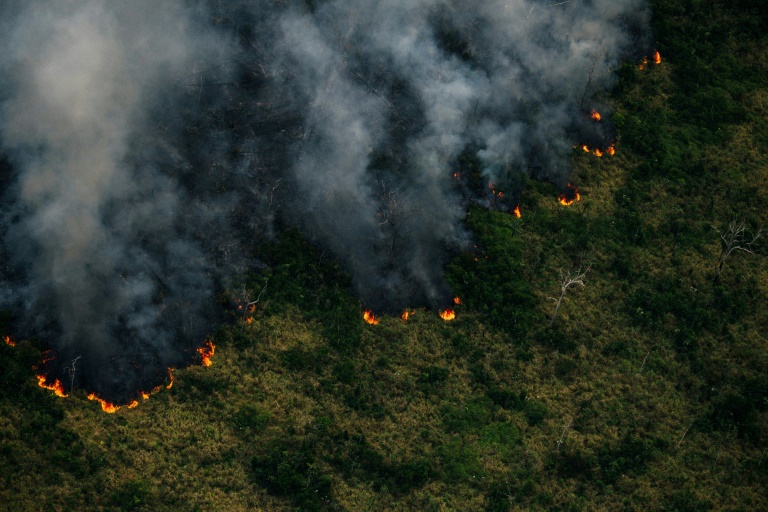
The number of forest fires in the Brazilian Amazon increased by eight percent last month compared with July 2021, according to official figures released Monday, the latest alarm bell for the world’s biggest rainforest.

Satellite monitoring detected 5,373 fires last month, up from 4,977 in July last year, according to the Brazilian space agency, INPE.

However, the number was well short of the worst July on record: 19,364 fires in 2005.

July is typically the start of the Amazon “fire season,” when drier weather fuels more fires — mostly set by farmers and speculators clearing land for agriculture, according to experts.

The increase in the Amazon came as major fires raged in California, France and Portugal amid rising temperatures.

This has been a worrying year for fires in the Amazon, a key resource in the race to curb global warming: INPE has detected 12,906 so far, up 13 percent from the same period last year.

“It’s only the beginning of the Amazon dry season, when the number of criminal forest fires unfortunately explodes,” said Romulo Batista of Greenpeace Brazil.

“In addition to decimating the forest and its biodiversity, those fires and destruction also affect the local population’s health due to smoke inhalation,” he said in a statement.

President Jair Bolsonaro, who comes up for reelection in October, is facing scrutiny for his government’s controversial stewardship of Brazil’s 60-percent share of the Amazon, where there has been a surge of fires and deforestation on his watch.

Since the far-right agribusiness ally took office in 2019, average annual deforestation in the Brazilian Amazon has increased by 75 percent compared to the previous decade.

Stock markets waver, oil prices sink

Stock markets diverged on Monday as investors track a raft of corporate earnings reports while oil prices sank over concerns about Chinese demand.

London’s FTSE 100 and the Paris CAC 40 were down slightly by 0.1 percent respectively while the Frankfurt DAX was flat at the close.

Wall Street was up later in the afternoon after opening lower on the first day of August following a strong month in July.

Asian stock markets finished higher despite another disappointing reading on the health of the Chinese economy.

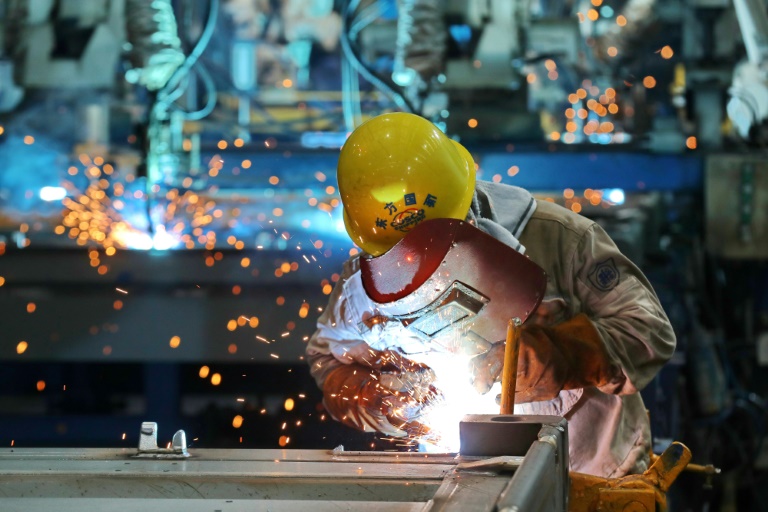
The closely watched Purchasing Managers’ Index of manufacturing activity shrank in July on the back of weak demand and the strict zero-Covid measures imposed in parts of the country.

While sweeping curbs have eased in major hubs such as Shanghai and Beijing, sporadic lockdowns in other cities and towns have kept businesses and consumers worried with few signs of the policy easing.

The China data sent oil prices sharply lower, with the international benchmark, Brent, slipping just under $100 per barrel while the main US contract, WTI, fell by five percent to around $94.

“Oil prices were under pressure after weak Chinese manufacturing figures which really show the continuing impact of lockdowns on the country’s economy,” said AJ Bell investment director Russ Mould.

“China remains one of the biggest consumers of oil and other commodities.” Mould said.

Traders are also waiting for another output decision by the OPEC+ group of major crude-producing nations on Wednesday.

– ‘Bullish’ HSBC –

In corporate news, Asia-focused lender HSBC provided another boost with a “bullish” outlook, alongside its intention to revert to quarterly shareholder dividends next year.

HSBC shares jumped by more than six percent in the British capital. 

Other major corporate earnings reports this week include those from oil giant BP, US ride-hailing firm Uber, Japanese automaker Toyota and Chinese tech giant Alibaba.

Last week, strong earnings from US titans Amazon and Apple sparked healthy Wall Street gains and eased concerns about the economic impact of surging inflation and rising rates.

That came after investors took Federal Reserve chief Jerome Powell’s comments Wednesday to indicate the US central bank could start slowing down its monetary tightening, providing a much-needed boost to stocks.

The Bank of England is expected to deliver a bumper 0.5-percentage-point interest rate hike this Thursday to combat rocketing inflation.

“Sharp hikes by the US Federal Reserve and European Central Bank in July make it all the more likely that it will pull the trigger on an outsize rate hike,” Markets.com analyst Neil Wilson told AFP.

Global central banks are ramping up borrowing costs in an attempt to get a handle on runaway consumer price inflation.

Investors will also be looking ahead to critical US employment data out on Friday.

“If we start to see weakness in employment again, then this will further worry investors about the health of the world’s largest economy,” said Fawad Razaqzada at City Index and FOREX.com.

– Key figures at around 1545 GMT –

New York – Dow: UP 0.2 percent at 32,923.84 points

EURO STOXX 50: FLAT at 3,706,62

London – FTSE 100: DOWN 0.1 percent at 7,413.42 (close)

Frankfurt – DAX: FLAT at 13,479.63 (close)

Paris – CAC 40: DOWN 0.1 percent at 6,436.86 (close)

Tokyo – Nikkei 225: UP 0.7 percent at 27,993.35 (close)

Hong Kong – Hang Seng Index: UP 0.1 percent at 20,165.84 (close)

Shanghai – Composite: UP 0.2 percent at 3,259.96 (close)

Euro/dollar: UP at $1.0275 from $1.0228 Friday

Pound/dollar: UP at $1.2272 from $1.2189 

Euro/pound: DOWN at 83.73 pence from 83.89 pence

Dollar/yen: DOWN at 131.72 yen from 133.25 yen

Brent North Sea crude: DOWN 4.3 percent at $99.46 per barrel

West Texas Intermediate: DOWN 5.4 percent at $93.27 per barrel

burs/raz

Cannabis investment platform hit with Spain lawsuit

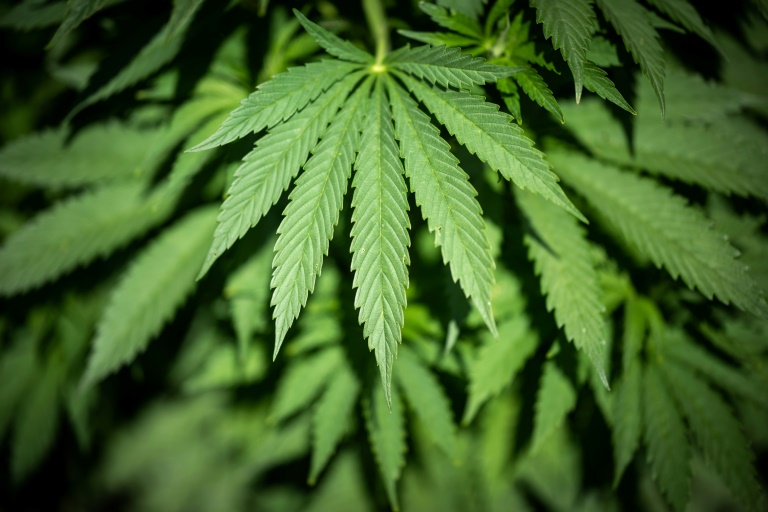
Nearly 1,200 investors have filed a class-action lawsuit in Spain against a medicinal cannabis investment platform operating worldwide, accusing it of fraud, embezzlement and money laundering, their lawyers said Monday.

JuicyFields, which is based in the Netherlands, promised high returns to invest online in medicinal cannabis plants, said Norberto Martinez from the Martinez-Blanco law firm that filed the case.

A spokesman with Spain’s National Court, the country’s top criminal court, confirmed the lawsuit was filed over the weekend.

This is believed to be the first class-action lawsuit against JuicyFields, which according to media investigations allegedly scammed investors around the world.

Established in 2020, JuicyFields offered investors the chance to participate in the cultivation, harvesting and sale of cannabis plants, promising returns of between 29 percent and 66 percent, according to the law firm.

But JuicyFields suddenly stopped operations in mid-July, froze cash withdrawals and vanished from the internet, according to several investors.

The lawsuit accuses JuicyFields of operating like a Ponzi scheme, in which early investors are paid out by receipts from later investors.

It estimates that there are nearly 4,500 victims in Spain alone, who each lost an average of 6,500 euros ($6,645). Some individuals lost as much as 200,000 euros.

The minimum investment was 50 euros, and the money could be deposited and withdrawn via bank transfer or cryptocurrencies.

The overall scale of JuicyFields’ alleged fraud is unclear. A woman has already filed a police complaint against the firm in France’s northern city of Tourcoing.

The 58-year-old woman, who did not want to be identified, said she started by investing 50 euros in December 2021 and in just three and a half months she earned a profit of 25 euros.

“This gave me confidence so I immediately reinjected the money and I invested larger sums,” she told AFP, adding she had lost 3,600 euros.

She is part of a group on mobile messaging service Telegram in France for people who want to take legal action against JuicyFields which has over 1,600 members.

A class-action lawsuit against JuicyFields is expected to be filed in a French court before the end of the year, according to Arnaud Delomel, a lawyer who represents hundreds of investors.

AFP was unable to contact JuicyFields for comment and the company has issued no official statement.

Two dead in California's largest wildfire this year

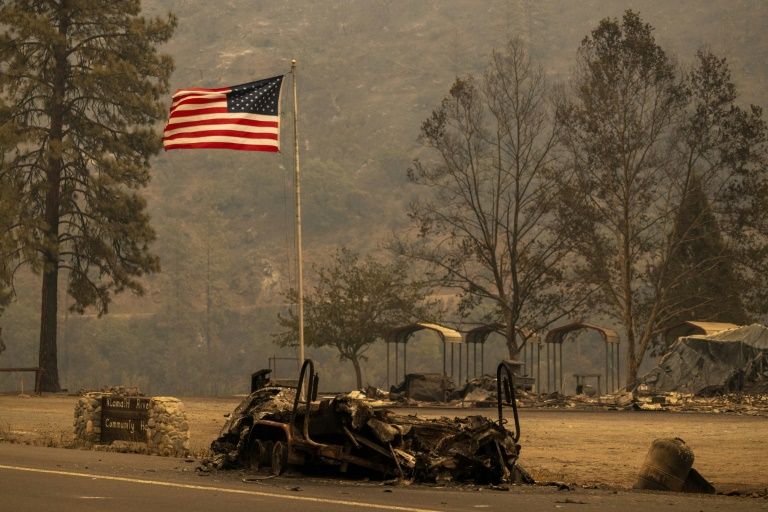
Hundreds of firefighters were battling a fast-moving forest fire in northern California on Monday which has killed two people and forced thousands to evacuate their homes.

The McKinney Fire, the largest in the state so far this year, has ravaged 55,493 acres (22,500 hectares) in the Klamath National Forest near the border with Oregon, CalFire said.

The fire was zero percent contained on Monday morning as searing temperatures and gusty winds hampered the efforts of the more than 850 firefighters deployed to combat the inferno.

California and other parts of the western United States have been ravaged by huge wildfires in recent years, driven by years of drought and exacerbated by a warming climate.

The Siskiyou County Sheriff’s Office said firefighters found two people dead inside a burned-out car on Sunday in the driveway of a home in the community of Klamath River.

Speaking on ABC News, Sheriff Jeremiah LaRue said firefighters suspected the pair were caught in the swift-moving fire as they tried to flee.

California Governor Gavin Newsom has declared a state of emergency in Siskiyou County, and more than 2,000 residents of the rural area are under evacuation orders.

A heat wave with temperatures of over 100 degrees Fahrenheit (38 degrees Celsius), tinder dry terrain and thunderstorms packing strong winds are complicating the efforts of firefighters battling the blaze.

“Fire growth is expected to spread in all directions,” the Klamath National Forest service said in a statement. “Warning for thunderstorms and lightning. Gusty outflow winds of 30 to 50 mph (50 to 80 kph) will be possible near thunderstorm cells.”

According to the Siskiyou County Sheriff’s Office, the fire has destroyed more than 100 structures — including homes, a grocery store and a community center — in the area surrounding Yreka, though it has not yet encroached upon the town of about 7,800 people.

“Surrounding areas should be ready to leave if needed. Please don’t hesitate to evacuate,” the county sheriff tweeted.

The McKinney fire is California’s largest wildfire so far this year — though it remains much smaller than last year’s Dixie Fire, which burned nearly one million acres.

– ‘Very, very serious’ –

Yreka resident Larry Castle told the Sacramento Bee newspaper that he and his wife had packed up a few possessions and their three dogs to be ready to leave, as other fires in recent years had taught them the situation could turn “very, very serious.”

Search and rescue teams evacuated 60 people who had been hiking the area’s popular Pacific Crest Trail, according to the sheriff’s department in Jackson County, Oregon.

CalFire said the cause of the McKinney fire was still under investigation.

The US Forest Service said thick smoke had helped to limit the fire’s growth on Sunday, but also meant that firefighters’ aircraft were “mostly grounded.”

The fast-spreading blaze comes just days after the Oak Fire near Yosemite National Park destroyed dozens of buildings and forced thousands to evacuate.

California, which is facing a punishing drought, still has months of fire season ahead of it.

Other parts of the world have also faced intense wildfires this year, as scientists say climate change is making heatwaves more frequent and more intense, increasing the risk of fires.

In Portugal, a blaze broke out in the Mafra area, north of Lisbon, at the weekend while in France at least four firefighters were seriously injured and motorways were closed.

Also over the weekend, hundreds of firefighters battled a blaze in eastern Germany, with four people injured.

US manufacturing growth slows further in July: survey

The US manufacturing sector continued to grow in July, but the pace was impacted by dimming demand while price increases have slowed dramatically, according to an industry survey released Monday.

And amid a tight American job market, hiring slowed for the third straight month, but firms are reporting less trouble filling open positions and no signs of layoffs, the Institute for Supply Management’s latest report showed.

But firms continue to have trouble filling orders due to ongoing problems getting materials.

ISM’s manufacturing index dipped to 52.8 percent, just two-tenths below the prior month, but the lowest level since June 2020 during the pandemic downturn.

However, that level was still above the 50-percent threshold indicating expansion for the 26th consecutive month.

“The U.S. manufacturing sector continues expanding — though slightly less so in July — as new order rates continue to contract, supplier deliveries improve and prices soften to acceptable levels,” ISM manufacturing survey chair Timothy Fiore said.

The new orders index fell 1.2 points, to 48 percent, signaling a slowdown, and production fell by slightly more but continues to grow.

“Lead times remain at elevated levels, and fundamental raw material prices continue to persuade buyers to remain on the sidelines,” Fiore said

The prices index fell a whopping 18.5 points — the fourth biggest decline on record — to 60 percent, with a much higher share of firms reporting falling prices, the survey showed. The index has been above 60 percent for nearly two years.

Covid-19 lockdowns in China and Russia’s war in Ukraine have been exacerbating shortages experienced, fueling the global inflation surge, especially for energy, and prompted the Federal Reserve to raise borrowing costs aggressively.

Survey respondents noted ongoing supply issues and the impact of rising prices, and several expressed concern about the future

“Our markets are still holding up; however, I believe a slowdown is coming,” one said. “I believe the general market is in the beginnings of a recession.”

Oren Klachkin of Oxford Economics said challenges are mounting for firms.

“Manufacturers will face many of the same challenges in the second half of 2022 that they did in H1,” he said in an analysis.

“The confluence of hot inflation, higher interest rates, ongoing supply chain issues and normalizing spending patterns will make demand more fragile.”

UN chief warns humanity 'one miscalculation away from nuclear annihilation'

UN head Antonio Guterres warned Monday that the world faced “a nuclear danger not seen since the height of the Cold War” and was just “one miscalculation away from nuclear annihilation.”

“We have been extraordinarily lucky so far. But luck is not a strategy. Nor is it a shield from geopolitical tensions boiling over into nuclear conflict,” Guterres said at the start of a conference of countries belonging to the nuclear Non-Proliferation Treaty (NPT).

“Today, humanity is just one misunderstanding, one miscalculation away from nuclear annihilation,” he said, calling on nations to “put humanity on a new path towards a world free of nuclear weapons.”

Guterres’s comments came at the opening 10th review conference of the NPT, an international treaty that came into force in 1970 to prevent the spread of nuclear weapons.

The meeting, held at the UN’s headquarters in New York, has been postponed several times since 2020 due to the Covid-19 pandemic. It will run until August 26.

Guterres said the conference was “a chance to strengthen” the treaty and “make it fit for the worrying world around us,” citing Russia’s war in Ukraine and tensions on the Korean peninsula and in the Middle East.

“Eliminating nuclear weapons is the only guarantee they will never be used,” the secretary-general implored, adding that he would visit Hiroshima for the anniversary of the August 6, 1945 atomic bombing of the Japanese city by the United States.

“Almost 13,000 nuclear weapons are now being held in arsenals around the world. All this at a time when the risks of proliferation are growing and guardrails to prevent escalation are weakening,” Guterres added.

In January, the five permanent members of the UN Security Council — the United States, China, Russia, Britain and France — had pledged to prevent the further dissemination of nuclear weapons.

At the last review conference in 2015, the parties were unable to reach agreement on substantive issues.

Close Bitnami banner
Bitnami