World

War in Ukraine: latest developments

Here are the latest developments in the war in Ukraine:

– First grain shipment leaves Odessa –

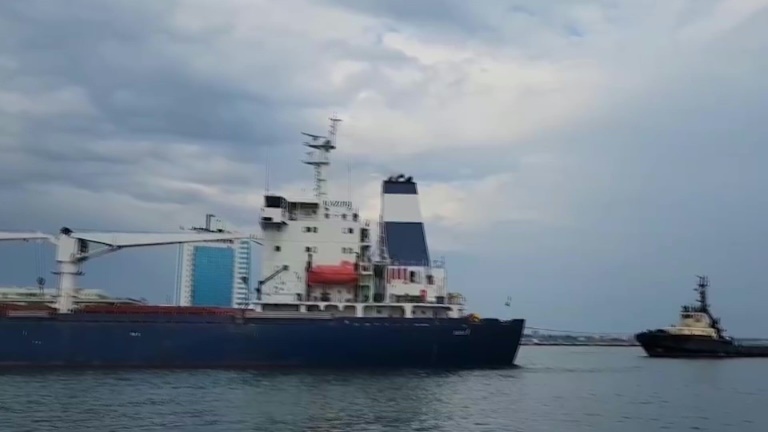
The first shipment of Ukrainian grain since Russia’s February 24 invasion leaves the port of Odessa under a UN-Turkey brokered deal to lift Moscow’s naval blockade in the Black Sea.

Officials say the Sierra Leone-registered Razoni cargo ship is making its way to Lebanon through a specially cleared corridor in the heavily mined waters of the Black Sea with 26,000 tonnes of maize on board.

UN chief Antonio Guterres says he hopes “this will bring much-needed stability and relief to global food security, especially in the most fragile humanitarian contexts” while Kyiv echoes it will bring “relief for the world” if Moscow holds up its side of the accord.

Ukraine is one of the world’s biggest grain exporters. The five-month blockade of its ports by Russian forces contributed to soaring food prices, hitting the world’s poorest nations especially hard.

– Grain shipment ‘first step’: EU, NATO –

The European Union and NATO welcome the grain shipment’s departure as a “first step” towards easing the food crisis.

EU spokesman Peter Stano, however, cautions the bloc still expects the “implementation of the whole deal and resumption of Ukrainian exports to the customers around the world.”

He points out that Russia fired missiles at the port of Odessa on the day after the landmark deal was signed in Istanbul in late July. 

NATO Secretary General Jens Stoltenberg says Western allies “strongly support the full implementation of the deal to ease the global food crisis caused by Russia’s war in Ukraine”.

In Moscow, Kremlin spokesman Dmitry Peskov describes the shipment as “very positive”.

– Ukraine gains ground in Kherson –

Ukrainian forces have recaptured 46 settlements in the key southern region of Kherson, as Kyiv looks to retake the Russian-held area, the local governor Dmytro Butriy tells national TV.

Moscow seized almost all the territory of the economically and strategically important region bordering the annexed Crimea peninsula during the first days of its invasion.

But in recent weeks, the Ukrainian army, bolstered by deliveries of Western-supplied long-range artillery, have sought to stage a counter-offensive in the area.

In late July, a Ukrainian official vowed that the Kherson region would be recaptured by Kyiv’s forces by September.

The governor of nearby Mykolaiv meanwhile says that three people were injured in the city in “massive” Russian shelling overnight that damaged homes and humanitarian supplies.

In the east, which has been the main focus of Russia’s onslaught, the head of the industrial Donetsk region, Pavlo Kyrylenko, says Russian shelling over the past 24 hours has killed three people.

– Russia blacklists more Britons –

Russia says it is blacklisting 39 British citizens, including leader of the main opposition Labour Party, Keir Starmer, and former prime minister David Cameron.

The foreign ministry in Moscow says the listed UK citizens, who also include journalists, “contribute to the hostile course of London aimed at the demonisation of our country and its international isolation”.  

Russia had already blacklisted Prime Minister Boris Johnson and several members of his cabinet, as well as scores of British MPs, defence officials and journalists.
Boeing shares surge as it nears 787 delivery resumption

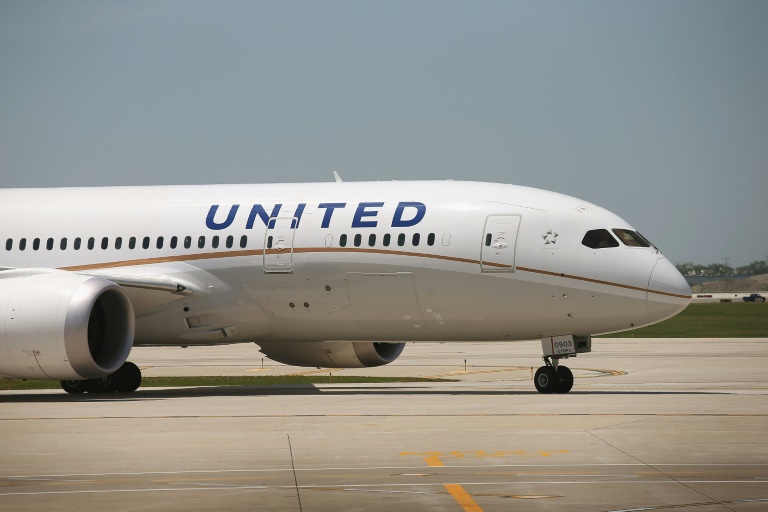
Shares of Boeing jumped early Monday as the aviation giant moved closer to final regulatory approval to resume deliveries of the 787 jet.

The Federal Aviation Administration signed off on Boeing’s certification plan for the top-selling widebody plane, a person familiar with the situation told AFP.

“Deliveries aren’t imminent and there are additional steps in the process that we will follow,” this person said.

Shares surged 5.8 percent to $168.60 early Monday, reflecting enthusiasm at the restoration of revenues from a cash cow plane whose struggles have crimped company finances for more than a year.

Deliveries have been halted since spring 2021 while officials from the company and FAA have worked to hash out an inspection and repair system following manufacturing defects uncovered on the plane.

The FAA referred questions to Boeing, saying “we don’t comment on ongoing certifications.”

A Boeing spokesman said, “we will continue to work transparently with the FAA and our customers towards resuming 787 deliveries.”

The 787’s travails date to late summer 2020, when the company uncovered manufacturing flaws with some jets. Boeing subsequently identified additional issues, including with the horizontal stabilizer.

The difficulties curtailed deliveries between November 2020 and March 2021. Boeing suspended deliveries later in  spring 2021 after more problems surfaced.

On a July 27 earnings conference call, Chief Executive Dave Calhoun described the company as “on the verge” of garnering approval from US air safety officials on the 787, though he declined to give a precise target date.

At the end of June, Boeing had 120 Dreamliner planes in inventory and was producing the jet “at very low rates,” the company said in a filing.

The FAA is expected to inspect each 787 before it is delivered to airlines.

OPEC+ faces output decision after Biden's Saudi trip

The OPEC+ group of oil exporters meets Wednesday to discuss another output increase, weeks after US President Joe Biden sought to persuade Saudi Arabia to boost production during a controversial visit to the country.

The White House has been pressing the oil cartel to step up production to tame prices that have surged since Russia invaded Ukraine in late February.

But the group, which is led by Saudi Arabia and Russia, has stuck to modest increases so far.

The 13-member Organization of the Petroleum Exporting Countries, along with 10 allies that include Russia, had slashed production at the height of the Covid pandemic in 2020 after a plunge in demand caused prices to sink.

The group began to raise production last year, agreeing to add 400,000 barrels per day to the market. It backed an increase of nearly 650,000 barrels per day in June, still not enough to spark a big drop in oil prices.

The alliance’s output is back to pre-virus levels, but just on paper as a few members have struggled to meet their quotas.

All eyes will be on whether OPEC+ sticks to the same output policy or steps it up.

– Biden’s Saudi voyage –

Biden travelled to Saudi Arabia in mid-July to meet Crown Prince Mohammed bin Salman despite his promise to make the kingdom a “pariah” in the wake of the 2018 killing of journalist Jamal Khashoggi.

Part of the reason for the controversial trip was to convince Riyadh to continue loosening the production taps to stabilise the market and curb rampant inflation.

After his meetings with Saudi leaders in mid-July, Biden said he was “doing all I can” to increase the oil supply but added that concrete results would not be seen “for another couple weeks” — and it was unclear what those might be. 

Wednesday’s meeting will reveal whether his efforts were successful.

“The US administration appears to be anticipating some good news but it’s hard to know whether that’s based on assurances during Biden’s trip or not,” Craig Erlam, analyst at OANDA trading platform, told AFP.

Stephen Innes, managing partner at SPI Asset Management, said it “wouldn’t be a surprise to see the Saudis announce something that Biden could tout as a win to voters at home.”

– Sceptical market –

According to the London-based research institute Energy Aspects, OPEC+ could adjust its current agreement in order to keep raising crude production volumes.

However, analysts warn against expecting any drastic increases.

OPEC+ has to take into account the fact that the interests of Russia — a key player in the alliance — are diametrically opposed to those of Washington.

“Saudi Arabia has to walk a fine line,” said Tamas Varga, analyst at PVM Energy. 

Any decision on Wednesday will have to be unanimous, which may lead to a longer meeting than normal.

“Any new OPEC+ deal aimed at further ramping up supplies is likely to be met with market scepticism, considering the supply constraints already evident within the alliance,” said Han Tan, chief market analyst at Exinity. 

The group will decide output policy under a new secretary general, Kuwait’s Haitham Al-Ghais, who took office on Monday following the death of Nigeria’s Mohammed Barkindo last month.

“I look forward to working with all our Member Countries and our many partners around the world to ensure a sustainable and inclusive energy future which leaves no one behind,” Al-Ghais said in a statement.

US envoy hopeful on Lebanon-Israel sea border talks

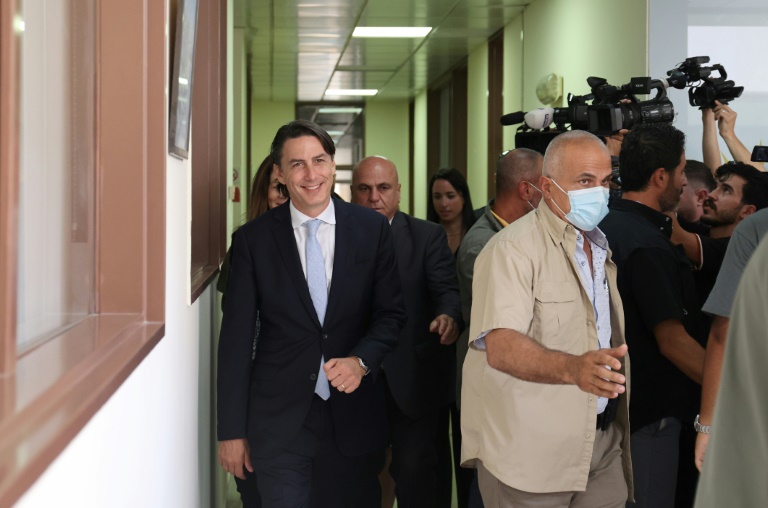
A US envoy on Monday expressed optimism that Lebanon and Israel could move towards a maritime border deal to settle competing claims over offshore gas fields.

The dispute escalated in early June after Israel moved a production vessel near the Karish offshore field, which is partly claimed by neighbour Lebanon.

This prompted Beirut to call for the resumption of US-mediated negotiations on the demarcation dispute.

“I remain optimistic that we can make continuous progress as we have over the last several weeks and I look forward to coming back to the region and being able to make the final arrangements,” envoy Amos Hochstein told reporters after meeting Lebanon’s top leaders.

Hochstein, on his second visit in less than two months, is carrying an Israeli proposal in response to a demarcation offer made by Lebanon, where officials also expressed optimism over a potential deal. 

On Monday, he met with President Michel Aoun, Prime Minister Najib Mikati and parliament speaker Nabih Berri at the presidential palace. 

He also met separately with caretaker Foreign Minister Abdallah Bou Habib who called the progress in talks “potentially exceptional”.

“Negotiations are still ongoing, and they have almost reached their conclusion,” Bou Habib told a local broadcaster after the meeting.

Parliament’s deputy speaker Elias Bou Saab who attended Monday’s meeting called the talks “positive”.

“The gap… has narrowed, and the time period separating us from the return of the American mediator to Beirut will be short,” he said, quoted in a statement issued by the presidency.

“God willing, we will see results in the next few weeks,” added Bou Saab, tasked by the president with following up on negotiations. 

– Qana field –

Lebanon and Israel, whose border is UN-patrolled, have no diplomatic relations. 

They had resumed maritime border negotiations in 2020 but the process was stalled by Beirut’s claim that the map used by the United Nations in the talks needed modifying.

Lebanon initially demanded 860 square kilometres (330 square miles) in the disputed maritime area but then asked for an additional 1,430 square kilometres, including part of the Karish field.

Israel claims the field lies in its waters and is not part of the disputed area subject to ongoing negotiations.

A Lebanese official in mid-June said Beirut had made a new offer to Hochstein, holding back on demands for territory where Israel planned to imminently extract gas.

Beirut was pushing for the country’s maritime border to exclude Karish and include the whole of a nearby field instead, the official told AFP at the time.

An Israeli official on Sunday said Israel’s offer on the original disputed zones was a “compromise to both sides” and would allow Lebanon to develop “the Sidon reservoir”, known as the Qana field, while safeguarding Israel’s interests.

After meeting Hochstein, Lebanon’s foreign minister said his country was demanding the right to develop “all of Qana”, without concessions.

– ‘Pay dearly’ –

On July 2, Israel said it had downed three drones launched by Lebanon’s Iran-backed Hezbollah that were headed towards the Karish gas field.

The Iran-backed Shiite Muslim movement on Sunday released a short video it said showed surveillance of several Israeli-chartered energy infrastructure ships.

Hezbollah’s chief Hassan Nasrallah had threatened attacks if Israel proceeds with gas exploration in the disputed area.

On Sunday, Nasrallah said Hezbollah will determine its next step based on the outcomes of the latest talks.

“We’re paying no attention to Nasrallah’s threats,” Ram Ben Barak, head of the Israeli foreign and defence committee told public broadcaster Kan radio on Monday.

“But if Nasrallah dares to do anything to Israel’s gas rigs, Lebanon –- and Hezbollah -– will pay dearly.”

Israel and Hezbollah last fought a devastating war in 2006.

US envoy hopeful on Lebanon-Israel sea border talks

A US envoy on Monday expressed optimism that Lebanon and Israel could move towards a maritime border deal to settle competing claims over offshore gas fields.

The dispute escalated in early June after Israel moved a production vessel near the Karish offshore field, which is partly claimed by neighbour Lebanon.

This prompted Beirut to call for the resumption of US-mediated negotiations on the demarcation dispute.

“I remain optimistic that we can make continuous progress as we have over the last several weeks and I look forward to coming back to the region and being able to make the final arrangements,” envoy Amos Hochstein told reporters after meeting Lebanon’s top leaders.

Hochstein, on his second visit in less than two months, is carrying an Israeli proposal in response to a demarcation offer made by Lebanon, where officials also expressed optimism over a potential deal. 

On Monday, he met with President Michel Aoun, Prime Minister Najib Mikati and parliament speaker Nabih Berri at the presidential palace. 

He also met separately with caretaker Foreign Minister Abdallah Bou Habib who called the progress in talks “potentially exceptional”.

“Negotiations are still ongoing, and they have almost reached their conclusion,” Bou Habib told a local broadcaster after the meeting.

Parliament’s deputy speaker Elias Bou Saab who attended Monday’s meeting called the talks “positive”.

“The gap… has narrowed, and the time period separating us from the return of the American mediator to Beirut will be short,” he said, quoted in a statement issued by the presidency.

“God willing, we will see results in the next few weeks,” added Bou Saab, tasked by the president with following up on negotiations. 

– Qana field –

Lebanon and Israel, whose border is UN-patrolled, have no diplomatic relations. 

They had resumed maritime border negotiations in 2020 but the process was stalled by Beirut’s claim that the map used by the United Nations in the talks needed modifying.

Lebanon initially demanded 860 square kilometres (330 square miles) in the disputed maritime area but then asked for an additional 1,430 square kilometres, including part of the Karish field.

Israel claims the field lies in its waters and is not part of the disputed area subject to ongoing negotiations.

A Lebanese official in mid-June said Beirut had made a new offer to Hochstein, holding back on demands for territory where Israel planned to imminently extract gas.

Beirut was pushing for the country’s maritime border to exclude Karish and include the whole of a nearby field instead, the official told AFP at the time.

An Israeli official on Sunday said Israel’s offer on the original disputed zones was a “compromise to both sides” and would allow Lebanon to develop “the Sidon reservoir”, known as the Qana field, while safeguarding Israel’s interests.

After meeting Hochstein, Lebanon’s foreign minister said his country was demanding the right to develop “all of Qana”, without concessions.

– ‘Pay dearly’ –

On July 2, Israel said it had downed three drones launched by Lebanon’s Iran-backed Hezbollah that were headed towards the Karish gas field.

The Iran-backed Shiite Muslim movement on Sunday released a short video it said showed surveillance of several Israeli-chartered energy infrastructure ships.

Hezbollah’s chief Hassan Nasrallah had threatened attacks if Israel proceeds with gas exploration in the disputed area.

On Sunday, Nasrallah said Hezbollah will determine its next step based on the outcomes of the latest talks.

“We’re paying no attention to Nasrallah’s threats,” Ram Ben Barak, head of the Israeli foreign and defence committee told public broadcaster Kan radio on Monday.

“But if Nasrallah dares to do anything to Israel’s gas rigs, Lebanon –- and Hezbollah -– will pay dearly.”

Israel and Hezbollah last fought a devastating war in 2006.

Richer childhood friends boost future income, Facebook data shows

An analysis of 21 billion Facebook friendships shows that children from poorer homes are likely to earn more later in life if they grow up in areas where they can become friends with wealthier kids.

It has long been believed that having rich friends can help children rise up out of poverty, but previous research has had small sample sizes or limited data, according to two studies published in the journal Nature on Monday.

So a team of US-based researchers turned to Facebook, the world’s largest social database, with its nearly three billion users offering unprecedented scale and precision to examine the issue.

They analysed the privacy-protected data of 72  million US Facebook users aged between 25 and 44  years. The Facebook friendships were used to represent real-world friendships.

The researchers used an algorithm to rank users by socio-economic status, age and region, among other factors.

They then measured how much richer and poorer people interacted with each other and created the term “economic connectedness” to represent the share of a person’s friends who were above or below the average socio-economic level.

They then compared this measure with previous research into children’s ability to escape poverty in every US zip code.

The results were “strikingly similar”, said Raj Chetty, an economist at Harvard University and the lead author of the two studies.

The first paper showed that economic connectedness “is one of the strongest predictors of economic mobility that anyone has identified to date,” Chetty said.

The second paper sought to find out why children from richer or poorer backgrounds are more likely to make friends in some areas than others.

– Let’s be friends –

The researchers found two major factors. One was how much the two groups are exposed to each other — for example whether they attend different high schools or live in separate neighbourhoods.

Even if wealthy and non-wealthy students did go to the same school, however, they still might not hang out with each other — a factor the researchers called friending bias.

Around half of social disconnection between the rich and poor was due to lack of exposure to each other, the study found.

“But the remaining half is explained by friending bias,” Chetty said.

The findings showed that US policies aimed at reducing economic segregation between schools and regions were important but “not enough,” he added.

Where richer and poorer children meet has a major influence on whether they become friends — meaning that institutions play a major role, the study found.

For example, friendships in religious institutions like churches were “much more likely to cut across class lines,” Chetty said.

The data on exposure and friending bias was published on socialcapital.org on Monday, with researchers hoping it will prompt authorities across the United States to act.

Chetty predicted that similar results would likely be found in other countries, urging researchers and governments worldwide to access their own Facebook data.

Noam Angrist of Oxford University and Bruce Sacerdote of Dartmouth College in New Hampshire said the research represented “an important contribution that will enable a deeper understanding of social capital”.

“A sensible next step is to extend Chetty and colleagues’ monumental data creation and analysis to countries beyond the United States,” they wrote in a linked comment in Nature. 

Stock markets waver, oil prices sink

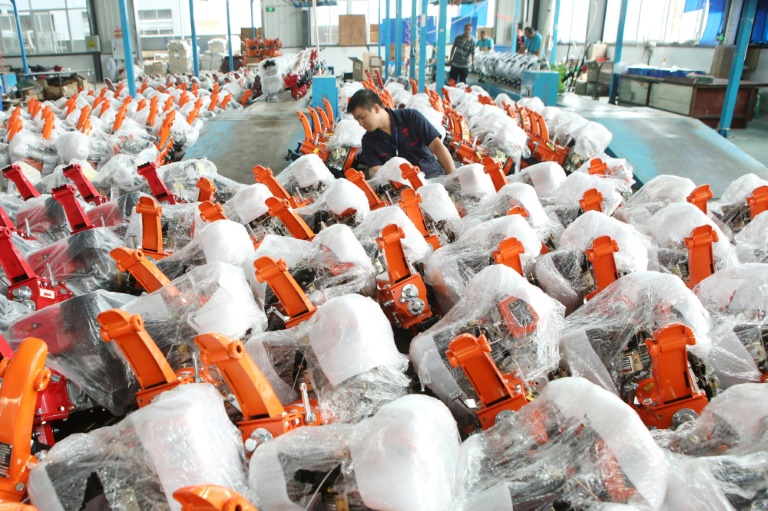
Stock markets wobbled on Monday as investors track a raft of corporate earnings reports while oil prices sank over concerns about Chinese demand.

London’s FTSE 100, the Paris CAC 40 and Frankfurt DAX were flat in afternoon trading after drifting higher earlier in the day.

Wall Street opened lower on the first day of August following a strong month in July.

Asian stock markets finished higher despite another disappointing reading on the health of the Chinese economy.

The closely watched Purchasing Managers’ Index of manufacturing activity shrank in July on the back of weak demand and the strict zero-Covid measures imposed in parts of the country.

While sweeping curbs have eased in major hubs such as Shanghai and Beijing, sporadic lockdowns in other cities and towns have kept businesses and consumers worried with few signs of the policy easing.

The China data sent oil prices sharply lower, with the international benchmark, Brent, slipping just under $100 per barrel while the main US contract, WTI, fell by five percent to around $94.

“Oil prices were under pressure after weak Chinese manufacturing figures which really show the continuing impact of lockdowns on the country’s economy,” said AJ Bell investment director Russ Mould.

“China remains one of the biggest consumers of oil and other commodities.” Mould said.

Traders are also waiting for another output decision by the OPEC+ group of major crude-producing nations on Wednesday.

– ‘Bullish’ HSBC –

In corporate news, Asia-focused lender HSBC provided another boost with a “bullish” outlook, alongside its intention to revert to quarterly shareholder dividends next year.

HSBC shares jumped by seven percent percent in the British capital. 

Other major corporate earnings reports this week include those from oil giant BP, US ride-hailing firm Uber, Japanese automaker Toyota and Chinese tech giant Alibaba.

Last week, strong earnings from US titans Amazon and Apple sparked healthy Wall Street gains and eased concerns about the economic impact of surging inflation and rising rates.

That came after investors took Federal Reserve chief Jerome Powell’s comments Wednesday to indicate the US central bank could start slowing down its monetary tightening, providing a much-needed boost to stocks.

The Bank of England is expected to deliver a bumper 0.5-percentage-point interest rate hike this Thursday to combat rocketing inflation.

“Sharp hikes by the US Federal Reserve and European Central Bank in July make it all the more likely that it will pull the trigger on an outsize rate hike,” Markets.com analyst Neil Wilson told AFP.

Global central banks are ramping up borrowing costs in an attempt to get a handle on runaway consumer price inflation.

– Key figures at around 1340 GMT –

London – FTSE 100: FLAT at 7,422.33 points

Frankfurt – DAX: FLAT at 13,491.18

Paris – CAC 40: FLAT at 6,446.18

EURO STOXX 50: DOWN 0.1 percent at 3,703.75

New York – Dow: DOWN 0.4 percent at 32,723.31

Tokyo – Nikkei 225: UP 0.7 percent at 27,993.35 (close)

Hong Kong – Hang Seng Index: UP 0.1 percent at 20,165.84 (close)

Shanghai – Composite: UP 0.2 percent at 3,259.96 (close)

Euro/dollar: UP at $1.0255 from $1.0228 Friday

Pound/dollar: UP at $1.2260 from $1.2189 

Euro/pound: DOWN at 83.64 pence from 83.89 pence

Dollar/yen: DOWN at 131.93 yen from 133.25 yen

Brent North Sea crude: DOWN 3.9 percent at $99.94 per barrel

West Texas Intermediate: DOWN 5.0 percent at $93.64 per barrel

burs/lth/raz

India reports Asia's first possible monkeypox death

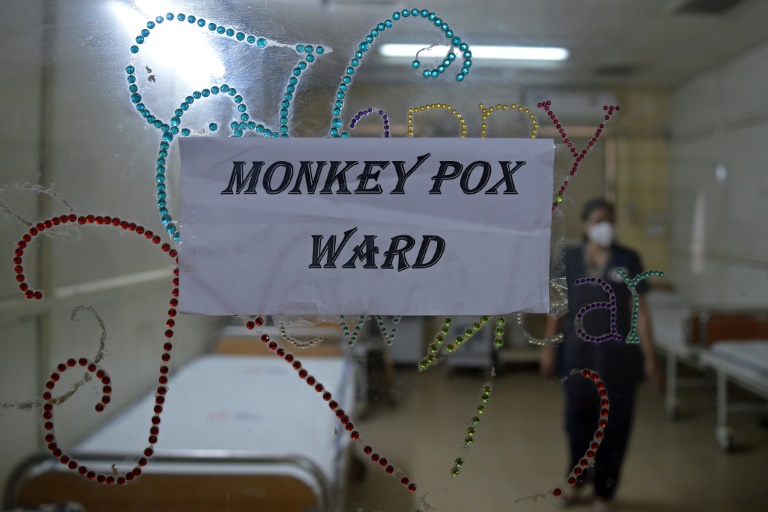
Indian authorities reported on Monday Asia’s first possible monkeypox fatality after the death of a man who recently returned from United Arab Emirates testing positive.

Kerala state’s health ministry said tests on the 22-year-old “showed that the man had monkeypox”. 

Three monkeypox-related fatalities have so far been reported outside Africa in an outbreak that the World Health Organization has declared a global health emergency.

The Indian man died in Kerala on July 30 around a week after returning from the UAE and being taken to hospital.

It was unclear however whether monkeypox was the cause of death.

“The youth had no symptoms of monkeypox. He had been admitted to a hospital with symptoms of encephalitis and fatigue,” the Indian Express daily quoted Kerala’s health minister Veena George as saying on Sunday.

Twenty people identified as high risk of infection were being kept under observation, she added, including family members, friends who played football with the man and medical staff.

– 18,000 cases –

According to the WHO, more than 18,000 monkeypox cases have been detected throughout the world outside Africa since the beginning of May, most of them in Europe.

Spain last week recorded two monkeypox-related deaths and Brazil one.

It is however unclear if monkeypox actually caused the three fatalities, with Spanish authorities as of Sunday still carrying out autopsies and Brazilian authorities saying its deceased patient had other “serious conditions”.

The WHO’s European office said on Saturday that more monkeypox-related deaths can be expected.

“With the continued spread of monkeypox in Europe, we will expect to see more deaths,” Catherine Smallwood, Senior Emergency Officer at WHO Europe, said in a statement.

The goal needs to be “interrupting transmission quickly in Europe and stopping this outbreak”, she said.

– Nobody’s fault –

India has reported at least four cases, with the first recorded on July 15 in another man who returned to Kerala from the UAE.

Kerala’s health ministry said in its statement on Monday that a high-level team from the state medical board would probe the death.

Primary tests from the National Institute of Virology in the city of Pune showed that the man had the variant from West Africa and that more genetic tests would be conducted.

“The disease is nobody’s fault. Those who have symptoms should inform the health department so that the spread can be contained,” the ministry said, adding that there was “no need to panic”.

It added that the man’s family only informed doctors on July 30 result of tests conducted in Dubai on July 19, by which time he was in a critical condition.

It added that there were 165 passengers on the same flight from UAE but that “nobody is a close contact”.

– Rash –

Monkeypox, so called because it was first discovered in a monkey, is related to the deadly smallpox virus, which was eradicated in 1980, but is far less severe. 

Early signs of the disease include a high fever, swollen lymph glands and a chickenpox-like rash.

In May 2022, a flurry of cases was detected in countries outside Africa in people with no travel links to the region. 

The WHO last month declared the outbreak to be a global health emergency — the highest alarm it can sound.

ash-burs/stu/dhc

Barcelona sell 25% of Barca Studios for 100m euros

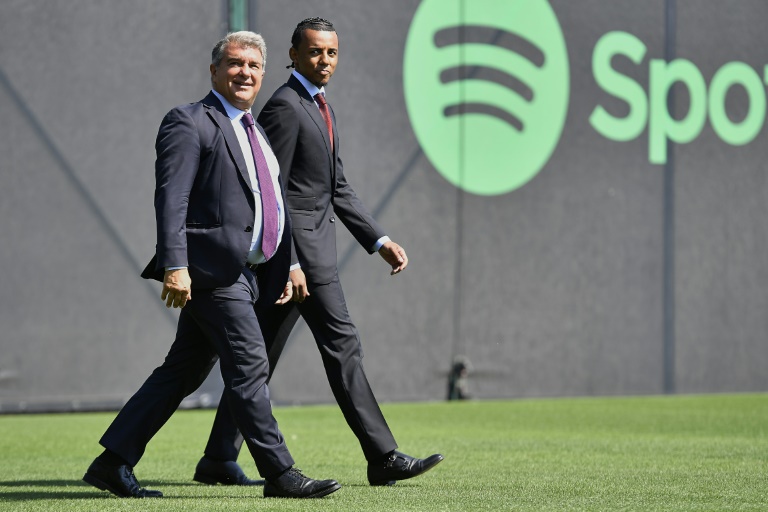
Barcelona have sold 25 percent of Barca Studios, which manages the club’s digital business and audiovisual productions, to Socios.com for 100 million euros (102.5m dollars), club president Joan Laporta said on Monday. 

Club members had voted to allow the sale of 49 percent of the shares.

“For the moment, we have sold 25 percent to Socios.com,” Laporta said at the press conference to present Jules Kounde, bought for a reported 50m euros from Sevilla, as a Barcelona player. 

Earlier this summer, the deeply indebted club sold 15 percent of its La Liga TV revenue to the American investment fund Sixth Street in two tranches or a total of 400m euros before going on a transfer spree.

In addition to Kounde, Barcelona have bought Robert Lewandowski from Bayern Munich and Raphinha from Leeds and signed AC Milan midfielder Franck Kessie and Chelsea’s Danish central defender Andreas Christensen on free transfers.

While the deals with Sixth Street are for 25 years, the sale to the Socios.com platform is permanent. 

“It’s a sale for ever,” Laporta said. “There would be a way to recover this 25 per cent but for the moment this operation means the entry of a new partner, Socios.com, which has injected 100 million euros,” he said.

Socios.com is a platform that allows clubs to increase their interaction with fans and try to make more money from it, including the use of Fan Tokens, a kind of digital asset based on blockchain and cryptocurrencies. 

In its drive to raise money quickly, Barcelona has taken a 595m euro loan from investment bank Goldman Sachs and signed a sponsorship deal worth an estimated 435m euros with streaming service Spotify. 

In August 2021, Laporta announced that an audit of the club’s finances showed Barca faced an estimated debt of 1.35 billion euros.  

They allowed Lionel Messi to leave for Paris Saint-Germain in 2021 because they could not afford to keep the Argentine star, even on a reduced salary. 

Kosovo Serbs dismantle barricades at Serbia border

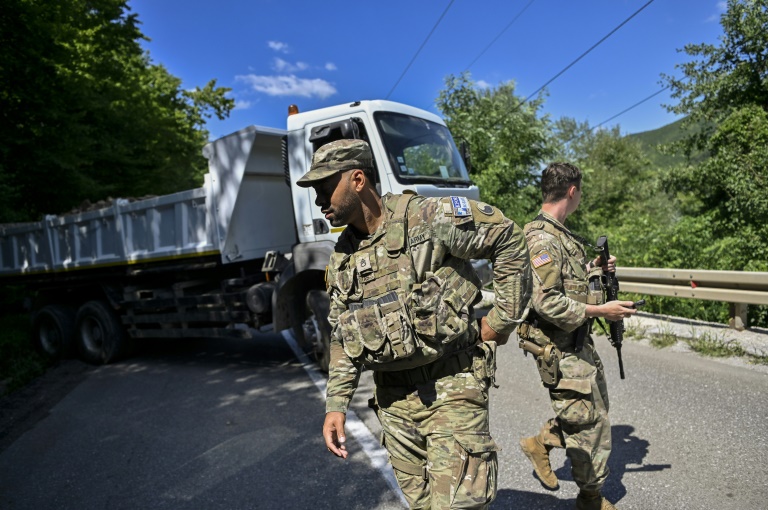
Serbs in North Kosovo removed barricades on Monday that blocked two crossings along the border with Serbia after authorities in Pristina postponed the implementation of new travel measures that sparked tensions. 

Trucks and barriers were cleared from the roads, according to an AFP reporter, hours after a string of shootings and air raid sirens in northern Kosovo sent tensions soaring in the disputed territory home to both Serbs and ethnic Albanians. 

By Monday afternoon, the roads leading to both border crossings had been reopened. 

The area has long been a flashpoint between the two communities following the bitter war in the 1990s that triggered a NATO bombing campaign paving the way for Kosovo’s unilateral declaration of independence from Serbia in 2008. 

The latest bout of unrest followed a decision by Kosovo authorities to introduce a new set of travel documents for people entering the territory with Serbian IDs.

The government also said ethnic Serbs who have vehicle registration plates issued by Serbia would have to change them for Kosovo licence plates within two months.

Kosovo’s Prime Minister Albin Kurti described the new rules as a reciprocal move mimicking regulations that are imposed on Kosovars travelling to Serbia. 

Kurti however appeared to back down — postponing the implementation of the measures for one month — after meeting with the US ambassador in the capital Pristina late Sunday. 

On Monday, Kurti railed against the alleged assailants behind the unrest over the weekend. 

“We call on the international forces, the western democratic capitals, the European Union and NATO to condemn the violence and aggression of the criminal gangs in the north of Kosovo, which are clearly organised and financed by Belgrade,” the prime minister told reporters. 

The blocking of roads across north Kosovo and reports of shootings targeting police on Sunday stirred fears unrest would spread further in the tense region. 

In a forceful statement released by NATO forces stationed in the territory, the alliance vowed to “intervene if stability is jeopardised” in Kosovo.  

Serbs in northern Kosovo have long refused to acknowledge Pristina’s authority and have largely remained loyal to the Serbian government in Belgrade that provides lucrative financial support to their community.

EU-led talks between Kosovo and Serbia, launched in 2011 to normalise ties between the former foes, have failed to hammer out a settlement. 

Kosovo is recognised by about 100 states, including the United States and most EU countries, while Serbia and its powerful allies China and Russia refuse to acknowledge its independence.

Close Bitnami banner
Bitnami