World

First grain shipment since Russian invasion leaves Ukraine port

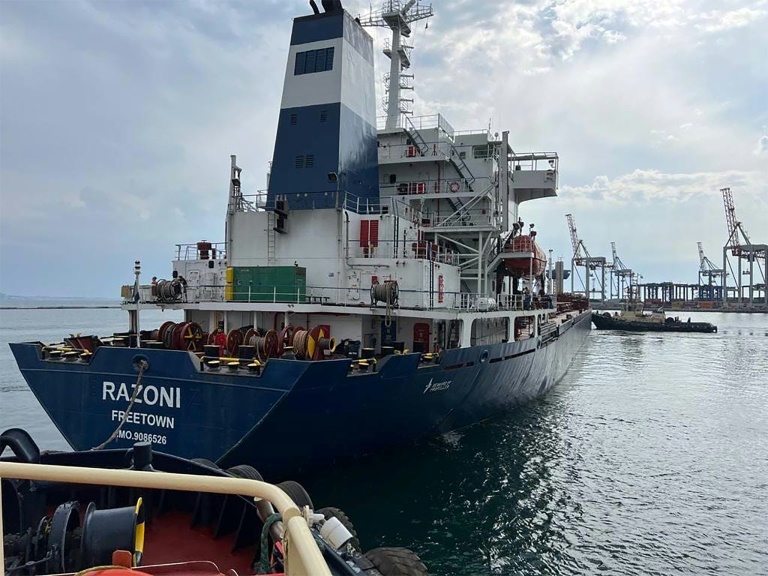
The first shipment of Ukrainian grain since the Russian invasion in February left the port of Odessa on Monday under a landmark deal to lift Moscow’s naval blockade in the Black Sea.

United Nations chief Antonio Guterres, who brokered the plan with Turkey, welcomed the announcement. Kyiv said it would bring “relief for the world” if Moscow held up its side of the accord.

The five-month halt of deliveries from war-torn Ukraine — one of the world’s biggest grain exporters — has contributed to soaring food prices, hitting the world’s poorest nations especially hard.

Officials said the Razoni cargo ship, registered in Sierra Leone, was making its way through a specially cleared corridor in the mine-infested waters of the Black Sea with 26,000 tonnes of maize on board.

“It is expected in Istanbul on August 2. It will then continue its journey after it has been inspected in Istanbul,” the Turkish foreign minister said in a statement.

Other convoys would follow, respecting the maritime corridor and the agreed formalities, the statement said.

Last month, Ukraine and Russia signed the breakthrough pact — the first signficant accord involving the warring sides since the invasion — with Turkey and the United Nations aimed at getting millions of tonnes of trapped Ukrainian grain to world markets.

But Russian strikes on the Odessa port the day after the deal was signed sparked outrage from Ukraine’s allies and cast doubt over the accord.

Guterres said he hoped the Razoni would be the first of many commercial ships to depart from Ukraine and that “this will bring much-needed stability and relief to global food security, especially in the most fragile humanitarian contexts”.

“Ensuring that existing grain and foodstuffs can move to global markets is a humanitarian imperative”.

– Ships ‘waiting to leave’ –

He also said the World Food Programme was planning to “purchase, load and ship an initial 30,000 metric tons of wheat out of Ukraine on a UN-chartered vessel,” with more details in the coming days.

EU spokesman Peter Stano said the departure Monday was a good “first step” but that Brussels still expects the “implementation of the whole deal and resumption of Ukrainian exports to the customers around the world.”

Ukrainian Foreign Minister Dmytro Kuleba said Monday marked a “day of relief for the world, especially for our friends in the Middle East, Asia, and Africa, as the first Ukrainian grain leaves Odessa after months of Russian blockade.”

And the Kremlin hailed the “very positive” development, saying it was a “good opportunity to test the effectiveness of the mechanisms” agreed in in Istanbul.

The long-awaited consignment however is just the beginning and Ukraine Infrastructure Minister Oleksandr Kubrakov said 16 more ships — blocked since the start of the invasion — were “waiting for their turn”.

“We are planning to reach full efficiency at of shipments of agricultural products during the following weeks,” he added.

Ukraine had worked to boost grain deliveries by train, road and up the river Danube, but those efforts still left a large shortfall compared to what it was previously able to export by sea.

Although Monday was the first formal export of Ukrainian grain from Odessa, Kyiv has accused Russia repeatedly of seizing and illegally exporting cereals from regions it occupies. 

– Kherson counter-offensive –

The departure of the Razoni comes one day after Ukrainian agricultural magnate Oleksiy Vadatursky, 74, was killed by a Russian missile in the battle-scarred city of Mykolaiv in the south.

Vadatursky owned major grain exporter Nibulon and was previously decorated with the prestigious “Hero of Ukraine” award.

Mykolaiv — which has been attacked frequently — is the closest Ukrainian city to the southern front where Kyiv’s forces are looking to launch a major counter-offensive to recapture territory lost after Russia’s February invasion.

Ukraine said Monday its forces had retaken more than 40 settlements in the key southern region of Kherson.

The governor of Mykolaiv meanwhile said that three people had been injured in the city in “massive” Russian shelling overnight that damaged homes and damaged humanitarian supplies.

Despite progress on the grain exports, there was also Russian shelling in the war-scarred east of the country, where Russian troops have been fighting deeper into the Donbas region.

The head of the industrial Donetsk region, Pavlo Kyrylenko said Russian shelling over the past 24 hours had killed three people.

The Razoni’s departure came after Russian authorities in the Crimean Black Sea peninsula — seized by Moscow from Ukraine in 2014 — said a small explosive device from a commercial drone, likely launched nearby, hit the navy command in Sevastopol.

The local mayor blamed “Ukrainian nationalists” for the attack that forced the cancellation of festivities marking Russia’s annual holiday celebrating the navy.

Ukraine’s navy accused Russia of staging the attacks as a pretext to cancel the festivities.

Koerner seeking to put Credit Suisse on a straight path

Ulrich Koerner took over as Credit Suisse’s chief executive on Monday with the mammoth task of revitalising Switzerland’s second-biggest bank following a series of scandals.

Reputed to be more of a technocrat than a captain of the ship, his first mission as CEO will be to carry out a strategic review to try to put the bank back in good working order.

His predecessor Thomas Gottstein, who resigned on Wednesday, led Credit Suisse through two and a half years of turmoil but failed to see the group emerge from the storm.

New chairman Axel Lehmann, who rose through the ranks of the bank’s chief domestic rival UBS, highlighted Koerner’s in-depth knowledge of the sector at a pivotal moment when Credit Suisse must speed up its changes.

Koerner “is an experienced, transformational leader with an excellent judgement and has demonstrated to the board of directors that he understands the urgency of the task and the need to rebuild trust”, Lehmann told a press conference.

– Catalogue of woes –

In March 2021, the bank was rocked by the collapse of the British financial firm Greensill, in which some $10 billion had been committed through four funds, and then by the implosion of the US fund Archegos, which cost it more than $5 billion.

In October, it was also fined $475 million by the US and British authorities for its loans to state-owned companies in Mozambique.

In January, Antonio Horta-Osorio resigned as chairman after revelations that he broke Switzerland’s Covid-19 quarantine rules.

And in June, the bank was hit with a $2 million fine in a money laundering case linked to a Bulgarian cocaine network.

Given the scale of the task, the Swiss newspaper Tages-Anzeiger wondered if Koerner was the right man for the job.

Andreas Venditti, an analyst at Swiss investment managers Vontobel, told AFP: “He is probably not a CEO in the traditional sense. But in the current situation at Credit Suisse, what’s needed is probably not a visionary but someone hands-on who can restructure.

“Also he is almost 60, so it’s probably his last high-profile executive job. So he can execute without having to worry for what comes after.”

– ‘Like a machine’ –

A doctor in economics, Koerner began his career with the consulting firm McKinsey.

Koerner worked at Credit Suisse in various roles between 1998 and 2009, notably directing activities for the Swiss market, after which he switched to UBS until 2020.

The German and Swiss national returned to Credit Suisse in 2021 to turn around asset management after the Greensill affair.

He distinguished himself by his ability to carry out restructuring programmes. As head of operations at UBS, he notably transformed core functions at the headquarters “like a machine”, noted the Tages-Anzeiger.

But doubts remain over his people skills, the newspaper said.

“Koerner is a technocrat, not someone who motivates people,” one inside source told the daily.

And the Neue Zuercher Zeitung (NZZ) newspaper reported that he was “considered as someone of great intelligence”, who can come across as brusque or arrogant on first impressions, according to his colleagues.

However, this can “quickly dissipate” in favour of a more “engaging” personality, the NZZ added.

The Ethos foundation, which represents pension funds, said it hoped that Koerner, alongside Lehmann, “will finally manage to put the bank back on the right track” and “restore the confidence” of employees and investors.

Pelosi's Asia tour kicks off under Taiwan cloud

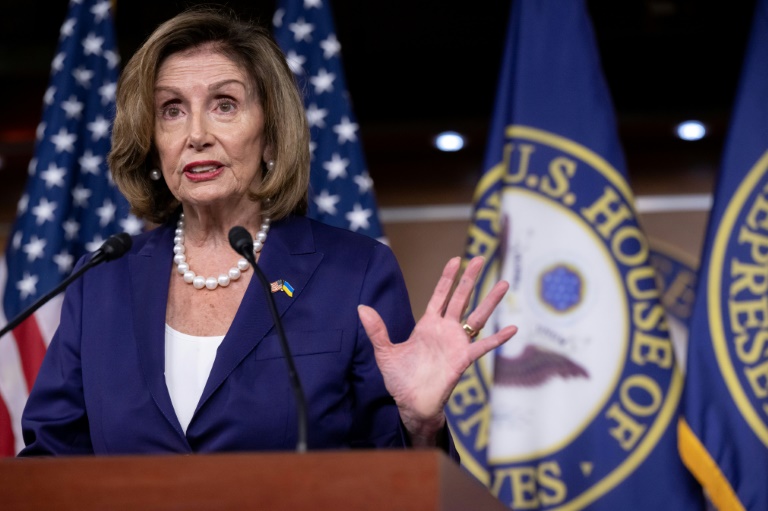
US House Speaker Nancy Pelosi on Monday kicked off an Asia tour that has been shrouded in secrecy following an escalation in tensions with China over Taiwan.

With no word if Pelosi will visit the island, she stopped first in Singapore, where Prime Minister Lee Hsien Loong urged her at a meeting to strive for “stable” ties with Beijing.

Her itinerary also includes Malaysia, South Korea and Japan, but a possible Taiwan visit has dominated attention in the run-up.

Reports about a plan to visit the island have enraged Beijing and caused unease in the White House with President Joe Biden trying to lower the temperature.

Beijing considers self-ruled Taiwan its territory — to be seized one day, by force if necessary — and said it would regard a Pelosi visit as a major provocation.

Pelosi’s office confirmed her Asia trip in a statement Sunday once her plane was in the air, following days of US media speculation and the speaker refusing to confirm her itinerary.

“The trip will focus on mutual security, economic partnership and democratic governance in the Indo-Pacific region,” it said, referring to the Asia-Pacific.

The statement did not mention Taiwan. But visits by US officials there are usually kept secret until delegations land.

And as speculation mounted, both CNN and Taiwan’s TVBS cited unnamed sources Monday to report that Pelosi does indeed plan to include the island on her Asia tour.

– ‘Bury all enemies’ –

The Global Times, China’s state-run tabloid, suggested that Pelosi might use “emergency excuses like an aircraft fault or refuelling” to land at a Taiwanese airport.

“If she dares to stop in Taiwan, it will be the moment to ignite the powder keg of the situation in the Taiwan Straits,” Hu Xijin, a former Global Times editor and now commentator, tweeted.

And the Chinese army’s Eastern Theater Command shared footage on social media site Weibo featuring a combat-ready army with fighters and helicopters taking off, amphibious troops landing on a beach and a stream of missiles raining down on various targets.

“We will bury all enemies who invade our territory,” a short text accompanying the footage read. 

“We’re ready to fight,” it added. “Advance towards a joint combat and a victorious war.”

Taiwan’s 23 million people have long lived with the possibility of an invasion but the threat has intensified under Chinese President Xi Jinping.

The United States maintains a policy of “strategic ambiguity” over whether it would militarily intervene were China to invade.

While it diplomatically recognises Beijing over Taipei, it also backs Taiwan’s democratic government and opposes any forced change to the island’s status.

American officials often make discreet visits to Taiwan to show support but a Pelosi trip would be higher-profile than any in recent history.

Taiwan’s government has remained silent on the prospect of a Pelosi visit and there has been minimal local press coverage. 

“I really hate what the Chinese are doing,” Hsu Ching-feng, a fruit vendor in Taipei, told AFP.

“But there’s nothing us common folks can do about it but ignore them. I will just ignore them.”

– ‘Wrong target’ –

As House speaker, Pelosi is second in line to the US presidency and one of the country’s most powerful politicians.

The last House speaker to visit was Newt Gingrich in 1997.

Biden and Xi had a tense phone call last week clouded by disagreements over Taiwan.

Xi issued an oblique warning to the United States not to “play with fire” over the island.

Speculation about Pelosi’s Taiwan plans has coincided with an uptick in military activity across the region.

US officials have sought to downplay the significance of a Pelosi visit, urging calm from Chinese leaders.

Kharis Templeman, a Taiwan expert at the Hoover Institution, said Beijing “misread US politics and screwed their signalling up” with its intense reaction.

“They picked the wrong target. Biden doesn’t control the Speaker or any other member of Congress,” he tweeted Sunday.

“They’ve drawn the line at the Speaker of the House, on a visit rich in symbolism but of limited practical value. And now it will be politically costly for either Pelosi not to go, or Xi not to respond with something dramatic.”

In Taiwan, there have been mixed views about the prospect of Pelosi visiting, but figures from both the ruling party and the main opposition have said the island should not cave to Chinese pressure.

“If Pelosi were to cancel or postpone the trip, it would be a victory for the Chinese government and for Xi as it would show that the pressure it has exerted has achieved some desired effects,” Hung Chin-fu, from Taiwan’s National Cheng Kung University, told AFP. 

Two dead in California's largest blaze this year

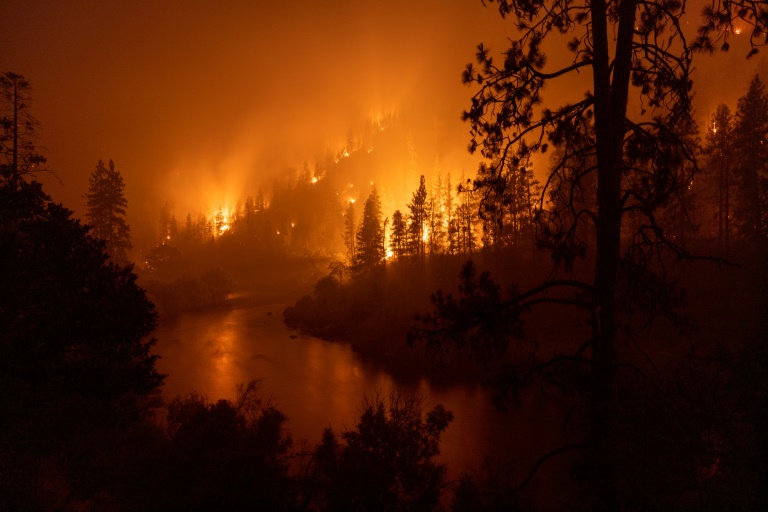
Firefighters in northern California were battling Monday to gain control over the state’s largest wildfire this year, which claimed two lives after exploding in size over the weekend and forcing thousands to evacuate their homes. 

Whipped up by strong winds and lightning storms, the McKinney Fire ripped through the state’s dry terrain Sunday to spread over some 52,500 acres of Klamath National Forest near the town of Yreka — and was zero percent contained as of Sunday night according to CalFire.

California and other parts of the western United States have been ravaged by huge and fast-moving wildfires in recent years, driven by years of drought and exacerbated by a warming climate.

The McKinney fire, which broke out Friday near the border with Oregon, is California’s largest wildfire so far this year — though it remains much smaller than last year’s Dixie Fire, which burned nearly one million acres.

According to the Siskiyou County Sheriff’s Office, firefighters on Sunday found two people dead inside a burned-out car on the driveway of a home in the community of Klamath River — in the fire’s path.

Speaking on ABC News, Sheriff Jeremiah LaRue said firefighters suspected the pair were caught in the fast-moving fire as they tried to flee.

California Governor Gavin Newsom has declared a state of emergency, saying the fire threatens “critical infrastructure.”

More than 2,000 residents of rural neighborhoods in the area were under evacuation orders, according to the California Office of Emergency Services, mostly in Siskiyou County.

Yreka resident Larry Castle told the Sacramento Bee newspaper that he and his wife had packed up a few possessions and their three dogs to leave for the night, as other fires in recent years had taught them the situation could turn “very, very serious.”

A spokeswoman for the Siskiyou County Sheriff’s Office, quoted by US media, said the fire had destroyed more than 100 structures — including homes, a grocery store and a community center — in the area surrounding Yreka, though it had not encroached upon the town of about 7,800 people.

“Surrounding areas should be ready to leave if needed. Please don’t hesitate to evacuate,” the county sheriff tweeted.

Highway 96 and McKinney Creed Road southwest of the Klamath River were closed to the public, CalFire said. 

Nearly 650 people were working to douse the blaze as of Sunday, the National Wildfire Coordinating Group said. 

Search and rescue teams evacuated 60 people who had been hiking the area’s popular Pacific Crest Trail, according to the sheriff’s department in Jackson County, Oregon.

CalFire said the cause of the McKinney fire was still under investigation.

The US Forest Service said thick smoke had helped to limit the growth of the fire on Sunday, but also meant that firefighters’ aircraft were “mostly grounded.”

Fire crews were working above Fort Jones and west of Yreka “to cut off the fire’s progress,” the USFS said.

The fast-spreading blaze comes just days after the Oak Fire near Yosemite National Park destroyed dozens of buildings and forced thousands to evacuate.

California, which is facing a punishing drought, still has months of fire season ahead of it.

Other parts of the world have also faced intense wildfires this year, as scientists say climate change is making heatwaves  more frequent and more intense, increasing the risk of fires.

On Sunday, both Portugal and France were tackling major forest fires as temperatures rose sharply in Europe.

In Portugal, a blaze broke out in the Mafra area, north of Lisbon, while in France at least four firefighters were seriously injured and motorways were closed.

Also over the weekend, hundreds of firefighters battled a blaze in eastern Germany, with four people injured.

European equities drift higher after Asian gains

European equities drifted higher Monday after Asian gains, as investors tracked the latest corporate and geopolitical news.

Markets brushed off weak Chinese data and comments indicating the Federal Reserve is wedded to its anti-inflation rate-hike campaign.

Investors in Europe were “happy to drift higher”, Markets.com analyst Neil Wilson told AFP.

He added that sentiment was partly “lifted” by news that the first shipment of Ukrainian grain since the Russian invasion had left the port of Odessa.

Asia-focused lender HSBC provided another boost with a “bullish” outlook, alongside its intention to revert to quarterly shareholder dividends next year.

HSBC shares jumped 7.1 percent to 550.30 pence in the British capital.

London stocks also rose despite expectations that the Bank of England would deliver a bumper 0.50-percentage-point interest rate hike this Thursday to combat rocketing inflation.

“Sharp hikes by the US Federal Reserve and European Central Bank in July make it all the more likely that it will pull the trigger on an outsize rate hike,” Wilson noted.

Global central banks are ramping up borrowing costs in an attempt to get a handle on runaway consumer price inflation.

– Weak China data –

Asian stock markets climbed, regardless of another disappointing reading on the health of the Chinese economy.

The closely watched Purchasing Managers’ Index of manufacturing activity shrank in July on the back of weak demand and the strict zero-Covid measures imposed in parts of the country.

While sweeping curbs have eased in major hubs such as Shanghai and Beijing, sporadic lockdowns in other cities and towns have kept businesses and consumers worried with few signs of the policy easing.

The China data sent oil prices sharply lower on revived demand concerns ahead of Wednesday’s OPEC scheduled output meeting.

Last week, strong earnings from US titans Amazon and Apple sparked healthy Wall Street gains and eased concerns about the economic impact of surging inflation and rising rates.

That came after investors took Fed chief Jerome Powell’s comments Wednesday to indicate the US central bank could start slowing down its monetary tightening, providing a much-needed boost to stocks.

– Key figures at around 1145 GMT –

London – FTSE 100: UP 0.5 percent at 7,463.86 points

Frankfurt – DAX: UP 0.6 percent at 13,559.63

Paris – CAC 40: UP 0.4 at 6,475.42

EURO STOXX 50: UP 0.5 percent at 3,726.74

Tokyo – Nikkei 225: UP 0.7 percent at 27,993.35 (close)

Hong Kong – Hang Seng Index: UP 0.1 percent at 20,165.84 (close)

Shanghai – Composite: UP 0.2 percent at 3,259.96 (close)

New York – Dow: UP 1.0 percent at 32,845.13 (close)

Euro/dollar: UP at $1.0251 from $1.0228 Friday

Pound/dollar: UP at $1.2240 from $1.2189 

Euro/pound: DOWN at 83.76 pence from 83.89 pence

Dollar/yen: DOWN at 132.25 yen from 133.25 yen

Brent North Sea crude: DOWN 1.3 percent at $102.63 per barrel

West Texas Intermediate: DOWN 2.0 percent at $96.62 per barrel

burs/rfj/raz

Rockfalls, gaping crevices put Mont Blanc out of reach for many

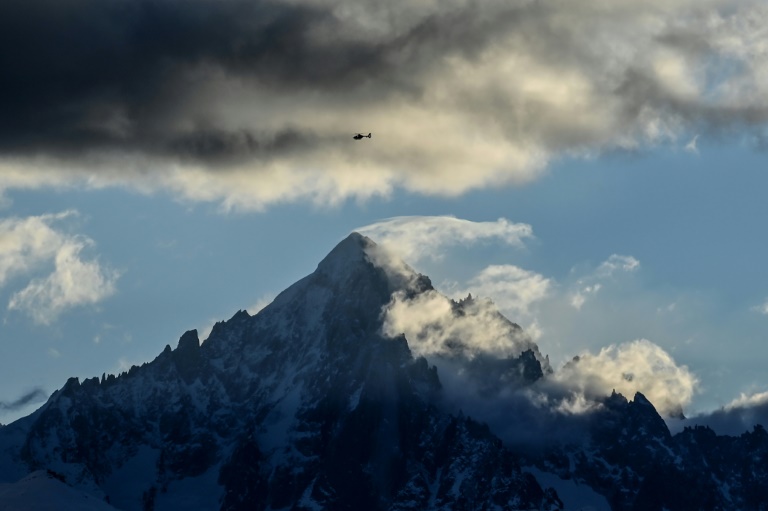
In a year marked by drought and heatwaves, rockfalls and gaping crevices have made access to the top of Mont Blanc even more difficult and perilous — to the great frustration of amateur mountaineers.

Officially, none of the seven routes leading to the summit, at 4,807 metres (15,774 feet), is closed, but access conditions at the end of July have deteriorated to such an extent that only the most experienced climbers are able to make the ascent, experts say. 

A lack of snow during the winter has laid bare vast areas of greyish glacier — yellowish where sand dust from the Sahara has accumulated — riven with fractures.

The heat did the rest, causing the melting of the fragile snow bridges that make it possible to cross the crevasses as well as leading to landslides.

In the southeastern French town of Chamonix, at the foot of the “White Giant”, the season is in full swing with thousands of tourists flocking by cable car to the top of the Aiguille du Midi, at 3,842 metres, the closest you can get to the summit of Mont Blanc without hiking or climbing.

– ‘Awful’ conditions –

But in the small cave carved out of the ice which serves as a changing room and a starting point for mountaineers for many mountain races, there are fewer people than ever putting on crampons right now.

Scotsman Evan Warden and his 14-year-old son David said they were shocked to discover the “awful” conditions.

“Everywhere we walked there was just constant rockfall and the crevices constantly open up. (We were) pretty worried,” said David, 14, on his first visit to the Alps.

“MB is too risky… that was our plan, yes but I’ve not seen this much rockfall here in a long time. That’s global warming definitely,” Evan said, adding that the pair had hoped to do the “Trois Monts” (three peaks) route.

Norwegians Monica and Marten Antheun had also been hoping to have a go at the famed peak after three years’ waiting.

They had booked a trip, but it was cancelled.

“I think the guides know the area and the conditions. It’s okay for us, we can do it later”, said Monica.

Guiding firm, Les Compagnies des guides de Chamonix et de Saint-Gervais, announced in mid-July the temporary suspension of ascents to Mont Blanc by the “normal” Gouter route due to rockfalls in the Gouter corridor, also known as “death gully”.

Access remains open only to independent guides.

Recent very high temperatures have destabilised the mountain, says Noe Verite, caretaker of the Cosmiques refuge, located on the Trois Monts route.

“We see the conditions deteriorating day by day,” he said.

– ‘Like fridges’ –

For him, July is usually the peak of the season, but the cancellations have been piling up.

The usual route is affected by large rocks “like fridges” falling, Verite said.

Currently, only between a dozen and 20 skilled mountaineers are able to reach the summit of Mont Blanc each day compared to 100-120 usually, says Olivier Grebert, president of the Compagnie des guides de Chamonix.

Cancelled races are postponed, reimbursed or redirected to other routes and the firm takes the opportunity to do a bit of education with those who, for example, want to climb the summit “for their 40th birthday”.

“This ascent must be part of a mountaineering career,” explains Grebert: “Mont Blanc sometimes has the reputation of being an easy ascent but it’s not the case, this year even more so.”

US envoy hopeful on Lebanon-Israel sea border talks

A US envoy on Monday expressed optimism that Lebanon and Israel could move towards a maritime border deal to settle competing claims over offshore gas fields.

The dispute escalated in early June after Israel moved a production vessel near the Karish offshore field, which is partly claimed by neighbour Lebanon.

This prompted Beirut to call for the resumption of US-mediated negotiations on the demarcation dispute.

“I remain optimistic that we can make continuous progress as we have over the last several weeks and I look forward to coming back to the region and being able to make the final arrangements,” Amos Hochstein told reporters after meeting Lebanon’s top leaders.

Hochstein, on his second visit in less than two months, is carrying an Israeli proposal in response to a demarcation offer made by Lebanon.

On Monday, he met with President Michel Aoun, Prime Minister Najib Mikati and Parliament Speaker Nabih Berri at the presidential palace.

Lebanon is looking to clinch “a deal that preserves its rights and its wealth and that could provide, as soon as negotiations are over, an opportunity to revitalise the economy,” Aoun said before Monday’s meeting.

Lebanon and Israel have no diplomatic relations and are separated by a UN-patrolled border. 

They had resumed maritime border negotiations in 2020 but the process was stalled by Beirut’s claim that the map used by the United Nations in the talks needed modifying.

Lebanon initially demanded 860 square kilometres (330 square miles) in the disputed maritime area but then asked for an additional 1,430 square kilometres, including part of the Karish field.

Israel claims that the field lies in its waters and is not part of the disputed area subject to ongoing negotiations.

– ‘Pay dearly’ – 

A Lebanese official in mid-June said Beirut had made a new offer to Hochstein, holding back on demands for territory where Israel planned to imminently extract gas.

Beirut was pushing for the country’s maritime border to exclude Karish and include the whole of a nearby field instead, the official told AFP at the time.

An Israeli official on Sunday said Israel’s offer, which related to the original disputed zones, was a “compromise to both sides” and would allow Lebanon to develop “the Sidon reservoir”, known as the Qana field, while safeguarding Israel’s interest.

On July 2, Israel said it had downed three drones launched by Lebanon’s Iran-backed Hezbollah that were headed towards the Karish gas field.

The Iran-backed Shiite Muslim movement on Sunday released a short video it said showed surveillance of several Israeli-chartered energy infrastructure ships, including the production vessel sent to Karish which is operated by London-listed firm Energean.

Hezbollah’s chief Hassan Nasrallah had threatened attacks if Israel proceeds with gas exploration in the disputed area.

On Sunday, he said he was trying to “strengthen” Lebanon’s negotiating power and said that his party will determine its next step based on the outcomes of Monday’s talks.

“We’re paying no attention to Nasrallah’s threats and they’re not a factor in the negotiations,” Ram Ben Barak, head of the Israeli foreign and defence committee told public broadcaster Kan radio on Monday.

“But if Nasrallah dares to do anything to Israel’s gas rigs, Lebanon –- and Hezbollah -– will pay dearly.”

Israel and Hezbollah last fought a devastating war in 2006.

US envoy hopeful on Lebanon-Israel sea border talks

A US envoy on Monday expressed optimism that Lebanon and Israel could move towards a maritime border deal to settle competing claims over offshore gas fields.

The dispute escalated in early June after Israel moved a production vessel near the Karish offshore field, which is partly claimed by neighbour Lebanon.

This prompted Beirut to call for the resumption of US-mediated negotiations on the demarcation dispute.

“I remain optimistic that we can make continuous progress as we have over the last several weeks and I look forward to coming back to the region and being able to make the final arrangements,” Amos Hochstein told reporters after meeting Lebanon’s top leaders.

Hochstein, on his second visit in less than two months, is carrying an Israeli proposal in response to a demarcation offer made by Lebanon.

On Monday, he met with President Michel Aoun, Prime Minister Najib Mikati and Parliament Speaker Nabih Berri at the presidential palace.

Lebanon is looking to clinch “a deal that preserves its rights and its wealth and that could provide, as soon as negotiations are over, an opportunity to revitalise the economy,” Aoun said before Monday’s meeting.

Lebanon and Israel have no diplomatic relations and are separated by a UN-patrolled border. 

They had resumed maritime border negotiations in 2020 but the process was stalled by Beirut’s claim that the map used by the United Nations in the talks needed modifying.

Lebanon initially demanded 860 square kilometres (330 square miles) in the disputed maritime area but then asked for an additional 1,430 square kilometres, including part of the Karish field.

Israel claims that the field lies in its waters and is not part of the disputed area subject to ongoing negotiations.

– ‘Pay dearly’ – 

A Lebanese official in mid-June said Beirut had made a new offer to Hochstein, holding back on demands for territory where Israel planned to imminently extract gas.

Beirut was pushing for the country’s maritime border to exclude Karish and include the whole of a nearby field instead, the official told AFP at the time.

An Israeli official on Sunday said Israel’s offer, which related to the original disputed zones, was a “compromise to both sides” and would allow Lebanon to develop “the Sidon reservoir”, known as the Qana field, while safeguarding Israel’s interest.

On July 2, Israel said it had downed three drones launched by Lebanon’s Iran-backed Hezbollah that were headed towards the Karish gas field.

The Iran-backed Shiite Muslim movement on Sunday released a short video it said showed surveillance of several Israeli-chartered energy infrastructure ships, including the production vessel sent to Karish which is operated by London-listed firm Energean.

Hezbollah’s chief Hassan Nasrallah had threatened attacks if Israel proceeds with gas exploration in the disputed area.

On Sunday, he said he was trying to “strengthen” Lebanon’s negotiating power and said that his party will determine its next step based on the outcomes of Monday’s talks.

“We’re paying no attention to Nasrallah’s threats and they’re not a factor in the negotiations,” Ram Ben Barak, head of the Israeli foreign and defence committee told public broadcaster Kan radio on Monday.

“But if Nasrallah dares to do anything to Israel’s gas rigs, Lebanon –- and Hezbollah -– will pay dearly.”

Israel and Hezbollah last fought a devastating war in 2006.

BTS may be able to perform while on military service: minister

K-pop sensations BTS may be allowed to continue performing and preparing for international concerts even while they undertake their mandatory military service in South Korea, the defence minister said Monday.

All South Korean able-bodied young men under the age of 30 must perform around two years of military service, mainly due to the fact that the country remains technically at war with nuclear-armed North Korea.

The spectre of conscription has long hovered over BTS, with its seven male stars ranging in age from 24-year-old Jungkook to Jin, 29, who must sign up by next year or risk jail time.

Defence Minister Lee Jong-sup said during a parliament session that it could be in the national interest to find a way to keep the global stars on stage during their time in South Korea’s military.

“I think there will be a way to give them time to practice in the military and to allow them to perform together if there is an overseas performance scheduled,” he said.

“Since many people value the fact of serving in the military itself very highly, it could be more helpful for their popularity,” he added, responding to a lawmaker’s question on the topic.

South Korea grants exemptions from military service to some elite athletes, such as Olympic medallists, and classical musicians — but pop stars do not qualify.

The lack of exemptions for BTS, who are credited with generating billions of dollars for the South Korean economy, has sparked fierce debate in the past.

Who does — and does not — undertake military service is a highly-charged issue in South Korea.

Refusing to serve is a crime, and can lead to imprisonment and social stigma, but even so some South Koreans go to extreme measures — trying to gain weight or having unnecessary surgery, for example — to evade service, AFP has reported.

BTS have not shown any signs of trying to evade the draft. 

“As a South Korean young man, I believe military service is a natural course. And as I have always said, I will answer the country’s call whenever it comes,” Jin said in 2020.

The group had already benefited from a 2020 revision to South Korea’s conscription law, which moved the age limit for some entertainers to sign up from 28 to 30 years old.

A majority of South Koreans — 59 percent — favour expanding military service exemptions, but there is staunch opposition from young men who have already done it, local reports say.

HSBC H1 pre-tax profit falls, dismisses calls for split

HSBC bank on Monday said pre-tax profit fell in the first half, and appeared to rebuff calls to spin off its Asian activities on the eve of a key shareholder meeting.

Pre-tax earnings sank 15 percent to US$9.2 billion after it took a $1.1-billion hit on possible credit losses “to reflect heightened economic uncertainty and inflation”, HSBC said.

The result “reflected a more normalised level of expected credit losses compared with the Covid-19 releases made last year, as well as the macroeconomic impact of the Russia-Ukraine war”, added Chief Executive Noel Quinn.

However, net profit rose 14 percent to US$8.3 billion in the reporting period partly on a large one-off tax credit.

– Quarterly dividends –

The annual revenue outlook was positive, Quinn noted, with net interest income expected to reach at least US$31 billion this year and US$37 billion next year as interest rates rise.

The group was confident of achieving its best returns in a decade in 2023.  

“We also intend to revert to quarterly dividends in 2023,” he added.

London-headquartered HSBC was among a number of major banks to cancel dividends early in the pandemic after a de facto order from the Bank of England — a move that upset some Hong Kong investors.

Monday’s results come one day before HSBC executives’ first face-to-face meeting with shareholders from the Asian financial hub in three years.

– Asia spin-off demands –

Executives are expected to field questions about a restructuring bid from its biggest shareholder Ping An Insurance Group.

The lender is under pressure from Ping An, which has a 9.2-percent stake, to spin off its Asian operations, in a bid to unlock shareholder value amid tensions between China and the West.

The bank has previously hinted it wants to keep its current structure while continuing a pivot to Asia.

Quinn, speaking later on Monday, suggested such an “alternative structure” would have a “negative” impact on HSBC.

“It has been our judgment that alternative structural options will not deliver increased value for shareholders,” Quinn told analysts on a conference call.

“Rather, they would have a material negative impact on value.”

HSBC had “considered many of these options over recent years”, and recently updated its analysis with third-party financial and legal advice, he added.

Hong Kong politician Christine Fong said on Sunday that HSBC separating its Asian business and bringing back its primary listing to the city is the “best way to protect (the interests of) minority shareholders”.

Fong, who reportedly represents 500 small investors in HSBC stock, also voiced support for Ping An getting seats on HSBC’s board, citing the cancelled dividends in 2020 as a reason.

Last year, HSBC vowed to accelerate a multi-year pivot to Asia and the Middle East, with ambitions to lead Asia’s wealth management market.

The bank said it would invest $6 billion in Hong Kong, China and Singapore and hire more than 5,000 wealth advisers — while slashing 35,000 jobs and cutting its retail operations in the United States and France. 

Close Bitnami banner
Bitnami