World

In US, the definition of 'recession' is moving target

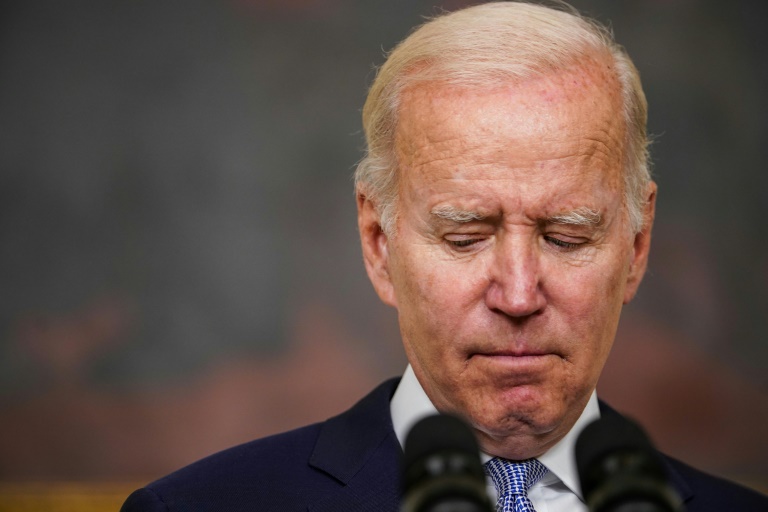
Now that the US economy has posted two consecutive quarters of negative growth, is it in recession? Opinions are starkly divided, and President Joe Biden is definitely in the No camp.

The “R” word is akin to profanity in some Washington circles these days, especially within the Biden administration.

Just defining exactly what a recession is and when it begins has sparked furious debate — based as much around politics as economics.

“That doesn’t sound like a recession to me,” the US president said Thursday after the Commerce Department reported that GDP declined at an annual rate of 0.9 percent in the second quarter, following a bigger drop in the first three months of 2022.

While not the official definition, two quarters of negative growth is commonly viewed as a strong sign that a recession is underway — but the veteran Democrat’s government has been at pains for a week to explain why the term does not apply.

“How Do Economists Determine Whether the Economy is in a Recession?” the White House said in a blog post last week, apparently trying to get the jump on Thursday’s data release.

“While some maintain that two consecutive quarters of falling real GDP constitute a recession, that is neither the official definition nor the way economists evaluate the state of the business cycle,” the White House said.

Of course, opposition Republicans quickly picked up on the spin.

“Newsflash for Joe Biden: You can’t change reality by arguing over definitions,” the Republican National Committee said in a statement on Monday.

Then on Thursday, top House Republican Kevin McCarthy tweeted: “Democrats would rather redefine a recession than restore a healthy economy.”

– ‘One official arbiter’ –

So beyond the political spin machine, what really is a recession?

In a note on its website, the International Monetary Fund insists there is “no official definition of recession.”

“Most commentators and analysts use, as a practical definition of recession, two consecutive quarters of decline in a country’s real (inflation-adjusted) gross domestic product (GDP),” the Washington-based global lender says.

For the IMF’s chief economist Pierre-Olivier Gourinchas, “the general assessment as to whether the economy is in a recession overall is a little bit more complex.”

Federal Reserve Chair Jerome Powell said Wednesday the Fed “doesn’t make a judgment on that,” but added: “What a recession really is — it’s a broad-based decline across many industries that is sustained for more than a couple months.”

And then on Thursday, Treasury Secretary and former Fed chair Janet Yellen chimed in: “I think we should avoid a semantic battle.”

David Wilcox, a senior economist at the Peterson Institute for International Economics and at Bloomberg Economics, says that considering an economy as entering recession after two consecutive quarters of negative GDP growth is simply “wrong.”

“I kind of cringe and resist every time I see” that definition, Wilcox told AFP.

“There’s one official arbiter of recession dating in the United States. And that’s the National Bureau of Economic Research.”

– Late to the party? –

The NBER, a private, independent and nonpartisan entity, was founded in 1920 to refine research on the US economy. Its “Business Cycle Dating Committee” uses several data points to determine when the economy is in expansion or recession.

“A recession is the period between a peak of economic activity and its subsequent trough, or lowest point,” the NBER says on its website.

“The NBER’s definition emphasizes that a recession involves a significant decline in economic activity that is spread across the economy and lasts more than a few months.”

But because the bureau prefers to base its assessment on solid data and publish its opinion several months after the figures are released, it can seem a little late to the party.

Ellen Hughes-Cromwick, an economist at the Third Way, a center-left think tank, says that the NBER’s traditional delay is “not a problem” but rather a “methodology” that allows the bureau to avoid repeated revisions.

“What is common knowledge among economists is that in that preliminary estimate (each quarter), they have less than 50 percent of actual statistics,” she explains.

“In other words, 50 percent of that GDP preliminary estimate… are estimates,” adds Hughes-Cromwick, who worked as an economist under presidents Ronald Reagan and Barack Obama.

Translation: the NBER is perhaps totally justified in taking its time.
Xi warns Biden not to 'play with fire' over Taiwan

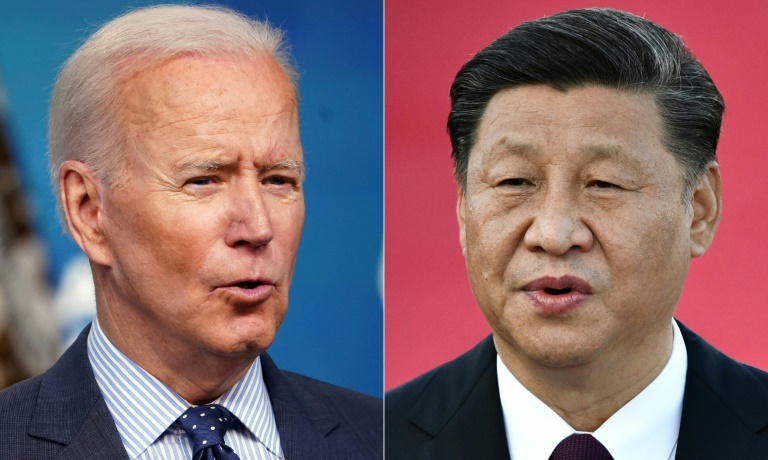
Chinese President Xi Jinping warned his US counterpart Joe Biden not to “play with fire” over the self-ruled island of Taiwan during a lengthy phone call Thursday that the White House said aimed to steady the superpowers’ rocky relationship.

A statement relayed by Chinese state media said the call, lasting two hours and 17 minutes according to the White House, was “candid” — often diplomatic speak for a difficult exchange.

State-run Xinhua agency said Xi delivered harsh words on US policy towards Taiwan, a democratic island with close ties to the United States but which China considers part of its territory.

“Those who play with fire will eventually get burned,” Xi was quoted as telling Biden, repeating language he employed when they spoke last November. “I hope the US side fully understand that.”

Tensions around Taiwan are steadily escalating amid fears that Xi could ultimately order an invasion to impose Beijing’s rule. In the latest flashpoint, Chinese authorities are furious at unconfirmed plans by Biden ally and speaker of the House of Representatives, Nancy Pelosi, to visit the island.

Although US officials frequently visit Taiwan, separated by a narrow strip of water from the Chinese mainland, Beijing considers a Pelosi trip as a major provocation. She’s second in line to the US presidency and given her position may travel with military transport.

Washington will “bear the consequences” if the trip goes ahead, China warned Wednesday.

During the call, Xi was quoted as telling Biden “the position of the Chinese government and people on the Taiwan issue is consistent.”

“It is the firm will of the over 1.4 billion Chinese people to firmly safeguard China’s national sovereignty and territorial integrity,” he said.

In response, Biden reassured Xi that US policy, known as “strategic ambiguity,” was unchanged — essentially favoring the status quo in Taiwan, with Washington recognizing Chinese sovereignty but opposing any enforcement, allowing the Taiwanese to retain their distinct rule.

“On Taiwan, President Biden underscored that the United States policy has not changed and that the United States strongly opposes unilateral efforts to change the status quo or undermine peace and stability across the Taiwan Strait,” the White House said in a statement.

– ‘Guardrails’ –

While this was Biden’s fifth talk with Xi since becoming president a year and a half ago, it’s getting hard to mask deepening mistrust between the two countries.

Biden prides himself on a close relationship with Xi going back years but — in large part due to Covid travel restrictions — the two have yet to meet face-to-face since he took office.

White House National Security Council spokesman John Kirby said “tensions over China’s aggressive, coercive behavior in the Indo-Pacific” were high on the agenda for the call — using the US administration’s term for the Asia-Pacific region.

The White House described Biden’s outreach as part of “efforts to maintain and deepen lines of communication” and to “responsibly manage our differences and work together where our interests align.”

According to the White House, Biden’s chief hope is to establish “guardrails” for the two superpowers.

This is meant to ensure that while they sharply disagree on democracy, and are increasingly rivals on the geopolitical stage, they can avoid open conflict.

Where to place the guardrails, however, is challenging amid so many unresolved disputes, including a simmering trade war begun under Donald Trump’s presidency.

Asked whether Biden could lift some of the 25 percent import duties placed on billions of dollars of Chinese products by Trump, Kirby said there was still no decision.

“We do believe… that the tariffs that were put in place by his predecessor were poorly designed. We believe that they’ve increased costs for American families and small businesses, as well as ranchers. And that’s, you know, without actually addressing some of China’s harmful trade practices,” Kirby said.

But “I don’t have any decision to speak to with respect to tariffs by the president. He’s working this out.”

Recession fears deepen as US economy contracts again

The US economy contracted for a second straight quarter between April and June, government data showed Thursday, adding fuel to recession fears in a headache for President Joe Biden ahead of midterm elections.

Gross domestic product declined at an annual rate of 0.9 percent in the second quarter, following a bigger drop in the first three months of the year, according to the Commerce Department.

While not the official definition, two quarters of negative growth is commonly viewed as a strong signal that a recession is underway, and a downturn in the world’s largest economy would have global consequences — as well as domestic political costs.

Biden insisted that the US economy is “on the right path” despite the slowdown, touting the strong labor market.

“That doesn’t sound like a recession to me,” he said in remarks at the White House.

But his critics are sure to seize on the report as proof of the veteran Democrat’s mismanagement.

After a 1.6 percent decline in the first three months of the year, the report said the slowdown in the latest quarter was largely due to drops in government spending at all levels, in private investment on goods including autos, and on residential buildings, despite an increase in exports.

But personal consumption expenditures (PCE) continued to increase, though at a slower rate than the prior quarter, the data showed.

The US economy also continues to battle sky-high inflation, as a result of supply chain snarls due to Covid-19 lockdowns, as well as the fallout from Russia’s war in Ukraine which has sent food and fuel prices soaring.

Consumer prices topped nine percent in June, the highest in more than four decades, while the GDP data showed another key inflation measure, the PCE price index, rose a still-high 7.1 percent in the latest three months, the same as in the January-March period.

The US central bank has been raising interest rates aggressively — with the latest big hike on Wednesday — to try to cool the economy and tamp down price pressures.

“It’s no surprise that the economy is slowing down as the Federal Reserve acts to bring down inflation,” Biden said in a statement shortly after the GDP report was released. 

“But even as we face historic global challenges, we are on the right path and we will come through this transition stronger and more secure,” he said.

– Recession debate –

It would be highly unusual for an economy still adding jobs at a rapid pace, and with near record-low unemployment, to fall into recession. Even so, many economists say the discussion of a downturn is more a matter of when, not if.

That poses a major political headache for the president, who has seen his approval ratings plummet in recent months as American families struggle to make ends meet due to surging inflation.

Fed Chair Jerome Powell agreed with Biden and other economists who say the GDP figures are inconsistent with other strong data.

Powell on Wednesday said he does not think the country is currently in a recession because “there are too many areas of the economy that are performing too well.”

Treasury Secretary Janet Yellen said Thursday there was a path to lower inflation without triggering an uptick in joblessness, though she acknowledged “numerous risks” to the economic outlook.

Mike Fratantoni, chief economist of the Mortgage Bankers Association, was among those who echoed Powell’s view, saying “the ongoing strength in the job market and other signs of growth make it unlikely that this will be categorized as a recession.”

Powell also said it is possible to cool price pressures without causing a downturn or a big jump in joblessness, although he acknowledged the path to thread that needle is narrowing.

But economist Mohamed El-Erian said on Twitter that the data point to “deepening stagflation and flashing red recession risk.”

That impression may be the one that sticks in the minds of investors and consumers.

Wall Street was initially not happy with the data, but stocks rebounded and were solidly higher at mid-afternoon.

Recession fears deepen as US economy contracts again

The US economy contracted for a second straight quarter between April and June, government data showed Thursday, adding fuel to recession fears in a headache for President Joe Biden ahead of midterm elections.

Gross domestic product declined at an annual rate of 0.9 percent in the second quarter, following a bigger drop in the first three months of the year, according to the Commerce Department.

While not the official definition, two quarters of negative growth is commonly viewed as a strong signal that a recession is underway, and a downturn in the world’s largest economy would have global consequences — as well as domestic political costs.

Biden insisted that the US economy is “on the right path” despite the slowdown, touting the strong labor market.

“That doesn’t sound like a recession to me,” he said in remarks at the White House.

But his critics are sure to seize on the report as proof of the veteran Democrat’s mismanagement.

After a 1.6 percent decline in the first three months of the year, the report said the slowdown in the latest quarter was largely due to drops in government spending at all levels, in private investment on goods including autos, and on residential buildings, despite an increase in exports.

But personal consumption expenditures (PCE) continued to increase, though at a slower rate than the prior quarter, the data showed.

The US economy also continues to battle sky-high inflation, as a result of supply chain snarls due to Covid-19 lockdowns, as well as the fallout from Russia’s war in Ukraine which has sent food and fuel prices soaring.

Consumer prices topped nine percent in June, the highest in more than four decades, while the GDP data showed another key inflation measure, the PCE price index, rose a still-high 7.1 percent in the latest three months, the same as in the January-March period.

The US central bank has been raising interest rates aggressively — with the latest big hike on Wednesday — to try to cool the economy and tamp down price pressures.

“It’s no surprise that the economy is slowing down as the Federal Reserve acts to bring down inflation,” Biden said in a statement shortly after the GDP report was released. 

“But even as we face historic global challenges, we are on the right path and we will come through this transition stronger and more secure,” he said.

– Recession debate –

It would be highly unusual for an economy still adding jobs at a rapid pace, and with near record-low unemployment, to fall into recession. Even so, many economists say the discussion of a downturn is more a matter of when, not if.

That poses a major political headache for the president, who has seen his approval ratings plummet in recent months as American families struggle to make ends meet due to surging inflation.

Fed Chair Jerome Powell agreed with Biden and other economists who say the GDP figures are inconsistent with other strong data.

Powell on Wednesday said he does not think the country is currently in a recession because “there are too many areas of the economy that are performing too well.”

Treasury Secretary Janet Yellen said Thursday there was a path to lower inflation without triggering an uptick in joblessness, though she acknowledged “numerous risks” to the economic outlook.

Mike Fratantoni, chief economist of the Mortgage Bankers Association, was among those who echoed Powell’s view, saying “the ongoing strength in the job market and other signs of growth make it unlikely that this will be categorized as a recession.”

Powell also said it is possible to cool price pressures without causing a downturn or a big jump in joblessness, although he acknowledged the path to thread that needle is narrowing.

But economist Mohamed El-Erian said on Twitter that the data point to “deepening stagflation and flashing red recession risk.”

That impression may be the one that sticks in the minds of investors and consumers.

Wall Street was initially not happy with the data, but stocks rebounded and were solidly higher at mid-afternoon.

Nicaragua bus accident leaves 16 dead, mostly Venezuelans

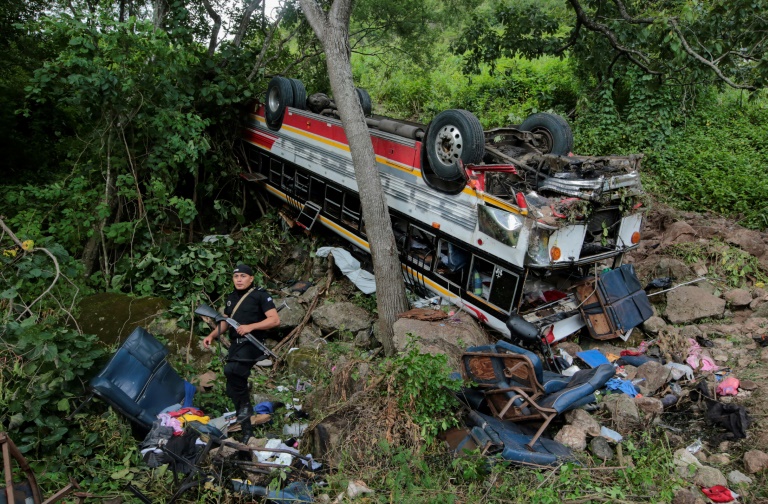
A road accident in northern Nicaragua has left 16 people dead, including 13 Venezuelans believed to be migrants, police said Thursday.

The accident — which left another 47 people injured — occurred late Wednesday at a precarious crossroads on the Pan-American Highway in the department of Esteli.

“Sixteen people died, amongst them five women and 11 men — 13 Venezuelan nationals, a Nicaraguan and two yet to be identified,” national police said in a statement, describing the accident as a “total disaster.”

Officers believe the incident occurred when a speeding bus hit two cars.

“As a result of the collision and excess speed, the bus driver lost control and (the bus) fell into a ravine,” said the police statement.

On Thursday, the bus remained upside down in the ravine, which is around 80 meters (260 feet) deep, an AFP reporter at the scene said.

The bus driver was arrested.

There were “many injured, people’s cries, some calling out for their companions, children — it’s painful,” said local resident Mario Jose Rugama.

“Those poor people, how they screamed — they came out with fractures, covered in oil because the bus turned over …. so the people were bathed in hot oil.”

Many migrants trying to reach the United States pass through Nicaragua and other countries in Central America.

Hong Kong boy band ends show after falling screen hits dancers

At least two Hong Kong dancers were injured on Thursday night after being hit by a falling screen at a concert of the city’s most popular boy band Mirror.

Footage of the incident circulated online showed a group of white-clad dancers performing onstage at the Hong Kong Coliseum when a giant overhead video screen fell and crushed a man.

The screen then toppled onto at least one other person before the remaining performers rushed to help.

Mirror’s manager Ahfa Wong later took to the stage to apologise and asked the audience to leave, according to video clips circulated online.

Two male dancers were taken to hospital while conscious shortly after 10:30 pm local time (1430 GMT), police told AFP.

At about midnight, the city’s Queen Elizabeth Hospital said one man with a neck injury was in a serious condition, while another was in a stable condition after a head injury, Hong Kong media reported.

The Hong Kong government has halted Mirror concerts until the stage’s structure is proven to be safe, Secretary for Culture, Sports and Tourism Kevin Yeung said in a late-night statement.

Hong Kong’s leader John Lee said he was shocked by the incident and has ordered a comprehensive investigation to assess the safety requirements of similar shows to “ensure the safety of performers, crew and the public”.

Over the past year, Mirror have emerged as the most popular Cantonese pop act and are credited with revitalising Hong Kong’s local music scene.

The 12-piece’s latest concert series, originally scheduled to run from July 25 to August 6 at the prestigious Coliseum, was eagerly anticipated by fans and tickets were quickly snapped up.

But the shows have been plagued by technical faults since debuting on Monday, leading fans to question whether they are safe. More than 10,000 signed a petition urging organisers to take better care of performers.

On Tuesday night one Mirror member, Frankie Chan, fell about a metre off the edge of the stage, though he later said on social media that he only bruised his left arm, according to the South China Morning Post.

Other fan-filmed clips of the concert showed walkways wobbling under the weight of performers and some stars missing their steps in the dimly lit space.

Even before Thursday, government officials had already contacted the concert organisers regarding “stage incidents” and demanded improvements, according to a government press release.

Photos of the aftermath of Thursday’s incident showed police, paramedics and production crew on stage.

Concert organisers Music Nation and MakerVille apologised in a statement and said they will thoroughly investigate the incident. 

“We are deeply sorry about the accident and are very concerned about the situation of the two people injured,” organisers said, adding they will provide all necessary assistance to those hurt.

Gorgosaurus sells for $6.1 mn at New York auction

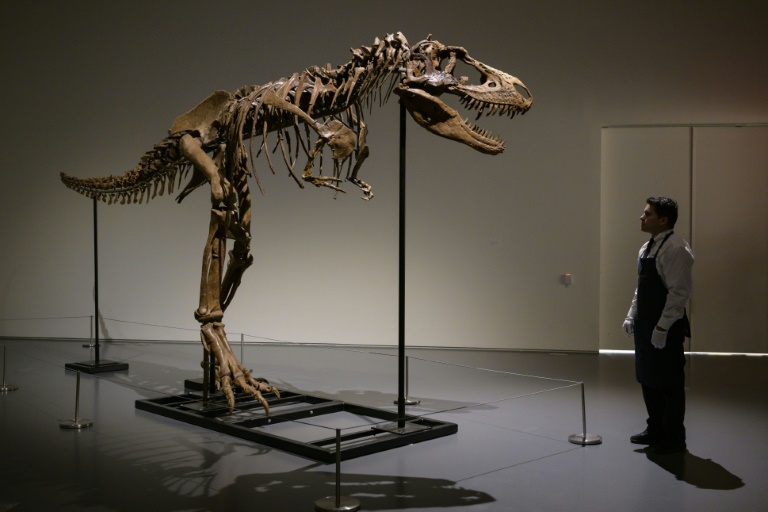
The first skeleton of a Gorgosaurus dinosaur to go under the hammer sold for $6.1 million at auction in New York Thursday, Sotheby’s said.

The specimen is 10 feet tall (three meters) and 22 feet long, and had been expected to fetch between $5 million and $8 million.

“The result places the Gorgosaurus among the most valuable dinosaurs ever sold at auction, and establishes a new benchmark for a Gorgosaurus skeleton,” Sotheby’s said in a statement.

The Gorgosaurus roamed the earth approximately 77 million years ago. 

A typical adult weighed about two tonnes, slightly smaller than its more famous relative, the Tyrannosaurus rex.

Paleontologists say it was fiercer and faster than the T-Rex, with a stronger bite of around 42,000 newtons compared to 35,000.

The skeleton was discovered in the Judith River Formation near Havre, in the US state of Montana in 2018.

The sale marked the first time that Sotheby’s had auctioned a full dinosaur skeleton since it sold Sue the T-Rex in 1997 for $8.36 million.

“Today’s Gorgosaurus came to auction without a name, providing the buyer the exclusive opportunity to name the dinosaur,” Sotheby’s said.

Sotheby’s did not reveal the buyer.

Unlike other countries, the United States does not restrict the sale or export of fossils, meaning the skeleton could end up overseas.

Deal reached for generic drug to prevent HIV infection

A deal has been reached to allow for distribution of a low-cost generic version of a long-term preventative treatment against HIV in low-income countries where most of the world’s infections occur, Unitaid and the Medicines Patent Pool announced Thursday.

The deal will see ViiV Healthcare, a subsidiary of British pharmaceutical giant GSK, allow selected manufacturers to produce generic versions of Cabotegravir LA, its long-acting pre-exposure prophylaxis (PrEP) treatment for HIV.

The deal will provide access to the injectable version of cabotegravir, which has been shown to provide two months of protection against infection, in 90 countries where over 70 percent of all new HIV infections occurred in 2020, said Unitaid. 

“Access to an effective long-acting HIV prevention option could significantly contribute to the goal of ending HIV transmission and ending the epidemic by 2030,” said Unitaid spokesman Herve Verhoosel.

“Efforts to increase access to Cabotegravir LA for PrEP will be especially impactful for groups that experience particularly high rates of infection, such as men who have sex with men and sex workers,” he added.

Long-lasting cabotegravir injections only recently became available, and have been shown to be much more effective than an oral version that needed to be taken daily.

But the cost — the price of a year’s treatment cost $22,000 in the United States earlier this year — was an obstacle for widespread rollout in all but high-income countries.

– ‘Top global priority’ –

The World Health Organization released new guidelines about cabotegravir on Thursday, calling for countries to work towards making the drug swiftly available for those in need.

“We hope these new guidelines will help accelerate country efforts to start to plan and deliver CAB-LA alongside other HIV prevention options,” Meg Doherty, director of the WHO’s global HIV, hepatitis and sexually-transmitted infection programmes, said in a statement.

The news comes one day after a new report presented at the International AIDS Conference in Montreal, Canada, that found the global fight against HIV has stalled from shrinking resources due to Covid-19 and other crises.

Some 1.5 million new infections occurred last year –- more than a million over global targets of fighting the virus.

“Long-acting PrEP could play a major role in ending the HIV pandemic, but right now, very few people can get it,” said Adeeba Kamarulzaman, president of the International AIDS Society which convenes the conference.

“Scaling up affordable access to this game-changing prevention tool must be a top global priority,” she said in a statement.

Unitaid is a global health initiative which works on ensuring equitable access to medical innovations in low- and middle-income countries.

The Medicines Patent Pool, founded by Unitaid and UN-backed, works to licence needed medicines for generic distribution in low- and middle-income countries.

Deal reached for generic drug to prevent HIV infection

A deal has been reached to allow for distribution of a low-cost generic version of a long-term preventative treatment against HIV in low-income countries where most of the world’s infections occur, Unitaid and the Medicines Patent Pool announced Thursday.

The deal will see ViiV Healthcare, a subsidiary of British pharmaceutical giant GSK, allow selected manufacturers to produce generic versions of Cabotegravir LA, its long-acting pre-exposure prophylaxis (PrEP) treatment for HIV.

The deal will provide access to the injectable version of cabotegravir, which has been shown to provide two months of protection against infection, in 90 countries where over 70 percent of all new HIV infections occurred in 2020, said Unitaid. 

“Access to an effective long-acting HIV prevention option could significantly contribute to the goal of ending HIV transmission and ending the epidemic by 2030,” said Unitaid spokesman Herve Verhoosel.

“Efforts to increase access to Cabotegravir LA for PrEP will be especially impactful for groups that experience particularly high rates of infection, such as men who have sex with men and sex workers,” he added.

Long-lasting cabotegravir injections only recently became available, and have been shown to be much more effective than an oral version that needed to be taken daily.

But the cost — the price of a year’s treatment cost $22,000 in the United States earlier this year — was an obstacle for widespread rollout in all but high-income countries.

– ‘Top global priority’ –

The World Health Organization released new guidelines about cabotegravir on Thursday, calling for countries to work towards making the drug swiftly available for those in need.

“We hope these new guidelines will help accelerate country efforts to start to plan and deliver CAB-LA alongside other HIV prevention options,” Meg Doherty, director of the WHO’s global HIV, hepatitis and sexually-transmitted infection programmes, said in a statement.

The news comes one day after a new report presented at the International AIDS Conference in Montreal, Canada, that found the global fight against HIV has stalled from shrinking resources due to Covid-19 and other crises.

Some 1.5 million new infections occurred last year –- more than a million over global targets of fighting the virus.

“Long-acting PrEP could play a major role in ending the HIV pandemic, but right now, very few people can get it,” said Adeeba Kamarulzaman, president of the International AIDS Society which convenes the conference.

“Scaling up affordable access to this game-changing prevention tool must be a top global priority,” she said in a statement.

Unitaid is a global health initiative which works on ensuring equitable access to medical innovations in low- and middle-income countries.

The Medicines Patent Pool, founded by Unitaid and UN-backed, works to licence needed medicines for generic distribution in low- and middle-income countries.

W. Mediterranean hit by 'exceptional' heatwave: experts

An “exceptional” marine heatwave is gripping the western Mediterranean with surface temperatures up to five degrees Celsius (41 degrees Fahrenheit) hotter than average, according to experts contacted by AFP. 

Although the record-breaking heatwave that baked northern Europe and Britain this month has subsided, the experts said the persistently hotter-than-normal temperatures in the Mediterranean posed a threat to the entire marine ecosystem.

“This huge marine heatwave began in May in the Ligurian sea” between Corsica and Italy, said Karina von Schuckmann, an oceanographer at the non-profit research group Mercator Ocean International.

It then spread to the Gulf of Taranto in the Ionian Sea, she said. 

By July, the heatwave had engulfed the Balearic Islands, Sardinia, and the Tyrrhenian Sea. 

“The surface temperature anomaly map shows higher than normal values, in the order of +4 to +5C from the east of the Balearic Islands to the east of Corsica,” Mercator said in a statement. 

While humans might find the warmer water temperatures pleasant in the tourist hotspots of the western Mediterranean, the group warned that “ocean warming impacts the entire ecosystem.” 

“It is important to be aware of the possible consequences for local fauna and flora, as well as the occurrence of extreme weather events that could result in natural disasters,” it said.

Von Schuckmann said that unusually warm temperatures could cause irreversible migration for some species and “mass die-offs” for others.

She noted knock-on effects for industries such as tourism and fishing which rely on favourable water conditions.

According to the UN’s climate science body, marine heatwaves have already doubled in frequency globally since 1980.


– Die-offs, invasive species – 

Although the Mediterranean only counts for one percent of Earth’s ocean surface area, it contains nearly 20 percent of all known marine species.

A study published this month in the journal Global Change Biology found that the Mediterranean had experienced five consecutive years of mass mortality events between 2015-2019.

France’s CNRS research centre has noted that marine heatwaves in 1999, 2003 and 2006 caused mass die-offs for some species, notably the posidonia, a genus of flowering plants.

“We can predict the main impact will be on fixed organisms such as plants or corals,” said Charles-Francois Boudouresque, a marine ecologist at Aix-Marseille University. 

Some species of fish such as the barracuda could become more abundant in warming northern Mediterranean waters, however.

Boudouresque said some species coming through the Suez Canal from the Red Sea could become problematic “within five to 10 years”.

These include the rhopilema — a herbivore jellyfish — and the rabbit fish, which Boudouresque described as “extremely greedy”.

Already abundant in the eastern Mediterranean, its appearance in western waters would threaten the algae forests that serve as nurseries for myriad varieties of fish. 

Rhopilema can also sting swimmers with enough severity to require hospital treatment.

As there is little governments can do once a marine heatwave takes hold, Von Schuckmann said the best course of action is to reduce the greenhouse gas emissions that contribute to warming.

“Even if we stopped emitting today, the oceans, which contain 90 percent of Earth’s heat, will continue to warm,” she said.

“Since at least 2003 (marine heatwaves) have become more common and in future they will last longer, cover more sea, and be more intense and severe,” said Von Schuckmann.

Close Bitnami banner
Bitnami