World

Iraqi Kurd farmers battle drought as Lake Dukan retreats

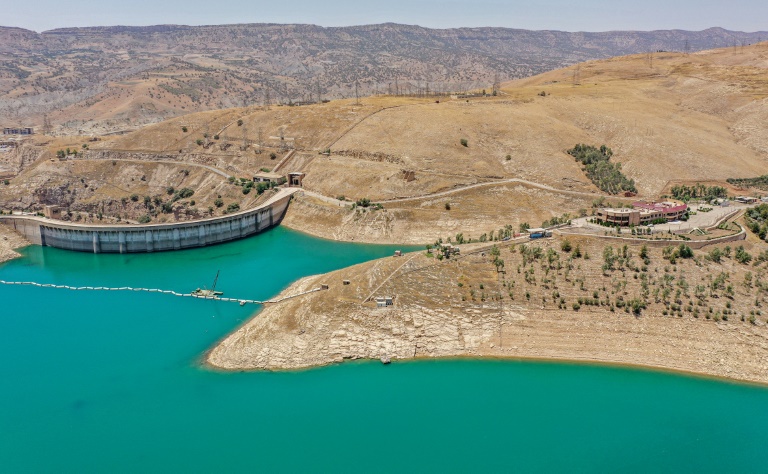
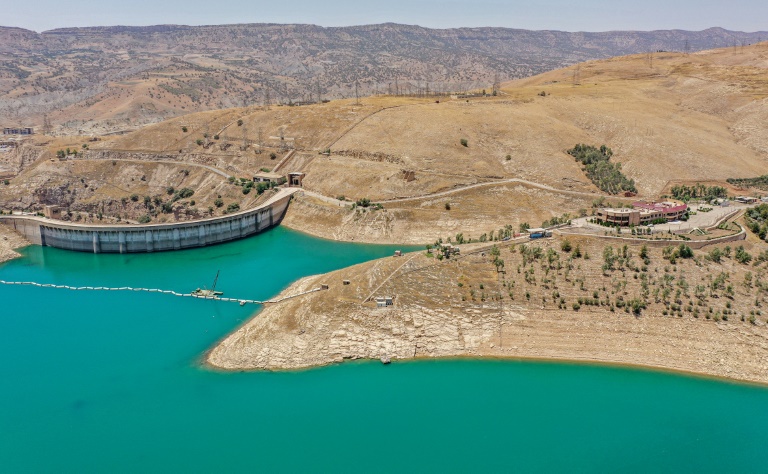
Farmers in Iraqi Kurdistan seeking to irrigate crops face seeing their economic lifeline slip away as the waters of Lake Dukan recede and dams upstream in Iran stem the flow.

Bapir Kalkani, who is also a trade unionist, farms near the picturesque lake but has seen marked changes over the past three years as Iraq suffers prolonged drought.

“There was water where I’m standing now” in 2019, the 56-year-old said. “It used to go three kilometres (two miles) further, but the level has retreated.”

Sesame and beans are being grown on the plain under a blazing sun, adjacent to the lake which is fed by a Tigris tributary, the Lower Zab river which has its source in Iran.

The large artificial lake was created in the 1950s following construction of the Dukan dam, to supply irrigation and drinking water for the region, as well as to generate electricity.

But for several years both the lake and the river have been shrinking — as have all of the rivers in Iraq.

The country is classified as one of the five nations most vulnerable to the effects of climate change and desertification.

Its water reserves have fallen by 60 percent compared with last year, the government says.

– Rainfall becoming rare –

With rainfall becoming a rarity and after three successive years of drought, Iraq has been forced to halve the area it devotes to agriculture.

“If we hadn’t had a little rain in late spring, there would have been no crops in Kurdistan this year,” Kalkani said.

Farmers in the area used to dig shallow wells fed by the Dukan so they could irrigate their crops. But not any more.

“The wells have lost 70 percent of their water,” he said.

Sesame farmer Shirko Aziz Ahmed had to dig a well several metres deep so he could access water and raise it using a diesel-powered pump.

“Sesame needs a lot of watering, so I’m going to have to dig even deeper as the water level goes down,” he said.

Drought is not the only source of the farmer’s water problems.

Iran has built several dams on the Lower Zab, notably the Kolsa barrage.

“The Kolsa dam has caused at least an 80 percent drop in the water levels” of the Lower Zab, said Banafsheh Keynoush of the Washington-based Middle East Institute.

She said Iran is going through one of the worst droughts in its history and has had to revise its irrigation policy.

– Iran ‘dam-building spree’ –

“Iran is on a dam-building spree, and many of its dams are small,” she told AFP.

The Dukan dam in Iraq has also been badly affected by the reduced river flow, said its director Kochar Jamal Tawfeeq.

“Now we have only 41 percent, below half of the capacity” of the dam, he said.

It supplies drinking water for “about three million people in Sulaymaniyah and Kirkuk”, two major cities downstream, he said.

But at just 300 mm (less than 12 inches) of rainfall last year — half the previous annual average — the skies have not been generous. And Tawfeeq said 2022 is on track to mirror last year’s figures.

“We are releasing 90 cubic metres per second,” the director said. “When the reservoir is full, we release 200 to 250.”

Tawfeeq said farmers were being told “not to grow crops that need too much water”.

He said Baghdad had sent teams to Iran to discuss the reduced flow of the Lower Zab river, but “there’s no cooperation from the Iranians”.

Iran contends its river flow contribution into the Tigris and Euphrates basin is only about six percent, according to Keynoush.

“What Iran is trying to say is: ‘The Euphrates and Tigris problems you have are really between you and Turkey’,” where the two main rivers have their sources, she added.

But Iraq itself is not above criticism, said Azzam Alwash, founder of the Nature Iraq non-government organisation and presidential adviser.

Iraqi Kurdistan in the north plans to construct new dams but the projects lack any coordination with Baghdad, Alwash said.

Downstream, in central and south Iraq, the situation is being exasperated by a lack of modernisation of water resources and could result in disaster, he warned.
Iraqi Kurd farmers battle drought as Lake Dukan retreats

Farmers in Iraqi Kurdistan seeking to irrigate crops face seeing their economic lifeline slip away as the waters of Lake Dukan recede and dams upstream in Iran stem the flow.

Bapir Kalkani, who is also a trade unionist, farms near the picturesque lake but has seen marked changes over the past three years as Iraq suffers prolonged drought.

“There was water where I’m standing now” in 2019, the 56-year-old said. “It used to go three kilometres (two miles) further, but the level has retreated.”

Sesame and beans are being grown on the plain under a blazing sun, adjacent to the lake which is fed by a Tigris tributary, the Lower Zab river which has its source in Iran.

The large artificial lake was created in the 1950s following construction of the Dukan dam, to supply irrigation and drinking water for the region, as well as to generate electricity.

But for several years both the lake and the river have been shrinking — as have all of the rivers in Iraq.

The country is classified as one of the five nations most vulnerable to the effects of climate change and desertification.

Its water reserves have fallen by 60 percent compared with last year, the government says.

– Rainfall becoming rare –

With rainfall becoming a rarity and after three successive years of drought, Iraq has been forced to halve the area it devotes to agriculture.

“If we hadn’t had a little rain in late spring, there would have been no crops in Kurdistan this year,” Kalkani said.

Farmers in the area used to dig shallow wells fed by the Dukan so they could irrigate their crops. But not any more.

“The wells have lost 70 percent of their water,” he said.

Sesame farmer Shirko Aziz Ahmed had to dig a well several metres deep so he could access water and raise it using a diesel-powered pump.

“Sesame needs a lot of watering, so I’m going to have to dig even deeper as the water level goes down,” he said.

Drought is not the only source of the farmer’s water problems.

Iran has built several dams on the Lower Zab, notably the Kolsa barrage.

“The Kolsa dam has caused at least an 80 percent drop in the water levels” of the Lower Zab, said Banafsheh Keynoush of the Washington-based Middle East Institute.

She said Iran is going through one of the worst droughts in its history and has had to revise its irrigation policy.

– Iran ‘dam-building spree’ –

“Iran is on a dam-building spree, and many of its dams are small,” she told AFP.

The Dukan dam in Iraq has also been badly affected by the reduced river flow, said its director Kochar Jamal Tawfeeq.

“Now we have only 41 percent, below half of the capacity” of the dam, he said.

It supplies drinking water for “about three million people in Sulaymaniyah and Kirkuk”, two major cities downstream, he said.

But at just 300 mm (less than 12 inches) of rainfall last year — half the previous annual average — the skies have not been generous. And Tawfeeq said 2022 is on track to mirror last year’s figures.

“We are releasing 90 cubic metres per second,” the director said. “When the reservoir is full, we release 200 to 250.”

Tawfeeq said farmers were being told “not to grow crops that need too much water”.

He said Baghdad had sent teams to Iran to discuss the reduced flow of the Lower Zab river, but “there’s no cooperation from the Iranians”.

Iran contends its river flow contribution into the Tigris and Euphrates basin is only about six percent, according to Keynoush.

“What Iran is trying to say is: ‘The Euphrates and Tigris problems you have are really between you and Turkey’,” where the two main rivers have their sources, she added.

But Iraq itself is not above criticism, said Azzam Alwash, founder of the Nature Iraq non-government organisation and presidential adviser.

Iraqi Kurdistan in the north plans to construct new dams but the projects lack any coordination with Baghdad, Alwash said.

Downstream, in central and south Iraq, the situation is being exasperated by a lack of modernisation of water resources and could result in disaster, he warned.
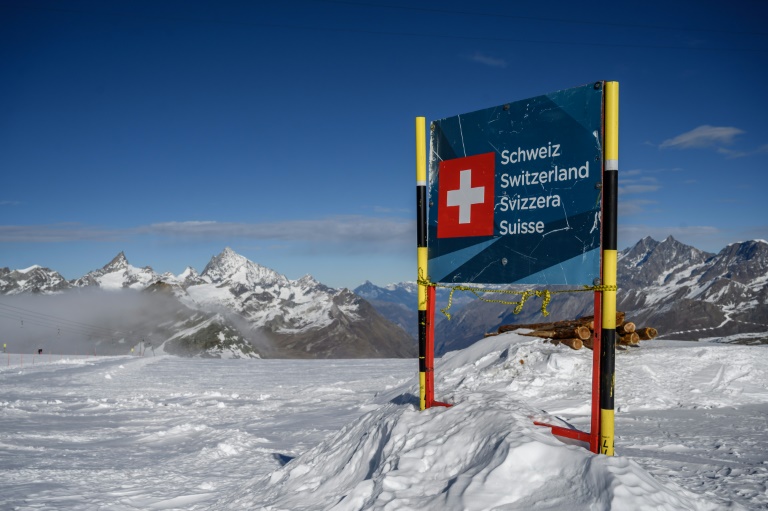
Thaw and redraw: melting glacier moves Italian-Swiss border

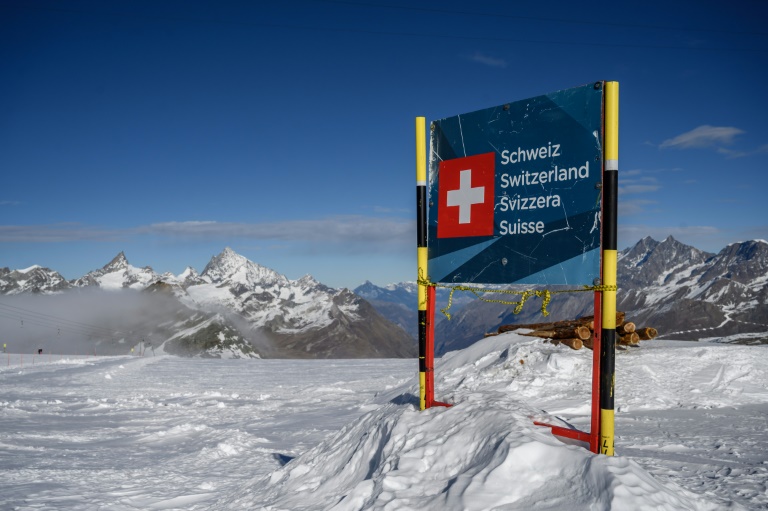
Way up in the snowy Alps, the border between Switzerland and Italy has shifted due to a melting glacier, putting the location of an Italian mountain lodge in dispute.

The borderline runs along a drainage divide — the point at which meltwater will run down either side of the mountain towards one country or the other.

But the Theodul Glacier’s retreat means the watershed has crept towards the Rifugio Guide del Cervino, a refuge for visitors near the 3,480-metre (11,417-foot) Testa Grigia peak — and it is gradually sweeping underneath the building.

Frederic, a 59-year-old tourist, opens the narrow wooden door to enter the refuge’s restaurant, the light flooding in from outside.

The menu is in Italian, not German, and priced in euros rather than Swiss francs. Nonetheless, at the counter, he orders a slice of pie and asks: “So — are we in Switzerland or in Italy?”

It is a question worth asking as it has been the subject of diplomatic negotiations that started in 2018 and concluded with a compromise last year — but the details remain secret.

– Sleeping on the Swiss side –

When the refuge was built on a rocky outcrop in 1984, its 40 beds and long wooden tables were entirely in Italian territory.

But now two-thirds of the lodge, including most of the beds and the restaurant, is technically perched in southern Switzerland.

The issue has come to the fore because the area, which relies on tourism, is located at the top of one of the world’s largest ski resorts, with a major new development including a cable car station being constructed a few metres away.

An agreement was hammered out in Florence in November 2021 but the outcome will only be revealed once it is rubber-stamped by the Swiss government — which will not happen before 2023.

“We agreed to split the difference,” Alain Wicht, chief border official at Switzerland’s national mapping agency Swisstopo told AFP.

His job includes looking after the 7,000 boundary markers along landlocked Switzerland’s 1,935-kilometre border with Austria, France, Germany, Italy and Liechtenstein.

Wicht attended the negotiations, where both parties made concessions to find a solution. “Even if neither side came out winners, at least nobody lost”, he said.

– Line in the snow –

Where the Italian-Swiss border traverses Alpine glaciers, the frontier follows the watershed line.

But the Theodul Glacier lost almost a quarter of its mass between 1973 and 2010. That exposed the rock underneath to the ice, altering the drainage divide and forcing the two neighbours to redraw around a 100-metre-long stretch of their border.

Wicht said that such adjustments were frequent and generally settled by comparing readings by surveyors from the border countries, without getting politicians involved.

“We are squabbling over territory that isn’t worth much,” he said. But he added that this “is the only place where we suddenly had a building involved”, giving “economic value” to the land.

His Italian counterparts declined to comment “due to the complex international situation”.

Former Swisstopo chief Jean-Philippe Amstein said such disputes are typically resolved by exchanging parcels of land of equivalent surface area and value.

In this case, “Switzerland is not interested in obtaining a piece of glacier,” he explained, and “the Italians are unable to compensate for the loss of Swiss surface area”.

– Wine stays Italian –

While the outcome remains secret, the refuge’s caretaker, 51-year-old Lucio Trucco, has been told it will stay on Italian soil.

“The refuge remains Italian because we have always been Italian,” he said.

“The menu is Italian, the wine is Italian, and the taxes are Italian.”

The years of negotiation have delayed the refuge’s renovation — the villages either side of the border have not been able to issue a building permit.

The works will therefore not be completed in time for the scheduled opening of a new cable car up the Italian side of the Klein Matterhorn mountain in late 2023.

The slopes are only accessible from the Swiss ski resort of Zermatt.

While some mid-altitude resorts are preparing for the end of Alpine skiing due to global warming, skiing is possible throughout the summer on the Zermatt-Cervinia slopes, even if such activities contribute to the glacier’s retreat.

“That’s why we have to enhance the area here because it will surely be the last one to die,” said Trucco.

For now, on Swisstopo’s maps, the solid pink band of the Swiss border remains a dashed line as it passes the refuge.

Thaw and redraw: melting glacier moves Italian-Swiss border

Way up in the snowy Alps, the border between Switzerland and Italy has shifted due to a melting glacier, putting the location of an Italian mountain lodge in dispute.

The borderline runs along a drainage divide — the point at which meltwater will run down either side of the mountain towards one country or the other.

But the Theodul Glacier’s retreat means the watershed has crept towards the Rifugio Guide del Cervino, a refuge for visitors near the 3,480-metre (11,417-foot) Testa Grigia peak — and it is gradually sweeping underneath the building.

Frederic, a 59-year-old tourist, opens the narrow wooden door to enter the refuge’s restaurant, the light flooding in from outside.

The menu is in Italian, not German, and priced in euros rather than Swiss francs. Nonetheless, at the counter, he orders a slice of pie and asks: “So — are we in Switzerland or in Italy?”

It is a question worth asking as it has been the subject of diplomatic negotiations that started in 2018 and concluded with a compromise last year — but the details remain secret.

– Sleeping on the Swiss side –

When the refuge was built on a rocky outcrop in 1984, its 40 beds and long wooden tables were entirely in Italian territory.

But now two-thirds of the lodge, including most of the beds and the restaurant, is technically perched in southern Switzerland.

The issue has come to the fore because the area, which relies on tourism, is located at the top of one of the world’s largest ski resorts, with a major new development including a cable car station being constructed a few metres away.

An agreement was hammered out in Florence in November 2021 but the outcome will only be revealed once it is rubber-stamped by the Swiss government — which will not happen before 2023.

“We agreed to split the difference,” Alain Wicht, chief border official at Switzerland’s national mapping agency Swisstopo told AFP.

His job includes looking after the 7,000 boundary markers along landlocked Switzerland’s 1,935-kilometre border with Austria, France, Germany, Italy and Liechtenstein.

Wicht attended the negotiations, where both parties made concessions to find a solution. “Even if neither side came out winners, at least nobody lost”, he said.

– Line in the snow –

Where the Italian-Swiss border traverses Alpine glaciers, the frontier follows the watershed line.

But the Theodul Glacier lost almost a quarter of its mass between 1973 and 2010. That exposed the rock underneath to the ice, altering the drainage divide and forcing the two neighbours to redraw around a 100-metre-long stretch of their border.

Wicht said that such adjustments were frequent and generally settled by comparing readings by surveyors from the border countries, without getting politicians involved.

“We are squabbling over territory that isn’t worth much,” he said. But he added that this “is the only place where we suddenly had a building involved”, giving “economic value” to the land.

His Italian counterparts declined to comment “due to the complex international situation”.

Former Swisstopo chief Jean-Philippe Amstein said such disputes are typically resolved by exchanging parcels of land of equivalent surface area and value.

In this case, “Switzerland is not interested in obtaining a piece of glacier,” he explained, and “the Italians are unable to compensate for the loss of Swiss surface area”.

– Wine stays Italian –

While the outcome remains secret, the refuge’s caretaker, 51-year-old Lucio Trucco, has been told it will stay on Italian soil.

“The refuge remains Italian because we have always been Italian,” he said.

“The menu is Italian, the wine is Italian, and the taxes are Italian.”

The years of negotiation have delayed the refuge’s renovation — the villages either side of the border have not been able to issue a building permit.

The works will therefore not be completed in time for the scheduled opening of a new cable car up the Italian side of the Klein Matterhorn mountain in late 2023.

The slopes are only accessible from the Swiss ski resort of Zermatt.

While some mid-altitude resorts are preparing for the end of Alpine skiing due to global warming, skiing is possible throughout the summer on the Zermatt-Cervinia slopes, even if such activities contribute to the glacier’s retreat.

“That’s why we have to enhance the area here because it will surely be the last one to die,” said Trucco.

For now, on Swisstopo’s maps, the solid pink band of the Swiss border remains a dashed line as it passes the refuge.

Shortages leave bankrupt Sri Lanka's hospitals empty

Entire wards are dark and nearly empty in Sri Lanka’s largest hospital, its few remaining patients leaving untreated and still in pain, and doctors prevented from even arriving for their shifts.

An unprecedented economic crisis has dealt a body blow to a free and universal healthcare system that just months earlier was the envy of the country’s South Asian neighbours.

Suffering from diabetes and high blood pressure that inflamed her joints, Theresa Mary travelled to the capital Colombo for treatment at the National Hospital of Sri Lanka.

Unable to find a ride for the last leg of her journey, she had to limp the last five kilometres (three miles) on foot. 

She was discharged four days later, still finding it difficult to stand on her feet, because the dispensary had run out of subsidised painkillers.

“Doctors asked me to buy medicines from a private pharmacy, but I don’t have money,” Mary, 70, told AFP.

“My knees are still swollen. I don’t have a home in Colombo. I don’t know how long I have to walk.”

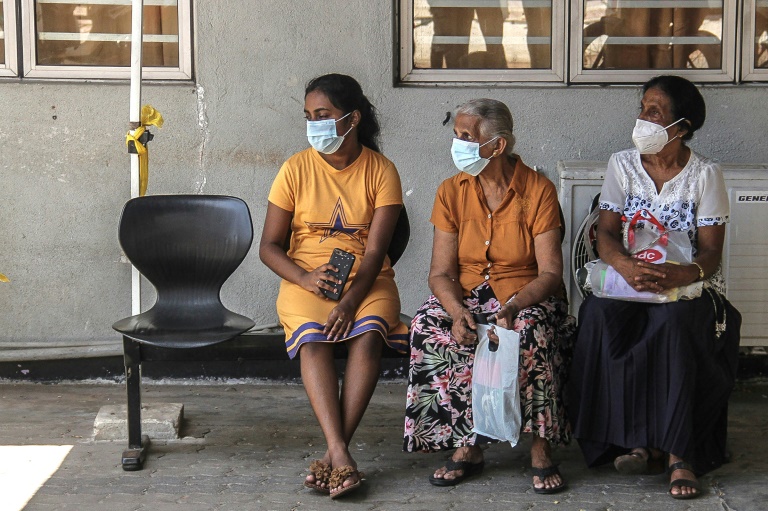
The National Hospital normally caters to people all over the island nation in need of specialist treatment, but it now runs on reduced staff and many of its 3,400 beds are lying unused.

Supplies of surgery equipment and life-saving drugs have been almost exhausted, while chronic petrol shortages have left both patients and doctors unable to travel for treatment. 

“Patients scheduled for surgeries are not reporting,” Dr Vasan Ratnasingham, a member of a government medical officers’ association, told AFP.

“Some medical staff work double shifts because others cannot report for duty. They have cars but no fuel.”

Sri Lanka imports 85 percent of its medicines and medical equipment, along with raw materials to manufacture the remaining share of its needs.

But the country is now bankrupt and a lack of foreign currency has left it unable to source enough petrol to keep the economy moving — and enough pharmaceuticals to treat its sick. 

“Normal painkillers, antibiotics and paediatric medicines are in extremely short supply. Other medicines have become up to four times expensive in the last three months,” pharmacy owner K. Mathiyalagan told AFP.

Mathiyalagan said his colleagues had to reject three out of every 10 prescriptions because they lacked the means to fill them.

“A lot of basic medicines are completely out of stock,” he added. “Doctors prescribe without knowing what is available in the pharmacies.”

– ‘Verge of collapse’ –

Health ministry officials declined to give details about the present state of Sri Lanka’s public health services, on which 90 percent of the population depends.

But doctors working in government hospitals say they have been forced to curtail routine surgeries to prioritise life-threatening emergencies, and use less effective substitute medicines.

“Sri Lanka’s once-strong healthcare system is now in jeopardy,” UN Resident Coordinator Hanaa Singer-Hamdy said in a statement. “The most vulnerable are facing the greatest impact.”

The World Bank recently redirected development funds to help Sri Lanka pay for urgently needed medications, including anti-rabies vaccines. 

India, Bangladesh, Japan and other countries have helped with donations for the healthcare sector, while Sri Lankans living abroad have pitched in by sending home pharmaceuticals and medical equipment. 

But new President Ranil Wickremesinghe has warned that the country’s economic crisis was likely to continue to the end of next year, and Sri Lanka is staring at the prospect of an even worse public health crisis to come. 

Hyperinflation has driven food prices so high that many households are struggling to keep themselves fed. 

According to the World Food Programme, nearly five million people — 22 percent of the population — need food aid, with more than five out of every six families either skipping meals, eating less or buying lower-quality food.

If the crisis drags on, “More infants will die, and malnutrition will be rampant in Sri Lanka,” Dr Vasan of the medical officers’ association told AFP.

“It will bring our healthcare system to the verge of collapse.”

Pope apologizes for 'evil' of Indigenous abuse in Canada

Pope Francis on Monday apologized for the “evil” inflicted on the Indigenous peoples of Canada on the first day of a visit focused on addressing decades of abuse at Catholic-run residential schools.

The plea for forgiveness from the leader of the world’s 1.3 billion Catholics was met with applause by a crowd of First Nations, Metis and Inuit people in Maskwacis, in western Alberta province — some of whom were taken from their families as children in what has been branded a “cultural genocide.”

“I am sorry,” said the 85-year-old pontiff, who remained seated as he delivered his address at the site of one of the largest of Canada’s infamous residential schools, where Indigenous children were sent as part of a policy of forced assimilation.

“I humbly beg forgiveness for the evil committed by so many Christians against the Indigenous peoples,” said the pope, citing “cultural destruction” and the “physical, verbal, psychological and spiritual abuse” of children over the course of decades.

Francis spoke of his “deep sense of pain and remorse” as he formally acknowledged that “many members of the Church” had cooperated in the abusive system.

As he spoke, the emotion was palpable in Maskwacis, an Indigenous community south of provincial capital Edmonton that was the site of the Ermineskin residential school until it closed in 1975.

Several hundred people, many in traditional clothing, were in attendance, along with Canadian Prime Minister Justin Trudeau and Mary Simon, the country’s first Indigenous governor general.

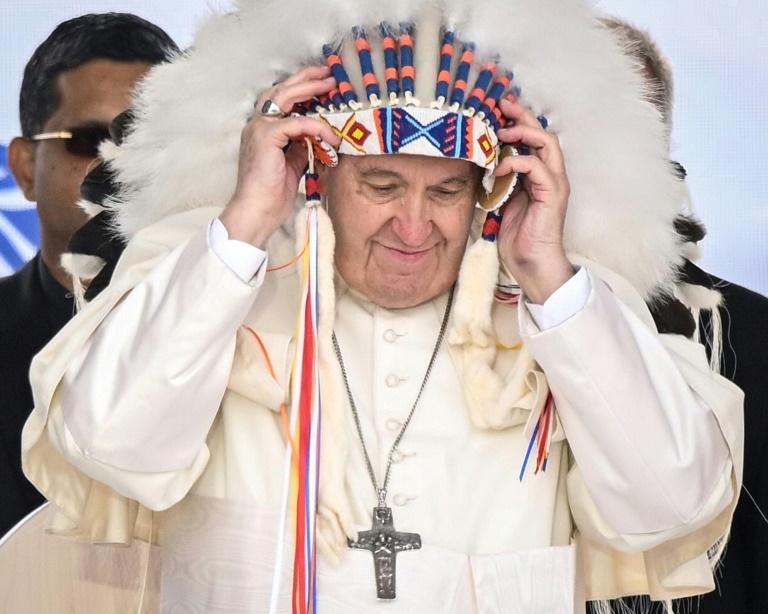
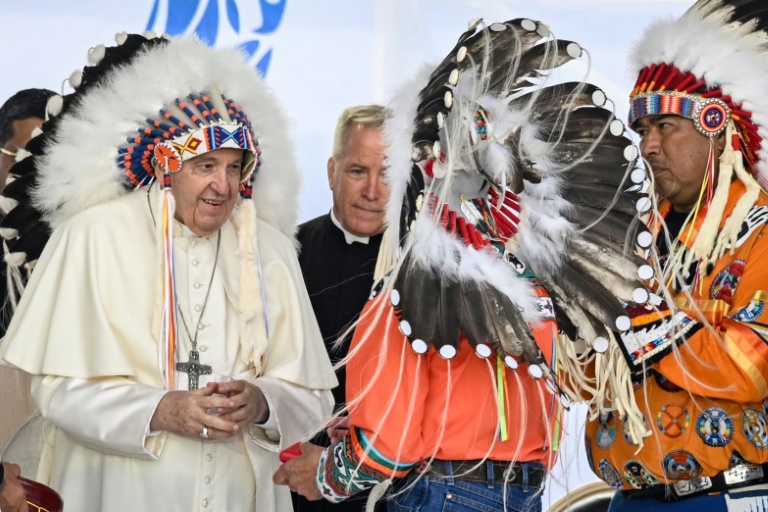
Many lowered their eyes, wiped away tears or leaned on and hugged neighbors, and Indigenous leaders afterwards placed a traditional feathered headdress on the pope.

Counsellors were waiting to provide support to those who may need it, and volunteers had earlier distributed small paper bags for the “collection of tears.”

– ‘Cry love’ –

“The First Nation believes that if you cry, you cry love, you catch the tears on a piece of paper and put it back in this bag,” explained Andre Carrier of the Manitoba Metis Federation.

Later the bags will be burned with a special prayer, “to return the tears of love to the creator,” he said.

From the late 1800s to the 1990s, Canada’s government sent about 150,000 children into 139 residential schools run by the Church, where they were cut off from their families, language and culture.

Many were physically and sexually abused, and thousands are believed to have died of disease, malnutrition or neglect. 

During a ceremony performed before the pope spoke in Maskwacis, Indigenous people carried a bright red 50-meter-long banner on which the names — or sometimes only the nicknames — of all the children known to have died were written in white. There were 4,120 of them, officials said.

Since May 2021, more than 1,300 unmarked graves have been discovered at the sites of the former schools, sending shockwaves throughout Canada — which has slowly begun to acknowledge this long, dark chapter in its history.

A delegation of Indigenous peoples traveled to the Vatican in April and met the pope — a precursor to Francis’ trip — after which he formally apologized.

But doing so again on Canadian soil was of huge significance to survivors and their families.

Later in the day, Francis travelled to the Sacred Heart Catholic Church of the First Peoples in Edmonton, one of the city’s oldest churches, for a second speech.

“I can only imagine the effort it must take… even to think about reconciliation,” he said.

“Nothing can ever take away the violation of dignity, the experience of evil, the betrayal of trust. Or take away our own shame, as believers.”

Canadian Prime Minister Justin Trudeau, who was also at the Maskwacis ceremony, said that “reconciliation is the responsibility of all Canadians.”

“No one must ever forget what happened at residential schools across Canada and we must all ensure it never happens again,” he said in a statement.

– ‘Healing journey’ –

The flight to Edmonton was the longest since 2019 for Francis, who has been suffering from knee pain and was forced to use a wheelchair on the Canada trip.

His frailty was apparent during the visit to the Sacred Heart, as — using a cane — he moved slowly across the dais to bless a statue, before returning to his wheelchair to leave the church.

The papal visit is also a source of controversy for some. 

“It means a lot to me” that he came, said Deborah Greyeyes, 71, a member of the Muskeg Lake Cree Nation, the largest Indigenous group in Canada.

“I think we have to forgive, too, at some point,” she told AFP. But “a lot of stuff was taken away from us.”

After a mass before tens of thousands of faithful in Edmonton on Tuesday, Francis will head northwest to an important pilgrimage site, the Lac Sainte Anne.

Following a July 27-29 visit to Quebec City, he will end his trip in Iqaluit, capital of the northern territory of Nunavut and home to the largest Inuit population in Canada, where he will meet again with former residential school students, before returning to Italy.

Abuse survivor's ordeal sheds light on Malaysia 'unilateral conversions'

Malaysian woman Loh Siew Hong says her husband brutally abused her, battering her over the head and breaking her ankle, before running off with their children and converting them to Islam.

After a long legal battle, Loh was finally reunited with her 14-year-old twin daughters and 11-year-old son in February when a court ruled in her favour.

But the ordeal has taken a heavy toll.

“It was torture for me,” the 35-year-old told AFP of the long period separated from her children.

“I used to wonder whether my children had enough food and enough sleep. I used to worry whether my ex-husband was beating and torturing them like he used to do to me.”

It is the latest case in multi-ethnic Malaysia of a so-called “unilateral conversion” to Islam — one parent converting a child’s religion without the other’s permission. 

The issue has become another battleground between increasingly vocal Islamist hardliners and those seeking to defend the rights of minorities.

The Southeast Asian country of 32 million is a kaleidoscope of different religious and ethnic groups.

Ethnic Malay Muslims make up more than 60 percent of the population, while a quarter is ethnic Chinese. There are sizeable minorities of ethnic Indians and various indigenous groups.

While the communities mostly live harmoniously, critics say decades of policies favouring Malays have strained relations, with the country’s traditionally moderate version of Islam losing ground to creeping radicalisation. 

– ‘Why are they doing this?’ –

In 2018, it seemed the issue of unilateral conversions had been put to rest when Malaysia’s highest court issued a landmark judgement.

The Federal Court ruled that both parents must agree to the religious conversion of a minor, siding with Hindu woman M. Indira Gandhi against her former husband, who converted their three children without informing her.

But cases such as Loh’s continue to occur, and critics say authorities sometimes seem reluctant to intervene for fear of being seen as “un-Islamic”.

Rights groups say most cases of unilateral conversion go unreported, only coming to light if a parent raises a legal challenge.

Loh said those who sided with her ex-husband’s decision to convert the children from Hinduism to Islam, and sought to keep them separated from her, were not respecting the top court’s decision.

“They are still putting obstacles before me — why are they doing this?” she asked. “They are stopping their children from being with their mother.”

Loh has a mixed background, with an ethnic Chinese father and ethnic Indian mother. 

She was brought up by the mother’s side of her family, following the Hindu faith and learning to speak the Tamil language fluently. 

She met her future husband while she was training to be a chef. 

But Loh — who was running a successful food stall business — said that he began using drugs, and subjected her to a litany of abuse. 

After one particularly violent episode in 2019, she was left needing hospital treatment. 

In a police report lodged by Loh, she said her husband “hit my left leg with a hammer and caused the leg to fracture. He also hit my head with a clothes iron, causing injuries”.

A hospital report included Loh’s allegations of abuse and confirmed she was treated for a fractured ankle.

While she was recovering from her injuries, Loh claims her husband took the children.

The pair divorced, but the husband ignored court orders to return the children to her. 

He later converted to Islam and had the children converted, according to Loh and her lawyers. 

Shortly afterwards, he was jailed on drug offences but, before going to prison, handed the kids into the care of an Islamic organisation, leaving Loh facing a tough battle to get them back. 

– ‘Power and control’ –

When she went to the police, “the first question they asked is how are you going to take care of your children, as they have converted”, said Loh.

Helped by rights groups and lawyers, she was finally reunited with her children in February when the Kuala Lumpur High Court ruled in her favour. 

Her story echoes other cases where the wife alleged being abused before her children were converted. 

Rights groups told AFP that while there was not enough evidence to draw a definitive link, abusive or controlling spouses often figured in unilateral conversion cases. 

“What is evident is the deprivation of rights of one parent when such a thing occurs,” Lilian Kok, from the All Women’s Action Society, said.

“It is all about power and control.”

Loh’s saga is not over, with her lawyers challenging the children’s conversion to Islam in court, arguing it was unconstitutional.

For some conservative Muslims, however, now that the youngsters have converted, there is no going back. 

The influential Pan-Malaysian Islamic Party — an Islamist group that forms part of the national government — urged Loh not to challenge the conversion.

“If we can meet her, we will persuade her to allow the children to practise Islam,” the group’s information chief Khairil Nizam Khirudin told AFP.

Loh’s lawyer, A. Srimurugan, said the best way to stop such conversions is for the national government to ban the practice, rather than leaving it to the courts. 

But he doubted the government would do so, for fear of losing support among some Muslims. 

“In cases like this, the ultimate victims are the children,” he said. 

Stocks wobble as markets begin big week

European and American stocks moved in mixed directions Monday as markets began a busy week, with the US Federal Reserve poised to lift interest rates again and some of the world’s biggest companies scheduled to publish their latest earnings reports.

Asian markets ended lower.

The Fed is widely tipped to hike borrowing costs by 0.75 percentage points Wednesday as it battles soaring inflation.

US second-quarter gross domestic product data are due Thursday, with some observers warning it could show a second successive contraction — which is considered a technical recession.

Investors are also awaiting an extremely heavy week of earnings reports featuring tech giants like Apple, and industrial behemoths such as Boeing and General Motors, along with McDonald’s and other consumer-oriented names.

“Recent risk-on moves appear to be on thin ice as markets gear up for another bout of earnings and a crucial Fed rate decision,” said market analyst Joshua Mahony at trading platform IG.

Wall Street had a mixed day with the Dow and S&P 500 advancing and the tech-rich Nasdaq retreating.

The pullback in Nasdaq reflects reticence ahead of an intense 72-hour stretch that will see releases from most of the biggest US companies, beginning Tuesday with Google parent Alphabet and Microsoft.

“Investors won’t want to touch Nasdaq stocks until we hear from Alphabet tomorrow and if they don’t like what they hear they may wait to see if Thursday’s massive results from Apple and Amazon provide any reasons to be optimistic with tech stocks,” said a note from Oanda’s Edward Moya.

Despite the deluge of market-moving news on the calendar, European stocks had been trading higher across the board until an announcement by Russia’s Gazprom that it was cutting back gas deliveries to Germany due to a faulty turbine, which pulled down the DAX index in Frankfurt.

It ended the day down 0.3 percent, while the CAC in Paris climbed 0.3 percent and London’s FTSE 100 rose 0.4 percent.

Consumer prices are soaring worldwide after economies reopened from pandemic lockdowns and as the war in Ukraine keeps energy prices elevated.

That, in turn, has sparked aggressive rate hikes from major central banks to try and dampen inflationary pressures.

“We still see further downside for risky assets as recession fears accumulate and central banks remain committed to fighting inflation at the expense of growth,” said Standard Chartered strategist Eric Robertsen.

– Key figures at around 2120 GMT –

New York – Dow: UP 0.3 percent at 31,990.04 (close)

New York – S&P 500: UP 0.1 percent at 3,966.84 (close)

New York – Nasdaq: DOWN 0.4 percent at 11,782.67 (close)

London – FTSE 100: UP 0.4 percent at 7,306.30 (close) 

Frankfurt – DAX: DOWN 0.3 percent at 13,210.32 (close)

Paris – CAC 40: UP 0.3 percent at 6,237.55 (close)

EURO STOXX 50: UP 0.2 percent at 3,604.16 (close)

Tokyo – Nikkei 225: DOWN 0.8 percent at 27,699.25 (close)

Hong Kong – Hang Seng Index: DOWN 0.2 percent at 20,562.94 (close)

Shanghai – Composite: DOWN 0.6 percent at 3,250.39 (close)

Euro/dollar: UP at $1.0223 from $1.0213 Friday

Pound/dollar: UP at $1.2046 from $1.1999 

Euro/pound: DOWN at 84.83 pence from 85.09 pence

Dollar/yen: UP at 136.65 yen from 136.12 yen

Brent North Sea crude: UP 1.9 percent at $105.15 per barrel

West Texas Intermediate: UP 2.1 percent at $96.70 per barrel

burs-jmb/bfm

Pope apologizes for 'evil' of Indigenous abuse in Canada

Pope Francis on Monday apologized for the “evil” inflicted on the Indigenous peoples of Canada on the first day of a visit focused on addressing decades of abuse at Catholic-run residential schools.

The plea for forgiveness from the leader of the world’s 1.3 billion Catholics was met with applause by a crowd of First Nations, Metis and Inuit people in Maskwacis, in western Alberta province — some of whom were taken from their families as children in what has been branded a “cultural genocide.”

“I am sorry,” said the 85-year-old pontiff, who remained seated as he delivered his address at the site of one of the largest of Canada’s infamous residential schools — where some 150,000 Indigenous children were sent as part of a policy of forced assimilation.

“I humbly beg forgiveness for the evil committed by so many Christians against the Indigenous peoples,” said the pope, citing “cultural destruction” and the “physical, verbal, psychological and spiritual abuse” of children over the course of decades.

Francis spoke of his “deep sense of pain and remorse” as he formally acknowledged that “many members of the Church” had cooperated in the abusive system.

As he spoke the emotion was palpable in Maskwacis, an Indigenous community south of provincial capital Edmonton that was the site of the Ermineskin residential school until it closed in 1975.

Several hundred people, many in traditional clothing, were in attendance, along with Canadian Prime Minister Justin Trudeau and Mary Simon, the country’s first Indigenous governor general.

Many lowered their eyes, wiped away tears or leaned on and hugged neighbors, and Indigenous leaders afterwards placed a traditional feathered headdress on the pope.

Counsellors were waiting near teepees set up to provide support to those who may need it, and earlier volunteers had distributed small paper bags for the “collection of tears.”

– ‘Cry love’ –

“The First Nation believes that if you cry, you cry love, you catch the tears on a piece of paper and put it back in this bag,” explained Andre Carrier of the Manitoba Metis Federation, before the pope spoke.

Volunteers will collect the bags and later they will be burned with a special prayer, “to return the tears of love to the creator,” he said.

From the late 1800s to the 1990s, Canada’s government sent about 150,000 children into 139 residential schools run by the Church, where they were cut off from their families, language and culture.

Many were physically and sexually abused by headmasters and teachers, and thousands are believed to have died of disease, malnutrition or neglect. 

During a ceremony performed before the pope spoke in Maskwacis, Indigenous people carried a bright red 50-meter long banner on which the names — or sometimes only the nicknames — of all the children known to have died were written in white. There were 4,120 of them, officials said.

Since May 2021, more than 1,300 unmarked graves have been discovered at the sites of the former schools, sending shockwaves throughout Canada — which has slowly begun to acknowledge this long, dark chapter in its history.

A delegation of Indigenous peoples traveled to the Vatican in April and met the pope — a precursor to Francis’ trip — after which he formally apologized.

But doing so again on Canadian soil was of huge significance to survivors and their families.

Later in the day, at 4:30 pm (2230 GMT) Francis will travel to the Sacred Heart Catholic Church of the First Peoples in Edmonton, one of the city’s oldest churches, for a second speech to Indigenous communities.

– ‘Healing journey’ –

The flight to Edmonton was the longest since 2019 for Francis, who has been suffering from knee pain and was forced to use a wheelchair on the Canada trip.

The papal visit, though highly anticipated, is also a source of controversy for some. 

“It means a lot to me” that he came, said Deborah Greyeyes, 71, a member of the Muskeg Lake Cree Nation, the largest Indigenous group in Canada.

“I think we have to forgive, too, at some point,” she told AFP. But “a lot of stuff was taken away from us.”

After a mass before tens of thousands of faithful in Edmonton on Tuesday, Francis will head northwest to an important pilgrimage site, the Lac Sainte Anne.

Following a July 27-29 visit to Quebec City, he will end his trip in Iqaluit, capital of the northern territory of Nunavut and home to the largest Inuit population in Canada, where he will meet again with former residential school students, before returning to Italy.

Ukraine eyes first grain exports 'this week'

Ukraine said Monday it expects to export its first grain shipments under a UN-backed deal to lift Russia’s blockade “this week”, days after missile strikes by the Kremlin threw the accord into doubt. 

But while grain shipments seemed ready to resume for the first time since the Kremlin’s invasion five months ago, Russia’s natural gas giant Gazprom added to the geopolitical tensions by warning it would drastically cut deliveries to Europe again.

Kyiv and Moscow on Friday agreed a landmark plan to release millions of tonnes of wheat and other grain trapped in Ukraine’s Black Sea ports in a move hailed as a major step to averting a global food crisis.

Less than 24 hours later Moscow struck the port in Odessa — one of three exit hubs designated in the agreement — sparking fury in Kyiv and heightening fears the Kremlin would not go through with the deal.

But despite the weekend attack, Ukraine’s infrastructure minister Oleksandr Kubrakov said Kyiv expected to see the agreement begin “working in the coming days”.

“We are preparing for everything to start this week,” said Kubrakov, who led Ukraine’s delegation at last week’s grain talks in Istanbul.

Ukrainian officials said the port of Chornomorsk in southwestern Ukraine would be the first to be opened and insisted on the importance of security following the strike on nearby Odessa. 

Kubrakov said de-mining will take place “exclusively” in the shipping lanes required for grain exports, while Ukrainian ships will accompany the departing convoys that will transport not only grain but also fertiliser.

After speaking to Kubrakov by phone, Turkish Defence Minister Hulusi Akar welcomed Ukraine’s resolve to resume the shipments.

“It is important that the first ship starts sailing as soon as possible,” Akar said in a statement.

Ukraine and Russia are major exporters of agricultural products, but Moscow’s invasion has severely disrupted Ukrainian wheat exports as the fighting damaged harvests and left ports blocked and mined.

Russia’s naval blockade helped send global prices soaring and sparked fears of famine as it left up to 25 million tonnes of wheat and other grains stranded in Ukraine.  

Ukrainian President Volodymyr Zelensky has estimated the value of grain stocks to be exported under the deal at around $10 billion.

– Kremlin’s shifting narrative –

The Kremlin insisted Monday that its strikes on Odessa “should not affect” the Turkish-brokered push to send the grain to world markets.  

Spokesman Dmitry Peskov said Moscow’s cruise missiles hit “exclusively” military infrastructure and were “not connected with the agreement on the export of grain.”

Turkey, which helped broker the accord, said after the attack that it had received assurances from Moscow that Russian forces were not responsible. 

Moscow then admitted that it had carried out the strikes, but claimed to have targeted a Ukrainian military vessel and arms delivered by Washington.

Russia has looked to shift the blame for the food crisis onto Western sanctions and foreign minister Sergei Lavrov was visiting Africa on a tour aimed at bolstering Moscow’s ties in the face of growing isolation. 

Lavrov, who is visiting Uganda, Ethiopia and Congo-Brazzaville, told his Egyptian counterpart on his first stop that Russia would meet grain orders.

Ukrainian presidential aide Mykhaylo Podolyak slammed the visit as a cynical ploy by Moscow after it had fuelled the food crisis. 

“You arranged the artificial hunger and then come to cheer people up,” he said on Twitter, assuring that Ukrainian grain will reach its destinations.

“Whether Moscow wants or not, Ukrainian grain will reach the world.”

– Gazprom gas cut –

The deal for grain exports has done little to ease the geopolitical tensions between the West and Moscow over the invasion.

Gazprom, the Russian energy giant, unexpectedly announced it was cutting daily deliveries of gas to Europe via the Nord Stream pipeline to 33 million cubic metres a day — about 20 percent of the pipeline’s capacity — from Wednesday.

The company said it was halting the operation of one of the last two operating turbines due to the “technical condition of the engine”.

The government of Germany, which receives the gas directly by the undersea energy link, said there was “no technical reason” for Gazprom’s announcement.

Russia’s forces continue to press on with their grinding push across Ukraine’s southeast, where Kyiv’s forces are being boosted by fresh Western military aid shipments.

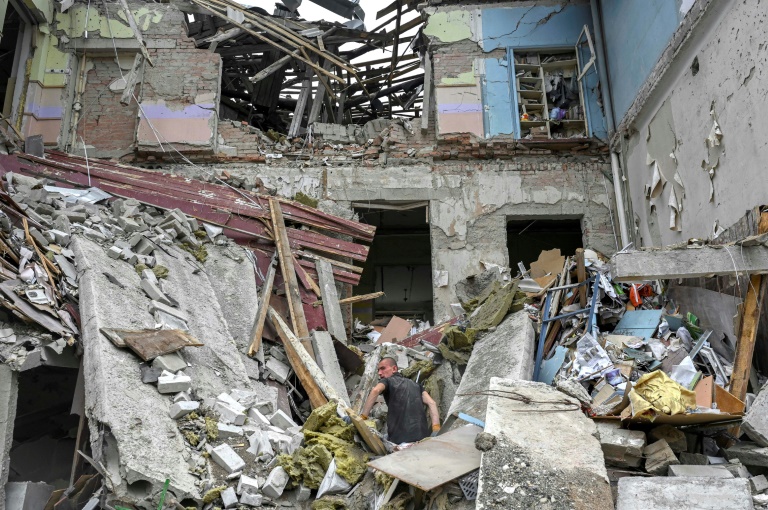
The Ukrainian presidency said Monday that a Russian strike trapped seven people under the rubble of a collapsed cultural centre in the northeastern Kharkiv region. Three were pulled out alive and the rescue operation was ongoing. 

It said shelling continued across the entire front line and at least one person was killed in the town of Soledar.

In the south — where Kyiv has vowed a major counter-offensive to retake the strategic Kherson region — officials said Ukrainian forces stopped a Russian push in several villages.

Ukraine’s bid to oust the Kremlin’s forces has been bolstered by longer range Western weapons that have allowed Kyiv to target Russian supply lines deeper in occupied areas.

Defence Minister Oleksiy Reznikov said Ukraine had received the first of an expected 15 Gepard anti-aircraft systems and tens of thousands of shells from Germany in the latest foreign arms to arrive. 

burs-del/zak/kjm

Close Bitnami banner
Bitnami