World

Droupadi Murmu sworn in as India's first tribal president

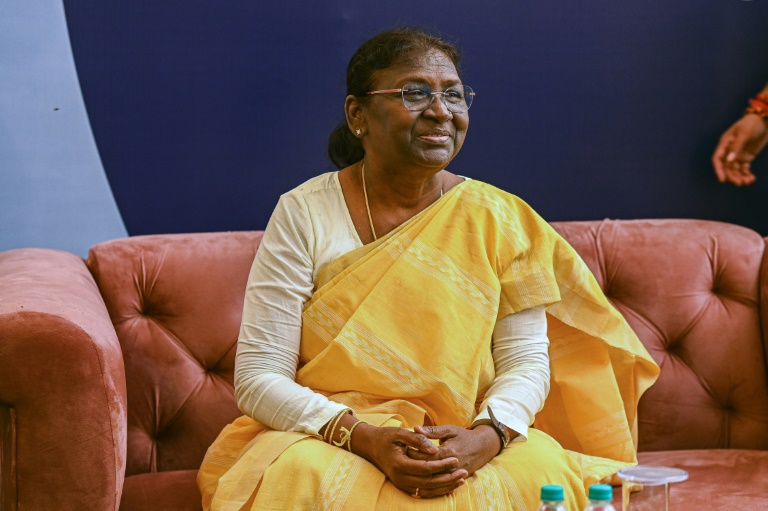
Droupadi Murmu was sworn in as India’s president on Monday, making her the first person from one of the country’s marginalised tribal communities to serve as head of state.

The former school teacher and state governor was elected to the largely ceremonial position last week with 64 percent of the vote by members of India’s parliament and state assemblies.

Murmu, who is from the Santhal tribe and was born in eastern Odisha state, paid her respects before her inauguration at a memorial dedicated to India’s independence hero Mahatma Gandhi in New Delhi.

“I started my life journey from a small tribal village,” Murmu, 64, said after taking the oath of office in parliament.

“From the background I come from, it was like a dream for me to even get elementary education,” she added.

“But despite many obstacles, my resolve remained strong and I became the first daughter from my village to go to college.”

Murmu’s win was considered a certainty because of the strength of the ruling Bharatiya Janata Party and its allies in the parliament and state assemblies.

Analysts said the move would probably help Prime Minister Narendra Modi extend his base among the poor tribal communities ahead of his re-election bid in 2024.

“Her assuming the Presidency is a watershed moment for India especially for the poor, marginalised and downtrodden,” Modi said on Twitter after Murmu’s address.

– ‘Great satisfaction’ –

Murmu said her election would give hope to those left behind by India’s recent economic growth.

“It is a matter of great satisfaction to me that those who have been deprived for centuries, who have been away from the benefits of development… are seeing their reflection in me,” she said.

India’s prime minister wields executive power, but the president can send back some parliamentary bills for reconsideration and also plays a guiding role in the process of forming governments.

Murmu is the country’s second woman president, after Pratibha Patil, who held the position for five years from 2007.

She succeeds Ram Nath Kovind, the second president from the Dalit community, the bottom of the Hindu caste system.

Chinese President Xi Jinping was among the world leaders to congratulate Murmu and said he was “ready to work” with his new Indian counterpart to strengthen relations, according to Chinese state media. 

Relations between the world’s two most populous nations have been frosty since a deadly Himalayan military stand-off between the countries in 2020.

Both sides have since reinforced their disputed border with extra soldiers, military hardware and new infrastructure, and multiple rounds of military and diplomatic talks have failed to de-escalate tensions. 
Pakistan's biggest city paralysed by monsoon rain

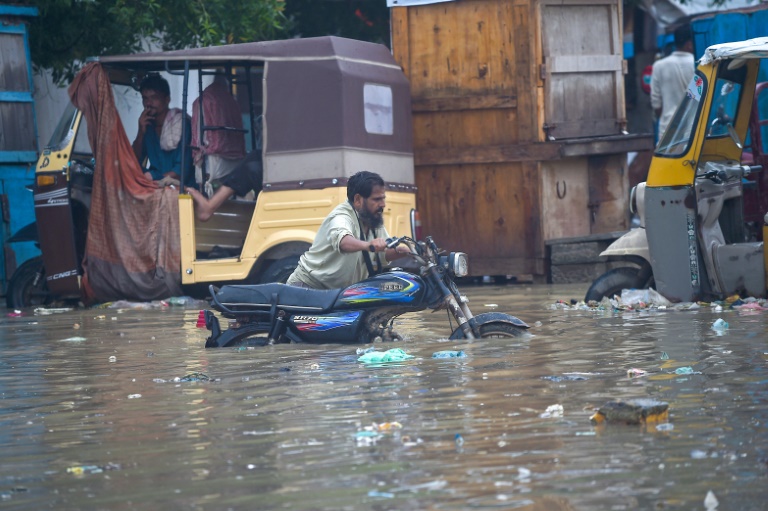
A weather emergency was declared in Karachi Monday as heavier-than-usual monsoon rains continue to lash Pakistan’s biggest city, flooding homes and making streets impassable.

The monsoon, which usually lasts from June to September, is essential for irrigating crops and replenishing lakes and dams across the Indian subcontinent, but also brings a wave of destruction each year.

Pakistan ranks eighth on a list of countries most vulnerable to extreme weather caused by climate change, according to the environment NGO Germwatch.

The provincial Sindh government announced a public holiday Monday in Karachi and Hyderabad in a bid to avert flood chaos, but low-lying areas — already drenched by weeks of heavy rain — were soon the scenes of devastation.

“More rains are forecast in Karachi until tomorrow,” warned Sardar Sarfraz, director of the Met office.

The National Disaster Management Authority said at least 312 people had died since June as a result of the monsoon rains.

In Karachi, at least two people were electrocuted Monday by power lines that fell into flooded streets — a regular cause of death in the city during the monsoon.

The heavy downpour also disrupted flights and train operations in the megacity of 15 million.

The worst floods of recent times were in 2010 — covering almost a fifth of the country’s landmass — killing nearly 2,000 people and displacing 20 million.

Philippines' Marcos Jr unveils economic blueprint for 'turbulent time'

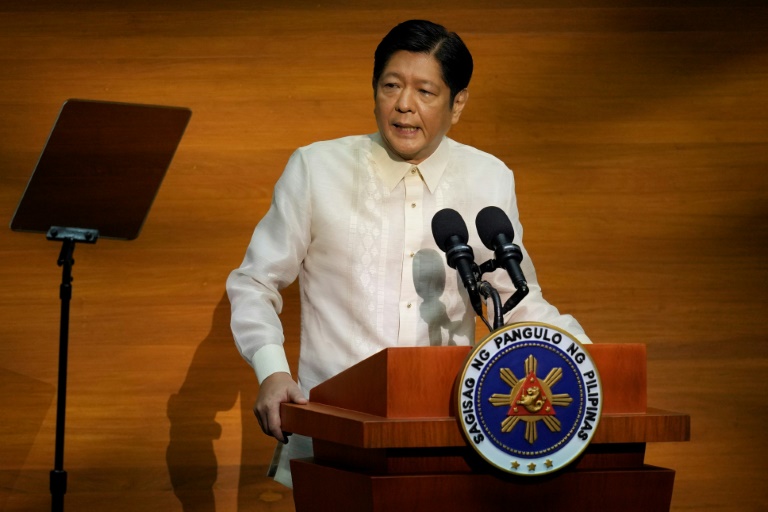
Philippine President Ferdinand Marcos Jr vowed Monday to slash poverty, rein in soaring food prices and boost renewable energy, as he unveiled an ambitious blueprint for his six-year term. 

In his first State of the Nation address, Marcos Jr offered a laundry list of targets, ranging from getting children back into classrooms, easing the debt burden of farmers, and expanding internet access.  

Unlike his predecessor Rodrigo Duterte, who used to frequently go off script in a stream of consciousness and threaten to kill people, Marcos Jr stuck to a prepared speech that was methodical and heavy on numbers.

After inheriting an economy ravaged by Covid-19 lockdowns and inflation, the new president expressed cautious optimism for the future — even as the war in Ukraine and supply chain disruptions drive up food and fuel prices.

“I do not intend to diminish the risks and challenges that we face in this turbulent time in global history,” he told the audience of lawmakers, diplomats and judges.

“And yet I see sunlight filtering through these dark clouds. We have assembled the best Filipino minds to help navigate us through this time of global crisis.”

Marcos Jr, who is the son and namesake of the country’s late dictator, spoke for 74 minutes without mentioning human rights, corruption or peace talks with militant groups. 

Instead, the 64-year-old scion focused on the economy, clean energy, agriculture, and helping poor Filipinos.

Marcos Jr vowed to more than halve the poverty rate to single digits by the end of his term and offer financial relief to many farmers, including forgiving debts.

Renewable energy was “at the top of our climate agenda”, he said, insisting it was time to reconsider building nuclear power plants in the disaster-prone country.

He also pledged to boost agricultural productivity and bring down food prices.

“These will not be done in one day, one month or one year. But we need to start now,” he said.

– Peaceful rallies – 

Marcos Jr was swept to power by a landslide in the May 9 elections, completing his family’s remarkable comeback from pariahs in exile to the peak of political power.

Hours before his speech, several thousand protesters marched peacefully along a major avenue to oppose his victory and criticise his first weeks in office.

“He’s just sitting around, he’s busying himself revising history instead of doing the urgent work of stopping the rising costs of commodities especially food, distributing land to farmers and raising the wages of workers,” said Angelo Suarez, who volunteers for an agricultural workers union.

Outside Congress, thousands of Marcos Jr supporters wearing red, his campaign colour, also gathered, waving the Philippine flag and holding signs with slogans such as “Progress”.

Congressman Ralph Recto said the new president’s speech was “brave, not boring” and gave the country a “fiscal reality check”.

The higher cost of living is worsening the financial misery of millions of Filipinos already struggling to feed their families.

The central bank recently raised interest rates for the third straight month as it struggles to rein in surging energy prices.

Inflation hit 6.1 percent in June, the highest level in nearly four years.

Philippines' Marcos Jr unveils economic blueprint for 'turbulent time'

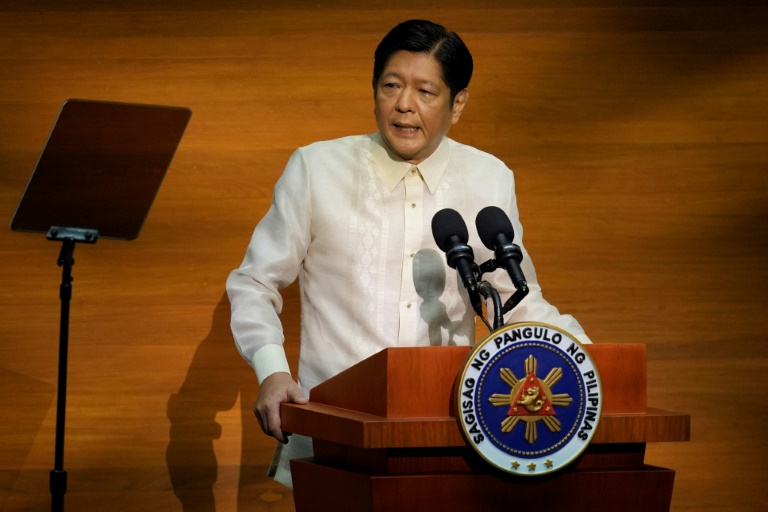
Philippine President Ferdinand Marcos Jr vowed Monday to slash poverty, rein in soaring food prices and boost renewable energy, as he unveiled an ambitious blueprint for his six-year term. 

In his first State of the Nation address, Marcos Jr offered a laundry list of targets, ranging from getting children back into classrooms, easing the debt burden of farmers, and expanding internet access.  

Unlike his predecessor Rodrigo Duterte, who used to frequently go off script in a stream of consciousness and threaten to kill people, Marcos Jr stuck to a prepared speech that was methodical and heavy on numbers.

After inheriting an economy ravaged by Covid-19 lockdowns and inflation, the new president expressed cautious optimism for the future — even as the war in Ukraine and supply chain disruptions drive up food and fuel prices.

“I do not intend to diminish the risks and challenges that we face in this turbulent time in global history,” he told the audience of lawmakers, diplomats and judges.

“And yet I see sunlight filtering through these dark clouds. We have assembled the best Filipino minds to help navigate us through this time of global crisis.”

Marcos Jr, who is the son and namesake of the country’s late dictator, spoke for 74 minutes without mentioning human rights, corruption or peace talks with militant groups. 

Instead, the 64-year-old scion focused on the economy, clean energy, agriculture, and helping poor Filipinos.

Marcos Jr vowed to more than halve the poverty rate to single digits by the end of his term and offer financial relief to many farmers, including forgiving debts.

Renewable energy was “at the top of our climate agenda”, he said, insisting it was time to reconsider building nuclear power plants in the disaster-prone country.

He also pledged to boost agricultural productivity and bring down food prices.

“These will not be done in one day, one month or one year. But we need to start now,” he said.

– Peaceful rallies – 

Marcos Jr was swept to power by a landslide in the May 9 elections, completing his family’s remarkable comeback from pariahs in exile to the peak of political power.

Hours before his speech, several thousand protesters marched peacefully along a major avenue to oppose his victory and criticise his first weeks in office.

“He’s just sitting around, he’s busying himself revising history instead of doing the urgent work of stopping the rising costs of commodities especially food, distributing land to farmers and raising the wages of workers,” said Angelo Suarez, who volunteers for an agricultural workers union.

Outside Congress, thousands of Marcos Jr supporters wearing red, his campaign colour, also gathered, waving the Philippine flag and holding signs with slogans such as “Progress”.

Congressman Ralph Recto said the new president’s speech was “brave, not boring” and gave the country a “fiscal reality check”.

The higher cost of living is worsening the financial misery of millions of Filipinos already struggling to feed their families.

The central bank recently raised interest rates for the third straight month as it struggles to rein in surging energy prices.

Inflation hit 6.1 percent in June, the highest level in nearly four years.

Greek firefighters in uphill battle to save famed natural park

Greek firefighters on Monday battled a raging fire threatening the Dadia National Park, known for its black vulture colony, as the country scorched under a blistering heatwave.

The Mediterranean country is reeling under a heatwave that began on Saturday and is expected to last 10 days. Temperatures were set to rise to 42 degrees Celsius (107 degrees Fahrenheit) in some regions and the country is battling three major wildfires.

Scientists say human-induced climate change is amplifying extreme weather — including the heatwaves, droughts and floods seen in several parts of the planet in recent weeks — and say these events will become more frequent and more intense.

On Monday, 320 firefighters, two water-bombing planes and four helicopters were deployed to contain the fire at the Dadia park, which broke out on Thursday.

Some villages in the area have been evacuated. The flames have already destroyed nearly 500 hectares (1,220 acres) of woodland.

Dadia is one of the most important protected areas in Europe, offers ideal habitat for rare birds and is home to the only breeding population of black vultures in the Balkans. 

It hosts three out of the four vulture species of Europe — the black vulture, the griffon vulture and the Egyptian vulture — and 36 of Europe’s 38 species of raptors.

Its varied habitats also support 104 butterfly species, 13 amphibian species, 29 reptile species and about 65 mammal species, 24 out of which are bats.

“It’s an uphill battle, a fight to ensure the survival of this exceptional ecosystem,” the minister for climate crisis and civil protection, Christos Stylianidis, said on Monday after visiting the affected area over the weekend.

“After this difficult fight, experts must look into redressing the problems sparked by the fire,” he said, underscoring the need to buttress the “resistance of the ecosystem in the future”.

The civil protection agency said on Monday there was a high risk of forest fires given the heatwave and the strong winds.

Fires have raged in the north, east and south of the country, including on the tourist island of Lesbos, where around 200 people were ordered to leave the village of Vryssa on Sunday to escape the flames.

The international community has agreed that climate change poses an existential threat to human systems and the natural world — but there are a myriad ways to take action. 

Earth’s average temperature has warmed just over 1.1 degrees Celsius since the industrial era and the United Nations says it is currently on track to warm some 2.7C this century. 

Macron confronts concerns over Paris 2024 Olympics

French President Emmanuel Macron on Monday gathered senior ministers to tackle issues shadowing preparations for the Paris 2024 Olympics, almost two years to the day before the sporting extravaganza opens.

The Olympics should be a centrepiece of the freshly re-elected Macron’s second term, projecting an image of a France comfortable in its modern identity but open to the world.

But with two years to go to the opening ceremony on July 26, 2024, concerns are growing not just over costs but also security preparations.

France’s reputation as a reliable host of sporting events took a major battering over the chaos that marred the Champions League final between Liverpool and Real Madrid in Paris on May 28 that critics blamed on heavy-handed policing.

A particular subject of anxiety is the ambitious vision — in a typical Macron flourish — of an opening ceremony which will not take place as is customary in the athletics stadium but as a flotilla down the River Seine.

The meeting at the Elysee Palace included key ministers such as Interior Minister Gerald Darmanin and Sports Minister Amelie Oudea-Castera as well as the head of the Paris organising committee, the three-time Olympic slalom canoe champion Tony Estanguet.

Macron will after the meeting also speak to International Olympic Committee president Thomas Bach, the Elysee said.

It is a chance for the ministers “to take note of where there are weaknesses”, said a French presidential official who asked not to be named. 

– ‘Very tight’ –

“The idea is to be aware of the calendar and the next stages.”

Not invited were Paris mayor Anne Hidalgo and Paris region boss Valerie Pecresse, who were both unsuccessful candidates in the April presidential election and who on Friday issued a joint statement complaining about being excluded.

The Olympics organising committee COJO has a budget of four billion euros ($4.1 billion), as does its partner organisation SOLIDEO, which is charged with building the peripheral infrastructure.

But rising inflation means economies have to be made and so far, insufficient sponsors have been found to plug the gaps.

“Everything is very tight concerning the budget,” said a source close to the issue who asked not to be named, saying the extent of the challenge would be clear in the autumn.

Security is a particular headache, especially as the vision of the Games is to hold many events in the centre of Paris. This includes events around the Eiffel Tower and the central Place de la Concorde, which is close to the president’s Elysee Palace.

In addition to the French security forces, over 20,000 private security agents need to be hired to ensure the Games can proceed.

– ‘Becoming urgent’ –

France’s top audit body, the Cour des Comptes, has warned in a report that it is “imperative” to accelerate preparations to deal with the “considerable” security challenge.

“A more precise definition of security needs is becoming urgent,” said the report, the initial version of a study that will be published later this year. It was first revealed by the Canard Enchaine weekly and then seen by AFP.

The report also suggests scaling down the opening ceremony, which is set to have an armada of 200 boats and some 600,000 spectators.

The Le Monde daily said the prospect of the river opening ceremony — with spectators packed on the banks of the Seine — was giving the organisers “cold sweats”.

Some 10 million spectators are expected overall but projects to improve Paris’ sometimes ramshackle transport infrastructure, notably with two new metro lines, will not be ready when the Games begin.

The Games will pose a unique challenge. The showcase athletics and swimming events are due to be held in Seine-Saint-Denis north of Paris, one of the lowest-income areas in France, and a cluster of events in the centre of the capital.

Sailing events will take place at the other end of the country in the Mediterranean city of Marseille, while the surfing will be in the Pacific territory of French Polynesia, on the other side of the world.

Myanmar junta executes two pro-democracy rivals

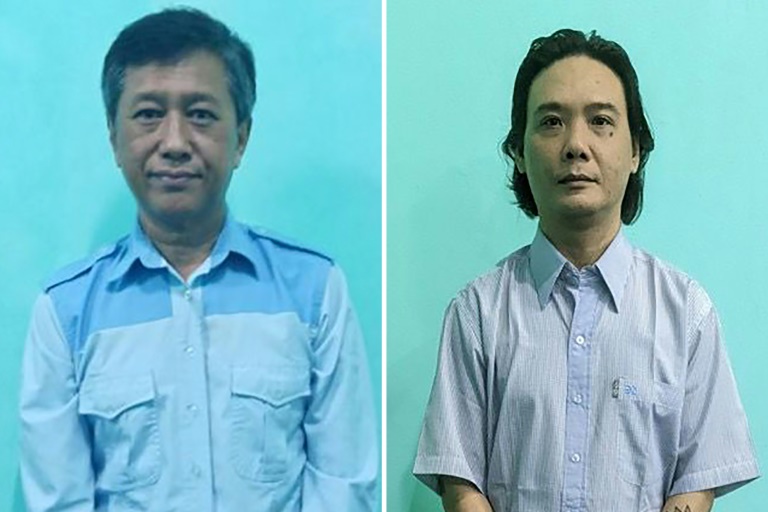
Myanmar’s junta has executed four prisoners including a former lawmaker from Aung San Suu Kyi’s party and a prominent activist, state media said Monday, in the country’s first use of capital punishment in decades.

The executions sparked widespread condemnation, heightened fears that more death sentences will be carried out and prompted calls for the international community to take sterner measures against the already isolated junta.

The four were executed for leading “brutal and inhumane terror acts”, the Global New Light of Myanmar newspaper said, without saying when or how the men were killed.

The junta has sentenced dozens of anti-coup activists to death as part of its crackdown on dissent after seizing power last year, but Myanmar had not carried out an execution for decades.

Phyo Zeya Thaw, a former lawmaker from Suu Kyi’s National League for Democracy (NLD) who was arrested in November, was sentenced to death in January for offences under anti-terrorism laws.

Democracy activist Kyaw Min Yu — better known as “Jimmy” — received the same sentence from the military tribunal.

Family members of the two men gathered outside Yangon’s Insein prison after news of the executions was published in the hopes of retrieving their bodies, local media reported.

A junta spokesman could not be reached for comment.

Responding to media enquiries on reports of the executions, a junta statement said “it is as stated in the state media.”

The United Nations’ Special Rapporteur on Myanmar Tom Andrews said he was “outraged and devastated by the news.”

“These depraved acts must be a turning point… what more must the junta do before the international community is willing to take strong action?”

Two other men,  were sentenced to death for killing a woman they alleged was an informer for the junta in Yangon.

Amnesty International said they were an “atrocious escalation in state repression” and warned around 100 others were currently on death row after being convicted in junta courts. 

The United States condemned the “execution of pro-democracy leaders and elected officials for exercising their fundamental freedoms.”

“We join the people of Myanmar in mourning,” its embassy in Yangon said in a statement posted to Twitter.

Japan’s government — a major provider of economic assistance to Myanmar — said in a statement it “seriously deplores” the executions.

– Diplomatic condemnation –

The junta was heavily criticised by international powers last month when it announced its intention to carry out the executions. 

United Nations Secretary-General Antonio Guterres condemned the junta’s decision, calling it “a blatant violation to the right to life, liberty and security of person”.

The junta has slammed criticism from the UN and western countries as  “irresponsible and reckless.”

UN rights experts said that if the executions went ahead — for the first time in Myanmar since 1988 — it could mark the start of a spate of hangings.

The experts said that under the junta’s martial law provisions, the death penalty could be given for 23 “vague and broadly defined offences” — which in practice could include any criticism of the military.

Myanmar expert Richard Horsey of the International Crisis Group (ICG) said on Twitter that the executions were “an outrageous act. And one that will create political shockwaves, now and for a long time to come”.

Phyo Zeya Thaw had been accused of orchestrating several attacks on regime forces, including a gun attack on a commuter train in Yangon in August that killed five policemen. 

A hip-hop pioneer whose subversive rhymes irked the previous junta, he was jailed in 2008 for membership in an illegal organisation and possession of foreign currency. 

He was elected to parliament representing Aung San Suu Kyi’s NLD in the 2015 elections, which ushered in a transition to civilian rule.

The country’s military alleged voter fraud during elections in 2020 — which the NLD won by a landslide — as justification for its coup on February 1 last year. 

Suu Kyi has been detained since then and faces a slew of charges in a junta court that could see her face a prison sentence of more than 150 years. 

Kyaw Min Yu, who rose to prominence during Myanmar’s 1988 student uprising against the country’s previous military regime, was arrested in an overnight raid in October. 

Tunisians vote on constitution set to bolster one-man rule

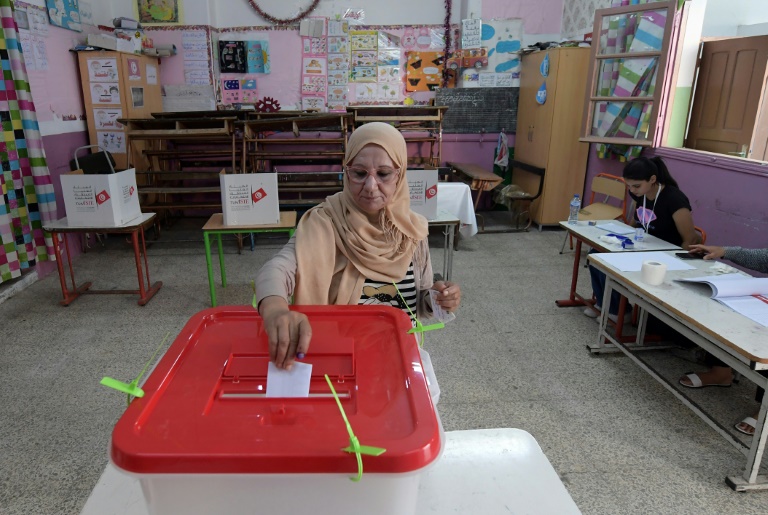
Tunisians voted Monday on a constitution seen as a key test for President Kais Saied, who promoted the charter that would give his office nearly unchecked powers in a break with the country’s democracy.

The referendum comes a year to the day after Saied sacked the government and froze parliament in a power grab that his rivals condemned as a coup against the only democracy to have emerged from the 2011 Arab Spring uprisings.

His moves were however welcomed by many Tunisians tired of a grinding economic crisis and a system they felt had brought little improvement to their lives in the decade since the overthrow of dictator Zine El Abidine Ben Ali.

Monday’s vote is widely expected to pass, but turnout will be seen as a test of Saied’s popularity after a year of increasingly tight one-man rule that has seen scant progress on tackling the North African country’s economic woes.

Speaking after voting got underway, Saied told journalists Tunisians faced a “historic choice”.

“Together we are founding a new republic based on genuine freedom, justice and national dignity,” he said. 

He also accused unnamed rivals of distributing money to persuade people not to vote, without giving evidence.

“We will not let Tunisia fall prey to those who are stalking it, from inside and out,” he said.

In the capital, six people waited to vote at a school turned into a polling station, the entrance guarded by two soldiers with assault rifles, alongside a posse of police.

“For me, the referendum is about protecting the country’s future,” said Tarik al-Jmaiei, 42, after casting his ballot.

– All eyes on turnout –

Some 9.3 million out of Tunisia’s 12 million people are eligible to take part, including around 356,000 who began voting overseas on Saturday. 

“The biggest unknown in this referendum is the turnout and whether it will be low or very low,” said analyst Youssef Cherif.

No minimum participation has been set for the constitution to pass, nor any provision made for a “no” result.

Saied’s critics have warned Tunisia risks sliding back towards dictatorship.

Opposition parties and civil society groups have called for a boycott, while the powerful UGTT trade union has declined to take a position.

Saied’s charter would replace a 2014 constitution that was a hard-won compromise between Islamist-leaning and secular forces after three years of political turmoil.

His supporters blame the hybrid parliamentary-presidential system it introduced, and the dominant Islamist-influenced Ennahdha party, for years of political crises and corruption.

Saied’s draft for the constitution was published this month with little reference even to an earlier draft produced by a committee he appointed himself.

Sadeq Belaid, a mentor of Saied who led the process, warned the president’s draft was far removed from that of the committee and risked creating a “dictatorial system”.

A slightly amended version did little to address such concerns.

The new text would place the head of state in command of the army, give him full executive control and allow him to appoint a government without parliamentary approval.

The president could also present draft laws to parliament, which would be obliged to give them priority.

– Revolutionary ‘correction’ –

The draft has been heavily promoted in state media, and billboards bearing the Tunisian flag have appeared exhorting people to vote “yes”.

“People don’t know what they’re voting on, or why,” Cherif said.

Saied, a 64-year-old law professor, won a landslide victory in 2019 presidential elections, building on his image as incorruptible and distanced from the political elite.

He has appeared increasingly isolated in recent months, limiting his public comments to official videos from his office — often diatribes against domestic foes he brands as “snakes”, “germs” and “traitors”.

He has vowed to protect Tunisians’ liberties and describes his political project as a “correction” and a return to the path of the revolution.

“Lots of young people, the marginalised and excluded, are on his side,” said political analyst Hamadi Redissi.

That popularity will continue to be tested in the coming months as Tunisians face soaring inflation, youth unemployment of 40 percent and a looming deal with the International Monetary Fund that observers have warned could lead to more economic pain.

Voting is set end at 10:00 pm (2100 GMT) and results are expected late Tuesday or early Wednesday.

Taiwan stages Chinese invasion war games with Ukraine in mind

Taiwan kicked off its largest annual military exercises Monday, with trench warfare and shoulder-launched Stinger missiles deployed against simulated Chinese attacks in drills informed by the Russian invasion of Ukraine.

Democratic Taiwan lives under constant threat of being seized by China, which views the self-ruled island as part of its territory to be taken by force if necessary. 

Russia’s assault on Ukraine has heightened fears that Beijing might similarly follow through on threats to annex its much smaller and outgunned neighbour. 

This year’s five-day “Han Kuang” (Han Glory) war games have incorporated lessons from the ongoing European war, simulating “all possible actions” China could take to invade Taiwan, according to the defence ministry. 

On Monday, reservists armed with machine guns ran into sandbagged trenches dug under a bridge before getting into firing position, in a drill aimed at blocking enemies from gaining access to the capital Taipei. 

“The underground bunkers help cover the troops and ward off the enemy’s strike forces,” said Su Tzu-yun, a military expert at Taiwan’s Institute for National Defence and Security Research.

“They are part of Ukraine’s urban warfare.”

Stinger missiles, effective against helicopters and low-flying planes, were also deployed in some high-rise buildings in the area, he said. 

The highly portable missiles have been invaluable to Ukrainian forces fighting off Russian air power.

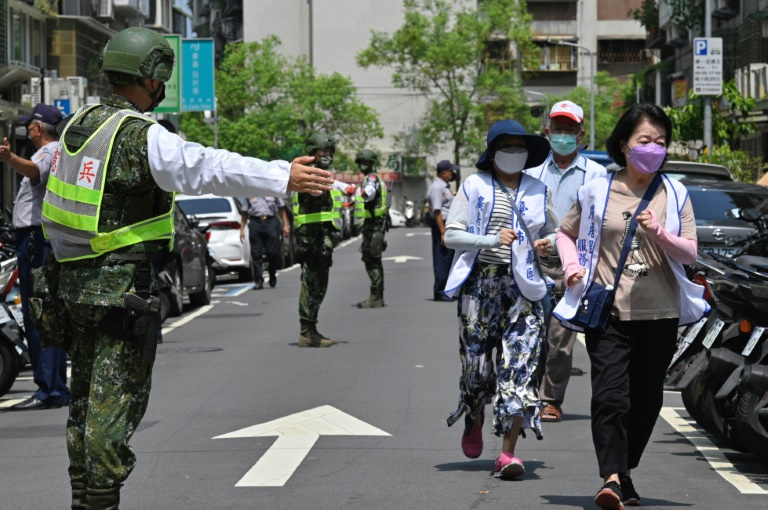
Separately, the streets in several northern cities were empty for 30 minutes as part of a civilian air-raid drill, with pedestrians and cars banned after sirens and text-message alerts warned of mock missile attacks.

Beijing’s sabre-rattling has increased considerably since Taiwan’s President Tsai Ing-wen took office in 2016, as she rejects its stance that the island is part of China. 

Bill Burns, director of the United States’ Central Intelligence Agency, recently said China appeared determined to use force in Taiwan, with Russia’s experience in Ukraine affecting its calculations on when and how — not whether — to invade. 

Last year, Taiwan recorded 969 incursions by Chinese warplanes into its air defence zone, according to a database compiled by AFP — more than double the roughly 380 in 2020.  

The number of sorties has reached more than 600 so far this year.

Stock markets drift lower as traders prepare for big week

Equity markets in Asia and Europe slipped Monday at the start of a key week for equities as the Federal Reserve prepares to lift interest rates again and some of the world’s biggest companies report earnings.

While the US central bank is widely expected to hike borrowing costs by 75 basis points, traders will be poring over policymakers’ views on the outlook for the world’s biggest economy as they try to rein in inflation while nurturing growth.

The decision comes a day before second-quarter gross domestic product data is released, with some observers warning it could show a second successive contraction, which is considered a technical recession.

All three main indexes on Wall Street ended last week with a loss, ending a three-day rally, following a big data miss on the crucial services sector.

Asia and Europe fared little better, with Tokyo, Hong Kong, Shanghai, Sydney, Taipei, Mumbai, Manila, Jakarta and Wellington all in the red, while London, Paris and Frankfurt dropped in early trade.

There were small gains in Singapore, Bangkok and Seoul.

Investors are also awaiting the release of earnings from business titans Apple, Amazon and Google parent Alphabet.

The figures will provide a clearer idea about the impact of surging inflation and rising interest rates on consumer spending and companies’ bottom lines.

But analysts remain cautious about the outlook, while attention on trading floors turns from rising prices to economic growth, with some saying a slowdown could allow banks to ease up on their monetary tightening.

Fed chiefs have already said their main priority was bringing inflation down from four-decade highs, even at the expense of growth.

“We still see further downside for risky assets as recession fears accumulate and central banks remain committed to fighting inflation at the expense of growth,” said Standard Chartered strategist Eric Robertsen.

And Stephen Innes at SPI Asset Management added: “While rising jobless claims, softer home sales, and a buildup in gasoline inventory show the Fed front-loading rate hikes are causing a slowdown and bringing inflation under control, the issue is at what cost.”

Others warned that while inflation could begin to ease, the Fed could still push borrowing costs to around five percent and were unlikely to lower rates as soon as many traders hope.

The economic slowdown — and the expected hit to demand — continues to put pressure on oil prices, with both main contracts well down Monday.

Crude has given up most of the gains seen since Russia’s invasion of Ukraine, and Vandana Hari, of Vanda Insights, said she saw further losses.

“While prices have been volatile, I expect renewed downward pressure on crude,” she said, adding that the Fed decision “will likely serve as a fresh reminder of the economic headwinds ahead”.

– Key figures at around 0810 GMT –

Tokyo – Nikkei 225: DOWN 0.8 percent at 27,699.25 (close)

Hong Kong – Hang Seng Index: DOWN 0.2 percent at 20,562.94 (close)

Shanghai – Composite: DOWN 0.6 percent at 3,250.39 (close)

London – FTSE 100: DOWN 0.3 percent at 7,258.20

Euro/dollar: DOWN at $1.0206 from $1.0220 on Friday

Pound/dollar: UP at $1.2008 from $1.1998 

Euro/pound: DOWN at 85.00 pence from 85.07 pence

Dollar/yen: UP at 136.40 yen from 136.05 yen

West Texas Intermediate: DOWN 1.6 percent at $93.22 per barrel

Brent North Sea crude: DOWN 1.3 percent at $101.88 per barrel

New York – Dow: DOWN 0.4 percent at 31,899.29 (close)

— Bloomberg News contributed to this story —

Close Bitnami banner
Bitnami