World

Hit by China shutdown, Tesla boosts auto prices and sells bitcoin

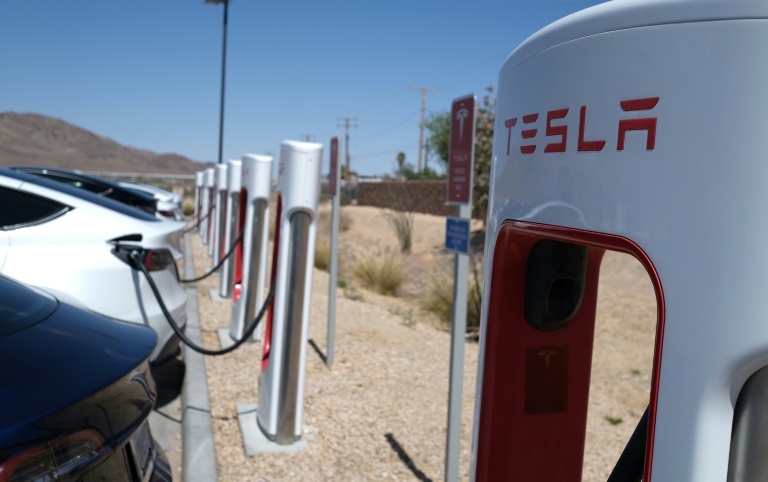
Tesla reported solid quarterly earnings Wednesday despite a hit from Covid-19 lockdowns in Shanghai that Chief Executive Elon Musk said prompted the company to liquidate most of its bitcoin holdings.

Musk, who has generated recent headlines over his controversial withdrawal from a $44 billion acquisition of Twitter, said the company had navigated a tricky environment with the Shanghai closure and lingering supply chain problems that have raised costs.

The electric vehicle maker reported second-quarter profits of $2.3 billion, about twice that in the year-ago period as the automaker lifted car prices to “embarrassing” levels, as Musk put it.

Although Tesla profits topped estimates, they lagged behind those in the first quarter, the first sequential profit drop since late 2020, which coincided with a fall in automotive profit margins due to rising costs.

And while revenues jumped 42 percent to $16.9 billion, they came in below the $17.1 billion projected by analysts.

Musk described the period as a “unique quarter,” but told investors and analysts on a conference call that the restart of the Shanghai plant and the ramp-up of new factories in Germany and Texas create “the potential for a record-breaking second half of the year.”

The company cited the drag from Shanghai, where its factory was shuttered for part of the quarter. But Tesla said it finished the three-month period with “a record monthly production level” after the China restart.

Tesla said supply chain challenges remain an ongoing headache, as factory shutdowns, labor shortages, logistics and other issues “limited our ability to consistently run our factories at full capacity.”

– Bitcoin sale –

During the quarter, Tesla liquidated about 75 percent of its holdings in bitcoin, the value of which has declined sharply in 2022.

The moves on bitcoin resulted in one-time costs of $106 million, said Chief Financial Officer Zachary Kirkhorn.

Musk attributed the move to the need to raise cash because of the uncertainty of when Shanghai operations would return.

The sale “should not be taken as some verdict on bitcoin,” Musk said at the outset of the call. 

But cryptocurrency is a “side show to the side show” compared with the goal of accelerating the energy transition, said Musk, who pointed to the scorching heat now plaguing many countries as underscoring the need for change.

Torrid demand for Musk’s electric vehicles has allowed Tesla to pass on higher prices to consumers. 

In the United States, Tesla’s cheapest vehicle, the Model 3, starts at nearly $50,000.

“We’ve raised our prices quite a few times, they’re frankly at embarrassing levels. ” Musk said. “But we’ve also had a lot of supply chain and production shocks and we’ve got crazy inflation.

“I am hopeful — this is not a promise or anything, but I’m hopeful that at some point we can reduce the prices a little bit,” he said.

– Bullish on rest of 2022 –

Several analysts had viewed the second quarter as the weakest of the year for Tesla in the aftermath of the Shanghai factory lockdown and other supply chain issues.

But many Tesla watchers are bullish on the second half of 2022 in light of the company’s growing production profile.

CFRA Research analyst Garrett Nelson told AFP the second quarter was “especially impressive” given the headwinds of the Shanghai closure and the costs of upping production at new plants.

Musk has shown boundless confidence in Tesla’s ability to shake up the auto market, leading the company as it has met production targets on its core product, even as the cars remain too expensive for many consumers.

But Musk has been less enthusiastic of late about the economy as a whole, saying last month that a recession “appears more likely than not” and confirming plans to reduce the company’s salaried work force by about 10 percent.

Most recently, the controversial CEO has become embroiled in a messy fight with Twitter after withdrawing his takeover bid. The case will go to trial in October to determine Musk will be forced to complete the transaction. 

Shares of Tesla added 1.6 percent to $754.45 in after-hours trading.
ADB slashes Asia growth forecast as fuel, food prices rise

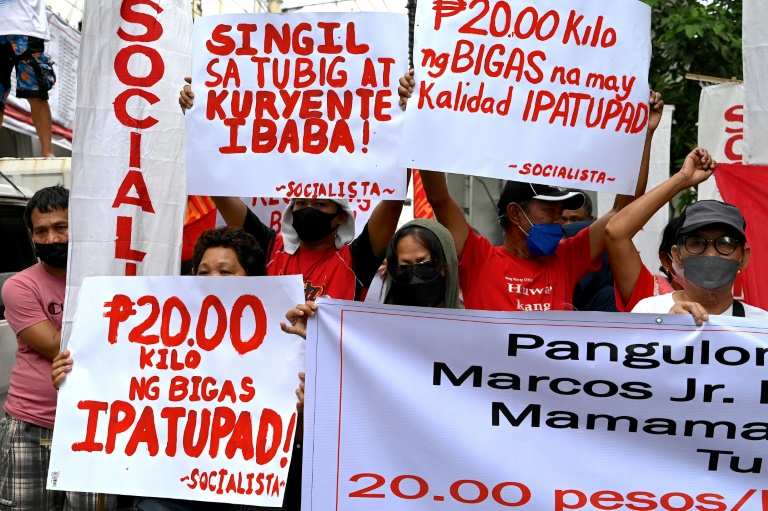
The Asian Development Bank on Thursday slashed its 2022 growth forecast for developing Asia and warned economic conditions could worsen, as the war in Ukraine and supply chain disruptions drive up prices.

While the impact of Covid-19 had eased, the region was now grappling with the fallout from Russia’s invasion of Ukraine, lockdowns in China and aggressive interest rate hikes, the Philippines-based bank said.

To reflect the deterioration across developing Asia — which stretches from the Cook Islands in the Pacific to Kazakhstan in Central Asia — the bank cut its 2022 growth forecast to 4.6 percent.

That compares with its previous prediction in April of 5.2 percent and the 6.9 percent growth chalked up last year.

It also increased its inflation forecast for the region this year to 4.2 percent, from 3.7 percent, due to surging food and fuel prices.

Risks to the outlook “remain elevated”, the bank warned.

“A substantial slowdown in global growth could hurt exports, manufacturing activity and employment prospects, and cause turbulence in financial markets,” it said. 

Double-digit inflation has hit most of the Caucasus and Central Asia — which have close trade and financial ties to Russia — as well as Mongolia, Pakistan, Sri Lanka, Laos and Myanmar.

India’s inflation was above target at seven percent, but in the rest of the region’s large economies it was “manageable”.

But the bank warned: “A worsening fallout from the war in Ukraine could lead to a further surge in global energy and commodity prices, with likely knock-on effects on growth and inflation in developing Asia.”

Adding to the region’s woes was the strengthening US dollar, seen as a safe haven during periods of uncertainty, which the bank said was weighing on regional currencies and stock markets.

“With financial conditions tightening, growth in advanced economies is softening,” the bank said.

“And with activity in the PRC (China) hampered by supply chain disruptions, domestic demand and exports in developing Asia are set to face significant challenges.”

The growth forecast for East Asia, which includes China, was cut to 3.8 percent from 4.7 percent, as Covid-19 lockdowns batter the world’s second-biggest economy.

In South Asia, where bankrupt Sri Lanka is reeling from its worst economic crisis, the bank lowered its growth forecast to 6.5 percent from 7.0 percent previously.

But the bank revised up its forecast for the Pacific to 4.7 percent, from 3.9 percent, on a surprising rebound in tourism in Fiji.

Biden seeks to revive climate agenda as heat waves slam US, Europe

President Joe Biden, thwarted by lawmakers and the Supreme Court, sought Wednesday to revive his ambitions to tackle climate change as heat waves batter the United States and Europe.

Rocketing summer temperatures have highlighted the growing threat, with 100 million people in the United States currently under excessive heat alerts and devastatingly hot conditions causing misery across Europe.

“Climate change… is literally, not figuratively, a clear and present danger,” Biden said, announcing executive actions including $2.3 billion in investments to help build US infrastructure to withstand climate disasters.

“The health of our citizens and our communities is literally at stake… Our national security is at stake as well… And our economy is at risk. So we have to act.”

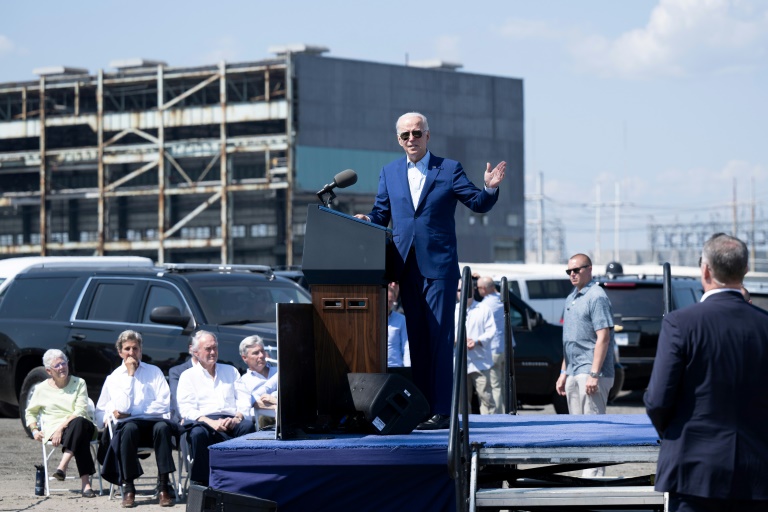
Biden, delivering a speech at a former coal-fired electricity plant in Massachusetts, said his administration would do whatever necessary, with or without lawmakers on board.

“Congress is not acting as it should… This is an emergency and I will look at it that way. As president, I’ll use my executive powers to combat the climate crisis,” he said.

But he stopped short of declaring a formal climate emergency, which would grant him additional policy powers. Upon his return home, when asked about the emergency designation, Biden told reporters: “I will make that decision soon.”

– Repeated setbacks –

Biden began his term last year promising to fulfill campaign pledges to tackle the global climate crisis, but his agenda has faced blow after blow.

His first day in office, Biden signed an executive order to bring the United States back into the Paris climate agreement, followed later by an ambitious announcement that he was targeting a 50-52 percent reduction from 2005 levels in US net greenhouse gas pollution by 2030.

But his signature Build Back Better legislation, which would have included $550 billion for clean energy and other climate initiatives, is all but dead after failing to receive the necessary backing in Congress as fellow Democrat Joe Manchin said he would not support the bill in a evenly divided Senate.

And last month, the conservative-leaning Supreme Court ruled that the Environmental Protection Agency (EPA) cannot issue broad greenhouse gas regulations without congressional approval.

“When it comes to fighting climate change, I will not take ‘no’ for an answer,” Biden said.

“I will do everything in my power to clean our air and water, protect our people’s heath, to win the clean energy future… Our children and grandchildren are counting on us. Not a joke.”

Among the new executive orders was funding to promote efficient air conditioning, and an order to advance wind energy development off the Atlantic Coast and Florida’s Gulf Coast.

The Biden administration has framed climate policies as a job creation project — and as a national security issue, made more urgent by soaring fuel prices in the wake of Russia’s invasion of Ukraine.

The White House said in a statement that Biden was seeking “to turn the climate crisis into an opportunity, by creating good-paying jobs in clean energy and lowering costs for families.”

His speech on Wednesday was at a shuttered coal-fired power plant that will be used for a cable manufacturing factory to supply offshore wind facilities.

State Department spokesman Ned Price this week pointed to the extreme heat wave tormenting Europe this week — with Britain recording a temperature of 104 degrees Fahrenheit (40 degrees Celsius) — as more proof that climate action cannot wait. 

“We are committed to taking advantage of this moment and doing everything we can, including on the world stage,” Price told reporters, “to ensure that this decisive decade does not go by without us taking appropriate action.”

United Airlines reports profit but sees higher recession risk

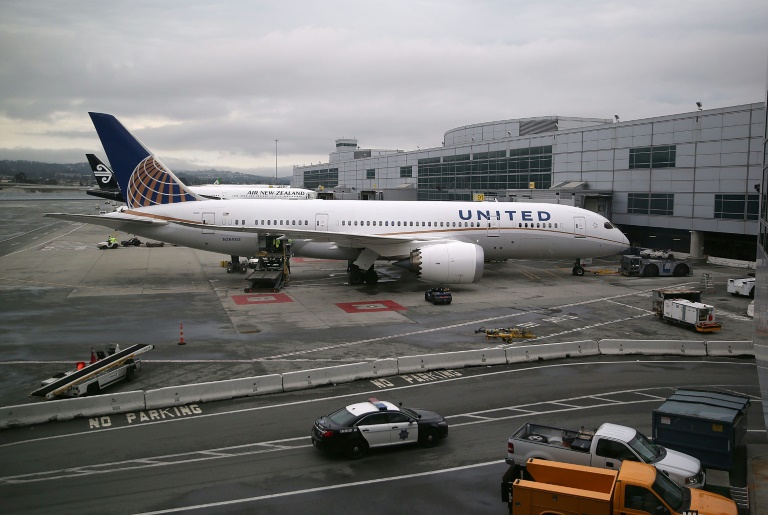
United Airlines reported a profitable second quarter Wednesday as strong travel demand boosted revenues, but signaled plans to rein in plane capacity as carriers confront operational challenges and recession worries.

The big US carrier said revenues “improved at a rapid pace” during the quarter and that it expects full-year profitability in light of still-strong demand.

But United said it expects full-year capacity in 2022 to be 13 percent below the 2019 level. It plans 2023 capacity growth of “no more than eight percent” from the 2019 level.

Chief Executive Scott Kirby cited the chance of a global recession as one of three major question marks facing the industry as the company reported quarterly profits of $329 million compared with a loss of $434 million in the year-ago period.

Revenues were $12.1 billion, more than twice that of the 2021 period and 6.2 percent above the 2019 level.

“It’s nice to return to profitability,” Kirby said. “But we must confront three risks that could grow over the next 6-18 months. 

“Industry-wide operational challenges that limit the system’s capacity, record fuel prices and the increasing possibility of a global recession are each real challenges that we are already addressing.”

Shares fell 6.8 percent to $38.84 in after-hours trading.

US to send more rocket systems to Ukraine, Moscow signals wider war aims

The United States on Wednesday promised to send more precision rocket systems to Kyiv, soon after Moscow signaled it was aiming to seize more Ukrainian territory beyond the eastern industrial region of Donbas.

The announcement came as the European Commission called on EU members to slash demand for natural gas to relieve dependence on Russian energy and the bloc agreed an embargo on Russian gold imports, measures that Kyiv nevertheless dismissed as insufficient.

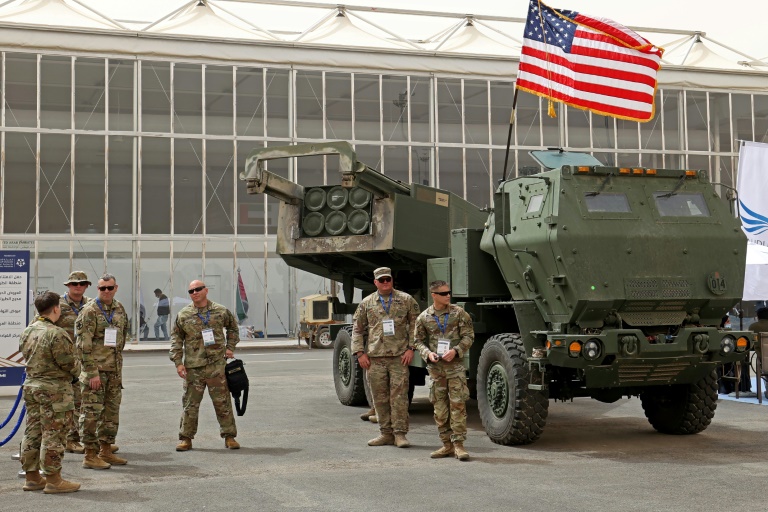
Pentagon chief Lloyd Austin said Washington would send four more M142 High Mobility Artillery Rocket System (Himars), which have notably boosted Kyiv’s capabilities on the battlefield in recent weeks by allowing Ukrainian forces to hit Russian targets from long distances.

“Ukraine needs the firepower and the ammunition to withstand this barrage and to strike back,” Austin told reporters, adding that the new shipment would bring the total of US Himars sent to Kyiv to 16.

Hours earlier, Russian Foreign Minister Sergei Lavrov said in an interview that Moscow’s military was no longer only focused on wresting control of the east Ukraine regions of Lugansk and Donetsk, which have been partially controlled by pro-Moscow rebels for years.

“The geography is different now. It is not only about the DNR and LNR, but also the Kherson region, the Zaporizhzhia region and a number of other territories,” he explained to state media.

On Tuesday, the United States said Russia was “beginning to roll out a version of what you could call an annexation playbook” — citing the same areas mentioned by Lavrov.

Russian forces, since invading Ukraine on February 24, have steadily advanced into each of those regions, wreaking destruction as they captured key cities and met fierce Ukrainian resistance.

In recent weeks, they have also hit Ukrainian civilian targets in cities and towns far away from the frontline, leaving scores of civilians dead, in what Ukrainian President Volodymyr Zelensky has called a terror campaign.

– ‘Russian terror must lose’ –

In an emotional speech before the US Congress on Wednesday, Ukrainian First Lady Olena Zelenska described the suffering of millions of Ukrainian parents and children, and asked Washington for air-defence systems to fend off Russian missiles.

Zelenska, stepping into a more public role after staying sheltered in the first weeks of the war, displayed images of children who were killed or maimed by Russia, including a four-year-old killed by a strike in the city of Vinnytsia.

Photos of her blood-spattered pink stroller and footage of her final moments went viral on social media.

“Help us to stop this terror against Ukrainians,” Zelenska said.

Later in the day, Zelensky expressed hope that Kyiv’s pleas for anti-missile systems would be heard, saying: ” I hope the answers to our requests won’t be long in coming.”

– Western arms a ‘direct threat’ to Russia –

The steady progress of Russian troops in the east has come after Moscow’s forces failed early in the invasion to capture the capital Kyiv and were pushed back from Ukraine’s second city Kharkiv.

But Russian artillery has pursued an almost constant shelling campaign on Kharkiv, and strikes on Wednesday killed three people, local officials said.

“There was a 13-year-old boy among them,” the regional governor Oleg Synegubov said in a statement on social media. 

AFP journalists saw a man in shock kneeling over the body, which was covered by a blue sweatshirt and surrounded by shards of broken glass.

While the brunt of recent fighting in Ukraine has focused on Donbas, a Ukrainian counter-offensive in the south has slowly clawed back some Russian-held territory, thanks in large part to Western-supplied long-range artillery.

Lavrov said that Western arms deliveries to Ukraine had been a factor in Moscow’s decision to focus beyond the east and said its ambitions could expand even more if the shipments continued. 

“We cannot allow the part of Ukraine that Zelensky will control or whoever replaces him to have weapons that will pose a direct threat to our territory and the territory of those republics that have declared their independence,” Lavrov said, referring to Donetsk and Lugansk.

– Emergency energy plans –

Lavrov also dismissed the idea of further peace talks with Ukraine, claiming that earlier rounds showed Kyiv was unwilling to negotiate in “earnest”. 

“It doesn’t make any sense in the current situation,” he told state media.

Russian and Ukrainian delegations are nevertheless expected in Istanbul in the coming days for more talks on unblocking Ukraine’s Black Sea grain exports.

Turkish President Recep Tayyip Erdogan said Wednesday he hoped an agreement could be formulated “this week”.

The West has responded to Russia’s invasion with several packages of damaging sanctions, which in turn has seen Russia cut natural gas supplies to the bloc, spurring a supply and cost crisis.

In its latest package of penalties Wednesday, the EU targeted gold exports and froze assets at Russia’s largest bank Sberbank.

And Brussels also asked EU members to reduce demand for natural gas by 15 percent in order to limit supplies from Russia, which last year accounted for 40 percent of EU’s imports.

Zelensky however criticized those measures as inadequate, saying in his address: “Russia must pay a much higher price for this war, which would force it to seek peace.”

burs-acl-jbr/md/sst

European stocks retreat, euro dips while US shares rise

European stocks retreated Wednesday as the EU took precautionary measures in the face of reduced Russian gas supplies, but Wall Street extended its rally for a second day.

The euro bobbed about before settling lower ahead of a key European Central Bank meeting on Thursday, when the ECB is expected to announce its first rate hike in more than a decade to join the fight to tame sky-high inflation.

US stocks had rebounded strongly Tuesday as companies’ earnings soothed concerns about the impact on their bottom lines from soaring inflation and rising interest rates, and the gains continued into Wednesday, a bright spot in a dismal year.

While several firms — such as Apple and Johnson & Johnson — have indicated they have concerns about the outlook, there is a feeling that the sell-off across markets could be reaching a bottom. Investors especially moved into tech shares.

And some commentators have suggested the second half of the year could see a healthy rally, despite official data continuing to show inflation continuing to rise strongly worldwide.

UK annual inflation hit a new 40-year high at 9.4 percent in June on surging fuel and food prices.

The Federal Reserve and Bank of England have raised lending rates multiple times, and all eyes now are on the ECB.

Officials have their work cut out for them as they must also try not to drive a stake through the eurozone economy, which has also been hammered by an energy crisis.

Talk of a half-point hike — instead of the quarter-point increase most expect ECB officials had signaled — has boosted the euro against the US dollar since it fell below parity last week for the first time in 20 years.

“The central bank has left the door open to super-charging the lift-off previously but given its past tendency to proceed with extreme caution, it would send quite the message about how concerned they’ve become,” said market analyst Craig Erlam at trading platform OANDA.

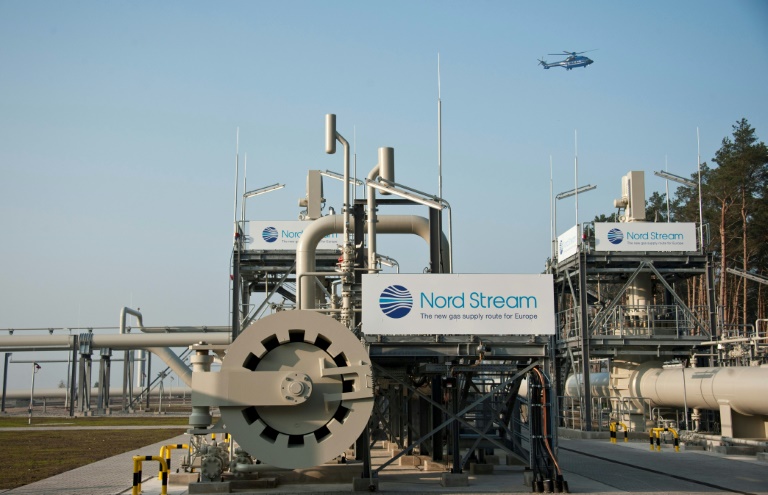
The European single currency caught an early updraft from a Bloomberg News article saying Russia’s Gazprom would resume deliveries through the Nord Stream 1 pipeline Thursday, albeit at reduced capacity.

Moscow shut down deliveries to Germany for technical reasons last week, but there had been fears it would keep the taps off in retaliation for European sanctions over its invasion of Ukraine.

The German pipeline manager on Wednesday said Russian gas deliveries are expected to resume at the previous level.

Taking no chances, the European Commission on Wednesday urged EU countries to reduce their demand for natural gas by 15 percent over the coming winter months to overcome Russia’s energy supply “blackmail.”

In a statement, the EU’s executive arm also asked member states to give it special powers to force through needed demand reductions if Russia cuts Europe’s gas lifeline.

“Russia is blackmailing us. Russia is using energy as a weapon and therefore, in any event, whether it’s a partial major cut off of Russian gas or total cut off… Europe needs to be ready,” Commission president Ursula von der Leyen told reporters.

Oil prices retreated modestly.

– Key figures at around 2030 GMT –

New York – Dow: UP 0.2 percent at 31,874.84 (close)

New York – S&P 500: UP 0.6 percent at 3,959.9 (close)

New York – Nasdaq: UP 1.6 percent at 11,897.65 (close)

London – FTSE 100: DOWN 0.4 percent at 7,267.97 (close) 

Frankfurt – DAX: DOWN 0.2 percent at 13,281.98 (close)

Paris – CAC 40: DOWN 0.3 percent at 6,184.66 (close)

EURO STOXX 50: DOWN less than 0.1 percent at 3,585.24 (close)

Tokyo – Nikkei 225: UP 2.7 percent at 27,680.26 (close)

Hong Kong – Hang Seng Index: UP 1.1 percent at 20,890.22 (close)

Shanghai – Composite: UP 0.8 percent at 3,304.72 (close)

Euro/dollar: DOWN at $1.0175 from $1.0226 Tuesday

Pound/dollar: DOWN at $1.1975 from $1.2002 

Euro/pound: DOWN at 84.96 pence from 85.19 pence

Dollar/yen: DOWN at 138.26 yen from 138.21 yen

West Texas Intermediate: DOWN 1.5 percent at $102.61 per barrel

Brent North Sea crude: DOWN 0.6 percent at $106.69 per barrel

burs-rl/pvh/hs/to

Sunak, Truss ready for battle to be Britain's next PM

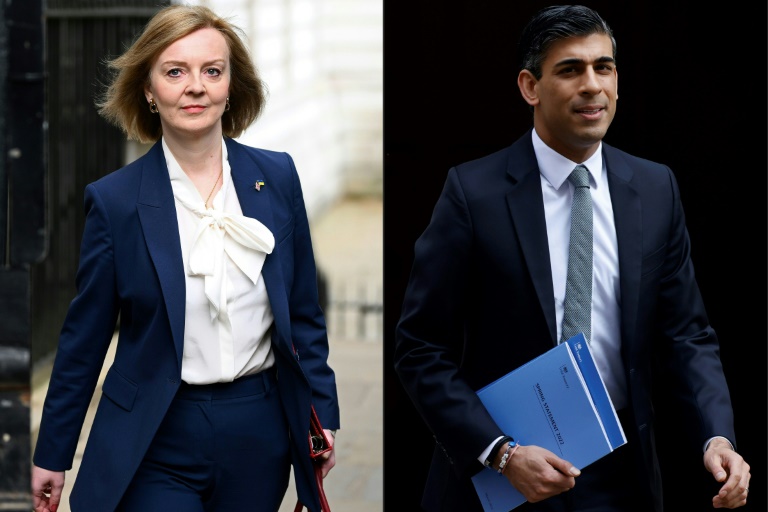
Conservative rivals Rishi Sunak and Liz Truss, offering competing answers to Britain’s multiple crises, will duel in the coming weeks to become the next prime minister after the party’s lawmakers held a concluding vote Wednesday.

Former finance minister Sunak, a centrist offering fiscal rectitude alongside promises of renewed integrity following outgoing leader Boris Johnson’s scandal-tarred tenure, again led the field with 137 votes in Tory MPs’ fifth and final ballot.

The crucial race for second place was narrowly won by Foreign Secretary Truss, on 113 votes, against 105 for trade minister Penny Mordaunt.

Sunak and Truss now take their case to Conservative party members, who will decide the new leader and prime minister after a dozen nationwide hustings and several televised debates over the next six weeks. 

The result will be announced on September 5. But Britain is already guaranteed to get either its first prime minister of colour or its third woman leader.

“We need to restore trust, rebuild the economy, and reunite our country,” Sunak said after his win, as Britain contends with the worst cost-of-living crisis in decades, wrought by the pandemic, the war in Ukraine and Brexit.

Truss, the bookies’ favourite to beat Sunak based on recent polls of party members, said she was “not complacent at all”.  

“What I believe is that lowering taxes, opening up opportunities, is going to help us deliver the economic growth that Britain needs,” she said. 

“And it’s also going to help deliver us the next election.”

– ‘Hasta la vista’ –

Sunak’s resignation as finance minister this month helped to topple Johnson after months of scandal including “Partygate”, and Downing Street is reportedly running an “anyone but Rishi” campaign.

At his last Prime Minister’s Questions session in parliament earlier, Johnson bowed out by saying “Hasta la vista, baby!”.

In a hint of support for Truss’s Thatcherite platform, he urged his successor to “cut taxes and deregulate where you can to make this the greatest place to live and invest”.

Johnson urged the contenders to continue his outspoken backing for Ukraine, and “stay close to the Americans”.

Mordaunt — the one-time bookmakers’ favourite — lapsed to outsider status after Truss’s fellow right-winger Kemi Badenoch was eliminated Tuesday.

Former minister David Davis, a Mordaunt backer, accused Sunak of lending Truss votes so he could face her in the run-off.

“He wants to fight Liz, because she’s the person who will lose the debate with him,” he told LBC radio.

A YouGov poll published before the vote indicated that, despite his popularity with colleagues, Sunak was the least appealing candidate to the members. 

The BBC and Sky News both plan to host live TV debates between the pair, the first on Monday, with other potential duels possible before party members’ postal voting ends September 2. 

Sunak won the two previous debates, according to snap polls, and the second one featured a no-holds-barred clash with Truss.

– ‘Fantasy economics’ –

The dozen hustings in front of the membership — the first in Leeds, northern England, next Thursday — will take the candidates to all corners of Britain, including Scotland, Wales and Northern Ireland.

The Conservatives say they have approximately 200,000 members.

Sunak’s popularity with the grassroots has faded since questions were raised over his family’s tax arrangements, and as he presided over sky-rocketing inflation, which hit a new 40-year high of 9.4 percent in June.

In a new policy announcement, Sunak vowed an “ambitious new plan to make the UK energy independent” by 2045 to prevent future energy-driven inflation spikes, after Russia’s war in Ukraine sent gas prices rocketing.

Meanwhile, Truss has pledged a host of tax cuts “from day one”.

The candidates differ in their climate change policies, with Truss pledging to ditch so-called “green levies” on energy bills which support the renewable sector while Sunak has vowed to maintain them. 

Johnson announced on July 7 he was quitting as Conservative leader after a government rebellion in protest at his scandal-hit administration.

Under Britain’s parliamentary system, the leader of the biggest party is prime minister and can be changed mid-term without having to call a general election.

Labour’s Starmer accused the Tory candidates of “fantasy economics” before turning his fire on the outgoing Johnson.

“He is a complete bullshitter and I think he’s been found out,” he told former Labour prime minister Tony Blair’s onetime spin chief Alastair Campbell in a podcast, referring notably to “Partygate”.

Eight ex-officials to face trial for Mexico metro collapse

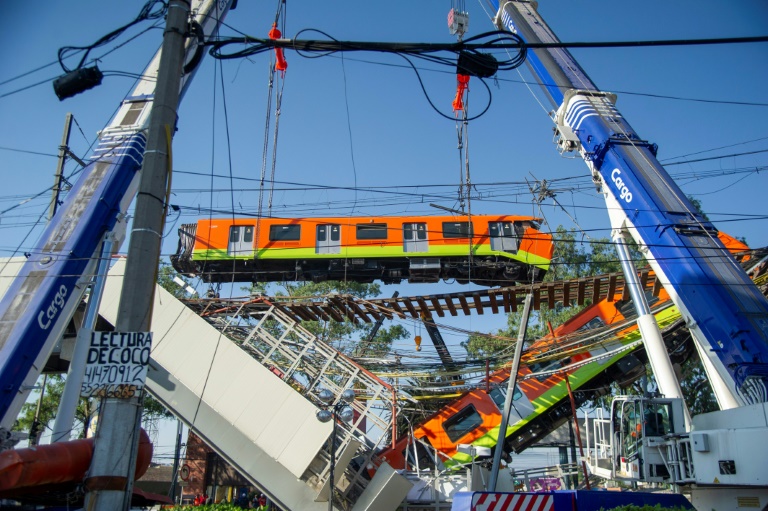
Eight former officials will face prosecution over a Mexico City metro crash that left 26 people dead and dozens injured last year, a lawyer said Wednesday.

A judge determined at a hearing that there was sufficient grounds for the defendants to face trial, Teofilo Benitez, who represents some of the victims, told reporters.

The ex-officials were responsible for the construction, design and safety of the damaged section, and will be tried on charges including homicide.

Relatives of the victims have demanded justice for the disaster, which saw an elevated section of track collapse in May 2021, bringing a passenger train crashing down.

An investigation by Norwegian engineering company DNV, hired by the city hall, concluded that the accident was caused by structural flaws including problems with beams and bolts.

The defendants served during the tenure of Mexico City’s then mayor Marcelo Ebrard, now foreign minister and a contender to succeed President Andres Manuel Lopez Obrador in 2024.

The damaged line was built and inaugurated under Ebrard, who was mayor from 2006-2012.

No official serving under current Mayor Claudia Sheinbaum, another presidential hopeful, has been charged in connection with the crash.

A lawyer for some of the defendants has alleged an attempt to protect Sheinbaum’s political career.

“If the true cause of the Line 12 tragedy were investigated… the case would escalate to the current mayor and affect her presidential aspirations,” Gabriel Regino tweeted last week.

In May, Sheinbaum’s administration rejected DNV’s conclusions, saying they contained various “deficiencies and inconsistencies.”

Sheinbaum criticized DNV’s final report as “badly done” and “used for political purposes.”

According to leaks of the report, experts pointed to a lack of maintenance as one of the reasons for the collapse, which would raise questions for Sheinbaum, who took office in 2018.

Lopez Obrador quickly came to the defense of his ally and potential successor, describing her as “an upright and honest woman.”

Webb telescope may have already found most distant known galaxy

Just a week after its first images were shown to the world, the James Webb Space Telescope may have found a galaxy that existed 13.5 billion years ago, a scientist who analyzed the data said Wednesday.

Known as GLASS-z13, the galaxy dates back to 300 million years after the Big Bang, about 100 million years earlier than anything previously identified, Rohan Naidu of the Harvard Center for Astrophysics told AFP.

“We’re potentially looking at the most distant starlight that anyone has ever seen,” he said.

The more distant objects are from us, the longer it takes for their light to reach us, and so to gaze back into the distant universe is to see into the deep past.

Though GLASS-z13 existed in the earliest era of the universe, its exact age remains unknown as it could have formed anytime within the first 300 million years.

GLASS-z13 was spotted in so-called “early release” data from the orbiting observatory’s main infrared imager, called NIRcam — but the discovery was not revealed in the first image set published by NASA last week.

When translated from infrared into the visible spectrum, the galaxy appears as a blob of red with white in its center, as part of a wider image of the distant cosmos called a “deep field.”

Naidu and colleagues — a team totaling 25 astronomers from across the world — have submitted their findings to a scientific journal. 

For now, the research is posted on a “preprint” server, so it comes with the caveat that it has yet to be peer-reviewed — but it has already set the global astronomy community abuzz.

“Astronomy records are crumbling already, and more are shaky,” tweeted NASA’s chief scientist Thomas Zurbuchen.

“Yes, I tend to only cheer once science results clear peer review. But, this looks very promising,” he added.

Naidu said another team of astronomers led by Marco Castellano that worked on the same data has achieved similar conclusions, “so that gives us confidence.”

– ‘Work to be done’ –

One of the great promises of Webb is its ability to find the earliest galaxies that formed after the Big Bang, 13.8 billion years ago.

Because these are so distant from Earth, by the time their light reaches us, it has been stretched by the expansion of the universe and shifted to the infrared region of the light spectrum, which Webb is equipped to detect with unprecedented clarity.

Naidu and colleagues combed through this infrared data of the distant universe, searching for a telltale signature of extremely distant galaxies.

Below a particular threshold of infrared wavelength, all photons — packets of energy — are absorbed by the neutral hydrogen of the universe that lies between the object and the observer.

By using data collected through different infrared filters pointed at the same region of space, they were able to detect where these drop-offs in photons occurred, from which they inferred the presence of these most distant galaxies.

“We searched all the early data for galaxies with this very striking signature, and these were the two systems that had by far the most compelling signature,” said Naidu.

One of these is GLASS-z13, while the other, not as ancient, is GLASS-z11.

“There’s strong evidence, but there’s still work to be done,” said Naidu.

In particular, the team wants to ask Webb’s managers for telescope time to carry out spectroscopy — an analysis of light that reveals detailed properties — to measure its precise distance.

“Right now, our guess for the distance is based on what we don’t see — it would be great to have an answer for what we do see,” said Naidu.

Already, however, the team have detected surprising properties. 

For instance, the galaxy is the mass of a billion Suns, which is “potentially very surprising, and that is something we don’t really understand” given how soon after the Big Bang it formed, Naidu said.

Launched last December and fully operational since last week, Webb is the most powerful space telescope ever built, with astronomers confident it will herald a new era of discovery.

Iraq PM blames Turkey after Kurdistan shelling kills 9 civilians

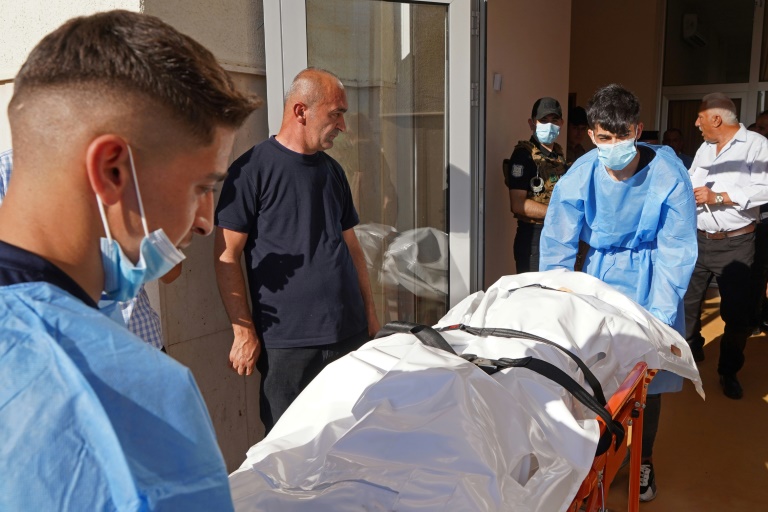
Nine civilians including children were killed in a park in Iraq’s autonomous Kurdistan region Wednesday by artillery fire that Baghdad blamed on neighbouring Turkey, a country engaged in a cross-border offensive.

In an unusually strong rebuke, Prime Minister Mustafa al-Kadhemi warned Turkey that Baghdad reserves the “right to retaliate,” calling the artillery fire a “flagrant violation” of sovereignty — a line echoed by Iraq’s Kurdish administration.

Iraq said it was recalling its charge d’affaires from Ankara and summoning Turkey’s ambassador, and demanded an official apology from Turkey along with “the withdrawal of its armed forces from all Iraqi territory”.

But Turkey’s foreign ministry said these “kinds of attacks” were committed by “terrorist organisations,” and invited Baghdad to avoid making statements influenced by “terrorist propaganda”.

The victims included Iraqi tourists who had come to the northern Iraqi hill village of Parakh in Zakho district to escape sweltering temperatures further south in the country, according to Mushir Bashir, the head of Zakho region.

“Turkey hit the village twice today,” Bashir told AFP.

One witness spoke of a deluge of fire falling on the park and its water features, where visitors had been relaxing.

Turkey launched an offensive in northern Iraq in April dubbed “Operation Claw-Lock”, which it said targets fighters from the Kurdistan Workers Party (PKK).

The artillery strikes killed nine and wounded 23, Zakho health official Amir Ali told reporters. He had earlier put the toll at eight dead, including two children.


– ‘Bodies in the water’ –

In front of a hospital in Zakho, Hassan Tahsin Ali, a young man who had come from Iraq’s central Babylon region, spoke to AFP with a bandage around his head.

“There were indiscriminate strikes on us, there were bodies in the water,” he said. “Our young people are dead, our children are dead, who should we turn to? We have only God.”

Another survivor said the shelling took place just 15 minutes after “more than 20 buses came into the park,” and said he counted at least “five” projectiles, Iraq’s INA news agency reported.

Iraq’s prime minister dispatched the country’s foreign minister and top security officials to the site. 

“Turkish forces have perpetrated once more a flagrant violation of Iraqi sovereignty,” Kadhemi said, condemning the harm caused to “the life and security” of Iraqi citizens.

“Iraq reserves the right to retaliate against these aggressions and take all necessary measures to protect our people,” Kadhemi added.

In the Iraqi city of Karbala, a few dozen people protested in front of a Turkish visa centre, burning an Turkish flag, according to an AFP photographer. Protesters also gathered in Nassiriyah.

– ‘Security threat’ –

The Kurdistan Regional Government also criticised the deadly shelling “by Turkish forces” and urged both the federal government and the international community to “work more effectively to prevent” repetitions.

“Clashes between Turkish forces and PKK fighters in the border areas of the Kurdistan Region have become a constant threat to the lives and wellbeing of our citizens,” it said.

Iraq’s President Barham Saleh deplored repeated “Turkish bombardment” and said the situation amounted to a “national security threat”.  

Designated as a terrorist group by Ankara and its Western allies, the PKK has been waging an insurgency against the Turkish state since 1984 that has claimed tens of thousands of lives.

Arbil, the capital of Iraqi Kurdistan, has complicated relations with the PKK as its presence in the region hampers vital trade relations with neighbouring Turkey.

The military operations have seen Turkey’s ambassador in Baghdad regularly summoned to the Iraqi Ministry of Foreign Affairs.

Turkey is also deeply opposed to a semiautonomous Kurdish administration in war-torn Syria’s oil-rich northeast.

President Recep Tayyip Erdogan has lately repeatedly vowed to launch an offensive against Kurdish militants there, on the back of a 2019 onslaught, pressing his case most recently with his Iranian and Russian counterparts at a summit in Tehran on Tuesday. 

Close Bitnami banner
Bitnami